

Get ready for a wonderfully nerdy Broadway deep dive! In this episode, host Marc Bonanni of Broadway by Ghostlight sits down with authors Andrew Gerle and Joseph Zellnik to celebrate their dazzling new book The Periodic Table of Broadway Musicals... Read More
From the show: The Drama Book Show!
Guests
Featured Shows

About
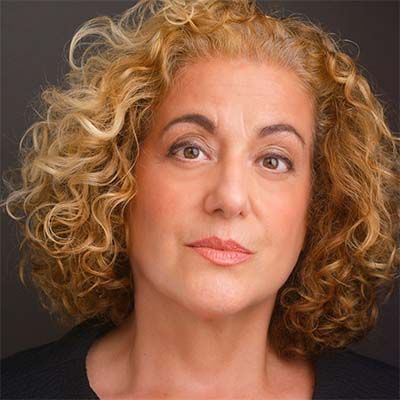
Get ready for a wonderfully nerdy Broadway deep dive! In this episode, host Marc Bonanni of Broadway by Ghostlight sits down with authors Andrew Gerle and Joseph Zellnik to celebrate their dazzling new book The Periodic Table of Broadway Musicals. They’re joined by very special guest—three-time Tony nominee and Broadway icon—Mary Testa for a lively talkback, signing, and live podcast recording that blends history, humor, and show-tune devotion.
Inspired by the classic periodic table, the book reimagines 118 essential musicals—from A Chorus Line to Rent—as elements, complete with “atomic” symbols, clever original artwork, cast lists, trivia, and insights that reveal how each show shaped the evolving chemistry of Broadway. Whether you’re a superfan, a theatre student, or simply someone who loves a good poster and a great story, this conversation uncovers the inspiration behind the project and the unexpected alchemy of musical theatre itself.
Tune in for laughs, lore, and a whole lot of Broadway love—all with a full-size pull-out poster waiting in the wings.
Transcript
This transcript was automatically generated and might contain errors.
[0:18] Mark-Eugene Garcia: Hello and welcome to The Drama Book Show.
[0:20] David Rigano: My name's David Rigano.
[0:22] Mark-Eugene Garcia: And we are approaching the holidays and I wanted to say to everybody, Mary Testa and a happy new year.
[0:32] David Rigano: So we did intimate in the last episode that this one would have a surprise special guest.
[0:39] Mark-Eugene Garcia: You also talked about how many musicals only because Mary Testa was in them.
[0:45] David Rigano: Truly.
[0:46] Mark-Eugene Garcia: Also I again, like my initial introduction to Mary Testa was Lucky Stiff and then A New Brain, all of that.
[0:54] David Rigano: And this, but this is like pre-social media.
[0:57] Mark-Eugene Garcia: Yeah.
[0:57] David Rigano: Uh, internet existed, but it didn't not into the way it does now.
[1:01] Mark-Eugene Garcia: And so like I knew her IMDB.
[1:04] David Rigano: And so I remember renting The Out-of-Towners solely because she had a credit as a dominatrix.
[1:13] Mark-Eugene Garcia: Yeah, but has it had a credit.
[1:15] David Rigano: Oh, I've seen that scene multiple times.
[1:17] Mark-Eugene Garcia: That's the only thing that I've seen from that movie.
[1:19] David Rigano: No, truly, I was at a bar not that long ago, and that movie was playing in the background.
[1:24] Mark-Eugene Garcia: And while my friends and I were talking, I was like, stop, stop.
[1:27] David Rigano: Mary Testa.
[1:29] Mark-Eugene Garcia: And we all turned and looked and they were like, how do you know that?
[1:33] David Rigano: I'm like, because that was the only way I knew what she looked like when I was younger.
[1:38] Mark-Eugene Garcia: I definitely saw her in 42nd Street.
[1:42] David Rigano: I bought that album because of her.
[1:43] Mark-Eugene Garcia: Again, I think that I saw her in Forum, but I but I'm she may have left the show and I'd have to find my playbill to to know for sure.
[1:54] David Rigano: But I think that I saw her in but yeah, she's someone who like just kept popping up in shows and on cast albums that I liked as a kid growing up and learning stuff.
[2:04] Mark-Eugene Garcia: I think that I did know her by the time that I learned Lucky Stiff, yeah, and I saw the show, I saw a youth production of it before I heard the album.
[2:13] David Rigano: Okay.
[2:13] Mark-Eugene Garcia: So then I got the album because I loved the show, and I was like, is that Mary Testa?
[2:18] David Rigano: So my high school did Lucky Stiff the year after I graduated.
[2:22] Mark-Eugene Garcia: And I remember being like, Oh why wasn't I a year younger?
[2:25] David Rigano: Also, why wouldn't why didn't we do that instead of Pippin?
[2:28] Mark-Eugene Garcia: All of those those things because I fell in love with that show, went through this deep dive that you couldn't really do deep dives back then.
[2:34] David Rigano: It was just I heard about this show and then asked people if they knew, and then I found the album at the Virgin Mega store and bought it.
[2:42] Mark-Eugene Garcia: I only recently, and by recently, I mean within the last 10 years, discovered that album is a studio album and not the off-Broadway cast album like I assumed it was.
[2:54] David Rigano: And you have my darling, my dear Judy Blazer on that album giving a performance that sounds like she was in a month of rehearsal creating this character, and she only ever did it in a recording booth.
[3:10] Mark-Eugene Garcia: Now, when I went and saw Lucky Stiff at off-Broadway this past year or year ago, yeah, Judy Blazer did the talk back.
[3:17] David Rigano: Oh I was there for a talk back.
[3:19] Mark-Eugene Garcia: Judy wasn't there.
[3:20] David Rigano: It was really cool, but it's just like that show.
[3:22] Mark-Eugene Garcia: But it was also so much fun to see Janine Lamanna in the production and have the Aaron's and Flaherty re the Suessical reunion.
[3:31] David Rigano: And yeah, we're tangenting.
[3:32] Mark-Eugene Garcia: We'll get to Broadway, I promise.
[3:33] David Rigano: Yes.
[3:34] Mark-Eugene Garcia: But that show was so special to me because I it was a Flaherty show.
[3:38] David Rigano: I was huge, a huge fan.
[3:40] Mark-Eugene Garcia: Their old website used to list all the productions of any of their shows.
[3:44] David Rigano: Ronnie, who ran it was amazing.
[3:46] Mark-Eugene Garcia: And she would find like obscure times.
[3:48] David Rigano: I found out that there was a high school doing Lucky Stiff near where Rodrigo and I lived back then.
[3:54] Mark-Eugene Garcia: And so we went to this high school that neither of us had any affiliation with.
[3:59] David Rigano: We knew nobody there just to see Lucky Stiff.
[4:02] Mark-Eugene Garcia: And I will always remember that the maid, the drunk maid sequence, that she was so into that moment of pretending to be drunk that when she held on to the door, the whole set fell down.
[4:15] David Rigano: And she did not break as two dads from the audience came and lifted that set back up around her, and she continued to sway and mock being drunk and waved at them and walked away.
[4:27] Mark-Eugene Garcia: And it was one of the most iconic things I have ever seen.
[4:30] David Rigano: And it was a high school theater production of Lucky Stiff.
[4:34] Mark-Eugene Garcia: And that little girl grew up to be Mary Testa.
[4:41] David Rigano: All right, but why are we on this Mary Testa tangent?
[4:44] Mark-Eugene Garcia: I just also have to say that like when you're as obnoxious of a Michael John LaChiusa fan as I am, Mary Testa is bound to continue to creep up to shows.
[4:56] David Rigano: Yes.
[4:57] Mark-Eugene Garcia: And I loved her in the Marie Christine cast album.
[5:01] David Rigano: Absolutely.
[5:02] Mark-Eugene Garcia: And I had been gifted the Wild Party cast album for a birthday.
[5:05] David Rigano: So I was obsessed with those two shows, and then very quickly went into my obsession with Hello Again, Judy Blazer.
[5:13] Mark-Eugene Garcia: Amazing.
[5:13] David Rigano: And then when I was a freshman in college at Marymount, over the course of that year, he had two different shows open in New York off Broadway.
[5:25] Mark-Eugene Garcia: One at the Public, one at Lincoln Center.
[5:28] David Rigano: So I don't remember which order I saw them in, but I saw Mary Testa in See What I Wanna See.
[5:34] Mark-Eugene Garcia: And then I saw Judy Blazer in Bernarda Alba.
[5:37] David Rigano: And I had not yet met either of them.
[5:40] Mark-Eugene Garcia: I love that show.
[5:41] David Rigano: Yes.
[5:41] Mark-Eugene Garcia: I also really loved or speaking of his work, Adam's Family and Big Fish.
[5:46] David Rigano: And oh podcast audience, you can't see my face.
[5:57] Mark-Eugene Garcia: So I did the Lippa Wild Party.
[5:59] David Rigano: Okay.
[6:00] Mark-Eugene Garcia: In college.
[6:02] David Rigano: Yeah.
[6:03] Mark-Eugene Garcia: In March of 2006.
[6:07] David Rigano: Oh wow.
[6:08] Mark-Eugene Garcia: Okay.
[6:08] David Rigano: Yes.
[6:09] Mark-Eugene Garcia: And we opened on my birthday in 2006.
[6:15] David Rigano: And the understudy for Kate in the Lippa Wild Party when we did it was Adrian Warren.
[6:23] Mark-Eugene Garcia: Wow.
[6:24] David Rigano: But don't tell her that I mentioned that we did this show together in 2006.
[6:32] Mark-Eugene Garcia: But this coming March of 2026, Adrian Warren will be playing Kate in the Michael John LaChiusa Wild Party.
[6:41] David Rigano: What a great, a crazy turnaround.
[6:44] Mark-Eugene Garcia: Um I have started texting some people, but I guess I'm putting this out into the world.
[6:49] David Rigano: I'm trying to get a little reunion of our a 20-year reunion of our Wild Party.
[6:55] Mark-Eugene Garcia: That is one wild party.
[6:56] David Rigano: That yeah.
[6:57] Mark-Eugene Garcia: So why we're all a little bit older.
[7:00] David Rigano: It's a milder party now.
[7:02] Mark-Eugene Garcia: Right.
[7:03] David Rigano: I don't know.
[7:03] Mark-Eugene Garcia: I was six in 2006.
[7:05] David Rigano: So many musicals and Mary Testa.
[7:07] Mark-Eugene Garcia: And Mary Testa.
[7:08] David Rigano: So Mary Testa specifically, because I got an email.
[7:11] Mark-Eugene Garcia: We were already doing this event, and I was already excited about this event because I had seen the book, The Periodic Table of Broadway Musicals, and flipped through it and was already in love with it.
[7:22] David Rigano: And so just this is gonna be great.
[7:24] Mark-Eugene Garcia: It's gonna be a cool event.
[7:25] David Rigano: But then got an email to say, by the way, joining us will be Mary Testa, who will sing a song.
[7:31] Mark-Eugene Garcia: And that's all I got.
[7:33] David Rigano: And immediately, like the text chain throughout the store.
[7:36] Mark-Eugene Garcia: I was like, oh my god, oh my god, oh my god.
[7:38] David Rigano: Like we were all excited about this.
[7:41] Mark-Eugene Garcia: And so it just made we do have someone who works at the store who has a Queen of the Mist tattoo.
[7:47] David Rigano: Yes.
[7:48] Mark-Eugene Garcia: And so we all have a love for Mary Testa.
[7:51] David Rigano: Yeah, yeah.
[7:51] Mark-Eugene Garcia: This is a big Mary Testa friendly place.
[7:53] David Rigano: We're a very merry group.
[7:57] Mark-Eugene Garcia: And what makes us really merry?
[7:59] David Rigano: Broadway musicals.
[8:00] Mark-Eugene Garcia: And so we got to see this amazing book that delves into when the shows were made, how they were made, the true science to me behind Broadway.
[8:13] David Rigano: The science behind the history.
[8:15] Mark-Eugene Garcia: The science behind the history.
[8:16] David Rigano: Which is again a little something of one of your strengths, a little something of one of my strengths.
[8:22] Mark-Eugene Garcia: Look at Candide.
[8:24] David Rigano: My favorite.
[8:25] Mark-Eugene Garcia: Uh-huh.
[8:26] David Rigano: 1956.
[8:27] Mark-Eugene Garcia: Yep.
[8:28] David Rigano: CD Candide.
[8:30] Mark-Eugene Garcia: 1956.
[8:31] David Rigano: Book by Lillian Hellman.
[8:33] Mark-Eugene Garcia: Lyrics officially by Richard Wilbur with additional lyrics by John Latouche, who passed away before they finished writing it, and of course, music by Leonard Bernstein.
[8:42] Mark-Eugene Garcia: What else you got for me?
[8:46] David Rigano: Element C, which is Cats, 1982.
[8:48] Mark-Eugene Garcia: But I like how up to date it is.
[8:49] David Rigano: It includes the Jellicle Ball.
[8:51] Mark-Eugene Garcia: Uh-huh.
[8:52] David Rigano: That's it's which I saw.
[8:54] Mark-Eugene Garcia: Oh, you did, yes.
[8:55] David Rigano: Yes.
[8:56] Mark-Eugene Garcia: But I love the periodic table, even it's based on leading lady series down here, like the hits and so on.
[9:01] David Rigano: It's just and they literally took the time to figure out how the way things are categorized in the scientific the chemistry periodic table would correlate to Broadway musicals.
[9:16] Mark-Eugene Garcia: It is this is not something that was slapdashed together.
[9:21] David Rigano: No.
[9:22] Mark-Eugene Garcia: Element D.
[9:23] David Rigano: Dolly.
[9:23] Mark-Eugene Garcia: Hello, Dolly.
[9:25] David Rigano: 1964.
[9:26] Mark-Eugene Garcia: Just uh it's this is like just one of those perfect books.
[9:35] David Rigano: Listen, this is one of those books though.
[9:37] Mark-Eugene Garcia: This is the one for us to be the biggest theater nerds we can possibly be.
[9:41] David Rigano: Yes, because you could be both nerd and theater nerd with this.
[9:43] Mark-Eugene Garcia: But this is this is the book to get for the holiday season.
[9:46] David Rigano: I really feel like this is gonna be huge.
[9:48] Mark-Eugene Garcia: It already is.
[9:49] David Rigano: I watch it fly across the counter, and that is even without them all hearing the song that included every single show.
[9:57] Mark-Eugene Garcia: Every reference to every or one reference to every one of the 118 shows in the book.
[10:05] David Rigano: No, I about fainted during the rehearsal when they sang through it, but just to see it live, oh, was so good.
[10:15] Mark-Eugene Garcia: And I believe that's on our Instagram on their Instagram.
[10:18] David Rigano: It is on both Instagrams, and we have an exclusive mic recording that we're gonna play here.
[10:25] Mark-Eugene Garcia: This is with Andrew Gerle and Joseph Zellnik talking about the creation of their book.
[10:31] David Rigano: Alright, let's dive in and let them delve into some science.
[10:35] Mark-Eugene Garcia: All right, around everybody.
[10:40] David Rigano: Oh my goodness.
[10:42] Mark-Eugene Garcia: Hi, thank you, everyone.
[10:44] David Rigano: Yeah, thanks for braving this beautiful New York City weather we're having tonight.
[10:49] Mark-Eugene Garcia: So let me just talk a bit, Mike Mark Bonanni, hi.
[10:52] David Rigano: About my association with this.
[10:54] Mark-Eugene Garcia: So I'm sure, like a lot of you, my first introduction to the periodic table of Broadway musicals was as a poster.
[11:01] David Rigano: And I was blown away by the poster and thought this is the coolest thing ever.
[11:06] Mark-Eugene Garcia: And then I brought them with me.
[11:07] David Rigano: My mother-in-law for Christmas last year got me the full set of cards of playing cards, but I just used them as trading cards.
[11:16] Mark-Eugene Garcia: I was there the whole night just reading all of them like a nerd.
[11:19] David Rigano: And so then I heard that it was going to be a book.
[11:22] Mark-Eugene Garcia: And I will admit I was a bit trepidatious.
[11:25] David Rigano: A poster into a book seems like a daunting task.
[11:30] Mark-Eugene Garcia: And then I got my hands on this bad boy.
[11:33] David Rigano: And I honestly, it is one of the most unique, beautiful, original, and special musical theater history books I've encountered.
[11:44] Mark-Eugene Garcia: I own hundreds of theater books, and this is definitely one of my favorite.
[11:49] David Rigano: Oh, I should mention we're going to do a QA after, so if anything piques your interest, if you want to ask another question, write it down in your mental notebook there, and we'll get to it at the end.
[11:57] Mark-Eugene Garcia: But I thought to start with, I think everyone's first question.
[12:01] David Rigano: Why periodic table?
[12:02] Mark-Eugene Garcia: Maybe you could read Andrew a bit of the introduction to the book to get us started.
[12:06] Joseph Zellnik: Sure.
[12:06] Andrew Gerle: I'm gonna have to borrow yours.
[12:08] Joseph Zellnik: Yeah.
[12:09] Andrew Gerle: Hi.
[12:12] Joseph Zellnik: There we go.
[12:13] Andrew Gerle: Yeah, sure.
[12:14] Joseph Zellnik: This is a good little way in, introduce like how it came to be.
[12:20] Andrew Gerle: Alright, so introduction.
[12:24] You may be asking, what the periodic table and Broadway musicals have to do with each other.
[12:29] It's a fair question, and the short answer is me.
[12:32] Let me explain.
[12:34] My love of musicals started at an early age, but when I was growing up in the 1980s, the Broadway musical was basically dead.
[12:41] There were a handful of mega hits that sloshed their way across the Atlantic and ran for years, sometimes decades.
[12:49] But that only made the sad state of Broadway even sadder, the quintessential American art form kept alive by foreign imports.
[12:58] For a while, Broadway was living up to the name The Fabulous Invalid, in some seasons barely generating enough new musicals to fill out a Tony Award category.
[13:07] So if you were a fan, as I was, you looked backwards to the golden age, listening to cast albums, learning the scores to the few dozen shows that made up the heart of the Broadway canon.
[13:18] You watched The Sound of Music on TV, your high school did The Pajama Game or Man of La Mancha, Heinsey.
[13:32] Andrew Gerle: If you had a piano, you sang through musical theater, songbooks, learning the scores in your living room. By doing all this, you could get a fairly comprehensive overview of the most important shows, the songs that survived long after the final curtain of the show they originated in, and the recurring names of the major writers, directors, choreographers, and stars who made that prolific era so magical. If you had told 12-year-old me that the dawn of the 21st century would see Broadway roaring back to life, and that I would have a career writing musicals and teaching their craft in one of literally hundreds of flourishing undergraduate degree programs around the world, I would have said you were as high as a flag on the 4th of July.
But to the delight of millions, that is exactly what has happened. The past two decades have seen a wide range of successful and hugely popular shows added to the Broadway canon, featuring a variety of musical and theatrical styles from a diverse crop of writers, directors, and performers. And more shows come down the pike every year. While all this new content is clearly a bonanza for current musical theater fans, it does, however, make acquiring a comprehensive knowledge of the art form difficult to achieve. When I make a reference in one of my classes, I can see even die-hard young fans struggling to keep straight all the important shows, writers, characters from nearly a century of Broadway history. I recently asked my students which show starred a character named Rosabella. And a hand quickly shot up. Cats! If you don't get why that's funny, that's okay; by the end of this book, you will.
[15:45] Andrew Gerle: Ascending numerical order and grouped into 10 families. I realized I could use the same form to tame the sprawling list I had begun. With that idea in place, I started compiling my list in earnest. At first, I worried I wouldn't be able to find enough shows of lasting importance to deserve being included. But that fear proved unfounded. Instead, I had trouble narrowing the list to only 118 shows. In the end, I reached out to other Broadway professionals for their input and winnowed the list down to its final state. So that is how the poster came to be. The poster was a huge hit. It was everywhere. I was tagged on social media in that at least a hundred times, and people said, "You gotta look at this.
This is so cool." So what was the spark that you were looking at the poster and thought this could be a book? People would ask him why he had included certain shows and not other shows. And so that sort of made us realize that there's a lot more that people, questions people had about these shows. Yeah, there were always the opinions. Like, why I wouldn't put this on there, what's that doing on there? And I realized, yeah, we have to actually tell the story of why we thought each of these 118 shows was, as the cover says, essential. Why it is, why they deserve to be on there, and what part of the Broadway story they tell. We should also say it's during COVID. This happened during COVID and we had a lot of free time. And so we were just sitting in our house and let's do a book pitch and see if we can find somebody who wants to publish this.
[17:17] Joseph Zellnik: Yes. And of course, being married to the person who doesn't know more about music theater history than anyone I know, it was very easy to bring him in as a collaborator.
[17:26] Marc Bonanni: So how long have you guys been married?
[17:28] Joseph Zellnik: Quit, 11 years.
[17:31] Marc Bonanni: Now, Joe, did you have a hand in the poster creation?
[17:34] Joseph Zellnik: I didn't really have a hand in the poster. The poster was Andrew's baby, and uh but I uh of course we would talk about it around the dinner table, and so I would weigh in on what shows I thought should be included, shouldn't be included, or early on it was how should shows be chopped up? How many, how should we name these ten families? What are 10 key themes in Broadway musicals?
[17:53] Andrew Gerle: Yeah, it was important for me. I really wanted to stick exactly to the original periodic table of elements. With the ten families, which was tricky because the ten families are all different sizes. Some of them are only six or seven. The big one in the middle is like 38. So we threw it back and forth and tried to figure out what are the ten categories that we could use that would allow us to fit these shows into them that makes sense.
[18:21] Joseph Zellnik: Did some shows just bounce around from category to category?
[18:24] Andrew Gerle: Oh, absolutely, yeah. Certainly at the end of the process, there was a lot of, but if we put that there, then what do we do with this one? Is that a leading lady? Like Funny Girl. Leading lady, backstage, true story, canon? Like it could go anywhere. Obviously, it's a leading lady.
[18:40] Joseph Zellnik: So in expanding a single page poster to an almost 300-page book, my goodness, there's so much more information required. What can readers expect to learn from the book?
[18:53] Andrew Gerle: And now that it's been expanded, the poster. We were able to. I was happy with how much I got on the poster. It has the year it opened and the number of performances, and did it win the Tony? Did it, did they make a movie out of it? Did it win the Pulitzer? And has it had a revival? So that's I was proud to get that much on there. But now we can go back and talk about the history, how it came to be. We can talk about the creative team. We can talk about the themes. We can talk about the designers. We can talk about its relation to shows that came before and the shows that it influenced. So every show has a 400-word essay. And a little synopsis so that for people who don't know the shows, because many of these shows are obscure to especially younger fans of musical theater.
They don't know necessarily the shows from the 40s, 50s, 60s. Yeah, and so plus the major creative team, the major actors who originated the roles. And then there was some trivia stuff that we just threw in at the end there, like little stuff that we think will some of it will come as a surprise even to people who know musicals pretty well. We've done some obscure stuff. A little thing called the miscellaneous matter at the end of each entry.
[20:05] Joseph Zellnik: Yeah. I have a miscellaneous matter. Would you like to share a miscellaneous matter?
[20:09] Andrew Gerle: You don't need the mic. While writing On the Town, both Leonard Bernstein and Adolf Green ended up in the hospital at the same time. And they requested to be put in the same room so they could continue working on the show, which wasn't very restful for the other patients. But they got three ringside seats to the case.
[20:31] Joseph Zellnik: I wish I had been in that room.
[20:32] Andrew Gerle: Yes. The miscellaneous facts are one of my absolute favorite ones. Because I do Broadway Jeopardy. I've written 1800 plus clues in trivia. And there were so many I had never heard of. I was blown away.
[20:45] Joseph Zellnik: You're prepared.
[20:47] Andrew Gerle: That was really fun. That was really fun. A lot of the research was going back to primary sources, going back to articles and reviews and interviews that were taken during the time that it was first coming out. But also, I've been working in musical theater for several decades now, and I've had the joy of working with people in the original companies and the composers and the lyricists and book writers from some of these shows. So I was able to go and interview people like Betty Buckley and Leeroy Reams and Michael Rupert and Randy Graf and Aaron Zinflerity and Scott Frankel. And I just was able to call all these people and say, hey, give us something juicy and fun that no one knows. One of my favorite is Scott Frankel told me that so it's Great Gardens.
There's a character in it, not a very big character, his name is Jerry, and he was like the kid who kept coming into the house. At the time of the show, Jerry was working as a taxi driver, and he would circle the theater and pick people up after the show, and then ask them how they liked it. And if they liked it, then he would say, "I'm the original Jerry." And he would get a really big tip.
[21:57] Joseph Zellnik: The marble fawn turns taxi.
[21:59] Andrew Gerle: Exactly. That's incredible. So all those interviews must have helped with the gargantuan task of having to write 118 essays on 118 musicals.
[22:07] Joseph Zellnik: This is why I needed a collaborator.
[22:10] Andrew Gerle: Yeah, touching a poster story to a book took a long time and a lot of work. And I have a lot of knowledge of musical theater, and not because I teach it, but because I spent my entire life or my entire youth growing up in a house with a mother who was obsessed with musicals and had a huge collection of record albums and show scores. And so I grew up not only playing through songs and singing songs where my brother would sing and I would play, but also looking at the back of cast albums. And usually old cast albums, since they were big back then, had liner notes pasted on the back of the album. And those were written at the time that the album was released. So, in a way, this was like Andrew was saying, like primary resource, because this sort of was what people thought about the show, what they thought was important about it at the time that it opened, when the album first came out.
And so, in a way, that was like a graduate study course in musical theater. So I have all these random facts and weird trivia just bouncing around my head about musicals. And this was a great way to use it.
[23:07] Joseph Zellnik: Can I do one more trivia?
[23:08] Andrew Gerle: Do it.
[23:10] Joseph Zellnik: Come from a ways, Broadway set included real trees. Due to the intense artificial lighting, some of them continued to grow and even sprout leaves over the course of the run.
[23:23] Andrew Gerle: Wow. That actually I know because I went up on stage afterward and I was looking around and Jen Kalella was like, look, they're growing. That's new. That's new right there. They water them every week.
[23:32] Joseph Zellnik: I don't know. They must have.
[23:34] Andrew Gerle: Unless it was from the action.
[23:35] Joseph Zellnik: Exactly.
[23:37] Andrew Gerle: There's a lot of spit.
[23:38] Joseph Zellnik: Yeah.
[23:39] Andrew Gerle: Those are cool. So you guys mentioned you worked on this a lot during COVID. Talk about not only collaborating as a married couple, but in lockdown. How was that? So was it what were the advantages and disadvantages to that whole situation?
[23:52] Joseph Zellnik: Actually, we pitched it during COVID. And it took a long time. And why don't we thank our amazing agent right now, Joshua Bilmas, who is here. Our fearless agent who saw the possibility and kept on sending it out after just dozen years, literally years of rejection emails. And we would get them all and be like, yeah, our I just don't understand. I don't get it. Broadway and science, Broadway and Chemistry. Yeah, our readers just that's confusing. Yeah. But he kept pitching it. And so we actually we wrote it during 2024, most of it. We actually had planned to go and live abroad in Vienna for a couple months. And so that was our job there. I would generally tackle the first draft on most of the shows and sit there and comb through the archives and try to find a take on it, then hand it off, and then he would say, yes, no, yes.
Oh, you gotta talk about the Melziners. You have to talk about the designers and that's set for whatever was revolutionary. And I'd be like, oh, cool, I didn't know that. Uh yeah, and I did a lot of the essays, or I did the first drafts of essays that were the sort of old canon shows, the big shows from the 40s and 50s and 60s, which is what I grew up on. And those were deeply satisfying to me to be able to write about that because many of them I have opinions on. And a lot of them I feel like people they view them differently now. They can't get rid of the idea that like these shows are old and dusty. And I wanted to try to remind people that when these things appeared at the at the when they were premiered, many of them were like Hamilton.
People were like, my God, that's amazing. Who knew you could do that in a musical? And so I was exciting to me to be able to recapture that. And the flip side of that is that shows that I know my students think of as just the great shows, and they're absolutely canon. And they don't realize that they didn't start out like that, like something like Nine, which my students are like, that's just that's Nine, it's great. If they made a movie, it was one The Tony, all those things. We've done it at my school like twice in the last eight years. But it started off with hugely mixed reviews, and there was that huge, not fight, but big rivalry between Michael Bennett and Tommy Toon, and then the Big Tony fight, and then Nine ended up winning the Tonies, but a lot of that they said was because people were mad at the Schuberts because they had just knocked down a couple theaters and they didn't want to reward Dream Girls.
There's this whole history of all these things and the ties between the generations and the decades that that I know my students didn't know. I didn't know a lot of this. And so it was really satisfying to draw, to connect the dots between these shows from the past hundred years.
[26:32] Joseph Zellnik: I should also say to go back to your question about how we were working together, is one of us would take a first draft, would write the first draft of either the show essays, or each family has an introductory breaker page essay. And then we would trade. And then the other one would read it, and then we would sit and we would say if we disagreed about something, or if we if we felt that something else needed to be enhanced, we would the other one would take it over and try a new draft of it. So basically at this point, both of our fingerprints are on pretty much everything that's in the book.
[27:00] Andrew Gerle: Yeah, lots of very messy Microsoft Word documents online. And then it was nice, because then once we agreed on something that we could just cross out, just delete the comment, and then we were when we were done, we had no more comments left, and we knew the essay was done.
[27:13] Joseph Zellnik: So now we I want another fact.
[27:15] Andrew Gerle: Oh yeah. In Laureen Dallas Watkins play Chicago, the basis for the musical, Amos Hart, Roxy's milk toast husband, was played by a then unknown Clark Gable. That was the LA production of the play, that was of course a huge hit before the musical. And she put up such a fight, she would not give them the rights for decades. She became she became quite religious, slash occultists slash astrology. Like she got into all of that, and she was like, my play promotes a terrible lifestyle, and I don't want to get out there in the world. Um and then she died, and then they got the rights. To wrap up the story.
[27:59] Andrew Gerle: So we've said a few times that there's 118 musicals represented in here, but that's not exactly true, is it? Come clean.
[28:06] Joseph Zellnik: There's more.
[28:07] Andrew Gerle: There's more than 118 musicals. There's actually a whole bonus family that's in the book that isn't in on the poster, and that is off Broadway musicals. Because there are some really important musicals like The Fantastics or Little Shop of Horrors that are huge and important. And everybody who loves musicals knows them, but they were not Broadway shows. They were off Broadway shows. Or they were not originally Broadway shows. We had to say, yes, Little Shop came to Broadway, but at its heart, that is an off Broadway show. Hedwig, that is an off Broadway show. I don't care who did it on Broadway for 10 minutes. But we were getting lots of requests. Like, why isn't Little Shop on there? What happened to Hedwig?
And so now we can talk about them. So there's 10 off Broadway shows, plus we included four reviews, because the off Broadway review is such a big deal, so we had to include those. So that's an exciting thing for people who have the poster on their wall that there's a whole bunch of things they won't even know.
[28:53] Joseph Zellnik: Yeah. Can I also plug the there's a poster in the book.
[28:57] Andrew Gerle: Yes. It comes with the poster. There is a small size poster in the book. It's specific to the book. It's black. It's sophisticated in black.
[29:06] Joseph Zellnik: Yes. So this is maybe a good moment to thank our publishers and thank both. We had two editors who worked with us on the book, and both of them were such strong illustrators. We'll get to them too.
[29:14] Andrew Gerle: Yeah, we'll get to that. But the publisher suggested that we do a pull-out poster in the back, and they actually were the first ones to say we really want there to also be an off-Broadway section. And um they also asked us for foreign shows. And we were like, We can't. We don't know anything about German musical, Korean musicals. I understand that musical theater in South Korea is booming. Yeah, it's maybe happy ending. But yeah. I uh I don't actually know most of the things.
[29:38] Joseph Zellnik: Yeah, so a huge thanks to Jay Sacker, who was the first of the editors who said, yes, we want to do this. Actually, he actually the meeting was to talk about stationery. And then in the middle of the meeting, he was like, you know what? Now this should be a book. We're like, what? Oh, that just happened. Alright, great. Thanks. So Jay, and then Barbara Berger, who caught the football and took it to the Did I just do a sports metaphor? I couldn't even finish it. What's going on here? Is it a goal line? Yeah, she like. I don't know, whatever. Thank you to both of them.
[30:08] Andrew Gerle: And these illustrations, so from the beginning, when I first thought about the poster, I was just gonna like maybe put it out and just use the abbreviations, the little two-letter abbreviations, like on a regular one. And I'm like, this is too boring for musicals. And I found two incredible illustrators, Tatiana Biszchuk and Nick Matey. They were able to together, we were able to figure out a little icon drawing illustration that either summed up something about the story or some little Easter egg from a song title, which was really fun because neither of them knew anything about musicals. So I would sit there and explain the stories of a hundred and eighteen musicals. And some of them, Sweeney, they were like, I'm sorry, what?
It's about what? Book of Mormon. They do what? What happens? So that was a lot of fun. But in the end, I'm just I'm so happy that their work now you get to see it in a real big size, and it's not just a tiny little thing on a poster because they really are worth looking at and looking for all the little Easter eggs that we have. The glossy paper, the bold colors, like they they look so good in the book, it's it's really one of the one of the glories of it. And the little art notes. I love the little art notes that talk just the sentence about the illustrations.
[31:25] Joseph Zellnik: Yeah, yeah, we decided we needed to. For those people who didn't necessarily know a show in detail, like, why is there a frog in the Book of Mormon? Picture. And we didn't necessarily explain entirely, but we just said it was a frog looking worried. Or like it in sorry, in Pal Joey, I love that it's a microphone with the purse hung up on when it's off. I see what you did there. I see. And there's also fun things that on the poster, which at first I was just a fan of the poster, and like the way that there's a headdress, a Ziegfeld-style headdress, and it's used in Follies. There's a shadowed version of it, and then in Funny Girl, she's wearing the headdress, but it's tilted off to the side like she's a comic. She's blowing a raspberry. Yeah, so you can start to see some of the fun things. The tail of cats shows up in the bushes in front of Gray Gardens. Yeah. Little things that trait through the poster.
[32:12] Andrew Gerle: Alright, I have one more.
[32:14] Joseph Zellnik: Yes.
[32:14] Andrew Gerle: For the last two months of company's run, Elaine Stritch was replaced as Joanne by the original Miss Adelaide Vivian Blaine.
[32:24] Joseph Zellnik: That's deep.
[32:25] Andrew Gerle: I didn't know. That's a deep cover.
[32:28] Joseph Zellnik: But you read it beautifully.
[32:30] Andrew Gerle: There you are. I think I have one last question before we open it up. And it's really a two-parter, I'm cheating here. So the breadth of musical theater fans is so wide. You've fans of older musicals, newer musicals, pop musicals, operatic. Who exactly do you imagine the ideal reader for this book? And also, in reading it, do you want people to read a cover-to-cover, bounce around more like a reference book? What are your thoughts on that?
[32:57] Andrew Gerle: I'll let you go first.
[32:58] Joseph Zellnik: Alright. We really wanted to aim this book at a wide swath of Broadway fans. Both for people my students' age who are just learning their shows and finding their favorite ones, but don't know a lot about maybe the history of the older shows. And also for people like us who have lived and breathed musicals for quite a while. I wanted to find things that I didn't know. And that would be news and fun for me. And also not just facts, but just ways of thinking about the Broadway canon as one work with all these different creators that went into making it to revolutionizing it again and again. So having one book that brings those facts together across the years was that was another thing that I really I didn't know that's what I wanted to do, but when we started getting into it, every time I was able to do that, it just felt really good.
And then to answer your second question, I don't think we think there is a right or a wrong way to read the book. I do have one one person who texted me and said, Oh my god, I just read the entire book cover to cover and I loved it. I was like, wow, that's a lot. There's a lot of words in this book. Actually, I have a friend who's reading it cover to cover, but stopping after each one to listen to the original cast album. Wow. That's a dark. That's pretty great. But I kind of picture, I think probably I'm imagining that a lot of people hopefully will get this book for Christmas and sit under the Christmas tree and they're gonna flip to their favorite show. Everybody has a favorite show. You're gonna maybe like, what did they say about Follies?
What did you say about Book of Mormon? So it's hope that there's many people, many ways to enjoy the book. There's another fun way. I was so pleased when our editing team agreed and insisted on having an index. The index has over 1,100 items in it. And you can just go down and find a name and just go see all the different places where they're mentioned and see how they connect through the shows and through the years. So I would probably do that, but I like a good index.
[34:55] Andrew Gerle: I have a question.
[34:56] Joseph Zellnik: Yeah.
[34:56] Andrew Gerle: How long did it take you to write this book?
[34:59] Joseph Zellnik: We started it in March, and our deadline was October. And I think we turned it in great. About 12 hours after it was finished. No, we asked for an extra week, I think.
[35:09] Andrew Gerle: Yeah. Oh yeah, we did. That's pretty good. That's right. But that was to check that. Yeah, so in six months, I would say. I know that's about it.
[35:14] Joseph Zellnik: That's amazing. Especially a book like this.
[35:16] Andrew Gerle: Yeah, and then we did an uh we had a few months to go back and fix and finesse.
[35:20] Joseph Zellnik: Yes.
[35:20] Andrew Gerle: And then as is always true in book publishing. At the end, they're like, now it's going to press in 48 hours. You have to proof the last pages of that.
[35:27] Joseph Zellnik: Yes.
[35:28] Andrew Gerle: And I was in London, so I was up until five in the morning. We are super happy with how it turned out, and we really are so grateful to Union Square and Co. Who published it.
[35:36] Joseph Zellnik: Yeah.
[35:37] Andrew Gerle: I'm reading my last tidbit.
[35:38] Joseph Zellnik: Yay.
[35:39] Andrew Gerle: In May of 1960, Liza Redfield took over as musical director of the Music Man, the first woman to be a full-time conductor in a Broadway kit.
[35:50] Joseph Zellnik: Yes.
[35:51] Andrew Gerle: Yay! Yes. I love it. I think to your point earlier about the not only are you looking at shows individually, but as the art form as a whole, I think like the periodic table in science, it's these individual elements that make up the world that we live in. And I think that's what this book really does well is looking at these individual elements that create the world of musical theater that we're all obsessed with.
[36:15] Joseph Zellnik: Insert joke about bonds.
[36:19] Andrew Gerle: I have lists on my computer of chemical names, like trying to figure out how to work them all in.
[36:24] Joseph Zellnik: That's where you lose me.
[36:25] Andrew Gerle: That's right. We didn't go too deep in that. Breaker pager essays we tried to try to make some sort of chemistry connection. Some families were easier than others.
[36:33] Joseph Zellnik: Yeah.
[36:33] Andrew Gerle: Radioactive elements were flops.
[36:37] Joseph Zellnik: I think those are leading ladies.
[36:38] Andrew Gerle: I think the leading ladies are in the past. Radioactive, yes. In a good way. And then the showbiz series, I think stories that shine in a spotlight or something like that. I don't know. You can read the book.
[36:49] Joseph Zellnik: There you go.
[36:50] Andrew Gerle: Let's open up uh open up the floor if anyone's got any questions, or I can just keep asking them.
[36:55] Joseph Zellnik: Oh, we've got one from our.
[36:57] Andrew Gerle: When you were first putting the poster together, and you you were talking about am I gonna be able to get 118 and then you have too many winning down. Was there parts of the process where you were like, is there too many Sun time? Why don't I have a cycle in? Like, like there should be more women represented. Like, what was that winning down process?
[37:20] Joseph Zellnik: Absolutely. And we definitely kept in mind that we wanted to try to represent every major artist that we possibly could put on there. There were a couple that broke my heart just because they never had that big Broadway show. Like Harold Arlen is not on it. One of my absolute favorite composers, but he never had that big Broadway hit, and so a show didn't make sense. Kurt Weil, he's not on the poster, but now he's in the off broad. He's in the off Broadway section now, so I was able to fit him in. Um but absolutely like we were definitely trying to paint a very broad and inclusive picture. And right at the end there, when it was down to the I think there were like four or five shows left and two spots left on the poster. And you sent out emails to like actually.
[38:09] Andrew Gerle: Yeah, and I took little tallies and yeah. That's why Secret Garden actually got in there. Secret Garden was a little bit on the cusp. They don't do it that much anymore. But I had so many people say, no, that was such a meaningful show to me as a little girl, like that brought me into the theater. I'm like, but I love it, so it's like easy done. Hey, good. But every show that goes on to the poster now in in each iteration of the poster, because we're on the second edition of the poster now, and there'll be a third edition probably within a year or two. Yeah. And uh but every show that goes on now, now one show has to come off. So yeah. Bye bye-bye, lady in the dark. I know. That was online poster one, but it didn't. Yeah, we had to have the I Sing. The Folks Works were I know, but what are you gonna do? You tell me what's supposed to be. I don't know.
[39:01] Andrew Gerle: No, who are we fighting? Ourselves. We want it in there, it's in there.
[39:04] Joseph Zellnik: That's true. That's true. And the shows that I think mean the most to both of us are pretty hardcore center of the canon. We wouldn't have left out something like that.
[39:12] Andrew Gerle: Yeah. Anyone else have post?
[39:14] Joseph Zellnik: Yeah.
[39:15] Andrew Gerle: Alright. So if you started with like just the first blood essay, what's the essay that's in here that is closest to the way it came out? Because you had that much knowledge about it.
[39:50] Joseph Zellnik: It was, is there an essay that came out exactly as you envisioned it because you had so much knowledge and passion about a show? Is that pretty much for me? I think probably it was maybe some of the shows that I did not grow up with musical theater, actually. I grew up as a classical pianist in the classical world. And then as a theater kid, like I loved being in shows, but I didn't really listen to them. I didn't really know much about them until college. And then I started getting into shows, and probably the ones that I knew best were the ones that I first fell in love with in college, which were like Drood and City of Angels, Marilee. Like those, I knew pretty much what I wanted to say about them and why they were important, and I knew about the creative team already. But at that point I had gotten to work with some of the actual actors from those shows, and so they were really close to me.
[39:54] Joseph Zellnik: Was there one show in particular for either of you that you really fought to the nail to keep in and it just didn't make the cut?
[40:37] Andrew Gerle: Excellent.
[40:37] Joseph Zellnik: Yeah.
[40:37] Andrew Gerle: I will say, what was the one that broke us?
[40:39] Joseph Zellnik: Brigadoon.
[40:40] Andrew Gerle: We were gonna do it in Brooks.
[40:42] Joseph Zellnik: I don't know why.
[40:43] Andrew Gerle: We couldn't get it right. We wrote a lot of different versions.
[40:46] Joseph Zellnik: So a lot of it was because of Oklahoma, because it followed on Oklahoma's heels quickly, and they followed the model of the sort of storytelling story.
[40:53] Andrew Gerle: Right.
[40:53] Joseph Zellnik: Scottish Oklahoma.
[40:54] Andrew Gerle: And we were like, oh, we can't do that to run, we can't do that to learn our own.
[40:56] Joseph Zellnik: But it's a better show than that. Like it's not just we shouldn't dismiss it as that.
[41:00] Andrew Gerle: So we had to rewrite it a bunch of times.
[41:02] Joseph Zellnik: Yeah.
[41:02] Andrew Gerle: And then I said you have to include the set. You have to talk about the painterly style of the book, and that's a part of it too.
[41:08] Joseph Zellnik: So anyway.
[41:09] Andrew Gerle: That and Follies were probably the hardest.
[41:11] Joseph Zellnik: But Follies, because we had so much.
[41:17] Mary Testa: Yes.
[41:20] Andrew Gerle: Oh my goodness.
[41:21] Joseph Zellnik: So the question was, what are your favorite musicals?
[41:25] Mary Testa: So many reasons. I like so many for so many different reasons.
[41:29] Mary Testa: I love the score of West Side Story, obviously.
[41:32] Mary Testa: I love the score of Grey Gardens.
[41:34] Mary Testa: I love the score of City of Angels.
[41:38] Mary Testa: I love the story of The Music Man.
[41:40] Mary Testa: I will cry every time.
[41:42] Mary Testa: Every time.
[41:42] Mary Testa: I always think there's a band, kid.
[41:44] Mary Testa: Every time.
[41:45] Joseph Zellnik: Dead.
[41:46] Mary Testa: Yeah, I'm not gonna punt on that one.
[41:48] Joseph Zellnik: Oh come on.
[41:49] Mary Testa: No, I don't have. It really depends on what mood I'm in.
[41:51] Mary Testa: But some of the ones you mentioned, Sweeney Todd, West Side Story, Follies, South Pacific, those are probably some of them.
[41:58] Joseph Zellnik: Yeah.
[41:58] Andrew Gerle: Alright, I think maybe it's time for a little entertainment.
[42:02] Mary Testa: I think more entertainment.
[42:04] Andrew Gerle: Alright, so we have a little treat.
[42:06] Andrew Gerle: Mary's not just here to read off of flashcards.
[42:10] Andrew Gerle: Although that would have been plenty.
[42:13] Andrew Gerle: So when I was first visiting in here to take a look at the space, and Mark-Eugene Garcia back there, thank you for putting this together.
[42:23] Andrew Gerle: He was like, We have a keyboard.
[42:25] Andrew Gerle: I was like, Oh, that's interesting.
[42:26] Andrew Gerle: And I texted Joe.
[42:27] Andrew Gerle: I was like, they have a keyboard. Should we do, I don't know, should we do some music or something?
[42:31] Joseph Zellnik: And he was like, I don't know, like doing two random songs from a book of 118 musicals is lame.
[42:37] Andrew Gerle: Yeah, you're right.
[42:38] Joseph Zellnik: Unless you do all 818 shows.
[42:41] Andrew Gerle: It was a joke.
[42:42] Joseph Zellnik: Challenge accepted.
[42:45] Andrew Gerle: And uh I had just seen my friend Mary in the amazing galas at Little Island.
[42:50] Andrew Gerle: She was fantastic.
[42:53] Andrew Gerle: Absolutely crying laughing the entire time.
[42:56] Andrew Gerle: And I said, hey, do you want to do something really silly?
[42:59] Mary Testa: And she said, sure.
[43:01] Mary Testa: Just as long as I can read it.
[43:02] Andrew Gerle: Yeah.
[43:06] Andrew Gerle: So let's move some mics.
[43:07] Andrew Gerle: And then we will let you know what we're doing.
[43:14] Joseph Zellnik: Okay.
[43:26] Mary Testa: Oh, good. The light is good.
[43:28] Mary Testa: Yes.
[43:29] Mary Testa: Yes.
[43:30] Mary Testa: Light is good.
[43:31] Mary Testa: I have to keep my eyes in the this is a difficult number.
[43:35] Mary Testa: So I have to keep my eyes on the music.
[43:37] Mary Testa: I can't like emote so much to you, people.
[43:41] Mary Testa: I'll do my best.
[43:42] Andrew Gerle: Ready?
[43:44] Joseph Zellnik: That's good.
[43:44] Mary Testa: Yeah.
[43:45] Andrew Gerle: Alright.
[43:46] Andrew Gerle: So yes, like I said, oh, this could be on.
[43:48] Andrew Gerle: That would be great.
[43:49] Andrew Gerle: Cool.
[43:50] Andrew Gerle: So yeah, so Joe said, unless we did one song from every show.
[43:57] Andrew Gerle: So we are very proud to give you every show.
[44:04] Mary Testa: All 118 shows from the periodic table of Broadway musicals.
[44:08] Mary Testa: See how many you can catch.
[44:12] Andrew Gerle: Ready?
[44:13] Mary Testa: I'm ready.
[44:14] Mary Testa: I think.
[44:20] Mary Testa: A hundred years of Broadway.
[44:23] Mary Testa: Well, more like 98.
[44:26] Mary Testa: So many names and dates and places.
[44:30] Mary Testa: How did we keep them straight?
[44:33] Mary Testa: It really was no trouble.
[44:35] Mary Testa: Trouble, trouble, trouble, trouble, for as we rolled along, rolled along.
[44:43] Mary Testa: We simply had to sing this helpful little song.
[44:52] Mary Testa: Life upon the wicked stage ain't ever what a girl's poem.
[44:58] Mary Testa: I'm not that girl.
[44:59] Mary Testa: Stage door johnnies aren't raging over you with preferences coming up.
[45:09] Mary Testa: Hello, Dolly.
[45:11] Mary Testa: Well, hello.
[45:12] Mary Testa: Hi Nancy.
[45:13] Mary Testa: Hi, Helen.
[45:15] Mary Testa: Oliva.
[45:19] Mary Testa: We don't continue in to continue.
[45:21] Mary Testa: What you say in Miss Seely's pants.
[45:24] Mary Testa: I've never been so thin.
[45:26] Mary Testa: Bravely bold Sir Robin rode forth from Bamelach.
[45:31] Mary Testa: Good Jesus, John.
[45:32] Mary Testa: Who is she?
[45:33] Mary Testa: Maybe what a princess Mary.
[45:37] Mary Testa: Nicki Arnstein, Nikki Arnstein.
[45:39] Mary Testa: Ellison.
[45:41] Mary Testa: And Peggy.
[45:43] Mary Testa: Work, work.
[45:44] Mary Testa: 19 planes, 26 C16 C below C level.
[45:49] Mary Testa: Two four six oh one song.
[45:52] Mary Testa: Glory.
[45:55] Mary Testa: Dressed up to the ninth at sixes and sevens with you.
[45:59] Mary Testa: You can't always count on me.
[46:01] Mary Testa: It takes day by day.
[46:03] Mary Testa: And for the days they go.
[46:09] Mary Testa: Tommy doesn't know what day it is.
[46:13] Mary Testa: You're gonna love tomorrow.
[46:15] Mary Testa: I love ya.
[46:16] Mary Testa: If I go to church on Sunday, cabaret all day on my don't tell Mama's business I do.
[46:23] Mary Testa: That's happy jazz.
[46:24] Mary Testa: Shall we dance?
[46:25] Mary Testa: I could have done some moment.
[46:29] Mary Testa: You can dance.
[46:31] Mary Testa: I would rather watch him jide.
[46:34] Mary Testa: Come and meet those dancing feet.
[46:38] Mary Testa: When you bring the noise, you better bring the fog.
[46:40] Mary Testa: I feel the earth is moving under my feet.
[46:44] Mary Testa: Lady, what another Can you feel the love too?
[46:48] Mary Testa: I cry, I blush, I squeak, I squeak.
[46:50] Mary Testa: I don't know how to love him.
[46:54] Mary Testa: Touch me.
[46:55] Mary Testa: It's so easy to touch me.
[46:57] Mary Testa: Trust me.
[46:58] Mary Testa: Save our extension.
[47:00] Mary Testa: Promise me this, you promise me that.
[47:03] Mary Testa: I don't know you, but I want to likes basketball.
[47:09] Mary Testa: Do you love me?
[47:10] Mary Testa: Do I want the history of wrong guys?
[47:16] Mary Testa: We've all got our gun.
[47:17] Mary Testa: Some girls you marry.
[47:19] Mary Testa: Have my junk is you, you.
[47:20] Mary Testa: You're my doctor.
[47:21] Mary Testa: You've got a baby coming.
[47:23] Mary Testa: Thank God.
[47:24] Mary Testa: Oh my god, you can't get a man with a gun.
[47:28] Mary Testa: This is one fucked up seduction.
[47:31] Mary Testa: Singing a long song.
[47:34] Mary Testa: La la la la la la la la change change about.
[47:52] Mary Testa: I am what I am.
[47:54] Mary Testa: Your queer one.
[47:55] Mary Testa: Your name is up.
[47:57] Mary Testa: She listened.
[47:57] Mary Testa: Yeah, the top.
[47:59] Mary Testa: Bottom's gonna be on top and yay.
[48:02] Mary Testa: Come on, in these are delays on down.
[48:05] Mary Testa: Wait down.
[48:05] Mary Testa: Katie's town with down.
[48:07] Mary Testa: Some of the friends are too hard.
[48:10] Mary Testa: Things if you're not going.
[48:12] Mary Testa: Good morning, burns house is gone.
[48:22] Mary Testa: A new town is a salt and big city.
[48:27] Mary Testa: Here I am in Paris.
[48:35] Mary Testa: I guess I'm Arkansas.
[48:37] Mary Testa: Want to learn how not to be where you are.
[48:40] Mary Testa: Bring a gone.
[48:41] Mary Testa: There is a bone that's leaving.
[48:43] Mary Testa: So anybody have a bad hell of a town.
[48:49] Mary Testa: Say along.
[48:51] Mary Testa: Where am I going?
[48:53] Mary Testa: Antarctica.
[48:55] Mary Testa: Oh, please.
[48:56] Mary Testa: Okay, L A G U A R D I Just Breeze.
[49:05] Mary Testa: This is not over yet.
[49:08] Mary Testa: What you have to do is finish.
[49:10] Mary Testa: What you have begun.
[49:14] Mary Testa: If they ask me.
[49:16] Mary Testa: I believe you.
[49:18] Mary Testa: I could write up.
[49:21] Mary Testa: Everybody say yeah, yeah.
[49:23] Mary Testa: Yeah, yeah.
[49:29] Mary Testa: You gotta love that man.
[49:34] Mary Testa: Gotta love that man.
[49:37] Mary Testa: Oh my god.
[49:46] Mary Testa: Yay!
[49:49] Andrew Gerle: Did you get them all?
[49:59] Joseph Zellnik: We rehearsed a couple of times.
[50:02] Joseph Zellnik: It's hard.
[50:03] Joseph Zellnik: It's not easy.
[50:05] Joseph Zellnik: And it was way faster.
[50:07] Joseph Zellnik: And Andrew sent me an email yesterday, I think we should slow it down.
[50:10] Mary Testa: I was like, good idea.
[50:13] Andrew Gerle: All of us.
[50:19] Andrew Gerle: And we're back.
[50:21] Andrew Gerle: Wow.
[50:22] Andrew Gerle: Just wow.
[50:23] Andrew Gerle: Just wow.
[50:24] Andrew Gerle: Like that.
[50:25] Andrew Gerle: From stories to song.
[50:26] Andrew Gerle: That was a queer one.
[50:28] Andrew Gerle: Oh my god.
[50:29] Andrew Gerle: Fall over.
[50:30] Andrew Gerle: Oh, truly.
[50:31] Andrew Gerle: There's so many references.
[50:32] Andrew Gerle: And I so we recorded.
[50:37] Andrew Gerle: It's realizing now we're doing anything with a reference to a name.
[50:40] Andrew Gerle: Now we're doing anything with a reference to a number.
[50:42] Joseph Zellnik: Or a tone.
[50:43] Andrew Gerle: Yeah.
[50:44] Andrew Gerle: No, we recorded that and I had a video of it.
[50:48] Andrew Gerle: And immediately, before we even put it on Instagram, anything, I was like at home showing my husband, like, you have to stop what you're doing and watch this number.
[50:54] Andrew Gerle: It's so genius.
[50:56] Joseph Zellnik: Yeah, I sent it to my entire family, and I was like, 118 references in here. See if you can get them all.
[51:01] Joseph Zellnik: Uh-huh.
[51:01] Andrew Gerle: And it's just it just amplifies what the book is about and how beautiful the book is.
[51:06] Andrew Gerle: And I cannot tell you enough to get this book.
[51:08] Andrew Gerle: The delightful nerddom of us.
[51:12] Mary Testa: Can I say something that's more a little bit of a personal plug?
[51:16] Mary Testa: Not a word.
[51:18] Mary Testa: When it comes to holiday gifts.
[51:20] Andrew Gerle: Okay.
[51:20] Mary Testa: We do also have something new in the store that I personally think would make a wonderful holiday gift.
[51:26] Mary Testa: Yeah, tell us about your personal plug.
[51:28] Mary Testa: Musical theater writer in your life.
[51:31] Mary Testa: We have three different kinds of blank music books with three different designs on the cover.
[51:37] Mary Testa: And they have 120 pages of blank music, and they have 80 pages of lined paper to write to take lyric notes on.
[51:44] Mary Testa: And I designed them.
[51:45] Andrew Gerle: That is amazing.
[51:46] Mary Testa: That is fantastic.
[51:47] Andrew Gerle: So welcome to the bookshop.
[51:49] Mary Testa: Thank you, David.
[51:50] Mary Testa: This is my first book here at the bookshop.
[51:53] Mary Testa: It's so nice that we have so many of us that have things on the shelves.
[51:55] Andrew Gerle: We're gonna have to get our own shelf at some point of just like the creators from the bookshop.
[52:01] Mary Testa: I always say that like this point the shelf that will be just for the creators of the bookshop will be the staff recommendations.
[52:07] Andrew Gerle: Oh not even, but also I always think that like between like even now your books and Milanovich's plays and my plays, Sloth's plays, and Nora's plays.
[52:19] Mary Testa: Is in a compilation right now and is getting a full-length play published in the spring.
[52:24] Andrew Gerle: That's amazing.
[52:25] Mary Testa: I'm getting a full-length play published in February.
[52:27] Andrew Gerle: Between us and Lynn Manuel, like we have I bought six Tony Awards and three or four cast albums between the group of us.
[52:35] Joseph Zellnik: All of us, yeah.
[52:36] Andrew Gerle: Yeah, it's incredible.
[52:37] Mary Testa: And a bunch of books on the shelves.
[52:38] Andrew Gerle: And a bunch of plays on the shelves.
[52:40] Joseph Zellnik: Yes.
[52:41] Andrew Gerle: It's like it's we're uh we're a very talented group, all of us put together equally.
[52:46] Mary Testa: I do I do think we should have a table of the show.
[52:49] Andrew Gerle: I think it's a point we will work here.
[52:51] Mary Testa: Yeah.
[52:51] Andrew Gerle: Yeah.
[52:52] Andrew Gerle: And obviously, for those of us who create theater, it takes a lot.
[52:55] Mary Testa: It does.
[52:56] Andrew Gerle: Sometimes it takes years.
[52:57] Mary Testa: And our next episode, we will talk about the making of a musical.
[53:04] Andrew Gerle: Yes.
[53:05] Mary Testa: That took years.
[53:06] Andrew Gerle: Yeah.
[53:07] Mary Testa: And quirky little show.
[53:08] Andrew Gerle: Yep.
[53:09] Mary Testa: Very quirky.
[53:10] Andrew Gerle: And we will go into that in the next episode.
[53:12] Andrew Gerle: Yep.
[53:13] Andrew Gerle: So be sure to follow us on Instagram at Drama Book Show Podcast.
[53:18] Andrew Gerle: Be sure to subscribe to the drama bookshop on Eventbrite so that you can get notified when we add in-person events.
[53:24] Andrew Gerle: Give us a rating and a review, because it helps with the algorithm, whatever that means.
[53:30] Joseph Zellnik: Whatever that rhythm of Al Gors is.
[53:33] Andrew Gerle: Truly.
[53:34] Andrew Gerle: And remember that all the books we talk about can be found here at the drama bookshop.
[53:38] Andrew Gerle: And so can we.
[53:39] Andrew Gerle: And we will see you at the bookshop.
© Broadway Podcast Network, All Rights Reserved