

In Episode 34, Mark-Eugene and David preview their conversation with entertainment icons Julian Schlossberg and Susan Stroman. Julian shares highlights from his memoir Try Not to Hold It Against Me, reflecting on his six-decade career in film, TV, and Broadway... Read More
From the show: The Drama Book Show!
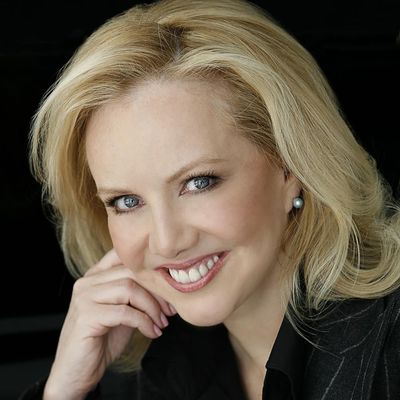
Guests
About
In Episode 34, Mark-Eugene and David preview their conversation with entertainment icons Julian Schlossberg and Susan Stroman. Julian shares highlights from his memoir Try Not to Hold It Against Me, reflecting on his six-decade career in film, TV, and Broadway. He’s later joined by five-time Tony winner Susan Stroman, who discusses her celebrated work on The Producers, Contact, The Scottsboro Boys, and more. Together, they offer a rare glimpse into the creative forces behind some of theatre’s most iconic works.
Transcript
This transcript was automatically generated and might contain errors.
[0:17] Mark-Eugene Garcia: Hello, welcome to The Drama Book Show.
[0:19] David Rigano: I'm Mark-Eugene Garcia.
[0:20] David Rigano: I'm David Rigano.
[0:21] Mark-Eugene Garcia: And this is episode 34.
[0:23] David Rigano: 34.
[0:24] Mark-Eugene Garcia: Wow, and we are one away from the end of the season.
[0:27] David Rigano: It's a very long season.
[0:28] Mark-Eugene Garcia: They're going to be this long.
[0:30] David Rigano: That'll be our Bobby episode.
[0:32] Mark-Eugene Garcia: Yes, exactly.
[0:35] David Rigano: A hundred percent.
[0:36] Mark-Eugene Garcia: And today we're talking about the book Try Not to Hold It Against Me by Julian Schlossberg.
[0:42] David Rigano: What?
[0:42] Mark-Eugene Garcia: A title.
[0:43] David Rigano: Oh, truly.
[0:44] Mark-Eugene Garcia: And it's really a part one.
[0:45] David Rigano: Yeah.
[0:47] Mark-Eugene Garcia: The man is good at coming up with titles for books.
[0:50] David Rigano: He's worked in movies and television on Broadway, radio.
[0:53] Mark-Eugene Garcia: He's done pretty much everything over 60 years in the industry.
[0:57] David Rigano: The book is about is just detail, which is why he calls it Try Not to Hold It Against Me, because he tells stories about really the one.
[1:05] Mark-Eugene Garcia: And he didn't come alone.
[1:07] David Rigano: No.
[1:07] Mark-Eugene Garcia: Again, if when you've worked with the best of the best, you can bring the best of the best to guest moderate.
[1:14] David Rigano: He brought Susan Stroman with him.
[1:16] Mark-Eugene Garcia: Which was multiple Tony Award winner.
[1:18] David Rigano: And multiple time host.
[1:19] Mark-Eugene Garcia: That was her second time here hosting something.
[1:22] David Rigano: And just an incredible friend of the bookshop and friend of the theater.
[1:25] Mark-Eugene Garcia: Yeah.
[1:25] David Rigano: I don't want to take away from telling his tales, so let's dive right in and let him tell his tales for us.
[1:32] Mark-Eugene Garcia: All right.
[1:41] Susan Stroman: Wonderful.
[1:42] Susan Stroman: Let me just tell you how I know this man, first of all.
[1:45] Susan Stroman: This wonderful man that I adore.
[1:48] Susan Stroman: He was the producer of a show I directed and choreographed called Bullets Over Broadway.
[1:55] Susan Stroman: Absolutely.
[1:57] Susan Stroman: And he called me one day and said, What do you think?
[2:00] Susan Stroman: A Bullets Over Broadway as a musical.
[2:02] Susan Stroman: And I went over to meet him, and we got on right away.
[2:06] Susan Stroman: And the whole experience was fantastic.
[2:08] Susan Stroman: The collaboration was very strong.
[2:10] Susan Stroman: And it was we had the time of our lives working on that show.
[2:13] Susan Stroman: It really was great, big Broadway musical.
[2:17] Susan Stroman: It's what you dream to do.
[2:19] Susan Stroman: So we had a fantastic time.
[2:21] Susan Stroman: And then we just remained very good friends after that.
[2:23] Susan Stroman: I really feel like he is one of the greatest producers I have ever worked with.
[2:28] Susan Stroman: And so we remained friends after that.
[2:31] Susan Stroman: When the pandemic happened, we would call where Julian would call me around him once a week.
[2:37] Susan Stroman: And what happened during those calls during the pandemic is Julian would read me chapters of a book that he was writing.
[2:44] Susan Stroman: So he would read these chapters to me.
[2:46] Susan Stroman: So I couldn't wait to hear from him and have him call me.
[2:50] Susan Stroman: He would also tell me a joke all the time.
[2:52] Susan Stroman: He's filled with good jokes, this one.
[2:55] Susan Stroman: But so the idea that now, after all during the pandemic, hearing these wonderful stories of his life who and the people that he's worked with and all them, his co extraordinary career.
[3:08] Susan Stroman: The idea that we're here now today is really I can feel it in my heart, Julie.
[3:12] Susan Stroman: It's really wonderful, really wonderful.
[3:19] Julian Schlossberg: I don't think I should talk.
[3:20] Julian Schlossberg: I should just listen to this.
[3:23] Susan Stroman: So let me just ask you a few questions here.
[3:25] Susan Stroman: Okay.
[3:26] Susan Stroman: And I think you're gonna run with these.
[3:31] Susan Stroman: Let's ask first, why did you call this book?
[3:34] Susan Stroman: Try not to hold it against me.
[3:35] Susan Stroman: Why did you call it that book?
[3:37] Julian Schlossberg: It's an interesting thing, too.
[3:39] Julian Schlossberg: I've been doing this for 60 years, so it's a lot of years, and you meet an awful lot of people, and you work with a lot of people.
[3:45] Julian Schlossberg: And what happened was I realized in writing the stories I wrote in the book that I worked with very controversial people.
[3:56] Julian Schlossberg: I didn't sit down and say, let me try to work with something controversial.
[4:00] Julian Schlossberg: But it turned out in reading it, they were.
[4:02] Julian Schlossberg: For example, the great director, Elia Kazan, and you talk about a great director's credits.
[4:09] Julian Schlossberg: Think of this.
[4:10] Julian Schlossberg: This is the man who directed the original Death of a Salesman, the original All My Sons, the original Streetcar Named Desire, the original Cat on a Hot Tin Roof, the original Sweet Bird of Youth.
[4:23] Julian Schlossberg: That's enough for theater.
[4:24] Julian Schlossberg: But then you'd go into movies, you won the Academy Award for Gentleman's Agreement.
[4:29] Julian Schlossberg: He won the Academy Award for On the Waterfront and made movies like A Face in the Crowd, Baby Doll, America, Incredible.
[4:36] Julian Schlossberg: And I, but he named names during the McCarthy period.
[4:40] Julian Schlossberg: And naming names for a lot of people who are still alive and affected by it is a pretty bad thing for to have happened.
[4:47] Julian Schlossberg: So they had number one, the controversial.
[4:50] Julian Schlossberg: There was a fellow named Alan Klein.
[4:52] Julian Schlossberg: Alan Klein managed the Beatles and the Rolling Stones.
[4:56] Julian Schlossberg: So that's not bad if you're a manager.
[4:59] Julian Schlossberg: But he was very litigious.
[5:01] Julian Schlossberg: He would sue the record companies hated him because he was more than happy to sue them and get stuff for himself.
[5:09] Julian Schlossberg: So he was number two in this group.
[5:12] Julian Schlossberg: There was, we both worked with Woody Allen.
[5:15] Julian Schlossberg: We loved working with Woody Allen.
[5:17] Julian Schlossberg: I did three plays, I did all his plays.
[5:19] Julian Schlossberg: It's a producer.
[5:20] Julian Schlossberg: But again, the controversy is there.
[5:25] Julian Schlossberg: And finally, there was a rock and roll promoter in Buffalo, New York.
[5:30] Julian Schlossberg: If the Rolling Stones or Frank Sinatra were going to do six or seven dates in the country, he would get one of them in Buffalo.
[5:38] Julian Schlossberg: It's not like we're talking Boston or San Francisco or LA.
[5:42] Julian Schlossberg: It's Buffalo, where they say committing suicide in Buffalo is redundant.
[5:49] Julian Schlossberg: So anyhow, he would he came to me to learn the movie business.
[5:53] Julian Schlossberg: And I said to him, I'll tell you what, you sit at this in the end, other end of my office and listen on the other phone, and at the end, take your notes and then ask me questions.
[6:04] Julian Schlossberg: And I taught him the movie business, and his name was Harvey Weinstein.
[6:08] Julian Schlossberg: So between this group of people, I felt it was best to say, try not to hold it against me.
[6:17] Julian Schlossberg: Try not my fault what they did.
[6:22] Julian Schlossberg: But it's true.
[6:24] Julian Schlossberg: In fact, the idea that you even came up with that, I love the title so much.
[6:28] Julian Schlossberg: But his the folks that you write about are people that I had no idea that you delve deep into them, and it's so exciting for me to read about these people.
[6:36] Julian Schlossberg: It's wonderful.
[6:38] Julian Schlossberg: The title came, I was trying to, I was doing the only revival I was ever going to do, it turned out, was gonna be Sly Fox that George C. Scott had originally done.
[6:48] Julian Schlossberg: But I was gonna do it with Richard Dreyfuss.
[6:51] Julian Schlossberg: But I wanted initially Bert Reynolds.
[6:54] Julian Schlossberg: That's who I wanted to play, Sly Fox.
[6:57] Julian Schlossberg: And I called him, I didn't know him, and I left a message on his service which said, Hi Bert, my name is Julian Schlossberg.
[7:05] Julian Schlossberg: I'm a New York City producer.
[7:06] Julian Schlossberg: Try not to hold it against me.
[7:10] Julian Schlossberg: And he called back.
[7:13] Julian Schlossberg: And then, as you'll read in the book, it looked like he was gonna do it.
[7:17] Susan Stroman: Yeah.
[7:17] Julian Schlossberg: But we won't get into that.
[7:20] Susan Stroman: And now you grew up in the Bronx, but so tell us a bit more about that.
[7:24] Julian Schlossberg: What was your childhood like?
[7:26] Julian Schlossberg: It was pretty interesting.
[7:27] Julian Schlossberg: It's such a different world now that we're all living in.
[7:30] Julian Schlossberg: But in my neighborhood in the Bronx, and anybody who grew up in a neighborhood knows that you go up half the block, and there's the deli, and there's the candy store, and there's the tailor shop, and there's the hardware store, all in the area of a block or two.
[7:46] Julian Schlossberg: It was great.
[7:47] Julian Schlossberg: It was a neighborhood.
[7:48] Julian Schlossberg: And you knew it was your neighborhood, and you didn't think, wow, this is different, because everybody seemed to have a neighborhood.
[7:56] Julian Schlossberg: I knew there was a Park Avenue stroke.
[7:58] Julian Schlossberg: I knew, but it might have just been in Indonesia.
[8:03] Julian Schlossberg: The fact that there was a Park Avenue meant nothing to me.
[8:06] Julian Schlossberg: So yeah, it was a I was very happy with that childhood.
[8:09] Julian Schlossberg: I lived across the street from the Kingsbridge Armory.
[8:13] Julian Schlossberg: Kingsbridge Armory, way before they built the New York Coliseum or the Javits Center, the Kingsbridge Armory hosted motorboat shows, car shows, and rodeos.
[8:25] Julian Schlossberg: Rodeos in the Bronx.
[8:27] Julian Schlossberg: It was unheard of for me to walk across the street and there's bucking broncos and they're lassoing heifers.
[8:35] Julian Schlossberg: This is wild.
[8:36] Julian Schlossberg: And it was a kind of exciting kind of life.
[8:39] Julian Schlossberg: And the way I got into show business in a peculiar way.
[8:43] Julian Schlossberg: Yeah, all the neighborhood guys that I mentioned, the candy store, the barber, the hardware store, they all got two free tickets for opening night and or opening day at the armory.
[8:56] Julian Schlossberg: And I knew them all because after all I was patrons of the barber and the deli.
[9:00] Julian Schlossberg: And I said, I would go in and say, You have any tickets?
[9:03] Julian Schlossberg: First day, and they'd say, sure.
[9:05] Julian Schlossberg: So they give me the tickets.
[9:07] Julian Schlossberg: I'd have a whole bunch of them, and then I would go and sell them.
[9:12] Julian Schlossberg: Sold them outside the armory.
[9:13] Julian Schlossberg: I remember the price was three dollars.
[9:16] Julian Schlossberg: I gave people two dollars.
[9:17] Julian Schlossberg: I bought one-third off.
[9:19] Julian Schlossberg: Yeah.
[9:20] Julian Schlossberg: I didn't have much of an overhead.
[9:21] Julian Schlossberg: So anyhow, I took all that money, I remember 60, 70, 80 dollars of singles, and threw it on my bed, and I was diving into the money like Scrooge McDuck.
[9:35] Julian Schlossberg: They were comic books.
[9:37] Julian Schlossberg: And my mother came in.
[9:39] Julian Schlossberg: What are you doing?
[9:39] Julian Schlossberg: Where's that guy?
[9:41] Julian Schlossberg: Oh, Mama, I told her what happened.
[9:43] Julian Schlossberg: She said, Look, you're never gonna do that again.
[9:45] Julian Schlossberg: I want you to promise me you'll never do it again.
[9:48] Julian Schlossberg: And I said, I promise.
[9:49] Julian Schlossberg: And I never dove into the dialogue.
[9:55] Julian Schlossberg: However, I continued to work the armory.
[9:59] Julian Schlossberg: And then, but what did you love about showbiz?
[10:02] Susan Stroman: Like, why did you, how did you we know why you did that to dive into the money?
[10:07] Julian Schlossberg: But what was it?
[10:08] Julian Schlossberg: And was it the movies, or was it the theater, or was it?
[10:11] Julian Schlossberg: It was everything.
[10:12] Julian Schlossberg: It was everything.
[10:12] Julian Schlossberg: Everything.
[10:13] Julian Schlossberg: You gotta remember in my case, I grew up initially with the radio.
[10:17] Julian Schlossberg: And what could be better than that?
[10:19] Julian Schlossberg: Your imagination runs wild.
[10:22] Julian Schlossberg: You're on the range with the Lone Ranger, or you're walking down the steps to Jack Benny's Wolf, and you're imagining this.
[10:29] Julian Schlossberg: It's such a creative thing and such a loss now that people get everything spoon-fed.
[10:35] Julian Schlossberg: It really does hurt the imagination a lot.
[10:38] Julian Schlossberg: So I had that for radio, and then the early days of television.
[10:41] Julian Schlossberg: Can you imagine?
[10:43] Julian Schlossberg: A kid, a little kid, can go into his living room and turn on and see movies and shows in your home?
[10:50] Julian Schlossberg: It is unbelievable.
[10:52] Julian Schlossberg: The only way I could ordinarily do that was to go to a movie theater.
[10:56] Julian Schlossberg: But now it was in my home.
[10:58] Susan Stroman: Yeah.
[10:58] Julian Schlossberg: And to show you how a warped childhood I must have had.
[11:02] Julian Schlossberg: Perry Como had a weekly show.
[11:05] Julian Schlossberg: And he would also do a dress rehearsal with a separate audience.
[11:11] Julian Schlossberg: So I would run to the dress rehearsal, which was, I think 6:30 at night, and then I'd run home, because he came on at 8 o'clock to see the changes from the show at 6:30 to 8 o'clock.
[11:24] Julian Schlossberg: This is not your typical way of going up, but it really got me hepped up.
[11:30] Susan Stroman: Yeah.
[11:30] Julian Schlossberg: And like Broadway 60 years ago, what was it like?
[11:35] Julian Schlossberg: It wasn't like this.
[11:36] Susan Stroman: No.
[11:37] Julian Schlossberg: And so when you walk down 44th Street or 45th Street.
[11:40] Julian Schlossberg: It depends.
[11:42] Julian Schlossberg: Depressive.
[11:43] Julian Schlossberg: It was something.
[11:44] Julian Schlossberg: I grew up, what's this thing?
[11:47] Julian Schlossberg: It was the Paramount Movie Theater, the Astor, the Victoria, the Criterion, the Loew's State, the Roxy, the Capitol.
[11:54] Julian Schlossberg: All these movie theaters were on Broadway.
[11:57] Julian Schlossberg: But not only did they show the movie, they also had a stage show.
[12:02] Julian Schlossberg: So you had full orchestras, you had dancers, singers, you had it was incredible time.
[12:08] Julian Schlossberg: And the restaurants, McGuinness, the Roast Beef King, Lindy's with the cheesecake everything, and Jack Dempsey's and Hector's cafeteria and Grant's hot dog.
[12:19] Julian Schlossberg: I can't begin to tell you.
[12:21] Julian Schlossberg: I'm getting hungry right now.
[12:24] Julian Schlossberg: It was incredible.
[12:26] Julian Schlossberg: It was just a great place to be.
[12:28] Julian Schlossberg: And as a kid, it's so different, as I keep saying, I didn't have to have my parents' permission.
[12:33] Julian Schlossberg: I just went on the subway.
[12:35] Julian Schlossberg: I was 10 years old and I went downtown.
[12:37] Julian Schlossberg: Now, why I would go downtown.
[12:39] Julian Schlossberg: In those days, movies opened downtown New York City in one theater.
[12:44] Julian Schlossberg: That's it.
[12:45] Julian Schlossberg: Forget about the neighborhoods.
[12:47] Julian Schlossberg: Anything.
[12:47] Julian Schlossberg: It would play sometimes a year in one theater.
[12:51] Julian Schlossberg: Downtown.
[12:52] Julian Schlossberg: Yeah.
[12:52] Julian Schlossberg: The Criterion or the Loew's State or whatever.
[12:55] Julian Schlossberg: So I would be the only one in the public school kids would come up and say, Did you see the new Danny Kaye movie?
[13:01] Julian Schlossberg: Oh, sure.
[13:01] Julian Schlossberg: I was bad.
[13:02] Julian Schlossberg: Two weeks five years ago.
[13:03] Julian Schlossberg: It was it was a totally different time.
[13:05] Julian Schlossberg: Yeah.
[13:06] Julian Schlossberg: Because I know because when I work on shows, I do a lot of research and see all those pictures.
[13:11] Julian Schlossberg: It was very romantic to me that time and what on the streets now.
[13:16] Susan Stroman: I understand what you're saying.
[13:17] Julian Schlossberg: All those beautiful restaurants.
[13:19] Julian Schlossberg: Oh, it was just unbelievable.
[13:20] Julian Schlossberg: Even Cad's steakhouse were 99 cents or a dollar, you got some horrible meat, probably, but it tasted good for the dopey kid.
[13:28] Julian Schlossberg: And baked potato.
[13:29] Julian Schlossberg: No, you couldn't believe it.
[13:31] Julian Schlossberg: It was all Hector's cafeteria and also the automat.
[13:34] Julian Schlossberg: I grew up in the automat.
[13:36] Susan Stroman: Yes, of course.
[13:37] Julian Schlossberg: I think they're bringing it back, hopefully.
[13:39] Susan Stroman: Well, it won't be the same.
[13:40] Julian Schlossberg: It will never be the same.
[13:42] Susan Stroman: Did you go to the automat all the time?
[13:44] Julian Schlossberg: Well, my grandmother would take me.
[13:46] Julian Schlossberg: Yeah.
[13:46] Julian Schlossberg: The best baked beans I ever tasted, the best mashed potatoes.
[13:50] Julian Schlossberg: And the thing that was so exciting was you put everything in glass, the containers.
[13:56] Julian Schlossberg: You'd put your nickel in.
[13:58] Julian Schlossberg: Oh, you get 400 things for a nickel, but you put a nickel in and you open it up and it comes and it whirls around and you take the food out, and then it whirls again and closes down, and then they foot and it was more exciting than the food.
[14:11] Julian Schlossberg: So they fly around to come back.
[14:13] Susan Stroman: Yeah.
[14:13] Julian Schlossberg: No, I love the automat.
[14:15] Julian Schlossberg: That was great.
[14:16] Julian Schlossberg: They did a documentary on it.
[14:17] Susan Stroman: Yes, they did.
[14:18] Julian Schlossberg: It was really nice to see.
[14:19] Julian Schlossberg: As a matter of fact, Mel Brooks sings the song at the end about that.
[14:22] Susan Stroman: That's right.
[14:23] Julian Schlossberg: He wrote a song about the automat.
[14:26] Susan Stroman: Now, do you remember what the very first Broadway show that you saw?
[14:30] Julian Schlossberg: Well, how can you forget your first show?
[14:32] Susan Stroman: Who did you see?
[14:33] Julian Schlossberg: Like your first watch.
[14:36] Julian Schlossberg: It was Mary Martin and Cyril Richard in Peter Pan.
[14:40] Susan Stroman: Oh my God.
[14:41] Julian Schlossberg: The original. Now here I am. I guess I'm 12 or 13 years old. And at one point, Tinkerbell, the fairy's in big trouble. And we in the audience have to say, I believe. I believe, and if we all say it, if all the kids in the audience say it, think it's gonna get saved. Yeah. I'm 13 years old. I don't even want to think what they're doing at 13 now. And I'm yelling, I believe. I believe. Yeah. And it killed me. She's flying all over the damn stage. Sarah Richard is the greatest Captain Hook you've ever seen. Yeah. And oh my god. It was I was gone. Yeah. Finished. And then I followed it with Pajama Game and then Sammy Dangers Jr. in Mr. Wonderful Ben, three in a row, and that was it. I was a goner.
Yeah. Pajama Game had John Wright and Janice Page and Carol Haney and Eddie Foy Jr. Yeah. And the night that Carol Haney got ill, the understudy came on, did a great show. Her name was Charlotte McLean. Yeah. In the audience that night is Hal Wallace, the most famous producer in Hollywood who did the Martin and Lewis movies, the Pradley movies, and he discovers Shirley. Isn't that amazing? If you're a if you're standing by on a show, you've got to keep thinking, maybe Shirley, maybe Lightning will hit again. Sure. And no, that's probably the most famous story I was of someone becoming a star. And when, okay, so you love the movies and you love the theater, but when did you think I'm going to be a producer?
When did you think that? Being a producer, that's a big decision. Like, yeah, I'm not sure I had the intelligence to say I think I'm gonna be a producer. What had happened was I was working, I started out at the ABC television network in the in the station clearance department, which was clearing shows around the country because the neighbor each network has affiliates around the country, and you want to sell the shows to those affiliates. And I was there for a couple of years, and the reason I left, I mean, it was great for the beginning. I was there for 10, 11 months, and I was sent to London to work at the BBC. And I worked with a man named Brigadier Tucker. And he would say, phone would bring a makeup, he'd go, Brigadier Tucker here.
And whenever they asked him, whatever you knew, he would say, we'll get back to you. Look at it. He knew nothing. He only knew how to say, Brigadier Chucker here. Yes, he knew. So about 10, 11 months in, I get a telex. Who remembers what telex is on? Telex saying, come back, you've been promoted to the head of the department. What? I've only been there 10, 11 months. But I went back, and I thought, this is Gray, I'm the head of the apartment. I'm 20 years old. And then I find out, and I'm training people coming in, and they're making more money at the end of the week than I'm making. Because they're on overtime. And I'm on no overtime because I'm quote management. I've gone from a guy making overtime to a guy management, but the kids I'm teaching make more money at the end of the week.
So I had to leave. But of course I didn't leave without another job. Yeah. And I worked for a company called the Walter Reed Organization, nothing to do with the hospital, but Walter Reed owned a lot of theaters all over the country. And in New York, we had the Abston the Victoria, the DeMille. We built the Ziegfeld, we had the Coronet, the Baronet, the Fine Arts, the Festival, the Little Carnegie, 34th Street East. We had pretty much control of town. And I was able to run that company and the buying of it at 27th, Charles Young, and it was but I had no problem handling it. In other words, I didn't let it go to my head because I just knew that it was the theaters, not me. I knew that the reason I was being wined and dined and flown first class and offered lots of bribes, everything, was only one reason.
I had the coronet, the baronet, I had the theaters I wanted. So it never, I never felt I knew a day I'd leave that job, the phone calls would stop. And they pretty much did when I left. Pretty true. The funny thing was that before before I was in the theatre division, I was, because I had gone from ABC television to the television division of Walter Reed. And Walter Reed had the most incredible movies if you loved a certain kind of sophisticated film. They had Room at the Top and David and Lisa and The Red Shoes and Saturday Night, Sunday Morning, and The Mark. Great wonderful, adult, intelligent movies, which of course are very hard to sell, as you could imagine, especially since I was in charge of a big marketplace that they read me have.
But here was the catch, so to speak. I had, for example, I would have all of Minnesota except Minneapolis and St. Paul. I'd have all of Wisconsin except Milwaukee. I'd have all of Illinois, but no Chicago. In other words, I was given Madriggs. I was given towns that people wouldn't know these movies. But I was a zealot. I I actually felt that I'm raising the programming, the quality of the town I'm in. And if I could sell these movies to these Yahoos in these towns, and they would play them, it would absolutely help the quality. Here's the most frightening part of the story, at least for me it was. The people, by the way, in the smallest towns, I went to Pemberton and North, Waterloo, Iowa, Westlico, Texas, I covered towns that no Jew has ever gone.
And the funny thing about it was that you'd find that they knew nothing about programming. Nothing. But who won't have the station? Multi-million dollar station, the smallest station in this country, which was not UHF, was a VHF, which meant Channel 2 to 13. The smallest one was multi-million dollar company because the tower to broadcast was so expensive. So you would go to these towns and you'd find out that the people who owned the television station owned the radio station and owned the newspaper. They owned the town, which may explain how some people get become presidents in this country lately. But anyhow, we won't get into that. So now did you then do I answer the question? Sure. Who the hell knows?
But did I use did you then produce a movie before you produced a brother show or produce a theater piece? I produced a movie first. And what was your first movie that you produced? I produced a what I was working with my then girlfriend on a beach, and I said, we were doing some uh Sid Caesar Emma Gene Coke sketches, Carl Reiner from your show of shows, which was an early TV show that was 90 minutes on NBC. And I said, I wonder if the producers alive, Max Liebman, who produced this. And I looked up the telephone book. Who knows what a telephone book is anymore? But anyhow, there was a telephone book, and I looked him up, and his name was there. And it turned out he was in the back of the city center.
Wasn't at the city center where you could go in, but there was a back. And I called and I went, and I said, Mr. Leadman, do you happen to have any of the shows of your show of shows? And he was a little fellow, and he said, You follow me, and I followed him down the wall here, and he opened up a closet and he said, There's a hundred and fifty-six ninety-minute kinoscopes right there. So there I was. Oh my god. And uh I said, I'd like to make a movie. Oh I'd like to take the best sketches that we can agree to and put them together, and we made this movie called Ten for Michelle Shows. And that's how I began it. And the film opened up and it got the greatest reviews. Fantastic. Yeah, not too many people showed up.
It was so disappointing because I thought, look at these reviews. And I take out this A and it says, Hail Caesar. And list all the quotes. Yeah. Nothing happens. Yeah. But it was the first movie, and I was really, I was so excited about it. I bet. Yeah, because I first of all it was so funny, if you ever get a chance to see it, and I make nothing, so don't I don't care if you do or not. But it was a very funny. And then what was your first Broadway show you produced? Oh, yeah. Renee Taylor and Joe Bologna were married, and they were good friends, and they came to see me while I was I don't know where the hell I was working, but anyhow, they came to see me and said, Look, we've written this play and we want you to produce it.
I said, I don't know anything about producing Broadway. They said, Let us read it to you. I said, Okay. So they came over to my house. No, I went, they went over to their house. Oh, and they said, Joe's mother would like to come. Is that okay? And I said, Can I bring my mother? You're always negotiating. I'll see your mother. So my mother and Joe's mother. And I sat there and listened to this, what I thought was the funniest play I had ever could. Just hysterically funny. And uh and I said to Renee, and Joe, I love you guys. I I'd never produced a play. And Renee says, So you'll learn on my play. All right. I guess that was checkmate. And I said, all right. And at that time I was consulting for this fellow Alan Klein, as I mentioned, who's Rolling Stones and the Beatles.
And he had actually discovered Sam Cook, who was a wonderful singer. And I said, Alan, I want you to hear this play. I think this could be something that we could do. And he said anything about producing, but brought I said, nothing. He says, No, neither do I. Let's see the thing. Okay. So they read the play, and it's really funny. And at the end, he says, and this was in my apartment this time. He says, Come here, let me talk to you. He said, So you've never done a play. I said, no. He says, I never have. He said, Oh, let's see, we'll learn on this play. And he financed the whole play. Oh, you know, I mean, this is I spent my whole life with a tin cup, going around trying to raise money for plays that up movies or whatever.
But this guy just said, Oh, don't worry about it. I'll do it. And he did. So that was the first play. We played the Golden Theater, and we got the most unbelievable review from Clive Barnes. Unbelievable. There was only one problem. What's that? He had left the Times and was now working for the New York Post. Frank Rich, however, came in and said, hey, when you see a comedy, you should laugh. I didn't laugh once. Not a good review. You would say. Now he was the thing that infuriated me, not that Frank Richard ever cared. What infuriated me was that all he has every right to say he didn't think it was funny. But he at least should say the audience was falling out of me. The audience was going crazy.
I went with Joseph E. Levine, who was a famous producer, and he said to me, I will buy the film rights to this right now. Will you sell them to me? I said, sure. Of course I couldn't get him on the phone after the reviews came up. But that's the way the business sadly goes. Yeah, I know. But you do. Oh yeah. Woody Allen once told me that he said, I don't read reviews. And I said, you don't. He said, no, because the bad ones are heartbreaking, and the good ones are never good enough. And he's right about that because you have a good review, but then you say why didn't they talk about that actress? Why didn't they talk about that number? So it's best just not to read it. Yeah. That reminds me Louis B. Mayer ran MGM for years and years.
At the end they would screen for the the executives that around and then and he would go around and say what do you think? What do you think? And everybody was kissing his back and whatever. And finally this one guy said it was colossal LB and he said merely colossal. That's what it reminded me of now you had your own radio show in New York for nine years but where did that fit into the you had a radio show was that like an early podcast or yeah like that one before the long before the podcast it was actual radio show. That's right. I was on WNCA from eight to midnight after the good guys they were called the good guys and it was called Julian Schlossberg's movie talk and I would have the most incredible people would be sitting requests from me.
I couldn't I was wildly excited to have Jack Nicholson and Betty Davis and John Euston and Bob Hope and George Burns. I still to this day can't believe they're in front of me. Why are they here with me? But they were, and we had I had a wonderful time doing that show. Yeah. And this fellow Harvey Weinstein that I mentioned before, who elicits his hisses and certainly rightfully, even though I never expected he'd hit the heights he did when he was learning from me or the depths that he sunk to. But while I wouldn't take anything from him, he syndicated my show, my radio show around the country. So of course we were in Buffalo because he was so big there. We were in Buffalo in Boston and Jacksonville, and oh my golly.
Hey, we I was all over the country. And he sold me. And I you just you did you were in charge of distributing like over 500 films, but it was there a c films that were more meaningful to you, like a film that was like you remember being this is going to be very important for this town or for these people. Is there something that you remember that was unbelievably meaningful? There's something that one time called Napy, N-A-T-P-E, and it stands for the NASA Association Television Program Executives. And it held once a year in LA. And I would go to it every year with my company. And these two fellows walked in and said, We have an Orson Wells movie.
[29:25] Julian Schlossberg: Would you be interested in distributing it?
[29:27] Julian Schlossberg: I said, Are you kidding? Of course I would.
[29:30] Julian Schlossberg: I said, What's the name of it?
[29:32] Julian Schlossberg: We can't tell you.
[29:33] Julian Schlossberg: Can I see it?
[29:34] Julian Schlossberg: No, you can't.
[29:36] Julian Schlossberg: I said, So what are you here for?
[29:38] Julian Schlossberg: We were just trying to find out if you're interested.
[29:40] Julian Schlossberg: I'm interested. I said.
[29:43] Julian Schlossberg: And I was excited, and I knew there was a film called Chimes of Midnight, which was his version of the False Staff that he did.
[29:51] Julian Schlossberg: But they said it wasn't that movie.
[29:54] Julian Schlossberg: And I thought I knew all the movies, because he didn't make that many, probably eight or ten at the most.
[29:59] Julian Schlossberg: Anyhow, I went back to New York and frankly forgot about it because I didn't hear from anyone.
[30:04] Julian Schlossberg: And oh, I guess about a month later, I get a call, and they say Miss Wells is on the phone.
[30:11] Julian Schlossberg: Now, I've just seen a movie called Nashville, and I'm thinking, oh, that girl Gwen Wells, she must be calling me.
[30:18] Julian Schlossberg: And I was single. I said, Hey, okay.
[30:22] Julian Schlossberg: So I go, hello, and she said, Hello, I'm Orson Wells' daughter, and I'd like to meet with you.
[30:28] Julian Schlossberg: And I said, sure.
[30:30] Julian Schlossberg: Come on, where are you?
[30:31] Julian Schlossberg: She'll know I'm in Las Vegas, but I'm coming to New York, and we made a date.
[30:36] Julian Schlossberg: Expecting in the woke world, I shouldn't say this, but expecting a heavy woman.
[30:41] Julian Schlossberg: And in comes a knockout, a knockout.
[30:44] Julian Schlossberg: And she could have been a model, and it turns out she was a model.
[30:48] Julian Schlossberg: And she was modeling, and she was his youngest daughter.
[30:50] Julian Schlossberg: Her name is Beatrice, she's still alive.
[30:53] Julian Schlossberg: And she said, Are you interested in distributing my father's movie?
[30:56] Julian Schlossberg: And I said, Yeah, I told these two guys, they're my attorneys, and they want me to meet with you.
[31:02] Julian Schlossberg: And I said, sure.
[31:03] Julian Schlossberg: And that's what we decided to do.
[31:05] Julian Schlossberg: The movie was Othello.
[31:06] Julian Schlossberg: Morrison Wells is Othello.
[31:08] Julian Schlossberg: It's not Shakespearean, it's in Shakespearean because it's only 90 some odd minutes.
[31:15] Julian Schlossberg: Which is good.
[31:16] Julian Schlossberg: It makes it easier.
[31:19] Julian Schlossberg: Yeah.
[31:20] Julian Schlossberg: And I look at the movie, and they worked on it in Chicago with the attorneys were, and they send me the print, and it's out of sync.
[31:29] Julian Schlossberg: And in other words, someone's talking, and then someone talks after the lips pose, it's really a mess.
[31:35] Julian Schlossberg: But the movie itself is terrific.
[31:37] Julian Schlossberg: And I want to do what we call a sound mix.
[31:41] Julian Schlossberg: Now, a sound mix to make it very quickly, there's what they call a three stripe in film.
[31:46] Julian Schlossberg: You have the dialogue, you have special effects, and the sound effects, and then you have the music.
[31:52] Julian Schlossberg: It's called the three stripe, and you have to marry those three together, and that's how you get a movie from a sound mix.
[32:00] Julian Schlossberg: So I want to do a mix on this.
[32:02] Julian Schlossberg: I want to change, I want to get the dialogue in their mouths, among other things.
[32:07] Julian Schlossberg: And there's one great mixer in New York who I know his name is Lee, and I've known him for years, Lee Dictor.
[32:07] Julian Schlossberg: Lee Dictor.
[32:15] Julian Schlossberg: He's it.
[32:16] Julian Schlossberg: And he did Mike Nichols movies, Nora Ephron movies, he did Bob Benton, all these great film New York City directors.
[32:24] Julian Schlossberg: So I call up Lee and I say, Lee, I want to show you.
[32:27] Julian Schlossberg: I'm booked, I can't see you.
[32:28] Julian Schlossberg: I can't.
[32:29] Julian Schlossberg: I say, hey, whoa, take it easy.
[32:31] Julian Schlossberg: Okay.
[32:31] Julian Schlossberg: Can you just, I don't want you to fix it, I just want you to look at it and give me some advice.
[32:36] Julian Schlossberg: He says, sure.
[32:38] Julian Schlossberg: So I go over.
[32:39] Julian Schlossberg: Now the first reel of Othello is so extraordinary that I hope one day, if you haven't seen it, you see it.
[32:46] Julian Schlossberg: But it's that incredible lyric opera companies streaming and singing, and there's Wells being carried on a giant platform for he's dead in the as Othello, and there's a man going up a castle in a cage, and you have no idea what's going on.
[33:07] Julian Schlossberg: You're watching something extraordinary.
[33:10] Julian Schlossberg: And at the end of all this, I show it to Lee, and he turns to me and says, You son of a bitch.
[33:18] Julian Schlossberg: Because he's an artist.
[33:20] Julian Schlossberg: And I knew or I felt he could not let someone else do this movie.
[33:25] Julian Schlossberg: I just felt it.
[33:26] Julian Schlossberg: He says, okay, we'll work at night, we'll work on weekends, but I have to do this movie.
[33:32] Julian Schlossberg: Wonderful.
[33:32] Julian Schlossberg: And that movie meant the most to me.
[33:34] Julian Schlossberg: I took it to Cannes.
[33:37] Julian Schlossberg: Orson had won the Cannes Film Festival in 1952.
[33:41] Julian Schlossberg: He could not get a distributor.
[33:43] Julian Schlossberg: Nobody would distribute this movie.
[33:46] Julian Schlossberg: And it languished for three years.
[33:48] Julian Schlossberg: And finally, United Artists agreed to open the Paris Theater, one theater, and if it did business, they would take it out.
[33:56] Julian Schlossberg: And it did no business.
[33:57] Julian Schlossberg: And it just sat there.
[33:58] Julian Schlossberg: It sat there until 1991.
[34:01] Julian Schlossberg: And then when I took it in, and I brought it to Cannes in 1992.
[34:06] Julian Schlossberg: And 40 years after he won, and we were at the Palais, and it was a great night.
[34:12] Julian Schlossberg: And we had this big party.
[34:14] Julian Schlossberg: And this lovely actress comes in, who I know from the movies, but I've never met, and she comes, she said, one of them.
[34:21] Julian Schlossberg: I wanted to meet you and thank you for doing this.
[34:24] Julian Schlossberg: And I said, What can I say?
[34:27] Julian Schlossberg: It was Emma Thompson.
[34:29] Julian Schlossberg: And she was so taken with the film and the fact that someone had brought it back.
[34:34] Julian Schlossberg: So I think that's the film that meant the most because I certainly didn't make it, but it still would be languishing, I think.
[34:43] Julian Schlossberg: Yeah, if you hadn't done it.
[34:44] Julian Schlossberg: And now jumping to the theater of all the plays that you have produced, what play?
[34:49] Julian Schlossberg: Well, it's Overbrook.
[34:50] Julian Schlossberg: Well, it's Overbrook.
[34:52] Julian Schlossberg: Are you kidding? You think I'm a fool?
[34:54] Julian Schlossberg: No, because that was your first musical, right?
[34:58] Julian Schlossberg: That's my first.
[34:59] Julian Schlossberg: No, I did little ones.
[35:00] Julian Schlossberg: You did little ones.
[35:00] Julian Schlossberg: I did Twiggy and Harry Brony and Lumber All.
[35:04] Julian Schlossberg: I did Jimmy Norton and Street of Dreams.
[35:06] Julian Schlossberg: I did a few small musicals, yeah.
[35:09] Julian Schlossberg: But not a big baby, like this one's like this is the something.
[35:13] Julian Schlossberg: But what about like the plays that you did so many plays?
[35:16] Julian Schlossberg: Was there one that you had to do?
[35:18] Julian Schlossberg: We do these, we mount these shows and they get inside of our hearts, and sometimes our hearts get broken.
[35:25] Julian Schlossberg: But we carry them with us because we've created them.
[35:28] Julian Schlossberg: So they stick with us for all these years.
[35:30] Julian Schlossberg: I think producers, directors would all agree that sometimes the shows that mean the most did not work, did not sell.
[35:40] Julian Schlossberg: It worked for you.
[35:41] Julian Schlossberg: I promise you, and this is I would be breaking the producer's handbook, but I would have put money into Bullet's open Broadway.
[35:49] Julian Schlossberg: I was exactly the musical that I wanted that Stro did.
[35:53] Julian Schlossberg: It was just a wonderful thing.
[35:55] Julian Schlossberg: And the good news is while it didn't make it on Broadway, we played the United States.
[36:00] Julian Schlossberg: We've had a huge tour.
[36:01] Julian Schlossberg: We were terrific in Japan.
[36:04] Julian Schlossberg: And who knows, maybe Indonesia's next.
[36:06] Julian Schlossberg: I don't know.
[36:07] Julian Schlossberg: But we'll see.
[36:08] Julian Schlossberg: I don't know.
[36:09] Julian Schlossberg: I think when you feel that without you, maybe it wouldn't have happened.
[36:13] Julian Schlossberg: I guess you get a kind of proprietary feeling.
[36:17] Julian Schlossberg: Yeah.
[36:17] Julian Schlossberg: That's what matters.
[36:18] Julian Schlossberg: Elaine produced all of Elaine May's plays.
[36:21] Julian Schlossberg: And when she had written this one act that I really liked and wasn't sure what we were gonna do with it, but I get a call from Alan Arkin.
[36:30] Julian Schlossberg: And Alan says to me, I've written a play, one act.
[36:34] Julian Schlossberg: You have any interest?
[36:36] Julian Schlossberg: Bing I had Elaine.
[36:38] Julian Schlossberg: He doesn't know it.
[36:39] Julian Schlossberg: I said, let me read it.
[36:41] Julian Schlossberg: He said, No, let me perform it for you with my youngest son Tony Arkin.
[36:45] Julian Schlossberg: I said, okay.
[36:46] Julian Schlossberg: So I got a little theater and I brought Elaine with me, and it was really a good little play.
[36:52] Julian Schlossberg: So I thought this is true.
[36:54] Julian Schlossberg: I said, so I this is really good.
[36:56] Julian Schlossberg: So on the way home, Elaine and I lived in the same building.
[36:58] Julian Schlossberg: I said to Elaine, she said to me, What are you gonna do with this play?
[37:02] Julian Schlossberg: I said, if you will write a play for your daughter, Jeannie Berlin that you'll do, and Alan is doing with his son, this could be one hell of an evening.
[37:12] Julian Schlossberg: She said, Okay, I will.
[37:14] Julian Schlossberg: And we say live in the same building.
[37:16] Julian Schlossberg: So that was a Friday night.
[37:18] Julian Schlossberg: Monday morning, I'm walking into the kitchen when under my door there's an envelope.
[37:23] Julian Schlossberg: And I look at the envelope, and Elaine's written a play over the weekend.
[37:23] Julian Schlossberg: Written a play over the weekend.
[37:29] Julian Schlossberg: So I look at the play and I said, This is great.
[37:29] Julian Schlossberg: This is great.
[37:32] Julian Schlossberg: Okay, I have my evening.
[37:34] Julian Schlossberg: And I'm sitting around and I'm so excited.
[37:37] Julian Schlossberg: Alan Arkin, brilliant, hasn't been on a Broadway stage in 30 years.
[37:42] Julian Schlossberg: Elaine May hasn't been on a Broadway stage, this is 20 years ago, haven't been on a board in 30 years.
[37:48] Julian Schlossberg: And they both started in Second City together.
[37:51] Julian Schlossberg: They actually were the founders of Mike Nichols and a few others.
[37:56] Julian Schlossberg: And I all of a sudden I say to myself, wait a second.
[38:01] Julian Schlossberg: I'm gonna say Alan Arkin, Elaine May, in some blah blah blah play, but they're never gonna be together.
[38:09] Julian Schlossberg: He's with his son, she's with her daughter.
[38:12] Julian Schlossberg: If I'm an audience, I want to see Alan Arkin and Elaine May together.
[38:17] Julian Schlossberg: So I call an emergency meeting at a Japanese restaurant.
[38:22] Julian Schlossberg: As you do, as we always do, of course.
[38:25] Julian Schlossberg: And I say, Listen, we've got to have a play, another play.
[38:29] Julian Schlossberg: And Alan says, I'm not writing another play.
[38:33] Julian Schlossberg: And Elaine says, I guess that leaves me.
[38:35] Julian Schlossberg: And so that's what happened.
[38:38] Julian Schlossberg: She wrote a play, but unlike the three days that it took to get the first play, I cannot get her to give me the next play because she has decided unilaterally, and if you ever work with Elaine, it is often unilaterally.
[39:12] Julian Schlossberg: I said, where is this where are these rules coming from?
[39:15] Julian Schlossberg: She has decided that this play, the third play, has to have roles for all four actors, and they can be totally different than the other two plays, and on top of it, they have to be the same size.
[39:15] Julian Schlossberg: What is this?
[39:17] Julian Schlossberg: This is what I want.
[39:18] Julian Schlossberg: This is what it has to be.
[39:19] Julian Schlossberg: That took a couple of months.
[39:21] Julian Schlossberg: But we got it.
[39:22] Julian Schlossberg: You got it.
[39:22] Julian Schlossberg: And then we opened it.
[39:23] Julian Schlossberg: It was called Power Plays.
[39:25] Julian Schlossberg: It sold out.
[39:26] Julian Schlossberg: It was a gigantic hit.
[39:27] Julian Schlossberg: It was the big, probably the big, if not the biggest hit, one of the biggest hits I ever had.
[39:33] Julian Schlossberg: And so much so that I brought in, I wanted Elaine and Alan wanted out after six months.
[39:40] Julian Schlossberg: Jeannie and Tony were going to stay, and I had to find replacements for them.
[39:46] Julian Schlossberg: Now, if you went to see Alan Arkin and Elaine May, and you're coming in to replace, and now you're seeing what they're doing, you think I can't do what they're doing.
[39:56] Julian Schlossberg: So I can't find anyone.
[39:58] Julian Schlossberg: I bring in huge names, really big names.
[40:02] Julian Schlossberg: They want to do it, and then they come and they don't want to do it.
[40:06] Julian Schlossberg: And finally I got Richard Benjamin and Paul Apprentice to come in because they didn't see it.
[40:13] Julian Schlossberg: They were in LA.
[40:14] Julian Schlossberg: I felt them the reviews.
[40:17] Julian Schlossberg: That's good.
[40:18] Julian Schlossberg: So they came and that was a big thing.
[40:19] Julian Schlossberg: And then we kept running.
[40:21] Julian Schlossberg: And now are you working on something now, Julian?
[40:23] Julian Schlossberg: Are you, yeah, I know this wonderful book.
[40:26] Julian Schlossberg: I've written a second book.
[40:28] Julian Schlossberg: Fantastic.
[40:29] Julian Schlossberg: What is it called?
[40:30] Julian Schlossberg: It's called My First Book Part Two.
[40:34] Julian Schlossberg: Because it's pretty much more stories.
[40:36] Julian Schlossberg: What had happened was I went out to do a lot of television and radio interviews, and they didn't particularly want me any more than you'd be here if it wasn't for Stro.
[40:47] Julian Schlossberg: But what would happen was that I would get F. Murray Abraham would do a show with me, Marlo Thomas did a show.
[40:53] Julian Schlossberg: I just kept saying Elaine went to the 92nd Street Y with me.
[40:57] Julian Schlossberg: So I was able to, what did the Beatles write? Get by with a little help from my friend.
[41:02] Julian Schlossberg: And so that's what happened.
[41:04] Julian Schlossberg: And when I started doing these interviews, what I realized was that I had not written.
[41:09] Julian Schlossberg: People would ask me something that would remind me of something, and I said, Oh, I didn't write about that.
[41:13] Julian Schlossberg: I did write about this.
[41:15] Julian Schlossberg: So then I started writing again, and then there it was.
[41:18] Julian Schlossberg: I also wrote about the Bronx.
[41:20] Julian Schlossberg: I have a chapter called and the second book called The Bronx from A to Z.
[41:25] Julian Schlossberg: And I start out with a store or a movie theater, because there were eight movie theaters in my walking distance of my house, then five blocks.
[41:33] Julian Schlossberg: So I start with Alexander's, an A, and off we go to Zarro's, which was a big show.
[41:39] Julian Schlossberg: But it was really wild to write about that.
[41:41] Julian Schlossberg: It was fun.
[41:42] Julian Schlossberg: That's fantastic.
[41:43] Susan Stroman: I'm enjoying writing.
[41:44] Susan Stroman: I didn't think I would, but you're so good at it because they're so humorous.
[41:47] Susan Stroman: You're so funny and all these chapters have a brightness about them, which is fantastic.
[41:54] Julian Schlossberg: You know what's so funny to me? I got really good readings, and I was real happy about that, of course.
[42:01] Julian Schlossberg: But what they liked the most was not the writing.
[42:06] Julian Schlossberg: Short chapters.
[42:08] Julian Schlossberg: Yeah.
[42:09] Julian Schlossberg: We love it because they're short chapters, and I think, what a backhand.
[42:16] Julian Schlossberg: Okay, I'll take it.
[42:17] Julian Schlossberg: What the hell?
[42:18] Susan Stroman: Well, I think now anybody who can write a Broadway show and it's only an hour and a half, they get an A plus.
[42:26] Julian Schlossberg: I've written a play.
[42:26] Susan Stroman: Yeah.
[42:27] Julian Schlossberg: I have written a play.
[42:28] Susan Stroman: You've written a play?
[42:29] Julian Schlossberg: I have, yeah.
[42:33] Julian Schlossberg: I kind of guess who's directing it.
[42:39] Julian Schlossberg: But this is how you produce that.
[42:43] Julian Schlossberg: Shame them into it.
[42:45] Julian Schlossberg: Just wrote all away.
[42:48] Julian Schlossberg: Major College, University came to me for my papers, which in itself is a joke.
[42:52] Julian Schlossberg: But I do have a lot of papers.
[42:54] Julian Schlossberg: And I'm starting to go through my files, and I see this play I wrote maybe five, six years ago.
[43:02] Julian Schlossberg: And I think this must be an embarrassment.
[43:05] Julian Schlossberg: So I read it.
[43:07] Julian Schlossberg: It's not great, but it's not bad.
[43:09] Julian Schlossberg: And I call Elaine May, of course.
[43:11] Julian Schlossberg: I said, Lane, can I read you a play I wrote?
[43:13] Julian Schlossberg: She said, not now.
[43:16] Julian Schlossberg: I said, okay, so we made a date.
[43:18] Julian Schlossberg: And I read it to her on the phone.
[43:20] Julian Schlossberg: She said, pretty good.
[43:21] Julian Schlossberg: I said, really?
[43:22] Julian Schlossberg: She says, yeah.
[43:23] Julian Schlossberg: Send it to me.
[43:24] Julian Schlossberg: I'll give you some notes.
[43:25] Julian Schlossberg: And that's where I'm at.
[43:26] Julian Schlossberg: So it's called Peace at Any Price.
[43:29] Julian Schlossberg: Peace at E.
[43:30] Julian Schlossberg: P-E-A-C-E.
[43:31] Julian Schlossberg: P-E-A-C-E at any price.
[43:34] Susan Stroman: Oh.
[43:35] Susan Stroman: That sounds fantastic.
[43:37] Susan Stroman: Now, do you mind taking some questions from that?
[43:39] Susan Stroman: Does anyone in the audience have a question for Julian?
[43:42] Julian Schlossberg: As long as they didn't walk out.
[43:45] Julian Schlossberg: About the book or anything?
[43:46] Susan Stroman: Does anybody have any?
[43:47] Audience member: Yes.
[43:48] Audience member: Do you remember Lily's handknife?
[43:50] Julian Schlossberg: Sure, oh my God.
[43:51] Julian Schlossberg: I was in Paradise in the Lowe's Paradise.
[43:53] Julian Schlossberg: Sure.
[43:54] Julian Schlossberg: Lowe's Paradise was the largest theater in the Bronx and one of the largest theaters in the country.
[44:00] Julian Schlossberg: Had about 35, maybe 4,000 seats.
[44:03] Julian Schlossberg: It was gigantic.
[44:04] Julian Schlossberg: And you'd walk in, and there were these white marble stairs, and in the ceiling were stars and clouds that moved, and this giant, giant, huge curtain.
[44:15] Julian Schlossberg: And when the curtain went up, it was so teasingly beautiful as it slowly went up and you're waiting to see what movie Lowe's Paradise. I was in paradise.
[44:24] Julian Schlossberg: Yeah. It was great.
[44:29] Julian Schlossberg: It's now a church, I think.
[44:32] Susan Stroman: It's a church now, yeah.
[44:33] Julian Schlossberg: But it was uh yeah, it was a beautiful theater. The RKO Fordham was about 2500 seats, and that was a watch theater.
[44:40] Julian Schlossberg: There was the Valentine, the Kingsbridge, the Concourse, the oh my golly, those theaters. I have such great memories of seeing them.
[44:45] Julian Schlossberg: There was a theater called the Ascot.
[44:49] Julian Schlossberg: The S C O T. Little Theater. Probably it had been a hamburger joint or something.
[44:55] Julian Schlossberg: It was very small. But we're young teenagers and they're showing Brigitte Bardot.
[45:02] Julian Schlossberg: Whoa. In God Created Woman.
[45:05] Julian Schlossberg: Whoa. And we go in there and she is naked.
[45:09] Julian Schlossberg: Whoa. This is not happening in most movie theaters.
[45:13] Julian Schlossberg: So it was very exciting, the Azcun.
[45:16] Julian Schlossberg: Which was down the block from the paradise.
[45:20] Mark-Eugene Garcia: Anybody else have a question?
[45:22] Audience member: Yes, back there. When you're looking at pieces, or when you look at pieces in the past, how do you balance like something that like your heart loves or that you think is like beautiful artistic and something that you think, oh, like this will be a financial make sense? Help me.
[45:36] Julian Schlossberg: Oh.
[45:41] Julian Schlossberg: Yeah. Just when you decided that she would be my subtitle. Just when you're looking at all the things you've done or looking at something in the past, how do you know the difference between if you're gonna do it because you love it for you from your heart or if it's financially you've got to make sense?
[45:58] Julian Schlossberg: I only did from the heart. I only did from the and not because I'm so rich, but I did have a company.
[46:04] Julian Schlossberg: I had a company called Castle Hill Productions, and I had I had 500 movies. So I had an income.
[46:11] Julian Schlossberg: I couldn't get hurt financially because I had my net. I couldn't get hurt, so I didn't have to do anything for money.
[46:18] Julian Schlossberg: I so I had that great advantage of being able to do only what I wanted to produce.
[46:25] Julian Schlossberg: And uh yeah, and that you discover if any of you have written or I know Michael's written, but if any of you write, you'll find that as I've said many times now, the brain is somewhat of a computer, and you start downloading and things come back to you.
[46:44] Julian Schlossberg: I had no idea what you just asked until I started looking and saying, hey, I didn't have to do this. I didn't have to do this to make a living, and that was a great advantage.
[46:58] Julian Schlossberg: If you look at most producers, most of them have money. Most of them have money, and one of the ways they keep it is not investing their own.
[47:09] Julian Schlossberg: Because as they say on Broadway, you can't make a living, but you can make a killing.
[47:15] Mark-Eugene Garcia: Yes, sir.
[47:17] Audience member: Yeah. Julian, I'm curious what's happening with your, I think it's called voices of the 28th century.
[47:24] Julian Schlossberg: Yeah, thank you, Michael. Another man who's giving me the subtitles here.
[47:30] Julian Schlossberg: I had watched Ken Burns's Civil War, and I thought, wow, that's one hell of a project. But he had letters.
[47:37] Julian Schlossberg: He didn't have the P. He had letters from people in that actors would read them.
[47:42] Julian Schlossberg: And I thought it'd be really interesting if I could get some terrific people of the 20th century to talk about the century that we just had this was obviously 2001.
[47:53] Julian Schlossberg: That we had just finished a century, and there are a lot of great people living there. Maybe I can get some of them to sit down.
[48:00] Julian Schlossberg: And so I ended up getting 150 extraordinary people from President George H.W. Bush to Sandra Day O'Connor to Willie Mays to Clint Eastwood to Ish Tutu.
[48:14] Julian Schlossberg: The list is staggering. In fact I won't read you all because we'll all go to sleep listening, but somewhere here I list some of them.
[48:25] Julian Schlossberg: And it's called Witnesses to the Twentieth Century. What I was interested in, hell with this.
[48:31] Julian Schlossberg: What I was interested in finding out was what were their influences? What happened during the 20th century that interested them, affected them?
[48:44] Julian Schlossberg: Because after all, you're talking about I only had people over 80, pretty much.
[48:49] Julian Schlossberg: And you're talking about people who lived through a depression and World War II and Korea and Vietnam.
[48:56] Julian Schlossberg: Just an enormous amount of huge events. And how those events affected them, but conversely, how they affected us.
[49:05] Julian Schlossberg: How these people affected us in the 20th century. And so that's what I've been working on since my bar mitzvah.
[49:13] Julian Schlossberg: Or so it seems. And so, yeah, we'll see what happens with it.
[49:19] Julian Schlossberg: Alaine May is writing and directing. I'm producing and did all the interviews.
[49:25] Julian Schlossberg: And we start with 1900. I found a World War I veteran.
[49:30] Julian Schlossberg: Can you imagine? This guy was about a hundred years old. And he had, there was forces used in World War I.
[49:39] Julian Schlossberg: And he was a equestrian. And he went over and was riding horses and training people.
[49:46] Julian Schlossberg: And he was quite an interesting man. And Corby Dahl took us back.
[49:51] Julian Schlossberg: He had some stories of McNamara, Senator Roe's Secretary of Treasury, Robert McNamara, actually talked in terms of remembering the end beyondness of 1918 of World War I ending.
[50:05] Julian Schlossberg: I said, how could you remember? You must have been what, three, four years old? He said, I remember it.
[50:09] Julian Schlossberg: We were on a streetcar and he went into this whole thing.
[50:12] Julian Schlossberg: The best thing of that whole interviews of all those people, my highlight for me is President George H.W. Bush, who at the end of the interview, he was so gracious, he was so kind and so forthcoming, and he would have been the greatest major D.
[50:31] Julian Schlossberg: You'd ever see. Much better than President.
[50:34] Julian Schlossberg: He would have been told. What he did, though, in Houston, Texas, where I interviewed him, he duplicated the Oval Office.
[50:43] Julian Schlossberg: Duplicated it. So when you walk in, I'm looking for Martin Sheen or something.
[50:49] Julian Schlossberg: But it's him. And here he's there.
[50:51] Julian Schlossberg: But at the end, they say, Mr. President, would you consider imitating Dana Carvey imitating you?
[50:59] Julian Schlossberg: And he did it. Don't ask me.
[51:04] Julian Schlossberg: He was terrific. And politically, we were now, I'd be on my hands and knees to have him back.
[51:10] Julian Schlossberg: But at the time I wasn't thrilled. Of course.
[51:13] Julian Schlossberg: But as a person, oh my God, he was just so kind.
[51:17] Julian Schlossberg: It's so forthcoming. And it was a lot of fun.
[51:21] Julian Schlossberg: But yeah, the interviews are very interesting for me because they people came in in a way because they knew it was their last interview.
[51:32] Julian Schlossberg: I didn't say this isn't going to be last interview.
[51:35] Julian Schlossberg: But Walter Cronkite, all these incredible people would come in, and they were so used to five minutes, seven minutes.
[51:42] Julian Schlossberg: And we sat for hours.
[51:44] Julian Schlossberg: Neil Simon said, I'd become very old sitting here. It was really funny.
[51:52] Julian Schlossberg: And I wanted to understand where they came from, what they had done.
[51:58] Julian Schlossberg: I was truly interested. And I had no notes.
[52:01] Julian Schlossberg: That was my deal with myself.
[52:04] Julian Schlossberg: Because I knew the second I would be looking down, they would remember that being interviewed.
[52:10] Julian Schlossberg: But even with lights on, if you look in someone's eye and you're not we're the way we are now, the brain is a muscle, it responds to the stimuli, and they started talking as a conversation.
[52:23] Julian Schlossberg: And so we just flew.
[52:24] Julian Schlossberg: And there wasn't Margaret Truman gave me a tough time and Lauren Bacall.
[52:28] Julian Schlossberg: They were the only two people who gave a tough time.
[52:31] Julian Schlossberg: But Lauren Bacall gave hundreds of tough times.
[52:34] Julian Schlossberg: That's true. Great story about Lauren Bacall.
[52:37] Julian Schlossberg: Just one second.
[52:40] Julian Schlossberg: I think it's what was she doing?
[52:42] Julian Schlossberg: Harry Guardino, wasn't it applause?
[52:47] Julian Schlossberg: Oh, woman of the year, thank you.
[52:48] Julian Schlossberg: So she's doing woman of the year.
[52:50] Julian Schlossberg: Harry Guardino gets sick, and the understudy goes on.
[52:53] Julian Schlossberg: And at the end, the understudy is going down the stairs.
[52:57] Julian Schlossberg: He's changed, and Lauren Bacall's going up the stairs, and she says to him, nice try.
[53:03] Julian Schlossberg: And he says, You too.
[53:08] Julian Schlossberg: That's a great story.
[53:10] Mark-Eugene Garcia: David, go ahead.
[53:11] David Rigano: Who would you like to play you in the movie of your life?
[53:15] Julian Schlossberg: Oh, George Clooney. I'm no fool.
[53:20] Julian Schlossberg: No. I think it would have been a young Richard Dreyfuss.
[53:25] Julian Schlossberg: Not now, but a young Richard Dreyfuss.
[53:27] Julian Schlossberg: Yeah, somebody who kind of little bit of a tumbler.
[53:31] Julian Schlossberg: Yeah, I think that would be not that I thought about it.
[53:34] Julian Schlossberg: But if I did think about it, I'd say George Clooney.
[53:39] Mark-Eugene Garcia: Anybody else, yes?
[53:40] Audience member: What's your biggest concern about theater today?
[53:43] Audience member: Then what's your fingers to hope for theater today?
[53:46] Julian Schlossberg: My biggest concern about theater today is for tourists, not for New Yorkers.
[53:50] Julian Schlossberg: And I can't stand most of it. I just don't go.
[53:54] Julian Schlossberg: I left the league, and I was a member for years and years.
[53:57] Julian Schlossberg: But I felt very strongly as a member and a Tony voter that you have to see all the shows.
[54:04] Julian Schlossberg: And I would see all the shows, and I was miserable watching most of the shows.
[54:10] Julian Schlossberg: I was unhappy with what was being heralded as great when I thought it was mediocre, or worse.
[54:16] Julian Schlossberg: So I'm very unhappy with the state of the theater, but no one really cares that I am.
[54:21] Julian Schlossberg: They'll get over it and they'll keep producing.
[54:24] Julian Schlossberg: I like story and feel it's what's going on the stage has something to do with me.
[54:31] Julian Schlossberg: Possibly. Some feeling that I have.
[54:33] Julian Schlossberg: That I grew up with seeing Paul Schofield do A Man for All Seasons, or even do I'm a Deist on Broadway.
[54:41] Julian Schlossberg: I saw Paul Muni and Inherit the Wind.
[54:45] Julian Schlossberg: I saw the greatest. And that's my problem.
[54:49] Julian Schlossberg: Because I can't so my hope for the theater is always the same.
[54:53] Julian Schlossberg: Theater never dies, as we know from the Greeks.
[54:56] Julian Schlossberg: We just keep going.
[54:57] Julian Schlossberg: And I hope I won't be around for it, but I hope there'll be a revisionist thing where we'll be able to see some intelligent fare.
[55:06] Julian Schlossberg: Right now, it's abysmal for me.
[55:10] Julian Schlossberg: But that's just one man's opinion.
[55:14] Mark-Eugene Garcia: Anyone else question?
[55:16] Audience member: And they ran out.
[55:18] Audience member: That was it.
[55:19] Julian Schlossberg: I think that's a beautiful special.
[55:21] Julian Schlossberg: Yeah, that was a very good question.
[55:22] Julian Schlossberg: Thank you, Jimoku.
[55:24] Julian Schlossberg: Thank you.
[55:32] Julian Schlossberg: Can't believe after all of that that there is more.
[55:35] Julian Schlossberg: A whole other book.
[55:36] Julian Schlossberg: Whole other book.
[55:38] Julian Schlossberg: My first book, part two.
[55:41] Julian Schlossberg: Yes.
[55:41] Julian Schlossberg: And we will get into that in season two.
[55:43] Mark-Eugene Garcia: Which is coming up.
[55:45] Julian Schlossberg: Yes.
[55:45] Julian Schlossberg: Who did he bring three part two?
[55:47] Mark-Eugene Garcia: Oh my gosh, he brought Renee Taylor.
[55:50] Julian Schlossberg: Of all people, it was a great night, as was this first one.
[55:53] Julian Schlossberg: Just incredible stories, incredible time, and a really great person.
[55:56] Susan Stroman: Yeah.
[55:56] Julian Schlossberg: And that was Julian Schlossberg telling his tales of the city.
[56:02] Mark-Eugene Garcia: 100%.
[56:03] Mark-Eugene Garcia: It all comes back to Laura Linney.
[56:05] Julian Schlossberg: It always always always comes back to Laura Linney, especially if you're me.
[56:09] Mark-Eugene Garcia: Yeah.
[56:12] Julian Schlossberg: Next up is to see if Laura Linney can come and moderate my my first book, part two, part three.
[56:18] Mark-Eugene Garcia: Are you going to be able to do that?
[56:22] Julian Schlossberg: Laura Linney, if you're listening.
[56:24] Julian Schlossberg: Yeah. Please come moderate my head.
[56:34] Julian Schlossberg: Who's not one of your longtime collaborators of fifteen plus years?
[56:39] Mark-Eugene Garcia: Let it be Laura Linney.
[56:41] Julian Schlossberg: Your podcast co-host, let it be Laura Linney.
[56:43] Julian Schlossberg: I will happily step aside for Laura Linney.
[56:46] Mark-Eugene Garcia: Yes.
[56:48] Julian Schlossberg: Is this how we're notifying the world that your newest play is being published?
[56:51] Julian Schlossberg: No, I think we've notified them through this already on there.
[56:55] Julian Schlossberg: But uh Goatblood is wonderful.
[56:57] Julian Schlossberg: Fun play two timelines, so it's non Laura Linear.
[57:06] Mark-Eugene Garcia: Oh boy.
[57:07] Julian Schlossberg: I wonder if we should get outro of this before it gets outro of hand.
[57:14] Mark-Eugene Garcia: Truly.
[57:15] Mark-Eugene Garcia: We are nearing our season finale, which is the next episode.
[57:20] Mark-Eugene Garcia: And the perfect way to end our finale is with The Perfect Story by Karen Eber, who is a wonderful writer and friend of the bookshop and storyteller.
[57:29] Mark-Eugene Garcia: And I had a delightful time meeting her the first time she came into the store and talked about her book.
[57:35] Mark-Eugene Garcia: And it was just such a great meeting that I couldn't not have her come in and talk about it as an event.
[57:42] Mark-Eugene Garcia: So next episode we will dive into that.
[57:44] David Rigano: Yeah, I'm sitting here like smiling and nodding at you, like the our listeners can hear me being like.
[57:49] David Rigano: Uh-huh.
[57:50] David Rigano: Yeah, yes.
[57:51] David Rigano: It's incredibly fun time.
[57:52] Mark-Eugene Garcia: It's gonna be a fun time, and uh we look forward to bringing you our season finale.
[57:56] David Rigano: Yay.
[57:57] David Rigano: So remember to follow us on Instagram at Drama Book Show Podcast.
[58:02] David Rigano: Remember to subscribe to the drama bookshop on Eventbrite so you can be notified when we add live events to our calendar.
[58:09] David Rigano: And if you like what you're listening to, go ahead and give us a like and a follow on whatever platform you're listening, because it truly helps.
[58:15] David Rigano: As always, all of the books and plays that we have mentioned in this episode can be found at the drama bookshop.
[58:21] David Rigano: And so can we.
[58:22] David Rigano: And we will see you at the bookshop.
[58:25] Julian Schlossberg: Laura Linney.
© Broadway Podcast Network, All Rights Reserved