

In its inaugural episode, The Dramatist Presents: TALKBACK looks at the line between appreciating a culture and wanting to explore it in art and appropriating a culture for art and profit... Read More
From the show: The Dramatists Guild Presents: TALKBACK, sponsored by the Dramatists Guild Foundation
Guests
Featured Shows
About
In its inaugural episode, The Dramatist Presents: TALKBACK looks at the line between appreciating a culture and wanting to explore it in art and appropriating a culture for art and profit. At the top, host Christine Toy Johnson (The New Deal, The Wisdom of Trees) sits down with Sicangu Lakota playwright Larissa FastHorse to talk about her Thanksgiving Play, as well as her approach to playwriting as activism.
After a break, a panel of additional playwrights, journalists, and performers join Christine and Larissa to get more perspectives on the tensions between appreciation and appropriation. The group digs deep on the power dynamics of cultural appropriation, the long-term harm caused by misrepresentation, and pushes back on the entertainment industry's long tendency to exclude and/or underpay cultural consultants...when they're used at all.
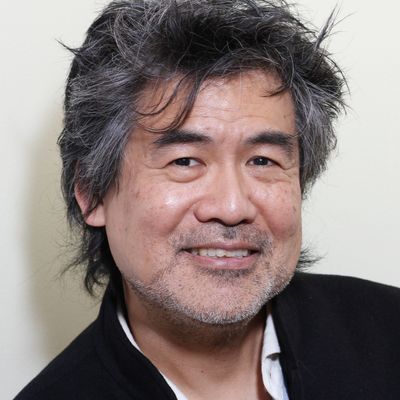
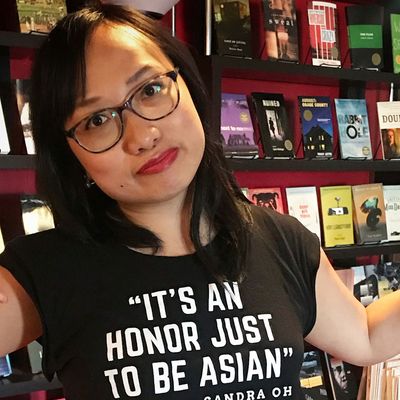
This episode features Larissa FastHorse, Diep Tran, David Henry Hwang, Mashuq Mushtaq Deen, and Anita Hollander. The Dramatist Presents: Talkback is a production of The Dramatists Guild of America and BOOM Integrated. This episode was produced by Sarah Storm, Amy VonMacek, Christine Toy Johnson, directed by Sarah Storm, and edited by Jenn Grossman and Clint Rhodes of John Marshall Media. It was recorded by Eric Dabdoub for JMM, with Los Angeles tape sync support by Phoebe Unterman. Special thanks to Tina Fallon, Ralph Sevush, David Faux, Tari Stratton, Adrien Glover, Robin Lai, and John Marshall Cheary.
TalkBack is distributed by the Broadway Podcast Network. Like and subscribe on your favorite podcast platform. For episode transcripts and exclusive content visit us on the web at dramatistsguild.com. Keep the conversation going on Twitter https://twitter.com/dramatistsguild using #DGTalkBack
Transcript
This transcript was automatically generated and might contain errors.
[0:02] Christine Toy Johnson: Welcome to the very first episode of the Dramatist Presents Talk Back.
[0:06] Christine Toy Johnson: I'm your host, Christine Toy Johnson.
[0:08] Christine Toy Johnson: I'm an actor, playwright, and advocate for inclusion.
[0:12] Christine Toy Johnson: If you're a regular theater goer, you're probably familiar with the idea of a talk back.
[0:16] Christine Toy Johnson: If you're not, here's how it goes.
[0:18] Christine Toy Johnson: After a show, some of the audience sticks around for a moderated chat with the people involved in the production.
[0:23] Christine Toy Johnson: This often means the actors, the director, and yes, even the playwright.
[0:28] Christine Toy Johnson: Over the next six weeks, our talk back focuses on how the theater industry succeeds and fails when it comes to diversity, equity, and inclusion.
[0:37] Christine Toy Johnson: We recorded these conversations over summer 2019.
[0:41] Christine Toy Johnson: Everyone who joins me to chat about their perspective is a working theater professional.
[0:46] Christine Toy Johnson: Some of our guests come to you from New York, others will weigh in from across North America, including me, as I'm currently out on the first national tour of Come From Away.
[0:55] Christine Toy Johnson: The Dramatist Guild of America hosts these conversations.
[0:58] Christine Toy Johnson: In line with the mission of the Guild, everyone comes to our table with their own opinion and perspective and is free to express it.
[1:06] Christine Toy Johnson: Whether you're on a first name basis with every director in town, or you've just read your first play, we're thrilled you're here.
[1:12] Christine Toy Johnson: Let's jump right in.
[1:26] Larissa Fasthorse: Yeah, hi. Thanks so much for having me.
[1:28] Christine Toy Johnson: We're really happy to have you here.
[1:29] Larissa Fasthorse: I'm thrilled to be here. I'm a member of the Sicangu Lakota Nation, and um, as a Native American writer, this is something that is constantly a problem in our field and a concern in our field, and something we get a lot of questions about, both as Indigenous people and as writers.
[1:43] Larissa Fasthorse: So I'm thrilled to be here talking about this.
[1:45] Christine Toy Johnson: Please tell us about the Thanksgiving play.
[1:47] Larissa Fasthorse: The Thanksgiving play is a little different than um my other plays.
[1:51] Larissa Fasthorse: It's actually uh very intentionally for uh folks that can present as white, whether or not they are Caucasian is, you know, their business.
[2:01] Larissa Fasthorse: But it is written for people that can present as white because it's exploring the issues that I deal with constantly.
[2:07] Larissa Fasthorse: But I want to talk about what I deal with in theater every day, which is really well-meaning liberal folks, primarily white, because unfortunately that's still how our field is led.
[2:16] Larissa Fasthorse: And those folks really trying to do the right thing, but often failing in their well-meaning intentions.
[2:24] Larissa Fasthorse: And so this play is exploring a lot of that and a lot of the ways that maybe people aren't thinking about how they are appropriating culture and history and even our pain and our trauma in ways that are incredibly damaging to us.
[2:37] Christine Toy Johnson: How did the play come about? What prompted you to write it specifically?
[2:41] Larissa Fasthorse: I originally wrote this play in response to um casting issues, talking about Redface and kind of an overcorrection that's happened in our field, uh, where I haven't been able to get my plays produced, you know, second and third times because people say that it's impossible, quote, unquote, to cast even a half Native American actor, which absolutely isn't the case.
[3:02] Larissa Fasthorse: We have so many incredibly talented Native American actors.
[3:05] Larissa Fasthorse: So when I wrote this play, I said, fine, American theater, I'm tired of this.
[3:08] Larissa Fasthorse: I'm going to write a play that's for white presenting people in one room.
[3:12] Larissa Fasthorse: If you can't cast this, then you're just don't want to work with me, and that's fine.
[3:16] Larissa Fasthorse: That's a different issue that we can deal with.
[3:18] Christine Toy Johnson: Can you speak a bit on how it's been perceived and received?
[3:21] Larissa Fasthorse: This is kind of my most depressing success.
[3:23] Larissa Fasthorse: Uh this play has done incredibly well.
[3:26] Larissa Fasthorse: You know, it's been at Playwrights Horizons, it's been at Artist Repertory Theater since I play House in the Park, and it's going to be in 20 different theaters this coming season.
[3:33] Larissa Fasthorse: Um, you know, casting white people works.
[3:37] Larissa Fasthorse: Um but the good news about it is sorry, it's true.
[3:41] Larissa Fasthorse: Um, but the good news about it is that, you know, it's still dealing with issues that um I think are really important that we need to deal with.
[3:50] Larissa Fasthorse: I've been fortunate enough to get to see this play produced at all the different um theaters that have done it so far, which have been very different demographic groups and regions and socioeconomic groups and lots and lots of readings of it all over the country.
[4:03] Larissa Fasthorse: And it's been really great to see that, you know, despite again, casting for white people working, um, it's been really great to see that people are getting the messages and are understanding what uh the issues are as far as how Native American people have been portrayed, even by the best meaning people in our field.
[4:21] Larissa Fasthorse: There is a pretty shocking scene in the middle of the play that white folks are always really worried about because they're like, oh no, we're gonna offend the natives, it's gonna be so awful.
[4:28] Larissa Fasthorse: And now, mind you, it's something that's historically true and something that white people did.
[4:32] Larissa Fasthorse: But um, you know, when we depict it on stage, it is shocking and it's meant to be shocking, but it's very uh fun to watch the native people see it because they just laugh, you know, uproariously when they're in the audience because we've lived with white people appropriating not just our culture but our pain and our trauma and using it for their own, you know, uh bettering of themselves or political progress or just to feel better because we can see the pain and use it and do something about it.
[5:04] Larissa Fasthorse: And you know, we've seen that for so long.
[5:06] Larissa Fasthorse: I mean, our entire lives, all of us, is you know, it's going on for 500 years now.
[5:10] Larissa Fasthorse: And so, you know, the Native people laugh and laugh and laugh.
[5:13] Larissa Fasthorse: Well-meaning white folks are always so nervous that it's gonna offend people, and we're like, please, that's our everyday life.
[5:18] Larissa Fasthorse: We've had everything appropriated, even our pain.
[5:21] Christine Toy Johnson: Wow, that's really something.
[5:23] Christine Toy Johnson: And I can't wait to find your play somewhere where I'm going to be because I want to see it very much.
[5:28] Christine Toy Johnson: Have there been instances where you felt like there was some appreciation that was uh a depiction of um of your culture that you have found to be more acceptable or pleasing, uh, or is that not really been in the canon of produced uh works yet?
[5:49] Larissa Fasthorse: Well, um I would say, well, so my particular culture is Lakota, and specifically Sicangu, Lakota, which so there's over um almost 600 federally recognized different indigenous nations that are sovereign nations within the geographic boundaries of the United States of America.
[6:03] Larissa Fasthorse: And then there's also hundreds more that are no longer federally recognized by the federal government for various reasons.
[6:08] Larissa Fasthorse: If you're talking about my culture, that's Lakota.
[6:10] Larissa Fasthorse: And um, you know, I don't know that I've ever seen a Lakota play by anyone else.
[6:16] Larissa Fasthorse: I'm sure someone's written one.
[6:17] Larissa Fasthorse: Um, I think Mary Catherine Nagel just did a piece that involved Lakota folks.
[6:21] Larissa Fasthorse: Um, she's a Cherokee playwright.
[6:23] Christine Toy Johnson: Have any of the conversations sparked by people seeing your plays surprised you or illuminated something or given you an opportunity to speak to the issues in a deep and meaningful way?
[6:34] Larissa Fasthorse: Yeah, absolutely.
[6:35] Larissa Fasthorse: I mean, that's the goal of my plays.
[6:36] Larissa Fasthorse: Um, I only write plays as my form of social justice work.
[6:40] Larissa Fasthorse: Um it's that's why I got into playwriting was to change the field of American theater, not specifically to write plays.
[6:47] Larissa Fasthorse: And so that's that's what I'm trying to do.
[6:48] Larissa Fasthorse: And I always say that my plays, the second act happens after the curtain, quote, curtain goes down.
[6:54] Larissa Fasthorse: Hopefully, there's not a curtain because I hate curtains.
[6:56] Larissa Fasthorse: But any case, the second act happens afterwards.
[6:58] Larissa Fasthorse: I always leave more questions unanswered than answered in my plays.
[7:02] Larissa Fasthorse: And the goal is that you know, you should be talking about it for quite a while, and you should have to figure things out and think about the way you think about things, the way things have affected you, why you're so incredibly unsettled in some ways, and why you're not unsettled in others.
[7:17] Larissa Fasthorse: And yeah, I sneak into the occasional um talkback audience talkbacks.
[7:21] Larissa Fasthorse: Um, especially in New York, it was really interesting.
[7:24] Larissa Fasthorse: Uh, because there's a lot of the Playwrights Horizons audience is the audience that feels they're doing better than most on sort of the you know enlightened side of things.
[7:32] Larissa Fasthorse: Um, but man, some of those talkbacks are rough.
[7:34] Christine Toy Johnson: Can you talk about that a little bit?
[7:38] Larissa Fasthorse: Yeah, people were really um fighting for their goodness and really upset because they saw themselves in the characters and saw these characters appropriating indigenous people without having any indigenous people present to help them and were making judgments about things for indigenous people and were doing all kinds of really you know questionable things in the name of helping indigenous people without actually asking any indigenous people if this is what they want and this is the help they want and need, which is the whole point.
[8:09] Larissa Fasthorse: People recognize themselves.
[8:11] Christine Toy Johnson: Yeah, exactly.
[8:11] Larissa Fasthorse: And people recognize themselves and got pretty heated and upset about it because they wanted to fight for their well-meaningness.
[8:18] Larissa Fasthorse: But you know, intentions are nothing.
[8:21] Larissa Fasthorse: Action is what counts.
[8:22] Larissa Fasthorse: And and the effects of those intentions, um, whatever they were are real.
[8:26] Larissa Fasthorse: Um whatever you, you know, it I always tell people I don't I don't care what your intentions were, I don't care how good you think your intentions were.
[8:32] Larissa Fasthorse: If the effect was damaging, you have to change.
[8:32] Larissa Fasthorse: You have to change what you're doing and you have to do better.
[8:38] Christine Toy Johnson: Right.
[8:38] Christine Toy Johnson: I think that the conversation about intent versus impact is huge.
[8:43] Christine Toy Johnson: There is often, it seems like uh a part of it that is is uh meant to um assuage the guilt of of a person whose impact has been has been negative because they didn't mean anything by it.
[8:55] Larissa Fasthorse: And so yeah.
[8:57] Larissa Fasthorse: Um it's really so simple, right?
[9:01] Larissa Fasthorse: You just have to ask the people.
[9:03] Larissa Fasthorse: I mean, that's you know, I get contacted by endless, endless writers who want, I want to write this Native American story.
[9:08] Larissa Fasthorse: Can I tell this?
[9:09] Larissa Fasthorse: And I realize that's a different podcast topic.
[9:10] Larissa Fasthorse: But that's really part of it though, right?
[9:12] Larissa Fasthorse: Is because those people end up um appropriating uh cultures and appropriating stories for their own use and their own benefit without asking the native folks or the you know particular tribe or whoever they want to talk to, you know, is this what you want to say?
[9:26] Larissa Fasthorse: Is this how you want it told?
[9:28] Larissa Fasthorse: My practice when I work with into different indigenous communities that I'm asked to write plays about is at first go into that community and say, hey, do you want me to write this play?
[9:37] Larissa Fasthorse: Here's who I am, here's what I've been asked to do.
[9:39] Larissa Fasthorse: Do you want me to do this?
[9:41] Larissa Fasthorse: And if not, then I'll tell them no.
[9:43] Larissa Fasthorse: And then I ask them, what do you and I'm an indigenous person, right?
[9:46] Larissa Fasthorse: And I still go in and I say, what are the protocols?
[9:50] Larissa Fasthorse: What, you know, who do I have to talk to to have permission to do this?
[9:54] Larissa Fasthorse: And then I go and talk to a ton of people besides whoever I'm told.
[9:57] Larissa Fasthorse: I talk to lots, as many people as I can from that community, and I ask them, you know, what do you want me to write about?
[10:01] Larissa Fasthorse: What do you not want me to write about?
[10:03] Larissa Fasthorse: You know, what am what am I supposed to be saying about your community?
[10:08] Larissa Fasthorse: Again, even if I should or not.
[10:10] Larissa Fasthorse: If they say no, then I wouldn't do it.
[10:12] Larissa Fasthorse: And then I bring the script back to that community over and over again and I say, here, you have veto power over every word.
[10:18] Larissa Fasthorse: It's not my story, it's yours.
[10:19] Larissa Fasthorse: Um there's no time when I work with an indigenous community that art or process comes above the community because that would be appropriating their culture for my own artistic gain.
[10:31] Larissa Fasthorse: And that's not okay.
[10:33] Christine Toy Johnson: And it's, you know, I I think we all need to be that radical when we're dealing with underrepresented communities and sovereign nations and different cultures that are not our own.
[10:40] Christine Toy Johnson: That's fantastic. Thank you.
[10:42] Christine Toy Johnson: So, Larissa, I I often uh talk to people about how the American landscape of storytelling needs to actually look like.
[10:42] Christine Toy Johnson: The American landscape of human beings.
[10:54] Christine Toy Johnson: And I would love to know your thoughts on what the American landscape of storytelling should look like from your point of view.
[11:02] Larissa Fasthorse: Yeah, actually, um, it shouldn't look like the current landscape at all, in my opinion.
[11:07] Larissa Fasthorse: Um, so every theater company in this country is sitting on stolen land and is profiting from stolen land.
[11:15] Larissa Fasthorse: So every theater company in this nation owes indigenous people a space in that company and owes them a debt of gratitude that they need to ask the indigenous people how to repay.
[11:26] Larissa Fasthorse: So it actually should not look like our current country, which is uh um effects of genocide and disease.
[11:33] Larissa Fasthorse: The vast majority of our country is not Native American anymore.
[11:37] Larissa Fasthorse: And so um, if we can make it just look like our, you know, current country, then you know, Native Americans are in a lot of trouble because we're only a 2% of the population right now.
[11:47] Larissa Fasthorse: Um, what it should look like is every single theater company on Indigenous land, which is all of them, should be finding ways to make reparations and to express their gratitude to the people on whose backs they are profiting.
[12:01] Larissa Fasthorse: So, what that means, I don't know.
[12:03] Larissa Fasthorse: They have to go to each community and find out what does that mean?
[12:06] Larissa Fasthorse: How should they be paying that back?
[12:09] Christine Toy Johnson: Larissa, thank you so much for joining us.
[12:12] Christine Toy Johnson: We'll be right back with a panel discussion featuring David Henry Hwang, Anita Hollander, Mashuq Mushtaq Deen, and Diep Tran.
[12:20] Christine Toy Johnson: So stay with us.
[12:30] Christine Toy Johnson: Welcome back to the Dramatist Presents Talk Back.
[12:33] Christine Toy Johnson: I'm Christine Toy Johnson, your host, and we're joined by an incredible panel.
[12:38] Christine Toy Johnson: I'll have them all introduce themselves to you right now.
[12:41] Larissa Fasthorse: Hey, I'm Larissa Fasthorse. I'm Sicangu Lakota, and I am a playwright.
[12:47] Diep Tran: Hi, I'm Diep Tran. I'm a journalist and the senior editor at American Theatre Magazine.
[12:52] Anita Hollander: Hi, I'm Anita Hollander, and I'm a writer and a performer, and also the National Chair of Performers with Disabilities for SAG-AFTRA.
[13:00] David Henry Hwang: I'm David Henry Hwang, and I'm a playwright.
[13:03] Mashuq Mushtaq Deen: And I'm Mashuq Mushtaq Deen, and I'm also a playwright.
[13:06] Larissa Fasthorse: I will say I'm a huge cultural appreciator, bordering on appropriator of cowboy culture. Thank you so much, everybody. So I've gathered you here today to talk about cultural appropriation versus cultural appreciation. There have been so many conversations that we've been having about what the difference is, how the understanding of each one has become different over the past couple of years, especially. And I wanted to start with a question to each one of you. What is the line for you between cultural appropriation and appreciation? And it's an intentionally broad question.
[13:51] Anita Hollander: For the disability community, it's been rife with arguments and a lot of anger and fighting and stuff like that because of the idea of appropriation. So much of the industry is about people getting Oscars playing disabled roles when they're not disabled, or getting an Oscar for making a movie about disability, which has absolutely no disability input. And the idea is that we want to be visible. The idea of, I think the appreciation side is visibility, tell the story. And the appropriation side is when you take that and you put it out there with absolutely no input from the community that it's about. And that's been our fight for at least for me, 30, 40 years. But I know it goes back beyond when I was here, but for me, it's been a lot of decades, right?
[14:51] David Henry Hwang: Uh, since I'm considerably older than most of the people on this panel, you know, I sort of grew up during a time when really all of the images of Asians that were available in the media for the most part, I would say virtually all, and certainly the major ones were created by non-Asians, usually white men. And so, you know, even today we continue to struggle with the legacy of that. How do we do King and I? How do we be the sort of the major shows where Asians continue to be employed on Broadway? So if you sort of take it from that context and how to move forward, there was a period when it was just revolutionary for Asians at all to begin defining themselves and creating their own images, not only revolutionary, but there I think was, you know, at least a certain amount of skepticism, even at the beginning about, oh, well, you know, if you have Asians writing about Asians, they can't do it as well as, you know, the great white writers who wrote this.
[15:55] David Henry Hwang: And so taking us to the present day, I personally don't believe that you have to be of a particular community to write about that community. And I think sometimes it's interesting when people are able to write cross-culturally or across communities. But I do think the input is, as you mentioned, is an important aspect. I think you need to have participation from the people whose stories you're telling, you need to do your research. And I think most importantly, you have to be willing to not be sensitive and thin-skinned about criticism. Even as an Asian American, when I first started writing, one of the first reviews I got from an Asian American paper for FOB in 1980 said that I set Asian America back 20 years.
And I don't, I was only 22 at the time. So, you know, even from within your own community, you get a lot of criticism. But certainly, if you're going to write across communities, you have to be open to criticism and adjustment based on the people whose experiences you're actually trying to portray.
[17:03] Mashuq Mushtaq Deen: Yeah, I mean, I agree with that. I think you need to come at it with some humility and thoughtfulness and openness to feedback, and you need to do your research and do your work and talk to people. But I don't think you can't write it just because you're not of the community. I go a step further. I also advocate that if you are going to write about a community that's not your own, you need to hire someone. That means pay for them to work with you on your piece, to be an advisor or a co-writer or whatever it is that you all agree on.
[17:39] Larissa Fasthorse: In the indigenous community, we have an incredibly long legacy of indigenous people being asked to serve art. And my goal as an artist is to really reverse that and make art serve indigenous people. And that means in this current situation, in this current climate, that means money and compensation and making sure that people are compensated for the work and then also have agency, as we talked about earlier, to have a voice over that work and to be able to veto anything that you're saying that is wrong about them and be able to have that power over the art.
[18:11] Diep Tran: I feel like we can't talk about cultural appropriation without talking about power and power dynamics and who has control over dominant narratives, and the conversation is different depending on which country you're talking about. I feel like a lot of the time, especially when we're talking about Asian American representation, the defense is always, well, people from Asia don't have an issue with this. And there's this tendency to lump cultural appropriation into one big global conversation when it's a national conversation and even a community-driven conversation, depending on who's in charge of the dominant narratives in particular countries.
[18:52] Diep Tran: And so if we're talking about cultural appropriation within America, it's a white dominant narrative, even though America is 40% people of color. And so, how does the dominant culture look at the minority culture? And how can the minority culture have voice and be part of the dominant narrative? And I think when the dominant culture tries to put its eye on a minority culture, it's very much like an outsider looking into something that they see as foreign. And there's a paradigm of the minority culture not feeling like they can talk back or not feeling like they have agency to talk about themselves. And so there needs to be an equilibrium if we're talking about cross-cultural exchange, which is very difficult to do.
[19:49] Mashuq Mushtaq Deen: And it makes me think of like this thing I read about of a white restaurant owner in Philadelphia selling pho and thinking that he can tell people how to properly eat pho. It's about who has authority over the narrative and making sure that if you're not part of the culture, you cannot have an authority.
[20:11] David Henry Hwang: Well, I just want to complicate that then. It would be easy to assume that I go to an Indian restaurant and I see a white restaurant owner who is making Indian food and I make this visual assumption that he doesn't have an authority about Indian food, and I do. I've grown up my whole life in this country. He may have spent 10 years studying Indian cooking in India. I don't know that from looking at him. So I just think like sometimes we're jumping to the conclusion of who people are and what experiences they bring to something when I might think I'm the authority on some culture, but I'm South Asian American. My culture is not that of being Indian or of being a sixth generation American. It's a very particular in-between place. I just think it's important to complicate things that just on the basis of visual, whether somebody's white or whether they're brown is not necessarily the arbiter of what kind of cultural authority they have.
[20:54] Larissa Fasthorse: Yeah, when Diep was talking about nations, just wanted to also just remind ourselves that when we're talking about the various Native American nations here in this geographic place now called America, we're actually talking about something, it's not just race or culture, it's actual sovereign nationhood. I'm a dual citizen with the Sicangu Lakota nation and with the United States of America. So it's actually different because we're also dealing with a political issue and we're dealing with laws and the ways that nations get to define themselves. What representation means is different for us as well. If you're writing about someone from the Cherokee Nation, you need to have someone from the Cherokee Nation as defined by the Cherokee Nation as your advisor or involved or as the authority on it. It's very simple for us because we are individual nations that still exist here within the geographic region now called the United States of America.
[21:47] David Henry Hwang: I just want to add that the argument that Asians in Asia are not particularly sensitive about issues like race, that may be true in the way that we as Americans perceive it, but Asians in Asia are really sensitive about a lot of things. Like they're just different things. So if you're trying to write a Chinese narrative and you're writing about Tibet, for instance, that you're like super sensitive about that. So there's things that everybody's sensitive about something. It's just that it varies given the cultural context in which people live and are raised.
[22:23] Anita Hollander: Well, when you say about people in Asia don't mind, well, it's a very interesting point for both of you, because in the disability community, we hear so often that, well, people with disabilities don't care who plays the role, as long as they see it on the TV, you know, they're thrilled. And it doesn't bother them that somebody didn't get even seen for the job who actually was disabled. Or I mean, we also talk about disabled performers playing all kinds of roles, but the idea that the disability community doesn't care, just as long as they're there. But so it's an interesting kind of crossing over in a way to see that they don't see it as the representation being missing or the loss of a job or the inability to be included even in to be seen, or the writers not being in the writer's room.
And they're not as picky often, but the same, but if you go, if you really hone it down to a specific disability, oftentimes that population will go, well, that was so inaccurate, totally inaccurate. How did that happen? Well, it was inauthentic because there was nobody authentic around to stop them and say, eh, not right, don't do that.
[23:45] Larissa Fasthorse: Thank you. We've actually all touched on this, that there was a time when you would just be thrilled that there was a story being brought to the front to just see somebody that looked like you represented. And then as time goes by, you want to see more truth in the story, you want to see more writers who can bring the story to life in very many ways, not just one idea. So but my question is how do you think this conversation has deepened over the last, especially I would say, past couple of years? There's been more discussions and more awareness or a desire to make people more aware of the difference between appropriation and appreciation. Where is the line? Is there space for both one place? Should there be?
[24:42] Anita Hollander: I don't agree at all that at some point it was okay to see, you know, sailors and on the town putting on red face and being like, well, at least they're showing native people. I've never felt that way. I've never had that feeling of like, wow, Ogowoga song, at least it's pretending to be native. Like, I've never had that feeling. Maybe it's because we're so in as indigenous people, so incredibly, incredibly underrepresented in theater. So I didn't have that period of appreciation that at least we're represented, because I don't think that time has happened yet. And the ones that were there, I certainly never appreciated.
[25:16] Christine Toy Johnson: Totally fair. It made me think of like the first time I became aware of your work, which was back in 2012 during the Nightingale scandal at La Jolla Playhouse where they had white people play Chinese people, and the defense was, well, we have one Asian in this cast, so this is okay.
[25:34] David Henry Hwang: And at that time, not a lot of people knew what Yellowface was, including like a major Tony Award-winning regional theater. The way it's developed is people do know what that is. Well, I speak of that broadly because there's still always work to be done there. But it's a more common term now. And I think what has changed is the industry has started realizing that communities of color are a large buying population. We have power at the box office, and so the shows sell. If you don't want to piss a community off, you need to make sure it's authentic and there's, you know, proper representation. The only problem I feel now is like there's a tendency to say, oh, we have this person of color as a consultant and we did our homework and it's fine.
And like David said, there's not as much tendency to evaluate and to have some humility about the process, which is very thorny and complicated, and it's continually changing depending on how terminology develops. There seems to be a move towards recognizing a need for cultural consultants. How do you feel about the increasing presence of folks that have been hired as these kinds of consultants?
[27:00] Anita Hollander: Well, performance with well, people with disabilities have a long history of being called in as a consultant for no money, and then having a character actually created from that consultancy, and then nobody is hired. And there's no money exchanged at all. My biggest example was The Sopranos, where they had created a character for an amputee a year before anyone called me to say to come in, and I thought it was an audition, but it was actually in consultant, a free consultation with the entire production team, um, asking me all these questions and stuff like that. And so I ended up, uh, because I'm not soft-spoken. Um I said, well, you'll have to pay me for that. And they ended, well, oh well, we have $25.
I said, no, really, you know, uh, and they said, Okay, well, you can negotiate whatever you want, you know, as long as it isn't $500. I'll take $500. Um, but of course, in that same situation, they had also hired me to be a body double. We are very uh experienced in the disability community of being a body double uh and a consultant for very low fee, and then this other person is the role and getting the big paycheck and getting the awards and everything. And that's been a very big thing. But I really fought that day and sort of have been fighting for others to speak up and to not even go in until you've negotiated what that's going to be. And I think it was an eye-opener for the people on The Sopranos who were very popular in getting their like 11th Emmy award or whatever, and that they splashed me across the credits with this large name because they suddenly realized.
But even as I left that night at like 12:30 a.m. after doing the body double thing, I uh the director shook my hand and said, Great, that was just great. We couldn't have done it without you. And I turned around and he said to his assistants, you see, that's how you do it. You get an actress to play that role, and then you get someone with a disability to do the scene. And I was like, wait, I'm a SAG-AFTRA actor, you know, I'm equity, I'm a union actor. But this is not unusual, but what I've seen you were asking about how it has changed over time is that we're standing up more and demanding more. It's not been easy because we've been so invisible in the past. And I just wanted to say one thing to Larissa about the offensiveness in the past.
It brought up my experience of going to Urinetown and seeing the girl on the skates with the braces on her leg and bashing into a wall and Seinfeld on television where they rolled somebody down a hill in a wheelchair for the biggest laugh of that episode. So I agree with Larissa, the misrepresentation and the butt of jokes that the disability community has sustained is part of that argument.
[30:09] David Henry Hwang: Yes, absolutely. Absolutely agreed. I think television has the least excuse for not bringing in somebody to be a creative partner when they're writing about a community, because television has writers' rooms. And you have, you know, six or seven writers on a TV show, if it's a, you know, say our drama. And if you're going to create a storyline for a character from a particular community, it is not that hard to go looking for somebody who knows how to do that and can be a writer on the show. Then you know how that power dynamic is negotiated within the writer's room, of course, becomes an issue, but at least you have someone in the room who is getting paid at a reasonable level. In terms of the earlier question of how things have changed, I agree with Deep that, you know, it's there's fundamentally an economic shift, both the recognition that this country will be a majority people of color by around 2040, and the growing share of the international market.
And of course, people are most interested and most critical of representations of their own groups. I mean, lawyers are most critical of legal shows, you know. So, you know, as Jeff Yang, the cultural commentator put it once, uh, racism is no longer a viable business model. So I think there's that, uh, and then what tipped it was I think the um, the election, the 2016 election, and the recognition that we are not in a post-racial society, and we can't sweep these issues under the rug, and we can't pretend that there's not oppression and racism out there. And so I feel like 2016 became sort of a tipping point.
[31:56] Diep Tran: But did any of you actually feel like we were in a post-racial society? Because I certainly never did.
[32:01] Larissa Fasthorse: No.
[32:02] David Henry Hwang: That wasn't certainly.
[32:03] Anita Hollander: I think that was only news to white people, right?
[32:05] Diep Tran: Not to anyone else.
[32:06] David Henry Hwang: Right, but it but white people being the gatekeepers were I think it was easier for them to say in 2014 that we were in a post-racial society than it is today. I would say that I think just the fact that we're having this conversation here, that this is a podcast that you've noticed the need for this, means that there's more awareness that we should be talking about this, and it's a complicated issue, and people want to learn more. And that to me is great. And when I think back to, I mean, I remember seeing The Celluloid Closet when I was in my early 20s and the idea of yes, if there was nothing I saw of myself on stage, if I saw one representation, it was a good thing, even if it was the person who I knew they were gonna die at the end of the movie, I knew they were gonna be murdered, I knew they were gonna be the bad guy.
And then we got to the next step and they were the best friend. And you know, and then at some point you're like, that's not good enough. I don't want to be the best friend. And then they get to be the so there is a progression, um, but I can still say, oh, it was really meaningful to me at 20 to see some representation. I do think though, another way that it's changed though, is I do feel like this word appropriation, we use it a little carelessly, and that we weaponize it a little bit. And so I feel that at times we throw around things like that's appropriation, that's appropriation, which then starts to equal that's something bad that that person does, which then starts to equal that person as a bad person, which that to me is not a useful place to have the complicated conversation about why does it hurt or feel a certain way if my culture is used in a certain way.
What are your values? How can you do this better? Because actually I think deep in your values, you want, even if you're a white person who is an artistic director, I think deeply you probably want to do better. How can you do better? And I'm really interested in that conversation, but I'm very wary of the conversation where we start to say this is wrong and this is right. I do think art should be provocative and we should provoke conversations, and some of those are going to be really uncomfortable ones that I firmly disagree with. But I want there to be a place where we are wrestling with issues, not just doing the thing that is right or wrong. You know, I want to be in the gray area mucking around with people and having the conversation because I really think that's where we discover our own humanity. And I should examine myself too. I'm not beyond examination, and um, where we discover our common humanity, which I think is so important for what we do.
[34:40] Larissa Fasthorse: Thank you. We've were talking about this a little earlier, Larissa, about intent versus impact and how appropriation or whatever you want to call it has impacted each one of us in our work and our life. Uh, not to bring up the whole, but I guess I just did the whole can of worms about productions of The Mikado, but I know that for myself, when I saw pictures of people doing The Mikado with the garish makeup, and I thought it was very deep to me because I thought, oh, I now understand why people have been making fun of the way I look for my entire life, because they think we look like that. So the intent, you know, probably of not of course to hurt Christine's feelings, but the impact is something that I think a lot of people can understand. Uh, and I wonder if we could talk about that a little. Larissa, do you want to uh go first?
[35:34] Larissa Fasthorse: Yeah, I mean, it's constant, right? I mean, the what we're being told is that we're not human, that those things that make us who we are, like you were just talking about The Mikado, are things that can be put on as a costume or put on as a set piece or put on as a prop, um, put on as a wig, you know, that we're being told that what actually makes us who we are, our DNA, our um learned culture, our sovereign nationhood is a thing that can be used and discarded. The damage that causes to human beings uh such as myself and all of us is incredible. The constantly being told that you are no more than a thing that can be put on and taken off, that you are less than human is constant. I deal with that damage every single day of my life. And I see it again and again in theater and all kinds of media.
[36:29] David Henry Hwang: Thank you, Larissa. In terms of just sort of growing up and having images of people who look like me. Actually, when I was a kid, if I knew there was going to be a TV show or a movie, because I didn't go to the theater, I grew up in LA, uh, with Asians in it, I would just sort of go out of my way not to watch it, because I had already realized on some level, although I wouldn't have been able to articulate it, that it would just make me feel bad. And so the thing that I was desperate for was some representation, which didn't even have to be super positive, but just wasn't either an enemy or the butt of a joke. So, you know, George Takei on Star Trek was face it looked like mine, who was competent and not the enemy and not the butt of a joke.
And you know, when I look back, sometimes people go, Oh, well, did you grow up experience racism as a kid? And I feel what I was oppressed by was American popular culture. And so it therefore seems right to me that I've ended up spending my life trying to uh find ways to grab the levers of American popular culture and re-manipulate them to sort of heal whatever damage I felt as a kid from those images.
[37:46] Diep Tran: Yeah, and I think I'm gonna say kind of dovetails into like touches on what Anita was talking about in terms of like feeling tokenized, because people feel like, oh, they can just have a face that like looks like yours in the room even if they don't have any power, and then that's enough.
[38:01] Diep Tran: And it makes me think of like when I saw Miss Saigon, the most recent revival. And I know that production team, you know, they tried really hard to make it a more responsible, authentic, end quotes, show. And then watching it, I was just shaking. I was just so angry when I was watching it. Because for me, as a Vietnam War refugee, and the product of Vietnam War refugees, watching a show where we were seen as weak and lesser than white people, and watching a show where we hate ourselves. In 2017, it supported everything that I was told by American popular culture growing up, which is like you're invisible and your stories don't matter. And then me writing about how that show made me feel, and then the responses to that, which was both the white and Asian community telling me my opinion on this show does not matter, that is also damaging.
And so just this feeling of the like white power structures thinking that, oh, just because your face is there, it is enough. Or just because we tried, that's enough. We should get credit for trying to not offend you. You can try to not punch me, and you and if you still punch me, like it still hurts. Like, can we have a conversation about the impact of the thing rather than like, oh, you you you tried not to, you didn't want to. Like that does not matter. Thank you.
[39:33] Anita Hollander: It's so interesting how everything that everyone is saying here resonates with me as well. And that when you see yourself as a butt of a joke only a few years ago on Broadway, because you're in town wasn't that long ago. I mean, it was long, but not that long. You're watching it, you're enjoying the show, and then suddenly, bang, it's like, oh, oh, that again. It like brings you back to, oh, right, I'm not included. And this might be a very unpopular opinion, but I was enjoying the prom so much. I was enjoying the show so much. And then the last number when they go a prom for everyone, and it suddenly dawned on me that it wasn't actually for everyone, because there wasn't one person in that high school, not one that had a disability.
And I know people are gonna go, oh, I need a why do you do this? Um, but the truth is I began to think in my head, okay. Well, if you were directing this show and you were casting this show, wouldn't it be interesting if the mother of the young girl who is closeted and not talking about being a lesbian, what if the mother, when she turns to her and says, I just don't want you to have a hard life, is talking about herself as much because she has a disability. I mean, it started, my head started going, there's an there's a way we could include somebody with a disability so that when you sing of a prom for everyone, I can hear myself right now saying these things, and I know somebody's gonna get mad at this, but the truth is the inclusion is not that hard when you think about it, if you think about it, so that I don't see the future of the prom being a bad thing.
I see it as a potential for what if somebody from this culture was also included in the prom? What if it was a really for everyone? And to me, that line for everyone became this big neon sign for me, because so often disability is left off the list when in fact 20% of the population has some disability. And buying power, as you so importantly said, Deep, we do get left out a lot. And I know there's a lot of different opinions about this, and I respect them all. I really I understand when people push back, but you can hear how passionate I am about it too. Thank you.
[41:55] Mashuq Mushtaq Deen: Thank you so much for sharing that. Uh, Dean, do you have something do you want to add? Or I mean, I guess as I'm listening to this, I'm thinking about how my culture and or my identities, right? Like I'm I'm South Asian American, I'm queer, I'm trans, I'm between cultures, I'm between many things. It is not a pretty dress that I wear, right? Like I think of my culture more as like a scar. It's a scar that's either pretty, it's a scar that's ugly, but it's a scar that I earned and is like deeply a part of the fabric of my being. And so, yes, it is upsetting when somebody then puts on that culture like it's a pretty dress, like in a casual way. And then I would I would question their intentions.
I think they tried to get away with something easily without deeply understanding what that culture is from the inside, which is a different experience. But for me, intention is everything. Actually, intention is much more important than consequences because we all fuck it up all the time. And I have certainly watched members of my community become very militant about, for instance, who gets to do yoga, as you know, that person is white, that person is not allowed to do yoga, I'm not taking yoga from that person. But this person who's saying it is not a yoga teacher, did not study yoga, does not come from a family of yoga makers. And maybe that person actually studied with the guru for many, many years who decided to teach them.
I think because we are caught between, at least for me, caught between cultures, we can sometimes have our own baggage about that and cling to something because it's an uncomfortable place to be. I'm not really easily one or the other. And so I sometimes think then like we come in with a chip on our shoulder about who is allowed to do what, which is partly true, and that is real, but it is partly our own baggage to work through about how we feel about ourselves in the world and how we navigate the feeling of not feeling home in any one place and how I how I deal with my own feelings about that. And so I just think sometimes we leave out the part of the conversation that is we all need to do work, and I think part of that work is ours to do too. Thank you.
[43:57] Larissa Fasthorse: Before we put a button on today's conversation, I would love to go around and ask for anything else you'd like to add to the conversation or leave us with. I'll start with Larissa. Yeah, I was just uh total appreciation to what was just being said. I would just say though, that the one differentiation is that if you are on the land of a sovereign nation, that they do get to say have the final word, and there is a right and wrong, because it's their land and it's their nation. And so if a theater is in any way working with or depicting people on whose land they are standing, um, then those people do get to have the final word because you're on their land. And so there are rights and wrongs, and there are absolutes when you're talking about different indigenous communities, because again, we're talking about sovereign nations who are allowed by law with the United States, with treaty laws, to decide what is right and wrong and to make absolutes on their own land.
I think there's like a difference between tokenizing and being inclusive. Like it it makes me think of um Ali Stroker in Oklahoma. Like she's the first woman to actually the first artist in the wheelchair to ever win any Tony Award, right? But she's in a show where she literally could not access the stage. They had to build something special for her, and you know, performers and audience members with disability don't have an easy time getting into circle in the square. And so there's like a difference between like putting a body on stage and saying like that's enough versus like actually being inclusive and wanting like that community in the house with you as viewers, as people who've given you money, and in every aspect of the creative process. I think we're still in a very surface-level conversation with all of this generally, where we think, oh, if I can see that face, that's enough. But it isn't. Or it shouldn't be.
[45:51] Anita Hollander: Thank you, Anita. Okay, so I want to dovetail off of what Deep just said, that the thing that I came in today thinking about was universal design. And it's a term in architecture. And I just came back from performing at the United Nations, where they were all talking about uh disaster risk reduction and all this, but also universal design. So physically that means before you build the building, you plan it to be accessible to all. Okay, so that's a physical thing. And I feel like creating a play about a certain culture, if you want, it should be universal design, meaning starting at the very beginning, if you're not a part of that culture, but you want to write about it, that you start at the very beginning with people on board.
And I agree with Dean. There are two people at this table who have written about disability, and it's been great because you both worked, uh, that would be David and Christine that I know of, that you from the get-go began working with, like theater breaking through barriers, or working with me, involved in a show that you're writing, that you start at the beginning with that, so that in the end, it ends up being the depiction or the representation that you wanted to get in the end. I will say that to have someone doing certain roles uh that are of a certain culture or of a certain community, like the disability community, that enhances and informs the things, not only the role, but the play.
And also, even if the thing wasn't even written for a performer with a disability, to have one there further informs the humanity, enhances the character, which I've seen you both do. But this idea of starting at the very beginning of it, and theater breaking through barriers is one of those brave new world theater, uh, Claire Beckman. All these wonderful companies are now looking at this from an intersectional approach to find a way to be inclusive and also not just appropriating each a little of this like a buffet, but actually bringing people in for their various perspectives. I think that's where we're headed. And I think even in Geneva, the United Nations, diversity and inclusion was part of the whole discussion about climate change and disaster risk reduction and universal design. It was mind-blowing that we're not the only ones thinking about this at the table. People are thinking about it all over the world.
[48:30] David Henry Hwang: Thank you, David. Um, as long as we're potentially getting in trouble calling out specific shows, there is, I think, a show uh that's running at the moment that has yellowface, uh, which is the Kung Fu Musical at the Shed. Uh, I can't quite remember it's something Phoenix Dragon Rising. Um, and it just seems to be kind of under the radar. So that's one thing that's going on. And then I have a theory, this is uh this will be controversial also. Also, that there are certain works which we I when I grew up, we're considered classics, which are not going to age well as the lens of a more multicultural, more diverse society uh gazes upon them. And to stay away from the theater for a moment, I would like put Catherine the Rye as an example of a book that might be looked at relatively soon as just kind of whiny. Thank you. Yes, join me in the hate for that book.
[49:32] Christine Toy Johnson: Thank you so much. I think we have to wrap up, but in season two, perhaps we will continue this conversation. Thank you so much for joining me today. Uh as always, this conversation is to be continued. This has been The Dramatist Presents TalkBack, a production of the Dramatists Guild of America and BOOM Integrated. Our podcast is lovingly produced by Sarah Storm, Christine Toy Johnson, and Amy Von Masick. It's edited by Jenn Grossman and Clint Rhodes of John Marshall Media. Special thanks to Tina Fallon, Ralph Sevush, David Foe, Terry Stratton, Adrien Glover, and John Marshall Cheary. Talkback is distributed by the Broadway Podcast Network. Like and subscribe on your favorite podcast platform. For episode transcripts and exclusive content, visit us on the web at dramatistsguild.com. Keep the conversation going on Twitter using hashtag DG TalkBack. I'm Christine Toy Johnson. We'll see you next time.
© Broadway Podcast Network, All Rights Reserved