

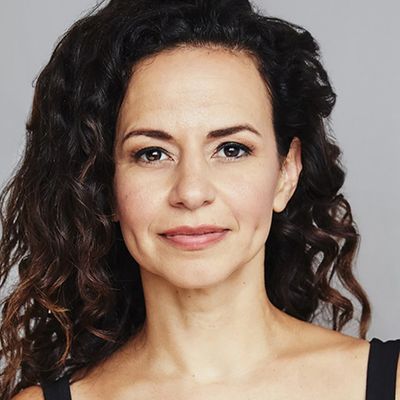
This week, host Christine Toy Johnson leads TALKBACK on a journey to understand why representation, or the lack of it, has real and lasting impact on actors and audiences alike. Mandy Gonzalez shares her personal journey from seeking herself in others onstage to becoming a role model for others... Read More
From the show: The Dramatists Guild Presents: TALKBACK, sponsored by the Dramatists Guild Foundation
Guests
Featured Shows


About
This week, host Christine Toy Johnson leads TALKBACK on a journey to understand why representation, or the lack of it, has real and lasting impact on actors and audiences alike. Mandy Gonzalez shares her personal journey from seeking herself in others onstage to becoming a role model for others. Pun Bandhu, Porsche McGovern, and Todd London discuss the variety of studies tracking inclusion in theater workplaces, the grim truth of the current math, and how seeing these studies is slowly changing minds and rosters.
TalkBack is distributed by the Broadway Podcast Network. Like and subscribe on your favorite podcast platform. For episode transcripts and exclusive content visit us on the web at dramatistsguild.com. Keep the conversation going on Twitter using #DGTalkBack
Transcript
This transcript was automatically generated and might contain errors.
[0:02] Christine Toy Johnson: Welcome back to the Dramatist Presents Talk Back.
[0:05] Christine Toy Johnson: I'm your host, Christine Toy Johnson, actor, playwright, and advocate for inclusion.
[0:12] Christine Toy Johnson: This season, Talk Back focuses on how the theater industry succeeds and fails when it comes to diversity, equity, and inclusion.
[0:21] Christine Toy Johnson: Our guests are all theater professionals working across North America.
[0:24] Christine Toy Johnson: We recorded our conversations over summer 2019.
[0:29] Christine Toy Johnson: The Dramatist Guild of America hosts these conversations in line with the mission of the Guild.
[0:34] Christine Toy Johnson: Everyone comes to our table with their own opinion and perspective and is free to express it.
[0:39] Christine Toy Johnson: Whether you're in a front seat at the Tony's or backstage at your high school, we're so glad you're here.
[0:45] Christine Toy Johnson: To kick off our conversation on who gets produced and why it matters, I sat down with the extraordinary Broadway actress, Mandy Gonzalez, for an intimate chat.
[0:56] Christine Toy Johnson: Mandy joined us in our New York studios in between performances of Hamilton, where she plays the role of Angelica Schuyler.
[1:03] Christine Toy Johnson: Mandy, welcome to Talk Back.
[1:05] Christine Toy Johnson: I wanted to ask you a few questions about your specific journey in this business.
[1:11] Christine Toy Johnson: When did you first realize that you were not being fully represented in the theater?
[1:16] Christine Toy Johnson: And how did that impact or influence or inspire you?
[1:20] Mandy Gonzalez: I think I was about 18 or 19 when I got my first agent. I'm from Los Angeles. And um in LA, it's all about film and television, uh, especially when I was, you know, growing up. And so I got my first agent. I was in college, but I felt like once I got that agent, like I had made it. Like now, you know, watch out. And uh I remember getting called after um they told me that they were going to take me into their agency to come back because they wanted to talk to me about some stuff. So I went back into the office, and I remember the woman, she told me that she wanted to take me into this other like small room near her office. And in the room, there was a table and a pad of paper and a pen and a chair.
And she told me to sit down and really think about my name. Because she thought that having the last name Gonzalez was really going to hinder my ability to get work, um, to have opportunity. And so she wanted me to think about a name that better represented me that made me more, I don't know, like saleable. And so I sat in that office and I remember looking at that pad of paper and feeling like just so ashamed that I even was sitting in there. I I just felt like dirty. I don't know, it was weird. And uh I remember doing what I was told, um, because that's what you do, I guess, when you're 18, 19, at least I did. And I I came up with different names and I wrote them down on, you know, lines on the paper.
And uh I came up with the name Mandy Carr with two R's because my grandma always liked um Vicky Carr, the singer. And so I thought, well, Vicky Car, like I'll just be Mandy Carr. Like that makes sense, and that has like a connection to my family and all that kind of stuff. And I went home and I remember sitting, um, because I still lived at home, and I was sitting with my parents, and I started to just feel that sense, just feeling ashamed. And I uh and I remember looking at my dad and uh telling my parents about this situation that had happened to me, and just like the look on their faces and how they felt just like this tinge of sadness, I guess. And I thought about it that night, and um, and I thought, man, I'm Gonzalez, like this is who I am.
You know, my my family fought really hard to be a part of this country. And, you know, I I'm from a family of migrants that came over from Mexico and uh and worked in the farm, and so they worked hard. And I felt like this is who I am, and I can't, I can't change that. And so I went in the next day to that agency, and I let them know because they want to know, oh, is car spelled with two R's? And I said, actually, Gonzalez is spelled with two Z. And you're just gonna have to deal with me. And I felt like that experience taught me about integrity. And it taught me about speaking up for myself and doing what felt good to me. And um, and so looking back at that girl who thought, well, with the name Gonzalez, like I won't be able to be this and that, and all those different characters.
I'll I'd like to tell her, like, you will be on Broadway as a princess, as the ingenue, as a young girl going to college. You will be able to have so many opportunities. Just stick with who you are. Knowing where I am now, I feel like it wouldn't be as special if I didn't see Gonzalez in the program. My parents didn't see that. If it was like a fake name. There would be a part of the journey missing, you know, my family's journey. So I'm very proud that that my parents are able to see that in the program and that I'm able to see that. My daughter can see it. And yeah, it kind of completes me in some way.
[5:37] Christine Toy Johnson: Have you heard from fans about how it's made them feel to see your name in a program?
[5:42] Mandy Gonzalez: Absolutely. Um, playing the role of Nina Rosario in In the Heights, a lot of young women write to me and tell me their story. And it doesn't matter if they're Latina or where they're from, but they tell me that they're the first ones in their family to go to college, the firstborn in here in America. And how seeing me on stage makes them feel like they can do it too. And I remember when I was their age, and I was looking for people that look like me and that I could relate to and say, you know, look at them, they made it. And I remember looking and seeing um Priscilla Lopez, and probably because she had a Z on the last on the end, and she was Latina. And I remember thinking, well, she did it.
Like she's she made it to Broadway. I can do it too. I just had this fire in me. And it was crazy when I got in the heights and Priscilla played my mom. And I got to tell her that story, and it was really like a full circle moment. And so she has people like me telling her that, and um, and I have young people telling me that are now in Hamilton, you know, that saw me in In the Heights, you know, when they were in high school or grade school, I don't even know. But now they're in Hamilton. We have um an incredible cast member that just left, Carvin's Laissant, and he came to see In the Heights. He said six times he did the lottery at In the Heights, and it changed his life, and he was like, I can do that.
You know, when he saw Chris Jackson on stage, he was like, that's what I want to do. And so for me, that's everything. I think the impact of um seeing people that look like you on stage is um insurmountable.
[7:34] Mandy Gonzalez: Yes, absolutely. The power of representation cannot be underestimated. I see it in the eyes of a young Asian American people I meet, it come from away all the time. Do you remember a time when seeing someone on stage impacted you in the kind of ways that you're now impacting others?
[7:52] Mandy Gonzalez: I went to theater whenever there was a tour in town. My grandma would take me to see a show, and I remember always looking for myself. So I didn't see that as much. So I had to think about it and dream about it. And um I remember in '96 when Rent was nominated for a Tony Award, and I saw they performed uh Lovey Bohem on the Tony Award telecast. And I remember seeing Daphne Rubin Vega and feeling like that's what I want to do. You know, she looks like me. Her hair's like mine, it's curly, and she's Latina, and she looks like me. And that was the first time where I felt like Broadway wasn't too far from me. I had a lot of hurdles to still go through, but I felt like you can't um take that away from having somebody that's representing you on stage to what that does to your um confidence.
I had a friend recently, she was actually my daughter's um preschool teacher that came to see Hamilton, and she brought her son who was I'd say he was about 12. And at that time, um Michael Luoye was playing Hamilton and um he said, he looks like me. Mom, he looks like me. And that was the first thing that she said to me. And then he got to meet him on stage afterwards, and he just you can't take that feeling away from somebody because when they feel like uh it's possible, you know, their dreams are limitless. It's it's important.
[9:36] Christine Toy Johnson: Yes, that's wonderful. Do you feel a certain responsibility to represent and represent well? Is that fair?
[9:46] Mandy Gonzalez: I think I do feel a certain responsibility to represent, I think myself to the best of uh my ability, not just for myself, but for my family, my family that I have now, but also my family that pushed me to go. So I feel a big responsibility to them. I think that it's important to represent my voice and be honest, because I want my cousins and people that are young people that are coming up behind me to know that their voice is important. I think that that's my biggest thing is that I want uh my family to be seen, the Gonzalez side and the other side to have a voice to know that it was all worth it, I guess. And so I think that when it comes to uh social media and you know, stage door, things like that, when I'm asked questions or people send me letters, it's so important to write back. Maybe you can't answer all the questions, but it's important for for you to uh to let people know that they're seen.
[11:05] Mandy Gonzalez: So I've always talked about how getting access into the room, both physically and philosophically, has been the challenge from the dawn of time. As in, we have to be allowed into the audition, but also the team needs to actually be open to considering us. Do you have any experiences you'd like to share regarding when you have felt this dynamic shift, or has it shifted, or does it continue to shift in new ways?
[11:33] Mandy Gonzalez: I definitely felt a shift of being invited to the room more when Hamilton started. And I think it's because people started to look at things differently. That, oh, you can have a diverse cast, and people will come if the material's good. It doesn't matter. And I remember being called in, um, and this is before I joined the cast of Hamilton, but being called in for um a role that was always been um cast typically white. And I remember signing in my name and not seeing the people that I normally see for roles. And uh, and I remember this this one girl, um, and I won't name who she is, but she ended up getting the job. Uh, but she looked back and she was looking at the room, and uh she said, Oh, Hamilton, they're just, you know, they're taking everything.
And it wasn't directed at me, it was like to a friend in the way that, well, I hope I get this job because, you know, Hamilton's taking everything. And it was just like, what? What are you talking about? Like, this is the first time I'm even allowed into the room. I just got so annoyed. And I remember looking at another actor that I knew, and she just kind of looked at me because she knew who I was, and she knew that I was part of that world. And I guess it made me feel like, man, I'm still different. You know? And that, I don't know. Sometimes is hard. You know, because you just want to be in the room and you just want to be known for just being good and doing the material the best you can do it, you know?
And uh, and so that bothers me. That bothers me when people, other actors look at you and go, Oh, you're taking this from me. It's just like, if you only knew how many times people have said to me, Oh, you're too dark, you're too light, we're not looking for ethnic, we're not looking for this. Like to just be invited to the room because you have an ability to do a job, like how good that feels, and how that person made me feel it's the same thing of being in that room and making me feel like I'm not enough. You know, and so that struggle, I think hasn't changed because I think that it needs to change all around. It needs to not only change with the casting directors and the directors that are looking at things differently, but it needs to change with the other actors in the room to say, yeah, you know, like they deserve to be here too. And it's not about taking something from somebody else.
[14:17] Mandy Gonzalez: It's just about opportunity. And now when I go to auditions for leading ladies and leading parts, I see so many different people in the room. My hope is that one day they can look back and just be happy with where they are and not think, well, why, why me? Because I guess my feeling has always been, why not me? You know, and I hope that they can get to that point too. And to know that there are certain parts where you just you just can't be part of it. And that's okay, because there'll be another part for you. But parts that are equal should be equal.
[15:04] Christine Toy Johnson: How do you think conversations about representation, for example, on this podcast can influence current and future theater makers?
[15:13] Mandy Gonzalez: First of all, it allows you to think differently than maybe you thought before. It allows the conversation to be out in the ether. So it's happening. People that feel frustrated or people that feel that they're not being heard. I think it's important to also feel validated. So it's not about saying, well, you shouldn't feel like that. It's about yes, you feel like that, and I feel like that, or and this is how I deal with it, or this is how we're gonna move forward, or this is how this is how it changes because you're looking for that, yes, you know, I hear you. And hold my hand and let's figure out how to do it differently. So that's why I think it's important. I strongly believe that we need our allies, and also that we need to ask ourselves how we can be better allies for each other.
[16:16] Christine Toy Johnson: To that end, how do you think we can talk about the importance of representation and inclusion without putting people on the defensive? Or do we need to worry about that?
[16:29] Mandy Gonzalez: I think that if people are looking at things in a very like small way, I think it's also important for those people to be a part of the dialogue because maybe it'll change. I mean, you know, I don't know. Like some people think, well, you can't change people, but you know, maybe you can at least allow them to hear you. And so I think it's important to involve a lot of different voices in the talk of inclusion. But I think that it's also important to involve people that are like you, that you know, can understand that to involve them that's okay if you just want to talk to them too. But I wouldn't say to talk to people and shut out a whole other group. I I don't think that that's a a good way of thinking about things. I don't think us or them is a good way, but that's just me.
[17:34] Christine Toy Johnson: What would a truly inclusive industry look like to you? What would it mean to you?
[17:40] Mandy Gonzalez: I want that place of inclusion to be reality. You know, when I walk down the street, it be people that I see in front on the stage and behind the scenes. For it to be people that look like all different people. For my daughter, you know, depends on what she wants to do in life, but I want her to feel like she has an opportunity to do whatever she wants to do as long as she works hard. If she works hard, I want her to have the same opportunity that somebody else has. And so for me, that's what it would look like. Opportunity for all.
[19:28] Mandy Gonzalez: But it's not. It's not that theater, or it's not that show, or I'm not the lead. It's like, maybe just start. Don't limit yourself. And look at things and things, opportunities that do come up. I find if you look at them with gratitude, it allows you to go to the next, the next one. Instead of letting that anger paralyze you. Mandy, thank you for that personal look at the power of inclusion. After the break, we'll look at who's getting produced in the theater. Our conversation features Pun Bandhu, a co-founder of the Asian American Performers Action Coalition, Todd London, who manages a study called The Count for the Lilies, and Portia McGovern, who runs her own study on who designs and directs in Lourdes theaters. Stick around.
[20:27] Christine Toy Johnson: Welcome back. Let's just say it. We're talking stats. I'm hosting from Chicago, so I'll let our New York panelists introduce themselves.
[20:37] Pun Bandhu: Hi, my name is Pun Bandhu. I'm an actor and producer here in New York City. And I'm also a member, a founder of the Asian American Performers Action Coalition. One of the things that APAC does is every year we publish employment statistics for the New York theater scene for everything that's been produced in New York at an off-Broadway contract and above. And we look specifically at hiring statistics for actors of color. And most recently, in our last statistics that we published, which encompassed the 2016-17 year, we've also included playwrights and directors as part of that.
[21:16] Portia McGovern: Hi, I'm Portia McGovern. I'm a lighting designer. I write Who Designs and Directs in Lord Theaters currently by gender, but next year it'll be by pronoun.
[21:27] Todd London: Hi, my name's Todd London. I'm a longtime artistic director and writer about the American theater. I'm currently working with the Dramatists Guild as the director of theater relations. And part of my job at the guild is to oversee the count. The count is a now five-plus-year-old study of gender and race in the theater, specifically studying who gets produced and whose plays appear on the stages across the country.
[21:58] Christine Toy Johnson: Great. Thank you so much. I think it's so interesting that all of these stats are now being collected, interesting and fantastic, and how we've needed to come together and sort of prove what we've always suspected to be true, that there is not parity in who is being produced and who's being hired in the theatrical industry. And I'd love to get your insight, each one of you, on how you think that the gathering of these kinds of stats has changed and or influenced the conversation that we're having broadly about inclusion and representation.
[22:39] Todd London: I think that's a really good point, Chris, that the stats are so powerful. They the stats speak for themselves. And they almost always, in my experience, have taken people by surprise. We've had forums where casting directors have been like, oh my gosh, I can't believe these numbers for Asian actors, for instance, are so low because I try to the best of my ability to do non-traditional casting as much as possible. We feel like we are trying to do a good job, and yet obviously we need to do a better job, you know. And I don't know what it is. I think our minds sort of focus on the anomalies, you know, like the very rare occasions when uh, let's say an Asian playwright is produced, it stands out because it's so rare.
And you remember that, you hold on to it, and then you look at the entire year and everything that's been produced in that season, and you realize actually there haven't been that many Asian playwrights produced, you know. So uh I think having an overall scope and uh and perspective on these numbers in a way that's objective is something that is so useful as a tool for people to be able to measure their progress as well as where we need to go.
[23:56] Pun Bandhu: Yes, of course, because the numbers don't really lie. So even though, yes, the intention is is clear that people are trying to be more inclusive and they're hiring, the numbers show that that it hasn't really yielded um the kind of parity that they would hope for or we would hope for.
[24:16] Todd London: Yeah, it it seems that there's a kind of intention bias in the theater. I get this from what Pun is saying, that there's a sense that when we do something right or diversify a little bit, it has a huge weight because everybody wants to believe that they're doing the right thing. And that weight is disproportionate to the reality. And so, in a way, um, the theater has for so long been blinded by its best intentions, and these statistics are a way of breaking through that self-blinding or denial.
[24:57] Todd London: With all three of these studies that we're talking about, uh, I feel like they've been groundbreaking because we haven't seen these kinds of numbers and and these kinds of situations illuminated. Portia, can you talk about your study about designers?
[25:12] Portia McGovern: I chose to look at designers because I'm a designer, and I couldn't find any stats about us at any sort of larger than a singular city level. There had been several of those. It was really important to me to show that yes, you you you hired a woman identified designer in this discipline once. Um, that means of your 10 shows, 10% had a woman-identified designer in that position. I think what Pun and Todd were saying is is correct, particularly when I look at designers, people don't see us on posters. We're we're not the ones interviewed generally. And it's easy for people to forget that we work there too.
[25:55] Christine Toy Johnson: Right. Have you found that uh your study since it's been published has influenced the conversation about uh representation?
[26:03] Portia McGovern: I think it has. I really hope it has. Um, I've heard from some theaters directly that people have brought my stats into their meetings, and I always offer at the end of each article that if you want your individual theater's raw data, write me from that theater's email and I'll send it to you.
[26:21] Christine Toy Johnson: That's a really valuable offer. It seems to me that these studies are largely grassroots endeavors. They're driven by the artists that are at the center of these conversations. I'd love to hear more about how you think we can really support each other. What's the value of us coming together in this way?
[26:41] Todd London: Yeah, I'd love to talk about that. I just want to go back for a minute to the origins of the count, because I think you're exactly right. It was begun by playwrights, specifically women playwrights, specifically Julia Jordan and Marcia Norman. They met with a group of other theater artists, women artists, uh, years ago, I want to say 2011 or so. They met at New Dramatist, where at the time I was the artistic director. They had subsequent meetings. And I think there was not a sense that they were going to do a count. They were actually looking at New York theaters, looking at the numbers of women's plays on stage or plays by women on stage, and they were trying to figure out what they would do.
And what they would do became both the Lily Awards and the Count. The count began a few years later and happened at a time when it seems there were people all over the theater who had the same idea, which was to start actually looking at what was. So we had women count, APAC started around then.
[27:50] Portia McGovern: 2008.
[27:51] Todd London: When did you start, Portia?
[27:53] Portia McGovern: First article was 2014.
[27:55] Todd London: 2014. So with it from 2008 to 2014, suddenly, I think there are 10 or 12 different studies, not including ones in film and television, which are happening at the same time. I lied. It was 2015. Sorry. Oh my God. There goes the liar. I am also part of the founding group of APAC. And so, you know, uh we often laugh about how when we did start, we thought, oh, we don't really need to think about doing this beyond this time, this little pocket of time. Uh, it'll we'll be done with it, and we'll we won't talk about it anymore.
[28:36] Todd London: And here we are, how many, how many years later, Brian?
[28:39] Mandy Gonzalez: Yeah, more than 10 years. Um, it was something that we never thought that it would create the impact that it had, but it because we were focused so much on New York City theater, um, because we felt like that was manageable, we could influence and create pressure on individual theater companies and people that we had relationships with. But it was so direly needed. Our stats were being publicized and used nationwide and in fact globally, and um were being used in university studies, et cetera. It just became clear that this was something that people really found as a valuable resource to have underlying the conversations people were having around inclusion. And but to your question, Chris, about what we can do, the stats have been a springboard for us to enter into conversations with other organizations like the Broadway League and other groups that operate in the Broadway sector.
Um, individual, you know, uh casting Society of America asked us to come in to speak to their leadership because people do want to get better on these issues. And so because of these statistics, we've actually been able to implement a lot of diversity initiatives. And you see a huge impact, I think, even in the last five years of the change that has come about because of that. These statistics don't live in a vacuum, right? They’re for advocacy purposes, they're for research purposes. I think the intent is to move the meter.
[30:20] Todd London: And one of the things that we at APAC are doing right now is there's a campaign against the shed, which is uh the new cultural, multi-million dollar cultural center that's been built in Hudson Yards and their production of Dragon Spring Phoenix Rise, which is a kung fu musical. And at the center of the story is this grandmaster who carries the traditions of China. Um, it's been billed as an Asian immigrant story. And there are Asian actors and performers in it, but he, the grandmaster, is cast as a white person. You know, it's complicated because they actually hired an Asian director from Asia who was not aware really of the long history of yellow face in America. And so uh there's an interesting conversation that theater makers are having right now, and I think a lot of people are, you know, on the one hand, I think most people will be like, will say, oh, you know, blackface is wrong, yellow face is wrong.
But this was a situation where they had hired an Asian director. They were trying to be as inclusive as possible. They did have Asian performers, there was an Asian designer, but they wanted to implement rainbow casting. Uh and it's just, it stands at the intersection of conversations of authenticity and artistic freedom, right? Because people want to represent all races on stage, and that's fine. But you know, I just, you know, AIPAC just finds it really interesting that it seems like that always seems to happen when it's Asian stories. I think at the core of a lot of this is a myth that some people just don't exist, that we don't exist, and that's why we're underrepresented. I think these stats help us expose and confront that myth.
[32:10] Mandy Gonzalez: I think you're absolutely spot on. And I guess the point that I was trying to make was that the stats have really articulated very clearly for us that this is a fight for representation, that in a vacuum, it's absolutely fine to do rainbow casting to try to make sure all the races of the world are represented on your stage. But if it's an Asian story, and especially if it's an Asian-specific character or a character that should be Asian, the numbers are still so low that we're not, you know, in a world where Caucasian actors still have the large lion's share of all of the roles to give that role to yet another white actor, it just seems so much more inexcusable. I also think there's invisibility in representation, which in a way is very deep and very specific, and then there's systemic invisibility.
So I think as you talk about bringing these various studies together and what each of the leaders of this, and I don't really deserve to be called one because I'm taking it over from the people who actually started it and have done it for the last five years. But what you're really talking about when you look at this is how do you make the system that allows that representative invisibility to happen? How do you make that system visible? So we're working in a field that doesn't uh or hasn't seen itself in a sense and has been, whether it's blinded by best intentions or suddenly we're gonna make rainbow casting the thing without really examining how that plays out in terms of specific representation.
So I think these two invisibilities, the kind of structural one and the invisibility of certain races and kinds of people and certain voices on stage and so on, they live side by side, but they're not exactly the same thing. They contribute to each other's, I don't know, the persistence really.
[34:15] Todd London: That is so well said. I mean, I’ll say I started in a vacuum, right? Uh this grew out of uh suddenly work opportunities slowed to nothing for me, and I had a small child who napped for three hours a day. So I decided I would finally figure out who designs in Lort. It was my way of trying to feel connected to the theater field when I wasn't working. To tell you the truth, in the beginning, I never meant for anybody else to see it. I thought this is something I'm gonna do on my computer at home, and that's about it. And then I saw the numbers and I was like, oh, they're so much worse than I thought. Uh, that that's a problem. Like I really was like, oh, well, I'm a, you know, a woman-identified lighting designer, it's gotta be well into the 30s, right?
Lots of my mentors are women lighting designers. Uh so that first year when I got the first stat, it was something like 14%. And I was like, oh, oh, uh, we're in trouble. Like, that's really bad. So, you know, to tell you the truth, when I first sent out to theaters for confirmation when I realized this is going to be bigger than me and be a public thing. I was surprised any of them responded. Right? Here, here's this person with no organization, no affiliation, saying, here's what I figured out from your website, your last five seasons of designers. Can you correct or confirm this? Um, I was surprised anybody said, sure, you've got it all wrong, um, in certain cases. Because it's not, you don't have to fix it if the designers change on the website.
You have to fix it in the program, but you don't actually have to fix that on the website, or at least back then. Um, that's also why I eliminated the first few years of the study, because people kept writing me saying we had a projection designer, we just didn't credit them. And I was like, oh, well, that's a problem. If you didn't you didn't credit them. Um, so that's why I moved my study up. Now it starts in 1213, because that's when projection designers really did start getting more credited in the regional scene. Um, I was surprised people read it. I kind of thought, oh, designers will read it because yay, it's about us. And um, nope. And then poof, right? Like maybe a director or two might read it.
Uh, and then, you know, the shares kept going up. People started writing for more information. Uh, I'm really grateful that the community believed me. I guess I sort of thought since I was doing it all by myself, people would be like, well, you're lying. And that would be like, right? And since the confirmers are confidential, I have no way to like prove it, right? Like I can give everybody here's all the raw data, but who wants to go through 3,000 different files with, you know, 18 data points per show.
[37:23] Portia McGovern: You know, I'm just thinking, as you're talking, Todd, it's like, why does this keep happening? And I would imagine it's because the directors that are hired are not of color, and they're used to working with their designers that they favor. And I guess it's an artistic leadership question too. At what point does the theater itself or the artistic director are they able to be like, no, we actually want you to look very closely at diversifying your teams. You know, it's actually a bit of a circle to tell you the truth, right? That because I asked too in the beginning, like, so how do people get hired at your theater as designers, right? Like, how does that happen? Do you just do directors just come in with teams and you say sure?
And so I talked to director friends and they were like, oh no, I get to choose one designer of the four, Portia, or I might get lists and I get to choose from the list. And then I talked to production management friends and they were like, we only get to suggest people if somebody drops out at the last second. And I talked to artistic directors and they're like, it's all the directors. We just give them whoever they want. And I was like, wait, somewhere along the line, someone signs a check. Someone signs a contract. Right.
[38:29] Todd London: This is actually a very familiar line of logic that we've heard in many different areas. We've talked about how a lot of these studies, uh, not only the three that we're talking about today, but others that exist, have been started on a grassroots level, where there also has been institutional support. The Dramatists Guild began with funding the lilies and the Count and continues to do that. Um started out very grassroots volunteer uh on a that basis, but has received foundation support from the Ford Foundation and also grants from the American Theater Wing. And I know that Portia, you spoke about really taking this on yourself. And I wonder if we can continue this conversation about what role institutions might have in continuing this kind of work.
[39:27] Mandy Gonzalez: Well, it seems to me that institutions and especially this sort of network of funders and service organizations in our country are really deeply committed, increasingly to what for want of a better word, we're calling diversity, equity, and inclusion. This work that um, you know, Portia and Pun and all of all of the people who've been counting what the work is doing is furthering those efforts. And so what I've found in a short period of time with the count is that as I reach out to organizations like the American Theater Wing, like Theater Development Fund TDF, and also to our colleagues at APAC, Portia, Women Count, which was funded by the League of Professional Theater Women. TCG has their own statistics.
TCG is doing it. Uh I know I've been directed to some people who've been doing it at equity. We've talked to STC's Society of Directors and Choreographers around disability, through the LARC and elsewhere, also through Actors Equity. It seems like everyone wants to join together in some way. We're going to be meeting in a couple of months with a bunch of the part for the potential partners to see what would happen if we aggregated some of these findings. What would happen if we actually work together and push together? Um, is there a way for a deeper and bigger picture of the field to emerge? And it seems that everyone is eager to do it because what started as Portia in her kitchen and Julia and Marsha, you know, with lists of seasons from the American Theater magazine and with APAC gathering together and asking what to do is now truly part of this ongoing movement to undo racism in the theater, undo sexism in the theater, but also just to make a deeper aesthetic, to make a more vital field, and that's only gonna happen with a continuous flow of different and new voices.
[41:52] Todd London: I was at the Lourdes Conference in May 2018 on behalf of Actors Equity, where I presented the stats we've gathered about which actors and stage managers are being hired. The Society of Directors and Choreographers also gave a report, as did United Scenic Artists for Designers. And the clear takeaway is that we are far from parity in our industry across the board. So I agree, Todd. This is a great time for us to be holding hands and using our shared data to push for change in our industry.
[42:24] Mandy Gonzalez: Okay. So we're talking about purposeful partnerships, but there are also the kind of accidental partnerships that happen over time. I keep thinking back to the Kilroy's list, which emerged, I think before the count, um, and yet absolutely syncs with what the count is trying to do. The Kilroy's list being a list of plays crowd-sourced from literary managers and playwrights of plays by women and women of color specifically that have been overlooked in the field.
[43:03] Todd London: And the list exists so that nobody can say, well, we would produce these plays if they existed, but they don't exist. Voila, Kilroy's list. And the kid, but you know, it's I'm I'm sort of getting frustrated talking about this because we have all of these statistics. We've all these organizations, we have all these people being like, let's bring this to a level of consciousness. And we've been doing it for so many years. And yet, you know, this since this is a dramatist guild podcast, I'll just read our statistics from the 2016-17 season, the latest statistics we have about playwrights. In the overall industry, Caucasian playwrights wrote 86.8% of all plays produced this season. And uh of that, uh, 75.4% of them were written by men, only 24.6% were written by females, 0% non-binary non-binary.
And the statistics are even worse on Broadway. When you look at that sector and specifically, 95% of all Broadway plays and musicals were directed by Caucasians. And 95% were written by Caucasians. And it's good to keep that in mind. But I don't know, like why why aren't things changing fast enough? Why, why are artistic directors still saying, yeah, well, we might have these female written plays, but these male plays were better in our opinion, and this is what our audiences want to see.
[45:36] Todd London: 5% by writers of color. So I think the creators of the count have taken great pride in that, that somehow the needle is being pushed. The numbers are still way too small. You're absolutely right. But the other piece of this that I think is key that we've been talking about a lot at the Guild and actually acting on, is that the field leaders are changing, certainly in the nonprofit theater. So one of my initiatives there that syncs up with this is to um start to provide or find national support for the new leaders of color who are taking over at theaters like The Long Wharf and Center Stage and Wooly Mammoth and St. Louis Rep, uh Repertory Theater of St. Louis, and so on, and uh true colors in Atlanta.
Is there a way that we as a field can support their efforts? Because those are many of those artistic leaders are leading with race. They're leading with the desire to make culture change. Because you're right, we keep, we've been hitting this same wall since Marcia Norman and Wendy Wasserstein and Beth Henley were making the cry for more, you know, women playwrights on stage in the 70s, and then, you know, and in the 60s with black playwrights and you know, and so on and so on. When did East-West players begin, you know? And um so it we keep hitting the wall, but the leadership is now changing, and generationally we're changing, and we're dealing with uh true crisis in our democracy. And horrible as all that is, it is also opportunity, I think.
And you know, just speaking about that, I think the crisis of democracy where we are in this moment in time, it is a crisis. And I think people, the audiences are looking for something different and more, something deeper that does speak to that. And if you think about the the projects that have been the uh the hot tickets uh this season, or really talked about Fairview, which won the Pulitzer Prize, Jack. Jackie Simply's true. Thank you. You know, Michael Jackson's A Strange Loop, uh, A Slave Play by Jeremy O'Harris. That uh there was actually uh an article in American Theater this week about how all these sort of brand name titles uh of things that Broadway producers used to rely on, you know, the the share show or you know, Tootsie, or you know, um uh are haven't been as bankable as uh plays that have been created by uh women, like what the Constitution Means to Me by Heidi Shrek or Hades Town, for instance, Anais Mitchell's uh, you know, masterpiece.
Uh so it does speak to this moment in time where there is an interest in different perspectives. And it sounds like what you're saying, Todd, is that the the Lore theaters are following that that it's all happening simultaneously, but that's happening in that that that transformation is happening as well.
[48:53] Mandy Gonzalez: Well, the hope is they'll be leading. Yeah, certainly. I want to to piggyback on a couple of things that were just said and bring Portia back into the conversation. I want to talk about the pipeline and how it is influenced by who gets to decide where it is and how it is. And Portia, in your study, you talked a lot about what the numbers look like when the leadership at the theater has been female identifying or uh et cetera. And I wonder if you you might be able to talk about that a little bit.
[49:28] Portia McGovern: Well, the pipeline thing makes me crazy, to tell you the truth. Because I mean too. Yes. We should concentrate on creating access to the pipeline. But people already exist who already have the experience to do this work. Um, and what I find often happens in the pipeline conversation is it allows people to not take responsibility, right? That, oh, I can only hire the people I see in front of me, and they'll be different people in five years when all the grad schools turn out, all these other people. But, you know, yes. Should there be more access to the pipeline? Of course there should be. Should the pipeline be wider? Does everybody have to go to the same three drama schools? Of course not. What I struggle with with designers is you are not just hiring their particular talent at their particular discipline.
You are hopefully hiring all of them as a person, and hopefully in your spaces, they can bring all of who they are inside. And what I'm hoping with the new Lord Shift and Artistic Directors is that'll be more possible for more people.
[50:34] Portia McGovern: Portia, I have a question for you, just hearing you talk like where how has race been beneficial for you or or how do you use that as part of who you are as an artist in terms of because it's clear to me, you know, I as an actor can't hide what I look like, and I'm usually cast because of what I'm looking like. Um, you know, a writer usually likes to write from her perspective, and so race is a part of that. But it seems to me that a designer and to a certain extent directors as well can sort of, you know, more chameleon. You know, if you're if you're doing a checkoff play, if you're designing a checkoff play, like can you like can you articulate for me?
[51:16] Portia McGovern: For me, it it's in the way I work. It is perhaps not so much in the product you see on stage. I'm not sure I use lights through an Asian American lens, right? But I think it's it's in the way I work, it's in the way I talk to my crew, it's in the way I tell directors, don't yell at me. If you yell at me, I will shut down and I will be fairly useless to you as a collaborator for at least two hours. Like, don't yell at me. It's not gonna work out well for either of us. Um, it's also I think in how I treat my assistants. I look at my assistants and go, we are in this together, right? I look at my entire team and think we are in this together. Yes, I am asking you to do things for me. But if you think I'm wrong, if you think I'm being ridiculous, I hope you'll tell me, right?
I hope I've created the kind of atmosphere where an assistant can look at me and go, you know, Portia, I know what you're trying to do here. Can I try something different? Okay. As long as it as long as it ends up doing in the end what I wanted it to do. Sure. We have half an hour, go for it. Tell me when I should look. So I, you know, maybe for me, because I'm Asian American, right? Part of it is the manners thing, right? My mother is from the Philippines. I have great manners, right? I have great manners. It's something we worked on really hard when I was a kid. But it's also food. I bring my own food. I have to have my own food. I would like to bring food for everybody, right? Um, it is not being That's like the main difference in a in an Asian American rehearsal room.
It's like there's always like food being shared. Like I I need there to be food. You know, like I know some people can subsist on like some coffee and I don't know, a suite every now and again. And I'm like, no, no, no, I need my, right? I need to sit here for 45 minutes with my food. We can't talk about the show right now. You can talk about anything else we want. Like this is this is my little barrier of the channel.
[53:08] Portia McGovern: But I would also imagine, like for Asian specific projects as well, you have a particular viewpoint on, you know, what sunrise, you know, at the Shaolin Temple looks like your or you know. You know, I don't really get to do Asian shows. I do race shows. That's interesting. But I I very infrequently have done shows specifically about the Asian or Asian American experience. I mean, like I I I would imagine that designers actually have more flexibility. And because of that, I I you would expect that they would actually be hired with more frequency. Well, but you also get the reverse, right? Like when I got hired at OSF for a Shakespeare play, I had friends be like, oh, it's an Asian Shakespeare play.
And I'm like, no, there it's not an Asian take on a Shakespeare play. It's a mostly women version of two gents, actually. And I had friends be like, but why why you? And I'm like, why I mean they know me because I was a fellow there, so why why not me? Yeah, exactly. Right? Like, why why not me? That happens across the board, I think for all artists of color. You know, it it's that it's that exceptionalism, right? It's it's it's the we we are the exception to the rule. And so when we are hired, there there has to be a reason for it. This has to be a story about race. This has to be, you know, uh a friend of mine was doing a workshop where she, you know, it was about six New Yorkers, and uh all of a sudden the playwright comes in with new pages, and um suddenly her baby, they're talking about her baby having, you know, uh being being Asian.
And my friend was like, well, why why did we suddenly have to make the audience know that my character is Asian? And and the response was because we need to justify why why you're part of this piece, you know. And you know, my friend was like, Can I just be part of this piece because I'm a New Yorker? You know what I mean? Like, it's so interesting. Uh, and I'm glad that Caucasian playwrights are writing characters that are of color um and populating their their landscapes with with diverse peoples. Um, but at the same time, it it does feel weird that you have to justify hiring us.
[55:17] Portia McGovern: Portia, I want to ask you another question. Sorry to shift a little bit. I wanted to know if you've felt any backlash at all. Oh, that was that audible gasp through the area. Uh are you comfortable if you're comfortable talking about that? I'd love to know what your experience has been in people responding to the study that you've made.
[55:38] Portia McGovern: I mean, I I get my fair share of trolls, right? I get a decent amount of hate email that I then bring to my local police department just in case anybody goes completely nutter butters. Um, so they have a record of like, here you go. Here's all the crazy people who sent me things that are scary and terrifying. Um within the industry, you know, you it's so easy to get rid of a designer. You just never hire us again, right? Poof. We went poof, right? Like the genie. Um, I've heard from friends that they've suggested me for shows, and people have been like, no, she's trouble. She'll make trouble for us, which I find sort of awesome. I'm sort of glad to be the troublemaker. Um, you know, I I've had people be like, you're not gonna write up about doing our show, are you?
And I'm like, I'm kind of busy lighting your show. Right? Like I don't actually have time to write and light your show at the same time. It's called tech. Um so yeah, there's been some there's been some negatives, but there's been there's also been tons of positives, right? I've had tons of people write who are like, I we never thought about our designer pool before. Now we're actually looking at it. Oh, you want us to look at your sheet portion? We have our own that we already did. And I'm like, you did your own Excel. I am I'm so happy um that you you took the time to look at who you're hiring. Um, and people invite me to do fun things like this.
[57:12] Christine Toy Johnson: So it's not all bad. Some of it's bad, but not all of it. Wow, I really didn't expect that answer, but thank you for sharing that. It is my greatest hope that in having these kinds of conversations and coming together both personally and organizationally, we can help just push information out there without the kinds of repercussions that you've described, because it really is, from my perspective, and please chime in, an effort to make a more gorgeous tapestry in the theater. It's not about trying to cut people down or to shut people out, but actually to widen the scope of it.
[58:00] Mandy Gonzalez: Yeah, but I also, you know, there's that thing about when you've been privileged, equity feels like oppression. And I think that's actually where a lot of my hate mail comes from. But like, you're trying to make sure I can never have another show. And I'm like, yes, I who do so much hiring at the theater, I clearly lead, I'm going to prevent anybody else from getting a show.
[58:25] Todd London: I think there's another aspect to it too that I hear when Portia talks about your assistance and the way you work in rehearsal, and it's alongside the kind of gorgeous tapestry that you're talking about, Christine, which is a sin to squander gifts. And we live in a field that is squandering the gifts of many, many talented people. And we have a field that has been dominated, and I've benefited from it. I'm a white man of a certain age, and I've been a good son to other white men and a good father to other white men, and have, you know, I've had a career, though I don't direct or write plays or anything like that. But at the same time, we have so many incredibly talented people in the field, whether we're talking about designers or directors or performers or playwrights, and so many voices and people whose experiences have not been seen.
[59:39] Todd London: There's this beautiful. I was looking back over the first publication of the count, and there's this great graphic, which is a word cloud of the first names of playwrights that came from the seasons that were studied, and right in the center in big bold letters is David, and surrounding it is Richard and John and Robert and Bruce and Stephen and Tom and George and Brian and Michael in big letters and Jeff in big letters and Mark in big letters. And then you kind of see Lynn and Teresa and smaller Sarah and Yasmina's pretty big, but then Christopher and Arthur are just as big. So it's like all these men names. And Marsha Norman wrote a beautiful introduction to this first publication of the count, which is basically, you know, if you think about it that four out of every five things you ever heard have been said by men, what would that do to your experience?
And that's the way it was in the theater. That's the way it is, often in the theater. So for playwrights, if 20% consistently, now maybe we're up to 29% are plays written by women. What experience are you getting? What resources are we wasting? What voices, what stories are we not hearing? How much less rich is our experience of this rich world?
[1:01:11] Christine Toy Johnson: Before I ask you another question, I always want to ask if there's anything else that we haven't talked about yet that any one of you is really eager to enter into the conversation.
[1:01:24] Pun Bandhu: Can I just toss out I don't have institutional support, but I started this Patreon like four months ago, and I just want to say thank you to all the supporters and sharers, and it makes me cry thinking about people willing to support the study.
[1:01:39] Mandy Gonzalez: That's wonderful. Thank you for sharing that.
[1:01:40] Todd London: Yes, I think that as frustrating as this work can be, and it is, because we're still doing it, but as frustrating as it can be, it always it's always so inspiring and encouraging to me also to know of all of the colleagues that we have that stand in support of this work and stand in support of making the theater a more inclusive place.
[1:02:06] Todd London: I do want to say one thing, Christina, maybe it's not even for this podcast, but as a kind of accidental historian of the art theater, the regional theater and the off-Broadway theater, one of the true facts that is often overlooked is that this theater movement, the art theater, began in American settlement houses at the end of the 19th century and the early 20th century. So our sense that the theater is something other than commercial begins in reform houses in urban environments whose function is to bring immigrant experiences into American life. At the Hull House Theater in Chicago, the Henry Street settlement on the Lower East Side of New York, and elsewhere, that's where the modern theater enters America.
And, you know, now here we are a full hundred plus years later, and we're trying to make sense of the fact that this is a country made of people from other countries, and trying to keep, you know, some people out and trying to, and inadvertently but consistently and systemically keeping certain voices out. But the roots of our theater are in what then was an attempt at both a kind of melting pot and a way of honoring people's origins. So it was that complicated thing of like, let's melt everybody into one thing, but also let's make sure that everybody remembers where they come from. And we've been dealing with that ever since. But to say that this is a new issue in the theater or a new movement, or that what the people who are trying to count and point and show true maps and true pictures of what is, let's not deny history, which says that theater is the effort of different people to come together and tell their stories across culture.
[1:04:21] Christine Toy Johnson: Let's expand on that a little bit and talk about how we can move forward, the best ways that we can move forward. How do we, yeah, that's all I can say. How do we move forward from here?
[1:04:36] Todd London: I do think, you know, I was trying to figure out there's some twist of the phrase safety in numbers, there's some reality in numbers, and there's some hope in banding together among those of us who are dealing in numbers around all this stuff. And I think you can feel it happen. I mean, we're sitting around the table, and you're in Chicago, and we're talking about this now. We have numbers in front of us, we have 10 years or 12 years or 14 years of numbers in front of us. We have a new generation of artistic leaders who are coming in. We have a national discussion around race that is as painful but also as real as we've had in a long, long time. And so I can only hope that this kind of sense of not just aggregating numbers, but sort of constellating efforts will help us move to actually change the culture.
You know, our the theaters that we're studying aren't very old. They're 60 years old or younger, and they grew out of nothing. I mean, the theater movement that includes off-Broadway and includes Lorde, and it includes resident theaters of all stripes, is young, and it changed the culture, but it changed the culture of the arts. It didn't change the culture of the culture. And so now is that next phase of the movement, which is to change the culture of the country in a deeper way. And the first things that have to go are the kind of racist and sexist and homophobic structures of the country. The violence, our violence against each other.
[1:06:33] Mandy Gonzalez: Yes.
[1:06:33] Todd London: I want to acknowledge also that we are needing to expand our counting of artists with disabilities and a non-binary identification in gender and et cetera. And these are Native American stories, Middle Eastern stories, they consistently are so low. Very very not represented.
[1:06:56] Mandy Gonzalez: Right.
[1:06:57] Todd London: But all this work leads to greater inclusion. I mean, I see it looking back at the count. They set out to count women, and they then they had to deal with race. And then they had to deal with gender that wasn't on the binary. And you know, and I think the great thing about this work is it's always limited and it always leads to more inclusion, as opposed to exclusion, which always leads to greater exclusion.
[1:07:28] Pun Bandhu: God, I have no idea how to move forward. I mean, you know, really it's it's hire more women designers, hire more designers of color, hire more disabled designers, hire more designers who come from marginalized and underrepresented identities and communities. But also just look at who you're hiring. And yes, I know many, you know, I as a line designer, I walk into a theater for 10 days, maybe 14 days. But that show I've done for you is now a third of your season, a sixth of your season, right? So it may not feel like, well, you know, the designers, we get drawings from them, right? They're not here that long. But they're still part of your community.
[1:08:15] Mandy Gonzalez: For my part, I, you know, I'm emboldened by the works that are being anointed right now, the stories that are coming to the surface. Our stats, we look at, we compare Broadway to the nonprofit sector. And I think Broadway started catching up when they realized that diversity was actually good for business. All of these more, as Todd you called them, art stories have found a space on Broadway. You know, it's still a long ways off, but that level adversity has brought in different audience members to Broadway that never has come to Broadway before. And you can see that that Broadway keeps on getting more and more people and being a bigger business every single year because of that. It's a very positive story overall.
But there are still so many stories out there that are invisible and not heard that are part of the American fabric. And I think as we stitch together our democracy again, we have to we have to ask ourselves the question of whose story are we telling? And I think part of that is, you know, as you were saying, Portia, that being conscious of who is getting the opportunities.
[1:09:23] Christine Toy Johnson: Thank you. How can people continue to support your work and the work of your organizations in doing research? How can people see the reports for themselves?
[1:09:32] Pun Bandhu: If people wanted to help fund the APAC study, this is it is completely volunteer, and we are actually looking for more money in order to hire designers to revamp our stats and our database. You can go to our fiscal sponsors page, it's fracturedatlas.org and just search for APAC A-A-P-A-C to make a donation.
[1:09:56] Mandy Gonzalez: The lilies they should give to the lilies.
[1:09:58] Pun Bandhu: If folks want to support who designs and directs in Lore Theaters by pronoun now, they can visit patreon.com/slash Portia. P-O-R-S-C-H-E.
[1:10:10] Todd London: Thank you. Yes, so the count is a collaboration of the Dramatists Guild of America and the Lilies. To support it, go to the Lilies website, L-I-L-L-Y-S.org.
[1:10:24] Christine Toy Johnson: Okay. Thank you, Todd and Pun and Portia for joining me today and having this really fascinating and vital conversation. This has been The Dramatist Presents TalkBack, a production of the Dramatists Guild of America and Boom Integrated. Our podcast is lovingly produced by Sarah Storm, Christine Toy Johnson, and Amy Von Masick. It's edited by Jen Grossman and Clint Rhodes of John Marshall Media. Special thanks to Tina Fallon, Ralph Sevish, David Foe, Terry Stratton, Adrian Glover, and John Marshall Cheery. TalkBack is distributed by the Broadway Podcast Network. Like and subscribe on your favorite podcast platform. For episode transcripts and exclusive content, visit us on the web at dramatistguild.com. Keep the conversation going on Twitter using hashtag DG TalkBack. I'm Christine Toy Johnson. We'll see you next time. As always, to be continued.
© Broadway Podcast Network, All Rights Reserved