

DG Council Vice President Branden Jacobs-Jenkins has made his career by building community with other writers - even if that community started as three blogs in the early aughts... Read More
From the show: The Dramatists Guild Presents: TALKBACK, sponsored by the Dramatists Guild Foundation
Guests
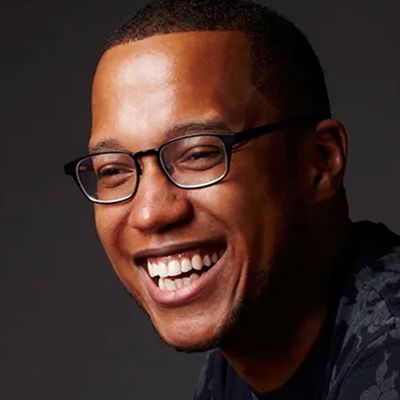
About
DG Council Vice President Branden Jacobs-Jenkins has made his career by building community with other writers - even if that community started as three blogs in the early aughts. In this episode, Branden tells Talkback host Christine Toy Johnson about his passion for fair and equitable treatment of writers and how his role at the Dramatists Guild enables him to advocate on behalf of his community of fellow playwrights, composers, lyricists, and librettists. He also discusses some of his earliest work as a young writer, revealing how his love of R.L Stine’s Goosebumps led to an interest in theatrical adaptation.
This season of Talkback was produced by Amy VonMacek and Christine Toy Johnson, with postproduction by John Marshall Media. The music is composed by Andrea Daly. Talkback is a production of the Dramatists Guild of America and is distributed by The Broadway Podcast Network.
Transcript
This transcript was automatically generated and might contain errors.
[0:00] Christine Toy Johnson: Welcome to the fourth season of the Dramatist Guild Presents Talk Back.
[0:04] Christine Toy Johnson: I'm your host, Christine Toy Johnson.
[0:08] Christine Toy Johnson: We've shifted our focus this year to talk about craft and inspiration.
[0:12] Christine Toy Johnson: Our guests this season are my colleagues and friends from the Council of the Dramatists Guild of America.
[0:18] Christine Toy Johnson: Over the next six episodes, our guests will give us a unique look into how they write, what makes a good story, and what drives them to keep working on the DG Council.
[0:28] Christine Toy Johnson: Stay with us.
[0:34] Christine Toy Johnson: Welcome back to Talk Back.
[0:36] Christine Toy Johnson: In our first episode, I sit down with the vice president of the Dramatists Guild, Branden Jacobs-Jenkins, while he's on set for his upcoming FX television show, Kindred, an adaptation of the Octavia Butler novel of the same name.
[0:50] Christine Toy Johnson: Branden has made his career in community with other writers.
[0:54] Christine Toy Johnson: We'll talk about his passion for fair and equitable treatment of writers and his passion for R.L. Stine.
[1:03] Christine Toy Johnson: I'm so excited to welcome the vice president of the Dramatist Guild Council, Mr. Branden Jacobs-Jenkins.
[1:09] Branden Jacobs-Jenkins: Can you please introduce yourself to our listeners?
[1:14] Branden Jacobs-Jenkins: Yes, my name is Branden Jacobs-Jenkins. I'm a playwright, an educator, and sometimes television writer, sometimes other kinds of writers.
[1:22] Branden Jacobs-Jenkins: And I'm calling or I'm speaking to you now from the middle of a trailer in the hills of Atlanta where it is boiling hot.
[1:31] Branden Jacobs-Jenkins: And that's the story of my life today.
[1:33] Christine Toy Johnson: Okay, thank you.
[1:36] Christine Toy Johnson: This season is all about inspiration and craft.
[1:39] Christine Toy Johnson: And I know that means many different things to many different people.
[1:42] Christine Toy Johnson: And I wanted to start with asking you: you're such a prolific writer.
[1:47] Christine Toy Johnson: How did it all begin for you? What inspired you to start writing?
[1:52] Branden Jacobs-Jenkins: It's so flattering and fraudulent for you to call me prolific, but I'm gonna receive that and say thank you.
[1:58] Branden Jacobs-Jenkins: You know, it's like impossible to feel productive these days.
[2:01] Branden Jacobs-Jenkins: But I guess it started for me honestly with reading.
[2:03] Branden Jacobs-Jenkins: I feel like I was just a gigantic reader starting from an early age, and I was very much into Goosebumps books.
[2:13] Branden Jacobs-Jenkins: And I remember it's the R.L. Stine kind of series. It had its heyday in the 90s.
[2:18] Branden Jacobs-Jenkins: And I would like to go to the B. Dalton bookstore, which was the name of the bookstore.
[2:21] Branden Jacobs-Jenkins: I think every month they released the new one, and I'd be there like using my allowance to buy it.
[2:26] Branden Jacobs-Jenkins: And I think I read every single book.
[2:28] Branden Jacobs-Jenkins: And after a few, maybe a couple years of reading the books, I had this experience where I read one and I didn't like the ending.
[2:36] Branden Jacobs-Jenkins: And so I decided I would rewrite the ending myself.
[2:39] Branden Jacobs-Jenkins: And that's my first memory of basically being like, I can tell a story, or I could tell I want to see the story that I want to see, write the story that I want to see.
[2:48] Christine Toy Johnson: How old were you then?
[2:49] Branden Jacobs-Jenkins: And God, I guess I want to say I was in second or third, maybe third or fourth grade.
[2:54] Christine Toy Johnson: Wow.
[2:54] Branden Jacobs-Jenkins: Because what happened soon after that is I would be my mom was a working parent, and sometimes I would have to stay with her.
[3:01] Branden Jacobs-Jenkins: She's a single mother as well.
[3:02] Branden Jacobs-Jenkins: So sometimes I'd have to hang out at her office on days when I didn't have childcare.
[3:06] Branden Jacobs-Jenkins: And I would just be stuck in her office with a computer, and I just learned, I just one day opened up like a very crude kind of word processing platform and just started writing a story out of boredom while she was in a meeting.
[3:22] Branden Jacobs-Jenkins: And then I remember being very fascinated because I like printed it out.
[3:25] Branden Jacobs-Jenkins: And somehow she convinced, she told my teacher about it, a guy named Mr. Toe, who's now no longer with us.
[3:32] Branden Jacobs-Jenkins: And I think one day he just ran out of things to teach, and so he told me to come up in front of the class and read my story out loud, and that was like my first taste of performance.
[3:41] Christine Toy Johnson: Wow. How was that for you?
[3:43] Branden Jacobs-Jenkins: I remember being super humiliated.
[3:46] Branden Jacobs-Jenkins: It's about like detectives who happen to also be like martial arts experts.
[3:50] Branden Jacobs-Jenkins: I mean, it's really bad stuff, but I think it was the first time I was ever singled out, or I felt the act of writing singling me out in a way that was like, oh, this isn't me and this is what I do, and no one else seems to do it in this room.
[4:02] Branden Jacobs-Jenkins: And I think that was quite formative for me.
[4:05] Branden Jacobs-Jenkins: And then when I actually began writing plays, it's a little hazier, but the first like official play I wrote, we had this like end of year recital to a very small elementary school called Roots Activity Learning Center in Washington, DC.
[4:20] Branden Jacobs-Jenkins: And every year, at the end of the year, we had the school-wide recital, and every class kind of put on a performance.
[4:25] Branden Jacobs-Jenkins: And somehow I convinced my best friend at the time was a guy named Chris Mickel, and I knew he wanted to be an actor, and it's like, well, I'll write you a play.
[4:33] Branden Jacobs-Jenkins: And I wrote this really bad, very long play about a detective named Johnny Sanchez.
[4:38] Branden Jacobs-Jenkins: And that was performed at our like sixth or seventh grade recital.
[4:42] Branden Jacobs-Jenkins: And I didn't think it was writing the play or even playwriting, but I was like, this was something to do.
[4:47] Branden Jacobs-Jenkins: That's my earliest origins.
[4:48] Branden Jacobs-Jenkins: I think I've already told those stories.
[4:50] Branden Jacobs-Jenkins: But this is my very first beginnings of me writing things, writing stories.
[4:54] Branden Jacobs-Jenkins: I actually also wrote a play, my first play in sixth grade and got my school to do it.
[4:59] Branden Jacobs-Jenkins: It was called Wishes Do Come True, in which an actress who looked a lot like me auditioned for a Broadway show and got the show and then got a Tony Award and had a whole speech and everything.
[5:08] Christine Toy Johnson: So that was, you know, where you were obviously started as a star.
[5:11] Branden Jacobs-Jenkins: Yes, of course.
[5:12] Christine Toy Johnson: So we share that as well as—
[5:15] Branden Jacobs-Jenkins: Yes.
[5:15] Christine Toy Johnson: I think there must be something about that age.
[5:17] Christine Toy Johnson: There's something about the sixth grade year that is—that somehow you understand the lure of the stage somehow.
[5:23] Branden Jacobs-Jenkins: Yeah.
[5:24] Christine Toy Johnson: Yeah, that's great.
[5:24] Christine Toy Johnson: That's amazing.
[5:26] Christine Toy Johnson: I wanna talk about a lot of things because you're working on several things right now, I know.
[5:31] Christine Toy Johnson: You've been working on a new television series that you also created, is that correct?
[5:37] Branden Jacobs-Jenkins: Yeah, it's technically an adaptation of a very famous book called Kindred by the late Octavia Butler.
[5:43] Branden Jacobs-Jenkins: But yeah, I've been developing it for about six, seven years, which I can't believe that.
[5:47] Branden Jacobs-Jenkins: But and we're finally—we're literally gonna wrap shooting next week, so it's been an enormous journey.
[5:54] Christine Toy Johnson: And is this your first stint with writing a television show?
[5:59] Branden Jacobs-Jenkins: No, I've actually done some quiet secret television work over the last eight or so years in a way that honestly a lot of playwrights I know that's how we survived my cohort at least since we weren't all going to Broadway.
[6:14] Branden Jacobs-Jenkins: And I worked in the room for HBO's Watchmen, which I think most people kind of knew me for.
[6:22] Branden Jacobs-Jenkins: I helped a friend of mine out with his show Out of Range most recently for Amazon.
[6:27] Branden Jacobs-Jenkins: So I've kind of dabbled, I've developed things that never went anywhere, but mostly just quiet struggles in the dark.
[6:35] Branden Jacobs-Jenkins: Um, I have to say there was a period where I felt a little ashamed to talk about it because I just all I want is to be a playwright, but Broadway was not quite making ends meet in the way that I needed it to.
[6:47] Christine Toy Johnson: Yeah.
[6:47] Branden Jacobs-Jenkins: So the health insurance, that's why everyone does is the health insurance.
[6:51] Christine Toy Johnson: Of course, yes.
[6:51] Branden Jacobs-Jenkins: You know.
[6:52] Christine Toy Johnson: So are you the showrunner on your show here?
[6:55] Branden Jacobs-Jenkins: Yes, I am the showrunner, executive producer, combo slash writer at Kahona.
[7:02] Branden Jacobs-Jenkins: So that's a lot.
[7:03] Branden Jacobs-Jenkins: Which is a totally new—
[7:04] Branden Jacobs-Jenkins: Yeah, it's a lot.
[7:05] Branden Jacobs-Jenkins: It's like being somehow both the playwright and the artistic director of the theater.
[7:10] Christine Toy Johnson: Wow.
[7:10] Branden Jacobs-Jenkins: And it's a huge mental shift, I would say, from what I'm used to, which is, you know, through the amazing gift of the guild, owning my IP and having a lot of control over it, but still in some ways being an independent contractor, versus in this role, part of my creative responsibilities is ultimately hiring and managing this kind of amazing village of human beings who show up to put this behemoth of a show together.
[7:39] Branden Jacobs-Jenkins: So it was a real level jump in terms of how I thought about what creative work would look like, and yeah, it's just been such an amazing learning experience, honestly.
[7:52] Branden Jacobs-Jenkins: And it's actually made me really appreciate and value the theater more than I ever have because I, you know, you don't know what you got until it's gone ultimately.
[8:01] Christine Toy Johnson: So much to celebrate by what we do, and it really is just like the best.
[8:05] Branden Jacobs-Jenkins: Yeah.
[8:05] Branden Jacobs-Jenkins: Like good theater is just the best.
[8:07] Christine Toy Johnson: Yeah.
[8:07] Christine Toy Johnson: I think it's interesting that you bring up the whole idea of owning your intellectual property because I think that is one of the biggest differences besides the money, writing a play on your own and being able to make all the decisions and nobody being able to change your words, and even though you're in charge, you're still answering to a lot of people, right?
[8:30] Branden Jacobs-Jenkins: Yeah, I definitely work for Walt Disney.
[8:32] Branden Jacobs-Jenkins: I know the buck does not stop with me, and in some ways I think writing for television is like a very interesting art of compromise because you do have a vision for something that you want to try to maintain and get across, but in some ways you're constantly like having to give a little to get a little in every way, and it just makes you think differently about the work you're doing.
[8:53] Branden Jacobs-Jenkins: I keep saying people like I've never wanted more than now to be making a play because there is something about that just like almost radical freedom that you get to feel in the theater that just I don't think the television will ever honestly approach because it's too big of a commercial venture, I think.
[9:10] Christine Toy Johnson: Yeah.
[9:11] Christine Toy Johnson: I want to get to your plays a little bit later, but I have a follow-up question.
[9:16] Christine Toy Johnson: You're working on a TV show that is an adaptation.
[9:19] Christine Toy Johnson: How have you gone about coming up with new ideas that are in line or in alignment with the source material?
[9:28] Christine Toy Johnson: And what keeps you inspired to keep finding new things to say?
[9:37] Branden Jacobs-Jenkins: Yeah, that's a great question.
[9:38] Branden Jacobs-Jenkins: You know, I think that adaptation is something that I think I'm regarded for in the theater.
[9:44] Branden Jacobs-Jenkins: It's like it's been a part of my practice for a very long time, and I've given a lot of thought about it.
[9:48] Branden Jacobs-Jenkins: I've taught classes on it.
[9:49] Branden Jacobs-Jenkins: I've always felt that the theater at its heart, even historically, is an adaptive or an adaptational form.
[9:57] Branden Jacobs-Jenkins: If you think about Shakespeare, he was synthesizing these source materials from like Italian folk tales and English histories or whatever, and kind of making his worlds out of that kind of raw material.
[10:07] Branden Jacobs-Jenkins: So for whatever reason, theater has always felt to me like a thing that is always adapting something.
[10:12] Branden Jacobs-Jenkins: And the kind of magic of what we do is in asking ourselves what adaptation is.
[10:31] Branden Jacobs-Jenkins: You should first if you haven't.
[10:33] Branden Jacobs-Jenkins: The first thing I would say too is I always approach things as a fan.
[10:36] Branden Jacobs-Jenkins: There's no point in adapting something that I don't want to see or spend time with.
[10:41] Branden Jacobs-Jenkins: And that's really what keeps me going is oh, I just love this thing so much.
[10:44] Branden Jacobs-Jenkins: It's like I want to just unpack my love for it.
[10:46] Branden Jacobs-Jenkins: I want to love it more.
[10:47] Branden Jacobs-Jenkins: I want to understand it.
[10:48] Branden Jacobs-Jenkins: In some ways, I think that's what love is ultimately.
[10:50] Branden Jacobs-Jenkins: So that's what really keeps me going.
[10:52] Branden Jacobs-Jenkins: It's like an obsession almost with the thing.
[10:54] Branden Jacobs-Jenkins: I can't adapt just anything.
[10:55] Branden Jacobs-Jenkins: I have to weirdly be like intrigued or challenged by it.
[10:59] Branden Jacobs-Jenkins: And I would say too that I think a mistake a lot of adaptations make is the writer presupposes a kind of superiority to the original maker or the text.
[11:09] Branden Jacobs-Jenkins: And I think like part of the fun of adapting is to try to really think of this dead person usually as an equal or a colleague and understanding why they made the choices they made in the context so that they made them and what they might have been trying to do that they could or couldn't do based on the social world that was there to greet them.
[11:28] Branden Jacobs-Jenkins: And so for me, I feel like when I am trying to adapt something that, especially when it's kind of beloved, I think to myself, like, what do I think? Like Octavia Butler wrote this book in like the 70s at a very different time, very different level of conversation and vocabulary around like a lot of the themes she's unpacking, which have to do with literally like family, race, identity, you know, all the stuff that now everyone writes about. And I have to ask myself, how can I find an echo or another iteration of those things in the present? That kind of is what ultimately guides some of my choices in adaptation. And then in terms of finding something new to say, it's I I have to I've been teaching now for a while, and I feel like I constantly, not constantly, it's not so much anymore, but I would have these students who would just feel like they had nothing to write about or that everything had been written about under the sun.
And I have to remind them that every day is a new day. No one's written about today. So you should write about today and see where you are today and now, and it's always by definition going to be new because no one's seen this day. And I feel like that's kind of what I try to cultivate in myself: the sense of always just asking questions of the present and just noticing and thinking about how we got to where we got to now. That sort of winds up being the well I draw on again and again when I get stuck.
[12:40] Christine Toy Johnson: That is such great advice. What's interesting is that it seems like we started this conversation talking about Goosebumps, which you were already adapting when you were in grade school. So you were preparing for this moment.
[12:51] Branden Jacobs-Jenkins: That's true. Yeah, that's hilarious. What's funny is I found out that R.L. Stein is a subscriber at the Signature Theatre, and that he has definitely seen my plays. Isn't that funny? Yeah. Someone confirmed that for me. Yeah, they were like, R.L. Stein saw this play this year, and I was like, But you haven't met him yet.
[13:03] Christine Toy Johnson: You haven't met him yet in person.
[13:09] Branden Jacobs-Jenkins: Ironically, this is another dumb story, but when I was 13 years old, my mother gave me this surprise where R.L. Stein was like speaking at some event space in Washington, DC, and she got me tickets to it, and I was blown away. I was meeting a real-life author who I admired, and as I was going into the auditorium to take my seat, this guy cuts in line in front of me just to go in. It's R.L. Stein. Oh. I think he either stepped on my shoe or I stepped on his shoe, and I was just like, it was definitely like touching the hem of a saint or something for a 13-year-old who was into like weird genre fiction. Anyway, yes, that's the only time I ever met the man.
[13:52] Christine Toy Johnson: That's so great. You know, ships in the night. Speaking of the Signature, you're going to have to fact-check me on this, but you have a premiere of a new play that you're also directing coming up there.
[14:04] Branden Jacobs-Jenkins: Yes, that is the intention. Yes. There's a play called Grass that I'm in the process of finishing, which was actually slated for the COVID season that was canceled. So one of the many strange casualties of that. And yeah, it's my final play in Residency 5 play right there. And the late amazing Jim Houghton who invited me into the program. I would say 2014, I want to say.
[14:58] Branden Jacobs-Jenkins: Yeah, I'm nervous, but yeah, I feel like I've been in enough writers' rooms now. You know, honestly, like also the showrunner thing has made me very fearless in all in always, because there's just so many ways to be a director, to be a writer, to be a pr anything. You just kind of have to figure out your lane.
[15:15] Christine Toy Johnson: Have you directed your own work before other than the TV stuff?
[15:20] Branden Jacobs-Jenkins: Not officially, no. I did a sort of I co-directed a college production of my play Everybody with someone many years ago. I mean, a lot of directors I work with have accused me of being a closeted director. I'm very invested in things like design of my work, and I have very specific ideas of performance, and I just feel like I came up doing community theater where sure there was like a named director, but everyone was doing everything. Everyone was building the sets. There's a dance captain, but also a choreographer. So I feel like my training has always been a little bit like, we're just all here to make a really good thing. You just kind of get in where you fit, and sometimes that means doing things that some directors might conservatively think of as only for them to do. But I don't know. I'm also just curious about taking that responsibility on myself and just trying to empathize in some ways with some of these amazing collaborators I've had over the years.
[16:18] Christine Toy Johnson: Yeah, yeah. I think that's so great and interesting to be able to get that perspective and I feel bad. Am I supposed to ask you questions?
[16:24] Branden Jacobs-Jenkins: No, no, no. No, no, I'm interviewing you.
[16:28] Christine Toy Johnson: Oh, oh, because I was gonna ask you if you've ever been interested in directing.
[16:31] Branden Jacobs-Jenkins: I have actually, and I've directed several of my own pieces, and I quite enjoy it. I think because I like the opportunity to be really clear about what I have envisioned.
[16:43] Christine Toy Johnson: Exactly.
[16:44] Branden Jacobs-Jenkins: To communicate that with the actors. I'm not as I'm not as well versed in imagining the visual elements, the scenic things, although I do tend to write a lot of magical realism, so I envision visual things that have to do with different worlds, but I'm not as good about being able to talk to a designer about what I would like to see in that regard. But I really do enjoy it. I really do enjoy it.
[17:14] Christine Toy Johnson: I always very fascinated by actor-turn playwrights, which I'm not one of them, because I always feel like you guys have a very intuitive sense of what makes something pleasurable for an actor to do. And I think that's so much the key that a lot of writers take forever to understand that ultimately a show is made or broken on the actor, and if they're not being given if they've not been given like a vehicle in which to feel good, you may not get that kind of magic you create. Like I was thinking about Stephen Adly Guirgis's work. Like I'm obsessed. Lucky is an amazing writer. And I always feel like he can build these kind of crazy ensemble shows, is he just knows what an actor likes to do. And those when his plays work, they feel like infectious now.
[18:06] Branden Jacobs-Jenkins: Yeah, that's a great way to put it. I honestly always approach building characters in the same approach. So I have had moments where I act everything out, of course, in my after I've written things, and I think, oh, I would be so mad at the playwright if I had to say this very long convoluted sentence. Make it work.
[18:24] Christine Toy Johnson: Yeah, yeah. I love that.
[18:26] Branden Jacobs-Jenkins: Yeah, it's pretty interesting. You did mention that you are still working on Grass. Where are you in the process of writing that?
[18:34] Christine Toy Johnson: Oh god.
[18:35] Branden Jacobs-Jenkins: I've been honest, I'm very superstitious, so I don't talk too much about it. I would say that I'm still finishing it. But it's been something that's been percolating for a very long time. I suspect it all. And I also honestly, I'm as a writer, I also rewrite a ton in rehearsal, which can often drive a certain kind of actor crazy. So for me, things aren't really finished until I see the play that I'm thinking I'm writing.
[19:00] Christine Toy Johnson: Yes, yes.
[19:02] Branden Jacobs-Jenkins: Every production I've ever walked into of the script has been in my spirit, like a kind of draft of the event we're building and discovering in the process. But that's exciting because you're collaborating with everyone in the room at the same time, then and it's growing in front of your eyes. And I also just love, I've had it a few times. Like I love the experience of when I'm writing in character, it's sort of half there, and the actor who like locks in. And then I feel like I'm tailoring something to them. I like that feeling a lot. So I find that I kind of wait for that person to breathe breath into the character before it finally finds its finish. You know what I mean? And I just that's just something that very much excites me about it, about the process. Like I just love rehearsal.
[19:52] Christine Toy Johnson: I want to shift our conversation a little bit to your service on the council of the guild. We of course became officers together during the shutdown in 2021. And I know that you first joined the council in 2016. And I wanted to ask you what inspired you to first run for council and what's it been like for you.
[20:13] Branden Jacobs-Jenkins: I was really inspired by I think like most people, I didn't understand what the guild was, and I didn't understand what council was. And then I had a very bad contractual crisis early in my career that was the product of a negligent agent, a pretty insidious theater, and I felt very helpless. And at the time, and still kind of now Marsha Norman, the great Marsha Norman, was really a mentor to me at that time, and she was like, You need to bring this to the guild, and you need to speak with Ralph Sevish. And I had this Ralph met with me in his office and talked me through what was going on and gave me very good advice for nothing, you know. And I was like, Man, it's so crazy that we don't understand that the guild is that kind of place where we're supposed to come together and talk broadly and in confidence with each other about what's going on in the field.
And anyway, so I joined the council because I felt like I gotta figure out how to keep this kind of flame going. I can also feel that at the time, especially because I think now the council is very different. There's all this like institutional knowledge that the generation before us has that no one was taking on. And I've always felt that I'm that's why I'm in academia as I just believe in like, you know, when you think about theater, it's this very old form of that we've been handing down to each other for like thousands of years. And I just felt someone had to show up and try to hold that knowledge or hold that purpose or that mission. And that's why I did it. And I didn't know what I was doing for a very long time on council.
I knew that I knew the spirit that was compelling me was about trying to send out a beacon to young writers like me who were who found themselves in very bad situations professionally and didn't know how to get help, and also to find a way to gather the troops and root out those bad actors from the field as much as I could. But then in the process of being around, I saw where I was needed. I revived the awards committee, which had been defunct for years and wanted to take on not just the management and dispersal of the awards that the guild oversees, which are quite substantial and for the most part geared towards supporting early, mid, and established writers, and both in New York and not. I wanted to think and spend a lot of time meditating on and philosophizing about what it meant for writers to celebrate each other because there are just no other, there's really no other place where playwrights are literally awarding other playwrights. I thought that was such a noble thing. But also I felt there's this interesting thing happening amongst my immediate cohort of New York playwrights for the most part.
[22:49] Branden Jacobs-Jenkins: I noticed so many of us were depending upon foundational support and grants, which we were applying for or not applying for to subsist as writers, and no one was kind of talking through the tax implications of that, the financial implications of that. I just was suddenly like, wait, I think there's a self-education that needs to happen for a lot of writers around themselves as economic actors in the field. And in the awards committee felt like the place to have those big conversations, and it wound up being quite true. I think that I think it sparked conversations within the council based on the work that I was doing with my co-chair at the time, Joshua Harmon, that I think opened up a lot of conversations about the meaningfulness of this money for young writers in a way that's sometimes the most successful amongst us don't understand how little the least successful of us live on, you know.
I just wanted to have a conversation about money, and that's how that kind of began. So that was the spirit of it. And I also really just fell in love with the staff of the guild, like Terry Stratton and Amy Montek and Emmanuel Wilson, and just it just really inspired by these people who have decided to dedicate their lives to very specific artisans in this very specific field. And it's been really satisfying work so far, I would say.
[24:31] Christine Toy Johnson: Yes, very much so. I love that talking to various counselors this season about how they've been inspired to advocate for playwrights. And it's really such a generous act. And I really value all of it and all of the contributions that all of you have brought to the guild. It's really been and you too, Christine. Like this the talkback is a huge new part of the guild. And I think it's just opening up the kind of windows and doors to people who I love it. I love being able to give people like who is people have probably heard you talk a lot about your fabulous plays that have won all these awards. But who has heard until today about your adaptation of Goosebumps?
[25:15] Branden Jacobs-Jenkins: No, but yeah. You're like basically Oprah or whatever.
[25:22] Christine Toy Johnson: You just got it at it.
[25:23] Branden Jacobs-Jenkins: Yeah. It's so funny. I remember when I moved to New York for the first time, and I didn't know Jack crap about anything. I Googled Playwrights New York blog, and there were three blogs. And it was Jason Grote, Sheila Callahan, and Adam Zimkowitz. Those are the only three blogs I could find. It was the only way I could get resources or understand anything about trying to be a playwright. And I'm just thinking now, like it's so different.
[25:51] Christine Toy Johnson: Yes.
[25:51] Branden Jacobs-Jenkins: You come here and you want to understand the landscape or have to be a part of this. It's just like such a great time to be a young writer. I moved to yeah, I moved to New York in 2006. And I went to, I was actually doing a master's program at NYU in something called performance studies, writing finally on the side. And I just the only tickets I could really afford were off off Broadway for back then we had the Fringe Festival, if you recall that crazy moment. And if you wanted to be a theater maker, you just had to figure out where to go and hopefully hang around long enough someone would be like, Do you want to make something? But a few years into that was the phenomenon at the emerging writers groups.
So there was the public, the solo rep had their writer director's lab, and then New York Workshop had an emerging artist of color fellowship at the time. And so the public had started this thing called the Emerging Writers Group, and I was in the second class of that. So again, that was because the Ford Foundation, Time Warner, all these places were suddenly caring about supporting emerging playwrights. And so suddenly the industry was flushed with funding to start these essentially scouting initiatives. And I'm getting into the public rates group and being like, What is this? It's crazy. They gave you headshots, you were talking to professionals. There was a real kind of pre-professional element to it.
And at the end of the day, they gave me my first production, which is a play called Neighbor and their public la neighbors in the public lab. And but even then I didn't have any mentors who were playwrights. I was working at the time for a theater critic. That was the one mentor I had, which was a little complicated. And I just didn't know anything about anything.
[27:26] Branden Jacobs-Jenkins: And then I applied to Juilliard because a friend of mine, her name was Janine Neighbors, and we were both in the Arsenovas play group. She was like, I think you should apply to Juilliard. So I was like, okay, I guess we'll just do it because I need health insurance. And it was like a psychotic experience. But I getting like A applying, but B like getting in and just being very confused. I was like homeless. I was living on a hair mattress basically on a random sublet, like I got whooping cough. Like it was crazy. It was a crazy. So yeah, so I literally just went to Juan, I literally applied to Juilliard because I was desperate. I needed health insurance. And then um, but then I wound up, you know, it was like so serendipitous because that place changed my life, which had everything to do with Marsha Norman and Chris Durang, who at the time were running it.
I never had again, I never had playwright mentors, you know. And also Jim Houghton was running the drama program at the time, and he was just like such a visionary person. And I had never been embedded with actors in that way. So for the first time ever I understood what an actor was and like what actors do, and that really transformed the way that I wrote. So I think it didn't really give me like it didn't give me a lay of the land. Like I didn't learn about the business actually from Juilliard, but I suddenly was developing these very crucial relationships, which I can't believe I got as far as I did without having them. I think any playwright now definitely needs to a know actors, be have a real mentorship or relationship to someone who's who can help answer those questions that only someone with a bit of wisdom can. And also you just need like a tribe of people to be working with. That's just the three things.
[29:06] Christine Toy Johnson: Yeah, I think. But also it seems to me one of the morals of the story is that you took a leap of faith back when you first applied for these fellowships that you didn't know about and look where they were.
[29:20] Branden Jacobs-Jenkins: No idea. I often would say think to myself, if I ran to my 22 year old self, would he even believe what I had to tell him? Because I truly did I had a premiere at the public theater, I was like 26, 27 years old. Like I my first apartment was on Mont and Bleaker Street, and I would walk by the public all the time and be like, oh, I can't wait to like be 40 and finally maybe have a show here. I just really did I truly and it's because you don't know what's happening. Right. It was like very radical to meet other young playwrights in the city because again, you weren't there was no way to meet each other because no one's getting produced. I had a lot of friends who wanted to be novelists or like poets, but I just really didn't know any playwrights because in some ways I think you still live with the shame of being like a theater kid, right?
In high school, but also like how do you show your work or share your work as a playwright? So I was in this like pretty wonderful class at of ours, and over people included like Annie Baker, who I've she and I have been teaching together for almost a decade now, dear friend Amy Herdzog, Sam Hunter. Like, we were all just kids who were curious about this thing, and it felt like a hobby, like a very expensive hobby. But somehow there is something really powerful in meeting someone who was interested in the thing that made you so singular in your own life.
[30:37] Christine Toy Johnson: So that makes you think about it. I think that's so incredible. Also the idea that you were able to meet and surround yourself with people who believed in illuminating your voice, not like you say, what makes you singular, not trying to change you into whatever they thought you should be, or what people in the commercial world might want. Can you talk about that a little bit? If you've ever had any pushback for what you want to say, because I know your your your reputation is really writing plays that are very forthright and unapologetic and they're sometimes controversial.
[31:17] Branden Jacobs-Jenkins: It's so funny. I don't know, it's it's a good question because I just you believe in what you're doing and you just back it up and you just keep doing it, that's all you have to do. And so there was so there is that, and I still get pushback all the time. Like I still expect pushback, but I also had this. I remember I had my first really negative review, and I got to have lunch with a playwright named Mark Ravenhill, who I really love, and he was a part of this kind of in your face generation of playwrights in the British world. I met him for a random coffee or something because his agent put us in touch, or I don't remember why we even got together. And I was licking my wound, and he was just like, listen, this is dumb.
He's like, you need to just he was like, you're trying to do something that's different or new. In some ways, I you're critiquing something that this reviewers are responsible for the upholding of. So you should feel weird if they do love what you do.
[32:12] Christine Toy Johnson: Interesting.
[32:13] Branden Jacobs-Jenkins: It was interesting. Yeah, he was like, if your mission here is to actually talk about things that are difficult to talk about, don't expect people to praise you for it. Because difficulty is not a positive feeling. And that really changed my sense of strength about just doing what I want to do. And living with the fact that sometimes you're just gonna it's gonna miss the mark, sometimes it's gonna fail. But you have to have faith in whatever your mission or your drive is. You have to work hard to have that faith because you have to really stand by what you're trying to do. And I think that's how I manage to stick around and not go crazy.
[32:53] Christine Toy Johnson: Um, thank you so much for all of your insight and great stories. It's always such a joy to get to talk to you because we haven't seen each other in person in years.
[33:03] Branden Jacobs-Jenkins: I know, and I'm just so happy to finally be on this podcast, which I love.
[33:06] Christine Toy Johnson: Yes, thank you for the time. I'm gonna skip this episode obviously. I'm not gonna listen to myself talk, but I'm just so honored to be included in this gallery of amazing talks with you.
[33:15] Branden Jacobs-Jenkins: Thank you.
[33:17] Christine Toy Johnson: My thanks to Branden. To hear all our episodes, you can find us on the Broadway Podcast Network or Apple Podcasts. Please be sure to rate us and leave a review. Learn more about our guests from all our episodes by visiting www.dramatusguild.com. This episode was produced by Amy von Mesick and me, Christine Toy Johnson. Music was composed by Andrea Daly. Special thanks to Dick and Rogers Sound Studio in Vancouver, British Columbia. Talkback is a production of the Dramatists Guild of America and is distributed by the Broadway Podcast Network. Join the conversation online by using hashtag DG TalkBack. As always, to be continued.
© Broadway Podcast Network, All Rights Reserved