

This season's final episode features a conversation with two of the most produced playwrights in America: Lauren Gunderson and Lynn Nottage. The two women writers speak with host (and fellow woman writer) Christine Toy Johnson about how they were motivated to start telling stories in order to create roles that were missing from the narrative... Read More
From the show: The Dramatists Guild Presents: TALKBACK, sponsored by the Dramatists Guild Foundation
Guests
About
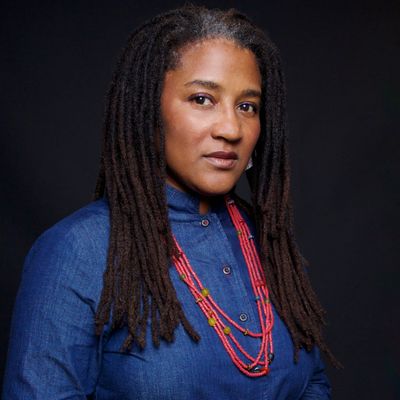
This season's final episode features a conversation with two of the most produced playwrights in America: Lauren Gunderson and Lynn Nottage. The two women writers speak with host (and fellow woman writer) Christine Toy Johnson about how they were motivated to start telling stories in order to create roles that were missing from the narrative. They also address the importance of bringing theatre to communities- especially marginalized communities- instead of expecting them to come to the theatre. At the time of this recording, Lynn and Lauren were among the most produced playwrights in the country; since then, Lynn has officially been named the most produced playwright of this past theatre season.
In the fifth season of The Dramatists Guild Presents: Talkback, we examine how we can expand the canon and challenge the status quo. How can we be intentional in the ways that we make space for diverse, and inclusive stories, while also reimagining the often produced ones, so that the American landscape of storytelling is truly reflective of the gorgeous tapestry of people who inhabit it?
Talkback was produced by Amy VonMacek and Christine Toy Johnson, with postproduction by John Marshall Media. The music is composed by Andrea Daly. Talkback is a production of the Dramatists Guild of America and is distributed by The Broadway Podcast Network.
Transcript
This transcript was automatically generated and might contain errors.
[0:07] Christine Toy Johnson: Welcome to season five of the Dramatists Guild Presents Talkback.
[0:11] Christine Toy Johnson: I'm your host, Christine Toy Johnson.
[0:14] Christine Toy Johnson: This season is all about how we can challenge the status quo and not only expand the canon of what plays are taught, read, programmed, and used to define the idea of what classics are, but also to ignite it with new actionable strategies.
[0:31] Christine Toy Johnson: To me, this is not about canceling the existing canon.
[0:35] Christine Toy Johnson: It's about being intentional about how we make space for additional, diverse, and inclusive stories, as well as reimagining often produced ones so that the American landscape of storytelling is truly reflective of the gorgeous tapestry of people that inhabit it.
[0:54] Christine Toy Johnson: In our final episode of this season, I talk with our two most produced playwrights in America, Lauren Gunderson and Lynn Nottage, about their journeys and what's inspired them along the way.
[1:12] Christine Toy Johnson: Two of my personal heroes. Would you please introduce yourselves to our listeners?
[1:19] Lauren Gunderson: Hi, everybody. Lauren Gunderson here.
[1:23] Christine Toy Johnson: Hi, Lauren.
[1:25] Lynn Nottage: Hi, Christine. It's Lynn Nottage.
[1:27] Christine Toy Johnson: Thank you so much. Now we are calling in from three different time zones today. Would you tell us what you're working on and where you're calling from? We'll start with Lynn.
[1:37] Lynn Nottage: Sure. I'm currently in London and I'm working on a musical adaptation of Secret Life of Bees with music by Duncan Sheik and lyrics by Susan Birkenhead, and it's being directed by Whitney White, and we're currently at the Almeida Theater.
[1:55] Lynn Nottage: This is our second go at this musical, and it's been really exciting.
[2:00] Christine Toy Johnson: Are you currently in rehearsal?
[2:02] Lynn Nottage: We're right in the middle of rehearsal.
[2:05] Lynn Nottage: We're at that moment where it's beginning to get super interesting and super scary.
[2:13] Lynn Nottage: Thank you for taking the time today to talk to me. I'm really so appreciative.
[2:17] Christine Toy Johnson: And Lauren, where are you today?
[2:19] Lauren Gunderson: Coming at you from San Francisco, California, though yesterday I was in Madison, Wisconsin.
[2:25] Lauren Gunderson: So it's there's a lot going on in a lot of time zones for me as well.
[2:30] Christine Toy Johnson: What were you doing in Madison?
[2:32] Lauren Gunderson: So there's a wonderful theater called Forward Theater Company that's commissioned a play called Artemisia, which is based on Artemisia Gentileschi, an Italian Baroque painter.
[2:41] Lauren Gunderson: And yeah, it's about a fierce woman making art and taking no shit.
[2:48] Lauren Gunderson: So we're premiering that. I was there for the first week of rehearsal.
[2:52] Lauren Gunderson: And yeah, it's trying to squeeze in a lot of other things as we go.
[2:55] Christine Toy Johnson: Yes, certainly. So we, as this season, we're talking about the canon and how we can, for lack of a better word, ignite it, come up with new strategies to change it in all different ways.
[3:10] Christine Toy Johnson: And one of the reasons that I wanted to speak to the two of you is that you are both the most produced playwrights in America right now, which is awesome and amazing and fantastic.
[3:25] Christine Toy Johnson: And I wanted to give a little context to how I want us to talk a little bit about the canon, how you fit in. The Lilies, which, of course, Lynn, you are on the board of, started out as the Lily Awards in 2010 to honor the work of women in the American theater.
[3:43] Christine Toy Johnson: It was founded by Julia Jordan, Marsha Norman, and Teresa Rebeck.
[3:47] Christine Toy Johnson: And in 2015, through a partnership with the Dramatists Guild, they gathered the resources and conducted a national survey called The Count.
[3:57] Christine Toy Johnson: Now, this survey proved what we all knew, or we suspected anyway, that women from historically excluded communities were by far the least represented demographic on our stages.
[4:10] Christine Toy Johnson: I'll never forget this. In 2015 at the Dramatists Guild National Conference, Count 1.0, as it's known, was revealed.
[4:18] Christine Toy Johnson: And it reported that only 22% of plays being produced in the United States were written by women, and 3.4% by American women of color.
[4:30] Christine Toy Johnson: There was this amazing graph that showed the names of the most produced playwrights at that time.
[4:37] Christine Toy Johnson: David was the biggest image, and then slightly smaller but equal parts, Jeff, Richard, Michael, John, Bruce, Stephen, Mark, and Tom, you get the picture.
[4:46] Christine Toy Johnson: And in Count 3.0, the most recently released report, we learned that the percentage of produced plays by women went up to 31%, but still a very big distance from parity.
[5:00] Christine Toy Johnson: And so I wanted to talk to the two of you about how you've seen things change over the years.
[5:08] Christine Toy Johnson: Have you seen opportunities change in a certain way that you would like to speak about?
[5:15] Christine Toy Johnson: And what do you think has helped break the barriers, all acknowledging that there is far distance to go?
[5:23] Lynn Nottage: Do you want to start?
[5:25] Lynn Nottage: Sure. I just want to speak just a tiny bit more about the Lily Awards because they're doing something that I think specifically addresses the canon and also addresses the question that you're asking is that they're focusing their energy on the Lorraine Hansberry initiative, which is something that has been spearheaded by myself and Julia Jordan.
[5:45] Lynn Nottage: And we have commissioned Alison Starr, who's this amazing sculptor, to create a sculpture of Lorraine Hansberry, really to disrupt the notion of what a monument can look like.
[5:57] Lynn Nottage: We thought not only is she a woman, she's a black woman, and she's an artist, because there are also so few monuments that are actually our artists.
[6:05] Lynn Nottage: But in tandem to that, we also thought it was really important to figure out how we could support the next generation of writers.
[6:15] Lynn Nottage: And we initiated a scholarship, which is going to be launching fairly soon, which is going to give $25,000 a year to women of color and non-binary folks of color who are going to graduate schools to support their living expenses.
[6:34] Lynn Nottage: Because one way of supporting and building the canon is investing in the future and investing in the voices of the people who have been marginalized in the past.
[6:55] Lynn Nottage: Now I feel like she's just finally getting her due.
[6:59] Lynn Nottage: And we understand that she actually had a body of work, not just one play, which was A Raisin in the Sun, is that she actually had a voice that was urgent and necessary and was part of shaping what we think of as modern theater.
[7:14] Lynn Nottage: I remember when those reports came out too, and they confirmed something that was very clear to all of us working in the American theater, but to have statistics to name it, to count it, to quantify something that seemed unquantifiable is so incredibly helpful.
[7:31] Lynn Nottage: And I think one of the things that has come up since then is even in the Bay Area, we had a specific regional count here that helped us name other things, like how many roles for women are coming up each season, how many directors, how many designers, how many artistic directors.
[7:49] Lynn Nottage: And those things matter as well.
[7:51] Lynn Nottage: As we know, sometimes you get in ruts, you program the people you know, and why don't you know these other types of writers?
[7:58] Lynn Nottage: Or and for me, it became something of a kind of clarion call because when I was growing up and looking at theater, and even when I had the first notion that I could or should write, it was because I didn't see women on stage.
[8:15] Lynn Nottage: I actually didn't know even to look at who wrote the play.
[8:18] Lynn Nottage: I didn't know to look at who directed it.
[8:20] Lynn Nottage: That came much later in my career.
[8:23] Lynn Nottage: But as an audience member, as a young woman coming to the theater and saying, Is this a place for me?
[8:28] Lynn Nottage: And I see you got your Annies, you've got your Scouts, you've got your Juliets and Gertrude and Ophelia, and we're done.
[8:37] Lynn Nottage: And that to me was the catalyst to my entire career.
[8:41] Lynn Nottage: And frankly, so thirsty for plays like Lynn's.
[8:45] Lauren Gunderson: When I started to see your work and Paula Vogel's work and Sarah Ruhl's work, it was just a revelation because even just the mere fact that there was more than one woman on stage, and they were talking about things perhaps not about marrying someone.
[8:58] Lauren Gunderson: I think again, that's where statistics help us because it names the thing, we can talk about the thing, we can measure it as it changes, which it has been changing, thank goodness.
[9:09] Lauren Gunderson: And so that's what's become so critically important to me because it has changed the instinct of American theater, which is that's what we're trying to do, right?
[9:18] Lauren Gunderson: We're not just trying to shame people or blame them.
[9:21] Lauren Gunderson: We're trying to say, change your instinct so that every year you think, okay, back it up.
[9:25] Lauren Gunderson: Do I have women, people of color, disabled writers, trans queer writers?
[9:30] Lauren Gunderson: Can we make sure that the instinct is, gosh, we haven't done a play from this perspective for a few seasons, let's make sure we do.
[9:37] Lauren Gunderson: And not to check off any box, but because it's that's the beautiful umbra spread, the colors of our nation need to be represented in our national theater.
[9:47] Lauren Gunderson: And so, yes, I that that that was a very critical moment for me.
[9:51] Lauren Gunderson: And even on this this list, this much touted list that Lynn and I are hopefully sit to top this year, and what an honor it is, you see that list changed.
[10:00] Lauren Gunderson: When I was first on it, I was delighted to be on the top, but looking down, I see Lauren Yee and Karen Zacharias and Kate Hamill and so many other women writers were on the list too.
[10:12] Lauren Gunderson: And I just wanted to say, no, let's look at everyone else on the list, because that's where we're seeing such incredible victories, that we are not actually outliers.
[10:20] Lynn Nottage: Hallelujah.
[10:21] Christine Toy Johnson: Since you've been writing for a long time, how has it changed where you've had to grab the attention of a theater, even if it's not in line with what they expect or they expected women to say?
[10:34] Lynn Nottage: How did you navigate that in the early days?
[10:39] Lynn Nottage: Yeah, I think about what Lauren was saying, and at the core of it was this insatiable hunger to tell our stories, but also to see our stories.
[10:48] Lynn Nottage: And I think back to the very beginning of my journey in theater, that it was near impossible to not only get my stories onto stage, but to also go and sit in those theaters and see those stories.
[11:00] Lynn Nottage: And I think for me, what ended up being the engine, the thing that was driving me was just this desire to hear my voice and to see myself represented and to be in spaces in which I felt that my stories were being celebrated in some shape or form.
[11:19] Lynn Nottage: And so I think what drove me what was something that's hard to quantify.
[11:26] Lynn Nottage: But it's looking back, because I've been in this business for a really long time, is it's a kind of tenaciousness and it's a kind of anger and fury and desire wrapped up into one single thing that was propelling me forward.
[11:44] Lynn Nottage: I remember when I first began, it was near impossible for a woman, let alone a woman of color, to have a play that was on a main stage in any theater in America.
[11:56] Lynn Nottage: And when we had those moments in which we could break through and get our voices up on those stages, that because I'm African American, it was February, which was the shortest month, which meant that my plays were up there for three weeks at a time, and then it would take a full year before I saw another play written by a person of color that was on those stages.
[12:19] Lynn Nottage: And yeah, I guess to answer your question, it is that insatiable desire to be seen and to be heard and to have your own, yeah, your own desires fed.
[12:33] Lauren Gunderson: It's hunger. Similar to Lynn, the instinct that I had to write was because I started as an audience member.
[12:42] Lauren Gunderson: And so I was writing what I needed.
[12:44] Lauren Gunderson: I was writing what I wanted to see.
[12:45] Lauren Gunderson: I was writing what I was desperate, what I was thrilled for the theater to do that I didn't quite get.
[12:51] Lauren Gunderson: And that translates into permission to write because if I need it, heck yeah, there's other people.
[13:02] Lauren Gunderson: Of course there are. And to go back to the report, part of what the count showed us is that women are filling the seats of theaters. Women are buying the tickets. So if I'm a woman and don't see myself, and yet I'm the one making the dang decision to go to the theater at all, you better talk to me. And when you do, people will show up. And they especially show up for the kind of grand diversity of the woman's experience. And I think that's what I think started to change the minds of some people that kept programming men writers again and again. And also they would sell out Steel Magnolias. You know why? Because it's a heck ton of women on stage, written by a man, great roles for women. So it's connecting those dots and proving it again and again, which the pain of it is that you have to prove it.
But then we did and brought you can program Broadway shows written and about women, and people will come, ish. And but I think we have to continue to prove these things by doing them. There's just no other way. And my career, I didn't get to New York until I was 17. And that was to see Broadway shows, my high school field trip to New York City. And so I didn't grow up in Broadway environments. I just had the like double cassette of Les Mis, and that was all I had growing up outside of Atlanta, Georgia. But I did have regional theaters galore. And so, in some ways, what that taught me, and I think the reason why I am on that list is because of some sort of comfortability at being a champion of the regional theater.
And so much of what I've learned, what has been taught to me, what I come back to again and again are those audiences. And in many ways, they're not different than New York Broadway audiences, but in some key ways they are. And surfing those different communities. And so my work has been mostly in the regional theaters and only sparsely in New York at this point. And that's again just the reason why I'm on that list is because of companies like Forward Theater or Marin Theater or Denver Center, all of these communities across the nation, we have a big nation. And that means there's a lot of theater goers out there. And finding the thing that speaks to them again and again will frankly get them to go to Broadway because they'll start to like theater where it meets them, where they are, and then want to come to experience the wonder of New York theater.
But I think that has never been something I had was in the forefront of my mind in terms of what to write. It was always what do I want to see? What do I need to see? What's a conversation that is urgent and important for me and the people that I love and respect. And writing from that place actually translates to a wider audience appeal. I again, out of no grand design, but just because I'm writing as an audience member, because that's who I am first.
[15:47] Christine Toy Johnson: I wanted to ask this question about Lynn. When you first were starting out and you were getting, and you were not being produced as much as you are now that and in the earlier days. Was there a point where you questioned whether your voice should be heard? I think so many of us come to this point where you get discouraged, and you want to say what you want to say, and we want to write the stories you want to, and yet you can keep coming up against closed doors. And I wondered if you ever had that experience where you had a small doubt in your head or how you would navigate that.
[16:36] Lynn Nottage: I never questioned my voice, but I did question whether people would make space for it. I was constantly reminded over and over again throughout my career that there are people who were not necessarily ready for what I had to say, or when they gave me space, they were not necessarily invested in seeing me thrive and seeing my stories amplified. You know, in a lot of cases, I know that I was a quote-unquote diversity hire, that they had early on gotten grants and had to figure out how they were going to program those stages, and probably went through a bunch of plays and mine fell out, and they picked it up and they put it on that stage, and surprise, surprise, those plays began to speak to people and said things that hadn't been said on those stages before and invited challenging conversations and initiated dialogues, and in the process, sort of changed the notion of what could be play center stage.
[17:43] Lauren Gunderson: I think it's so interesting, Lynn. You mentioned this earlier. You said something about listening to the different voices that women were bringing in. And I'd love to talk about that a little bit because I think that is so key to exposing more and more people to the voices that are out there so that there is a chance to expand the canon, to include those voices. Well, you know, what one thing that occurs to me is talking about it as is the play a thriller? Is it a comedy? Is it a musical romance? And intersectional feminism. The idea that you can get all the things that your audience wants, but not have it from the same perspective every single time. You watch your holiday show, you want something small, feisty, really human and gritty.
And yes, you can get all of those things, but have Annette Nuandu write it, have Julia Cho write it, have there's so many ways to get the thing that we're trying to give audiences, again, thinking like an artistic director, for example, that actually the feminism, the intersectionality of it, the diversity of it, the big tent of it is actually can be a secondary thing. Like after, like it's a really great comedy about with all women, something like that. Talking about these things outside of the political for the moment, knowing that those of us who write them, it's very political. It is urgently necessary to have all of these stories told. To Lynn's point, and just speaking from the feminism of it, having women's stories being one called women's stories to thinking that it's just for women, whereas Hamlet's a rather universally known story, but we don't think of it as a men's story.
So naming that, but also allowing there to be more than trauma, more than identity on stage, more than you know, girl power. It's like, no, we're doing science and we're saving the world, and we're having our hearts broken, and we're being triumphant, and all of the other things. So letting people be all the things as well as their identity as characters on stage has been really important to me as an audience member, using Lynn's play as an example, seeing Sweat and seeing the female characters being so different, so full of conflict, so full of ambition, so full of regret. And that's all before I would even describe them as women, right? They're just community leaders and all of these other things.
So making sure that that's in some ways how we talk about these plays that we want so much to do, that's how we expand it. Because if we're all stuck in the box of this is a woman's story, this is a black story, this is an Asian American story, then that box is gonna keep containing us when, like, no, it's a human story. These are stories, these are necessary, urgent, beautiful pieces of dramatic literature, also identity. So the kind of yes and of it. But I think really challenging decision makers and those gatekeepers to see theme and genre and theatrical ambition before we even mention who wrote it, who's in it, I think is how we start to shake up the way that those decisions are made.
[20:54] Lynn Nottage: Um, so we don't lead with this is the woman play. We'll be right back.
[21:04] Christine Toy Johnson: Welcome back. We now join as Lynn contemplates whether all theater belongs on the stage or perhaps someplace else.
[21:13] Lynn Nottage: I respond to it so interesting and just expand the notion in the about the tyranny of the box. And because I think you're so right, is that we're put into these little boxes. It's the black story, it's the LGBTQ story, it's the white male story, and we tend not to court audiences across the divide. But you know, pushing that aside, the thing that I wanted to say is that we also have to look at where we present our plays and look at accessibility and begin to interrogate the notion of whether the proscenium is always the right place for our stories to be told. There's something about the ways in which we are divided from what's happening on the stage and that distance and that pro you know versus proximity that affects the ways in which stories are received.
And so I'm quite constantly asking myself, is my play in the right space? And so there's been so much emphasis on us trying to get our pieces up into some of these theaters without interrogating whether in fact they belong there. Are there other spaces where we should be exploring and presenting our work, places that are more inclusive, places that are closer to audiences that will receive the stories that we actually want to tell?
[22:40] Lauren Gunderson: That makes me think about audio theater, the program at Audible that Kate Naven has basically invented out of nothing. To me, talk about accessibility, the idea that you can download a play and listen to it, is how wonderful. And to Lynn's point, maybe that's exactly where we're gonna meet some new audiences because it's been shown that the listening to it doesn't actually take away from buying a ticket to a live performance. It encourages it, makes you want to go. Oh God, I can't wait to see this. We're all creative people. We can come up with all the ways to meet new and returning audiences. Yes.
[23:11] Lynn Nottage: Do you have any specific examples of where you found a surprising space?
[23:17] Lynn Nottage: Yeah, I do. I can talk a little bit about This Is Reading, which was this massive performance installation set in Reading, Pennsylvania, and which we enlivened the Franklin Street railroad station that had been abandoned since 1981, but really was a space that was at the nexus point in the community. Reading is divided into quadrants, and those quadrants are divided both ethnically and economically. But this train station is the one spot in which all of those areas meet. And we thought it's also a dead zone. And we thought, how do we invite audiences back into a creative space, tell their story, and allow folks to reclaim that space and fill it with life? And what we found is that there was a real hunger within that community to hear their stories, and there was a real hunger to be in dialogue across sort of these racial and economic divides.
And for me, and I think for a lot of the people who were involved, it ended up being one of the most gratifying energizing theatrical experiences I've ever had because it was not in the proscenium, because we endeavored to go to a space that people were very curious to enter. And people wanted to reclaim. And it ended up being successful and enlivened an area of the city that was a dead zone. And I thought, why can't this always happen? Why can't there be more theater in East New York? We're constantly trying to figure out how to get audiences from East New York to Broadway. I thought, wait a minute, is this paradigm wrong? Should we be thinking about how we can take more of the more of the art and what we're doing to places where they are artistic dead zones?
[25:18] Lauren Gunderson: Yes. That is such an exciting idea. What why don't we do that? What do you think? Why don't we do that?
[25:24] Lynn Nottage: Yeah, because it's difficult. And because I can talk about this forever, but I think that one of the reasons we don't do it is that over the course of the last 30 years, there's been a deep investment in building large institutions and theaters, and people have to justify them. And so that there's real fear of what happens if we dismantle some of those big stages, which are having such a difficult time post-pandemic, even filling those seats.
[26:15] Lynn Nottage: From these institutions that have not only stifled the way stories are told, but also styled the people who are telling those stories.
[26:25] Lauren Gunderson: It'd be interesting to check in with the folks at Longwharf, who I think are—that's their attempt is to let's say that we don't do, we don't have the theater anymore. We don't have the bricks and the windows. Where do we go? It's been such an inspiration to see that idea even raise, much less that they're actually pulling it off, which is—and I think that one of the beautiful things that's happening with Long Wharf or even the National Black Theater, which has been wandering, and even places like On Guard Arts that has been pioneering sort of site-specific theater is that it invites different kinds of collaborations. Collaborations with communities, but also collaborations with other arts institutions.
[27:04] Lynn Nottage: Yeah. I wonder if there is, I wonder if there is a way to balance the commercial needs, the money part of the whole equation of making theater with all of these things that you're talking about. Because when you talk about this in this way, it's so exciting because it really taps back into that. Oh, this is why we're storytellers. It's not just, of course, you want to sell tickets, you want to bring commerce in, but it really getting back to that core thirst and hunger for being a storyteller is really what it's all about.
[27:46] Lauren Gunderson: Yeah, I mean, it, I think the economics are very much real, is that it would be so wonderful if we didn't have to think about how we had to pay for the art and we could just make the art. But the reality is that it is actually quite expensive. But I do think that because there are digital platforms now and there are other ways in which we can harness the storytelling, you can do something live and amplify it via streaming, or Audible is an excellent model in which they actually capture performances live and then send it out into the universe so that it's accessible. So I think that there are creative ways in which you can do both things.
[28:32] Lynn Nottage: We panic pivoted in the pandemic to all of the versions of Zoom and oh Lord help us. But I think we did learn that we can do it. That we cannot stop theater. You cannot stop the art form. And that I think has given me a very resilient spirit and a very optimistic sensibility for myself and my colleagues across the world. You are not gonna stop the stories.
[28:57] Lauren Gunderson: That's right. Can't do it. And part of it is because we need them so much, especially in those moments of crisis. We learned any damn thing, we learned that. And I think we are probably hopefully resting a bit in our traditions and our patterns at the moment, just to take a breath. But I'm even starting to see conversations even from last year and extending now about what we're not gonna go back to the way things were. We're gonna take some of those instincts that were healthy and supportive, and then we're gonna mix it with the instincts we learned and keep generating.
[29:32] Lynn Nottage: And I also think there is conversation to be had. I'm seeing more and more of these, which might be part of the creative notion of how we even do the plays, much less what they're about, are a lot more partnerships, a lot more of theaters across the country partnering to commission to co-produce, to take something important. I think about Lauren's Cambodian Rock Band, which is in Berkeley Rep right now, and has been traveling across the country. And what a wonderful way to take a bunch of resources and a bunch of human power to get that show, which is so beautiful and inspiring and deep and challenging to many communities as opposed to just doing it once. And there are other—that is neither cheap nor easy to do that, but it does continue to in small and big ways push the model that it has to be one and done.
[30:18] Lauren Gunderson: When in some ways, what we want theater to do, Christine, you're on tour touring a beautifully inspirational show that has been inspiring for years now. And what it does is it unites communities across the country. We're all seeing a thing. And you know, when you see your fly across the country to Thanksgiving and talk to your relatives, they might have seen it. And then you can have a conversation you didn't, you weren't gonna get have before. And when we think about theater in isolated spots all over the world, as wonderful as Broadway or the West End is, we want to be able to talk about it in a broad, universal way. And so that helps the audible of it, the co-pro of it, the even cast recordings.
I have been working in musicals way more than I ever have in my entire life, more than I thought I would. And that's one of the absolute joys of working with composer and lyricist is distilling the overwhelming passion and clarity and need of a character into a song. And then you get that song any time you want. It can be in your ear. And I am listening to again my double cassette 10th anniversary Les Mis edition, which I wore out. And like I will be listening to Secret Life of Bees. And my show is The Time Traveler's Wife that we're opening on the West End later this year. And those songs have been in my ear for the years now because we've been working on them, right? And the joy of having in my car, my kids know the lyrics because I keep playing it to them driving to school.
But the idea of how portable and accessible it is whenever you need it is one of those wonderfully beautiful things that is specific to musical theater that plays don't get. I would love to have a scene of limbs that I could just listen to anytime I want to listen. But like you get that with musicals, right? So it's again seeing what we already know that we're doing right. And just like doing it more. We're doing it in different ways. So I'm optimistic. I'm excited about how we can keep pivoting and hoping to be a part of the change as well.
[32:10] Christine Toy Johnson: Yes, absolutely. It's so inspiring to talk to you both and how you advocate for great storytelling, pushing away all of the barriers and boundaries. Because, as you said, we're talking about these larger themes that happen to be populated by who we see in the stories. But it's the themes that really bring everyone together to provoke our thinking about it. Circling back to this, what you began with is the notion of the canon, and how do we push it and how do we shift it, and how do we ensure that we don't go back to a space in which there's only one voice represented. And I think what's important is that we really nurture the next generation. We mentor them, we ensure that there's a generation of theater makers that reflects kind of the beautiful diversity of this country that we live in.
And I'm speaking to all areas of theater: the gatekeepers, the producers, the artistic directors, the critics, the marketers, and of course, the people who are telling the stories. Because I think that we forget that theater is not just about the playwrights and the directors and the actors, is that it is this really incredible ecosystem that only functions when it's healthy, and a healthy ecosystem is one that is inclusive and that's reflective of the world that we live in.
[33:41] Lynn Nottage: Yeah, no, that's so true. I'm thinking two thoughts. One, there's a wonderful company I just discovered, and I'm late to the party, but Hedgepig Ensemble has a program called Expand the Canon, where they're challenging the kind of Shakespeare companies, the classics companies to look at beyond what they do, beyond Shaw and Shakespeare, and look at an amazing library of women writers from hundreds of years ago across the world. And they have a wonderful podcast where they go into all the different writers, and it was just a discovery to me thinking about even beyond Afra Ben, who was the only one that I recognized on the list, thinking about expanding the canon for modern writers, but also how what does that mean for our classics? And what does that mean for what we call a classic and what great power and worth is given to something like Shakespeare? But we've given it. So let's give it to other people too. Expanding it in all directions.
[34:33] Lauren Gunderson: And the other thing that occurs to me as far as how we keep it going, is using any platform and voice that we have to advocate for each other and to counteract what may be coming to us in media and other gatekeeping forms in criticism, in articles that are written about this, but not that, and all of the things where we can champion the people we see doing it. And Paula Vogel's done such a great job with her Bart at the Gate and really using her power and her position as an icon and a mentor in American theater to lift up so many others. And all of us can do that. Even just what we tweet about and what we tell our family to go see. And I think that's that has become something that I've been excited to do myself.
And I'm so grateful when it happens to other people too. Because like people look to you, Christine, we look to Lynn. And I would rather know what Lynn wants to see as his theater as a recommendation than what anyone else would. Speaking on behalf and championing and just, you know, because we're the kind of front line of it and how what a joy it is to see great theater and to lift up others. And that's something that every single person, whether you're a professional or just you love plays and you love going to see them wherever you live, feeling like it's all of our fight and what a fun fight to be in to have us all rise up.
[35:51] Lynn Nottage: Yeah, and if I can just add to what you're saying, one of the things that I think we can also do is begin to interrogate the ways in which our own minds are colonized. Because we may think that we're free to make our own choices, but we don't know the ways in which we have been directed to think about what's good, what's important, what should be heard. And I think that sometimes we have to step back and ask are we guilty of some of the crimes that the gatekeepers have committed?
[36:23] Lauren Gunderson: Wow. Yeah, food for thought. And you know, for all the writers out there, going back to that the thing I said earlier of there is hope in your story. Because if you need to tell the story, if it matters to you, it will matter to other people. It may take a minute to find them, and to Lynn's point, to convince someone who may not be instantly convinced of its worth that it is worthy and it is necessary. And again, that's where we can advocate for each other, but the sense of the truer the thing is to you, the truer it is gonna hit to an audience. So write that truth. We need it, we want it. And to Lynn's point, trying to decolonize a mindset that may not think we understand it, when of course, good theater is about all of us suddenly realizing how universal a story is, whether it seems like us or not. I don't want anyone to get discouraged, because the only thing that's gonna make sure that we don't have that wonderful wave of great new voices is if you give up and don't write them.
[37:30] Lynn Nottage: Is that we are also at a really precarious and dangerous moment in which you have people who are speaking very loudly, people who have some power, who are deciding that there are certain voices that shouldn't be heard. And now is really a moment for us to push back and to be assertive about what it is we want to hear, and what kind of stories are necessary in this culture to keep it healthy and vibrant and diverse, and we can't sleep on it.
[38:09] Christine Toy Johnson: Thank you to Lynn and Lauren. For more information about the Lorraine Hansberry Initiative and the Lilies Foundation, visit www.the-lilies.org.
[38:22] Christine Toy Johnson: This episode was produced by Amy Von Masick and me, Christine Toy Johnson. Our music was composed by Andrea Daly. Recorded at John Marshall Media in New York City. The Dramatists Guild Presents Talkback is a production of the Dramatists Guild of America and distributed by the Broadway Podcast Network. Let us know what you thought about the episode by using hashtag DGTalkBack. As always, to be continued.
© Broadway Podcast Network, All Rights Reserved