

We're giving you a special gift for the holidays. A never before released live episode that we did at BroadwayCon in New York City in July of 2023. I had the great joy of sitting down with my longtime pal and colleague, Danny Burstein... Read More
From the show: The Dramatists Guild Presents: TALKBACK, sponsored by the Dramatists Guild Foundation
Guests
About
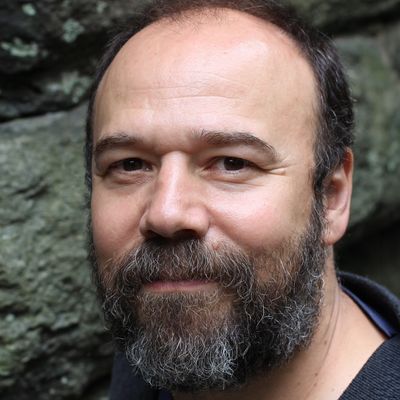
We're giving you a special gift for the holidays. A never before released live episode that we did at BroadwayCon in New York City in July of 2023. I had the great joy of sitting down with my longtime pal and colleague, Danny Burstein. Danny is a treasured and prolific actor on film, television, and Broadway. He's been in 19 Broadway shows, with the latest being Pictures from Home by Char White. Which he was starring in at the time of this recording. In this special episode, Danny and I talk about how his career as an artist intersects with his passion for activism. He also shares lots of stories from behind the scenes of some of his most famous roles.
In the fifth season of The Dramatists Guild Presents: Talkback, we examine how we can expand the canon and challenge the status quo. How can we be intentional in the ways that we make space for diverse, and inclusive stories, while also reimagining the often produced ones, so that the American landscape of storytelling is truly reflective of the gorgeous tapestry of people who inhabit it?
Talkback was produced by Amy VonMacek and Christine Toy Johnson, with postproduction by John Marshall Media. The music is composed by Andrea Daly. Talkback is a production of the Dramatists Guild of America and is distributed by The Broadway Podcast Network.
Transcript
This transcript was automatically generated and might contain errors.
[0:04] Christine Toy Johnson: Welcome to Talk Back.
[0:06] Christine Toy Johnson: I'm your host, Christine Toy Johnson. We're giving you a special gift for the holidays, a never before released live episode that we did at BroadwayCon in New York City in July of 2023. I had the great joy of sitting down with my longtime pal and colleague, Danny Burstein.
[0:24] Christine Toy Johnson: Danny is a treasured and prolific actor on film, television, and Broadway. He's been in 19 Broadway shows, with the latest being Pictures from Home by Char White, which he was starring in at the time of this recording. In this special episode, Danny and I talk about how his career as an artist intersects with his passion for activism. He also shares lots of stories from behind the scenes of some of his most famous roles. Welcome to this live episode of the Dramatists Guild Presents, Talk Back.
[1:01] Christine Toy Johnson: I'm your host, Christine Toy Johnson. I just wanted to let you know that because it's live, we encourage you to laugh or applaud ferociously for him, whatever you want to do.
[1:13] Christine Toy Johnson: Yes, exactly. Yes. Yes. And uh, yes, this is my dear friend Tony Award-winning amazing everything Danny Burstein. Danny and I go way back. We met during the first revival of Merrily We Roll Along.
[1:34] Christine Toy Johnson: Yes, they liked it too, they're applauding. Uh, where we it was in 1994 at the York, and uh a lot of people know that production from the album cover, actually. If you say it's the blue album cover with the clock on it, people know that's our show. And I believe that we were we had some very special roles, uh, moving furniture. There was an incident with a plant. Do you remember?
[2:01] Danny Burstein: No.
[2:01] Christine Toy Johnson: Oh, really? Tell me.
[2:03] Christine Toy Johnson: This is I'll interview you. Okay, so this cast was amazing because not only did it produce you, but also Tony Award winner, Michelle Pac, and Tony Award winner Adrian Lennox. Where the plant incident comes in. You don't remember?
[2:20] Danny Burstein: You'll tell me and I'll remember, I'm sure.
[2:21] Christine Toy Johnson: So this set had a couple of different levels. I remember when instead of singing that frank, we started singing that plant.
[2:29] Danny Burstein: Yes, exactly. And you don't remember why though.
[2:31] Christine Toy Johnson: Okay. So we we had a lot of different things to move, furniture props and everything. Right. And you were on the upper level, and Adrian was on the lower level doing a scene, and you were moving a plant and dropped it on her head.
[2:46] Danny Burstein: Oh my god.
[2:49] Danny Burstein: That's why I don't remember.
[2:53] Christine Toy Johnson: Wow. You don't remember that.
[2:54] Danny Burstein: No.
[2:54] Christine Toy Johnson: She was fine. Everything worked out.
[2:56] Danny Burstein: Wow, I'm surprised. I see her a lot.
[2:58] Christine Toy Johnson: Yeah. And I'm surprised that she doesn't bring that up for all.
[3:02] Christine Toy Johnson: And I also remember that, so the set, and the theater is very small.
[3:07] Danny Burstein: Yeah.
[3:07] Christine Toy Johnson: And the stage left quote unquote wing space was like a crawl space. And sometimes we had to wait in this crawl space together, waiting to go on and trying not to be at the peanut gallery for what was going on stage, I'll just say that. And I think we really bonded there because you're you're crouched into this little space waiting to go on. And we were the hottest ticket in New York that summer.
[3:33] Danny Burstein: That's true.
[3:33] Christine Toy Johnson: Yeah, and but that's the glamour of show business. And well, we were all making, you know, nothing.
[3:39] Danny Burstein: Yeah, yeah.
[3:40] Danny Burstein: $198 dollars a week, I think it was.
[3:43] Christine Toy Johnson: Maybe, yeah. But it was really fun. And I had a blast. I loved doing that production.
[3:47] Danny Burstein: Yeah, me too. It was really special.
[3:49] Christine Toy Johnson: It really was. There are a lot of things I wanted to talk to you about. So I feel like you and I have a similar story in that we both started out in this business a long time ago when we were young. And we both, I think, grew up in the New York City area.
[4:05] Danny Burstein: Yeah.
[4:05] Christine Toy Johnson: So can you tell us a little bit about it?
[4:08] Danny Burstein: Sure, I grew up in New York City. I'm originally, I was born in the Bronx, and then um we were living in the Bronx. I was born in Mount Kisko, actually.
[4:16] Christine Toy Johnson: Oh, not because I never knew that.
[4:18] Danny Burstein: My family lives right near there.
[4:19] Christine Toy Johnson: Oh, really?
[4:20] Danny Burstein: Yeah. My grandparents on my father's side lived there, and my parents were visiting. And I wanted to be born in Mount Kiska. That's where I was born. Not because we live there, but because that's where I want that's where I came out.
[4:34] Danny Burstein: Yeah, so to speak.
[4:36] Christine Toy Johnson: Yeah.
[4:38] Danny Burstein: That's so crazy.
[4:39] Danny Burstein: Yeah, my family uh lives in Cotona, New York, which is not very far away from there. And then we moved when my dad got a job teaching at Queen's College when I was about five or six, and moved to Queens, moved to Flushing, and that's where we where I lived. My parents still live in Flushing, and my dad just recently retired from Queens College.
[5:00] Danny Burstein: But I grew up in the city, and when I was 13, I was lucky enough to audition for the high school of performing arts.
[5:06] Christine Toy Johnson: Okay.
[5:07] Danny Burstein: And that changed my life. I had a teacher, I was very lucky, I had a teacher in junior high who you know, who said, You're I think you got something. And I said, You should go to the high school of performing arts. And I said, Great, what's the high school of performing arts? And he explained it to me and told me it's a fantastic school. Ben Vareen went there, and Liza Manelli went there, and you just have to audition with a couple of monologues. And I said, Great, what's a monologue? I really had no idea about any part of that. I loved reading plays because my dad gave me plays. And I was lucky enough the year I auditioned, well over 4,000 people, kids, school kids, auditioned, and 127 made it in. And I had no idea what I was doing, but I was lucky enough to get in.
[5:54] Christine Toy Johnson: Do you remember what your monologues were?
[5:56] Danny Burstein: One was from Dead End, and the other one was from the uh the time of your life, William Saroyan.
[6:04] Christine Toy Johnson: Wow. Growing up in the city, did you also go to see Broadway shows while you were not really?
[6:11] Danny Burstein: Um my teacher from junior high school brought me to my first Broadway show. And that was a chorus line.
[6:19] Christine Toy Johnson: Oh, yes.
[6:20] Danny Burstein: And I was my mind was blown.
[6:22] Danny Burstein: Yeah, they just said, fuck. It was amazing. And they were saying things that I was feeling, but I didn't know other people felt.
[6:32] Danny Burstein: Yeah. And they were going through all those changes that I was going through. So I I thought, boy, this is that's I want to be there.
[6:41] Christine Toy Johnson: Yeah.
[6:42] Danny Burstein: And it all of it just spiraled, and I got lucky. I really did. And those four years at the High School of Performing Arts really changed me and shaped me. And I was my plan was always to be the next Marlon Brando. That's what I really wanted to do. And all of a sudden, I was in college, and my teacher there was the executive producer at the Muni in St. Louis, Ed Greenberg. And he said, Yeah, why don't you come and do a season at the Muni? I think you're great. And I was 19, and I thought, okay, but I never really done much singing. I didn't know any dancing really. And not really. I never took a lesson. And they said, Do you tap? I was like, Yes, I do. And that's I just learned by doing it.
[7:30] Christine Toy Johnson: Wow. Do you remember the first shows you did that season?
[7:34] Danny Burstein: The first, yeah. My first equity show there, where I got my equity card was The Music Man with Jim Dale, who's still a very good friend, and Pam Dauber.
[7:44] Christine Toy Johnson: Wow.
[7:45] Danny Burstein: From Morgan Mindy. And she was wonderful. She has a gorgeous soprano voice. She took over from for uh Linda Ronstadt for Linda Ronstadt in Pirates, yeah, years ago. She was a wonderful. That's amazing. Great, great voice and terrific human being, yeah.
[8:00] Christine Toy Johnson: Yeah. I remember going to see a course line six times, I think. And back then also, it was very affordable to go to standing room and just to keep going to shows. And yeah. But it was one thing I do want to mention the importance of starting out that way and starting out in the chorus and starting out knowing very little initially, was that spirit of being an apprentice and really learning from everything around me. And knowing that I didn't, I wasn't ready to be a lead just like that. I needed to build my resume up, and I needed to build my skills up. And that truly shaped me also, because I wanted to just be in the background. I wanted to be a fly on the wall. One summer at the Muni, I did Shenandoah with John Cullum.
[8:57] Danny Burstein: Wow.
[8:57] Danny Burstein: And I just sat in the wing and watched him sing his meditation numbers. Every night, every show, I would sit there in one, right in the right at the in the wing. And I learned so much from all those people.
[9:13] Christine Toy Johnson: I think that's so amazing. And also how lucky I think we both were to start out and have role models that we were working with to watch. And not only about the to witness the great talent, but also professional courtesy and kindness and all of the things that you hope to that you aspire to embody, right?
[9:40] Danny Burstein: Yeah.
[9:40] Danny Burstein: That's and so I learned all those things. And when I'm working with younger actors now, I do my best to give back in the same kind of way.
[9:49] Christine Toy Johnson: Yeah. I learned that very early. Both my parents are teachers. I'm I've told this story many times, but when I was 18 at Queen's College, I was cast in Merrilly.
[9:59] Danny Burstein: Oh, you were?
[10:00] Christine Toy Johnson: Yeah, it was like the Who were you?
[10:02] Danny Burstein: I was playing Frank.
[10:03] Christine Toy Johnson: Oh, great.
[10:03] Danny Burstein: Yeah, and it I knew nothing about musicals, I knew nothing about anything. And I the script was famously flawed and difficult, and there were three different versions of it, and it only closed on Broadway like three months before. And so you got to do it then.
[10:20] Danny Burstein: And yeah, Ed was Greenberg was directing it. And so I was lamenting to a friend at school saying, I don't know how to play this role. He seems like such a shit. How do you make how do you make him how do you make him followable? How does anybody want to see this his a journey? And he said, Well, you know who you should ask, you should ask Stephen Santheim. And I'm like, sure. Sure. I'm going to call him up. And he said, No, no, I have his address here. And so I wrote Sondheim a letter. And of course he wrote back the story. And of course he write back because that's what he did. And I wrote like 25 questions.
[10:58] Danny Burstein: Wow.
[10:58] Danny Burstein: And he said, dear Danny, all those questions would have to be answered in a letter the size of war and peace. But here's my number, give me a call, and we'll get together. And I cut to me at his place, his townhouse. I'm walking in, Le Pine is walking out, they're writing Sunday in the park. And I go, hello, hi. And he says, have a seat. He goes upstairs and comes back a minute later with a carafe of white wine about that size, puts it on the table in front of us and puts two glasses down, and he says, Okay, what do you want to know? And we spoke for the next three hours.
[11:37] Danny Burstein: And if my thinking was and is if Stephen Sondheim could do that for me, the least I could do is get back.
[11:47] Christine Toy Johnson: That's beautiful.
[11:48] Danny Burstein: Thank you. When I get the opportunity to, so we're really here ostensibly, really, we can talk about a lot of things.
[11:58] Christine Toy Johnson: But you're here to talk about Artivism in action.
[12:02] Danny Burstein: Right.
[12:03] Christine Toy Johnson: How we can use our art to amplify things we believe in. Because you are in a position now where you can choose what kinds of parts you want to play. And I wanted to start with asking you what goes into those decisions, how you go about choosing the kinds of stories you want to tell.
[12:24] Danny Burstein: Well, uh that I am very lucky that I'm in this position. It only took me 40 years in this business.
[12:31] Christine Toy Johnson: You're such an overnight success.
[12:33] Danny Burstein: To get to this place where I am often offered jobs. And I think artists have to be artist activists, and I think we have a responsibility to what stories we do tell. And I never know what is going to come across my desk, what I'm gonna see, what story I'm gonna read, but I want it to be something valuable. And that has to do with what it's saying, whether it's just a story about, for example, pictures from home was a family story, and that touched me. This guy, and he died tragically young. But he was this incredible artist who was trying to do something that maybe no one had ever done before. That's fascinating to me. And even in other works that I've done, right? Fiddler was is such a beautiful story, but it's what's really um about immigrants and people being forced from their homes and strife, man's inhumanity to man, and that unfortunately will never go and will always resonate.
And I thought that was an important thing, an important story to tell. And even just basic human things, people falling in love, simple stories that resonate, that's important. But also, as far as that goes, being having a little bit of notoriety, having a certain following on whatever social media, you try to do your best to spark conversation and have people think about what's really going on in the world without leaving anybody behind.
[14:15] Danny Burstein: Um, and that's the toughest part because people are so separated uh now, our country is it's hard to not alienate people as you're saying, hey, this is science, as I was doing this morning, marching for climate change this morning in Union Square because that world clock was ticking and ticked down to five years. That means that we have five years to do something about climate change before it's irreparable. And there are about 50 people who showed up, and they were saying, Oh, this is a much better turnout than last year, where only about 15 people showed up. But it's so important it's because it's the planet and it's all we have. I do things like that to think not with the thought behind it that oh, I have to influence these people, but just because I think it's the right thing to do.
[15:08] Christine Toy Johnson: Sure, yeah.
[15:09] Danny Burstein: And that's always my spark, whether picking uh choosing something to do or uh getting involved in a certain project, because it has to hit me in a certain place, in my heart and in my brain. Yes, yeah, it has to really influence me, or I have to care about it deeply.
[15:28] Christine Toy Johnson: Yes, absolutely. I I think that because we are talking uh as part of the dramatist guild, uh, I want to to throw in this piece of the puzzle that I think that for writers, choosing what stories to tell is of course key to we're gonna spend years and years developing uh an idea and a project. And there it also feels like a responsibility to not only write about something that you're really passionate about, but that hopefully can have some kind of impact that can say something indelible and that will provoke thought. The original, I think, impulse of theater is to provoke thought, illuminate ideas, put a mirror up to society, right? And it seems like there's so much going on these days about the cancellation of stories or the erasure of parts of history.
And I wonder if you can talk about that a little bit about how I know you're very outspoken also about standing up for against censorship and against uh those kinds of things. If you can speak a little bit about that and what kinds of thoughts you have.
[16:43] Danny Burstein: I remember forgive me, I I uh Donald Trump is I'm not a fan. And I remember running into Douglas Carter Bean two days after he was elected, and I accosted him on the train. He's an old friend, and I said, Are you writing about this? You have to write about this. I honestly think it's not just because I think it, it is because it is a fact. It all starts with the writer. Every incredible idea starts with the writer, and they need our support and they need our encouragement, and they're the ones who are creating new pieces of art so that we can take and run with them, take them and run with them. And I think it all comes down to that. I guess it was just because of my dad where I got that idea.
My dad was a protege of Philip Roth at uh and he took classes with him and at initially at the University of Iowa at their in their master's program. It just that I the idea of the writer and reading, and then everything jumping off the page for me, reading plays as a kid. I had I have the most respect for the writer in the room. If ever I'm intimidated by anybody in the room, it tends to be the writer because you have to give it up to them. It was their idea. They're the reason we're in the room.
[18:10] Christine Toy Johnson: Yeah.
[18:11] Danny Burstein: And they have that ultimate responsibility to start the ball rolling to get the right things out there, the right ideas out there, and to have an opinion. That's another thing. I think you as artists, we have to have an opinion. You walk in the room. How am I going to play this role? Uh I want to make the juiciest choice, the choice that will make the most impact with the values that I hold dear. I think we everybody in the room has that responsibility.
[18:45] Christine Toy Johnson: Yes, yes, absolutely. I remember I've been serving on the Council of the Guild since 2016, and I remember going into a meeting with some of my personal heroes, John Wideman and Lisa Crohn, and and I I just went in, it was right after the election of 2016, and I said, we have to write about democracy so it's remembered. Right. And it's sadly, yeah, sadly something. I was doing fiddler at that time, and I remember the especially and understandably, the young girls in the company came in weeping that next day. And of course, it was a Wednesday. We had a matinee. And for the next, I don't know, three or four days in singing if I were a rich man, when I got to the point where it said, When you're rich, they think you really know. I looked at the audience and everybody in the audience groaned like, oh God. And I wanted to go right there with you. Believe me. It was all mixing at that moment.
[19:53] Danny Burstein: Yeah.
[19:53] Christine Toy Johnson: And he's they said some important things, needless to say.
[19:56] Danny Burstein: Yes, yes. That's why Fiddler, I think, is a classic, too, in so many ways, because all the layers of that show continue on.
[20:20] Christine Toy Johnson: Yeah.
[20:20] Danny Burstein: Yeah, he'll be missed, needless to say. He also served on the council for a very long time. Uh and always gave back to the community of writers, which is uh a testament to uh uh his spirit too. Yeah, his strength and and wanting to take a stand.
[20:35] Christine Toy Johnson: Yes.
[20:39] Danny Burstein: That's we all have that, whether we're artists or not. We all have the responsibility to speak out and take a stand.
[20:47] Christine Toy Johnson: Have you ever received pushback for anything that you've said in publicly?
[20:54] Danny Burstein: Certainly on social media. Yeah, where people feel like they can just say anything, right? Yes, people do. And and sometimes you go, this can't be a human being. I'm speaking of it. It must be a bot. It must be something because no one is that ridiculous or or or mean. Yeah. I I just pray it is, and I go, ah, block. Why not? You know, life's too good to spend on those kinds of things.
[21:21] Christine Toy Johnson: Yeah.
[21:22] Danny Burstein: Yes, but every once in a while you do. And sometimes you run into somebody who works in the business, which is shocking. And then you have to work with them, but you also maybe avoid speaking about that those subjects. But it's tough. It's tough because it comes into play in everything.
[21:41] Christine Toy Johnson: Yeah, I'm gonna talk about that actually a little bit. How we can foster difficult relationships or relationships that circle around difficult conversations, opinions, ideas. How do you because I think that you are so intrinsically kind and welcoming and a bridge builder? And so I wonder how you navigate that. If you're in a situation where you're working with someone, you know you don't share the same opinions. But you do have to work together.
[22:18] Danny Burstein: Yeah, the at work, it's professional, you're professional. But uh of course you become friendly with these people. There was a person at Cabaret when I was working when I did that show around 10 years ago at Studio 54, who worked backstage and who has kids, and we were talking about guns and shooting machine guns and AK, whatever, automatic weapons. And he was saying, and at that particular time, there was a string of all these school shootings, and I was just shaking my head backstage because it's so unnerving. Little children are being murdered at schools, which is still impossible to quite wrap your brain around. That that is a thing that happens in our country often. And I said to him, expecting him to go, of course, yeah, it's a very bad thing. And I went on this sort of, I guess a long rant about it and how sad it was. And he said, I don't know. Have you ever shot one?
[23:32] Danny Burstein: Wow. And I went, no, but I don't have to. I know that people are getting hurt. And I said, and my friend, you you have two children, two little kids. Aren't you worried about that? Not really. But I he's having said that, he's a great guy. He really is a really lovely human being who would give you the shirt off his back. But we definitely disagreed upon about that subject. And but it was it does slightly make you think differently. I you can't help it. But I don't forget the fact that he is also a good person, uh, who I think is just wrong about this subject. But unfortunately, the people who are wrong about that subject have control of that subject right now, and many people, not just little children, but many people are paying the price for that opinion, and that's where we we really couldn't get into that kind of an argument because it becomes a question of morality at a certain point, and that's always the toughest thing. The precipice you're not sure you want to go over.
[24:53] Christine Toy Johnson: Yeah, and I think really difficult to agree to disagree in a way, yeah. Which I think is so absent from a lot of our national dialogue, yeah. The trying to come together over our our commonalities instead of our differences to remember that we're the humanity is what is the most important thing to center.
[25:22] Danny Burstein: Of course, yeah, yeah. And I do love him, I do. But yeah, that's interesting. What other ways can we use our art for good?
[25:32] Danny Burstein: I my the thing that I started, I started in the business when I was 19, as I said, and immediately I was 1984, and immediately all the people that I started working with were dying. These young, beautiful men were dying. Like not like they were even in their 40s, they were like 22, and it was devastating to have this happen to these beautiful human beings, and so I immediately jumped into helping Broadway Cares. It was two different companies of go, two different organizations at that time, Broadway CARES and Equity Fights AIDS, before they merged, and I put my energies into that because that was the only way I knew how to help. And once you've lived through something like that, you have no other choice, and then you get to a certain level and people start going, oh, yeah, you should.
Can you can we use your name for this? And can we put you on our letterhead? And I invariably I say yes because I I care very much about the things I'm passionate about. Right. And that is one that I'm very passionate about.
[26:49] Danny Burstein: And anytime Tom Fiola calls, who's an amazing human being. Anytime he calls, I do my best to do anything he needs me to do, to speak or whatever he needs. I'm there for him because of the way I grew up. And because Rebecca passed away from ALS, I'm vocal about that issue. I speak and I raise money on behalf of Project ALS. Rebecca raised, she did a concert and she raised a quarter of a million dollars before she passed away. She's singing and she could barely get a she had to hold herself up on her arms. Beautiful. I think so too. I think so too. And she had literally had to hold herself up so she had enough lung capacity to be able to sing. Yeah. And uh literally a week after she did that, she could not have done it because she was going so quickly, unfortunately.
Life thrust that upon me. Right. And so I give back in that way as well. We're all of a sudden we're in the middle of a sag after strike because we need to stand up for ourselves and stand up for all the people in the industry who are being wronged, including of course the writers. And so was out there yesterday marching, trying to do what I could to lend my voice and and to make other people aware of it, and to not let the big corporations get away with the outright greed that's going on right now.
[26:49] Christine Toy Johnson: Right.
[28:23] Danny Burstein: And so that needs to change. And if I find a subject that I care deeply about, I make it my business to speak out about it.
[28:32] Christine Toy Johnson: How do you balance all of that?
[28:35] Danny Burstein: And sleep. Yeah, it's a lot. It takes its toll on you.
[28:38] Christine Toy Johnson: Oh my god, it takes its toll. And you're balancing not only all of the things that you care about and wanting to amplify them and wanting to do what you can to give back and help, but also you have a very robust career, and you have a life that you need to nurture and take care of yourself, right?
[28:57] Danny Burstein: Yeah. How do you balance all of that? What's your—what's your—it was easier when Rebecca was around.
[29:03] Christine Toy Johnson: It was easier, I have to say, because you have a—it was a partnership.
[29:08] Danny Burstein: Yeah. And she felt as passionately about the things that I feel passionately about, and she had her own interests as well. But sometimes it's—yeah, sometimes it's especially difficult. But I don't know. I think it's just not holding on to negativity. Like I said earlier, life is too good. I say that because an old—I was at a diner once, and this old Greek guy, I—and I forgot what we were talking about, but I said, "Ah, life's too short." And he went, "No, my friend, life is too good." And I thought, "Oh gosh, that's a whole new perspective for me." And it was simple, but that's how I've been through so many weird things over the course of my life, and my way of dealing with it is just to persevere, just to keep going and deal with whatever difficulties are thrown your way in the moment, and then not hold on to them and then move forward. That's the way I deal with it.
[30:15] Christine Toy Johnson: I think that's such an important thing to remember that if you live in the anger or in the hurt or in the disappointment instead of where you might be able to move forward with positivity and the goodness that's in your life, it can really eat you up.
[30:40] Danny Burstein: Yeah, also with—I keep mentioning my wife was such a huge influence on my life, obviously, and I loved her so dearly. But the thing her passing, besides grief, taught me that I want to live as much as possible and make an impact and do good things while I'm here because we never know how long we're gonna be here. You know, you might as well enjoy it and have a good time and do—say the things that are—that need to be said. In the most—it's what I've said to my kids their entire life. When you're faced with something, with some kind of difficulty, make the loving choice. That's what I've told them, and I believe that, and that's what I try to do.
[31:24] Christine Toy Johnson: Let's talk about some of the things that bring you joy these days. What brings you joy?
[31:27] Danny Burstein: My son just got engaged. Yeah, my older son Alex just got engaged to a wonderful gal named Abby, and Rebecca loved her, and I love her, and I love her parents, and I'm just crazy about her, and I'm crazy about them together. So that is bringing me joy currently. My friends bring me joy. I have some people like, oh, I have a couple of friends. I have so many friends. I feel so lucky. I really do. And I love what I do.
[31:59] Christine Toy Johnson: Yeah.
[31:59] Danny Burstein: And I love walking down the street and having people go, "Hey, nice job," or whatever. It's very sweet. There's nothing bad about it. Of course, I was just in Toronto shooting something, and it was—nobody knows who you are, and that's great too. So I can—I have this thing, or I can just do whatever I want, and anywhere I go, it's just lovely. But in New York is my home, and it's a very special place for me. And I live here, and I get to do everything that I ever wanted to do when I was a kid. All I wanted was to be a working actor. I didn't care at all about fame or money or anything like that. Obviously, when you're an actor, you can't care about money. You're gonna suffer most of the time that way.
But you just—you just—I just have always wanted to do this, and I just wanted a wife and kids and a home and maybe a car if I could afford. I got those things. And I feel incredibly lucky. And my parents are still going strong, and they're wonderful people, and my brothers, and I've been very blessed despite everything that has gone on in my life. I feel terribly blessed. I really do.
[33:13] Christine Toy Johnson: Yes, we're blessed to know you.
[33:15] Danny Burstein: Oh hell. We are. Do you have any favorite stories of favorite shows that you want to share with us today?
[33:23] Christine Toy Johnson: Or on the subject of a channel.
[33:25] Danny Burstein: Oh gosh, yeah. Should have prepped me for the show.
[33:27] Christine Toy Johnson: I know, I didn't pro—that this happens, I know. I prep people that I'm interviewing with. I've told this story, but—and he knows it already. It's terrible. Sorry, Matthew Morrison, sorry. Say it out loud beforehand. We were doing—we were doing South Pacific, but I love the story for a different reason. We were doing South Pacific, and he came out as Lieutenant Cable in these great glasses, aviator glasses, and he looked like the shit. He was fantastic, he looked great. And he walks out, and we've just sung "Nothing Like a Dame," and he's in—and he's supposed to change the trajectory of the show. And he's supposed to come in and talk about—he's on a special mission, and he's there to find this guy named Emile DeBec, who's a French planter.
He's scanning the area, and he comes out, and it's obvious he has no idea where he is. And I go, "Hey Lieutenant," because I see his stripes. "Hey Lieutenant, how's it going?" He says nothing. He says, "I'm good." And sometimes it's the scary thing. You think, "Oh God, if somebody forgets their line, what are you gonna do? How would I react?" And instead of being nervous at all, I had this—the exact opposite reaction. I thought, "How are we gonna get out of this? This is gonna be—oh my god, how can I help you?" I said to him, and he goes, "I don't know." I said, "This is welcome to this island. We've got lots of things here. We've got shrunken heads, we've got grass skirts if you want them. I said, up on top of that mountain, we've got some French planters."
And he goes, "Yeah, French planter. French planner, yeah, French planter." I said, "There's one over there that's—his name is Emile Debec." "Emile Debec, yes." "That's it." And then we got back on the color. Oh, it took that long though. But it took, yeah, it took a while. But it was great too. It was such a wonderful moment. And actually, I think he would say the same. It was just—we worked it out together. And it was so much fun. It really was. Live theater. Two and a half years of doing that show. Anything and everything could happen. And it usually did. About a month before we closed, I found a new laugh.
[36:16] Christine Toy Johnson: Right.
[36:17] Danny Burstein: Yeah. And that felt great. I loved doing that show very much. I really did.
[36:21] Christine Toy Johnson: Yes, you were wonderful.
[36:24] Danny Burstein: Yeah, I think there—that's my go-to story.
[36:26] Christine Toy Johnson: That's your go-to story.
[36:27] Danny Burstein: I usually don't tell it out loud in a place like this.
[36:32] Christine Toy Johnson: What's the longest run you've ever done?
[36:34] Danny Burstein: That was it, two and a half years. I worked on Moulin Rouge for a while.
[36:40] Christine Toy Johnson: Thank you.
[36:41] Danny Burstein: Very kind of—we did it out of town and then back in New York and then the pandemic, and then we came back and then came back.
[36:51] Christine Toy Johnson: How was it to come back when you relaunched?
[36:54] Danny Burstein: Oh, it was wonderful. Yeah, because everybody wanted to be in that theater so badly after the pandemic. It was so hard on everybody. Everybody has their own pandemic stories. And it was incredibly difficult and emotional. And coming back was just so—it was heaven. It was heaven. It really was. I didn't know. They said—they told me when I opened the curtain that I got a standing ovation. I had no idea.
[37:24] Christine Toy Johnson: Oh wow.
[37:24] Danny Burstein: Because I couldn't—you're in the spotlight. You're blinded. But it was very sweet and very moving for all of us.
[37:31] Christine Toy Johnson: Yes.
[37:32] Danny Burstein: Oh, so I'm just looking at my—I'm just trying to clock everything.
[37:35] Christine Toy Johnson: Oh good, yes. I know.
[37:36] Danny Burstein: And you're doing it so beautifully.
[37:37] Christine Toy Johnson: Well no, I took you on all of these kind of tangents, but that's because I wanted to talk to you about everything. Because you're amazing.
[37:44] Danny Burstein: Oh, you're amazing.
[37:45] Christine Toy Johnson: You're great at the—I love you. She's one of the nicest human beings. And brilliant writer and actress, a gorgeous singer.
[37:54] Danny Burstein: You are, you are.
[37:55] Christine Toy Johnson: Do you—so we're going to start wrapping up soon? Do you have any words of wisdom that you would like to share with these beautiful people that have come to listen to you speak?
[38:08] Danny Burstein: About anything.
[38:08] Christine Toy Johnson: About anything. I mean when I was a young actor, and it applies to almost any subject. When I was a young actor doing Summerstock at the Muni in 1986, I want to say, I did Around the World in Eighty Days with Tony Randall and Robert Clary, who is Lebau on Hogan's Heroes, if you remember him, and Leilani Jones. There were a lot of wonderful people in the show. And I had this wonderful role opposite Tony, and he told me—I—it was our first day of rehearsal. And he was a hero of mine. I grew up in New York watching The Odd Couple on TV. I love both he and Jack. And we're all of a sudden I found myself alone with him, sitting on the Muni in these big stages, just the two of us. And he said, "We'll be doing a lot of work together."
And I said, "Yes, we will." He said, "So tell me about yourself." I said, "About to get married, about to go to grad school in San Diego." And he said, "Graduate school, for what?" I said, "For theater." He said, "So you'll be able to teach acting." And I said, "Yes, I'll be able to teach acting." He said, "If you had an acting class in front of you right now, what would you tell them was the most important part of acting?" And I was so terrified. I was like, he's my hero. I'm so green too. I didn't know anything. And I said, "My favorite acting teachers always said that acting is doing and acting is reacting." And he went, "Listening." And I said, "Oh, that's very much a part of reacting, don't you think?"
He said, "Don't argue with me, you asshole." He said, "You should get down on your knees and thank me for telling you this." And then he stood up and went, "It takes ten years to learn how to listen. Ten years." And then walked away. And I thought, first I thought that was wonderful, and I have a story for the rest of my life. But I also have to say, he was absolutely right that listening is the most important part of acting. Because then you're ready for anything on stage. You're ready when somebody forgets a line. You're ready when someone changes a line. You're ready when something happens in the audience. You're just ready because you're in the moment. Because you're not thinking about, "Oh God, what's my next line?
What's my next one? Do I move over here?" You're actually listening to what's going on, and you're telling the story in the best way possible. And that it truly makes you a better artist. But I would also say that it makes you—getting back to all of what we've been talking about today—it makes you a better human being because you're able to hear the other person.
[41:10] Christine Toy Johnson: Thank you, Tony Randall.
[41:15] Danny Burstein: Thank you, Danny Burstein. It's been such a joy to share space with you. And thank you from the bottom of my heart for your generosity for being so open and the incredible human that you are.
[41:29] Danny Burstein: Thank you. We love you.
[41:31] Christine Toy Johnson: Thank you. I love you too.
[41:33] Danny Burstein: Love you.
[41:35] Christine Toy Johnson: Thank you for joining us. This episode was produced by Amy Von Masick and me, Christine Toy Johnson. Our music was composed by Andrea Daly. The Dramatist Guild Presents Talkback is a production of the Dramatists Guild of America and distributed by the Broadway Podcast Network. Let us know what you thought about the episode by using hashtag DG TalkBack. As always, to be continued.
© Broadway Podcast Network, All Rights Reserved