

We're celebrating the birthday of one of our favorite leading ladies, Celia Keenan-Bolger. She is a four-time Tony Award nominee, winning for Best Featured Actress in a Play in 2019 for To Kill A Mockingbird... Read More
From the show: The Ensemblist
Guests

Featured Shows
About
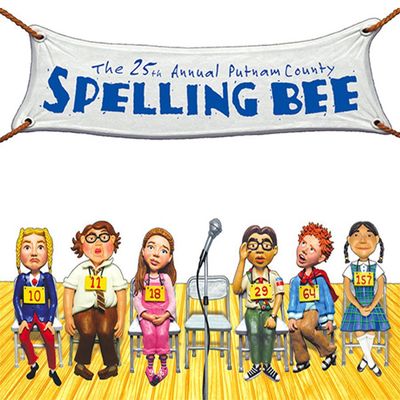
We're celebrating the birthday of one of our favorite leading ladies, Celia Keenan-Bolger. She is a four-time Tony Award nominee, winning for Best Featured Actress in a Play in 2019 for To Kill A Mockingbird. Beloved in the New York theatre community for almost twenty years, her first theatrical award was in 2005 for Outstanding Ensemble Performing in The 25th Annual Putnam County Spelling Bee. Celia joined me in the studio to talk about her experience - both winning and not winning awards - and how a Best Ensemble Award is the closest to what made her love theatre in the first place. Here’s our conversation...
Transcript
This transcript was automatically generated and might contain errors.
[0:00] Mo Brady: You're listening to The Ensemblist, the only podcast that shows you Broadway from the inside out. Welcome, I'm Mo Brady.
[0:29] Mo Brady: Every spring, theater fans look to The Ensemblist when they ask why there isn't a Tony Award for Best Ensemble, and this year, we wanted to provide listeners with an informed and thoughtful look at the challenges and barriers of adding a category to the Tony Awards. Beyond emotions, I'm interested in adding why a category is more complex than we might imagine. Having these conversations wasn't easy. Pursuing an open discussion about the Tony Awards led to a lot of closed doors, but I was eventually lucky to find a few willing participants to talk about the state of theater awards in the New York theater industry, as well as their own personal takes on why a Tony Award for Best Ensemble could be valuable.
My first discussion is with the wise and wonderful Celia Keenan-Bolger. She's a four-time Tony Award nominee, winning for Best Featured Actress in a Play in 2019 for To Kill a Mockingbird. Beloved in the New York theater community for almost 20 years, her first theatrical award was in 2005 for Outstanding Ensemble Performing in the 25th Annual Putnam County Spelling Bee. Celia joined me in the studio to talk about her experience both in winning and not winning awards, and how a Best Ensemble award is the closest to what made her love theater in the first place. Here's our conversation.
[1:45] Celia Keenan-Bolger: Hi. Hi. Will you introduce yourself and tell us what neighborhood of New York City you live in?
[2:17] Celia Keenan-Bolger: Yeah, of course. I'm Celia Keenan-Bolger, and I live in Union Square. You grew up a theater kid, yes?
[2:23] Celia Keenan-Bolger: I did. So what are your first memories of watching the Tony Awards?
[2:29] Celia Keenan-Bolger: It's funny. I think I came to the Tonys sort of late, because the most vivid memory I have, I think is when I was like 13, which was in 1991, which was a baller year for the Tony Awards, where... Oh, is that the Will Rogers Follies in Secret Garden and... And Miss Saigon and Once on this Island. That was like a first moment where I was like, oh, there could be something for everyone on Broadway. Like if you like a big splashy musical, you've got Will Rogers. If you want this amazing tale, this Em Butterfly take with all of this Asian American representation, and then you've got Secret Garden with all these ladies making a musical. I think I was in eighth grade, and I was just like, this is incredible. Are you thinking about like, someday I want to win a Tony Award, and that is in conjunction with the shows I'm doing with my friends or at school or outside of school? Like, do those live in the same world that like someday I could get a Tony Award?
[3:17] Celia Keenan-Bolger: No. I think I really, really wanted to be a working actor. Like, that sounds like, oh, how good for you. You didn't need a Tony, you didn't want a Tony Award. But that is the truth. Like, because so much of my exposure in Detroit was with national tours, Broadway wasn't even something that I got to see until I was in like high school. That it was really just about like being on Broadway. I just really wanted to be on Broadway, I think.
[3:51] Mo Brady: When did that shift happen for you?
[3:54] Celia Keenan-Bolger: What's interesting about Spelling Bee is that I legitimately did not wake up to find out whether or not we were going to be nominated. I think maybe because Spelling Bee was so scrappy anyway, that there wasn't a sort of like, oh my god, are we going to be nominated? And because so many of us were making our Broadway debuts, there weren't a lot of people who had been to the Tony Awards before. So we were all just like, I like woke up next to my boyfriend, and he was like, you got nominated for a Tony Award. I had a lot of text messages. I was like, what's going on? I legitimately did not wake up for them. But then of course, every year after that, they became much more important. I think once you sort of are nominated, your relationship to it changes. And that it felt like with Spelling Bee, it was such, I mean, we were this like show with a bunch of people with a bunch of grownups playing kids that nobody had ever heard of that was an original musical.
[4:45] Mo Brady: What were some of your biggest kind of takeaways, learnings from going through that first award season then?
[4:50] Celia Keenan-Bolger: Two things. The first is that I think the Tony Awards in 2007, which is maybe the first year I was nominated, were very, very different than, say, like 2019, where I think that first year I probably went to four events. One was the Dramatists Guild. One was the Drama Leagues, where Jesse Tyler Ferguson and Dan Fogler were nominated. And one was the luncheon at the Rainbow Room. And that was it. I would say last year in 2019, I probably went to 12 events or 12 to 15 events before the Tonys. And this, you know, maybe goes back to just the internet and the way that things have changed, but or that capitalism has become such a, I don't know, that there's just way more to do before the Tonys, which means, which I think is a good, you know, a good and a bad thing.
So that's one part of it. That's certainly a way that things have changed. I will also say like that first year, because I had been a part of The Light in the Piazza for like, I guess, three years before that, and because I thought that I was going to be coming to Broadway in The Light in the Piazza, and then was not asked to do the Broadway company and had not seen the production. I remember at that dress rehearsal with all of my friends feeling both this, like, I can't believe that two shows that I have like put a lot of work into are both represented at the Tony Awards. And also, this is way more complex than I maybe imagined my first Tony Awards would be and feeling a little bit like you should just be happier here.
Like you could watch, you could be watching The Light in the Piazza perform on your couch at home. That would be worse than getting to be in the audience. But that I remember thinking, this is supposed to just all be like, amazing. And instead, I'm like, it's so it's it's mixed.
[6:47] Mo Brady: I want to take a little detour here and talk about the Drama Desks that year.
[6:52] Celia Keenan-Bolger: Yeah.
[6:52] Mo Brady: Where Spelling Bee won the award for Outstanding Ensemble Performance?
[6:57] Celia Keenan-Bolger: Yes.
[6:58] Mo Brady: How does it feel different to be nominated as part of a group versus nominated for something singular that you're doing?
[7:03] Celia Keenan-Bolger: I don't think I planned it this way. But I think Spelling Bee taught me that really all I want to do is be a part of ensemble productions. And if you look at my, the bulk of what I have done, I would say that it pretty much lines up. And I think, weirdly, that acknowledgement, that Drama Desk award was so unbelievably meaningful to every single person in that cast because there was not only the fact that we all had a kind of our moment where we needed to shine, but we also had to support everybody else as they're in their moments. What got me into the theater in the first place is like this sense of community and making something together. And that if I'm really honest, like, I don't think that I started theater to be like, I'm going to be a big star.
It was like, I love making theater with other people. And I feel like the Ensemble Award somehow traced me way back to that six-year-old that was like, I love making theater with other people. And the Drama Desk Award for Best Ensemble feels like the best representation of why I got into this in the first place. I also just want to say, the ensemble that I was just a part of in To Kill a Mockingbird, where it was different from Spelling Bee, where there were so many supporting members of that company who did not get the moment to shine, but that were so integral, not only to the making of the Broadway production, but the high quality that we were able to sustain over the year that we did that show.
Because it's pretty clear to me that when you are in a show where there are very distinctly leads and ensemble members, the ensemble members in some cases are working twice as hard with less recognition. And I felt like you could look at that stage of To Kill a Mockingbird at any moment, at any one of those people, and you would have understood another component of the story of that town, of Macomb, Alabama, because everybody in that ensemble was so invested and so engaged. And then when they went on as understudies, they brought new life into the building and were able to flesh out these characters in a totally different way. I wish audiences, but not just audiences, I wish that the industry at large really understood that a Broadway company depends on every single member.
And certainly in that show, did I work harder than most of the people in the ensemble? Yes. Was I more exhausted? Did I have more to do? Yes. But my job was made easier because that ensemble existed and was there supporting.
[9:45] Mo Brady: So one thing that you're alluding to is that the ensemble is not the principal roles, but then you were acknowledged for the Drama Desk as all principals in a show. So where would you say recognition should lie with an award? Do you think ensemble meaning everybody in the show or ensemble meaning everybody who's not the leads?
[10:06] Celia Keenan-Bolger: I mean, that's a really complex and interesting question because I think in a musical, the ensemble feels like such an enormous part of what makes a musical tick. And to be honest, like what audiences, I mean, audiences often come to musicals for like the big show stopping numbers and usually the big show stopping numbers have the ensemble as a part of them. It's an, I don't know where I lie. I'm not sure that I really do either. I just feel like if you put everybody together, there's so many times when the ensemble isn't going to be recognized. But isn't the world what you're talking about with Spelling Bee or I think about Come From Away when I think about an incredible ensemble, which was all principal actors as well.
It's the thing that you were speaking to earlier about going back to being six years old is like, are we championing sort of the energy of group storytelling or are we saying, is it just another in the actor categories of best actor, best supporting actor, best people who won't be up for those roles?
[11:05] Mo Brady: Right. I think there's, there is definitely something to that. I think it's interesting. Like if we think of Come From Away or Spelling Bee, and I guess where I want more recognition is for the dancers on Broadway. And that I feel like if we only stick with the group storytelling, then the dancers are never going to get there. They're not necessarily going to get the recognition that I think they deserve. But I also feel like the theater I want to see and the theater I want to be a part of is exactly what you're talking about, which is like everybody has a moment. And I may think of like Company coming up this year where I'm just like, all of those people, I want to see all those people in their own musical, but I'm really excited that they get to be in one all together.
[12:17] Celia Keenan-Bolger: Okay, so we've been talking about lots of awards and Drama Desk Awards. The Tony Awards sort of live at this pinnacle of the thing that we do. Would you agree? Yeah, I mean, I think, is that because they're on television? Is that because they're the oldest? They're the last. It's interesting, though, because I feel like when I won the Drama Desk Award, and I said this last year, that I was like, if you're a member of the theater community, you know that some of the very best theater exists off-Broadway. And so to win a Drama Desk Award feels like extra extra because you're not only up against everybody on Broadway, but you're up against everybody off-Broadway as well. I think the Tony Awards, yeah, there's just a much different acknowledgement.
It's a higher acknowledgement than any of the other awards. Why do you think it's good to award art? That's a big question. And I'm not sure I do. Okay. I mean, I think that's what's hard about these awards, is that on one hand, last year, I really wanted to win. And I think it was because it was my fourth time there. I think it's because I care about the theater more than almost anything else in my life. And that that acknowledgement felt to me like it would be very meaningful. But I also think it's, it really is just a big commercial. And that sometimes the art that I respond to the most, or the performances that I respond to the most, don't necessarily get included. You know, it's like one thing with sports, to say like your time was better than her time.
But art, that's not how we do it. Like that's, I mean, even if you had every single person play, like if the best actors were everyone playing the same part, I still don't think you can pick a best. I feel complicated about it. Because on one hand, I do care about the Tony Awards. And I really cared about them last year. And on the other hand, I feel like are they really serving our community? Like are they actually are they a healthy barometer of what is of what is good? That felt like a decision that was made by a few people and not necessarily people that I agree with.
[14:32] Celia Keenan-Bolger: Speaking of which, you make some decisions. I do I get to I for the last three years, obviously last year, I had to recuse myself, but I've been on the Tony nominating committee, which essentially just means I have to see every single show with the original cast on Broadway. How did you get chosen, selected, offered? I mean, I got a call from David Stone, who is in the Broadway League, and who I believe is part of the Tony eligibility committee. That was my, my way. Like a cold call on a Tuesday morning. No, he called me actually, I was like on the television set of a of a show that was shooting in North Carolina, like right after I'd had my son and I was like, I don't think that this year is the best year while I have like a four month old like I'm not sure I'm gonna be able to like see every show and he was like, Okay, I'll come back to you next year.
And he did. And he was like, you know, I think we're really trying to extend the Tony nominating committee to be more representative, not just of producers and general managers and theater owners, but also are artistic directors, but also of artists. So you are responsible as a member of the nominating committee to see every show with the original cast.
[15:41] Celia Keenan-Bolger: Yeah. And do what can what can you what can you say? Yeah, what happens is you there is a list that's made of the eligibility committee decides who is a lead and who is supporting. So we talked about three different things that we talked about the managing committee. Yes, who I think is the managing committee is in charge of the broadcast of the TV broadcast. And then the eligibility committee are 10 people from the league and 10 people from the American theater wing, and then a representative from actors equity, IOTC, directors and choreographers. And so you get this list of everyone who the eligibility committee says is eligible. Correct.
[16:24] Celia Keenan-Bolger: Oh, is it fun? Is it cool? Like, I don't know. Incredible. It's I think I've learned so much by seeing every single show in a Broadway season. And the thing that I can really take away from it is how much what high quality artists get to make things on Broadway, whether something is my taste, or whether something was made with me in mind, feels like sort of irrelevant that by the end of the season, the first year I did it, I was so moved by the insane level of talent that we have both in the writing and, and acting and design and directing. I mean, it really, it feels like in those moments, I'm like, Well, then I am glad that there are awards that are recognizing all of this amazing work. But I think I wonder what that looks like.
I wonder how we acknowledge all of that without somebody winning. And the truth is, you know, when I've been nominated, you say like being nominated is, is, is the greatest honor. And I actually think there is a whole lot of truth to that, especially if you look and see, I mean, anybody can look and I'm not demystify or maybe I am demystifying something, but I'm not saying anything that you couldn't just look at on the internet, which is that if you see how many people are nominated, or how many people are eligible to be nominated, in some cases, especially for the featured parts, it can be up like hundreds of people. And so to be included among them is is a huge honor.
[18:05] Celia Keenan-Bolger: What does it mean to you to be recognized in, in both ways, to be one of those five or six among hundreds? Again, it's so hard for me to sort of parse out my own feelings around it, because I really, like, I don't think I'm rewriting history when I say I didn't get into this for the Tony Awards. But I think as I've continued in my career, and as I have been nominated, I mean, I think what's interesting is like the first two years that I was nominated, I was so happy to be invited to the party. And I felt not only like the the honor of it, but also zero pressure around it, where I was just like, I'm just so happy to be here. I know I'm not going to win. That feels like a great relief. I'm just like, I felt proud that my shows, both Peter and the Starcatcher and Spelling Bee would be able to say we were nominated not for seven Tony Awards, but for eight Tony Awards, and that I would be a contributing factor to that number that they could then print in the New York Times, that would then hopefully sell more tickets to these little shows that I was a part of that I really cared about.
And then the year of Glass Menagerie, people for the first time were like, you know, you might win. And I got so excited at the prospect of that. And I started to think like, well, if I did win, like, what would I say? And I just started to get caught up in the awards in a way that I hadn't before. I'll also say that was the first time I had ever been nominated when my show had already closed. And I think as hard as it is to be doing your show eight times a week, and also all of the events required, in a way, it is like the great equalizer. You're like, I could have gone to two luncheons and an interview. But at the end of the day, I still have to put on those overalls and do that show. And like, it doesn't, it's not about the award.
It's about doing eight shows a week. Whereas with Glass Menagerie, the show was already done. I was able to go to all the luncheons, all the events, dress up in the fancy clothes, which I love to do. But I didn't have that sort of grounding force. At the end of the day, and I think maybe it started to get away from me a little bit, like, what, why it was meaningful. And then, and I also just couldn't really, I didn't hear anybody talking about wanting to be acknowledged. All I heard was, it's such an honor to be nominated. And also, I don't know, it's like, this is all very crazy. It's also crazy. When I didn't win, I was so disappointed. I remember feeling like in the moment when they didn't call my name, I was like, I feel like I'm gonna start to cry.
And I was like, you better get your shit together. Do not cry on national television. So then I was like depressed for like a month after I didn't win. And then, but even more than being sad that I didn't win, I was so full of shame that I had allowed myself to think I could win. That was what I felt the worst about. How could you have believed that? Like you got, and so then last year, when I was back in that situation again, and people were like, you know, you might win. I was like, I will never go down that road again. But I will be more honest about my want to win. Because I think what screwed me the first time out was that I pretended like I didn't want it, or that I just pretended like, I don't know, this is crazy.
And that last year, I was able to say, you know, I've been in this industry now for 20 years. I, I love it so much. And I care about it. And I care about my peers and the people who run this business thinking that I deserve this award. Does that make me feel great to admit that to you right now? Not really. I want to be bigger than that. But it did matter. I don't think there's anyone who in our business who could look themselves in the mirror and go, it wouldn't feel good to be recognized.
[22:02] Celia Keenan-Bolger: Yeah, I think that's exactly right. What I'm trying to do is just give, I think it feels better to play it cool and be like, whatever, like awards, awards are stupid. And it's like, okay, maybe they are. I don't want somebody to go through what I went through and feel like, why did I want that? That makes me like a ugly person or like a minute for the wrong reasons. And I think I can hold space for wanting to be a great artist, and also wanting to be acknowledged for the work. And I think that that lines up with almost everybody in our business.
[22:43] Mo Brady: Special thanks to Celia Keenan-Bolger for sharing her stories with us this week. The Ensemblist was produced today by me, Mo Brady. The Ensemblist is proud to be part of Broadway Podcast Network. If you can't get enough theater conversations directed into your earbuds from us, there are more than 40 other great theater podcasts to listen to. Check us all out at bpn.fm. Also, we've joined the world of Patreon, where you can support the work we do here at The Ensemblist for as little as $5 a month. Check us out at patreon.com slash The Ensemblist. If you don't have the cash to donate $5 a month, you can help us out by leaving us a rating and review on Apple Podcasts. And make sure you're following us on Instagram, where we share the stories of talented artists working in theater ensembles. Thanks for listening, guys. Until next time.
© Broadway Podcast Network, All Rights Reserved