

South Pacific changed how ensembles were used even further, by individualizing each character, even those in the ensemble. There were certainly been musicals in those 18 years with ensemble step out features, as anyone who has played Gertie Cummings in Oklahoma!.. Read More
From the show: The Ensemblist
Guests
Featured Shows

About
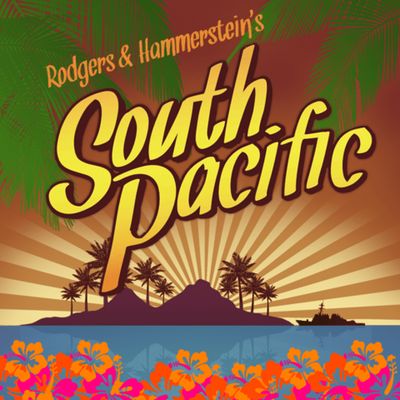
South Pacific changed how ensembles were used even further, by individualizing each character, even those in the ensemble.
There were certainly been musicals in those 18 years with ensemble step out features, as anyone who has played Gertie Cummings in Oklahoma! or Mrs. Schuyler Adams in Annie Get Your Gun could tell you. However, most of the chorus tracks were still relegated to the titles of “Ensemble Singer” or “Ensemble Dancer” (and rarely ever both).
That’s just one of the reasons why South Pacific was so revolutionary. Based on James A. Michener’s book Tales of the South Pacific (which, coincidentally, won the 1947 Pulitzer Prize for Fiction) the New York Daily Mirror wrote “It boasts no ballets and no hot hoofing. It has no chorus in the conventional sense. Everyone in it plays a part. It is likely to establish a new trend in musicals."
Transcript
This transcript was automatically generated and might contain errors.
[0:00] Mo Brady: You're listening to The Ensemblist, the only podcast that shows you Broadway from the inside out. Welcome, I'm Mo Brady.
[0:11] Mo Brady: Welcome back to a re-release of our second full season, which first aired in 2016. Back then, The Ensemblist's co-creator Nika Graf-Lanzarone and I took a journey through the history of the ensemble. We explored how the Ensemblist experience has changed and been changed by some of theater's most influential shows, writers, and subject matter.
[0:30] Mo Brady: The first of those musicals, Of Thee I Sing, was a musical revolution of its own time, which was 1936, specifically. In the era of Ziegfeld Follies and George White's scandals, Of Thee I Sing created a scandal of its own. It used a musical to tell a weighty political story. Not only that, but songs that made more sense in context than out was a revelation all its own. What we say is Oklahoma's legacy of incorporating music into story was in part ushered in by Of Thee I Sing. Eighteen years afterwards, South Pacific changed how ensembles were used even further by individualizing each character, even those in the ensemble. I'll let Nika take it from here.
[1:17] Nika Graf-Lanzarone: There have certainly been musicals in those 18 years with ensemble step-out features, as anyone who has ever played Gertie Cummings in Oklahoma or Mrs. Skylar Adams in Annie Get Your Gun could tell you.
[1:27] Mo Brady: You know them.
[1:28] Nika Graf-Lanzarone: I don't. You know my rule, though. I only know shows I can be in. However, most of the chorus tracks were still relegated to the title of ensemble singer or ensemble dancer, and rarely ever both. And that's just one of the reasons why South Pacific was so revolutionary. Based on James A. Michener's book Tales of the South Pacific, which coincidentally won the 1947 Pulitzer Prize for Fiction, The New York Daily Mirror wrote,
[1:55] Mo Brady: Are you going to do the voice?
[1:56] Nika Graf-Lanzarone: Yeah.
[1:57] Mo Brady: Okay, go. What'd The New York Daily Mirror say?
[2:00] Nika Graf-Lanzarone: It boasts no ballets and no hot hoofing. It has no chorus in the conventional sense. Everyone in it plays a part. It is likely to establish a new trend in musicals.
[2:11] Mo Brady: I don't know how you didn't book nosies.
[2:12] Nika Graf-Lanzarone: I have no idea. My husband cast it. While Of Thee I Sing played an impressive 441 performances, this second Pulitzer-winning musical ran a total of 1,925 performances, the second-longest-running musical at the time. And in the process, it finally gave voices and characters to the actors populating the show's time and place. But how, exactly? Well, that's what we're about to find out.
[2:41] Nika Graf-Lanzarone: Wait no, it's not over.
[2:45] Mo Brady: Oh, yeah.
[2:46] Nika Graf-Lanzarone: I've been watching over you. You've infiltrated my system. Back again for our mini-history lesson is Broadway historian Jennifer Ashley Tepper. As she tells us, South Pacific was a cultural phenomenon right from the start, and for multiple reasons.
[3:03] Jennifer Ashley Tepper: South Pacific is about an American nurse during WWII who goes to serve in the South Pacific, and she meets an older man, and the show teaches really about her journey in learning about another culture, and the man has children that are of mixed race, and it shows how she reacts to that, and how that reflects on the audience's own belief system. Rodgers and Hammerstein had, of course, like earlier in the decade, revolutionized the musical with Oklahoma, so by the time you got to South Pacific a few years later, audiences were understanding of the book musical that was fully integrated, but South Pacific really did take it a step farther as far as content. Oklahoma and Carousel, their earlier hit musicals, had been very important and had talked about important subjects, but this was the first show they did where audience members had fought in WWII, and everyone in the audience knew someone that had died in WWII, and this was a show that really was heavily about that.
So that was surprising, I think, to a Broadway audience. You know, think about something that happened that was very significant in the world five years ago, and, you know, we're seeing a Broadway musical about it.
[4:06] Nika Graf-Lanzarone: You and I could have something so, something so, something so good.
[4:14] Jennifer Ashley Tepper: So the impact of South Pacific as a piece of theater was obvious right from the start, but what about the show's impact on the ensemble experience? Well, for that, we spoke to three actors who have all performed ensemble tracks in that show.
[4:27] Kevin Ligon: My name is Kevin Ligon, and I live in Washington Heights. When I was very young, at Casa Manana, Summer Stock, I was in the ensemble. Oh, and when I was in high school, I played Lieutenant Cable, and then, of course, I became a full adult and I was no longer Lieutenant Cable, I was the character person. So I played, at the 50th anniversary of South Pacific, at the Dallas Theater Center, I played Luther Billis. I don't think it was a typical chorus kind of show, and maybe one of the first steps in the ensemble member sort of being considered a fellow actor, instead of it just being like, we've got all these singers that can't really act over here, they're gonna stand to the side while we have these dancers from all this ballet training, and they're gonna dance, and then we're gonna come down and do the scene.
You know, I think a lot of shows were very separated that way, and now, of course, everybody has to do everything. And I think that maybe something like South Pacific was one of the first steps in getting in that direction.
[5:23] MaryAnn Hu: Hi, I am MaryAnn Hu, and I live in Bronxville, New York. In 2008, I was in the revival of South Pacific at Lincoln Center, and my main job in the ensemble was to be Bloody Mary's assistant, and I was Bloody Mary's understudy as well. I think what was unique about South Pacific was that it was sort of done as a history play. So I feel like Bart approached it from that angle, and hired people who could be in one cohesive world and all share the same vocabulary in that world and in that time period. So I don't think it was like a traditional singing-dancing ensemble. It was really a play with music.
[5:59] Eric Anderson: I'm Eric Anderson. I live in Inwood. I joined South Pacific in 2009. I think it was breaking new ground. On top of that, it's got some of the most beautiful songs ever written for musical theater. So to be able to have that, to be able to have a wonderful, smart book, it was ahead of its time.
[6:19] Mo Brady: Kevin, Eric, and MaryAnn each told us that because the ensemble's not separated by singer and dancers, the requirements for the roles are different as well. Every ensemble member in South Pacific is a character. If you look at the playbill of the original production, a lot of their bios, a lot of those people were members of the actor's studio, and I mean, they weren't the typical Broadway chorus people, honestly, I don't think. And to be in the chorus of South Pacific, for the most part, it doesn't require people that are extremely legit trained singers or classically trained dancers. I mean, there's almost no choreography in it that's not just choreography that's supposed to look like it's made up by Nellie Forbush, which was actually made up by Josh Logan.
There wasn't even a choreographer. He just made up that little happy talk thing in 30 minutes, and there was no listed choreographer in the original production. There's not a lot of hopping around. I mean, we lumbered. The men sing, there's nothing like a dame. The women sing, I'm going to wash that man right out of my hair, and all the geography is pretty real. There's nothing in it that the audience ever says, wow, that's some amazing moves there. There didn't seem to be a need in this interpretation of this piece for a singing and a dancing ensemble, because like I said, it was a play with music. They're my own words, but I feel like I've heard Bart say that before, too, as well, because I think he tends to approach things as plays.
[7:46] Nika Graf-Lanzarone: Yeah.
[7:52] Mo Brady: That's right. One of the show's lasting legacies is that each actor in the ensemble was given a distinct personality, and as Jen told us, even got to contribute opinions on what their characters wore. The show rehearsed at the Belasco, because the theater that they would go into, the Majestic, had a show in it. So before they went out of town, they were at the Belasco, and one day, the director Josh Logan said to all of the ensemble members, go grab some like army, navy wear from Fort 42nd Street, which is where that was now, and create your own costume and character from that. So the ensemble members, a lot of them, just like the audience, had fought in World War II, or of course, knew people that had.
So they had a different perspective on what their characters would be feeling and thinking, and they also created more character than had been usual before that. That was kind of a mark of how the ensemble was becoming more individualized. Every track had their own character name, and they also, I think, came up with backgrounds for themselves, more so than previous musicals.
[8:45] MaryAnn Hu: That feeling of distinction among ensemble members has translated in future productions of South Pacific, too. The fact that everyone is playing a character, I think, definitely creates a stronger sense of ensemble among the whole cast. I think we've all done a lot of shows like that now. I think it's much more common, where either everybody plays multiple roles, or everybody is a character, and I think it definitely creates a strong bond among everybody, because you're not separated in that way of like, oh, those are the people that are important over there, the ones that have all the lines, and we're singing in the background. It breaks down the barriers somewhat and makes it more interesting, I think, as an audience member, too.
It helps when everybody has a name, and everybody is a character. As an actor, it's much more appealing and much more interesting to come at something with the specificity of having a named character, because your imagination can just run with what you want to create in this world, as opposed to like your ensemble, your chorus dancer number five. We were asked to like, build a world, and all be in the same world together. It's giving everybody individual detail, which I think is another thing.
[9:51] Eric Anderson: The thing that set that show apart and made it innovative was that when you looked at that ensemble, it wasn't just an ensemble, but it was a working company of CBs and nurses.
[10:01] Eric Anderson: I think it does a disservice to the cast to not give them names.
[10:06] Eric Anderson: When we were in Kinky Boots, we lobbied really hard to be able to have our character names in the program because we all gave our characters in the ensemble names.
[10:15] Eric Anderson: So when it went on tour, our tracks had our names attached to it.
[10:19] Eric Anderson: So there was a Mutt track and there was an Elliot track. But I think that all ensemble members should have names, especially if it's not a song and dance show where there are dancers and singers separated.
[10:29] Eric Anderson: In an ensemble piece, a name can only elevate your character. Certainly for an actor, I think for the creatives that helps too. And certainly for an audience, they know you for being that character as opposed to that presence on stage.
[10:41] Eric Anderson: When you perform in the ensemble of South Pacific, one of the first things you notice is that ensemble roles are not only named but titled.
[10:58] Eric Anderson: South Pacific also is very unique for its ensemble in that they not only have their own individual personalities as characters, but they were very specifically designated as to what their title in the war was.
[11:10] Eric Anderson: So, of course, there are people that are lieutenants, there are Seabees, there are nurses of different levels. You had all of these ensemble members who the audience members watching them would have understood exactly what their responsibilities were during the war because of their title.
[11:24] Eric Anderson: And also in the revival, they did have an ensemble that was consisting of people of different races and that was designated on stage.
[11:34] Eric Anderson: There were Seabees who were Black who were doing different tasks than the white men who were part of that group. When history, and specifically military history, is such an integral part of the script, it's essential for actors to learn about the time period, as Marianne and Eric explain.
[11:50] Marianne Hu: We did a lot of table work. It was like historical boot camp.
[11:53] Marianne Hu: The great thing about having all this history to draw from, there's endless amounts of things written about that time period.
[12:01] Marianne Hu: They did bring in speakers. A lot of the speakers were former Seabees.
[12:05] Marianne Hu: So it was interesting to speak to these older vets because some of them came speaking from that time period. So the language that they would use about Asian people was not acceptable today, but that's just a generational thing.
[12:18] Marianne Hu: It's a wealth of information. It informs me into the racism or just what was acceptable at that time.
[12:24] Marianne Hu: The nice thing about doing a show that takes place in a real historical time is you can do the research. You can see what kind of facial hair they had back then.
[12:32] Marianne Hu: I love doing research. I did do some reading on what it was like to be in the South Pacific during the war. There were some great picture books of all the sailors hanging with their shirts off and getting tats and growing crazy beards and just trying to make the most of their time out there.
[12:55] Eric Anderson: The first and so far only Broadway revival of the show was produced by Lincoln Center in 2008, where it ran for 996 performances.
[13:05] Marianne Hu: I was one of the original company members of that production.
[13:08] Marianne Hu: The Beaumont is actually a really great backdrop for this because it's a thrust.
[13:12] Marianne Hu: So Bart has this thing about the Beaumont having a thousand different perspectives. And because you're so vulnerable and so exposed on the stage at the Beaumont, a person sitting in house right or house left would be zeroed in on any one person's story.
[13:25] Marianne Hu: So he wanted to be able to focus the lens and just see everybody's story. So during tech, he would walk around the theater and look at it from different perspectives.
[13:33] Marianne Hu: So we had to be very specific in creating those characters.
[13:36] Eric Anderson: One of the biggest impacts of the revival was that it had a new focus on the issue of race, perhaps even more so than the original production.
[13:43] Eric Anderson: The very first day of rehearsal, Bart said, as much as I would like to think that we're all one big family, this play is about race and it functions on a level that is about race.
[13:53] Eric Anderson: So as much as I want you to bond with each other when we're here working in this room, he actually separated us into our racial groups.
[14:01] Eric Anderson: And it was a little bit shocking and a little put us off balance a little bit. But the play could only work in that world if we understood what those lines were.
[14:09] Eric Anderson: So when we were working in the room, we were very conscious of being aware of those lines and those racial boundaries, that there was a hierarchy.
[14:16] Eric Anderson: It was the white CVs and the white nurses and then the African-American CVs. And then there were the meal and his children. And then there was the islanders. And we were sort of the bottom of the totem pole.
[14:28] Eric Anderson: And that didn't feel great, but we knew we were creating this world. I remember the African-American CVs were always near the plane wing and it was very deliberate.
[14:38] Eric Anderson: They were in the scene and they were very much a part of the scene. But they were always just separated, you know, because in that time period, they would have been.
[14:46] Eric Anderson: We also had access to the original script before it was edited. So we went back through that text and there was a lot more racial stuff in that. That informed us a lot about the world that we were living in.
[14:57] Eric Anderson: As contemporary artists, we come to it with all the race stuff, with contemporary baggage. So you have to remember to actually take a step back and look at it in the historical context of when it was written.
[15:07] Eric Anderson: I think he played more on the racism. I think You Have to Be Carefully Taught was really played deeper.
[15:13] Eric Anderson: I think the fact having the black members of the cast in their section of the stage was really telling. And he has an ability, especially with the revival, to find a deep lushness in the material.
[15:24] Eric Anderson: During There's Nothing Like a Dame, you know, all the men sing it, but the black sailors sing it on the wing of a plane that they've been working on, where the rest of us white sailors were singing it down on the sand.
[15:35] Eric Anderson: It made it more of a period piece. And in this day and age, it's tricky to do a period piece because of the hot times that we're living in.
[15:42] Eric Anderson: I think the theater community wants to make it clear that we support our brothers and sisters of all colors. That's the major issue in South Pacific, I think.
[15:49] Eric Anderson: That's why Nelly had such a problem hanging. It was timely then. It's really timely now, unfortunately.
[15:58] Eric Anderson: It's just what I wanted. It may not, you may not want it, but I can pretend.
[16:08] Marianne Hu: While the script's exploration of racism was particularly lauded during the 2008 revival, Jen and Marianne think that these themes are part of why it won the Pulitzer Prize for Drama 58 years earlier.
[16:20] Marianne Hu: It really was educational as far as racial bias, as far as issues having to do with war, as far as personal relationships and how they interact with politics and with race.
[16:31] Marianne Hu: The show was not as well received when the first national tour went to the South for those reasons.
[16:36] Marianne Hu: I think the show, when it came out, was ahead of its time. It was speaking to race and that racism is a learned behavior.
[16:43] Marianne Hu: There's also something that I, in my contemporary package, would come to as calling ignorant racism as opposed to blatant racism.
[16:51] Marianne Hu: The racism that South Pacific speaks to is a blatant learned behavior. But I think today, sometimes people go around and they don't even know that they're being racist.
[17:01] Marianne Hu: That's why I think South Pacific was so unique in drawing back the curtain and putting light on something that was blatant and was able to do that through the musical.
[17:11] Eric Anderson: In terms of responsibility, I don't think I felt the weight of the whole Pulitzer thing. I did feel a responsibility because I knew that this was an important piece historically and that it was saying a lot.
[17:23] Eric Anderson: I did feel a responsibility. No matter how small my part it was at any given time, I did feel a responsibility to tell it truthfully.
[17:37] Eric Anderson: With the Pulitzer Prize focused on the educational value and power of the stage, it's easy to see why South Pacific was deemed worthy and how its ensemble of individuals contributed to that power.
[17:47] Eric Anderson: It's a very atypical show, especially for that time period. And I think that's probably had a lot to do with how powerful it was because I think to people in 1948, 49, it was like about their lives.
[17:59] Eric Anderson: They'd all just lived through World War II. And here we're seeing a sort of slice of life, albeit with amazing Rodgers and Hammerstein songs.
[18:07] Eric Anderson: But, you know, we look back on it now and sort of see the formula aspect of the writing of the material. But I think in general, when people saw the show back then, it was like to people when they saw Rent or A Chorus Line.
[18:18] Eric Anderson: It was like seeing something that was of the moment. And I think that's something that we can never fully appreciate now when we see it.
[18:24] Eric Anderson: It seems much more nostalgic now when we see it. And it's great in that way. But I think at the time, I mean, I've read accounts of people going to see it and just saying how it changed their life because they were seeing what they just lived through with World War II on the stage.
[18:46] Eric Anderson: Look for a new episode from our season on the history of the ensemble in your podcast feed next week, all about A Chorus Line.
[18:52] Eric Anderson: Thank you to Eric Anderson, Marianne Hu, Kevin Ligon, and Jennifer Ashley Tepper for allowing us to reshare their stories this week.
[19:00] Mo Bredy: The Ensemblist was produced today by me, Mo Bredy. There are two great ways you can be helping The Ensemblist right now.
[19:06] Mo Bredy: One is by leaving us a rating and review on Apple Podcasts. And the second is by becoming a Patreon member.
[19:12] Mo Bredy: You can do that at patreon.com slash The Ensemblist. Please subscribe to The Ensemblist on Apple Podcasts or follow us on Spotify.
[19:20] Mo Bredy: Or you can listen to all of our episodes at bpn.fm. And be sure to follow us on Instagram because things are changing all the time.
[19:28] Mo Bredy: Thanks for listening, guys. Until next time.
[19:33] Mo Bredy: Bye.
© Broadway Podcast Network, All Rights Reserved