

On May 4, 2020, A Strange Loop made history as the 10th musical ever to receive the Pulitzer Prize for Drama. And not only that, A Strange Loop is both the first musical written by a black artist, Michael R... Read More
From the show: The Ensemblist
Guests

Featured Shows
About
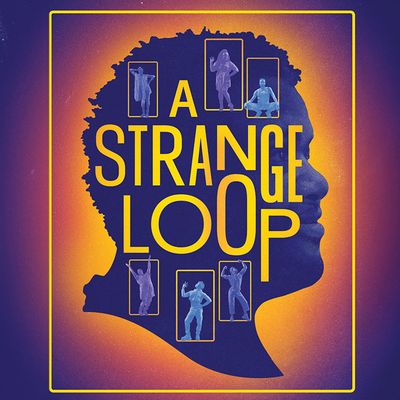
On May 4, 2020, A Strange Loop made history as the 10th musical ever to receive the Pulitzer Prize for Drama. And not only that, A Strange Loop is both the first musical written by a black artist, Michael R. Jackson, and the first musical without an announced Broadway run to be bestowed with this honor.
A Strange Loop follows a black, queer writer creating an original musical as he faces a host of demons. When it premiered Off-Broadway at Playwrights Horizons in May 2019, it resonated with both audiences and critics alike, making a lasting impression on the New York theatre scene.
Here to discuss his experience as an original cast member of A Strange Loop is John-Michael Lyles. Most recently, John-Michael played the role of Toby in the world premiere of Bliss at Seattle’s 5th Avenue Theatre. He contributed additional music to Second Stage Theatre’s We’re Gonna Die and has performed Off-Broadway in Sweeney Todd, This Ain’t No Disco, and The Flick, among others. Here’s our conversation…
Transcript
This transcript was automatically generated and might contain errors.
[0:01] Jackson Klein: You're listening to The Ensemblist, the only podcast that shows you Broadway from the inside out. I'm your host, Jackson Klein.
[0:14] Jackson Klein: On May 4, 2020, A Strange Loop made history as the 10th musical ever to receive the Pulitzer Prize for Drama.
[0:27] Jackson Klein: And not only that, A Strange Loop is both the first musical without an announced Broadway run and the first musical written by a black artist, Michael R. Jackson, to be bestowed with this honor.
[0:39] Jackson Klein: A Strange Loop follows a black queer writer creating an original musical as he faces a host of demons.
[0:46] Jackson Klein: When it premiered off-Broadway at Playwrights Horizons in May 2019, it resonated with both audiences and critics alike, making a lasting impression on the New York theater scene.
[0:56] Jackson Klein: Here to discuss his experience as an original cast member of A Strange Loop is John-Michael Lyles.
[1:03] Jackson Klein: Most recently, John-Michael played the role of Toby in the world premiere of Bliss at Seattle's Fifth Avenue Theater.
[1:09] Jackson Klein: He contributed original music to Second Stage Theatre's We're Gonna Die and has performed off-Broadway in Sweeney Todd, This Ain't No Disco, and The Flick, among others.
[1:20] Jackson Klein: Here's our conversation.
[1:22] Jackson Klein: Hi, can you please introduce yourself and tell our listeners where you're spending your quarantine?
[1:43] John-Michael Lyles: Yes, I am John-Michael Lyles, and I am spending my quarantine in Harlem.
[1:50] Jackson Klein: Thank you so much for joining me today, John-Michael.
[1:53] Jackson Klein: We are here to chat all about A Strange Loop, the wonderful show that just became the 10th musical in history to receive the Pulitzer Prize for drama.
[2:03] Jackson Klein: Now, you created the role of Thought 3 in the show's original production at Playwrights Horizons last spring.
[2:09] John-Michael Lyles: Yes.
[2:10] Jackson Klein: So for listeners who didn't get a chance to see the show, what is the story of A Strange Loop?
[2:16] John-Michael Lyles: So the story of A Strange Loop follows Usher, who is a Black queer writer who is not only named Usher but is working as an Usher at The Lion King.
[2:29] John-Michael Lyles: And while he's working as an Usher, he's working on a musical about a Black queer writer named Usher who's writing a musical about a Black queer writer named Usher.
[2:41] John-Michael Lyles: It is a loop in and of itself.
[2:43] John-Michael Lyles: It's kind of like a mirror that's looking right into another mirror.
[2:48] John-Michael Lyles: That sounds technical and heady, but it's ultimately a really good time while also being devastating and heartbreaking as the character of Usher goes inside of himself to discover himself and love himself.
[3:01] Jackson Klein: As an audience member, I could not agree more with your sentiment on the show.
[3:06] Jackson Klein: Now, as Usher looks into himself, there are six actors who play his thoughts and you're one of them.
[3:13] Jackson Klein: Can you tell me a little bit about how the thoughts are used in A Strange Loop?
[3:18] John-Michael Lyles: I feel like it's helpful to preface this by the title of A Strange Loop is inspired by this guy named Douglas Hofstadter who had this idea.
[3:26] John-Michael Lyles: I wrote down this quote that I can read for you.
[3:28] John-Michael Lyles: Douglas Hofstadter said, "In the end, we are self-perceiving, self-inventing, locked-in mirages that are little miracles of self-reference."
[3:38] John-Michael Lyles: So the thoughts kind of embody those locked-in mirages and those little miracles of self-perception.
[3:45] John-Michael Lyles: We are Usher on the stage and as Usher is writing this musical about Usher who's writing this musical, it requires him to go into his head and think about the characters that he's writing.
[3:56] John-Michael Lyles: So at times, as a thought, I may be a thought in Usher's head. I may be an actor in the play that Usher is writing. I may be the voice of his mother or father.
[4:10] John-Michael Lyles: We both were Usher and Usher's perception of Usher, if that makes sense.
[4:16] John-Michael Lyles: I was not only a thought in Usher's head but sometimes I was Usher's agent or an ancestor from the past or his mother or his father.
[4:25] Jackson Klein: Great.
[4:26] Jackson Klein: So you're taking on these different characters in Usher's journey along with being the thoughts in his head.
[4:31] Jackson Klein: And I'm curious about the base thought of your role.
[4:37] Jackson Klein: Are you representing a specific type of thought within the group of six? Are you working together as a unit? Are you just living in your essences and serving the story? What was that creation like?
[4:49] John-Michael Lyles: I would say all of the above. I mean obviously as Thought 3, like in Usher's head, I led with love in wanting Usher to succeed.
[5:02] John-Michael Lyles: My journey as an actor as playing Thought 3, I didn't treat it as a separate character or a separate entity.
[5:10] John-Michael Lyles: I treated it like I was also Usher on Usher's journey throughout the show.
[5:15] John-Michael Lyles: Just processing it with less power in that I am the thought and he is ultimately leading us.
[5:23] John-Michael Lyles: If he decides that we're going to break out in song, we will break out in song.
[5:27] John-Michael Lyles: And sometimes we do that with a hug around Usher and sometimes we do it with an eye roll.
[5:33] Jackson Klein: Awesome.
[5:34] Jackson Klein: So it has been made very clear by Michael R. Jackson who wrote the show that these six thoughts are principal characters within the piece.
[5:43] Jackson Klein: So there is no formal ensemble in A Strange Loop.
[5:47] Jackson Klein: But I would say that the seven actors in the show, Usher and the six thoughts, are working together as an ensemble cast.
[5:55] Jackson Klein: Can you chat a little bit about how you work together to tell the story as an ensemble of principals?
[6:00] John-Michael Lyles: Sure. So as an ensemble of principals, sometimes we're functioning fully as an ensemble. Just there to support Usher, hold down some harmonies, right? Dance as if we're literally in the musical that he's writing.
[6:13] John-Michael Lyles: Like in the opening number, "Big Black and Queer Ass American Broadway."
[6:17] John-Michael Lyles: And we're singing during that intermission song. We are embodying the musical that he's trying to create.
[6:23] John-Michael Lyles: But then sometimes some of us will step forward and play more prominent characters.
[6:28] John-Michael Lyles: Like if we're thinking about Inwood Daddy, right? At that point, a lot of the thoughts are behaving as an ensemble.
[6:35] John-Michael Lyles: And we're singing a song that's causing a friction, right? With the scene that he's going through.
[6:42] John-Michael Lyles: Whereas Thought 6, Antoine, steps out and is not functioning as an ensemble member at that point. He's functioning as Inwood Daddy, as a full principal character.
[6:52] John-Michael Lyles: And we step back and forth like that throughout the show.
[6:56] Jackson Klein: Yes. Passing the baton as lead storytellers.
[6:59] John-Michael Lyles: Yeah. And some people, like John Andrew Morrison as Thought 4, would over the course of the show gradually settle more and more into becoming fully Usher's mother.
[7:11] John-Michael Lyles: And less of just a thought switching from role to role.
[7:16] John-Michael Lyles: Some thoughts solidify as certain characters in Usher's life over the course of the show.
[7:21] Jackson Klein: How do you think the use and function of the thoughts contributed to the success of the storytelling?
[7:28] John-Michael Lyles: What makes the use of the thoughts unique and successful is that it's so relatable to watch Usher and the manifestation of Usher's thoughts reveal a sense of self-loathing and self-antagonizing, I suppose.
[7:44] John-Michael Lyles: We all go through that journey every day with having these cruel thoughts in our heads against ourselves.
[7:51] John-Michael Lyles: And the way we can hate ourselves and turn against ourselves and sabotage ourselves.
[7:56] John-Michael Lyles: And to dramatize that on stage, to literally see six bodies manifesting thoughts that can turn against the thinker of those thoughts so quickly is heartbreaking.
[8:09] John-Michael Lyles: And I know from being inside of the show, it helped me to reckon with my own self-perception and my own thoughts and think about the own musicals that I'm writing about myself on any given day.
[8:20] John-Michael Lyles: And I think the audience had that experience as well.
[8:23] John-Michael Lyles: That they were able to see reflected on the stage the way that they can sabotage themselves and the way that they can create these dramas in their heads about the people in their lives and how that can be heartbreaking or how it can be ultimately healing if we are brave enough to look inward and brave enough to deal with our trauma and deal with the questions we have about why we are the way we are.
[8:48] Jackson Klein: Yeah, I certainly had that experience when I was watching it.
[8:51] Jackson Klein: So now I'd like to take a little detour and chat a bit more about the creation of the show.
[8:56] Jackson Klein: It's no secret that musicals are often in development for years before a full production is mounted.
[9:02] Jackson Klein: And A Strange Loop is no exception to this rule.
[9:05] Jackson Klein: At what point did you get involved with the show?
[9:08] John-Michael Lyles: I was the last actor to join the family that is A Strange Loop. I think it began…
[9:15] John-Michael Lyles: I believe a monologue that Michael wrote, I believe, when he was in college. And I'm pretty sure the monologue contained the lyric in Memory Song, which is, One lone black gay boy I knew who chose to go on back to the Lord, or chose to turn his back on the Lord instead. That was the, I suppose, the seed of this musical. And I believe that happened maybe seven to ten years ago. And over the course of those seven to ten years, it blossomed from a monologue to a song to, I believe, a one-man show to what became a musical that was in development with Musical Theatre Factory, which is an incredible space, Page 73, and ultimately Playwrights Horizons, along with Page 73. And I joined a reading of it right before it went into production.
And I had heard about this show for a long time because people had seen it in various readings and workshops and talked about how moved they were and how incredible they thought it was. So I was honestly just eager for the day that I would get to see the show. So when I got the offer to participate in the reading at Playwrights to play Thought 3, I was so eager. I was like, well, this is better than a front row seat, right? Like, I just get to do this reading. And I didn't know if they had already cast it. I was just very much happy to be there. I didn't assume that I would be invited back just because I knew that it had been in development. I had no reason to believe that they needed anybody.
I just thought maybe they needed someone to jump in right then and there for this reading. But when they offered me the part of Thought 3 for the production at Playwrights, I was floored and thrilled because that one 29-hour reading that I did blew my mind. Anyone can relate just from seeing the show. It's unlike anything I had ever done before or anything I ever expected to have the opportunity to do. So I was so thankful to join. And I came to find out that Thought 3 was like the last track that they were trying to fill and figure out and understand and flesh out the arc of and the energy for. And I think it was all about timing and opportunity, right? I think part of it had to do with my age.
Like, I think that adds an interesting element to have a thought on stage that is a similar age to Usher at the time. I just think that adds an interesting dynamic. Absolutely. So you got involved at the reading right before the full production. Did you feel that you were able to really put your stamp on the musical itself in addition to the production as far as the evolution of the role?
[11:45] John-Michael Lyles: Yeah. Well, I honestly like, and I credit this to Michael, Stephen Brackett, Roger Feather Kelly, and Rona. They created such an incredible and collaborative space. We all felt so safe in the text, obviously, because it's incredibly written. And to add on top of that, these creative leaders who were all about bouncing ideas and feeding off of the energy that we naturally brought to the roles. So I feel like a lot of just my natural body language expanded into the choreography and the track for Thought 3. And he did that with all of the actors involved. Like, it felt really human and natural to ourselves. And what's particularly cool about my process in A Strange Loop was being in a Black queer space.
I no longer felt the need to edit my gayness or my Blackness in the development of a character. I had the opportunity to lean into my queerness and my Blackness and let that inform the storytelling and the development of this character in a really great way. So there was a freedom that I felt as an actor that I didn't have to put it through a foreign lens. I got to unleash who I already am. Yeah, so that was really special.
[13:03] John-Michael Lyles: Yeah, I really felt that having this cast of Black and queer identified performers, rather than just that being the lead, really made the show special and made it soar. So now I'd like to once again shift a little bit and chat about these themes in the show. So the Pulitzer Prize for Drama is given to a show that is, quote, a distinguished play by an American author, preferably original in its source and dealing with American life. How would you say that A Strange Loop deals with the American experience?
[13:36] John-Michael Lyles: Oh boy, I mean, in so many ways. I'll talk about one of my favorite American experiences that I think is explored in the show, and that is with the character of the mother in the song, Periodically. I know when I came out, my parents were incredibly supportive for being, you know, a relatively religious family in Texas. But I know that the common experience for gay kids who grow up in the Bible Belt is a strange kind of trauma that is the love of a religious person who believes that gay people go to hell. And the way that evangelism operates through love and affection, that want for you to go to heaven and to be straight so that you can go to heaven and not burn in hell, at the seed of that is something really lovely.
I'm charmed that you don't want me to suffer in hell. But I'm also traumatized that you would prescribe my lifestyle to hellish or sinful or worthy of suffering, if that makes sense. And I think that that song does it so well, because I shudder to think at how many people have received that kind of traumatic love from a mother that says, I love you. I want the best for you. I want you to go to heaven. And if you have love the way that you want love, then you will go to hell. That's trauma. To say that to a child is trauma. And I've never seen that kind of trauma so beautifully set, so horrifyingly set to song in the way that it is with the song Periodically. I think if I were a Pulitzer voter, that song alone would be worthy for my vote.
Additionally, A Strange Loop is one of four Pulitzer winning musicals that deal with a character who is creating art. We have Rent, we have A Chorus Line, we have Sunday in the Park with George, and now A Strange Loop as well. What as an artist resonates with you in A Strange Loop?
[15:46] John-Michael Lyles: That's a good question. I mean, so many things, but I'm trying to think about it through the lens of being a writer. I think what inspires me as an artist about A Strange Loop is that Usher feels trapped between the art he wants to make and the art that society expects Black people to make. And he's literally being cornered into writing a Tyler Perry gospel play. And it is ultimately the antithesis to what he wants to write. And I relate to him struggling to find his voice and almost having to wade through societal expectations of him before he can finally reach the shore of what he actually wants to express through art. I think that's such a complicated idea, but something that all artists, especially minority artists, experience, because there's such an intense pressure to get it right, because there's so few.
[17:02] John-Michael Lyles: My hope is that people see A Strange Loop and leave with a sense of bravery to take that journey inside of themselves and find self-love. I hope that they leave A Strange Loop with a sense of community and a sense of reflection and recognition and knowing that they're not alone and that they don't have to cave under the negative pressures and the negative traumas of the world, that they can journey inward and come out with a sense of self-love and self-actualization.
© Broadway Podcast Network, All Rights Reserved