

The original production of The Addams Family was choreographed by Tony Award winner Sergio Trujillo. Once a Broadway ensemblist himself, The Addams Family came along when Sergio had four productions running simultaneously on Broadway: our show, the long-running Jersey Boys, the sparse but beautiful musical staging in Next to Normal, and the Tony-Award winning production of Memphis... Read More
From the show: The Ensemblist
Featured Shows
About
The original production of The Addams Family was choreographed by Tony Award winner Sergio Trujillo. Once a Broadway ensemblist himself, The Addams Family came along when Sergio had four productions running simultaneously on Broadway: our show, the long-running Jersey Boys, the sparse but beautiful musical staging in Next to Normal, and the Tony-Award winning production of Memphis. With this many shows under his purview, Sergio employed a team of talented associate choreographers to maintain his vision and keep the staging clean. And at The Addams Family, Sergio’s associate was the highly kind and highly capable Dontee Keihn.
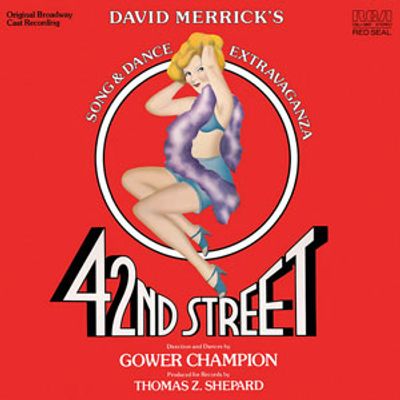
Also a former ensemblist, Dontee had been in the original Broadway ensemble of the famed 42nd Street revival, as well as the Bernadette Peters-led revival of Gypsy. Her journey with The Addams Family began as the associate choreographer for the show’s pre-Broadway tryout in Chicago. She maintained that position for the show’s Broadway run, as well as the national tour and stagings in both Brazil and Australia. She then took over the dual roles of associate director and associate choreographer for two more “replica” productions in Argentina and Mexico City. She was with the show as long as anybody, so she knows the staging of The Addams Family intimately and thoroughly.
Transcript
This transcript was automatically generated and might contain errors.
[0:00] Mo Brady: You're listening to The Ensemblist, the only podcast that shows you Broadway from the inside out. I'm Mo Brady.
[0:22] Mo Brady: Prior to this miniseries, I'd known about The Addams Family musical's lukewarm reception on Broadway, and, therefore, its surprising success as the most produced musical in the United States less than a decade later. But it wasn't until speaking to the show's co-writer, Rick Ellis, that I learned about how many changes the show went through, both before and after the Broadway production I was a part of. Learning about the intense structural changes made me want to find out more about how the show shifted and molded on its path toward becoming musical theater canon. And as a former member of the show's Broadway ensemble, my next stop was obviously to reach out to the dance department. The original production of The Addams Family was choreographed by Tony Award winner Sergio Trujillo.
Once a Broadway ensemblist himself, The Addams Family came along when Sergio had four productions running simultaneously on Broadway: our show, the long-running Jersey Boys, the sparse but beautiful musical staging in Next to Normal, and the Tony Award-winning production of Memphis. With this many shows under his purview, Sergio employed a team of talented associate choreographers to maintain his vision and keep his staging clean. And at The Addams Family, Sergio's associate was the highly kind and highly capable Dontee Kiehn. Also a former ensemblist, Dontee had been in the original Broadway ensemble of the famed 42nd Street revival, as well as the Bernadette Peters-led revival of Gypsy. Her journey with The Addams Family began as the associate choreographer for the show's pre-Broadway tryout in Chicago.
She maintained that position for the show's Broadway run, as well as the national tour and stagings in both Brazil and Australia. She then took over the dual roles of associate director and associate choreographer for two more replica productions in Argentina and Mexico City. She was with the show as long as anybody, so she knows the staging of The Addams Family intimately and thoroughly.
[2:40] Mo Brady: As a self-proclaimed singer who moves well, Dontee always scared me a little bit during my tenure at The Addams Family. Not because she's a scary person. In fact, she's quite the opposite. But I knew from the jump that I was hired to cover a leading role, bolster the show's vocal ensemble, and facilitate Sergio's staging in precisely that order. My abilities combined with my own insecurities about dance led to a strange relationship with the show's musical staging. However, Dontee and her team of dance captains helped turn me into a dancer worthy of the show's choreography. She was literally the person in the room during my final audition, teaching me the choreography that helped me get cast in the show. So for as much baggage as I brought to the table, Dontee always met me with patience and grace.
[3:27] Mo Brady: A few weeks ago, we spoke over Zoom for the first time in many, many years about her experiences with the show from Chicago to Mexico City. She shared how dance was used to focus the musical's story on the family, and how spending seven years staging various companies of the musical taught her exactly why The Addams Family can be so successful. Here's our conversation.
[4:01] Dontee Kiehn: It's such a great conversation. I've been so excited to talk to you about this because it really kind of was one for the books in a way. Like I learned so much on this show. The things that were challenging and had growing pains and the things that had great success and all of it was just a huge template for kind of what putting together a show is and can be and what can happen and how it does happen, how it does get made. I was in a part of all eight productions that I know of from the Chicago tryout to the Broadway and then complete rewrite, or not complete, but a massive rewrite to the national tour, which then became the template that went on for the international productions and now is one of the top rented or licensed productions for high schools and regional.
And so yeah, so I have seen the full kind of trajectory and it was pretty epic in a certain way. And like I said, example of what creating a show is, you know, it's always the associates. They're there. I knew you were the right person to talk to. As the associate choreographer, how did dance specifically change in terms of how it was used, when it was used through the process?
[5:10] Dontee Kiehn: I think Sergio specifically, Sergio Trujillo, our choreographer, you know, we use dance in a few different ways. It was used to obviously set up and explain these kind of beloved characters that so many people had experience with from the cartoons to the TV sitcom to the films. You know, everyone kind of had a different explanation or thought of what these characters were. We used it to kind of create the world, you know, that needed to be a little avant-garde, a little macabre, a little off-kilter. And also then to develop plot points, you know, specific things that we needed to explain. So these characters are already kind of physical beings. That's what I think was a great spring point. You see them playing pranks and being active and they're in the cartoons, even they're going somewhere.
You see them doing things, being things, and you already have a great setup for the character like Gomez, for example. Gomez is of like Spanish indiscriminate Latin background. And so Sergio really built on that as a character in terms of using the zapateo or the flamenco or kind of a very Spanish regal kind of feeling or movement of bravado. Of course, Morticia's very elegant, sophisticated, you know, so a lot of her movement was to embody that character, to give her that elevation. And, you know, and then there were things like the Wednesday and the Lucas, which were our more contemporary, younger characters, and they wanted to be more the rock feel, like a lot more stomping, a lot more grounded, a little bit more contemporary feel.
And then these are all about, you know, specific characters, but for like Fester, Fester would be, you know, more of the narrator. He was more of the vaudevillian style character. And I have to say, you know, the writers gave us such a good map of this because it was written into the characters, into the script and into the music so beautifully by Rick and Marshall. And also, of course, by Andrew Lippa, who gave us all of these genres, you know, to start with this movement. So that's kind of how like character development and the world was, you know, Sergio also, I have this such a specific memory, he always would take his temple and his chin and he would crack his head and he'd go, I just want everything to be a little like a little off because you needed to know immediately that you were in a completely different world.
So dance and movement was used in those ways. And then also specifically from the Chicago tryout to Broadway, the opening number in Chicago was called Clandango, which no one really necessarily knows what a clandango is, or it didn't give us a lot of information about the characters. So it switched into Broadway being when you're in Addams, but the movement was to express joy. It was the sense of family reunion. So it was kind of to progress the storytelling of what these characters felt, what they believed in, what they lived for. We also did, of course, Morticia and Gomez are known for their tango and their sword fighting. So that had to be in there somewhere. And of course, the way that the show developed the 11 o'clock number in The Addams Family happens to be a dance.
It happens to be the tango. There used to be a massive sword fight in Chicago that got cut, sadly, but it was, it was great fun, but it developed into the reunification tango, the tango de amor. And that is a plot point of Morticia and Gomez reunifying their marriage and their love. So it had to be a development in the movement to arrive to that 11 o'clock plot point.
[8:49] Mo Brady: You're taking me back with the head tilting, and I'd forgotten about the sword fighting. So it's like one point sort of Spanish and Latin dance. It's one point off kilter. And then it's being infused through the different musical styles of all these characters, whether it be pop rock or vaudeville. Okay, I think I can get in the lay of the land. How did that change from Chicago to Broadway? In my memory, I remember seeing photos of the ensemble in Chicago, and they were all in these very sort of lush kind of like shark colors from West Side Story, but more Elizabethan costumes. And that was much more sort of of that dance ilk, I guess. And then when we, the production that we worked on together felt more silly. I don't know if that's right. Is that how you would sort of?
[9:42] Dontee Kiehn: I think that's totally right. I mean, the reconfiguration or reexamining of the ensemble and what the dead ancestors of The Addams Family ensemble were and what they were there to do and how they were there to function definitely completely changed design as well as focus. And so I think that there was a more specificity. I think each character ensemble, we had 10, only five women and five men, and each of them were given a specific persona. You know, they all became white and this very glorious, glamorous, kind of beautiful, powdery, dead Gothic look, which was also highly beautiful, but they were given specific characters to be. I think that's absolutely true, aside from the Elizabethan kind of very jewel-toned, very heightened kind of operatic feel of the Chicago.
And I think the show really went a little bit more musical comedy. You know, I think we leaned into that to a greater extent than we did, which I think was already there in Chicago, but it was a little bit more musical comedy. So for example, the family reunion opening number, which became When You're in Addams, the foundation of all that off-kilter movement that Sergio worked to develop also became funny. Like there were social dances, like the broken conga or the twist from the 1960s sitcom. Then we were written movement like the rigor mortis and the death rattle that the writers gave us to figure out what would The Addams Family do with a dance style called the rigor mortis and the death rattle, which became all this, you know, great heaving kind of athletic choreography.
So it did become a little more musical comedy in certain ways. And I think it also became much more specific. For example, your character, I remember, the conquistador came out of the crypt first and foremost and did a pencil turn with like a broken or a straight leg because we had decided that maybe he had gotten shot by an arrow in the leg so that the movement became certainly more specific for each character and each story.
[11:38] Dontee Kiehn: When you took that shift from, let's say, the Spanish or Latin style social dancing to musical comedy, and you sort of moved a little bit further towards musical comedy on that spectrum, did that change the steps, or did it change the space in which the steps were taking place? I'm wondering how much choreography shifted in that sense.
[11:58] Dontee Kiehn: I would say the tango, we did shift quite a bit. The tango was more foundational. I think that was already kind of there. There was also a great number, I should mention, in terms of the genres of styles that we used, which was called "Death is Just Around the Corner," which was the top of Act II for B.B. Neuwirth, which was very much more like a Nafasi style.
[12:18] Dontee Kiehn: So some of the movement style stayed, and I would say specifically the opening number very much changed. But it's so interesting in development, because the things that you discover never completely go away. I mean, there was definitely still a sense of like molding or always moving with the ancestors that we used in theater.
[12:38] Dontee Kiehn: So the things that you discover never completely go away. I mean, there was definitely still a sense of like molding or always moving with the ancestors that we used in theater.
[13:08] Dontee Kiehn: I remember seeing "Death is Just Around the Corner" and the kick line at the end, and it is so exactly what you're saying, off kilter. It is a kick line. It's very clean. It's very precise. It does have that everyone's hands around each other, legs going up in the air movement, but it all is just happening not quite on the counts that you think or in the way that you would expect it to happen.
[13:29] Dontee Kiehn: That's right. You know, he said, if we're going to do a kick line, it'll be with like a broken knee or it'll be like with a tilt, you know, or something with one extra that you don't expect. I should say everyone was also singing to the rafters at that point, too. So it was quite a feat for everyone to get those odd counts and angular, you know, choreography along with the impressive vocals.
[14:00] Dontee Kiehn: That was our opening show. We did it. We got it up. And now we're transitioning to this national tour, basically revamp where four or five songs are being written. There's a chance to sort of relook, reimagine that tour launches don't necessarily get all of the time. How did choreography change in that transition from the Broadway company to the national tour?
[14:25] Dontee Kiehn: That's a great question. So the writers and our producer and Sergio, I mean, to all of their credit and Jerry Zaks, who also was working on the project at that time, they all went back to the drawing board and kind of just figured out how to improve it. And so they really did. It wasn't a small rewrite. I mean, there were things that were written for our characters on the tour.
[14:43] Dontee Kiehn: So that was Doug Sills and Sarah Gettelfinger, who have obviously certain traits like our Broadway counterparts, but are very, very different performers. And Douglas is more, I guess, to a point, a traditional leading man. And so the songs reflected their talents and their abilities. And the writing really went towards supporting them and supporting that.
[15:05] Dontee Kiehn: So I would say the choreography did as well. The tango was reimagined a bit for those characters. There was also a new number added for Sarah called "Secrets," which is Morticia's number with her ensemble, Ancestor Ladies. And it's another zapateo or flamenco style, which Sergio just does in his sleep. I mean, he's so, so brilliant at this.
[15:30] Dontee Kiehn: And it was such a fun thing to reimagine what that kind of real forceful development of power that Morticia has at that moment in her marriage and in her plight with this betrayal of Gomez. Really, it's kind of like a girl power Spanish flamenco moment. And it vocally was exceptionally challenging and aggressive. And we wanted the choreography to really reflect that. So that was a big change to the tour.
[15:57] Dontee Kiehn: It's funny that this, the way that Rick described it was the plot is the same, but the story points are very significantly different in spots. And the conflict is different, right? Because the conflict in the Broadway production was Wednesday against Gomez and Morticia as one unit. And here the conflict really feels like it's Gomez versus Morticia and Wednesday is the catalyst that makes that happen.
[16:21] Dontee Kiehn: Absolutely right. And it really reflected in the tango as well, because we had a much longer and more extended challenge section, which was really kind of a battle of the sexes. And then coming back together of the family and try and fall together. But I do think that that built towards a stronger impact, at least in our conflict of our story.
[16:40] Dontee Kiehn: And rightly so, from Chicago to Broadway and then even more development until the tour, what lives on today, it really was a centering in on the focus of the family and a focus of love and the longevity of this marriage and of this family line and their family values, which I know is the name of one of the films, but it is kind of what the show centers on is this kind of sense of family and love. And I do think that was even more supported as we developed.
[17:09] Dontee Kiehn: We were talking about the wedding as well, which I've never seen, but to me feels like the perfect ending to this show, right? You're like, oh, yeah, that makes sense that you would see this wedding at the end of it, A, because it sounds like it's a great curtain call and B, because it reinforces the idea of the importance of family.
[17:28] Dontee Kiehn: And tradition and values. And that's totally right. I should have brought that up sooner. Thank you for reminding me. I get a little bit cloudy in all of the productions of what happened when. But you're right. There was a massive change in terms of the dance bows, which was a storytelling of the wedding between Wednesday and Lucas, which was a lot of fun.
[17:46] Dontee Kiehn: So we're talking about things that changed and the big changes. Are there things that didn't change? Is there like a kernel of something that was in pre-production that was also there when you went to Australia or Brazil or Argentina? I can't remember.
[18:02] Dontee Kiehn: Well, it was all of that. It was Brazil, Argentina, Mexico City. That's a really good question. I wish something rolled off the top of my head. I'm really glad we got rid of the squid. We did have a massive squid on Broadway. We love Bernice. I'm glad she doesn't exist any longer.
[18:14] Dontee Kiehn: I have to say, I'm sure there was some jokes here and there, some lines that you're like, oh, I can't believe we say that here and there, whatever. But the great thing about doing these shows and continuing to do these shows, and especially when you go to do them in different languages and different countries and with different cultures, is that our writers, gratefully, and our director and everyone, allowed us to continue to mine for that comedic genius and really rely on the associates in the other places.
[18:44] Dontee Kiehn: And also the stars and the people that were in these roles to help define and find the right language and find the right humor. What I would say is if there were ever some questionable things along the line, they probably more or less got ironed out because we can make little tweaks here and there.
[19:01] Dontee Kiehn: But, you know, I love the show. I really do. And the more that I went back and looked through it, the more I just kind of fell in love with all of the components of it and all of the memories of it because it just had an aesthetic that I thought was really fun and really beautiful and great music. So, you know, it's hard for me to come up with that at this moment in my pandemic watercolor memory, my rose colored glasses at the moment.
[19:26] Dontee Kiehn: I'm wondering if there's like a specific aha moment that you had where you unlocked a door into a greater truth about the show through movement.
[19:37] Dontee Kiehn: I had two things come to mind. The first, I think I have to go back to the opening number because that really definitely changed a lot about the way that we introduce the audience into this kind of inversion of normal.
[19:51] Dontee Kiehn: And yet at the same time, really leaning into humor and aligning with people instead of pushing the audience away to a degree, even though I love the number calling Dango, I loved it, but it still felt like, where are we? What is this word? What are they telling me?
[20:08] Dontee Kiehn: So I do think that the transition to the opening number probably was a big thing that we were like, oh, okay, this is the tone of the show. This is the way that we need to be ironic because the cartoons and these characters are ironic and funny and beautiful.
[20:24] Dontee Kiehn: Like, how do you do all of those things without isolating the audience away from that and embracing it? And you can still do funny movement and yet at the same time end with something really profound and strong.
[20:36] Dontee Kiehn: Here's another thing. So in Chicago, there was a number called "Let's Not Talk About Anything Else But Love," and it was a big vaudeville number that Fester did.
[20:46] Dontee Kiehn: And it still lived in the show and it wasn't as fleshed out, but it was a very long number and it was great and I loved it. It was amazing.
[20:53] Dontee Kiehn: And it ended with a kick line with everyone with light bulbs in their mouths, lighting up light bulbs, flashing opposite and a stair dance and tapping.
[21:00] Dontee Kiehn: And what we learned is that at that moment in the show, we kind of needed to keep moving forward and it wasn't telling us much more.
[21:07] Dontee Kiehn: And it was kind of like a lot of great ideas and creativity that didn't help the audience in any way. So I still have videos of it. I love it. And it was great work on Sergio's part, but it just didn't really do much to help us with that streamlining I was telling you about.
[21:24] Dontee Kiehn: So the other thing I was going to mention, the third thing, is "The Moon in Me," which is not technically what you think of as choreography, but we're doing this black light effect where Fester flies to the moon and it's all in this black light so you could just puppet things in and out of the shield of light and make it seem like they were weightless and flying.
[21:49] Dontee Kiehn: And so that took a lot of trial and error. And even though it wasn't dance movement, it was a lot of concerted effort on the ensemble's part to really get that right and work as a team. I think you were one of the feet, weren't you? Were you the feet?
[22:05] Dontee Kiehn: I was the foot. I remember. Right, left foot, left foot, left leg, left leg. There we go. I always loved that number in part because I was maybe like four feet from the edge of the stage and you could watch your fellow performers without being seen. You could watch the audience without being seen. It was like such a fascinating view of theater to be like center stage and invisible at the same time.
[22:27] Mo Brady: Special thanks to Dontee Kiehn for sharing her stories with us today. The Ensemblist was produced today by Kirsten Anderson, Jackson Klein, and me, Mo Brady. Please rate and review The Ensemblist wherever you listen to podcasts, on Spotify, Apple Podcasts, or at bpn.fm, the home of Broadway Podcast Network.
[22:52] Mo Brady: Our Patreon members have on-demand access to our archive, including full conversations with our guests and early access to episodes. You can support us for between $5 and $20 a month at patreon.com slash The Ensemblist. Thanks for listening. Until next time.
© Broadway Podcast Network, All Rights Reserved