

After hearing from Broadway ensemblist Darius Barnes about his decision not to include a category for Best Ensemble in the inaugural Antonyo Awards, I was curious about this anti-Ensemble award sentiment... Read More
From the show: The Ensemblist
Guests
Featured Shows

About
After hearing from Broadway ensemblist Darius Barnes about his decision not to include a category for Best Ensemble in the inaugural Antonyo Awards, I was curious about this anti-Ensemble award sentiment. Certainly every time that The Ensemblist has posted in favor of this kind of recognition, we see lots of positive feedback in the way of comments, shares, etc. But Darius’ decision had me wondering if there was a “silent majority” of performers who see a Tony Award for Best Ensemble unnecessary.
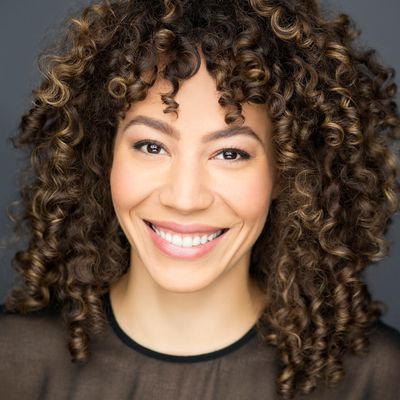
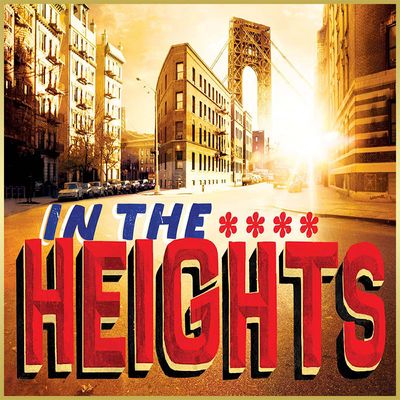
So I reached out to one of my favorite performers in the biz, Afra Hines. She’s a veteran of eight Broadway musicals, including two that have take home the Tony Award for Best Musical: In The Heights and Hadestown. She joined me recently to talk about how she feels best ensembles are already being celebrated and how her experience storming the stage at Radio City was, in her esteem, a celebration of her personal contribution to creating a Best Musical. Here’s our conversation...
Transcript
This transcript was automatically generated and might contain errors.
[0:21] Mo Brady: You're listening to The Ensemblist, the only podcast that shows you Broadway from the inside out. I'm Mo Brady.
[0:37] Mo Brady: After hearing from Broadway ensemblist Darius Barnes about his decision not to include a category for Best Ensemble in the inaugural Antonyo Awards, I was curious about this anti-ensemble award sentiment. Certainly every time that The Ensemblist has posted in favor of this kind of recognition, we see lots of positive feedback in the way of comments, shares, etc. But Darius' decision had me wondering if there was a silent majority of performers who see a Tony Award for Best Ensemble unnecessary. So I reached out to one of my favorite performers in the biz, Afra Hines. She's a veteran of eight Broadway musicals, including two that have taken home the Tony Award for Best Musical: In The Heights and Hadestown. She joined me recently to talk about how she feels Best Ensembles are already being celebrated, and how her experience storming the stage at Radio City was, in her esteem, a celebration of her personal contribution to creating a Best Musical. Here's our conversation.
[1:49] Mo Brady: Hi, would you introduce yourself and tell us where you're calling from today?
[2:01] Afra Hines: Hi, I'm Afra Hines, and I'm calling from the Bronx in New York City.
[2:06] Mo Brady: I will offer you two options here. You are a queen of Broadway ensembles, Afra. And I will let you say some of your credits or I'll say some of your credits if that's embarrassing. But you have really just done it all.
[2:21] Afra Hines: Oh, well, thank you. I always am a little nervous to say my resume for some reason. I don't know why. You do it. Yeah, you do it.
[2:29] Mo Brady: Original company member of Hadestown, Shuffle Along, In the Heights, Ghost, Soul Doctor, Summer, you were also in Wicked. Those are just the Broadway shows. You have been hoofing it for a long time in incredible shows, some shows that are really big ensembles, some that are really small, some that are very dance heavy, some that are movement oriented. And that I think is one of the most exciting reasons to talk to you is just your breadth in the ensemble world. This is also your third time on the Ensemblist podcast. We are here to talk about what makes great ensembles and if there's a way to quantify that for an award. But let's dive in. I would love to hear when you think about a great ensemble, what comes to mind?
[3:16] Afra Hines: I think a great ensemble is a team of people who work really well together, who feel safe together, who trust each other. They're just a solid team. I don't know that I have any specific examples, but I feel like even if you don't know the inside politics of the show, if you're watching it, you can tell, oh, these people are a good team or they're not really working together so well.
[3:43] Mo Brady: I love this idea of safety. You're not the first person to bring up the importance of feeling safe.
[3:49] Afra Hines: Yeah, physically and emotionally.
[3:51] Mo Brady: Dive into that a little bit more. What do you mean by those things and why are they so important to creating good theater?
[3:56] Afra Hines: Physically, obviously, means you feel like you are with a group of professionals who know the boundaries and are self-aware of their physical space. And if you're partnering, that you trust the person who's lifting you or throwing you around. But emotional safety for me is you feel safe to take risks or try new things or have some input or ideas that you give to the group in a way that you are not scared of being judged or punished in any sort of way for having an idea.
[4:27] Mo Brady: What about that safety makes great theater, in your opinion?
[4:30] Afra Hines: Well, it's the only way that the best of everyone can come out. The whole thing about live theater is that it's a collaborative art. Even if you have a director who's directing the show, it needs all these input from different people. The idea that you have a safe space where you're allowed to throw out an idea, it's only going to make it better. And I think you can feel that these people are a group and all feel like they had a say in the finished product.
[4:57] Mo Brady: Is it possible for you to say that Blank was the hardest show you were ever in? Or are all of them different? Do you have an answer to that question?
[5:05] Afra Hines: No, I think they've all been really difficult in different ways. Physically, hard show is different than an emotionally hard show. Or just sometimes the schedule can be difficult. The two Wednesday versus the two Sunday sort of schedule. There's so many factors that go into what makes a show hard.
[5:23] Mo Brady: When you watch shows, so you're talking about that safety. That's something you feel inside. I want to get to your experience as a theater goer. Do you remember any standout ensembles as an audience member?
[5:34] Afra Hines: Definitely Moulin Rouge. I saw that and I was like, holy moly, these people are working so hard. They're dancing full out. And I don't know that your average theater goer would pick up on that.
[5:47] Mo Brady: But as a dancer, I just knew the amount of work that was going into that was way up.
[5:53] Afra Hines: I mean, you knew because you have technical expertise as a dancer. You can sort of see the connective tissue of what a performer's track might be and be like, oh, wow, there's no break there. But like we ask non-sound designers to adjudicate sound design. How would you sort of explain what you see as an expert to the non-experts so they could adjudicate it?
[6:18] Afra Hines: That's so hard. I don't know, because part of the whole magic of it is that you're making it look easy. If you don't know, like how much work and training it took or even just one dance number, for example, or King Kong. Oh, my goodness. The dancing in King Kong was amazing. They're doing these like huge movements where their bodies are just making really big shapes. And just the energy of going from one big shape to another big shape. I don't know that that's something you can explain unless you've done it. The amount of energy it takes to do that in a quick period of time. And then things like backstage, when you're changing really fast, that adds a whole nother level to it. You have to find out when you're getting water. I don't know. What do you think?
[7:03] Mo Brady: What I hear you saying is that so much about what makes a great ensemble isn't necessarily in the movement or in the vocals. It is about the experience as a whole. Right. It is those backstage traffic patterns. It's the way that they're dealing with a five show weekend. There's just so much about it that is beyond the material that is delivered on stage.
[7:25] Afra Hines: Yeah. You know what I was just thinking about is theater is an art form, but it's also a technical sport almost. So it's like, how do you decide? Like you can't go to a museum and decide that this painting is better than this painting, really, because it depends on who's looking at it. And then I was thinking about sports like gymnastics. I was a gymnast like a million years ago and the whole scoring system has changed since I was competing. But now it's like they have a starting score based on the difficulty. I feel like ensemble work might be similar to something like a gymnastics routine because some shows are going to be way more difficult technically, physically. But that doesn't affect the impact the audience feels. And so like, what exactly are we trying to quantify?
[8:15] Afra Hines: When we're talking about this, I just want to give people awards. I want to be in the place where an ensemble gets celebrated for their contribution equally to the way that principal actors are celebrated. And yet, the more I dive into this discussion, the less I can figure out what we're celebrating. Well, my other thought is, besides the recognition and love that we're wanting to give to ensemble members, what is the tangible thing that they're getting? Because we do have some ensemble awards. We have the ACCA Award for Outstanding Ensemble. We have the Chita Rivera Awards for Outstanding Ensemble. And when someone wins a Tony, for example, what are the things besides the recognition that they're getting?
Maybe they're getting a pay increase on their next contract or something like that. Are we trying to say we want that as well for ensemble members? Because I have been in, I don't know how many, a couple few best musicals that won the Best Musical Tony Award. And I can tell you, I make minimum on every single contract. I've never gotten a bump. No one cares that I was in the Best Musical. And I feel like if there were a Tony Award, as it stands right now, to me, the Best Musical Award feels like the Ensemble Award. I always associate that with like, oh, that means the whole cast is really pulling their weight. I remember when In the Heights won Best Musical a bajillion years ago, we all got to go on stage for the acceptance. That was a magical moment that I don't think happens anymore. Casts don't go on stage anymore.
[9:57] Mo Brady: So you didn't go up for Hadestown?
[9:58] Afra Hines: No, we weren't even there. For In the Heights, I had a ticket. I was in the audience of the Tony Award. So we performed, and then we got to go back to our seats. And then we got to run down the aisles of Radio City Music Hall and get on stage. It was so magical. And at Hadestown, we weren't even in the building. I feel like most shows nowadays, you go, you get on a bus, you go perform at the Tonys, and then you get right back on your bus. You're not like celebrating at the Tonys, you're celebrating outside.
[10:27] Mo Brady: Do you know who bought those tickets for In the Heights? Was it the producers?
[10:31] Afra Hines: No, we had to pay for them. We paid, but they were like, if you're interested, if you want to be there, we have this rate, let us know, and we'll work it out. But that's not even an option, usually, nowadays.
[10:42] Mo Brady: That's so kooky. I mean, what you're proposing is that the Best Musical is for all components, including the performers who are not on principal contracts. Part of that moment is that you get to do what you did within the Heights. You get to run down the aisle, look your cast members in the face. You're describing it, and I'm like, A, missing theater terribly. But that would be incredible. That would be the moment, right? The only other elements that make it not feel like a Best Leading Actor, well, I guess I can think of a few. One is that you didn't get to stand up there and thank your parents. The second is that you don't have a statue in your house. That would be cool. I would take a statue.
[11:21] Afra Hines: They should just offer to let you buy one, I guess, if they're going to make you pay for your seat. Well, it's that pay bump thing. That's, I think, where I get the most angry.
[11:29] Mo Brady: I agree. Winning an award or not, Best Musical or not, I feel like at a certain point, I'm now, I think, on my eighth Broadway show. In any other business, if I was like, Yeah, I've been doing this for a decade plus. These are my credits. I would be able to negotiate money paid for my expertise. And that's just not really the case. If there are other ensemble members out there who are making above minimum, hit me up and let me know. But I just, I don't know. The sense is that, well, if you won't do it for a minimum, someone else will. That's sort of the lore is like actors are a dime a dozen, and that your experience doesn't necessarily make you more financially valuable to the company. And sometimes you're not even given very long to make up your mind. It's like, we need an answer by tomorrow evening.
[12:16] Afra Hines: Okay, so it's logistically challenging to create an ensemble award. But should we do it anyway? Well, I think the Chita Rivera Awards have done it really well. The ACCA award is awesome as well. If what we're talking about is public recognition, then I think Chita Rivera Awards is doing a really good job of that. And it's also like fostering community and when the ensemble of the show wins, usually they all go up. So I think they're doing that side of it. So that's why I was sort of saying like, what else are we wanting besides those two things?
[12:51] Mo Brady: What I see the Chita Awards not doing is celebrating non-dancers, right? Like that's the whole game with the Chita Awards is to celebrate choreography, dancing, movement. But what if you've got a great show that just is like vocally a wallop or a play that has a great ensemble, collaborative storytelling? That could be something that is not celebrated in that form, in that dance-heavy place.
[13:20] Afra Hines: And that would be the ACCA award.
[13:21] Mo Brady: I guess. Like everything that happens with equity, it sort of happens in the 14th floor boardroom and you're like, what happened? It doesn't have the sort of esteem.
[13:31] Afra Hines: Glamour.
[13:31] Mo Brady: What we're looking for is, it's that public facing piece that you're talking about. It's something that is encapsulating of the entire theatrical experience, whether or not you're in a dance show. And it's something that your friend from high school would be like, I saw it. I saw this in the news or I saw you on TV. Like you really are good at the thing that you do. Do you need that? No. But do we need awards? Well, this year we didn't need the Tony Awards, I guess, because who knows where those are happening. But excellence deserves to be celebrated.
[14:01] Afra Hines: I agree. Maybe it's the inside job. We need to do it. The community somehow needs to figure out how they want to recognize. We've been talking about how to get someone who doesn't work in ensembles to understand when they're looking at something, oh, this one is special because of whatever reasons. Maybe we can't ultimately do that. Maybe that's part of the theater magic. But maybe we need the community to come together and decide how we want to celebrate this and what we want it to look like. What you're alluding to is something that I've been feeling, is that the community is the best place to celebrate the community or the best entity to celebrate the community. Because what would it mean for the cast of Moulin Rouge to get a Best Ensemble Award from people like you offer? Who are like, man, that looks super tough and that schedule's hard and they have no offstage breaks and wow, they're traveling under the stage all the time.
[15:00] Mo Brady: Yeah. And the other thing that makes me think of is once someone outside of the community is giving awards, and I'm not saying that that would happen, but if it were someone outside of the community or someone who's not working as an ensemble member, then it's, to me, creates this idea of competition versus if it's in the community, then it's more uplifting somehow because it's not something out of your control or something that you're hoping to be noticed for by some random person. I just think it might be a healthier way for all of us.
[15:40] Mo Brady: Special thanks to Afra Hines for sharing her stories with us today. The Ensemblist was produced today by Anna Altide, Jackson Klein, and me, Mo Brady. Please rate and review The Ensemblist wherever you listen to podcasts, on Spotify, Apple Podcasts, or at bpn.fm, the home of Broadway Podcast Network. Our Patreon members have on-demand access to our archive, full conversations with our guests, and early access to episodes. You can join Emily Chen, Christopher Gurr, Christian Ranke, Ty Williams, and many, many more by supporting us for between $5 and $20 a month at patreon.com slash The Ensemblist. Thanks for listening. Until next time.
© Broadway Podcast Network, All Rights Reserved