

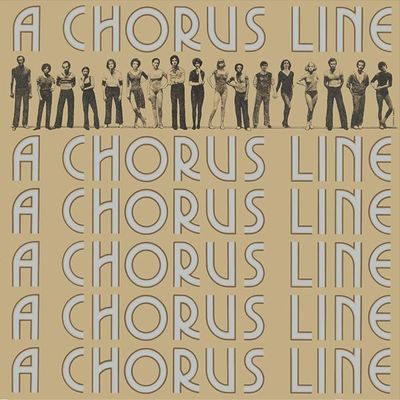
Coming to you live from Orso restaurant, we talk to the incredible Marsha Mason about Neil Simon, organic farming, race car driving, dancing with Clint Eastwood and how she saved A Chorus Line (seriously)... Read More
From the show: The Fabulous Invalid
Guests

Featured Shows
About
Coming to you live from Orso restaurant, we talk to the incredible Marsha Mason about Neil Simon, organic farming, race car driving, dancing with Clint Eastwood and how she saved A Chorus Line (seriously). Join us while we eat some great food, chat with Marsha, learn about Joe Allen, bitch about the Kavanaugh confirmation and Jamie confesses his creepy obsession with Upper West Side filming locations.
Transcript
This transcript was automatically generated and might contain errors.
[0:00] Rob Russo: I'm Rob Russo.
[0:01] Jennifer Simard: I'm Jennifer Simard.
[0:02] Jamie DuMont: I'm Jamie DuMont.
[0:04] Jamie DuMont: And this is The Fabulous Invalid.
[0:18] Rob Russo: If you hear a different buzz in the room tonight, or the faint clinking of wine glasses, it's because tonight we are coming to you from the legendary theater hangout, Orso on 46th Street.
[0:30] Rob Russo: Besides tables of eager pre-theater diners, I see a table of actors, one famous, a four-top of ad execs, a legendary director, and a publicist at the bar.
[0:41] Rob Russo: But I'm not going to drop any names yet.
[0:44] Rob Russo: Because I'm very excited because one of my all-time, all-time favorites, and she literally just walked in the room, Marsha Mason is going to join us for dinner.
[0:52] Jamie DuMont: We were gonna order some food. Are you hungry?
[0:55] Marsha Mason: Sure.
[0:55] Jamie DuMont: I'm ready.
[0:56] Rob Russo: Alright, great. So we'll get some whatever you want to do. And Jamie, do you want to do hot topics with Marsha?
[1:02] Jamie DuMont: Or let's do it later.
[1:04] Rob Russo: I think we can do it at the end.
[1:07] Jamie DuMont: Okay. But maybe before we get started, we can order a little bit of food and then we can. These are the specials.
[1:14] Rob Russo: I think Sean is gonna send us a cristoni and a couple of the specials. I think the vegetable plate, but we can just sort of pick at. Um but feel free to order whatever you want. Orso has the best pasta in the world.
[1:30] Marsha Mason: I can't resist the pasta.
[1:31] Jamie DuMont: Is that the Bucettini?
[1:33] Marsha Mason: Right.
[1:34] Jamie DuMont: The housemade Bucettini with lamb meatballs.
[1:38] Marsha Mason: Oh wow. Doesn't that sound good?
[1:40] Rob Russo: That does sound good.
[1:48] Jamie DuMont: Today I'm delighted to introduce four-time Academy Award nominee.
[1:53] Rob Russo: I'm sorry. Just take that in for a second.
[1:55] Jamie DuMont: Four?
[1:56] Rob Russo: That'd be four times.
[1:58] Jamie DuMont: Okay. Two-time Golden Globe winner.
[2:01] Rob Russo: Because she won, thank you very much. Director, organic farmer, and race car driver, the one and only Marsha Mason.
[2:09] Marsha Mason: Woo! How are you?
[2:12] Marsha Mason: Thank you, thank you, thank you. Thank you. That's very nice. Thank you.
[2:16] Marsha Mason: Amazing is what it is.
[2:17] Rob Russo: Yeah. We try.
[2:19] Marsha Mason: You're amazing.
[2:24] Rob Russo: Well, thank you for coming and joining us at Orso tonight. It's um it's lovely to have you here.
[2:27] Marsha Mason: Thank you.
[2:29] Jamie DuMont: Um before we sort of dig into sort of needier questions, I always love to start by asking, where are you currently drawing inspiration from these days?
[2:41] Marsha Mason: My inner self.
[2:45] Jamie DuMont: You said that like it was a new thing.
[2:48] Marsha Mason: No, no, it's an old thing. Uh that in nature. I love nature.
[2:53] Jamie DuMont: So is that what propelled you to start a farm?
[2:57] Marsha Mason: Yeah. Yeah. And um also I just wanted to sort of throw the pieces of my life up in the air like a kaleidoscope and see what kind of pattern would come down. So I just picked up stakes out of LA and um went to New Mexico and bought some land, had no plans whatsoever to be a farmer.
[3:16] Marsha Mason: And then 20 some odd years later, after running a certified organic medicinal herb farm, and being a New Mexico organic commodities commissioner and chairperson and all kinds of stuff. Um I sold it in 2014 and came back east and bought some land in Connecticut.
[3:40] Jamie DuMont: And when you had your farm in New Mexico, you were making, I don't know what the word is, remedies or or uh it was a line of healthcare products?
[3:53] Marsha Mason: Basically, yeah. And they started out to be just things that I needed. For example, um my hands were kind of getting beaten up so because of the harvesting and planting and everything. Um so I worked with a master herbalist and we created a salve, a medicinal salve.
[4:13] Marsha Mason: And then I went off to London and did a play, and I knew I was going to be in a very old theater, the Royal Haymarket. So we made uh we started to make some what we call wellness sprays uh for the throat and for the immune system, because um I knew you know going from that kind of climate to London would be problematic possibly, and doing eight shows a week and all of that.
[4:41] Marsha Mason: So everything kind of built on whatever it was that I needed, and then um we formed a kind of uh signature um combination, but we had one particular herb called spilanthes, which we grew uh which was uh in the Americas generally was called a toothache herb. The natives would put the raw flour on the abscesses and stuff, so it turned out it was antibacterial and antiviral.
[5:13] Marsha Mason: So we basically uh put that in all of the product. Um and then I'm because it was a very dry climate, um, I used different delivery systems like uh shea butter and uh aloe vera and stuff like that to make a body line of body butter, body lotion, and a body wash.
[5:35] Jamie DuMont: And what happened to the line? Is it still out there?
[5:36] Marsha Mason: No, I mean we were very successful uh regionally and and uh we sold in Colorado, California, New Mexico, mostly in the southwestern part, a little here in New York, not much. Um and I couldn't really take it to the next step without a major investor and stuff like that. And I was also by that time thinking about making the move back to New York.
[6:03] Marsha Mason: So it took me a while to sell the farm. Um, but finally I did, and then it was just this year that I closed down the product line.
[6:12] Jamie DuMont: Oh wow, so it's recent.
[6:13] Marsha Mason: Yeah. Yeah, that must have been bittersweet.
[6:15] Rob Russo: Um it was okay.
[6:16] Marsha Mason: Yeah, it was all right, yeah.
[6:18] Jamie DuMont: What was the pullback to New York?
[6:21] Marsha Mason: Well, I started out here sorry to interrupt, you'd been out of New York a while by that point, correct?
[6:26] Marsha Mason: Well, I always kept a place here. I do. But um, but my my life sort of took me other places, but I always kept a place here, and I started here, so I really wanted to end here.
[6:41] Jamie DuMont: So that's what brought you back.
[6:42] Marsha Mason: So that's what brought me back. I always say I'm gonna die on the island of Manhattan from hell or high water.
[6:49] Rob Russo: So I love that sentiment. Mickey's here with is that am I saying this right? Crostone?
[6:53] Mickey: That is correct.
[6:55] Mickey: It's uh smoked trout smoked trout, jalapeno fennel. With a fennel, a little radish, and a little coriander.
[7:03] Marsha Mason: Oh, that looks delicious.
[7:05] Rob Russo: Thank you, Orso. I'd like to signal and make a conversational lane change, if I may.
[7:09] Jamie DuMont: Absolutely.
[7:10] Jamie DuMont: Because I'm dying to know how did you get into race car driving? I'm so impressed.
[7:13] Marsha Mason: Oh, well.
[7:19] Marsha Mason: I was on a plane uh going out to LA from New York, actually. Um my friend Paul Newman was on the plane as well, and we were chatting, and he was going out to Riverside to do the one of the last races before they shut down the track.
[7:37] Marsha Mason: And I told him how much I I enjoyed racing and everything. So he invited me out for the weekend, and I hung out, and then I wound up for about a year traveling wherever uh the crew was. Um, and then he told me about these schools, racing schools.
[7:55] Marsha Mason: So I went to them, and then I bought a little car uh from a kid in Rialto, and I got my um driver's license, you know, my uh sports car.
[8:08] Jamie DuMont: Oh, yeah, you'd have to get a special one.
[8:09] Marsha Mason: We have to get a special one. They put a big X on the back of your car so that the other people on the track know you're a new badass, right?
[8:19] Jamie DuMont: How long do you have a badass?
[8:20] Marsha Mason: How long do you have the Scarlet X on for?
[8:23] Marsha Mason: I think it's only like two or three races, and as long as you behave yourself and you play by the rules and uh all of that. And it was my home track, so I was there every weekend, and then uh then the team grew. I I uh partnered up with Mike Lewis, and he was a championship um SSCA driver, and so then he was racing uh Mazda RX7s.
[8:51] Marsha Mason: That was the kind of car I liked. I started out with an RX3, and so he said you want to do an arrive and drive, which basically means you know they prep the car for you, and then if you crash it, you have to pay for it. But um otherwise it's taken care of and everything, and then he and I uh in one year or so formed a team, and then we traveled mostly in what we call the Southern Pacific Division, as well as the NAS Sports series, and so I had about 12 to 14 races a season, um, and then um and made the Valvoline runoffs, and uh they usually take the top four drivers in your division, and then you go to the Valvoline runoffs in the Midwest in the winter and stuff.
[9:40] Marsha Mason: Um so I did it for about seven years.
[9:43] Jamie DuMont: Did you ever crash?
[9:45] Marsha Mason: Um once in a great while mostly uh I was you know, it was other people crashing into me.
[9:52] Jamie DuMont: So you um a a through line that I'm picking up on, a common theme, um, is not only your comfort with taking risks. You know, you started by saying that you draw inspiration from your inner self, and and to me that that seems like you're very in tune with your own intuition and and trusting that voice inside of you that says, you know what, now's the time to move to New Mexico, or now's the time to tackle a project with acrobats.
[10:23] Jamie DuMont: And uh, if I may, if you may indulge me, uh I think fans of the show at Chorus Line may not know that they have you to thank for another episode of trusting that voice inside of you, that instinct uh during the creation of the show. You could be in fact credited with with saving A Chorus Line or making it what it is.
[10:43] Marsha Mason: I was wondering if you wouldn't mind regaling us with the story of how you uh you helped make history.
[10:50] Marsha Mason: Well with that show. When uh uh was doing The Good Doctor and I met my husband Neil Simon, and um we shifted uh directors uh before we came into New York, and uh Michael Bennett came in to help uh the show.
[11:12] Marsha Mason: So when he was working on A Chorus Line, he asked Neil and I to come down, and he was in the throes of he and Jim Kirkwood and stuff. So we watched the show, and partly because of my own feelings, but also because in Cinderella Liberty, which was the first sort of picture that I got nominated for, it was very interesting because Mark Rydell uh adapted it from a book and the end of the book of the two people that it's really about a love story about this uh prostitute and her you know uh child and a sailor.
[11:57] Marsha Mason: And they don't wind up together, and um so Mark shot the picture uh basically with that kind of ending, and I watched it and I said, you know, this is just not gonna work because people wanna they want something to root for. And you how why would you root for people and then be disappointed?
[12:19] Marsha Mason: So when we went and saw A Chorus Line, um he was talking to Neil and he looked over at me and he said, What? And I said, Well, Cassie has to stay in the show. And he said, but that's not uh reality. And I said, you know, Mark Rydell said the same thing to me, and the picture bombed. So I said, You you I she I said, people don't come to the theater or a movie necessarily to be disappointed.
[12:50] Marsha Mason: I said, especially the way the whole thing is structured, the musical. So I said she has to stay in the show. So it was Marvin Hamlisch who actually said, that's a great idea. And um and so she stayed in the show.
[13:18] ♪ Musical number: "Give Me Somebody to Dance For" — performed by Marsha Mason ♪
[13:59] Jamie DuMont: So was this while it was still in workshops, or was it already being performed at the Newman at that point?
[14:05] Marsha Mason: No, it was at the Newman, but it was early in the previews.
[14:10] Jamie DuMont: Wow, yeah. And our condolences about the passing of Neil.
[14:14] Marsha Mason: Oh, I know. It was a great, great, great person. He was just terrific. Great. And thank you for sharing this amazing story. It's truly remarkable. It's a nugget that I think most people wouldn't know. But it changed the whole trajectory of the show.
[14:32] Marsha Mason: Yeah, it really did. It was great. It was lovely. When we previewed The Goodbye Girl, and it was in the days where you go out of town to send something or other, you know, out in the boonies, and people wrote in cards and all of that. It was after a period of a lot of dark film, and all of a sudden people were saying, Oh, thank God, a play, you know, a movie weekend take our family to, oh thank God this, or oh thank so all of a sudden we were just on the tipping point of a need for the movie-going public that helped enormously. And I think also it spoke to single mothers and single parenting. So it was that too. And then of course it was a wonderful love story, and Richard and I had great chemistry that just translated through the film. And so all of that, you know, conspired, I think. And so the picture holds up pretty much to today, even though it's you know it does. I actually watched it on Saturday.
[16:31] Marsha Mason: I spent my weekend, I watched The Goodbye Girl, I watched Chapter Two, and I watched Only When I Laugh, which is one of my all-time favorite films.
[16:40] Jamie DuMont: Before you arrived here, we were going on and on about it.
[16:44] Marsha Mason: It's one of mine too. I've discovered I have three copies of it on DVD, which I did not realize. Apparently I was really worried at one point that I would lose it.
[16:53] Jamie DuMont: Well it's hard to find sometimes.
[16:55] Marsha Mason: It was hard to find, and I have an odd like Ukrainian print. Um that I think I must have bought at plays on a DVD print.
[17:05] Jamie DuMont: It does, they all three play. I tried them. I was gonna loan you the Ukrainian print. Um The Goodbye Girl means so much to me, and your work was so exquisite in that film.
[17:17] Marsha Mason: Thank you. You spent a lot of time in those years playing characters who lived on the Upper West Side.
[17:22] Jamie DuMont: Yes. Who lived in a 75 layers of paint on the door in a like 10 block radius.
[17:28] Marsha Mason: Yes. I know because I watched them back to back, and I uh you know, this is something else. I actually lived for 13 years in the apartment building next door to where your character lives in Only When I Laugh.
[17:41] Jamie DuMont: Oh my god, on Seventy-Eighth Street.
[17:42] Marsha Mason: Um that's 78th Street. This is creepy that I know 78th Street is where The Goodbye Girl shot, or the exteriors.
[17:52] Jamie DuMont: Right, right. Only When I Laugh was on 85th Street. Those three ladies in particular are all really fascinating women. They're really strong, they're really they're they're they must have been, well, one of them is loosely based on your relationship and you, correct, right?
[18:10] Marsha Mason: Chapter Two.
[18:10] Jamie DuMont: Um which was a role you didn't play on Broadway.
[18:16] Marsha Mason: No. But you did play in the film, and it's a role that you've well, it's a play you've directed now twice.
[18:22] Jamie DuMont: Yeah, yeah. What is that experience like, those three different incarnations, being an audience member, being the actor, and being the director?
[18:32] Marsha Mason: Um, each one is slightly different in its perspective. Uh observing, especially in the audition process, that's very interesting. And then uh by the time I shot the film, I was already married for I would say three almost going on four years. So I felt like it was just a character that I knew very well. Um Neil wrote autobiographically about himself and me. So there's stuff in there that's literal. Um so there was that, and then directing it, what I did was especially uh because these are two recent productions, one in Arizona and one at Bucks County in uh New Hope, Pennsylvania, is I realized that uh the pace was much slower when it was first done. So I condensed it very subtly and incorporated cell phones and things like that so that the scenes would bleed together.
Whereas in the days in the like in the 70s, they would be blackout and then they would come up or blackout and come up. And then I also tied the apartments together as opposed to keeping them separate by having his wrap around hers and raising hers. So I that's what I meant about, you know, uh you just come up with these ideas um to address whatever, especially pacing and rhythm, and also people are think faster and uh they relate faster than they did 30 years ago.
[20:25] Jamie DuMont: It's very fascinating insight. Because that's a is that a function of cell phones and information and internet and Twitter and all of those things?
[20:35] Marsha Mason: Definitely and so you're bringing that into your interpretation of Chapter Two.
[20:41] Jamie DuMont: Yeah. So your two productions were not set in the late 70s.
[20:46] Marsha Mason: No, they no, I didn't. I made them sort of universal, uh, just as if they were today. Because the apartments would have been the same, and you know, and whatever there were a couple of references that I just um I don't remember what it was that I said. I think there was only one or two references that would have dated it. So I didn't change them, I just dropped it. You know what I mean?
[21:14] Jamie DuMont: And when you said a moment ago that there were Neil wrote autobiographically correct me if I'm wrong but the I think I'm wonderful speech is actually something that you did say is that correct?
[21:14] Marsha Mason: Yeah, that's pretty much yes that was a moment in our personal life that he chose to put on the page.
[21:14] Jamie DuMont: And how is that the first time you see that or you read that as his wife as a human you know as a person?
[21:14] Marsha Mason: Um well uh the thing that was interesting is I didn't know he had started to write it when he wrote it so he one afternoon came out of his office and gave me he said I won't I want you to read something see what you think and I don't remember exactly what moment it was anymore it was a uh maybe six seven pages I'm not sure um and he he would do this occasionally not all the time sometimes he would wait and show me something uh in whole X and sometimes not until it was finished but um with Chapter Two he I don't remember what the moment was but I read it and of course he could sort of really read my face so he said what what is it what is it and I said well I I honestly believe she'd be more angry here.
Um, and he went, oh, okay. And then he would go back into his room, and then I would not know until it was all printed and we were going into production or something what it was about. So we had this unique professional relationship. We loved working together. We had the best time. A lot of times married couples don't work well together, but we did because I think we mutually respected each other's talent, and I was a staunch supporter of every word that he wrote. Do you know what I mean?
[23:30] Marsha Mason: As I am with all playwrights. I don't believe in paraphrasing and all of that sort of thing. Um so so we had this great professional respect for each other, and that made all the difference. But I do remember one time he told me in one of the early plays that uh an actress once said to him, I I just wouldn't say it that way. And he said, Well, you're not the writer. Do you know what I mean? So so it just depended because but his was his was about rhythm, his was about rhythm, and he understood rhythm. Now there are wonderful stories about playwrights who uh will stick to um and won't make cuts or trims. Neil was always rewriting, he was always trimming, he was always collaborative with all of his directors, uh, with even the actors.
I mean, you know, if if you did something funny in rehearsal, he would put it in. If it was if it made him laugh, it went in. You know what I mean? So so it just depends, but there are wonderful stories about playwrights who I remember I heard a story once um uh an actress was had a monologue that went on for pages and she just said it's too long it's too long and of course it actually was so the playwright brought it in without any punctuation so I would say that's a passive aggressive way of dealing with it but um uh I think for the most part you you try to meet what the playwright is doing unless it just isn't there and then either you don't do the play or you say I'm sorry you know I I don't get it. Especially with Neil's comedy it's all about rhythm.
[25:32] Marsha Mason: The humor, the humor is very rhythmic, and if that isn't there, then the humor doesn't land, and then the truth that the humor's talking about doesn't land.
[25:44] Jamie DuMont: Yeah, humor is really unique.
[25:46] Marsha Mason: Um, and it depends on the individual. I remember, for example, I snuck into the theater when they were auditioning Chapter Two. I was up in the balcony. I had to deliver something, and then I snuck around, and Annie Wedgeworth came in, and she was reading for the role of the best friend. Annie was from Texas and had a draw and she was kind of floozy and wonderful, and so she got, I know I'm not the right color. And it was sort of written kind of Eve Arden-esque, you know, rat-a-tat-tat. But her innate sense of rhythm and timing was flawless. And so she got the role because Neil always recognized that, you know. So it didn't really, it was interesting. It didn't really matter. As long as you could land the material, then it was okay.
[26:54] Marsha Mason: I will say the only time I've had an issue with a playwright necessarily is if I have a hard time memorizing it as an actress. It's because there's something about the scan that it's not how people speak.
[27:07] Jamie DuMont: Yeah.
[27:08] Marsha Mason: Yeah, yeah, yeah, yeah, yeah, yeah, yeah. I've had that experience, as well as sometimes if I keep going up at the same moment, I either look at the material and say, that's the reason. I don't understand the jump. Or I know my thinking is wrong, that I haven't, whatever arc, whatever the emotional travel is, I have to rethink it. When I was at the Arena doing Watch on the Rhine, it's Lily and Hellman. So, you know, you're in good hands. So if I can, if I was going up at a certain moment consistently, and what I mean by that is like say three times, I'm going up to the same place, then I know that's me. That's not the material. If on the other hand, the material is such that it's loose or something, then I say, wait a minute, I'm going up because I don't understand what the playwright is trying to say.
[28:18] Marsha Mason: So then the job is to figure out what the playwright's saying so that you can get it. Or the playwright hopefully is there, and you can talk about it so you understand what his idea was because maybe I'm at cross purposes. How different is the experience when you are working on something like you just completed a Tennessee Williams play that had never been produced, and the playwright is dead? How does that change the experience, especially with a text that is not as well known or, you know, notated? I mean, first of all, Tennessee is revered, so you wouldn't want to mess with it.
[29:00] Jamie DuMont: Right.
[29:00] Marsha Mason: You have to try and make it work. Also, he wrote the material when he was 27, and he was known as Tom at the University of Iowa. But what was really interesting about the material, it was only about 35 minutes long. It was called Talisman Roses. And there are these, um, the situation is he wrote it right after his sister was put into a sanitarium for schizophrenia. What's interesting about it is it's three characters, an aunt and two sisters, an older sister and the young sister. The young sister has just come out of a sanitarium after five years because the aunt has decided she should just be allowed to live at home. The older sister, played by Amanda Plummer, was upset by it because her whole Midwestern, it takes place in St. Louis and where you're from.
[30:17] Jamie DuMont: Yes, exactly.
[30:19] Marsha Mason: So it had more of a Midwestern feel than say a Southern, but there are very clear indications of Laura and Blanche and Stella in the mix. And what is fascinating is that at 27, his voice was totally clear. Right. Totally clear. People say that about Summer and Smoke, that that play sort of lays the groundwork for Streetcar Named Desire. It's last performed and seen as problematic by some, but you see the emanations of formulation of these iconic women in his, I think for me, he is one of men, maybe the only that I can truly think of who understands the complexity of the female gender. I mean, if you look at all the women he wrote, they're so different, they're so complex, they're so nuanced, they're so, um, they're so complex. I don't know how else to say it. And I can't think of another playwright who embodied that femininity so strongly.
[31:44] Marsha Mason: So he obviously was writing from himself. I wish young and even established playwrights today, I find the material lacking sometimes in complexity. It's awfully literal. It is what it is, which is fine. It's very well played, and it can be very successful, but I miss sometimes the complexity of behavior and character and also event. What is the event? Why am I here? What is it that I'm supposed to be thinking about? And letting you fill in the gap, letting the audience member fill it in. Or wrestle with the nuance, right? Wrestle with the nuance and also make me think instead of just kind of watching it and going, okay, I saw that. It's very well produced, well directed, well acted. But do am I gonna talk to anybody about it after I leave the theater? That's in that sense. I think sometimes television, especially, not film so much, but television has lost, makes the playwrighting thinner.
[33:10] Marsha Mason: A lot of playwrights are now writing for TV. The crossover has, and I think that might be a problem.
[33:17] Jamie DuMont: Yeah.
[33:18] Marsha Mason: Meaning that it's more lucrative to work and more steady to work in television, so it's an easier kind of gig, and therefore that's where we're losing playwrights to television. And our major state, you know, Broadway is not the place where big plays are being performed anymore.
[33:36] Jamie DuMont: No.
[33:36] Marsha Mason: You know? I mean, that'll change coming from abroad, like The Ferryman or, you know. So a lot of playwrights are increasingly working in television. Do you think that television's gotten better because more playwrights are writing for television?
[33:50] Jamie DuMont: Well, I think cable has made a big, uh, that has saved television for me.
[33:57] Marsha Mason: Some argue we're in a golden age.
[33:58] Jamie DuMont: Well, George Wolfe has a quote that it's been attributed to him, I'm sure he said it. Um, that film is about story, TV is about character, and theater is about ideas. I wonder if that is another way of sort of encapsulating perhaps what we're talking about. Or maybe not. Maybe you disagree.
[34:25] Marsha Mason: I'll tell you a wonderful thing about Clint Eastwood. I did a picture with him called Heartbreak Ridge, and I had heard that he didn't take a lot of takes, didn't like women to wear makeup and all of that. So I had an interview with him. I didn't have to read. Um, and then I showed up, you know, for the first day of shooting, and I was playing his ex-wife. And the story is really about this group of Marines that go off to Grenada. But we were standing waiting for a shot to be set up, and um, so I said to him, you know, I said it's very interesting. I mean, we're taking a lot more takes and everything, and I had heard you kind of like to move on. And he said, well, he said, if the movie is about character, I take as many takes as it needs. If I, if the movie is about story, then I pretty much know what it is I want to shoot, and I move on. So I thought, oh, that's really interesting. You know, that is really interesting.
[35:43] Marsha Mason: Then we came to a moment in the movie where we're on a tiny little umce pad, if you will, outside with some Chinese lanterns. He's in full marine dress. Um, and we're going to be dancing to a band, a small band, uh at a soft, uh, you know, uh slow music, and we have dialogue. So he talks to the cameraman because he's directing the film also, and so talks to the cameraman who's on a handheld thing, and it was his core group. And we begin, and so I noticed that as we're dancing and saying our words and stuff, I can feel him kind of maneuvering me, not in a necessarily a dance formation, but I can tell he's moving me. So then they call cut or whatever, and then they're getting ready for another take.
So I said to him, well, I don't know if you were moving me in a thing. He said, yes, I was watching how the light, I wanted to make sure how the light was playing across your face. So he was acting, he was directing, he was dancing, and I thought, well, all right, what are you gonna do? I mean, come on. I mean, that's just extraordinary. So he may be this iconic figure, you know, that but his understanding of the material, the moment, the whole picture, everything, he understood very much what it is that he, and he always brought his pictures in on time and under budget, which is why Warner's loved him so much for the most part. You know, I was not privy to the books, but that's what I was told, and I don't think that's apocryphal at all. He was extraordinary that way.
[37:50] Marsha Mason: Um, so it depends, you know. It depends. For example, I mean, you know, those famous stories of directors Fred Zinneman taking 28 takes on Jezebel or whatever, and I remember going into the dailies with her boss, and we always picked the same take. And I got used to it. I could look at myself very objectively and say, oh no, no, that's the best take.
[38:17] Marsha Mason: And he and we would just look at each other and he'd say, Yeah, that was what he had chosen. So when I went to work with Tony Richardson, Tony Richardson never allowed actors to watch the dailies, and I said, That is such a mistake. I said, I really can't. Then we wound up not doing the pictures, so I never got to work with them. But I remembered that Dustin Hoffman said when he first started working in film, he said, you can learn so much, but some actors can't. They get too freaked out by how they look or whatever. But fortunately, I was always very objective, and I could tell what was my best. I I I could tell. It's that intuition. I don't know. It just is what it is, you know. I don't know. Do you watch your old films or do you watch any films?
[39:12] Jamie DuMont: Never.
[39:12] Marsha Mason: Never. Never. I haven't seen the Goodbye Girl since it came out, I don't think.
[39:18] Jamie DuMont: It's real, real good. Just so you know. It holds up. It's worth checking out.
[39:23] Marsha Mason: Yeah.
[39:24] Jamie DuMont: You're a real real time returns.
[39:26] Marsha Mason: Oh, I love it. I might add. And the movie you made with Johnny Depp. Not that I spent all weekend watching the film.
[39:33] Jamie DuMont: Jimmy, I love you.
[39:34] Marsha Mason: I did. I love your heart and I love you. And it's everyone, all our listeners, he's awesome.
[39:40] Jamie DuMont: It's a shit. A very good mayor.
[39:42] Marsha Mason: Yes.
[39:43] Jamie DuMont: Were you mayor or governor?
[39:43] Marsha Mason: You were governor.
[39:44] Jamie DuMont: I was the governor, yeah.
[39:45] Marsha Mason: I was governor.
[39:47] Jamie DuMont: Would you ever run for office?
[39:49] Marsha Mason: No. No, I don't think so. Not at my age. No, no. Not now.
[39:55] Jamie DuMont: Hopefully we'll have some openings up real soon.
[39:55] Marsha Mason: Real soon.
[39:59] Jamie DuMont: Yeah. You're here. Lovely. On that note, I we have one final question.
[40:02] Marsha Mason: Okay.
[40:03] Jamie DuMont: That is what was that first show that did it for you? That first show that cinched it that you saw that made you want to be in the theater.
[40:14] Marsha Mason: Well, actually, I was a freshman in high school, and I played a Jack in the Box in a Christmas pageant of some kakamami thing. And I had to be crouched in this plywood box for it seemed forever, and then on cue, pop-up, and all these children went, oh, oh, and I that was it. I was totally hooked from that moment on, and I spent the rest of my high school days doing everything that I could, and I didn't even want to go to college. I wanted to come to New York as soon as I graduated high school, but my parents insisted, so I did go, and I majored in speech and drama and then came to New York, and that was it.
[41:05] Jamie DuMont: Well, thank God you did.
[41:07] Marsha Mason: Yes.
[41:08] Jamie DuMont: Well, thank you for coming down and having dinner with us.
[41:11] Marsha Mason: Oh, thank you. It was a delicious dinner.
[41:14] Jamie DuMont: Yes.
[41:15] Marsha Mason: Well, it's always a good meal at Orso.
[41:24] Rob Russo: Isn't she great?
[41:25] Jamie DuMont: Oh my gosh.
[41:27] Rob Russo: She's fabulous.
[41:28] Jamie DuMont: She's a grounded. I want her to r I want her to uh direct all the things.
[41:34] Marsha Mason: Oh, you have nice paper.
[41:36] Jamie DuMont: Oh, it's resume paper.
[41:38] Marsha Mason: Really good paper. You printed script on resume paper?
[41:42] Jamie DuMont: Oh, don't think it's because I am so amazing. I printed it on resume paper because I'm out of regular paper.
[41:48] Marsha Mason: Oh, so it was sort of laziness, really.
[41:50] Jamie DuMont: It's laziness, it's ineptitude, it's failure.
[41:53] Marsha Mason: I wish I were a man. If I were a man, I would have had printer paper.
[41:58] Jamie DuMont: I I wouldn't mind being a woman. Truthfully.
[42:01] Marsha Mason: I'm completely kidding.
[42:05] Jamie DuMont: Are you?
[42:06] Marsha Mason: Are you kidding?
[42:07] Jamie DuMont: No, not at all.
[42:08] Marsha Mason: Okay. No. I mean, I'm not ready for reassignment surgery, but I gender's a construct. I I I definitely don't relate to men very well.
[42:17] Jamie DuMont: I definitely don't. It's interesting. I actually have had two different experiences in the last 48 hours where women that I'm either close to or don't know have told me that I may not be part of the problem, but w what am I doing to be part of the solution? Which is a really interesting thing for me to look at as someone who always has felt like be that I I've always felt I was an ally, an advocate for women, a friend to women. I'm certainly not gonna sit idly by and watch someone get bullied or abused.
[42:52] Marsha Mason: Yeah.
[42:52] Jamie DuMont: And yet, what am I actively doing that puts me as part of the solution?
[42:58] Marsha Mason: Oh my lord. Well, I think the elephant on the restaurant, if you will. Um, and that's actually a pretty good image of an amusbouche is an elephant.
[43:08] Jamie DuMont: Oh gosh, you should say there are no actual elephants.
[43:11] Marsha Mason: There are no elephants. And no elephants were harmed in the making of this podcast. Um is the confirmation of Brett Kavanaugh to the Supreme Court, which I think has been, at least in my world, sort of front of mind, front of newspaper. Everyone's been talking about it. It's sort of been terrorizing the nation for the last week. And frankly, I think no matter where you stand on it, everyone can agree that that it's it was a horrible process, and it's it's it represents a really dark moment for our politics. Again, whether you're a Democrat, Republican, Liberal, conservative, I'm willing to bet that our listeners are probably skewed left. Um but you know, it it's one of a number of major sort of constitutional issues that are coming to the fore in this time.
You know, you have a president who did not win the popular vote, and a Senate that doesn't reflect a Senate majority that doesn't reflect the majority of voters, confirming a judge who does not have the support of the majority of the American people to the Supreme Court for a lifetime appointment. So it it really just has completely dominated my mind, my psyche for the last couple weeks, and I felt like we couldn't talk about, we couldn't have this podcast without addressing it.
[44:34] Jamie DuMont: No, I agree. I think it's I think it's uh it's a dark time, and I I think this is the kind of conversations like this help, at least it helps me filter through all of the emotions uh that I'm having.
[44:50] Marsha Mason: Yeah, I I would never uh be so bold as to speak for all women, but I can speak as a woman. And my takeaway that night was one of calm, and you know, I was at Mean Girls and there were a lot of tears in the cast that day. And I remember I ran out and got some lifesavers because I'm of the generation from that commercial happens, here have a lifesaver if something bad happens, and just sort of trying to lift everyone's spirits. Um I'm not gonna sugarcoat it. It was a dark day, it's dark times. In my opinion, the you know, Gorsuch seat was a stolen seat.
[45:28] Jamie DuMont: It absolutely was.
[45:29] Marsha Mason: It was absolutely was. Um and I think we've also reached a time, it's nice to say whether you're left or right, but we've reached a time where you really have to pick a side. You know. Pick a side. Um that's and it's increasingly pro-democracy or anti-democracy, frankly.
[45:43] Jamie DuMont: Correct.
[45:44] Marsha Mason: My perspective.
[45:44] Jamie DuMont: Correct, correct.
[45:45] Marsha Mason: And um the silver lining, I think, in all of this, but my point was I was very calm that night. There was a calm that kind of took over my whole being as a woman. Because I don't know if people really understand how strong women are. We've been through worse. We got this boo. We got it.
[46:22] Rob Russo: As we wrap up our delicious meal here at Orso, you may be wondering about this quintessential theater restaurant's background and history. Well, to understand Orso, first you have to meet Joe Allen. The 85-year-old man who owns and operates what the New York Times describes as a small restaurant empire on the townhouse, restaurant, and tree-lined strip of West 46th Street between 8th and 9th Avenues.
[46:44] Jamie DuMont: The street affectionately known as Restaurant Row.
[46:47] Rob Russo: Ever since then, New York mayor, John Lindsay, made the moniker official in 1973. That empire consists of three restaurants.
[46:56] Jamie DuMont: Orso, where we are right now, an Italian bistro, Bar Centrale, an unmarked private haunt for drinks and snacks, and Mr. Allen's signature restaurant, simply and aptly named Joe Allen, all located in a cluster of three adjoining brownstones that Mr. Allen owns and lives above.
[47:14] Rob Russo: The Empire, if you can call it that. Also once extended to include seven Joe Allen restaurants in Los Angeles, Toronto, London, and Paris, as well as several Orsos.
[47:24] Jamie DuMont: But like the man himself, there really is only one original Joe Allen, and one Orso. And they both call Broadway home.
[47:33] Rob Russo: An army vet who got his start working in the din of New York's famed P.J. Clarks during the fading but still glamorous noir days of the 1950s, Joe Allen opened his eponymous restaurant in 1965.
[47:45] Jamie DuMont: Geography, an unfussy menu of well-prepared classic food, and a certain je ne sais quoi quickly made the restaurant a favorite of theater personalities. A fact that remains true to this day.
[47:56] Rob Russo: Like so many restaurants in the theater district, Joe Allen and Orso are busiest both before and after curtain times for the 41 Broadway theaters and countless other stages they call neighbors.
[48:06] Jamie DuMont: Patrons at both restaurants, and especially at Orso are well advised to keep their eyes open for celebrity sightings, since the dining rooms are often speckled with actors, writers, directors, designers, producers, and other industry professionals fresh from rehearsal or performance, or else hammering out a deal or planning a new production.
[48:24] Rob Russo: As Jamie mentioned, we saw several folks here tonight. A comfortable, unpretentious, but buzzy atmosphere pervades these restaurants, enlivened by the creative energy of their diners, and the ineffable spirit of theater history that suffuses the environment.
[48:39] Jamie DuMont: At Joe Allen, the exposed brick walls are adorned with a famous gallery of window cards or posters from Broadway's most infamous flops, shows like Carrie, the musical, Moose Murders, which closed on opening night, and Dude, Galt McDermott and Jerome Ragney's follow-up to hare that ended up just being a dud.
[48:57] Rob Russo: Part tongue-in-cheek, but also part tribute to the hard-working people behind them, the gallery of flops embodies the very idea of the fabulous invalid and the ever transient nature of the theater business itself.
[49:08] Jamie DuMont: Well, no theater professional would cop to wanting his or her show represented on the wall.
[49:13] Rob Russo: There's also a perverse honor in joining the ranks of these ill-famed productions.
[49:17] Jamie DuMont: You might still catch Mr. Allen sitting at his usual corner stool at the bar of his restaurant.
[49:22] Rob Russo: Quiet and unassuming, though a ladies' man who once dated Cheetah Rivera in the 1970s, food is not Mr. Allen's personal forte.
[49:28] Jamie DuMont: His son reports that he can't even boil water.
[49:30] Rob Russo: But fortunately, the food at his restaurants is reliably top-notch.
[49:36] Jamie DuMont: And that brings me back to Orso.
[49:38] Rob Russo: Orso is the Italian word meaning bear, and is a common given name and surname in Italy.
[49:44] Jamie DuMont: Mr. Allen opened this restaurant in 1983, and it was credited several years later with single-handedly revitalizing restaurant row, with its superb selection of small pizzas and a mix of northern Italian pastas and entrees, all served with a humble lack of self-pretension that belies its starry clientele in a golden warm dining room as comfortable as they come.
[50:04] Rob Russo: I have to say, Marcia had a pretty good looking pizza tonight, and I had a dynamite spaghetti.
[50:10] Jamie DuMont: Nora Efron once wrote, My idea of a perfect night is a good play and dinner at Orso.
[50:16] Rob Russo: We here, the fabulous invalid, vehemently agree.
[50:18] Jamie DuMont: And so we invite you to dine with us at our usual table once a month, and recommend you pay a visit to Orso yourself if you can.
© Broadway Podcast Network, All Rights Reserved