

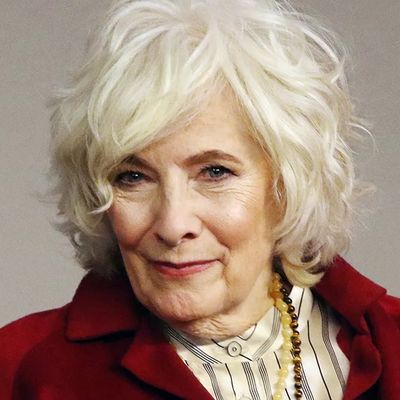
Jamie, Rob, and Jennifer kick off season two of The Fabulous Invalid by traveling up to Boston to sit down with star of stage and screen Betty Buckley during the final stop of her run as Dolly Levi in the national tour of “Hello, Dolly!”... Read More
From the show: The Fabulous Invalid
Guests
Featured Shows


About
Jamie, Rob, and Jennifer kick off season two of The Fabulous Invalid by traveling up to Boston to sit down with star of stage and screen Betty Buckley during the final stop of her run as Dolly Levi in the national tour of “Hello, Dolly!”. Together, they discuss Betty’s illustrious career, what it’s like going on the road at age seventy, and learning new skill sets. We discover the secrets behind Betty’s Tony Award winning turn in “Cats”, and Rob offers a comparison of Thorton Wilder’s play “The Matchmaker” and its musical version, “Hello, Dolly!”.
This week’s music: “Push Da Button” from “The Color Purple”, and Betty Buckley singing, “Knowing When To Leave” from “Promises, Promises”, “Rose’s Turn”, from “Gypsy”, “With One Look”, from “Sunset Blvd.”, “Memory”, from “Cats”, “Hello, Dolly!” from “Hello, Dolly!’, “Old Friend” from “I’m Getting My Act Together”, and “Children Will Listen”, from “Into The Woods”.
Find us on Twitter & Instagram: @fabulousinvalid
Facebook: www.facebook.com/fabulousinvalid
Rob’s reviews: www.stageleft.nyc
Email us at: info@fabulousinvalid.com
Find us on Twitter & Instagram: @fabulousinvalid
Facebook: www.facebook.com/fabulousinvalid
Rob’s reviews: www.stageleft.nyc
Email us at: info@fabulousinvalid.com
Jamie Du Mont
Twitter: @jamiedumont
Instagram: @troutinnyc
Rob Russo
Twitter & Instagram: @StageLeft_NYC
Jennifer Simard
Twitter: @SimardJennifer
Instagram: @thejennifersimard
Transcript
This transcript was automatically generated and might contain errors.
[0:00] Betty Buckley: I'm Betty Buckley, and this is The Fabulous Invalid.
[0:19] Jamie DuMont: Welcome to the Fabulous Invalid, a Broadway centric podcast where we take a 360-degree view at the theater through interviews with actors, writers, directors, designers, and everyone in between.
[0:30] Jamie DuMont: I'm Jamie DuMont, recovering Broadway marketing associate, personal chef, and event planner.
[0:34] Rob Russo: I'm Rob Russo, writer and theater critic with StagedLeft.nyc.
[0:38] Jennifer Simard: And I'm Jennifer Samard, currently appearing in Mean Girls on Broadway.
[0:42] Rob Russo: Hi, Rob.
[0:43] Jennifer Simard: Hi Jennifer.
[0:44] Jamie DuMont: Hi.
[0:44] Rob Russo: Hello.
[0:45] Jennifer Simard: Hi.
[0:46] Jamie DuMont: And hi, Erin.
[0:46] Rob Russo: How are you?
[0:47] Jamie DuMont: That's right.
[0:49] Rob Russo: We don't have a mic on Air of Wells.
[0:50] Jamie DuMont: Well, he's our silent partner.
[0:51] Rob Russo: Well, we don't have a mic on Aaron because we are uh we've traveled today.
[0:55] Jamie DuMont: I know.
[0:56] Rob Russo: Should we tell everyone where we are?
[0:57] Jamie DuMont: Do.
[0:58] Rob Russo: We are in Boston at the beautiful Four Seasons Hotel overlooking the Commons right now.
[1:03] Jamie DuMont: Yeah.
[1:04] Rob Russo: We have like the best view we've ever had.
[1:06] Jamie DuMont: Literally.
[1:06] Rob Russo: It's all downhill from here.
[1:08] Jamie DuMont: Although the view from your boss's office is pretty nice.
[1:11] Rob Russo: But it's Midtown, you know, the common is, you know.
[1:13] Jamie DuMont: I know we're looking at water and swans and weeping willows and it's season two.
[1:19] Jamie DuMont: It's season two, we're back.
[1:20] Jamie DuMont: This is this is uh this is season two, fellas.
[1:22] Jamie DuMont: We're in it.
[1:23] Jamie DuMont: So, you know, last season we brought you a different interview with uh with 40 different people who uh worked in the theater community, um, plus a bonus episode on the Hudson Valley Shakespeare Festival, which was quite fun.
[1:34] Jamie DuMont: But I'm gonna do something I don't normally do.
[1:36] Jamie DuMont: I'm gonna ask you all to feed my ego.
[1:38] Jamie DuMont: And by that out of character.
[1:40] Rob Russo: I know, I know.
[1:41] Jamie DuMont: I'm such a modest person.
[1:43] Rob Russo: I think Jamie DuMont.
[1:44] Jamie DuMont: Yes, absolutely.
[1:45] Jamie DuMont: But I'm gonna say, you know, check us out on social media.
[1:48] Jamie DuMont: Come to our Twitter page, come to our Instagram.
[1:50] Jamie DuMont: I I'm actually rather proud of our Instagram.
[1:52] Jamie DuMont: I think it's quite fun.
[1:53] Jamie DuMont: Um, what's the other one?
[1:54] Rob Russo: Facebook.
[1:55] Jamie DuMont: And you can find us at Okay, Rob, help me out.
[1:58] Rob Russo: At the Fabulous Invalid at Fabulous Invalid.
[2:01] Jamie DuMont: Ah!
[2:01] Rob Russo: Yeah, I messed up, right?
[2:03] Jamie DuMont: It's at Fabulous Invalid.
[2:04] Rob Russo: And our website is thefabulousinvalid.com.
[2:06] Jamie DuMont: Correct.
[2:07] Jamie DuMont: So come.
[2:07] Jamie DuMont: But all of our handles.
[2:08] Jamie DuMont: I promise if you if you engage with me on social media, I will engage back.
[2:13] Jamie DuMont: I am literally sitting at my computer with my fingers poised on the key tips.
[2:13] Jamie DuMont: Key tips?
[2:19] Jamie DuMont: Key pad.
[2:20] Jamie DuMont: What do you call it?
[2:21] Rob Russo: Keyboard?
[2:22] Jamie DuMont: Like I'm ready to talk, is what I'm trying to say.
[2:24] Rob Russo: You're unmasking our our our social account.
[2:29] Jamie DuMont: It's it's all Jamie.
[2:30] Rob Russo: Jamie, I'm so glad you asked for social media followers because that is part of the game.
[2:34] Rob Russo: And the irony is we have so many downloads of our podcast, and if all those people followed us, it would be remarkable.
[2:41] Jamie DuMont: Like the the number the increase in numbers that we'd see.
[2:43] Jamie DuMont: So give us a little love.
[2:44] Jamie DuMont: Come on.
[2:46] Rob Russo: I know, because we have all these all these downloads, and which is really exciting and thrilling.
[2:50] Jamie DuMont: It's like my goodness, hit hit follow.
[2:52] Jamie DuMont: You can mute us later.
[2:53] Rob Russo: Good lord.
[2:54] Jamie DuMont: That's true.
[2:55] Jamie DuMont: Really?
[2:55] Rob Russo: I mute everybody.
[2:56] Jamie DuMont: Oh, but I mean, it's just a part of the game.
[2:58] Jamie DuMont: So if you want to, you know, help help a sister out, just hit the damn button.
[3:02] Jamie DuMont: Thanks.
[3:04] Jamie DuMont: Push the button!
[3:05] Jamie DuMont: First the button.
[3:06] Jamie DuMont: Push the button!
[3:07] Jamie DuMont: First the button!
[3:08] Jamie DuMont: You gotta push it if you wanna come.
[3:13] Jamie DuMont: Push the button!
[3:14] Jamie DuMont: First the button!
[3:15] Jamie DuMont: Give me something!
[3:21] Jamie DuMont: Not if you wanna be on the train, coming!
[3:26] Jamie DuMont: Baby, push the button!
[3:32] Jamie DuMont: Come on and push.
[3:35] Jamie DuMont: We do actually have some news we share with our with our audience.
[3:38] Rob Russo: Rob, do you want to take it away?
[3:39] Rob Russo: Sure, yes.
[3:40] Rob Russo: Um, as of this season, we are now a proud member of the new Broadway Podcast Network, which is uh consortium of Broadway podcasts uh that have been put together all under one roof.
[3:52] Rob Russo: And we're really excited to um, you know, join our peers.
[3:55] Rob Russo: Um, a bunch of other really great podcasts that are going to be sharing.
[3:58] Rob Russo: The ensembleist, the ensemble.
[4:01] Rob Russo: Josh Swallows is going to be a good one.
[4:02] Rob Russo: Josh Salmons, Josh Swallows.
[4:04] Rob Russo: I love Josh, so I'm so excited for him.
[4:06] Rob Russo: And the ensembleist, which we just mentioned, Be More Chill, Alana the Levine's second podcast is on there.
[4:12] Rob Russo: And there's a whole bunch that we probably will be announced, they'll be announcing soon, but it's gonna be quite a huge group of really talented people.
[4:22] Rob Russo: Um talking about the theater.
[4:24] Rob Russo: And it's lovely that we've been invited to be among them.
[4:26] Rob Russo: So that's you know, so uh, you know, secure people are always the kind of people who say they're the more the merrier.
[4:33] Rob Russo: There's you know, like the and that's what we believe in, and we wish all of them the greatest of success, and we follow them and follow us back, we hope.
[4:40] Rob Russo: And yeah, and that said, our audiences will find each other, which I'm excited about.
[4:44] Jamie DuMont: Yeah, yes, it's great for everyone, and nothing really changes.
[4:46] Jamie DuMont: You can still get us on iTunes, Spotify, all of those, nothing will change other than there'll be another platform to help push out and get the word about all these great podcasts, and we'll be a part of that.
[4:57] Rob Russo: Yeah, yeah.
[4:58] Jamie DuMont: Well, we're here in Boston.
[5:00] Jamie DuMont: Let's uh get to our interview with the one and only Betty Buckley.
[5:12] Rob Russo: Today we are thrilled to have with us a star of stage, television, and film, a recording artist with 18 solo albums, and a bona fide Tony Award-winning Broadway legend with such credits as 1776, Cats, The Mystery of Edwin Drood, and Sunset Boulevard, among others.
[5:28] Rob Russo: I am delighted to introduce my friend and colleague, Betty Buckley.
[5:32] Betty Buckley: My friend Jennifer, I'm so happy to see you.
[5:35] Jennifer Simard: Hi Betty.
[5:36] Betty Buckley: Hello, Dick.
[5:37] Rob Russo: Thanks for coming down.
[5:38] Betty Buckley: Thank you.
[5:38] Betty Buckley: It's great to be here.
[5:39] Rob Russo: Hi Rob.
[5:40] Betty Buckley: 18 solo albums.
[5:41] Betty Buckley: Even Diana Ross doesn't have 18 solo albums.
[5:43] Betty Buckley: That's a huge accomplishment.
[5:45] Betty Buckley: I just keep churning out new collections of music every year.
[5:48] Betty Buckley: I hope people enjoy them.
[5:50] Rob Russo: Well, speaking of hope, hope is one of them.
[5:51] Rob Russo: And I got to see you at Joe's pub last June.
[5:54] Betty Buckley: That's the most recent one, yeah.
[5:55] Rob Russo: Which was beautiful.
[5:56] Betty Buckley: Thank you.
[5:57] Rob Russo: You're welcome.
[5:58] Rob Russo: Well, as you end your run here in Doll and Dali here in Boston, um, I was wondering if you could share with us a little bit what it has been like slipping into this iconic role over the past year.
[6:08] Betty Buckley: It's been um an incredible joy and um a real honor that uh Scott Rudin and Jerry Zach's, the great Jerry's extrusted the role to me for the national tour.
[6:20] Betty Buckley: I was pretty shocked when I got the call.
[6:22] Betty Buckley: I was on uh the set of um preacher AMC's hit TV show Preacher, and I played the main bad guy on um Madame Marie Langel, um a voodoo priestess who uh steals people's souls and is very cruel, and it was really the kind of role I love to play, most of all.
[6:38] Rob Russo: And so you were brilliant, sorry, but we watched the finale together in your apartment.
[6:42] Betty Buckley: Yeah, when you were saying it's your what you thought of my horror death scene.
[6:47] Betty Buckley: But anyway, I was so delighted because I was a huge fan of the show and it followed it religiously uh for two seasons, like every Sunday night was about Preacher, you know.
[6:55] Betty Buckley: So when this role came up, I was like overjoyed.
[6:58] Betty Buckley: So it was my first week in New Orleans on a shooting, and my agent called just out of the blue and said, You won't believe this, but Scott Rudin uh called and they've offered you the national tour uh to go out next fall to rehearse this summer.
[7:11] Betty Buckley: Um, when you finish, you know, Preacher.
[7:13] Betty Buckley: And I I was like, What?
[7:15] Betty Buckley: Me?
[7:16] Betty Buckley: And and he's like, Yeah, and I was like, What?
[7:18] Betty Buckley: And he said, I said, I'll I'll have to call you back.
[7:21] Betty Buckley: And I literally was like, oh my God, what a me doing Dolly, you know.
[7:26] Betty Buckley: And the mere idea of taking this um, you know, iconic role on, especially after I'd seen Bet Midler do it and Miss Jennifer be Miss Ernestina in the show, which was so delightful.
[7:37] Betty Buckley: I'll never forget it was the best.
[7:39] Betty Buckley: I saw it like a couple of months before they won all the Tonies.
[7:42] Betty Buckley: And um I have never, this show was never on my radar, it was not on my wish list, it wasn't even in my head.
[7:49] Betty Buckley: I was like, you know, I I wasn't to be honest with you, and this is very embarrassing to say, having just done it for a year, but in this glorious production, I was never a fan of the show.
[8:00] Betty Buckley: I think I was about, you know, mid to late teens when I first saw it, and I didn't get it.
[8:05] Betty Buckley: I didn't understand why everybody at the regional theater, our regional theater in Fort Worth, Cossum and Yana, Fort Worth, Texas, you know, was so delighted to see this woman flounce around in these beautiful dresses and hats, and why they were all so thrilled she was at this restaurant.
[8:18] Betty Buckley: I just didn't, I didn't get it, you know.
[8:21] Betty Buckley: But part of it was that I was a really dumb, naive teenager, you know, like my learning curve has been a slow one.
[8:27] Betty Buckley: And fortunately, when I was young, I knew that I would get better as I got older, and that my um best work would be in my later years, because I knew it was going to take a lifetime to grow up, you know.
[8:38] Betty Buckley: Thankfully, I knew that.
[8:39] Betty Buckley: And I gave myself that time and studied with brilliant, brilliant teachers for many, many years.
[8:45] Betty Buckley: But it still wasn't something that I was my fancy.
[8:49] Betty Buckley: And I saw the Pearl Bailey version when I was 18 on a trip to New York.
[8:55] Betty Buckley: And I I, you know, thought, oh yeah, this is entertaining.
[8:58] Betty Buckley: They're lovely.
[8:59] Betty Buckley: They're fun to watch, you know, and they're fun to hear.
[9:01] Betty Buckley: And but I still didn't get the story until I saw this glorious production.
[9:05] Betty Buckley: And I was like, what?
[9:07] Betty Buckley: You know, and when and they the production values of the thing, Jerry, you know, surrounded himself with the best artistic collaborators in the business, you know, Natasha Katz and the Lighting and brilliance, Sonda LaCuesto doing the sets and costumes.
[9:23] Betty Buckley: And he now he was on my wish list.
[9:25] Betty Buckley: You know, I was I have always wanted to do a show with Sonda LaCuesto because I just think he's unbelievable.
[9:30] Betty Buckley: And I met him, you know, socially parties and stuff in passing him always like, oh, Zondo, you know, bow down.
[9:36] Betty Buckley: And he's just, you know, he's a genius.
[9:39] Betty Buckley: So to get to work with him was incredible.
[9:41] Betty Buckley: Warren Carlisle's choreography is beyond.
[9:43] Betty Buckley: And Bette Midler, I just, you know, I'm everyone's a fan of Bette Midler, but I'm a fan too.
[9:49] Betty Buckley: And I thought it was one of the best things she's ever done.
[9:52] Betty Buckley: Because within her remarkable comedy was a fragility that I'd never really seen before.
[9:58] Betty Buckley: And I was so touched by her performance and how they really told the story.
[10:03] Betty Buckley: But from the moment that they came on in Sunday clothes, which, you know, this these costumes and the dance and everything, I started crying, and I couldn't stop crying throughout the whole show.
[10:14] Betty Buckley: I was just like, oh my God.
[10:15] Betty Buckley: And just think of it, I start weeping again because it was so beautiful.
[10:19] Betty Buckley: And my brother was with me, who's a brilliant director.
[10:23] Betty Buckley: He's eight years younger than I am, but now he seems like he's the wiser one.
[10:27] Betty Buckley: I said Norman or Panama.
[10:29] Betty Buckley: Norman Norman.
[10:29] Betty Buckley: Okay.
[10:30] Betty Buckley: And he I he was laughing at me through the whole show.
[10:33] Betty Buckley: I'm like, Norman, this is so great.
[10:35] Betty Buckley: You know, you know.
[10:36] Betty Buckley: And we were sitting on the second row, and when Bette comes down for her curtain call on the Pasarel at the end, you know, everyone was standing, everyone was crying.
[10:46] Betty Buckley: We were all the entire audience was in a pure state of rapture.
[10:50] Betty Buckley: I've never experienced anything quite like it.
[10:53] Betty Buckley: And I was leaning across the front row to touch her, like all the people in the front row, like I was some kind of insane mall girl.
[11:00] Betty Buckley: You know, it's like, oh yeah, you know, it was just like so crazy.
[11:04] Betty Buckley: And my brother, um, my brother was just laughing at me, you know, and when the show was over, I said, Norman, this may be one of the greatest pieces of musical theater I've ever seen.
[11:13] Betty Buckley: And yeah, I'm a student of musical theater, so that was a big thing for me to say, you know, and my brother's just laughing at me.
[11:20] Betty Buckley: And I still wasn't, I think part of the joy of the experience was I wasn't analyzing it.
[11:27] Betty Buckley: I wasn't sitting there examining it like I would normally when I see a role that maybe I could play, trying to think, what would I do?
[11:35] Betty Buckley: You know, would I have my analysis brain was completely shut off, you know, and I was just letting it wash over me everything about it.
[11:43] Betty Buckley: I've done comedy, but not, you know, comedy born of naturalistic human behavior, but not what my glorious co-star Louis Stadlin calls antique comedy.
[11:55] Betty Buckley: And he explained to me that the majority of ladies that have, you know, on the star list of ladies that have done Dolly Levi, they're anti comedians.
[12:06] Betty Buckley: And I'm, you know, I didn't even know what that was.
[12:09] Betty Buckley: And, you know, like Lucille Ball is an anti comedian, Carol Channing, obviously.
[12:14] Betty Buckley: And so that was like, oh, oh, okay.
[12:18] Betty Buckley: And so fortunately I had Lewis as my leading man, and then Jerry is a genius, you know.
[12:23] Betty Buckley: So I just put myself in his hands and you know, he taught me.
[12:28] Betty Buckley: I felt last summer, a year ago, that I was literally in antique comedy school, you know, because this the sections of the show are pure farce.
[12:39] Betty Buckley: And he you know, he explained to me it's all about musical timing.
[12:42] Betty Buckley: And once I understood that timing, and the other thing that's strange is, you know, as you age, uh you know, you become more and more in show business self-conscious of your looks and your aging process.
[12:54] Betty Buckley: And I had just had this experience on Preacher where I they wanted me to be as horrible as I'm capable of being, you know, as like demented and ugly and that's incredibly freeing because you're like, you're not trying to make sure that the lighting or the angle of your photographer, you know, cinematographer is where it needs to be.
[13:14] Betty Buckley: You're just like, okay, let us let's let it, let's let all your craziness hang out, you know.
[13:19] Betty Buckley: And that was so much fun.
[13:20] Betty Buckley: You know, it was just a blast.
[13:22] Betty Buckley: But fortunately, I'd had that experience, so I had was a little less self-conscious than I might have been prior to Preacher.
[13:28] Betty Buckley: My brother, again, Norman, who's one of my go-to uh friends and you know, advisors, he's like, Betty Len, just be as goofy as you know how to be.
[13:38] Betty Buckley: And then he reminded me that I had done, you know, in my early days in the musical theater from age 15 to all through my college days.
[13:46] Betty Buckley: I'd played uh 80 Annie and Oklahoma Maisie and the boyfriend Megan Brigadoon, you know.
[13:52] Betty Buckley: I'd done a lot of comedy that I don't even think of because I set my sights when I got to New York City on becoming a serious, you know, musical theater actress. Like the actresses I adored were Kim Stanley, Geraldine Page, and later on Jenna Rowlands. And I wanted to be that kind of truth-telling actress, you know, who could really tell stories about human psychology. And I've spent all these years studying with great psychologists and great acting teachers. It's been like a lifelong mission to bring a certain quality of absolute truth to being a musical theater actress. And I think, in a way, there were a handful of us of my generation. I was one of the first actress singers to actually bring that work, quality of work, to the musical theater.
And I feel really proud of that, you know, that I made an actual contribution to the evolution of the form of musical theater. And, you know, certain people that are also, you know, students of the evolution of musical theater, like Seth Rudsky, who's one of my favorites, you know, have confirmed that, yeah, I did that. Foolish as it seems, I still have my dream. So I keep opening day after day as I wait for the man I need night after night as I wish for a love that can be. Because I always felt there was a body of truth on the planet that I needed to know. And so when I was in my 20s, I um I you know set on this quest to find that truth. And I wanted someone to just give me a handbook and say, this is it.
So I read all these texts and I was constantly looking and searching and questing. And so I finally, through the uh support of brilliant psychologists, as I said, and great spiritual teachers. I, you know, realized what it was, and that then I realized through meditation and the practice of meditation and uh spiritual philosophy, that I needed to bring that to my work, and I found that um way of working when when I was doing it is enough, because just to survive it is enough. I needed to meditate all the time. And I was a runner, and I would go to the UCLA track late at night and just run and run and run, just to like survive that factory-like atmosphere of doing a television show, which I'd never done, and working for Laura Mar Productions, which was literally they love to brag that they were owned by the mob as a psychological manipulation to make you really afraid, you know.
And that I resented thoroughly because I was from Texas, you know, and there's this thing about being from Texas where you're there's a brashness, you know, and a kind of sense of self as a Texan. It's not so weird. It's true. My husband's from Texas, and he he talks about he when he reveres you, he's like, Betty Buckley, good old Texas gal. And he's like, Jen, we're gonna go visit her on her ranch, because he's from Dallas. You have to come. We're gonna have to come. You know, there were so many questions I had as a teenager growing up in Texas about the inequalities of men and women and the way our next door neighbors' husband behaved, and I was their babysitter, so I was privy to all that craziness.
And I was just like, this is not cool, you know. And so when I was in college, I was a charter subscriber to Ms. Magazine. And suddenly there was a language for what I was feeling, you know, and I realized I'm a feminist, that's right. And so um, you know, some of the things that have helped me in being working with great psychologists is understanding how other people operate in the world. A lot of the men I've worked with from the beginning of my career were surprising to me. I was like, what? You know, you talk to me like that, you act like that. And it was especially put to the test when I worked um for Loramar. And I was just like, gee, many crickets, who do these guys think they are? You know, and it was like I confronted them, and that got me in trouble, you know, over and over again.
Part of what I teach when I teach, I've been a teacher for I guess close to what, 47, eight years, something like that. Um, I I really try to prepare my younger students for how to avoid the minefields of show business, you know, and how to keep their own counsel and how to have a support team so they don't feel like they have to speak up because you know, I paid the price, and it's not not fun. Sometimes you walk into a situation you have to really suss out quickly who your the psyches are of the people that you're working with and how to just keep your nose down and do your work. And know what battles to pick, right? Know which no know what's worth fighting. It's just like absurd. But anyway, that's I don't think it's just show business.
I think obviously what's interesting about the world today is all this stuff coming to light that it's everywhere, and it's really awful, you know. So yeah, working with that, and you know, Dolly has been an incredible gift to be in service to, as you were talking about, connection and communication with a greater audience that is hugely in need of feeling this quality of joy and the remembrance of the essence of what we're all about as human beings, which is to connect and love and respect and honor one another, and that that is possible at any age. You just have to remember. But it's been fascinating to travel to all these major cities all across the country and feel the uh particular atmosphere and audience of that particular city.
Each city has its own distinct personality, and it's just extraordinary. Um, and the show, this particular, and I mean I'll be forever grateful to Scott Rudin and Jerry Zachson, these amazing uh artists that have put this production together.
[21:10] Betty Buckley: Well, hello, Louie. It's so nice to be back home where I belong. You're looking swelled. Nanny, I can tell. Danny, you're still growing. You're still growing. You're still going strong. As you have traveled the country over the past year, um, you know, it seems like it's it's quite a lot of of physical exertion and constantly uprooting yourself every week. You're there or every two weeks, you're in a different city. How do you take care of yourself as a performer as you walk on actually? I'm during the week, I'm Sunday Sunday. The hardest thing about the tour is the five show weekends. It's like Friday, two on Saturday, two on Sunday. And I'm doing eight shows and on the road. And not all the ladies in New York did eight shows, wisely so.
Um, but I didn't think of that. And so um, I said, yeah, yeah, I'm up for eight shows. But it's oh, and this I when I saw the show, she gave what looked like such an effortless performance. I had no idea. You know, I thought, well, the hardest show I've ever done is Sunset Boulevard. And that was a killer, you know, and I was in, I was in my mid-40s, mid to late 40s. I can't remember exactly my age, and I uh, but I was a runner and I was so strong. I mean, I was unbelievably strong. And I was training with my trainer every day and running. Every day. Like the they used to send the car for me to pick me up and take me to the theater. And I would to the mintscloth and I would run. And the car would follow me with my bags and stuff. And it was wonderful to be that strong and to be able to sing like that.
[23:14] ♪ Musical number: "Memory" — performed by Betty Buckley ♪
[24:26] Betty Buckley: This time I'm staying, I'm staying for good. I'll be back where I was controlling. As you get older, um, yeah, I'm like, well, I knew I'd have to get back in that kind of shape. And I'd lost like 20 pounds for a preacher before that, before I even got preacher, because I knew I had to be more serious about it all. Because I was basically living my life in Texas on the ranch, riding horses, you know, three times a week, maybe working on a couple of days a week. But you know, I'm I'm pretty uh much a couch potato, and you know, I like to drink a good bottle of wine and stuff like that. So that was what I was doing and going to eat Mexican food at Joe T. Garcia's in Fort Worth a couple of times a week, and then realizing that um that was maybe not the best thing.
And so uh what it's been a great source of inspiration and joy to me, and one of the things I'm more appreciative of to Scott Rutten and Jerry's ex than I could ever communicate is that I turned 72 this summer, this July. I started the show when I was 71. But to think that I could actually learn a new skill set in my craft at 71 was like, this is so cool. And then to think I could get in this kind of shape at 71 to 72, because I think in our culture, we think, you know, their demarcation lines are like, oh, now I'm older, now this, I'm that, and we all work together to make each other feel that way. It's like a huge program, and it's it's corrupt and it's stupid and it's a lie. But I was a victim of it.
You know, I'm like, oh yeah, I get to be older now, da-da-da. This is me, I'm an older person, you know, and um, you just start to go into that mental lull. And it's like it's not necessary. You have to, but and the other thing is people say, Oh, you have to work so hard. And I'm like, you work that hard in your 20s to be in that kind of shape. You just forget that. Do you know what I mean? It's not a given ever. You have to work. And so I just hope I retain this, because I'm I'm quite aware that once I get back on the ranch, it's gonna be, oh, yeah, exactly. Mexican food is calling. Joe T. Garcia's is called. Well, you're so humble. That's one thing I love about you. You're so acclaimed and always wanting to learn and truly so childlike in your appreciation of everyone else's genius, of which you possess yourself.
Thank you, Jennifer. And as far as preparedness, you posted a Facebook photo that I I just made me love you even more about you reading your sc Act one before the show, and that you read act two every single night. Yeah. I for all you youngsters out there, that's called being professional. It's so impressive. And that is one of the things you do to prepare every single show.
[27:35] Betty Buckley: While I'm putting on my makeup, my assistant Kathy, who's I'm so fortunate, has worked with me for 19 years, she's such a wonderful person, and you know, keeps me all silly and stuff. And um, we run first scene because I feel like it's rebooting the computer every day, because the computer of your mind gets so like confused by all the stuff that we're you know constantly bombarded with in the media and the stuff that's making us upset and mad and stuff like that. And Dolly Levi is the living epitome of joy, you know, and it's like, so. I have a lot of processing to do before I get to the essence of who Miss Levi is, you know. And then I have this little thing I read every night before I go out there.
I just jot down some key points that Jerry told me and that I have also considered about in terms of the discovery of who she is. And then certain performances, I've had these moments of, and I'm sure you've experienced this where you walk out there and you suddenly go, oh, that's what this is, you know. You know, normally in a Broadway long run, sometimes it'll take me up to three months to really find my thing in the deal, you know, apart from choreographer's instructions, director's instructions, you know, what the whole deal is. It's like a huge amount of data that you're processing. And then learning how it works with the audience, and it goes on and on and on. But normally, like, you know, if you have eight weeks of rehearsals and then a couple of months of previews, then normally by the time you get to opening night.
Although for years, I never gave on my opening night or critic night what I discovered shortly after that, which was very frustrating to me. And then my first show that I actually gave on Critic Night what my performance was was Edwin Drude. But I think that's because we'd done a workshop downtown at the public, then the run in the summertime at the park. And by the time we moved to Broadway, I knew what I was doing in that part, you know. And so I was so excited though that I went on and actually did my show on a critic night. I was like, that's like a first. This is so exciting, you know. But this show, I don't think I found my footing in the material or understood my purpose as a storyteller until Costa Mesa, which was like a good five months into the run.
And one night, a lot of it was just working with your sound guy. Like, you know, in concert work, which I've done for a gadillion years, and even on Broadway, I used to work with this. I was blessed to work with this man, Steve Kennedy from Cats On, who's a genius sound designer and a genius mixer. And it's so incredibly technical to try to explain all this stuff, but and it's hard to explain it if you're not a sound man, you know. And so I have to use language that's not, and I always ask my sound man that I worked with for years, Terry Gabe us in concert work. What do I tell them about the EQ? What do I tell them about the reverb? And I asked uh Steve for his counsel too. So I was just not hearing, and if I don't hear the mix coming back, I push, and if I push, I hurt my voice.
And it's just this vicious cycle. Part of why I love to sing is sound. Like I discovered that I had this resonant voice, like a big voice, and I was a little kid. So I started looking for places that had resonance, like my shower was great, or a culvert under a highway was great, on certain churches or cathedrals, you know, and certain concert halls, not all. And so when I first got to New York, I was that kid that went to Carnegie Hall, snuck in the stage door, and while the cleaning crew was working, went out there to sing to see what the resonance of the hall was like because it was Carnegie Hall, and I wanted to sing there someday.
[32:14] ♪ Musical number: "Here She Is" — performed by Betty Buckley ♪
[32:52] Betty Buckley: Kennedy, like people have been very kind about my work in Cats. But, you know, and I listened back to some of those, you know, YouTube videos and stuff, and I'm like, okay, that's pretty decent. And uh, but I realized that as much as anything, the beauty of what I was able to do was because of Kennedy. And what you if you listen to that, his record, his the resonance he places around my voice and the way he mixes my voice, gives it the magic and the spin. Because that same singer without that would just be the one singing in the shower. I don't know. You know what I'm saying? I'm just fully aware that it's my collaboration at all times with my collabor, you know, my team. I love how you're describing, you know, this sound phenomenon that I think most audiences would have no concept of whatsoever.
And in fact, it calls to mind. You mentioned just now, Cats, um, because as you know, I'm a dedicated fan of yours, yeah. And I've watched that video on YouTube now of you performing at the 1983 Tony Awards singing Memory. And literally every time I see it, I've seen it a thousand times. I ask myself, how is she doing that? Right? It's like, and now I have some insight into it.
[34:15] Betty Buckley: I'll tell you how to do this. That teacher, Paul Gavert, taught me how to sing long line. And he was a brilliant leader singer, and he was relentless about that lesson. He also gave me all the tools where I made my breakthrough into understanding how to sing as a storytelling singer. And I've been studying with him for 13 years, but Cats and Memory humbled me. I was like, oh man, I don't know how to do this. And I was losing my way because I was getting so much advice from the director from Andrew from Andrew's friends Plaza do Domingo, and I was just like, oh my God, it's a fucking nightmare. Excuse my language. It was like off my dick. His advice was just tell the girl to sing the song. And I'm like, I am just singing the song.
But I wasn't stopping the show. And the job assignment was stop the show. And that was a lot of pressure in and of itself because I'd stopped shows, but I didn't know why. I didn't know how. It just seemed like magic. Sometimes it happened. That is why, because you're magic. No, by the way. No, I'm just trying to say, sometimes it happened and sometimes it didn't. And I had to. But it has to be daunting when someone says, you need to stop the show. Like that sounds like the opposite is gonna happen because they're putting all this pressure on you. Yeah, I was terrified, absolutely terrified. And so I got to a point in previews where it was just not working, and they were tense, and I felt really certain that they were gonna fire me.
And so I literally called Paul, you know, from our landline telephones from the theater. Paul, I'm in trouble, they're gonna fire me. He's like, get over here on your lunch break. So I went over there and um he threw this pillow. This is really intimate and silly, but I'll tell you. He threw this pillow on the floor and he goes, hit this pillow. And I'm like, Paul, you don't understand. I'm about to lose my job. This is a great job. You know, it's a great song. I said, No, a kinetic exercise isn't gonna work at this point. And he goes, hit that pillow. So I get down on the floor and I'm hitting the pillow, like, oh pleasing my teacher. Oh suddenly I'm hitting the pillow, I'm hitting the pillow.
I start sobbing and crying. Now, this next part will sound really stupid in new age, but this is literally what happened. I heard this little voice inside my head. So silly. I'm here too. I'm here too. And I'm like, who is that? And then I realized the kid in me, the one who liked to sing in culverts and highways and churches, and stuff. She does the job. And I had ignored everything she felt about Grizabella about the song. And so I'm like, okay. And it was a very cathartic experience. And Paul's like, you got this. And I'm like, no, okay. So I was like, okay, who, where what do I do? And this little kid in me just took me out in the streets of New York and had me follow homeless people. So I had a lot of wonderful adventures following homeless women.
Many of them chased me down the street and told me to go away. So I had to learn to be very surreptitious in my study of them. And then another day I went into this Barnes and Noble bookstore, and there was this beautiful book there of homeless people. And they were full of light and beauty and dignity, and nobody was telling me that. Nobody was giving me those words in the and in fact the choreography basically is in all the other Grizabellas that I've ever seen play it this way. They drag themselves around the stage, you know, and Trevor kept saying, pathos, pathos, and I'm like, so I was acting pathetically, literally. And um, he also one day, this is, and I love Trevor Nunn, he's the greatest, literally one of two, three of the greatest directors I've ever worked with in my life, and our collaboration on Sons of Bulletburg was divine.
But I didn't know how to bring myself to, because he's a genius, and I was just you're a genius, and Julian Lynn, you're a genius, and Andrew Ludweber, you're a genius, you know. And I was just like, oh, I'm so happy to be here, you know. So I was doing everything they said, and I was choreographed down to my pinky finger, but nothing was working. So I'm like following these women, and I'm looking at this book, and I keep hearing this word dignity, dignity, beauty, humanity, connected humanity. And I had just discovered in the previous show I'd done, which was getting my act together, and ate as enough. I had discovered this way of working using meditation while I was working. But in getting getting my act together, I was free to do that with utter abandon, running around the stage and being as crazy as my inspiration would tell me to be, or my intuition.
And suddenly in Cats, I had no freedom. It was just like, oh, you know, it's like I gotta be this, I gotta be that. And so I didn't have, I couldn't, I didn't felt there was a space to take risks. And so I couldn't discover it, you know. And so these women, and this was incredible. After this, it was a two-week period, and they kept coming to me to give me help because it still wasn't working. And fortunately, something in my head said, tell them you're in transition. So I said, I'm in transition. And they were like, Oh, she's in transition. And they left me alone, which was amazing. I've never, I was like, oh, that's interesting. And so they didn't, they trusted me and didn't fire me, which was amazing.
And then one morning I came out, because we were rehearsing in the daytime, previewing at night. I came out of my porch of our building I lived at, 86th and West End. And I walked out, and this beautiful homeless woman whose hair was exactly the color of Grisabella, and whose makeup was pasty white and you know, Rouge and this smeared lipstick. She'd lived in our neighborhood for a long time, and I'd seen her, but I'd never seen her, never really taken her in. She was walking down the street like she was floating, like she was the most beautiful creature in the world. And I was mesmerized. And as she passed my porch, we made eye contact, and it was a very profound communication without words, and she said, in so many in her manner was like, I see you, I see that you see me, you know, and um I wish we had some time to talk, but maybe another day.
And she turned and floated away. And I was like, oh my God. And my inner being said, that's Grisabella. And I was like, oh my God. A couple of days later, I'm coming out of the stage door at the winter garden at the end of the show, and another woman, almost exactly like her, same Grisabella hair, moonlight hair, a mess, you know, pasty makeup, smeared lipstick, walked across my path again, floating in high heels, you know, like she was the most beautiful thing in the world.
[41:27] Betty Buckley: And but with great serenity and great dignity and deep inner peace and deep awareness of her humanity connected to my own. But our circumstances being completely different, but no difference in our essence. And I was like, and then I was like, thank you, universe. I have this, I've got this, I know exactly what you want. And I went out there, and it took about a few performances to because my journey through the story, I thought it was the whole show, but discovered later when they flew me for the eighth anniversary to London to see the show. Um, it was the first time I'd actually seen the show. And I was like, Where's she? Where is she? And I realized, I was like, there she is. Oh, she's gone.
Okay, there she is. But see, Trevor told me to always be in the wings watching, so I was so I thought I was constantly there. That's how silly. And so she, it's like a 13-minute journey, which was shocking to discover. But I was able to bring that awareness of these women and their inspiration and everything I'd learned, which I could go on and on and on telling you what I've learned about that. And so this is the shortcut version. Um, and I went out there and the whole thing was of a piece and uh consistency. And I finished singing memory, and there was that moment of stunned silence. Um, and then everybody went nuts. And I was like, oh, like, thank you, God, thank you so much. And then from then on, we were home free.
And they were, I came off stage that night, and Trevor was in the wings, and he goes, that's what I meant. That's it. That's what I meant. The man to me the memory of my days in the sun. If you touch me, you understand what's happening. Look, I knew that. Now here's the secret, and I hope Trevor doesn't hear this, but the truth is in the end, everything he told me, I played its opposite. The active verb in my head was the opposite, and that was it. Isn't that interesting? I hope you saw this summer when the Katz trailer came out that there was a viral moment of people sharing your Tony performance. I know, it was crazy. It was very gratifying. Yeah, I was very touched by that. Well, we're gonna let you go.
Um we do have one talking to you. Well, we have one final question. Okay. Um, and that question is what was there a show or a moment in uh in your life that made you want to become an actor? Was there a specific show or something that you're a pajama game in Steam Heat? Yeah. Um, but I I didn't know that meant be an actor. I thought I knew I had a voice. I knew I had a a uh unique voice, and people told me that. And I knew what I was so excited to discover in the musical theater was that there was a place for girls with big voices. You know, talent is a word for money, a word that we used to use in ancient language for money. And if you're blessed with talent, it means that you have this gift, and so that's gonna help you make a living if you are in service to the community at large.
To be in service to the community or the audience. You need to know what's going on in the world. You need to have some sense of human history and evolution. You need to observe the patterns of repetition in our culture, like what's happening now. There are certain lessons we haven't learned, clearly, that we are repeating, and it is absurd, you know. But you have to, as an actor, your job or singer, storyteller, is to serve the community's consciousness and awareness as kindly and as lovingly and as tenderly as you possibly can and as courageously as you possibly can. That takes a lot of work. And you're an athlete. You have to maintain all great athletes have coaches. And you continue to work with that coach and you work and you work and you work.
These so many kids, you know, young people in the business think they're it, they're the finished product. And they're they don't understand that the ultimate privilege is the service that your talent and expertise can give to the community. I've never been so aware of that. I mean, I've been aware of it for a number of years, and it's been my raison d'etre, my purpose as a singer, actress, storyteller. But now more than ever, and the privilege of doing this tour, you know, I'm sad to leave it because it's just been such a gift to go out there eight times a week, every night, every day, and watch these people be so grateful to experience their their God-given right, which is to feel joy. Right.
You know, it's like gee, many crigas. Which is harder to feel as the day. If you turn on the TV or read a newspaper. Because we're inundated with a program of ill consideration. And also that that notion of what you're saying, which is you always have to continue to learn and practice and hone your craft. And that's probably true of anything, right? It's every it anything that you do in this world that the learning never stops. That's right. And if you ever think it does, if you ever think you're the finished product, you know, it's you it'll slowly there'll be a slow and painful demise. It's sort of like if you think you're the finished product, you're over. That's it. That's correct. Yeah. Well, on that note, Betty Buckley, thank you so much for sending us. Thank you very much. Thank you. Thanks, Jim.
[48:20] ♪ Musical number: "Old Friend" — performed by Betty Buckley ♪
[49:33] Rob Russo: Rob here with You May Be Wondering. Following its Boston engagement in August, the 2017 Tony Award-winning revival of Hello Dolly continues to barnstorm the country, starting up again in Kansas City with Broadway veteran Carolie Carmelo in the title role for the next 18 cities of the tour. If you didn't already know, like most great musicals, Hello Dolly is an adaptation of an existing work. In this case, Thornton Wilder's 1938 flop The Merchant of Yonkers, which he later revised as the more famous and successful 1955 play, The Matchmaker, that legendary producer David Merrick optioned as a stage musical that would become Jerry Herman's Hello Dolly, opening on Broadway in 1964, and for a brief while earning the title of the longest running musical in Broadway history.
I've always been curious about how Tony Award-winning bookwriter Michael Stewart adapted Wilder's play into a musical. You may be wondering so yourself. Well, fortunately for me and you, Jamie bought me a copy of The Matchmaker, and I read it in preparation for seeing Hello Dolly here in Boston. It is fascinating and quite instructive to dissect, knowing the musical as well as I do. Stepping back, most folks probably don't appreciate what exactly it is that a book writer of a musical does. It's not just writing dialogue, as important as that is. A book writer crafts a story, creates the plot, conceptualizes the scenes, not just what characters say, but also what they do and more centrally who they are.
And of course, the book writer of a musical also works with the songwriter or songwriters to decide what should be spoken versus what should be sung and where songs should be interpolated. In the case of Hello Dolly, Michael Stewart had to decide what storylines, characters, plot points, and dialogue to lift directly from the matchmaker, what to change, and what to create entirely on his own. The final product is a glorious mix of all three that captures the essence of Wilder's play, but also makes the musical its own unique thing: elevating the material, focusing the story, and reorienting it around Dolly Levi. For the most part, all the key characters and the rough plot are the same. Billed as a farce in four acts, in the play, as in the musical, Barnaby and Cornelius work for Mr. Vandergelder, the merchant of Yonkers, whose niece, Ermengarde, seeks to be engaged to artist Ambrose Kemper.
While the matchmaker Dolly Levi ostensibly seeks to find a wife for Mr. Vandergelder, she's scheming to make him her husband. And Cornelius and Barnaby sneak off to New York, where they fall in love with Milliner Irene Malloy and her assistant Minnie Faye. Things come to a head at the Harmonia Gardens, where Rudolph, the waiter, holds court. All this sounds familiar. In fact, the play actually tracks quite closely with the musical, down to the dialogue and scene changes, most notably the scene in the hat shop. That is until around the end of what would be the end of Act One of the musical, about the time of before the parade passes by. From there, Stewart takes the same characters and basic story and tells it firmly in his own way.
The play ends with an act set at the New York home of Miss Flora Van Huusen, a character cut from the musical, where everybody's affairs are settled. Other waiters, beyond Rudolph, are also cut, along with Gertrude, Mr. Vandragelder's housekeeper, giving him a reason to sing, it takes a woman. Instead of heading to Miss Van Huusen's, after the Harmonia Gardens, the musical cuts away to a night court for It Only Takes a Moment, then back to Yonkers. Lines of dialogue like, I put my hand in, put on your Sunday clothes, and I'll be wearing ribbons down my back, are all lifted directly from the play to become songs. Instead of worrying about being able to sing, Cornelius discloses that he can't dance, giving us a song, Dancing.
As mentioned, Dolly Levi is a somewhat minor character in the play, despite it being titled The Matchmaker. Stewart fixes this by introducing her in the opening song and taking her monologue from the end of the play, Oak Leaves, Manure and All, and cutting it up to punctuate moments throughout the entire musical. Before the parade passes by was famously added out of town and gives the musical its spine an emotional anthem. And a throwaway line about blue wallpaper on the play takes on a whole new meaning in the end of the musical as a much awaited side from Ephraim Levi, Dolly's late husband. As big a hit as the matchmaker was, after reading it, it's clear that Michael Stewart took the best jokes and the best lines, discarded what wasn't necessary, and retold Wilder's story with even greater success, thanks to the music and lyrics of Jerry Herman, and of course, the alchemy of Carol Channing and director Gower Champion's choreography, and, well, a bit of theatrical magic.
[54:03] Jennifer Simard: Jennifer here, that's our show. Thanks for listening. You can hear us anytime on iTunes. The Fabulous Invalid is a production of OM etc. and the Fabulous Invalid LLC, and a proud member of the Broadway Podcast Network. Our theme music is by Lucky Chops. Today's episode was edited and engineered by Aaron Kaufman. Special thanks to the Four Seasons Hotel Boston for hosting us. You can find us online at the FabulousInvalid.com and on social media at Fabulous Invalid and on iTunes, Spotify, and wherever you find your podcasts.
© Broadway Podcast Network, All Rights Reserved