

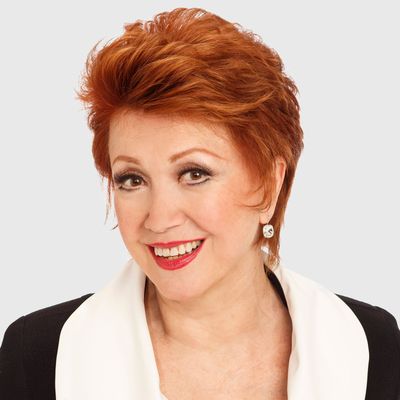
On this week’s show Jennifer, Jamie and Rob sit down with legendary dancer, singer, actor, choreographer, and all around show stopper, Tony Award winner Donna McKechnie... Read More
From the show: The Fabulous Invalid
Guests
Featured Shows

About
On this week’s show Jennifer, Jamie and Rob sit down with legendary dancer, singer, actor, choreographer, and all around show stopper, Tony Award winner Donna McKechnie. The group discusses Donna’s amazing career, from “How to Succeed” to Paper Mill’s “Follies”, including the creation of her signature numbers: “Turkey Lurkey Time”, “Tick Tock”, and “The Music and the Mirror”. Finally, Rob gives us a bit more background on the television variety show “Hullabaloo”, where Donna first met Michael Bennett.
This week’s music: “I Want It All”, from “Baby”, “Turkey Lurkey Time”, from "Promises, Promises”, “Montage, Part 1 - Hello Twelve, Hello Thirteen, Hello Love”, “The Music and the Mirror”, “One”, and “One, reprise” all from “A Chorus Line”. And “Losing My Mind” from “Follies”.
Find us on Twitter & Instagram: @fabulousinvalid
Facebook: www.facebook.com/fabulousinvalid
Rob’s reviews: www.stageleft.nyc
Email us at: info@fabulousinvalid.com
Jamie Du Mont
Twitter: @jamiedumont
Instagram: @troutinnyc
Rob Russo
Twitter/Instagram: @StageLeft_NYC
Jennifer Simard
Twitter: @SimardJennifer
Instagram: @thejennifersimard
Transcript
This transcript was automatically generated and might contain errors.
[0:00] Donna McKechnie: I'm Donna McKechnie and this is the Fabulous Invalid.
[0:23] Jamie DuMont: Welcome to the Fabulous Invalid, a Broadway-centric podcast where we take a 360-degree view of the theater through interviews with actors, writers, directors, designers, and everybody in between.
[0:33] Rob Russo: I'm Jamie DuMont, recovering marketing associate, personal chef, and event planner.
[0:36] Jennifer Simard: I'm Rob Russo, writer and theater critic with StageLeft at NYC.
[0:40] Jamie DuMont: I'm Jennifer Simard, currently performing in Mean Girls on Broadway.
[0:44] All: Hi.
[0:45] Jennifer Simard: Hi.
[0:46] Jamie DuMont: Here we are.
[0:46] Rob Russo: Yay!
[0:48] Jamie DuMont: Invalid time.
[0:49] Rob Russo: Yes.
[0:49] Jennifer Simard: Yeah, that doesn't sound good.
[0:51] Jamie DuMont: By the way, can we just talk about what my accent did?
[0:54] Rob Russo: I just say Broadway.
[0:55] Jamie DuMont: Broadway's a little bit Broadway.
[0:58] Rob Russo: On Broadway.
[0:59] Jamie DuMont: Sometimes I say Broadway.
[1:00] Rob Russo: Right?
[1:01] All: Right.
[1:01] Jamie DuMont: Well, that's like my trademark.
[1:03] Rob Russo: Yeah.
[1:04] Jamie DuMont: Broadway.
[1:05] Rob Russo: You know, you make that emphasis on multiple things.
[1:08] Jamie DuMont: Yeah, that's a Rousseau special.
[1:10] Rob Russo: I'll say it's a part of my little jazz hand moment.
[1:13] Jamie DuMont: Yeah, well you can't see Rob's jazz hand, but maybe we'll take a photo.
[1:16] Rob Russo: I'm gonna Instagram that. Well, today we have an incredible guest joining us.
[1:22] Jennifer Simard: That we do.
[1:23] Jamie DuMont: Donna McKechnie.
[1:24] Rob Russo: Oh my god.
[1:24] Jennifer Simard: I mean you guys.
[1:26] Jamie DuMont: Yeah, I can't even believe it.
[1:27] Rob Russo: I'm a little nervous.
[1:28] Jennifer Simard: I'm I can't even, it's not even real to me that it's happening yet, because if I let it be real, then I will probably faint.
[1:36] Rob Russo: Oh, it's really, I'm not nervous because she's just so lovely.
[1:39] Jennifer Simard: Yeah.
[1:39] Rob Russo: Every time I've—You've worked with her before.
[1:42] Jennifer Simard: No, I've met, I've had the privilege of meeting her, and she's just, she has this warmth, I think that's just, that enters the room first.
[1:50] Jamie DuMont: You know, so she's Donna McKechnie.
[1:52] Rob Russo: I know.
[1:53] Jamie DuMont: Lest we forget. As we were preparing, and we, you know, I was doing my research, I kept being reminded of the things that she had done.
[1:59] Rob Russo: I mean, starting with How to Succeed in Business, like wow, what a career.
[2:03] Jamie DuMont: Everything. You know, I put this on social media a little while ago when we were first talking about having her come on.
[2:10] Rob Russo: I was watching "Music in the Mirror" and I wept.
[2:13] Jamie DuMont: I truly wept at the magic that was created on that stage.
[2:20] Rob Russo: And I of course I put that on social media thinking, you know, I'm such a fool.
[2:24] Jamie DuMont: Turns out I'm not alone.
[2:27] Rob Russo: Turns out it's a very common thing to weep at A Chorus Line.
[2:31] Jamie DuMont: So there's a whole legion of us out there.
[2:35] Rob Russo: Amazing. Well, should we get to it?
[2:37] Jamie DuMont: Let's get to it. Today we are thrilled to be joined by legendary dancer, singer, actor, choreographer, and all-around showstopper, Donna McKechnie.
[2:52] Jamie DuMont: Donna's first Broadway show was the original production of How to Succeed in Business Without Really Trying.
[2:58] Rob Russo: Of course, she went on to create roles in Promises, Promises, Company, and State Fair, winning a Tony Award for her iconic portrayal of Cassie in A Chorus Line, and being immortalized in the lyrics to "I Want It All" from the musical Baby.
[3:11] Jamie DuMont: Welcome to the Fabulous Invalid, Donna.
[3:13] Donna McKechnie: Hi.
[3:14] Donna McKechnie: Thank you. I'm happy to be here.
[3:15] Jamie DuMont: Did you know you were a lyric in a sort of?
[3:17] Donna McKechnie: I forgot about that, actually.
[3:20] Donna McKechnie: I forgot about that, but it's a high compliment.
[3:23] Rob Russo: It certainly is. You're one of the three Donna, right?
[3:25] Donna McKechnie: That's nice.
[3:26] Donna McKechnie: Yeah. I was on the road touring and somebody sent that to me, and I thought it was just a great high compliment.
[3:32] Rob Russo: So they didn't ask your permission, did they?
[3:33] Donna McKechnie: No.
[3:34] Donna McKechnie: No, I guess I'm public now.
[3:37] Donna McKechnie: After 50 years, it's like you're public.
[3:39] Rob Russo: Oh, that's funny.
[3:40] Donna McKechnie: Public domain, right?
[3:42] Donna McKechnie: I want to know that I can find inside me anyone I need.
[3:45] Donna McKechnie: I want to be Donna McKechnie out of sung on a real backward towards your first show, which was How to Succeed in Business.
[4:02] Jamie DuMont: Your choreographer on that was Bob Fosse, and I'm told.
[4:06] Donna McKechnie: Originally it was Hugh Lambert.
[4:07] Donna McKechnie: Oh, it was Hugh Lambert. But you know, as the broad the tale goes, I mean, he, it was short-lived, and we loved him because he picked us, but then Bob Fosse was hired, and Gwen Verdon, who was between jobs, obviously, you know, was a great star. She was our dance captain.
[4:22] Donna McKechnie: Fosse was so generous with Hugh, he said he would do it without pre-production if Hugh wasn't fired, if he was kept as choreographer. So at least he had the one credit for the pirate dance, which was kind of incredible. So that was that. And Fosse and Gwen, you know, Bob and Gwen just came in every day and worked at night, jumping up and down on their bed and, you know, re-choreographing it.
[4:49] Rob Russo: I love that they jumped up and down on their own.
[4:51] Donna McKechnie: Well, that's what she said. She told me that. I don't know what they were doing.
[4:59] Rob Russo: Do you have a favorite story from working with them or a recollection of that time on that show?
[5:04] Donna McKechnie: Um, I don't know if it's a favorite story. I, the whole experience to me, being my first show, and I, you know, I came to New York in kind of desperate flight out of Detroit. You know, and I wrote about it, and that's another story about the running away to become a ballet dancer and showing my parents that I could survive because they weren't gonna, they wanted me to come back home, right? So I had to get a job, so I was one of those initially a ballet snob. Do you know what that is? The musical theater, it was all fear, but you know, musical theater, I shouldn't do that. It's not good for my ballet, you know. But of course I was desperate to have a job, so I auditioned and actually I didn't audition.
Cy Fyre hired me to do an industrial. And then on the steps in the back of a theater, the Lunt-Fontanne, he said, "Would you like to do a Broadway show? We're gonna do a show soon. Would you like to be in it?" And I went, "Oh sure." And I thought this is how you get a Broadway show. A producer, you know, soon learned that wasn't the case. But um, so that was my story about Cy, you know. I when I got into rehearsals, and when you have never done anything like this before, I was so stunned by the what it turns out to be every everyone in show business favorite, you know, being in the room with a collaboration of these great people, Frank Loesser, Abe Burrows, and Frank. I always say this, you know, was my first acting and singing coach because he always said, "Do the gesture first, honey, and then sing the note."
I don't know why that is, but um, so I was just in heaven with all these great people, and that's when they had a chorus of singers and dancers. So you had what, sixteen? Yes, over sixteen, eighteen people in the room in the world. So the dancers dancing. It was a chorus. Right. It was you had dancing boys, dancing girls, singing boys, singing girls. And you learned everything pre-tape recorder and hot rollers. What can I tell you? It's like middle ages. And you had to learn. But there's something of real value that we had that we don't have now, which I miss. And I understand it, but I still miss it, is the time, the luxury of being together in a group and learning the music, harmonies and everything together.
So you're not rehearsing in your bedroom, you know, trying to make up for the next day. You're, you know, so we learned the show in the same room. And yeah, and when you rehearsed, you know, you did it more than once when you went through something, you know, five, six times. All the good directors on Broadway would probably like to be able to have that time, but it's a constraint, you know, and Marcia Milgram Dodge is just a wonderful director as well. And she just directed me and Andrea McArdle in a show that we're doing, and we talked about that, and she said, "I have to choreograph or if I'm directing, I have to do all my work, you know, really and fast and furious. There's just no time."
And you know, I was a lucky girl to be able to work with him initially in my first show, and then you know, meet and work with Michael Bennett and have all that wonderful, you know, experience collaborating with all of you know those his camp and I say camp because I never named it that way, but it was like, you know, are you a Fosse dancer? You have Bennett dancer. I go, they um, you know, we're everything. Yes. But I was a lucky girl to be able to go back twenty-five years later and work with them again, you know. So that was a full circle.
[8:59] Rob Russo: Well, you just mentioned Michael Bennett just now. I believe you first met him on the TV show Hullabaloo.
[9:06] Donna McKechnie: Yeah.
[9:07] Donna McKechnie: In the 60s.
[9:08] Rob Russo: Yeah.
[9:08] Donna McKechnie: Um, people have described you as being his muse.
[9:08] Rob Russo: Oh dear.
[9:12] Donna McKechnie: Please don't garage booze.
[9:16] Rob Russo: Some of it's on YouTube, right?
[9:19] Donna McKechnie: Thank God for YouTube, I think.
[9:22] Rob Russo: Well, people over the years have described you as being his muse. Um, and he had referred to you himself as being his favorite instrument.
[9:30] Donna McKechnie: Oh, okay. I'll take that. How do you react to these characterizations?
[9:35] Donna McKechnie: Um, I don't know. I, that's I guess that's a really great compliment, especially if he says it. Um, what I've evaluated in a way of, you know, the great thing, uh, the great gift he gave me and all of us in A Chorus Line, you know, the collaborative, the sense of collaboration. And when we, you know, the truth is we were very similar in our dancing, and so when he had an idea or something he wanted to express, um, you know, in choreography, I felt very comfortable doing it, and he I guess appreciated that because our training was, you know, similar and our style was very similar. And of course, uh we, it's like finishing someone's sentence, and uh it's a great feeling. I'm very spoiled by the way he treated me.
And when I worked with Ron Field, who was another great choreographer, he didn't work that way. So I kept, you know, getting in his way because I, he started choreographing something, and I would kind of, you know, follow and add to it, and you'd say, "What are you doing?" you know, when so I learned that quickly that, you know, let him do what he needs to do, and then everybody works in a different way. But Michael was very generous.
[10:51] Rob Russo: You just said the word collaborative. We "TikTok" from Company was a number that was built specifically for you, correct?
[10:59] Donna McKechnie: It was, it was designed and choreographed around your specific talents. Was that a collaborative effort as well with Michael?
[11:09] Donna McKechnie: It always was, yeah.
[11:11] Donna McKechnie: Yeah. It was yes. I'm stopping a little because another thing that I learned from Michael is that if it doesn't work, I mean, he will follow something through to make it work. And if it doesn't work, you know, he won't give up on it.
[11:44] Donna McKechnie: That was the same with Promises as well, and a Chorus Line. And then you find what the need is, what we have, what's going wrong? You have it's almost like you have to try everything before you find the right combination of or the elements that you're what what are you doing? Was that true for Turkey Lurkey Time, which is one of the greatest? Like, did you know it was gonna be a sensation or did it was a slow burn? You know that what I loved about it is that I love, I love dancing so much. But there were years ago when I was trying to be, you know, when people would put you in a little category, and I wanted to act, get acting jobs, and I wanted to be a singer, I was studying all these things, and when I got Promises, it was my first job to get as an actress and a singer.
I wasn't dancing in the show. So anyway, the first version of Turkey Lurkey was, well, I call it the audience reaction was springtime for Hitler. Because it was god awful. Because but the thing that's beautiful about it when you look back and after the success of it was that Michael was trying so hard to be truthful in his representation, you know. So he, the three secretaries that weren't dancers, Miss Belansky of accounts receivable, Miss Wong of Mimeograph, and Miss Delahoya, Patty K. He said, Well, you're in your, this is as if you are in your living room and you're making this up on your own. It's your choreography. So this is what we'll do. We'll push the desk together. We had the dancers pushed the desk together.
We got up, climbed up, first night opening night in Boston, and we did, and we have these stupid costumes that we made, supposedly. Okay. Very realistic. And the audience went, what is going on? And Michael was in the back of the theater, in the super theater, I think, and he was running, and everybody was like melting. Oh god. The end of the first act. It's turkey lurky in time. Tom Turkey ran away, but he just came home. It's turkey lurky in time. He's really home to stay never one to grow. And a single wish, and they all are just come too. And he said, I can fix it. I can fix it. And I love that image of him running back and forth saying, I can fix it. And that's kind of like what he did with a lot of his work, you know, because he was really reaching out, stepping out to try to do something different.
[14:55] Donna McKechnie: Well, then the number became a showstopping first act finale because he realized that it needed that thrilling, it's a musical. It has to be a bum. And it needed as a background for Jerry Orbach's, you know, very bittersweet scene. Now tell me about your neck though. Is there a lot of chiropractic? I had the right. Oh my god. Yeah. I don't go to chiropractors anymore. I've had too many adjustments in my neck and oh my gosh. It's still there. Yeah. Oh my gosh. Amazing. Well, jumping forward a couple of years in the timeline. You were there for the famous sessions in January and February 1974, when Michael got a whole bunch of dancers together to talk about their lives and their experiences. Yes.
Do you remember those nights? Oh yeah. And was there at the time any sense that Michael had that this was, you know, geared towards becoming a musical, or was it just an experiment? I think it was a big experiment, but I think he was definitely determined to make it something important artistically, and I think he had musical in mind. I mean, he made the statement because he didn't know. He said, I don't know if this is gonna be a book, a movie, whatever. You know, I think, but I didn't I really felt that he wanted it to be because I had been privy to efforts he made to create a musical about dancers before, and he was talking about using the idea of the Robin set for Afternoon of a Fawn, something that a setting that could be an empty stage, and dancers could walk in, and without any dialogue, you could hear, you could see rather the relationships, and that was a beginning of something.
And so I knew that he had something in mind, so yeah. Wow. But nobody could have known, even Michael at that point. The direction, even after the workshop, it was awful. Not until they got focused. But by awful, I mean the result at that point. It was still kind of experimental, but elements of it were just brilliant, and that's what Joe Papp saw and championed it. Because he saw the essentially what it was, and he had great feeling about it, and so that's it just kept growing, yeah.
[18:19] Donna McKechnie: Luckily, that original cast is so iconic, not just because you know you all created the roles, but you know, that image of the line, right, is just seared into everyone's you know, idea of what Broadway is and what a Chorus Line was. Yeah, can you imagine auditioning for those people? Right. With your own dialogue that you said at the session, you're reading your life and you're going, I don't know. And some people didn't get their part. Right. Well, that was gonna be my question, actually, is yeah, some people didn't get it. It's their life. So, but they did a tour or a national company later at some point. So everybody eventually got to play their life. Like Mitzi Hamilton, yeah. So there were auditions though for the ones that got up to the public.
That is a lot of therapy right there, right? Like how like I'm not good enough for my own life. What do you mean? Like that's strange. You audition for your own life and you don't get it. Rejected. I know ultimate rejection. Wow, that's fascinating. When am I gonna grow tits? Secret. My whole life was a secret. Goodbye, sir. Goodbye, 13. Hello. Robert Goulet, Robert Goulet, my God, Robert Goulet! Whoa! Doctor with double M. Laddah! I'll show you mine! You show me yours! Time to grow! Time to go! Pride! Mom and Dad were doing it. What do you remember about that first performance at the Newman? I, you know, I remember that it was relief and thrilling, and it was just because we were, I called us the Hot House Tomatoes, because we were so insular in our work.
You know, it was like, and you just don't, you're just so, you know, at that point, and this is longer than any Broadway show I rehearsed for. This is going weeks and weeks and weeks, and we took a break and we came back and did weeks and weeks and weeks. So we were ready to open and or preview, and it was, I don't remember being elated or excited. I think I was, and I think the fact that there was acceptance, but then we had a hard road going through previews because things, changes were being made, and once they almost booed me off the stage because I came in like Betty Bacall, like I wasn't a part of the group, and waving a $10 bill saying anybody got change for a 10? You know, that was your entrance?
Yeah. Wow. I said, Michael, you are killing me. You're giving me, you're trying to make me like give me an entrance, and it's they hate me. It's like Charles Nelson Reilly. Remember him? Of course. Uh yeah, he was my, he was in How to Succeed. And I had an image of at that point in time of Charles coming off stage after playing Frump, you know, and he would part of his character, but he felt it, he would go, They hate me, they hate me, and I would be standing in the wings, you know. I kind of felt like that coming off in the beginning of a Chorus Line. Yeah. Wow. But you know, you learn if you're allowed to make mistakes, you learn. And then if you're smart and brilliant like Michael was, you know how to fix it.
[21:39] Donna McKechnie: Right, because Cassie famously didn't get the job originally, correct? Yeah. And that was another thing that was pointed out in the world. Because again, he was trying to be to honor what he thought would be the truth of the situation. Right. He was brave enough to say that I wouldn't hire her. And a situation in his life actually happened like that, and he shared it with all of us the first night, or one of the nights, um, that this happened, where he um, a young dancer, well, she wasn't that young. She had already been in a, you know, a start in a movie. She came back to New York and when he was choreographing the Millikan show and she wanted she needed a job and he looked at her and he said, I'm sorry, I can't I can't hire you.
You're overqualified. And she said, What? I need a job. And he said, I just can't have you in the room every day, 'cause I look at you and I will see failure. Wow. And he shared that with us, and I went, Wow, that's how ambitious he was. But he was able to bring that feeling, that truth into the story, which I thought was really really really brave. And so that he followed through on that, and then Marsha Mason, of course, was a famous story that goes around that she married to Neil Simon at the time, and he was helping us perk it up a little bit. She followed the through line of Cassie, and she said, Oh no, you you you have to she has to get it because then nobody wins. Zach doesn't win, he doesn't learn anything, and she needs that second chance, and everybody does, you know.
[23:23] Donna McKechnie: Were you happy that that change was made?
[23:25] Donna McKechnie: Oh yes. Listen, if it would have, it was if it and I'm I mean this, if it would have worked for the show better the other way, I'm I'm you know, it's fine. That's that's what you do. You do what's right for the show. But when uh Marcia saw it, when when Cassie didn't get it, that means that he was stuck in his unresolved conflict.
[23:53] Donna McKechnie: And then the audience, whether they could analyze that or not, they were so depressed, they just walked out of the theater, you know, and it was a very strong feeling that everyone felt. So and clearly that affects the the finale, right? That that affects one. If you affects everything, yeah, and then right. So it's uh it's a complicated thing. You want a happy that's why that it's a beautiful human experience. You want a happy ending, but there's you know, because Joyce Van Patton, who's a wonderful actress, was a friend, she saw it early on, and and she said, you know, I was so excited to see the finale, it was so beautiful. And then she goes, is that all there is? Is that it? Is that what they're doing this for? Yes.
[24:59] Donna McKechnie: It was just a great, a great time, you know, just a great, great time. And then to it progressively got even better because everybody was then fraught with is it gonna move? Because sometimes when you move these beautiful pieces in a bigger venue, it doesn't work. Right? And so uh it moved brilliantly. I mean, it was just you know, so it just kept getting better better. And now I'll just bring you back to the mall. I'm excited because it it's still going. I have a you know, a new podcast show, and I had uh for my first show was uh Kelly Bishop, Bayorkley, and Priscilla Lopez. And it's it was so funny because we were talking about how nobody really knew, you know. Um, but as it went on, and and now Bayork, who has single-handedly, you know, taken chorus line around the world about four or five times.
[26:00] Donna McKechnie: Um, I got excited. I'm gonna fly over because Antonio Banderas, okay. Yes, yeah. He's playing Zach in Spanish, and he's he's yes, and it's October, the end of October. He has built, he has contributed to uh build a theater in his um uh birth town of Malaga, Spain, and it's just being finished, and a chorus line will be the first musical, the first production in the theater, and Bayerck's already over there, has been over there uh auditioning and uh choreographing and Louis Villabon, who was her assistant, and yeah, so and I'm gonna go see it. But look at all these years. It's it's still going strong.
[26:47] Rob Russo: Yeah, it's a big full circle moment. When does this production open?
[26:50] Donna McKechnie: Uh I think October 25th.
[26:53] Rob Russo: Wow, that's fantastic. Well, I saw it at City Center last year they did it for the gallery.
[26:57] Donna McKechnie: Yes, yes, and it was like it was a brand new show. I mean, the audience reaction to it.
[27:01] Rob Russo: Yes, you yeah, you were nuts for it. I remember you loved it.
[27:03] Donna McKechnie: Oh, wonderful, wonderful. Were you able to catch that?
[27:07] Rob Russo: Oh, yes.
[27:07] Donna McKechnie: Oh my god, it was great. Well, I'm curious to know. Um, jumping forward again a little bit. Um, in September 1983, McCorusign famously became the longest running show in Broadway history. And Michael produced that Gala performance with you know uh all sorts of uh folks popping up uh throughout the night, and you danced the music in the mirror again with eight other Cassies or something.
[27:33] Donna McKechnie: Yes, he had a he brought companies from all over um to participate, and we had you know the white tent covered all of Schubert Alley, the booth theater was all the dressing rooms, people dressed on the stage. Uh, you know, it was coordinated really well. Um they built steel um things in the in the basement, you know, uh poles to hold a stage up because at one point in the finale there were over four hundred people on stage doing, you know, hat up, no hat, no hat, hat, no hat, the legs and everything.
[28:07] Donna McKechnie: And then the audience went nuts when all of a sudden dancers emerged from and came down the aisles and were following us and up in the balcony and it was just um uh incredible it was just a great I haven't seen anything before or since like that it was just a wonderful wonderful thing. He knew how to put on a show yes he did one side give me your attention to I really have to mention you were part of the legendary paper mill production of Follies in 1998.
[29:02] Rob Russo: Yes and um I would I hope uh you don't mind me reading you what um Times critic Ben Brantley said about you. He said Miss McKechney is beyond fault. The sweet embattled over-eagerness that has characterized her performances since her Tony winning role in a chorus line has never been so appropriately or affectingly used, nor has her voice, which marvelously plums the torchy despair of the ballad, losing my mind, ever seemed richer or more controlled. End quote. And um you've said that Stephen Sondheim knew you as a singer first.
[29:34] Donna McKechnie: That's right. So was playing Sally a nice homecoming of sorts working on this song?
[29:38] Donna McKechnie: Oh I mean it was it it it was one of the greatest you know when you look back when you've been in show business for a long time. You you look back and there are just a few highlights, you know, and that certainly is one of them. Um yeah, my first audition as a singer was for Sondheim and George Abbott for a funny thing happened on the way to the forum for the national company.
[30:02] Donna McKechnie: Yeah. And when I auditioned for that show uh at the paper mill, um, I never thought in a million years that they would see me as Sally. And I defeated myself when I went in because I was auditioning for Phyllis. But and I got and you know, and they were gonna hire me as Phyllis because I just done it uh for the BBC at the Drury Lane, you know, as a recording. And so I felt very confident at that audition. I Phyllis, okay, great. And then Sondheim said, no, she's she's Sally, she's not Phyllis.
[30:40] Donna McKechnie: And to hear that, that he said that, I just burst into tears because it's like I thought he saw me, and I wouldn't even let myself, I you know, that was my heart's desire, and I couldn't even give it to myself.
[31:03] ♪ Musical number: "Losing My Mind" — performed by Donna McKechnie ♪
[33:37] Donna McKechnie: But truly, outside of the original cast of Follies, I don't think you will ever find a better, more suited cast than the Paper Mill Playhouse cast. And that that cast was exceptional.
[33:47] Rob Russo: Well, it's a group, yes, yeah.
[33:49] Donna McKechnie: I mean, because they're individual, you know, it's like it it that it's I've seen some wonderful performances in that show, you know, from different people and different productions. But as a whole, that was yeah, that was a great it was a glorious, glorious. I stood in the back of the theater that night because it was sold out, you couldn't get a ticket towards the end of the run. So I very fortunate.
[34:10] Donna McKechnie: And we got the recording. Yes.
[34:33] Donna McKechnie: I mean, she did people loved her, and we had a theater, we had a producer, we had the money, and we couldn't move because of some glitch. And so it was dead, except for the recording. And I think it just broke her heart, you know. She wanted to come in to Broadway. She knew that this, oh yeah. Yeah. This she knew that this would be her last show, and she wanted to go out in that great way, you know.
[34:58] Rob Russo: Of course.
[34:59] Donna McKechnie: Anyway, showbiz.
[35:00] Donna McKechnie: Uh speaking of showbiz.
[35:04] Donna McKechnie: Yes, we are.
[35:05] Rob Russo: That's right.
[35:06] Rob Russo: Um, I believe it was in 1980. Um, you were diagnosed with arthritis and told that you would never dance again.
[35:13] Donna McKechnie: Oh, that's a big musical number, right there.
[35:16] Rob Russo: Right. Which calls to mind almost, you know, Zach's question in A Chorus Line. What do you do when you can't dance anymore?
[35:22] Donna McKechnie: Um, I didn't see that coming at that point in time, I'll tell you.
[35:26] Rob Russo: Right. Well, what's amazing is that you did dance again.
[35:29] Donna McKechnie: Yes.
[35:30] Rob Russo: Right. And very famously came back to A Chorus Line in 1986.
[35:34] Donna McKechnie: That's right. Um, that's when I, yeah, pardon me.
[35:37] Rob Russo: It's no easy feat, you know, doing that number.
[35:40] Donna McKechnie: In no.
[35:42] Rob Russo: I'm wondering what was it like, especially having been in that original company, and you know, it was so iconic and such a sensation, to come back almost more than a decade later.
[35:51] Donna McKechnie: It was scary for me because it would have been hard in any circumstance, but because I had been unable to not just dance, but not even move, not walk, you know, and to take myself through that journey and come out the other side of it, and then Bayork, who was my angel on earth, you know, called me in in LA where I was living and said, you know, I have this tour going out and I would love for you to do it. And um, and I said, I haven't, I can't, I haven't danced in so long. I was recovering and I was back to, you know, class, but I just thought that's it. And she said, Uh, I really want you to do it. And I said, Well, I don't know if I can do it. And she goes, You have three months. She was like Bayork, you know.
And I went, okay. So she gave me the challenge and I dove in, and so it would have been hard anyway, you know, because ten years later, but the things that you don't know that are positive were just so many. Uh, one that I gave you that show had been running for so long. So to go back to the same theater, the same production, except the same costume, but different one, um, with a different cast, I gave them an opening night. In other words, my opening, they would had been doing it I don't know how long. They would just move them in, move them out. So they had a proper opening for the New York Times, and that was great. And uh, it was a happy because the show had been established, and it was a uh, a happy, happy time.
The first time out, because we're doing that painful creating part and and hits and misses, it was not always comfortable. There was a lot of strife in and out, you know. So this was one of those great chances. How many chances do we get really to go back and to do something again? As a woman, um, the positive thing was the fear started subsiding when I realized that I was a much more complete human being at that point. I was able to detach myself without trying to and leave the part in the dressing room and go have dinner with friends and have it and have a great time, you know, enjoy my life. I had done enough work on myself, in other words, and also physically, because I was more whole and more relaxed, my dancing was better.
It was less uh frantic, it had more strength in some ways, and stamina. Okay, you don't kick as high, you don't jump as high, you don't do, you know, uh turn as many times, but you gain something else, and the acting and singing was so much better. So I love that.
[38:36] Rob Russo: Yeah, I was reading the um oral history of A Chorus Line, the Longest Line Book, and there's a section about your return, and you know, every cast member that they talked to about it just raves about how it injected such an energy into the show and how what a lift it was for a show that had been running for...
[38:53] Donna McKechnie: Yeah, it was real. I was very grateful to be have that chance, you know. A chance to dance.
[38:58] Rob Russo: That's right, chance to dance.
[39:13] Donna McKechnie: Give me a chance to come through. All I ever needed was the music and the mirror and the chance to die.
[39:40] Rob Russo: You had brought up your that you're hosting your own podcast, and I was wondering uh on the Broadway Podcast Network soon.
[39:47] Donna McKechnie: That's right. Um, what can you tell us about it?
[39:49] Donna McKechnie: Well, it's called The Ladies Who Lunge, as of course excellent time. We would know that that's an homage to our musical theater and Sondheim. Um, and uh, and it's really kind of finding itself, but what I what I wanted it to be is to be at um not retro, but like bring some of the good old days, the older wor and and the and being modern women. So I wanted to do it for at this point in time, women who have had longevity in their career and have something to say and are still going strong. In other words, they're still working. Nobody has given. It might be the same for men too, but I'm I'm a woman, so I'm speaking from that point of view. And I know in the in our popular culture of this country, you know, women, there's no playbook for how you negotiate your career after 55, 60.
There's less work. You have to initiate, you have to redesign, you have to rethink, or you go from acting into directing or so it's it's in I'm inviting women who have longevity and and are who do many things, uh not just actors but um writers, directors, anybody in show business. And we it's at Sardis, filmed at Sardis, like reminds me of those old days at El Morocco and the Stork Club when they would, you know, Sherman Billingslee. And I went, I've got to get a little of that flavor because after all, Sardi's is the heart of the theater district, and um everybody goes there, or so many celebrations have happened there, and and so many of friends, old friends are on the wall, and uh it's just a reminiscent, it's very nice.
I know the first show I did, I had all these questions that and of course I said first question, asked them the first question, and they just went off. I went, Oh my god, women. It's a thing, it happens. The more you prepare, the less you actually use. But it's good.
[41:54] Rob Russo: And when does it start when does it when does it launch?
[41:56] Donna McKechnie: I think in September sometime. And it's and we should also point out that it's filmed and it's audible. So that'll be able to watch it and or listen to it depending on how you want to. And Matthew Sklar, one of my favorite composers, uh, did our little theme music.
[42:12] Rob Russo: Oh, that's great.
[42:13] Donna McKechnie: Oh my god, it's so adorable.
[42:14] Rob Russo: Well, we look forward to it.
[42:15] Donna McKechnie: I can't wait to subscribe. Thank you for mentioning it. I can't wait.
[42:18] Rob Russo: Well, we have one final question that we ask everyone, and that question is what was that thing that made you want to become an actor, become a dancer? Was there a moment?
[42:28] Donna McKechnie: Um, I just remember the stories in A Chorus Line through another character, but I just uh I think it's when I first heard classical music, or I heard any music, you know, Helen O'Connell singing, you know, the war songs on radio, and I would just get up and start dancing, just a little baby, you know, like two, three years old. And I just started moving to the music. And uh when I first went to my first little ballet class um with folding chairs that you know is the bar, and there was a screechy old record, you know, 78 of uh Chopin, and I heard that, and it was just that changed my life, I think. So I'm glad it did, because it changed all of our lives. Thank you.
[43:16] Rob Russo: Thank you so much for this. It was great fun.
[43:18] Donna McKechnie: Thank you for coming down. You're a wonderful guest. We're so honored to have you.
[43:22] Donna McKechnie: Oh, it's my pleasure.
[43:38] Rob Russo: Rob here with you may be wondering. During our conversation with Donna, I mentioned that she first met Michael Bennett while working on Hullabaloo. You may be wondering, just what is Hullabaloo? I know I certainly did the first time I heard about it. Well, taking a step back in time to the 1950s and 1960s, you have to remember that variety shows and programs based around live performance were all the rage. Hullabaloo was a big budget TV series that ran on NBC for two seasons from 1965 to 1966. A variety show running in prime time. It was NBC's answer to the popular ABC show American Bandstand, hosted by Dick Clark, which no doubt you've heard of. Directed by Steve Bender, Hullabaloo was billed as a fast-paced song, dance, and comedy variety hour, showcasing young talent from Hollywood, Broadway, television, nightclubs, and recordings, and featuring a rotating celebrity host like Sammy Davis Jr., Frankie Avalon, or Liza Minnelli, who would perform a few of their own standards, then introduce a guest act like James Brown, The Supremes, or The Rolling Stones, a hit parade of the top 40 songs.
Typical of such musical variety shows of the time, Hullabaloo had its own team of in-house dancers, four men and four women known as the Hullabaloo dancers, who performed on the show on a regular basis to choreography by David Winters, doing popular dances like The Jerk and the Monkey behind the guest act. Since the show filmed in New York, it's only natural that those dancers would be sourced from Broadway. And so it is that Donna McKechnie and Michael Bennett found themselves cast on Hullabaloo. After meeting, while doing The Jerk, Donna asked Michael what he wanted to be when he grew up, and he quickly shot back a choreographer. Little did they know then that they were sowing the seeds for making musical theater history together.
Not much video remains of the 48 episodes of Hullabaloo, but fortunately, the legacy of Donna McKechnie and Michael Bennett echoes forth to the present, a collaboration first forged in NBC's famed studio 8H.
[45:33] Jennifer Simard: I mean, I can read it if you're happy to read it.
[45:36] Rob Russo: If you're done working.
[45:37] Donna McKechnie: No.
[45:38] Rob Russo: Wow.
[45:40] Rob Russo: Some shade in the pink room.
[45:42] Jennifer Simard: Shady lady.
[45:43] Rob Russo: Shade in the pink room.
[45:44] Jennifer Simard: Okay.
[45:45] Jennifer Simard: That's our show. Thanks for listening. You can hear us anytime on iTunes. The Fabulous Invalid is a production of Owen M, etcetera, and the Fabulous Invalid LLC, and a proud member of the Broadway Podcast Network. Our theme music is by Lucky Chops. Today's episode was edited and engineered by Aaron Kaufman. Find us online at thefabulousinvalid.com and on social media at Fabulous Invalid and on iTunes, Spotify, and wherever you find your podcasts. And be sure to tune in next Wednesday.
© Broadway Podcast Network, All Rights Reserved