

On this week’s show, Jamie and Rob bring you an interview with the extraordinary choreographer Camille A... Read More
From the show: The Fabulous Invalid
Guests
About
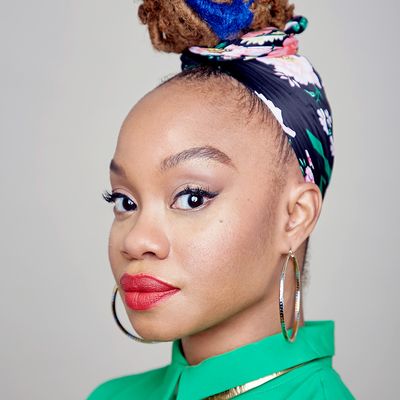
On this week’s show, Jamie and Rob bring you an interview with the extraordinary choreographer Camille A. Brown, who in the last year alone worked on the Metropolitan Opera’s production of “Porgy and Bess”, The Public Theater’s “For Colored Girls Who Have Considered Suicide / When The Rainbow Is Enuf”, and “Toni Stone” for Roundabout, and earned a Tony Award nomination for her work on Manhattan Theatre Club’s “Choir Boy”. Camille speaks candidly about her career, what inspires her, and why representation matters. To close, Rob takes a look at other trailblazing black female choreographers who have worked on Broadway (sadly, the list is short).
The Week’s Music: The "Theme from Fame”, “Mama Will Provide” from “Once on This Island: New Broadway Cast”, “Forget About the Boy” from “Thoroughly Modern Millie”, “I’ve Got A Feeling I’m Falling” from “Ain’t Misbehavin’”, “I’ll Never Say No” from “The Unsinkable Molly Brown: Original Motion Picture Soundtrack”, and “If You Believe”, from “The Wiz”.
DONATE: The Actor’s Fund
Find us on Twitter & Instagram: @fabulousinvalid
Facebook: www.facebook.com/fabulousinvalid
Rob’s reviews: www.stageleft.nyc
Email us at: info@fabulousinvalid.com
Jamie Du Mont
Twitter: @jamiedumont
Instagram: @troutinnyc
Rob Russo
Twitter/Instagram: @StageLeft_NYC
Jennifer Simard
Twitter: @SimardJennifer
Instagram: @thejennifersimard
Transcript
This transcript was automatically generated and might contain errors.
[0:00] Camille A. Brown: I'm Camille A. Brown, and this is The Fabulous Invalid.
[0:16] Jamie DuMont: Welcome to the Fabulous Invalid, Broadway's podcast, where we present essential conversations with a curated roster of the best, most important, and innovative theater makers working today, from actors to writers, directors, designers, and everyone in between.
[0:30] Rob Russo: We took our name from the title of a 1938 play by Kaufman and Hart that has since become a loving nickname for Broadway itself, always deemed on the verge of decline, yet always bouncing back, the fabulous invalid.
[0:42] Jamie DuMont: I'm Theater Savant, Jamie DuMont.
[0:44] Rob Russo: And I'm Rob Russo, writer and theater critic with StageLeft.nyc and host of Stage Left the Podcast, which is currently on a rather unfortunate hiatus because of a little global pandemic you might have heard about.
[0:57] Jamie DuMont: Unfortunate is a very good choice of words.
[1:00] Rob Russo: Yeah, we were having so much fun doing that podcast.
[1:03] Jamie DuMont: I love that podcast, and I look forward to getting back to it.
[1:06] Rob Russo: And who knows, maybe we'll figure out a bonus episode or two while we're all sort of dealing with the current world event.
[1:14] Jamie DuMont: Yeah, yeah.
[1:15] Rob Russo: Well, speaking of, we have an interview that we want to share with you this week that we actually recorded a couple of weeks ago, back before everything was sort of shut down.
[1:25] Jamie DuMont: Yeah, before the world fell apart.
[1:26] Rob Russo: Yeah, seriously.
[1:27] Jamie DuMont: It feels like ages ago.
[1:29] Rob Russo: Um it does, but we really, it was really like three weeks ago where we recorded this interview with the idea that it would come out probably a little closer to something she was going to start work on right after we chatted with her, but that's now been canceled, unfortunately.
[1:47] Rob Russo: That's right.
[1:47] Jamie DuMont: Yes, so we sat down and talked with Camille A. Brown, the incredible choreographer who has worked seemingly across every conceivable medium at this point in her career, and she's still young.
[1:57] Rob Russo: Um she's worked in theater, she has her own dance company, Camille A. Brown and Dancers.
[2:03] Jamie DuMont: She's worked in opera, and she's really done it all.
[2:05] Rob Russo: It's pretty amazing.
[2:07] Jamie DuMont: And she was going to be the choreographer for Thoroughly Modern Millie at City Center Encores, which was another sort of feather in her cap, right?
[2:17] Rob Russo: Another thing she'd never done before.
[2:19] Jamie DuMont: Correct.
[2:19] Rob Russo: Right.
[2:19] Jamie DuMont: Right.
[2:20] Rob Russo: Yeah, yeah, yeah.
[2:21] Jamie DuMont: So you'll hear in this interview, we're going to talk about it. So please, as you listen, keep in mind that we did record this before the pandemic threw a wrench into everybody's spring theater plans.
[2:32] Rob Russo: But before we recorded with Camille, we went to see Porgy and Bess live on HD in the cinemas, which was an experience that was truly magical.
[2:44] Jamie DuMont: Yeah, I have to say I had never done it before.
[2:47] Rob Russo: Uh and the whole reason we went is because if you don't know, Camille did the choreography for it.
[2:52] Jamie DuMont: And I believe it was her first time doing choreography for opera.
[2:55] Rob Russo: And once again, another example of her versatility.
[2:58] Jamie DuMont: And uh Rob and I went to a Met Live screening at the Empire Movie Theater on 42nd Street, and I have to say it was very cool.
[3:07] Rob Russo: I Jamie knows this. I'm not a big fan of seeing live performance on film.
[3:13] Jamie DuMont: It always just sort of irks me because I like being the director of photography when I'm sitting in a seat experiencing a piece of live performance.
[3:22] Rob Russo: But I have to say, this was incredibly well done, like major tip of the hat to whoever produces this series for the Met.
[3:30] Jamie DuMont: Well, the other thing that's so great about seeing the Metropolitan Opera on the big screen is that you get to see a level of detail that you wouldn't see even in great seats.
[3:41] Rob Russo: I've sat in great seats, I've sat in nosebleed seats.
[3:45] Jamie DuMont: And no matter where you're sitting, the picture is always, I mean, there's nothing compares to sitting in the Metropolitan Opera wherever you're sitting.
[3:54] Rob Russo: However, this does afford you the ability to see things you wouldn't normally focus on.
[3:59] Jamie DuMont: Absolutely.
[4:00] Rob Russo: And another really cool feature of it that I had no, I had no idea to anticipate is that during the intermissions, they do these little interviews.
[4:08] Jamie DuMont: Um and this one, of course, was hosted by Audra McDonald because she had starred in the Broadway iteration of Porgy and Bess back in 2012.
[4:16] Rob Russo: And um they interview all the actors, they interviewed Camille, they interview um, you know, just a full range of folks who are involved in the production, and it really enriches the experience.
[4:26] Jamie DuMont: I mean, you know, not that Porgy and Bess is something that's terribly inaccessible.
[4:30] Rob Russo: I mean, I think it's you know, it's kind of easy to experience and get into because it is uh it's more of a folk opera, right?
[4:35] Jamie DuMont: But still, even I, you know, as someone who is fairly versed in this world, I felt like I learned a lot and it really enriched the experience hearing from the creatives and the performers in the middle of their performance, so to speak.
[4:49] Rob Russo: And I do believe that the Met is starting to stream their operas for free on their website because they had to cancel the rest of their season.
[4:57] Jamie DuMont: Right.
[5:00] Rob Russo: Well, that we had we had tickets to two other operas that we were gonna see that unfortunately we cannot.
[5:06] Jamie DuMont: However, I don't know if Porgy and Bess is part of that program.
[5:09] Rob Russo: I'm not sure 100% exactly which ones they chose, but I would imagine it'll come out in the world and you can see it.
[5:15] Jamie DuMont: And I would imagine that they'll keep the intermission in basically what we saw is what they're broadcast.
[5:20] Rob Russo: I would hope that's well worth it.
[5:22] Jamie DuMont: Yeah, and you know, in the future, you know, I would totally do it again.
[5:26] Rob Russo: And you know, the cool thing is because it's in movie theaters, it's it's nationwide, and it might even be international.
[5:31] Jamie DuMont: I'm not sure how far the range extends.
[5:33] Rob Russo: But if you ever have an opportunity, it's a really cool way to experience opera if you're unable to get to the Met opera itself.
[5:40] Jamie DuMont: Um, or even if you are, it's a it's a really neat and an affordable way, I should say.
[5:44] Rob Russo: I mean, our tickets were what, $20, $30, something like that.
[5:47] Jamie DuMont: No, they were like $25, something like that.
[5:49] Rob Russo: Yeah, which you know, for an evening at the opera, that's you can't beat that.
[5:52] Jamie DuMont: No, not at all.
[5:54] Rob Russo: Well, I think um, I think it's time we get to our interview with Camille, who is fantastic, and I hope you all enjoy it.
[6:00] Jamie DuMont: Yes, let's do it.
[6:06] Rob Russo: I have to read this because it's so much. You've had quite a year. Toni Stone for Roundabout, Choir Boy with MTC, for which you received your first Tony Award nomination. Much Ado About Nothing at the Delacorte, For Colored Girls at the Public, Porgy and Bess at the Met, and then coming up, you have Thoroughly Modern Millie Encores, and this summer you're choreographing and directing Ain't Misbehavin' at Barrington Stage.
[6:29] Camille A. Brown: Yes.
[6:29] Rob Russo: I mean, you could just retire right now.
[6:32] Jamie DuMont: Did we leave anything out? Did we forget anything that's coming up?
[6:37] Camille A. Brown: When I was two, no, I don't know.
[6:39] Rob Russo: But before we dig into all of that, I think we'd love to know you're a New York native.
[6:45] Camille A. Brown: Yes, you grew up in Jamaica, Queens.
[6:46] Camille A. Brown: Yes.
[6:47] Rob Russo: How did you go from Jamaica, Queens to working non-stop on everything out there?
[6:53] Camille A. Brown: Oh, I don't that's a big question.
[6:55] Rob Russo: Yeah, that's a huge question.
[6:57] Camille A. Brown: I don't know how I got from Queens to uh well I we'll start with my mom. She loves musicals, and she was actually the person that introduced me to theater and everything about it, so it was wonderful to do that.
[7:11] Camille A. Brown: And at the time, this was before social media. At the time, we would go to the library and we would take out some whatever our favorite musicals were and just kind of rewind and run it over and over again. So that's pretty much how I got started with the love of theater.
[7:26] Camille A. Brown: And then just the love of dance and movement came from me trying to find what was the way for me to express myself. And it wasn't necessarily speaking because I have a very small voice, which I got teased for when I was younger. And so it didn't, I it's not that I stopped talking, I just made me very um insecure and very aware.
[7:48] Camille A. Brown: So I always give this example of when we're in school, we're taught class participation adds to your grade. And I never participated because I was so fearful that someone was gonna tease me or would just sound crazy, I would give the wrong answer. So I was rarely ever um confident in speaking from that place.
[8:10] Camille A. Brown: So dance was a way for me to still express myself, but not in a way that was maybe dangerous, and speaking felt dangerous.
[8:20] Rob Russo: So you started dancing as a kid?
[8:22] Camille A. Brown: I did, yes, I did.
[8:24] Rob Russo: And then sorry, that you founded your own company.
[8:27] Camille A. Brown: I did, yes.
[8:28] Rob Russo: Well, well, yes, let's go back just a little bit. So I started in um Queens, New York at Bernie Stranson, and then I went to Carolyn DeVore, which is also in Jamaica, Queens. I went to LaGuardia High School, which is the fame school.
[8:42] Camille A. Brown: I'm gonna live forever.
[8:45] Rob Russo: Yes, yes.
[8:46] Camille A. Brown: I'm gonna live forever.
[8:48] Rob Russo: So there's that.
[8:49] Camille A. Brown: And then um I went to North Carolina School of the Arts where I got my BFA, and I joined uh Evidence, which is a company run by Ron K. Brown, who is the artistic director. So I danced with that company for five seasons.
[9:03] Camille A. Brown: And during that time, I started wanting to explore my own voice and never really wanted a company. I did not want to have a company.
[9:13] Camille A. Brown: And I just literally came from rehearsal now. But when I was company you don't want.
[9:18] Camille A. Brown: Of this company that I never wanted.
[9:21] Camille A. Brown: You want it now.
[9:22] Camille A. Brown: I want it now. We're leaving tomorrow for tour, so I want it now.
[9:25] Camille A. Brown: But um, but at the time, I just felt like looking at Ron and the work that he had to do, because it wasn't just about him choreographing, it was a business as well.
[9:34] Rob Russo: Right.
[9:35] Camille A. Brown: So I said, Oh, you know, I don't know if I have the stamina for that. And then also I would see how powerful, well, his work was powerful to me, but I would also see how people were responding to his work as an audience member. And for me, wanting to choreograph and to actually make people feel something to me was inconceivable.
[9:55] Camille A. Brown: It's like, well, I don't even know if I can get people to feel anything, you know. I mean, as a choreographer. So it was something that I feared. And then when I started choreographing for companies, I realized that I wanted a more uh intimate space and rehearsal atmosphere and relationship with my dancers. So that's why I have a company.
[10:16] Rob Russo: Yeah. Was it a challenge getting the company started?
[10:20] Camille A. Brown: It was, but I have to say, uh Indira Goodwine, who is now the dance director of NIFA, she was my she actually started as a dancer of mine. And she said when she was going to graduate school and after graduate school, she wanted to come back and help me with the company.
[10:36] Camille A. Brown: And I said, okay, yeah, she's gonna do that and get a job and go. But she came back.
[10:40] Rob Russo: Wow.
[10:41] Camille A. Brown: And so she really helped me build this space where I have a home and I have a base. And she was really the person that encouraged me to do theater and to run my company because everybody, when I would tell people the things that I wanted to do, people would say, Oh, that's a lot, you can't do that, people don't do that, you shouldn't do it.
[11:01] Camille A. Brown: Um, and she was really the one that was my advocate and my champion.
[11:06] Rob Russo: So it's always so surprising to me the lines that get drawn in this industry because it's such a you know, it's such a creative industry, and yet sometimes people can be so close-minded about like you're a you're a dance choreographer, you wouldn't work on Broadway, or you wouldn't do opera, or you wouldn't do X, Y, or Z when you know, dance is dance, right?
[11:24] Camille A. Brown: And and how it's a form of expression, right?
[11:26] Rob Russo: And it's used in all these different ways.
[11:29] Camille A. Brown: Yeah.
[11:29] Rob Russo: Um I'm interested, you in your in your bio on your website, um, cite your your background, your musical background as a clarinetist.
[11:36] Camille A. Brown: Yes, don't ask me to take out anything now.
[11:41] Rob Russo: Well, you see you cited as um sort of background for that that has informed your choreography.
[11:46] Camille A. Brown: Yes, I've always been surrounded by music.
[11:49] Camille A. Brown: Yeah, and I actually wanted to play the violin, but uh that I don't think that was one of the choices. And so I went with the clarinet, and I just loved, even though I didn't necessarily love playing the clarinet, I loved music and everything that was connected to it.
[12:07] Rob Russo: And do you find that that or rather, can you expand upon how that that background as a musician or you know, studying it and enjoying it has informed your work as a choreographer?
[12:19] Camille A. Brown: Yeah, I mean, let me just try to articulate it, but just the levels and the space and the arc of music and the idea of listening to it and music actually being a story and driving a story, being a language, having meaning. It's not something that you dance to, you dance with. It's a part of you, it's in support of, but it's also lifting and guiding and surrounding you. So having the opportunity to be inside of music in that way was great. I mean, I wouldn't call myself like a clarinetist or anything.
[12:59] Camille A. Brown: Noted. You know, I have absolutely zero musical skills, so I admire anyone who played an instrument at any time, even if they no longer still have their proficiency. Yeah, but I work with live musicians all the time in my company, and then also working on musical theater. If you have a dance arranger, that's a great time to collaborate. So all of those skills kick in. And then I'm continuing to learn. I mean, communication in terms of business, you don't get well in college, I was conditioned to be a dancer, to dance for someone else. And so you're not really conditioned to have your own company. And what is required of a company is to have communication skills. So you have to learn as you go. And I found that that's really important, especially when you deal with leadership and guiding. Communication is everything.
[13:51] Jamie DuMont: That's really interesting. The notion that the curriculum at the college isn't geared for sending you out in the world to have your own company. It's to send dancers out to work for someone else.
[14:03] Camille A. Brown: That's right.
[14:03] Jamie DuMont: That's an interesting, I wonder why that is.
[14:06] Camille A. Brown: I mean, not everyone has a company, I'm not necessarily I'm not saying you have an answer, but that's just a really it's like you would think it would be the reverse of that. You think they would want to empower all dancers to be independent, but then there would be no dance companies.
[14:18] Jamie DuMont: Right.
[14:18] Camille A. Brown: I mean, I don't know. And then also I think a lot of male choreographers get pushed in and encouraged more than female choreographers do, so there's that as well. So I never really saw myself right out of the gate as oh, I want to do that, because I never or a lot of reflections of myself were not shown to me.
[14:38] Jamie DuMont: Right.
[14:39] Camille A. Brown: I had to find those people. So it's just very interesting.
[14:43] Jamie DuMont: Who are some of those people that you've found, you know, that have inspired you as a choreographer?
[14:49] Camille A. Brown: Well, or as a dancer, absolutely, yes. Marlies Yerby, choreographed Rent and Diane McIntyre. I mean, when I wanted to go into theater, it was very important for me to connect with black women that had also been working in theater too, just to understand it. What is this? You know, this is what I want to do. I have ideas, and so they are to this day continuously have been there and have been really a guiding force for me. So I'm really thankful for them. So you don't have to go in blind, you know. You kind of know, and then having another black female, and two black females that are working in the business that you see, it makes you believe that oh, I could do this too.
[15:35] Camille A. Brown: People only see one side, they don't see the others, and I want black girls, it doesn't even have to be. I tell people all the time, you don't even have to like my work as a black girl. You can look at it and go, I don't like it, but you know what? I like the position that she's in. And that's what matters to me. The fact that you're there to do it. The fact that you know that I'm there.
[15:58] Jamie DuMont: Right.
[15:58] Camille A. Brown: You know, I mean, now of course I want you to love the work, you know.
[16:01] Jamie DuMont: Yeah, right.
[16:01] Camille A. Brown: But I want us to see ourselves, you know, and I don't want another, I don't want black girls to have to do what I did, which was to have to find those people, because those people were not pushed out to they didn't they didn't get I didn't have access to them and they didn't get the exposure that they deserved.
[16:25] Jamie DuMont: How do you decide at this point in your career which projects to take on? Because I'm sure you get approached and then you have your own ideas. So how do you navigate that space?
[16:34] Camille A. Brown: What feeds my soul? What is going to make me a better choreographer? What is gonna challenge me in ways that feel tremendously uncomfortable? If it looks easy, nothing is ever easy, but if it looks something that like, oh, I got this, then I won't do it because it's too safe. And even though danger is scary, growth is what I want to have to always be a part of my life.
[17:06] Jamie DuMont: I would imagine taking on Porgy and Bess.
[17:09] Camille A. Brown: Oh my goodness. I totally freaked out. I mean, I freak out at everything.
[17:16] Camille A. Brown: Yeah, so it's my mom was like, That's your process. You say this all the time, every project, you freak out and you say you're terrified. But it's true, yeah. Because you just don't know.
[17:26] Jamie DuMont: Right.
[17:27] Camille A. Brown: And I actually I was talking when I did Once on This Island, I called Diane McIntyre and I said, Oh, Diane, I'm so nervous. You know, what if I get in there? I don't know what I'm doing. And she said, Oh, don't worry, you'll be too busy working to think of it. And she's right.
[18:10] Jamie DuMont: So Rob and I saw Porgy and Bess a couple of weeks ago.
[18:12] Camille A. Brown: Oh, no.
[18:13] Jamie DuMont: And it's magnificent on literally every level.
[18:17] Camille A. Brown: In Candess.
[18:18] Jamie DuMont: Yeah, it is. And I'm curious because you know, Porgy and Bess, there's people think of it as the great American musical, they think of it as the great American opera, you know, regardless of how you classify that show. When you came onto the project and decided, okay, this is how I'm gonna approach it. What were some of your goals in terms of the storytelling that you wanted to accomplish as the choreographer?
[18:41] Camille A. Brown: Just showcasing the authenticity of black people. I think any time, specifically when you go into a construct that is written by white men, and me as a black woman, writing about black culture, it's important for me to make sure that we are not performing the idea of black culture, but we are embodying it, and there's a huge difference, especially when you're talking about the time period that it was created, Porgy and Bess, they were still dancing in blackface during that time. So it's really important when we think of mass and double consciousness to make sure that when we're in the space, regardless of what space it is, that we are authentic and true to ourselves. So that was really what I wanted to do.
[19:26] Jamie DuMont: When I was watching the dancers, it seemed like you had not only did you have like six or eight dancers, but then there were moments when you had to give everyone movement. And I don't know how many people were on that stage.
[19:35] Camille A. Brown: Over 90.
[19:43] Jamie DuMont: Over 90. Again, no pressure.
[19:45] Camille A. Brown: Have the numbers.
[19:51] Jamie DuMont: Like, how did that process work? Like, how do you teach 90 people movement in a short period of time? I mean, you don't have a huge rehearsal period, right?
[19:59] Camille A. Brown: Yeah, because there's they also have to learn the music. Like, there's lots of other things going on. I think it's about getting everybody on board and empowering people. So there were over 60 opera singers, and I only had eight dancers. So there are only eight people on the stage that feel 100% comfortable moving with their bodies. So we had to have a lot of discussion, not a lot of discussions, but we spoke about the empowerment. I spoke from a place of authenticity. You know, from the jump, this is not about performing black culture. This is who we are. So that's important for us to do that. And I think we all collectively understood what was important for us to show. And I think it's just really about making people feel like they have something to contribute.
So it's not me coming in going, do this, do this, okay, move over. It's what can we build together? What makes your body feel and look good? And I will cater and I cater to that. And then because of what they're giving me in terms of their choice making, because I love nuance and dimensions, and I feel like that really comes when people have the ability to create their own choices. And of course, like it's crafted, you know, you don't just let people do choices. But just the freedom to even try is really amazing. And to see the cast, and they were so scared in the beginning, as I gave them a little class just to see the stuff that they can do, and so scared, and then to see them now just fully embodied and so confident, it's just like a 180, and that is amazing.
[22:03] Jamie DuMont: Yeah, what one of my big takeaways from seeing it was how much character there was on stage, meaning individual characters, like the ensemble was not just a massive people who were all doing the same thing. Yeah, there were you could see within that community roles and relationships, and they were people existing on stage, not just, you know, an ensemble.
[22:13] Camille A. Brown: Yeah, I mean, one of the questions that I asked was, what is prayer to you when in the morning scene? And so I just asked them, how would you move? And I feel like this is how we begin to pull out the authenticity, because no person prays the same. So even if it is inside of black Southern culture, there's people praise differently. So, how do you do that? And how do you enter how do you tell the rehearsal space that it's okay for you to respond the way you naturally respond because that's what you want, you know, in a place of mourning, how would you really mourn in a place of celebration? How would you do that? You know, and not the fake version of it, but you actually are having a connection with this feeling at this time.
[23:02] Jamie DuMont: So in a piece like Porgy and Bess, or in a musical, which some people would say it is, but yours in an opera. It's a whole debate.
[23:10] Camille A. Brown: I'm always so curious where the choreographer's work begins and the director's work begins and how they interact and how they meet, because you know, there's staging versus blocking versus choreography, and sometimes the line is not very clear between the two.
[23:29] Camille A. Brown: It's definitely a collaboration, you know, and it's about trust too. So there are times where you know I would have an idea and I would talk to James Robinson, who is a director, and we would just try things out. And I think trust in a collaboration is so important, and I'm just really glad that it was a really healthy relationship.
[23:51] Jamie DuMont: And how much of the specific movement itself on a project like Porgy and Bess is discovered through that collaboration, sort of in the room, and how much of it do you bring, sort of you know, in your mind already?
[24:05] Camille A. Brown: You know, I know I want to do this, so we're gonna do this. I have ideas, yeah, but I always get ready for the ideas to go out the door as soon as I walk in because you don't know the bodies, the people you're working with real humans who have an experience. So for me, I can't literally choreograph something and then go in and go, okay, just do this.
[24:26] Camille A. Brown: Um, because I want to see people, and that's what makes it different. So if we had a different cast of 90, um my language would be the same, but it would also be very different because I would be responding to those 90 people in the room.
[24:41] Camille A. Brown: I've seen several productions of Porgy and Bess, um, both mostly in opera companies, and I don't ever remember them feeling so dance-heavy or the or I don't remember that the dances made that big of an impression like yours did. Like I feel like with this production of Porgy and Bess, all of your movement was really integral to the entire production and the storytelling.
[25:06] Camille A. Brown: I also wanted to touch on For Colored Girls at the public because that was a for me personally, that was a show that my parents took me to in the late 70s. And I didn't, I remember enjoying it, but it went all went over my head.
[25:19] Camille A. Brown: Right. Like, because I was too young to kind of understand it. And then I saw this production, and it just I couldn't get out of my seat at the end. It was devastating. Um and beautiful. So my question to you is was this a show that was on your radar of something that you wanted to work on? Was this how did this whole thing come to be for you?
[25:38] Camille A. Brown: Yes, uh, Ifa Bayezza, who is uh Ndijake Shanghei's sister, contacted me uh three years ago now and said she was interested in bringing Nde Jake to my uh my company's premiere at uh the Kennedy Center in 2017. We were doing a new piece. And so I totally freaked out because it's Nde Jacquesangue. Uh and so the conversation of me uh doing this didn't necessarily happen until sadly after Nde Jake passed away. But our connection uh had already started. It was very new, and she actually interviewed me. Uh she was interested in in talking with me about my creative movement and my language, and I was just like, I should be interviewing you. What is going on? So that was a that was a treat, and it's actually been transcribed. So that's wonderful that we have that on archived, but it was so great to have a connection with her. And then to know that she chose me to be the choreographer for her work, and that she has is no longer here. It just meant a lot.
[26:58] Camille A. Brown: And she saw Inc. Inc was the piece that she saw at the Kennedy Center, and she was interested in seeing another piece that I did called Black Girl Linguistic Play, which she never got to see. So what I did, I kind of interlaced some of the gestural languages from both of those pieces to go inside of For Colored Girls as like a just a celebration of her and wanted to do my best. It's a completely different thing when the creator of something asked you to do it, and then they're no longer here, and they're not here to actually see it come to life. It makes you want to do it even more.
[27:37] Rob Russo: Well, I unfortunately, and I'm still kicking myself, missed that production of the public.
[27:47] Camille A. Brown: Yes.
[27:48] Rob Russo: And that of course is a whole you know different uh experience, right? Because that's a play about baseball and and uh an incredible Toni Stone, the titular character and woman who broke barriers. Um what was that experience like sort of introjecting movement into a play about a sport?
[28:05] Camille A. Brown: It was heaven. Yeah. I mean, of course, here again, it was challenging. Because uh I was like, okay, now let's learn what uh baseball is. Right. Okay. Uh so that there was a lot of bat. Right. There's a bat, there's a so that that was exciting and fun. But the thing that I connected to, a friend of one of my really good friends asked me, out of all the shows that you've done, what is the one that you feel a personal connection to? And at the time I didn't think about it, and then I was in rehearsal and I was like, it's this one. Because when she gets to, when Tony Stone April Mathis, who is divine in that role, when she gets to that last line about uh, and I'm paraphrasing, I'm sorry, Lydia, I'm paraphrasing, but um, you know, they said I could do I they said I couldn't do this and I did it, and I reached and they said I couldn't do this and I did that.
And it just made me think, wow, I mean, my journey is definitely not the same as Toni Stone's was during segregation, but I can as a black female really connect with those challenges that she had based on racism and sexism. Um, so it was really wonderful to lift up someone that I didn't even know about, and I felt horrible. But I think it just connects to how what how are we educating people in terms of the past? What are what are the things that are lost? And um this was lost, and I'm so glad that Lydia Diamond, who is the superb writer of that, uh, was able to bring it to life. And I just thought uh Pam McKinnon was dynamite and how she staged it.
[29:42] Rob Russo: Yeah. Well, next up, or I don't know if it's next up on your calendar, but uh next up on my calendar is uh Thoroughly Modern Millie.
[29:50] Camille A. Brown: Yes at Encores.
[29:51] Rob Russo: Yes. Um and once again, you know, that's another show that that, you know, having done the things you've done, it sounds like something that is a little bit out of left field, right? Because it's this 1920s flapper tap dancing show, right? So is that why you took it on? Because it was something that felt different from the rest of the I'm sorry. Your no just from from the rest of the things you've done?
[30:11] Camille A. Brown: Yes. And it goes, it's kind of considered not that it's considered a classic Broadway, but it has like the 20s, like you said, the platform. And that's what I grew up on. That's that's what got me into theater in the first place. So it's kind of like a full circle moment for me, being able to actually do that. The things that I saw the Nicholas brothers do or Gene Kelly, it's like, wow, I actually get to use my choreographic voice and to be a part of that.
[30:40] Camille A. Brown: Story boys. It's nothing about the chest. Forget about the voice.
[30:49] Rob Russo: So do you do you have um sort of a uh a vision for this particular production yet? I'm sure you're not in production yet, but yeah.
[30:56] Camille A. Brown: I mean, just coming up with what the language is, so it's a combination of like basic tap and just my um creative language and boys. Forget about the boy. And I mean, I have tap training, so it's not I don't, first of all, I don't do anything that I haven't done. So if someone asked me to do like Irish jig, I would say maybe that's for someone else, you know. So this isn't a case where I'm looking at YouTube and trying to learn how to tap like I have tap training you know um but and and actually my tap teacher in Queen Sean Sean Johnson she used to teach just to drums um and I didn't know that drum I didn't know that in schools they taught to piano yeah that actually seemed weird when I when I saw it I was like wow because all we did was respond call and response it was about the drum they played a rhythm we had to respond to the rhythm she said she said a rhythm the drum had to respond so to to be in a another class years later where the person is sitting on the piano I'm like what where are my drums yeah you know where's my call and response so it's so I'm actually uh asking Sean to coach me uh with the with the drum and the tap because it's been a long time but I just want to get that back in my body and that idea of of what it is so I'm excited.
[32:43] Rob Russo: Yeah will you bring drums into the rehearsal room city center?
[32:48] Camille A. Brown: I will bring them for me to work with Sean uh personally but we we can't do it for the whole thing. Because it's a really fast process. Yes at city super fast. I always love having drums I have drums at auditions, rehearsals, everything but I can't have it for this I have everything not this do you find yourself getting into uh a work situation like this with tap where you have it in your background, but it's not something you've done maybe recently, and then you're sort of going back like you are with this and working on things and honing your skills and kind of relearning things. Do you do you find that exciting? Do you do you like that process?
[33:29] Camille A. Brown: Yeah, I do that all the time. It's like I am I'd like to think I'm well versed in a lot of genres, but that doesn't mean that you could just reach out from the sky and pull it and do it. You know, so for Once on This Island, it was West African, Afro-Cuban, and Afro-Haitian. And I have dan I have training in all three, but I wanted to know more. So every time I have an opportunity, I want to know more. It's not about what I know, it's about what I don't know.
[33:58] Rob Russo: Right. I loved that that video you put together for Ted.
[34:01] Camille A. Brown: Oh, yeah about the social dance.
[34:03] Rob Russo: Yes. Right. And I learned so much just from watching that video because I I knew a lot of the terms, but I couldn't associate necessarily with specific movements. And the way that they that, you know, the Charleston or you know, any of these uh social dances sort of evolve over time.
[34:17] Camille A. Brown: Yep. It's so fascinating. I love it. Yeah, I just I just love it. And I shout out to Angela Chang because she she was the director of that, but I I almost pulled out of doing it because of the uh my voice again. Oh it it just it was a it was a trigger because at this point it was the largest platform that I had, and it was like, oh no, you know, the little girl in me was like, oh no, what if people hear my voice, they're not gonna, you know, so she had to talk me through it. So thank you, Angela.
[34:45] Rob Russo: I'm really glad she did.
[34:46] Camille A. Brown: I'm glad she did too. It's a terrific video.
[34:49] Rob Russo: Yeah, I'm so excited. It's really instructive.
[34:51] Camille A. Brown: It is a beautiful history lesson.
[34:54] Rob Russo: Yeah, it really is. It's it and what's so fascinating about dance is you know it is it's physical, right? And and especially a lot of a lot of these dances came in or developed in a time where there wasn't a camera to record.
[35:07] Camille A. Brown: That's right, right.
[35:08] Rob Russo: Right. So it's been passed down, it's a tradition. Right. And and I find, you know, you can watch something, but to actually do it is also different, right? To have it in your bones. Um and just to see the specificity of the movement from one dance to another was really a treat.
[35:23] Camille A. Brown: Thank you. And I and it was really important to all of us that the community was shown, and we didn't hire. I mean, some of my company members are in there, but we didn't want to hire dancers who would perform the social dances that we see in the community. It's like, no, let's have the community actually do it, you know, the real people, which speaks to the um question about the authenticity. It's like if you do that from jump, then you don't have to work authenticity because it's already there.
[35:50] Rob Russo: Well, also in the video, you yeah, you talk about how the dancers feed off of each other, right? And they respond to each other communicationally.
[35:58] Camille A. Brown: Yeah. So it it I don't know how else you would have done it.
[36:01] Rob Russo: Yeah.
[36:03] Camille A. Brown: Yeah. It seems so natural, but of course, that's not always the way that other people think.
[36:08] Rob Russo: Right, right, right. Um, so this summer you're going up to Western Mass to work on Ain't Misbehavin', another favorite show of ours.
[36:16] Camille A. Brown: Yeah.
[36:17] Rob Russo: But this time you're also going to be wearing a director hat.
[36:19] Camille A. Brown: Yes.
[36:19] Rob Russo: And have you directed and choreographed before, or is this the first time you're directing as well?
[36:24] Camille A. Brown: In this arena, so when I'm choreographing on my company, in a sense, I am the director and choreographer. So this is just another um, I guess, I don't know, aspect or logical next step.
[36:41] Jamie DuMont: So my question is, where I'm going with this is do you see yourself directing more theater?
[36:46] Camille A. Brown: I would love that. The crazy thing is, I had a dream, and the dream was to do musical theater. I didn't even know it was possible for me to have worked on the projects that I have, and then also to now be in a position where I am directing and choreographing. I never would have thought that possible. Um, so yes, absolutely.
[37:14] Jamie DuMont: Do you have a dream project you want to throw out into the universe that you'd love to direct?
[37:19] Camille A. Brown: Oh, I'd love to do The Wiz.
[37:21] Jamie DuMont: Oh.
[37:22] Camille A. Brown: Yeah, I'd love to do that. And I'd love to see The Wiz. Please do that.
[37:27] Jamie DuMont: Yes.
[37:28] Camille A. Brown: And do it in New York.
[37:29] Jamie DuMont: Yes.
[37:30] Camille A. Brown: Because we need a good production of The Wiz in New York. I mean, there have been many, but we can never have enough.
[37:35] Jamie DuMont: No.
[37:36] Camille A. Brown: No, I agree with that. Yeah, then I'm really excited about Ain't Misbehavin', and I've been in conversation with Richard Malpe, the writer. And so it's really wonderful. And um, I've had the opportunity to make some shifts and changes and stuff. Uh, so that's very, very exciting.
[37:55] Jamie DuMont: Mr. Parson.
[37:57] Camille A. Brown: You finished in by a feeling I'm falling for nobody else.
[38:10] Jamie DuMont: But he.
[38:23] Camille A. Brown: I mean, it's the idea of double consciousness. So when I was talking about Porgy and Bess during that time, it's the same thing. Like, Ain't Misbehavin' is during the 30s, 20s. So we're still dealing with the double consciousness, the idea of the mask, the what is the authenticity of black people? What is it when we come out and perform quotes? So I'm really excited. And the lovely thing is these pieces are almost in conversation with each other to a certain degree. Because I can use the inspiration from Porgy and Bess to inform how I approach Ain't Misbehavin', which is going to inform how I approach the early modern Millie. All of those three take place within the same kind of time period. So it's a challenge because you don't want to have three pieces that take place in the same time period all look the same. But again, that speaks to the people in the room that's going to automatically start changing and um kind of I don't know.
[39:21] Jamie DuMont: I ran out. Speaking for both of us, because I know that Jamie feels the same way. Um, we've enjoyed so much of your work today that we've seen, all you know, the things that we have seen, uh, and that we cannot wait for all the things that are up ahead.
[39:33] Camille A. Brown: Thank you.
[39:34] Jamie DuMont: Not just this season, but in seasons and seasons to come.
[39:36] Camille A. Brown: Yes, I hope so.
[39:37] Jamie DuMont: Thank you. Thank you for putting that in the universe. Seasons and seasons to come.
[39:41] Camille A. Brown: Yes, yes. And we have one final question.
[39:43] Jamie DuMont: Yes, okay. Um, that we ask everyone. And you you've alluded to it, but you haven't given us the specifics. So now maybe we'll get that.
[39:50] Camille A. Brown: Yeah.
[39:51] Jamie DuMont: Um, what was that show or thing that you saw as a child that made you want to be a choreographer or work in this business?
[39:59] Camille A. Brown: The Unsinkable Molly Brown.
[40:04] Jamie DuMont: Stay all never saying that.
[40:30] Jamie DuMont: What was it about it that grabbed you?
[40:33] Camille A. Brown: The choreography and well, a couple of things. The choreography, um, I love love stories. So there's that. And then just the idea of this girl that was quote unquote odd and didn't fit in, and was able to overcome that with the challenges. Um, to me, it I always I've always considered myself the underdog. So anytime I see stories that are related to people like uh a triumph, then those are the things that I gravitate to. And I felt like um that was one of the things that was a triumph. And in in I mean, yes, it has a lot of stuff, but to me when I was younger, that's what I was looking at. Um, and then the choreography, I just thought was like the rhythm, and it was good. It was just good.
[41:30] Jamie DuMont: Wow, you're our first Molly Brown. I love that.
[41:32] Camille A. Brown: What are other people saying?
[41:34] Jamie DuMont: Oh, everyone's like Fiddler, right? King and I, we get a lot of those. You're the first Molly Brown. I love that. That's so great.
[41:43] Camille A. Brown: Plus, I just saw it, like I hadn't, you know, nobody does that show. I would love oof. You should you should try to, you should, I think you will love it.
[41:50] Jamie DuMont: Well, when you asked me what show would I love to direct, I would I would have said that too, but I know it's happening.
[41:56] Camille A. Brown: Yeah.
[41:56] Jamie DuMont: So you know, but I can't wait to see.
[42:00] Camille A. Brown: Right.
[42:00] Jamie DuMont: Yes. That would be a good one for you.
[42:02] Camille A. Brown: Because she is an underdog. She and she's kind of badass. You know, she's a tough cookie who doesn't take grief from anybody.
[42:09] Camille A. Brown: And my mom, just a funny story to bring it back to For Colored Girls, my mom always tells me, don't let anyone take away your stuff. And I never knew what I never knew where she got that from until I was on For Colored Girls. And she was sitting next to me during opening night, and um the opening line, I believe, is somebody ran off with all of my stuff. And she leaned over, she was like, that's where I got it from.
[42:37] Jamie DuMont: Wow.
[42:38] Camille A. Brown: So yeah. Because my mom and my dad saw it uh in the late 70s too. So she said once she heard that that just stuck with her, and that's something that she said to me as I mean as early as I can remember, she's been saying that to me.
[42:55] Jamie DuMont: That must have been such a lovely moment on opening night to come full circle with that.
[43:02] Camille A. Brown: That's fantastic. Because I always understood what she meant, but to hear the inspiration and the text behind it, it's like, oh, yes.
[43:14] Jamie DuMont: In a production that you have worked on.
[43:16] Camille A. Brown: In a production that I've worked on.
[43:18] Jamie DuMont: Yeah, that's lovely. Well, thank you so much for your time. It's really been lovely sitting here and chatting with you.
[43:20] Camille A. Brown: Thank you.
[43:25] Jamie DuMont: Likewise. Believe in yourself, right from the start.
[43:33] Camille A. Brown: Believe in the magic that's inside your heart.
[43:38] Jamie DuMont: Believe all these things.
[43:41] Camille A. Brown: Not because I told you to believe yourself.
[43:54] Jamie DuMont: If you believe in yourself.
[44:00] Camille A. Brown: Just believe in yourself as I believe.
[44:07] Jamie DuMont: You're with you may be wondering.
[44:21] Camille A. Brown: Camille A. Brown is one of the few black women who have choreographed shows on Broadway. An elite distinction, but also a sign of how far we still have to go in making diversity a meaningful reality both on and off stage in professional theater. When Camille was nominated for a Tony Award in 2019 for her work on Choir Boy, it was the first time in over two decades that a black woman had been nominated for Best Choreography, and only the second time in history that a black woman was even nominated, period. Neither won that prestigious award. And so the truism that you can't be what you can't see makes the visibility of black female choreographers like Camille A. Brown all the more important. You may be wondering, besides Camille, who are the other black women who have choreographed on Broadway?
Well, Camille mentioned a few during our conversation, and sadly the list is quite short. A former professional disco dancer, Marli Zierby was nominated for a Tony Award for her work on Rent in 1996, first at the New York Theater Workshop downtown, then on Broadway. It remains her only Broadway credit, though she is also the co-founder and co-artistic director of Movin' Spirits Dance Theater. Like Camille, Diane McIntyre has worked on Broadway as a choreographer for four plays, including August Wilson's King Headley II in 2001, and Langston Hughes and Zora Neale Hurston's Meal Bone in 1991. She also founded Sounds in Motion, a significant theater company focused on black narratives and dance, and is currently choreographing the upcoming opera version of Lynn Nottage's Intimate Apparel, which will open at Lincoln Center Theater later this month.
A longtime performer, Hope Clark emerged from the chorus to choreograph the dance-heavy Jelly Slash Jam in 1992, and later the original Broadway production of Caroline, or Change in 2004, as well as Shakespeare's The Tempest and A Free Man of Color for Lincoln Center Theater. In 1988, dancer Debbie Allen of Fame Fame choreographed the legendary flop musical adaptation of Carrie. And Mabel Robinson, another dancer, choreographed the short-lived musical It's So Nice to Be Civilized in 1980, and the 1976 Broadway production of Porgy and Bess. Going back to the early days of the golden age of musical comedy, the choreography for 1940s Cabin in the Sky is officially attributed to George Balanchine, but according to Dance magazine, his uncredited co-choreographer was the legendary Catherine Dunham, a pioneering black dancer and choreographer whose self-supporting all-black modern dance company was prominently featured in the cast.
Following Cabin in the Sky, Dunham would go on to be credited as choreographer for six productions in the 1940s and 1950s, even serving as director of the Tropical Review of 1944. In 1963, she became the first African-American woman to choreograph for the Metropolitan Opera. She died in 2006 at the age of 96. Catherine Dunham was a boundary breaker, but also a lonely one. Eighty years after Dunham blazed a trail, Camille A. Brown still finds herself with few peers. Let's hope that changes in the years to come, and in the meantime, do everything we can to support and lift up the work of black female choreographers.
[47:46] Jamie DuMont: Jamie here. That's our show. Thanks for listening. In these difficult times, if you're feeling generous and looking for a place to donate, please consider donating to the Actors Fund. And you can donate anytime to Actorsfund.org. The Fabulous Invalid is a production of OM etc. and the Fabulous Invalid LLC and a proud member of the Broadway Podcast Network. Our theme music is by Lucky Chops. Today's episode was edited and engineered by Charles Van Kirk. Find us online at thefabulousinvalid.com and on social media at Fabulous Invalid and on iTunes, Spotify, and wherever you find your podcasts. Be sure to tune in next Wednesday.
© Broadway Podcast Network, All Rights Reserved