

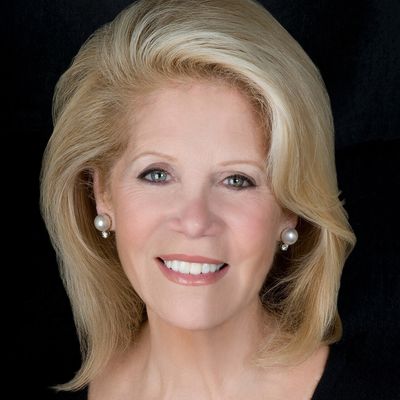
On this week’s episode, Jamie and Rob chat with 12-time Tony Award-winning producer and theatre owner Daryl Roth, who holds the singular distinction of producing 7 Pulitzer Prize winning plays... Read More
From the show: The Fabulous Invalid
Guests
Featured Shows

About
On this week’s episode, Jamie and Rob chat with 12-time Tony Award-winning producer and theatre owner Daryl Roth, who holds the singular distinction of producing 7 Pulitzer Prize winning plays. Together, they discuss Daryl’s latest project, the socially distanced light and sound experience “Blindness”—which is currently running at her theatre on Union Square—along with her remarkable career, including the genesis of “Kinky Boots”, and her approach to producing.
This week’s music: “Way Down Hadestown” from “Hadestown Original Broadway Cast Recording”, “Raise You Up/Just Be” from “Kinky Boots Broadway Cast Recording”.
"Blindness" clips courtesy of Daryl Roth Productions
Find us on Twitter & Instagram: @fabulousinvalid
Facebook: www.facebook.com/fabulousinvalid
Rob’s reviews: www.stageleft.nyc
Email us at: office@fabulousinvalid.com
Jamie DuMont
Twitter: @jamiedumont
Instagram: @troutinnyc
Rob Russo
Transcript
This transcript was automatically generated and might contain errors.
[0:21] Jamie DuMont: Welcome to the Fabulous Invalid, Broadway's podcast where we present essential conversations with a curated roster of the best, most important, and innovative theater makers working today, from actors to writers, directors, designers, and everyone in between.
[0:35] Rob Russo: We took our name from the title of a 1938 play by Kaufman and Hart that has since become a loving nickname for Broadway itself.
[0:42] Jamie DuMont: Always deemed on the verge of decline, yet always bouncing back, the fabulous invalid.
[0:46] Rob Russo: I'm Rob Russo, writer and theater critic with Stage Left.
[0:48] Jamie DuMont: And I'm Jamie DuMont.
[0:57] Rob Russo: Well, since we last convened for this podcast, there's been a lot of news in the world.
[1:02] Jamie DuMont: Most importantly, yes, uh, Broadway is coming back on September 14th.
[1:08] Rob Russo: The only news that really matters.
[1:09] Jamie DuMont: Right. So I have to ask, Rob, what is the show that you are most excited to see?
[1:14] Rob Russo: Are you talking about of the shows that have announced?
[1:17] Jamie DuMont: I would say that would be Chicago.
[1:19] Rob Russo: Yeah.
[1:20] Jamie DuMont: Yeah. Surprise, surprise.
[1:31] Rob Russo: But I have to say of the shows yet to announce, I cannot wait. And I would imagine you will be seated next to me when this happens.
[1:40] Jamie DuMont: Oh.
[1:40] Rob Russo: For the train whistle to blow to announce that we are headed to Hadestown.
[1:50] Jamie DuMont: On the road to Hell there will go railroad Track.
[1:54] Rob Russo: Oh, come on!
[1:55] Jamie DuMont: There was a train coming up from way down below.
[1:59] Rob Russo: That is not six months.
[2:00] Jamie DuMont: Let it go.
[2:03] Rob Russo: Yes, it's time to go. As I have to say, and I've said this before on the show, and I've said this to you countless times, and on Twitter and all the places you say things, that is the one score that I have listened to the most throughout this whole horrific shutdown.
[2:20] Jamie DuMont: Um, it's the thing that in Ragtime, I went through a really heavy Ragtime rotation. But Hadestown is and that's sort of done. Hadestown has been consistent. I listen to it constantly. It has really helped me through these troubling times.
[2:34] Rob Russo: Yeah, well, what an extraordinary score. I can't wait to see that. I mean, I can't wait to see all the shows. But to answer my own question, I actually would say the new show that I'm most excited to see is Flying Over Sunset at Lincoln Center Theater, which you know had been announced and was supposed to open spring of 2020, is now finally coming this fall.
[2:56] Jamie DuMont: So I'm so intrigued by just the log line description of that show. It sounds so interesting.
[3:01] Rob Russo: And you love a Carmen Cusack moment.
[3:03] Jamie DuMont: Who doesn't love a Carmen Cusack moment?
[3:05] Rob Russo: I mean, that's very true. I also have to say to see our dear friend Jennifer Samard in Company and all the other wonderful people. I can't wait for that production.
[3:15] Jamie DuMont: There's a lot. I mean, I'm sort of excited. You know, you said this the other day, and I just have to maybe this morning. You can't wait for a play. And that really struck me. I've been thinking about that since you said it.
[3:27] Rob Russo: There I cannot wait to sit and see a play.
[3:31] Jamie DuMont: Oh, just anything. I'll see anything.
[3:33] Rob Russo: Yeah, but especially a really good play. And speaking of, yes, has a lot to say about really good plays, or I should say has a real talent for finding them, and that is Tony Award-winning producer Daryl Roth.
[3:48] Jamie DuMont: I'm so excited that we are chatting with Daryl Roth today. She is a 12-time Tony Award-winning producer.
[3:54] Rob Russo: If you don't know that, you should. She also holds the singular distinction of producing seven Pulitzer Prize winning plays, including Anna in the Tropics, August: Osage County, a personal favorite, Clybourne Park, another personal favorite.
[4:07] Jamie DuMont: They're all gonna be personal favorites, so I'll stop saying that. How I Learned to Drive, Proof, Edward Albee's Three Tall Women and Wit.
[4:15] Rob Russo: Other notable productions Daryl has produced, both on and off Broadway, include the worldwide hit musical Kinky Boots, Larry Kramer's The Normal Heart, Paula Vogel's Indecent, and Gloria: A Life About Gloria Steinem.
[4:30] Jamie DuMont: Well, in addition to her very prolific work as a producer, Daryl also owns and operates the Daryl Roth Theater on Union Square, is a trustee of the Kennedy Center, actively supports a diverse group of charitable and cultural institutions, and is involved in LGBTQ rights causes, animal rights organizations, and numerous theater, dance, public television, and cultural arts organizations.
[4:52] Rob Russo: I don't know how she finds the time to do all the amazing things that she does, but she does, and we're all, you know, very fortunate for that. She's currently, speaking of, among the first to produce a show in New York as we emerge from this pandemic, with the socially distanced light and sound experience Blindness, which is currently running at her theater on Union Square, and we talked about on, I think, the episode prior to this one.
[5:16] Jamie DuMont: Then if you're looking for something to do in New York right now, because our options are still somewhat limited, I would highly recommend you get a ticket for Blindness. It's a really, really great experience.
[5:26] Rob Russo: Well, should we get to Daryl?
[5:27] Jamie DuMont: Let's do it.
[5:36] Rob Russo: Thank you so much for joining us.
[5:38] Jamie DuMont: We're absolutely delighted to have you with us. You've led the charge, producing one of the first, if not the first show to open as we come out of the pandemic. So my question is, how did Blindness come about?
[5:50] Daryl Roth: Yes, we actually ended up being the very first to open our doors. And what happened with Blindness was really very fortuitous, I think. I was reading the New York Times and I read a review of the Dunmar Warehouse production of Blindness. And it was being done during the pandemic in London. And I thought to myself, as I read the setup and the way they had pods of two people that were socially distanced from another pod, and the fact that the story came to you through headphones, and the story was told so magnificently through the voice of Juliet Stevenson, who I adore. There were no actors, and everything was COVID safe.
[6:32] Daryl Roth: So I started thinking about it, and I wondered if it was something I could do in my theater, because as you may know, I have this wonderful space on 15th Street, which has always been the home to very unique and unusual theater productions like De La Guarda and Fuerza Bruta, in and of itself, which was there recently. And so I knew I could configure the space in the way that the Dunmar had done it. And I also knew that it was a large enough space, so depending on how many people were allowed, according to the state and city government, I could make that work.
[7:07] Daryl Roth: So I wrote to the Dunmar and I asked if they would be interested in, you know, having a New York production. And they said, well, they probably wouldn't necessarily bring it over, but they would love for me to produce it here. So I unfortunately couldn't go to London because we're in the middle of it all to see it. So they sent me an audio file, which I listened to and was just mesmerized by. I mean, the truth of it, for your listeners who may not know the story, it's based on a book by José Saramago, who is a Nobel laureate, and it is about an epidemic of blindness that takes over a city, and the only sighted person is the wife of the town doctor.
[7:49] Daryl Roth: He turned to where he knew a mirror was. But there's no one there. But the sound is breathtaking. The story is, as one critic called it, and I like this very much, brilliantly terrifying. And it is in a way, and you listen to the story, but what we learn is how important it is for a community to stay together in order to get through something that is so horrible and devastating and challenging.
[8:49] Daryl Roth: And then the time had come to decide what we wanted to do. There was no water. There was no electricity. If there was a government, it was a government of the blind trying to rule the blind. I didn't know if there was going to be a future. We needed to decide how we were going to live. I told my companions that if we stayed together, we might manage. If we separated, we would be swallowed up by the masses. I told them, my companions, that we should live together. That they should come with me. They should come to our house. We should live there. And they said that they would.
[9:37] Daryl Roth: Well, key to what we're all living through at this moment in time that I'm planning this. The beauty of it is at the end of the story, it is the most hopeful, cathartic release. And people now so jump to the fact that yes, we were able to do it. We ordered the chairs and the headphones, and we made our theater COVID safe times 120. I put in a new air filtration system. Everything is up to speed. We started in April. We kept waiting and waiting for the approvals from both the city and the state. And as you know, April 2nd was the first announcement of anything that was a flex venue, which is what we were then deemed. I mean, we are a theater, but because we're so flexible, we're a flex venue. And we were allowed to open.
[10:28] Daryl Roth: The people that first came those first few weeks were so grateful. It was an amazing emotional experience for me and for everyone. People would just walk into the space, which is in fact a theater and has been for over 20 years, even though it's an unconditional space, it's a theater. And they just enjoyed this story. And the ending, what happens at the end is just breathtaking. And it sort of points to a brighter future. So it's been very satisfying. We've had a little bit of a challenge in trying to figure out what the theater times should be. It only lasts 70 minutes, and we don't allow concessions. Obviously, we weren't allowed to have people go to the bathroom and, you know, come in and out. So once they're ushered into their seat, they sit in their seat until the doors open and they leave.
[11:20] Daryl Roth: We weren't sure would people like a daytime show, a nighttime show. You know, people weren't really working. Would they be comfortable coming out, you know, at all? Um, so these were the practical questions that we dealt with. We started with two shows, a five and a seven. Oh no, excuse me, we started with a three and a seven, and we found that the seven was very popular, the three less so. We then added a five o'clock show, which is doing nicely, and on the weekends, we added a one o'clock show. So we're sort of playing around with the schedule because people's desires are sort of not what we expected from years before COVID. You know, usually you'd go to a Wednesday matinee if you wanted a matinee, or you'd go at night if you wanted a nighttime. But in any event, so Blindness is playing now, and the most fulfilling thing is hearing from people that experience it. Um, they feel it's like a gift in a funny way, even though it's such a difficult story to take.
[12:23] Daryl Roth: By the time you go through that difficult story and come out on the other side, it rather replicates what we've all been through. I should say, and this is important, it was adapted by Simon Stevens, who is our brilliant, brilliant writer, and he did such a gorgeous job. So look, I learned really, I know that this is the right thing for now, but I like everyone yearn for the day when our stages are full of singers and dancers and actors and people doing what we all are so passionate about. But for now, this just felt like something that could kick my doors open and get people to gather safely. And that's what Blindness did.
[13:05] Rob Russo: Well, we're so thankful to you for leading that charge. I have to tell you, that the second I saw the press announcement, I texted Jamie and I said, "Okay, we have to get tickets." And we were among the audiences in those first weeks, because you know, not only does the story so brilliantly parallel our own experience and does end in that note of hope, which is so important, but also just the opportunity for us to be together again and to experience something together, whether you know, even if it is, you know, wearing headphones and we're in our pods, you know, it still is a reminder of the event of theater going, right?
[13:43] Daryl Roth: I agree, that's the habits, the rhythms of it all.
[13:47] Rob Russo: That's well said. And basically, if we take the earliest and most simplistic definition of theater, it's gathering together to hear a story.
[13:57] Daryl Roth: Right. And that's what this is. And also, just as a first show back for all of us as audience members, just the level of safety that I felt was so strong and wonderful. From queuing up and getting in line and walking into the theater, every single thing that your theater, that the ushers and all of the staff that worked at the theater, it was really extraordinary. There wasn't a moment where I didn't feel perfectly taken care of. And to have that as the first show back, I think is hugely important.
[14:30] Daryl Roth: I'm very happy to hear you say that you felt so comfortable and so safe, because I must say I felt a great responsibility to make sure that that was the effect, what you know, all of the precautions that we took would give people. Because if you're not comfortable sitting there, you won't want to come. And so I really appreciate your saying that because it was very important to me. I mean, I'm a nervous Nelly anyway. I mean, I'm a Jewish mother. Everything about this had to be safe and germ-free, and you know, we're not giving out playbills, you can't touch a piece of paper. I mean, everything to me was very important, every detail. So you make me very happy to say that the result was what you felt. So thank you.
[15:13] Rob Russo: Oh, absolutely. And on that note, as a nervous Nelly, I have to imagine that bringing a show over from the UK without having to see it, was that a first for you as a theater producer? Was there any hesitation not knowing that you hadn't actually experienced the piece firsthand?
[15:32] Daryl Roth: There would have been if it were a normal piece of theater where there were actors and sets and things that I had to really experience. But I did experience it as well as I would have if I went to London. I got the audio file, I heard it through the headphones, I saw the pictures of the setting of the magnificent lighting design. And so I felt as though I had as close an experience as one could have because of the type of theater event it is. Right. So I wouldn't have done that, I don't think ever, you know, for a play or a musical, you know. That's why I don't do too well when I order clothes online. I really like to see it and feel it and try it on.
[16:14] Rob Russo: You know, I must say that that is my sense of it. Well, you're in with this project, but not only with this project, with other projects in the past. You're in the unique position of being, as you mentioned, both the producer of the piece, but also the owner of the theater. So you're wearing two hats really as you go through this process. So I'm wondering, you know, with this project, but more generally with other projects that you've done in your own theater, how do you balance being the producer of the piece, but also being the owner of the theater and the various competing needs that go with each?
[16:47] Daryl Roth: Well, I try to be a very friendly landlady, you know, and I only bring things into the theater that I love, and many of them are not my productions. You know, we're an available theater for other producers to rent. But when I do something that is under my own umbrella, you know, I care deeply about it. Most recently we did a play about Gloria Steinem, and it was a very challenging piece because Gloria and Diane Paulus, the director, were very intent on having the set be in a circle. And because Gloria believes very firmly that people learn more when they're in what she calls a talking circle. And so it was a bit big challenge, I have to say, to rearrange everything, even though our seating is flexible.
We had to build bleacher seats and we had to pick pillows that were reminiscent of the pillows in Gloria's apartment. I mean, I took pictures of the rugs in her apartment so that the rug on the floor felt very much like it would belong to her. And so I take a special interest in all of that, particularly when it's something I'm producing.
[17:59] Daryl Roth: In and of itself, for example, I just love so much. And by the way, if you haven't seen it, when it was on in my theater, it's on Hulu right now, and I have to recommend it because it's just magnificent. It's Derek DeGaudio, directed by Frank Oz. It's something so special. But when that was in the theater, what they wanted was basically to tighten up the space in the theater because they wanted it to feel extremely intimate. And if you recall, it had this wall of, it's called the I Am Wall, and everyone came in and picked a card that said, "I am a gardener, I am a doctor, I am a producer, I am an actor," whatever. And so the hallway in was an I Am Wall, and then you came into the space that was kind of nestled into 150 seats.
Ordinarily we are 350 seats. So the space itself, I'm very open to whatever anybody wants to do. And I feel, you know, I feel proprietary about it all. I want it to be always clean and neat, and I want people to feel comfortable in this space. I mean, I feel it's like an extension of my home. And it's how I would welcome someone to my home, you know, and I want people to feel comfortable and have a good experience. I have a wonderful staff at the theater, which is also very important to me. I want people that work at the theater to make people feel like they are welcome here and that they are warmly welcomed.
[19:32] Daryl Roth: So, you know, the theater owner part I like very much. It's kind of fits my style. Well, taking a step back, you're also a producer, and I think that that's a word everyone knows, but not everyone really knows what a producer does since it means different things in different parts of the entertainment industry. Can you tell us how you define the role or how you would describe what a producer does or what you do?
[19:57] Daryl Roth: I have one line that I use and have used for a while that I think is the perfect simple definition, and that is that a producer is the facilitator of other people's dreams. And I find that extremely fulfilling for me. I consider myself a creative producer, a creative artistic producer more than a business producer. I know my strengths and I know my weaknesses. It's important for me to work with a good general manager who is much more in touch with the budgets and the financial end of it. And I find that my strengths and my skills lie in choosing material, putting a creative team together, guiding the vision of how I would like to present the show, sell the show, market the show, advertise. I'm very visual and I've always been guided. You know, I have a lot to say, much to the chagrin of some people, a lot to say about sets and costumes. But ultimately, I think my opinions are appreciated there. I find that for me, producing is about putting it all together.
[21:12] Daryl Roth: And you may know that I started my career in my 40s. I didn't come up through the ranks of theater. You know, everybody looked at me as a dilettante housewife from New Jersey, which I have to say was quite hurtful. But I knew what I wanted to do, and I knew that I would be able to do it. I just had this weird little inner confidence that I often wonder where did that come from. I think it came from raising a family and sort of balancing life for a group of people, which is basically what being a producer is on some level. But I found my niche early on. I was very interested in primarily plays that were challenging, and most people didn't want to touch because they didn't seem very commercial.
And I just was able to go with my instincts and find stories and find writers. I love new writers. You know, when I started producing, I was very interested in finding new voices and being able to give them a platform. So I found my niche. I always love stories about gender, I love stories where there's a strong woman at the core. I love stories about family dynamics. I love stories that deal with Jewish identity, and sometimes they roll all into one, like Indecent, Paula Vogel's play, had a little bit of all of that in it. And I don't know, I just always produce things that I love, and I don't think about whether they're going to be commercial or not, because you never know. Theater is just so risky, you don't know. You throw up your best work in the air, and then you see what happens, basically.
[22:54] Daryl Roth: And so I've been pleasantly surprised. Plays like Wit, which nobody wanted to touch. Obviously, it was a woman dying of ovarian cancer, and we learned that in the first line of the play. I thought it was brilliant, it was smart, it was witty, it was heartfelt on every level, and I just loved it. And I produced it off Broadway. Couldn't get a Broadway theater, nobody was interested, obviously. But I find that, and this is kind of a bit of advice when people ask me, young producers, and I am very candid with them. I say, don't put aside what you really love and what speaks to you, and just go forward with passion and tenacity. Don't worry, do not worry that someone may say to you, "Well, this will never sell," or "This isn't commercial," because I've said this before, and I believe it very strongly.
Theater deals in a different currency, and the currency that it deals in has a lot more to do with emotion and quality and people than it does with just the financial end of it. So everything has to be taken into account. I don't want to appear to be fiscally irresponsible, but it's not the first thing on my checklist. I will just say that.
[24:20] Rob Russo: Well, you know, it's funny you set up the next question so brilliantly that I had, which is, you know, it sounds like you've taken your own advice because you have the singular distinction of having produced seven Pulitzer Prize winning plays, and there is no formula. So I'm curious if you could share with us a little bit about the process of how you go about picking which plays to produce, how you know when something is speaking to your heart and how you cloud out other people saying, "Oh, this might not be commercially viable," or "Oh, this topic might be taboo."
[24:56] Daryl Roth: How do you actually go about doing that?
[25:01] Daryl Roth: In various ways, I would say, for various plays over the years. Sometimes I am just drawn to a particular playwright, Edward Albee being one, Paula Vogel being another, uh, Tony Kushner obviously being another, and I'm drawn to their work. Um, this is no surprise. These are geniuses of our time. Sometimes I'm sent a script and I read it, and it just moves me. And you know, it's hard to know why, it just touches a very personal button somewhere. Um in some cases, I didn't originate a play, but I joined in on August Osage County would be an example of that. Um when I uh first saw it, you know, I said, uh if this is coming to New York, I want to be part of it. Um, so that was an instinctive opportunity having the ability to have seen it, right?
Um, but the biggest thrill for me comes from reading something and finding what that magic is, and you know, and then when audiences see it and it turns out to be right, it just you know, it just gives me a little inner flutter in a way, I would say. That's why we all love the theater, right? That inner flutter.
[26:18] Jamie DuMont: That's right.
[26:20] Daryl Roth: I mean, there's no rhyme or reason, and and a lot of things have not worked. I mean, I was talking to someone about um, they didn't know about Joe Allen's, they didn't know what that wall was. You all know the wall of flops.
[26:30] Rob Russo: Of course.
[26:31] Daryl Roth: And they were very surprised to know that I had a poster up there. And I said, Well, you shouldn't be surprised because every time out of the gate, you have the opportunity to be on the wall at Joe Allen. You just have to hope that when you're there, you still did something that you believed in, or at least at the time. Um, you know, and I tell people not to be afraid to fail because theater is well, actually, I don't like the word fail. You have successes and you have those that are less successful. And you must always keep in mind that every new project is a new beginning, and you don't know how it will be received. You may love it more than life itself, and the audience doesn't agree, or the critics don't agree, or the timing is wrong, or the marketing doesn't work.
There's so many things that come into play. It doesn't mean it's not good work. It just means for whatever the reasons, it didn't work. You know, and people have to keep that in mind because theater is a very risky business, and if you're not in it for the hills and you know, hills and valleys, it's the wrong business for you.
[27:47] Daryl Roth: I dare say that being on the wall of Joe Allen is a badge of honor. So I think I think it's a great thing. Uh obviously nobody wants to, everybody wants a success, but uh of course. But I think it's a also a good way to remain humble.
[28:01] Jamie DuMont: Yeah, yes, absolutely.
[28:03] Daryl Roth: Absolutely. Well, on that note, I'm curious. Um, speaking of successes and things that are less successful, do you can you pinpoint a a show that you produced that you can say has been the most gratifying, and then conversely, one that might have been a little harder, that might have been challenging or not what you were expecting?
[28:22] Daryl Roth: Um, I would say that Kinky Boots would be my answer to what was the most satisfying for so many reasons. For so many reasons. First of all, you know, I was known primarily as a producer of plays off Broadway. And for me to take a big step and um, you know, and lead be a lead producer on a big Broadway musical was was a big deal for me. It started with my going to Sundance one year and seeing a small British film called Kinky Boots that somehow just shot an arrow in my heart, and I have never gotten over how meaningful the story of Kinky Boots was that that day that I was in Utah of all places. I got out of there after waiting to see the credits because I I had it in my head that this had the DNA to be a great musical, and I had to do it.
God knows what I was thinking altogether, but that's what I thought. And I called my son Jordan, who was in New York, and screaming into a you know a 10-year-old cell phone, um, because it was that many years ago, on top of some mountain in Utah, so he could hardly hear me. I said, Jordan, I have to get the rights to this movie. I see that it's Miramax in Disney. Could you please call Tom Schumacher the first thing in the morning? Your mom needs to get going on this.
[29:45] Daryl Roth: Well, a few years later, I did get the rights to Kinky Boots, and the beauty of that, well, the reason it took a couple of years, I should say, it might be interesting to know is that Miramax and Disney were kind of not sure who was going to actually own the theatrical rights to Kinky Boots. They were in the midst of splitting up some of their assets, and um it took some time. And once it was decided that actually uh it would land in the Disney court, they weren't thinking that they'd make a Broadway musical out of Kinky Boots. It wasn't necessarily uh in their wheelhouse. Uh ultimately, I think it is in their wheelhouse because it turned out to be a family musical after all, with the messaging and and everything about it.
But stepping back, um I had when I was coming home from Utah and I was all charged up with wanting to do this. I already started thinking about who would adapt it. And I I thought about Harvey Fierstein because I knew he had the sensibilities for it. Um, and it was a great creative process. You know, I asked a colleague of mine, Hal Luftig, who had done more musicals than I to join me. Uh, I knew I wanted Jerry Mitchell because I wanted the story to be the message, but I wanted to deliver it with a lot of glitz and glamour so that people would receive it in a very joyful way, right? But basically, it's a story about a father-son relationship. It's a story about accepting yourself and accepting others. And to me, that's what I wanted to champion. And I felt it was all wrapped up in this in this film, in this story.
[31:17] Daryl Roth: If you get done, let me raise you up in your raise you up, if you read, let me raise you up and go. One step at a time, we we interviewed some people to write the music and lyrics. Uh, we actually had Harvey uh do a few scenes that we then sent to different teams, and we didn't come up with we didn't come up with what gave us the shivers, you know. We just didn't, and we were getting a little frustrated by this. And at one of our meetings, I remember sitting around my conference table. Harvey said, Don't say anything until I finish what I want to tell you, what I want to suggest. We said, Fine. I think it's Cyndi Lauper. I think it's Cyndi that should write this. And we looked around and we said, that's a great idea.
She's never written a musical before, but she understands the outsider mentality. She will understand these characters. And indeed, the proof is in the pudding. She did. Not only did she write the most beautiful score, but uh she deservedly got a Tony for it.
[33:26] Daryl Roth: Though I've had, you know, a lot of wonderful shows that I feel very loving towards. It's because I it started from an idea. You know, it was the first thing that I really did that was that didn't exist until it existed. You know, so I always think of the Sondheim line, you know, putting it together, and I felt that I really put it together.
[33:49] Daryl Roth: You made a hat, you know.
[33:50] Jamie DuMont: I made a hat.
[33:51] Daryl Roth: Where there never was.
[33:53] Jamie DuMont: Yes, yes.
[33:54] Daryl Roth: Also, that song does say art isn't easy, but you make it look very easy.
[33:58] Daryl Roth: Yeah, no, that one wasn't easy, but yet on some level it was easy. I feel it was meant to be. You know the word beshert. That show was meant to be. That's how I look at it.
[34:09] Jamie DuMont: Well, looking at your at your list of credits, although your work is very diverse, you know, I think there is a thread that one could could, you know, pull out, which is that it's all very socially minded and and it's it seems to really prompt audience members to think and to act. And so I I'm wondering, you know, of all the work that you've done, which has touched on so many um so many issues and and causes and lifted so many voices, if you could commission a play about a specific subject matter issue, what would it be?
[34:42] Daryl Roth: Um, I think before I answer that, I would say to you that if I could have commissioned The Normal Heart, I would have commissioned The Normal Heart. Because that is the play that for me exemplifies activism, exemplifies all the things that I care deeply about, and being able to, you know, head that revival, especially when so many young people came to see it that had never seen it before and didn't understand, I like to say whose shoulders they stand on, you know. You know, I think that The Normal Heart had inspiration in every line. And when people left the theater after seeing this, they were empowered to become in their own way activists. And that is Larry Kramer. Every night at the theater, he was standing outside with his orange jacket, handing out flyers for different organizations, GMHC and Act Up.
I mean, and it was such a lesson for me personally to see that every person matters, and that theater matters because when you experience something like that and you take a piece of it out of the theater with you, and then do something with it, that's the best. That's the best. But that didn't really answer your question.
[36:02] Daryl Roth: If I could commission a new play now, you know, it's so hard to know. There's so many things that interest me really. I think that it would still involve family dynamics in some way. It would still involve relationships. It would involve trying to find the joy in life. And I think I'll stay away from disease. Maybe it's what we've all come through. I think if I were to commission a new play, it would have to have a lot of deep storytelling and emotional impact, but it wouldn't be about sickness and death. We've all been through too much of it right now. And I don't, I think when we look to the future, we want to find meaning, but it must also have the flip side of joy.
[36:44] Jamie DuMont: Well, you you recently did an event um with Dartmouth that I that I got to watch, which I was so nervous.
[36:51] Daryl Roth: Oh fabulous.
[36:52] Jamie DuMont: You were fabulous. It it posed a very important question, which is actually, you know, a great dovetails nicely with what you just said. Um, so for those who weren't fortunate enough to um to tune into that event, I'm wondering if you could share with us, you know, briefly, you know, why you think theater is so important right now.
[37:07] Daryl Roth: Well, I think what I said during the Dartmouth talk, and what I will share again is that I think that theater really has the power to lift our spirits. It sounds corny, I know it does. But, and not only theater, music, art, theater for us primarily, it inspires us, it makes us think, it can change our minds. That's what we loved about Kinky Boots so much, you know. People would come in with one notion and they'd leave with a totally other notion. I think when we emerge from these very challenging times, we need something to hold on to, something to guide us, something to inspire us and feed our soul. And that's why theater is so important because it can do that. It can it can do that. And I like to say that when you come into a theater, you come into a theater with a group of strangers, who knows, and you leave as a little community, as a little group of people that have just come together and experienced something that will only happen that exact way on that night, which we love about theater, although there are those actors that put in the perfect performance night after night after night.
But for the most part, the experience is unique, and you have just shared it with a group of people. And I love that concept. Um theater's also very important to me, and I think to others, because it can kind of get you thinking about things that you might have kept at bay, or that you don't want to think about really, or that are too hard to pull up. And then you can see a story told on stage that's dealing with something similar, and you realize you don't have to be afraid of that. You can think about it. I know that's what happened with me when we were producing Wit. You know, I'm petrified of cancer, along with half the universe. And this woman, this professor of John Dunn, you know, who was played brilliantly by Kathy Chalfon and then again Judith Light, the way she dealt with it was such dignity and such intelligence, it made me kind of less afraid in a funny way.
So I think theater can do really wonderful things for our emotional well-being. It can engage us in ways that, you know, we're not always exposed to. And I think that's really a great gift, which is why we have to honor it and protect it and nurture it and get it into the schools for young people so that they can grow up understanding that this is part of their life. This is these are the stories that they can hear, this is the stories they can tell, and just make it just part of the fabric of their lives. I'm really, I'm really very engaged in trying to get more theater into the schools, more arts education generally into the schools. I mean, look at all the people that are in our industry. If they didn't have a little seed planted when they were young, they probably wouldn't have grown to be so talented and so engaged.
[40:14] Daryl Roth: As we come out of this pandemic, and as we come out of the last year, which was challenging on so many levels, but I'm curious, is there what would you like to see change when theater returns? Well, the biggest topic that all of us are talking about and hopefully doing something about is making theater more diverse and more inclusive, not only with the actors on stage, but every job within the industry, and being able to sort of offer a pipeline for young people, particularly brown and black, young people who don't look at theater as a possible way for them to have a you know have a life in the theater. And if we can make that an easier and more open opportunity, I think that would be something wonderful that would come out of this.
And of course, this past year has had so much to do with racial injustice and Black Lives Matter that we're talking about it now in a way that's really meaningful, and I believe, and I've seen this already happening with all the different organizations and groups that are forming. Not only are we talking about it, we're actually doing something about it. So I think that's a highlight, inclusivity and diversity for sure. I think the other thing that I would like to see happen, and I believe it will, is greater accessibility. And believe it or not, the zooming that we all didn't really like in the beginning and have come to embrace, has offered that accessibility in wonderful, wonderful ways. A lot of the regional theaters and the nonprofit theaters that you know obviously were closed and couldn't offer anything to their subscribers, by being able to offer plays through Zoom, not only did they keep their subscribers, many people told me that they increased their base.
And when you think about elder folks who can't get to the theater easily, or people that can't afford to come to the theater, or you know, because of distance or disability or whatever it is, theater being more accessible as a result of this pandemic has become almost a silver lining, I would say. So I think that's another thing. The other thing that I think will happen, and I hope this is true. I think people are going to be kinder to one another. I do think that this year has taught us to reprioritize what's important to us. I mean, for me, it's always been family, but not for everybody. I think that we have to think about what other people are going through and what they have gone through, and try to be more understanding of what we can do to make somebody's life a little easier.
And that can be the smallest thing, you know. I mean, it could be a great thing, like you could give somebody a job, but it can also be a small thing, like just calling up somebody and saying, Well, how are you doing? How are you doing? You know, do you need anything? I think our industry could take a good lesson. I mean, our industry is full of beautiful talented people. And they give of their gifts every day. That's what actors and people in the theater do. They give their gifts, right? They give them openly and with pleasure. And I think that we have to take that a step further and be more compassionate and learn to be kinder. Kindness goes a long way. You know, it really does. The littlest act of kindness, the littlest act of kindness can mean so much to somebody. And what does it take to do that? Nothing. Takes nothing. Right. It takes a little thought. Exactly. It takes nothing but a little thought.
[44:01] Jamie DuMont: Well, before we wrap up, I just have to get in one quick question because on that Dartmouth event, you dangled the idea of there being a need for a new WPA. And um, and I I'd love to hear a little bit more about your thinking on that, because I've I've read and heard, you know, some folks who are, you know, just eager for there to be more sort of federal support for the arts. So I'm curious to see what your thoughts are on that front.
[44:28] Daryl Roth: Yeah, well, my thoughts obviously aren't formulated, it's a big idea, but what I think it really tells us is that we need both we need major relief from both the federal and the state governments for the arts. It is clear that we need that money infused into the industry, and we need the jobs that the WPA could create, or AWPA, I mean, we'll call it whatever we're gonna call it. Um, and I also am very firmly convinced that a private public partnership is really what will keep the arts healthy and alive and well, and we see that in all the regional theaters and the nonprofit theaters, but that has to be enhanced, it has to be it has to blossom in a different way. It can't just be for the very, very wealthy people, because everybody has a stake in this.
And if you can give $10 to a nonprofit theater that you love, it's the same gift of the heart that someone who can give a hundred thousand dollars. And I believe very I believe very firmly that a public private partnership has to be embraced, and the WPA idea, which then incorporates money from the state and federal government I think those two big ideas have to come together and support the arts in a better more organized more generous way.
[45:34] Jamie DuMont: Well let's hope so.
[45:34] Daryl Roth: Yeah here well Daryl thank you so much for your time today i our our last question is is I hope an easy one and that is what was that thing or experience that made you want to work in the theater it's not such an easy question really I I found at a young age I grew up in New Jersey and my parents love musical theater and so the biggest treat was to bring my sister and me to see a musical and so at a young age I would just sit in a seat and be mesmerized and think to myself how does that all happen how how does that happen it was just like amazing amazing magical and I think the seeds were planted early and it took me a long time to realize that maybe I could actually be in that magical world but I got there.
[45:34] Daryl Roth: Thank you so much for your time today it's been an absolute delight chatting with you.
[46:54] Jamie DuMont: Thank you very much I really enjoyed our chat thank you both.
[46:54] Rob Russo: Pursue the truth, come on, come on, learn something new, accept yourself and no, accept others too. Let pride be your guide. You change the world when you change your mind more than one time. You want to be just being celebration like the last beat.
[46:54] Rob Russo: That's our show. Thanks for listening. If you haven't yet, check out our friends over at Social Goods, an online store that offers a curated slate of statement-making merchandise that gives back to nonprofits tackling today's most pressing issues. We love their goods and we love doing good. And the best part is that listeners of the Fabulous Invalid can go to social-goods.com and use the code FAB15 at checkout to receive 15% off your first purchase. That's social goods, where every transaction comes with real action. The Fabulous Invalid is a production of OM etc. and the Fabulous Invalid LLC, and a proud member of the Broadway Podcast Network.com and on social media at Fabulous Invalid, and on iTunes, Spotify, and wherever you find your podcasts. Check out our archive of episodes and be sure to tune in next time.
© Broadway Podcast Network, All Rights Reserved