

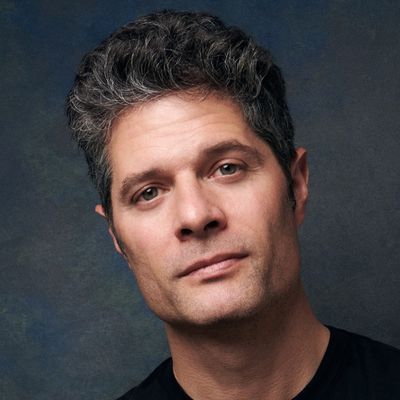
Tom Kitt is a composer, conductor, orchestrator, and musician. For his score for the musical Next to Normal, he shared the 2010 Pulitzer Prize for Drama with Brian Yorkey. He has also won a Tony Award and Outer Critics Circle Award, and was nominated for a Drama Desk Award for American Idiot and Everyday Rapture... Read More
From the show: The Producer's Perspective Podcast with Ken Davenport
Guests
Featured Shows
About
Tom Kitt is a composer, conductor, orchestrator, and musician. For his score for the musical Next to Normal, he shared the 2010 Pulitzer Prize for Drama with Brian Yorkey. He has also won a Tony Award and Outer Critics Circle Award, and was nominated for a Drama Desk Award for American Idiot and Everyday Rapture. Other theatrical works include High Fidelity, If/Then, Bring It On, Freaky Friday (musical), 13, and From Up Here. He has also worked on projects outside of theater including the arrangements for multiple Green Day albums, Penny Dreadful, and Pitch Perfect 2.
Tom Kitt’s story could be a movie. This podcast with Tom is like the DVD commentary on that movie. We had a frank conversation about his journey including:
- How to choose an idea to turn into a musical.
- How a “10 Minute Musical” exercise at BMI changed his life, and how you can use the same exercise.
- What he went through after High Fidelity closed quickly, and how he got back to work.
- Why he isn’t on social media. (Artists, take heed!)
- What he has learned from working with Green Day, Aerosmith, Sara Bareilles and so many pop-rock writers.
Keep up with me: @KenDavenportBway
Transcript
This transcript was automatically generated and might contain errors.
[0:00] Ken Davenport: Hey, so you guys know I'm a numbers guy. Well, I did some calculations recently that I wanted to share with you. On the low end, I read an average of about two scripts a week. And that means I read about a hundred scripts a year. Well, I've been reading about a hundred scripts a year for about 20 years now. That means in my career so far, I've read 2,000 scripts, and I have learned a lot. I've read some great ones, I've read some not so great ones, and the stuff I've learned has helped me a ton in my own writing. And I think I can share some tips with you from all those scripts that can help you with yours. I'm teaching a webinar this Wednesday about how to self-diagnose your script, the common flaws and how to fix them. I'm doing it only for Producers' Perspective Pro members, so join the Producer's Perspective Pro this month. Get that webinar and improve your script. Visit the Producers Perspective Pro.com for more. We'll see you there.
[0:57] ♪ Musical number: "I Wanna Be a Producer" — performed by Ken Davenport ♪
[1:06] Ken Davenport: Hello, listeners, Ken Davenport here. Welcome back to another episode of the Producer's Perspective Podcast. So very excited about today's guest. It's not too often that I'm able to say this. We have a Pulitzer Prize winner in our midst. Please welcome to the podcast, Mr. Tom Kitt. Welcome, Tom.
[1:22] Tom Kitt: Thank you, Ken.
[1:23] Ken Davenport: So Tom won that big award for his score to Next to Normal. Also the writer of If/Then, High Fidelity, and with Lin-Manuel Miranda wrote the score to Bring It On. Celebrated arranger orchestrator as well, who specialized, and we're gonna get into this in translating rock and roll music, the big popular rock and rollers to a Broadway sound, having worked on American Idiot, now SpongeBob with some very famous music names. So, Tom, let's start up. Do you remember the first song you ever wrote?
[1:47] Tom Kitt: The first song I ever wrote was called The Fairy Boat. I wrote it when I was seven years old. Seven or eight, and I just sat down one day and wanted to write a piece of music. Didn't have any lyrics. I was a classically trained pianist, and I brought it into my piano teacher, and she was really impressed. And I ended up actually, three years later when I was 11, I wrote a sonatina three-movement piece and entered it in a competition, but I also played The Fairy Boat, and that's what the judges responded to most. So I won a small $50 bond from this contest. But I remember I was going up against college composers, and for some reason The Fairy Boat really resonated.
[2:29] Ken Davenport: So you titled it The Fairy Boat, but it had no lyrics already.
[2:29] Tom Kitt: It had no lyrics, but I just had an image in my mind of water and something that's sort of slowly moving down, and it had a romantic quality to it. I think even at that age, that kind of music was something I gravitated towards.
[2:46] Ken Davenport: So fascinating because it sounds like your career could have taken a classical turn, but even at that young age, the judges were like, man, fairyman is better. Go the popular way.
[2:59] Tom Kitt: I really, really love and continue to love classical music, and I had a little bit of a love-hate relationship with it, where I was studying it really as the primary focus till I was about 12 or 13, and then at that point I discovered soul music and Billy Joel and Bruce Springsteen, and I suddenly was in a band playing Shake a Tail Feather and Soul Man. It was actually a camp band when I was at camp that was modeled on the Blues Brothers. So that's why I was playing all that great music, and another camper turned me on to the early Billy Joel albums. So that suddenly became a passion of mine. And then it was some years later in college where I took a number of courses in classical music, specifically a course on Mozart and a course on Beethoven, a course in actually music was called music of the United States from the 1700s to the present, and I was just blown away by Copland and Charles Ives, and so then I went back into classical music, and that really was pivotal for me because that started to inform my writing.
[4:00] Ken Davenport: And when did theater enter into this mix?
[4:03] Tom Kitt: Theater entered in college because I was introduced by my girlfriend at the time, now my wife, Rita Piapinto, who thought that Brian Yorkey and I, Brian being another Columbia student and someone that Rita had worked with in original musicals, she thought that Brian and I would make a good team. And I was completely petrified about taking on an original score because at that point it felt like birthing a song was a big effort, never mind trying to birth 15 to 20 in a short amount of time. But Brian and I hit it off, and that was a real important instrumental moment of my life because I drank the Kool-Aid, as they say, and I'm really for someone who would want it to be a singer-songwriter. I suddenly had this new dream of writing for Broadway.
[4:50] Ken Davenport: And were you schooled in the theater? Were you seeing lots of shows at the time? Like, or was this totally new? Like, I don't know, I'd never written for a musical before. I'll give it a shot. We'll see what happens.
[4:58] Tom Kitt: I had seen shows. When I was younger, it was something that was more of a family outing. My grandparents would take me to see a musical, a matinee. I think the first show I saw was Peter Pan, Sandy Duncan. And then when I was 16 years old and I was at Interlochen, I saw Cabaret for the first time in a student production at Interlochen, and I was just in shock of the artistry and also the story for someone who's Jewish, and to see that story done in that way, it was just such a visceral response. I had to walk around for 10 minutes afterwards, and then I was just so animated that musical theater could give you that kind of experience because the experience again that I had been having was the family outing entertainment experience.
And so then I wanted to immerse myself in those kinds of shows, and when I was a senior in high school, I was in Into the Woods, and that knocked my socks off. And then getting to know the Stephen Sondheim canon and just sort of seeing all of these shows that awakened me and sort of influenced what Brian and I were doing. I think Next to Normal, I often attribute the experience of seeing Cabaret and then Into the Woods and discovering Falsettos and on and on with forming the idea in our minds that we could write a show like Next to Normal.
[5:28] Ken Davenport: Do you remember the first meeting you ever had with Brian to sit down and actually try and write something together?
[5:28] Tom Kitt: I remember so it's a funny story because Brian initially wasn't going to be able to do it. So I had written some music and started down a path, and then suddenly he came in and was able to do it, and I just remembered seeing his lyrics and they were so funny and witty and this perfect send-up of college but also had something to say, and I thought, how did I get to be in this room with this person? And then we just had the best time. Brian often tells a story that he remembers meeting me for the first time. I was in a fraternity at Columbia, I had my backwards baseball hat on, and he looked at Rita, who was introducing us, and said, "Are you crazy? Are you kidding? That this is who you think that I should be working with?" But we really did hit it off, and it's been family ever since.
[7:04] Ken Davenport: And what was that first show that you were working on, or those first songs?
[7:08] Tom Kitt: It's called The Varsity Show. It's a student-written book musical about Columbia. I think a lot of schools have this kind of thing. But The Varsity Show has a really rich history. Rogers and Hart met at Columbia and working on The Varsity Show, and Jeanine Tesori, Terrence McNally, just some of the people who have been involved in the show. So Brian and I wrote the hundredth. That year was the Centennial, so it had all this attention. Brian wrote the character of God into the story that God sends these three students through time to try to write the hundredth show, and we were reaching out to all these celebrities to see who we could get to play God, and Jane Pauley played God, and Len Berman played God.
But actually, one of the biggest responses was Tom's, which I think this was pre-Seinfeld, or maybe it was just as it was gaining its popularity. But the well-known face of Tom's at that point came and played God, and the place just went crazy for him. He was wonderful.
[8:07] Ken Davenport: And you were still playing in the band, right? Because I feel like the first time I became aware of your music was a buddy of mine going, like, you gotta hear this band, the Tom Kitt Band. And I was like, the Tom Kitt Band? This guy's amazing, but is he ready for the—like you were still doing the thing, right?
[8:23] Tom Kitt: Well, in college, I was doing my solo act at what was called the West End Gate, which is no longer, unfortunately. But I would be in the back room playing originals and covers and just entertaining, which would serve me well when I went into the world of piano bar, which I did for a number of years to support myself. I formed different versions of the band, the version that really got as far as I could take it at that point, comprised of a drummer named Damien Bassman, who still plays with me all the time, Next to Normal, If/Then, he's doing SpongeBob. We met at Interlochen, a bass player named Dan Grenis, who I met through a fellow BMI musical theater workshop student who had a band as well called Edison with the Weather, this wonderful composer named David Sherman, and I just heard them one night and approached Dan.
And then the guitarist Michael Ahrens, who is now working with Michael Keller as a contractor for Broadway. So it's been the four of us. And in 2001, we were signed to a demo deal. We went out to California to record, and then we just kind of fizzled a little bit. We would do gigs here and there, but we started to play again, which has been really nice. So I have an inkling that maybe we'll record at some point again.
[9:26] Ken Davenport: So what I want to really get at is because you're obviously a very multi-talented individual, even in your own discipline, right? You had a pop music, blue, whatever that avenue. You could write for musicals, you were classically trained. Did at some point in your career did you have to say, "Oh, I'm going to focus on this one and this one only," or were you able to do them all for a while? What was that transition like?
[9:49] Tom Kitt: I've tried to do anything that interests me at the same time. I think there's a perception that you have to focus on just one thing. For example, people could say, well, you shouldn't be a musical director if you're gonna be focusing on composition. And granted, when something takes off, it's very hard to do both, but I got so much out of being a musical director from my fingers fitting into music that wasn't familiar to me, having to learn it and then take in other people's compositions and their voice. And all of that has really helped shape mine. So I think anything that you feel is going to influence you in a good way, the band feeds into my writing for the theater, and my classical training also feeds into that, and could also feed into my pop writing if I wanted to pursue the band.
People often talk about Billy Joel and his classical background, how that informed his writing. So I think the more you can keep educating yourself and challenging yourself and not trying to just define yourself as one thing, the more diverse your art will be.
[10:50] Ken Davenport: So your first Broadway show, High Fidelity, which I was just listening. I don't know if you saw my tweet, but I was just listening to it. It's an amazing score. So tell me about how that came to be. Like where did that idea come from? How all of a sudden did you go from playing the back room at the West End Gate, and now all of a sudden you've got a show option on the way to Broadway?
[11:10] Tom Kitt: The first thing that happened was I went back to visit my high school English teacher, and I asked him if he could recommend any books that are sort of off the radar, things that he thinks I might enjoy. And one of the books he recommended was High Fidelity. So I was reading that while I was making—while I was recording the Tom Kitt Band album Find Me, which was kind of our real, but it was a very involved. We were trying to make an album and sell ourselves to a label at the same time. So I was reading this book on the way to—we were recording it in New Jersey, and one thing that had been said at the BMI workshop, which was really rattling inside my head, was if you—whatever you pick in terms of writing a musical, pick something that you feel your voice fits into.
It's something that you just—you get how that's a musical, and you need to do that. And I thought, I get why this is a musical. This is a musical story. This is someone whose life is a pop record; they see their life that way, their relationships. That's how they define themselves. So it's a very theatrical idea to write an original score based on all the pop music he's obsessed with. And I pitched it to Amanda Green, and Amanda loved the book and loved the idea, and the first thing we had to do was meet with Disney because they owned the rights from—it was a Touchstone film. So we presented three songs, and Tom Schumacher said, "I would love to see what you guys do with this. Keep going." And we kind of went from there, but I just kept pinching myself to think that I was adapting this book that had spoken so clearly to me, and I just felt it's like such a privilege.
[11:40] Ken Davenport: And you picked up some producers that no one's ever heard of in the process. What was that like? I mean, you know, in a way you're a Broadway composer. Obviously, you'd worked around town; lots of people knew who you were, but this was your first big gig, and Jeffrey Seller comes along, Robin Goodman comes along, right? What was that like, that process?
[11:40] Tom Kitt: It was—I first met Amanda at the BMI workshop, but she approached me at one point and asked if I wanted to be her musical director for the cabaret shows that she was doing. So I would be with her at 88 and the West Bank Cafe, and even with concerts, there would be a lot of tributes to Condon and Green, and I would find myself accompanying her. I'm suddenly immersed into this world, and it was really wonderful, and I got a chance to hear Amanda's lyrics every night, just how brilliant a writer she is. So when we started working on High Fidelity, we threw those songs into the set list just to see how they would go, and we got really wonderful responses, which built to the shows we were doing at the Laurie Beachman, the West Bank Cafe, and suddenly all these producers were coming down to see it.
I remember the night when I heard that Jeffrey, Kevin, and Robin—they actually may have seen it separately. I think Robin might have come first, and then Jeffrey and Kevin came. But obviously, Avenue Q is in the world, and going back to Rent. We all wanted to—when we, as young writers, saw what happened with that, we dreamed that that would be a place we would be sitting at, to be running a new musical with these producers who are reinventing, in many ways, the Broadway musical and finding these sort of unique human stories to tell.
[14:29] Tom Kitt: So I I I I was freaking out, I would say, um, at the thought that they were gonna be there, and we were represented by John Bizzetti. He had come on board with with High Fidelity and and so he told us that they were interested and we met with them and um and then it was their wonderful suggestion to meet with David Lindsay-Abaire, who I can't say enough about, and like Amanda has become not only a a wonderful collaborator but a very important friend. The three of us just ran with it and and it was it was a beautiful experience running with the two of them. So obviously it did not have the long life that I think frankly, if it was revived today it would have. Um how did you after after the abbreviated run of that show on Broadway, how did you pick yourself up and be like, okay, I'm gonna do this again now. I'm just gonna go back out. This is what happened. Because that must have been a very tough experience.
[15:17] Ken Davenport: It was devastating.
[15:18] Tom Kitt: There's definitely no way to sugarcoat. I was trying to sugarcoat it a little bit.
[15:22] Ken Davenport: No, no, and and it was such a great show. I mean, that's the thing, and I remember thinking this is wow, this is this is a terrific show. And I've seen lots of shows of not so good that have run a lot longer. So it was devastating for me as an audience member as well. Thank you. Uh it w it was definitely uh uh one of the hardest things to go through. It's a very public thing, first of all. And I had been working on that show for a number of years and had put everything pretty much to the side. I I remember having this this big final night at my piano bar thinking I was gonna be done with that and all of the all of the jobs that I was doing to support myself. I had an 18-month-old son, and suddenly that doesn't go the way you think it it's going to go, and there's very little money that's going to come in from that, and you start to panic about your livelihood.
And also, do you have the do you have the strength and the thick skin to go through this again because it's your first time out, and you feel there are people who who would say to me, You got to Broadway. And I I put it in the same place of of I'm I'm a big baseball fan. So I I always thought, well, sure, someone could say that they got to the majors, but if they get there for a game and they go over four and then they're sent back down, they don't feel like they necessarily got to the majors. They they tasted it. And that's what I felt like happened to me. I tasted what Broadway could be like, but it was colored with this big disappointment. So what was unbelievable though was the outpouring from people in the community emailing me, calling me.
Next to Normal was already in motion at Second Stage, so everyone at Second Stage and David Stone, who producing the show along with Second Stage, called me and and invited me into his office and just said, I understand you need to do some soul searching, but don't do too much because you have another show that you're working on. And you just have to know that this is something that most people in this community have been through in one way or another. Everyone gets it, and there's there's great support. So you lean into that and pick yourself back up and get back to work. And it was it was a great thing to hear. So with the community guiding me, I was able to find my way back. It took a little while, and then some other things started to happen too.
I got a call from Sherry Renee Scott and Zix Scammon about a piece that they were working on. And I remember being at the Zipper Theater for those presentations, industry presentations, and just being back on stage and feeling so scared, but alive in that moment, feeling like I I I want to be here. This is I had I had to do that soul searching and now and now I'm I'm I'm back in in the right state of mind. But I was petrified going into the Next to Normal experience, and I just thought if this happens again, I don't know. I don't know if I'd be able to come back from from two of those and feel like I I should be doing this. So thankfully, Next to Normal went differently. And and and you know, we at the Second Stage we had a little bit of everything.
We had some really positive things, we had some mixed things, we had some negative things. So there was a real experience to go through with that too, and knowing that we weren't going to Broadway like we had hoped. But uh again, as David Stone said to me, he said, You've that you you need to look at this as success, that this is this should push you forward even more to know that that you can do this. And that meant a lot that that he not only protected me but but protected the show and and allowed for me to really get past an experience that was that was hard. But you know, the thing that I will say about High Fidelity is I can't say enough about the experience, can't say enough about Jeffrey Robin and Kevin and all our producers, their entire team, everyone believed in that show, was passionate about that show, and was as devastated as I was.
And the thing that they did in addition, which allowed you to listen to these songs before I came in, is they financed an album after a major flop. And I thanked them over and over, and I don't think I can ever thank them enough for doing that because they've I feel like the show will have will continue to have life. There are already people who are approaching us about productions. It's starting to get out there even more. I have no I'm I'm not sitting here saying it's coming back to New York. And because these things they they they you put them out in the world and they they have a life of their own. I can't control them anymore. All I can control is the experience I had making it, which was one of my favorite experiences, and just try to give it as much love as I can as it's out in the world and and push people to hopefully do it and give it some more life. And if that happens, that will be a great gift.
[19:31] Ken Davenport: Well, I urge all of you out there listening to go get that album because it's got some great 200 Desert Island Top Five Breakup is one of my favorites. I was jammed to it earlier this morning. So let's go on to happier topics that I know was a great experience. But let's talk a little bit about Next to Normal. And you talk about Second Stage, and but that's not where the show began, right? I think there's this feeling that, oh yeah, Pulitzer Prize in a musical, they're just gonna pop out, right? Your first draft. How long of a process was writing Next to Normal? What from the idea to the opening night on Broadway? Do you remember?
[20:03] Tom Kitt: The idea came in 1998 when Brian and I were at the BMI Musical Theater workshop. It was the the first year everybody is working on the same assignment. It's actually really I love it because you get to see what everyone does with the same thing. So there's a famous assignment that you write a song for Streetcar Named Desire, you have to write a Blanche DuBois song. It was so interesting to hear everybody's Blanche songs for the same scene. They a similar thing for um Death of a Salesman, there's a there's a Willie Loman song. So the final thing is is a 10-minute musical. You have to do everything a musical does, but do it in 10 minutes. So establish your characters, have your internal and internal song at the beginning, setting out the the stakes of the musical and build to your 11 o'clock number and your and your finale.
So Brian pitched me Feeling Electric, which became Next to Normal. He he pretty much pitched the arc of that show. I believe at a Barnes and Noble, and I had learned from my college experience that when Brian Yorkey pitches you something that he's that he's passionate about, you say yes, because he just has this way of looking in at the world that I feel lucky to be a part of. So if he saw the show and all its possibilities, I wanted to jump on board. But again, it was only for this 10-minute musical. So if it ends up being something that's crazy or or terrible, then we can just say, well, that was that was an interesting thing to try. But it really it had strong impressions. Some of which were you can't do that, can't write a musical about that subject of a matter, some of which were, I know someone who's been through this.
This was very moving to see. So we felt like we had something. And even the next year when we went away from it and started to come up with what we thought were maybe safer ideas, we just kept coming back to the show. So we just kept writing songs for the show without without outlining it, which was a backwards way to do it. And we found ourselves in 2002 at the Village Theater, ready to do a reading without any kind of through line. Just a lot of songs that we love. So we had to go back and figure out a way to piece them together. And again, we had audience members who were confused, were maybe put off, but but had strong reactions to it. And Kurt Deutsch came in and uh suggested we do a concert with Shickaboom.
So he said, rightly so, why don't we just make this an actual concert? Just take the songs that you want to present, not try to explain them in terms of a linear plot, but just try to give them context. And that's what we did. And Sherry Renee Scott and Norbert Leo Butz played woman and man at that time. We didn't we didn't give them names. Stupid of us, but we're not gonna give them names, it's gonna be woman, man. No arts. So we did that concert, and it and it and it went great, and then we kind of fell out of it for a little while. And it felt like maybe maybe the show is just too hard. Maybe also we were Brian was mostly on the West Coast, I was on the East Coast, so maybe it just it just was gonna end here.
And then there was new life in 2004 when Village Theater applied for a Larson grant and was given one for us to do a workshop out at Village. So uh in 2005 we did that workshop. Riding that momentum, we got into Nymph, and that's where David and Carolyn and Chris, Carol Rothman, Chris Bernie, David Stone saw it for the first time. And next thing you knew, we were meeting with them about doing a Second Stage. So, but that was 2005. That was seven years after we had started it. And then we had a whole new process working with Second Stage, uh, adapting their notes. Michael Grife came on board, suggested all these incredible cuts, and and for us to just get our it was a lot for us to wrap our heads around, and there were some things that we were prickly about.
We thought we we don't want to cut that song in Costco. We we we love that song. And the show was called Feeling Electric. How can you cut Feeling Electric from Feeling Electric? And that was that really was a process, and and not until just before uh down down at Arena after our Second Stage run. Actually, at Second Stage, we had cut the Costco number and changed the opening number, and that's when we first saw oh, oh, that would have been good to try rehearsal before. But but thankfully we had that opportunity. Actors came in and rehearsed at the end of the run, and um that gave us momentum to try more things. And then April 2009, which is now 11 years after that initial 10-minute musical, we opened on Broadway.
Our opening night present to our producers was that initial script from the from the 10-minute musical. Oh, and it was so interesting reading it because it really was the the bones were there. Brian had really kept to that story, which obviously went through a lot of fleshing out and different things to try and experiment with, but it it said a lot about what we started with. What a f I mean, look, leave it to BMI to do that, whether it was their intention or not, to all the writers out there listening. If you're thinking, huh, I wonder if this idea of mine should be a musical to go try and write a 10-minute one to see if there's something that may save you years of trying to bang away at something that doesn't work.
Because if you can work it out in 10 minutes and it has a reaction with people, there's something that you can pour some gas on and hopefully blow up into something much hotter. Anything is worth trying, you know. And I I I think that the Next to Normal process, you could analyze it, and not any of those things should have worked out the way that they did. The the A to Z of that is felt very unorthodox and just kind of riding on the moment. To David's decision to open that show in 2009 at the height of a financial crisis. A show like that, that that was very risky for him. And there we were suddenly able to run. So I think that the most important lesson that I would tell anyone from Next to Normal is if you really feel something in your gut about a show, if there's something that you just feel you have to tell the story and and you know how to do it, and you'll never regret going down that path, and that's what you should do.
[25:41] Ken Davenport: I mean, it's such a great, fantastic story, you know, leading up all the hard work. And for those of you who haven't heard the David Stone podcast, do go listen to it. He tells this incredible tale as well. And he made some masterful producing decisions, I think. The gutsy move to take it out of town again after Second Stage, which he goes into detail about. So go go check that out, and then eventually you winning what is perhaps the greatest achievement for anything, not only uh the theater, but the Pulitzer Prize, just amazing. So I I just love watching it from a business perspective. One thing I want to talk about though is you you talk about being a little prickly about some things or all these changes coming in. Yeah.
[26:19] Tom Kitt: And you're still relatively new, and you had one show on Broadway, but it didn't go so well. Right. How do you decide as a newbie with David Stone, producer of Wicked, right? When to be open and collaborative and listen, and also when to be like, hey, no, no, no, no. I know I haven't written 10 musicals yet, but this feels like I don't want to change this. How do you navigate that?
[26:45] Tom Kitt: It's a very hard thing. But I think that I, as a young writer, was a little guilty of I'm not going to let anybody compromise my vision. If I believe in this thing, I'm gonna fight to the nail for it. And what Next to Normal taught me was try something. If someone else has an equally passionate viewpoint, you can always go back to the other thing. But why not give something a shot to see if maybe it's the right way to go? Especially if you have evidence from previews that are showing you that the material you're fighting for is problematic. So I think that I came out of experience thinking I'm really going to listen more and experiment more with my collaborators, but if I'm still not convinced, then I feel like I have more leverage to argue my point.
But this what makes theater so wonderful is that it's a collaborative art form and everyone has great ideas. You want to be surrounded by people who have different views and and and bring different sensibilities to the table. So I think the worst thing you can be is closed-minded and think that your ideas are the best ones all the time, and that that you have to fight for that because if if if it's someone else's that's leading the way, then you're compromising some kind of artistic integrity. It's wonderful to be proven wrong. It actually is a nice feeling when you go with someone else's vision and realize that that's the way to do it. And cutting, Feeling Electric, putting and ending the first act of Next to Normal with Light in the Dark, having the opening number end much less in a traditional way, and putting a big dramatic event at the end of it. These were things that Michael Grife was thinking from the beginning, and it took us some time to get there, but thankfully we did.
[28:26] Ken Davenport: You've worked on you you adapted High Fidelity, you adapted Bring It On. Next to Normal brand spanking new from an idea, right? Out of Brian's head. If Then same thing. Which do you prefer? When you have some kind of blueprinty foundation, or just when it's a blank slate and you can do anything you want?
[28:44] Tom Kitt: I love them both. And and they're challenging, they're equally challenging in different ways. Especially if it's an adaptation that is iconic in some way, that people bring opinions to, because sometimes you have to be able to get past them and for them to see your vision of this anew.
[29:01] Tom Kitt: And that can be hard. High Fidelity, we couldn't get over that hump. I think that was part of the problem that there was such a passion for the novel and the movie, and to suddenly see it on a Broadway stage, this kind of cult indie source material, I think weirded some people out, and they came in skeptical. Sometimes you can we weren't able to turn enough people, and maybe with some distance now the show could, but it's like it's hard to know. All that being said, there is something that is so rewarding about sitting in the theater with an original musical and watching an audience that has no idea what to expect, can't predict the lines that are coming, is not waiting for their favorite this or that, but actually is just kind of on the edge of their seat about where the story's going to take them.
And I think that that's an important thing for the musical genre to try and develop because I think there wants to be a balance. An original story is just there's nothing like being taken on a ride that you haven't been on.
[30:03] Ken Davenport: Do you read reviews?
[30:04] Tom Kitt: I do. I do read reviews. I read them especially out of town if I'm working, because as you go through this process, you want to just continually take in, especially if people are saying a similar thing. But Next to Normal, all these people are saying, I don't get the number in the Costco. You listen to that. And Brian actually, when we met between Second Stage and Arena, brought all of the reviews for us to look at and talk about. Outliers are outliers. Everyone's gonna have an opinion, and sometimes there's an opinion that you just don't agree with or you don't feel is talking about the show that you're making. That happens sometimes. But if everyone's saying the same thing, I think it's useful to take it in.
So yeah, so definitely when I'm working, but even in New York, I'm one of those people that's curious and want to see what people are making of the work. And I think it's, I believe in the critic-artist relationship if we're all working for the same vision, which is to inform and to enlighten and to up the quality of the shows that we're creating and seeing. And so it's when it starts to delve into any kind of chatboard speak when it's, you know, that it becomes hard if it's happening to you or if you see it happening to friends of yours, that's difficult for anybody. And no one sets out to try to make a show that doesn't work. Everybody is trying their best to succeed and to deliver something that's special.
And if you haven't, and there are good reasons for that, then they should be, you should be definitely held accountable for that. So, you know, there's some people that don't, there's some people that do. I grew up reading reviews, you know, like movie reviews I was kind of obsessed with as a kid. So I often as a kid would think, hmm, would I ever be reviewed and what would that be like? And so you see it as a really romantic thing that you're gonna get into, and then you oh, oh, oh that, oh, go like that too. But the one thing that I don't do is social media and reading any sort of chatboards and blogs and things like that. I got off of Facebook in 2010 and I've never tweeted or that's just something that I've chosen to try to, I want to control my art as much as I can, and I feel like what I've put out into the world as art speaks for who I am.
And if I do, if I get the privilege of talking to you or anybody, you can hear if you're interested in my viewpoints and why I do what I do and how it's shaped me. But to sort of be at it every day, I like to be able to take a vacation from it too. There's some great apps. The writers have come from away on their podcast talked about an app that would like measure their social media usage and it like track like kicks them off after like 30 minutes a day or something.
[32:42] Ken Davenport: Oh, really?
[32:43] Tom Kitt: Yeah, I'm actually of course use social media, but I use it in a very limited way because it's just a time suck. Never mind suck all the various opinions out there, but yeah, that's fascinating. So tell me a little bit about your process for writing. Do you, when you write a new musical, are you a music-first person? Is it a lyrics thing? Is it both together in the same room? How do you work?
[33:06] Tom Kitt: Well, it varies, and when you're working with a lyricist, you have a conversation about the song and who feels like they have the way in. Sometimes it's easier for the lyricists to develop their ideas without any sort of music that they're trying to fit it into. Sometimes it's very helpful for them to have a form and a melody to try to write to. I've been writing, I'm actually working on a new musical with Jason Moore and then writing with John Logan that I was just up at the O'Neal working on, and I'm writing lyrics for that. And that's been again going back to my singer-songwriter days where I was just writing lyrics for the band to write a musical was something that I was petrified about doing, especially when you're working along Brian Yorkey and Lin-Manuel Miranda and Amanda Green and Al Benjamin.
So I proposed this to Second Stage that I would write a first act of the show in six months with John, and we would put it up, and if I fall flat on my face, I can say, well, at least I tried that. But I was just love doing it, and it's a very personal story that I'm excited and proud to tell. And we had a wonderful experience at the O'Neal. And when I'm writing those songs, they usually come together. So I sit at the piano, actually start to form a melody and sometimes a lyrical hook that I'll then start to develop as I develop the music. So that's a process that is at this point a new one for me. So it's nice to go back, feel a little uncomfortable in the process, but also learn some things as a writer.
[34:28] Tom Kitt: You have also, as I mentioned in your intro, specialized in working with a lot of big-time rock and rollers and getting their music here on Broadway, of course. Green Day, American Idiot, and now SpongeBob and all these guys. What's the one thing you see in common that may have to instruct, adapt, advise these folks when they come here in terms of how their music needs to, if it does, be translated for a Broadway stage?
[34:53] Tom Kitt: You know, I never, I don't take it on in a way that I feel like I have to advise because they are who they are, and I feel lucky to just be in the room with them. American Idiot didn't need Tom Kitt. It's already iconic, it's already a brilliant piece of art. So what I wanted to do, and what I said to Billy early on is I would like to be a kind of George Martin figure on this, where I'm able to add layers to it that help the adaptation, help as we add characters and vocal arrangements and story, these things can help in the adaptation, but they never feel like they're compromising the songwriting or the initial vision of it. And Billy is a huge Beatles fan and George Martin fan, so that connected right away.
And as I continue to work with, I'm working with the Go-Go's, I'm working with Alanis Morissette, of course, all of those brilliant SpongeBob writers. That's always my philosophy on this, which is I'm coming in to try to serve what they're doing, and they can't be in the room all the time. Someone has to be speaking for the compositions and for how they're fitting into the story. I always want to make sure that I'm leading with their musical sensibilities and their writing. And then if there's anything that I feel I want to try or have some thoughts about, I present them to them, knowing that if they don't like it, then I'll try something new. But it's really always in service of them and never from the place of I need to be an advisor or I need to help bring them to the theater.
That being said, it's a different art form, and I had to learn about it, and I think anyone who comes to it who hasn't done it has to learn things about it. So it's been a wonderful back and forth with all these artists to talk about how a theatrical adaptation might change the nature in some places of what was originally created, and does that bring new opportunities and new sensibilities to the music.
[36:39] Tom Kitt: So what's what I love is that in every situation they've all been lit by the theater. Theater, they love it, they want to do it, they can't get enough of it, they can't wait until the show's up and they're at the readings, and you can just see that they're so excited, they're bubbling. So we feed off of them and they feed off of us, and it's really a beautiful thing.
[36:57] Ken Davenport: Anything that you think musical theater writers can learn from these folks? Any little nuggets that you're like, oh, if only I had all the musical theater writers in a room right now to be able to pass on wisdom from Aerosmith, Alanis Morissette, and the Go-Go's, what would that be?
[37:13] Tom Kitt: The thing that we talk about at BMI, and I think all theater writers talk about are hooks. What is the hook? What is the musical hook? And if you look at all of those writers that I just referenced, and many others that are writing for the theater now, they are masters of the musical hook of the earworm of the thing that just gives you goosebumps as soon as you hear it. So it's a hard thing to say you could learn because I think it's just something that's natural, but that's what I aspire to when I hear the way that their music physically makes you feel when you hear it. You just, why do we run to this music? Why do we want to listen to as we walk down the streets of New York City? Because we are transported, their music transports us, and that's why we want to continue the experience into a theatrical setting. So that's a thing I look for, is just their gift with melody and hooks.
[38:00] Ken Davenport: You are a busy guy.
[38:00] Tom Kitt: He laughs because he's like, I don't even know how I keep up with my calendar. You have a son.
[38:06] Tom Kitt: I have three children now. I have two sons and a daughter, yeah.
[38:09] Ken Davenport: What ages?
[38:10] Tom Kitt: 12, 8, and 5.
[38:12] Ken Davenport: And they're all associated with a show.
[38:14] Tom Kitt: So Michael was High Fidelity, Julia was Next to Normal. She was born literally a week after we opened, and Charlie is bringing on.
[38:21] Ken Davenport: So my next question is a practical one.
[38:23] Tom Kitt: Yes.
[38:24] Ken Davenport: How do you keep it all straight? Do you, and I'm looking not only for the ethereal, oh, it's just like, do you have any life hacks on how you do this? Do you have a virtual assistant overseas? Do you do yoga? What kind of advice do you have for people that wear so many hats? There's a lot of people listening right now, they're like, I have such a hard time writing my show because I have a day job. Well, you have a whole bunch of jobs. You're a parent. How do you keep it all straight?
[38:50] Tom Kitt: Well, first of all, I have an unbelievable partner. My wife Rita is really the person that makes it all happen. And she's a gifted artist in her own right. We met at Columbia, and just as she was beginning her MFA program, she's a wonderful, wonderful actor. And so now with three kids, she's taken a hiatus from that, and I would love for her to go back because she really is talented and I love seeing her on the stage. But when I have a big project coming up and I have to be in the studio and I'm working, she's the one who says, you go do what you need to do, and I'll, I mean it's a lot. We have a lot of help, hands and nannies and family who come and help us, but she makes it all possible. For me, I think you just have to always find a way to be productive.
I think it's interesting because when I was in high school, I was a horrible procrastinator, and I just didn't have the work ethic, and it almost hurt me in terms of being able to get into a school like Columbia. I actually ended up needing some help from the soccer program there. I was playing soccer at Columbia. So but when I got to Columbia and I was so influenced by the student body, my friends who worked had such a work ethic that I didn't have at that point, and then Rita and Brian, I'm now at a point where I sometimes have problems turning it off, and that's not necessarily the best thing, but I always just try to make the best use of my time. If I have a couple of hours and I have to go write a song, I make sure that in those couple of hours, even if it's not the full version, that I've worked and I have something that productive that came out of that time.
So the scheduling can be hard, especially when there are things on top of one another. But the lucky thing for me is that I always feel an excitement about a blank page and getting to sit down at the piano and get to write something brand new that doesn't exist in the world. And that kind of spark is what I think allows me to just turn on something and create whether it's the right thing or not. Just the process feels thrilling.
[40:44] Ken Davenport: Alright, my last question. My James Lipton-like genie question. I want you to imagine the genie from Aladdin comes to visit you and thanks you for your incredible passion for the theater, which you can so hear. I'm sure all of you heard it as well in that answer to that last question, which I just love. It's just so obvious. You're doing exactly what you were meant to do. And wants to thank you for that, your commitment to the theater and inspiring so many people. Next to Normal changed so many lives. And he wants to thank you by granting you one wish. What's the one thing that makes you, who's such a nice guy, so mad about Broadway? Makes you angry, would have you flipping tables, throwing things against the wall, saying, ah, if only I just wish this could be different. What would you ask this genie to wish away?
[41:32] Tom Kitt: You know, there is nothing that I honestly could say makes me angry or that I'd want to change. I think if I had a wish that I've been thinking about lately, it's I wish that magically there could be a whole swath of new theaters for shows that have to wait. You know, it's such an exciting time for musical theater. There are more musicals, more plays, there's just more productions than ever coming. Everyone wants to be here, which is so great. And sometimes, you know, us with SpongeBob, for example, where we were ready to go and there's a logjam, just can't find a theater. And for all the people that are feeling that and ready, rather than this kind of thing where you need something to vacate before you can come in, that suddenly there was more space that just kind of appeared and all the shows that wanted to come in could just kind of come in. I don't know what that would do to the economics of it. That's why it's a wish, but it's just a way of saying that anyone who's ready and has their show and wants to be here can be.
[42:31] Ken Davenport: Well, I look forward to that wish as well. I'd love to see some more Tom Kitt musicals at those theaters. So thank you so much for that and for coming on the podcast.
[42:39] Tom Kitt: Thanks to all of you for listening. Don't forget to subscribe. We will see you next time and go get that High Fidelity album. It's amazing. Don't forget to sign up for the Producer's Perspective Pro to get the webinar this Wednesday on how to self-diagnose your script. If you're listening to this podcast and this Wednesday has passed, don't worry, go on to the Producer's Perspective Pro.com. The webinar is sitting right there in the archives. Check it out at the Producer's Perspective Pro.com.
© Broadway Podcast Network, All Rights Reserved