

Max Grossman is an agent at Abrams Artists Agency, where he represents writers, composers, directors, and designers for theatre, opera, and television. He began his career in representation at ICM, and prior to moving to Abrams, was the Creative Executive at Scott Rudin Productions in charge of theatrical development... Read More
From the show: The Producer's Perspective Podcast with Ken Davenport
Featured Shows
About
Max Grossman is an agent at Abrams Artists Agency, where he represents writers, composers, directors, and designers for theatre, opera, and television. He began his career in representation at ICM, and prior to moving to Abrams, was the Creative Executive at Scott Rudin Productions in charge of theatrical development. Prior to that, he worked closely with the head of new media and marketing at SCP Worldwide, Dave Checketts' sports and entertainment company.
We haven’t had many agents on this podcast (just this one so far – who happens to represent me!), partly because some of the agents I asked couldn’t get permission from their higher-ups (which says a lot, don’t you think?). But when I asked Max, he was happy to sit down and talk about what an agent does as well as . . .
- How he finds new writers.
- That awkward but important moment when he has to tell a client he doesn’t love something the client wrote.
- The art of negotiating as an agent.
- Why some theater writers succeed in transitioning to film & TV and others don’t… and a tip or two for you if this is something YOU want to do.
- What he’d tell all Broadway Producers if he had them in a room at once.
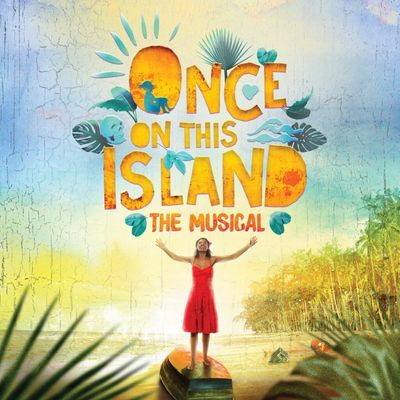
Once on This Island, Winner of the 2018 Tony Award for Best Revival of a Musical, is the sweeping, universal tale of Ti Moune, a fearless peasant girl in search of her place in the world, and ready to risk it all for love. Check it out here: onceonthisisland.com
Keep up with me: @KenDavenportBway
Transcript
This transcript was automatically generated and might contain errors.
[0:00] Ken Davenport: I wanna be a producer with a hit show on Broadway.
[0:07] Ken Davenport: You're listening to the Producers Perspective Podcast with your host, Tony Award winner, Ken Davenport.
[0:13] Ken Davenport: Hey everybody, it's Ken Davenport here.
[0:16] Ken Davenport: Before we get to this week's podcast, which features Max Grossman, uh theatrical agent Max Grossman telling you why he believes we shouldn't scream at each other.
[0:27] Ken Davenport: Seems obvious, but in the world of agenting, screaming is very common.
[0:31] Ken Davenport: Max doesn't agree with it. You'll hear why in a moment.
[0:34] Ken Davenport: But before we do, this week's podcast is brought to you by my own production of Once on the Silent, which sadly but proudly, we posted a closing notice last week.
[0:45] Ken Davenport: Sadly, because this incredible revival will come to an end on January 6th.
[0:49] Ken Davenport: There's like only 30-something performances left.
[0:51] Ken Davenport: Proudly because we've had a heck of a run for a revival, well over a year.
[0:54] Ken Davenport: And of course, we took that Tony Award home.
[0:57] Ken Davenport: Uh last Tony Awards for Best Revival of a Musical.
[1:00] Ken Davenport: If you haven't seen Once in this Island, I urge you go.
[1:03] Ken Davenport: Uh, it's the type of production of, you know, I'm so proud of it.
[1:06] Ken Davenport: It's why I got into the theater to produce shows just like this.
[1:10] Ken Davenport: Uh Visionary Direction by Michael Arden, and to me, it's what all revival should be.
[1:15] Ken Davenport: Not just a recreation of the original original, but a re-imagination of the original.
[1:20] Ken Davenport: Uh, it honors that incredible score, that incredible production of Aaron's and Flaherty, uh, but does something new with it.
[1:27] Ken Davenport: Go see Once on This Island today.
[1:30] Ken Davenport: I mean it today. Go check it out.
[1:31] Ken Davenport: Get your tickets at onceonthisisland.com or telecharge.com.
[1:35] Ken Davenport: And now on with this week's podcast at Max Grossman.
[1:42] Ken Davenport: Hello, everybody. This is Ken Davenport.
[1:45] Ken Davenport: Welcome back to the Producer's Perspective podcast.
[1:48] Ken Davenport: You know, we talk a lot about with the artists who make theater happen.
[1:51] Ken Davenport: Today we're gonna talk with one of the power brokers behind those artists.
[1:55] Ken Davenport: And I was just talking with my guest today about how so few agents have actually done this podcast.
[2:00] Ken Davenport: Some aren't even allowed to do them.
[2:02] Ken Davenport: Well, today uh we have one of those theatrical literary agents from Abrams Artist, please welcome to the podcast, Mr. Max Grossman.
[2:09] Ken Davenport: Welcome, Max.
[2:10] Max Grossman: Thank you very much, Ken.
[2:12] Ken Davenport: So tell me, when you were growing up, were you did you always want to be an agent?
[2:17] Max Grossman: No, like that's what I'm gonna do. No, no, no, no. I my my parents are writers, so I grew up in the industry. I remember their agent used to call and they'd kind of roll their eyes and let it go to the voicemail because they weren't gonna deal with it. Um so I kind of grew up thinking that they were not the bad guy, but not necessarily the most exciting profession in the world. Um my sister's a producer, she produces film and television, um, and I did everything to get away from this business. Uh was an engineer in school, went actually worked for MTA for a while.
[2:45] Ken Davenport: You worked in the MTA?
[2:47] Max Grossman: For the MTA, yeah. I was like I was a structural uh inspector. I went through the stations and and through the tunnels and looked for any sort of weak links and uh, you know, leakage from water coming through the sewers, all that sort of stuff, um, which gave my mother a heart attack. And after four or five months, I I moved on. But I I always wanted I always had an affinity for this business. I grew up going to the theater all the time, and um, I actually ended up at an agency because I thought I wanted to be a sports agent. Um, I wanted to be involved with sports, I'm a big sports fan, and I figured, okay, I'll just like go to the mailroom, get a job, you know, low level, learn what agenting is like, and then I'll transition to sports, and it just stuck. So, first desk I was on was a theater desk, and I've been there ever since.
[3:28] Ken Davenport: And where did you go to school?
[3:31] Max Grossman: Uh Columbia in the city here.
[3:32] Ken Davenport: And what did you major in?
[3:33] Max Grossman: Civil engineering.
[3:34] Ken Davenport: Civil engineering.
[3:35] Max Grossman: So you minor in uh, I'm trying to think construction management and structural analysis.
[3:39] Ken Davenport: So, what do you think is the most important thing that agents need to have as a skill in order to be a successful agent?
[3:48] Max Grossman: I mean, it it really varies because I think there's so many different aspects of it. There's the managing clients' expectations, I think is a big part of it, and really sort of team building. You know, I think the way I always, you know, saw my parents interact with their agent, um, and the way I sort of feel about with my clients is like I want clients who don't think they need me. I want to be able to prove to them that I can actually add something to the team. So I work with a lot of very smart people. Um, some of them are very business savvy, some of them are less so. But the bottom line is they know what they need in a deal. Um I want everyone to be to act fairly. I'm not interested in just going and getting the biggest payday I can for my clients.
I want the producer to feel like you know that they have a good deal. I want us to feel like we have a good deal. And so um I think some of it is client management. I think some of it is relationships with the producers. I have that engineering background, so I'm kind of a nerd when it comes to contracts and the deal points, trying to find uh ways to think outside the box. If producer wants one thing, a client wants one thing, they're different. How do we come up with something brand new to make everybody happy and try and break the mold a little bit? So there's a there's a bunch of different skill sets. Um I have some of them I think I'm very good at and some of them I'm not so good at, but um, you know, that's why we have an agency, it's not my own agency.
I've got Sarah Douglas and Charles Kobelman and Ben Izo and Katie Kamelli and Ron Gujazda and Amy Wagner, and there's a whole crew of us. So if I don't feel comfortable doing something, I can go to them and say, how would you handle this? Um and they can step in on any deal. It's kind of nice.
[5:13] Ken Davenport: So if you were writing a classified ad to try to hire an agent. How would you describe what an agent does? And you only have like two sentences.
[5:23] Max Grossman: Two sentences. It's a very short class. That's gonna be tough for me. I'm a very verbose. Um, you know, I think uh wow. We'll give you three. Maybe give me three sentences.
[5:34] Max Grossman: You know, just generally describe what you think uh I think and I think the the real goal of an agent is to get an artist out of any conversation that is not creative. You know, they should be focused on the art that they're creating, and so hire it's basically like hiring an attorney, hiring a business representative, uh, an accountant, where we are a tool for artists to not have to deal with the nitty-gritty of a contract, the nitty-gritty of a negotiation. So they can focus on making sure the set's beautiful, making sure the script is right, that sort of thing. So um, what is that in three senses? I don't know, but that's that's that's what I think the main the main goal is.
[6:07] Ken Davenport: That's a pretty good description.
[6:09] Max Grossman: So you're making the artist's life easier so they can make more art.
[6:14] Ken Davenport: Yeah, totally. I mean, at the end of the day, right?
[6:16] Max Grossman: Like, I'm a numbers guy, I'm an engineer. I don't do my own taxes. I have somebody do that for me who knows what they're doing in that work role.
[6:22] Max Grossman: And I go about my life and I do my job because I'm good at my job. Um, my designer clients, they should be designing, they should be working on building sets, hanging lights, well, not actually hanging the lights, but you know, designing the plot. Um, they shouldn't be dealing with you know indemnification language and insurance language and all that sort of stuff. That's just not, you know. I I love when they take an interest in it, and I I'm happy to explain all of it to all of them, but it shouldn't be their focus.
[6:47] Ken Davenport: So what percentage of the time of your work day do you spend negotiating contracts or deals that are in place or trying to find new work for people?
[7:01] Max Grossman: Um it's it's shifted over the years. I think originally, you know, when you first first get your desk, it's all about signing new people and finding new work. Um as those clients begin to take off, which is hopefully means I'm doing my job right, they're um there's less time to go look for new things. So a lot of the searching for new talent comes from referrals. Um, working with writers who really love an experience they have with the director, um, or director who worked with a writer or designer, whatever the case may be. Um, you know, we work together with um lots of agents. If I'm working with a set designer, let's say, and um Jack Tantliff, you know, represents a costume designer, we're gonna have a conversation about what are the deals and let's make sure everyone's sort of treated fairly.
And then sometimes you get through that process and one of the designers isn't represented. Okay, well, let's bring along for the ride, and then you start to meet that person, develop a rapport, and you might take them on. But most of my day is really spent negotiating now or doing the contracts themselves. Um, I could kick it to business affairs and have someone do it, but I like it too much. So I spend a lot of time actually going through the paperwork. Um, Sarah Douglas, who is one of my mentors, is the same way. She does every contract herself.
[8:06] Ken Davenport: So I was gonna ask you about mentors. What's the best advice you got when you got that first assistant gig?
[8:12] Max Grossman: Uh best piece of advice that you got that you still think about to this day.
[8:17] Max Grossman: Uh I mean, there's one of them that I think is important to remind me. Like, I'm uh, you know, I think about the people a lot, and I want I want my clients, they're friends. My clients are friends, I care about how they feel about things. But the first piece of advice I got, which my colleagues and I laugh about all the time, was from an agent named Bob Broder, who's you know, Chuck Laurie's uh Chuck Laurie, the the Charles brothers, like everybody in television. He was my parents' agent for a long time. Um, and he used to say, uh, I don't smell them, I just sell them. It was all about like, I don't care if it's good, I just need to make sure someone produces this. And I think that's the extreme on one end.
Like, I obviously, like, I don't think he ever read scripts. I mean, he just went, okay, I'm supposed to sell this, I'll do it. Um, but it is important to remind myself that the goal here is it's a job, and I'm and I need my clients to work, I need to sell things. And so as I start getting bogged down in some nitty-gritty, it's good to remember that piece of advice. And that was literally my first interview, like for the job, that's what he said to me. So I will always remember that.
[9:13] Max Grossman: Um, but along the way, there's been lots of other lots of other advice, and I I'm lucky in that um I was actually speaking to another agent about this the other day. I got to work at ICM, that's where I started. And so I had my my first actual boss was Sam Cohn, who's a legend in the theater community and represented, he's kind of a the last of a breeze that represented actors and also lit clients across film, across theater. Um so he was my first boss. I learned a lot from him. Then I went through three other bosses at ICM who had completely different styles, completely different interests, um, and learned a little bit from each one of them. Then I went actually, I worked for Scott Rudin for a while.
I went to the producer side to your side of the table, um, learned learned a lot from him, um, and then went back to ICM but to Abrams, where I met Sarah Douglas and Charles Kobelman and Ronguyasta, especially as sort of the three leaders of that of that agency in the lit side, and they all do things completely different and work with different clients. So I kind of was able to pick and choose the best of all of them and um replace it with you know whatever I thought was appropriate. So I'm I'm lucky in that sense. I think a lot of agents rise under one person, one mentor, and they kind of become a mini version of that person. And I'm in this weird sort of conglomerate of all of them, combination of them.
[10:27] Ken Davenport: Let's get back to this. I don't smell them, I just because this this is something that's really fascinating me a lot about agents. Um, because look, I can't I consider myself, you know, I have to raise money, I have to sell theater owners on a theater or actors to do a show.
[10:44] Ken Davenport: And I only and that takes a good amount of salesmanship, but I always say I'm actually the worst salesman around because I can't sell anything that I don't believe in a hundred percent.
[10:53] Max Grossman: That's that's totally the case.
[10:55] Ken Davenport: But so I am sure, and we won't make you name titles, but I'm sure you've read material from some of your clients or seen shows from some of your clients, or you'd be like, I would much rather be at a ranger game right now.
[11:09] Max Grossman: Yes.
[11:09] Ken Davenport: Uh but but I do I do think that's actually to be honest with you, and sort of like take back, you know, the the Brodercloak quote I think is funny. I mean, I've always found it amusing. Um and it's a different time, and uh the the actual not really quote, but Sarah Douglas talks about all the time, and I think it's a really really good piece of advice for a young agent, especially, is if you want to take on a new play, especially like a new play, you're going to watch that play at least a hundred times.
[11:35] Max Grossman: If it gets all the way to where we want it to go on Broadway or it becomes a film or whatever the case may be, you're gonna see the first table read and then the 15th table read and then the workshop production and the regional production, and it's gonna keep going.
[11:47] Max Grossman: If you don't like that play enough to watch it a hundred times, you can't sign that person. You can't. I mean, or you're gonna make yourself miserable for the rest of your life.
[11:55] Max Grossman: The tougher thing, which I think you're getting at, is if I have a client whose play I love, and they write a new play, and you go, ah, that's not really for me. I think the only way to approach it is to be honest and say, listen, here's what this is why I'm not responding to the material, and engage in the conversation.
[12:11] Max Grossman: And I'm very lucky, and I can say this with a hundred percent certainty, my clients are good people. And I think they, when I initially assign somebody, I have that conversation with them and I say, I'm gonna be honest about all this stuff. Are you okay with that? And all of them go, absolutely.
[12:25] Max Grossman: And it might be hard news to deliver, but if I don't like something, they're gonna know. And I'm gonna tell them right away, and I'm gonna say, this, you need to work on, you know, the character or the, you know, whatever this C plot doesn't quite work for me.
[12:37] Max Grossman: And I'll be honest with them, and they'll know that going into the next draft. And I think there's no point lying. That's kind of the, you know, you've gotta be honest with everybody.
[12:45] Ken Davenport: So ever lost a client because of that?
[12:48] Max Grossman: Because of that? Um, definitely lost clients, but no, I don't think, uh, no, I don't think so. I mean, I think there is definitely a conversation to be had. I mean, I right now there's a few clients that I'm in that situation with, but it's a very open conversation, and I'm happy to read a script 50 times if I have to read it, if they're doing small changes, but there has to be some sort of understanding that if they're not quite cracking it, maybe it's time to move on to another project.
[13:15] Max Grossman: And again, I think I'm lucky that my clients actually are willing to do that, you know, are willing to trust me. And listen, I'm one opinion, so I'm also happy to say, let me give it to a colleague to read. You should give it to directors you trust, you to your, you know, your writer's group, whatever it is.
[13:30] Max Grossman: If I'm in the minority, okay, so I'm in the minority, that means it's a good piece of work, and then we gotta actually have a conversation about how we're gonna go out with it. Because, like you said, I can't sell something that I don't believe in.
[13:42] Max Grossman: But I mean, sometimes, you know, sometimes you have to. I can't think of the last time I really had to, and then that I'm lucky.
[13:50] Ken Davenport: I'm gonna get into this your dramaturgical expertise for a moment, because I'm as I'm talking to you, like I'm realizing you probably read more scripts than I do, and you read many iterations of the same script and see them evolve.
[14:02] Ken Davenport: So, in all the scripts that you've read, what's a common, common, I won't call it an error, but anything that you see often across multiple writers that you think needs to be improved? Generally, how do people come to you with these scripts? What needs to be done to them?
[14:21] Max Grossman: Well, it's interesting because I really try and stay out of the process as much as I can at the beginning. And in theater is very different than television or film. When it's TV or film, um, I've learned this from managers I've worked with over the years, I kind of stole it from them, but you know, it really is about saying, give me 10 ideas about what you want to write a pilot about, what you want to write a screenplay about, and let's talk through them.
[14:41] Max Grossman: Give me a log line. Not interested in this, why this? Okay, now expand it to a paragraph. And so hopefully they're not jumping in and writing a hundred pages, and then I'm like, oh wow, this is boring material, and what, uh, what are you even creating here?
[14:54] Max Grossman: So we sort of work from the beginning. But in terms of errors, I think for plays in particular, it is not enough to just write a good play. There has to be a, in this, given the crunch for theaters, given, you know, there's a limited number of nonprofits in New York, and they all have, um, you know, their mission statements and the writers that they're, you know, they're already cultivating that they're commissioning.
[15:18] Max Grossman: Um, if you're gonna write a play sort of on your own in a vacuum, so to speak, there's gotta be a reason that play makes sense to produce now, um, not just financially, but in terms of whether that's socially, it could just be a funny play. You know, maybe we just need more comedy, and that's fine.
[15:32] Max Grossman: But why is it a play? Why is it not a television show? Why is it not a film? And what is gonna, um, what are people gonna go see that play and walk out and go to dinner and talk about and tell their friends to go see it? Like, what is the, what is the hook in that sense?
[15:44] Max Grossman: So, um, if you're a great writer and you write a great play and you don't necessarily have that, um, that theatricality to what you've created, um, that's fine. We'll go stab you on a TV show because you're great with character, you're great with dialogue. There's definitely somewhere to be.
[15:59] Max Grossman: But to get a play produced, there has to be something else behind it. And obviously you know that more than anybody as a producer. You know, Once on This Island is a great example of taking a very good script and a very good score, and then, you know, with Michael making a production that really stood out, and people say, you gotta go see the show. It's different than the other 41 shows that are playing right now.
[16:19] Ken Davenport: So is there a myth that you think exists about agents that you'd like to dispel?
[16:26] Max Grossman: Um, well, it depends on the agent. You know, I think, uh, yeah, I mean, look, uh, we get a bad rap because, um, and it's things we've talked about before too, you know, some agents can be obstructive and try to prevent deals from happening if they don't get their way.
[16:43] Max Grossman: Um, what I will say, and I think it's, there's a new generation sort of coming up, and I think, um, and we're all very, we're good friends with each other, I would say. If any of them are listening, hi guys. You know, I think we actually help each other out. We want our clients to succeed.
[17:00] Max Grossman: Um, what I think the myth is, and it may be that there are still some agents that do it, is sort of the agents going rogue and doing their own thing and saying, great, you know, I'm gonna get this deal done, I'll let you know when you have to sign, and this not communicating with their client at all.
[17:14] Max Grossman: It's not the way I work, it's not the way most of my contemporaries work. We're very involved in communicating with our clients. But going way back to Mr. Broder and sort of the old generation of television agents, you know, with packaging and things, there was an obstructive nature to it where clients were losing deals because agents were looking out for themselves first.
[17:33] Max Grossman: Um, it's a real problem. That I mean, um, the writer's guild is dealing with it right now. There's a lot of, there's a lot of articles I would encourage people to read about how the writer's guild is trying to get rid of packaging and put the writer first and not the agent.
[17:46] Ken Davenport: So are they myths?
[17:47] Max Grossman: I don't think so. I think some of it is real, but I think it's changing. Um, and especially on the theater side, I think it's rare to not have, uh, agents be collaborative and help their clients.
[17:57] Ken Davenport: Do all of your theater clients want to write for film and TV?
[18:02] Max Grossman: A lot of them do, yeah. I mean, I think it's actually funny. I think, I mean, I grew up on the theater, right? My parents were TV writers, but they started in theater. My mom worked for Hal Prince for years, my dad was a company manager, like I'm a theater kid.
[18:15] Ken Davenport: Wow, you really are.
[18:16] Max Grossman: Yeah, it's a kind of, yeah. I mean, I never acted, I was never, you know, in the school play or anything like that, but like I, you know, I'd come to New York and see 20 shows a year ever since I was like three years old. So I've, you know, I know it well, I love it.
[18:29] Max Grossman: Um, I think a lot of playwrights, they chose theater for a similar reason that I'm in theater. It's their passion, they love it. Um, it can be very lucrative. It can also be, uh, really discouraging, and there can be no money involved.
[18:43] Max Grossman: So I think some of it is financial pressure to move into television and film. Some of it is, you know, after a while they start to, you know, you start to realize, oh, TV's actually kind of great. We're in a golden age right now.
[18:53] Max Grossman: It's no longer like writing a sort of bubbly sitcom for NBC. Not that there's anything wrong with that, but there's all these streaming networks and all these cable networks you can go write for and feel like a playwright and write the things you want to write and actually get paid pretty well for it.
[19:08] Max Grossman: So, um, some clients say they never want to do it, usually two or three years in, they go, okay, maybe we should start talking about TV. Um, so yeah, but it's good. There's a lot of outlets.
[19:17] Ken Davenport: So the most successful that make that transition, what characteristics do they have? What makes them able to work in both worlds?
[19:29] Max Grossman: These are very different mediums. Completely different. And I think, you know, it depends on sort of what the path is. If you want to be a staff writer, I mean if the goal is I want to break into television and work in a room with other people, it's really about dialogue and character and collaboration.
[19:48] Max Grossman: And so, uh, coming from the theater, collaboration is a no-brainer. You can't do anything by yourself, really. And we focus, I think, more than anything on dialogue and character.
[19:57] Max Grossman: Um, because those scripts have to, you know, they have to work no matter who's directing them, they have to work no matter who's starring in them. So it's a real focus on the characters in the dialogue.
[20:06] Max Grossman: And so if you're gonna go work in a writer's room, those skills transfer perfectly. I think the tougher thing is when you're trying to sell a trying to actually sell your own original idea, um, and you're working in a different medium and you have to actually address, you know, an A plot, a B plot, and a C plot, set up the B plot and C plot for episode three, all on the pilot while introducing all the characters you can, but not overintroducing, and you have 30 pages to do it.
[20:30] Max Grossman: And that's when you start to get into, okay, maybe structurally it's a different form. But if you're just joining a staff, it really does actually transfer pretty well.
[20:40] Ken Davenport: So, and how different are the deals for you? I mean, is it like learning a whole different world?
[20:48] Max Grossman: Um, well, it's interesting. I mean, the writer's guild is very, very prolific. So if we're talking about staff writing deals, I mean they've negotiated 200 pages of every possible deal point you can think of. So you're really just talking about money.
[21:01] Max Grossman: Um, you're talking about outs, right? If I have a couple playwrights that are staff right now, or it's like, we want to go, uh, we have a play opening at whatever theater company in whatever state and we want to go be there for rehearsal, and how do you get them out of the room for that?
[21:14] Max Grossman: A lot of the bigger networks and studios will not allow you to develop your own work. You know, if you're on a show as a staffer, it's like, listen, you're working for us. Um, and effectively that's what staff writing is, right? You are an employee, you're not getting paid on the lowest end per episode, you're getting paid weekly, the same way anybody who goes to an office gets paid.
[21:34] Ken Davenport: So give us an idea of how much that is.
[21:36] Max Grossman: I mean, it's, and it's all public. So there's a, there's um, like a base, uh, I'm trying to think, first year for a network is like 4,000 and I actually think it's 4,068, if I'm right. Somebody can check that. But I think that's it.
[21:49] Max Grossman: And then when you get into the second year, it bumps tremendously. Um, again, this is for a network show, so they, you know, it varies, but you're looking at maybe sixty-eight hundred dollars a week.
[22:00] Max Grossman: Um, which look if you're, if you're on a, that's the other thing that's super interesting. If you're on a 10 episode show and they're gonna like, you know, grind out those episodes in 15 weeks, you're getting paid for 15 weeks and then you go home.
[22:13] Max Grossman: Um, if you're on a major network show that's 22 to 24 episodes, and there's, you know, 15 people in the room, you're gonna get two weeks off the whole year.
[22:22] Max Grossman: And so you end up making a lot of money, but there's no time to go write your play on the side, there's no time to do your spec script, like you're working for them.
[22:28] Ken Davenport: So it sounds like an actor deal, strangely enough.
[22:31] Max Grossman: It's about money and outs. It's like the same thing we deal with on Broadway for actors. Totally.
[22:35] Max Grossman: And the outs are tough. I mean, you know, if you're especially for like the major, like a, like a universal or Warner Brothers or something like that. I mean, there's no outs. You're, you're gonna, unless you've established yourself as a higher-end producer, a co-producer, or something like that.
[22:48] Max Grossman: And in that case, you're usually involved either really early on in the process or you've created the show, in which case, um, by year one or year two, you may actually just say, okay, I'm gonna go run with it, and I'm gonna go create something else.
[22:59] Max Grossman: And so you kind of, it's easier to get the outs. But for staff writers, it's tough. It's very tough.
[23:04] Max Grossman: When you're negotiating with producers in the theater now, you negotiate with lots of different types of producers.
[23:12] Max Grossman: Who by name and birth date are the ones who negotiate with the most?
[23:16] Ken Davenport: No.
[23:16] Max Grossman: The short list. But the ones that you do enjoy negotiating with more than others, what why?
[23:25] Max Grossman: Actually, it's really funny. I was just talking to a client about this, because we're about to jump into a negotiation with somebody who I don't particularly like negotiating with, lovely person, but it's difficult to negotiate with. And so I have no interest in like screwing a producer over or making a GM look bad at the same time. Like I want to get as much as I can for my client. And so the general managers that I really like working with and the producers I really like working with are open to the conversation. Where if I say, listen, I want this, I better have a reason why I want that, not just because I said so, but because you know, given what the production is and the assistant weeks, or whatever we're talking about, right?
Like that we can actually, this deal makes sense, please give me this in order for my client to do their job appropriately. And if the response to that is no, absolutely not because I said so, then I'm not happy. If the response is no, because here's what the numbers are, right? Like, I'm happy to be transparent about it, I can only do X, Y, and Z. Let's talk about how your client can get the job done for what we have, and there's a collaboration there, then even if we end up making no progress on the deal, I know my client feels good, I know we're all on the same page, and we're gonna go into the production, you know, as friends. If it's the people that sort of just put up a brick wall and say, I said so, and therefore you don't get this, that I have a hard time doing with.
[24:57] Max Grossman: If you could get all the producers and general managers in a room, what is one thing you'd tell them all that you could tell them at the same time?
[25:06] Max Grossman: That this is theater, not brain surgery, no one's life is at stake, and we all need to calm down a little bit, I think is kind of the there's a lot of yelling, and I know that that's just that's any job, right? But I think for whatever reason, people get really worked up, people take negotiations personally, which is silly, and unless someone's out to get you, which again, it's like why if I had them all in a room, I would say, everybody just chill out. It's all gonna be fine, let's all work together. It's a very small industry, as you know. We're gonna run into the same people over and over and over again. Um yeah, everyone should just you know have a beer together, and you know, we'll keep working and try and put good art out there.
That's really the goal of it. So when people get worked up or take things personally, it's tough to deal with. Um, it's something I used to get really fired up when I was younger all the time and found myself screaming and yelling, and only recently in the last seven years I've been like, what the fuck am I yelling about so much? It doesn't actually help.
[26:06] Max Grossman: No, and that well, the other thing that's actually super interesting about this is like if a GM or a producer, if I'm in the middle of a negotiation and they start screaming at me, there's a decision that I have to make about what I'm going to go back and tell my client. Because in reality, if I go back and say, Wow, this producer, like, what a jerk. Like he screamed at me, he said, You're a hack, like, you know, you don't get the assistant weeks, you don't get the you know, green M&Ms in your dressing room, whatever ridiculous thing we're arguing about. Um, if I go back and tell my client that, I'm just like fueling the fire, right? And that's just gonna escalate things. And I have a decision to make is that actually helpful or hurtful?
And what I have to actually consider more than anything is my client and how my client feels and whether that process is going to be pleasant or an absolute nightmare moving forward from that horrible conversation I had. So I think there are some agents that just go right back to their client and say that producer's an asshole, and like you should walk away from this, and like it just becomes incendiary. Um I am very honest with my clients, I tell them everything, but I'm not gonna just throw a producer or GM under a bus. We all have our, you know, less than ideal moments where we yell and scream and we just gotta like calm down a little bit. But that is that is one of the things I think people need to think about is um just because we're having a conversation doesn't mean that that's not gonna get around, you know, and you don't want to be known as the person who's a jerk. So yeah.
[27:24] Max Grossman: How do new writers get to your attention?
[27:27] Max Grossman: I mean, a lot of it's referral, it really is. Um, one, I love my clients, so if they really believe in somebody and they're saying you need to read this person, I will do so. Um, I find it happens a lot, like because I would be thinking that oh, they'd be so afraid that you're gonna focus more time on their buddy who's a better writer than I am. Oh no. Well, again, I I'm very lucky, and I know it sounds ridiculous, but like my clients are they're good people. Like, I um a little side, a little side tangent for personally, like I was very sick like seven or eight years ago and was in the hospital and had a bone marrow transplant. I went through this whole horrible experience, which I'm totally fine now, a hundred percent fine.
Um, but when I started as an agent, I was like, I'm not gonna deal with jerks. I'm just not gonna, it's not gonna happen. I want clients who share my vision, I share their vision, and we work together. And so they my clients know that it's not a huge list. I think all in in terms of even just having like you know, teams. If I counted teams as individual people, it's probably like between 40 and 50 people. Um so I know them all very well. They all know each other. Um, we've been to the same events and openings and things like that. So I also I think when people bring me somebody, it's not like they're sending me somebody every month, right? It's like maybe once every two years, they're like, Listen, I'm in this writer's group, you know, this guy or woman is very great, and you should really pay attention to them.
And I'm always happy to read it, and I'm always happy to say, okay, great, I'm not a right fit for you, but how can I help? Um, and maybe one of my colleagues is the right fit, or maybe, you know, again, I'm friendly with the other agents, especially of my generation, so you should go talk to Paradigm or UTA or whatever it might be. Um, yeah, but they're I don't know, they're just very generous. There's no one's really um, you know, and I and I I don't have I try to keep my writers like very different. So there's not if somebody, this is a really stupid example, but like if somebody writes farce and then somebody writes more like you know, situational comedy, those are two different things. And I don't have like six farce writers and like six people write situational comedy, it's they're they're different, and that makes it easier for me.
So if I'm submitting things, it's very clear, like, oh that's for this person, maybe for two people. Um, yeah, I don't know. But it's that's that's where most of it comes from. And um, it's hard to say no to a client, right? So if they send me a script, I have to read it, can't not read it. So um, yeah, it's good. And I've got my assistant also, Kevin, is amazing, and he reads anything that comes through, he reads too, so we're able to talk about it. And if I'm a little blinded because I love that client and I want to make their friend happy, and he'll be like, I don't know, it's not so good, or vice versa. Where I'm like, oh man, you know, I really don't want to take on another writer right now. Like we're at max. And he's like, but did you read this? This is great. So he's a great resource as well for me.
[30:04] Max Grossman: How sharky are your waters out there with your fellow agents? Are you have to worry about clients getting poached constantly, opening night parties, you hiding your writers in the corner?
[30:16] Max Grossman: Yeah, I mean, look, I think it's so it's such a it's such an interesting question because people, the poaching is real. Um, it happens to us all the time. Um, I think every agent, every agent you talk to, including like my mentors, would say, Well, we don't, we don't poach. And I'm like, really? Here's the list of the last 15 people, like when I was your assistant, I know you did this, like I'm watching people at my agency do it. It's um I can't worry about it. I think it's um there's two relationships you have with the client, right? You have a very at least for me, I have a personal relationship with all of them. I try to get to know them, their families, and and become friends. Um, and then there's also the work relationship.
If I'm not doing my job, then I deserve to get poached. And if I'm not taking an interest in them as a human being, I deserve to get poached. And so I think there's a natural protection that like I've definitely lost clients before, and to be honest, in each situation, I've gone, that makes sense. There's not a lot. I think it's been an agent for like six years. I would say it's less than five that that's happened, but it's happened, and I've gone, like, well, that makes sense. Um, so yeah, it's definitely sharky. And again, uh, you know, a testament to uh to my colleagues um at Abrams who are always sort of like there with me. So if uh, you know, we're worried that maybe someone doesn't feel taken care of, they'll step in and be like, hey, you've got seven agents now working for you.
And and my contemporaries at other agencies, we were all assistants together, we were all in the mailroom together, you know, we were all we all root for each other. Uh a former colleague of mine um who just they announced a Broadway show, which has a client on, and I called her, I was like, that's awesome, it happened. You know, so you know, we're all we're all friendly, and I think that also helps mitigate things a little bit. That said, the other generation may look at us as sort of like, oh, these, you know, these young kids are, you know, we're gonna take all their clients, and it's happened.
[32:09] Max Grossman: So all right. My last question, which is my genie question. I want you to imagine that the genie from Aladdin comes to visit you and grants you one wish.
[32:17] Max Grossman: Is this James or is this like, you know, Robin Williams? So I can put this. Which one would you like to represent?
[32:23] Max Grossman: Both. So he grants you one wish, but here's the condition. You only get to wish away the one thing that drives you so crazy about this business that gets you yelling and screaming and fired up. What's the one thing you'd ask this genie to wish away?
[32:44] Max Grossman: Uh and this is like uh disrespect, I think is is the is the key. There's a lot of um, I'll put it to like this. When I worked for I worked for Scott Rudin, um, you know, everything from answering a phone to like making casting lists to like giving notes on scripts that went out and you know made $50 million of the box office. Um I know what it's like to be on his side of things. Scott was very good to me. I know there's a lot, you know, he's a very difficult person. He was very good to me while I was there. And I still talk to him from time to time. I learned what it's like to be on that side. On the general management side, I have a couple friends that are, you know, I negotiate against them all the time, but they explain to me what their hurdles are.
Um I want people on the other side of the table to learn what hurdles my clients have too. What it's like to actually build a set, you know, on a shortened timeline, what it's like to actually revise a script 50 times, and technically the contract says you get one draft, but like really they were like 50 drafts, like a respect of everyone's time, and that this is everyone's profession, and we need to be respectful. So I'm not gonna yell at a producer because they gave me a crappy deal. I want to know the reasoning behind it. And I want those producers when I say, look, my clients, you know, spent the last three months touring theaters, you know, trying to figure out whether another play works there or not, that there's a respect of their time and their artistry, and they're not just like, oh, it's this little artist who cares.
So that's that's the big thing. I think if we all respect each other, you know, we'll all chill out a little bit more, and I'll be a much easier business. So that's for sure. And relationships will be better, and shows will be better, negotiations will be better. It all starts with respect.
[34:20] Ken Davenport: Exactly. That's uh one of the most insightful genius we've had on the podcast. So thank you for that, Max. Thank you to all of you for listening, and we will see you next time. Look out Broadway here I come.
© Broadway Podcast Network, All Rights Reserved