

Joan Marcus is a theatrical photographer based in Manhattan, New York, United States. She has been active as a theatrical photographer in Washington, D.C. and New York City for most of her career... Read More
From the show: The Producer's Perspective Podcast with Ken Davenport
Featured Shows



About
Joan Marcus is a theatrical photographer based in Manhattan, New York, United States. She has been active as a theatrical photographer in Washington, D.C. and New York City for most of her career. Starting in 1986, she has been a photographer on Broadway productions, covering over a hundred shows including Wicked, The Lion King, SisterAct, and The Book of Mormon. She is considered to be "one of the preeminent Broadway photographers." In 2014, Joan Marcus was awarded a Tony Honor for Excellence in the Theatre at the New York Broadway Tony Awards.
Someone with the skill of Joan Marcus could take photos for any industry, including those who pay a lot more than we do, but she stuck it out here with us as part of the Broadway family. That’s why I was glad to have her on the ‘cast discussing things like:
- How she turned her insecurity about ever working again into a multi-entrepreneurial hustle . . . including a blue-jean design company!
- The keys to a great theater photo and how that photo can be used in advertising and marketing.
- Her unique perspective into what makes a show work . . . or not . . .
- Keeping up with technology in the arts.
- What she would change about how photos are taken and WHEN.
Are you looking for a way to better promote yourself in the industry? Sign up for Promote U!, the marketing and productivity conference for theatre-makers where you’ll get practical, hands-on advice from leading experts on a range of topics.
Keep up with me: @KenDavenportBway
Transcript
This transcript was automatically generated and might contain errors.
[0:00] Ken Davenport: Uh, Joan, you've done like how many shows?
[0:02] Joan Marcus: That's a little bit. How many shows do you think you've shot throughout your career?
[0:06] Joan Marcus: Over a thousand.
[0:07] Joan Marcus: Over a thousand. Considering it's between Washington, DC, off Broadway, off off Broadway, regional, and Broadway and tours, probably close to a thousand.
[0:18] Ken Davenport: And let's just do some quick numbers because we like data here. So literally, you've taken a like a million or more photos.
[0:27] Ken Davenport: I want to be a producer with a hit show on Broadway. You're listening to the Producers Perspective Podcast with your host, Tony Award winner, Ken Davenport.
[0:40] Ken Davenport: Hey everybody, Ken Davenport here. In just a few minutes, we're going to get to Joan Marcus, the Tony Award winning photographer, and hear her story about how she built her career as one of the Broadway photographers out there and all the entrepreneurial activities she engaged in before she found photography.
[0:58] Ken Davenport: But speaking of entrepreneurs out there, uh this podcast is sponsored by something we are doing here at the office that we are very excited about.
[1:07] Ken Davenport: So as you may know, I have this mission to help get 5,000 shows produced by 2025. We call it 5,000 by 2025. Pretty simple.
[1:18] Ken Davenport: So in all of our research and in talking to all you entrepreneurs out there, writers, directors, actors, and everybody who wants to get a show on, uh, we hear over and over again that you need help with marketing. You need help with branding. What should a website say? Uh, what should a demo look like? How do I be more productive? How do I have a day job and work on my art and my dream job?
[1:42] Ken Davenport: So we've designed a one day conference called Are You Ready? Promote You. Promote You, the Marketing and Productivity Conference for Theater Makers out there. Again, actors, directors, designers, producers, everybody. A one day conference just for you, featuring some amazing speakers.
[2:03] Ken Davenport: Uh, Broadway stars, Sierra Boggess, Tyler Mount, Tony Howell, and yeah, I will have a few words as well. And we've got some more exciting speakers yet to be announced, talking about all things marketing and productivity.
[2:17] Ken Davenport: That conference is going to take place on Friday, May 17th. Friday, May 17th at Signature Theatre's Alice Griffin Jewel Box Theater. Go to PromoteUConference.com. That's PromoteUConference.com for all the details and to register today.
[2:36] Ken Davenport: We don't have a lot of tickets, and they are going to go quickly. Again, May 17th. Promote You, the marketing and productivity conference for theater makers. Visit that website today. Grab your ticket. We will see you there, and we will get you to be one of our 5,000 by 2025.
[2:53] Ken Davenport: And now on with the podcast.
[3:21] Ken Davenport: Welcome, Joan.
[3:21] Joan Marcus: Hi, Ken.
[3:22] Ken Davenport: Uh, Joan, you've done like how many shows?
[3:25] Joan Marcus: I was going to start this little bio here, but it's pretty ridiculous. How many shows do you think you've shot throughout your career?
[3:31] Joan Marcus: Over a thousand, probably.
[3:32] Joan Marcus: Over a thousand. Probably. I mean, considering it's been a long career. And Washington, between Washington, DC, off Broadway, off off Broadway, regional and Broadway and tours, probably close to a thousand.
[3:48] Ken Davenport: So a thousand, and let's just do some quick numbers because we like data here. How many photos do you take of each show when you're on a show? How many times do you press click?
[3:55] Joan Marcus: Now, I mean, it's like thousands because it's digital and you don't have to pay for it, and it's easier, I mean, now to just take thousands of pictures.
[4:10] Ken Davenport: So literally you've taken a like a million or more photos in your career.
[4:17] Joan Marcus: Yep.
[4:17] Ken Davenport: Well, we're gonna get to the technology in a second. But so tell me which came first for you, the love of photography or the love of the theater?
[4:19] Joan Marcus: Love of photography.
[4:25] Ken Davenport: So how did that start?
[4:26] Joan Marcus: It started in college. It was a hobby, and I ended up gravitating towards photography classes when I was in college, and I worked in the photo lab there, but it was much more like photographing walls and like fine art kind of abstracts, and I loved printing. I was a really good black and white printer.
[4:50] Joan Marcus: So when I got out of college, you know, I was trying to figure out what to do. And I was gonna end up going to graduate school because I really never thought about a career as a photographer. So I was gonna go to graduate school and I found out like that I was dyslexic in college. So I mean I could read, but I had trouble writing. I had troubles.
[5:12] Joan Marcus: That's pretty late.
[5:14] Joan Marcus: Yeah, it was like and and I struggled, struggled, struggled always with writing. I can read, but it was like transposing letters, and it was just really kind of a frustrating kind of thing. I mean, it's a form of dyslexia, I guess, not like what you really think of dyslexia, but I had like this thing about writing.
[5:34] Joan Marcus: So I kind of figured I'd never be an academic, but I needed something like very specific. So I applied to graduate school for landscape architecture. I had to get all these other jobs to save money, and one of them ended up I had this other job, the AFI box office at the Kennedy Center, which I'd had when I was in college. They had a photographer, and I knocked on his door to see if he needed a printer, and he did.
[6:00] Joan Marcus: And I guess at the time that La Scala was making its first US appearance and God knows how long, and there were like six operas there, and the photographer there was going crazy. He said, 'Can you come back later today and help me print?' And that was it. And that's when I realized this is cool. This could be a job.
[6:20] Joan Marcus: So I put off graduate school. I had three years, which I could take my acceptance, and I thought, I'll do this. This is great. And that's when I developed my love of theater. Although I think I had a secret love of theater before, because one of my favorite things to do when I was in high school, a friend of mine's sister was an actress in Pittsburgh at the Pittsburgh Playhouse, they would do like these shows, and we would go, my friend and I would go in with her mother to pick her up, because she was always like anybody and in West Side Story, and she was in Bye Bye Birdie, and we'd second act, and we would sit in the balcony, you know, and go pick her up. And that was one of my favorite things to do.
[6:56] Joan Marcus: But I didn't know that it would ever be in my future. Ever. No, it wasn't a plan. It was not a plan.
[7:05] Joan Marcus: So then, you know, I was at the Kennedy Center. All this, you know, stuff was kind of new and all this really interesting things were coming and a lot it was a tryout house for Broadway. Roger Stevens ran it and he and Robert Whitehead and um Richmond Crinkley.
[7:25] Joan Marcus: Yeah, Richmond Crinkley. They would bring shows there and then they would go to New York. And so you know I stayed there for about three years. And then I decided I was going to be a photographer. So the only thing I knew really was theater. Theater photography. So I started getting jobs.
[7:44] Joan Marcus: Like I'd call all the small theaters and stuff. And it was really hard because like I didn't have a job and always worried about like making money. So why? I mean I mean it was just you know 'cause I always thought I'd be a bag lady. I mean it was like terrible you know I mean I was like always like worried so I always had so many jobs things like that I was doing so I wouldn't be poor and like I I made blue jeans I had this blue jean skirt business.
[8:11] Joan Marcus: I mean I had all these like side businesses because you couldn't buy a blue jean skirt at the time of the gap you had to split your jeans you know cut them apart and then you'd put like tablecloths in between them. You're probably too young to remember that but it was like I just made one of those for myself the other day it was like so I did like stuff like that and like I'm kind of going off on a tangent but I decided to freelance and I want to go off on this tangent okay so because what I I find interesting is that all of these were entrepreneurial activities.
[8:43] Joan Marcus: You were creating your own because I because I thought no one would hire me. I had like this deep insecurity that like I couldn't get a job. I thought if I make it my s if I do it myself, and if it's okay, then it ended up okay. Except for I did try to start a dog walking business and nobody it was like really early on and nobody in Washington they walk their own dogs.
[9:09] Joan Marcus: Not okay. They totally walked their own dogs. I just love this because so many people actually are insecure, so they won't do something on their own. You know, they go to work for they take a survival job or something. You had an insecurity, so you started like 17 of your own businesses.
[9:26] Joan Marcus: I had these things, and then that went out of business because the sewing machine broke and I couldn't afford to buy another sewing machine, you know, and I really didn't love doing it anyhow. So it was like that kind of went out of business.
[9:39] Ken Davenport: You love photography though. So how did you get those first jobs? You were knocking on doors?
[9:42] Joan Marcus: So I would do that. So I would call people. The thing about Washington that's different in New York, in Washington, at least it used to be like this. If you knew people, okay, you you'd get a job. I didn't only do theater photography, I did like a lot of events, okay. Ton of events and parties and things like that.
[10:05] Joan Marcus: So I had this little extra money, and even if I didn't like doing it necessarily, I would think I'll get more out of taking pictures at a reception, and I'll learn something from that than I would if I was a waitress.
[10:20] Joan Marcus: So I took everything as like kind of a learning experience. Don't look at this as a fail. I mean, I had these conversations all the time. Don't look at this as a failure. Can you learn from this? Was it how you spoke to someone? Is was it how you prepared? Was it you didn't look at your equipment right? Or you know you forgot to put film in your camera or something, or so you know, which they all happened. That all happened. A lot of the mistakes I made were for not, I mean, everything you do is important to the people you're doing it for, and you have to do that. But it was for like less high pressure things than like I eventually ended up doing. So, like a lot of stuff, it was a it was like I learned on might have been someone's birthday party, where even though that's it's important, you could go back, you could say that role of film didn't go in the camera, or it didn't advance. You could go back, can I get that picture again? So that like a lot of my learning was on things that weren't as high pressure as you know it kind of grew into.
[11:30] Ken Davenport: So let's I want to get to New York, but I do want to say that everyone who may not be familiar with your work. I mean, we've talked about over a thousand shows, but Joan has done so much extraordinary work in the theater, she actually won a Tony Award for her excellence in the theater. Uh so what was your very first job in New York?
[11:47] Joan Marcus: So my first job in New York was a show called Lillian in 19 mid-80s, 86, I think. And that was a show that by the time I did my first show in New York, I was shooting for most of the regional theaters in Washington. I had gotten a contract at the Kennedy Center, and I you know, I had all these other jobs too. And the Kennedy Center was becoming a real try-out place, and I had done uh there was a show, it was Lillian, and it was so starred so called well, and Kennedy Center produced it, it. It started in Cleveland, and then Kent came to the Kennedy Center and then came to Broadway. And that show was a really pivotal show for me because I did a very nice job on it, and I met Zoe Caldwell and Robert Whitehead. After that show, they produced another show when that was coming to Broadway. They called me and to see if I wanted to do it. That was my real first Broadway show. Then I started getting my name out, was out a little bit more than it had been.
[12:57] Joan Marcus: And then Le Miz came to the States in 1987 and it played the Kennedy Center. And I didn't do anything with it really, other than I printed pictures for them, because they came with their photographers. And one was um Michael LePortrent, who was from London, and the other one was a photographer named Bob Morishak, who I guess had been up at Williamstown, and um Richard J. Alexander had been there and he brought him on to be the second shooter and assistant. And I, you know, met them, you know, I met them and I drove their film to the lab and I printed their black and white prints. What ended up happening is Bob and I became friends, and then when he did all the reshoots, um he brought me on as their sec his second shooter.
Okay, and that's when I started shooting kind of the lame is and I was the second shooter and it was great. And this then Bob became a movie photographer, like he he became a unit photographer and a special special photographer on films, and he was away all the time. And so when that happened, then I kind of took over for the lay Miz things here, and that was the big musical stuff, and that's kind of where I started. And I was living in Washington.
[14:17] Joan Marcus: So then I got a couple more jobs in New York. I got Aspects of Love. I was the second second shooter on Phantom. That kind of started to bring me up to New York a lot.
[14:28] Ken Davenport: And how do photographers get their gigs? Is it is it the producer, is it the actor, is it the press rep?
[14:36] Joan Marcus: Like it's everything. It's like it's like it's kind of ever it was like kind of an every everything. You know, it was it was kind of like for me, it was being at the right place at the right time, at the right place in my experience, you know, what I could handle, what I wanted to do, and then what was kind of going on in New York. I mean, because Martha Swope had been here for a long time. She was getting older and was kind of doing less. I mean, it was kind of like a perfect storm in a way when you know I came up, and then I did a show in Washington called Larely Largely New York, which was Bill Irwin. It came to New York and they used my pictures. What happened was my the person I work for at the Kennedy Center's husband couldn't go to the opening, and she asked me if I wanted to come up to the opening, and I said yes.
It was pouring rain, and she said, I'm meeting this person for drinks before the show, and you're more than welcome to join us. And it ended up being Adrian Brian Brown. She then thought, hmm, this would be a great couple because I had just broken up with a boyfriend and he had broken up with a girlfriend, and so he was coming to Washington, and she had a barbecue, and I took him to the train station, and then I was coming to New York to show my portfolio to People Magazine, and we had dinner, and that was that was it. And so then, you know, I started dating Adrian.
[16:11] Joan Marcus: And so truthfully, I didn't want to leave Washington, you know, because I it was it's a very nice place, and it was really I loved it there. But it ended up that like there was way more opportunity for me here. Many ways in many ways. So coming up, you know, put me into like, you know, had I just come up here on my own, it probably would have been a lot harder. I probably never would have done it, truthfully. But that put me in the theater kind of and he his business that he hadn't started his business yet, but he was working for someone who was leaving the business, and he gave him some clients, and then Adrian started his business, like right at the same time.
[17:02] Ken Davenport: You guys have been called like a top Broadway power couple. And you it's funny because you don't think you know, it's like you just plow through, you just kind of work, and you you never think about it. It's like there's an insecurity, you know, that you kind of have, and so anyway.
[17:19] Joan Marcus: So what makes a great theater photo versus just a general photo?
[17:25] Joan Marcus: Well, I it's a couple things. I mean, I think it's gotta be evocative, it's got to have some kind of movement, it's gotta tell a story.
[17:35] Ken Davenport: I think it does. What has been your favorite photos that you've taken of a show? Like your favorite if if the Smithsonian called you today and said, We're gonna we've got room for one set of photos from one of the thousand shows that you've shot, which would you put in?
[17:53] Joan Marcus: Oh, I don't know. You know, because like there's so many things, you know, there's so many things like it's like the enjoyment of the show. Sometimes my favorite pictures are shows that didn't do very well.
[18:06] Ken Davenport: Like what?
[18:07] Joan Marcus: Like I loved Amelie's my pictures from Amelie. And I loved working on that show. I did. I loved it. It was so pretty.
[18:14] Ken Davenport: Um what when you say you loved working on a photographer, what does that mean?
[18:20] Joan Marcus: It's just, you know, the it was a combination of like how the show sits in the theater, um, the lighting, you know, kind of the staging, just made for really pretty pictures. And you just kind of can go along with it. Like some shows that are really fabulous, like plays are harder sometimes because like a really good play might be really hard to photograph, like proof, you know, was a wonderful like an amazing play, but you kind of struggle a little bit with something with that because people aren't together. It doesn't make kind of visual pictures, yet it's one of the best plays ever, you know.
[18:58] Joan Marcus: So it's it's a weird kind of thing. And one of my favorite things that I did, my favorite plays ever that I worked on was at the Kennedy Center, it was Iceman Comet that came to Broadway with um Jason Robards and Marnie Hughes and um Caroline Aaron, and that was like just amazingly beautiful productions, just so beautiful. And then the I had this wonderful experience where when I was at the Kennedy Center, I used when I I when I was working there, I had this whole series of every play that they did there, the American National Theater that Peter Sellers ran. He had this whole series of plays that he did, and you do the play, and then you'd get to do these fantastic portraits. And that that was a lot that was fun because I I felt part of it, you know, I had like more of a continuing relationship with it, and and that's kind of what I like to do, but you don't get to do that so much anymore just because things aren't done, and things aren't done.
[20:03] Ken Davenport: What's the difference between you when you take photos at the in previews or at a dress rehearsal and when you come back to a show six months later?
[20:12] Joan Marcus: It's it's evolved visually. I mean, the lighting is the the thing that changes well, costumes may change and staging may change, but um the thing that really evolves is the lighting because when you come in, they've been in, you know, sometimes it's the same, but rarely is it the same because you know they're looking at things and they're thinking, you know, lighting designers are painters, and they think, oh well, you know, that's too bright, that's too dark, that should be a different color.
[20:41] Joan Marcus: And so the lighting really evolves. In a way, it's better if you come back later because you get the full scale of what the lighting designer was going to do. So this push-pull, because of course as producers we've got to do. And you can't because it's, you know, you're up and running, and then when are you gonna have like a run through? And yet when you shoot from the back of the house, I mean, sometimes that's nice, but you know, you get a depth and it flattens things out, and you can't move really, so you can't line things up, and so it's hard, so you have to do it during the dress rehearsal. And so we talked about you've seen shows early on when you come to dress rehearsals, etc. You've seen a lot of shows very early in their process before being in front of the audience. Can you tell when a show is gonna work or not now?
[21:32] Joan Marcus: No. I used to like sometimes, like if I get to watch a show and not shoot it, I can tell. But what I, the more I shoot shows, the more I realize is you're just trying to kind of get the essence of something. You kind of are thinking about taking the pictures and putting that together. So a lot of times, truthfully, I'm not listening. Sometimes I am, and sometimes I'm not. So I kind of can't tell if something's gonna work or not unless I come see it. And sometimes I do, you know, like I'll come to a final dress that's prior to where I shoot, where you watch to see what's going on and stuff. And then you can kind of tell what's gonna work, but not always, you know. Like I've had one, I always thought that Sideshow was gonna be the biggest success ever, the original one.
I remember walking away from it and thinking this is a huge success. I left, you know, and I watched it and I left, and then I came back a couple times to that one, and I thought, maybe I was like totally wrong, you know. What, and even when I came back, I thought, why didn't this work? Another one was The Wild Party. That was at Manhattan Theater Club. I loved that production so much. I loved it. I thought, wow, what show were they at? And then there was another one, Richard Nelson's Good Night Children Everywhere, which was about these kids who were sent to live in England during, from England were sent, you know, away during the Second World War. It was such a great play. I have no idea sometimes. I have no idea.
[23:20] Joan Marcus: Let's talk a little bit about the technology because that's really changed. I mean, really changed. Okay, when I first started, okay. I guess when I first started assisting the photographer at the Kennedy Center, he had lenses you had to focus, okay? Me too. You had lenses you had to focus. They were fixed lenses. You didn't use Zooms because Zooms tech weren't as good and they weren't as fast for theater. So you had like fixed, you know, prime lenses, fixed lenses. So if you're shooting a show, you had like a wide lens, you know, a normal lens, and then a long lens. And so you had all these cameras on you. The black and white, you processed, but I sent it to a lab, and then the color you would send to a lab, and you would have these things called clip tests done, which were like they'd snip a piece of the film and process it, and then you'd look at it and you'd say, I underexposed, it was okay.
I over, and you'd push and pull your film, okay? And they'd process it. And then you had contact sheets, and then you had to print all these pictures. Okay. Then the next thing that happened was, I can't remember, I guess Zoom lenses came in that were okay. So then you didn't have to have quite as many cameras, and then autofocus came in, and then that really, that changed things significantly.
[25:09] Ken Davenport: How much does photo approval hamper that you want to do?
[25:15] Joan Marcus: Well, it doesn't hamper what you do, it hampers what's put out. Have you had any great photos that you were like, oh my gosh, this is a photo?
[25:23] Joan Marcus: Oh, all the time. All the time, you know, and a lot, and it's, and I understand it to a certain extent, you know, because you know it's the image of the people that are in the picture. You know, they see themselves a certain way, and they want to see themselves a certain way. So sometimes it doesn't make any sense, and sometimes like pictures that have the most emotion or movement, or ones that kind of sit in the drawer because someone doesn't think they look good, and then sometimes you have seven people that have photo approval in the same picture, and that's a tough one. But what has happened and is that the honesty in the pictures isn't quite the same. I mean, isn't that the way you can shoot now, and the way retouching in Photoshop has changed it? You can have the picture where the person's making a bad face and they look fabulous in the frame before it, you can kind of put things together a little bit.
[26:30] Ken Davenport: What about when your photos are used in advertising and marketing? Is there a difference between what just makes a good photo that could go in a frame or on a poster and what you believe is best to sell a ticket?
[26:46] Joan Marcus: Well, that's all that's a different thing because that's like art direction. Now, like art direction's great because there'll be a concept, you know, there'll be a concept and they'll shoot it. Like when I first started shooting, you know, like if you had a celebrity in a picture and they were trying to sell a show, they would just put a production picture in an ad, and it didn't necessarily work. But now conceptually, the ads now in front of house too, much better because conceptually they, it all kind of fits together, and they're not just throwing pictures in like they used to, which is a good thing.
[27:24] Ken Davenport: If you could get all the producers on Broadway in a room, what would you tell them that they may not know about photography that could get them better photographs?
[27:36] Joan Marcus: Well, it's a tough one now, okay? Because like I'm a product, you know, it's like I've done other things too, but like predominantly I'm the production photographer, okay. And so, you know, you get, you get better production pictures if you, I mean if you had, if you could do in an ideal world, like a couple run throughs, you know, maybe another, you know, so that you can shoot from a different point of view, which kind of makes for more interesting pictures. Um, maybe it's, and a setup call. You know, that is like the ideal kind of thing for production pictures. Um, but now production pictures kind of seem to take a back seat to like the social media that's going on because it used to be that that's what people saw with the production was the production pictures, and it was pretty monitored, you know, on when things were released, what was released, what people could release, and now you know, it's like eating lunch with a cast of on Saturday with whatever show.
So you see people's insight into theater is good or bad. I don't know. You know, it's like you see there's so much out there now. Actors have their own Instagram accounts as a fan and as, you know, patrons, and you get so much, you can see so much more about what's going on. And so it's the production pictures, you know, kind of are now not as important as they used to be because there's so much more out there.
[29:16] Ken Davenport: All right, my last question, which is my genie question. Okay. I want you to imagine the genie from Aladdin comes to you and grants you one wish. Okay. What's the one thing about Broadway that drives you crazy? Frustrates you. I don't think I've ever seen you without a smile on your face. Uh, so what makes you so mad that you'd ask this genie to wish away? It can be about anything. Photography, sippy cups.
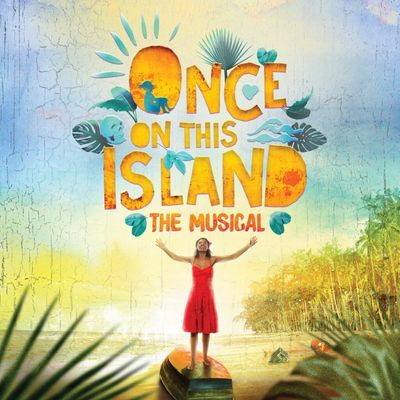
[29:43] Joan Marcus: Truthfully, I'm old. And I think, you know, I've done it so long, and I'm not skirting. The issue is that it was a little looser, you know, that there weren't so many regulations and rules and stuff like that. But I kind of understand why there are. So I want to thank you for that and thank you for joining us today. Um, what I love about you is you obviously love your job so much. I'll just tell this brief story. I, you obviously shot Once on this Island and Getting the Band Back Together. And one day I saw you in the back of the house at Getting the Band Back Together.
[30:05] Ken Davenport: My new camera.
[30:18] Joan Marcus: Yeah. My new camera. And I was like, Joan, what are you doing? Uh, we're not shooting today. You're like, oh, I'm just, I have a new camera. I just wanted to try it out. Yeah. Trying it out on my show, which I loved. And I just, uh, you obviously love what you do, so thank you for that. Thank you for your dedication to the business. Uh, thanks to all of you for listening, and we will see you next time. Look out Broadway, here I come.
© Broadway Podcast Network, All Rights Reserved