

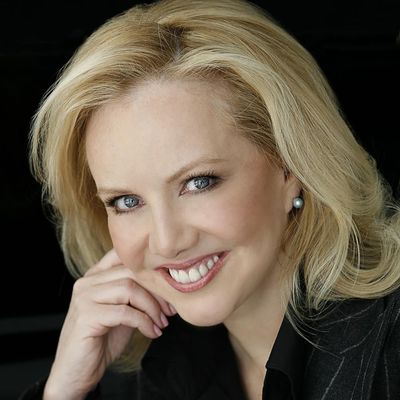
Susan Stroman is a theatre director, choreographer, film director and performer. Her notable theater productions include The Producers, Crazy for You, Contact, and The Scottsboro Boys. She is a five-time Tony Award winner, four for Best Choreography and one as Best Director of a Musical for The Producers... Read More
From the show: The Producer's Perspective Podcast with Ken Davenport
Guests
Featured Shows
About
Susan Stroman is a theatre director, choreographer, film director and performer. Her notable theater productions include The Producers, Crazy for You, Contact, and The Scottsboro Boys. She is a five-time Tony Award winner, four for Best Choreography and one as Best Director of a Musical for The Producers. In addition, she is a recipient of two Laurence Olivier Awards, five Drama Desk Awards, eight Outer Critics Circle Awards, two Lucille Lortel Awards, and the George Abbott Award for Lifetime Achievement in the American Theater. She is a 2014 inductee in the American Theater Hall of Fame in New York City.
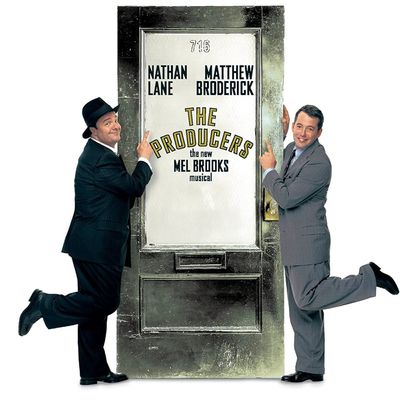
“Stro” started her career as a Choreographer of shows like Show Boat and Crazy for You, before following in the steps of Fosse and Bennett and becoming a Director/Choreographer. The Music Man, The Producers, Young Frankenstein, and The Scottsboro Boys are just a few of the titles on her long resume.
That transition from Broadway dancer to Broadway Choreographer to Broadway Director-Choreographer is just one of the things we discussed in her podcast, along with:
- How she convinced Kander & Ebb to let her and some friends create the (fantastic) revue that started her Choreographic career.
- Her first step when she’s creating “steps.”
- Why she doesn’t have a style, but how she does have a signature (and hear my mind get blown as I realize what she’s talking about).
- Why Choreographers make great Directors.
- How to work with titans of the entertainment industry like Mel Brooks and Woody Allen.
Oh, and, in this podcast, you’ll hear the debut of my brand new James Lipton-like question, which I’m calling “The Smithsonian.”
Keep up with me: @KenDavenportBway
Transcript
This transcript was automatically generated and might contain errors.
[0:00] Ken Davenport: I wanna be a producer with a hit show on Broadway. I wanna be a producer. Hey guys, it's Ken Davenport. Hear that music in the background? You know what that is? That is the brand new Daddy Long Legs cast recording, which just was released digitally. For those of you technologically confused, that means iTunes. So go get it. It's fantastic. Megan McGuinness, Paul Nolan, they sound stunning. Go get it today, and now on to the podcast.
[0:40] Ken Davenport: Hello everybody. Welcome back to the Producer's Perspective podcast. I am Ken Davenport and today. Okay, look, I'm just gonna say it. We're talking to one of the most successful director and choreographers in the business, both artistically and commercially. That's right, people. I'm thrilled to be chatting here today with five-time Tony Award winner, Susan Stroman. Welcome, Stro.
[1:05] Susan Stroman: Thank you. Well, I'm happy to be here. You can go on playbillvault.com to see all the credits, but we're talking big blockbusters like Crazy for You, Show Boat, The Producers, hello. Young Frankenstein, The Scottsboro Boys, Big Fish, those are probably just a few of the long list of credits of Stro, and I'm not gonna list them all again because it would take about 18 hours to get through them all. So we'll just get to the good stuff. How did you get started in the theater? Where did it begin?
[1:30] Susan Stroman: Oh my. Well, I have to say I have been in a dancing school since I was about five years old, and my father was a wonderful piano player, so I was that little kid that would dance around the living room to her father playing the piano. And I've always been in a dancing school my whole life, and it's because of my mother and father. They really admired music and felt it was important in one's life, and it was really being completely passionate about music and about my father's piano playing really. So I would start to create dances even at an early age because I would hear his music and begin to dance. So choreographing has been a very natural part of my life since I was a little girl.
[2:20] Ken Davenport: And where was this? Where did you grow up?
[2:22] Susan Stroman: I grew up in Wilmington, Delaware. I know, and I went to the University of Delaware, so I'm a Delaware gal through and through. And being in Delaware, that means you're close to Philadelphia, of course, and so I grew up doing community theater in the Delaware area and the Philadelphia area. So, and as much as I love dance, I loved theater even more, and I think it was I studied ballet and tap and jazz, and although I loved all three, it was dance in a theater and storytelling that I loved the most. So my trajectory instead of taking me to choreograph for ballet companies or modern dance companies, I really wanted to go into the theater because it was all about storytelling.
[3:11] Ken Davenport: Do you remember the first big show you saw, first big Broadway show or a touring show you saw?
[3:16] Susan Stroman: I remember very clearly. There's a wonderful, beautiful playhouse in Delaware in Wilmington, Delaware at the Hotel DuPont, and I would try to go there as much as possible, and it was a big deal to get downtown Wilmington. My parents didn't want me to go downtown Wilmington, but one time, without their knowing, I went down and I got a front row ticket for a touring company of Seesaw, and I sat there and out came this tall drink of water called Tommy Tune, tap dancing and clogs and girls in balloons and, you know, Giddle Moscow and a story about a girl in New York, and I thought this is for me. I really wanted to do this. It just was one of those shows that stuck with me.
[4:04] Ken Davenport: How old were you then?
[4:06] Susan Stroman: Well, I was in the last year of high school probably.
[4:09] Ken Davenport: So apart from the dances you created in your living room to your dad's piano playing, what was the first thing that you actually choreographed, the first show?
[4:20] Susan Stroman: Oh, well, let's see, it would have been in community theater, I suppose it would have been maybe Applause.
[4:31] Ken Davenport: Applause in community theater.
[4:32] Susan Stroman: Yes.
[4:33] Ken Davenport: Again, high school age, college age?
[4:35] Susan Stroman: High school age, yes.
[4:36] Ken Davenport: High school age. So you're choreographing back then.
[4:38] Susan Stroman: Yes, definitely. I even choreographed the halftime shows in high school band. Yes, I was choreographing at a very young age and creating.
[4:48] Ken Davenport: So how do you create? I think you know, everyone out there probably knows, oh, a book writer for a musical sits down at a keyboard and types. A musician or a composer may sit down at a piano and play, but I think the choreographic process is probably the biggest mystery of them all.
[5:04] Susan Stroman: I think so.
[5:05] Ken Davenport: So what do you do?
[5:06] Susan Stroman: Well, ever since I was little I would visualize music and still to this day I visualize music. When I hear it, whether it's an old standard or rock and roll or classical piece, I imagine all these people dancing and stage and costumes, the whole thing. So music isn't really a relaxing element in my life because my brain starts to spin. And I think the first thing I do when I do a show is really listen to the music over and over. And then a lot of it is arranging the music to enhance and support the choreography. That's another thing at a very early age I was inspired by watching Fred Astaire and Ginger Rogers movies, and it was a big deal when they came on television and I could see how when Fred Astaire would dance, the orchestra completely supported his movement, and I understood that at an early age too how Fred Astaire jumped in the air, so did the orchestra.
So arranging for the dance is also a big part of what I do when I create a new piece, and I work with the composer and I work with the dance arranger, but it all is one and very much part of even the time signature, it really talks, it tells a story. For example, in Crazy for You, Bobby and Polly, if I want them to be coy and shy with each other, they can play Shall We Dance like a soft shoe rhythm. If I want them to fall in love, of course we play it in three-quarter time. If I want them to chase each other, we do it in a fast two. So even time signature in a melody can help you tell a story and elicit emotion from the audience.
[6:58] Ken Davenport: And how much musical training do you have in that? I mean, it seems like a choreographer really has to understand.
[7:04] Susan Stroman: Well, I think so. I think you have to really understand music. I took piano and guitar when I was little, and but now it's all about the dance for me, and it comes quite naturally to work musically with people.
[7:22] Ken Davenport: So you are at the University of Delaware. Yes, you've got this long list of halftime show credits and Applause at the community theater. How do you jump from there to New York City and start to work professionally? How did that happen?
[7:35] Susan Stroman: Well, I was sort of a big fish in a little pond there in that area, doing a lot of the shows and in all the different community theaters, and at that time there were dinner theaters in that area, and one day I had a friend that said, "Let's go to New York and audition for something called the Goodspeed Opera House." And I just went along not really knowing what I was getting into. And I walked in and there seemed to be like 400 girls in this one room, which I couldn't believe, and we were all auditioning for the Goodspeed Opera House for a show called Hit the Deck. And they were gonna cast the whole thing that day, and out of all those girls, they picked two girls who were non-equity, and one of those girls was me. And all of a sudden I got a call saying, you know, this is when you start up the Goodspeed Opera House in Connecticut, and you're getting an equity card. And I didn't know what really an equity card was. I sold my car.
[8:45] Susan Stroman: And I'll never forget the first day of rehearsal when one of the cast members named Hal Shane sat next to me and said, "So, how long have you been in the business?" And I said, "Five minutes." And so then that was it. You know, I did Goodspeed, and then started to audition and did the national tour of Chicago. I was the Hunyak, and that was with Gwen Verdon and Chita Rivera and Jerry Orbach, and took acting lessons from Jerry Orbach while I was on the road, and it was sort of a whirlwind when I got started. However, the whole time I was performing, I was thinking I needed to be on the other side of the table. Although I came to New York as a song and dance gal because I could sing and dance, it wasn't what I wanted.
I wanted to create for the theater. I wanted to be a creator. And so I started to choreograph and direct small things like industrial shows, club acts, commercials, anything I could to be on that side, and it made me very happy, happier than performing.
[9:56] Susan Stroman: So I know in New York you can't really have a split focus. You have to choose one thing, and that's it. To have a split focus, people don't believe in you if you want to do a million things. You have to have a split focus, at least at that time. Maybe it's different today. But so I decided to not be seen any longer as a performer and just take my chances. And I was performing in a show called Musical Chairs. It lasted maybe two weeks on Broadway. But another fellow was in that show with me named Scott Ellis, and we were lamenting one day about how we wanted to be a director and choreographer and not be in a show, and so we decided Scott had done The Rink with Kander and Ebb, and I had done Chicago, and we thought, well, what if we asked them if we could take one of their shows and take it off-Broadway?
And we decided we would ask them about Flora, the Red Menace, and maybe we could do a small version of it. And the worst thing that could happen would be that they would say no. So we got brave and went and asked them, and they said yes. We couldn't believe it. They said yes. So then we had to find a place to do it, so we went down to the Vineyard Theater and pitched our idea about doing it in the form of WPA theater, and they said yes. So all of a sudden we were doing this Kander and Ebb show off-Broadway, we couldn't believe it. It was wonderful, and I think we made about $200 for the entire summer. But everyone saw it, and it had a little bit of a cult following.
[11:37] Susan Stroman: So that launched our careers. Um we became best friends with Candor Neb, and still to this day I just saw John Cander today. You know, he we have remained friends after all these years, and we created And the World Goes Round with them, and we did Steel Pier with them, and then of course I went on to do Scottsboro Boys with them, and then Hal Prince saw it, and I ended up doing Don Giovanni with Hal and then Showboat with Hal and today I'm doing Prince of Broadway with Hal. So he became a good friend and Liza saw it, and I ended up doing Liza's big show at Radio City Music Hall. So taking a chance and knocking on Cander & Ebb's door really launched our careers, and I never went back on the stage. Do you remember your work in Florida, The Red Menace back then? Do you remember?
[12:29] Ken Davenport: Yes, I do remember because there was um I think that I had a montage in there, you know, where Flora lived with all these artists in a big loft and a montage came together about all the things that they did as artists. And I think that that was a thing that Hal thought I would be good for, for like Showboat because there are big montages in Showboat and um yes, I mean it was great to and actually I think Cander really enjoyed working in a small venue also and having another shot at that show.
[13:02] Susan Stroman: So that montage you talk about and for those of you who don't know I was the associate company manager on that production of Showboat so I used to do Susan's house seats all the time. Um and that montage was such a brilliant passage of time in that piece. It was so wonderful. And you look you have these iconic numbers when I think about slap that bass and in Crazy for You, the little old lady number in The Producers. So many of these iconic numbers, what's your favorite? If the Smithsonian was putting one of your numbers into the institute, which one would you want them to put in there?
[13:38] Susan Stroman: Well it is hard hard to pick. I feel like in every show it's wonderful to if you can create an image in that show that goes with that show that an audience will remember and like the girl in the yellow dress or the walkers or you know there's something in every show that you want people to remember and something that they've never seen before. Um so I'm not sure. I think um I'm not sure. Probably um I'm not sure. There are a lot of them. There are a lot of images, yeah.
[14:24] Susan Stroman: Um it might be in Crazy for You, there was a moment where the girls came from New York City to Dead Rock, Nevada, and Robin Wagner, who's this wonderful set designer, gave me ten treadmills upstage, and the girls would just walk and they hooked arms and walked, and a sunset rose and this town came in. So as they walked, Robin would then bring the town in really slowly. And I remember thinking that was a very cool image, you know. But uh and you know, there's so many uh I love collaborating with my set designers, even in Bullets Over Broadway, Santo, the last scene where the gangsters are chasing Cheech, Santo gave me a theater that just spun on a turntable, and I was able to choreograph gangsters chasing each other on that, and that's something I had never done before, and it was amazing to be able to do that. So I do love collaborating with set designers.
[15:20] Ken Davenport: It's one of my favorite things. It's actually something I've never even thought of before, how the choreography and the set design are very interwoven.
[15:28] Susan Stroman: Well, yes, I think the more you know about the other designers' job and their art, the better off your own work is gonna be. I could make the most fantastic dance step, but if the costumes not right, it won't matter. Or I could do the most fantastic dance step, and if it's not lit right, it won't matter. So you all have to come together and collaborate, and that makes each everyone's work better.
[15:57] Ken Davenport: So I'm sure if I asked you to describe Fosse's style or Bennett's style, you could probably give me a description. Describe your style.
[16:08] Susan Stroman: Well, I think um it's very much in character. I think I really don't think I have a style that um is like Fosse's because Fosse is like Picasso, you know, he has a style and he sticks to it. Boom. And um, but I think mine is more about I would change it up. I like to change things up. So it's more about um the characters. I always want to make it believable when a character launches into song and dance. And so in creating these pieces, I even become these characters while I'm working it out. So Max Bialistock would dance very differently from Leo Bloom. And you know, you work these things out through motivation and character. I do have a lot of rhythm, even in my lyrical work, it's very rhythmic. So I think um rhythm might be a big um characteristic that is is it through all the choreography, and even even in a ballad or even in a lyrical moment is still rhythmic.
[17:10] Ken Davenport: So tell me about how you transitioned from being a choreographer to then being a director and how that was for you.
[17:18] Susan Stroman: Well, it was quite natural because when you are a choreographer for the theater, you really can only dance in character and you're always telling a story and pushing the plot forward. So it was quite natural. My first Broadway show to direct and choreograph was The Music Man, and um that was a perfect show for me personally because it was about a town that started, you know, in Iowa that everybody was stiff and they didn't move and stuck up, and then by the end of the show, everyone's doing the shipoopi and playing the trombone. So it had a real arc, it had a real journey through movement. And uh and it was about a music man, a man who believed in music and uh had a think method, and you know, and had a famous phrase of I always think there's a band kid. So that show was perfect for me to put both elements into because I feel like I knew every character in The Music Man; those people had crossed my life, and then of course it was all about music and dance.
[18:26] Susan Stroman: Uh and then you know, Contact really came from I happened to be in a club down in the meat packing district at one in the morning, as you do, and uh I was in this club and in walked a girl in a yellow dress, and she would step forward when she wanted to dance with someone, and then she would retreat back when she was finished with them. And I thought a girl in a yellow dress, because of course everyone was dressed in black, like good New Yorkers, and but I got obsessed watching her, and I thought, well, she's gonna change some man's life tonight. And about two weeks later, I got a call from Andre Bishop at Lincoln Center, and he had seen Steel Pier, and he liked what he had seen. And he said to me, if you have an idea, we will help you develop it.
And I thought, you know, I do have an idea. And I thought, let me put together a show about this girl in the yellow dress that I saw. And I called my good friend John Weidman, and we sat around and Andre and Bernie Gerstein gave me like 18 dancers in their basement at Lincoln Center where they have beautiful studios. And they gave me like four weeks to work something out and then left me alone, and then they came down and they saw Contact and they said, Okay, we have to produce this. And it ended up running for about three and a half years at the Lincoln Center. It's their longest running show.
[19:47] Ken Davenport: It was a beautiful production.
[19:51] Susan Stroman: Well, thank you. And I can't help but think of your earlier comment now. You started to talk about The Music Man, and instantly in my mind, this iconic image from The Music Man came, uh, which was the curtain call when you put the entire cast playing, you know, trombones and the American flag at the end.
[20:08] Susan Stroman: Yes. I mean, there are these incredible images of what you do that are huge takeaways that I've never thought of before.
[20:14] Susan Stroman: Yes, I've actually had a lot of people talk about that curtain call still to this day. I did a talk up at the Y, and some older gentleman raised his hand and he said that was the greatest thing he's ever seen. And I thought that was so lovely for because it was the curtain call. But you know, it was one of those when I read a novel, sometimes I'll close the novel and I always wonder how what those people are doing. And after reading going through the script of The Music Man, I closed the script and I thought, Well, what are those people doing? And I thought, well, you know, they're probably playing the trombone. And I remember asking Michael David if I could have a trombone teacher come, and every day at four o'clock the cast would go and learn the trombone, and he allowed that, he paid for that.
And I thought, look, it'll either work or it won't, you know, we'll know in a couple weeks, you know. And as I would walk past the door every day, it sounded awful. It just sounded terrible. I just thought, okay, this isn't gonna work because the trombone is actually harder to play than you think. And I thought it's never gonna work. And then I have to say, in like that second week I walked past that door and I ended up being like those mothers in The Music Man saying, Oh, that's my kids, they're doing it, they're doing it, they're playing a trombone.
[21:20] Susan Stroman: And so what was amazing when they all came out on stage, it wasn't only that they were playing trombone, but they were so proud of themselves that they were playing the trombone. There's a great pride that came on the stage and then the audience couldn't believe it. No one couldn't believe that was happening.
[21:35] Ken Davenport: Because it was clear that it was real when they were playing.
[21:38] Susan Stroman: Oh yeah, I can remember the expressions on their faces, like I can't believe I've been asked to do this and I'm doing it, I'm so proud.
[21:44] Ken Davenport: Yeah, they're very proud. Well, you talked about getting the idea of Contact in a nightclub, which by the way, I just would have loved to have seen you dancing up a storm in a nightclub. Uh but how else do you get your ideas or choose what you want to do? You're obviously an A-list director choreographer, so people are throwing things at you all the time. How do you decide I'm gonna do this one, I'm not gonna do this one? What jumps up?
[22:07] Susan Stroman: Well, I do you're right, I do have to connect with the material in some way, either creating my it myself with collaborators with writers and or um you know, someone does approach me, but I do have to connect with it in some way, uh whether it's the music or the story, because I just don't feel I will be able to do any justice to material that I'm being forced to figure out. But whatever it is, I do a lot of research on the show on the decade that it takes place in and the geographical area. You know, in Showboat people dance differently in the north than they did in the south, you know. So you do take everything into consideration in the research. You know, in Bullets Over Broadway, a lot of the choreography was based on the architecture of New York City in the twenties, you know, so you so the girls would hit positions of art deco lamps and those famous figurines that you would see on the sides of buildings and that would be in the choreography. So the choreography was very motivated at the time.
[23:13] Susan Stroman: Um and so in Scottsboro Boys of course it's uh based on a minstrel show so a lot of the steps in there were vaudeville steps that the guys did and uh and that actually came from Kander and Ebb and I wanting to and David Thompson the writer wanting to create something true or something real. A lot of times in the musical theater you're you are in a fantastical world or a made up world. And we got together because we just wanted to work together again and decided to uh wanted to do something real or based on a true story. So we started to do research on the great trials in America and of course the Scottsboro Boys is right on that list. And we started to do research off of that and uh was filled with amazing characters, eccentric characters and and how um that particular group of men you know changed the way juries were were chosen now.
I mean it really changed history in a lot of ways. So we started to think of how how we could do this show and we worked with Kander and Ebb uh you know once a week um for a long time and and they were on fire with it, you know, because Kander and Ebb they write for the underdog, you know, maybe this time. They write for people who are the underdog and are trying to achieve something. So the idea to write about nine um young men who were wrongly accused of horrific crime, they were they couldn't wait to write it. They just sort of poured out of them. And so and then sadly we lost Freddie um and the show sat on a shelf for a long time. And then Kander called and said what if we looked at this again and I said of course and and when we did look at it again I realized how much had been written and how much had been finished and so we took it down to the vineyard and uh they gave us a reading and and off we went and we started to work on it again.
They said yes I said yes. I know they said yes. But it's interesting how how shows come to be that was something where Kander, Ebb and I wanted to work with each other and that out of that just love of each other came the Scottsboro Boys. Something like Mel Brooks knocking on the door wanting you know to take a screenplay and making it into a musical and he knocked on the door with the screenplay you know nothing had been done and uh but of course he knocked on the door and sang opened the door and he sang that face, that face, that fabulous face and you know we sang all the way down the hallway and he jumped up on a chair and looked down and said hey I'm Mel Brooks like that. And I thought, you know, well whether this is not good I don't know how this is gonna go, but whatever it is gonna be an adventure of a lifetime, you know.
And Mel, you know, just uh it was an amazing uh time with him. It was just amazing. He's an extraordinary man and he's he's funny all the time and and he's become a good friend too. So I'm I'm quite fortunate to have these uh artists in my life that that I have admired and then and now have become friends with. It's you know, I have to pinch myself. Well, I think they have to pinch themselves a little bit too.
[26:32] Ken Davenport: Uh do you like getting involved very early with these projects? Like what do you think a director's role is in the writing or creation process?
[26:41] Susan Stroman: Well, certainly my my role is um from the beginning. I I really start from scratch with most projects and and develop them and uh and work with the writers uh as much as possible on it. Uh about twelve years ago I decided not to do any more revivals, although I'm offered revivals quite a lot, but I just wanted I just wanted to create for the theater. And and I was fortunate to have done three big ones, Oklahoma and Showboat and The Music Man, and they're so American and iconic and and learned a lot from them and their structure. But uh I I really just wanted to only work on new pieces. So in doing so, you either come up with them yourself or or someone hands you a screenplay. It comes in in a in in different ways. Um how how shows are done and how shows are created for me. Over the last couple of decades, have you noticed the audiences changing in their appetite for theater for dance? How have you seen what they want change?
[27:49] Susan Stroman: Well, I do I I do think on Broadway the audiences have changed. I mean, there are many more tourists, and I think producers are gearing towards more tourist shows or shows that have a uh have an appeal. Uh that oh what's the word? I think that's why you see so many revivals now too. I think financially it's so costly to mount a show that I think producers would love to have a short thing. Not like anyone anyone would want to have a short thing, but it's a little different now. Uh people won't take chances like they used to. There's not enough chances on artists I think. So it has changed. You've worked obviously with some of the best and biggest producers in the business. How do you like to work with producers? What's that relationship like for you?
[28:40] Susan Stroman: Oh I like it a lot. I like well some producers the thing is you get your best work from anybody when there's respect and respect in the room and um and I really do respect producers who are taking a chance on the theater. I mean right off the bat I respect them, you know and I I do like to work with them and I do like to hear what they're thinking and their opinions. I I do when there are a lot of producers though I always say at that first meeting that let's choose one person and that that's the person that gives me the notes and I can hear from all of you but I can only hear from that one person. And then that person will come and tell me oh I don't like the color of her lipstick or something like that.
And fine, that's fine. And then the thing is even if if you do get notes from producers, even if if something is off base or or not um you don't totally agree with it certainly though heightens that area to make you maybe think of something else. If there's something that bothers somebody even if you don't quite agree with it. It does put a little something around there that makes you think, oh maybe there I could do this instead. So I don't mind at all hearing from people. And uh but it is a way to do it. A diplomatic way, in a respectful way. So um because in in the end you just want the room to be feel safe. You want the room that you were working in to feel safe for the actors. And and if a producer has gone so far as to be producing for the theater, you know I think they they do love those actors and they do love people.
[30:20] Susan Stroman: Now you obviously had some pretty big massive hits throughout your career. Uh but not everyone can have a perfect record. But you didn't write these shows, right? So how when a show doesn't work, do you take it personally? How do you deal with it?
[30:35] Susan Stroman: Oh it's very sad when a show doesn't work 'cause the thing is, you know even because a show can be a financial flop, but that doesn't mean it was an artistic success for you. And I think that's how you have to think about these things. Each each show I do is sort of a stepping stone to the next show. I I carry what I've learned from that show on to the next show. And so when people refer to something as a flop, it doesn't really register with me. Financially yes and I do feel bad about that financially. But artistically there was always always good work. There's always great images to have seen um and there's always great performances to have seen. So as Mel Brooks says you hope for the best and expect the worst but you do have to hope for the best.
You have to hope that people love what you love. But I haven't done anything that I I feel that I didn't put my whole heart into, or I didn't put my whole soul into. Whether it takes to an audience is a different story. You know, and that's something if we all knew what that formula was, we'd all be doing it. But you just never know in the end what's going to sell tickets.
[31:51] Susan Stroman: Advice for young women in Delaware choreographing halftime shows that want to work on Broadway. Well, I think, you know, the best advice I can give you is don't be afraid to ask the question because the worst thing that can happen is somebody could say no, and then you go on. But if you believe in your work and believe in your talent, get up there and ask some questions. And also, you know, you have to stir it up yourself. You can't wait for some the somebody to call you. You can't wait for the phone to ring. You have to go out and create it. And if you really believe in your art, you have to go out and create it yourself. Mel Brooks isn't gonna knock on everybody's door and start saying a tune.
[32:32] Ken Davenport: Uh okay. My last question, which I ask all of my guests, okay. I want she's called my genie question. Oh. I want you to imagine that the genie from Aladdin knocks on the door to your very nice office here, which by the way, you all can't see this, but her office could be a dance studio. It's incredible. Uh and the genie says, Stro, you've done such amazing work, these iconic images and dance, you've directed these massive hits and also these incredibly important shows like Scottsboro Boys. I want to grant you a wish. Only one wish. What's the one thing that drives you so crazy about Broadway that makes you, who are also one of the sweetest people I've ever met, angry, keeps you up at night, makes you so mad that you would want this genie to wish away with the snap of his finger. Just one. Just one thing.
[33:23] Susan Stroman: Oh well, I think if it could be, it would be um the big headed creatures in Times Square. And that if the genie could wish the big headed creatures to go to the big headed island somewhere to uh you know, SpongeBob and all those folks. You know, uh I'd rather them uh have proper jobs as ushers in a theater or something else rather than wearing wearing big heads in Times Square.
[33:53] Ken Davenport: I love it. Well, look, a lot of people ask me why I do this podcast, and I always tell people it's because I learned so much from doing it. I've learned so much from you today. Thank you so much for for doing it. Uh, thanks to all of you for listening and tune in next week. We got someone else special coming up. Thanks.
[34:10] Ken Davenport: Hey, it's Ken. I'm still listening to this Daddy Long Legs cast recording. So go get it today. You're gonna love it, promise.
© Broadway Podcast Network, All Rights Reserved