

Daryl Roth is an American ten time Tony Award-winning producer who has produced over 90 productions on and off Broadway... Read More
From the show: The Producer's Perspective Podcast with Ken Davenport
Guests
Featured Shows

About
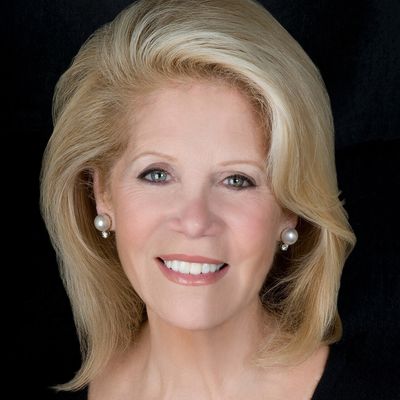
Daryl Roth is an American ten time Tony Award-winning producer who has produced over 90 productions on and off Broadway. She is the only producer of seven Pulitzer Prize-winning plays: Bruce Norris’ Clybourne Park (Tony Award); Tracy Letts’ August: Osage County (Tony Award); Nilo Cruz’s Anna in the Tropics; David Auburn’s Proof (Tony Award); Margaret Edson’s Wit; Paula Vogel’s How I Learned to Drive; and Edward Albee’s Three Tall Women. Other Broadway shows she has produced include Nick & Nora (1991), Desire Under the Elms (2009), A Little Night Music (2009), Driving Miss Daisy (2010), Annie (revival, 2012), Kinky Boots (2013, Tony Award), This Is Our Youth (2014), and An Act of God (2015). Off-Broadway productions include Tea at Five (2003), Esoterica (2006), The Judy Show (2011), and The Velveteen Rabbit (2012).
Daryl took a break from being one of the most prolific Producers around and chatted with me about her perspective on Broadway, Off Broadway and much more, including . . .
- How listening to a voice inside her that she never heard before got her to produce her very first show. And how you should listen to the same one.
- Why aren’t there more women lead Producers? Is there still an old Broadway boys’ club? And what can we do about it?
- How Kinky Boots was born.
- What she looks for when picking a producing partner (listen to this podcast to hear from one of those partners himself).
- Why after all this Broadway success, she still remains committed to Off Broadway.
Keep up with me: @KenDavenportBway
Transcript
This transcript was automatically generated and might contain errors.
[0:00] Ken Davenport: I wanna be a producer with a hit show on Broadway.
[0:07] Ken Davenport: I wanna be a producer.
[0:10] Ken Davenport: Hey guys, don't forget the free town hall tele seminar is this Wednesday in just two days. I'll be taking all sorts of questions over the phone online and giving you all sorts of answers on everything from Broadway off Broadway, you name it. Tune in to the blog for all the details. Go to theproducersperspective.com, register, and we'll see you at the town hall.
[0:32] Ken Davenport: Hi everybody, I'm Ken Davenport. You are listening to the biggest tongue twister on the web, the Producer's Perspective Podcast. I'm honored to be here today with one of Broadway's most distinguished, most prolific, and downright classiest producers we have. Welcome to the podcast, Miss Daryl Roth.
[0:48] Daryl Roth: Welcome, Daryl.
[0:49] Daryl Roth: Thank you, Ken. That's a lovely intro.
[0:51] Ken Davenport: According to her website, Daryl has produced over 90 shows on and off Broadway, although I actually think it's probably over a hundred now. She's received eight Tony Awards, and get this, she has produced seven Pulitzer Prize-winning plays, including August: Osage County, Clybourne Park, Proof, and many more. Some of the most recent productions include last season's It Should Have Been You, This Season Sylvia, which I just saw the other night, and it's hysterical. And of course, she's one of the lead producers on Kinky Boots, which is still killing it on Broadway, and now has productions in Toronto, London on tour, Australia coming up. She owns and runs the Daryl Roth Theatre downtown. Busy, busy woman. So Daryl, let's just start. Where did the love of theater begin for you?
[1:30] Daryl Roth: Well, actually, I was so lucky that my parents always loved musical theater, and we grew up in New Jersey, and so it was a gift to me that they were able to take me and my sister to theater at an early, early age. And I just grew up loving theater and felt, you know, that someday, some way I might find my way into it. Although that didn't happen until many, many, many years later, um, as you know. But I left theater from an early age, and I can remember in high school and college reading plays, which thrilled me more than picking up a book, which of course didn't thrill my mother or my teachers, but I just found my passion in plays.
[2:12] Ken Davenport: And what was it that attracted you to the producing side of it? Why not say, oh, I want to be an actress or I want to be a designer? What about producing attracted you?
[2:22] Daryl Roth: Well, I thought about what I felt I was capable of doing and what I enjoyed doing and what I felt I could offer. And I was always pretty good at putting things together, starting with raising my family, which to me is a big production, you know, and I just felt that maybe producing, at least as I understood it 28 years ago, would be my natural place. I never wanted to be an actress. I'm not talented enough to be an actress or a writer or a director or a scenic designer or a costume designer. But what I felt I could do, because what I felt in my heart I really had was the ability to facilitate other people's talent. And that is sort of what I feel being a producer is.
[3:11] Ken Davenport: So that's a very interesting and terrific answer because I talk a lot about how producers have different set of skill sets. Some are great fundraisers, some are great marketers. So your greatest skill, if you could define it in one word is that or one phrase is just to facilitate other artists' dreams, which is a way, I feel that. I mean, I do have to be able to do everything that the job requires, but I think my initial incentive, why did I want to become a producer and why did I feel I might be able to do this well was because of my respect and admiration for the people that do work in the theater, for the actors and the writers and the directors and not everybody that it takes to put a show together.
I just have such great regard. And so I felt, if anything, that's what I could do. I could make that happen. I felt I could make that happen. I mean, I had no training, as you probably know. I just jumped in like the Nike commercial and just did it. There were no mentors available to me at the time. There were no courses to take at the time. And so I think when a producer goes forward, it really has to be an instinctive thing that they feel they have whatever it might take. And certainly a lot of people try, and I too could have been totally disillusioned and totally depressed for many, many years. But I think I was so driven by the idea, and I'm such a tenacious person by nature, which I think really is one of the tentholes that a person needs to be a producer.
I mean, you are tenacious, and I feel that if it, you know, if you get behind a project that you really love, you just can't give it up, you know. Reviewers be damned, you cannot give it up. And so being tenacious and being really dedicated to the people that you are working with, and you know, and a lot of it has to do with the feeling of responsibility, which I have always felt very keenly. So I think part of being a producer is making the commitment and then being responsible to see it through, you know, and to do your best at it.
[5:21] Ken Davenport: So let's get to that Nike when you jumped in the water and just did it. What was the first show that you did all by yourself?
[5:29] Daryl Roth: The first thing I ever did was Closer Than Ever, written by Richard Maltby and David Shire.
[5:35] Ken Davenport: I love that show.
[5:35] Daryl Roth: Thank you. I love it too. To this day I love it. And when I listen to the music, it just fills my heart. It just fills my heart, I have to say. Well, I'll tell you how it happened. I was on the board of City Center. At the time they were developing a new music program, which we all know today as Encores. And they had brought in Richard Maltby Jr. to be their, you know, person to organize this. And I, as a board member, was asked to be on that particular committee because they knew how much I loved all this. And Richard and I became friendly, and one night he said, You know, Daryl, we're doing some songs downtown. David and I wrote these songs and we're putting it together in kind of a little review.
Do you want to come? Well, I thought I died and went to heaven because you know, no one had invited me to come and see anything in those days. You know, maybe 30 years ago this is. And so I went and I was really taken by how moving it was, and how every song in Closer Than Ever, which became Closer Than Ever, I should say, was talking to me directly. I felt as though I was in some otherworldly place. Every song I felt had something to do with my life. The theme of all the songs and what the thread is that weaves Closer Than Ever together is doors closing and new doors opening. And I felt as though that was where I was in my life, and that was where I would, you know, take strength from in some crazy way.
So I went home and I thanked Richard and David for a wonderful evening, and I thought about it all night long, and I called them in the morning and I said, Well, did you ever think that this maybe could be a show? Because I would like to try to do something about that. I say to this day, I don't know who that voice was, where it was coming from, because God knows I had no confidence, I had no understanding of how it would be to be a producer. I didn't even know what that definition was. And they said, Oh, well, that's interesting. And we went from there. We took it to Williamstown that summer, where Richard had made an introduction for me. Mind you, this was my first step into it, so I really, you know, I kind of went along with whatever.
I said, This sure, I want to go to Williamstown, yeah, let's go. And we did, and it turned out to be this beautiful little gem of a show, which all these years later, twenty-five years later, I guess, it last year was twenty-five, they had an anniversary production. And it just really was a way for me to see what I could do. And I was very dedicated to the project, and you know, I had a lot to learn, and I learned on the job of doing that. I mean, we went to the Cherry Lane Theater after Williamstown, and it ran for nine months, and off Broadway was, you know, kind of exciting in those days. It was very, it was like a little cottage industry, you know, everyone did everything. I mean, you roll up your sleeves.
I mean, I do this to this day, and when I walk down the street and I put flyers in people's newspapers, you know, my son looks at me and says, Oh Mom, really. But I do. It's my own little gorilla marketing technique. But I started it then and I really realized that when you're working off Broadway particularly, you get your hands around everything. And that was the best thing for me because that's kind of how I learned, and that was my on the job training, my first production. It's funny because I was involved as a company manager, general manager on Broadway shows for many years before I started producing, and it wasn't until that first show that I produced, which was a small off-Broadway show, that I really got my hands around what it took to be a producer.
[9:04] Ken Davenport: Right. And you have to be willing to do it all.
[9:07] Daryl Roth: Not only willing, I would say it differently. You need to be excited to do it all. I don't care if it means selling the merch at intermission, if it means putting out the playbills, you know, off-Broadway is very to this day, you know, it's very scrappy in a way, you know. It's um, but what you do for yourself, you reap the benefits of for the production. So obviously choosing Closer Than Ever and letting that voice deep inside you just be heard was what drew you to that because it resonated with you again. So personally, how do you choose material now? Now you get lots of opportunities, I'm sure. Scripts thrown at you from agents and playwrights. Everyone should just roll her eyes at the idea of how many scripts she has to read probably tonight alone. So, how do you choose from all these different shows that you could have the opportunity to produce?
[9:55] Daryl Roth: Well, interestingly enough, I think my major guideline is still instinct and still what moves me and what I feel connected to material-wise. I mean, sometimes I'll go a little bit out of my wheelhouse, and that's good. But I think through the years I see that the threads that bind my interest, and they have to do with stories that empower people, stories about strong women, gender-related stories, things that have to do with inequality and acceptance. Seems to be what I'm drawn to. And I'm sure it comes from some, you know, deep childhood place, as most things do in life, right? But I remember feeling a bit of an outsider in my school. I remember feeling a little on the edge of things, and kind of what that feels like, I think gave me more empathy to reading plays that had to do with people that also felt that or were writing about that.
And I guess I decided in my own little personal way that it would be my mission to kind of choose plays that would open people's eyes about things, you know, and get people to start thinking about things, maybe in a different way than they were used to thinking about things. And it kind of helped me in the beginning in a way, because some of the plays that I chose were extremely challenging subjects, and truth be told, most other producers didn't want to touch them, and I was not afraid of that because I thought that they were so meaningful and powerful, and I used the example of Wit all the time. Nobody wanted to do a play about a woman dying of ovarian cancer in those days. And yet it was so enlightening and so life-changing for so many people that saw it, and for me too. So I don't know, I started looking for plays that had very challenging subjects that also fell into the bucket of what I was interested in putting out there for people to think about.
[11:51] Ken Davenport: Ever pass on a play or musical that you wish you could go back and do?
[11:55] Daryl Roth: Oh, yes. I yes, and I'm on record of saying this. I will say it to my dying day, Angels in America. It wasn't offered to me. I should have spoken up because I saw it in London, and I was never the same. And I should have come home and I should have called somebody to say, can I join this producing group? Because it's the most amazing thing I've ever seen. And I didn't. In those days I didn't have that confidence, and I didn't have a sense of myself in a way that I could have spoken up in that way, and I regret that.
[12:28] Ken Davenport: I passed on. I passed on once myself, so we've all got those stories.
[12:33] Daryl Roth: I mean, yeah, you know, you can't figure it out. But now if I see something that I'm interested in, or you know, if I read something, I just go for it. And sometimes it doesn't work out because all the pieces don't fit in, you know, and you but um I'm not shy anymore about it. I'm not shy.
[12:49] Ken Davenport: So you see a play that you like, or you read a play that you like and you want to produce it and you want to start pulling together the team. How do you go about assembling creative teams for shows, directors, designers, even well?
[13:05] Daryl Roth: I think there's no one path, actually, as you probably know very well. Sometimes a play will come to me from one of the people already involved, if not the playwright, perhaps a director sends it to me.
[13:17] Daryl Roth: So that piece is in place. Um if there is no one, and if I'm starting from scratch, as we did with Kinky Boots, or as I'm doing with a new musical that I'm developing, I try to think about who the best people are that might have the sensibility for it, and then talk about it with them and see what their passion level is, and usually a director will put together the creative team that he or she is used to working with.
[13:42] Daryl Roth: So, in terms of let's say a director's in place, then we talk together about who is the design team that you want to work with. And if there's a list of three people, I might weigh in on somebody that I've had a good experience with, but for the most part, I think that is the job of the director and for the producer to be supportive of that choice, you know, because people have history with one another, they know how they work well with people, etc.
[14:08] Daryl Roth: So sometimes a play comes to me or a musical that I might join in on where all those people are in place. Because some of the things I've done I would go to a workshop that I didn't initiate and be then joining in on a co-producing level. So in that case I wouldn't, you know, be in the position to talk about that. But for the most part, I guess over the years, you know, we all know who we trust and love and want to work with. We know who's easier, who's more difficult, who can stay on budget, who can't, you know, and whose personality you feel is a good blend for the rest of the people.
[14:45] Daryl Roth: So there are a few things that go into it, but I don't think there's anyone I've worked with that I wouldn't work with again, actually.
[14:53] Ken Davenport: I have a feeling all those people would say the same thing about you for sure.
[14:56] Daryl Roth: Yeah I hope so. Now I have uh s one of the reasons you're one of my favorite producers that you still are so active in the off Broadway community. You produce a lot of off Broadway shows. You run an off Broadway theater three spaces at the Daryl Roth Theater. Why do you still do it? I know a lot of people that would be like oh I'm done with off Broadway now. It's obviously very risky and very challenging these days. So why your incredible commitment to that community?
[15:21] Daryl Roth: Well I think there are a number of stories that need to be told in more intimate settings and I think that off Broadway is not for me a stepping stone to Broadway. Off Broadway is its own world and I don't think that they necessarily can't coexist. Because I think the most important thing is choosing the right venue for the piece that you want to produce and I think that oftentimes the experience that audiences have is so determined by the space they experience it in.
[15:54] Daryl Roth: So for example, if there's a very beautiful piece that I fall in love with and it doesn't have a major star in it, doesn't have anything, you know, bells and whistles, it would be foolhardy to think that just because I love it, it would thrive on Broadway, because chances are it won't. And doing it off Broadway is an opportunity, I think, to bring new voices forward, uh, to have these wonderful actors and writers have a place to develop their craft. I don't know, it just feels comfortable for me. It just feels comfortable.
[16:28] Daryl Roth: Economically, it's not been the best in recent years, you know, you produce off Broadway, it's very tricky. Um, because costs have gone up so much, and it's very hard on an off-Broadway budget to do the kind of advertising and marketing that it takes to just be visible. So sadly, we have to review very heavily on reviews in the hope that people will read the reviews and and be enticed, and and certainly sadly not turned off if somebody is not kind. But the world of Off Broadway to me is very exciting. It's very exciting. I think I'll I'll always do both. I'll always do both.
[17:05] Daryl Roth: I feel that I don't know, it's a good introduction for people too. I, you know, I have a kids' theory, uh, a kids series, excuse me, a kids series, and that is my way of bringing young people into the theater. And I'm talking about like four to nine year olds. And that experience in a 99 seat theater is so non threatening and so welcoming that I mean that alone is a reason to do off Broadway, if you ask me.
[17:30] Ken Davenport: Off Broadway is obviously very challenged right now. How do you think Broadway is doing in 2015?
[17:36] Daryl Roth: Well, there's some shows that are just super successful, and actually, thank goodness for them. There's a big inequality going on right now, without mentioning any names. Some shows have been just taking out all the air and all the oxygen is going into certain shows, and and that's great, but what it does is cause a little bit of breathing problems for some of the others. And I'm sorry about that, because there's so many valuable things going on Broadway right now, both plays and musicals, I think you will agree.
[18:11] Daryl Roth: And yet, you know, it's the top few that are getting all the noise, all the audience. I don't know what to say other than while I'm thrilled that we have, you know, a huge beacon of light, it's hard on the other shows to find their way. And so we have to work harder, you have to be very creative in bringing in audiences. I mean, you're the best marketer around, but you have to be so clever about this, and you have to be so honest about it too, because people see through some of these things we do, you know, and you have to be, I think, you have to be classy about it, you know.
[18:54] Daryl Roth: It's it's a tough business. And while you go through everything it takes to get the show mounted, the work only begins when you have to fill the seats. And that's the challenge right now, isn't it? Because unless you're riding the wave, you have to figure out how to be heard and how to find your place in the landscape of Broadway.
[19:16] Daryl Roth: It's also interesting that many of the pieces are limited engagements. I find that that's both the good news and the bad news. Because it takes a while for word of mouth to catch on, and when you're working on a play that's a limited engagement, whether it's because of the cast having you know other commitments or whether you only have a theater for so many weeks or whatever it might be, by the time you build the word of mouth, you're gone. You have to close. And that's a double-edged sword in a way, isn't it? Um we love the engagements that are limited so that big people will come to Broadway and they'll give us 22 weeks of their lives, and that's great. But then, you know, does it really serve the play well?
[19:57] Daryl Roth: We hear a lot about how there aren't enough women directors these days, or aren't enough women playwrights. How do you think we're doing in terms of the number of women producers we have on Broadway? Do we have enough? Is Broadway still an old boys' club in this regard?
[20:16] Daryl Roth: I think there are a lot of women that are joining the ranks of producers now, and I think that they're feeling more welcome than certainly years ago. Um I think that there are opportunities for women, and hopefully those same women are the ones reaching back to produce women playwrights and hire women directors. Uh, not that I'm so gender oriented because I always say it's the best person for the job, and that to me uh, you know, is another form of bias, you know, if women are only strictly looking at women and if men are looking at men, well, that doesn't do anything for this world.
[20:51] Daryl Roth: But I do think to be more direct in answering your question, I think with the theater, more women are feeling very comfortable joining as producers because they realize that um they can handle it, they can manage it, and they have seen women be successful at it. So I I do believe women are coming in to this field. Now, I think sometimes they're not so sure what it takes and it might seem all fun and games and easy and beesy and la di da but the ones that will stay with it are the ones that get into it and are willing to work really hard and have good you know good sources of of investors and have a good sense of what it takes to sell the show and you know have good ideas marketing and advertising and are willing to speak up and are willing to contribute those ideas rather than just you know say I want to be a producer.
[21:50] Daryl Roth: It's it takes a lot more than just wanting although good good to start with just wanting your son who who also did the podcast here it was a very good one I might say.
[22:00] Ken Davenport: Yes he's terrific at this sort of thing I have to say.
[22:03] Daryl Roth: So uh your son Jordan runs Jujamison theaters what's it like having a son as a theater owner in a world where sometimes the producer and the theater owner it's a bit of an adversarial relationship the big bad theater owners out there. What's that like for you?
[22:17] Daryl Roth: Well I'll tell you a story. It's wonderful for me is the answer. But as Kinky Boots was coming together and we were thinking about a a theater for it, I knew in my heart that the Hirschfeld would be the right theater for it. It was just the right size and and shape and it just felt like a hug. I felt like the audience would be embracing this show at the Hirschfeld and so I spoke to Jordan about it early on and uh as the Hirschfeld is one of the Drew Jampson theaters. And we all agreed that yes, it would be the right theater if we could make the timing work. You know, there was something else in there, and then something else had to come in, and you know, it's it's a puzzle. It always is a puzzle, trying to find the theater and the schedule and when you're ready and when the money's in, you know, all there, and everything has to work together.
[23:08] Daryl Roth: But Jordan is a wonderful theater owner, and he also believed very strongly in Kinky Boots at the time. I used this as the example, and we just all work together to make it to make it happen. And he's a good businessman, and he's smart, and he has exquisite taste in what he chooses for the theaters. And I will say one of the ingredients in this particular situation was that he was honoring his mother. And I admire that, and I uh am grateful for it, but basically, he is my landlord.
[23:47] Ken Davenport: So let's talk kinky for a second. Tell me a little bit how it came to be. I am first of all very lucky to have been taken along for this ride as one of your co-producers. So tell me how uh how it came about before guys like me got involved.
[24:01] Daryl Roth: Well, it came about very innocently, actually. I was on the board of the Sundance Institute, and I was out in Utah for the film festival, and one of the sh one of the films being screened was a small British film called Kinky Boots, and it was at a time when I was able to go. You know, they book you up with all these films morning, noon, and night, and it's kind of fun and exhausting at the same time. But there was, you know, kind of a curious title, Kinky Boots, and I went to see this film, and I felt as though someone shot an arrow in my heart.
[24:34] Daryl Roth: I knew when I saw this film that I I had to, in my own mind figure out how I could get the rights to this film and make it a musical. I don't know what happened to me. I was like a crazy person. So I'm watching this film. I love the story. The story just meant so much to me. It's very much about a father-son relationship as it is, and and acceptance and all the things we spoke about that are like so for me. So I run out when the film is over, and here I'm on the on a mountain, you know, ten years ago on with no cell service with a you know, one of those early bird cell phones, and I'm screaming into the phone. I called Jordan in New York. I said, Jordan, I just saw the most amazing little film. I must, I must have it. I stayed to the end, and it's produced by Miramax and Disney. And can you call Tom Schumacher and see what's the deal? And he thinks I'm crazy, obviously I'm on screaming on the phone because I couldn't hear.
[25:31] Daryl Roth: Anyway, I came home three or four days later and and we sat down and we talked about it. And it took a while to obtain the rights because it was at the time when Miramax and Disney were were kind of separating their assets. We weren't sure where this particular little film would go. But basically, that is how it started. That it was just a sign from above that I had to get involved in this. And it was the story, as it always is, right? It's always about the story. And that was one that just touched my heart on so many levels, and it just felt like it wanted to be musicalized. It just felt that way to me. And and um there's so much about it that I love that just kind of made it. It was my passion, it was my it's my passion, it's my joy, and it was just something that I had known I would make happen.
[26:23] Daryl Roth: And then, so after we got through all of that, you know, who would write the book? Who would be the person to s really understand this story? Harvey Feierstein.
[26:34] Daryl Roth: Because it came to you like that, just like, well, I know Harvey. I worked with him before on a catered affair. I know him over the years. Yes, I thought he was the one. There was kind of no question in my mind that if he would do this, it would be the right thing. And I called Hal Luftig to be my co-producer for two reasons. One, we had worked together before, some years before, but I liked Hal, and he had more experience in the musical world than I had at that point because I was mostly known for producing plays with an occasional musical thrown in. And Jerry Mitchell was someone that we both knew would just be so right for this, you know. And it's been said many times that the last piece of the puzzle was the most brilliant, and that was Cindy Locker who joined us, and then we were off and running.
[27:31] Ken Davenport: I want to talk a little bit about how, because I ask a lot of people about choosing directors like I did with you, or writers even, but one of the things I've never asked another producer is how do they pick a partner, which is becoming so much a part of how big Broadway musicals are done because they're so expensive nowadays.
[27:51] Daryl Roth: Yeah. And because you very smartly matched up with someone who could complement your skills. So, in addition to just because you had worked with them before and you liked him, what were some of the other specifics about what you were looking for in a partner and why Hal, who also did a podcast for us?
[28:08] Daryl Roth: In Hal's case, it was more than we just knew each other and I knew we worked well together. It was that he had the experience of developing a new musical, which was important to me. And I knew that we both had great respect and admiration for Jerry Mitchell. So we agreed on that. And I wanted a partner who would be a complement to me and Hal's skills and my skills dovetail very nicely. That was the beginning, you know, and usually I think when you're choosing a partner you just want one person to get going with. And then the other partners come to you as you further along and you have things to show. I mean we didn't have anything to share at that point. So, you know, just working with one other person for me and I think Hal would agree was the most efficient way to get this going.
[28:56] Daryl Roth: In choosing partners though, which is your question, I always want to share it with someone who feels the same passion that I do for the very piece that we're talking about. So if you send it to someone who doesn't seem to respond to it, I just say, well thank you and go on to the next person. I mean I don't want someone to do something that they don't feel totally committed to because you know that it's too hard. It's just such a task that if you don't love what you're doing. Now that's not to say that I myself haven't joined in with other people as a co-producer on something that I'm not the lead producer on but I do that because I really love the piece. And I also feel I can't develop everything from square one. I mean it takes years, it takes a year to do these projects and so I like to be involved in other pieces of good theater.
[29:51] Daryl Roth: I have a wonderful group of investors who are loyal to me and who share my taste or happily trust my taste and so I like to be able to have opportunities to offer them involvement in things. So I join other people at the same time that I develop the things that I feel personally passionate about. Obviously not all shows can work. Not every show can be successful. We've been there, yes we know this very well and we'll be there again unfortunately and you talk about those investors, how do you let them down? How do you tell them, you know what, this one is not gonna work?
[30:35] Daryl Roth: It's really the hardest part of the job for me because I feel very personally responsible and I feel like I've let everybody down, not only the company of marvelous people that created the work but the people who believed in it and invested in it. And it is truly the most difficult, depressing, and hard part of this business for me particularly. I'm sure all people feel this to some degree but I can't just go merrily along after something doesn't work. I mean I think there must be another word for it but it's like a postpartum depression when you have to close a show that you believe so thoroughly in and people worked so hard at and for whatever reasons it just doesn't catch the wind and it just doesn't become the success you had hoped for and felt it should become. It's very difficult.
[31:34] Daryl Roth: It's difficult, and I don't think I'll ever feel differently about it. You know, it doesn't get easier with the years that I've been doing this. I'm just as depressed every time something doesn't work as I was in the beginning of time. Which doesn't bode well for my maturity, but so I'm sitting in your office and I'm looking at the Tony Awards right here and the plaques of Drama Desk and all these nominations. A little bit of a pack rack, you have to admit. And all these opening night gifts. That's also the cool fun thing. Look, and it's Daryl Roth with Mike Tyson, everybody. That's bizarre. That's but there's a better picture of Daryl Roth with Mike Nichols. I'm gonna take a picture of that for everyone so you can see it.
[32:22] Ken Davenport: So all these shows, I want to ask you one of my theme questions now. I want you to imagine that your phone rings, and it's the Smithsonian Institute. And they say to you, Daryl, you've produced a lot of wonderful shows. We've got room for one of them in the institute. What's the one show you would ask them to forever preserve of all the shows you've produced?
[32:44] Daryl Roth: It would be Kinky Boots. It would be Kinky Boots because it was something that I feel personally responsible for, and it was something that was so meaningful to me story-wise, and the whole process, the whole joy of it. I mean, we're in our third year now, and as you mentioned, kindly, we have all these wonderful productions all over the world, and we're really changing minds. This is not just something to say. We are changing the minds of the way people think about other people and the way they think about themselves. And I do believe that while I feel very proud of everything I've chosen to do, I have to say, in all humility, I feel like that particular production of Kinky Boots that we birthed, I guess is the right word, that we gave birth to is the most meaningful thing of my career. And I don't think I will surpass it for as long as I hope to be working. Because everything about it, aside from being very personal to me, just fell into place in the best possible way.
[33:50] Daryl Roth: And when you talk about, you know, what is it that makes a successful show? The things on paper, the numbers and the, you know, how's your audience doing? And oh my god, you know, this week, you broke all records. It's so much more than that, really. I mean, you know that. So if they want it, they can have the Kinky Boots, everything. I only collected, you know, like roomfuls of stuff. I can't part with anything.
[34:14] Ken Davenport: What's the one show that didn't work commercially, that never caught wind? I love that expression by the way. That never caught wind and worked that frustrates you the most.
[34:26] Daryl Roth: Well, I will just go back to the recent season, and I would answer by saying that It Should Have Been You was a magnificent musical, beautifully written and heartfelt and wonderful songs, directed by David Hyde Pierce, written by Brian Hargrove and Barbara Anselmi, an amazing cast led by Tyne Daly and Harriet Harris and Sierra Boggess and Lisa Howard, I mean, I'll go on and on. And the audience actually loved it, but some of the reviewers were unkind, and they didn't allow for people to see the goodness in it, and so it was such a struggle to find our audience. But I will tell you that no matter who came to see the show, to this day, people say, oh my god, that was one of the best musicals. What happened to that musical? I wanted to bring my sister, my mother, my grandmother. And I will not be able to answer that question ever. Other than to say the theater gods were not smiling on us, and they were wrong.
[35:28] Daryl Roth: I get those comments a lot about some of my shows. I usually say, you didn't tell enough people to go see the show.
[35:34] Ken Davenport: Well, that's the answer, isn't it? Because word of mouth is the best tool we have, but it takes the longest to get there. You know, especially with the internet, you would think that everything would happen like boom boom boom. So somebody can tell somebody boom boom boom, but until that person then goes and gets a ticket and figures out their calendar and oh, maybe I'll wait till Thanksgiving. I mean, you could just cry. And by then, four more shows have opened because we it's waiting for that person.
[36:00] Daryl Roth: Yeah. It's very disheartening sometimes when you know you have something of value and you know you see audiences loving it, so you know you're not crazy. You're not deluding yourself. But I don't know. I think that was my heartbreak of last year.
[36:16] Ken Davenport: Okay, my last question, which people have termed my genie question. I want you to imagine that the genie from Aladdin comes to knock on your door right after the Smithsonian, apparently. It's a busy day out there, and says, Daryl, you've produced such amazing works of art. A lot of shows off Broadway that never would have been seen. Kinky Boots is changing minds all over the world. I want to thank you for that, says the genie. I want to grant you one wish. What's the one thing that drives you so crazy about Broadway that makes you angry? You're one of the sweetest and nicest women I've ever met. And I wish everyone could see the smile on her face right now.
[36:55] Daryl Roth: Thank you. But what really makes you mad? I want to see and hear Daryl Roth get mad over the one thing on Broadway, this one thing. What would you wish that the genie could change?
[37:08] Daryl Roth: I want to try to be diplomatic about this answer. And it's a great question. I don't think I can change this, but what I wish that the theater genie could help with is having a sit down with the people who have the power to critique a work that people put in hours, weeks, months, years of their lives to do, and to tell those people that are critiquing that work to look for the good in it and to try to understand what it takes to put all these things together and to realize that it is not in their power to turn people away from going to theater. It should be in their power to encourage people to go and make up their own minds about any given piece of theater. Encourage them by telling them honestly what the show's about, what is important about the show, what is entertaining about the show, certainly not to say everything has to be, you know, daisies, but not to be so insensitive as to come in with the sword of the pen and destroy someone's life, career, hopes, dreams, without the slightest understanding of what they're doing. And to me, that's the biggest problem right now.
[38:32] Daryl Roth: And mind you, I am certainly happy to be on the side of a great review. But I speak for other people. I'm not just talking about my own shows. I'm talking about the industry and how so quickly someone can just destroy something valuable by not being fair-minded, by not being smart about it. I think that that's my wish.
[38:57] Ken Davenport: Well, hopefully, some of those people are listening right now. And if they're not, you know, anybody out there, listeners, forward this on to them. Thank you so much for spending some time with us, Daryl. Everyone out there, go see Sylvia on Broadway. Go see Kinky Boots, which is now starring Wayne Brady. For more on Daryl and all her activities, visit DarylRothProductions.com. Thanks everybody for listening. Don't forget to subscribe. We'll see you next time.
[39:28] Ken Davenport: Check out TheProducersPerspective.com to get all the details and sign up. We'll see you then. Look out Broadway here, right.
© Broadway Podcast Network, All Rights Reserved