

John Doyle is a Scottish stage director of musicals and plays, as well as operas. He has served as artistic director at several regional theatres in the United Kingdom, where he has staged more than 200 professional productions during his career spanning over 40 years... Read More
From the show: The Producer's Perspective Podcast with Ken Davenport
Guests

Featured Shows
About
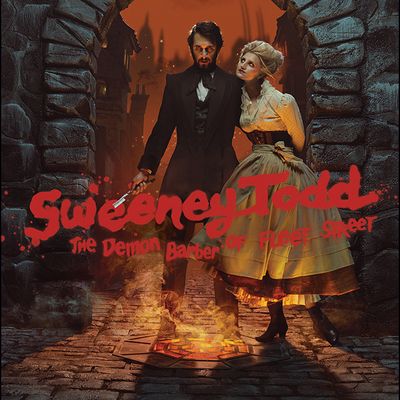
John Doyle is a Scottish stage director of musicals and plays, as well as operas. He has served as artistic director at several regional theatres in the United Kingdom, where he has staged more than 200 professional productions during his career spanning over 40 years. For his 2005 Broadway production of Sweeney Todd: The Demon Barber of Fleet Street, he won a Tony Award and a Drama Desk Award. He also directed A Catered Affair, the Off-Broadway production of Road Show, Kiss Me, Kate, an opera production of Gaetano Donizetti's Lucia di Lammermoor, and The Visit. He received his third Tony nomination for his direction of the revival of The Color Purple starring Cynthia Erivo, Danielle Brooks and Jennifer Hudson. The Broadway production won the Tony awards for Best Revival of a Musical and Best Actress in a Musical for Erivo's performance as Celie. He recently became the Artistic Director of the off-Broadway theater Classic Stage Company, located in the East Village in New York City.
Listen to John talk about his new gig, as well as . . .
- How he “stumbled” into directing.
- Where the idea for Actors playing instruments in Sweeney Todd came from.
- The biggest difference between directing in New York and directing in London.
- Which Actors drive him crazy, and why that’s a good thing (and yes, he names names!).
- The one piece of advice he would give to every Broadway Producer in the business.
Enjoy this master class in directing from a man who has slayed dramaturgical dragons on both sides of the pond!
Keep up with me: @KenDavenportBway
Transcript
This transcript was automatically generated and might contain errors.
[0:00] Ken Davenport: So what happened to me this week? Oh, I don't know. Maybe Spring Awakening got a Tony nomination for Best Revival of a Musical? Yes. Seriously, huge thanks to the nominators out there. Special props to Michael Arden, who also got a nomination. Ben Stanton, who also got a nomination, and the incredible work of Def West and the cast and crew of Spring Awakening for making all this happen. It truly is an honor to be nominated now on with the podcast. I wanna be a producer with a hit show on Broadway. I wanna be a producer.
[0:36] Ken Davenport: Hello everybody. This is the Producers Perspective Podcast. I am Ken Davenport. We've got another Captain of the Ship on today's podcast, and this one sailed his ship from across the Atlantic. Welcome to the podcast, Tony Award-winning director, John Doyle. Welcome, John.
[0:51] John Doyle: Hi. Nice to see you. Thank you for asking me.
[0:53] Ken Davenport: So John has directed over 200 productions throughout his career. First Broadway production here was the revolutionary Sweeney Todd, the Sweeney herd round the world, as I like to call it. Won him a Tony for Best Director, went on to direct Company, A Catered Affair, The Visit, which I was a very proud producer on, and this season's revival of The Color Purple. Recently named the artistic director of Classic Stage Company here in New York City, getting ready to debut with his first season. Now, John, you grew up in Scotland, correct?
[1:24] John Doyle: I did, yeah, that's right.
[1:25] Ken Davenport: So what was your first exposure to theater?
[1:28] John Doyle: I really didn't have any. Um I went, you know, where I lived, there was no theater. There wasn't there was the there had been a theater in my hometown, and it was closed down. Uh an old Victorian music hall, vaudeville has really. Um, I did some school play stuff, you know, like everybody does. Um, but I went to theatre school really never having seen a I've certainly never seen a professional production. Um, I don't really think I knew what the theatre was. I had intended to go into the church. I was gonna be a minister. Um and detoured, uh, went and auditioned for two drama schools, and I only had to audition for one because I got into it straight away, the Royal Scottish Academy, um, where uh fellow alumni are people like Alan Cumming and so on.
And I I was really young, I was 17, and I graduated. I think I was still the youngest boy in the school when I graduated, and then I came to America on a scholarship. Um, but I I kind of followed my nose. Uh now, you know, the trad the family tradition would be like a Cayley tradition. Do you know what I'm saying? I mean, where people sat down and made music together. Uh, you know, your uncle would play the violin or your mother would play the piano or whatever it was. So the whole business that I then many years later developed of people making their own music on stage is kind of an organic, almost indigenous to me. Um, but I I was never, I think the first my grandmother took me, now that I think about it, to see a play in London when I was a teenager, actually.
[3:05] John Doyle: At what was called the White Hall Theatre. There was a man called Brian Ricks, who ran his own repertory company at the Whitehall Theatre, and they did famous classic farces in the British farce tradition. And all I can remember, I can remember there being a red curtain, and I can remember it going up, and that's kind of all I remember. Um it was called, but I do remember it was called Chase Me Comrade, so that gives you some idea. And uh uh funnily enough, it was in what became the Trafalgar later on that became the Trafalgar Studios, that theatre, it's the White Hall Theatre at the top of Whitehall in London. Became the Trafalgar Studios, and that's where Sweeney Todd happened. So what goes around Count Round? But no, I hadn't I had no theatre tradition in my family, and still don't, none of them are interested. I mean, that's fine by me, but I don't think any of them really know what I do or anything like that.
[4:02] Ken Davenport: So you don't need like 37 opening night tickets for any of their shows.
[4:05] John Doyle: No stay at home.
[4:06] Ken Davenport: No, I would be quite happy anyway, not to ever invite anybody to see anything I did. Do you know I have never sent out I've never sent out a letter saying, please could you come and see this show or anything like that ever. People talk about networking. I've never done any of it at all. Uh I don't know if that's just I'm a different generation, but I have never said, I'm doing this piece of work, could you come? No, none of that has ever entered my mind. Isn't that terrible?
[4:32] John Doyle: Well, whatever you did seemed to work out.
[4:35] Ken Davenport: Seemed to sort of work out.
[4:36] John Doyle: Yeah, I suppose that's true. But um, you know, my things were so much easier when I started in the theatre. You know, I come from a small island, uh, and uh there were and we had a our government paid us to make theatre, right? First company that I was artistic director of. The I think the the uh Arts Council grant, the equivalent of the National Endowment, I suppose, but it's a little bit more than that. Um the grant aid was 75% of our total income. We only had to make 25% of our income at the box office. So that gave you a whole other series of choices. And there were there were 200 repertory theatres, or slightly more than 200 repertoire theatres, in Scot in Great Britain when I started my career. So the opportunities were much, much greater.
[5:31] John Doyle: And I I came, I came over here to go to the University of Georgia to go to school, went back to the UK, got off the aeroplane, um in early in the morning in Glasgow, and I had a job by lunchtime. I mean, I never thought, I never thought for a moment that I wouldn't have a job and touch the wood that is on your desk. I have never ever, ever been out of work. I don't know what that feels like. I never had to wait table. I mean but equally I wouldn't be the first to say to people, don't do it, right? Because I've I also have seen what rejection does to people. You know, it's tough. But I've been believably fortunate.
[6:14] Ken Davenport: And when you first were drawn to the theatre, was it acting or was it directing? Were you right away like, I want to...
[6:18] John Doyle: Okay, yeah, I suppose if I'm truthful, it was acting. I trained actually as a drama teacher more than a than an actor. In those days in the 70s, it was a big movement in the UK to use theatre as a learning tool in other um in other parts of the curriculum. So you could go into the science department as a drama teacher and use drama techniques as a learning tool to get to what the physicist was trying to say. Um so it wasn't about putting on plays, but it was about improvisation and exploration, which all of which I still somehow use in what I do. I was very interested in those days in doing theatre for people, and I still am, for people who had never made theatre, uh, either through people who were working in disadvantaged situations or uh community situations. I have always enjoyed and done and continue to do that.
[7:21] John Doyle: Um, but but when I was 21 when I started, I yeah, I think I wanted to be an actor, and I joined a company, a repertory company, in Scotland, where I come from, uh, uh, where they, you know, you put on a play every three weeks. Um, and I I understudied all the men in the seasons. So I understudied from the the Lord and Taylor boy in Barefoot in the Park who goes Lord and Taylor, through to uh Pastor Mandas and Ghosts. You know, covered them all. Uh that was your job, and as an at what was called an acting ASM, assistant stage manager who covered all the roles.
[7:59] John Doyle: Um but during the season, the woman who ran the theatre said to me, Would you like to come out for lunch? And I didn't think she even knew my name. I said, Well, that's very kind of you. So I went out for lunch and she said, We would like you to direct the play after next. And I said, But how do you? And she said, I think we've been watching you, and we think you will be a director. Uh so there are angels. And uh I said, Oh, that's kind of you, because I absolutely no fear. Uh now it's a different story. But you know, in those days, it's like when you're young and you go down a ski slope, you don't think your leg's gonna be the one that breaks. Later on you discover that it is. Um, so I I had no fear of that.
[8:43] John Doyle: And I I got asked to do this play, which had in it uh in Scotland of a famous actor of the times, no longer with us. But um I so he then asked me to do his next play, which was a one-man play at the Edinburgh Festival. Then they asked me to come back and do another play with another famous Scottish actor in it. Uh, and really I formed my own company. And um how all that I mean I was 22 when I was running my first company of my own. And I thought that was fine. I thought that's what you did. Uh it's as I went on, I realized, as I said, that that there was more to it than that.
[9:19] John Doyle: But four of uh I started a company where four of us bought a truck, a van from the post office. An ol X van we bought it for five pounds. Uh yes, like eight dollars. Uh they were giving them away, you know, it was a wreck.
[9:35] John Doyle: Cheaper than gas. Yes. And off we went to the Highlands of Scotland where I come from, uh, to make theatre. And we always got paid every week. And within a year, we had our own van, our own 12-seater mini-bus given to us by the Arts Council. We had our own rehearsal space, etc. etc. etc. Um, but uh, you know, it was a different time. The government was a socialist government, uh, they looked at arts in a different way. The whole impulse was about taking theatre to people who had never seen theatre before. It was not commercial. Um, so there were a different set of reasons.
[10:10] John Doyle: And then in 1980s, so I did that for five years and then six years, and then in 1980 I emigrated to England, which really did feel like uh it felt as much of an emigration as coming to live in America, because although I'm British, if you are Scottish, you have a it's a different viewpoint, right? It's two different countries glued together.
[10:32] John Doyle: And uh so I went and I I became artistic director of my first building-based theatre company when I was twenty seven or twenty-eight, I think. So let's uh flash forward a little bit to your production of Sweeney Todd, which was obviously historic.
[10:47] Ken Davenport: Yeah.
[10:47] John Doyle: Uh and the first big thing of yours to come here and create create such a splash here.
[10:52] Ken Davenport: Yeah.
[10:53] John Doyle: Tell us a story of how it it came about and the actors playing the musicians.
[10:57] John Doyle: Well, the actors playing the musicians had come before that. I was running a theatre in Liverpool, the Everyman in Liverpool, which is a great space, a very famous space. It's where people like Willie Russell made all his plays, education Rita happened there for the first time. And it was of a lovely, lovely place to work. And I'd gone there because I I had in previous theatres that I'd run, I'd I'd um been directing musicals, and I and I got slightly depressed by doing them. I I found myself at a place in my life where I thought I don't want to do these anymore, but I couldn't figure out why. But I did a production of Sweeney Todd as my last production in the theatre that I was running before Liverpool, if I making sense.
[11:36] John Doyle: And during that I thought, I'm not gonna do this anymore, because I feel that I am making a copy uh of something. Um I'm not saying that the production wasn't perfectly good, but it was probably just basically a a an artfully recreated scaled-down version of Hal Prince's original production that happened a couple of blocks away from where we're talking right now. And I thought, I don't want to do that. I I I knew enough about myself in my early 40s, late 30s, early forties, to know that I didn't want to be a copier. But I didn't know how to replace that with anything.
[12:17] John Doyle: Um, I went, I w I was working in Liverpool, I went over to work at the Moscow Art Theatre, which is a very famous theatre in Moscow before the Berlin Wall came down, and I was working there and I I l watched people work and I thought, oh, I I have to think about different ways of working.
[12:33] John Doyle: I have to address what am I trying to say in my work. Not just how do I put a show on, but actually, what have I got to say as a person? And that at that point I started to own the word artist. I'd never thought of that word before. I always thought that a director was a recreator, not didn't really have an original artistic idea. But should remount things and make them good, don't get me wrong, learn good craft. So I stopped. Went to Liverpool, did lots of classical work, lots of unusual work for audiences who were it's a poor city, so it's a little bit like making theatre in Detroit, right? You know, as it's a generalization, but you understand what I'm saying. A working-class city where people couldn't afford to go to the theatre, so one had to be very alive and fresh about how you made theatre in order to get people to come.
Four or five years of that, and my board of management board of directors say to me, We brought you here because you did musicals, and it's time you did one. Alright, okay. And I said, I'm not gonna do one. They said, Well, you know, you have a choice to make here, you better just get your act together and do a musical. Okay, I'll show them, I'll do something that we can't do. I'll suggest something that we can't do. So I thought, without really thinking about it a few weeks later, I said, Okay, I want to do Bernstein's Candide. Which a lot of people have decided that they can't do over time, although it's such a wonderful piece. And they said, okay, great. And I thought, I'm in a position here where if I don't do this, I'm gonna have to leave because I'm putting myself potentially into an untenable position.
And I was, of course, I'm perfectly good at producing in a way, so I was in charge of the budget, and I looked at the budget, and I could afford 12 performers to do Candide, but I had no money for an orchestra. At that time, people like a director called Bob Carlton was making pieces of work like Return to the Forbidden Planet with actors who played instruments. I didn't create, I mean the Greeks created it really. Or Buddy was being done, you know, shows where people are playing three-chord Jerry Lee Lewis type material, rock and roll shows. And I thought, okay, well, maybe somehow I could find 12 people who could play the score of Candide, which is an audacity if you really start and think about it.
Not a Jerry Lee Lewis. No, no! And we did the first week of rehearsal, and at the end of the first week, I said to the music director, okay, I think we should have spent the Saturday rehearsing the overture. And I went in at the end of the day when they'd been playing, and I went home that night. I don't drink anymore, but I went home that night and drank a bottle of scotch. I thought this is a disaster, and I'm gonna have to, it's gonna have to be taken off. But I progressed and proceeded with it, and it toured all over Great Britain in the end and was very successful. It was still actors playing and then standing up and acting and then sitting down again. It was a very early days, it didn't have the integration that I developed and worked out as a theatrical language.
That really happened over a period of about 15 years, probably, I would do something every year that had actors in who made music as well. And it started to win prizes and people liked it. And then I was working a lot at a theatre called the Watermill in Newbury, which is a tiny theatre that seats 140. Beautiful, in the middle of a field in Berkshire. A very country but very beautiful part of the world. And I'd done a number of actor musician experiments there. Cabaret was a sort of obvious one, but yeah, Melan Deuce, Into the Woods. Actually, I did that at York. But I was fiddler on the roof, I did with 10 actor musicians playing as a Klezmer band. I shouldn't have been doing it, it's basically illegal, but I did it.
And Sheldon Harvey doesn't listen, don't you? Yeah, don't listen to this. And then the woman who was running the theatre who's since died, but she said to me, Would I come and do Sweeney Todd that way, the John Doyle way? And I said, no, it's a terrible idea, it won't be possible. Nobody's gonna be able to play that score, it's too difficult. And she said, John, we our backs are against the wall, we're doing really badly at the box office, and we need you to come and do this. I said, But Jill, it's January, nobody's gonna want to show up to do this, because they paid badly, and so but I said because I felt that she needed it to happen, being who I am, I said, yeah, okay, I'll do it. And so I've progressed into doing it, realized that I couldn't really afford a designer, so I designed it myself.
First thing I ever designed. Came to Broadway, I got Drama Desk nominated. I mean, the world is bizarre. You know, there's a character in it called Pirelli, who was played by a woman in the production. That's because when I did it at the Watermill, I couldn't get a man to come and do it at that time of year. There's more work for men. I just couldn't get one. And I knew a girl who could play the accordion, and I said to her, Do you mind coming and play this role? And she said, Yeah, sure, fine, I'll come up with fine. I'm not working. And since then, for five years, Pirelli was a woman all over America. So I, you know, people now write to me about still about, you know, their people have written their PhDs about that production.
And everything that happened on that stage was by chance in some way. And I don't want that to sound like a charlatan, because of course it was decided in the room at the time. Don't get me wrong, I didn't wasn't just throwing it up there, it was sometime for God's sake. But I expected it only to be done in those four that four-week run at the Watermill. And a young man, a young producer, who reminded me of actually Adam Kenwright. He said, he was there at the first of two previews and said to me, I'm gonna take this to the West End. And I thought, oh, here we go. How many goddamn times have I heard those words? You know, I said, Oh yeah, Adam, fine, good luck. Thinking that'll be that. Well, he did.
And then they got Mr. Sondheim to come and see it. And which was scary, I didn't know him, and I had done things that I shouldn't have done. Because you know, you have to if you're gonna do that piece. In fact, at that point I was doing it with nine people. When we came to Broadway, we got bigger, we did it with 10. And there were no stars in it, there was nothing, you know, it was a group of mates getting together really to do it. And he came and he said, Uh-oh, this is something that can only happen in the theatre, and encouraged with the Vital group that come here. And that felt kind of extraordinary and wonderful, truly wonderful. But of all the great things that happened with Sweeney, I think the finest thing for me, and of course it's lovely to when I tell you what about it, of course.
I felt very confused by it, but it's great. Was that when I got a letter when it was running in London that came to the stage drawer and it was from Hal Prince, and I'd never met Hal Prince, and it said something like I I've treasured it, I keep it. And it said, Dear Mr. Doyle, thank you for doing a production of Sweeney Todd that isn't a copy of my production. And it was only the methodology that changed the form of it. And I didn't know, I didn't know that I was doing something that somehow revolutionized something, you know. But I do recognize that, you know, if that hadn't happened, probably once wouldn't have happened, and other things, you know, the music being in on the stage, you know, in a sense, you know, your own production, the season of Spring Awakening had some element of that inside it, a way it's because it's not just about the way you make the music part of the work, it's the way that you are saying this is as Steve said, this could only happen in the theatre.
This is the audience has to suspend its disbelief if there is a girl sitting on top of a coffin with a cello between her legs. They have to go somewhere that they would not normally go to. So that was a long answer to your point about Sweeney. I'm not shouldn't say this really to the world. But I was happier with Company because it had a and I loved doing Sweeney Todd. Don't get me wrong. That Company worked. I mean, good lord. I got to work with Patti LuPone. There's no better place to live. But something about Company's simplicity, the ethos of that, you know, the people call me a minimalist. I've never called myself that name, but that's how people see who I am. And that had that in it. It had a stripped away.
I felt that we remade the piece for now. And I think that's what theater should be doing. It's not that you can't set it in its time, but you should be addressing now. And I felt Company did that. At one point, you know, at one point Company that Sweeney was touring America and Company was playing on Broadway, and I thought, geez, this all happened because I said to that board, I'll show you. I love it. I have to point out if you look right over here and sorry podcast. Oh, there you're that's a letter from Hal Prince that he wrote to me that I use for inspiration to see. Isn't that lovely hanging on the wall? Not many people write us letters anymore. That's very beautiful. So you come here, Sweeney, Company, Catered for a whole number of things. You're working here, sought after, a list director now. What's the big difference you saw between directing across the pond and directing here, if you can name one, the biggest difference?
[22:41] John Doyle: The work ethic. I find the work ethic much deeper. I never thought I'd be saying that to the world, but I do. It's the truth, it's what I feel. I think people, particularly in the musical theatre, there is a true dedication to the form. Here, it's not only a way of putting on work, well, of course, it's hopefully a way of putting on work so that everybody can be employed and make money and all those things. Of course, let's take that for granted. There is a tremendous sense of a developing art form. I don't see that in the musical theatre so much in Great Britain. Now, you know, I've worked, you know, I've done major revivals or developments of the work of Stephen Sondheim, John Kander, and Jerry Herman.
I'm a lucky man, right? Not many people can say that. Those are, and they were all remarkable, precious times. But to be in the if I could focus on one moment really, to be in the room with Chita Rivera, Graciela Danielle, Terrence McNally, and John Kander watching what you're doing, and John Kander, at that point at 88 years old, going to the piano and restructuring the music, restructuring the form in relation to what in chord structures, in relation to what he's seeing you do on that floor. That can only happen in New York City. I really believe that. It is we America should be though I don't always like musicals, that America should be proud of its gift to the world, which is the American musical, is the musical.
We had Gilbert and Sullivan, don't get me wrong, we had Noel Coward, we helped, we helped the steps. And it's ironic to me that you know, I used to be naughty and say, you know, I want to take the Broadway out of Broadway, and I didn't really know what I was talking about.
[24:51] John Doyle: And I kind of did that. I mean, I've sort of, I think, done that with The Color Purple in a way, um, in the stripping away. But I would do the stripping away anyway. So it's funny as a Brit, or no, as a Scot, to have done to have taken that journey. But I do think there is um a dedication to the form that sometimes can be a bit crazy, you know, sometimes can be a bit bloggy for my taste. But it feels important to people. Um and it's a very interesting form because it allows you to look into the soul of people, which is what music does, um, in a way that a play I love great plays, but it doesn't the play you have to sometimes work harder at the play to do that. So the musical it asks you to suspend your disbelief, because you and I aren't sitting here singing to each other.
That's not maybe sadly what people do. So, and I like the suspension of disbelief, and I like I'm attracted to and believe in the power of the audience's imagination and in the power of the audience's imagination. You have to have that in the musical because it's ridiculous if you don't have that. If you could only direct one type of show for the rest of your life, revival of a musical, new musical, revival of a play or a classic play, or a new play, which one would you choose?
[26:11] John Doyle: Uh a new musical, new musical. Um of course, ideally it would be written by Stephen Sondheim, but or John Kander, but uh, you know, there are plenty of other good people too. But you know, I have I've worked with people who have changed the form. Uh and uh and truly, in case of somebody like Steve, as Barbara Cook says, you know, you change the face of the American musical theatre. And what I love about that is that when you are with those people in a room making new work, as I did, I felt that Road Show was a new piece, actually. We did so much to it from and certainly The Visit, film again because I've never seen any of the other versions of it, I would nothing other than new to me. Those people are as they're artists, so they are struggling just like you or I are struggling. They're just as afraid as we are. Um I love that feeling. I adore doing classical plays.
[27:06] John Doyle: And yeah, the revivals, yes, you know, I get it. If it because I've done three revivals on Broadway now that have been celebrated, you know, I won a Tony for one, one won a Tony. I mean, you know, and The Color Purple's being successful, people are responding to it in a very fresh way, that's fantastic. Um but that I d I when I start those pieces, I don't think I'm reviving anything, you see, I think I'm doing a new piece. I only approach it as if it was a new musical. I don't think, oh, what did so and so do with it, or I must look up on YouTube what it looked like. That's the last thing I do. Uh I don't work like that at all. So I'm not interested in honoring it. It's an awful thing to say, I'm not interested in honoring. I am in many senses in life, but I'm not thinking, oh because of that experience of Sweeney Todd, I'm not thinking I must make a copy of somebody else's. I go into the room as if it's never been done before.
[28:05] John Doyle: Um and yeah, I like that. And I and of course I like I like the puzzle of, you know, you take a you take a piece like uh The Color Purple, which um you know didn't do badly before, ran for three years or something, fine. But you know, yes, critics will say, oh, this one is better or whatever all those things mean. It is a satisfying situation to go into a room with a group of actors and solve perhaps some of the things that didn't get solved the first time around. Because musicals are never done. Uh you know, you just open one night, but it's never finished. Um how can it be? Um, and so you know, anything anything I do or have done with The Color Purple couldn't have been done if Gary Griffin hadn't done his one the first time around. If I'd been him the first time around, my choices would have been different again.
[29:03] John Doyle: So uh I do enjoy the business of reviving. I do love doing new plays and reviving plays, you know, uh the danger with winning a Tony for a musical is that people think you can only do musicals. Um particularly when you win one for doing a sort of strange arthouse version of a musical. That's they think that's all you can do. Um but you can only do all that if you've done the two or three hundred other shows before that. Everything leads to everything else. But if I had my dream. I mean, you know what, I really mean it when I say that. When I was in that room with those guys doing The Visit, I thought, this is fine. If I had to stop now, this would be fine. This would be fine because this is really what it's about.
[29:46] John Doyle: I think you said that to me the first time we met. Ken, I'm known for this Sweeney Todd, but I can do lots of I do lots of other stuff. I could do Hello, Dolly! if you want me to do Hello. You can't do what I do without doing that. You know, you have to know if you're into the business of giving names to theatre is so dangerous. But if you are into the business of deconstruction or whatever you want to call, whatever people decide that I do is. Oh, I think fundamentally working with actors.
[30:25] John Doyle: Uh oh yeah, because I think that's your no, okay. Let's take the word today out of the either way. Uh let's just say what's the director's most important skill. For me, it's about the uh the actor is the channel. I love actors. I love the business uh they drive me crazy. But I love the I love them, I admire them. I have a little I'm right in rehearsal to second day rehearsal right now. I could not I don't look forward to going to rehearsal, and I couldn't be happier than I am when I'm actually there.
[31:02] John Doyle: Um of course the the business nowadays of how the director works with a writer, you know, which has come from directors like Hal Prince, who was one of the first producer directors who was working very closely with people like Steve and George and so on and so forth, negotiating what they had to write and giving form to what they had to write. What a fantastic skill that is. And that and it's a blessing when you get to do that, um, to help a writer to craft new material is a wonderful thing. Um but but some writers could just do that themselves. They don't always need the director to do that.
[31:43] John Doyle: I'm not I'm so old now that I don't really I'm not into the dramaturg thing, right? I've never understood that. I've never had one, I don't really ever want to. Uh I it doesn't I don't I don't even understand what what it is. I I I um I think a director should be able to do that. A direct a good director should have some show doctor in them. You don't need that, you don't need that chorus. You don't there should be a there should be a key change there because that will make people feel differently. Um an understanding of what the form is. I think a director has to take responsibility for developing. They may not know that from the get-go, but I'm I'm lucky that I'm musical, so I'm able to understand what music does if we're looking at musical theatre form. But bottom line, I think your job is to explore with the actor how to communicate the text, how to uh and to make a world for the act in which the actor can feel safe and do their best work.
[32:45] Ken Davenport: Who are the three actors that have driven you the craziest?
[32:47] John Doyle: Oh no, no, I'm just kidding. Well, I can tell you, yes, tell. Well, you know, I mean, uh only because uh craziest in the best, best possible sense. I mean, people like, you know, and I because I love them. People like uh Patti LuPone or Chita Rivera or Harvey Fierstein or all those remarkable people that I've had the honor to work with. They don't drive me crazy because of who they are, uh, but because of how they question. And that's good, that's really great, you know, because those are all people who are asking questions all the time. What does this mean? Where am I going? What not not questions about how do I can you help me to look better? I mean, I'm not I don't do that stuff, so that doesn't interest me.
[33:29] John Doyle: But but I mean, when I mean crazy, I mean in a in an enlightened joyous way. Um good act, great actors are naughty in the best way, because they're questioning. Um it's their job to question, and it's my job to ask them questions, but it's my job to ask them questions to which I don't know the answer. If I'm asking them questions to which I already know the answer, that's condescending. Whereas if I ask them a question because I don't know, you know, and it's really important, I think that I can go into a room which I practice every day of my life, um, not knowing the answers.
[34:06] John Doyle: Uh and still make the room feel safe, and still make everybody know that we'll get the show on in the end of the day. And it's a little harder, you know, once you become, you know, your obituary, you know, once you become Tony Award-winning director, da-da-da-da-da-da-da-da-da. It's a little harder because people come to the room with an expectation, maybe, or uh fear, or uh um, oh, we better be really good because he got he's done that stuff, or we saw this of his, or uh I have to shut all the voices out of my head that have all that wrapped up in them, because my job for myself is to is to stay in touch with the 21-year-old who went down the ski slope.
[34:54] John Doyle: Um, and and to keep going down the ski slope, even though it is more fearful, because it is. I once listened to a uh broadcast of PBS or something that Peter Hall did. Um we think it was celebrating when he was 80 or something, I don't know. And it said, he said, you know, I now I'm afraid to walk into the rehearsal room, and I now I'm uh it was such a relief to me because I thought, oh, it isn't just me. And I think that has all to do with how much you know that you could screw it up, and how you could offend or how you could upset, or all the things. There's so many things. And how you can get in the way of the story.
[35:31] John Doyle: Um, and the job is not to get in the way of the story. So that's big stars and those big actors. What do you look for when you're casting an unknown?
[35:42] Ken Davenport: Like who gets your attention when they walk in the room, or how do they get your attention?
[35:45] John Doyle: What do you look for when just um the person who carries who wears their humanity on their sleeve? Um, you know, I've often cast people who have who who I've only spoken to. I'm not really interested in whether the I mean it's helpful if you know if you're playing Maria in West Side Story, you can sing a top C, of course it's helpful. Right, so you know, I know there are skills that are to be checked out, I get it, you know.
[36:08] John Doyle: Uh if if it's a dance show, you have to be able to dance, you know. That's unlikely to be me that's directing that. But uh nearly all of us I will sit, which always takes American actresses particularly by surprise, I will say, okay, just sit down, let's have a conversation. Even before they do their party pieces. Um let's talk to each other. What do you want to know from me? Uh and you could that can be about anything you want to know, like, you know, if you want to know why I'm wearing this colour of socks, or I don't care what it is, how do we have a conversation? Because I really only want to work with people in all parts of my life who I might want to have dinner with.
[36:44] John Doyle: I'm not saying I would go and have dinner with them or I don't want everybody to be my best friend. I'm not talking about that, but people with whom I want to breathe the same air. Um life is way too short for anything other than that. Just like way, way too short. And you can't actually make good work if the room is not harmonious. I'm not saying it can't be edgy or you know, of course it can. But that bottom line, you need to have harmony in the room and you need to be with people you want to be with. So that's what I look for.
[37:18] John Doyle: Who do I want to spend the time with? I'm not interested in type. Um, you know, that doesn't do it for me. I'm like, oh, like who is or is not beautiful does not interest me. Um, I'm interested in vulnerability and fragility and questioning people who are searching. That's what I'm interested in.
[37:42] Ken Davenport: Advice for new directors getting started today. You mentioned how it was easier, you said when you got started. What should a new director do today to become the next John Doyle?
[37:53] John Doyle: Okay, well, I suppose the first thing they have to do is try not to be in any sense the next John Doyle. Um, I can't quite believe I'm saying my own name in that context, but you know, we are all absolutely all learning all the time, and that really is the truth. Um, they should go, they should not be afraid of their own fear. They should try to find, I suppose, to look at work and think of what they're trying to say. I, um, when I worked at the Moscow Art Theatre, I've told the story many times, but I worked with a designer who I didn't particularly enjoy being with. I didn't particularly want to be in the same air, a Russian designer and myself working together to make two pieces of contentious theatre that were being worked on over there and then happened in Great Britain.
Um, and we sat down to have design meetings, and he would say, "Okay, tell me what you feel." And I would say, "Oh well, you know, we need a window." Um, why? "Well, because they look out the window in the play." But what are you trying to say? "Okay, well, we need a door because they have to come in and out of the door." So, in other words, I was problem solving. Do you see what I'm saying? I was looking at it and going, "Okay, what are the problems in this? How do I solve them? What do I ask for in order to solve the problem?" Um, he kept saying, "But what are you trying to say?" And I went home from that time in Russia with those words echoing in my head. And I thought, "Okay, John, now you have to make a choice.
You either have to go and become a social worker or a minister or whatever, and that's okay. Or you have to do what you do, figuring out what you're trying to say." Um, and that's my advice to any young director is somehow figure out what you're trying to say. You don't have to get it right. Uh, we should all have the right to fail, you know. Depends, we talked about The Visit. Depends what, how, what you, for me, The Visit was one of the great successes of my professional career. If somebody was to write about the producorial package of The Visit in years to come, it would be a failure, right? Nobody came. But if you can't use that as your yardstick, right? If it is a failure, then it's glorious, and that's alright.
And so for me, for young directors, put yourself into positions where you can gloriously fail; hopefully that means that you don't waste other people's money in the process or your own money in the process. Work with actors, find ways, do it in your own back bedroom. Whatever it is you need to do, um, you know, be me and go off to do that play for my friend who was unwell, who needed somebody to come to her theatre. I don't want to go there in January for 300 pounds a week for I don't want to do that. Um, but I did, and it changed my life. And that man in Russia saying, "What are you trying to say?" Absolutely changed my life. Um, and so every play I do, everything I do, I think. I don't always know at the beginning what I'm trying to say, but I try to know by the end. And if I don't know that, for me, it doesn't matter who writes nice things, it doesn't matter who gives me nice whatever, it hasn't helped. It doesn't work.
[41:25] Ken Davenport: So, what I love about you, and I'm hearing this a lot from directors who are also artistic directors, there's a real producerial nature to you. You talked about the budget when you're doing Candeed and how am I gonna make this work? And if you could get all of the Broadway producers in a room, he's chuckling already. This is gonna be a good one. If you could get all of us in a room, what's the one piece of advice you'd give to us or that you wish they would do as they approach producing theatre heroes?
[41:55] John Doyle: Put the story first. Don't put the result of the story first, put the story first. Decide why you're telling the story. If you don't passionately believe whatever, even if it is Chase Me Comrade, if you don't passionately believe in that story, stay home. Because don't mess with somebody else's life. That's, and if you don't passionately believe in the story, you are messing with the audience's life. Uh, it's not a good idea. I also am fascinated. Look, you know, I get it all. I get the whole, I get why the budgets are what they are, I get why it's so expensive. I wish there were more ways, but I know that many of you are trying to do this, or there are more unusual ways of getting people to come to the theatre who don't come to the theatre.
Um, you know, I wish there were ways that the boy from Inverness in Scotland who didn't know what the theatre was could still go to the theatre and find that out. And I think there are, I think those things exist. I've always been fascinated. I think what would it be like? You know, I look at 45th Street. It's my favorite street in New York City. And, you know, let me see your name up there on New York, 45th Street, I think. Oh, how did that happen? And I think of it as the street of storytellers, right? Um, and our job there is to be there to tell stories, and I would love to see what happened if we didn't put quite so much focus into how we're gonna market that story. Maybe one week we should, maybe there should be two weeks of every year where there was no marketing, no publicity, nothing, just nothing.
I think people will still come to the theatre. I really do. I think because I think it's survived, you know, it's so extraordinary that out of the advent of film, which is the most remarkable art form, people still came to the theatre. People still want to imagine. It's church on some level. Um, and certainly looking at The Color Purple, I mean, with what happens in those audiences, that's like going to, it's better church than most church. I've never seen anything quite like it. Um, but I think about trusting the story even more and more and more. And I understand how hard it is, money has to be raised. I completely understand it as a person about to run a non-for-profit. I don't like those words, non-for-profit, because there's something slightly derogatory about those words.
Um, and like what's profit got to do with it? How do you quantify profit? Uh, you see where I'm coming from. I mean, I'm a socialist at heart. I don't know how that applies to the world we live in, so I'm not talking about who to vote for, not at all. Um, but at heart I believe that we don't have to tell people what to do. They will come to us, and that may be naive, but as an artist you have to remain naive. Um, so, and I think the other thing about producing for the producer that I might want to see is don't be afraid of the artist. We're in this together. Uh, we can talk together, we can share each other's challenges. We don't have to be afraid of the star. When people smell fear, then you've got chaos on your hands.
That's when the trouble begins. So we don't have to do that. We're all together. And as Patti used to say to me, and has still said to me so often, Patti LuPone, we have to give the theatre back to the actor. I really do believe that. We've got to stop the theatre being about technology. Let's not do what the movies do better. Let's do what we do best. And, you know, it's a very interesting time this when on 45th Street in this one season, and I'm not c, haven't seen everything, but you take Ivo's view from the bridge and my own, um, The Color Purple. They're giving theatre back to the actor. You know, his view from the bridge didn't need that set. It was fantastic, but it didn't need that. And The Color Purple, you know, as long as you've got those guys in fifteen chairs, that's all it is, really.
[46:17] Ken Davenport: Oh bless your heart. That's another audacity, but there we go. Alright, my last question. My genie question. I want you to imagine the genie from Aladdin comes to see you.
[46:29] John Doyle: Okay.
[46:29] Ken Davenport: And says, "John Doyle, I want to thank you for everything you've done for Broadway for taking the Broadway out of Broadway and starting the revolution, because I think you're so right. Your productions have been so inspiring to me, and I don't think the ones and all these other things would have happened in the same way." So this genie's gonna grant you one wish. Now you're such a nice Scott. Such a genteel lad.
[46:54] John Doyle: Yeah.
[46:57] Ken Davenport: What's the one thing about Broadway that drives you so crazy? That gets you angry, your ears smoking and gets you so mad, keeps you up at night. That you'd ask this genie to wish away with a snap of a finger.
[47:11] John Doyle: How expensive it is. Um, I think it's not only do I think it's audacious, I think it's wrong that people are paying some of the levels of money that they paid to go to see shows. Um, you know, you get into that premium ticket land, and I get it, but I think it's wrong. There are people, you know, out there, 54th Street, there are people sleeping in the streets in this city. And they deserve the story too. And that may sound emotional, but that's our job. We are here, we are good preachers. I don't mean to preach. Um, but we are, and I, we should not make it can't all be $10. Don't get, I understand that too. But I don't think it is about getting the rich to pay for the poor. I think there's something wrong in that.
I think we need to look at how we make it accessible. Uh, accessibility comes in many ways. It can be cultural accessibility, it can be financial accessibility, it can be access through the means in which you tell the story. Um, but we, I think, and it's more than just the producers or whoever, everybody needs to get around the table and go, "Okay, what, why are we doing this? What are we doing this?" Every, it's lovely if you know everybody. I'm delighted when my royalty check turns up every week. Don't get me wrong. I deserve it. I've been doing this a long time. Sometimes for 28 pounds a week. I'm right on. But that doesn't have to be the motivation. Um, so I wish that motivation would go, but you know, I wish that motivation would go in every aspect of life.
[49:00] Ken Davenport: Fantastic answer. I want to thank you so much for everything you have done for the theater and for spending time with us.
[49:00] John Doyle: My pleasure.
[49:04] Ken Davenport: And by the way, I'm sure all of my listeners would agree. If the directing thing ever were not to work out, you've got a voiceover career like crazy. You can read any audiobook you want.
[49:12] John Doyle: Thank you so much for being here.
[49:16] Ken Davenport: Thanks everyone for listening. We'll see you next time. Another shout out to the Spring Awakening team to say congrats on the nomination for Best Revival of a Musical. So proud of everybody.
© Broadway Podcast Network, All Rights Reserved