

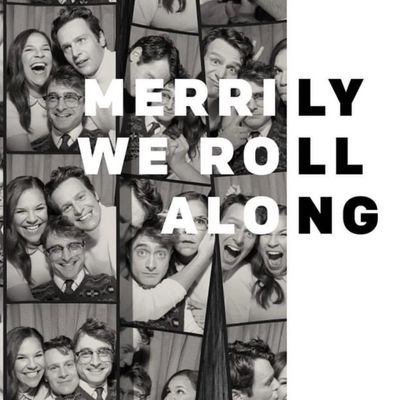
Lonny Price is a director, actor, and writer, primarily in theatre. He is perhaps best known for his creation of the role of Charley Kringas in the Broadway musical Merrily We Roll Along and for his New York directing work including Sunset Boulevard, Sweeney Todd, Company, and Sondheim!.. Read More
From the show: The Producer's Perspective Podcast with Ken Davenport
Featured Shows
About
Lonny Price is a director, actor, and writer, primarily in theatre. He is perhaps best known for his creation of the role of Charley Kringas in the Broadway musical Merrily We Roll Along and for his New York directing work including Sunset Boulevard, Sweeney Todd, Company, and Sondheim! The Birthday Concert. His early career was spent performing in Off-Broadway productions, including Class Enemy in 1979, for which he won a Theater World Award for a stage debut.
You’re probably used to hearing the phrase “triple threat” when talking about Actor/Singer/Dancers.
You’ve probably never heard of the phrase used to describe Actor/Writer/Directors. You know why? Because there are so few of them.
Listen to Lonny talk about his triple threatness, as well as . . .
- What it was like working with his heroes Hal Prince and Stephen Sondheim on Merrily We Roll Along, and why he’ll never direct it himself.
- What he thinks is the most important skill to have as a director.
- Gossip alert! Is his production of Sunset Boulevard with Glenn Close on its way to Broadway? Or not???
- Why he’s not intimidated by big stars. (And he has worked with the biggest.)
- Why he believes every stage production should be filmed and preserved.
Lonny is one of those people that was destined for a success in our biz. The theater and how it works is just part of his DNA, which is why he has been able to be such a success in so many different areas. Thankfully he was generous enough to talk to me (with or without being strapped into a chair) so we can all soak up his secrets.
Keep up with me: @KenDavenportBway
Transcript
This transcript was automatically generated and might contain errors.
[0:00] Lonny Price: This is Ben Stanton, Light and Designer.
[0:02] Ben Stanton: This season I had the privilege of lighting the revival of Spring Awakening on Broadway. Working with the amazing Deaf West Company has been a highlight of my career and a lesson in what makes theater powerful. I'm deeply grateful that the production and my work were recognized by the Tony nominating committee this year. And now here's Ken with the podcast.
[0:19] Ken Davenport: I wanna be a producer with a hit show on Broadway. I wanna be a producer. Hello, everybody on the Producers Perspective Podcast. Welcome back to the show. So my introduction to today's guest was seeing him play the lead role as Ed Cleban in the beautiful musical A Class Act. If you don't know it, go check it out. So I remember watching the show and falling in love with his performance and with the production and thinking, huh, who directed this show? Uh-huh. And wouldn't you know it? It was the same guy. And then I looked again at the title page and noticed that he wrote it too. That talented man is none other than triple threat actor, author, director, Mr. Lonny Price. He's here today. Welcome, Lonny.
[1:02] Lonny Price: Thank you, thank you, thank you. I have to say I co-wrote it with Linda Klein, just just to full disclosure, but thank you.
[1:10] Ken Davenport: We'll give her props there as well.
[1:11] Lonny Price: Yes, please. Uh so Lonny also directed the revival of 110 in the Shade on Broadway, Lady Day at Emerson's Bar and Grill with Audra McDonald, however many Tonys she's got now. He just got back from London where he directed Glenn Close in Sunset Boulevard, which has got a whole bunch of people talking about a transfer. Maybe he'll give us a clue on that later. Directed a ton of these incredible musical concert shows like Sweeney Todd with Patti LuPone, Candide with Kristin Chenoweth, Company with Neil Patrick Harris, Stephen Colbert, and a lot more. He's worked with everybody, this guy.
[1:39] Lonny Price: Yes.
[1:41] Ken Davenport: Lonny.
[1:42] Lonny Price: Yes.
[1:42] Ken Davenport: I I'm exhausted from hearing that. How did you get started on this exhausting career of yours?
[1:49] Lonny Price: Well, I grew up in Queens, and was taken to shows when I was a kid. You know, nice Jewish boys go to matinees with musicals when you grow up in New York and your parents are that inclined, that way inclined. So I've been going to the theater since I was I think for my fourth birthday I saw Oliver, the original Oliver at The Imperial. And I just wanted to be an actor. My parents were very stupidly supportive of it. They loved the theater and my mother was a frustrated actress, I think in some ways, and my dad was a trumpet player. And so, you know, my sister for our birthdays we get to see whatever hit musical happened to be around and so I always knew I loved it. We had all the albums at home and that we'd play them and so I was kind of very unifocused about it, and I went to performing arts high school and then Juilliard.
For a year I dropped out and I started getting work as an actor. So, um that's really before that I, as you well know, I wrote to Hal Prince and worked for him in his office as an office boy after school, after performing arts high school, I'd go over there in the afternoons and in the summer and I was a PA on Pacific Overtures when I was sixteen and watched them put together that show and was at the recording of the album. I mean, Hal and Steve were my heroes and so I wrote them letters when I was a kid and they wrote back and sort of invited me into their world, which was, you know, just, you know, it's like a kid saying, you know, asking a kid who likes stars, do you want to go to the moon? And I was invited to the moon. And so I guess the last, god, forty years I've been trying to stay there. It's been a long, I've been doing this a long time when I want to think about it.
[3:46] Ken Davenport: And obviously you were involved with Mr. Sondheim as an actor as well, one of your first big breaks as an actor.
[3:53] Lonny Price: Oh yeah, yeah, yeah, sure. Yeah, Merrily, absolutely, which is a huge, huge fantasy come true. In fact, I just finished a documentary which will be out I think in the fall called Best Worst Thing That Ever Happened, and it's about the making of Merrily and what happened to all of us in it, and it comes out I think in the fall. So I've been reliving a lot of that in the last, actually I've been working on that for seven years, but finally we I think we finally have a cut that we all feel good about, so I hope it'll happen. No, I know it, it'll be out, but so yeah, that's Merrily was a huge, huge amazing dream to get to do that.
[4:30] Ken Davenport: But it didn't work.
[4:32] Lonny Price: No.
[4:33] Ken Davenport: So totally about that experience of like, oh my god, this amazing dream. You're working with the people that invented the space shuttle to get people to the moon.
[4:42] Lonny Price: Indeed.
[4:42] Ken Davenport: And then it didn't work. How was that for you? And being around all of them.
[4:47] Lonny Price: We were very protected, you know, honestly. I mean, Hal was very, you know, Steve wasn't around a lot because he was writing, but Hal was very, you know, loving to us and kept us really protected. I mean, I can now looking back now, because I'm a little older than they were than they when they wrote the show, uh and directed the show, um, the pressure they must have been under must have been just ridiculous. But they never showed it, and they never let us feel like we were letting them down. If anything, it was always Hal, you know, certainly after the opening film, he let us down. And he still feels that way. It's like he let the kids down. He came in my dressing room the night after we opened, he said, um, uh I wanted to give you a hit.
I'm sorry I didn't give you a hit. I gave you, I think I gave you a good show, but I didn't give you a hit, and I'm sorry. And um that was how, you know, but that was the he was, you know, like an uncle. I mean, I've known him since I was, you know, 14 years old, and they were just great. But we didn't, we got a, you know, we worked really hard. There were a lot of changes always. I think looking back on it that they would not have, you know, given that many changes a day to adults. I don't think, I think adults would have said no, but we were too stupid to say no. I mean, we were just whatever that, you know, jump how high and whatever they wanted, we did as best we could. Um so but they worked really hard.
I mean, it was a real lesson. It got postponed two or three times because the lead was fired, and then the choreographer was fired, and you know, it was right in the middle of the fishbowl, and they just were on fire with making it better. And I guess if you ask me, the truth is I always thought they would. So I knew that it was problematic after the first preview, um actually after the gypsy run, where it was very clear something was not good. But I always thought, well, it's Hal and Steve, they'll fix it. And I honestly never was worried about it. And you know, really worried about it, and was very shocked when the closing notice went up so quickly because I'd worked on Pacific Overtures and they ran that six months.
And I thought, well, we'll run six months. I mean, you know, Pacific Overtures, that's gotta be a harder sell than, well, no, apparently it wasn't. They didn't. You know, and Hal's often said to us, is that, you know, the audiences were unhappy with it, and he didn't want to put us through half houses and disgruntled audiences, and he felt didn't want the kids, we were the kids, didn't want the kids to go through that. And um, but uh we just loved doing it so much we would have done it for three people. Three people in the audience, we wouldn't care. Uh yeah, it was very, it was very depressing, very devastating when it closed, and mostly because I just wanted to do it more. I just loved doing it.
I mean, you know, you'll I knew very well as an actor I'd never get material that good, and I didn't. And there isn't, really. It spoils you. You know, you have Stephen Sondheim writing songs on you, and you get pretty spoiled pretty fast.
[7:55] Ken Davenport: Have you ever directed it?
[7:57] Lonny Price: No.
[7:57] Ken Davenport: Would you?
[7:58] Lonny Price: No.
[7:59] Ken Davenport: Never.
[8:00] Lonny Price: No.
[8:00] Ken Davenport: The film is as close to it as I'm the film about it is as close to it as I think I'm gonna ever get to it. I just think there's just too much in the way of me and it. And also it's very different now. You know, they've rewritten it so extensively. It has very little to do with what we did in large ways. And um, so um, no, I I'll uh once in a while I'll go to a production of it. I just saw one at Yale that Ethan Heard directed, who assisted me on some stuff, and he did a fantastic job. But it's hard for me to look at it without just being immersed in sense memory and emotions and not even sad or particularly depressing emotions, but I can't watch it. It's too um connected. Um and yeah, like I said, the film will be that's my statement about the experience, and I think that's enough.
[8:55] Ken Davenport: When did you start to think about doing something else besides acting?
[9:00] Lonny Price: Well, I I only wanted to be an actor for my whole life, and then I was working at some little theater, which is now the Citizens Brigade Theater on 28th Street, uh above eighth, between eighth and ninth, and at that point it was the American Jewish Theater. And before that it was the Roundabout. It was their original space. And it was under a supermarket and like an eight-foot ceiling, maybe a ten-foot ceiling. You could touch the lights. Well, I couldn't, but if I stood on a chair I could. And I was doing a play called The Immigrant, and um the artistic director there, Stanley Breckner, said, 'Do you have some suggestions? We're doing a musical next you have some suggestions for us for a director?'
And I gave him, you know, several, and he said, 'What about you?' And I swear to you, Ken, it had never occurred to me to be a director. Ever. It wasn't anything I had any interest in. I didn't study it, I didn't know anything about it. I don't think I particularly paid attention. I mean, I'd had good directors and bad directors and or less good directors, you know, and um, but I thought, wow, well, either I'll be an actor who wasn't a good director, but I'll learn something, or maybe I'll like it and be good at it, and maybe this would be another thing to do. And from the minute I started, it was just, oh, this is much better. I like this much better.
[10:19] Ken Davenport: What do you think it was if looking back on it now, if you could step out of that experience? What do you think he saw in you that made him think you could do it and do it well?
[10:31] Lonny Price: I don't know. It wasn't just a he didn't just say, ah, Lonny, what about you? He had a, yeah, yeah, he saw something. That's it, you know, no one's ever asked me that. I don't I don't know, except that some of my friends would tell me that I had been directing for years. And I said, What do you mean? And but a lot of times, you know, you'd have very I had great directors, but I also had very ineffectual directors who wouldn't do anything or say anything. So after a little while, you go, okay, well then I think I'll I'll come in there, and then Gary, you're gonna you'll come through the window. Is that all right with you? And they'd kind of go, ugh, you know, they wouldn't really respond much.
And so you wound up taking care of yourself by sometimes having to direct yourself, stage yourself, because you know, not all the time was the were the directors um they didn't care about acting a lot, a lot of them got the picture, you know, they were very not into you wound I wound up sort of I guess learning how to do that.
[11:26] Lonny Price: Um, but honestly I don't know what he saw in me. I mean, I really don't, but uh God bless them because from the very beginning it felt right. I mean, the great thing about directing is you're not trapped by your physicality. I mean, I at a certain point my hair fell out, I'm five foot six, uh, I'm only gonna play the Jewish nerd accountant in the corner. And at a certain point I had said about all there was to say about that style and that character. So for me, it was the roles were diminishing in terms of my accessibility, uh my ability to convince producers and directors that I could be other than what they saw. But when I was younger, I was playing, you know, South Africans, and I was playing East London kids, and I was I'd be I was playing everything.
But then, you know, I direct Irish plays and I direct South African plays, and I direct all kinds of plays that have nothing to do with my ethnicity, and um that's very freeing. And the other thing I have to say is is that you know, I really felt sort of looking in the mirror, uh, was not as an actor all the time was not helpful for me to grow up. I really felt in some ways I wouldn't be a man if I kept being an actor because I was always begging for a job, and I was always having daddy choose me. You know, I was always it's it's um I like being the father, and it suits me better than being the um the kid. Um I find that a very nervous place to be. But if I'm in charge, I feel okay about that.
And I like taking care of people. So that was a it was a great way to have that aspect of my character uh exercised. Um I remember the the costume parade of the first show, and a woman came out and I said to the designer, God, I think that's a really unattractive dress. Do you do something about that? And the next day she had a new dress, and I thought, oh well, I could get used to this. You know, as an actor, you're always going, you know, this is itchy, and this is a little tired. They're going, Yeah, yeah, we'll take care of it. Yeah, yeah, don't worry, just go on, just do your thing. Don't bother us. And as a director, you know, you just say something and some something changes, and that's very heady and powerful and a good feeling, and it encourages your, you know, um, critical thinking in a lot of ways.
And uh, so I I just loved it, and um, yeah, I haven't lost my love for that. But performing really was done. I was done. I had enough. What do you think is the most important skill that a director needs to have today? Is it, you know, they're all different, there's concept directors, they come up with big concept. There's visual ones, there's dramaturgical, there's ones that work with actors better than others. What is what you think you need the most or what you do best?
[14:16] Lonny Price: Well, I think you need a combination of all of those to a greater or lesser degree. Um I'm best with the actors because I I I my feeling honestly is if the actors aren't good and uh they're not making a connection with the material and the audience, you the rest the rest of us isn't doesn't matter much. A great lighting cue does not save a show, and a great set doesn't. And you know, I there's a director who I won't tell you his name, he came back and he told me, Oh, I just did this great production of Midsummer. The acting was terrible, but it was great, and I always thought, well, what was now what was what was there's good lighting? What was the great production you did? Um, so to me it's always been about because I come from an actor's point of view.
Are you reaching me? Am I connecting with you? Uh do I care about you? So to me, the acting is always the most important thing because I do really think good material and good actors, and we could do it in your living room and make theater. So um I think that's very important. Certainly the Meson Saint and all of that is enormously important, because then all the designers and everybody are working on the same show, and that's very important. That it's the same, that it's even though it's a shared vision, it's one vision that is driving it, and that everybody kind of falls in line too. So I think that's very important. Having a great visual sense is important. Sense of movement in on the stage, I think is important.
Um there's nothing that you mentioned that isn't important. Certainly for a new show, dramaturgical skill isn't valuable. Um, but everything you mentioned is you need some form of it or some degree of it. Otherwise you probably won't succeed. Or you need to get good help around you and know that you don't know. I mean, it's fascinating about like say Jerome Robbins was, you know, on Westside's story in Gypsy, he had a director who directed the actors. Bill Daniels, William Daniels, I think directed the actors in Gypsy, and Jerry Friedman directed them in Westside. He knew he didn't know about that. And he was smart enough and um egoless enough, although I don't know that anybody would say Jerome Robbins was egoless, but to say, that's not my I don't help. And I I I think that that's a great lesson is when you don't know, there's nothing shameful about saying, um, I don't do this well. Uh, who does who could be of use of service?
[16:45] Lonny Price: So, um, you know, I don't have that on that. So you start directing you're you're starting to build your directing resume, and then where did the writing come into all of this? Oh, yeah. Um, peculiarly, I was working with Joan Rivers on a show called Sally Maherr and Her Escorts, which was about Lenny Bruce's mother, who Joan wanted to play and who knew very well. And um we had a mutual agent, Bob Duva, who um said, I want to get you together with Joan. And I just I wasn't directing long. And I met her at her place at Cross Street from the Pierre, and you know, um dog was there, and it just it was just a bizarre thing. I mean, she was in, I think it's Amy Simple McPherson's ballroom, was her home.
And it was just filled with, I mean, the ceiling was all painted and it was all gold leaf, and it was just insane. I mean, it was just this ridiculous and she had a butler and uh and a maid, and you know, there was Joan Kaminsky from uh Larchmont uh with the butler. And we just had a great time, and we started working on the play as an as a director, and then um she you know, it needed some work, and so I started doing some dramaturgical work, and she said, Um, will you co-write this with me? And I said, sure. And then we brought in uh Aaron Sanders, who worked with us, and um I became a writer, but uh I'd always loved writing, and um funnily enough, Jim Walton and I from Marrilly wrote songs together as Charlie and Frank.
Um I actually love writing lyrics and and Stevensonheim was always very encouraging of mine. I had forgotten I found some things between this Marrowie documentary where I did some lyrics and he was like, No, you really should do this. And stupid me. I was like, ah, yeah, yeah, yeah, yeah. But he was really encouraging of it, and I found it too lonely writing. I just I like being in a room with people, and the yellow legal pad by myself for hours a day was something that I think was just too depressing to me. It wasn't it wasn't a good fit, but I still love writing. Uh and then co-writing on uh the book to class act um was uh yeah again came about sort of like that do you want to direct the show and then do you want to write it?
Because my ideas were always very specific and they were writer ideas about how to structure something or um a point of view that wouldn't that needed that person to infuse it with it if if the writer wanted to go in that direction. Um, and then I wrote a show called Kiki Baby, which we did at Nymph, and um, and I've been working on that for like 30 years. I mean, just like this crazy. I'm a dog of the bone. The the documentary took seven years, uh Class Act took five or six. Um I uh I've uh for better or worse. I don't give up. You know, it's that Churchill thing, never give up. It's uh I I don't know, they must have branded me with that at birth because I'm uh I'm a I stick. Um and sometimes I shouldn't, but I do, yeah.
[19:54] Lonny Price: Something like a class act where or anything else where you're mirror wearing multiple hats. How do you maintain your objectivity in those difficult class app was an idiot thing to do? I mean, I was really well incredibly thank you. I really appreciate that. Really appreciate that. But we had had the lead guy was supposed to do it, and he backed out like a week before, literally like a week before, and it was at Manhattan Theater Club. And Lynn Meadow, who knew Ed Clevan, um, and I was just desperately. We offered it to like Brian Darcy J. We offered it to everybody, and Ed was uh uh, you know, a slightly attractive guy from the Bronx, bald guy from the Bronx, Jewish guy who wrote lyrics, and I was offering it to Brian Darcy J. You know, I was offering it to people who really I guess weren't right for it.
And Lynn said, I knew Ed, in fact, she knew him very well, and said, um, this isn't gonna fly unless that guy is right in the center of it. You're right. What do we do to support you doing that role? And this sounds very egotistical, but I did it because I wanted to protect the show 'cause I thought she's right. And I hadn't acted for ten years before that. I was done. I was so done. And I thought, well, I can't, I this means too much to me. So I did it and I had an associate director on Broadway, Stafford Areema was my associate director eventually. But a Manhattan Theatre Club, I but maybe Stafford was there at that point. Um but was hard on the actors. What was really bad is that you're doing a scene and then you get the actors notes.
They didn't like that that much. And I don't blame her. You know, there was nobody so in retrospect I think it was I think the show would have been better without me. And um I wish I didn't do it in some ways, but I know it wouldn't have gotten on if I didn't do it. So it's a mixed it's a mixed thing. But I don't recommend it and I would never do that again. Ever. It's ridiculous. Ludacy had directing, co-writing and starring and something it was ridiculous, made no sense at all.
[22:04] Lonny Price: Well the final product was truly something special. It's one of my it's one of my fondest memories in the theater actually there was just something very special about it. It's a beautiful piece and it means a lot to me and it's I'm glad it meant something to you 'cause it was um, it was very much in my heart. And that's another thing is you know it's like when you find something that you just love like that, it's um you don't I I don't give up on it, you know? I just force it through as best I can. So I'm glad you liked it. You've been involved with a lot of revivals. How do you approach a revival as a director? What's your first step? You take something like Camelot, you did a Camelot, right? Like what do you sit how do you sit down and be like, okay I'm doing Camelot. What am I gonna do to make that now interesting today?
[22:47] Lonny Price: Well, Camelot's particular places we made it very multicultural and in fact, you know, the little boy at the end was of Arab descent, you know, so what we tried to do is make it not be I always try and make it relevant in some way to the present. Um and you know something my set designer James Noon taught me is you don't just you know do a show and sometimes like this too. It's not like you just do the show. It's like what is the space the show happens in? What does it mean in this time? What does it mean in this space? Who are the actors? How do you know it's you take what is there and not try and force them into making a piece of theater but you make the piece of theater around what is there and what is real and that's very that was been very useful to me is to look and see what it is I have to work with and not impose some concept on it and shoehorn something together as opposed to go, well we're in the Philharmonic we're at Avery Fisher now Geffen Hall.
It's something else. It's not the same as it opened at the Majestic in the 60s. It's not the same. What is it for this place? What is it when you put 50 orchestra members on stage? What does that do to it? How do the givens of each production inform the work and how does it reflect the work and hopefully what the authors were trying to do. So each revival to me or whatever I you know we just finished Sunset and you know um it's very different than the original production which was a little bit um grotesque she was grotesque and grand guignol and and you know Glenn was very open to I said, gee, let's do something else. And she said, Yeah, let's I don't want to do what I did. And so we deconstructed it and it's much more a love story now, and it's sexy because they're doing it.
And the difference in 1950 when the film came out between a 50-year-old and a 30-year-old, it was very, oh it's not like that anymore. It's not there are a lot of relationships that work with a 20-year split. And so it's about a middle-aged woman trying to fight for her life. And yeah, she's crazy and she goes crazier, but um it's not this m really bizarre story. It's a love story, it's a triangle. And um and kind of moving. So we investigated the humanity of it, which is what interests me, is what's what's actually going on. What are the feelings? What do people need? What are they getting? What are they not getting? What are they frustrated about? Um, what do they want? You know, she you know, sh she's holding on to her past because she has no present, you know, and and and is terrified of her future.
And a lot a lot of people can relate to that, and certainly a lot of women in in our country and in the UK as well, where age is there's so much ageism going on, and particularly for women, and they're invisible, and certainly in Hollywood, you're invisible at 35, let alone 55. So it's uh what interests me about the piece is almost always the relationships and the humanity and bringing that out, and hopefully not in a sentimental way, but bringing out the truth of it and the universality of it, which makes an audience respond to it. Um but they respond to the people. The other thing is I've in some ways been lucky, well, not lucky, but because I don't get big budgets for sets, um, you know, there's a I think that if you give someone a suggestion of something, that in that um allows the audience's participation.
If you give them everything and the proper ashtrays and it's exact that's a movie, but then they don't have to work at all. But if you just drop a huge chandelier in an empty stage, they fill in the rest of it. And their participation is required and it's an active form of theater. So the minimalism that I that my shows have due to budgetary concerns because of these concerts or whatever I'm doing are limited runs in general, um, force me to be more creative and force the audience to be creative with me. And I think that that's real theater. I mean, I try to do that as much as I can. But investigating the it um the um the revivals, it's all about what's real, what is real today, and how does it relate to us today? Because I think if you're doing a museum piece, that doesn't interest me very much.
[27:23] Ken Davenport: Can we get a little uh gossip on Sunset? Do we think it'll make it over the Atlantic?
[27:29] Lonny Price: Glenn really wants to do it. I really want to do it, um, the producers really want to do it, so I'm hoping it'll be okay. Um I can't tell you when because I don't know, but I know that there were, you know, meetings this week, and we'll see. You know, I just you know, it's hard to get a theater, and um it would be limited because she doesn't want to do it forever. So I I don't know. But I have a feeling it'll be here at some in some form. I just don't know what. I hope so.
[27:56] Ken Davenport: So you have worked with these, I can't even say stars. They're like they're constellations, they're so big. I mean, Glenn Close, Patti LuPone, all these major, major stars.
[28:06] Lonny Price: Yeah.
[28:07] Ken Davenport: What's that like? Obviously, they're very different from one another, I would imagine, and lots of from resume credits to egos to all the stuff you have to deal with.
[28:17] Lonny Price: Um, you know, I I'm maybe one of the I love stars. I mean, I they don't I've dealt with some really tough ones, and so none of them intimidate me anymore. I'm not frightened of any of them. I mean, I'm not that any director would be frightened, but it's um I guess because of being an actor, that I used I know what they're going through, and I'm there to help them. And I think they know that pretty quickly that I'm not I have no interest in um I'm not author and uh you know I I'm not like beating them with a stick, or I'm I'm uh I I'm not there to humiliate, I'm there to help them. I'm there to I always if they're not good, I'm not good. I only look good if they look good. So I'm their best friend.
I'm just trying how to I sometimes think, you know, it's it's like with Audra, you know, I've been given this this gem, this insane jewel. And so my job is to set it in a way where the light refracts it most brilliantly, and everyone sees how genius and how brilliant that stone is, that gem is. That's my job is to make them look fantastic because that's what we go to see. We want to see a great performer and a great performance. So I think they pretty much know that that's my goal. So we do it together. It's like, come on, take my hand. Let's let's figure out the best way that you're gonna make the biggest that you're gonna have a triumph in this. And um, and I love it. That's it's they're just fun for me.
And also, stars are stars because they're extraordinary. They are amazing. I mean, you know, Audra, Glenn, Patti, Emma Thompson, please, you know, you're in the room with these people, and they have so much to give. They come into it with just so filled with experience, richness, and gifts, and it's just a it's a pleasure to work with them. Um, I've been very lucky, so called well, Eli Wallach, I mean, all of the Gabriel Byrne, all of the actors I've worked with, just you know, it's just what a what a gift to get to be in the room with them and to watch them put it together and to help them with it. It's um it's the best part to me, it's the best part.
[30:29] Ken Davenport: I'm just thinking about the words you've been using. You you know, we hear about directors being called captain of the ship and all these things, and you of course you called it I'm like the father. I like being the father, and you just said I like to take their hand and do this together. It's a real loving relationship, obviously, you have to do that.
[30:45] Lonny Price: Yeah, I do, and I do. I and I and like you know, it's fine. I f I I'm I fall in love with all of them. I've never really, you know, um, I'm gay, but all the leading ladies, uh I just fall I'm I you know, you can't not be in love with Audra McDonald if you just cannot be in love with her. You're just in love with her. I mean, how could you not be? You'd be crazy or Emma or you know, you know, it's fucking Emma Thompson. Holy shit, you know, we're and we're playing and we're we're figuring it out. And um, you know, Emma was a wonderful person to work with because Emma just made you feel like a genius. You know, anything you said to Emma was that's brilliant. Well, you know, you will then you become brilliant because you go, Oh shit, Emma Thompson thinks I'm brilliant.
Okay, well, how about this? And she goes, even more brilliant. You know, so you just it's the support you got from Emma in the room made you better than you were. You know, they're all different. Oh, she's very challenging. I'm a better director because she she doesn't say yes all the time. She says why. Why? Um I gotta figure out why. And I gotta make sure it's smart. Because if it's not smart, she doesn't want to do it, and she's right. So Audra makes me better. Audra totally makes me better because she's um, you know, we um Lady Day was, you know, like almost like having a kid together. We worked on it just in a room all by ourselves mostly, and you know, uh, but it's very much um, it's really a collaborative the one thing I will say if I walk out of this building and get hit by a bus, the only thing I will say about the work is is that it's co it's all collaboration, and anybody who takes credit for anything is a fool.
I can't take credit for anything I've ever done. I it's not just me, it was everybody. It was everybody. It's only good. Sunset's good because the set's good, because the lights are good, because she's amazing, because the rest of it's good, because the orchestra sounds great. It's it's not any one person. You you you know, that's that's folly. The best, and it's the best, most fun thing. The documentary had five editors. I can't take credit for this. You know, I made a mistake a lot, and then I just kept at it until the right people presented themselves and we were able to figure it out. But I never say the documentary is mine, it's not mine, it's everybody's. It's everybody who ever worked on it.
And so that's a that's a good place to be and to be comfortable with that after all these years. The best idea wins, and it doesn't have to be mine. And it really doesn't, because I'd rather have much smarter people than me in the room so I can learn from them and we can exchange ideas and bounce off each other. So um, yeah, it's just it's all just collaboration.
[33:28] Lonny Price: You've done a lot of shows that have been recorded or captured, right? And why what do you think about this for the future of Bravo? You think we should be doing more of this? Do you think every show should be captured? Do you what do you think about streaming theater or any of the the National Theater Live concept?
[33:45] Lonny Price: Well, you know, I filmed a lot of them and I filmed a lot of mine. Um and I like doing I love filming mine. Mostly because um sometimes when people direct cameras for television, they're what I call covering it, but they're not directing it. For instance, um, when you watch uh I'm just take one of my uh company with Neil Patrick Harris, a lot of people are talking, but what's interesting is his reaction to them.
[34:15] Lonny Price: So I'm on him hearing what they're saying because that's gonna drive the plot. Someone who is just capturing it would be on the person talking, because that would be the logical way, but that's not directing it because I want subliminally you to get inside his head, which is where I think this is happening. So there's directing and there's covering. So I think when they're directed, I think they can be thrilling. I just did Gypsy with Mel DeStaunt, and I saw a screening of it last night on a big screen, because I never could see it on a big screen. And um you can't you can't buy a close-up what that means to see a performer that good, that committed close up and see both their eyes. Now, if we were we're talking, and if there's a camera here, if it was a single, it was a theater or no camera, they just see half our face.
But I'm here and I see both your eyes. I direct stuff for the for camera that I direct for the stage, and I go, oh my god, that's what they were doing. Because I didn't get I didn't, I only got half of it. But you get all of it, and it's when the actors are good, it's thrilling. You know, Audra on the HBO uh Lady Day is very different. She was beyond everything on stage. It's a different kind of beyond when you're, you know, you're just looking in her eyes and seeing what's internally going on. So the answer to the question is I think everything should be filmed. I'm so sorry that all the shows I saw as a kid are memories to me, you know. I love the Lincoln Center Library. If I die, if I ever have any money, they're getting it.
They c those captures, and now they're beautiful, they're three cameras or two cameras, but it's also very important that I said this to Patty once too. I said, they need to know what you were great at. They'll you'll be in books of the great Patty Lupone, but if they can't see it, it won't mean as much. And it's important to capture those great performers for the next generation. I don't know who Ellen Terry was. I never saw her. I don't know who Lorette Taylor was, except for 10 seconds of a film. Why was she great? I have no idea. I just have to take it for granted. I have to make, oh yeah, I guess she was great because they said she was. But you know, you capture Audra, you capture any of these people, and I get emails from Australia or something, going, I never would have seen that.
I never would have seen those people. And so I think it's a service to do it, and it's really important. Um, when it's done well, even better. But yeah, you answer your question. I think it's all should be all should be filmed, and it all should be filmed well you know people should take the time and do it and you know we I edit from for months those things and um it's real important to me that they're forever and that they that they represent what we did well any shows that you would love to do that you haven't yet is there something on your wish list I don't have a lot of that I gotta tell you I don't really have a lot of that um I'd always wanted to do a Brigadoon because I just find it moving find that whole idea of the village coming back to life for love just kind of swell and great and um and I'd love to do an another night music really love that.
[37:42] Lonny Price: Um I've kind of actually done in the revival thing most of what I wanted to I mean done almost all of Steve's except for Marilee and I'll not do that one. Um what excites me is but you know it's kind of like performers like I love looking for things for Audra looking for things for Emma you know um that excites me is that when I find an actor that I love thinking what else could we do together? Um so I'm a lot of time they're actor inspired. Gabriel Byrne and I keep wanting to work together again and like what? Be fun for Gabriel um so I kind of think more as an actor how do I get to work with these other actors again um and then how to create for them because uh I that seems to be sort of how I do it.
[38:37] Lonny Price: You got a lot of great advice when you were starting out. Any advice for the 16-year old, 18-year old kids out there that I want to be Lonny Price when I grow up. Get a better dream. That would be one advice. Um these are advice. Um advice. Um, it's so hard. I I I think it's a really hard business. I mean, I think it's a really brutal, really hard business. And what I say to actors a lot is if there's anything else you can do, you should do it. And do this on the side. Do this, you know, on Saturdays and on weekends and and and and at night, you know, and amateur theater is a great thing because no one's trying to be a star. They're just doing because they love it. And um, I think just I think it's really, you know, I I clear rooms.
It's I'm not I'm not the most positive person, even though I've been very lucky. Um, I find it um I think it's a very painful business. Uh a very frustrating, painful business filled with a lot of desperate people, and um, it's hard to maintain your sanity in it and your um presence of mind, and um I think it's really hard. So to me it's like theater can be done anywhere, and thinking that it only happens in these 20 blocks, um, I think is uh is not real, it's not true. Um so my advice is try and try and talk yourself out of it, and if you can't, those are the people that have to be here. But there's there's a price to be paid. I don't know anyone, I know you know, people who are very famous, I know people are starting out.
I don't know anyone who hasn't paid a great price to be in the theater and to be part of it. There's great joy in it, but there's there's it's it ain't for sissies. It's a tough place to be, so the New York Theater. So um if you have to do it, do it. But if you can do anything else, go do that and do this on the side, and you'll still love it. You won't get bitter.
[40:39] Lonny Price: Okay, my last question, which is now being called my genie question. I want you to imagine that the genie from Aladdin comes to you and says, Lonny, I want to thank you for your incredible contribution to the theater by granting you one wish. And the genie asks, What's the one thing that drives you so crazy about Broadway? That makes you mad, that keeps you up at night, that gets you so angry that you'd want the genie to wish away. And you can only pick one. Uh uh I you know, it's so easy, it's all too expensive. It's just easy. It's just you know, you put a set into a theater for a million dollars and you take it out for a million dollars, two million dollars of your budget has gone to put something in and take it away.
There's something wrong. It's not right. Um, I'm in cabs where people talk about older men talk about how they used to love to go to the theater and they can't afford to, you know, talk about when they saw a Pajama Game or the you know and when's the last time, oh I haven't been a long time. You know, it's too it's um we've priced ourselves out of the the the world, and uh it's um I think it also means that the kind of theater we see is uh catered in general to people who have the kind of money to pay a hundred fifty, two hundred fifty dollars a ticket that doesn't seem to be to be very healthy. Um so um I but I think you know how Price said many many years ago, um, why he left the League of Fear, the producers and all that, is he says, shut it down.
Let them strike. Start again. This isn't working, and it's not, it's gonna get worse. But, you know, people didn't want to stop the profits of Cats at that time or whatever it was, that's hundreds of thousands of dollars. Ah, just give it just give it, just give it fine, it's alright. Well, now it's a million dollars to put the show in a million dollars. And I don't blame the stage hands because I love the stage hands. Uh it but there's something wrong, and um, it does not encourage creativity, and it certainly doesn't encourage new writers and new composers and lyricists because who's gonna take a chance to spend 12 million dollars on a maybe? So then we get branded things and things that have been rehashed from other sources and things you know, and that's not the theater I grew up loving.
So um I I think I think we need to stop and figure it out. I don't think that will happen because it's best season ever. You know, I love that. Well, the ticket prices just went up. Of course it's the best, you made more money. The tickets are more expensive, but you know, it's totally ridiculous. But it's all that sort of propaganda, too, about you know, Broadway is doing well, but what are we putting on and how much of it is good? And are we just catering to tourists and I I I don't know. I I think there's um something sad. But then a Hamilton will come on and you'll go, it's alive and vital and great. Um, but um not not enough chances being taken, and I don't blame the producers because I just think it's it's too much money.
So um when I was a kid, you know, I I sat I stood through Pippin for two dollars at the Imperial. I know it's a long time ago, but now it's 80 bucks or so. I don't know what it is to stand. It's a lot of money. That's too much money to spend to stand for, you know. How do you inspire people when and the other thing is then they only see one show a year, and then it's just it's just all bad. So if I had I wish the ticket prices were half of what they are, and I wish the shows cost half of what they cost, and then I think we get a lot more interesting shows happening. Um that's my wish.
[40:45] Lonny Price: It's my wish. I want to thank you so much for that terrific answer.
[44:30] Ken Davenport: All of you agree with is that part of your genie wish? Listen, I think Hal uh had uh very good thing going for him when he said that you know we the and it's no one's fault because the the problem is we were built on a foundation that has crumbled a little bit. We just keep stacking floors on top of this foundation instead of addressing the underlying issues for everybody.
[44:52] Lonny Price: Yeah.
[44:53] Ken Davenport: Uh and that's when you just keep building another floor on top of it and don't address what's underneath.
[44:58] Lonny Price: No, and then you know, very uh yeah.
[45:02] Ken Davenport: Well, maybe you'll solve it, Ken.
[45:05] Ken Davenport: Well, and with that, I will say thank you so much for for uh sitting down with us. Thanks to all of you for listening. Don't forget to subscribe, and we'll see you next time.
© Broadway Podcast Network, All Rights Reserved