

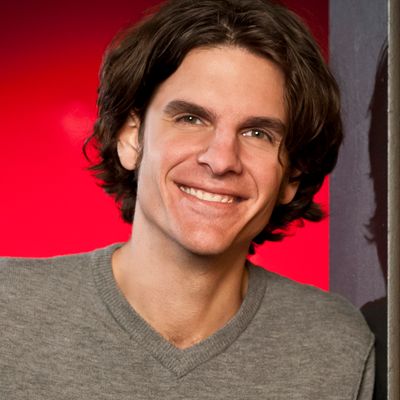
Alex Timbers is a two-time Tony-nominated writer and director and the recipient of Golden Globe, Drama Desk, Outer Critics Circle, and London Evening Standard Awards, as well as two OBIE and Lucille Lortel Awards. He is the recipient of the 2016 Jerome Robbins Award... Read More
From the show: The Producer's Perspective Podcast with Ken Davenport
Guests
Featured Shows

About
Alex Timbers is a two-time Tony-nominated writer and director and the recipient of Golden Globe, Drama Desk, Outer Critics Circle, and London Evening Standard Awards, as well as two OBIE and Lucille Lortel Awards. He is the recipient of the 2016 Jerome Robbins Award. His Broadway directing credits include Oh Hello! On Broadway, Rocky, Peter and the Starcatcher (2012 Tony Award nomination for Best Director), Bloody Bloody Andrew Jackson (2011 Tony Award nomination for Best Book), and The Pee-wee Herman Show. His Off-Broadway credits include Here Lies Love, and The Robber Bridegroom. He is a co-creator of the Amazon series Mozart in the Jungle which won the 2016 Golden Globe Award for Best Television Series - Musical or Comedy. Oh Hello! on Broadway was filmed for Netflix and The Pee-wee Herman Show was filmed for HBO and received a 2011 Emmy nomination.
Tune into this, our 98th podcast, to hear talk about his experimental beginnings and . . .
- Why most new theater companies never make it past the first year, and how he made sure his did.
- How a log line of a project helps him decide to do it . . . or not.
- What a right-wing Christian preacher has to do with his success.
- What’s going to become of the “immersive” movement.
- How he matches up the people he wants to work with, with the projects he’s working on (or how The Robber Bridegroom came to be).
Keep up with me: @KenDavenportBway
Transcript
This transcript was automatically generated and might contain errors.
[0:00] Ken Davenport: Just a reminder, guys, the best way to make sure you don't miss a podcast is to subscribe.
[0:05] You can do it on iTunes or whatever platform you're listening to this podcast on, or you can just put your email address in the upper right-hand corner of my blog at the Producer's Perspective dot com.
[0:15] We have great guests coming up.
[0:17] You do not want to miss them.
[0:18] Subscribe today.
[0:19] Now on with the podcast.
[0:21] I wanna be a producer with a hit show on Broadway.
[0:28] I wanna be a producer.
[0:31] Hello everybody, Ken Davenport here.
[0:33] Welcome back to the Producers Perspective Podcast.
[0:35] So last week we had Broadway veteran director Jack O'Brien on the podcast.
[0:39] And this week, a great time we have one of the newest additions to the Broadway Director A-list.
[0:45] Please welcome to the podcast Wonder Kin director Alex Timbers.
[0:48] Welcome, Alex.
[0:49] So Alex is a two-time Tony nominee, director behind Rocky, Peter and the Starcatcher, Bloody Bloody Andrew Jackson, which he also wrote, Pee-wee Herman Show, and what has got to be the funniest show of the year, Oh Hello.
[1:02] Which I just saw last week when we started.
[1:03] Oh, really?
[1:03] Oh, great, great, great.
[1:04] Off-Broadway, his credits include Here Lies Love, The Robber Bridegroom, and a whole host of others, including the first show that I saw when I knew he was gonna be a star director of Gutenberg the Musical.
[1:16] So Alex, what you don't know is that I often talk about you to younger artists, directors, writers, as a great example of how to start a career.
[1:26] So instead of me telling the story, why don't you tell us how you got started?
[1:29] What drew you to directing in the first place on the theater?
[1:32] Alex Timbers: Thanks so much.
[1:32] Yeah, well I was an undergrad and I was doing improv and sketch comedy, and I got really interested in the mechanics of comedy, and so I thought I should direct a farce because, you know, nothing breaks down that sort of the math of that like farce.
[1:47] And I really enjoyed it.
[1:48] And so in college, I started directing eventually like musicals and more street plays, sort of side by side, and doing also kind of like experimental kind of like comedic sketch comedy kind of work.
[2:00] But when I got out of college, I wasn't quite sure what I wanted to do.
[2:04] At the time I thought I would equally like to be a director or a general manager or a dramaturge.
[2:10] And I was an intern for Lynn Meadow at Manhattan Theater Club, and I was sort of had this revelation that probably won't be much of a revelation to many of your listeners, but was for me at the time, which was that no one hires a 23-year-old to direct Thornton Wilder.
[2:26] Um, they don't tell you that in college.
[2:28] And so I started looking around and I sort of had there was this kind of adage, you have to have gray hair to direct, and I was like, oh my gosh, well, I'm gonna be sitting around for a long time if I want to be a director, and so I kind of decided I had to create my own opportunities.
[2:42] So, what drew you to directing in the first place?
[2:45] What was it about directing versus any of the other theatrical endeavors?
[2:50] Well, I was definitely I was a terrible performer, and I, you know, I did acted in high school and elementary school, like a lot of people, but never attempted really to do it professionally, and in college, I just always found myself like observing myself when I was acting, and I was sort of like, oh, that's kind of what that's not helpful as an actor, but you know, it is sort of what a director does, and I really liked the more and more that I started thinking about like, you know, reading about like Brecht and reading about, you know, people like Hal Prince and Des McAnuff.
[3:26] I got kind of excited about what it is that a director can bring to a story and how that perspective is actually a valuable thing.
[3:34] So tell us about the, so you said, oh, I gotta make some new opportunities for myself.
[3:39] What was the first step to making a new opportunity?
[3:42] Alex Timbers: Well, you know, so I started directing, like at, you know, at a small theater downtown called Here and part of their American Living Room Festival, and just signing up for like all one nights of one acts to just direct a thing of 10-minute play.
[3:57] And I was also working for a couple different great off-off-Broadway theater companies, sort of producing their off-nights, their dark nights, you know, where so if they're have a space rented for six days of the week, but on the seventh day that they have the space rented but they don't have a show that night, I would sort of take over the space and do a series of one acts or, you know, some sort of performance art or something so that there was a revenue stream and it also got sort of more eyes on the theater property.
[4:25] And I enjoyed that, but it also gave me the opportunity to sort of see how different theater companies work and what I thought worked well about them, or what I would want to, you know, if I was had my own theater company, how I might want to do things differently.
[4:38] And the two things I sort of observed were one that since there are about 300 off-Broadway companies at any one time, about 95% of companies have like one of four mission statements, which is, you know, we do classics in, you know, new and fresh ways, we look at, you know, underappreciated plays or music, you know, things like that.
[4:58] And I was like, well, to stand out, you really have to have a very unique mission statement.
[5:02] The other thing that I sort of observed was that a lot of theater companies would have maybe like 16 staff members at the beginning of the season.
[5:11] You have something like a marketing manager, for example, but a company that had no marketing budget, and then by the fourth meeting, the marketing manager would evaporate because there'd be nothing for them to do.
[5:19] And you're only as strong as your weakest links.
[5:21] So by the end of the season, you know, you have like a third of the staff left.
[5:24] And I was like, this is not the way to go.
[5:28] And so what I decided was that I wanted to run my company more like a dance company.
[5:33] So I would be the director, and then I would have like two producers, and the three of us would do everything together.
[5:39] And instead of trying to figure out like the division of all the different positions.
[5:45] And what was the first project of this new theater company that we did?
[5:49] Alex Timbers: Well, so I thought that so I was trying to think of what a mission statement could be.
[5:53] And I thought back to this show, this can sound very odd, but that some friends and I made in college, which was a dance piece called Pièce de Mouvement Historique Avecal Geometry.
[6:04] And it was a wordless movement piece, sort of riffing on like my misunderstanding of what like BAM Next Wave, like early, you know, like Einstein on the Beach, and these sort of like really pushed, like sort of like dance companies were doing with it was all scored by like Philip Glass.
[6:24] And what we did was we wanted to look at sort of academic esoteric, and so we looked at the history of math, and it started out with a big bang and ended with the big bang, and but also looked at like Copernicus and Herodotus and represented man's union with math as embodied in the life of Thomas Jefferson.
[6:41] But weirdly had a B plot that was the story frame within the story was that Le Corbusier was trying, we were the descendants of Le Corbusier trying to tell us to stop dancing.
[6:51] So we had this, and stop telling the math the story of math for a Philip item.
[6:54] It really didn't make any sense.
[6:56] It doesn't make more sense than it does now.
[6:58] What we decided was that the only way to understand this piece was to give out a course packet, which had this dense outline with footnotes, and so there would be a reading period before the piece that was the outline, primary sources, and blank pages at the back to take your own notes.
[7:13] And the reading period was actually longer than the piece itself.
[7:16] And it was exquisitely dumb, and yet at the same time, you know, like really sort of erudite.
[7:22] And I was so I was thinking back to that piece, and I was like, oh, I love that, where we were sort of taking the piss out of academia and yet at the same time celebrating it and kind of lampooning avant-garde theater tropes that we didn't understand so well, and at the same time kind of reveling in them.
[7:37] So it's like that's what I want my company to be.
[7:40] And so I called it Leifur Carbusier in tribute to that show, which I thought was kind of fun because it sounds like a pretentious experimental theater company, but when you think of it, it's like Corbusier Brothers, is actually quite dumb.
[7:52] And that was going to be the sort of the idea behind the company.
[7:56] And then eventually, you know, we rented a space and put on our first couple of shows.
[8:02] And the second one was very was was noticed because of a controversy behind it, which was a very merry unauthorized children's Scientology pageant.
[8:10] And that was the kind of to me, if I was to identify a kind of moment that was a first sort of catalyst in one's career, it would be that show.
[8:19] Ken Davenport: So I remember you bursting on the scene with that show as well.
[8:22] Everyone was talking about that show and your talent.
[8:25] And then you again after that, I remember the next thing I saw that got a lot of attention was Hell House.
[8:32] Alex Timbers: Oh, yeah, that was really sort of fun and a strange experiment as well.
[8:36] Another something that got a lot of controversy.
[8:39] Well, tell everyone what that was.
[8:42] Alex Timbers: Yeah, so the in particular in Texas and Colorado, there were and there are these kind of Christian evangelical haunted houses that are put on by church groups.
[8:54] And it was sort of created by this guy, Pastor Keenan Roberts, who lives in Colorado Springs, and he sells this packet where it has a script and a sound effect CD and how you make the sets and how you make the props.
[9:07] But what it basically is is it's a walkthrough haunted house with different vignettes in order to scare you straight.
[9:14] So there's a scene about the evils of abortion, the evils of underage, you know, of teen sex, of gay marriage, all this stuff.
[9:23] And it's completely repellent and at the same time also delightfully naive, you know, and it's theater craft.
[9:31] And so I thought it was really sort of important.
[9:33] This was 2006 for people to see what it is.
[9:37] Because I think there's particularly, you know, if you live in New York, you're very isolated from the rest of the country.
[9:42] And so, but I didn't want to do something lampooning the Hell House.
[9:46] I kind of wanted to do it accurately.
[9:48] So believe it or not, we actually contacted Pastor Keenan Roberts, and we said, hey, we want to make this thing at St. Ann's Warehouse.
[9:56] And we want to follow your script and follow the techniques you use in order to make this show.
[10:05] And we don't agree with you at all, and we don't think we're gonna convert a single person, but we want people to see what this is.
[10:11] And he was like, yeah, this sounds great.
[10:13] And so we worked on this together, and you know, he was like, you're gonna just be surprised.
[10:18] A third of the people statistically are converted based on this thing.
[10:22] And you know, that wasn't our experience of the show.
[10:25] But it was just really interesting thing.
[10:28] So ten times a night we'd have these, you know, staggered start walkthroughs of the space, and it was each presentation is about 45 minutes long, and at the end, you after these vignettes, you met Satan, and then you met Jesus, and then there was a hoedown room at the end with Christian rock and pinned the sin on Jesus and powdered donuts and punch where you could like kind of decompress and talk about it.
[10:49] And it was this sort of extraordinary sort of experience, and I think kind of like an eye-opening sociological experiment as well.
[10:57] Ken Davenport: So obviously, controversy to some extent played a part in both of those early things.
[11:02] How much of that do you did you consciously think about?
[11:05] Oh, this is something that not only works for me artistically, but I think this will get attention.
[11:09] Is that something that goes through your mind at all?
[11:12] You seem to have, well, it's the general manager and the director in you, I guess, that understands the business of the theater as well.
[11:19] Alex Timbers: Well, I definitely, you know, I always think about every show I work on, I think about what the audience's experience of it's gonna be.
[11:26] And I don't really love to do theater where the lights go down and then the audience is expected, you know, the audience's position in the theatrical apparatus isn't like really sort of acknowledged and dealt with.
[11:41] And so I think where that leads to is thinking about, well, what how does this sound like fun?
[11:41] How does this sound, what is the thing?
[11:49] So when I was doing these sort of shows with my company, I always thought like, okay, well, there's what's the one line, what's the log line of it?
[11:56] You know, Head of Gabler with robots, Christian Evangelical Haunted House, musical pageant about Robert Moses and Jane Jacobs and Urban Planning, you know, that or emo rock musical about Andrew Jackson, these things, you know, and so you can immediately kind of describe it, and it's very simple.
[11:56] I think with Hell House, we, you know, we were we imagined, you know, that that was an interesting story, absolutely, and it was a, but I think with the Scientology pageant, we might have gone in a little bit too innocently because I was generally like as a 24-year-old kind of scared when the Scientologists came after me and wrote me letters and like showed up to a rehearsal room.
[12:36] Alex Timbers: Uh I because I you know it's it's already you know like slightly kind of energetically unnerving to work with like eight to twelve year old like an entire cast of eight to twelve year olds and then to have people come to your rehearsals and tell you what you're doing is terrible in front of the that was like that was like a moment I I like would not want to relive.
[12:56] Ken Davenport: Yeah.
[12:57] Alex Timbers: So that spirit and that and I love those log lines if you will because they're they're so brilliant in that all of them they have very contrasting things in them for those of you out there designing your show is the head of gabbler with robots weird right emo musical about Andrew Jack like there's a big contrast there. So you have these these ideas and this spirit of experimentalism if we will but how do you apply that now to traditional things?
[13:23] Ken Davenport: So they call you Lynn Aaron's and Stephen Flaherty say we want you to do Rocky yeah how do you apply that spirit to something that's more traditional which Broadway almost has to be at times. So what what's your take?
[13:36] Alex Timbers: Yeah well you know I think with that one of the ways you know one of the simplest ways it manifests itself in that show was I mean there were many reasons I was really attracted to that show but actually you know first off the improbability of it. I was like Rocky the music that sounds like a crazy idea and you know but what if it wasn't and I definitely felt like the end of the show was a great example of like pulling on the kind of a lot of the things actually directly applying a couple of the lessons from Hellhouse because in that show it was a really a proscenium show for 90% of the piece and then the final 15 to 20 minutes we brought part of this we moved the audience up on stage and moved the ring out into the middle of the orchestra and suddenly it became a kind of in the round show.
[14:24] Alex Timbers: And a lot of the kind of principles of people moving and how you sort of how you get people to sort of move on mass without sort of intuitively was something that I definitely was remembering I was drawn from Hellhouse. But that was something where I felt like okay well if you're completely invested in the stories of Rocky and Adrian what would it be like then in the final 20 minutes to actually get to enter the narrative? How cool would that be? And I think you know I obviously not everyone had the like greatest response to that show but I think for a certain segment of the audience that was something that was really like a compelling emotional idea. And I think for everyone it was at least fun, you know, because it was just something it's not like something that happens in Broadway theaters. It was one of like the 15 to 20 most thrilling minutes I've seen in a Broadway house in a long long time.
[15:17] Ken Davenport: Thank you. I mean people were jumping up and down and as well. What's your process when when you say whether it's Rocky, whether it's anything the first thing you do when you say okay I'm gonna direct this show what's what's your research process? Do you have one?
[15:34] Alex Timbers: Do you have one? Yeah totally I actually find the pitching process on a show to be the first step in that so even before you get the job. So on something like Rocky I really thought a lot about, you know, I went through the script multiple times just figuring out the things that I really liked about it, the things that I would uh advocate for, uh changing, thinking about tone, thinking about theme, thinking about what it could be like visually. In terms of Rocky, I spent three days at the New York Public Library picture collection just pulling imagery, being like, I this is Mickey. I think this is it, this is what I want the lighting to feel like. This is this moment and this moment. Here's a list of potential designers I would use, you know, just to give you a sense of the world and the atmosphere of like what the you know, because what I want to do, I I remember reading this like that Carol Channing would always, even when something was an offer, would audition for the thing.
And because she wanted to make sure that her vision of it matched up with what the directors and producers were saying that. And it's the same thing for me. I'll pitch on things that when it's a straight offer, if I think I want it, because I just want to make sure that what I'm seeing in my head is also what aligns with like what the what the producers and writers want it to be, and sometimes also what the actors want it to be if they're involved with it even before me. So that's where my process actually begins.
[16:51] Alex Timbers: And then everything beyond that is a natural extension. The you know, the two things to begin with are really talking with the writers, and you know, I I'm really like I love I have certain sort of strong feelings about structure, and and so actually just like talking through the script is is really useful. And then I also think I'll I go through the design process of just like pulling imagery before the even designers like her, just so that I can wrap my head around what I kind of not that we'll ever use any of it, but that just sort of to figure out my own opinions before the whole process sets off, you know.
[17:28] Ken Davenport: And you're a writer as well. How does that play into your research process? Does that help you? Do how do other writers feel? Do you want to write some stuff at the time? What's it's that's a great question.
[17:40] Alex Timbers: So I, you know, I and I it's I don't write as much anymore, and I think it's it's but but for a time when I was writing a lot, it was a really important thing to have that conversation with authors when I was working on, which is to say, I don't see myself as a writer on this. I don't intend to like be nosy and you know, like to step outside the boundaries of the director writer collaboration. But what I think it has really made me good at is being an empathetic collaborator. Like I get the process of what it is to be a book writer on a musical, and I think it allows me to to work with them in a way that feels like compassionate and productive. It's the same way that I feel like having produced a little downtown theater.
Now it's not in any way to be a like a Broadway producer or anything like that, but at least like get the idea of like the different balances that and compromises one needs to make. And I think it I I you know, you'd have to ask my collaborators, but I'd like to believe that that makes me a little bit of a better collaborator, both for producers and writers, you know.
[18:41] Alex Timbers: Directors have to have a great number of skills, so they have to come up with a concept for the show visually. They have to work with actors, they have to work with writers of all the things that directors have to do, what do you think is your strongest skill?
[18:56] Alex Timbers: Oh, this that's a great question. I mean, uh what I'm most interested right now in is the question of how everyone, from actor, writer to designer, is telling the same story. Because I think you see it all the time on musicals, and you know, I I could point to a f quite a few of my own where I'm like, oh, you know, we didn't all quite get on the same page about that. And so I I don't know what my greatest talent is, but I know that that's like the thing I'm most concerned about right now is uh because I think you see it all the time with hugely ambitious projects that have so many great qualities about them. But every but for some reason when people are slightly diverging on a creative team, it just feels exponentially like I mean I don't know the notes could articulate it, but you feel like there's something not to I think you see many shows where you know they're not necessarily aspiring as grandly, but everyone is like rowing in the same direction and they work the you know they're sort of wildly powerful. And so that's the thing I'm I'm sort of most curious about right now is how I can improve that in my own.
[19:57] Ken Davenport: Do you enjoy the audition process?
[20:05] Alex Timbers: I get really stressed out by it because I I love actors so much and uh and I just know that it's you know I I often don't eat on an audition day because I'm just I'm as nervous as for them as they are. I think the thing that actors don't realize is that the directors just desperately want everyone to succeed you know what I mean it doesn't it's just like you're going into pitching to producers. You know the dire the producers don't want you to fail in your pitch, you know they want you to be great. They want you to make their life easy and you know this is the person. They get so excited individually about everyone that comes in and I get so excited about individually about everyone that comes in and so I get nervous and uh energized by it and you know the chief reason I sort of love theater is the cloud process with the actor and so it's it's that and and that moment of course when you see that person where you're like wow we're gonna take this like long journey together. It's like it's nothing more thrilling than that.
[21:01] Ken Davenport: What do you look for from an actor when they walk in the room?
[21:04] Alex Timbers: I you know, a lot of times the casting process is you don't quite know exactly what you want, you know, and that's so it's a sort of a an investigative process in that way too. I think there's some people who like they'll know it when they see it or whatever. But I love to sort of learn about the different qualities of what you know the role is going to need just by sort of seeing you know different exam so I love it actually like when actors take a really like a s a strong choice and point of view on the material. I also think it's great. I I know this for a fact that it's hugely comforting when an actor comes in a room and knows exactly what they want to do in that they're like, I'm gonna sing first and I'm gonna read and this and they go like before even saying hi they go directly to the piano and they point to I'm gonna start on this bar and this and then I'm gonna go there and they're gonna double this and they're like hi I'm so and so I mean that's there's nothing you're like thank you know you feel like you're in like great hands there. And I that's a great start to an audition.
[21:54] Ken Davenport: You've worked for nonprofit producers, commercial producers. Talk to me about the type of relationship you'd like to have with producers or really what you think a good producer is for a director.
[22:06] Alex Timbers: I think you know one of the like sort of happiest collaborations it's been with public theater I just think Oscar Eustace is great and is an example of like a really sort of holistic approach to producing where he's interested in the budget, he's interested in the design, he's interested in the dramaturgy. And I find that exciting because you get to sort of engage in equal parts in that and he as much as you know a director or writer might have a vision for a show, he has his own vision, you know, for what the show should be and I think that's a fun sort of thing to find a meeting ground. I love you know when when I think about like Here Lies Love or the Joan of Arc Show, I think the that collaboration is as much between David Byrne and me as David Byrne Oscar and me.
So I love that. But then I love working with with producers as well who are you know more interested in saying, like, here, you know, you take care of like the cre I don't quite know how to like critique the script, but I can just tell you what I feel. And here the the real thing is how do we get the most bang for our buck out of this senior page. I find that kind of like equally exciting because there's obviously a huge amount of trust in both those relationships. But what what I haven't quite ever experienced is people who are producers who are only interested in the artistic and aren't interested in any of the budgetary. And I know that exists out out there as well.
[23:26] Ken Davenport: Yeah, I I I don't know. I I feel like I've been fairly blessed in terms of having really sort of really loving the people I've gotten to work with. I also think that I'm sure you guys think about this too as a I mean, because you're not only a producer, you're a multi-hyphenate and a creator, but there's also becomes a process of just knowing, like, okay, I s I get the impression I would work well with this director or this writer, and you sort of, as you sort of get to know more people in the world, you get a sense of like, oh, I feel like you know, like Todd Haynes and I would really get along. And so that's why like I sought out Todd Haynes and I was like, I feel like we should really, you know, and and that experience on The Robber Bridegroom working with him and Daryl Roth was like totally blissful because both of them were just awesome.
And so I think that's a helpful thing too, just as like you sort of sort out, like, oh, I think that actor kind of gets, you know, I think you know, those relationships are uh figuring out the chemistry of that is really important too.
[24:23] Ken Davenport: So you sought them out for that production.
[24:26] Alex Timbers: Yeah. I I was like, this is the perfect place for this show and what this thing needs, and then, you know, I had always wanted to work with Daryl, and like, and she seemed to like when we started talking about she like sort of got it, and sort of that was really positive. It's just another sign of even at that point in your career when you've got jobs and got things going on that you took matters into your own hands again and created opportunities for yourself.
[24:52] Alex Timbers: Yeah, well, I think you know, I had this really interesting discussion with a director back in 2007 up at Sundance, really wildly successful director. And he had this, he was talking about how he was like, I feel like I'm in this moment in my life, in my career, where all I'm doing is reading a bunch of scripts and I'm being very reactive.
[25:11] Alex Timbers: So my career path is being determined by the things that are being sent to me instead of me determining, so who has the agency at that moment? Yes, he's choosing yes or no, but he felt at the time like, but I'm not like deciding and making the thing. And I think there are and so to me that's a very like, you know, uh something that I that I really like sort of thought about a lot. And thought about, well, do I want to be a really proactive person, sort of generating material? And I also think, you know, I'm not great at everything, and so I wanted to be like, well, what can I uniquely what you know, and it's the same thing when if a project comes to me, it's not only do I like the project, do I think I can uniquely be the best person for that?
Because if I think Trip Callman or Annie Kaufman or Casey Nicola is a better director for that, I'll say that to the producer because it feels to me like they're working on it and the writer's working out longer than the director. They should have the perfect person. Sometimes that sort of people are like, well, that's kind of a weird thing to say, but they deserve the perfect person, and then other projects like that I've worked on, I'm like, oh yeah, I'm that's like me. I'm the I'm the I should be the guy for that. So I d I think I know this is sort of a a long sort of logic path to that, but it's something I'm very aware of, and that and that's the kind of thing that makes me think like, okay.
The Robber Bridegroom, I love this, I should be doing this, where's the perfect home for it? It's no one's gonna come and bring that show to me. So I sought out the authors, then I sought out the theater, and then I saw uh producer commercial producer come on board, and and that was a it's just a very happy experience in that way.
[26:47] Ken Davenport: Do you read reviews?
[26:48] Alex Timbers: Uh less and less. I used to like avidly read them.
[26:52] Ken Davenport: And then what happened?
[26:53] Alex Timbers: I think battery is happening and then I stopped.
[26:56] Ken Davenport: So really now you just avoid them.
[26:58] Alex Timbers: Yeah, I I do. I it's hard also when openings happen because you sort of I shut off my phone, I'm like, I don't want to know. And then there's no way that you don't find out somehow. I don't know. What do you read reviews?
[27:11] Ken Davenport: You have to do it.
[27:12] Alex Timbers: I have to because we have to take quotes and put 'em in ads and things. But uh yeah, chat room. Do you read chat rooms or any of that stuff?
[27:17] Ken Davenport: No, like sorta sort of.
[27:22] Alex Timbers: I I it depends on the show. If it's a show that feels like a really sort of like populist thing, and we're really trying to figure out what are people thinking, and you're you sort of end up in a kind of little cocoon while you're in previews on a show and don't understand, sort of you're like, I think they like it, but I'm not quite and so it's helpful sometimes. It gives you a little perspective. Obviously, chatrooms are like on the whole, like fairly like, you know, they can be you can be mean spirited at times. So it can be a little bit of a blow. So I I guess uh judiciously is maybe the answer.
[27:53] Ken Davenport: Do you read chatrooms?
[27:55] Alex Timbers: I you know, I was like a chat room kid in 1990, before the internet really was the internet. I used to sign on to like rec dot arts dot theater dot whatever newsgroup bulletin board at like the DOS computer lab at Johns Hopkins and like rave about aspects of love. That's what I used to do all the time. So I was like one of those guys, so I poke around every once in a while. I have a I have a kind of a good story about it, I think. The um when I worked on Bloody Bloody Andrew Jackson, we were Mike Richie had decided to do it on LA at the Kirk Douglas, and it was the first time I had a show with any sort of form of budget. And I was so excited, and we had all these great designers and great choreographer.
And I was like, Well, this would be like the first show that anyone like talks about on a chat room because this is the first thing that anyone's like ever heard of. And we get to the first preview, and that next morning I like, oh, I wonder what they're saying in Talking Broadway. And the headline was a bloody bloody mess. And I called up my collaborator, not Michael Friedman, I was like, oh my god, I'm so devastated. People think he's like, don't worry. No one reads that shit. You are just being crazy person. So I walk into the rehear to the theater for our preview rehearsal that day, and Mike Richie, who's like the most charismatic man, is six foot six, and he comes up and he walks right up to me, puts his hand on my shoulder, and says, Don't worry, we all read it, and it's gonna be fine.
I love it. That's the thing about those, like, if you had known the person who wrote that was like me, the 18-year-old geek from like Johns Hopkins, like we can't put a face to it. We don't we don't know who's saying it, we'd taken as like but the horror is that like the the second the guy who's running the second biggest theater in America is also reading it's a movie. They there's an outsize influence, you know.
[29:45] Ken Davenport: Yeah. Well, we've had the big critics on this podcast, and they've said that they've taken a look at them. So really cool. The question is whether, of course, it influences or not. You're associated with some pretty big shows coming up. You've got Moulin Rouge.
[29:57] Alex Timbers: Yeah, yeah. Excited?
[30:00] Ken Davenport: Yeah, really excited about that. We're gonna have a script soon and working with John Logan who's like that's which is a dream because he's like a hero of mine and and yeah, really excited about that. And working on Beetlejuice too, it's just really fun.
[30:14] Alex Timbers: Another great title. Uh yeah, and that's been a couple of years in the making, but we're uh we're gonna have a reading in a couple months and it'll be it's uh I I'm really looking forward to both of those. And I think those and then being able to be downtown with Joan of Arc at the same time. I feel you know, that feels like the c when I was when I was doing downtown theater, I was always sort of confused why there weren't more directors who played uptown and downtown and I think there are a lot of examples of that now, and I probably just had sort of a narrow focus back then. But it always felt to me like how could you have the kind of Steven Soderbergh version of a career in the theater where you can do small, tiny little things and you can do big things and at the same time you can do kind of things that feel really commercial and feel things that feel really artsy and work with collaborators you you love in both menus. And I was really inspired by Adobe Theater Company. Do you remember them?
[31:11] Ken Davenport: Mm-hmm.
[31:12] Alex Timbers: And they we always talk about their motto was downtown theater with an uptown sensibility. And I love that. And so when we were doing those Le Frère shows, you know, very purposefully we'd have like, you know, the cool set designer working at Here Art Center and then the video designer would be the associate projection designer from Wicked or whatever, you know. And we'd have the ERS choreographer and then the costume designer of like, you know, at the like, you know, some like MTC show or whatever. And that to me was always kind of an interesting friction, and it's one that I continue to like be really kind of curious about continuing in my creative life.
[31:50] Ken Davenport: Well, for for someone that has been pushing Broadway, I think, into a new era of storytelling. What do you think Broadway looks like in 20 years from now? What kind of shows are we gonna see? What kind of shows will you be doing?
[32:04] Alex Timbers: I think it's a really good question. I feel like it's it's I I don't know. I I mean you'd be the way better person to answer than me on this, but I I'm curious if the kind of semi-immersive trend is something that is just a trend, or if it's something that people are really increasingly interested in. It definitely feels to me like, you know, music will sort of in its own sort of sluggish way kind of follow the kind of trends of popular culture, hopefully, yeah. I I think it'll be really fascinating to see the musicals of today as revivals later, you know. That that uh I I sort of haven't like lived through the life cycle of seeing shows that I when I was first in Europe revived yet. So I guess that that's interesting to me.
I mean, the thing that seems to me the most that's gonna be the most transformative, clear like on a like uh predictable way is the technology, you know, if every moving light becomes a project or the kind of incredible things in terms of like projection mapping and altering sort of reality, making things that are flat, feel dimensional, things like that, that are those are gonna that's gonna become simple soon. Being able to program an entire show uh on your laptop at home and then bring it into a theater is uh already a reality and it'll just more and more. We uh on Rocky, we pre-visualized the entire show. So we had every sort of scenery move, every projection queue and all that stuff. Uh you know, before we started rehearsal, you could hit play and you can watch the entire show.
I think that that I assume that that becomes less and less expensive and it becomes more and more feasible even for you know, people working downtown. I just did a a layfare show for tiny budget in a cement bunker in like the Abraham's Arts Center basement. And they had all these like LED moving lights and I mean I was just like you know, that all this is possible now. The idea of like having a single one of those, you know, ten years ago with being able to afford that downtown would just wouldn't have been any form of autumn of uh moving had it just you know, wouldn't have been possible.
[34:09] Ken Davenport: So I don't know. What do you see? What do you think?
[34:11] Alex Timbers: I asked the questions here, Alex.
[34:13] Ken Davenport: Okay.
[34:14] Alex Timbers: No, I uh actually that's the big thing for me too, is I'm a big believer that you know, as the I'm part of what I call the video game generation. Like I was ten years old when the Atari came out. I grew up on video games. Now video games are such a massive part of how people get their entertainment for when they're born. They're born with an iPad in their hand, practically they're playing games, and they're affecting the outcome of the story. Which I believe this immersive trend is gonna push more and more towards that direction of somehow the audience feeling, as you talked about with Rocky, part of the narrative somehow, and maybe even participating in that narrative, how we do that in these old buildings will be easy to support.
I mean, that's the thing is that I mean we really confronted it on Hill as well as how do you I mean it'll be great if Natasha Pierre is really successful because I think it'll give at least a lot of hope to that being able to be a profitable thing. 'Cause I don't know, it it's it seems it seems like a lot of people are feel like excited about the idea but frustrated by the realities of 'cause of I mean the things you know better than me of all the strictures of working on Broadway.
[35:27] Ken Davenport: Okay, my last question, which uh is my James Lipton question. Are you prepared? I want you to imagine uh I want you to imagine that the genie from Aladdin comes to visit you, knocks on your door and says, Alex, I want to thank you for helping push the theater into a new generation. And I want to grant you one wish. What's the one thing that drives you so crazy about working on Broadway that gets you angry, mad, jumping up and down, would have you screaming in tech or in a meeting or something that you'd ask this genie to wish away?
[35:59] Alex Timbers: Can I slightly modify that and say what I would really wish is for is a completely flexible Broadway theater with no seating that you could the thing that that you could configure in any way possible, but that is a Broadway house, that's the thing I would dream for.
[36:16] Ken Davenport: Uh you can totally configure that question just like you wanted to configure that theater. So yes, that's a great, great answer. I keep thinking that somebody is some young creator in the next generation is gonna go ask for a Broadway theater, they're gonna say, I'm sorry, all the theaters are full, and they're gonna say, What do you mean? I'm gonna go just do it somewhere else and draw some of our audience. I mean Yeah, I I haven't gotten to see Nick Heitner's space yet, but Nick Nick Heitner and Nick Starr are doing in London, but the idea of just being able to be like, we're gonna we're gonna like build our own th you know, we're gonna like build a brand new theater in the way that we want that we think will complement the kind of work that we want to make is I think it's so sort of gutsy and and uh cool and I hope they have a lot of this success because um I think that's uh the idea of being able to be like sort of flexible in that way is thrill.
[37:10] Ken Davenport: Well thank you so much for being here for that answer and thanks to all of you for listening. We will see you next time. Don't forget to subscribe to the podcast theproducersperspective dot com or just click that subscribe button in your iTunes.
© Broadway Podcast Network, All Rights Reserved