

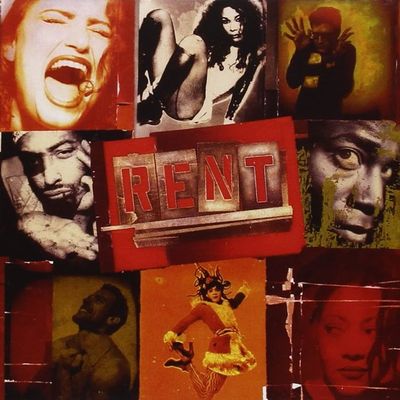
Eden Espinosa (Lempicka, Rent, Wicked) has been a powerhouse on Broadway for decades. She has also experienced the very human contradiction of struggling to own her power in certain areas, where shape shifting to avoid conflict and to maintain the status quo of an imbalanced power dynamic has kept her from stepping into the personal power that she is known for on stage... Read More
From the show: The Quiet Part Out Loud
Guests

Featured Shows


About
Eden Espinosa (Lempicka, Rent, Wicked) has been a powerhouse on Broadway for decades. She has also experienced the very human contradiction of struggling to own her power in certain areas, where shape shifting to avoid conflict and to maintain the status quo of an imbalanced power dynamic has kept her from stepping into the personal power that she is known for on stage. It is through the hard work of breaking old patterns and prioritizing independence where she is finding a new path forward.
Transcript
This transcript was automatically generated and might contain errors.
[0:00] Bobby Steggert: I'm Bobby Steggart, and this is The Quiet Part Out Loud.
[0:15] Bobby Steggert: The Buddhists believe in the concept of samsara, the cycle of birth, death, and rebirth. And in each cycle, there is the opportunity to learn a specific lesson towards growth. By gaining insight and overcoming certain patterns, a person can progress to the next life through reincarnation towards enlightenment, ultimately breaking free of the cycle of rebirth. Now, whether you believe this or not, I find it an extremely helpful metaphor when considering that thing in life, that sticking point that you keep coming up against, often in a frustrating repetition of the same difficulties. Why do I always procrastinate and do everything at the last minute in a panic? Why do I always seem to reach for immediate gratification?
Why do I always choose the bad boy instead of the nice guy? Sometimes when a client is in a particularly frustrating and familiar place, they'll ask me a question along the lines of, aren't you sick of hearing the same thing over and over and over? And part of me is certainly bored of it, sure. But a wiser part understands something fundamental about the human experience. Each of us has a lesson to learn in this life, a tender area that we have protected through harmful patterns that simply take a lot of time and insight and discomfort and repetition in order to maybe someday change. It can be particularly frustrating when we might sail through other aspects of life, giving us this confounding contrast between our strengths and our vulnerabilities.
My own example of this is that I probably could have succeeded doing anything I chose as a job. Now, this isn't arrogance. It's just the result of a seriousness and commitment to professional success that has always been somewhat uncomplicated for me. And then there's the journey of my sexuality, which has always been my sticking point, a decades-long effort at reaching an often elusive acceptance of self. This week's episode with Eden Espinosa is an exploration of that very human contradiction. She's known to us for her power as an artist. She is bold and strong, and it's very easy to project onto her superhuman quality. What she so beautifully shares here in this conversation is that very common contradiction, and that despite all of that, there have been areas of life where she has survived through shapeshifting, by making herself smaller, by not advocating for herself, but following implicit rules that allow others to control the narrative.
What's fascinating is that it was professional success and the great pressure of being seen and analyzed by so many that took part of that freedom away from her and began to convince her that she needed to deliver what was expected of her. This has also been a pattern in her intimate relationships, the pattern of ceding that power to another, in shapeshifting around perceived expectations to make dynamics function through their imbalance. It is possible to be nailing it in some areas and to have major lessons to learn in others. I'm especially grateful to Eden for opening up about intimate relationships as a topic on this show. It's something we all navigate all the time, desire, loneliness, partnership, heartbreak, and yet on this platform, it's new.
I imagine as we visit it, you will admire the wisdom of her openness as much as I do. Eden, when you and I talked on the phone, you said that you could do four episodes of this, and I thought you're my kind of girl. I like this very much. Sign me up, coach.
[4:03] Bobby Steggert: Have you always been just like a self-investigative person?
[4:09] Eden Espinosa: I'll say there are aspects of it that have always been with me, but I think I'd say my 25 to 32 were like the most when I really started to examine myself and my patterns and my defense mechanisms and all of that kind of stuff, and it's just gotten deeper and deeper the older I've gotten with family of origin stuff and product of our environment and all of that kind of stuff. But yeah, I think there's always been that curiousness of human behavior and how we interact with each other.
[4:50] Bobby Steggert: It's what makes an artist great, so not surprised at all. Not one bit. When we talked on the phone, you brought up this idea of shape-shifting, and it's so salient to me as a queer person because, of course, when you're queer, you grow up trying to find versions of the self that are acceptable to an environment that is often hostile or dangerous, and sometimes because of that and because so many of my clients are gay men, for example, I have a myopic view of shape-shifting. But really, I know it's a universal thing, and I would love to hear about your version of shape-shifting, starting with family of origin and how that became something that you even became aware of in your past.
[5:27] Eden Espinosa: Yeah. I think that it first came into my point of view in examining my friend groups and stuff growing up because I think that during the pandemic in 2020 and really looking at myself as a Latina woman, but a Mexican-American woman, a white-passing Mexican-American woman, and learning about colorism and racism within my own culture, but also, obviously, like our whole country went through that examination, but having to play a certain way to people who thought I was white or a certain way with people who I was at home with, but also facing with people who were from Mexico going, you're not Mexican, you're American, and me going, oh yeah, I am, but also my grandparents came here and I am American, but I feel Mexican.
So I think that was the first time that I really noticed it, but it has been in my relationship with men, examining how much I have really catered to what they wanted me to be, what they thought I was, and in my last breakup, I've been single now for almost a year and a half, and so really looking at, I'm tired of these lessons, I want to learn the lesson and really hold true to who I am because death by a thousand cuts.
[7:10] Bobby Steggert: You just laid out this wonderful arc from growing up feeling like you were in between identities all the way to current relationships. You mentioned at first groups of friends. How did you navigate different parts of self, different versions of self, depending on who your friends were as a kid?
[7:25] Eden Espinosa: I think that I didn't fully understand because growing up in my family, I heard all the stories from my grandparents on both sides and then trickled down to my parents' experience when they were growing up here of racism, of discrimination, of prejudices, and I didn't experience that growing up here because I think I didn't have parents who had accents. I didn't have an accent myself. I'm, again, very white passing, but I did experience it from the kids at my elementary school. I grew up in Orange County, California. The Mexican community is very large there and people from Mexico. The kids who were from Mexico were the ones that teased me and made fun of me because I didn't speak Spanish fluently.
They would call me huerita, which is light-skinned, white skin. I experienced it in the opposite way that my parents did or my grandparents did when they came here. To me, I didn't quite understand when they would tell me stories about how they were treated by white people because I wasn't treated that way. It was an interesting thing to be like, I don't know what you're talking about. Not all white people are like that. I was a kid being like, what are you talking about?
[8:57] Bobby Steggert: When you were othered by Mexican kids, did you find ways to try to lean into a sense of that identity?
[9:07] Eden Espinosa: I didn't because I could converse with them. My vocabulary was very limited. In Southern California, the Mexican-American culture is its own culture. I wasn't a part of that. My mother was the daughter of an evangelist. My dad started going to church very young. They both were on a different path. My dad was very much into the church and became a worship leader and a pastor. I wasn't a part of that Mexican culture from Mexico, but also that Mexican-American culture where it was very chola, lowrider, Zoot Suit Riot, the cars and the gangs. I didn't have that in common with them. I knew about it historically because my parents told me about it, but I just was different. I was just different.
[10:03] Bobby Steggert: What was it like then to live in different realities, whether you were at school versus being at home?
[10:09] Eden Espinosa: At home, I was Mexican. My grandparents, their whole lives spoke to me mostly in Spanish. I remember sometimes if my grandmother was watching me after school, friends would come over and sometimes they'd be like, what is this food? It was in moments like that that I would be like, oh, we don't eat the same things or we don't have the same traditions or stuff like that. It wasn't a burden for me because I didn't feel I was bullied my whole life for a million things. This is just one of them. My name, people made fun of my name all the time. I developed very quickly, very early. I was 10 years old in the fifth grade, 5'4", with a C cup boob, which is what I have now. I went through puberty very early.
People would make fun of my height. People would make fun of my breasts so much that I was pulled out of school. It was horrible for me. There were bigger fish to fry as far as I was concerned, people making fun of. I actually did some children's albums and videos. I would miss school sometimes and people would be like, why were you sick? I was like, no, I was recording this video. Then they wouldn't believe me. They thought I was lying. Then they'd make fun of me. Just kids.
[11:42] Eden Espinosa: I guess I'm interested in the idea of shape shifting, first of all, in a social situation. So if all of these different ways made you feel othered and different, how did you find yourself leaning into other people's expectations of you? What's wild is when I look back at myself when I was younger, I was unapologetically me. So it wasn't as much of a problem when you were a young person. Yeah. There were times that I would try to go with the flow, try to be cool with the cool kids. And I remember specific things in junior high, like there was going to be a party and there was going to be like alcohol there and all the kids were going to lie to their parents. I was like, I'm going to do that too.
And I always got protected from stuff like that. Like literally something would happen that God was like, God, universe, source, whatever you want to say was like, nope. And so it was like, I would try to do it. And I was forced back into my lane. I look back at how I dressed. I was always different, but I always wanted to be like everybody else. That is the thing. There was always something in me that would look at the girls who had a certain pair of jeans, like guest jeans, or their figures were starting to develop a certain way or their blonde hair or their more Eurocentric features than I already have. You know what I mean? So I always wanted to be cool. Like most kids. Were you discovering your talent at this point?
[13:18] Yeah, this was always something that I did. And when I was coming up, the accessibility for the professional kid wasn't as immediate. So I did it because I loved it. I was in lessons, I was in children's theater groups, but there wasn't a lot of people who did that at school. Like, even when I was in high school, and it wasn't cool. It wasn't cool by any means. I did do two musicals in high school, but it wasn't the thing that made me cool. This was pre Glee. And I did sing the National Anthem at a football game or whatever. So I became known as the girl who sings the National Anthem and all the things. I guess by my senior year, it was something that started to be cool, I guess.
[14:10] Oh, I don't know. One thing we'll get to is that kind of dichotomy between knowing we're powerful in some way, and then still people pleasing and changing and not trusting our instincts in other ways. So when you were young, and you were discovering that you were a performer, was it something you understood as your power?
[14:30] It's yes. It's something I understood that not everybody has. And we have it in different ways. I didn't come out the gate amazing. I was in my room singing all the time and emulating people. And again, I wasn't in any professional training. That kind of stuff wasn't as much. It was like you were in dance lessons, or you did this after school program. There weren't these intensives and masterclasses with Broadway professionals. And that didn't exist in Southern California for me. But I didn't even think about doing theater as a career until I was in high school, because I didn't grasp that concept. But yes, I did understand. I think more, I would say around junior high age that I was like, I have something different from everybody else.
[15:30] And you've said that this part that has shapeshifted really evolved into this dynamic that would happen with men. Were you dating boys in high school? Were you already focusing on romantic relationships at that point in your life?
[15:47] Focusing is a strong word, but I have always gotten attention from boys.
[15:54] I can imagine if you were developing at 10 years old.
[15:57] Yeah. And the dichotomy of being a pastor's kid and going to church all the time, and then getting attention from older boys and stuff is such a weird and knowing, but I'm not supposed to have these feelings. That was also such a wrestle of identity. Am I going to go to hell for this? Am I being humble if I want to be famous when I'm a kid? You know what I mean? All these types of things. But I did have boyfriends in high school, nothing crazy. I had maybe two or three.
[16:36] And yet, that was an aspect of self you understood had power as well?
[16:40] Ah, that's interesting. Yeah, I'm gonna say yeah, because I even would notice attention. I would notice when somebody would notice me, even as a young kid. And even when it was, you shouldn't be noticing me. Literally, my spirit would be like, that's not. You're a grown ass man, you should not be paying attention to me.
[17:06] Yes. Yeah. So I was aware of, oh, this busboy over here won't stop giving eyes at me as he's going by our table. You know what I mean? So yeah, I was aware of that. And then there's the reality, at least in church world where that wasn't acceptable.
[17:25] Yeah. And I think in our society, to take religion or faith out of it, women in general are supposed to be in a certain way, period. There's categories of that for everybody, you know, for sure.
[17:38] But what was it internalized for you as? Women should be?
[17:42] Oh, polite. Women should behave. Women should be passive. Women should be polite. And I think the words not take up too much space were not available. But that was the vibe. Our culture is so misogynistic. But I always hear about how Mexican culture is also very patriarchal. And was that your experience of it?
[18:04] And I was just about to say, oddly enough, this wasn't my experience at home. And I didn't grow up in a typical Latino machismo patriarchal. Yes, my grandfather was like the patriarch, but there wasn't that stereotype of what a typical Latino dynamic between husband and wife. My parents didn't have that. And I think there were definite, different strains of that in my grandparents on both sides. Completely different. But it was there more. But in my immediate family, that was not there. My mother is very strong and was not afraid to voice her opinion. My dad lifted her up and was not. My dad is the epitome of zero ego, very sweet, passive, loving man. And so that was not the example at home.
[19:09] That's fortunate.
[19:11] So what's interesting is I'm getting this picture of an early experience that was actually freer than I expected you to share, which is amazing for Little Eden. And so I guess I'm wondering, what evolved for you, perhaps in your romantic relationships, but maybe more even as a performer, where taking up less space became something that you started to rely on?
[19:35] I think what I've been finding in my little sandbox, the little treasures as I've been digging through the dirt is, of course, the desire to be loved and accepted. And like, professionally, I think it started happening when I started examining myself in a different way, when people would say, like, how do you do that? How do you sing like that? And I, again, I didn't grow up in a structured lessons and training and all this stuff. And then I was like, how do I do? I don't know. I just do. I've had some training to help me along the way. But so when I started to examine myself in that way, and to start looking at myself, and it was also, truth be told, like, right at the crux of social media and YouTube and me being able to see myself more often.
[20:38] Yeah, 100%. Yes. And when the work started to taper off a bit, I didn't have any sense of self or sense of my skills, or I was just like, I had a great run, and I'd done Wicked on and off for seven years. I'm like, what am I without the show? Who am I without this role? And there are very few roles when you're in between ingenue and like, mom. Mom roles and ingenue, there's not a lot there. And no one tells you that. And so you're like, oh, my life is over. I'm never gonna work again. This is it. I had my shot. And it was good while it lasted.
[21:23] Oh, but you were so wonderful in the gardens of Anunzio.
[21:28] Thank you. I didn't get to see Lempicka, by the way. Just so you know, I didn't get to see him.
[21:32] Oh, good. We weren't around very long. I know that pain so well. I really do.
[21:37] I know. I know. So how interesting. So it was really success that then made you so aware of being watched. And then the vicissitudes of success that started the process towards making yourself smaller.
[21:55] Yeah. That makes a lot of sense. It also sounds painful.
[21:58] Yeah. It's been I'm still coming out of it. There's still aspects that are there that are almost out of my system. But then it was immediately partnered with somebody coming into my life who I trusted and respected and started examining me under the guise of constructive criticism to make me small. And that was the not the beginning. But that was when I started recognizing I'm not myself anymore. I've literally I don't know I've literally lost and you can talk to any of my friends who I'm this close to during the time of my marriage where they were like, yeah, you were you were still Eden, but you were different.
[23:10] What's the kind of post-op diagnosis of what was happening?
[23:25] Eden Espinosa: These people and they've been different in every massive relationship that I've had, but there are threads of similarities and it's not malicious. It's not, they're not terrible people by any means, but again, they have their own survival skills that had been passed on to them or developed through their part of environment and all of that. So I think I just lost my self-worth. And when I started to realize that was when I started to realize how unhappy I was when I, when this was just in my marriage. And there was those aspects of that in my last relationship as well, where I was like, I am not living authentically because I'm just so concerned with being too much. I'm so concerned with not being difficult and not being too much that I don't say things when they bother me or I'll go along with it because I can deal with it.
I'll put myself last. I can deal with it. It's fine. It's going to be fine. And not listening to my gut, my intuition literally going, Hey, are we going to, okay, let's go around, let's go around the merry-go-round one more time. And let's see how many times we want to go around it until it's time to get off the ride. You know what I mean? I'm wondering if this is mainly at the core about power, is it that you were in dynamics where you being powerful was too threatening and you co-created dynamics where you both made sure you were less powerful?
[25:01] Eden Espinosa: Yeah, I would say it was definitely a co-creation. 100% because now that I have on all these years later, I'm 47 now. So I spent the majority of my thirties married and I was in a three-year relationship sometime in my forties that just ended a year and a half ago. But I can look back and go, it's 100% a co-creation. And now that I've really done some work and examined my side of the street, it's what are you afraid of? What are you afraid of? Being alone, being lonely? Because there are times when you're like, Oh, when you are vibrating on the frequency that you are meant to, not everybody can hang with you. And it's sometimes lonely. And you're risking being too much if you're on the vibration you're supposed to be on?
[26:04] Eden Espinosa: Yeah, it's not enjoyable for everybody. It's not palatable for everybody. And that's even in our field as well. It's wild to me now that I've looked back and go, Oh my God, just even so many things with my journey of Lempicka, just not advocating for myself because this is it. There's not roles for this for women my age. And I spent this many years developing this character. When's my next one going to be? When I'm 60 and just realizing, Oh my gosh, I could literally, it makes me very emotional because I just have so much compassion for the desperation and the lack of advocacy for ourselves. And again, it's just like little by little chipping away. So I was literally a shell of a human on that stage. I hate to say this, but I would not have made it any longer than that. Like it was not meant to run that long. No one person was meant to do what I was doing in that role because I was afraid to say no.
[27:14] Eden Espinosa: What were you afraid to say no to? To turning down something that where people would say, are you crazy? Turning down the amount of time that I've invested already. You know, when something develops over time and you might not necessarily agree with the way that it's going. So fear of stepping away from it and go, I love you guys. And I love this. And I just don't think that this is the character that we originally signed on for. And I wish you the best and I'm going to step away. That takes a lot of balls and a lot of self-awareness and power. And I want everybody to have that in their life. Is there a part of you that wishes you had done that?
[28:01] Eden Espinosa: But I didn't know. And here's the thing. I didn't know any of it in real time. Sure. I only know it now. In hindsight, I'm like, oh my God, I was in fight or flight the entire time. So not aware. But there were so many interviews where I was like, tomorrow's life is such a mirror for mine right now of taking up space and stepping into power and being unapologetic. But the downside of that was there was so many mirrors on the downside of that as well, where it was like my personal life and my professional life. I just was not showing up with authenticity to say, no, I'm not doing that. I'm not doing that. There's those original rules. Women should behave. Women should follow the rules.
[28:47] Eden Espinosa: What would being too much have looked like or felt like? What was the fear of being too much in your imagination? For me at the time, I think it's just people's opinion of me. I don't want to have a bad reputation. And oddly enough, that goes for the personal stuff as well. And you can't control any of that. And they're going to think what they're going to think anyway. Professionally, it's a little bit different. But I think I have learned the lesson of just the only person that matters in this instance is me at the moment. And if it's not in alignment with my core values, it's not in alignment with my nervous system. If it's not in alignment with my well-being, then the answer is no.
[29:39] Eden Espinosa: There's often this fear that if I'm not being generous, I'm not a good person, then making oneself small makes it impossible to be generous because we're in fight or flight. We're in a mode where we're not actually present. I can tell that you're in a space now that feels genuinely generous. I can just feel it from you. Does it feel different now in this space than how you're describing fight or flight?
[30:02] Eden Espinosa: It does, big time. But I'm still practicing the advocacy in the sense of it's when you're offered a reading for something, oh, yeah, I'll just do it to keep busy. Like, I'll say yes. And to me, the recovery from the past year has been so difficult but beautiful that I don't have a problem being like, thank you so much for asking me, but I'm just not available at this time. I'm not available in my spirit and my heart. And my energy is very precious. It costs me a lot to give what I do give in the generous way that I do. And therefore, it's easier for me to not feel guilty when I say no now. And it's easier for me to come into spaces with the generosity of, oh, my God, like, just the other day with Broadway Backwards, like, normally those events in the past, I'd say, 10 years have brought me so much anxiety.
I don't sing the way I used to, or people are going to judge me or whatever it may be. And I just was like, so emotional at the cause, at the people who were there, at the energy in that theater. And I was just like, oh, my God. And so many of my friends were like, girl, how was it? Because they know the rigmarole that I put myself through, how to go. And I'm like, it was so amazing. I had so much fun. It was great. I haven't really sung since Lempicka anyway. It's just, I see myself, like, oozing out more, expanding more with a lightness and an ease that I haven't had in a very long time. It's amazing.
[31:52] Eden Espinosa: Did you take any specific pressure off of yourself consciously? Was there something you decided before doing it? I think I had decided. I think I had decided because I do recognize that I'm not the only one. A lot of the stories or the tapes that I play are not real. And I did have a moment of, we need to just use this as practice of just cannonball into the pool that we're going to be fine. You got this. This is not a hard song for you to sing. It's a lovely duet with this young, gorgeous actress who is the next generation. Let's show up. Back at the Gershwin, there were just so many beautiful things that it is a practice of stepping, wow, this is coming to me just in real time, of stepping into who I am.
You know what I'm saying? And there are so many times that we forget who we are. And this isn't about my resume. It's not. It's it literally is. I am on this earth to share my gift. That's it. And that's not always going to look perfect. And it's not always going to sound perfect. But my heart just wants to be open and expanded, especially when I'm sharing that gift, which that is a relationship. I'm constantly working on repairing and it feels really great.
[33:34] Eden Espinosa: The big difference I'm hearing is that it sounds like due to your specific circumstances, Wicked for so long, having the gift and the instrument that you do, that there was this expectation to deliver. I never felt that. I was never expected to deliver something so technical. And so I wonder if the big thing you're learning is that it's about sharing as opposed to delivering.
[34:00] Eden Espinosa: Yes. Yes. And this just came to me as I was listening to you. The good fortune I've had for this community and for audiences to know me from when I was 25, my Broadway debut to 47, is what I ask of them is to I've struggled for a while with comparing myself to my younger self. I'm constantly trying to chase something that I'm getting further and further away from. And I want audience members and fans of what we all do to accept us through our journey. And instead of being, she doesn't have it like she used to. I'm not supposed to. And I'm figuring it out and growing into new things and finding new facets. But it's also I also have to be okay with that. There has to be acceptance for that.
[35:05] Eden Espinosa: Yeah, that's exactly it. And so I think it is also instead of going, Oh, but I'm like, this is who I am today. This is where I'm at today. And it will look different tomorrow. And that's okay. There has.
[35:07] Eden Espinosa: I imagine if you're in that headspace, it also opens up your body, it opens up your voice. Right? I feel that.
[35:21] Bobby Steggert: We'll be right back.
[35:23] Bobby Steggert: So I'd love to go back to relationships because that's what you led with. Clearly, the space we're talking about will help you to more authentically seek out what you need. I'm curious about what historically you have found yourself attracted to, even if it wasn't good for you.
[35:42] Eden Espinosa: Yeah, I think that I'm attracted to the love bombing. Yeah, I have been attracted to, I wouldn't say diagnosed, but people with narcissistic tendencies that come in with this connection that we have, and you are just so wonderful and this life that we can have together. And so yeah, that has been the thing. And I'm not saying that's not good for you. Because I think there are genuine people that have that. But I think what I noticed about myself is when that starts happening, or somebody asked me a question about I'm never going to forget this. And this was one of the realizations of my last relationship when I was like, Oh, my gosh, I've been inauthentic from the get-go is like, I was wearing this cross that my dad had given me.
That was his when he was young. And I was on a first date. And the person said to me, Oh, I noticed you wearing a cross. Are you really religious? And I said, No, I'm not religious. I grew up in the church. But yeah, I'm not religious, which I would say that I'm not. But today, I would say but I'm very spiritual and my connection with God is very strong. And I would have gone into the downfalls of the upbringing in the church and how I disagree with a lot of things and how I've come into my own and it was like, you didn't even you just didn't say nothing because then he went into Oh, I hate people. I was like, Yeah, you know what I mean? I was like, wow, that is a huge part of your life. That like, you just went well.
[37:25] Bobby Steggert: What was the instinct about that?
[37:27] Eden Espinosa: Oh, the instinct was, Oh, he's not gonna like me for being in any way adjacent to religion, because I'm assuming he's agnostic or an atheist.
[37:36] Bobby Steggert: Yes, yes. Yeah. Which is wild. I would never do that today. You know what I mean?
[37:44] Bobby Steggert: Was there something about the kind of you're talking about love bombing and the life we could live together? Is there something about the sort of appearance of really solid confidence that was seductive?
[37:57] Eden Espinosa: Ooh, that's a great question. I'd say yeah. I'd say yeah. So much that yeah, that's really interesting. It's this aspect of I think I'm gonna take care of it. I'm gonna take care of you. Which then takes away any agency for it being a partnership.
[38:24] Bobby Steggert: In that presentation of confidence is I got this. I got you.
[38:27] Eden Espinosa: Yeah. And in the longevity of those two significant relationships, it was less and less that I had to contribute.
[38:38] Bobby Steggert: I guess I'm intuiting that care then slowly and insidiously turned into control.
[38:45] Eden Espinosa: In a way. Yeah, not so maliciously. But yeah, in a way. But I allowed so much to transpire because I didn't speak up about anything. I would just acquiesce and also look at my side of things in the sense of how can I grow? How can I work on that? You're right. I did do that. I can work on that. And the red flag was always when I would bring something up. The tables were turned on me. It was no accountability. You know what I mean? And that was a similarity in my last two significant relationships where I was like, huh, this is happening again.
[39:25] Bobby Steggert: In terms of these dynamics ending, did you in both instances, wake up to the larger reality and find your way out?
[39:36] Eden Espinosa: Yes. Yeah. But it took a lot for me to get there. And in both instances, my body, my body was screaming at me like I would throw my back out, get really sick, start to have I'm not an anxious person by nature. So start to have these symptoms of anxiety. And those were the things that would make me go, Oh, this isn't normal for me. And I need to take a look at something. But the clincher was that I carried around guilt for so long that I didn't do it right. I didn't have the I can look back and go, I wish I had the tools to have handled it better. And so I would carry with me the story that they had of me in that way. And up until recently, I was like, No, no, we're not taking that with us anymore.
[40:34] Bobby Steggert: How have you released the story?
[40:36] Eden Espinosa: That's the surrender and acceptance of letting people have their story of you and being done with it. And sometimes it was also, I want, I feel like I need to not be punished or pay for but if they reach out to me at be kind, be nice, be accommodating, they need to vent and say, you hurt me and you did all this and you left and just listen and let them and then finally, it was one of my friends where I was recounting a conversation I was having with my ex and she was like, Why are we doing this? Why are we still talking to them and letting them do this to you? Like it's over. So why are you doing this still? And I had to really think about it. Because it was this thing of being amicable, being nice, being available.
And of course, I can always send that person love. But at the end of the day, I am never going to not be the person that left you. And now instead of is like, Yeah, I left. Now it's Yeah, I left. I removed myself from a situation that wasn't good for me. And I'm sorry that I didn't have the tools to be better at the time. And I'm sorry that you felt differently. But I removed myself. And that's it.
[41:57] Bobby Steggert: That's the work of any breakup, isn't it to let the other person have the narrative that gets them through the process, and it will be very different than yours sometimes.
[42:08] Eden Espinosa: Yeah. And is it partly having to be the villain and being okay with that?
[42:11] Bobby Steggert: Yes, yes. And I don't think that's a forever thing. I honestly think that if there was some accountability on both sides, if there was, I forgive you, and I forgive you. And I love you, and I love you. But this is just not good for it. There's different ways around that. But the dynamic of every time we talk, I'm gonna rehash everything you did to me and how I'm still struggling because of you. And I don't give space for that any longer.
[42:47] Eden Espinosa: It's also about power again, right? It's them, whoever they are, in any situation, lording that over you is a way of keeping power over you.
[42:56] Bobby Steggert: Yeah. And I literally said to a friend this morning in a Marco Polo, because another instance just came up recently. And I was my reaction to it was just like nothing. And it didn't trigger anything in me either. I was just like, it's still the same story a year and a half later. I'm not having this conversation. And I love you. And I care about you. But like, it feels so good to just be free of that dynamic. And it feels good to go, Oh, my gosh, if we had gone on that first date again, this week, it would have ended at the first date.
[43:32] Bobby Steggert: What would you have been aware of? This is a really important question. What would you have noticed not only in yourself, but in him?
[43:39] Eden Espinosa: I would be aware of the conversation, the lack of space in it being a back and forth. There is a vibe that I'm very in tune to now. And that's indescribable because it's different for each person. But there is something that I'm like, it's almost like an aroma that you're like, not a good smell. But yeah, and if there was any sort of conflict, if there's not an ability to look at themselves in that scenario is maybe the number one for me at the moment.
[44:18] Bobby Steggert: To close, it sounds like you know what you want. But do you feel like you even need it right now? Just currently?
[44:25] Eden Espinosa: Dating somebody? Yeah, no, I don't have any desire. And I think just like in the last couple of weeks, I've been like, oh, it might be nice to like, get to know somebody in this new, in this way, who I am today. But also I don't need it. Because I am seriously invested in dating myself, and in really bonding that relationship with myself. So it is unbreakable. And I don't want to sacrifice myself for anybody ever again. And I don't want somebody in my world that would want me to and I need to still explore this with me and really, really know myself in that way so that I can then share it with somebody else without it wavering. You know what I mean?
[45:23] Bobby Steggert: Yeah, well, with the self, there's no need to shapeshift. And getting really confident with that allows you to be the full shape of self with that person eventually.
[45:32] Eden Espinosa: Yeah. And it's just so wild how everything is so intrinsically connected. It all is that tapestry of everything that we how we show up in everything and it all kind of reverberates in a way that is really wild to witness and to admit to just be like, whoa, this is changing everything right now in my whole atmosphere, which is cool. Because it's like it makes you feel like a new lease on life is very strong. But what I mean is this next chapter, I'm stepping into something else. I feel like I'm really getting to know I've done so much healing with my inner child that like, whoo, that like, I feel like I'm getting to know adult Eden in a new way. And it's really cool.
© Broadway Podcast Network, All Rights Reserved