

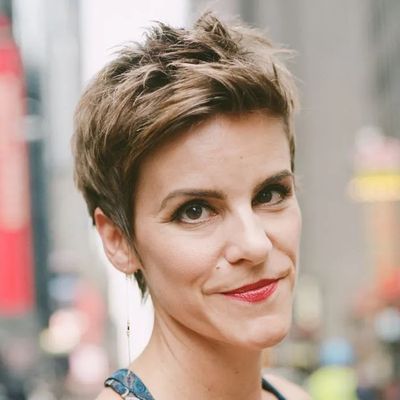
Jenn Colella (SUFFS, Come From Away) has always been a natural born leader, whether it's with her friends, her cast, or her community. Bobby and Jenn discuss the essential quality of leadership that often goes unnoticed - self-compassion... Read More
From the show: The Quiet Part Out Loud
Guests
Featured Shows

About
Jenn Colella (SUFFS, Come From Away) has always been a natural born leader, whether it's with her friends, her cast, or her community. Bobby and Jenn discuss the essential quality of leadership that often goes unnoticed - self-compassion. It is through a commitment to inner grace that Jenn nurtures every aspect of community with genuine optimism.
Transcript
This transcript was automatically generated and might contain errors.
[0:00] Bobby Steggert: I'm Bobby Steggert, and this is The Quiet Part Out Loud.
[0:15] Bobby Steggert: What makes a good leader? The first qualities that probably come to mind—vision, assertiveness, integrity, optimism—they're all essential. But for my money, there's an underappreciated and perhaps less obvious trait that makes for truly inspired leadership. It's self-compassion. And it is a prerequisite for genuine confidence and a capacity for compassion towards others. One can only truly have compassion for others if they hold that genuine and hard-won grace for themselves. After all, it fosters understanding, patience, kindness, reducing harsh judgment, and making us capable of then actually extending these qualities outward. Now, this is fundamentally different from compensating for a lack of self-worth by pouring empathy into others.
That is a projective process, making fuel out of our own insecurities and unmet needs. On the other end of the spectrum, consider judgment. What is a quality that you most readily judge in others? And chances are, that judgment feels salient for a reason that is personal to you. Here's an example. I have always had a hard time when people aren't curious. But it's complicated because I spent much of my early life asking questions in order to hide. So when someone isn't curious, there's this deeper part of me that resents the way I felt I had to hide from authenticity through deflection. It is that inner people-pleasing part in myself that I present more than the person who might be leading without curiosity for any number of reasons.
As for self-compassion, it is only through the inner space of acceptance that there can be genuine space made for others. Today's guest is Jenn Colella, and she is a living and breathing embodiment of these ideas. Jenn and I have been buddies for two decades. We had the great honor of performing together at Sondheim's 80th birthday concert, among other shows. She's the Tony-nominated star of Come From Away, currently appearing in Suffs. And Jenn is a natural-born leader in our community. Ask any company member of any show she's ever done; she always has been, even when we were young and she didn't have the age and experience that she's able to rely on today. And as you'll hear in this conversation, it is through genuine self-compassion that she is able to lead others and to foster environments of authentic optimism. This is a practice of hers that is conscious and deliberate and emanates from her every pore. And it was in this conversation that I finally got to ask her the why and the how.
[3:10] Bobby Steggert: Jenn, I'm so happy you're here. And part of the reason is because our history is a little bit more specific than just being theater colleagues, in the sense that when I was really young, Lonnie Price took me under his wing and mentored me and championed me. And it was around the same time he did that for you as a young performer. And so I've always felt this sort of kindred connection to you because of the little theater family he's created.
[3:35] Jenn Colella: One hundred percent. Yeah, absolutely. Lonnie Price is the reason I'm in New York. He was the first director I auditioned for. And I remember seeing his sweet little face looking at me with like his, he had like his head in both of his hands and just that perfect grin and his little eyebrows raised. And I felt like, oh, I'm doing something right in the eyes of someone whom I respect. He wasn't trying to be cool in any way. And from that moment on, I was like, this is someone who I can trust, someone who believes in me. I just knew right away. And yeah, he believed in you from the very beginning as well. And you need that sometimes when you're young. He not only believed in our talent, but I think he believed in our goodness.
[4:20] Bobby Steggert: Yes, that's right. That's part of what he tries to do when he's casting, when he's building a company and a family. He always says, I'm not just looking for talent because we're all talented. By the time we get into that kind of room, we're all talented. What he's looking for is somebody who can be a family member.
[4:33] Jenn Colella: I think that's exactly it. Yeah. Anyway, I am so happy you're here. This feels very special to me. And the part of you that I'm really interested in learning more about is the leader part because you intuitively really know how to make people feel seen and heard. And I've seen you do it in really casual scenarios and in more meaningful scenarios. And so I'm wondering really basically what the ingredients of that part of you are.
[5:03] Jenn Colella: That's a sweet thing to say. That's a nice observation. I think that I got into the habit of looking out for others at a young age when I sometimes felt a little not cared for. My mom had three kids and she was young, and she was basically a single mom. And so by the time I came along, I think she just kind of let me do my own thing. And that made me scrappy and certainly streetwise in a lot of ways. I longed for someone to hear me and see me and really spend time getting to know me. And so I think that's what instilled my desire to do that with people. I also believe that kindness is a religion and a practice. And if you practice it, it's also a wonderful gateway into the present moment, which not only helps me be a better person, but makes me a better actor. It's like a present moment awareness tactic for me.
[6:04] Bobby Steggert: In terms of family structure, were you the youngest so that there was already a lot going on when you came into the family?
[6:10] Jenn Colella: Yes. Yeah. Two older brothers. And I wasn't neglected or anything. It was loud and the boys were boisterous, and I just really wanted to be seen and heard. And so I feel like I try to create that kind of safety when I meet other people.
[6:30] Bobby Steggert: What about awareness of being queer? How did that combine with it? Because I know I certainly started to take care of people as a way to make myself amiable to them. It was also a survival technique for me.
[6:39] Jenn Colella: Yes, for sure. The queerness didn't come out until middle of college. I was pretty boy crazy up until then. I knew that I had matchbox cars and purses and I played with G.I. Joes and my room was pink. So I was always a little bit of a tomboy, but I also was deeply connected to my feminine side as well. But it wasn't until I accidentally slept with my best friend in college that I was like, oh, wait a minute, maybe I'm one of those. But I also lived in South Carolina, so it wasn't something we could talk about. But I'm sure now that you mentioned it, Bobby, that yeah, I'm sure that was probably a little bit of a way for me to nurture myself and others as I started to grapple with that new identity.
[7:25] Bobby Steggert: Was there any sense of difference even if as a young person it wasn't connected to sexuality?
[7:31] Jenn Colella: Oh my gosh, yes, from go. I can remember there's this crazy moment I have where I excused myself to go to the bathroom in third grade. And as I was coming out of the stall, I caught my own reflection in the mirror as I was washing my hands, and I stopped and I was like, oh, you're beautiful, but in a different way. I saw my light, I saw that I was beautiful, but I also saw that I wasn't like what other girls my age were deemed as beautiful. And I like made a little note in my mind and heart's eye of you are beautiful, but it's a different kind and to try to celebrate that. Now, sometimes I would lose sight of that and other times I would really embrace it, but there was this actual moment when I saw my reflection. It was like, you're not like the other boys and girls.
[8:20] Bobby Steggert: And for you as a young person, it really was symbolizing how you looked first.
[8:26] Jenn Colella: I think it was first how I looked. Yeah. And then I was often mistaken for a boy, which would anger me, but also make me feel proud in some ways. Yeah. I just didn't fit the mold of how other kids were moving through the world. And some people were into it and other people were scared by it. And yeah, a lot of it had to do with how I looked, how I moved, how I thought. I always loved school, so I did great in school, but I was also class clown. I just, yeah, I was not, I never felt like the other boys and girls.
[9:04] Bobby Steggert: What's so interesting to me is that mystery of how some children have this like resilience in them despite their environment sometimes. And some don't even when they have supportive environments. And what is your theory about that sort of like that capacity for self-love that was there for you?
[9:15] Jenn Colella: I'm not sure. I watched my mom be deeply kind to everyone that she came in contact with. And so that helped. She was a teacher in the same school that I was in for many years. She taught special education, and I would go to her classroom and I was friends with many of her students. And the way she said hello to the janitor, the way she said hello to every single person that she walked by made me feel like, oh, that's easy. You need to give that to others. And then when I looked in the mirror in that moment, I thought, oh, I can give this to myself. This is a channel of me realizing who I am, that I'm also worthy of that love. So I don't know how it happened other than watching my mom be kind to others and realizing that's something that I can also turn inward and that that was a strength.
[10:11] Bobby Steggert: And so you realize you were queer later. But I would imagine that because of the way in which you were able to take yourself in with such acceptance, that being queer was not filled with as much shame for you as other people?
[10:23] Jenn Colella: It was a surprise, even though I was like tomboy and people thought I was a boy when I was younger because I was always playing sports or in the mud. It was a surprise because I was really attracted to boys. I was like boy crazy. So when I, it wasn't until college that I finally had my first experience with a woman. It was surprising to me. I was more worried about other people and my family and like living in the South and how they would view me. But I wasn't worried about myself. I was worried about where I lived and the people around me and how it would affect them. But it wasn't an easy thing coming out mostly because it felt surprising.
[11:03] Jenn Colella: Surprising even to you?
[11:04] Jenn Colella: Even to me. Certain things started to drop. I was like, oh, that teacher I was infatuated with, I was actually in love with, or like that best friend of mine we would pretend to make out, I wanted more, you know? But because I was also attracted to boys and men, it was just a surprising thing. And living in the South, and especially during that time, being gay just wasn't an option, wasn't a thing. I think it's so beautiful now that kids are like, I don't know what I am, but I'm not straight. And queer is such a beautiful umbrella, lovely place to live and explore. I wish that we had more freedom like that growing up.
[11:46] Bobby Steggert: One of the ways in which I experienced you as a leader in our community when we were both younger was that I always felt that even when you were playing straight roles, as you do beautifully because you're a great actor, you, just as a human, have always worn your queerness with such grace and openness. And that taught me something. And so I'm wondering, as a queer woman, if you felt like you had to navigate that in the New York world in a way that made you insecure? Or was it as open and easy as it seemed to me?
[12:11] Jenn Colella: I was nervous about coming out at first. A dear friend told me not to because it would change how people saw me and how I was cast. And I thought that was a big bummer. So I didn't for a little bit. And then when I played the titular role in Bebo Brinker Chronicles, I played this butch-like lesbian and I started getting interviewed and it just didn't feel right for me to continue to stay in the closet. And I came out and I was like, I'm actually gay and nobody cared. And I thought, nobody cares. And then I continued to live the way that I love to live, which is to celebrate the things that I love. And that includes all the things about myself with ferocity. Just like anything I love, I like to shout from the mountaintops. Anything that feels like joy to me, I want to share in such a loud, open way. And realizing that I was mostly gay, that felt like the path that I wanted to take. It was easy for me to celebrate that out loud.
[13:09] Jenn Colella: I love that me celebrating that helped you do it. That feels like a really sweet bonus to me just trying to celebrate joy, which for me is like the best way to move through the world.
[13:24] Bobby Steggert: I've always wondered from a female point of view if you had any of the same anxieties I did, which is that if I was out, then my opportunities would become limited. It did not end up to be true, but I was certainly concerned about it.
[13:35] Jenn Colella: Indeed, I was. And that's what that director was telling me. It was like, you're going to get pigeonholed.
[13:43] Jenn Colella: People are not going to be able to see you as a straight person and that's just not the truth. And straight people play gay people all the time. We're actors. I also play doctors and police chiefs and I'm not either of those things either. And it's super easy to find connection with any human being, especially as an actor. We're taught to do that from a very young age. So it did not pigeonhole me. If anything, it led me to more gay roles, which now there are more and more of. Now we're looking for LGBTQIA identifying people for this role and that feels exciting. So it's actually become a bonus. We're so lucky that the world changed around us as and when it did.
[14:23] Bobby Steggert: That's right. That's right. Yeah. And it will continue to do so. I believe that.
[14:28] Jenn Colella: Yeah, I do too. The other thing I wanted to ask you about in terms of leadership is how you always seem to end up, whether official or unofficial, a matriarch and a leader within a cast. And this is true before you were middle-aged like we are. We're both middle-aged now. This was true when you were younger. And so how did you find yourself taking on that role of cast leadership?
[14:50] Jenn Colella: I have always felt comfortable in a leadership position. And I think that it's my dedication and practice of positivity and kindness. I think it's the vibration of those things that make people curious about what tea I'm drinking. And so when they come over, I'm like, oh, we're not doing anything except for being positive, except for creating community, except for making sure everybody in this room feels lifted up. I just try to lead by example. And I think people are drawn to community builders and positivity and kindness. And so I didn't say, hey, look, I'm going to be the leader. I just try to treat everyone in the room with respect and throw as much joy around as I can. And then I think just because of the vibration of those things, people are like, oh, I want to do that.
[15:41] Bobby Steggert: There's something in the way that you're affectionate, too, that really invites people into their own comfort with being in relationship.
[15:50] Jenn Colella: I do. I love a hug. I love it. I'm very touchy. I'm a hand on the shoulder kind of person. Especially now with our phones and how we're getting a little more disconnected from actual connection and eye contact and smelling the person in front of us and feeling the vibration of them. And I like to hug somebody. Some people, when I hug them, are like, oh, god, I'm sweaty. I'm sorry I'm smelly. And I always say, I want your day. I want every part of you. You were just running down the street, and I want some of that. That's you sharing with me where you are right now.
[16:30] Bobby Steggert: Yeah, I think being affectionate and respectfully so is super important, I think, for losing that. And I think it helps melt some of the walls that people can put up to protect themselves.
[16:41] Jenn Colella: We'll be right back. I'm also wondering, the two major shows that you've done just more recently, Ourselves and Come From Away, and they're both such community-oriented shows, both structurally in terms of how the story is told and also in terms of the subject matters. I know that you developed both those shows from the ground up. Is that true for both of them?
[17:05] Jenn Colella: Indeed. Yep.
[17:06] Bobby Steggert: Just tell me about your philosophy and then how it actually worked for you in both cases in terms of dedicating yourself to these shows early and passionately.
[17:19] Jenn Colella: I've had the good fortune, Bobby, for all of the shows that I've done on Broadway, I've originated all of them. So I've done the workshops and labs and readings for years prior to all of these shows showing up. The fact that Come From Away was the first hit that I was in, quite honestly, that it was about community and kindness, just felt like everything I'd ever wanted and worked for that came together. I love being with a show from the very beginning because then I'm part of that family community building process. I've also learned that I would much rather be in rehearsal than perform, like by a long shot. Rehearsal room is where it happens. This is where we're failing and we're flirting and we're growing and we're sharing and we're trying and we're failing while finding this community among us.
And it's my favorite thing. It's always sad to me when the creative team leaves after opening nights. I'm like, I've been doing this for you for seven years. I've been trying to make you laugh. I don't know these people. I'm finding it more nerve wracking to do it in front of audiences. But I love being with a project from the very beginning, especially ones like Come From Away and Suffs, as you said, because they are such community building shows. And it is, we're madly in love with each other. I just had a reunion with the Come From Away folks last night. We're still all very tight. And I'm starting to get a little preemptively sad about missing my Suffs family, not seeing them every day once we close in January, because it's just been a joy to go in and see their sweet faces every day.
[18:57] Bobby Steggert: It must also feel nice, more than nice. That's a cheap word for what I'm about to say. But it must be really important that you're telling a story that is so parallel to what we're going through right now. If Kamala wins this election, it's because women outvoted men. That will be why.
[19:16] Jenn Colella: 100%. It's incredible to be a part of the zeitgeist in this way. The night that Kamala was nominated, the curtain went up and the audience started chanting Kamala at our show. And then so many lines that we say are these incredible reverberations, like coming back from 100 years to be said now, while we're still fighting for these same rights and on the precipice of having the first female president. It's huge. It's extraordinary. I feel so lucky that we are fitting in the zeitgeist in this way. It's really an extraordinary thing to be a part of, and it is not lost on us. We're going to do the show on election night, and there's a line, Shaina Taub's character Alice Paul says, or are we going to show the next president of the United States the largest uprising of women this country has ever seen?
And I just know that on that night, everybody's going to lose their marbles. And there are a million moments like that. It's really quite astounding. I want to get back to ask you about the election, but before I do, I have a friend who is involved with stuff who told me an anecdote about you, and it was just so exactly you. They were saying that they weren't sure if it would actually transfer to Broadway. There are all these questions about whether something off Broadway will make it for all the reasons it does or doesn't. And you just said, oh no, we're going, you know, see you on Broadway next year. You were just so sure. And what is it about that kind of optimism you're able to have that feels so definitive in you?
[20:50] Jenn Colella: I am someone who doesn't believe in the, oh, don't jinx it. Like, oh, I don't want to believe too much, or I don't want to say it out loud, or you're jinxing it. I think that's bullcrap. There's no such thing. You're not jinxing anything. If anything, continue to speak into existence what you want to manifest. That's how things get done. Yes, we're going to Broadway. The vibration of those words go out and somebody else picture us on Broadway. That's more vibration. That's how shit gets done. Why wouldn't we? I think people are afraid like, oh, if I imagine myself on Broadway and it doesn't happen, the disappointment will be too great. I got my hopes up too high. Having our hopes high is the joy of life.
Getting excited about something is one of the greatest joys on earth. To tamp that down or to let fear override any possible excitement or joy, I just do not believe in it. If something is even a remote possibility, I try to speak it into existence as if it already is. And a lot of times that shit works.
[21:53] Bobby Steggert: Maybe also, tell me if this resonates with you. You said that Come From Away was the first hit you were ever in. Was it helpful to have had earlier disappointments because you knew you could handle them?
[22:03] Jenn Colella: That's a good question. Absolutely. Yes, of course. Any of life's experiences, the triumphs and the defeats are all going to prepare you for the next thing. But yes, definitely. I think having a show that was so... These two shows that are so successful makes me feel even more deeply grateful because I've had shows that have only run for two weeks. Now we have a 12-week notice before our show closes. I've been in shows that didn't run for 12 weeks. This is great. This is such a blessing. And the ephemeral nature of what we do and knowing that even a long run is still just a blink. It's just a blip in the grand scheme of our lives. We have many debuts here. And once we started getting into the grind of doing the eight shows a week, they were starting to call out.
I don't know. And I was like, stay in if you can. Stay as focused as you can. It's just for now. I know it seems like this is a long road, but it is just a blip, my friend. It's going to be over before you know it. So enjoy the fact that we get to do this and we have some stability for this particular moment.
[23:15] Bobby Steggert: How else do you find yourself being the elder statesman in a cast like this, where so many people are making their debuts?
[23:21] Jenn Colella: It's wild. It's funny to find myself in this position because I still feel like the 28-year-old who was doing Urban Cowboy a second ago. It's beautiful. I love it. It feels like a natural progression of things. I have been doing this for a long time. I do know how things are going to roll out. I had a sense that we might close in January. So I started very gently saying to folks, hey, I'm not sure if we're going to renew. How does that feel to you if we did? It'd be cool if we could, but it's just trying to start to gently plant things to prepare the younger ones. I love it. It feels great. I'm also a teacher. I teach at Columbia. I teach the grad actors, and it feels exactly right. I've been doing this for well over two decades now, and so to be able to share some of what I've learned doing it feels like a great privilege, quite honestly.
[24:14] Bobby Steggert: What are you finding that young artists in general need to learn in order to really thrive?
[24:21] Jenn Colella: I think what we all need, young and old artists and just people, is to start keeping the voices in our heads a lot more kind and supportive. We are our own biggest enemies. The business is tough, yes, and there's a lot of competition, but no one will ever speak to you as harshly as we often speak to ourselves. I think oftentimes artists think, well, I'm not hard on myself, then how am I going to make it in this cutthroat business? Again, I want to dispel that myth just like the jinx myth. That's bullshit. That's just not the truth. You can be highly motivated and very focused and extraordinarily kind and supportive. In fact, if you can change the neural pathway in your brain that says, oh, you're an idiot, you're not doing well, to, hey, I'm doing all right. Oh my gosh, I did these things great. Hey, I'm actually thriving here. That's going to be the path that takes you a lot further. I guarantee it.
[25:15] Bobby Steggert: Let me ask you this. There's something about the way that you perform and the way that you sing that is infused with ease. Is that always your subjective experience or are you harder on yourself at times than I would think?
[25:22] Jenn Colella: No, I am hard. I've gotten better at it. This is something that I've been talking about a lot with colleagues and students and friends alike. I've gotten much better at being hard on myself. I get nervous about forgetting my lines. That's one of my greatest fears. And it used to be if I would go into the white room where there's, I don't know where I am all of a sudden, right? That's what we call it as actors. You go into the white room and you don't know what's happening. That I would start to speak gibberish just out of nervousness and because of the voice in my head was like, you're an asshole. You need to say something. You're not saying anything. And so I would just start saying nonsense and that made it worse.
And then I'd get off stage and be like, oh my god, did you hear me? I'd make sure that everyone knew that I was an asshole. Like a month ago, I went up into the white room while I was singing and I just stopped and waited patiently until I knew where I was again with music and I started singing again. And then I didn't mention it at all when I went off stage. And then one person was like, oh, when your mic went out, like it mean making a big deal out of things in my own head and creating the swirl. No one else is ever thinking about you as much as you are thinking about you. And so in an audience, I would say this to my students. I'm like, if somebody messes up in a show, are you enraged? Do you get up and leave the theater?
Are you like, I cannot believe this person just messed up? No, you don't give a shit. If anything, it's a little exciting because you see even more humanness, right? So why in the world would we continue to hound on ourselves and be like, I can't believe you did that. And what happens in an actor's mind and how it creates this like snowball for the rest of the show and then infects the others and the show itself just from the voice in your head. It's a little bit of madness, actually. So I'm really interested in changing the neural pathways in our brains to be not just kind, but downright celebratory.
[27:26] Bobby Steggert: I love that. It seems to come to you so naturally, and I'm sure that's not always true. I'm also really curious about the flip side of what we're talking about, in that your leadership, your optimism, all the things that make you so great, I would imagine, make people think they have access to you in ways that they actually don't. Do you ever find that you also have to protect yourself in terms of the energy that you offer? And do you ever run out of that energy?
[27:53] Jenn Colella: Yes. The part where it gets the most tricky is sometimes with fans, right? Because I do cameos, and during the pandemic, I would do a lot of Broadway Plus, like kind of hangouts, and to spend time and connect. But then some fans would think, now we're friends, and can I get your number? And can we meet for coffee? And that can be tough.
[28:16] Jenn Colella: And then yes, even with my actual friends and my colleagues, if there are days when I am low on energy, or my daughter got up at 6 AM, and it was my turn to get up with her, and I just don't have the bandwidth, I can feel like I'm disappointing people because I'm not my usual self. But then again, it's up to me. People don't care. They're just like, oh, Jenn's a little low energy today. It's about how I treat myself in those moments. And it's a habit, but it's not easy.
[28:46] Jenn Colella: Of course, my wife, who gets me and all of me, she sees, you know, when I do break down, when I am super sad, when I don't have this wellspring of hope or positivity, she's the one that gets to see all of the broken, really sad, scared pieces of me. And I'm so grateful for her and that partnership.
[29:07] Jenn Colella: My goal is to be more, I'm trying to share some of my deepest fears and vulnerabilities with my class, with my students, with you, my friends, my colleagues, and just try to be more open about it so that people don't get this image of Broadway stars, and they always do this and that. It's not where I'm terrified every time I step on stage. I do not know what's going on a great deal of the time. And the positivity that I try to put forward, sometimes I want to punch people in the throat. All of the things are true.
[29:45] Bobby Steggert: We'll be right back. So back to the election, because this is a full circle thing. How do we lead? How do we respond if it doesn't go our way?
[29:55] Jenn Colella: Great question, Bobby. Man, I love you, and I love your heart, and I love your brain, and I love the way the two are connected. I'm so happy to be in this conversation with you, brother. It's such a good question. I said to my wife the other day, I was like, so do we leave? Is it Canada? What do we do? How do we protect ourselves and our daughter?
[30:15] Jenn Colella: And she said, I'm not leaving. She said, I love the United States. I want to fight for this country. And I was like, shit, I married a patriot. Wait a minute. Oh, man, we didn't talk about this. As nervous as I was when I heard her say that, I love that. She's right. We can't let the bad guys win. We can't all of a sudden, that doesn't mean we roll over and die.
[30:35] Jenn Colella: This is the nature of life and history itself. We have ups and downs, and we have triumphs, and we have revelations, and so we have to stay as positive as we can. We have to connect with one another. We did this before. It was awful, but we did live through it before, and I think it's going to help maybe wake us up, shake us up, and connect us even more.
[30:56] Jenn Colella: Realize that we have to work harder to take care of each other, to take care of this planet, to make sure that we're really changing our mindset from me, me, me, to how can I be of service? And hopefully, it'll be a wake-up call for us to connect and fight when it's time for us to take the seat back.
[31:14] Jenn Colella: I really believe we're going to win, Bobby. I know that it's close, and I hate that it's so close, and it breaks my heart to think that it's so close, but I believe that good is on the upswing and that we're going to have this revolution right now of kindness and goodness and being able to take care of ourselves and this planet. I really do.
[31:35] Bobby Steggert: Oh, Jenn, I hope you're right.
[31:37] Jenn Colella: Me too.
[31:39] Bobby Steggert: I'm also really curious, and I think about this a lot. I'm not going to have a kid. It's not on my life path, but I'm always so curious about how having a child changes perspective in terms of priority. How old is your child now? Seven months?
[31:57] Jenn Colella: She's eight months. I can't even, like, even you saying the word child, I can't even, I'm already crying. It's so stupid. Oh my God, people are like, how are you? And I just showed them a picture of her. I'm that asshole. I don't give a shit about people's baby pictures ever. I'm like, yeah, as a baby, I don't give a shit, and now I'm doing it. I'm shoving pictures of my baby in front of people's faces just so they can see her joy.
[32:24] Jenn Colella: It's the coolest thing that's ever happened to me. I didn't think I was going to be a parent either. Any partner I'd had, male or female, was vehemently opposed to it, so I was just like, oh, it's not going to happen, and I was okay. I was like, I like sleep, and I like keeping my own money, and I love travel, so I'm good.
[32:42] Jenn Colella: And then when I started to fall in love with Mo, she was like, hey, look, this is important to me. I need you to check back in, and when I did, really, I was like, oh, I'll do this with you, of course, so I'm happy to be on this adventure with my wife because I trust her completely.
[32:56] Jenn Colella: And having Morrison, that's my daughter, on this planet and realizing that I am in charge of how she figures out what life is is the greatest, most terrifying responsibility, and it does change my perspective on absolutely everything.
[33:16] Jenn Colella: Every piece of art that I go into, my heart is just on the outside of my body. Every interaction I have with people outside, I think of them as a child, and everything that somebody did for them, the late nights, the bottles, the changing, somebody did that for every single one of us, and how beautiful that is. It gives me hope.
[33:37] Jenn Colella: She doesn't know that anything's wrong at all. She only thinks it's exciting that she has a thumb. You know what I mean? It reminds me of present moment awareness, what we have right now, which is breath in our lungs, food in our belly, we're safe in this moment, we have everything we could possibly need and more.
[33:58] Jenn Colella: It deepens my sense of gratitude. It's the best gift I've ever received. I can't believe I get to have a front row seat to watching this person become who she's going to be, and this deep family member. It's also this love affair that I'm having with this person that is falling in love with me at the same time. It's unbelievable.
[34:20] Bobby Steggert: You have just sold me. I might go and get a baby immediately.
[34:24] Jenn Colella: I'm telling you, man, the love, the thing. And people are like, oh, it's a love you've never known. And when she was born, I was like, oh, shit, I get it. Yes, I feel it. But it's not this all of a sudden. It's this growing thing that's happening. I'm watching her will and her strength start to match. Like she's realizing, I want to go over here and I can pull myself up. It's beautiful.
[34:48] Jenn Colella: We're developing this. If I hold you here, then you usually hold me like that. It's primal. It's really an extraordinary adventure. And it's changing who I am on a molecular level.
[35:03] Bobby Steggert: Does this either energetically or practically change your relationship to being a performer?
[35:08] Jenn Colella: Yes. And mostly, I got to tell you, mostly around the practices of what it means. The one day off is not humane, even for people without kids, for anyone. This one day off thing, I don't understand why it's still allowed, why we're still doing that. It's not enough time to restore and recover and relax and catch up on life things.
[35:34] Jenn Colella: The expectation that we should just be happy to be there and it doesn't matter that we only have one day off is no longer tenable for me as a parent, the amount of time that I want and need to spend with her and my family. So that's changed.
[35:48] Bobby Steggert: Does that mean you'll be choosy about another major commitment to a show?
[35:54] Jenn Colella: Very choosy about performing in this capacity. Yeah, have to. I can't do it anymore. And to perform and give what I want to give, even without a kid, physically, emotionally, giving everything we give and then having one day to reset and recover and take care of myself, it's not ample.
[36:16] Jenn Colella: So yeah, I'll see what comes up next and what comes on the pike, but it's going to have to be something pretty darn special.
[36:25] Bobby Steggert: The final thing I want to say slash ask you about is, of course, we've all been thinking about Gavin. And I think you and he share something, which is that you both knew how to show up to the larger responsibility of being a community leader. And do you see that? And what does that mean to you that I see a similarity between you?
[36:55] Jenn Colella: I'm like, again, for the ninth time in this talk, very moved by that comparison.
[37:02] Jenn Colella: Yes, I, Gavin and I saw a lot of each other in one another. Every time we connected.
[37:13] Jenn Colella: I think it's so extraordinary to me that he was one of the greatest talents of our generation. Hands down. Holy shit. That voice and his ability to transform the way he was in his body, how sexy he was, and also very out and gay, but it didn't matter. We were all in love with him.
[37:37] Jenn Colella: What a shapeshifter, what a ball of fucking pure light as far as who he could be on stage and what he could do and things that he was creating. And nobody's really focusing on that. We know it.
[37:53] Jenn Colella: But what we're talking about is how he made us feel and the way he worked hard to make a community and to shine light and to have fun and to spread joy and to have that twinkle in his eye and make sure that he knew you had it too.
[38:14] Jenn Colella: And I just, I think about him every day. And I think it's extraordinary that when we lose these giants like Gavin and Maren Macy and Rebecca Luker, who are the greatest talents of our time, but we talk about their heart and their generosity and their spirit. Like, that's something to pay attention to.
[38:37] Bobby Steggert: It is. It really is. And what was really remarkable to me was that people felt a loss, whether they had seen him on stage once or they were his best friend. And that entire spectrum is a spectrum that he filled.
[38:52] Jenn Colella: Wasn't that beautiful? It was so sweet. She and I were buddies, but not close buddies, but he made me feel super special. His close friends, or they were dealing with a little bit of, oh shit, it looks like he was best friends with everybody. And I was like, but you understand his capacity for love was huge. That was his superpower was to make you feel like you're the only person in the room.
[39:15] Jenn Colella: And everybody who was close to him knows that and appreciates that as well. But how beautiful that one person could affect that many people on such a deep level. I think that is a legacy to really take note of.
[39:31] Bobby Steggert: Yes. And I hope that you and I both die at 102, but people will say the same thing about you.
[39:37] Jenn Colella: And you as well. Thank you. I receive you and I hope so. God, that would mean the world to me more than any show I ever did, anything that I ever did in my career. If people talk about me the way they talk about Gavin, even for a moment, then I will have succeeded at life. And people are going to do the same thing for you, Bobby. You take such good care of everyone. You have such a gentle way of bringing someone into your orbit. It's really quite a gift.
[40:03] Bobby Steggert: Thank you. I think one of the best things about getting older is that we know how to give and we know what to give.
[40:10] Jenn Colella: That's right. That's right. Yes, that's exactly right. That's exactly right. That's the craft of it. When I was younger, I just gave all of it. I just gave it all away all the time.
[40:25] Bobby Steggert: Yeah. And now learning how to save some for myself, how to be a better listener, to understand how quiet can actually lead. Yeah, it's cool. Getting older is awesome.
[40:39] Jenn Colella: I agree. I never thought I would welcome it as much as I have.
[40:43] Bobby Steggert: What's the alternative?
[40:45] Jenn Colella: Right?
[40:47] Bobby Steggert: Correct. It's a gift. We're the luckiest.
[40:54] Jenn Colella: We're the luckiest.
© Broadway Podcast Network, All Rights Reserved