

Ben and Bobby met doing the Broadway revival of Ragtime. Ben was 11, Bobby was 27. Fast forward, now Ben is 26 and starring in the Broadway production of Illinoise. He is on the verge of a big moment, one that he is intent on staying present and grateful for, no matter how it unfolds... Read More
From the show: The Quiet Part Out Loud
Guests

Featured Shows
About
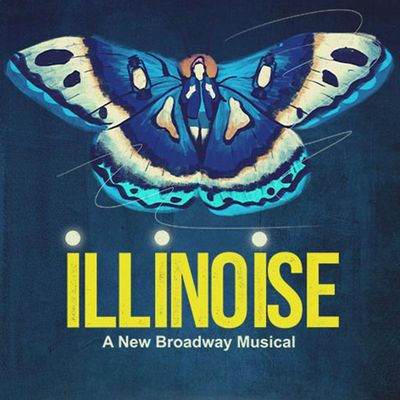
Ben and Bobby met doing the Broadway revival of Ragtime. Ben was 11, Bobby was 27. Fast forward, now Ben is 26 and starring in the Broadway production of Illinoise. He is on the verge of a big moment, one that he is intent on staying present and grateful for, no matter how it unfolds. The actors discuss hard won lessons in leading with expectations that have led to disappointment and loss of core purpose, while sharing how they both returned to values that redefine success in more personal terms.
Help guide the show with me! Submit your request for guest and/or topic(s) to cover by visiting https://bpn.fm/quietquestions
Transcript
This transcript was automatically generated and might contain errors.
[0:05] Bobby Steggert: I'm Bobby Steggert, and this is The Quiet Part Out Loud.
[0:15] Bobby Steggert: This one was quite a full circle moment for me, and I think for him. Ben Cook was 11 years old when he was cast as the little boy in what would become the Broadway revival of Ragtime. We did this at the Kennedy Center first. I was 27, about the age he is now. Ben, like me, was a good boy from the DC area who, with the support of a great family and a ton of natural talent, began a professional performance career really early. Since then, Ben has developed really a kind of astounding career. He was the lead in Billy Elliott, in Spielberg's West Side Story movie, and now the lead in the now Broadway production of Illinois. In this conversation, we talk about expectation, the part of us that believes that we deserve a certain outcome for all of our hard work.
That part that looks ahead for the desired endpoint, that thinks, what does this get me? What does it mean for me in the end? What is my reward? Ben and I were both kids who just instinctually threw ourselves into the work, and we were delighted just to be there as a part of it all. And as you'll hear, we both confronted moments when suddenly something shifted, and expectation started to muddy the why am I doing this? The core why. I think it's human to do so. And sometimes we actually need that part to expect a certain greatness that we haven't dared to dream. There's energy in that, right? And yet, what does expectation do to our ability to truly be in our most authentic presence? And isn't that what art at its very best really is?
Presence. I have to admit, it was sort of complicated for me to remember that time with Ben. Ragtime was an experience that for me did change my expectations of a career. And the funny thing is, I got what I started to expect. But now that I'm past it all, my memories of that time are complicated. The best ones are actually when we did that show out of town. And when that show meant so much less about what my career was or my identity or status was, and instead what it meant to tell that story with those people in that period of time. For what it's worth, the memories of the Tonies and the reviews and the attention. My ego still hangs on to that stuff, of course, but it's not what really sticks.
It was really life-affirming to see Ben again after 15 years and to experience the same big beating heart I remembered in him as a little kid. He's about to embark on yet another artistic adventure. And this one's big, right? And as you'll hear this time, his expectations are keeping him right where he wants to be in the joy of the doing itself.
[3:21] Ben Cook: Yeah.
[3:22] Ben Cook: So I was just so curious what it might be like for someone like you who's worked for a really long time, but really is at the beginning of what you're doing.
[3:29] Ben Cook: I know it's crazy. It's almost like too much to think about because when I reflect, like we talked about prior to hopping on, we met when I was 11 years old. And I've been doing it and loving doing it since I was even before that, since I was like nine.
[3:43] Bobby Steggert: And you were a pro then.
[3:45] Ben Cook: Hey I'll take it.
[3:47] Ben Cook: You were a full on professional at the age of eleven and twelve.
[3:50] Ben Cook: But you were still a kid.
[3:51] Ben Cook: Yeah.
[3:52] Ben Cook: Yeah.
[3:52] Ben Cook: I just loved it so much. And I'm for I feel fortunate enough that I still do because I know there's so much more that is still out there and that I still want to do and I want to tackle and knowing like I've been doing it for over half my life. Like I've been doing it longer than I haven't. When that settles in, I think I sometimes am like, whoa, I just can't wrap my head around that. It's all I've known.
[4:05] Bobby Steggert: Yeah.
[4:15] Ben Cook: And there might be something actually very adaptive and not wrapping your head around it.
[4:19] Ben Cook: Yeah, yeah, and keeps it fresh. If I really if I sit too long with that, it can feel overwhelming. So I just try my best not to, and just try to uh remain like looking forward. Cause I am still very young, so I I still feel like I have a lot of energy and desire for more at this point.
[4:35] Bobby Steggert: That's so exciting.
[4:36] Ben Cook: Yeah.
[4:37] Bobby Steggert: What do you remember about Ragtime?
[4:40] Ben Cook: Just emotionally, viscerally in your body for that experience. I just remember feeling so deeply, because it was the first thing I'd ever done that was like a longer period of time. We did it in DC before it transferred here to New York. And I guess the two biggest things I remember feeling very emotional and I've never cared about like a group of people so much, specifically an older group of people who are four and the kids were great too, but it was the first time where I was like, Oh, I had the ability to connect with people in a very genuine way. It was that, and then it was obviously the harsher reality of oh, and this ends. Yeah, no matter how much you love something, no matter how great you personally feel like it's going, there are always other factors at play, and no matter what, it's gonna come to an end.
[5:22] Ben Cook: And it came to an end pretty quickly, like during our run here in New York, and I remember just the reality of that setting in and being like, Oh yeah, okay, this doesn't last forever. It was a heartbreak and one that you experienced pretty early.
[5:34] Ben Cook: Yeah, yeah, very early. And luckily for me, there was another show that was happening that I immediately set my eyes on.
[5:43] Ben Cook: It was Billy Elliott.
[5:44] Bobby Steggert: Did you go right into it?
[5:45] Ben Cook: Not right in. I was I'd been auditioning for years at that point, but then it was like six months after Ragtime had closed. So I was able to funnel energy into that. But even so it still was it still slapped me in the face a little bit. You will lose your job just as much as you might obtain one.
[6:01] Bobby Steggert: What was it like to attend high school already a performer, already a professional?
[6:07] Ben Cook: It it was difficult in that like I'd known at that point what I wanted to do. And so going back to school, it just felt like a step back. So I just was like, okay, I have to do this. I have literally no option. So I look back on that time just with like mixed emotions, because I definitely conformed to the nth degree. I just wanted to fit in. I just wanted to get through it and then move on. So whatever that looks like, everyone had a Jasper backpack. I made my parents get me a Jasper backpack. Everyone wore slides and socks. I started to wear slides and socks, like nothing that actually aligned with my personality, but I had been used to playing pretend, I think. It felt easy for me to just adapt rather than try to be anything uh different.
[6:51] Bobby Steggert: Was there something about being visible, already starring on Broadway that made you feel like you had to be careful? Like you had to dim your light in some way.
[6:57] Ben Cook: And yeah, for sure. Cause it went from being around older people who I could look up to and aspire to get myself to, to then like being around people my own age whose aspirations were just different, not good or bad, just different than mine. And so I yeah, I felt like, okay, this is different and I'm a kid. I'm no longer around this example of more at this time in my life. And so yeah, it was just like, all right, I guess I'll just sit back a little more and be here.
[7:28] Bobby Steggert: Here's a question. So I was a kid actor too. I never even when I started to succeed to a moderate to impressive degree as a kid, I never expected the world.
[7:40] Ben Cook: Yeah.
[7:40] Bobby Steggert: There was a part of me that kind of kept me grounded, kept me humble. You went from a really flashy Broadway revival to starring in a Broadway show. Was there ever a moment in your youth where you expected the world?
[7:55] Ben Cook: It's a great question. Funny enough, I feel like I never expected it during that time. I went home when I was fifteen after doing Billy Elliott. Okay. And there was a chapter of time between the ages of fifteen and sixteen where I wasn't working. I was at home back in DC. And I think that's the closest I got to expecting something. And only because at the time I'd had two examples of Ragtime and Billy Elliott, specifically Billy Elliott, of something that I was like, if I work really hard on this, the goal is achievable. I can do it. And I when I was fifteen, Newsies had just come out at that time and I was like, that was my next thing. I just went from thing to thing to basically from fixate on and it's because they moved me ultimately.
It wasn't because I wanted a shiny job. It was because I saw it and it it made me feel something. Ragtime made me feel something. And so I wanted to be a part of it. And I'd worked and worked. I've uh auditioned a couple times. I found out I did not get it. They were like, We're not gonna hire a team.
[8:55] Ben Cook: Yeah. And now that's like the closest moment I can remember being like, What the fuck? I know what it's like to work hard and be able to achieve something, and I've been working hard and I didn't. And so yeah, I in that moment I feel like I I was expecting more than not what was owed. This business is crazy. There are a million factors that go into what we do. That's like the closest I feel like I got because I've always had a very pure, I believe, very pure admiration for what this business is and why we fall in love with it to begin with.
[9:26] Ben Cook: I feel fortunate because I've had parents who from a very young age reminded me of my why. And so I don't know, that never felt like it got clouded too much throughout this tournament.
[9:38] Bobby Steggert: I remember your parents very well. And that's a testament, right? They were really there and involved, and they seemed to really have your best interest in mind.
[9:49] Ben Cook: Yeah. Yeah, they did. They really did. And were always asking me, like they never made me do anything. I wanted it to, and asked them, begged them for it to happen. And so they only just supported me, and then throughout the support, did a good job at just keeping my head on straight and reminding why.
[10:07] Bobby Steggert: So fast forward even more, you end up doing West Side Story, now you're in Illinois.
[10:12] Ben Cook: Yep.
[10:13] Bobby Steggert: What is it like to be in this new era of something that seems from my point of view extremely thrilling and new and on the edge of something?
[10:24] Ben Cook: It's it it's really insane, honestly, and especially this show, Illinois in particular. It it's like full circle in a way that I don't think I could have ever expected. Growing up, I saw the dream. Like I saw Billy Elliott, I saw these shows that I then was like, I want to be a part of that, and felt like I had something inside me that could add something to the piece itself. And with Illinois, I met Justin Peck, who was the director and the choreographer of the show, doing the West Side Story movie together, which is where I also met my now partner, Gabby, five years ago. And we formed a connection and stayed in contact throughout the movie. I did the West Side Story revival on Broadway in 2019, which was a really hard experience for me personally.
And I ended up having a terrible shoulder injury. I dislocated my shoulder during that show, January of 2020. And then I was fired from this show after that had happened. And then immediately after that, the pandemic happened. So it was a triple whammy, just feeling down from that experience. And cut to spring of 2021, Justin had reached out and we'd maintained a relationship and really enjoyed working together. And he was like, hey, I have this idea. This was three years ago of for something that I've been toying with. He took me and my uh partner Gabby on a walk through the park. He told us the structure was very loose, and it's all gotten funneled and it's much more fleshed out now. But at the time, the seat of the idea was a little more vague. And we talked about it, and he was like, I don't know what this is gonna be, but I want it to be the two of you.
[12:09] Ben Cook: He built it on you. This was yeah, it wasn't like an audition or anything like that. We had a friendship, so you know, funny enough, he'd been marinating with the idea for 10 years because him and Sufjan Stevens are were close friends and collaborators, and he had a loose idea for it, and then during our friendship, him getting to know myself, Gabby, and I were also very good friends with Ricky, who's in the show as well.
[12:35] Ben Cook: And our dynamic with each other was what inspired him to construct the narrative that he constructed. And from then the rest was history. We said yes, we agreed, and we're like, yeah, whatever this is, I'm down. And for me personally, I hadn't danced since the revival, since the beginning of 2020. I was scared because of my injury, and I just had a really sour taste in my mouth for the business for anything on stage, honestly. And I hadn't done anything in a long time. Actually, coming back at the armory just now, this was the first time I'd performed on a stage in New York in four years.
[13:15] Bobby Steggert: Have you at any point doubted your capacity to be at your fullness?
[13:19] Ben Cook: Yeah. Literally, like terrified. Terrified. And funny enough, because we did a run of it in Chicago. I was fine in Chicago. There was something about coming back here and doing it here that kicked my nerves up a notch in a way that I was really not expecting, honestly. The second we were in front of our first audience at the Park Avenue Armory. I was like, holy shit, what am I doing? I was trying to keep my brain quiet to not overthink, but my body, my body knew, and my body was shaking, and it made me feel a lot.
[13:53] Bobby Steggert: You know what's so funny from the outside what I experienced of your performance with such ease.
[13:59] Ben Cook: Wow. The ability to go from pedestrian into stylized movement and back into pedestrian was so seamless that it was almost like a magic trick.
[14:09] Bobby Steggert: Wow, that's crazy. I take that as a very big compliment. Thank you.
[14:14] Ben Cook: Yeah, internally. And as the run, you know, carried on, I was able to tap into more joy, and I'm very fortunate in that. If I just opened my eyes, I'm looking at my partner in real life who we live together now. There's just so much history there that I can't help but be put at ease. Looking at her, looking at Ricky, who's one of my dear friends, we all have so much history that's so much bigger than this show and the time we'll spend doing this show, and we know we'll have history beyond this. So it's, I don't know, that in a way that brings me a lot of peace, because this is just, it's an amazing moment in time. And the fact that we get to do it together is insane. And honestly, it slaps me in the face every now and then where I'm like, I can't believe we're getting to do this.
[14:56] Ben Cook: The coolest bookend about this, and it's like Ragtime. It wasn't necessarily supposed to go to Broadway.
[15:01] Bobby Steggert: No, yeah, yeah, yeah.
[15:02] Ben Cook: No. And Illinois is this dance piece that just evolved to the point where now all of a sudden it's going to be on Broadway. You are going to star in a Broadway show as an adult.
[15:10] Bobby Steggert: I know, which is crazy. Crazy. And nuts. A dream that was never there.
[15:20] Bobby Steggert: We'll be right back.
[15:22] Bobby Steggert: Hey y'all, it's Bobby. In one month's time, The Quiet Part Out Loud has become even more than I hoped. And now it's time to ask you. Who do you want to hear from? Who are you curious about? Or what part of you do you want reflected in these conversations? Head to the episode notes and follow the link to a quick survey or reach out on Instagram at quiet part outloudpod. And thanks for listening. This show was never in my mind something that I aspired to do, and now here we are doing it, and I'm like, this is insane. If I had like a cauldron and could have mixed all the right things together, I would not have thought of this.
[16:02] Ben Cook: Does that mean that your expectations of it are tempered?
[16:02] Bobby Steggert: Are tempered?
[16:08] Ben Cook: Yeah, I guess a little in that I just wanted to keep my head on straight, coming off of I had so many expectations. I played Riff in the revival of West Side Story in 2019. And I had a lot of people in my ear, and I had a lot of expectation for myself. And I at the end of the day, I didn't know what I was doing. I still don't. We never do, but I just went into that with expectation. As much as I'd like to think I didn't, I did. And that experience went totally south for me personally at least. And I think stepping into this one now, I just was of the mindset of I have to keep my head on straight. Or I just have to keep my expectations like at the door, like stepping into it with no plans.
[16:47] Bobby Steggert: Well, say more about what those expectations were in that stage version of West Side. And then the follow-up question is when you didn't meet those expectations and you were injured, did you blame yourself?
[17:00] Ben Cook: So what's so funny, we finished filming the movie of West Side Story, in which I didn't play Riff, I was one of the Jets. It's one of the best experiences of my life creatively, socially, and then we step into the revival. We finished filming September 25th, 2019. The revival started rehearsals October 7th of 2019. So I had 12 days off, and then immediately went into the same piece, but completely different creative team, completely different idea, different role for me, different choreography, but a role that was a dream. Like any younger boy who grows up dancing and is a part of the theater world at all, you know, you see West Side Story, especially Riff. That is a character that I was like, wow, this has the mixings of everything I think that I'm good at.
[17:51] Ben Cook: It's like younger brother for me.
[17:52] Bobby Steggert: Yeah, the same thing. And I felt that way about that part too. Like watching you do it as a kid. Like that part was something that I was like, that's everything that has all of like the substance to something I could only dream of having the opportunity to do.
[18:08] Ben Cook: And that's how I felt about Riff. Honestly, I put them on the same plane. And I was so excited and just felt like I had something to prove. Like at the time it was my fifth Broadway show. And I was still so young. I don't know. I think I thought I knew what I was doing when in reality I didn't, because of my past experience in terms of more acting responsibility, character responsibility. And so I just think I overthought it so much because I was surrounded by the material like the entire summer leading up to it. And then stepping in, I remember during our rehearsal process, things starting to just evolve in a way that I didn't know how to like creative decision making. And then also just the environment itself being like darker. It just started to slowly go downhill for me to the point where my body literally broke on stage in the middle of the show.
[19:07] Bobby Steggert: Do you believe your body was responding to the emotional experience?
[19:10] Ben Cook: Now I do. Now I do. The preview process was so long, and it was such a tumultuous rehearsal process. It was an insane schedule. Worked us into the ground until finally I literally broke and dislocated my shoulder. And it was so intense. The fact that I got injured the way I got injured on stage in front of everybody. I had to go to the hospital. My shoulder was down, and it was just, it felt so dramatic. And I was fired on the phone three days after it had happened. They made a press announcement about this guy who's replacing me after the it was just a lot of stuff that felt so heightened that I think I was trying so hard to just be like, it's okay. It's okay. It's okay. It's okay. I also at the time had been doing more mindfulness work, which was great, but also it circled back around on me in that moment because I didn't give myself the opportunity to really be upset about it.
[20:08] Bobby Steggert: You didn't warn him.
[20:09] Ben Cook: No, I just was like, this is too much. Like, and I had everyone calling me, asking so many questions. And that I just I didn't realize it. I honestly thought I was okay. It's one of those things where I was like, maybe I'm all right. This is crazy that this all happened, but maybe I'm okay. Maybe I'm okay. And I wasn't, but I just I really didn't know how to process it after the fact.
[20:32] Bobby Steggert: What did you blame yourself for?
[20:34] Ben Cook: Because it was an injury. It rained in our show. I slipped on stage and fell backwards and I knocked my shoulder out. So it just was like, I couldn't help but be like, you stupid fucking idiot. If you just, if you had just calmed down and didn't do that one thing, it's just the going back in your head and thinking about what you could have done differently. I don't know. I don't know. Instinctually I just was quick to look for why, quick to blame, but not quick to ask myself if I was okay. Because I was just so overwhelmed. I was so overwhelmed. I didn't know how to deal with any of that.
[21:10] Bobby Steggert: And I'm curious, especially because you're a dancer, you have a connection to physical intelligence that some people don't have access to. If you say that the injury was in some way a response to the entire experience, what were you responding to? Do you think?
[21:25] Ben Cook: I feel like the larger response in looking back on it now, I would say, I don't know. I just I feel like I was going about it in the wrong way. I don't know. It was like talking about expectation. I feel like it was a way of checking my expectation. I also, I believe in karma too. I really do. And as fucked up as it is, I feel like I'd been going, I've been going strong. I'd been riding a wave for a pretty decent amount of time. And at the time felt very privileged to do. And I don't know. I remember having a thought like after this injury happened where I was like, well, something had to give. I was like, it's been going pretty well. Like I've been doing okay. I've been working pretty steadily here and there. And I'm so young. I had a really honest moment of it just feels like karma. Feels like something that not that I had to experience. I just remember thinking like that something needed to happen.
[22:29] Bobby Steggert: We'll be right back.
[22:32] Bobby Steggert: What do you think the heightened expectations kept you from doing or focusing on in terms of that process?
[22:42] Ben Cook: Honestly, like, why am I doing it? The shininess of it. There were exciting elements to this experience, and creatively, like it really did have some exciting moments. But I just think my why got confused. You know, when you have someone in your ear who's thinking about the present as only a stepping stone. It was too much for me because I'd like to think I do things for a reason. Especially creatively. I get fixated on something because I'm inspired by it, and it makes me feel. And I'd just come off of a seven-month process filming this movie that I was feeling every day and felt so moved and fulfilled that stepping into this next thing, I felt like I almost became borderline complacent in being okay with it being a stepping stone.
Because that's what I had people in my ear saying, and I fell victim to it. And I for a brief moment was okay with that as we were building it. The more I was like, this isn't. This isn't turning out to be creatively what I was hoping for. It wasn't moving me in any way. I just was like, all right, this will be what this guy's telling me it's gonna be.
[23:52] Bobby Steggert: It sounds like you got ahead of yourself, and something about that expectation took you away from heart.
[23:57] Ben Cook: Yeah, totally, totally. And we were just working, the hours were insane, and I just was so tired and I just, yeah, I felt like a bitter Betty. I felt like a bitter Betty. Which sucked because I wanted so much from it, but it just wasn't there.
[24:13] Bobby Steggert: What happened to expectations once you left the show?
[24:17] Ben Cook: The pandemic happened, and you were in that period of reflection and not working.
[24:23] Ben Cook: Yeah, desperate identity crisis, the pretty classic stuff, I feel like, and but it was also really good. It was the most I'd ever let myself be okay, like in the quiet. But I also I'm quick to try to put my energy somewhere else. After I had my injury, I was like, I guess dancing might be off the table, so let me just let me think about acting. I've grown to really love and care about acting, and let me just put all my eggs in that basket.
[24:50] Bobby Steggert: You just in that moment decided to move on.
[24:53] Ben Cook: Yeah, I tried to, but I also I was sad about it because I've loved I've danced my entire life, and it's not as simple as like just tossing it to the side.
[25:02] Ben Cook: But in my head, I wanted it to be that simple because I just wanted to move on. And then the pandemic made that hard because it wasn't really much to move on to. It was just be just go over there and be by yourself. I was a workhorse leading up to that, and I still kind of am, but less so now. I just had more moderation now. Whereas at the time I had none. Whatever I was doing was my life, so I didn't know how to just be.
[25:34] Bobby Steggert: What was it that got you back into your body?
[25:39] Ben Cook: That's a good question. That's a really good question. Funny enough, I wouldn't say I got back into my body until a year ago. What was it? I would have to say it was like being away from dancing long enough and not doing it on a regular basis that I started to remember how much I loved the freedom of it. And I also grew up like training in ballet, which is very technical, very structured, very picture-based. It's not about moving through anything, it's about moving quickly through something to then get your leg up, moving quickly through something to then do eight turns or whatever. It was a lot of like, so my idea of movement was very rooted in like picture trick shock value-based stuff, which if I look back on the things I'd done creatively, Billy Elliott, Newsies, a lot of like shiny, like energy, high energy, like uppity movement.
And there's a place for that too, but I like didn't know what movement looked like if it wasn't that. And movement is so much more than that. And I've learned a lot about this, I feel like from being my time being with my partner now, but I didn't know what that was for me. And so I started there's a movement class called Gaga, which is an Israeli based movement technique that's very sensory. You're moving for the entire class, you don't stop moving and they're just feeding you prompts like the instructor. It's all in a circle. You look at each other and it's not to look nice the purpose is not anything of what it looks like. It's all about no expectation. No expectation, it's just it's all about what it feels like.
And I just had never I never really experienced that. And I took my first Gaga class and they have like Gaga dancer class, which is a little more like up there, but they also have a Gaga people class, which is like anyone of all ages can go. You're sharing space with someone who's in their 70s, someone who might be pregnant, a kid but such an array of people all committed and all there to just move around. And so that I started taking those classes and I would go every Friday this past year, knowing Illinois was coming up, but knowing that I also just needed to re-establish my relationship with my body and seeing how free I can let myself because with this injury, like I just my body doesn't want it to happen again.
So I could feel like all the muscles surrounding my shoulder just like grip and like holding on for dear life. And I just needed for my sanity to learn how to ease that for myself. And this class was like a really huge evolution for me to re-grasp my why am I doing it?
[28:25] Bobby Steggert: How are you letting go daily? How are you reminding your body that it's safe right now?
[28:32] Ben Cook: Oh god, it's up and down. I feel like it changes. When we're in Chicago, I remember towards our last week in Chicago, my shoulder started to feel funny. And my like my brain just goes into like panic mode because I'm like, God, don't, don't, don't. Please don't happen again. Please don't happen again. And it's been, I think, even when I was scared, like there were moments where I was like, I'm gonna call out. It feels weird. I'm gonna call out. And I didn't. And in the moment I was like, maybe I'm being stupid. Maybe I should just, if my body feels weird, I should listen and call out. But there was something else at play that made me think, just do it. Just do it. And like I pushed through. And every time, like it the second the show started to get going, like it was out of my brain.
And then it was out of my body. It stopped feeling weird. And it was the same here at times, but it fit my shoulder was a little better during our run in the city. And I don't know, there was something about the active, and I'm not saying this is always the answer. Listen to your body, but for me, it felt like there was something bigger at play that made me do it, even though I was concerned.
[29:34] Bobby Steggert: What was that voice? The just do it. What was that voice?
[29:35] Ben Cook: I just think I've gotten used to being scared of it. And I've gotten used to allowing it make me really nervous. Cause I'm just terri- I just I don't, it was so painful. I'm like, I don't want this to happen again. And so I don't know, it just felt like I had something to prove, not to anyone, but to myself, that if you can get out of your head right now, I promise you're gonna make it through this. It was really awesome to feel the fact that my body made it through, even when my brain thought it couldn't.
[30:06] Bobby Steggert: Yeah. It sounds like that was your wisdom, as opposed to this part of you that needed you didn't do it at all costs.
[30:13] Ben Cook: Yes. Yeah, because it didn't feel like that. There wasn't like a desperation underneath it of I gotta do this show. It felt like, yeah, something that was a little more at peace with everything happening and encouraging me to get through it in a way that I yeah, was not a was not expecting. Because I almost listened. I almost was like, fuck it, I can't do this. You have me thinking, I fantasize about acting again sometimes because I know that if I did, it would be really wonderful to do it without any agenda.
[30:46] Bobby Steggert: Oh, it's not so hard.
[30:48] Ben Cook: I know, but I have no career to build right now. You know what I mean? Like long has it been since five years.
[30:53] Bobby Steggert: Wow, yeah.
[30:54] Ben Cook: And I miss it, but I don't miss the career.
[30:56] Bobby Steggert: Sure.
[30:57] Ben Cook: And if I got to perform without any expectation of what it would mean, I think there would be such freedom.
[31:03] Bobby Steggert: Yeah. But I'm relating that to you and that Gaga class. There was something about your wisdom and your ability to listen to your wisdom to go into a space where the why was that simple. There's nothing around the movement except for the desire to be moving.
[31:19] Ben Cook: Yep. And it taught you something again.
[31:21] Ben Cook: Yeah, it really did. It really did. In a way that I was not expecting, honestly. And even throughout the creation of this show, like Illinois, the expectations were low if not did not exist because of how it was created. I didn't audition for this. I wasn't all the steps we take to get even get to the creative part didn't exist for this show. And I think the formula of that for me ramps up its own expectation of just someone I haven't worked for before but might know of, and that immediately could seed this feeling of wanting to impress, wanting to do a good job. And of course, we always want to do a good job in what we do, but there is just this removed element of impressing anyone with this show that just never really existed during the creation of it because the goal was never Broadway.
I was gonna be happy if we just somehow got it to New York City in what any capacity that looks like, just to share it with my friends who I talked to about it, but that was it. For me, it was just like I can't believe I'm dancing again. And I'm dancing with my partner, I'm dancing with some of my dearest friends, and that's enough. That's more than enough. And if that is my swan song with dancing in this capacity, I am so cool with that. And the show itself is taking on a life of its own, and of course it fucking happens that way. It's of course, it's not trying to be a Broadway show, and that's why it gets to be on Broadway. I know. But you can't ABC 123 it in any way to make that the outcome.
That outcome happened because of so many things panning out in just the right way. If they had planned exactly this version of what how it happened, it wouldn't have gone this way. Like it won't necessarily ever be like this again either. So I'm just wow, who knows? There's no right way.
[33:19] Bobby Steggert: So does the expectation part come up at all in terms of looking at the near future?
[33:26] Ben Cook: You know what it's funny? The second Broadway conversations like started. I just felt little things creep in. And who knows, maybe I'm now that I'm saying this out loud, not that it's a coping mechanism, but I've actively tried to find ways of just silencing all of those thoughts. Because the expectations when people are talking about Broadway, like I refer back to being a kid and just seeing it whose dream was there and shiny and blind, and I just I think reminding myself of like the state of where this industry as a whole is Broadway's great, but it's also it's whatever. It's not like what what has it done? It was like I needed to knock the industry down a peg to make myself feel better about stepping back into it and not overthink it and not get caught up in fluffy stuff that people say.
[34:19] Bobby Steggert: You didn't want it to have power over you.
[34:21] Ben Cook: Yeah, that's all it is. That's why. It's like the show feels so pure, and like what we've made feels very pure, and I just wanna be able to, even though we're all of a sudden transferring, no one was expecting it. I just want to maintain the purity of what it is that we made.
[34:37] Bobby Steggert: You're making me think of Ragtime because I remember when we were in DC, it felt so pure. And we moved here, and from my experience, people started speaking into into my ear, yeah. You're gonna get a Telly nomination for this. This means something to your career, and it did, and I was young enough to let it carry me away a little bit.
[34:56] Ben Cook: Yeah, and here you are at the age that I was.
[34:59] Bobby Steggert: How old were you?
[35:00] Ben Cook: I was 28.
[35:01] Bobby Steggert: No way.
[35:02] Ben Cook: Yeah, my god.
[35:03] Bobby Steggert: And so how interesting that yeah, you're much more experienced, but you're entering into sort of a mirror image of what we did.
[35:10] Ben Cook: Yeah. Wow, that's so crazy to think about it like that.
[35:12] Bobby Steggert: Yeah. Because it just changes. Whether you like to think about it or not, when that all of a sudden is the driving motivator, it's I'm different. If that's the place that I'm operating from, then I'm a different person. I'm a different performer. And I'm protective of this because I've cared about it and we've made it and been working on it for two and a half years at this point. This will be the longest leg that we do it. We've only done it for like a month here, a month there, and prior to that, like a week upstate. So this will be four months. And I don't want like the longest piece that I'll probably remember the most for the core of it to be changed in any way.
[35:48] Bobby Steggert: Final question. What do you want from it?
[35:52] Ben Cook: Ugh. I it's given me what I've wanted. Honestly, I think that's why I feel mixed stepping into this next leg. Of course, excited. Of course, I feel many things. And ultimately I feel so grateful that this is happening, but I got what I wanted.
[36:20] Bobby Steggert: If you're successful in not changing the goalposts, then this is a victory. This was more than enough. More than I could have ever dreamed of already, separate of what's about to happen. And in fact, honestly, that kind of thinking did help me get over the hump of the revival and my injury. Because at the end of the day, I did it for my parents. I did it for my closest friends, my twin sister. I got to do it on a stage for the people I care about the most in the city that I live in. That's all I can ask for, honestly.
[36:52] Bobby Steggert: Speaking of expectations, today I expected this to feel surreal. And it doesn't, because I think what's so miraculous is that the soul I remember you having as a little boy is the exact soul that's right in front of me. And that's victory.
[37:06] Ben Cook: That's crazy.
[37:08] Bobby Steggert: Yeah. I'll take that, because there's been a lot in between, but that's really cool.
© Broadway Podcast Network, All Rights Reserved