

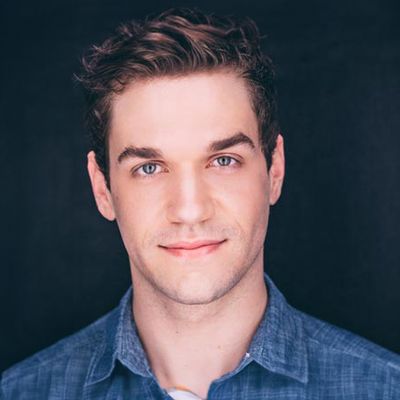
He starred in some of the biggest musicals on Broadway, like "Hamilton." He has been in three shows that are currently making their road to Broadway this season, and he is playing Middle Noah in "The Notebook" currently on Broadway. You better bring your tissues!.. Read More
From the show: The Roundtable with Robert Bannon
Guests
Featured Shows
About
He starred in some of the biggest musicals on Broadway, like "Hamilton." He has been in three shows that are currently making their road to Broadway this season, and he is playing Middle Noah in "The Notebook" currently on Broadway. You better bring your tissues!
Ryan Vasquez is here to talk about making art, his journey, and his gratitude in being a part of this robust Broadway Season!
_______________________________________________________________________
Check out “The Roundtable with Robert Bannon” everyday right here on The Broadway Podcast Network!
www.RobertBannon.com
Follow on IG @RobertMBannon or @theroundtablewithrobertbannon
Transcript
This transcript was automatically generated and might contain errors.
[0:00] Robert Bannon: All right. We've been talking about this incredible Broadway season that's going on. And we had the chance to go down to The Notebook. We were on opening night's red carpet. We had a few minutes to talk to everybody. And we've had Dorian and Jordan and a bunch of the casts here on the show. So we needed to ask Ryan. Ryan, welcome back to Broadway. Welcome to The Roundtable.
[0:19] Ryan Vasquez: Hey, y'all. Thanks for having me. Um, I'm so excited to talk to you because your work on stage and the chemistry you have all together as a cast is beautiful. How's it feel to be doing this show, eight shows a week now on Broadway?
[0:33] Ryan Vasquez: It's amazing. It's uh I'm really, really grateful. I've mentioned this before, but just like the impossibility of this moment like really weighs on me with the pandemic having happened and, you know, I've been working on it prior to COVID. And so there were so many moments along the way. It just felt like with so many shows, it was just gonna sort of dissolve and evaporate into the air. And so to be here and to be just kind of grinding and performing it, like I'm so grateful.
[1:01] Robert Bannon: Well, I believe I said to you on the carpet, I've said to the rest of your cast, to find good chemistry once is a miracle. To find it three times is really something from Dorian and Marianne to you and Joy to Jordan and John. You guys' chemistry is beyond. What role do you have as artists? And how did the directing and the team of directors help you achieve the kind of intimacy that you guys share on stage every night?
[1:30] Ryan Vasquez: Yeah, you know, what's cool about the show is that, I mean, we have two directors, Shelley Williams and Michael Grief, and with our choreographer Katie Spelman and the creatives and the music side, Ingrid especially, you know. It was really a collaborative process. Like you talk about this comfort and intimacy, like that even existed outside of just the couples like bleeding into the creative side of things. There really was a collaborative nature of what we do. I mean, like live theater is so, uh, it requires that, of course. Um, but even in crafting the scenes, like with our book writer Becca, like we it wasn't just kind of like get up and do the dialogue, and then they would confer privately and they would say, "Hey, we're cutting this line" or whatever.
It was always collaborative. So I think the way that you achieve this sort of like deep comfort with each other on stage is by allowing people to be their full selves. And sometimes that means that, you know, like I'm saying, you know, I don't think he would say this. Like, I feel like he's in pain in this moment and he should be deflecting with humor because he's just, you know, whatever it is, and not no one person has all of the say, which I think really helped the show massage itself into like this deep comfort with each other, like where nobody, I mean, I can only speak for myself, but I know we've worked so hard to make sure that people aren't feeling like they're shoehorning a moment or like shoehorning a line into its place.
It's all natural because we created it as a group, like truly, with input from everybody, and that's rare, you know. Usually there's sort of a hierarchical thing of this is the scene you are given, and you are going to perform the scene, you know. So, um, I'm grateful for that.
[3:11] Robert Bannon: Well, I heard that, um, I believe it was John who told us that, you know, Ingrid was sending songs that were not even in the show to build characters, like there was a lot of material and conversation that you guys had to build the world that these characters live in.
[3:27] Ryan Vasquez: Oh, yeah, of course. And that comes with such a humility, right? I mean, like, even songs that didn't make it into the show, you know. Sometimes I think a writer would be precious about that. And oh, I don't want to share that. I don't want to put that out there because it's some sort of less than, or it didn't make the cut, and so whatever. But again, like it's this deep collaborative nature and humility that allows for people to share things that like didn't make it into the show, but for context, or I mean, there are these, there's a tiny moment that used to be a longer moment that we trimmed down when, um, the actor who plays Georgie, Dorcas Long and I are on stage together right before the song I sing "Leave the Light On" in the first act.
And, um, you know, she comes up and she brings him a few beers, and they're talking about the house being finished, and he says, "Where's Franny?" And she goes, "Helping her dad fix the car." And it's two tiny lines, it never comes up again. But it used to be this longer moment about, you know, well, well, her, I forget what the name of the dad was, but it was like, well, so-and-so's not her dad. And that was because we're meant to understand that Georgie and Finn, these characters that you've met when they're in their younger years, had a child together before Finn went off to war and passed away, and that now she's remarried to help raise the kid and all of that. And Noah's still sort of bitter about the loss of Finn.
And like now, all of that exists in these like tiny little, she says "helping her dad fix the car." And there's just a tiny little beat of just like it's I understand, though it's still painful to talk about. And we move right on from the topic. And it's like that seriousness that we took, you know, in every little line in every little moment, when that scene got trimmed down, of course, you can see a director or a book writer saying, "Okay, let's just take it all out. It's too confusing," whatever. But it builds context and it passes by and just allows you to see the depth of a relationship. And if you're really listening in, you're catching the full meaning of it. And if not, you're understanding, like, okay, these people go way back.
There's some sort of baggage here, there's love amongst each other, but loss also and pain and all of this. So it's, uh, I'm proud of how seriously the script is taken and how seriously we took the show because I think it had the potential to be, uh, you know, sort of like corny and saccharine and like The Notebook, this like lush, lovey over-the-top thing, and it's deeply human. It is deeply human, and you will feel all the emotions and all the feels and all the goosebumps and all of that you could imagine with it.
[6:02] Robert Bannon: I think the work also you have to give yourselves as actors credit that you read between the lines and really did your homework on the script and built this world that you guys, it feels so believable, it's palpable to us in the audience. So when you're here, get your tickets, go to notebookmusical.com while we're talking Ryan, and you could follow Ryan and it's Ryan Vasquez on Instagram as well. Get, go ahead.
[6:23] Ryan Vasquez: I said it's a good date night, it's a good night with the family.
[6:29] Robert Bannon: It's perfect. When you recreate some of these iconic scenes, like this scene here is pretty iconically done and gorgeously done as well. Can I be an act nerdy actor? What is tech like when it's raining on you and you are dealing with getting the lighting right? How many times did you have to do it till you guys got it right?
[6:50] Ryan Vasquez: Yeah, I mean, so we went to Chicago. Uh, when we did the show in Chicago, Joy and I went, uh, on a day off to go test the rain, and like I'll never forget that moment. There's like a beautiful picture of us like standing upstage of it, watching it, and it's like there's, you know, as an actor, like you're constantly sort of suspending disbelief, of course. You're always thinking, like, okay, this thing I'm about to see out in the house is like not real. It's not really there but I'm looking out and I'm imagining it or I'm imagining a love between two people or whatever but the rain is an element that is so real that you don't actually have to do a ton of that which is very cool. It's one of the few moments in theater, you know, I always feel that way when I'm eating or drinking something too on stage, it's like it's real, you know, like pretending to take a bite is one thing but like it's, it grounds you in a way and so the adrenaline of like that moment and of course knowing it's coming, the anticipation from the audience of course like once it starts to sprinkle, you know, and mist on us people okay it's happening, you know that that moment really just like sweeps me away every time and so I mean in terms of the tech of it all and stuff I mean talk about a collaborative medium like live theater like there are, I mean everything from wardrobe folks that are picking out the exact fabrics that are gonna be able to take the rain, you know, every night eight shows a week to the of course the carpenters and people who built the set who had to create this whole filtration system to get the water to come and keep it warm, you know, drain it down into the basement, catch any excess.
I mean like the theaters have been completely basically, I mean remodeled in a way to sort of accommodate this thing and it's worth it. I mean it's so gorgeous and again like it's real there are people in the front row who are getting like, you know, like little bits of rain on them and they're like oh wow it's, you know, it's not like a, it's not our best try, it's a real genuine like moment. And so yeah, we, you know, we've done a ton of photo shoots with the rain, of course, too. And so, like, all the time they're like, "We're gonna get wet today, like just so you know," and you're like, okay, but shout out to my dresser Herb, who is always there with the towels and warming things up and putting clothes on radiators and all of it, like it's a group effort, and like moments like that really make that clear, which is cool.
[9:05] Robert Bannon: Well, get your from get close tickets, get a good seat because you could be in the splash zone yourself, zone, yeah, yeah. Well, if you're looking at Ryan, you may know Ryan from, you know, he was in a little show called Hamilton where he played out 87 characters. He literally, everyone in the American Revolution, every single member of that show. You may have seen him in Waitress, you may have seen him in The Wrong Man, was a good, oh, you were not a nice guy in that show.
[9:33] Ryan Vasquez: No, no, uh, yes, no, the man in black was he didn't even deserve a name, he was so evil, yeah.
[9:39] Robert Bannon: Jumping around and singing around you and Joshua Henry, jumping around and singing around the fighting each other around the stage. You have had quite the, and television and film, etc. You have had a lot of shows, they all seem to be on Broadway at the same time. Um, you have a history with many shows. What's it like to be a part of the season? There's a record number of shows opening, Broadway is alive, actors are acting after, you know, people are working after some crazy few years. What's it like when you walk through that stage door and get to do this show every night?
[10:12] Ryan Vasquez: Who I could talk about this for a long time, but I will keep it brief. There are so many, uh, there are so many incredible elements of what is going on on Broadway right now, right?
[10:23] Ryan Vasquez: Like there is this huge influx of shows, creativity is literally bursting from like every corner of every theater, right? There are big, huge technical, spectacular commercial hits. There are these smaller, more intimate shows that are really capturing the human experience in one like super specific way, and there's and people are seeing them. I mean, I think what's amazing is, I mean, I look at the grosses and everything every week because, like, you know, we as actors do that. We're on Broadway, we gotta see are that our jobs are secure or not, right? I mean, just to for the truth of it. And and these shows are selling out. I mean, like people are seeing these shows by the thousands, right?
And it's it's amazing. And really, I mean, so I was involved in Water for Elephants Out of Town, and I I've been involved with the outsiders since actually uh before I was ever involved in the notebook. That's that's the longest one since 2019. And I I mean, the hardest part about saying goodbye to those shows and having to choose one is uh, of course, like the community of people. So the the blessing abundant, which is the fact that all three of those shows are on the same corner on 45th Street, is just like an embarrassment of riches. Um, so I get to still connect with the people, which is amazing. Um, but also it's it's people say, you know, this never happens, but I think the reason it's happening now is of course from like the hard work and the fact that I was involved in these things, but also because there was such a backlog of so much creativity during the pandemic that people turned to create these things that they wanted people to see and worked really hard on them to get them ready for a time when people could see them.
And I'm grateful to be a part of like a renaissance of of theater on Broadway, especially right now, where there is something for everybody. There is it's all artistically taking a big swing, you know. It's it's not just a cash cow something to to get people in seats and hopefully they'll see something else. I mean, these shows are challenging audiences, even the adaptations, the notebook, The Outsider's Water for Elephants. I mean, these are not regurgitations of the source material in some bland way. This is this is a real effort to create something. And so have also been really impressed, and this is the last thing I'll say by, I mean, the the truth is it's scary because there are all these shows that are open, and not all of them are going to run for five years.
That's just the the market and the facts of it. And so that is kind of on that like base hierarchy of needs, like the bottom of the pyramid. Like, are you gonna have work? Are you gonna have healthcare? Like these are real issues, right? And so I've been so impressed by people being able to table that, even if it's just for a few hours in the theater. So many people from other shows have come and seen our shows. I've taken every Sunday evening, every Monday off that I'm not doing something else for the notebook to go see something else, and not just the shows I was in prior, but other things. And and I'm I'm so I'm I'm blown away by the fact that in this season where you could turn to fear in terms of oh, I'm kind of hoping that thing fails because it means that there are more audience members for me to sort of soak up and have that that people are instead turning to like the abundance of the season and celebrating everything.
It's it makes me emotional genuinely, because it it's a I think it's a real sea change from maybe before the pandemic, before we started looking so uh introspectively at our business and at art and the creative side of things, that that there is it's not zero sum, like there is an audience for everything that the people who love and and go see Limpika over and over and over again aren't probably going to see another show over and over and over again, but they are going to see that thing at least once because the people in a show like Limpika are loud about supporting other shows. And I'm I'm proud of our industry for that and surprised, frankly. And I'm I'm really proud of us.
[14:23] Robert Bannon: I was when you were talking, I thought of that. I know that Eden was at your show the other day. It was her night off. She's been in tech. She's, you know, their show opens next week. And she made sure to say my day off, I had to go support my friends and some beautiful work that's being done. There's an that's such a lesson for all of us in humility in any business that there's enough for all of us to excel and you know what's ours is ours. And if no one can take that. So I'm excited for this season. It's gonna be a fun ride, everybody. You you we have a lot of students uh I I direct and teach the young musical theater students at New Jersey Performing Arts Center, and they get very excited when I talk to us Broadway, the Broadway stars of the day.
You went to University of Michigan, and U of M is is you know a school known for musical theater, etc. What what did you what about your training? Does that do you keep? Is it something that is foundationally important? Are there skills that you learned there that you carry with you professionally today?
[15:20] Ryan Vasquez: Of course. I mean, I think really more than anything, the uh U of M taught me to take seriously what we do as a craft and a career and something that you can study. I mean, I think I'm at least I did, and I know a lot of people do get into this by just kind of be having a knack for it and doing shows at their high school, and they're always the lead because they just are like the only person who can sing. And so you and you know, and and that was not me. Many people could sing where I where I grew up. I grew up in San Jose, California, which is actually home to the largest children's theater in the country. And so uh like Alex Brightman grew up doing shows there, and like he he was a little older than me, and I sort of looked to him for like a path forward, Aaron Albano, like lots of folks who who come out of there.
Um, but I so with that as a supplement, and then like to to grow up and then go to U of M, I felt still that at uh the children's theater, I was just doing shows and I was honing a craft and learning it, but it wasn't academic in a way that when I got to U of M studying shows, reading scripts and understanding, you know, the reason that this is good is because the writing is good and the characters are listening to each other. And the reason that there's a beat written in there is because the actors are supposed to tell the story in this way, are supposed to take a moment to reflect as to what has just been said before immediately coming. And so it it really prepares you for creating new material because then you can have some agency in saying, Hey, look, this isn't just like feeling funny to me, it's feeling funny, I think, because you know, in the notebook, there's a fight that uh Joy and I have in the bed, and she as at one point says, you know, um, I I she brings up his her fiance, and I kind of make a comment just asking, you know, what does he do for a living?
And she goes, Hey, hey, hey, like, you know, you don't get to do that. And for a while, I was just kind of like taking it in, and she kept it talking, she kept talking. And then while we were in previews, I was like, you know, this has been sitting on my heart like funny, because she's saying you don't get to do that, but like she's the one bringing it up, and and she's in his house, and and I think he would like defend himself a little bit stronger in that moment, and it ended up changing like the tone of the entire scene, and we reworked it. I mean, days before we opened to create something that was more dignified for both actors. And there's really no way of knowing that from the outside.
It's credit to our book writer that and and our directors that they were able to say, you know, okay, let's listen to Ryan and Joy and hear what it is they're feeling in this moment. Um, and it's not selfish in terms of like, I just want more material, or why'd you cut my song or whatever? It actually, you know, having an academic approach to this makes those moments, you know, are devoid of ego, because you can see it from the outside and think, yeah, you're right. In terms of the flow here, it's actually better for the show. If this song is clipped, if this line is gone, if this moment that I loved that was so funny is breaking the ice a little bit too much, and they're still in a tender spot.
That that kitchen scene in the beginning of Act Two that Joy and I have, that we worked so hard to make sure that like you can just hear a pin drop throughout that until he finally makes a joke and makes her comfortable, but he only makes that joke because right beforehand, she asks him if he was in the war, and he's confused about that and kind of has a moment of not speaking at all that sort of spirals her into a situation of oh, okay, you're right. Well, I shouldn't have brought that up, whatever. That energy makes him then tell a joke to diffuse the situation. So none of this is random. And I think that's the the biggest thing at U of N that I learned, like in studying scripts and things.
It was like, oh wow, like all of this is in reaction to something that came before it. All of this, you know, the reason they're repeating this line, the reason they're bringing these things up, none of it is just for aesthetic, if it's good. So um, yeah, it taught me a lot about how to like create material as well. And now I feel like I I take part in that process when I'm in a show, which I think is helpful for for it in terms of uh just the the health and the the dignity of the of the piece rather than just for the actor.
[19:44] Robert Bannon: Well, I'm sure that everybody that's been a part of the shows that you've been a part in appreciate that and and the and you've helped I hope so. You've helped mold the season and uh and and you really have are doing such beautiful work as a cast and as a creative team over there at the notebook. It is gorgeous it is gorgeous. It it really is a beautiful evening uh of theater. I want everybody that's that's watching right now, go to notebookmusical.com. Make sure you check it out. Like I said, it's the perfect night out. So go have a drink and have a little meal with somebody you care about, and then head on over and see a beautiful evening of theater. Ryan, we're excited for this beautiful run. We're excited for what's to come, and we're excited to see you all through this crazy award season and and this Broadway season together. Congratulations. Thank you for being here.
[20:27] Ryan Vasquez: Thank you so much. I really appreciate it. Thank you.
© Broadway Podcast Network, All Rights Reserved