

Actor Richard Short Is Here! He has worked with some of the best! Remember his turn with Denzel in "MacBeth?" I mean HE ACTS! Well he is back on Broadway in "The Hills Of California" receiving raves for the show, this cast, and Richard and he is telling us all about it!.. Read More
From the show: The Roundtable with Robert Bannon
Featured Shows
About
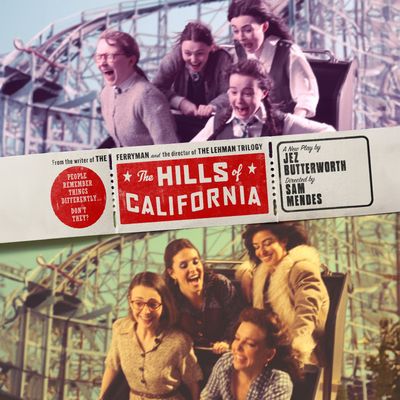
Actor Richard Short Is Here! He has worked with some of the best! Remember his turn with Denzel in "MacBeth?" I mean HE ACTS! Well he is back on Broadway in "The Hills Of California" receiving raves for the show, this cast, and Richard and he is telling us all about it! The show is up til 12/22 ONLY so RUN to get your tickets!!
Following their triumphant production of The Ferryman, Tony-winning Playwright Jez Butterworth and Oscar and Tony-winning Director Sam Mendes have reunited on Broadway for The Hills of California.
In the sweltering summer heat, the Webb sisters return to their childhood home in the English seaside – the run-down Sea View Guest House – to say “goodbye” to their ailing mother. When memories from their youth come flooding back, the sisters must confront their past and untangle a web of secrets, betrayals, and profound emotional bonds.
This “relentlessly entertaining new play” (The New York Times) transports audiences to the 1970s, then further back to the 1950s when the sisters, dreaming of becoming a famous singing group, had their lives changed forever. With stunning design and glorious music, The Hills of California “is a magnificent production. I never wanted it to end.” (Chicago Tribune)
_________________________________________________________________
Check out "The Roundtable with Robert Bannon" here on BPN on the daily, on YouTube, and on social media!
For more info on Robert- www.RobertBannon.com
Follow Him on IG- @RobertMBannon
TikTok-@RobertMBannon
Transcript
This transcript was automatically generated and might contain errors.
[0:14] Robert Bannon: Welcome to the Roundtable, everybody. My name is Robert Bannon. You're listening to us on the Broadway Podcast Network, or you're watching me on Broadway World or over here on social media. It is lunchtime. It is my little lunch break. And my lunch break, what do I spend lunch with? I spend lunch with English, American, Broadway, film, television stars like Richard Short. I love Manhattan. I love MTC. I love Manhattan Theater. I love everything that they do there. Their series is bananas. Their shows are fantastic. And there's a show right now, everybody, called The Hills of California. Excuse me. Thehills of California.com. Do you have sisters or brothers? Do you argue? Do you ever remember the past differently?
Do you ever have issues with your family? They wrote this. Maybe they wrote the show about my family. Well, you only have to the 22nd, and it's got an all-star cast of amazing actors who are acting their faces off, and they're here to talk about it. We specifically talked today to Richard Short. You may have seen him with Denzel Washington, you may have seen him on television, you may have seen him on film, you may have seen him on Broadway in the past, but he comes to this show and he's gonna tell you all about how he does it.
[1:18] Robert Bannon: Well, we're here with Richard Short. Richard, do you know when I was looking you up? You have like 80 IMDB credits. You have like maybe possibly television, film, Shakespeare, Broadway. What does Richard Short not do out here in these streets?
[1:36] Richard Short: Yeah, um, um, well, he's trying to stay off the streets, that's why I put so many credits. He's trying not to earn his money on the actual street. Um listen, it's just uh it I've always been told that an actor's life is, you know, I first came to the States 20 years ago and I was asked, are you a theater actor or a TV actor or a film actor? I didn't understand the question. I think an actor goes where the work is. Um I mean, that being said, the best thing you can possibly do as an actor is repeatedly revisit the theater because there's nothing quite like it. Is uh it's the only way of really challenging yourself, you know.
[2:11] Robert Bannon: And that's what I was so amazed when I was looking up. You have things in pre-production, you have things that you're working on. There's always work to be done. But you took time this fall and this holiday season to do The Hills of California, which is playing MTC, everybody over there, an all-star cast, an incredible creative team. What about this piece that I'm coming to New York, I'm gonna spend a few months, I'm gonna work on this piece?
[2:34] Richard Short: Uh Sam Mendes, uh Jez Butterworth, uh the company that was already attached, which was the majority of the English company that had done it in the West End in London. Um I'm I love uh any story, book, film, whatever based on memory or misremembering things. Um I was a big fan of Traum Novella, Schnitzler back in the day, and all those kind of it's not necessarily someone's lying, but how trauma can affect your judgment of something in the past. And this play is completely that, completely that. Just just different members of a family remembering a same traumatic event differently.
[3:11] Robert Bannon: Well, I thought about ISIS firstly, I mean Jazz Butterworth, Sam Mendez, I mean, they are writing and directing their faces, uhwards galore and all of that. Then you take this show came as a transfer, right? So it came here and how has it been like the American audiences?
[3:27] Richard Short: I think family is universal. The story everybody is about sisters and a family and going back home back in England. What has it been like when you leave the stage door? You hear people tell their version, their stories? I mean, it's gotta connect to so many people.
[3:40] Richard Short: Yeah, without a doubt. And and actually, interestingly, not just it's essentially about four sisters, but it's it the story of siblings is universal. It doesn't matter if if it's brothers, sisters, men, women, anyone at all. Um, the response at stage door has been pretty universal. There's a lot of very upset people, upset in the right way, just revisiting stuff. There's a lot of families coming together, brothers and sisters, and and and then mentioning that to us. You can see people in the first few rows, you know. You can you know you can never really see past about Roe C because of the stage lights. But um, you can see people, you know, they're in pieces, they're they're in they're a mess.
It's it's universal. There's no doubt about it, really. Um, so I actually I would encourage men to know that they can come because it's the advertising is absolutely bang on. It is about four sisters, but the story is so universal. Like whether you have to come with your brother, come with your pal, come on your own, come with your partner, whatever you fancy doing, but um you'll enjoy it too. In fact, it's a it's a hoot as well as as well as being you know a cryfest.
[4:49] Richard Short: Yeah, hear that. It is very funny, and it you will cry and you will feel good. And it's uh it's perfect for this. If you have family coming in for the holidays, you have until the 22nd, you better get a ticket and go and see it. When you when you first read this, did you have a personal reaction? Did you connect to the your character right away? Tell us who is your character, by the way.
[5:09] Richard Short: Well, my character, I play two characters, as do most people in the play. I play Bill in the 1970s and Mr. Halliwell in the 1950s. Um, I guess my main character is Bill. He's the uh husband of Gloria Webb, played by Leanne Best, played spectacularly by Leanne Best. Uh, one of one of the UK's great actors right now, truly working in TV mainly. But um, so the opportunity to work with Leanne alone was was you know was an exciting one for me. Um yeah, so Bill is uh perennially put upon, let's say that. That's the polite way of but um it's interesting in a play about women that the actual truth of our story in general comes out rather randomly between uh two men, and it's really the only opportunity for the two men to share a moment on stage with the audience, and that's because it's four o'clock in the morning and all the sisters are in bed asleep, and um and you actually get a lot of the exposition and and and story from them, which is um and it changes the entirety of the what's left, which is act three, and uh when the when the doo-doo really hits the fan, you know.
[6:21] Robert Bannon: As it does as it usually does, as usually. So when you worked on this piece together as as a in the room in the rehearsal space, I'm sure you took it from the table in the book to it on its feet. What was it like to work? How does Sam Mendez work as a director, and how is that for you as an actor to get these performances? Because it's a very intimate show.
[6:39] Richard Short: Yes, it is. It's it's both intimate and epic, complex for sure. It Sam is I mean, listen, I I the work the director I worked with before Sam was Joel Cohen, who who was also spectacular, wonderful guy and friendly and everything. But Sam, I have to say, goes to the top of the pile. That he just doesn't miss a trick. He analyzes every single person's beat, whether it's someone could be at the back, they don't have a line of dialogue, and he's like, Why are you standing on your left foot there? You should put your weight on the right, you feel uncomfortable. How did you sense that? How did you know that? That I was I'd made a wrong choice. He's so across it. But that all of that being said, while he might give you 50 notes for one sentence, he's also completely free and open to your suggestions, as is Jez.
And we've created moments that weren't in the previous iteration of Hills of California, which is which is lovely. It's it's nice to be able to put your own stamp on it and and create a new version of whatever your character is, you know.
[7:39] Robert Bannon: I can only imagine the intimidation of the actors. They walk into a room with all of you all who are acting actors and a director that is a world acclaimed. And get up there on his feet. So for you, you tell this emotional story. You all are up here. It's it's pretty heavy lifting some nights. You know, you're telling it's a journey. So how do you take care of yourself in the cold New York winter and doing a Broadway show, eight shows a week? What do you do to keep your brain healthy?
[8:06] Richard Short: I mean, you you say that, Rob. Um, it hasn't rained here for the entirety of October or November. I believe today is the first sign of any rain. I've got winter clothes that I packed for six months here that I've still yet to unpack. Um, so there is has been no cold battle, to be honest with you. Um, but I'm looking forward to using the umbrella today. No, the key is in something like this, it's it's really taking care of yourself in the downtime. Don't expend too much energy socially, or even when you're at work backstage, you've you've got to keep things to a minimum because even when you're off stage, you're listening to three hours of trauma, essentially. So everyone involved, cast crew, have felt it, definitely felt it.
And right now we're in the thick of it. We have uh an 11 show stretch leading up to Thanksgiving, and then we have three matinees in a row right after that. So it's a time to uh to well, it's also a time to lean on the understudies, is what it is. Lean on the whole company. We have an amazing squad, uh and we are that we are a squad here that the understudies on Broadway, as you know, are second to none, truly, and every single person has earned their way into this team.
[9:17] Richard Short: And uh, I think I think we've had seven or eight of nine or ten already performed, which is great. Which is insane. I I mean they are people who clever jump up on stage with the moment's notice. It's amazing. They are the heroes of the go on behind the works of Broadway. We had we had someone come in uh mid-show, act three, straight into the heaviest, biggest scene of the entire night, and she'd never performed before. Ellen Held playing, she covered uh Helena Wilson as Jill as an extraordinary feat to jump in and do that. But once you know that you're on safe ground, it's a safety net for all of us, you know, like they're good, we're good, we're a team, and it takes it takes a village, it really does.
[10:01] Robert Bannon: I implore people to go and see it because you want to see acting out here. You don't want to look, I'm nothing against a musical, nothing against, but sometimes we want to sink our teeth into something dramaful, something fun, something, and you are delivering up there.
[10:13] Robert Bannon: How do you when you trained as an actor? You have been very known for the work you did with Shakespeare. You're very known for the work you've done on Broadway, and then you jump into a Law and Order or a television series, or you do a movie, etc. How do you pick a project? They're so varied when you go through your career. You have done many different types of roles.
[10:34] Richard Short: Yeah, well, look, let's be honest. The truth of the matter is most of the time you aren't choosing, you're taking what's available or what you've had a job offer for because you need to pay the bills, and you need to keep things moving. Particularly in the last few years, since sort of 2020, the pandemic onwards, it's things stretched out for everyone, and the way the industry did business changed. So you take what's on offer, but what's more key now than ever is to create your own stuff as well, which I've been doing successfully, which is great. Touch wood, there it continues. I have a play that just opened successfully in Manchester and Watford in the UK and sold out. And we're talking to some wonderful producers as we speak about bringing it over here and perhaps taking it elsewhere in the UK as well, about John Lennon and Paul McCartney.
I've got a film with some wonderful UK actors attached that we're putting into development right now. So that's also been a lot of my downtime, as you asked what I do when I'm not on stage, I'm backstage doing Zooms. Get that work, keep that work going.
[11:41] Robert Bannon: You have worked with yeah, you have to. I love that advice, and a lot of people have come on this show and said they become their own yes, because instead of waiting for that self-tape, that audition to book something, creating something and making your own project is a way to go. This whole industry has kind of through the strike and all changed so much through COVID and all. But you're out here working, Richard.
[12:00] Richard Short: I am, and listen, I'm also what I've learned on this job is to I was always I had a tendency to try and wish the time away the moment a show opens. I was really excited for the rehearsal process, really excited to get the job, obviously, initially, then work on it, hit the text, and then hit the previews and open, and then you go, okay, that was great. I loved it. Let's leave before I upset anyone or ruin it, or I'm not as good anymore. So to then continue another, you know, we're fast approaching our 100th performance. I think we've done about 78 or nine at this point already. And not wish the time away and try and appreciate while we're here. I mean, I'm fully aware now, sort of age and a bit of experience in the business has given me this.
That I know that what Sonia Friedman and No Guarantees and Neil Street productions, they've given us this generous platform. It's not easy in the current climate to give such a big platform like this, the Broadhurst Theatre on Broadway, for around about a hundred shows plus till December 22nd. Get your tickets. Like there it is, there it is. Hello. How do you do that? That's some kind of magic.
[13:09] Robert Bannon: Magic. You can do Macbeth, and I can put your applicants on the screen.
[13:13] Richard Short: That's exactly right, because I cannot do that. So yeah, but no, I'm well aware of how generous it is that we have this opportunity, and I'm very conscious of the fact it's one of the good ones, and I'll always look back on it as that, and to be a part of this particular company is a wonderful thing.
[13:28] Robert Bannon: You've worked with Jeff, you did Jerusalem. You've worked before. What about the writing that is done in his work makes appeals to you? What about the stories that he writes? It's like I do multiple projects working with his words.
[13:41] Richard Short: Yeah, it's the vernacular, it's the poetry, the colloquialisms, which can be an issue, right? Because Jez writes very specifically, locally, local dialect. So the accents are strong, and I think Sam and Jez particularly were very keen to be courageous in inviting people into another world, another part of the world, that is, and saying, listen, this is Blackpool, Lancashire in 1976. You're not used to this, it may take you act one to attune your ear, but you will get it. And by the end of the show, you'll be in pieces and you will have understood the story. So it's kind of nice to force people sometimes just to lean in a little. And Jez does that with his writing. He's always very it's almost Pinteresque.
I think he's like our modern Pinter, because there's a lot of dot dot dot. There's a lot of it's you. I know Helena, I'm thinking of an example right now, but she says she misspeaks someone's name, Penny the nurse, and she says Penny, Penny and R, Penny and me, Penny and I, I, Penny, Penny and I. And this it's very specific, and yet when said correctly by a performer such as Helena Wilson, it's perfect, and you get why he's written it that way. So you just say, okay, it's on the page, the words are there, say them as written. I understand, when I was in acting school and I got a Pinter scene from my class, and she sat there with the book and followed it. Where I thought, oh no, I'm in so much trouble because you don't get to improvise Pinter's words, you better say them on the page.
So I understand the intimidation that that is for sure. Yeah, Jez is similar in that respect. He really is. It's there and it's there for a reason. And you think, well, how dare you think you've got a better version of what one of the greatest living playwrights today has written. So just go with what he's put.
[15:36] Robert Bannon: When you look back and you go back to 1992, your first professional job, you were in Greece over in the UK, and you think about musical theater, and you think about the journey now to television film, to Broadway, to working with people like Denzel Washington, to working with Sam Mendes, to doing what you've done. What do you what is how do you sum it up? What do you think of as that kid who wanted to be an actor and the journey?
[15:59] Richard Short: It's remarkable. The leap originally was to go from theater into something on camera. Because in the UK, particularly, if you said to someone, what do you really want to do? Oh, I want to be in a film. That's where it started. Just be in a film, period. Full stop, as we say. And a lot of people would look at you strangely and say, Well, of course you do. Who doesn't? That's great. I'm like, no, no, no, no. I'm gonna be in a piece of cinema. That's what I want to do. And then you come to America. I came here in 04 first. I've been back and forth since. But and there was still that version of America, and I still think there is. America's still quite open in that and democratic in that. Whereas you can say that, and people say, Wow, cool, that's cool, good for you.
And you still gotta work, you still gotta find out how to do that and make that happen. And you've got to have some ability, of course, as well. But it really is about a work ethic more than anything of keeping like keep on keeping on, basically. But no one said, Oh, you can't because you're from the northeast of England, you're from a working-class background, that you're not allowed in here, you can't you didn't get this scholarship, you didn't go here or whatever. So none of that stuff, it didn't, you know, it was all irrelevant. I didn't go to Rado or anything like that. And actually, a lot of people in this show are all working-class actors, so it's funny they've come full circle and suddenly it's in vogue now that we're getting jobs, so it's great.
[17:25] Robert Bannon: You're getting well, and we'll be seeing you if it's if it's vinyl, if it's Mary Kills People, if it's Jack Ryan, if it's whatever work that you're doing. Plus, plus you can see Richard on Broadway right now, only till the 22nd. People are gonna miss out if they don't get a ticket because they're not gonna have a chance. This is it, he's gonna go celebrate the holidays and go home and take a nap and be with his family, his wife.
[17:47] Richard Short: I've got to go home and have those tumultuous nights with my own family and remember the past and get drunk and get emotional like we all do over the holidays, right? Instead of being in a pretend family, I gotta go do that for real.
[18:01] Robert Bannon: And you're of the world. I mean, I'm sure you're in the UK, you're in New York, you're in LA, you're wherever the job takes you.
[18:05] Richard Short: I am. I actually live out my house is in Santa Fe, New Mexico. That's where I will be retreating to for the holiday.
[18:13] Robert Bannon: So you earned it with this show. You've earned it with this career. We'll be watching you on stage, we'll be watching you on screen. But stay up to date with what Richard's doing. Make sure there's stuff he's working on. He's got stuff coming. So make sure you stay up to date and then get your tickets. The Hills of California. Go to the hills of California.com. You only have until the 22nd. It's ban this cast is bananas, everybody. You gotta check it out. You want to see actors there, they're acting over there.
[18:37] Richard Short: It's a real honor to talk to you. I'm such a fan of all the work, and thank you for showing us how it's done out here for real.
[18:43] Robert Bannon: You are an actor's likewise, likewise, mate. Thank you so much for your time.
[18:47] Richard Short: Thanks. I appreciate you.
[18:48] Robert Bannon: Thanks, Paul. Well, there you have it. Grab your tickets. You know what? See a show. Come to New York this winter, come to New York this holiday season. Come to New York in January and February when Broadway shows suffer, when off-Broadway shows suffer, when they're always at their lowest grossest. What we need to do is we need to make sure that we support live art on Broadway, off-Broadway, regionally, tours. Go support your artists out here. They are out here breaking their heart and making it art just for you. And you could always follow me. I'm Robert Bannon. And you can follow me at Robert M. Bannon on Instagram or go to Robert Bannon.com for more information. Come see me sing live in New York City or join us every single day on the Broadway Podcast Network, Fridays on Broadway World and live on YouTube on Thursdays. God bless you for being here. Happy Thanksgiving, happy holidays, and I'll see you next time. Bye, everybody.
© Broadway Podcast Network, All Rights Reserved