

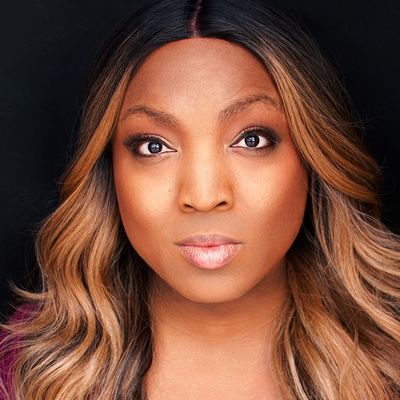
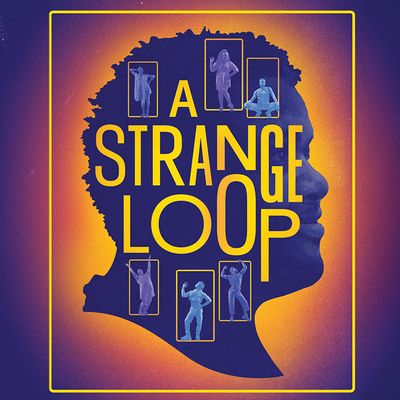
We have such love for L Morgan Lee! She has been a guest of our show. We saw her star turn in "Strange Loop." We have followed that voice and that career! She is putting both to use with her hosting the Maestra Amplify Gala this year with Kate Baldwin!.. Read More
From the show: The Roundtable with Robert Bannon
Guests
Featured Shows
About
We have such love for L Morgan Lee! She has been a guest of our show. We saw her star turn in "Strange Loop." We have followed that voice and that career! She is putting both to use with her hosting the Maestra Amplify Gala this year with Kate Baldwin!
Maestra Amplify 2025 is set to be a remarkable celebration of women and nonbinary musicians in musical theatre.
Event Details:
- Date and Time: Monday, March 31, 2025, at 8:00 PM
- Location: Sony Hall, 235 W 46th St, New York, NY 10036
Hosts and Special Guests:
- Host: Tony Award nominee L Morgan Lee
- Co-Host: Tony Award nominee Kate Baldwin
- Special Guests Include:
- Jordan Fisher
- Zeniba Now
- Jessica Vosk
- Antwayn Hopper
- Kecia Lewis
- Julia Mattison
- Michael Maliakel
- Anu Mysore
Purpose and Mission: Amplify 2025 aims to honor and showcase the talents of women and nonbinary musicians in the musical theatre industry. The event aligns with Women's History Month, emphasizing the importance of representation, creativity, and collaboration in the performing arts. Proceeds will support Maestra Music's mission to provide support, visibility, and community for these artists.
Program Highlights:
- Musical Performances: Attendees can look forward to an evening of unique musical performances featuring works by renowned composers and emerging talents.
- All-Maestra Band: Music director Julianne B. Merrill will lead a band composed entirely of Maestra members, including Elena Bonomo on drums, Ann Klein on guitar, and Yuka Tadano on bass.
- Featured Works: The program will include pieces by Lynn Ahrens and Stephen Flaherty, Zeniba Now and Jay Adana, Cheeyang Ng and Eric Sorrels, as well as songs from Joy Huerta and Benjamin Velez's "Real Women Have Curves."
Amplify 2025 promises to be an inspiring evening, celebrating the contributions of women and nonbinary individuals to musical theatre. It's an opportunity to experience exceptional performances while supporting a vital cause in the arts community.
_______________________________________________________________
Check out "The Roundtable with Robert Bannon" here on BPN on the daily, on YouTube, Broadway World, and on social media! Like, comment, share, & subscribe!
For more info on Robert- www.RobertBannon.com
Follow Him on IG- @RobertMBannon
TikTok-@RobertMBannon
Transcript
This transcript was automatically generated and might contain errors.
[0:10] Robert Bannon: Are you ready? It's the Roundtable with me, Robert Bannon. Welcome to the Roundtable, everybody. My name is Robert Bannon, and you're listening to us on Broadway World or over here on the Broadway Podcast Network. And I love our next guest because she's a friend to our show. She's a Tony-nominated superstar. That's right. And I was just watching videos of her sing, and I was watching her sing Little Shop of Horrors. And I was so her voice is so gorgeous. And I was like, man, maybe I gotta really kiss up to her to get her to sing with me one day. Maybe that's what I because she sings, people sings. And she's gonna be a part of an event that's coming up in March that you need to hear about. And I'm so excited. She lends her voice, she lends her talent, she lends all that she is here to us on the Roundtable again. I love our next guest, the superstar, L Morgan Lee. Welcome back.
[1:00] L Morgan Lee: Robert, hello, how are you?
[1:04] Robert Bannon: You can sing your oh that range and that tone just you just slayed me dead this morning.
[1:10] L Morgan Lee: Oh my god, this morning.
[1:11] Robert Bannon: It's really literally this morning, too. And it's funny that you said Little Shop of Horrors because as I was getting dressed today, I was like, Oh, I'm gonna put on this black dress. And I was like, I'm feeling a gender moment this morning. And then I went, wait a minute, this is definitely like one of the Audrey looks. I was here for all the video. I was literally in the deep dive of your work and all that you do. So thank you for being here.
[1:37] L Morgan Lee: Oh, thank you. That feels it's always nice to be thought of.
[1:41] Robert Bannon: Oh, absolutely, of course. Well, many people watching us, of course, know you from breaking the norms and changing theater for the good and doing Strange Loop, which I never was around people who felt as seen and as my the people of color, the queer community, that everybody that went and saw this show saw a piece of their life in your show and what you guys did up there. And then you took this ball and ran, and you have just been out here singing and working and hosting and creating and doing the whole L Morgan like experience.
[2:18] L Morgan Lee: That's the new website.
[2:23] Robert Bannon: What's it been like to be more in charge of singing and creating, and you've been doing your own show? Like, what's it been like since the Strange Loop chapter closed?
[2:34] L Morgan Lee: Wow. I mean, it's been wonderful because you know, all of a sudden you have what is a career high after, you know, 20 some years of being in the business. It's like suddenly you're introduced to everyone, everyone suddenly gets an idea about who you are. The thing that's always tricky about shows like a Strange Loop that were like a big splash is that what you do in that show becomes the thing that people sort of identify you with. And I mean, while we were playing like a multitude of different things, sort of my main feature in the show was, you know, this woman of a certain age who was sort of showing up to a friend of mine has called it like it was like a Lincoln Center moment suddenly, you know, you walk in and she's this, you know, pristine theater goer who has a way about carrying herself.
Um, and so it's tricky because for a bit, like I was only being asked to look at things that were like, you know, she's in her 50s or 60s, and she's I'm like, 60s. Y'all, like, like I'm happy to, I'm happy to age up a bit if necessary for the right kinds of things. Um, but I was like let's let's shimmy this down to a sensible 30s 40s space because that is a little more of the reality but I was like 60s so my agents my agents were a little bit like we're just starting to think of you as timeless because some of these asks are like quite aged. I had one that was like might be 70 something, but you know, doesn't quite look it. And I'm like, y'all know come on. 70. I just haven't, I haven't lived enough to even like start just to do a role that starts there.
If I'm if I'm playing a role, you know, I worked on, I worked on a complicated woman this past spring, I think it was, um, up at Goodspeed, and the role I played, she started in the top of the show, she was in her 20s, and by the end of the show, she was in her 90s. So like I'm I'm in a really good like age pocket to do that kind of a thing in a show where you age down and then age up. Um, but it's tricky. It's been really tricky in terms of like musical theater because you know, on top of all that, you know, I do have to, I don't want to say deal with because it makes it sound like it's some sort of heavy burden. It's it's more of a slight frustration. Um, that our business I think has some difficulty sort of seeing past specific adjectives when we are newly being introduced to them.
So, you know, there there is still this thing going with black actors, where you know, to bring a black actor into a role that is not where there's no race listed, still to some people is considered like an alternate route, or somehow this is a different version. Um, not counting the fact that like black people are literally from every socioeconomic background, every education background, like black people are represented in every background there is in terms of um life. Um and so I think now I have that going on top of the fact that I'm trans. And so I think you know, trans visibility in this particular industry certainly is very slowly growing, um, certainly moving. But I think what that looks like to people is a big question mark for people who are not part of our communities.
Um, and I think people are, I do think that people are curious about what it means to center and see more people who are from various trans backgrounds. I just think sadly, we are not behind the table or in the conversation enough to help them actually see like, oh no, no, no, no. There is a difference between someone who is non-binary and not trans, and somebody who is trans and not non-binary. Like, like there's there's a difference in someone who is like, I'm a woman. Every day, all day it is what it is. And there's and that's a different experience and life than someone who is, you know, non-binary and and beautifully being gender expansive and challenging the system and challenging gender expectations.
Um, but that is also like not trans. So the the difference in those experiences, um, it has has nuance that you sort of need us to be in the room to help you understand those nuances. Um, I say that, and and as I say, I have to, I'm mindful of like somebody is always bound to be like, well, there are non-binary people that are trans too. And I'm saying, yes, there are, absolutely um but that's just what I mean is that we need plenty of we need more we just we need more of us in the space to be able to have conversations. So until then it is a bit of a of a uh not I don't want to say struggle but it's a bit of a feat to have to get to sometimes to get people to see sort of past that um and like understand that you know if if if you bring me into an into a room for something you know if you know if by chance you know there was a you know you know Megan Hilty was was was feeling like it was time for her to end her ride in Death Becomes Her, you know I'd love a world where an El Morgan Lee pops up on that list of like possibilities for the next replacements where we see what does this feel like and not have people be like oh well that's now an alternate route because you know Madeline is not trans and it's like well that that are we talking about Madeline's entire gender journey in the story?
No. Are are we ever talking about that almost never so if it's not especially if it's not discussed um and even quite frankly when it is it's like we're that is when it that's when we say well but we need to understand that like that there is uh there is a misunderstanding sometimes I think people have about what our lives are every day. You know when I go to the grocery store there's not a banner that sounds off and people whispering and saying oh gosh here's that that trans lady people are like there's that black lady that lives down the street like there it's it ain't that deep for people every day. And that I think that's my experience. There's very different ones that everyone has. Um, but yeah, so that's that's one of the one of the obstacles that press presented itself, which is why you see me also doing so many different random things all over the place because um I want to stay active and I want to stay um having fun doing the things, and it it's a gift to be considered and to be asked to do so many different things.
One of the biggest things lately that I'm on faculty at Pace. Um, I'm one of their adjuncts, I'm not on faculty, I'm an adjunct. But but I have a but I have a class that I teach, you know, two classes on one day of the week. Um, and I'm working with their junior musical theater majors, and like that in the midst of everything going on has been such a gift to me that like I just I did not I didn't realize how much light those young artists would be giving me. Um, and I'm so excited to be able to share with them and help them all sort of on their journeys of artistry and finding what who they are. Um, I'm so excited about it.
[10:02] Robert Bannon: So it's it's been that's been the blessing is the because I haven't been sort of glued to a single show. I've been able to do lots of really great things like host this Maestra Amplify 2025.
[10:09] L Morgan Lee: You know, yeah, absolutely.
[10:10] Robert Bannon: I so I love hearing you talk about the next generation of musical theater and you being uh there for them because when I said I'm done, I'm not I'm not doing musical theater, I'm not going on an audition anymore. I'm gonna do this, I'm gonna sing when I want to sing. I got offered a job to teach musical theater at New Jersey Performing Arts Center. And I was like, okay, it's fun, it will pay a bill and I'll have they have moved me. Like the the future of this business looks a lot better than the current like they these young artists have ideas, they are great, and they inspire me. So kudos to you.
[10:41] L Morgan Lee: Let's draw let's draw attention to the fact that you said it will pay a bill.
[10:48] Robert Bannon: It is certainly not for the money because education sadly does not take care of the teachers.
[10:56] L Morgan Lee: One bill.
[10:57] Robert Bannon: One bill.
[10:57] L Morgan Lee: And that might be like the electric bill.
[10:59] Robert Bannon: Right.
[11:04] L Morgan Lee: You know, you bring up um the idea, and I I've had many conversations with people um about this and and uh about roles and trans actors in roles. And are you the the offers only being trans roles and then making a big deal about this is not a trans role that's being given to a trans actor? And all there's no Strange Loop. I mean, my role in a Strange Loop was not she was not a trans role. I think that that's one of the things I really enjoyed about that project was that she was simply a woman who could be played by someone trans, who could be played by someone to assist, who could be like who could be played by anyone who is comfortable, you know, playing a woman. Um, and so I I really was thankful for that, and then at the same time wanted to scream a little bit afterwards, and people were like, there were other castings that popped up, you know, when it went to London when it went to the West Coast, and there were some people who were like, How dare they not cast the trans role with a trans actress?
And I was like, There is no trans role in a Strange Loop. Like the show, the show itself. I mean, quite frankly, the show itself was built in a way that that can absolutely include a variety of genders and lots of different people, but like the way that that production was built was like pretty binary and pretty much like you know, there were six men in the show and one woman. Um, and when you start to mix up what what that looks like, I think there are other conversations that have to also come into play to make sure that the other people involved are all feeling seen and healthy and like they're feeling a part of the story fully. But that that involves more a different kind of work on the back end of the of the production.
[12:47] Robert Bannon: Um, so I I want people to yes be rallying for more of us in projects, but also be mindful of making sure that those spaces are like safe for us and are like ready for us to be there because it's better that the space be ready than to have us go into ones that are not.
[13:06] L Morgan Lee: Absolutely.
[13:08] Robert Bannon: Well, thank you for saying that and educating all of us because uh it's been a mission of this show to try to educate people on all people of all it's uh everything from race to gender to sexuality to where you live in the world, what you do with what is your art form. Like, we all need to listen a lot more than shout out our opinion and hear other people's experiences and how we can make people feel safe and comfortable. Like that's humanity, but we've seen some lost that.
[13:34] L Morgan Lee: And that's why I mean I do feel like that.
[13:36] Robert Bannon: Um, yeah, never mind.
[13:38] L Morgan Lee: Yeah, but that yeah, I think humanity is is golden. If we can if we can hold on to whatever traces of it we can.
[13:47] Robert Bannon: While we're talking, if you want to follow Morgan Lee, you can go to Instagram, of course. Follow El Morgan Lee and see all the things that she's up to and all the things that's to come.
[13:54] L Morgan Lee: Oh my god, I want to hear you sing Death Becomes Her, but that's a story chat for another time.
[13:58] Robert Bannon: So my thing for Ernest, tell me Ernest.
[14:02] L Morgan Lee: I'm here, I'll buy a ticket right now.
[14:04] Robert Bannon: Let me get me out. I'll cash in my own. I love, love, love what they're doing. I still haven't seen the show fully, um, but I'm so obsessed.
[14:13] Robert Bannon: I so love what they're doing. I think it's so much fun already. And I've been listening to those same few tracks that they've released on iTunes over and over. I was like, I love when a new show brings out my musical theater dork and like actually locks me in. So like I cannot wait to see the show when I get a chance to see it. Um, yeah, I'm obsessed. They're so talented. And like Jen Samart, like, come on. Come on. Stars. You're about to work with like, uh, I don't know, a dozen plus stars for a good cause. And um, and I'm not gonna let L Morgan off the hook without asking her about the world. We're gonna get there in a minute, but I want to make sure that we talk about this event while you're tuning in because you talk about women, you talk about non-binary people, you talk about the amplification of voices in art in general, and letting people join a room and be in a room. You're gonna host something that sounds amazing. Tell us about it.
[15:12] L Morgan Lee: We're talking about March 31st. Yes, March 31st, uh, which is a Monday at 8 o'clock PM at Sony Hall, uh, which is right in Midtown, right in the Times Square area. Uh, I am hosting along with the incredible one of my favorites, Kate Baldwin. Um, Tony Award nominee Kate Baldwin. Um, we are hosting a Maestra's Amplify. Oh, look at this. You say Kate Baldwin and balloons. Oh, that's wonderful. Um, so we're hosting Maestra's Amplify concert gala. Uh, and this is Amplify 2025. It's a celebration of women and non-binary musicians, specifically in musical theater. So excited. I think it's going to be quite an evening. You know, the special guests include Jordan Fisher, Jessica Vosk, Antoine Hopper, who I might know from a project, Julia Madison, speaking of Death Becomes Her.
And then, you know, there's a slew of other artists who are going to be wonderful that evening, but I have to mention and sort of like cheer and scream and gag over Tony and recent Grammy award winner, Kecia Lewis, who is someone that like I also just have adored for many, many years. She's a light. And so any opportunity to see her is going to be exciting. I love that I'm getting to host this thing because I don't have to be a crazy lady to myself about singing the whole time. So I'm not going to have to be a nun beforehand. I can have a drink.
[17:05] Robert Bannon: That's my job. Shut up, L Morgan. This is my job.
[17:10] L Morgan Lee: Yeah, so in the performance, you will see, of course, these wonderful artists are going to do musical performances. Quite frankly, I love so much with their material. You know, we have Qiang Ying, uh, uh, Jo Jay Adano. I am reading some names off of a piece of paper, and I promise you all the next time I say these names, if I'm butchering them, they will be far better because I cannot wait to hear your music. Um, we're about transparency. We're about being really up front here. Um, and we're gonna hear some songs from the upcoming Broadway musical Real Women Have Curves, which I'm very excited about. Uh, and we have Zeniba Now as one of the also other composers. Of course, the band will be led by Julianne B. Merrill.
Um, and the band is entirely Maestra members, um, you know, with Elena Bonomo on drums, who is a sweetheart, and Ann Klein on guitar, and Yuka Tadano on bass. Again, y'all, if I'm saying your names wrong, I will get it right next time. Put a hit in my DMs and let me know. Otherwise, I'll be doing a sensible YouTube search to find when people have said your name the way I do. Um, and so, and yeah, so come out. It's gonna be a great evening. All the proceeds will support Maestra Music's's mission to provide support, visibility, and community for these women and non-binary artists. You know, this event aligns with Women's History Month. Um, and it's emphasizing the importance of representation and creativity and collaboration in the performing arts.
And bonus is this year, the concert falls on March 31st, which is Trans Day of Visibility. Um, and you know, we are in a period certainly now where us being visible is actually, it's always been an issue. It's always been something because I do think visibility is both sometimes a blessing and a curse. Um, now more than ever, I think that sort of spirit of pride is rising up in a lot of us as we're sort of watching ourselves actively be erased from websites and erased from, you know, things and events in which we played or, you know, people from our community have played like great parts of, and we're seeing that the effort to sort of, you know, erase us happens. So these are examples of evenings that are looking to celebrate people like us and celebrate the work that so many artists are doing.
Um, and so yeah, come out, please come and support. And I hope to be able to, if nothing else, have on something snazzy for you to see. Uh, you know, we'll see what we can do. Um, but I think it's guaranteed to be a great time. The link is below and it's also in the bio so you can get your tickets. Tickets start at $25. So I mean, you're not gonna, this is a gala that everybody can grab a ticket, but they're not gonna last. So you better go and grab a ticket as quickly as you can because you can't go see all these stars on Broadway for $25. That's for sure. So you can if you're someone who happens to be, you know, wanting to solicit attention to your company. Um, they do have like a playbill program ad situation. Um, there'll be opportunities to purchase program ads in the evening's events playbill. Uh, and so contact the folks at Maestra Music's to look into more information there too.
[21:03] Robert Bannon: You know what moved me when you were talking about the list of performers? And I feel like in the world that we live in, we all need people like this. I love you and Kate, and I love, uh, you know, Jessica and Kecia Lewis can sit down and sing the phone book and I'll just cry. But I love the fact literally, we'll literally sing from like Baritone all the way to Soprano, like literally vocally doing things that are just like crazy. Crazy, crazy. But I also want to shout, like, shout out people like Jordan Fisher and Antoine and Michael Maliakel, who was Aladdin. And like they are here lending their voice and their talent to women and non-binary performers because it's just the right thing to do. And adding that visibility and standing up for all people of all everywhere matters. So shout out to everybody who's giving their time for this night. It's gonna be a good night.
[21:57] L Morgan Lee: Yeah, I was saying it's gonna be a lot. It's gonna be a lot in all the, I think in all the best ways. I think I'll be happy to sit with just a sensible light drink beforehand, and then after it's over, we can all exhale together that we got this music out, and these people are excited, and hopefully the audience will be interacting and like and a lot of fun the entire time. Uh, you know, hopefully I won't fall on one of the dresses that I choose to wear. Um, if I do, it'll be, you know, for a good cause. It'll be a good one, it'll be a viral moment. You talk about um, uh, this event and then all of your work and what we talked about, but I would be remiss, and I want people to make sure that they support this is it is gala season, and as gala season goes on, people are gonna be asked there's a lot of good causes, but I would be remiss.
We spoke a moment or so beforehand. I am not surprised that the queer community is under attack. I'm not surprised, especially that the trans community is under attack. But what you said struck me, and it really I hope people understand. It's not just under attack, it's an erasure of the community. Like you go to Stonewall and take the tea out of the, you know, like it is a purposeful erasure of people. So how do you keep going? Like, how do we not lose hope? And how do we know that there's better? I'm trying to find silver lining, and everyone I talk to that's a part of our community and a part of your community, and that we're here on this earth together. Give me hope as an artist, give me hope as a queer person, give me hope as somebody who cares as we all care about each other. Is there hope? Is there silver lining?
[23:34] L Morgan Lee: I think that look, I am just as nervous and slightly scared as many other people. But there's also, you know, call me loopy doopy. I am, um, but like there's always a little voice behind me that I hear that just sort of quietly says, you can ask the universe for the world that you want to live in, but you can't tell the universe how to get you there. And so if you believe that the universe has your back, which I always say, if you believe that the universe has your back, then you have to trust it and know that like this is all a part of the process. Um, even when it seems the most bleak, I also feel like I am blessed and fortunate to have people in my life who were living out loud and proud, or who were stealth and surviving in the 80s and 90s, when you know they had far less than we have today, and they dealt with what felt like, or so far, what seems like they dealt with far, far more than anything we've experienced.
Um, and so knowing that like they survived and they pushed through and they made a way when there seems like nothing there, those are the shoulders that we literally stand on. Like we will be just fine. We will be okay. Again, they can erase our names from books, they can erase our, you know, tea from things, they can they can erase and do all they want to do, but they can never take away the work that our community has done, and they can never take away the memory and the legacy and the stories and the joy and the love. Like they can't, they can never take that away because it's a part of the fabric of our community and ultimately of our culture altogether. Um, so I think the more that I lean into that little voice and into the triumphs that we have seen from our community for so long, even when nobody knew that they were happening but us, it's like the more we lean into that, the more I'm like, have at it, y'all.
Y'all can't do anything to us. Like you literally can't. Like we will always win. We will always pull through, we will always fight. And it might get really hard and it might get really, you know, the peer, it might get really frustrating. Um, but also it's just a reminder to like hold close to each other and to, you know, find your community members. And if you're if you're somewhere in a space where you don't have community and you don't have people around you, because I do think there are a lot of us um out here speaking and like making the point to like this is when I need my girlfriends, this is when I need community, this is when I need my people. I do think that like sometimes we we don't think about the people who are in spaces where they don't have that community and they don't have those people to turn to.
Um, and so in many ways, those people might be the most scared of all. Um, and so my feelings there are protect your safety at all with everything you've got. If that means that you need to sort of, you know, be a little more quiet and navigate so that you can survive, do what you need to do. Take care of yourself, make sure that you're okay. Because on the other side of this, there's there will be plenty of time for you to let your flag wave, you know, proudly. So as you need to take care and prioritize yourself and the things that you need and your safety and your care. And if that means you need to go online and find community, because look, there's always somebody to find on social media somewhere, or there's always somebody who is dancing in the street and who you can take a little bit of joy from.
You know, as much as we as much as we roll our eyes about social media and the dumpster fire that it can become, um, I do have to admit that there are moments when I scroll through and I see something that just quite frankly makes me smile and like I will take that bit of joy with me through the whole day. And that joy might come from not a person, it might come from me watching, you know, then someone rescue a puppy that was just really needed rescuing. And you know, that's that's most of my feed these days. Um, but I'm like, but it might come from that, like someone finding their forever friend and like taking that puppy and you watching that puppy go from being terrified and scared to jumping and leaping and smiling and being so excited, and like for me, that little dosage of joy sometimes can get you through the day.
So yeah, prioritize your your own mental health and your own stability and your own and your own uh just sort of mental safety, uh, because we don't know what lies ahead, and we need you to be as strong and as healthy as you can be to last through this thing so that we can all get to the other side together.
[28:45] L Morgan Lee: Well, I just implore you know, watching documentaries about the LGBTQIA plus community and the history of us. There is no pride and there are no rights without the trans people. And to all of the people and sideways, even as you say that, I want us to like, I want us to we say there is no LGBTQIA plus without the T. And then we always say, you know, we're not who we are without Sylvia Rivera and Marsha P. Johnson and you know, Miss Major. I want us to learn some more names. Because like it doesn't take away, it doesn't take anything away from the incredible things that like Miss Major is still doing today. It doesn't take away from any of that. But I think that's part of the issue is that so many of us only know, like every time I see someone post, they're like, it's just like Marsha P. Johnson, and I'm like, y'all, Marsha P was not alone.
There were a lot of people there. Like, we gotta learn some more names. We gotta we gotta learn some more people and like do some research. I mean, I'm still learning names. I have a writer friend, Lady Jane Figueroa Didi, who has spent a lot of time writing about a lot of like specifically black trans women from like the 1800s, the early 1900s, and it's like I didn't even know about some of these people, and like it felt crazy that like there's so much history that we actually just don't know because and some of it's out there to be found if you know where to Google, but like even at this point, we do have the friend of Google. If you Google, you know, trans history and look around or look for like black trans women in history, there's a lot out there to be found, and you know, even if they decide they want to scrape that thing and make it so that we can't find those things anymore, y'all, they're always gonna be out there to be found, like because there's always somebody's website that's not that's like private. That there's you're always gonna find the info if you go looking.
[30:46] L Morgan Lee: Well, that's such a good point because um when I spend most of my time now in Detroit and New York in Detroit, like the Ruth Ellis Center, Ruth Ellis is a is a trans activist. That when I moved here, people were like, Oh, you have to go to the Ruth Ellis Center. You have to go. I was like, Who's Ruth Ellis? I have no idea because I grew up in New Jersey, and I know it's like as a teacher that teaches fifth grade, when it becomes Black History Month, everyone's like, I'm gonna do my report on Martin Luther King and Rosa Parks. And you're like, there are other people out here. Please pick someone else. We learned that. So we start to it starts making you want to say the assignment cannot be Martin Luther King and Rosa Parks because we will talk about them on day one, and then we can get all the other names.
We need the other names, and we need the ones that are current. There are people now who are making changes and making differences in our communities, in the black community, in the trans community, in the queer community. Like, there's so many, we need to know kind of what these people are doing because I and knowing that they're all human is a thing too. Like there's this big deal of finding names and then sort of you know demystifying what their journeys were and finding like the deep dark side. It's like, y'all, all these people are humans. The trailblazers are all human. The trailblazers all navigated some space in the dark, and more likely than not got to some really blunt wonderful accomplishment, and nobody checked on them to see if they were okay afterwards.
No one, no one tried to help them out, and they probably continue navigating in the dark with just their light in front of them and maybe some people around them now, but still in the dark. So still getting hurt, still dealing with violence and trauma and all the things that you face when you are new to an area somehow.
[32:34] L Morgan Lee: There's a lot of work that, you know, it makes the Martin Luther Kings and the, you know, of course, now that I think I can't think of anybody's names. Of course, now that I'm talking about this, I can think of any names. I'm seeing people in my mind, the Sojourner Truth, the, you know, the, you know, Lorraine Hansberry's, the James Baldwins. It's like you start to see all these people had lives going in addition to the work they were doing. And what was it like for these people? Where are the movies about what it meant to be, you know, Lorraine Hansberry? Where are the movies about Josephine Baker? Where are the movies about, well, Josephine Baker? Well, there's that great Lynn Whitfield movie from before.
But like, well, it's like, what are what are what about Lynn Whitfield? What about like we have people now? Oprah Winfrey is a name that we're gonna hear for a long time. Like, it's like we see people's front facing things and we forget that they are human and so they are flawed and they have things that that probably are problematic and probably are ridiculous, but they're still just like you trying to survive and get to the next thing every day. Um and the ones that are with us still, it's like celebrate the work that's happening and also understand that like we all have to live here together if there's if there's holes in the conversations around them, like be a part of helping to fill that hole.
Tell people where if there's a blind spot, like tell me, so then I can know what I'm missing out on and what I can choose or not or choose not to learn more about. Like I think we part of what's I hope going to get us through all this stuff, if we can get there is understanding that even the people that we think are the most horrendous and the people that we think are the most polarizing and the most evil, we still have to live here with them. Like they're not going anywhere. So, how do we find a way to live in a space where we can both get versions of what we want out of life? How do we bridge? How do we like? I feel like until we get to that, we're really not going to go anywhere. Like it's just gonna keep being this mess back and forth.
[34:41] L Morgan Lee: Um, and I was I was on a call with some people this week who were saying there's so many with like the burn it all down mentality, like burn it all down because it's all corrupt and it's all problematic. It's like, yes, and and then what? Like, so while we're all sitting in the ashes, then what? Have you started planning on what that rebuild looks like and understanding that those people that we don't want to be around will also still be there? They're standing there too. They're sitting, they're sitting right next to you, and also many of them who come with means and access and all these privileged things, they can just rebuild. So now the thing that we've sacrificed and built and hurt and blood, sweat and tears to rip and tear down is just being rebuilt right next to us with stronger walls because we didn't do the work inside to figure out how to find the bridge so that we can, if we got to rebuild, then we got to rebuild together.
What does this need to look like? There's this part of me that there's a little, I have these little voices. That doesn't mean I'm crazy, but I'm an actress, so I'm a little crazy. Um, but there's a little voice also in my head that's like if we can get through this, if we can get through this period, and we can find a way to you know let that one's term do what it's gonna do and get out of here. The rebuild that is possible is like next level because there's so much, and there might be so there, quite frankly, there might be an overwhelming amount of rebuild that is necessary, but it will also be if we do it right, it'll be one of the first times that some of these groups that have never been considered will be a part of that rebuild.
[36:28] L Morgan Lee: Yeah, that will be thought of, will be suddenly like, you know, this idea of erasing the T and erasing and quit, you know, making gender affirming care impossible for young people. And quite frankly, I think people also want to do that for older people if we're being if we're being honest. It's about all of us, really. Um, but like it's the it'll be the first time that things will be rebuilt in a way that that will be a part of the rebuild. That will be a part of we have to consider these people who have been targeted and who have been ripped down. We need to give back to this community to make sure that they are now a part of the fabric of everything out in the open to everyone, and not just behind closed doors and in the communities that are in the know. Like what is possible is so incredible if we can get there.
[37:16] L Morgan Lee: And so there's that little voice that's like trust, trust, trust. Well, that's what yeah, that's how I feel. That's that's you took the words out of my mouth. And I and I love your quote before about the universe, and you know, you want something the whole universe conspires to help you, kind of like an alchemist kind of idea is that you know, trust the pro and maybe we have to go through all this to come out the other side with something bigger and better. Just we hang in there, hang in there.
[37:42] Robert Bannon: Yeah, can you tell us alive means these a lot of these old civil rights and activist-led chants and things, they all mean something more today than they did yesterday for many people. That idea of keep hope alive is really real. I mean, it's it's because it looks like oblique like oblique map in front of us. Um, but keeping hope somewhat alive and keeping that little trinket, and you only need this tiniest little bit, you just need literally just some mustard seed, just get a little bit there. It can grow, it can get back down, it can grow, it get back down, but just keep pushing through it. Um, so that we are all like you said, like we're all conspiring together to like make that change happen to manifest that change.
[38:31] L Morgan Lee: Well, and to all my queer friends out here and brothers and sisters and people out here, you know, stand up for your trans family because we have not always been there for the trans family in the past, and people we are not, you know, the experience of being gay is and being a white gay man like me is very different than people of color, the trans people, and we need to keep an open mind and support and stand next to all of our family here because some of us take the easy road and we take a quick exit and duck out. We need to all be in this together. So it's all it's coming after all of us, all of us. It's like we are in the eye or the target right now, but we already see evidence of around that is also everyone else in our communities too.
Like, you know, it's like, yeah, I agree with you. Stand stand up for your trans siblings and at the same time check in on people. Check in. Like just do a hey, hey, hey, how are you? How are you holding up? I know this is a bit of a dumpster fire we're living through. You holding up good, you need you need a cup of coffee. Do you want to go wanna go for a walk? Let's let's catch up a little bit. Like, because it's it's the time when I think there are a lot of people, I believe there are a lot of people who are sitting in their apartments or in their rooms or at their jobs sort of by themselves and don't want to be burdens to other people by asking for that extra walk or that coffee or that, you know, something that will lift their day, or that, you know, that dunk and drink that they need to get.
I think that there will be people that um I'm learning more and more that there are a lot of people, and even here in New York City, I know that there are a lot of people who are very quietly experiencing loneliness. Um, and that's something that's been happening all the time, quite frankly. And so when things get like this, it's like even more reminder. And I have to take that even as I'm saying this as a reminder to myself to check in on some people because it's it's real. And I think sometimes that little text makes someone's day.
[40:26] L Morgan Lee: Yeah, it sure does. And and as we stand here together, I want people to know women and their voices like this event that you're going to host on March 31st at eight o'clock at Sony Hall. And all of us, there's plenty of ways that we can all get involved and create community. And this is a great place for as little as $25 or more. If you got those, if you got money in your pocket, then go to my streammusic.org and see this incredible lineup of people and build a community there, build your community where you are, and then make sure you follow L Morgan Lee so we can be part of the community that you've created and created with the people who follow you and your career.
[41:01] Robert Bannon: You know, you really inspire me. You make me feel so ready to go out here. And I'm gonna, I was thinking while you were talking, you're right. I gotta reach out to some people and show some love and say, Hey, how you doing? And the difference, it really does. And like even and even with you know, this Maestra Amplified 2025. If you're not able to attend, look, people have things, people have reasons they can't go. This is an event, it's something that's truly for a great cause. It's as simple as going to the Instagram page and sharing the thing. Yeah, that single share, you don't know. Someone might see it and buy a ticket and choose to go. Someone might be a big fan of the incredible Kate Baldwin, and they might be like, Oh my god, I want to see Kate.
I want to see Kate host an event. I want to see Kecia Lewis and Antwayn Hopper. I just love Antwayn Hopper's bass baritone voice. I want to see him sing something. It's like it's like that one share might get you, you know, that might get someone a seat. So come out and support in some way.
[42:04] L Morgan Lee: In some way, thank you so much for spending time lending your voice to this and and your voice, period, and coming on and saying hey to us and spending some time with us, it's always such a pleasure. I'm such a fan and an admirer of all of the work that you do. And it's always a joy to have you. Thank you for being here.
[42:20] L Morgan Lee: Thank you. So great to chat with you, Robert.
[42:22] Robert Bannon: Yeah, same.
© Broadway Podcast Network, All Rights Reserved