

Brandon Michael Hall is here! We have been following his career since he graduated Juilliard and took the TV world by storm with shows like "God Friended Me" & "The Mayor!" He then came to Broadway and had rave reviews in "Trouble In Mind." He has been booked since graduation!.. Read More
From the show: The Roundtable with Robert Bannon
Guests
About
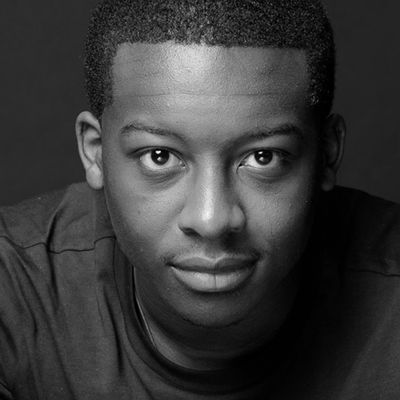
Brandon Michael Hall is here!
We have been following his career since he graduated Juilliard and took the TV world by storm with shows like "God Friended Me" & "The Mayor!" He then came to Broadway and had rave reviews in "Trouble In Mind." He has been booked since graduation!
He returns to the stage as Lincoln in the iconic "Top Dog/Underdog" at the Pasadena Playhouse! Anyone in the LA area needs to run and grab a ticket! This production has received raves. Brandon breaks down the work that needs to be done, how he got his lines down, and what this show means to him. Plus we talk the genius of these characters and one Suzi Lori-Parks! This is a masterclass on how it is done!
For Tickets: https://www.pasadenaplayhouse.org
Follow Brandon on IG: @brandonmichaelhall
_______________________________________________________________
Check out "The Roundtable with Robert Bannon" here on BPN on the daily, on YouTube, Broadway World, and on social media! Like, comment, share, & subscribe!
For more info on Robert- www.RobertBannon.com
Follow Him on IG- @RobertMBannon
TikTok-@RobertMBannon
Transcript
This transcript was automatically generated and might contain errors.
[0:11] Robert Bannon: It's the round table with me, Robert Bannon. You know, too many years ago, I was uh watching television and I saw our next guest and I went to Juilliard, and when I see somebody who went, but I didn't graduate like Brandon Michael Hall, everybody. So spoiler alert, it's freaking hard to go there. Okay. So I was the first musical theater class with a guy named Burton Rouser. So when I see people come out of Juilliard and they take over this industry, I was a rapping for Brandon Michael Hall. I was like a crazy fan stalker who had to send a message like, I went to Juilliard, you were in Juilliard, you're doing big things. I want to see you go do amazing big things. And guess what? Brandon Michael Hall has been out here doing amazing big things, acting his face off.
And then when I was in acting school 10 years later, because I left Juilliard, so I had to brush up again because I wasn't prepared to work. We read Top Dog Underdog as a requirement in acting school, and we had Miss Suzan-Lori Parks on this show before. She's brilliant. Brandon Michael Hall in this show is gonna be brilliant. And you need to pass the Pasadena Playhouse, get your tickets. I'm so excited you're here. Brandon Michael, welcome to the show!
[1:14] Brandon Michael Hall: First off, Robert, this musical theater uh background, I want to hear more about this, man. You know, I went to an audition for Eight Misbehavin' when I was 12. And as you may know, there's no role for me in that show. But the piano player was this, her name was Diane Wilson, and she was like, you know, I know this guy who's starting this program at Juilliard for Musical Theater, and you should come to there, and then it just whoa. But I got scared. I left.
[1:47] Robert Bannon: Well, how long did you go for?
[1:49] Brandon Michael Hall: Uh, like a good six months.
[1:51] Robert Bannon: And then I'm you were probably also there during the times.
[1:53] Brandon Michael Hall: The times? It's okay.
[1:56] Robert Bannon: It doesn't show, it doesn't show. But I'm guessing you're turning the times.
[1:59] Brandon Michael Hall: Yeah.
[2:00] Robert Bannon: I'll be 42 back then in those days.
[2:03] Brandon Michael Hall: Oh man, that's intense. I've heard stories.
[2:05] Robert Bannon: Yeah.
[2:07] Brandon Michael Hall: But you graduated.
[2:09] Robert Bannon: So you're the real deal.
[2:10] Brandon Michael Hall: No, no, no, no. You still are too. I mean, come on. That's something that's absolutely amazing. No, well, congratulations.
[2:22] Brandon Michael Hall: I have the past. I've been in through the door. I've lived that life. I pass it and I go, Amen. Thank you, guys.
[2:29] Robert Bannon: How you and theater and television?
[2:31] Brandon Michael Hall: Yeah. I mean, we may people know you from television and being first on the scene with the TV stuff and all of the stuff that you've done. But you're a theater baby.
[2:44] Brandon Michael Hall: I'm a theater baby through and through. Started on the stage.
[2:49] Robert Bannon: And the Broadway stage as well.
[2:49] Brandon Michael Hall: Yeah, crazy enough. That was what, two years ago now? Which is wild in itself. I can't believe I still was able to make my Broadway debut then with such an amazing play. And with a play that, um, it was its 66th anniversary when we actually got to do it and bring it to Broadway. Um, it was an amazing time. It was brilliant.
[3:12] Robert Bannon: So how does something like Top Dog come to you? And is there trepidation to do a role in this two-person two-hander play like this?
[3:23] Brandon Michael Hall: Okay, first it comes to you in an email. Uh, three agents. I wish it was the old way where they used to give you the script and you know that bad John, but uh, straight through an email, they asked me to audition for Booth, actually at first. Um, and so I auditioned for Booth, and then when I got to the reading with Greg Daniels, shout out to Greg, amazing director. Um, he was like, actually, I want you to read for Lincoln. And I was like, Whoa, okay. All right, well, I'll give Lincoln a try. A day later we did the reading again. He was like, You're cast as Lincoln, but I need you to come to Los Angeles. I was in Tokyo at the time. Uh, no spoiler alerts on that. But I was over there, and so I had to get a flight back to Los Angeles.
When I got back here, I got to do the chemistry reads with all the folks that were gonna go in for Booth. And lo and behold, Brandon Gill, who is a Juilliard graduate as well. Brandon was when I came into Juilliard in 2011, I think he had been out for three years prior, but he was in my buddy line. So I didn't know I had known Brandon for a long time. And when we did our read together, it was seamless, it was perfect. It was like the mesh was there. We just needed time to really delve into these characters. And that's how it happened. And then we started rehearsals a few weeks after that and opened last Tuesday, which still blows my mind, but yeah, it's been a great ride so far.
[4:50] Robert Bannon: People, you have like a moment, so you and you're not gonna miss this California.
[4:55] Brandon Michael Hall: Absolutely not. You better go to PasadenaPlayhouse.org and you better grab a ticket because they're not gonna be tickets left to be grabbed. So go and grab one. I mean, the audience is coming in droves. I gotta say, the audience, honestly to everyone who's watching this that has been able to watch the play, and for those who have come back numerous times and for those who came to theater for the first times to see this play, thank you, thank you, thank you, because they are coming to see this work. And I hope and I pray that the story is being communicated in a way that is um blowing their minds.
[5:34] Robert Bannon: Oh, it is such a beautifully written, heartbreaking series, all of the things.
[5:41] Brandon Michael Hall: Oh yeah. Did you get a chance to ever see another? Did you see it on Broadway or did you see another?
[5:45] Brandon Michael Hall: Yeah. Uh, Corey Hawkins and Yaya, I got to see that production because we were working, um, coming off of Trouble in Mind, which LaShawns, who was in Trouble in Mind, was also producing Top Dog Underdog. So I had a way in to finally see it, which is crazy in itself because it was one of those theater moments, and you can definitely attest to this. When you see a play and you're like, ooh, that's when the moment presents itself, I'm going after that. I want to be in that. And after seeing Corey do an amazing job and Yaya doing a brilliant job in it, it was one of those moments where I was sitting in that theater and watching them and saying, if it comes across the table, I want to be a part of that. And then lo and behold, two years later, we bring it to Pasadena.
[6:32] Robert Bannon: Yep. You're up, you're in.
[6:32] Brandon Michael Hall: So I got to see that. I haven't been able to see the original production with Jeffrey Wright and Don Cheadle, but I've seen little clips through this YouTube video about Suzan-Lori Parks, the entire process of how that came to be, which is brilliant in itself. So got a little taste.
[6:55] Robert Bannon: You know, like only monsters have played this role. Like you're a monster actor and you write where you're supposed to be, Brandon Michael Hall.
[7:05] Brandon Michael Hall: Hey, I agree, man. I don't have survivor's remorse anymore at this stage in my life, and to be honest, that is a testament to being in the theater. I think honestly, the theater and theater goers and people who were raised and bred in the theater, raised and bred in the church, like I was, and then made the transition to the theater and all that good stuff. I think going back, especially after you've done film for so long, it is like going back to the gym. It is a reminder of why we do what we do. It is a testament to the craft in itself and the usage of your entire body and being present every single night, knowing that you may not get another take, but you get another day, you know, and you can go home and go deeper and really connect with your partner.
And I don't know, it's just the magic of the theater, as we all know, is that little seed that lives inside of every person that loves the theater, where it's like we don't know why we do it, but good gracious, it feels so good when we do it, you know.
[8:05] Robert Bannon: So yeah, yeah, that's it's nice to every night. You get back on that bicycle and you're like, oh no, I don't know why I have the bike and you do it every time, and testament to you, man, musical theater, I think is the highest of the art form first and foremost, and it doesn't get the praise that it deserves unless it's like a running Broadway show. But I think um that feeling of every night is as long as those butterflies are still there, you know you're in the right place. The moment when it gets too easy, you either need to get deeper in the work or let it go. And it's so beautiful that Pasadena is giving us an opportunity, especially after a crazy time that was happening with the fires, which we're so happy that we're able to give proceedings back to the community from the shows. Um, but giving us an opportunity to be one of the first productions that comes after this, you know, crazy time. So it's nice. It's such a blessing.
[8:56] Brandon Michael Hall: And the world is crazy. We live in a crazy world with some crazy times.
[8:59] Robert Bannon: Are we?
[9:00] Brandon Michael Hall: Yeah. I've heard that's the word maddening right now.
[9:05] Robert Bannon: So when you put on the beard and the hat and the boots and the outfit, and you get up there and you tell the story about brothers and their fight for trying to make a place in this world, people are living this, even though this takes place in a different way. They're living this today. What is the message you hope as your artistry and your artwork is put through to these seats that you hope people walk away with after they see this?
[9:27] Brandon Michael Hall: Uh, an understanding that the love and communication has to start in the household. Like it has to, it has to be present within the small community in which we create in with ourselves. For instance, with Lincoln and Booth, and not to give anything away at the end, but the reason they go through these events inside, which is such a testament to Suzan-Lori Parks, right? Like I'm gonna go in a little bit of a circle to bring it all together. But this idea that, you know, during the 1980s, 1990s, which you know, we're setting this in 1989, during this huge epidemic that's happening in New York City, which we're also setting it, um, that these two brothers, even though they have these outside lives, everything is happening within this one room, this kind of like waiting for a good dough, in a sense, you know.
Um, and Suzan-Lori does such an amazing way or has an amazing way of making the text so specific and so honest that even though you're in one space for two hours and 10 minutes, it never feels that way. These characters are going through such a huge journey, this very, very epic kind of Homer in a way journey. And what I hope that people get from this, understanding that part, is that even though the love flows very much with these brothers and it's very, very deep, there is tension that family has tension and an education that you get from your family, especially from your brothers, that you don't get or your sister, that you don't get from anywhere else. And this idea that, oh, you think you can one up me?
Well, let me remind you before you go back out there, where the world is tough, where Lincoln has to put on this costume and he has to do these things to survive so they can have a roof over their head, uh, to live in these circumstances where their mother and father left them at such a young age. If you think you can one up Lincoln, if you think you can one up your brother, the person that knows you the most, I gotta do it in here before you figure it out or get one upped out there through this game of three card Monty. And it's taken me a while to get to that place, and I feel like I'm still finding that tough love within this character of Lincoln. But that's what I hope the audience gets from it is that there's no other love than family love, even when it hurts, even when it's hard truth, because they know you the most, they know you the best, especially your brothers or your sisters.
[11:54] Brandon Michael Hall: Um, and so that's what I hope they get from this play, and walk away from it with that because I know, uh nope, I can't say the rest. I was gonna spoil myself. There you go. I was gonna say, don't buy a ticket to see the end. Now you're gonna make me want to call my brother. All right, fine. I'll call Sean. I'll call you when I call you after this. It's such a deep. I thought about that when I was thinking about reading it and then seeing it in other productions and thinking to myself, in my head, two people on stage for two hours, and whatever it ends up being in one set. Am I gonna be bored? Are you gonna be bored? Is it not for me? People, it's for everybody. It is gonna be riveting on your side, like the edge of your seat riveting story.
[12:34] Brandon Michael Hall: Um, a nerdy actor question, please practical nerdy actor question. It's a lot of lines, it's a lot of locking, it's a lot of behavior, and it's a lot of emotion. How did you get it in your body where you feel comfortable enough to do this every night? Right. That's a great question. And uh it's um you you have your process, I'm pretty sure, and everyone else who Yes, I do. I may not be good, but I have it. But there it is, right? There is something, and that's that's also a testament as well for doing theater, right? I feel like in film, at least for me, there's um a kind of a structure that you can find for a process to really hit that mark and say the line and go to a different take, yada yada yada.
But when it comes to theater, it's a process of like, oh, I have to remind myself these are the techniques that I learned, and also these are the emotional things that I've learned to get into characters, and now as an adult out of school, how do I keep myself healthy so that I can actually go back and not take it home, or at least do the homework and leave that at home?
[13:36] Brandon Michael Hall: Um, so my process, honestly, and to learn lines and uh things of that nature, I suffer from dyslexia, which I'm pretty sure a lot of theater actors, uh musical theater actors as well suffer from. Um, but um I think I lost you a little bit there. Hold on, let me see. I'm here, I'm here, even if you're not. Let's see if this works. I still got you here. Hello? Deluji D. Do you hear me? No, no. I'm here. There we go. You're back. Now I got it. I'm good. I heard you the whole time and I saw you. Oh, you didn't know. Sorry, now I can see you. No worries. But yeah, I suffer from I suffer from dyslexia. I found that out when I was in the 11th grade. Um, and I didn't realize that it wasn't the fact that I couldn't memorize these lines. Once again, I didn't have the technique to do it. And then when I got to Juilliard, they taught me how to really utilize the time that I had, right?
[14:42] Brandon Michael Hall: So with all the stuff that they pack on you in college, which you definitely know. How do you go home and sit with these lines and stay focused and stay, you know, like do it, do it, do it? So repetition is my way in. I do it 22 times. There's a method of 22s. You do it 22 times, you read it 22 times, or you like for me, I like to do five times just reading the scene through, uh, and then going back and going through markings for five times, and then trying to do it off book five times, and then going back and read it again five until I get to my 20, and then my last 22. I try to do it on my last like three or four. I try to do it on my feet. But then after that, I leave it alone. I don't touch it, I go straight to bed.
And then when I wake up, usually going to the gym on the treadmill, I just read it again, do my 22. And then after a while, you start to realize like it takes that type of repetition for your brain to start to get a little photogenic or like have to photo memory, where you can kind of start to see the lines in your mind's eye when you're reading it.
[15:43] Brandon Michael Hall: I mean, when you're doing it. Um, but it's it's honestly it's a strenuous form of repetition, and this play deserves that type of care and attention because Susan Laurie is very specific about how these characters talk. And I find myself, and it's happening a little bit now, where I'm starting to get more comfortable in the text, so I think I can add my own things, and you can feel the train kind of like get off the tracks. It's like that's not Lincoln, that's you, even though you're part of it, like stay true to what she has created. Um, and so yeah, and then you know, everything else comes back to technique where when you finally get on stage, you're like, Oh shoot, am I breathing? Do I know my my essential questions? My backstory, what is my intention? It's all of those basic, you know, Udahaga and those going straight back to the basics with theater because you have the luxury of time.
[16:32] Brandon Michael Hall: You may not have the luxury of finances, but you have the luxury of time, and with and with time comes the ability to, and this is this is something that I've implemented into this show more than anything that I've ever done. It's to remind myself that every performance is just a rehearsal, and as they said in school one time, it's like rehearsal means re-hear all. So rehear it all for the first time. The moment I start thinking, oh, we have opening night, or oh, this is a special night, or you know, previews or whatever those things are, it takes me away from the work and I start to perform. And no one wants to see you perform when they paid 40, 30 dollars to see a ticket. They want to see you live, they want to see this rehearsal, they want to see that moment when something happens and you figure it out, you know, it's not perfect, and that sense of release mentally, especially with this play, has grounded my work in ways that I never imagined.
[17:32] Brandon Michael Hall: I wish this is one of the things that I implemented when I was in school. The idea that just rehearsed, just you have three months literally of rehearsal, it's nothing else. Until they say you're done. They're just adding more things on you to rehearse with. Now you got a stage. Now you got lights, and I got people. That's totally fine. But it's a rehearsal. And it's okay if something happens. Figure it out and keep going. The moment it's a performance, I'm just like, oh now I'm just overthinking. I forget everything. Oh bump those lines. No, that's real problem. Yes.
[18:08] Robert Bannon: That's an amazing bit of advice because I think what people think is, and and I I'm all about the repetition, and I'm very Meisner-esque in a lot of my technique. And I will repeat and repeat and repeat and find depth and nuance and find a way to what am I trying to get across? So I get that. But what I I really love is that it's a rehearsal. Every night something can happen. And I do get the performance because the second you feel like I'm gonna be a show pony, it's it's you lose everything. You lose everything. It really makes it ego-driven. And theater is not about the ego. The lesson you like, the less in your ego, the more you can really be that vessel that we all talk about in the arts. It's not about you, it's not about it's about the work. Always remember it's about the work.
[18:47] Brandon Michael Hall: It's hard. It's hard to remember that. It really is because we perform. That's what we do. But that especially that um that uh technique that you were just talking about, the um not my yeah, my technique. That repetition of getting to that place of like where the uncomfortable feels comfortable, right? When you get to that place of, I know this line inside and out. Now I can just let it go. And then for some reason, one night on stage, it clicks, and you're like, oh, there we go. Now I can I got it. Move on to the next thing. That's it. But you have to get over that hump. You gotta get over that hump.
[19:20] Brandon Michael Hall: Yeah. Absolutely. You're your career, um, and what you do. I know offside off screen, like you you've been a very big, I want to say advocate, like charity driven, like very um, like stories have been written about you, like I don't know, feeding people on the streets and and being a part of your like you are about um more than just Hollywood and glitz and glamour. Like there is there is a real uh reason behind the work that you do, and you try to use your your work for better. Is that always?
[19:45] Brandon Michael Hall: Oh yeah, absolutely. I've I've always been a uh a man of the people. And I don't even say that for like facetiously, like seriously, I love doing the work and then using that to go into the communities and find ways to give back. Because I've I've been to the to the lows, I've been down as they say in the trenches and have had, you know, those moments when you need a helping hand, you know. And shout out to my mom who was the one who really taught me that no matter where you are in your life, no matter where you are in your career, you don't forget the people that brought you up. And it's the community, it's the people that are coming to the theater that holds me true to my art. If it's not for them, then I wouldn't have a job. I wouldn't have stories to tell.
[20:33] Brandon Michael Hall: So yeah, like I I do a lot of reach. I find myself doing that more so um in very artistic ways. Uh like right now, producing uh different DJ sets with a friend of mine to get more of my friends and platforms so they can showcase themselves. Um still finding time to go to New York and reach out when I go there with um hashtag lunchback bk, which is a great place that I've been for for years. Um, so yeah, you know, not just giving out turkeys on Thanksgiving.
[21:04] Robert Bannon: Right, right. So if you show up and if you're showing up and you see Brandon Michael Hall handing out lunches in Brooklyn, it's not gonna just be the that's real. Like that is that is there's no TMS. Doing that before Captain, right?
[21:16] Brandon Michael Hall: Yeah, doing that before actor.
[21:18] Robert Bannon: Yeah, absolutely. Well, you know, your your career after you graduated, you were like shot out of a cannon. You've worked and worked, and you kept it together, and you've put the work at the forefront, and you've made there's just so much more work to come. If it's theater, if it's television, if it's films, if it's whatever your cure, whatever your artistic brain is working on, that's the next generation. You just did it, you just know how to do it and always kept it right and with with the great work at the forefront of it. So I respect and I appreciate I appreciate that.
[21:45] Brandon Michael Hall: Thank you. I want people to come see the show, and they're already coming out. Topdog/Underdog. Have you have you heard from Suzi Lori-Parks? Has she said anything?
[21:52] Brandon Michael Hall: Not yet, not yet. But I I heard she likes to sneak into performances. So hopefully, fingers crossed. Look, Corey and Yaya, they were on a red carpet once, and she was there. And I didn't mean to be like, Corey, I love you, Corey, and I love you're all great. But hold on. This she wrote this. She wrote this and got an award for it.
[22:12] Robert Bannon: That's yes, and got the production, that production there was just well.
[22:19] Brandon Michael Hall: Well, your production looks beautiful.
[22:21] Robert Bannon: Oh yeah, beautiful.
[22:21] Brandon Michael Hall: Oh, trust and believe. We've you've proved look if we get get it to get this together.
[22:31] Robert Bannon: Get this, get it together here, Peter.
[22:33] Brandon Michael Hall: For sure. This is the production.
[22:35] Robert Bannon: So um, we're gonna follow you. We can follow you at Brandon Michael Hall on Instagram so we can stay up to date on all the things that's to come, the next projects, the next theater television, all the things, and then get your tickets. Pasadena playhouse.org. You only have till March 23rd to get a ticket to see it, so you better get and see it.
[22:49] Brandon Michael Hall: And so, everybody watching on Broadway World, everybody over on my show and and everything, thank you for being here. And Brandon, I'm rooting for you. Let's go.
[22:55] Brandon Michael Hall: Thank you, Captain. Graduate. He's stuck in there and graduated.
[23:02] Robert Bannon: That's why I'm here on YouTube and you are at Pasadena Playhouse.
[23:06] Brandon Michael Hall: Well, hey, hey, are you gonna come? Are you gonna be able to come to see the show?
[23:10] Robert Bannon: If you if I can I mean I'm I'm in I'm in New York, I'm in Detroit. But if I get to LA, I'm coming to the next time you're in New York and you're on Broadway, I'm uh that's it. We're it's a moment.
[23:22] Brandon Michael Hall: Absolutely. It's a moment. I owe it, I promise.
[23:27] Robert Bannon: Thank you so much for being here.
[23:28] Brandon Michael Hall: Thank you. Much appreciated.
© Broadway Podcast Network, All Rights Reserved