

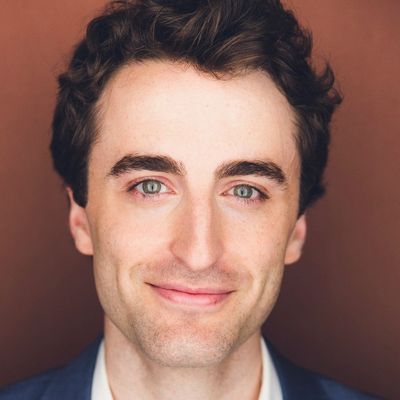
We have a fun one for you today! A Multi-Hyphonate Acting Star Is Here! Charlie Thurston just appearing as "Man" (aka Macbeth) opposite Whitney White in White's Macbeth In Stride at BAM to great reviews and sold out crowds! Charlie can do Shakespeare, sing, play accordion!.. Read More
From the show: The Roundtable with Robert Bannon
Guests
Featured Shows
About
We have a fun one for you today! A Multi-Hyphonate Acting Star Is Here!
Charlie Thurston just appearing as "Man" (aka Macbeth) opposite Whitney White in White's Macbeth In Stride at BAM to great reviews and sold out crowds! Charlie can do Shakespeare, sing, play accordion! What can he not do?
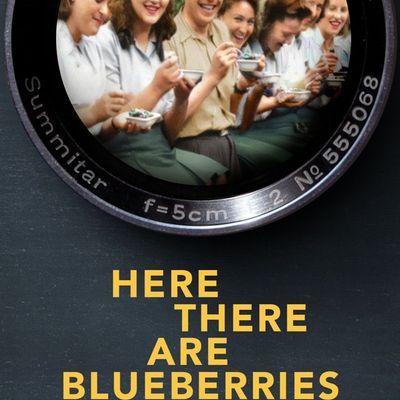
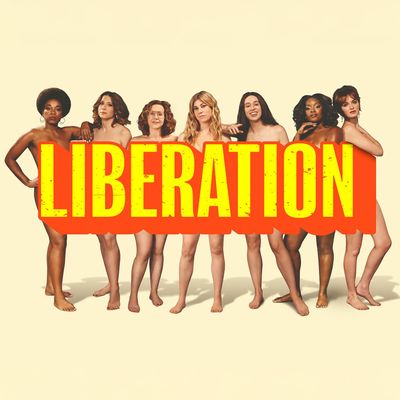
Charlie recently appeared in the Off-Broadway critical hit Liberation at The Roundabout and just received a Lucille Lortel nomination for his work in last season's Here There Are Blueberries (New York Theater Workshop/Tectonic Theater Project).
Charlie is also a playwright and his play Someone Will Remember Us premiered in January at Trinity Rep where he's been a company member for over a decade.He's best known from TV as the WGBH executive "Roland" in both seasons of the Julia Child series Julia on HBO Max.
He's a fascinating dude and plays a mean accordion. Hold tight to hear all about it!
____________________________________________________________________
Check out "The Roundtable with Robert Bannon" here on BPN on the daily, on YouTube, Broadway World, and on social media! Like, comment, share, & subscribe!
For more info on Robert- www.RobertBannon.com
Follow Him on IG- @RobertMBannon
TikTok-@RobertMBannon
Transcript
This transcript was automatically generated and might contain errors.
[0:14] Robert Bannon: Welcome to the round table, everybody. My name is Robert Bannon. You're listening to us on Broadway World or over here on the Broadway Podcast Network, and I'm really excited about our next guest. Our next guest, I don't know, he does a lot of things that I've never been booked to do. He does off-Broadway. He does critically acclaimed shows. He could be a regular on television. All things that I nope, not happening over in my world. I love, I love our next guest because Brooklyn Academy of Music's Macbeth and Stride, which is running until the 27th, is something we have to talk about. I'm in love with Whitney White. I think she's amazing. And I can't wait to hear all about it. Secondly, we just saw him in Liberation at the Roundabout.
We just saw his Lucille Lortel nomination last year. We were on that red carpet as well for Here There Are Blueberries. And he writes as well. And has what? And then does television, like Julia on HBO Max in his spare time. Charlie, you're living the dream, even if you don't know it. We're so excited. Charlie Thurston is here. Welcome to the show.
[1:15] Charlie Thurston: Hey Robert, thanks for having me.
[1:17] Robert Bannon: You are living, like, as a young actor, to have a series regular role, to have Brooklyn Academy of Music, to have Lortel Award nominations, it has had to be quite the past couple years.
[1:31] Charlie Thurston: Yeah, it has been an exciting few years. It's funny when you're on the inside of it, you're just kind of going day by day, and it always feels like there's more I could be doing, but it's great. Yeah, I try to take it all in sometimes and just appreciate it. You know, I'm just a dude from Kansas, and here I am working in Brooklyn, so it's exciting.
[1:49] Robert Bannon: You know, when I was looking you up and I was on your IMDB page and I was reading a bio about you, I saw Kansas to now New York and just doing all this classical work and all this innovative work that you do. What was the journey like from Kansas? When did the acting bug hit you?
[2:06] Charlie Thurston: It's funny. The first play I did was in high school in Kansas, you know, a public school in Kansas, outside of Kansas City, and we had a pretty good theater department. I always tell the story that I was doing London Suite, which is a Neil Simon play, and each act is totally different actors. It was a one-night-only performance only in high school. The actors in the scene before mine forgot all of their lines. So it was just brutally painful for everyone in the audience. And then I came on stage and it was just like basically competent, and they loved it. So I always wonder if they hadn't forgotten their lines and the response hadn't been so positive for me, would I have become a doctor or something? But here I am.
[2:49] Robert Bannon: Well, thank God they forgot their lines, and thank goodness that you... You see, I was the one who forgot my lines as the Tin Man in sixth grade, and then my trajectory went in a totally different career than yours. So for that, was there a moment where you, was it through school? Was it through graduating high school that you said, like, I'm gonna make a go of this? What did family and people think when you say, like, I'm gonna become an actor for real?
[3:12] Charlie Thurston: Yeah, yeah, it's a good question. Um, yeah, I kind of got the bug in high school. I was an athlete and really had no idea that theater would be a thing. I had a couple speech impediments as a kid, so the idea of talking publicly was terrifying to me. But thanks to some great speech pathologists at my schools in Kansas, they helped me start to sound like I do now. And so theater came in high school, and I kind of caught the bug. Shout out to my wonderful drama teacher at Shiny Mission East, Brian Capello, who really kind of taught me what theater is and what it's capable of doing. And then I just went to like a liberal arts college and studied theater there with a more diverse set of classes, and yeah, just kind of continued to become obsessed with it as a medium, as a way to connect with people in a live moment.
And as the world becomes more digitalized, it just is that much more potent to like all be in the same room together. And that just was so compelling to me and so exciting and so meaningful that that's kind of how I got hooked. And yeah, explaining it to my family, they were surprisingly supportive, knowing how hard it is to be an actor, but they were on board, and my mom especially has just been kind of a rock for me as I've tried to navigate the ups and downs of the industry.
[4:29] Robert Bannon: So did you move to New York? Like, was it New York first? Was it LA? Like, did it call to you? Did you have to... What was it like as a young... You didn't have a job, I'm sure, when you first moved.
[4:40] Charlie Thurston: No. Uh yeah, so my college was in Iowa, so I was still deep in the Midwest then. And then, um, I was, you know, I had no connections in either direction. So I did the grad school route, which a lot of folks do, to kind of help build up a network and introduce yourself to casting directors and stuff. So I went to a program at Brown University called Brown Trinity Rep, which is in conjunction with a theater in Rhode Island called Trinity Rep. So that got me out on the East Coast and got me connections in New York. I was actually a company member and still am technically a company member at Trinity Rep, the theater that Brown worked with. So that was kind of... I got my chops there doing repertory theater and got to play all different types of roles, which really gave me the confidence to kind of believe that I could play, you know, Bill in Liberation and this rock guy and Macbeth in Stride. So I got to have a great diversity of parts at this repertory theater in Rhode Island, which was super important to me.
[5:40] Robert Bannon: I think it's amazing that you've stayed on and been a part of helping them and their mission because I guess those early, you know, those early days, those days when you start acting and you get your first company and family and you start to build things together is some of the best days of an actor really ever. Um, it's so cool. Uh while we're talking, I want to make sure that we talk about, uh, while it's running, because it's running until the 27th, Macbeth in Stride at Brooklyn Academy of Music. If you're in New York and you've never gone to BAM, you have to, you must go see this show. And I hear, Charlie, allegedly, that you are a mean accordion player.
[6:19] Charlie Thurston: Yes, yeah. The accordion, you know, I've been playing the accordion for a few years now, and it just keeps popping up in shows. It was in Here There Are Blueberries that you referenced before, and now it's a very different take in Macbeth in Stride, and it's just, yeah, it's fun.
[6:34] Robert Bannon: When people need an accordion player in a musical or a play, you're gonna be their go-to person, Charlie.
[6:43] Charlie Thurston: I hope so. Yeah, yeah. I'll keep that on my special skills.
[6:47] Robert Bannon: That is a great special skill. That's way better than swimming and driver's license, which is, you know, what you have. Um, when my mother recently, she found my grandmother's old accordion in my grandmother's house and has been taking Zoom accordion lessons with a little Italian man in Italy.
[7:05] Charlie Thurston: I love it.
[7:06] Robert Bannon: So she played Moon River for me last week, and she's just starting, Charlie, on her second hand. She was working on, and it is freaking hard.
[7:17] Charlie Thurston: It is a hard instrument.
[7:19] Robert Bannon: It's a little bit like, you know, rubbing your patting your head, rubbing your stomach because you're kind of doing two things at once and moving the bellows. And a fun fact about the accordion that I'd love to share is that a full-sized accordion has more reeds than a grand piano has strings.
[7:34] Charlie Thurston: Really?
[7:35] Robert Bannon: There's a lot going on in there.
[7:36] Charlie Thurston: There is a lot going on inside the accordion.
[7:40] Robert Bannon: So when you have a show like this, there's no fear about I'm gonna do Macbeth and be a rock star and play the accordion. And what is Macbeth in Stride? Tell us what it is.
[7:48] Charlie Thurston: No, it's a good question about the accordion. It's definitely like you don't think of it as this rock instrument, and it's kind of a magic. Well, something that I appreciate about it is I love the accordion. I think it can sound a bunch of different ways. It can sound kind of, you know, all these different ethnic groups have embraced the instruments. So you've got like polka and French music and Polish music, and then it can also kind of sound like a little mini organ, which I love that sound as well. And so we wanted with Macbeth in Stride that my character would be a bit of an outsider. Um, so he doesn't quite fit into exactly what you expect in that rock genre, but we installed a microphone system in the accordion.
So when I plug it in, you can add effects to it to make it sound like this more kind of electric sound to it, which is a bit of a magic trick in the show that you expect the accordion to sound one way and then you plug it in, and it has this big kind of chunky sound to it.
[8:42] Robert Bannon: I love it. And what can you tell us about the collective that's working on this show with Whitney and everyone that's a part of this piece?
[8:49] Charlie Thurston: Yeah, I mean, it's an incredible collection of artists. I mean, Whitney White is at the top there. She wrote and created the piece, and she's been working on it. So we went to... I mentioned grad school at Brown Trinity Rep. That's where we met. We didn't overlap, but once I joined the company at Trinity Rep, she was in the master's program. So I got to see her develop as an actor, what she was studying, but then she started directing projects there as well. And we got to all see, oh my gosh, she's pretty good at this. And then, you know, her many skills just kind of unfurl like a magic show, and she's also an incredible vocalist and composer. Hot take, Whitney White, the ultimate multi-hyphenate, and she's so brilliantly talented in all these different things she does.
I personally, this is just Charlie Thurston's opinion. I think she's most brilliant as a composer. I think her music is so incredible. She has such this catalog of a brain when it comes to musical genre and style, and it's just amazing watching her compose in real time. And it's just been thrilling to get to work on music with her. And so, yeah, she created this piece just like she... when she reads Macbeth, she thinks of... she hears rock and roll music. So she was like, what if I mash up Macbeth and rock music? So it initially started off with her as Lady M and I Can Tina Turner music. And so it was her going back and forth between the Shakespeare and Tina Turner music. And she did that for a while with a bunch of different musicians, and then they were gonna do it at ART.
It got shut down by the pandemic, and she was like, screw it, I'm gonna write all the music. So then she composed all the music. That's when I came on board, and it's just been such an incredible gift to have her writing music for me. And then she brought on the three witches who are just these incredible vocalists, and they function as the witches in Macbeth, but also the backup singers for us, and they're just incredible dancers and singers. And the band that we've assembled, it's this incredible group of artists, Nigel, MD, Bobby, and Kenny. And so there's just like an absurd amount of talent on stage.
[11:06] Robert Bannon: I'm... I have nothing. What in the world? People need to buy a ticket if there's a ticket to be had.
[11:14] Charlie Thurston: Yeah, we've had her on the show. We have seen her on red carpets. She directs her face off. That's what I think of. And she's sweet and cute and fun. I had no idea. Whitney White, come back on this show and tell us your secrets.
[11:29] Charlie Thurston: Yeah, you're just scratching the surface of Whitney White. There's so much to her. She has a deep, deep soul and is an incredible performer and is so captivating and so vulnerable in the show, and just like can sing her face off. And the fact that it's got that kind of special thing of like when Lin-Manuel Miranda was in Hamilton, you knew that that dude wrote this. When you come to see this, you're gonna know that that woman at the center of this, she created all of this madness, and she is the one that mashed up rock music and R&B and soul and gospel music with this iconic Shakespeare text, and it's just so exciting and moving, and also just like a great entertaining show. Everybody, you can't... I think there's something for everybody because it's just such a vibe.
[12:16] Robert Bannon: Well, go to BAM.org for your tickets, grab your tickets. I don't know, go to Junior's Cheesecake. That's a very touristy thing for me. But you know, I'm from New Jersey, so get a piece of cheesecake and go see the show. And it's a beautiful space.
[12:29] Charlie Thurston: It is a gorgeous theater.
[12:31] Robert Bannon: And are you exhausted by the show? I mean, it feels like it's a lot of energy. Like you are shot out of a cannon every night.
[12:36] Charlie Thurston: Yeah, it is. I always feel a little deranged and wrung out after it's done. But you know, then I'll do a little workout, you know, sit around and breathe a little bit, and then we can do it again.
[12:46] Robert Bannon: Well, while we were talking, I wanted proof. I came, I brought the receipts for you, Charlie, of you and the accordion in Blueberries. Look, I mean, that's more accordion.
[12:56] Charlie Thurston: There it is.
[12:57] Robert Bannon: You know, when you think of Roundabout, which we talked a little bit about Liberation before, and this incredible Betsy Adams, incredible actor.
[13:06] Charlie Thurston: Yeah, oh my god.
[13:07] Robert Bannon: Crystal Lloyd is a friend of our show. We love her. Incredible actor. This cast is incredible actors. Roundabout is a legendary place to be. New York Theater Workshop, where you did the Blueberry, it's an incredible... I mean, so many shows were created there and started there. And then Brooklyn Academy of Music is an iconic place to work. Obviously, what's it like to walk into these stage spaces and be in these iconic venues and put your stamp on the art that's made there?
[13:33] Charlie Thurston: Yeah, it's a good question. And it is... that's where I have to kind of remind myself where I'm at and pinch myself a little bit. And I... you know, I'm not a super spiritual guy, but I do believe that like these spaces that have held all these legends and all these stories, that something is left behind in that legacy.
[13:51] Charlie Thurston: So it's I feel like when you get to be in these spaces, you're kind of that old energy is channeling through you a little bit, which is just so exciting and affirming and kind of what it means to be a part of theater, which has been around for hundreds and hundreds of years, and um those spaces just what I I wish I could just like live in those walls and see everything they've seen and all the drama and the blood and sweat and tears and and the successes and flops. It's just incredible.
[14:20] Robert Bannon: Absolutely. So we talk about a lot about uh theater and and the theater working, especially now, but you also have done your fair share of television work as well. And I know there's a I love to talk about people who have worked on television because there's kind of a hierarchy to television, like people start on with a guest, an under five part and a guest role and an arc, and then to become a series regular is a whole other journey, and usually it's a journey. What was the journey like to ending up on two seasons uh uh of Julia and and the journey for TV? Because it's a whole other beast, it's a whole other animal and business for sure.
[14:51] Charlie Thurston: Yeah, yeah. Yeah, my first TV role was a pilot for a show. Oh, this is a fun fact. A show called Broad Squad that I did many years ago, and I played another cousin, the coveted role of another cousin. Not even a name, Charlie. You didn't even get a name. And I yelled one line at Lauren Ambrose was my role. And that pilot was written by Bess Walt, who wrote Liberation.
[15:18] Robert Bannon: Get out of here. You're kidding.
[15:19] Charlie Thurston: Isn't that the funniest thing? And I I I like I kind of forgotten that. And then I showed up for the first workshop of Liberation, and it dawned on me that we had collaborated with her writing a TV show and me playing another cousin many years before. So it's a very small community, and she's immensely talented and writing all kinds of great stuff. But yeah, no, the TV film stuff, it's really hard to kind of break into and figure out your niche. But yeah, I just uh kept trying to bring myself to the different characters, and it's been so rewarding to get to uh the the roles have grown a bit, and I've gotten to sink my teeth into the parts more, and my characters have names now, which is thrilling.
And Julia was so special. Daniel Goldfarb, who was the the lead writer on that, is such an incredibly talented man, but but even more importantly, just deeply kind and thoughtful and really takes in what he's working with. And I was uh cast as a guest star on the pilot, as a producer at WGBH where Julia's show was was um created, and I was just kind of this jerky guy, and he liked what I did, and his team of writers just wrote more and more for me, which was so cool that that to know that if you showed up and did your job well to the best of your ability that they would clock that and that they would embrace uh what you're bringing to it and try to expand that. So that was just kind of a dream that did um to be rewarded in that sense.
And I loved that show. It was an incredible group of people. Everybody was so nice, and we had such a great time. Uh Chris Kaiser was the show runner who uh is an incredible man, and he was one of the lead negotiators for the WGBH or WGA uh strike. So he was I'm just I've such uh admiration for him. And it yeah, it was just so fun and uh yeah, it was one one of the highlights of my career to get to kind of grow into that part and expand into that world.
[17:19] Robert Bannon: Well, it's definitely it's HBO Max. You could stream the seasons and and check it out. And uh I I I love the idea of the story that that that show tells for for real, is is fascinating. Roll look out for Roland and watch it.
[17:30] Charlie Thurston: Yeah. You you write. Like you're a playwright and and you just had a show that was at Trinity Rep. You you when did you jump into the writing and what's your process to write?
[17:41] Charlie Thurston: Yeah. Uh I started writing in earnest uh again back in in grad school. A cool thing about our program is that they encourage you as actors to follow other impulses. And so for Whitney, it was pr predominantly directing, but obviously she writes as well. And I kind of leaned into the playwriting thing. So started writing then and have been lucky enough to have a couple plays produced here and there across the country. And then um I started teaming up with this wonderful playwright who was my professor of Brown Trinity uh called uh her name is Deborah Salem Smith. And uh we just were good friends and we liked each other's writing, and she was like, Hey, you want to try to collaborate on something?
Knowing that it could be a complete disaster because who knew how we were gonna work together, but somehow our brains really worked well together, and we we had a really fruitful collaboration. Wrote a play called Radical that's still in process, and then uh Trinity Rep approached us about um returning to she wrote a play in 2006 called Boots on the Ground. It was a docudrama play similar to Here There Are Blueberries, where she interviewed real people. Um it was early days of the uh war in Iraq, and so she was interviewing predominantly veterans and their families who had just served in the war. And um the theater approached uh her about returning the subject 20 years later, as that war and that conflict has had ripple effects over that time and across the world.
And so she invited me on, and it was just an incredibly moving, humbling experience getting to interview all these folks. And one thing that we're really proud of with that show, is we included the incredible perspectives of veterans and a gold star family, but we also wanted to include Iraqi voices. So we interviewed a bunch of Iraqi refugees that um are now living in America. And I mean it's just like incredible stories of human resiliency and survival and people finding the good in incredibly hard situations. And it was just, yeah, it was such a moving experience. And we did our best to cobble all those stories together and make a great night of theater. And we just uh we were on the cover of American Theater Magazine, which was super exciting. Um so yeah, it's a play we really believe in, and it's called Someone Will Remember Us, and hopefully we can get productions all over the place for it.
[19:57] Robert Bannon: Uh well, I was gonna say, and if you wanna see uh pictures of the show or you wanna support Trinity Rep, TrinityRep.com is where you can find information about this particular theater organization that that Charlie works with and put this show up. When I was reading about the show, I was like, oh, he doesn't just write a little he jumped in. You went in.
[20:14] Charlie Thurston: Like we're just gonna go right into it uh and talk about these heavy topics that are as relevant, these these are the stories that need to be told on stages around the world right now.
[20:25] Charlie Thurston: Yeah, yeah, yeah. The the decisions we make as a society and um when we engage in these conflicts has lasting impacts impacts on people's lives. And we interviewed refugees that had come to the country a decade ago, and we interviewed a woman who came uh in 2021, so still from the after uh math of that conflict. So yeah, these these choices we've made have massive ramifications, so it's good to wrestle with that and hear these really human stories that we can really really because sometimes those problems are so big, it's hard to wrap your head around. But if you just look at the different individuals involved, you can kind of have you you can embrace that shared humanity and see yourself and them.
[21:06] Robert Bannon: Oof, and that's so that's more important than ever. So do you write when you feel the inspiration? Do you keep a certain time every week? I mean, you're busy, you're doing a show as we speak. So, like, how do you fit all the different parts of your? I'm sure you have auditions and self tapes, and you're in a show at night, and you probably have ideas to write things down. So, how do you organize all this?
[21:25] Charlie Thurston: You know, a professor of mine, Eric N, he was always like, You need to write every day. And I did that for a while, and I was so disciplined, but now I I think of myself as like, you know, we binge watch TV shows. I'm kind of like a a binge writer now, like that I'll carve out some time and just really um try to get as much as I can out out on the page. And it's always percolating in the background. And uh I'm a big fan of voice memos to when when some random thought comes to mind about a character or a story to to get that down in some way, and then you can return to it in those moments where you can spend a little time with it. And you know, a shout out to my collaborator Deb. It's so it's been so helpful with my crazy schedule to have someone that I'm accountable to and that um that I can bounce ideas off of.
So I've I've loved that collaboration. I think that um that's something that's special about theater, is is it's uh it's a collaborative art form, and our two brains together are are more potent than just my little old brain alone.
[22:27] Robert Bannon: So is it weird for because I while you were talking, I was thinking, I can only imagine what it's like to write something down, get it up on its feet, and then it has a run, and you're not there, and your words are being said, and and things are being it's it's going on, audiences are experiencing it versus what you're doing every night at BAM where you're on stage and telling the story and tales and words of someone else. What was it like when you write a play and you get it out and it it leaves you? It's like a kid, like it goes on and lives its own life.
[22:56] Charlie Thurston: Yeah, it's uh such a great question. It is so you know, there's the old trope of the writer's like pacing furiously in the background because it is it is so it's such a vulnerable thing. You've been sitting alone mumbling to yourself in your room for years, potentially writing this play, and then suddenly you're trusting all of these other artists to to deliver the story to this, you know, hundreds of strangers right in front of you. So it is super vulnerable, but really exciting. And uh, if you get the right collaborators, it's it's so rewarding to learn things about this this thing that you've been wrestling with, and you feel like you know every nook and cranny. Another person will get involved and you'll learn something completely different, and that's how the plays keep evolving over time.
And and this was a little wild because um just you know, as a freelancer, you can't really predict when things will happen, and the production, the premiere of someone will remember us, complete uh overlapped by like three weeks with rehearsals for liberation. So I started and I was in rehearsals for someone will remember us, and we were working on the script, and then I had to go to New York and um start working on liberation, and they were kind enough to let me dart back and forth a few times. And um, a cool story is I wasn't supposed to be at opening for someone who remember us because we were in tech for liberation, and I'd come to terms with that. Um, but we had arranged a lot of our interviewees to be at opening and uh put a lot of work into trying to get everybody there, which was so important for them to get to see the play.
And I was so proud that we'd gotten most of the interviewees to be there, and I just knew that I wasn't gonna get to be a part of that, which made me sad, but I'd moved past it. But we're in tech, and Whitney knew that night that we weren't gonna work my sections of the play, so she was like, Go. So I got on a train and went off went back to Providence, and I made it about 20 minutes late. So I I was you know, that annoying guy who was sat late in the corner of the theater, and I wanna I'm looking on stage and I'm breathing heavily, having just run from the train station, and there's a scene, this beautiful uh scene of this gold star family we interviewed. Ed and Regina are on stage getting played by wonderful actors Stephen Thorne and Rachel Warren.
And I'm taking that in, and I look to my left, and three seats away are the real Ed and Regina watching their story being told. So then I got to look around the theater and see all these real people that we'd interviewed take in their own story, and it was just something I'll never forget. I'm so grateful that I got to be there.
[25:25] Robert Bannon: You had to be there. They could make they made it work. You had to made it work.
[25:29] Charlie Thurston: Yeah, they made it.
[25:30] Robert Bannon: I I I love your story. I think you're inspiring for all the young actors out here because I think that like many of the people we're talking about, there is no you're just this or you're just that. You you can be you can be a writer, you can be an actor, you could be on stage, you could be on television, you can play accordion, you could sing, you could do all the things that you need to do to tell these stories. And I think at the end of the day, that's what really matters is that these stories get told and people hear them.
[25:54] Charlie Thurston: Yeah, I I tell young actors that if somebody tells you what your career is supposed to look like, they're full of baloney because they have no idea everybody's career in this industry looks totally different. I mean, it's just it's a wild business, and I mean Whitney White is the perfect example if she does everything, and that's just a great way to get yourself out there and um find your way in this industry, is just uh is to dip a toe in every little thing you can.
[26:22] Robert Bannon: See, and you could tell he's from good old uh Oklahoma because he said full of baloney, and us in New Jersey would have said something else. But Charlie um you we could follow you we could stay up to date with you on social media.
[26:35] Charlie Thurston: Yeah yeah uh Charlie T. Thurston on Instagram is the main I can only manage one. I'm a simple guy but that's I hear you Charlie Thurston it will tell you he's an incredibly talented actor your little memo it's funny like the your little bio in there is hysterical with a good heart you got to read it follow him and read it because he's a he's a trick it's it's a it's a good time so we'll be following you on Instagram we'll be staying up to date we'll be checking you out at Brooklyn Academy of Music the next shows the next TV shows the next projects what my mom's going to zoom with you so you could help her with the accordion all the things that are coming up uh um uh for you and thank you so much for spending time we are fans we we've been fans of liberation we were fans of all the work that you've done and and uh we're excited to see you just fly and keep doing what you're doing thanks so much Robert.
© Broadway Podcast Network, All Rights Reserved