

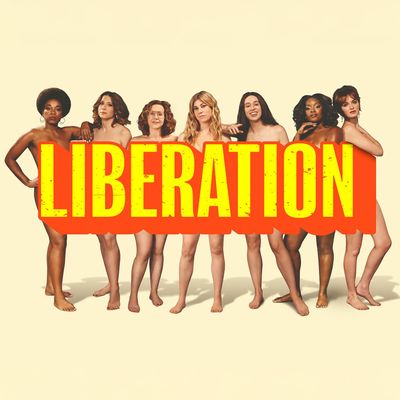
Irene Sofia Lucio joins us to reflect on her experience in Liberation, the powerful Broadway play by Bess Wohl that explored the women’s liberation movement and its lasting impact. Though the Broadway run has wrapped, the conversation is far from over... Read More
From the show: The Roundtable with Robert Bannon
Guests
Featured Shows
About
Irene Sofia Lucio joins us to reflect on her experience in Liberation, the powerful Broadway play by Bess Wohl that explored the women’s liberation movement and its lasting impact. Though the Broadway run has wrapped, the conversation is far from over. Irene shares what it meant to be part of a story that challenged perspectives, sparked dialogue, and connected past and present in such a meaningful way.
From the intensity of the material to the bond of the ensemble, Irene opens up about the journey of bringing Liberation to life onstage—and what she’s carrying forward from the experience. It’s a thoughtful look back at a show that left its mark, and a reminder that the themes of identity, equality, and freedom are always evolving.
Watch the full conversation on The Roundtable with Robert Bannon on YouTube, BroadwayWorld, the Broadway Podcast Network, Spotify, Apple Podcasts, and iHeartRadio.
Follow Robert on IG @robertmbannon and visit robertbannon.com for more!
#TheRoundtable #IreneSofiaLucio #Liberation #Broadway #BessWohl #TheatreLife #WomenInTheatre #BroadwayWorld #BroadwayPodcastNetwork #YouTube #Spotify #ApplePodcasts #iHeartRadio
Transcript
This transcript was automatically generated and might contain errors.
[0:09] Robert Bannon: Welcome to the round table, everybody. My name is Robert Bannon. You're listening to some Broadway World over here on the Broadway Podcast Network, iHeartSpotify. I did memorize this. You know why? Because I'm an actor. And you know who else is an actor? Our guest, Liberation was around and about off Broadway, on Broadway. My cousin Adrian went to press days and openings of every one of them. And she spoke to all of the casts. And I had FOMO because I wasn't there. So now I'm just stealing them one piece at a time as we march towards award season because there's going to be a whole bunch of nominations for this incredible cast. And joining me right now. Go ahead, because I have a Jersey accent, and I'm not going to say it as sexy and beautiful and lovely as you say it. I'm joined by the one and only Irene Sofia Lucio.
[1:02] Irene Sofia Lucio: You know what it is? I'm sure you would have gotten it right. I think it's all anxiety. It's just like performance anxiety. You know, like when you're in a new country and you're like that's my middle. You probably have all the words, you know? It's that. I will share some of my Xanax with you. I love an anxiety moment. I love anxiety. I have a little bit of Prozac I could give you for you, like right now if you want it. But if you're an actress in high profile situations, you know, transferring to Broadway with a show that was a rave off Broadway has to feel like pressure. It has to feel like, ooh, this is a big deal. How'd you handle the transition the past year?
[1:40] Irene Sofia Lucio: That's a fantastic question. Um this is the second time that this happens to me, so I wasn't new. Um, I saw Slave Play from the beginning to the end to the I I did the worst rendition of The Music Man with Annie McNamara out in somewhere terrible. We got who did you play. I was in the barbershop quartet, and Anne was the mayor and the wife, and she did the trickle trickle trickle in a very inappropriate Annie McNamara kind of way. I know you're used. I I know I know who played the main guy. He and I did a show together. Robert Hansen.
[2:19] Robert Bannon: Robert I've heard about this music man. You were in that production.
[2:22] Irene Sofia Lucio: Oh sorry. But I'm so excited that you were in this production. I've heard a lot about it actually from Annie and from Robert.
[2:30] Irene Sofia Lucio: The worst production of all time, but maybe great. Anyway. I think it might have been great. I hear great things too. It's anyway. It's makes me have a chance to do it. There was disco shipping. Okay. So I go to see her in Slave Play. And I see Jeremy Harris and I say he's gonna be a big deal. And then I see you, and then you blow so the show, like the most famous people in the world were at Slave Play at New York Theater Workshop.
[2:54] Irene Sofia Lucio: Yes. So I have to say, like that show or that experience of doing a show that was that buzzy that then went to Broadway was an excellent boot camp for Liberation. Um for the very same reason of it being like, you know, a lot of eyes are on you, a lot of fancy eyes are on you. Um and I remember the pressure the first time around. I remember it less intensely this time around because I I probably adopted some like coping mechanisms for it. Um, but I remember that when we were opening on Broadway on Slave in Slave Play, at the time I was um planning a wedding. I was engaged. I mean, I'm married now. It didn't, it's not like a broken engagement. Um, but I remember calling my mom, and I was like, I can't plan a wedding and open a Broadway show at the same time.
Can't do it. Can't do it. I told her, I've wanted to be on Broadway for as long as I can remember, much longer than I wanted to be married. Let me have this wedding first. I can't do this. I can't do this. It's too much pressure. Um we ended up having a micro wedding during the pandemic. But um this time around, how did I cope with the stress? I think the biggest thing that I learned the first time around is that ultimately it's the same performance.
[4:24] Irene Sofia Lucio: Okay. No matter what, it's the same performance. It's the it's staying true. It's like having rigor with the storytelling. So if the responsibility, if the main responsibility is telling the story and telling the story that you rehearsed, that's like the number one priority. Um, and staying true to that to that consistency and making that the ultimate priority, and that that's the reason that you got to Broadway to begin with is that rigor. Um, that became sort of like a more important point of focus than who is looking at me. So that's sort of, but it does take rigor, and it's true that like when there's more people, when you're in a bigger house, like the the nerves are just bigger, like it just feels everything feels heightened, which makes the necessity for rigor more and more sharp.
[5:15] Robert Bannon: Oh, that is have to amp up the rigor of of like the blinders of like what what the focus is. The focus has to be sharper.
[5:24] Irene Sofia Lucio: That is such a good, smart, incredibly nuanced answer.
[5:28] Robert Bannon: No, thank you. It is real. So when you get to the point where you're doing Broadway shows, like, okay, and now you you're taking a show that is it's kind of early stages or it's going to be off Broadway, but you know the cast is killer. You know that the creative team is, I mean this is an amazing play, right? Whitney has incredible. The designers, the designers in the show, like Queen Jean's costumes, Cha's lighting design. Like, I mean, the set was incredible. Davidson is a master. I just I it was it was a good group of people. What what is it like to sit in the room? Do you remember the first time you all got together and read the script together or had that first rehearsal?
[6:16] Irene Sofia Lucio: I do, yeah. It always feels like the first day of school a little bit, no matter what. But it was very um what was what was interesting to me was the amount of people who like brought up their moms in their design presentations and um the conversations preceding the reading were all about our moms. So it felt like everybody had brought their moms into the room. Um and it made it very emotional. Like it was a very tender, it was very tender and very emotional. It made it very um, like there was a sense of responsibility that we had to our mothers to do this right, which was really it it made it very special, very fast, you know. So I was very excited about that.
[7:03] Robert Bannon: Well, if people don't know what this show was about and it's incredible, like critics rave run on Broadway. Um, I think it has a lot to do with things that even the show is kind of set in the 70s-ish, you know, group of women it's as relevant today as I think people are still trying to figure out roles and what is freedom and how do I have an independent life, but be a wife or be a mother or work? How did you prep and find your version of your character to do this?
[7:37] Irene Sofia Lucio: Well, a lot of the questions that the play is asking, I am living through in the present moment. So I there's some some things on I think the the nuances there were how would how do I approach these questions now? And how would I have approached these questions in the 70s when a lot fewer rights were afforded to me? How would my mom have gone through this? And how did she go through this? Which is fun because it meant I had to have conversations with my mom about who she was in the 70s and who she was before she was a mom, um, which was really, really cool. But in terms of like, what does it mean to be um a woman and a mother and a wife? And um, what does liberation mean? And what is equality?
Uh, what is equity? What um, you know, how how can we make space for all of these different versions of women that that you know in the world uh who have very different definitions of what it means to be a woman and very different definitions of what it means to be free. Um, all of those questions I'm I'm just I'm dealing with it just because I exist in this body and because I have a two-year-old son and I am married to a man and um and I have a job, and I also have you know, have to straddle all of these roles, right? So, like no matter what that this is like an ongoing conversation I have in my own life um but in order to like think about the 1970s I had to really really do a lot of research about what women could and couldn't do at the time like in a in the case of Isidora she's also an immigrant she doesn't have a green card yet so what what were immigrants allowed to do is also like an ongoing conversation that is very relevant today.
[9:25] Irene Sofia Lucio: And yeah like in the 70s you you couldn't have a credit card in your own name. You couldn't buy a house in your own name uh you know you couldn't have a no fault divorce you needed to have um you know it it so there's all kinds of um I mean uh the abortion which is a a relevant issue again today was completely illegal everywhere at the very beginning you know at the of the play so there's a lot of issues there that you had to sort of tackle and and research and then internalize in order to like create this character um in terms of these questions specifically right that you're that you just brought up about like being a woman no absolutely I mean it's incredible um the work that you all did and how you embodied it and it made me it makes me think about my mom.
I'm born in 83. My mom was a young mother at the end of the 70s or and and an early wife and she was trying to pay her bill like working you know mom guilt the guilt of being a mother and trying to figure it out and she taught me brilliantly like if you have a wife, which I don't, I have a husband. But same thing. If you have, you know, like she's working and you are working. So you can get up and do a dish too. It's not women's job. And I I always took that to heart because we need to teach that. I teach that to my students. Like Thanksgiving, you don't get to sit on the couch next to the old man. Go help somebody. You're we're equal here.
[10:52] Irene Sofia Lucio: You are also originally are you originally from Puerto Rico?
[10:55] Irene Sofia Lucio: I am born and raised, yeah. Proud and Puerto Rican.
[10:59] Robert Bannon: How fun for you to be able to tell this story while people born in Puerto Rico are not necessarily uh immigrants in the battle but you have Latin heritage and that the this brotherhood and sisterhood of this culture has to be so important.
[11:14] Irene Sofia Lucio: 100% so it was very exciting to me because I am so white presenting. I often don't get to play um Latino characters. Um so sometimes the the closest right is like Italian or something like that. Like something and I I felt like it could bring a lot of my family members into this. I love accent work and Italian and Spanish are very similar. There's a lot of like phonemes that are that are close to each um you know in in those two languages and on top of that while I was born a US citizen neither of my parents were my dad is an immigrant from Spain and my mom is an immigrant from Cuba who's actually a second generation immigrant because her um parents were immigrants from the Dominican Republic.
[11:58] Irene Sofia Lucio: So like there's just been a lot of exiles and a lot of immigrant stories on both sides of my family, and I felt like I could bring them along into this journey, which was really, really exciting. And on top of that, like the responsibility, right? Of telling an immigrant story in a moment that is so fraught in regards to immigration. Like that was all very present in making this character and wanting to make her a very real person and a full-bodied joyful person that you fall in love with was very important to me.
[12:44] Robert Bannon: And you did. And you did. And this cast, what was it like to be able to work with? You all are so talented and come from different places and different backgrounds and Broadway debuts and television, and everyone brings their whole bag of their talent together, and it just exploded on that stage.
[13:00] Irene Sofia Lucio: I completely agree. I feel like I learned something from every single performer on that stage. And from the understudies that went on. Like I feel like I learned from every single performer. And what I admire the most of this group of people as an ensemble is that everybody brought it 100% every night, which kept you honest. It kept you rigorous, even when you were tired or sleep deprived, or whatever had happened with your kid earlier that day, or whatever. Because they were so truthful and so raw and ferocious every night, you had to bring it back; you had to give it to them in return. It felt like it was an act of generosity, but also just an act of like matching each other and meeting the person where they're at.
And because everybody was just so rigorous and took it so seriously, while also being playful, it was a very funny play. I just admire the consistency and the quality that was brought every single night, regardless of what other life things were happening at the time. And yeah, every single performer is so different from each other, too. Everybody has like a different way in a very different training, all kinds of different backgrounds. And I get very excited about that because I feel like I can learn so much, especially when people come from different backgrounds, you know. So it was exciting. It was an exciting group of people.
[14:44] Irene Sofia Lucio: I miss them. It's exciting, you know. I want people to remember this show. I know that it will be done. It's like the perfect show to be done around the country for other theater companies and other women empowerment groups, women directors, you know, biowoman writer, incredible actresses to get up on stage and do this show and tell the story all across this country. Get to New York, make sure you stick around and see what happens to Liberation, and maybe it'll be in your neck of the woods one day.
[15:11] Robert Bannon: You come from—look, you are fancy. Like if I was you, I don't know where you have these, but I'm from New Jersey. If I had a degree from Princeton and Yale, oh dear, I would wallpaper my bathroom with my diploma because you paid enough for it, and you should tell people about it. So I want to know, is it hanging in your house? Is it in a basement? You're just a modest.
[15:36] Irene Sofia Lucio: No, I don't buy any swag. I don't buy swag from the schools either. So I don't wear the t-shirt or like have a mug. My mom, I did buy my mom a Yale mom mug that she uses, and she's very happy about it. She does love her mug. You know, she tells people about it when you're not a—I think she probably does. Not in front of me, but she probably does. You know, yeah, I don't want to underplay any of it. At the time when I got into these places, I was very, very humbled and like it was—I was over the moon that I got into these, you know, schools for sure.
[16:20] Irene Sofia Lucio: But I think, so two things. Like my parents are immigrants and were sort of—my mom was the first in her, like, you know, she was the first to go to college in the States, as was my dad, actually. They were the first to go to college in the States. They went to state school, and they are brilliant human beings that like rose, you know, out of their circumstances and like afforded us a way more comfortable life. So I was always very aware that like the accomplishments that you get are like a cumulative effect of people that like keep you, hold you up. And then I was able to probably get to where I got to because my parents got to where they got to. I was always sort of very aware of that, that like I was already in a privileged position to have access to these places. I went to a nice school in Puerto Rico. I was always aware of the privilege that I already had.
[17:22] Irene Sofia Lucio: And the other thing is that when I was in Princeton, I got suspended for a year over plagiarism. And it was an intentional plagiarism, but Princeton is very rigorous about their academics, and they don't take into account your intent. And I was very ignorant and very little and very naive and just not aware of my anxiety issues that I have. So like there was just a ton of learning that I had to do. So I had to leave Princeton for a year. And that's always put like an asterisk a little bit into this like romantic, glossy image we have of the Ivy League. I was like, well, the Ivy League afforded me all of this, like I have these really cool stamps that like make me sound smart or make me enter a room and people go, okay, she knows something.
But they also—like I also felt like I wasn't treated very well by like the first institution, or that like I wasn't treated as like an 18-year-old, you know, or like taken care of in that way. So I feel like I've always sort of like known that this instant—they're not perfect, they're just not like perfect glossy places, and in a way, because I had that experience in undergrad, it made me like meet these places in their own terms and like know how to succeed within them without making them like the end all be all of everything, you know? Like I had almost like a very disorienting experience very early on that sort of then made me very clear and helped me definitely in my master's. I was like clear, I was like, just use get the tools you need to get, yeah. Do the rules and don't take this too seriously that it's gonna destroy, you know. It's not—it's a school.
[19:16] Robert Bannon: I get it. Because there are many people that you work with that don't have that experience or have no BFA or MFA in anything, and they're extraordinary, so it's only—everyone's journey is their own journey, and that's what you have so much to learn from them, is the thing too. Like, how did they get to where they got to? Like, so I think that's always the thing that I just don't always—I maybe it's that I also just don't want to get big-headed about it because it doesn't mean what a lot of people say it means. You know, because if it means that, then it means that somebody that doesn't have it doesn't have those things, and that's not true.
[19:50] Irene Sofia Lucio: Well, I'm gonna brag about it for you. I think your answer was so eloquent and so beautiful that it shows that you had a lot to bring to those schools. And that is the truth. I want people to remember Liberation. I want people to remember Liberation this season. I want people to remember the incredible work that was done on that stage by this incredible ensemble of a cast. I loved your work from the second you all came out with a little vacuum cleaner in the middle of a show that was like, oh, this is not what we think it's gonna be, till the work you've done.
[20:22] Irene Sofia Lucio: You know what that tells me? The fact that you saw the vacuum cleaner tells me you were in the early aughts of Slave Play at New York Theater Workshop. Because I think that vacuum cleaner may have even been struck from the show at New York Theater Workshop later on in the production. I'm not—I can't say for sure because it's been years now, but I have a very strong feeling you were there from the very, very NYTW. I was there on Broadway, and I'll be there at Liberation, and I will be there for the next thing as well because I'm a fan and I love what you do.
[20:56] Irene Sofia Lucio: So I'm—I have a show that I'm doing next.
[20:59] Robert Bannon: Please tell me.
[21:00] Irene Sofia Lucio: I'm doing Titans at Clubbed Thumb, part of their summer works, because this like wonderful new play by Jesse J Hoon is about ice raids, and because I'm like now incredibly activated by like the intersection from Liberation of like activism and plays. When I read it, I was like, oh, that's like I have to do it. So it's like now I have this like activated responsibility about like doing plays that of issues that I really, really care about. And it like fell on my lap, and I felt like, yeah, like a call to do it. So I'm very—I'm excited and then I'm nervous. But we start working on Monday.
[21:45] Robert Bannon: Monday. Okay, so we're gonna put the information so that people can see it this summer.
[21:49] Irene Sofia Lucio: No, don't be nervous. This is—see, this is that I got—there's the anxiety. We got this. You got that.
[21:54] Robert Bannon: There you go. Look at us as being anxious all the time.
[21:58] Irene Sofia Lucio: But you know, so there's a part of it that's like looking out for you.
[22:01] Robert Bannon: Yeah, of course.
[22:02] Irene Sofia Lucio: It's protecting yourself. You know, it just—you just need to— you needed to call—you just needed to like sit down a little bit.
[22:09] Robert Bannon: Yeah, it doesn't need to be pacing all over the house.
[22:12] Irene Sofia Lucio: No, it's supposed to be—it's supposed to feel—you want to do a good job.
[22:16] Robert Bannon: I know. You will. The information will be—tell us one more time. What's gonna be?
[22:21] Irene Sofia Lucio: So it's part of summer works for Clubbed Thumb. And the play is called Titans by Jesse J Hoon.
[22:29] Robert Bannon: I'm so—okay. I gotta come. I'll bring a bit.
[22:32] Irene Sofia Lucio: Oh my god, I'm gonna send you an invite. I'm excited. Look, we're gonna follow you, we're gonna be sharing you, we're gonna be talking about you, we're gonna see the things that you do. We're gonna be all listening. We're excited to be a part of the experience, and we're here for what's next. My show is your show anytime.
[22:47] Irene Sofia Lucio: Thank you so much. I had the best time, and I'm a total fan of your show.
[22:52] Robert Bannon: No, I'm a total fan of you. So—and I love what you do. It's such an honor to be able to have you here.
[22:57] Irene Sofia Lucio: Thank you. Thank you.
© Broadway Podcast Network, All Rights Reserved