

Broadway legend and award-winning performer Obba Babatundé returns to The Roundtable with Robert Bannon to talk about his powerful new projects Love the Skin You’re In and Ruby’s Heart, both featured at the Pan African Film Festival... Read More
From the show: The Roundtable with Robert Bannon
Guests
About
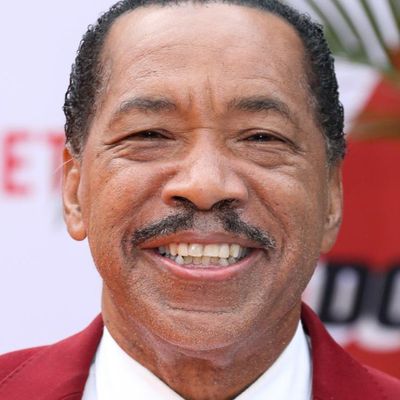
Broadway legend and award-winning performer Obba Babatundé returns to The Roundtable with Robert Bannon to talk about his powerful new projects Love the Skin You’re In and Ruby’s Heart, both featured at the Pan African Film Festival. We discuss the inspiration behind these bold films exploring sisterhood, community, and self-discovery, the importance of meaningful storytelling, and why these projects speak to audiences right now.
Robert and Obba also take a look back at his extraordinary career — from Broadway and film to working with legendary co-stars and unforgettable moments on stage, including stories about the iconic Liza Minnelli and more. It’s a warm, joyful, and inspiring conversation with a true entertainment legend and friend of the show.
Watch The Roundtable with Robert Bannon on BroadwayWorld, YouTube, Spotify, and all major platforms.
Visit RobertBannon.com and follow @RobertBannon on Instagram.
The best is yet to come.
#ObbaBabatunde #LoveTheSkinYoureIn #RubysHeart #PanAfricanFilmFestival #BroadwayLegend #TheRoundtableWithRobertBannon #BroadwayWorld #Film #Theater #Entertainment #Interview #Culture #PAFF
Transcript
This transcript was automatically generated and might contain errors.
[0:09] Robert Bannon: Welcome to the round table, everybody. My name is Robert Bannon. You're listening to us on Broadway World over here on the Broadway Podcast Network, iHeart, and Spotify. Our next guest is one of my all-time favorite guests. He's my mother-in-law's favorite guest too, because she's obsessed with all of his work. She loves SWAT. Look, no, I don't see this what I love about Obba. Because Obba Babatundé, you may know him from his Broadway work. You may know him from Dream Girls, or you may know him from Tim Buck2, or you may know him from Life, or you may know him from Dear White People, or you may know him from all of the television and film. I'm not even touching the television and film. And I have some questions for him.
Firstly, he's got two movies coming. He always is working. I don't know how he has time to be at his ranch horse farm because he works. And this is what I love. It's February. It is Black History Month for my students here in Detroit and in New Jersey. For everybody who's watched, he has worked with the legends from Sammy to Eddie and Martin to Eartha Kitt to Melba Moore to Jennifer Holliday to Anna Maria Horsford to everybody. He has got an Emmy Award. He is an icon and a legend. He's an actor's actor for sure. And Obba Babatundé is back to tell us about these two new films. Welcome back to the round table.
[1:20] Obba Babatundé: Hey, hey, hey. You you're here. You know, you tell one of my favorite stories. We're coming up on a thousand episodes of the show. And one of my favorite stories is you meeting Sammy Davis Jr. and your history with him. It is a story that if people say, "What's your favorite story?" That's my favorite.
[1:42] Obba Babatundé: Oh wow. It's wonderful. Your career is incredible. Before we get to talking about your films, I have a question. I have a couple of questions for you. Liza has a book coming out.
[1:56] Robert Bannon: Yes, she does. How do you feel about her finally getting to tell her story and her being public and everything?
[2:03] Obba Babatundé: You know, it's a great question. You know, I talked to her about it, you know, because we talk regularly. And I said, "Darling, how are you feeling about this?" She's just, "Oh, darling, I'm feeling wonderful. It's so good to be able to tell everybody everything." Well, not everything, darling, but what we want them to know. I thought of you, I love it because I know that you are part of a very special part of her life, and she's a special part of your life. And the book is out. She's signing copies of it, galore, and doing events, and I'm so excited for her to be finally getting to tell her side of the story. It's exciting.
[2:42] Obba Babatundé: Yes, yes, absolutely. I'm so thrilled for her. I'm just so thrilled that she's so vivacious, she's still with it. You know, she continues to inspire me and many others, and she continues to grow. And it's a long-time friendship, and I'm just honored that she allows me to be in her life the way she does. Very exciting.
[3:07] Robert Bannon: So for you, I'm not kidding when I say Obba Babatundé works, like he's on set working. You ended SWAT with that very incredible episode, which was so moving, and we were here with you when that ended, and then you went to work and have movies in the pipe since then.
[3:23] Obba Babatundé: Yes.
[3:25] Robert Bannon: So how did these let's start with the first one? Love the Skin You're In, which firstly, how can you not love Marla Gibbs? I mean, she's talking about icons and people that are legends, and your incredible cast here of this movie. Your past doesn't define you. Tell us about this movie.
[3:45] Obba Babatundé: Well, you know what? It's a wonderful, wonderful opportunity. First, let me just say hello to all of my friends there in Detroit. You know, I love the family in town. They treat me so wonderfully, and that's been over the years. So I wanted to make sure that I said specifically to all of the fans and friends and family that are there in the great city of Detroit. And you know, I send you guys my love and my heart. And Robert, I'm so thrilled that you're there and you're bringing the wonderful energy that you bring to everything that you do. I'm ready for you to come out here so I could take you to dinner.
[4:21] Robert Bannon: I look forward to that.
[4:23] Obba Babatundé: So now Love the Skin You're In. And as you so aptly said, you know, that's the title suggests so many things. You know, someone said to me, "Is that an X-rated movie? Love the Skin You're In." I said, "It could be." I know you didn't see that one coming, Robert. But you know what? The thing is, is that you want to love the skin you're in. That's talking about self-love. That's talking about identifying for you to identify for all of us to identify the skin that we're in and to love that. And that sense of love is discovered and explored in this wonderful movie. Sauda Johnson wrote this movie, and you know, her profession, well, now she's also a fabulous writer, but she's in the legal field, very successful, and she wanted to tell a story.
And we talked about Marla Gibbs, who has played my mom in the movie The Visit. And so, you know, whenever we see each other over the years, it's always, "Hi son," and I say, "Hey mom." So we'll talk about her as well. But I got an opportunity. This movie is so wonderful because it deals with so many issues, some that we don't talk about in public, you know, relative to when you came into the planet and what the parents felt, so forth and so on. There would be something going on and say, "Hey, hey, that's family business, we don't talk about that." That doesn't, you know, you don't mention that, you know. And in some cases, that wasn't always the best thing, because it didn't give all of us or those of us who may have been told that if we were on a side where we needed to talk about it, we needed to be heard, we needed it if it was not good for us to stop, and it wasn't discussed, it wasn't allowed.
And so here it is in this wonderful feature film where these issues. I play her dad, and we've been estranged for some time. We will find out in the movie why. But we've come back together. We had to, because my character is dealing with a health challenge, and so they've given him two options. You can go into a facility, or if you have family, and he chooses to reconnect with his daughter. Surprise. He just shows up at the door one day. And what happens when someone who you're connected to in some way comes to you, and things may not have always been as you would have hoped them to be, but they come to you, and in this time they need you. How do you receive them? What happens in that? And we explore that.
We also learn about what has happened to her character over the years. And what does that do with that relationship as they both learn in the time that they've been separated, what's going on in their present lives? It's a wonderful, touching, moving, powerful. Some people say, "Oh, you know what? I saw a screening of that." It deals with mental health. And we identify what are the different definitions of mental health? Because there's some people that identify mental health as some sort of illness that takes that person out of a means being able to connect and communicate with someone else. Well, that's not the only definition. And what is it when you are locked inside of your own mental struggles?
Where do those things get flushed out? Who do you talk to? We deal with therapy in this movie. People go, you know, because there are people who were raised and "No, no, we don't deal with therapy, we just deal with it ourselves." Well, we identify that having someone to go to that you trust that you can trust and speak to and reveal things that maybe you've only been locked into the inside of you to be able to tell that story. So we deal with a lot of different issues. We deal with community, and what happens when life starts to evolve and things start to change in a community? So we deal with evolution, we deal with so many issues, and we deal with them well. We deal with the homeless issue, we deal with what happens when you're locked into your pride, and you may be going through something, and you don't want anybody to know because you don't want to be judged away, and it leaves you in a situation and circumstance where you need help and you don't even know how to ask for help anymore.
We deal with all these issues, Robert, in such a way that really is so beautiful, so moving, so touching, and it gives hope, it gives the potential for resolve, it gives the potential for us to grow and see that you know what? Maybe we might want to look at something a little bit different, even in a sense that what happens when the child becomes parental? What happens? How does the parent receive that? Because they've been the parent. But maybe now they might need to be parented. Maybe they were never parented. And thus Lee, in the energy of how they parented, maybe wasn't just the best way to deal with that particular child. So we deal with all these issues. I could go on and on and on, but I want everybody to come and see this film.
Love the Skin You're In. It's a very powerful movie. Love the Skin You're In was screened at a bunch of film festivals. It had a theatrical release in December, and it's coming to the 2026 Pan African Film and Arts Festival right there in Los Angeles. You can get your tickets and you can see it. And then the film will continue and carry on. It's going to be released for different streaming ideas, and it's going to be at the Culver Theater and Cinematic Baldwin Hills, Crenshaw and XD in Los Angeles between February 16th and the 22nd. And I'm excited for that film to be able to be seen. And what's exciting about it is that it's going to be on pre-order for Apple TV and Fandango. So even if you can't get to LA in the next few weeks, no matter where you are, you have Apple TV, you can get the movie.
[11:55] Obba Babatundé: Yes. And we want to invite those who are in Los Angeles. There's going to be a special screening of, well, we'll talk about my second movie because one for those on the 21st at 8 p.m. There's going to be a special screening. So come on out and support it. You won't be sorry, I promise you. I'm gonna be there.
[12:16] Robert Bannon: He was gonna say.
[12:18] Obba Babatundé: Arms open. So you have two movies, and they're both the that's incredible the reaction that both of these films, because you know, you do a movie over and you don't know what's gonna happen. You don't know if a film, people don't know the behind the scenes that films have to be submitted, it costs money to submit to a film festival, they have to be viewed by a team, they have to be picked.
[12:36] Obba Babatundé: Yes, yes.
[12:41] Obba Babatundé: And I'm excited, I'm excited. And then you have Ruby's Heart, which I wrote. I wrote it. I directed it, and I'm starring in it, and you see the name Angela Gibbs, who happens to be Marla Gibbs' daughter. She's playing my leading lady in this.
[13:07] Obba Babatundé: Yes, yes, yes. It's magnificent. We've got so much talent. Now. Talk about another movie that deals with very, very interesting topic. Melina Gay is the inspiration. Actually, her grandmother was the inspiration by which this came about. She was very close to her grandmother, and a grandmother just transitioned at 102, and she was talking to me about it, and she was saying, "Listen, you know, my grandmother was everything for me," and I got this idea, the germ, the seed of this idea of hmm. And so I sat down and I began to, and what is it that my character who was actually based on her grandfather, on Melina Gay's grandfather, the husband of Ruby, who is her grandmother's name, he loses his beloved bride of over 50 years. And he's a very successful man in his career. And but he's going through a challenge on how to deal with this. We also have playing my daughter, the wonderfully talented Don Lewis in this production.
[14:33] Obba Babatundé: From a different world and all that. That's right. And so she plays my daughter, and we have a we're introducing another young man. Um, and he is really a special. We're going to watch out for Corey Havis. He's coming along, and so he's being introduced as the grandson in this, and in an onset of the early stages of his career. And so what happens in terms of the film is that the grandson is about to go off to college, and him and his grandfather are very close. And so he's a little concerned about his granddad and how his granddad is going to be able to get through. He's noticing that he's not himself as he always was when grandma was alive. And um, but he has he he's he exhibits his his his his his his his dilemma by doing the exact same thing every day.
He comes home from work, pulls up, puts his keys in the key fob, goes to the uh bar, takes a glass of water, looks out the window, and then we see a telescope, which I wrote as a character in the movie. And he goes to this telescope and he looks through the telescope. What he bases is the great times that existed between he and his bride, now departed. And this one day he's looking through and he's serenading her. That beautiful poster that I designed that you put up that shows me playing the guitar. He's serenading her and uh in this thing. And uh we hear a female voice say, Benjamin, you spent far too much time in the past, and who is it? But it's his departed bride. So we get an opportunity to see and experience what it's like when you have the ability to communicate with someone that you've loved so dearly, and what is that communication like?
So, what would it be like, as I thought, if she came back to help him through this maturational process with her being no longer physically there, because I believe that true love is eternal, so we explore that.
[17:14] Obba Babatundé: I also wanted to bring some humor and levity. So, you know, I've identified that people have told me that the dating apps are challenging because people on these dating apps very often either exaggerate or don't tell the truth about who they really are. Okay, and so his grandson sets him up, thinks it's a great idea for him to go on this dating app. He has no interest. So he tells his grandson, okay. Look, if you beat me in a game of pickleball, which he doesn't believe he's going to be beat at. Well, the grandson teaching him, who uh him teaching his grandson to be also the legal mind, his grandson enters into a negotiation with him and says, I tell you what, if I beat you in a game of pickleball and I beat you in a game of chess, then you gotta go on at least three.
He goes, Okay, because he never expected to lose. Well, his son is his grandson's gotten pretty good at both. So we watch what happens when he goes on these dates. And this we have the great Starler DuPont playing, who we all know from all so many magical dramatic roles, playing a comedic role. And she is so excited about this because she says, you know what, Ova, thank you, thank you for asking me to do this, because I always get to play the serious, you know. She does, you know, August Wilson, and she does all these fabulous, strong women aunties and and mothers, and and she was in raisin, and and and she's played Lena, and she's gone right up right up to the but she said, I get to play a vamp in this movie, and I am scandalous.
So we have her, we have uh two other wonderful actresses. But the point being is that you see that as they describe themselves, and then when they show up, they're not necessarily who they had described themselves as being. So we have great levity in that. And then we turn, I turn it on its head because being able to communicate with his loved one. He's ready to just go, you know what? Why don't I just join you? She says, What are you talking about? So we deal with what happens with grief. And how do we come through that? And the way we and the direction that I gave, and uh I think we will give hope and a new look and understanding how true love, as I said, is eternal. So that's Ruby's heart.
And that's going to be screening at the same place. It's also as you mentioned in the Pan African Film Festival, and it's going to be screening special screening again on uh the 19th of February at 12 noon at the same theater that you just just slides. So I hope that those that are there will come out. We're gonna be traveling around to other festivals, I believe. You know, we'll and I'm I'm trying to get there to Detroit to a festival there, so I can hang out with you, Rob, and go to dinner as you promised. See some of my other friends.
[20:44] Obba Babatundé: Well, we're gonna bring the whole family, anyone in LA is gonna come out and see the show. You're gonna follow it on Instagram at Ruby's underscore heart underscore the underscore movie, where you can find it, and then we're gonna stay up to it. Because if you follow it, or you follow Oba on Oba's on Instagram, which will be the linked below as well, wherever the film is being screened, wherever the next film is gonna be. It takes a lot of work over to write a movie, direct a movie, start a movie, produce a movie. Where'd the inspiration come and why did you want to take on all those hats? You don't have to do that whole you could go to the mailbox, get those residuals, you know.
[21:25] Obba Babatundé: Well, you know what? You're you're absolutely correct. You know, but having you know, this makes a half a century in the industry, you know, and and and I've worn each of those hats at a different time. And so, you know, again, as you mentioned, you say, Oh, but you're always working. Well, yes, he is, and I love what I do, and I have that to give. And you know, uh, I also in the in the business of mentorship, and so on this, uh, Melina Gay also is wanting to be a director. So she shadowed me on this, and um, that's why I gave her a slash directori, you know, because I want to continue to inspire, encourage, enlighten in a way that produces a standard of excellence, a standard of excellence in each of the areas, so that we understand, you know, everybody when they come to a project, you know, everybody has a position. And if to the degree that you play your position is how we get what we do is work for the whole.
[22:44] Obba Babatundé: From time to time, I'm I travel around the country and I do a masterclass. And interestingly enough, what I do is I say, okay, uh, by a show of hands, because I don't just have actors, I have actors, I have directors, I have writers, producers, all of the same. And I say, okay, like uh who let me see my actors raise your hand. They put their hand up. I say, okay, let me see my directors, raise your hand. Say, okay, in the first part of this, the half hour of this, now the actors, you're gonna be the directors, and the directors, you're gonna be the actors. And now I'll give them a piece. They get a chance to go away, and they have to then come back and do the scene. And then I ask the director who's the actor, did you get what you wanted from your actor?
They go, Well, not really. Oh. And I asked the actor who's actually the director, did you get what you needed from your director? Well, not really good. Now we're learning what each person has to be able to bring. Now we understand and we come together and with a with a regard and respect another and our positions. Same thing with the writers, same thing with the with the DP, same thing with with everybody, so that we understand. Those of us like you, Ronald, you know, who we've done theater, we know that without everybody chipping in, the choreographer and the vocal coach and musical director, and there's all these different people that come together. Often we don't see that in film and television.
So I want them because I've had the blessing to do all of those things, I want to share that with them so that we get a sense of keeping the camaraderie, understanding that we're a family when we come together, you know, and what it is is that what I identify as what I call the process, and the process is this simply it is the best idea in the room that wins, not necessarily the person with the best idea. That helps keep the ego also in balance. It also keeps us all working together, so that I respect. Say, Robert, what do you think about this? You know, or I want to listen to you as the actor, going oh, you know, yes, with your students when you're working, you just finished doing teaching today, you know, and and and you have to.
You they come to you to learn. But I always tell everybody, I come to every situation to give because you get by giving. That's what makes you a good actor. That's what makes you a good artist, is because with that in mindset, it's all about listening and receiving and being of service.
[25:44] Obba Babatundé: And that's what makes while we're talking, follow Oba on Obabatante on Instagram, so you can stay up to date and follow Ruby’s Heart, the movie on Instagram. He said we are a family. He said that on Broadway, by the way, too. If you know, if you know, if you we are a family, like a giant tree, Oba, you know, rushing out toward the sky. We are a family, we are so much more than just you and I, and you know what's so beautiful about that is that when I was in the show Detroiters, filmed in Detroit, they made sure that they added that to one of the episodes, and we got an opportunity to perform it. I love it. I love it when it comes together like that.
[26:33] Obba Babatundé: If you haven't seen Detroiters, by the way, Detroiters is a trip and a half. Maybe because I live here now. I mean, I'm from New Jersey, Oba's from New York, Queens, and you know, there's a certain East Coast vibe. And now that you're in that you spend many years in LA, there's an West Coast vibe. Then there's a whole nother vibe out here in Detroit. So that show is a trip, and that's a you're so for you, and shout out by the way, before we we move move on, I want to just go back to your your film for a minute because I want to give your cast that you put into your film. Angela Gibbs, I love her in Hacks, by the way. If you watch hacks, Angela and Lunel are always together and they always are causing trouble in the show, hysterical.
And and Dawn Lewis has done so much work from Star Trek to different legendary people. What's it like when you call your friends in the industry or you're casting a movie and say, hey, I wrote a movie, I'm directing it, I'm producing it. Come on down. Here's the script. Is it intimidating? Is it vulnerable? Do you look forward to it? What's it like to present it to your industry peers?
[27:38] Obba Babatundé: You know what? It's the the blessing is that whenever I pick up that phone and call and say that, they say, Oh, but what time and where? You know, uh, we've known each other over the years, and it's the same when they call me. You know, I say, okay, what time and where? Because we know that we're gonna work at a level where we're bringing artistry. You used that word earlier in in your conversation, and it's so beautiful. The artistry, you know, what is art? You know, it's not, well, that's good enough. No, art takes things to a whole nother level, doesn't it, Robert? And so that's what it's like. When I call them, they show up. And they bring the heat. And I'm telling you, Angela Gibbs in this movie, ooh, she is man.
You know, and and and and and again, one of the best listeners. If you say we'll do, we'll say, okay, let's let's do one more. And she tips her head, she goes, okay, what else? What else? Okay, okay, ah, ah, okay. Processes it and then brings you another layer, another layer, another twist.
[29:02] Obba Babatundé: And then at the end, she's got that same radiant smile as her mom, right? And she goes, I felt that one. I think so. For this film, for the film Ruby's Heart, the movie, uh, we're gonna see it in LA, and then we'll look for it in this future, and where it's gonna be performing, and eventually where you're gonna be able to see it. Um, and we'll stay up to date by following it on Instagram. I'm sure you have a big old plan for this movie. It's gonna, it's gonna have a life of its own. I do, I do, because I know this has a force and a power, you know. Um that really, you know, because my intent, I'm glad you said that because my intent was to take a short, but make it feel like a full-length feature.
Not just, oh, that was cute. No. These are fully realized, and that's what I said to every one of the actors. I said these are fully realized human beings. So please bring a fully realized human being to this. And in this 19 minutes, we're gonna take people on a magical carpet ride. We're gonna take them, we're gonna have them laugh, we're gonna have them cry perhaps. We're gonna have them think. We're gonna have them be inspired and encouraged, uplifted and overjoyed that they were spending 19 minutes of their life experiencing something that really, really made them want to see more, be more, and do more. Ruby's Heart, Ruby's Heart, this incredible film by Oba, uh starring Oba, and then also while you're there, love the skin you're in as well.
See both of these films out there in LA at this time. It's it's important, it's February, it's time, it's cold in the East Coast and the Midwest. Even in LA, it's not cold, but it's not the summer. You're looking for something to do. What better than to go down to the film festival, beautiful theater, get some popcorn, and see a movie on the big screen where it's supposed to be seen, is uh is a very special thing. Congratulations about this.
[31:13] Robert Bannon: Thank you, baby. Thank you. I'm excited. You know, before before we I let you go, I have a question I've never asked you, and we have done this our fourth chat. We have spoken for hours, and I consider you a brilliant artist, a incredible creator, and I was thinking about you the other day because Obba Babatundé is who you are, and I was talking the other day to Engelbert Humperdinck randomly. And Engelbert Humperdinck's real name is not Engelbert Humperdinck. His birth name is not Engelbert Humperdinck. Obba Babatundé is not your born name either. Right. Is do you share that story? What how did he say that?
[31:51] Obba Babatundé: Well, let me let me let me tell you, it's so let me tell you something that I know you just did. Mr. Humperdinck is is 90, is that correct? Turning 90, Mace first or something. Turning 90. When I started in the industry, they said to me, You have to change your name from Obba Babatundé to something else. And I said, why? And they said, because no one will remember it. And for whatever reason, I said this. If they will remember Engelbert Humperdinck, they'll remember Obba Babatundé. And I said, and I said, I did, I said that, quote unquote, that you wouldn't have to just talk with him. And I said to him, I said, and I said, but more importantly, whether they remember my name or not, hopefully we'll remember what I did and what I represented.
Now, Mr. This gentleman probably doesn't know me from a hole in the wall, but he was an inspiration in that moment because I didn't know his name really actually wasn't his birth name, wasn't that? But somehow the fact that he would take that and stand by that to this day, 90 years later, and here is Obba Babatundé again. You know, it's it's it's it's you see how we inspire sometimes without even realizing we're inspiring others.
[33:30] Obba Babatundé: Now I will share with you and those that are listening. Umde is a direct translative of my Anglo Saxon name. And the reason for that was I wasn't interested in you know, uh uh uh casting any kind of aspersion on my family of saying, well, I'm not who you named me. No, you know, because a name is a title. Oba is in its Nigerian origin, and what Oba is is what they call the king in Nigeria. It's called the Oba. Babatundé means the spirit of the grandfather has returned in the child. Okay, loosely translated. Okay. Babatundé, the spirit of the grandfather has returned in the child. My oldest son, making the fifth firstborn male of five generations. We are all, he made the fifth. We're all born the same day, the same month.
How about that? Okay, all right. So there's, yeah, I know, I know, I know. So that means him, me, my father, my father's father, and my father's father. And I didn't know that until uh when my son was, well, I knew my dad and I, but I didn't know that my my son was like, I was like, grandma, you can, and she shared with me, yes, but your father was born on yes, I didn't know my grandfather was born the same day, you know.
[35:15] Obba Babatundé: So, you know, um my the Anglo name was Donald Cohen, C-O-H-E-N. Okay, now that is in terms of the the Jewish faith, C-O-H-E-N is that which were the elders, the the the those that were the um how do you say uh in the Jewish faith, I would respectfully suggest that and identify who the Cohen's were. Okay. Now, if you continue to go back in history, you know you learn about what they call the lost tribe of Jews, who happened to also be of the same hue. So that family history goes all the way back. It was challenging in the early immaturation of me being Donald Cohen, because I'd go somewhere and they'd say Mr. Cohen, and I say, Yes, it's no no no, Mr. Cohen. Oh, yeah. Yeah, yes, I mean, and I would have teachers in grade school look at me and go, how'd you get that name?
That's as a kid. I'm like, that's my family's name. I didn't understand what it was that what it connotated, you know. Donald, if you look it up, means ruler. Like a king. Okay. So, but it's interesting, watch this. Oba, in every language that you can imagine, has a meaning of reverence. So, like if I speak to my friends that are that are Japanese heritage, right? I say, uh, you know, my name is Oba. Oba san. I obachan. My name is Oba San, not Oba Chan, and they start laughing because Oba Chan is grandmother.
[37:38] Obba Babatundé: Okay. So then if you go to when I was in Brazil, right? Hey, Oba is here. Because Oba is an exclamatory for celebration, right? Oba Oba. Yeah. In in in Greece, when you throw the plates and you say, Whoa, whoa! So everywhere I've been in the world, that name, Oba has had a either explanatory of celebration or of uh reverence. So my parents did name me a good name. And I translated it that because as I did, you say, well, what made you do that? Well, I traced my lineage. I found out that I had family both in Nigeria, I had family in uh uh Senegal in Gambia, and you see what it is is that people don't realize, for example, you born and raised in New Jersey, but now you're living in Detroit. If you started a family in Detroit, you still it would these it's not the location, right?
Because no matter where you go, Robert, there you are. Okay, so that's what I share with people. No matter where you go, there you are. So identify that and and find yourself where you're comfortable, and expand to whatever it is that you want to expand. As it's not, there's no having traveled all over the world, there is no superior ethic to any geographical location. It's a place on the planet. That's why I tell people that I was born onto a planet, not into specifically just a community. Because I was born. It would be like if my mother gave birth to me while I was flying over the Pacific Ocean. Would I say, yo, well, I'm I'm from the Pacific Ocean, you know, and I'm in the Pacific Ocean, we do things like this. It's to me. So no matter where you go, there you are.
[39:59] Obba Babatundé: There you are. Well, when I think of Obba Babatundé, I think of an incredible artist, an incredible person with a good heart, a generous heart that shares so much, and um a friend to me and to the show and the people watching. And now I know that on December 1st, all of the Oba's family's born, so just keep sending them gifts on December 1st because it's generations of it.
[40:21] Obba Babatundé: Watch this. Wait, now this is this is I'm glad you mentioned that. Because it says on Wikipedia and every place born December 1st. They got it wrong. But I'm not allowed to change it. So this is why I say to people, it's cool. I wink and go, don't believe everything you see online. Because it's not December 1st. But that's what people believe. And I just let them. But those like you, and I'll tell you off here, I'll whisper it in your ear off air, what the actual date is. And because, but here's the other thing. Watch this. The point is when people call and say, Oba, we're calling to wish you a happy birthday. I say, wish me a happy birth date. Because I was not born on that day. I was born on that date many years ago.
[41:23] Robert Bannon: Well, look, I'm so grateful for you. While you are here, I want to just remind everybody to go to Oba's Instagram so that they can follow the movies. Ruby's Heart, Instagram, so you can follow the movie. Go to the website so you can find out when the films are airing out there in the film festival. Ruby's Heart. Love the skin you're in. I can't wait for Oba to come back because I always have more to talk. He'll have 15 more movies by next month to talk about. When you come to Detroit and a TV series for fun, and when you come to Detroit and a video game voice, you know, you never carry that. And then when you come to Detroit, and I take you to dinner, I have to take my mother-in-law, who's a who loves you. She's not gonna be, I'm I'll put her on her best behavior, but whenever you're on, she says, Oh my god, Obba Babatundé is so fine. He is never aged. She is I'll tell her to behave herself, but I can't promise, Oba.
[42:17] Obba Babatundé: Just tell her to be herself, baby. Because I'm ready to receive her. We we we get a chance to talk about you know her all the time. And uh I send my love to you, my darling. And I look forward when I come to Detroit, we're going to dinner.
[42:31] Robert Bannon: All right, that's it. That's a day, that's a deal. Thank you for being here. Thank you for all the time and the generosity you do and give to me. It's such an honor to be able to talk to you always.
[42:39] Obba Babatundé: It's a joy and a pleasure. Thank you for all that you do. You know, everybody in the community, you must know. I'm telling you, we all talk about the fact of how wonderful you are. You know, and you give everybody such grace every time we come on your show. Trust me and believe, I'm telling you, we all really, really, really, really appreciate you, Robert. We love you to life, baby.
[43:03] Robert Bannon: Back at you. So keep on doing what you're doing.
[43:07] Obba Babatundé: Thank you so much. That means the world to me. I really need that. I appreciate you.
© Broadway Podcast Network, All Rights Reserved