

Zhailon Levingston is here, and this one is for the theatre lovers who like their classics flipped, reimagined, and brought all the way into now... Read More
From the show: The Roundtable with Robert Bannon
Guests
Featured Shows
About
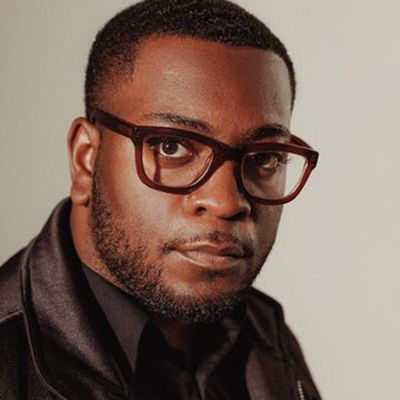
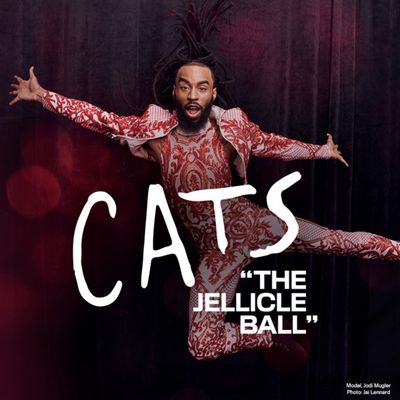
Zhailon Levingston is here, and this one is for the theatre lovers who like their classics flipped, reimagined, and brought all the way into now. As a visionary director known for bold storytelling and unapologetic creativity, Zhailon is taking on Cats like you’ve never seen it before with “Cats: The Jellicle Ball.” We talk about what it means to reinterpret an iconic show, building a world that honors the original while pushing it forward, and how culture, community, and identity play into this fresh take.
But this isn’t just about direction—it’s about perspective. Zhailon shares what drives his artistic voice, the responsibility of reshaping legacy work, and the joy (and chaos!) of bringing something this ambitious to life. And yes… we get into what makes this version feel different. If you thought you knew Cats—think again.
The Roundtable with Robert Bannon is available on BroadwayWorld, YouTube, Spotify, Apple Podcasts, iHeartRadio, and more. For more, visit RobertBannon.com and follow along on Instagram @RobertBannon.
#ZhailonLevingston #CatsTheJellicleBall #Cats #Theatre #Broadway #Directing #Arts #TheRoundtableWithRobertBannon #BWW #BroadwayWorld
Transcript
This transcript was automatically generated and might contain errors.
[0:00] Robert Bannon: Are you ready? It's The Roundtable with me, Robert Bannon. Welcome to The Roundtable, everybody. My name is Robert Bannon. You're listening to us on Broadway World over here on the Broadway Podcast Network, iHeartSpotify. Our guest, okay, look, I saw chicken, COVID ended, okay? I told Douglas Lyons that he came back. He opened Broadway with our next guest. Our next guest has won awards, if you saw Chicken and Biscuits. If you went down to Off-Broadway last year, you know the Cats Jellicle Ball broke New York City. It literally broke. If you were a gay or gay-adjacent person, you know you gagged. You were walking through the street just doing it, dipping in, doing it, and all of that. You know whose fault it is? This one. Well, it's partially fault, co-director, superstar. Welcome to the show.
[0:56] Zhailon Levingston: I'm so happy to be here. Thanks for being so supportive. I love this show. I'm obsessed with this show. I want to be in this show. I can't dance, but I'm just living my best little gay life when I went and saw Cats.
[1:12] Robert Bannon: Yes, we love that. No dancing is required. Just be in your body, feel your things, be free. You know? I can't clap on the two and four, but I'll give face.
[1:24] Zhailon Levingston: But can you clack on the two and four?
[1:30] Robert Bannon: Oh, I have clack, clack, clack, clack. How did you come to be? Where did you grow up?
[1:33] Zhailon Levingston: I'm from Shreveport, Louisiana. I grew up in the South. I grew up in Louisiana, raised by a single mother. I moved to Los Angeles for college after high school, pretty immediately after high school, and got a degree in musical theater performance in Los Angeles, and then moved to New York pretty soon after graduating.
[2:00] Robert Bannon: When did you decide you didn't want to be an actor, though you wanted to be a director?
[2:04] Zhailon Levingston: Yeah, I mean, I say this a lot, but it's true that I was always directing growing up, you know, the church play, the community theater gig, you know, choreographing the piece for this event, or directing, you know, a one act over here, or creating original work in college. But I just thought that you were supposed to act for 50 years, and then someone told you, you got to direct. I thought it was some kind of, like, linear line from performer to director, mainly because I hadn't really seen directors working at the level that I aspire to that were my age and looked like me. And so that's how I just thought it went. And I didn't go to school for directing explicitly. So no one was there to tell me that that's not how it went.
And so I kind of just like, once I graduated, I got my equity card pretty soon after graduating and moved to New York. Long story short, and I started to just make my own work in response to what was going on in the political climate at the time, because I just felt like I needed to, like it was for me, like I needed to figure out how to express. And then I realized that, you know, New York is a place where if you say, I'm a director, so long as you're directing, then people believe you, but there is no other kind of, like, process one has to go through other than to prove that you do the thing that you do. And so I wanted to make sure I did the thing that I was saying by any means necessary. And so I took every workshop, reading opportunity, you know, just anything that could get me in a room with a playwright and actors, I tried to do or make space for myself to do.
[3:52] Robert Bannon: What I love about this story, kudos, because it's incredible, what I love about your story, reading about it and looking at your bio and the things you've done, is that you have to take a leg, it's a ladder before someone gives you a whole bunch of money and says direct a Broadway show, and a cast and the pressure that is Broadway compared to Off-Broadway or workshop, the run that you've had, the projects that you've picked, and to you, you're like a baby, you're like, what, 31? I got you by 12 years, almost 12 years over here. You get to now change the face of Broadway when so many people have said, it doesn't look like queer culture, it doesn't look like people of color, it doesn't look like there's been a change. And the work that you've done gives that representation to so many people. What's it like when you see people who go to Cats or saw your other show, and they finally see themselves depicted on stage in a way that they never saw before?
[5:02] Zhailon Levingston: Yeah, I mean, one of my favorite kinds of reactions to the material is actually people who are older than I am, from a different generation than me, and seeing the show makes them realize that they never had a space in this context where they could feel as open and free and liberated, or it makes them think on all the years that they weren't as open and free and liberated. And, you know, there's a couple of instances where these types of queer folk, I would see, like, watch the show kind of in a really kind of serious manner. And I think, oh, maybe they're not getting it, or maybe they're not having fun. And a friend told me they had an experience with a person like this. And they were just kind of like watching the show.
And they and my friend came, and she was like, I was ready to party. And I turned to my right, and this guy was just kind of like, stoically looking, and we thought he wasn't into it. And then intermission came. And everyone got up and went to the restaurant, whatever. And he's just sat in a seat and sobbed. And then communicated to her that, you know, I never thought I would be able to see something like this. And so, you know, we get all kinds of reactions. But the people who feel us that deeply, you know, I feel really humbled by. But of course, we get like six-year-olds that come to the show, 80-year-olds who come to the show. I sat by a woman yesterday, who was clearly, you know, older, and was decked out in like her pink fur, and her cat ears, and her whole thing.
And she was like, this is just so cool. And so I love that this show, which is so unapologetically queer, and so unapologetically off the beaten path, to a certain extent, is creating a space that truly is for everyone and can hold everyone.
[6:43] Robert Bannon: It's bringing ballroom culture over the past time has become more mainstream, thanks to TV, film, music, and now you bring it to Broadway in a way. Look, I'm gonna be real, real, real talk. I went to the Cats. I saw Cats on Broadway when I was a kid. I went opening night to the Cats movie. It was one of my favorite experiences. People meowed and yelled, and it became like a whole thing, the Cats movie. And the Cats movie then turned Cats into something that was kind of a joke. So when someone comes to you and says, let's take Cats with the roaches in the refrigerator movie that I think of, because that's what I think of, the roaches in the fridge and the commercial growing up here in New York City, and turn it into... What was your reaction? How'd they sell you on this?
[7:26] Zhailon Levingston: Well, you know, my co-director, Bill Rauch, was the one who really came up with the idea to marry ballroom and Cats. And by the time we met, it was still, you know, this idea. And there was a pitch deck that he and a couple of other collaborators had been working on to just try to lay out, okay, what could that character be? And what could that number be? But we still were a very, very, very, very long way from what could make the show work as a piece of theater. And so it wasn't that all of the points were proven before I said yes. It was that the questions were scary enough to be worth my time. You know, it felt like... And I kind of instantly felt that I needed to be a part of this, whether it succeeded, or whether it failed.
And that's usually my barometer for whether or not I'm going to take something on is that I want to do it, even if there's a chance that I fall on my face. And I knew very early on that if this thing hits, everyone will know about it. And if it doesn't hit, everyone will know about it. And so, yeah, risk and not knowing how to do it was as attractive as all the things that I felt worked about it. And it allowed me to connect with my younger self. It allowed me to connect with, you know, eight, nine, 10-year-old Shaelen, who used to watch this movie all the time and didn't know what theater was explicitly, but just knew that these beings on stage were somehow attractive to me. And so, I really said yes, partly because I wanted that kid to participate in making the art that I was making. So, yeah.
[9:22] Robert Bannon: It's so much fun. You don't... Look, no matter how old you are, young, old, straight, gay, black, white, whatever you are, wherever you come in the world, this is a welcoming, safe, inclusive space for you to come, get dressed, have a party, have your show, come to New York City, get a ticket, and come experience Cats like you've never seen. You could... It's a... Everybody's welcome. Come on in. So, when you got the... The rumors were swirling that, you know, you guys sold out your run at Perlman Performing Arts Center. It was a big hit downtown. You had Andre De Shields. You had incredible cast on Broadway. People were posting videos. The curtain call, the catwalks, the dancing, everyone was talking about it. And then the rumors were, when's it coming to Broadway? When's it coming to Broadway? When's it coming... What was it like when you got the call that you had a theater and you guys were coming to Broadway?
[10:09] Zhailon Levingston: It was... I mean, it was obviously exciting, and it immediately enlisted a whole range of questions that felt really existential immediately. Like, what would this mean to come to Broadway? How do we do it? How do we maintain its integrity? Can it be better? How do we make sure...
[10:28] Zhailon Levingston: Reimagined. The Jellicle Ball Reimagined. The Jellicle Ball Reimagined. The Jellicle Ball Reimagined. The Jellicle Ball Reimagined. The Jellicle Ball Reimagined. The Jellicle Ball Reimagined. The Jellicle Ball Reimagined.
[12:28] Zhailon Levingston: And at least in my feeling, a really stark demarcation between the musical theater people and whatever kind of alternative performance style that is on stage. And I feel like what's so magical about our cast is the ballroom folks are just as passionate about earning the respect from the musical theater folks and the musical theater folks are just as passionate about earning respect for ballroom. And so what you end up having is not like, oh, there's that person, there's this person, but you get this other thing, this third thing, like these people have worked together for years to create their own vocabulary together. So you really get this other kind of expression that is not exclusively ballroom and not exclusively musical theater.
And I think the same is true of the show. It's not exclusively ball and it's not exclusively cats. And it's some third thing. And I think that's what's so thrilling about it. You have an incredible producing team that keeps growing. People are jumping on the bandwagon to be a part of Cats. You have incredible support from the people who Andrew Lloyd Webber himself coming to see the show. You know, it is really ushered in a new era here for Broadway. I feel and it's overdue and very well deserved for you.
[13:47] Robert Bannon: I know it says in your bio that you go home every year to direct theater for community theater for people. Why is it important you stay connected to your roots and you leave the big nasty New York City behind for a minute and go back home and help the next generation down there?
[14:02] Zhailon Levingston: Well, I'm just such a product of community theater. I'm such a product of free theater to participate in and in theater that is working with folks who aren't professionals necessarily, but coming after work or after a long day of school or whatever and saying, I'm going to spend the next four hours of my free time after working all day, making stories for free just because we really love it and we really love each other. We really love the opportunity to play. And I first started to do it just so I could continue to have a reason to go home for Christmas. But then I realized, oh, I could just keep doing this. And this keeps me keeps my muscles primed in a certain kind of way. If I can make things in the community theater space that I'm just as proud of, then I think that that only adds to my own toolbox.
And then conversely, being able to just give opportunities to folks to play and play with me and to pour back into the community that works so much. And to me, sometimes I act in things, sometimes I direct things. I don't know what I'll do this year, but it's been really gratifying. And, you know, in New York, you're making for audiences that you don't really know. And that's a very specific, distinctive experience. And when you go back home and you make you're making it for your third grade English teacher and you're making it for your Sunday school teacher and you're making it for your grandmother and you're making it for your friends who never get to see the thing you do anymore. And so it's actually a different kind of intensity because almost every performance you're talking to the people who raised you.
[15:43] Robert Bannon: I think that's I wish you directed some of the community theater I did back in the day because it was terrible. Also, besides that, everybody, well, you know, you sit on the board of the Broadway Advocacy Coalition, your artistic director of the Heritage Theater Project. You have a course at Columbia University Law about that, about theater of change. What can you say about I know Broadway has a long way to go. I know you kind of opened Broadway. You were the youngest black director on Broadway with Chicken and Biscuits. I know you went on and did Table 17. I mean, apparently you just Douglas Lyons owes you his whole career is what I'm going to tell the whole one. Just a couple of. So what have you noticed since you've taken a stance, you've had this position and you've been winning awards and putting on Broadway shows and ushering change since 2020, the big push that happened on Broadway. Has there been positive inroads and what can we do to keep it going?
[16:37] Zhailon Levingston: Yeah, there's been positive inroads for sure. And there's been gridlock in certain capacities as well. You know, Broadway is a historically non-transparent environment. And so part of the fight is always just trying to get people access to information, because with accurate information, you can make choices, you know, if I know that this is how this works, then I can choose whether or not I want to participate, whether or not I don't, whether I want to push this boundary, whether I want to accept this boundary. But I think the biggest hurdle on Broadway still is, can we do this if we've never done it? And I actually think artists are the most primed to handle that question. And what we need is for those who support our artistry, those who aren't explicitly artists themselves, but are just as critical to making commercial theater happen to engage with as much enthusiasm with the question, can this happen if it's never happened?
Because there's so much scarcity and fear that still permeates the decisions that people make. And it's not necessarily always people trying to be malicious. It's people trying to respond to uncertainty, doubt, scarcity, fear, all of these concepts that we tell stories about. And I always say that, like, Broadway is in a uniquely American institution. So everything wrong and right with America is wrong and right with Broadway. And something I tell actors a lot of the time is that, and really just all artists all the time who are going to be making art for a living, is that you are already in a compromised position because you've decided to pay your rent by making art. Art can exist without it being a job.
But when we decide to make it a job, now we've already complicated our relationship. And that's okay. But I think what it means is it's not a zero-sum game. It's not one big success and one big failure. It's, to quote the movie, it's one battle after another. It's can I rack up as many wins? Can I rack up more wins than losses? Can I maintain my integrity? Can I come out of the situation as much of myself as I came into it with? It's not about working in an environment that is fraughtless or euphoric or a utopia. It's about creating spaces where people can practice their integrity unscathed. And that's why being an artist is such a noble profession because it changes the world. It documents our history and it gives not only joy but a lot of knowledge and information.
And people are going to go see your work and the work that's out here and it's going to change them. And they're going to think about things in a different way. And that's why it's so damn important that you go get a ticket and go support live art and theater in New York or wherever you are around the world. Go support your local theater and new playwrights and new works that are going on.
[19:42] Robert Bannon: Congratulations. I hope you have your opening night ensemble ready. I know I can't wait to see the fashion.
[19:48] Zhailon Levingston: I'm trying. I'm trying. I'm a little behind the eight ball, but we're going to get there. It's going to. I'm ready. I'm ready for it.
[19:56] Robert Bannon: Well, get your tickets before the show opens and you do not have a ticket to go to catch the Jellicle Ball dot com. Buy your ticket. I'll be there. You'll be there. Everybody, New York, come show up. Show out. Congrats, Brickley. I can't wait to see what's next.
[20:11] Zhailon Levingston: I can't wait for this to take over. And I was talking to Jesse on Martin the other day and he sent me a message after an interview and said, by the way, did you see Cats? It's going to change the entire industry. I know that the OG's of the world, the people who have fought the fight to get to get art and queer art and color out here. They're ready for it because take the ball and run. Let's go.
[20:35] Zhailon Levingston: That's incredible. Thank you, Robert. Such a pleasure. Such a pleasure. Break legs. Congratulations. Thank you.
© Broadway Podcast Network, All Rights Reserved