

There’s no marketing challenge too big, plot too timely, or artists too iconic for an Eva Price project. This week she sits down with SpotCo Co-Founder Tom Greenwald to talk messaging Jukebox musicals (Tina, & Juliet, Jagged Little Pill), shows reimagined for modern audiences (Oklahoma!), and taking chances (Liberation, Titanique)... Read More
From the show: The Show Must Go On Sale!
Guests
Featured Shows
About
There’s no marketing challenge too big, plot too timely, or artists too iconic for an Eva Price project. This week she sits down with SpotCo Co-Founder Tom Greenwald to talk messaging Jukebox musicals (Tina, & Juliet, Jagged Little Pill), shows reimagined for modern audiences (Oklahoma!), and taking chances (Liberation, Titanique).
Transcript
This transcript was automatically generated and might contain errors.
[0:00] Eva Price: When I fall in love with something and decide that I have to produce it and I have to bring it to Broadway, there's usually a marketing challenge around it because of my taste and because of who I am. And I am often drawn to the things that are a little more difficult, a little more surprising. And so they often go hand in hand.
[0:24] Tom Greenwald: Welcome back to The Show Must Go On Sale!. My name is Tom Greenwald. I'm the co-founder of SpotCo. We've been in business for about 30 years doing advertising and marketing for Broadway shows. And that's what this podcast is. It's the first podcast dedicated to the art of advertising and marketing Broadway shows. Although we talk about everything Broadway on this podcast today, very delighted to have Eva Price as my guest. Eva has been producing Broadway shows and very impactful Broadway shows for a number of years. Is 20 years too long? 15 years? Let's go with a number which keeps the mystery of how old am I? Well, she started producing when she was 11. So I think we can say she has so many, too many shows to count really, but I'll rattle off a few.
The fascinatingly successful Oklahoma from a number of years ago. She was also a producer of Tina, Jagged Little Pill, The Current, Smash Hit, and Juliet, a hugely acclaimed play, Liberation. She produced Redwood and hot off the presses, the off-Broadway phenomenon soon to become an on-Broadway phenomenon, Titanique is going to be her latest show. Your accent was perfection, Tommy. Thank you. Merci. She has been in this game for a while, and I can't wait to talk to her about all things Broadway advertising and marketing. The first thing I will ask you is, do you love the process of advertising and marketing as a producer? Producers wear so many hats, um, and have so many jobs on a show. Do you find it as a creative challenge? And do you enjoy that process?
[1:57] Eva Price: Wait a minute. I can hire someone to do this? I have to be in these meetings with you? Why? Why has no one told you this? Well, I know you love the meetings with me personally, but otherwise, do you love the advertising and marketing process? I actually do love it. I truly, truly love it. It is the favorite part of my day. It is one of the things that is part of producing. And it's funny, when I talk to people in other industries and they ask, what does a producer do? And I sort of give them the nuts and bolts, 411 of it's like a CEO of a startup. You're in charge of the financing and the creative and the casting and the acquiring the rights and raising the money and the strategy and the marketing.
And then they say, wait, wait, you sit in the ad meetings and make decisions and tell people what to do. Aren't they the professionals? And it's like, Oh yeah, good point. They are. But the coming up with the image of the show at the beginning and the brand is, is that the, is that the part that's fun? That is the most fun, but honestly it's, it's the throughout that's fun. It truly is.
[3:11] Eva Price: Like I find that the marketing and ad meetings are a place where we can be creative. We can be combative. We can be collaborative. We can be argumentative. We can be visionary. We can be crazy. We can, we can be off the wall, you know, impossible dream, kind of crazy. And from those conversations, from those brainstorms, from that ideation can come ways to save a show, can come away to change a show, can come away to close a show. It like, it all happens in those rooms. And so I would never want to miss it. Truly. I find that when I do have to miss a marketing or an ad meeting and I come back where I read the notes, I'm like, why did, why didn't anyone question that? Why didn't anyone say that?
Why didn't anyone ask that? I, if I'm having this idea by reading the notes from the meeting, someone in the room smarter than me had to have the idea in, you know, and it's like, but all our brains work differently and our brains work best in tandem. So by being together live in a room, ideating and brainstorming and dreaming, we are checks and balances to each other as producers, as marketers, as GMs, as CMs, as ticketing directors, as creative directors. And the collective is better than the singular. And I want to be a part of that. I have to be a part of it. I have to drive it. So yes, I do love this part of the job.
[4:42] Tom Greenwald: Let me ask you one micro question before we get back to other macro things. One interesting thing about your bio of shows is that you've produced a few shows where the songwriter was famous. You know, the phrase jukebox musicals has been thrown around for years. I'm talking about three in particular, Tina, Jagged Little Pill and Juliet, which are all very different. Tina was a bio story. Jagged Little Pill was made out of whole cloth and Juliet is a spin on Shakespeare, of course, but what they all have in common is they have, you can sell that these shows are by these incredible artists, but these incredible artists are not in the show. How did you find that marketing challenge where you have to kind of thread the needle between selling those artists and telling people also, of course, they're not in the show? And did you have people coming to the show expecting to see Alanis Morissette when they came to Jagged Little Pill?
[5:40] Eva Price: Yeah, it's such a good question. I mean, each, each show is very different from the other and my role in, in the shows were very different from the other, you know, I'll, I'll start with Jagged, which I was, you know, an originating lead producer of, I helped, you know, craft it and build it and develop it and, you know, bring it to its first reading and bring it to the ART and bring it to Broadway and bring it to tour. And Alanis Morissette was a part of that discovery and that development the entire time. She was impacting the story. She was impacting any kind of orchestration or arrangement changes or choices. She was impacting sound levels. You know, she was at, you know, early previews in Boston and, you know, she, the sort of ethos of what the show wanted to be was impacted by her.
And to your point, though, it was not a biopic. It was not about her in any way, but it was, it was her music, which came from her so spiritually and so viscerally. So that, that posed both challenges, but, but frankly, lots of opportunities because she was like the spirit guide for what that show should and could be. You know, Juliet is a, is such a special show and different in that way. And that Max Martin who wrote and produced all of those songs along with collaborators was one of the key originating creatives of that show. You know, he produced it. He was at every workshop, every reading, every preview when it was out of town and on Broadway, you know, and in, and in London and in Manchester.
I mean, he just was very much a part of the DNA of that show's creation. And he was not the singers of those songs, like with Alanis where she is the, the sort of conduit to those songs. Max is the more like the godfather, mastermind of those songs. But, but what is so important to him, obviously are the artists behind those songs, protecting them, caring for them, respecting them, his ongoing relationships with them, where Alanis sort of inspired how the show existed. These songwriters kind of informed and, and, and helped create what other artists could then put into existence. That was sort of the relationship difference with Tina, which I was a co-producer on. So I came in very late in the process, but I love that show so much.
You know, that existed already from its long run in London before I joined the co-producing team in New York. And my understanding is she was, you know, it was all before her passing. She was very involved in the development and in the creation of that and how those songs and that story would be, understandably, it's her life. It was her bio on stage. But I think that was a very passionate and beautiful relationship that the brilliant producer behind that show, Tali Pellman, I believe had with her in developing that. So, you know, I think, I think the job of the producer, when you're using songs, catalogue songs that exist is to be inspired by those songs, both in storytelling and in sound, and let the brilliant creatives that you have in the room to put your show on stage, actually direct the end result of how those songs are then experienced by an audience.
I think you sort of step away when you have such magic, which you do in this music and you let the music be the music. The music is popular music for a reason. If you start trying to get in the way of it or over amplify it or, or create your own version of it, I think it's a disservice. I mean, I have to say that, you know, I mentioned Bill Sherman. I have to also pay tribute to Tom Kitt, who is the orchestrator and ranger of Jagged Little Pill. I mean, I grew up on the Alias Morissette Jagged Little Pill album. That is the song of my, the music of my youth. I know those songs. I love those songs. I often find myself listening to Tom's orchestrations of those songs and enjoying them more, like shockingly.
And that I think is because, you know, Tom didn't change things so drastically or dramatically, but he weaved and flowed with the emotion and the style and the substance of what those songs always have been into and sort of reframed them into a world for today and for that storyline. And that allowed them to blossom and become their own. You know, so I think there's a lot, a lot to pay tribute to, frankly, in the orchestrators and arrangers of these known popular songs. They truly are the artists that I want to collaborate with and listen to even more than the original creators of the songs, because they are the ones that are reframing them for the musical theater vernacular.
[10:42] Tom Greenwald: Do you remember conversations? I guess, I'll ask you on Jagged since that was kind of your baby in terms of the messaging out to the public, how hard you would go at the Alanis angle and you and I worked on that show together. And I remember a lot of conversations about how much we could depend on her to be ourself because it was a, it was a great show on its own. The story was fascinating and relevant and contemporary and you want the show to be the thing, but you also know that, of course, Alanis is your initial hook.
[11:17] Eva Price: Yeah. And it was, it was definitely a, a journey. You know, it wasn't very clear from the start. There wasn't kind of one sort of dictation of how it was all going to go. I think as the world changed, we changed in terms of our strategy regarding that. But, you know, we had two things that we had to get right and, and were our prerogative from the beginning. One was make sure that the world knew that this unbelievable album that spoke to a generation, that was one of the top selling albums of all time and most acclaimed albums of all time was going to be on stage and people were going to hear what they expected and wanted. And two, we need to make sure that people knew this was not a story about Alanis Morissette.
Or a concert. Or a concert of her work. Right. That this was neither starring her nor about her. So it was, that's why I talk about the journey of it. It was a bit of a fine line of how much to lean on her as the artist and her name. And the, frankly, the imagery that we used in selling it in the key art, in the language and the copy, um, in the imagery, all of that had to take into mind those two struggles, which is she is not in it. This is not about her, but boy, will you get to hear the music, you know, in love and in a new way. So that was a constant through line and what we were thinking. And I think I'll give some props to you and your agency. It was, it was certainly.
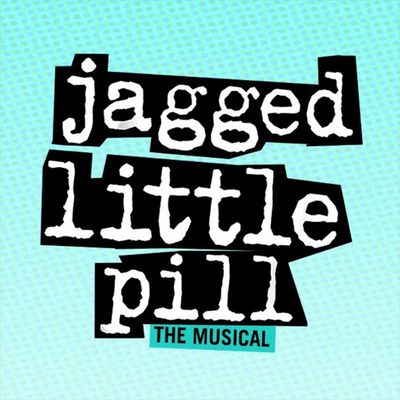
[13:02] Eva Price: Collaboration together that helped sort of zoom in and focus on what we then ended up with, which was the logo of all time, Alanis Morissette's Jagged Little Pill as the lockup for the title, because that way we knew we could equate the show to her and her name. But we made sure that the visual imagery and story that we were putting out there made it very clear. This was neither starring nor about a woman named Alanis Morissette. Inspired by Alanis Morissette's groundbreaking album comes an original story about an even more original family. Despite that, how often would people turn up thinking that Alanis Morissette was in the show? Did that happen?
[13:50] Tom Greenwald: Every night.
[13:53] Eva Price: There was at least one every night. At least one. It never doesn't happen entirely. It's always going to happen a little bit. You produced Oklahoma a number of years ago, and Oklahoma is one of the great chestnuts, and everybody tends to think that they know what they're going to get when they go to see Oklahoma. You produced something, a Daniel Fish directed version of Oklahoma that was probably very, very different from what the average Oklahoma fan might have expected, which was, of course, what made it interesting and relevant and newsworthy, but probably shocked a few traditionalists out there. When you were marketing that show, how much did you have to straddle the line between one of your favorite shows of all time?
And you've never seen an Oklahoma like this before. And were you at all worried that if you said you've never seen an Oklahoma like this before, you would alienate people who wanted to see the Oklahoma that they've seen before? How did you balance that?
[14:57] Eva Price: Oh, my God. And you're like, besides the PTSD you're bringing back to me, you're absolutely naming, like, the du jour problem of every meeting. We needed to and wanted to make sure that we did not alienate those that loved Oklahoma, the classic Oklahoma folks that love the score and love those characters. We were keeping all of that intact. You know, that was very important to us and to the world that not a lyric was changed. Yeah, not a word was changed, right? Not nothing. You know, the orchestrations and arrangements were a little different in terms of instrumentation, but the actual arrangements of those songs were the same. I mean, you didn't have a 30 piece orchestra, right? So the arrangements had to be changed.
We had an eight piece bluegrass band. So that's what got changed. So it was very important to us that we let people know that if you're a traditionalist, if you are, if you are a classic musical theater lover, which guess what? I am, Tom. I love the American musical theater canon. Then you are going to love this because it's everything you've always known and loved. But you're hearing it and seeing it anew. And at the same time, there's a lot of people out there who don't like Oklahoma, who don't like a classic American musical about Americana from, you know, the turn of the century, who are bored by it, who have visions of hoop skirts and cornfields and churning butter.
[16:35] Tom Greenwald: Yeah. Most people under 40, in other words.
[16:37] Eva Price: Correct. Yeah. Yeah. And we wanted to say to them, whoa, whoa, whoa. This is not your grandmother's Oklahoma. You think you love falsettos and Kiss of the Spider Woman and Cabaret and Avenue Q? Like then you will love this production. It is at, you know, Spring Awakening. We are as subversive. We are as sexy. We are as surprising. We are as singular as all of those musicals that you love. We wanted to speak to them as well. So, you know, what we found ourselves doing on Broadway, at least, and it was it was a it was a constant struggle to do what I'm describing in every market. But going back to our original Broadway run, you know, we found that we would actually target different audiences with different messages because we wanted to make sure that we hit both groups of people, those which we internally dubbed the Okies, the people that God, God love you.
I love Oklahoma and the people we dubbed the Nokia's people who were no way Oklahoma. That's not my musical. We wanted them both to hear from us and to know that this production was for them. So we actually tailored and crafted and targeted as best we could. Separate messages.
[18:00] Tom Greenwald: I mean, it's interesting because the reason you produce that production was also the reason you had marketing challenges for that production, because that's what made it worthwhile to you. I feel like every producer who picks a passion project, as you have done multiple times, has to weigh is what makes you passionate about it, something that's very marketable or something that makes the marketing more challenging. You've been brave enough to produce Liberation this season, which is an incredible play that happens to not be a famous IP. That happens to not have any movie stars. So you know what you're getting into when you produce a show like that. But you love it so much that you feel it's so important to bring to Broadway that you say marketing challenges be damned. Do you think about marketing challenges or do you just say, I love this so much, I don't care. We'll figure it out when we get going. Fiscally, does that enter into your mind?
[19:03] Eva Price: 100 percent, because I know off the bat. Right. When I fall in love with something and decide that I have to produce it and I have to bring it to Broadway. There's usually a marketing challenge around it because of my taste and because of who I am. And I am often drawn to the things that are a little more difficult, a little harder to quantify, a little more singular, a little more left of center, a little more surprising. And so they often go hand in hand. So, yes, it enters my mind, but it doesn't dissuade me. It's just part of the calculus. You know, I produce things based on a gut reaction because I love them. Sure, that has to be first and foremost. But then I have to see a way through it.
I have to see a way in terms of how I target an audience. I have to see a way in terms of how I sell tickets for it. I have to see a way in terms of how it's economically viable to exist on Broadway, how I can raise the money for it, how it can have multiple additional productions. So there's a long tail of financial return for my investors. I have to all of those calculuses come into play and the marketing of it is first. But what I think about is if this play is appealing to me and I'm a tough critic and I'm a hard to please theatergoer, then something got me. Something got me in the door. Something appealed to me enough to show up and something is appealing to me enough as I'm leaving because I can't stop talking about it.
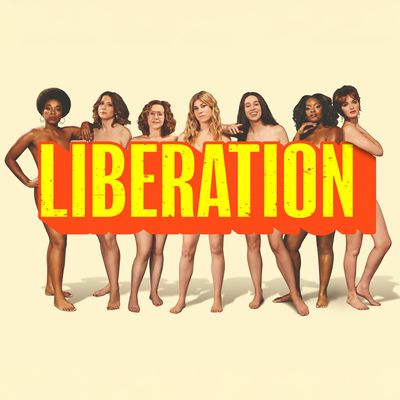
And that's actually what you want as a theater marketer. You want that word of mouth. You want someone to be interested and then you want them to leave, not shutting up, because that's ultimately how you're going to sell. So even if it feels like a challenge and Liberation is a great example, right, not underlying IP and no one famous, either starring in it or writing it or directing it. You know, these are today's American theater stars. I mean, there is no one more brilliant out there directing plays and musicals than Whitney White. There is not a better playwright. I'm not even going to say a female playwright because it's playwright stop out there than Bess Wall. And in my opinion, she is the greatest American living playwright of our generation.
I've thought that. I thought that nine years ago when I produced Small Mouth Sounds, her other play. And I thought that now the same is true of these actors. These eight actors on that stage. There is no one giving a better performance in the American theater today than those eight humans. So to me, what was a challenge, I guess, because it's not a famous IP was an opportunity. And that opportunity is artistic excellence. And I think artistic excellence is actually a very sellable property. I think it's very easy to market excellence. And I think one of the things that we are proven by is the end of the year. Best of lists, top ten lists, best play of the year. Liberation was on every single one of them.
Liberation was number one on many of them. And, you know, you'll we've seen that now reflected in sales upticks. We've seen that reflected in, you know, people hammering for tickets as we're in our final month. And yes, it's been a challenge as new plays without stars often are. But it has been a gratifying one. I'm very proud of the marketing that we came up with. I think I've heard from many, many people how brilliant it is. How exciting it is, how surprising it is. I and I think I think that kind of conversation between how to take a show that is so singular and special and then create a campaign around it that feels singular and special. That's the challenge. But it's also the opportunity.
And the only reason it's a challenge is because of the Broadway economics are so unforgiving, too. I mean, you're selling plenty of tickets and grossing plenty of money on a weekly basis for a show that doesn't have stars, that doesn't have IP. It's just that you put it up against these ridiculous financial headwinds. And that that's nothing new. And Broadway knows it has an issue there. It's the figuring out of it. That's the question.
[23:41] Tom Greenwald: On a show like Ann Juliet, which has a much kind of simpler premise to at least engage the public in. Were you like in the room going, this is a more comfortable sell. We'll watch out for the minefields like the Shakespeare question, for example. Would you sit in the room in a marketing meeting saying never mentioned Shakespeare or yes, mentioned Romeo and Juliet? Were those kinds of calculations made, especially early on when you're establishing your bonafides and just getting going?
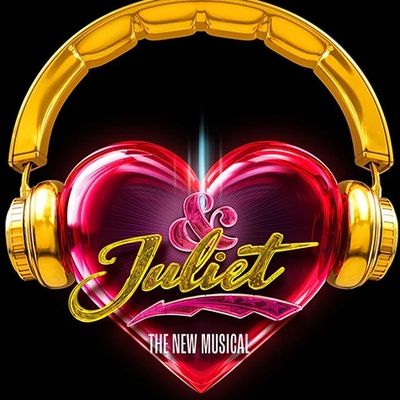
[24:14] Eva Price: Yeah, I mean, it's funny, right? It seems easy and and more marketable now. In hindsight, but we really thought we had challenges at the start. And, you know, the show, as you likely know, the show started in London where and I was not part of the producing team yet. And my partners from that production talk all the time about how absolutely impossible it was to find audiences and their pre London engagement. It wasn't until word of mouth started kicking in that that big Manchester out of town venue went clean and was full because because in theory, oh, sure. Romeo and Juliet without the Romeo. That feels clear. It wasn't, you know, unlike Neil Diamond or even Carole King, nobody knows who Max Martin is.
He has on purpose kept a low profile his entire career. He's never put himself over his artists or the bands that he's written for. He is not a brand name, a household name. His name doesn't carry brand equity. So the hits of Max Martin, except for a few insider theatergoers who also were music aficionados, that meant nothing. So what you really had was a bunch of pop songs. So you had song titles and you had artists that sung these titles. But then again, these artists aren't in the show. It's not their catalog. So it's a little bit of a slippery slope about throwing their names out there. You can't really say Katy Perry and Pink and Backstreet Boys and all of that as much the names of the songs. Sure. You know, lots of those are hits. So, yes, you can say features these hits. And that's a nice mark.
[26:05] Eva Price: It was a really slow burn before it got to where it is today, both in its out-of-town tryout in North America, which was Toronto. It took a few minutes in our early days on Broadway and certainly in its pre-North American life on the West End in Manchester. I think what eventually happened, which is what we see today, is people started really understanding what this was. We were able to, over time, and a lot of that is, again, word of mouth. I just can't, and you know this better than anybody, you can't underestimate the power of word of mouth. People come see Ann Juliet. It is completely infectious. It is completely surprising. It has so much fun and so much heart that people were constantly bowled over by their experience.
That was what led to the ticket sales and the continued life and the life it's now had. But it was absolutely, back to your initial question, it was a how much do we say Shakespeare? How much do we say Max Martin? Max Martin doesn't really help, but Shakespeare does. But we don't want people to think this is spinach. It's actually not spinach. It's the best time on stage. Yes, there are dry sparks and confetti cannons. We promise you, you will laugh. Like Shakespeare always intended.
[27:31] Tom Greenwald: Exactly. Shakespeare and skinny jeans. All of that is true. That's really where you lean on visuals more than anything. You lean on a radio spot. You lean on an excellent B-roll capture, which was a huge investment of the show and something that we did super early because we knew we had to show the show and we had to show both the Shakespearean and relationship, Shakespeare and his wife. So people knew this was a story about a couple retelling a very famous story, because that's another thing you don't want. You don't want people thinking they're going to see the Romeo and Juliet musical. That's not a very good musical. He dies.
[28:10] Eva Price: Although West Side Story was good.
[28:12] Tom Greenwald: Yeah, but sad.
[28:14] Eva Price: Yeah, no confetti, as I recall.
[28:19] Tom Greenwald: No confetti in cannons in West Side Story, as I recall.
[28:20] Eva Price: No, no.
[28:20] Tom Greenwald: Hey, I have a question for you. Was there any Six confusion when Ann Juliet and Six were kind of breaking around the same time?
[28:28] Eva Price: Yeah. I mean, it's absolutely something that we were very mindful of. We have an Elizabethan theme. They have an Elizabethan theme. We were from London. They were from London. What we ultimately sort of realized is we took up very different lanes. They're very much a concert. They are a concert that are putting a spin on this classic story using these classic artist tropes. And we are not a concert. We are a book musical written by the Emmy winning writer of Schitt's Creek. We are a play within a play. We are pop song after pop song. And the greatest love story that you all know, but rewritten and retold and remixed. And we really leaned into kind of that language and those ideas. And Six sort of lead into its global phenomenon, brilliant original music. And we really leaned on to familiar, but remixed and reimagined beloved music.
[29:32] Tom Greenwald: It's funny, when I first saw Six, I thought it was a jukebox musical. Like halfway through the first song, I was like, wait a second. I think this is an original song. It's amazing that there haven't been too many hit musicals since the pandemic. And two of them are Six and Juliet, which are, as you said, so many differences between them, but there's a lot to be learned from the success of both those shows. So let's jump to Titanic for a second, because that's the newest thing that's happening. The story of Titanic, go Google it if you don't know it, because it's one of the craziest success stories in recent history. It's kind of like the other side of the Oh Mary coin, how this is a show that came out of nowhere and just kept going and growing and going and growing and has now turned into this full-fledged phenomenon, culminating in a Broadway run later this year.
I guess the first thing I'll say is early on, I mean, I can't remember when I saw it, it was in a downstairs basement theater somewhere downtown. What was the marketing process like? You probably had $6 a week to spend on marketing, but the crazy success of Titanic, and you mentioned word of mouth, how powerful that is. And of course, you get out of the way when something like Titanic is happening and the word of mouth is blowing up. But do you remember the early marketing conversations for that show and how to handle it and how to ride this word of mouth train? And how much do you think was the success of Titanic attributable to how you marketed the show? And then the second half of that will be when you're coming to Broadway, is it just more of the same or do you anticipate new marketing challenges for the Broadway run?
[31:15] Eva Price: Such a good question. I love that that's your last throwaway, no big deal, easy question. In 10 words or less.
[31:23] Tom Greenwald: No, I'm really curious, especially about if you're starting to think, I mean, obviously you're starting to think about how it's going to be marketed on Broadway, but it's also if it ain't broke, don't fix it mentality. So how do you manage those two things?
[31:32] Eva Price: Yeah. I mean, the thing that we always wanted to do about Titanic was let Titanic be Titanic. Don't try and make it something it isn't, which means it's the kookiest, craziest, zaniest thing on stage. So it should be the kookiest, craziest, zaniest thing in its marketing. It should be kooky and crazy and zany on television, on the radio, in a print ad, in a digital ad, in the copy, in everywhere, in the front of house. And so we just let it be what it always was meant to be and not anything else. And the benefit of it starting at the basement of a shutdown Ristides, which was where you saw it at the old asylum theater, was that we very intentionally wanted it to blow the walls out. We wanted, when people walked in that room, to not realize that in a hundred minutes, they were going to have the most wacky, glorious, crazy, mind-bending vocal experience that they were ever going to have in the theater.
[32:58] Tom Greenwald: This is a marketing podcast, but I still, while I have you, like, where did you first come across Titanic? And like, where was your mind first blown with this thing?
[33:02] Eva Price: I went to a very early concert, stage concert reading of it in Los Angeles in 2018. And it was in that night that I knew it was something I had to produce. It was kind of pretty karmic in that way. But I didn't know it when I walked in the door. I was actually just there as a friend of one of the creators to give him advice on what to do next.
[33:26] Tom Greenwald: And your advice was, come with me.
[33:27] Eva Price: Yeah. I mean, it turns out that was his secret plan. I don't doubt it. So that's how that worked out. But, you know, it was kind of that same mentality when we put it up at the asylum. We thought, okay, invite people in, let it be what we know it is, and let it blow everyone's minds in this tiny little room. Let it exceed expectations. And, you know, it took a minute. We, you know, had to give away lots of tickets in the early days and did lost a lot of money and didn't know if we would make it. And then, you know, the fire hit the fan, the rubber hit the road, whatever the wonderful analogy is. It all applied and it all came together and all gelled and we sold out the rest of that run in that tiny little theater and knew we had to move to a bigger theater that was not being shut down.
And that's when we were fortunate enough to have the Dale Roth Theater come into our life and didn't know how long we would be there. But, you know, that found its footing and its sea legs, if you will. And the international production started to happen and the licenses.
[34:43] Tom Greenwald: Yeah, I did that for you.
[34:46] Eva Price: I see what you did there. That's good. Do you now look at the Broadway incarnation as a natural continuation of everything you're doing, including the exact same marketing tone of voice? Or is some part of you in the room going, we need more bodies and more seats. So we have to be a little bit more X or Y. I don't want to say the word traditional, but a little bit more all encompassing or mass appealing or anything like that. Or is it just no business as usual?
[35:05] Eva Price: You know, it's look, listen, is anything ever business as usual? You have to respond to the world you're in. You have to respond to the room you're in. You have to respond to the competition in a season. You have to respond to, you know, the time of year and the potential audiences that are in town during those times. So we're going to be strategic and we're going to be smart about how we expand the audience and about how we respond to the current marketplace, which now is Broadway and not off Broadway and not tiny asylum. But, you know, we've been running for a year in the West End. You know, we've grown up. We've grown up in several places. We ran in Sydney, Australia for 10 months, all in much bigger spaces than we've been.
So, you know, we have a sense of how to glow up, if you will, while also staying true to our roots. And, you know, that is that is the marching order for Broadway. But we have some things up our sleeve. So, you know, I'll say to you and your listeners, stay tuned.
[36:15] Tom Greenwald: The two questions I like to ask my guests, which of your campaigns of all the campaigns, and it can be a hit, a not so hit, but that you just felt really captured what you wanted to say about a show in a way that made you very proud. And which campaign have you seen out there that you did not work on? And it can be from this year, it can be from 20 years ago that made you go, oh, that's that's a great campaign. That's that's some really good marketing.
[36:50] Eva Price: Wow, I mean, I'm, I'm, I'm actually really proud of everything I've done. I don't, you know, some more than others, for sure. You know, it's funny, I haven't thought a lot about the Oklahoma Broadway campaign in a while, because it's been several years ago. And we did change the campaign quite a bit when we went to London and when we went on tour. But I really did love every piece of that Broadway campaign. I thought it was sexy. I thought it was urgent. I thought it was emotional. I thought it was classic, and retro all in the same time. I'm really quite proud. It was the first musical I had lead produced at that point in my career on Broadway. And so I was sort of taking swings in ways that I hadn't taken before.
And I didn't have anything to reference. And you know, I'd done plays on one man shows, but I hadn't lead produced a musical. I was really proud. I was and I really loved what we did. And the team was exceptional in their creativity. So that that was great. And Tom, it's not because it's you. And it's not because it's behind you. But the Rent campaign changed my life. And as did that musical. And I will, for the rest of my life, always think that is and was the greatest marketing campaign, as well as the greatest musical that ever existed.
[38:25] Tom Greenwald: Interesting. I will share that with my colleagues, Drew and Jeffrey Seller.
[38:32] Eva Price: I've told them both, I'm sure at some point in my life.
[38:35] Tom Greenwald: Eva Price, thank you so much. Everybody keep an eye out for Titanic, which by the time this is out in the world will have been on sale for quite a while. But in the moment we are in right now, it's about to go on sale. It's a hilarious show and Broadway is lucky to have it and lucky to have you, Eva. So thank you for joining me today.
[38:59] Eva Price: Thank you, Tom. It's great talking to you.
[39:05] Tom Greenwald: Thank you.
© Broadway Podcast Network, All Rights Reserved