

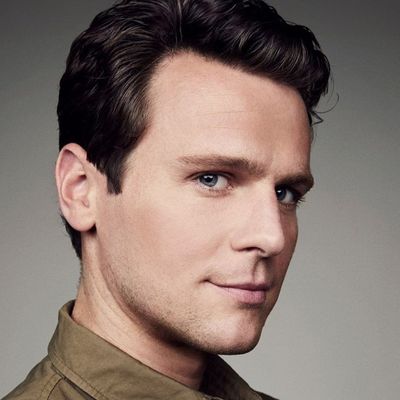
In this episode of The Spark File, Susan and Laura get another snuggle sesh with the ever-eager Jonathan Groff. Jonathan shares how a bad review of his performance in The Bacchae lead him to bring a new level of BDE to the part. Who's the Greek God now?.. Read More
From the show: The Spark File with Susan Blackwell and Laura Camien
Guests
Featured Shows

About
In this episode of The Spark File, Susan and Laura get another snuggle sesh with the ever-eager Jonathan Groff. Jonathan shares how a bad review of his performance in The Bacchae lead him to bring a new level of BDE to the part. Who's the Greek God now?
From his belief that "we're all bad at all different points in the process" to his emerging desire to Pay it Forward, it is impossible to not be inspired by the absolute openess and authenticity of our favorite mindhunter.
Transcript
This transcript was automatically generated and might contain errors.
[0:00] Jonathan Groff: Hi, this is part two of our conversation with Jonathan Groff. Listen, it contains profanity and adult content, so please use your discretion. And if you haven't listened to part one, you might want to go back and listen to it, or not. However you're doing it, you're doing it right. Enjoy the show. The Spark File podcast may contain profanity and other adult content. Please use your discretion.
[0:49] Jonathan Groff: When you think back on what you've created so far, or been a part of, is there a particular thing that stands out like something you're most proud of? The first thing that I think of is looking for all the reasons that we said, because it was the first time I really, it was like who I was as a person was meeting a creative expression in a really confronting way. And it was a lot of personal stories that became woven into the stories of the show. And a lot of the crew was gay and a lot of the cast members were gay. And there was this kind of openness on set. And the way that Andrew shoots things, it's very, he does single takes. And so it just all felt like we were all collaborating and making something together.
And then personally, it was incredibly sort of healing and formative. And then on the flip side, I'm super proud of Spring Awakening because it was like the everything I ever could, more than anything I could have ever dreamt of as a kid of being on Broadway and having that experience. And just feeling so connected to that material and that group. And then the third thing that I think of is Mindhunter because it was so technically challenging. Just like working for David is such a very specific...
[2:35] Jonathan Groff: Will you please, I'm fascinated by this. Will you please, we've talked a little bit about this off mic, but will you talk about what you mean when you say that? Yeah. So when I had my first meeting with him, he said, you know, you're going to be in Pittsburgh for a year basically. You're going to work every single, this was for the first season, you're going to work every single day. You're going to watch people go home and come and you're going to be the one that's there the whole time. And you can't get sick for the entire year because if you get sick, it's like thousands and thousands of dollars. And I took him really seriously. And so I became incredibly anal. I'm not an anal person at all.
I'm not an organized person. I'm not like that. And I ran four miles every morning, even if it was 3 a.m. I would wake up before the Monday call and I would do the run to clear my head and to not gain weight so I could stay the same weight through the entire year. I would eat the same thing every day. I would shave my face every morning. And then when you show up at work, just as far as the like work is concerned, you know, my favorite days were the days when we would do the serial killer scenes. And on a day where you interview a serial killer, you show up on the, let's say it's a Monday at 5 a.m. and from about 5 to 6.30 or 7, you're in a rehearsal with David, Eric, the DP, and the actors and the first AD. And you sit across the table and you read the entire scene. And you probably read the entire scene like 15 times or something. And you figure out...
[4:15] Jonathan Groff: This is like theater. Totally like theater. Yeah. And you figure out, you move the tape recorder on this. I'm going to put my hands up like this. I'm going to lean forward like this. And it becomes like a dance, like a very specific choreographed dance. For those of you who aren't in film and television, this amount of rehearsal is very rare.
[4:33] Laura Camien: Very.
[4:33] Jonathan Groff: Incredibly rare. And so then we go to the hair and makeup and get ready. And then you start shooting. And you do like a wide shot.
[4:44] Jonathan Groff: So excited. I love this fucking show so much.
[4:46] Laura Camien: I know. It's so good.
[4:48] Jonathan Groff: And so you do like a wide shot, like the wide where you're not even on our faces. And we would do that...
[4:54] Laura Camien: Do the dance.
[4:54] Jonathan Groff: ...that single setup, like, I don't know, sometimes, like, I think the average is like 20 times. So you're doing the 15...
[5:01] Laura Camien: That is unheard of.
[5:02] Jonathan Groff: Just on the wide shot. Incredible. Because he's, David is waiting for us to refine all of the moves, to click in, to hear the music. It's like once he said, he never said he would never say something as like frilly as that. This is not what he says, but this is my interpretation of his thing is like he's sort of, okay, we just, and you know, we get it once and from the wide shot, and it takes that long because the scenes are so long. And then he's like, okay, and then you push in and then you do it 20 times. And then you start doing coverage and you do maybe like 10 different, 10 to 15 different setups. And it's a nine minute scene. So it ends up taking the course of two days.
[5:44] Laura Camien: Are your guest stars like, what the fuck is going on? Because it's so unusual.
[5:50] Jonathan Groff: Yes, they're like, they start to, they start to like turn green about three quarters of the way through the first day, like, because then David also, I mean, you, you do it all these different, in all these different angles or whatever. And every angle is, it's expected that you're gonna, you're not like, okay, this is the close up, so now I'm gonna give it. No, it's like, everything is full out. And it's changing, not changing, but he has notes, like, pages of notes.
[6:21] Laura Camien: This is so unusual.
[6:21] Jonathan Groff: So unusual. Now I asked you, because I thought, Laura and I both fucking love the show. And I had been reading that this was the process. And then I was like, is it excruciating? And I was so surprised because you were like, I live for it.
[6:33] Jonathan Groff: That's awesome. I live for it. I live for it. I love it. I love it. It's so challenging. Can you synthesize pages and pages and pages of notes? That's the hard part. But once you're sort of done it that many times, at least this is for me. Once you've done it that many times, it's like you, because he also doesn't want you to play the note necessarily. So it's like, layering. I love it. It's so it's almost like ballet or something. It's so technical. And I find it really meditative, meditative, meditative, meditative. I find it really meditative and hard, but in all of the most exciting ways. And he's also David is also so funny, like deeply, darkly funny. So oftentimes, when we get into the meat of it, and he's giving incredibly specific notes, it's got this sardonic humor that only he possesses.
And it starts to like sink into the into the direction and into the stuff. And even like the first scene we shot with Ed Kemper, that our first interview scene between just the two of us, I was doing all this comedy shtick that we'd agreed on, like moving the pad and whatever, and doing sort of like faces and you know, whatever. And then like, halfway through the second day, he was like, let's just like, just, he was like, I like what you're doing, because it feels like real behavior. But But now let's just do a couple where you like, don't do anything. And it was very, like, awkward, and still, and right. And then it felt like Holden Ford. It didn't feel like funny. It's it still was like, but it just it took it to this other level of minimalism. That felt really, we'd taken two days to get there. But we got there.
[8:31] Laura Camien: Let me just have a fangirl moment. I know you love all your serial killers equally. But who have you have the ones that you have worked with and interviewed on that show? What? What is your who's your favorite?
[8:46] Jonathan Groff: Oh, that's impossible to answer. I really is. The and this is not just like a bullshit answer. I know. They all came to play and they all came to all came to slay. They did. They all came to fucking slay. I bet they did. They all showed up like I'm gonna fucking David Fincher show me serial killer. But there's not for the Emmy. No, no. But you know what I mean? Like they are what I'll be in the Emmy Award. Those scenes are so I fucking live for those serial killer interview scenes. When they show up, like I can tell you stories about I can tell you amazing stories about every single one of them and the way that they like approached and like the way they played tennis and the way I mean, they had all done all of them had done insane amounts of research. Yeah, they had their lines down. They have to. So yeah, it was like so cams. What's your who's your favorite? He won't say.
[9:53] Jonathan Groff: I think that the Ed Kemper like the creepiness of it to me, it's like the payoff was this season. When we talk about like having empathy when you've when you realize you have empathy for that person. I was so creeped out by that. Like more than anything else. I was just like, Oh, God, the way they shot that scene where he spoiler if you haven't binged it, get on the fucking bus. But that scene where he hugs you and breaks your brain the hug. It's the way that was staged, even the way that was staged, where all of a sudden, he was on the other side of you. But I want to say I read an interview where you talked about you aren't into like, no serial killers, and neither is David. And that kind of like made me love you more because like, I'm not because it can go too far.
You start to see like there's true crime that's interesting and you are learning psychological, you know, very interesting things. But then there's like the glorification of it, which goes too far. And I, I love that you said that I wondered if you'd talk a little bit more about the approach.
[11:11] Jonathan Groff: That came from David. So from the beginning at the first meeting, he was saying, I don't want to do as great as a movie as Silence of the Lambs is I don't want to do like, comic book villain serial killers of like, of glorifying and celebrating them. I want to look at them for the sad, deplorable human beings that they are. And I want to tell this story of the unit at the FBI and how they came to be and, and the intricacies of the psychology and hopefully looking at it in a fresh way by not glorifying what they are doing. And I really love in the second season, we explore the Wayne Williams, the Atlanta child murders case, and the way that Chris who played Wayne and the writers didn't.
[11:59] Jonathan Groff: I didn't want to vilify him because the case is, some people think he did, some people think he didn't. And so it's like a tricky line to toe of like, you don't want to play a serial killer, but Wayne Williams is a weird dude, unquestionably a weird dude. So it's like playing that person and honoring that person, but not tipping your hat in either direction is such a... That actor's name is Chris Livingston. He kills it. He's so good. Pun not intended. But like you said, all of them, all of the acting on the show... Charles Manson. Wait, have you seen, have you seen, I just discovered this YouTube thing where they put your scenes from Mindhunter with the actual interviews and go side by side.
So there's like Charles Manson. It is pretty amazing to watch. I haven't seen that. Yeah. That's amazing. You got to check that out. I love it. I love that show so much. But to get us back on track, talk to us about what was... I'm going to use Mindhunter. You gave three beautiful examples of things that you're super proud of. What was the original spark? How did Mindhunter come to you? And why did you get such a creative boner when you got 50 pages of audition sides? I was doing Hamilton and the email came through of the audition and it was David Fincher. And that was the first spark because I love David Fincher. I had seen all of his movies. I had auditioned for him for the Social Network seven years before where I packed a suitcase to fly to LA.
And if I got it, I started rehearsal the next day. And it was between me and Justin Timberlake for the part that he played. But they were like pack a suitcase for two months because if you get it, you start tomorrow. And I didn't get it and took my suitcase back to New York. And so we worked together for like three hours at that audition. And so I had a taste of what he was like. And so his Gone Girl was I think the last one that I'd seen. And I just like giggled. I just love that movie so much. And so his name, it was like, oh, that gave me butterflies of excitement. And then I couldn't believe the role that they were asking me to play. It was like a do-good sort of like corn-fed, good-intentioned, like white guy that's like from Ohio, like Midwestern guy.
[14:38] Jonathan Groff: I recognize that guy. Who ends up mimicking, and this was in the audition material, like taking on the persona of the people that he like mirrors the inmates, like eight ripe cunts or whatever that line was. I was like, what? And then the sexual stuff with the girl of like, having a sexual awakening while you're interviewing mass murderers in a jail cell, and then having a mental breakdown. I was like, this is insanely good. And then the scenes with Ed Kemper that were so long and psychological. And I was like, I don't think I'm going to get this as I'm dressed as King George in my dressing room, reading it. And I had the sides, I was learning it backstage. And I would... Jonathan Groff to the stage, please.
And I was sitting in my King George wig in my, like that gray, like disgusting, gray powdered wig, and that red outfit. And I was like, it really took a lot of effort to, in my mind, get to that creative space, because I was so not holding forward at that time. And I was so... the idea of that seemed so foreign and impossible. But I was like, this is so good. I have to get my head in the game. And I remember Emmy, who's in the ensemble, would come into my dressing room, and I hid the sides under the table, because I knew if I told anyone what I was auditioning for, they were going to laugh at me. The idea that I could play an FBI... dressed as King George in the heels. I was like, yeah, tomorrow morning, I'm auditioning for an FBI agent.
It's like, good luck with that, you know, as playing the king on Broadway. And so I didn't tell... I remember really a moment of being like, I can't tell her that that... because if she laughs at me, then I'm not going to be able to believe it for myself that I could do this. And I have to really believe that this is possible tomorrow morning when I go in there to read these scenes. And then I did. And then did the scenes, called a day later, do more scenes, did more scenes. And then that Monday on the day off, I flew to LA to meet with David. He was like, the part is yours if you want it, told me in the room. Unbelievable. Here's a... this is a tangent. Here's my Mindhunter audition story.
[17:19] Laura Camien: So Mindhunter...
[17:20] Jonathan Groff: Who did you audition for?
[17:21] Laura Camien: Some like, I'm a Southern governor or something like that.
[17:27] Jonathan Groff: Oh, I know exactly the part. Yes, the DA, the Georgia DA.
[17:31] Laura Camien: Yeah, yeah, yeah, yeah, yeah. There you go. First season or second season?
[17:33] Jonathan Groff: First season. But I... because of the office that casts that, they do a lot of stuff in the Marvel Universe. And I got it into my head, like when you go to that office for whether it's Mindhunter or something in the Marvel Universe, you sign a lot of non-disclosure agreements. Somehow I got it in my head that Mindhunter was in the Marvel Universe. That Mindhunter was a superhero.
[17:57] Laura Camien: That would make sense.
[17:57] Jonathan Groff: Was a superhero. Yes, yes, like the one that...
[18:00] Laura Camien: So I did my audition, assuming it was in the Marvel Universe.
[18:05] Jonathan Groff: Make of that what you will. And then I fully watched the whole first episode. And I was like, when's Jonathan's... When are his superpowers going to be revealed? I was like, it's a little slow. It's a little slow for my taste because I thought it was a superhero show. And then I realized I was completely fucked in my thinking. I was completely confused. And then I went back and rewatched it. And I was like, oh, this show's fucking great.
[18:35] Jonathan Groff: Oh, my God. That is hilarious.
[18:37] Laura Camien: And then it also explained why I maybe did not book.
[18:42] Jonathan Groff: You wore like a gray blazer with a tall collar that went all the way around. Did you have your hands on your hips a lot?
[18:49] Laura Camien: I thought, big buttons, the biggest buttons. Oh, my God. That's my Mindhunter story.
[18:57] Jonathan Groff: That's so funny. I love that. So your initial spark, you said something in there that I just want to highlight, which is you had to, in your mind, because you were so in the powdered wig and the red velvet and the ermine collar of King George, you in your mind had to make room for you being able to walk in those Holden Ford shoes. And you really consciously have to do that. And you did it. I love that. I love that.
[19:27] Jonathan Groff: I can't believe I pulled it off, to be honest. And when David came to see Hamilton.
[19:31] Laura Camien: After?
[19:32] Jonathan Groff: After I was cast. Yeah.
[19:34] Laura Camien: After.
[19:34] Jonathan Groff: And I came out and I was like, I'm about to step out in these heels right now.
[19:40] Laura Camien: Yeah.
[19:40] Jonathan Groff: Because I was kind of playing King George as Queen George. You know what I mean? And I was like, he's going to see, but I've already signed the contract.
[19:51] Laura Camien: That's right. You're in.
[19:53] Jonathan Groff: He loved it.
[19:54] Laura Camien: Buy me out, bitch. Buy me out.
[19:57] Jonathan Groff: You're doing just fine.
[19:58] Laura Camien: Yeah. Here's a question for you. What is one of the biggest challenges or failures that you have faced?
[20:04] Jonathan Groff: We like to talk about.
[20:07] Laura Camien: Oh, yeah.
[20:09] Jonathan Groff: We really, truly like to talk about how you process failure. I remember doing the Bacchae in Central Park and I played Dionysus, the god of wine. Joanna Colitis directed it.
[20:21] Laura Camien: Joanna Colitis directed it.
[20:22] Jonathan Groff: Yeah. And I remember really feeling like, I'm good. Like this is going to be.
[20:31] Laura Camien: You were feeling yourself.
[20:32] Jonathan Groff: Really good. I'm in this sparkly leather jacket that has like sequins on it. And I am playing a Greek god. And I start the show. My god. I start the show in like a robe. And then I come out on stage with a suitcase. And I do this like five-page monologue as where I'm like, hear me, people of Thebes. Captivating. And like stage voice. Hear me, people of Thebes.
[21:07] Laura Camien: Sure.
[21:08] Jonathan Groff: As I take off the robe and put on tight, tight, tight jeans and a leather jacket. And then I'm like, rock star Dionysus. And I really, I was really just like feeling myself. And then we got reviewed. Do you read reviews?
[21:28] Laura Camien: Yes, I do.
[21:30] Jonathan Groff: I totally read reviews.
[21:31] Laura Camien: Yeah.
[21:31] Jonathan Groff: Oh shit, what'd they say? And they were so horrible. And like horrible about the show. And then really specifically horrible about my performance.
[21:44] Laura Camien: Do you remember?
[21:45] Jonathan Groff: Yeah, I don't remember words, because I read them all once. What was the vibe? The vibe was like, this guy has no business playing, putting this leather jacket on and these tight jeans and trying to think he's a Greek god.
[22:02] Laura Camien: How did you process that failure?
[22:04] Jonathan Groff: I felt like, oh, fuck. Okay, because it's theater. Show's not over. Difference with theater and like film and TV is like, and now I'm gonna have to go to that theater tonight.
[22:15] Laura Camien: That's the run beginning.
[22:16] Jonathan Groff: That's right. Everyone else read it. The run is just beginning. And I walked on the stage at the Delacorte. And I remember looking, because it's such a like huge stadium. And it's still light outside when you start the show. It's back to that rehearsal room where the lights are still up. And you can see faces, which is just never my jam to begin with, even when I'm feeling confident. And I thought everyone here has read the New York Times and knows that I'm horrible in this role.
[22:49] Laura Camien: Oh, my God.
[22:49] Jonathan Groff: And now I have to do a five-page monologue. Five pages. And be like, hear me. Hear me, people.
[22:57] Laura Camien: How did you process it?
[22:58] Jonathan Groff: And so I just reached down into my taint and was like, fuck everyone. I'm going to play a Greek God for myself. Big dick energy. And big dick energy. And I just was like, I am going to give this like I'm winning the Oscar. I'm just going to like go. I'm going to Meryl Streep the fuck out of this Central Park moment right now. And I just I laughed a lot backstage. It was also the same season as Twelfth Night, the really successful Twelfth Night with Anne Hathaway and Arjen McDonald. It was like Twelfth Night and the Bacchae. That other one. And so I remember joking a lot with my dresser, Mikey, about like how horrible the show had been received and laughing a lot with the people in the cast. And just like.
[23:59] Jonathan Groff: And I so enjoyed being in the park that I just like didn't want to let them, even the audience, to let them take away from the fun that I actually was having doing it. So I had full on shame at the same time that I was like, hear me, people of Thebes. I think it's really important for people to hear these stories because I think that especially given everything that you've done, I think it's easy for people to think that it's just a breeze, that it comes so easy to you. I'm curious, have you ever struggled with fears or insecurities?
[24:46] Jonathan Groff: Well, I feel like the big secret is that we're all bad at all different points of the process. Even when we're shooting, even when we're... and being good or successful is so subjective and specific to any person's opinion about what is good and what is bad. But I've watched movies back or TV shows back where I think like, thank you to the editor, because what I did was so embarrassing. It was so embarrassing. And of course, they cut out all the embarrassing parts because they actually want it to be good. I say that if I have access to people who are in leadership roles, as I leave set on a movie I've done or something, I'm like, please cut away the parts where I look like a shitty hack.
[25:39] Jonathan Groff: Yeah. It's sort of like when you do a photo shoot, let's say it's an hour-long photo shoot and you look at all the... I actually never look at the photos. But you will read the reviews.
[25:54] Jonathan Groff: But I really will read the reviews. I don't read comments and I don't read... I read the five papers, like newspapers to get a sense of is the show going to run or is it not going to run?
[26:11] Jonathan Groff: Yeah. That makes sense. But what you were saying when you do a photo shoot...
[26:13] Jonathan Groff: Yeah. And you see like all the in-between expressions. Yeah. It's like that's what every creative process is like. And it's scary because it's like, and then the editor goes in and removes all the weird faces and then you're just stuck with hopefully the best version of the face that you have. But you have to be bad to get good. You have to in every process, like even in Little Shop right now, it's like, I know I'm doing the most basic first choice thing because I have to just get my nervousness out. And you can see it in everyone, all the seasoned professionals, all the creative team, all of the new people who this is their first big job. We all have a little nervous mouth, like on the first day of rehearsal, the first day everyone hears everybody sing and the first day we're staging it.
It's like no one feels like they're good. And we can all be bad in front of each other. And then we can figure out what story it is we're telling. And then we can make that, as soon as we get over the ego of, dude, does everyone think we're good? Then we can just focus on how we're telling the story. And then all it becomes is problem solving.
[27:21] Jonathan Groff: Did you ever struggle? Was there ever a moment where you were like, maybe I'm just not good, period? Or did you always, because this is such a healthy, I'm going to be good, I'm going to be bad, what an amazing attitude. Did you always have that?
[27:32] Jonathan Groff: I've always been like a horse, like chomping at the bit to act. I've never, like any sort of nerves that I've had or feeling of self doubt, like maybe I'm not going to nail this, or maybe I'm horrible as Dionysus, the god of wine. It has been superseded for me by this deep-rooted need. I have a need that I will do if people like it or not. I just need it like oxygen. And it overrides the fear, the challenge.
[28:14] Jonathan Groff: It does. Historically, it has. Historically, it always has. The pull for me is so real. But even the first performance of Hamilton, I had one day of rehearsal, I didn't know I was supposed to have a British accent. No one told me that. And I showed up and I was like, King George has a British accent, but Aaron Burr is black. I didn't understand why. No one told me that.
[28:41] Jonathan Groff: Did you not see it at the public?
[28:42] Jonathan Groff: Well, the week after they opened off-Broadway, Brian Darcy James had to leave to do Something Rotten. So I did it for the last two months at the public. But I was in LA throughout their whole rehearsal and performance thing. And they were all in the drama of when is the show going to move to Broadway? And then they were like, Groff will just figure it out when he gets here. And I was texting them being like, could someone send me just like an iPhone from the sound booth of like what it is I'm doing? No response. And so I saw the show. I saw the show on a Friday and went in on Tuesday. And they were like, he can do 10 minutes. He's got it. Yeah. And I learned the song. But I just like didn't know.
And Lynn says that when I came out the first day, he was like, it really just looked like you had won a contest to play King George. I was like, you say it was like I was myself appearing in a King outfit. The price of my love. In fairness, you had not been prepared. Yeah. At all. That's when I learned that how amazing that material is. Because I got laughs. I was like, oh, my God, I'm really bad. But it works. My mom could play the King Hamilton and it would be amazing. But yeah, that I felt nervous. I felt like, what the I felt nervous standing there. And I like I have no idea what I'm doing. And I can't move. And I'm just gonna walk out there and pretend like I have some idea of what this character is. And then through the weeks, I then finessed it and found my way into it. But and watch Barbara's videos.
[30:25] Jonathan Groff: Interesting to hear you say that because you're I feel like your performance by the time I met your performance on that show, it was so precise, very calculated, and a great dialect. I was like, oh, Jonathan is giving me a great coach.
[30:41] Jonathan Groff: I like I was gonna ask when you heard you needed to have it. Did you just like next night? You're like, I never Tommy, I think they felt I think they like I showed up at the rehearsal and to end I sang the song. And Tommy was like, and this before I'd seen it. I like saying it once for them before I'd seen the show. They staged it with me. They're like, basically, you'll see it tonight. But basically, you just walk out here. So why don't you just practice singing and walking and you walk? And I was like, Okay, you say the price. And it was over. And he was like, that was really good. Um, love the simplicity. Maybe just like you could, you could just, you know, add in a little bit of like, accent. And I was like, what accent? He was like, you know, just like a little bit of a British just like doesn't have to be so. And I was like, Oh, okay. I don't know from an accent. I don't know how to do a British accent.
[31:34] Jonathan Groff: And then I I know how to do like the very specific thing. So then I hired this lady, who I was like, I'm playing a posh. She had no idea what Hamilton was. And so she helped me find this really specific character accent that I started layering in at the public. And then I was watching all these Barbra Streisand videos. Because the big dick energy coming out and doing nothing is really I found very challenging. It's not how I am naturally of like, suck my dick motherfuckers. I'm just gonna stand here. Language. You basically have to come out and be like, not just like this. It's the sound of my voice. Yes, you're welcome. You're welcome, everybody. And Barbara. I was like, Oh, it's like Barbara.
[32:25] Jonathan Groff: Oh, and you were like, I'm gonna give you British Barbara.
[32:25] Jonathan Groff: There you go. I was like watching this clip of her from the song. It was when the sun comes as the song she sang when the sun comes out in a special black and white. And she comes out one shot, no cutaways, walks down there like once again, Barbara Streisand. And she so gay. And she walks out and it looks like she's fucking herself with her own voice. That's a good model for that. She's like, so I was like, I just was like, I sound. Even if I didn't feel like I sounded amazing. I just feel like the sound of you're welcome for the sound of my voice. That's what the space I love it.
[33:16] Jonathan Groff: You've done so many things. I feel like you've been in so many interesting rooms. And I feel like you have I've watched you just in the time I've known you learn so much and grow so much. And I just wonder if you could give us and our listeners some good creative advice, or some advice for life.
[33:34] Jonathan Groff: I would say my I've only learned by doing by really putting myself out there by just like being on stage going for it committing 100%. That's the only space that I learn in I even like when I come into rehearsal, I come in off book or when I go to an audition, the lines are memorized because I have to I can't half ass it. Yeah, to learn as far as learning as far as getting better. I can't I have to be all in or I can't get it. I don't grow I don't get better. It's like committing fully is only puts me into the headspace to then have growth. I used to think I've been thinking about this so much. I used to believe that like we'll use film and television as an example, that if I, I would be sort of light and breezy with the preparation because it's supposed to look light and breezy, like a real human being living.
And where I have come out and I know everybody has a different process is I actually do my best when I really commit when I really learned the 50 pages, when I am like, so inside of it, and doing it. Yes, you're that's where you learn.
[35:00] Jonathan Groff: It's funny, because like, Michael Grandage, who's a director that I worked with, when we did this production of we did like a revival of the play red in LA, and his he directs a lot of old plays and a lot of Shakespeare and a lot of previously written work. And his rule, even when he's working with Judi Dench, is you come to the first day, memorized. Everyone has to show up show up off book and ready to play. Because there's a lot of wasted time of like, Oh, what is it? I don't I don't really know what it is.
[35:59] Jonathan Groff: If I'm intellectual, this is like for performing. I can talk. I hate talking about what the scene is about. I don't hate it necessarily, but I would so much rather just put it on its feet and do it and then have a dialogue about it, as opposed to sitting in a room and talking about the nuances. I'd rather do it with bad first choices. There you go. That's your chomp another bit. Yeah, and then find all the nuances once we're doing it because if I get too in my head—this is also for me personally because I never went to college and I never properly studied acting, although I did reread True and False, the David Mamet book, and his famous quote that he repeats over and over again is, "Invent nothing and deny nothing and just say the words to the other person," and that teaches you everything you need to learn about no sense memory, no backstory, no whatever.
It's like just get out there and start doing it and the rest will follow. Joe Mantello, I was talking to him one time in a trailer, and he was saying that when he was doing Angels in America, he had to do that scene as Lewis where he's crying in the bathroom. The director, which I think was George C. Wolfe, was really struggling like, "I don't know if I can." It just starts and I'm crying and I can't figure out how to get there. It's just starting cold and crying, and George C. Wolfe was like, "You just put your hand over your face and fake cry. Just fake cry." Yeah, and then like, it's theater, dude. And then like everyone will think you're crying and then you just do the scene. Yeah, and he was like, "Oh."
And then fake crying, and this is why I relate to this, ends up turning into real crying. Yeah, and it ends up for me unlocking the thing. In Spring Awakening, when I had to cry over Lea Michele's grave—spoiler alert, she dies—I started fake crying and then I couldn't. I like busted something open. Yeah, and then I couldn't, even if I tried not to cry, I'd like want to cry thinking about it. Even if I tried not to cry, I would be like, "She would just like..."
[38:25] Jonathan Groff: Your growth, your learning comes in the experience of doing, and even if you have to fake it till you make it, take it till you make it always. Amazing advice because you often hear about people. I guess kind of the opposite of it would be, "I'm gonna do it after I get it just right and perfect it, and I'm like, I'm perfect, and then I will start doing it," instead of like, "I'm going to start doing it," and through that, through action. Oh, it's the scariest thing. I sweat hearing you just say, "I'm just gonna do it. I'm just gonna do it." Yeah, like yes, but don't I have to learn there? But no, it doesn't matter. Just like do it to see. Do. And that includes the homework too. That includes like, yes, just learn your lines.
It's so basic, and I struggle with it too of like I'd rather watch the YouTube right now than sit here. But the minute I start learning them, it unlocks something. It's like taking that first step to do the homework is incredibly hard, incredibly hard, but it's essential for me to be free the next day.
[39:35] Laura Camien: Is there a creative thing that you know you need to do before you're done?
[39:44] Jonathan Groff: What do you mean done with what?
[39:50] Laura Camien: She's being delicate. She means before you're dead. Listen, is there a creative thing like, "Yeah, I gotta do this thing"?
[40:01] Jonathan Groff: The thing that I keep thinking about recently, I think maybe this thought creeps into my—like I'm 34, so it's the first time I've ever had the feeling of a generation behind me. Yeah, you go through your 20s and then your 30s and you're like, there's people around in their 20s, and I'm not in the young. Yeah, they're in that phase, and I start thinking about what Michael did for me by giving me Spring Awakening, and I start to think about like it's time for me to start paying it forward. That's like the big creative thing that I feel of like, how would that look like? Amazing. I haven't been able to like—I know that I'm very self-involved right now with the things that I'm working on and that I'm excited about, but when I look at there's this girl, Joy, who's 19 years old, who's playing Chiffon in Little Shop, and I start performing a little bit for her, like just sort of because that energy is inspiring to me, and I want to like give to her.
It's like I'm starting to look back and go like, "Oh, I have this—I have a dream of starting an artist colony on my dad's farm for people to create work," but also just like creating opportunities for people, and that's what started to like creatively come slightly at the back and towards the front of my brain.
[41:34] Laura Camien: I love that. Here's a question for you, what's it all for?
[41:44] Jonathan Groff: The pure enjoyment is like the creating just makes me so happy. That's what it's for for me. Like I just—it just provides me so much joy. I love it.
[42:04] Jonathan Groff: And finally, what is sparking you right now? The thing that's really sparking me right now—today we had Howard Ashman's sister and partner, widower in the rehearsal room. Howard Ashman is the lyricist, book writer, and original director of Little Shop of Horrors. Wow, he went on to, with Alan Menken, write The Little Mermaid and Beauty and the Beast and Aladdin. As I'm learning, first of all, the show, how brilliant the show is, he's so brilliant, such a brilliant writer. And even in the character descriptions, if you pick up any copy of the script of Little Shop of Horrors, the intro and the character descriptions are like poetry. It's unbelievable the sort of artistic integrity he had and just like brilliance, like raw brilliance.
And also, he dedicates the script of Little Shop of Horrors to this guy named David Evans who died of AIDS in the '80s because this play was happening in 1982, and there's this sort of like subtle queer—not even that subtle—sort of like fabric to Little Shop of Horrors. Howard Ashman died when he was 40 in 1990. Wow, during Beauty and the Beast, he like won a lot of posthumous Oscars for Beauty and the Beast. He was just sort of reaching a pinnacle peak in his career, and then he left us from AIDS. Wow. And having his sister and his essentially widower in the room and like we're doing the Howard Ashman version of Little Shop, we're doing the original version, and feeling his vibes in the space and it being in New York.
Two things about the original production is that they wanted to move it to Broadway, and he refused because he said, "It's intimate. It's supposed to be in a small theater. We're not moving it to Broadway." It ran for five years at the Orpheum Theatre. They wanted him to change—when they made the movie, change the title of "Suddenly Seymour" to "Suddenly Someone" so that they could give it to a pop star and make it a radio hit, and he was like, "I'm not changing it. It's Suddenly Seymour." He had such like integrity as an artist. And so every day we get to show up and not only do the show but do it in New York in a small 270-seat theater with his—with Alan Menken was there yesterday and Howard's sister and his widower there, and it feels like all this old school history getting stirred up, and Michael Mayer, our director, saw it at the Orpheum back in the day, and there's all this kind of like synergy and magic in the room related to him and his sort of legend and legacy.
That's like lighting me on fire so hard. And so it's that coupled with like singing with a plant puppet is just insane because there's something about a puppet that you know it's not real. Even when someone does like a really good sock puppet, you're like, I know that that's not real, but there is some time when you watch like the Muppets or Sesame Street, you're like, that's a real—I know, but that feels real. There's like some—I leave my body when I am singing with the puppet. I feel like I'm singing the real plant, and it's fucking insane and mind-bending. Those are good sparks.
[45:45] Laura Camien: Those are amazing sparks. Oh, shit, we have to say goodbye.
[45:50] Jonathan Groff: I love you.
[45:53] Laura Camien: I love you too. Oh my god.
[45:59] Jonathan Groff: That is, ladies, that's it. I hope that this put another bunch of sparks in your file. Listen to me, if there's a spark you'd like us to explore or if you've taken a spark and fanned it into a creative flame and you'd like to share that, email us at thesparkfile@gmail.com or submit it through our website, thesparkfile.com. We will even take your feedback, but you know the price of admission first. You got to share a creative risk that you've taken recently, and be sure—yes, I'm not fucking playing. I'm not playing. Take those risks or don't talk to it.
[46:28] Laura Camien: That's right. That's right. Are you in the arena?
[46:33] Jonathan Groff: Yes.
[46:34] Laura Camien: Yeah. Yeah. Are you doing it?
[46:36] Jonathan Groff: Yeah, that's right.
[46:40] Laura Camien: Yeah. And we've got Jonathan's boat. Great. Be sure to subscribe to this delicious podcast wherever you get your podcasts. Subscribe, rate, five-star review it if you like this podcast. Share with people you love. If you didn't like it, just push stop and bury your iPhone and your super expensive headphones in a hole in your backyard. That'll show us. If something tickles your fancy and gets your creative juices flowing, we're writing you a forever permission slip to make that thing that's been knocking at your door. It's your turn to take a spark and fan it into a flame. You got to chance it. You got to freelance it. You got to put on your tap shoes, tippy-tap dance it. You gotta take it and make it.
[47:43] Jonathan Groff: Pumping in my spark, I jump into my spark.
[47:52] Laura Camien: Let's open up the spark.
© Broadway Podcast Network, All Rights Reserved