

From a comedian in LA to a Broadway veteran in NYC, Jenn Colella is driven by connection and joy, and shares how she is moving through the shifts in her career as they come, including her latest podcast appearance on The Flame: An Original Podcast Musical... Read More
From the show: The Theatre Podcast with Alan Seales
Guests
Featured Shows
About
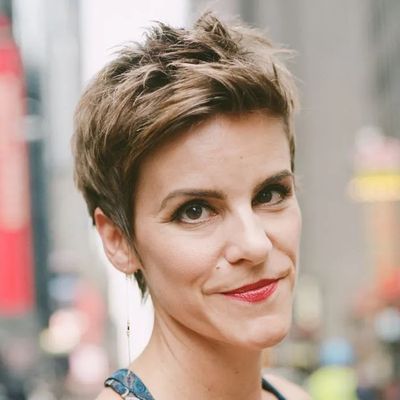
From a comedian in LA to a Broadway veteran in NYC, Jenn Colella is driven by connection and joy, and shares how she is moving through the shifts in her career as they come, including her latest podcast appearance on The Flame: An Original Podcast Musical.
Jenn Colella is a comedian, actress and singer perhaps best known for her Tony Award nominated performance as Captain Beverley Bass in Broadway’s Come From Away; a role she originated, earning her Outer Critics Circle and Drama Desk Awards. Other Broadway credits include High Fidelity, Chaplin, If/Then, and Urban Cowboy (her Broadway debut). Jenn’s Off-Broadway credits include Closer Than Ever, Slut! the Musical and Side Show. She also has several television credits, including appearances on All My Children, The Good Wife, and Elementary. Jenn can now be heard as one of the leads in The Flame, an original romantic comedy musical podcast on the Broadway Podcast Network.
Growing up just outside Charleston, South Carolina, where there wasn’t a great deal of theatre, Jen quickly became a “choir nerd” eager to sing anywhere she could. But while watching a production of Phantom of the Opera in high school, something clicked - she thought “I can do that. I need to do that”.
Jenn chronicles her time in undergrad at Columbia College, during which she worked at an insurance company, was the lead singer in a rock band, and a company member at the only professional theatre at the time called TrustUs Theater. She shares her journey from grad school to stand-up comedy, recalling trips to LA watching sets at the Comedy Store and Laugh Factory, and encouragement by people “to just write a set” and try to get up there, and how she did. Jenn also opens up about her process for developing a character based on someone who actually exists in real life (namely Captain Beverley Bass), and the immediate kinship she felt upon meeting Captain Bass for the first time.
In this episode, we talk about:
- One of her earliest memories, which connected music to joy
- Embracing downtime and learning to adapt during COVID-19
- Her love for the rehearsal room
- The Flame, developed by an LGBTQ identifying creative team
- The courageousness stand-up comedy offered her
- Witnessing Captain Beverly Bass watch Come From Away
Connect with Jenn:
- IG: @jenncolella
- Twitter: @jenncolella
- Subscribe/listen to The Flame
Connect with The Theatre Podcast:
- Support us on Patreon: Patreon.com/TheTheatrePodcast
- Twitter & Instagram: @theatre_podcast
- Facebook.com/OfficialTheatrePodcast
- TheTheatrePodcast.com
- Alan's personal Instagram: @alanseales
- Email me at feedback@thetheatrepodcast.com. I want to know what you think.
Thank you to our friends Jukebox The Ghost for our intro and outro music. You can find them on Instagram, Twitter, and Facebook @jukeboxtheghost or via the web via jukeboxtheghost.com.
A very special thanks to our patrons who help make this podcast possible!
Transcript
This transcript was automatically generated and might contain errors.
[0:00] Alan Seales: Welcome to the Theatre Podcast. Intimate, personal conversations with the industry's biggest names. I'm your host, Alan Seales, and this episode is with Jenn Colella, who you may know from Come From Away as Captain Beverly Bass, and a slew of other credits on Broadway. She is just an amazing person. Our conversation quickly turned into a completely different format, and I absolutely loved it. It was so unusual in a good way, just unique, and Jenn, too, is just a unique person. She's very spiritual, but her vision of spirituality is a lot like mine. It's about rhythms and connection, and we get deep into that. So enjoy that conversation because it's so much fun to listen to. Don't forget, now that you can actually catch her on The Flame, an original romantic comedy musical podcast that you can hear also on the Broadway Podcast Network.
You can find it at bpn.fm slash the flame. Find me online on Instagram and Twitter at theatre underscore podcast. Go to the theatre podcast.com to get more information. There's some links there to subscribe and show your support for the podcast. You can show support via Patreon so that the proceeds from that help go to continuing transcriptions and the ongoing production costs of keeping the podcast going. Now, everyone, please enjoy this episode with Jenn Colella.
[1:43] Alan Seales: Today's guest is a Tony-nominated actress earning the nomination for her phenomenal performance as Captain Beverly Bass in Broadway's Come From Away. She made her Broadway debut in 2003 in Urban Cowboy and has numerous other credits that include High Fidelity, Chaplin, and If Then. And also, she was once a stand-up comedian. We'll get into that. And she can now be heard as one of the leads in The Flame, an original romantic comedy musical podcast, also here on the Broadway Podcast Network. Jenn Colella, welcome to the Theatre Podcast.
[2:14] Jenn Colella: What's up, Alan? I'm glad to be here.
[2:16] Alan Seales: You just got back from vacation. You look relaxed. You look tan. I hope that through all of this strange-ass COVID time, with Broadway being shut down and no industry to speak of, you still found a way to relax. And of course, we're here to talk about The Flame because that was created and now is released in quarantine. So we're recording in June. This is going to come out. And we're talking about Pride. We've got so much to cover. Gosh, where do you want to begin? Let's see. Normally, I have this much more thought out. You're perfect. I love it. We've been chatting so much before we started recording that I'm trying to think of what I want to go back to cover here. Okay, so I guess let's start with little Jenn in South Carolina. Grew up in Charleston, yeah?
[3:11] Jenn Colella: Yeah, just outside of Charleston in Somerville.
[3:16] Alan Seales: Right. So at what point, I mean, reading up on your past to prep for this, we've got the theater. We've got stand-up comedy, which I didn't know about until recently. And I guess, what got you into, let's just start there. What got you into theater? What got you into wanting to perform? And what was your childhood like?
[3:38] Jenn Colella: There wasn't a great deal of theater where I lived. So I was like a choir nerd. I loved singing in choir. So I started very early singing in choir, like eight years old. And then I was like concert choir and show choir, and I sang in church services just because I needed to sing. And it was such a wonderful place for me to learn about music in that way. And then it wasn't until late, I would say maybe my senior year of high school, that I finally saw a huge production, like a Broadway show. It was Phantom of the Opera. And that's what did it for me, Alan. I was like, I can do that. I need to do that. I remember driving around in my 1976 Datsun with one of the huge skinny stick shifts coming all the way from the floor, singing Christine Daae at the top of my lungs. Like, cool. It's cool like that.
[4:40] Alan Seales: What's the need then? You said you need to do that. What is it for you that is that need?
[4:48] Jenn Colella: It's about the vibration. Someone told me once that there's a psychology that supports the notion that there is no greater way to connect than to sing with someone else. There's something about that vibration that really strikes a deep chord in the human experience. And I really, really felt that it was fuel for me for a very long time, and it gave me purpose.
[5:20] Alan Seales: That's very cool that you said that. I've said that so many times, I think, and my listeners are probably tired of hearing me talk about the vibration of life. And it's literally, everything's a rhythm, right? You've got the tides and singing and your heartbeat, right? That's why someone told me recently that bass lines, people love bass lines, because your heart literally changes to match the bass line sometimes.
[5:43] Jenn Colella: Totally. Sex is a rhythm and life all over the place. You're speaking my language, Alan. This is what I believe. I love this kind of stuff, because I literally just came out of something else earlier. I was saying that my spirituality, I identify, I guess, as an atheist. I've never really defined it concretely, because I do believe there's something that connects us. I don't know if it's a higher power, but my feeling is that it is, again, it's the vibration. When you walk into a room and you instantly connect with somebody that you've never met before, and it doesn't have to be a sexual thing, it doesn't have to be, it could just be like, I know this person. And it's interpreted differently as like, oh, we had a past life together, or oh, we're just instant buddies, or whatever the case is, right?
And I think when shows, something about Phantom, that vibration, the vibration of that show, the desperation of the Phantom, or the way that whoever the actress was, was playing Christine Daae, that spoke to you in a way that entered your body, and immediately on an unconscious level, you were just like, this is who I am.
[7:00] Jenn Colella: For sure. Actually, one of my first memories, I just shared this the other day, and some people think it's a little woo-woo. I'm really glad that you're holding safe space for this kind of talk, Alan. But one of my earliest memories was being held by my mom. I can still smell, it was summertime, because I could smell like the sweat kind of mixed with suntan lotion on her skin, in her neck. And she was singing Barbra Streisand with Barbra Streisand, singing Evergreen. And I can remember her joy flowing through that vibration, and I connected that joy to the vibration of Barbra Streisand, and wanted more and more of that. I believe that was the moment when I was like, oh, wait a minute, there's something about this singing, and there's something about that lady singing, that comes directly through my mom into me to create joy.
[7:48] Alan Seales: Oh, that is beautiful. I love that. And now that you've said that, I don't know if I've ever made this connection either. My mother would listen to the cast albums of Cats and Phantom when I was tiny, tiny. I have never made this connection before. I'm sort of having a mind-blown moment. Okay, so those are the two albums that I was an infant listening to. I remember them very, very distinctly. And then growing up as a young child, I wore out the VHS tapes of West Side Story, Music Man, and Singing in the Rain. And so those are like my five shows that I think have contributed to who I am through the love that my mother had for it.
[8:40] Jenn Colella: Yes, absolutely. Absolutely. You can feel the vibration of her joy. No, that's life, bro. That's exactly what we're talking about here. Your mom is happy. She's like, what's making that person that I'm connected to so happy? Oh, it's this vibration. Okay, let me keep that going so I can maintain my connection with her and my connection with happiness itself.
[9:08] Alan Seales: Oh, that's, well, okay. We've opened up a whole new layer here. So let's dive into this. So the happiness layer, the vibration layer, I love, I don't often talk about the woo-woo stuff, as you put it, but I like it. I think there's something to it. And so the vacation that you just went on, you said before recording, it was like, it's much needed. I got to go on it. Like when you are in an industry that you do because it is you, you need it, you have to do it. And then all of a sudden it's just shut down and ripped away from you. A, what's going through your mind? How are you processing this? And then B, I guess more superficially, how does it relate to now with the light at the end of the tunnel?
[9:46] Jenn Colella: I think it's harder now than it was at the beginning because now we want it to be back so bad and it can't quite yet. And so you're going on vacation. So let's, yeah, let's start with that. And tell me about what happened when everything shut down. You were, you had already left Come From Away. So you got closure there.
[10:03] Jenn Colella: That's right. That's exactly right, which was super helpful. So I had a bunch of gigs lined up. I had, I performed with my band in Alaska and we had a great gig at the NECO in San Francisco, and we were able to do those. I traveled to New Zealand and Bali and was really like doing it. And then things started to get canceled. I was going on another Playbill cruise with Seth Rudetsky, that got canceled. And then these other concert dates started getting canceled. And as I watched them like disappear from my schedule, I thought, ah, bummer. But not, I wasn't yet devastated because quite honestly, I've been a professional actor for two decades now. So I, there are moments wherein we do not work.
This is something that, that we're used to. We can't fall apart when we don't have work because it's such a huge aspect of what we do. So I knew a, that I would get some downtime, which I have learned over the years to really embrace and to try to embrace. And then I knew that my like hustle mode would kick in when I need to, needed it to, and it did. So I hosted a lot of galas online, which I actually loved because I'd be like full gown and fuzzy socks. And I was like, I'm not going back to heels in a ballroom ever. This is much, much better than having to work a room in some heels. And I taught a lot of masterclasses, which I love and had to find new ways to connect to the room instead of people laughing or, or I had to find new ways to create that space, which I really liked.
[11:50] Jenn Colella: The toughest part of it was trying to do readings and concerts and, and, and the tech aspect of it. And I'm, I'm not a technical person, but I have had to learn. I have all this gear and I've had to learn lights and I've had to learn mics and all of that stuff has been challenging, but also good. I'm learning new skills. So I keep trying to move through the shifts as they come at me, which is what actors are, are want to do.
[12:17] Alan Seales: So it, the, the mental health aspect of this though, were, were you at any point just kind of, I guess, worst case, just in a place where you're just like, screw it. I'm, I'm out. I don't want to do this anymore. I know so many people without the experience that you've got who are just like, I'm, I'm out. I'm done. I've left the city. They moved to Texas. They moved to Idaho. I don't know if they're coming back.
[12:39] Jenn Colella: Yeah, for sure. I did. I did have that moment. I still may be in that moment. I realized that I love rehearsing much more than I love performing. There's something so safe about the rehearsal room wherein we can try and fail or succeed and learn and flirt and play and all of those things without, without the judgment of the audience. I'm always sad after opening night, the show after opening when the creative team isn't there anymore. And I'm like, where'd mom and dad go? We were just, I was just doing this whole thing for them. I was doing it for them. And of course, I love the energy from the audience and that sort of thing. But there's a safety to rehearsal and a feeling of community and really establishing the family that I love quite a lot. But my desire to show off, Alan, is waning.
[13:45] Alan Seales: Really?
[13:46] Jenn Colella: Yeah. And I think that I've, a big part of my, what I've done to create a path for myself as an artist has been like, look over here. I can
[13:55] Jenn Colella: I sing, it's always like the last time I'm ever going to sing, right? I think that's kind of what people dig. And my desire to do that is kind of relaxing. So I don't know what that means. I'm interested to explore in my next project, what kind of actress I am, if I'm not one who wants to show off.
[14:16] Alan Seales: There was a parallel that I'm drawing, there is a parallel that I'm drawing now, as you're describing this natural progression that you're going through. And I can tell just by watching how you're talking about things that you're, I think, much more of a, I want to say spiritual, but that's not the right word, just more of a metaphysical person than I think you get asked about or that you're maybe even publicly comfortable talking about.
[14:42] Alan Seales: And I go back to Matthew McConaughey's book, Green Lights. I talked to Matthew about his book back in December. And it's funny because he's always been one to be very connected to that calling, whatever it is in his life.
[15:03] Alan Seales: And when he was in his 20s, he did rom-coms, and then into his 30s and early 40s, he was doing the true detective stuff and the more serious things. And so now he's taking a break, and he's coming back and who knows if he's going to run for governor of Texas, right? He's making a difference that is not in the realm of TV and film.
[15:30] Alan Seales: So the parallel I'm drawing here is that he's always been very one publicly to do whatever he's called to do, whether it's get high and smoke, get high and play bongos naked and get arrested or whatever the case is, right?
[15:43] Jenn Colella: Also valid, also a valid choice.
[15:46] Alan Seales: Which I highly support. And he's always been one, and I respect him for this, and I think you're very similar and I respect you for this too, is that you're taking the projects along your path that you feel drawn to do versus what you think other people want you to do.
[16:07] Jenn Colella: For sure.
[16:09] Jenn Colella: And so, go ahead.
[16:10] Alan Seales: No, I was just saying it's easier to do that as I get older, right? When I was younger, I was just taking everything that came my way.
[16:18] Jenn Colella: I've been very fortunate that people trust me with new works, but so much of that was making something shine, and I'm grateful that I've had that opportunity.
[16:29] Jenn Colella: But yeah, I had two movie auditions this week come in for Softapes, and I was like, no, thank you.
[16:36] Jenn Colella: And my younger son was like, what are you doing? My older son was like, I'm conserving my energy, and I know that that's not the right fit for me, and I'm moving along.
[16:46] Jenn Colella: And it's such an interesting place to be. I make the joke that when I first came into this business, I was like, how many lines do I have? And now I'm like, how many lines do I have?
[16:59] Alan Seales: Yeah.
[17:01] Alan Seales: I am curious, though, now, how do you evaluate what you're looking at? How do you evaluate your projects?
[17:07] Alan Seales: And I guess let's relate this to The Flame, which is, of course, a romantic comedy musical podcast.
[17:14] Jenn Colella: I have to get all that right. And it's all about a group of, I guess, queer women in a bar, and the focus is not about the fact that they are gay, and that's how it should be, right?
[17:31] Jenn Colella: It's not like, this isn't a story about gay people. It is just a great, funny story that happens to have some homosexual relationships in it.
[17:40] Jenn Colella: That's right. And I also love that it was created by an LGBTQ identifying creative team, right?
[17:49] Jenn Colella: Very often, some queer stories come down the pike, and it's like a straight white guy. And you're like, you're being sweet. Thanks so much.
[17:57] Alan Seales: Thank you.
[17:59] Jenn Colella: You know what I mean? But there's something cool about the authenticity of it.
[18:04] Alan Seales: And you're exactly right. It's not the fact that these women are queer. It's about looking at relationships in this particular setting. And they also happen to be gay.
[18:16] Jenn Colella: It's delightful. It's funny. I was really, really surprised by how funny it was. And then I started to care very much about the characters. I played Jo, who's a regular at the bar. She's a lawyer. She was a player for quite some time. And then all of a sudden, she meets someone that knocks her off her feet. So it's a little side story that's really exciting. And yeah, I'm just thrilled to be a part of it.
[18:42] Jenn Colella: It's really fun to me to see this stuff. And it's important to me, too, to see the characters being portrayed and played by people who actually identify with that in the real world as well.
[18:57] Jenn Colella: And gosh, I think it was Brandon Uranowitz, right? We got into a deep discussion about the fact that when he was in Burn This, it was the first time he had been able to play an openly gay character as a gay man where it wasn't a plot point.
[19:13] Jenn Colella: It was just who he is. First of all, I love that person with a deep, deep love. He's such a great guy. Such a great guy. Crazy talented.
[19:26] Jenn Colella: And did you see his performance? Did you see him in Burn This?
[19:30] Alan Seales: Yes, I did.
[19:32] Jenn Colella: Unbelievable. That whole production, I loved. Adam Driver's just got his own thing going on. Brandon was so beautiful. Absolutely stunning. I would watch him do anything at all.
[19:44] Jenn Colella: But yeah, to play a gay person in a gay show written by gay people is not the norm. It's not something we get to do very often. I think the only other time I got to do that was when I did the Bebo Brinker Chronicles off-Broadway, which was the Ann Bannon pulp fiction novels. And Lee Silverman was our director and Lily Tomlin was our producer. But that was years and years ago.
[20:16] Jenn Colella: Brian Yorkey was also half of the writing team for If/Then, and I got to play LaChanze's wife in that. That was kind of cool. But again, it's really quite unique that this is a story that has a lot of gay women written by gay-identifying women. It's thrilling. It's great that it's here. I'm fortunate that it is unique, and I hope that this just becomes part of the zeitgeist.
[20:47] Jenn Colella: This is a lot of what needs to change as Broadway and theater return in general. I think throughout the time of COVID, there was, of course, we talked about this ad nauseum, and it rightfully so that there is this whole racial reckoning and social awakening that everybody's been going through.
[21:09] Jenn Colella: And all of this now is coming back to the fact that I think we are going to see such different things hit the stage three, four, five years from now. Because they're being written. They're influenced by what's happening right now. They need to get workshopped and developed and all of that.
[21:29] Alan Seales: That's right. Yes.
[21:31] Alan Seales: Everyone is clamoring for Broadway to change, and there's a lot of things that must change and have to change, and I agree with that. And I also want to point out, too, that it will take years, because it takes years to get what is happening now.
[21:46] Jenn Colella: That's right. I'm so glad to hear you say that. We have to keep the conversation at the forefront, for sure, and trust that this is a process. And I get that it should have happened a long time ago, but now we're having these conversations. We've got to bring them to the table, and the new works will begin to develop.
[22:05] Alan Seales: Yeah, you're exactly right. I'm so happy to hear you say that.
[22:09] Jenn Colella: Yeah, I talk about it as much as I can, because it's very important. You can't just flip a switch and say, all right, we're equitable now. This is show business. That's not how this works.
[22:21] Alan Seales: That's right.
[22:23] Alan Seales: We're going to take a short break. Stay tuned for more of the episode.
[22:36] Alan Seales: And I want to take this back a little bit to you relating to all of this, because at least according to Wikipedia, you describe yourself as mostly gay.
[22:46] Jenn Colella: Now, I want to point out that Wikipedia, I didn't describe myself at all. Someone else wrote that page. I have no control over what's on Wikipedia, nor does anyone else. But that is true. I do identify as mostly gay.
[23:02] Jenn Colella: What does that mean? That means that every once in a while, the vibration of a dude will hit me on all levels. And if I'm single, and if I'm able to, then I will open my heart to that fella, that that's happened. It's surprising when it does, but it has. Some fellas have really knocked me off my feet. And so I want to keep that part of me open. I am definitely mostly drawn to women. And that's just kind of how I roll. But there is a part of me that is also deeply attracted to men. I'm just as surprised as you are.
[23:49] Alan Seales: No, I'm not surprised.
[23:51] Alan Seales: I'm not surprised because everybody has, you know, it's a spectrum. You hear this all the time. I always, to a fault, I think, internalize what I hear from my guests and relate to like, oh, how does it relate to me? Or how do I fall into this too? And I have always been able to look at, I mean, I'm attracted to women. And I've always been able to look at other men and say like, oh, he's an attractive guy without being attracted to him. Knowledge that like, oh, that guy probably has a lot of people that find him very desirable or whatever the case is. And I wonder how much of that is literally just genetically who I am versus how much growing up again in a small North Carolina town, how much I was told that's how I was supposed to be.
[24:47] Alan Seales: Pre-internet, I didn't have broadband until college. You know, I'm one of the few that grew up analog or was born analog and grew up digital. So I know both sides of this. And now that the internet is literally carried around in everybody's pockets as kids, I think about this with my kids too. And I heard a statistic a little while ago that it's like over half of kids under 16 identify as not hetero or homosexual. It's just whatever, right? Because now that they can see through communication and connection, how much else is out there, they realize that it doesn't much matter. So going back to my original point, right? I just wonder how much of this is what I was told I was supposed to be as a kid versus how I actually am. And obviously, there's a lot of overlap.
[25:44] Jenn Colella: Yeah, had you been allowed to imagine those things.
[25:49] Jenn Colella: Because I wasn't allowed to think about being with women. We were not supposed to be with women. I was like boy crazy. And then I slept with my college roommate and I was like, wait a minute. Hold on.
[26:02] Jenn Colella: Oh man. Oh my goodness. And I just felt like the whole world opened up to me. So yes, I think you're right, Alan. I think had you had the opportunity and maybe like one more shot at tequila, you could have made out with some cute guy. And then be like, every once in a while, I like to make out with a guy or whatever it is.
[26:23] Alan Seales: Yeah, it's interesting.
[26:25] Alan Seales: That's funny.
[26:27] Jenn Colella: So when you're building up to the moment when you're like, I think I would do something with my college roommate. Are you questioning yourself? Are you like, I know I'm gay, but I can't talk about it? Are you like, I'm not sure. I want to try it.
[26:35] Jenn Colella: No, this was a surprise. We were playing truth or dare and her boyfriend fell asleep. It was like a simultaneous moment. And at first I was like, oh man, I have no idea what I'm doing here. I just loved her. I didn't know how else to express that love. But I was very nervous because I was like, I don't know this. And then something in me clicked and I was like, wait a minute. Yes, I do. I know this quite well. This is a part of my own body and I love this person. So that's all that matters. So it was a huge moment of opening up for me and where passion and true love collided.
[27:21] Alan Seales: Wow, wow. That is a different story, I think, than I've heard from most people. Most people that I guess have come either friends that have come out to me where I've just said, yeah, of course I knew. It didn't matter. It's the typical sort of thing. Or somebody who did kind of the flip of that, the reverse of that, where they've known their heart.
[27:48] Jenn Colella: Life and have been so afraid of their family or their friends or their work or whatever it is that is like, wait a second, I'm not allowed to do this. So, I have to keep putting up the rouge. And you hear about men and women who like, get, they have families together. And then all of a sudden, like, I gotta get a divorce. This isn't who I am anymore. And, and I, I empathize with those people, but I can't imagine the struggle that they must go through. Right, right. Yeah, I didn't, it wasn't even in my head or heart. They're just, we didn't talk about it in the South. We didn't talk about gay people. We knew it was out there, but we did not mention it. And so it wasn't allowed in. And thinking back, I think there were probably some teachers that I thought I really wanted to be close to.
And maybe, maybe that was something, you know, or girls that I was really drawn to, but I thought I wanted to be like them. Maybe, maybe that was it. But it, it really, it kind of struck me. It was out of the blue.
[29:04] Alan Seales: Wow. That's, that is a very powerful and unique story, I think, at least from, from what I've heard. And yeah, totally. Wow. Well, thank you for sharing that. Of course. So, let's go back to the stand-up comedian days. Okay. I think I forget about those.
[29:19] Jenn Colella: No way. So you're performing, you're singing. And then did you go to college? You went to college for performing arts, yeah?
[29:25] Jenn Colella: Well, I went, I did my undergraduate work in South Carolina at a small liberal arts school called Columbia College. And then I took three years where I worked at an insurance company. I was the lead singer of a rock band, and I became a company member at the only professional theater at the time called Trust Us Theater that would do Nikki Silver and, you know, Angels in America. And there's a late night bill that did shows like Vampire Lesbians of Sodom. It was dope. So for three years I did that. And then I went to graduate school to get my master's in acting from the University of California at Irvine. And it was there during my third year of that program that I started to go to LA and kind of check out some of the sets at the comedy store and the laugh factory and was encouraged by people to just write a set and try to get up there. And so I did it.
[30:17] Alan Seales: What did you write?
[30:23] Jenn Colella: It was terrifying. Oh, it's gotta be so terrifying. I can't imagine doing that. I mean, first of all, I did it primarily to be more visible within that particular industry, because theater wasn't like a thing. So in LA, I was like, oh, this is a good way. I thought I wanted to do sitcoms. I was like, this is definitely a path that people take. What was beneficial about it was that if I failed on stage, and boy, did I, there was no one to blame. There's no pianist to blame. There's no other writers to blame. It was wholly on me. But I soon discovered that in the very next breath, I could get them back. I could get a laugh at that, that the world could indeed collapse, but it would keep on spinning. And that kind of offered me a courageousness for every time I step on stage.
[31:11] Alan Seales: That's a wonderful parallel. And I'm going to bring that in now to when you're creating a character. Is it sort of the same process? Something like Come From Away is not a comedic show. It's got humor to it. And lots of humor. It's a very fun show to watch. But the whole thing is one act, no intermission. Once it starts, you get shot out of a cannon until it's over. Which is basically paralleling the experience of what the actual residents of, you know, Gander and the airplanes had to go through.
[31:37] Jenn Colella: That's right. So when you're creating these characters, though, and then especially something that's modeled after a real person, who the real Beverly Bass, you've become friends with. You're here, yeah? So when you're creating this character, how far do you go when trying to skirt that line between what's authentic and what's just going to play for a laugh?
[32:14] Jenn Colella: That's so interesting. Within the confines of the theater world, I can't play for the laugh, right? I have to ask for the butter, not for the laugh. And that's something that I have to really work on. Because when I was doing stand-up, it was very much like, ba-dum-bum, like you knew it was a punchline. I'm definitely asking for a laugh. I've built up to this. It's time for you to laugh. I have to fight it still in any show to not be like, wagga wagga. And just play it honestly and trust that if there's humor, that will be there. So that's something I really, really have to work on. As far as the authenticity goes when developing a character and someone whom I know who actually exists in real life, I find, and there are many different methodologies to what good acting is, but I find that if I bring myself to what's on the page, and in this case, I also have the extra added bonus to meeting this person and sitting down and having coffee with this person, if I can somehow meld all three of those things, then that will be the most authentic.
Then I'm serving absolutely everyone. I don't know how some actors are like, I become the character. I channel and I become. That feels like a magic trick to me. Like, dope, if you can do that, awesome. Like, honestly, brava. But I don't know how to not bring my own experience and heartbreak and triumphs into what I see on the page. And then when I got to know Captain Bass, and I saw how she holds a coffee cup, or what her eyebrow does when she's about to tell a secret, then I can pepper those things in as well.
[34:03] Alan Seales: Did you all, you and the rest of the cast, or maybe you were unique, like, did you meet the original people that you were modeling, that you were portraying? I guess, how far along during the process? Were you already in rehearsals? Did you already stage anything? And then they were icing, or was it like you met them, you traveled again to meet them first?
[34:18] Jenn Colella: They were icing. We had already, we actually had just about finished previews in La Jolla when Captain Bass got there. The opening night was the next night. Wow. And there was a restaurant across the street from the theater where we all went to hang out after a show. And she was there, we spotted one another from across the room, and she made her way over to me, and she said, I think you're playing me. And I said, I think you're right. And we embraced, and I immediately felt this kinship. And then she started to tell me her story about 9-11, like exactly what I do every night. She had no idea that she had such a pivotal role in the show. She met these two young kids, David and Irene, the writers, however many years ago at the 10-year reunion, and told them her story.
And then she got word that there was some musical. She had no idea. So she's talking to me about how she was flying from Paris to Dallas, and how she and her husband Tom put pins in a map in their kitchen, and how there were 38 planes that were doing, and I was like, you don't say. Like I just knew her head was going to explode the next night, and it did. I can remember she was sitting in the third row right in front of me as I sang that song about her life. And having read the transcripts from the interviews, it's very, very close. They theatricalized it and made it rhyme, but these are her words. She flipped out. And so she saw the show after that 164 times, I believe is the count. And throughout our journey together, I got to know her more and more. And so I could then kind of layer in some of the things that I had already established as a foundation for that character.
[36:03] Alan Seales: I'm wiping away a little bit of a tear here. I think that's beautiful. I didn't know that the original people were so far removed from the creation. I thought they, I mean, of course, their interviews were used, you're saying the transcripts were used, their first person accounts were used. But God, to experience that in person, and then to hear they're making a show about it, okay, cool. And then to show up, and she's telling you things, she's telling you things that obviously you know about, because it's all in the show, but she doesn't know it's in the show. And then to see that, imagine from her eyes, from her perspective.
[36:41] Jenn Colella: I saw her reacting as I was singing these things. It was so meta. It was just bananas.
[36:48] Alan Seales: Oh my God. Yeah, the pins on the map, the whole thing, she and Tom were looking at each other, like what's going on? It was wild. It was wild. It was cool. I can't imagine how cool that would be. Oh, it would just be so phenomenal to see your story told like that. And yeah, I guess, sort of same thing, I was talking with Derek Baskin the other day about talking with Otis Williams and telling that story of the temptations, and just, or Stephanie J. Block has become so close with Cher. And you've got, oh God, I can't, oh, this is a whole new level of connection that I haven't even thought about until now. I love that.
[37:32] Jenn Colella: It's wild. Yeah. It's cool. It's really, it's an honor. It's cool. And it helps. As an actor, it helps. And you don't want to totally become that person, because then people are like, oh, it's not quite a, you're not exactly, that to me, again, isn't the most effective acting. It's combining the two of us, which is cool.
[37:49] Alan Seales: Right, right. And then you've got to pepper in what the director wants, and then the music, the choreographer, and, you know, there's, it's a true ensemble piece. It's just, it still is one of the best shows, I think, is on Broadway Night. It's going to return September 24th, 27th?
[38:06] Jenn Colella: 21st, September 21st. Yep, so it is returning. I can't wait to see it again. But let us wrap up here with three standard closing questions I ask everybody.
[38:12] Alan Seales: Okay, okay. So the first one, very simply, is just what motivates you?
[38:17] Jenn Colella: Connection.
[38:25] Alan Seales: I believe that.
[38:25] Jenn Colella: Connecting to other beings, whether it's a tree that I feel drawn to and want to hug, or it's my little dog who's like, put your phone down and get over here and play, or a person who is in need of a hug. Connection motivates me to do just about everything.
[38:37] Alan Seales: I love that. Okay. What advice would you give to your younger self and younger people listening now starting out down a similar path?
[38:46] Jenn Colella: Trust that you are enough. You don't have to emulate anyone else. You can admire other people, but there's nothing that you should have as, like, you're not, you don't need to be an expert in anything. Where you are on your path right now is exactly right. And the more you can trust that you are enough where you are right now, the rest of it seems, it just makes it a lot easier.
[39:13] Alan Seales: I like that. Okay. So, the last question. This is super hard. If you could only see one show for the rest of your life, but you can see it as many times as you want, what would you say?
[39:17] Jenn Colella: Oh, I can only, just the one, huh? Just one. Oh my god. Um, that's bananas, Alan. That's a bananas question. Um, good god. You know, I'm, like, flashing. My mind is flashing to all of these shows that I've loved, um, but forever is, like, am I in trouble? Did I do something bad? Like, why am I?
[39:49] Alan Seales: You’ve crash-landed on an island that has power and a DVD player, and you could say one DVD. What is it?
[39:57] Jenn Colella: I don't, here's the truth. I'm not a big musical theater fan. I don't like to think that that's, I mean, I want to say Pink Floyd, The Wall, you know what I mean? But that's not, that's the album that I, that I want to hang on to. If it was just musical theater for the rest of my life, I wouldn't make it. I would throw myself into the ocean.
[40:25] Alan Seales: Well, that says a lot about you. I love that. Okay, when, where can we find you on social media?
[40:33] Jenn Colella: Um, I am on the Twitter, um, at Jen Colella, I think, and Instagram at Jen Colella. Yeah. And, of course, uh, check her out as Jo on The Flame at bpn.fm slash The Flame. It is a great show. You can get more of me at thetheaterpodcast.com. I'm on Instagram and Twitter at theater underscore podcast. Please leave a rating and leave a review wherever you're listening now. This has been edited by Well-Rounded Productions. And thank you to Jukebox the Ghost for the intro and outro music. And Jen, thank you. This has been such a unique and different conversation that I normally have. I really, really enjoyed this.
[41:04] Jenn Colella: I like that too. Can I put a little plug in for Twitter is at The Flame Musical and Instagram is at The Flame Musical. If you guys want to follow that too, um, we would love it.
[41:16] Alan Seales: All right. Right. Yes. Yes. All of this will be in the show notes and, uh, follow, follow and tell your friends. It's such a good show. Thank you.
[41:27] Jenn Colella: Thanks for your time and energy, Alan. I appreciate you, man.
© Broadway Podcast Network, All Rights Reserved