

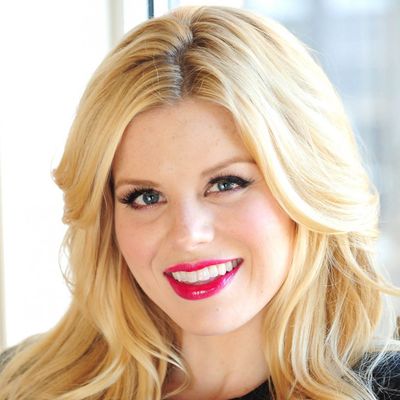
Megan Hilty is a Tony Award nominated actress and singer who may be best known for her portrayal of Glinda in Wicked. Other credits include Broadway’s 9 to 5: The Musical as Doralee Rhodes and Noises Off as Brooke Ashton (which also earned her Tony Award and Drama Desk Award nominations), as well as Annie Get Your Gun and Gentlemen Prefer Blondes at New York City Center... Read More
From the show: The Theatre Podcast with Alan Seales
Guests
Featured Shows

About
Megan Hilty is a Tony Award nominated actress and singer who may be best known for her portrayal of Glinda in Wicked. Other credits include Broadway’s 9 to 5: The Musical as Doralee Rhodes and Noises Off as Brooke Ashton (which also earned her Tony Award and Drama Desk Award nominations), as well as Annie Get Your Gun and Gentlemen Prefer Blondes at New York City Center. She became a worldwide triple threat known as Ivy Lynn on NBC’s musical drama Smash, with other television credits including Girlfriends’ Guide To Divorce, The Good Wife, BrainDead, Sean Saves the World, Louie, Desperate Housewives, and Ugly Betty among many others. Megan has performed across the globe to sold out houses, including concerts with the New York Pops at Carnegie Hall, the National Symphony Orchestra at the Kennedy Center and the New York Philharmonic at Lincoln Center. She's recorded three albums of her own and is now making her 54/Below debut with a six show series running from November 2-7th.
Growing up outside Seattle, Washington, Megan was an avid singer and a veteran performer within her local community theater. She chats with us about what first drew her to theater as a child, and what keeps her coming back to the stage even with a successful film and tv career. While in LA with Wicked, Megan recalls realizing the need to diversify her career, and shares how she began her journey into the TV and film world. She reflects on the heartbreak of closing 9 to 5: The Musical, and speaks candidly about leaving NYC, pounding the pavement in LA, and finding herself in an audition room for Smash. Megan also gives us an inside look at her upcoming 54 Below debut, which she calls “a huge pinch me moment”.
In this episode, we talk about:
- Almost going the opera singer route
- Being inspired by Bernadette Peters’ career
- Landing Wicked in NYC right out of college
- The reality of the harsh comparisons and criticisms actresses endure
- Performing with Brian Stokes Mitchell
Connect with Megan:
- Get tix to her 54/Below event
- IG: @meganhilty
- Twitter: @meganhilty
- Subscribe to the 54/Below Podcast: bpn.fm/54below
Connect with The Theatre Podcast:
- Support us on Patreon: Patreon.com/TheTheatrePodcast
- Twitter & Instagram: @theatre_podcast
- Facebook.com/OfficialTheatrePodcast
- TheTheatrePodcast.com
- Alan's personal Instagram: @alanseales
- Email me at feedback@thetheatrepodcast.com. I want to know what you think.
Thank you to our friends Jukebox The Ghost for our intro and outro music. You can find them on Instagram, Twitter, and Facebook @jukeboxtheghost or via the web via jukeboxtheghost.com.
Transcript
This transcript was automatically generated and might contain errors.
[0:00] Alan Seales: Welcome to the Theatre Podcast. Intimate, personal conversations with the industry's biggest names. This episode is no exception to that tagline. We have none other than Megan Hilty, who has an up-and-coming concert series at 54 Below, November 2nd through 7th. It's the 54 Below Diamond Series that is Laura Benanti, Megan Hilty, Jennifer Holliday, and Kelly O'Hara, just four powerhouses of our community. And actually, this episode is a special crossover episode between my podcast and the Feinstein 54 Below podcast that you can read more about at bpn.fm slash 54 Below. So this episode will go out into both feeds. Make sure to check out that feed as well. This is a side of Megan Hilty that I hadn't seen before, and in a good way.
She was very honest and very raw. And we know her from these great characters she plays on stage and even from TV, of course, and Smash, and all these other comedic, cartoonic voiceovers that she does in cartoons. And we got really into mental health a bit about maintaining her success. And she got angry, really sad at the closing of 9 to 5. She was telling the story of when that musical closed, it came out of nowhere and affected her in a way that she knew she had to leave New York in order to stay sane and continue with her career. She had to just put theater on pause for a second. So she moved back to LA, found more avenues that expanded her career, which of course have brought her back to Broadway.
This is a story that I hope you're as excited to hear as I was to discover. Give me a little follow on Instagram and Twitter. Let me know you're listening. I would love to hear from you. Leave a rating and a review wherever you're listening now. And now everybody, please get your tickets for November 2nd through 7th at 54 Below. And then everybody, please enjoy this episode with Megan Hilty.
[2:19] Alan Seales: Today's guest is a Tony Award-nominated actress, maybe best known for her portrayal of Galinda in Wicked. Other Broadway credits include Doralee Rhodes in Dolly Parton's 9 to 5, The Musical, and Brooke Ashton in Noises Off. She became a worldwide triple threat known as Ivy Lynn on NBC's musical drama Smash. Other television credits include recurring roles on Girlfriend's Guide to Divorce, The Good Wife, Braindead, and Louie, among many others. And she can be seen performing across the globe to sold-out houses, including concerts with the New York Pops at Carnegie Hall. I'm going to get a breath. And the National Symphony Orchestra at the Kennedy Center and the New York Philharmonic at Lincoln Center.
She's recorded three albums of her own and is now making her 54 Below debut with a six-show series running from November 2nd to 7th. Megan Hilty, welcome to this very special crossover episode between the Theatre Podcast and the Feinstein's 54 Below Podcast. Hey, how's it going?
[3:20] Megan Hilty: Good. I'm going to catch my breath after all that. That was quite the intro.
[3:26] Alan Seales: You're welcome. And thank you for doing so much for all of us to talk about.
[3:34] Megan Hilty: No problem. So 54 Below, it's coming up this concert. Everybody go get tickets to your show 54 Below. You can go to your Instagram, get tickets, go to 54 Below, get tickets. But this is actually your 54 Below debut.
[3:41] Megan Hilty: Yes.
[3:42] Alan Seales: Yeah. So there have been many years of you, many years of 54 Below. Why just now is this coming to be?
[4:00] Megan Hilty: You know, it's only now just worked out to be a possibility because with concert contracts are a little different in that you kind of have to sign off on not performing within like 90 mile radius of whatever theater you're performing in for at least like a couple months before and after.
[4:15] Alan Seales: Really?
[4:16] Megan Hilty: Yeah. So that the ticket sales aren't competing for the same market. And it makes sense. At first it's like, oh, that's weird. But when you think about it, it actually makes sense. You don't want to split your audience between two places. So it just hasn't worked out until right at this moment for this incredible thing that they're doing with the Diamond Series.
[4:37] Megan Hilty: Yes. Yeah. It's more like an experience than just a concert. It's a four-course dinner. It's not your typical 54 Below show where there's multiple shows in a night. You come, you spend some good time eating this amazing dinner, and then you get that one show of the evening for whatever artist you're there to see. I'm hoping you'll come and see mine. But like Kelly's already done hers. Kelly O'Hara, yeah. Laura Benanti is well into her amazing run there. And then Jennifer Holliday is going to be performing it, I believe in January.
[5:10] Alan Seales: Can we talk about her Tony performance for a second? She's an icon.
[5:12] Megan Hilty: Yeah. I heard and you seem you're friends with her.
[5:31] Alan Seales: Yeah. And maybe you know, I don't know her. I don't know her. I'm just a fan.
[5:36] Megan Hilty: Yeah. Oh, I thought, gosh, I just assumed that like, all Broadway divas of which you are part of in my mind, I'll just have this secret Broadway diva club, right? Where you...
[5:45] Alan Seales: I've got my club of Broadway divas.
[5:46] Megan Hilty: But you know, unfortunately, I haven't had the honor and pleasure to befriend Miss Holliday.
[5:53] Alan Seales: Jennifer is an avid listener of this podcast. Jennifer, reach out to Megan. You guys need to be friends. Tell me about the story, though. Because when you're crafting the story of the show, right? Because 54 Below, it's like traditionally cabaret sort of concerts. And everything I've ever seen there has been a story about that person, right? It's, it's, which is basically sort of what I guess, what cabarets are, right? It's a showcase what you can do showcase who you are. And so was this sort of an easy thing for you to put together when you're putting together the show? Because you've got a big swath of content and interests and credits. And so how do you condense it on into one performance?
[6:32] Megan Hilty: Well, um, years and years ago, I did not want to do the cabaret scene. I did like the idea of like a one-person show just made me so nervous because I was like, I don't have like a story to tell. I don't have like a beginning, middle and end and something to leave people with. But it wasn't until it became clear that it's not about that. The whole, the whole point of doing these concerts is to see an artist as themselves and not the characters that they play. And so once I discovered that that's what it's really about, it became so much easier to approach putting together a set list. And really, what's most important is picking these songs that are important in some way to you as the performer.
And the songs come first, and then you then the arranging of them to make sure that the energy is flowing correctly throughout the show. You don't have too many ballads together. You don't have too many of the same type of things together so that, you know, you want to keep people interested and kind of go on this almost like roller coaster of an energy journey. You know what I mean? That has natural ebbs and flows. And I'd like to think that over the years, I think I've been doing this for like 10 years now, I have a general sense of what's going to work and what things need to be where to, what things need to be in certain places to make sure that I don't lose everybody.
[8:24] Alan Seales: That's really cool. I mean, it's more or less like workshopping a Broadway show, right? You want to make sure that that the story flows and that the songs are in the right order and whatnot and adding and cutting. So do you do this? Did you put this all together on your own? Or like when you're looking back at your life? I'm thinking from a personal lens, right? If someone were to say, Alan, you've got like two weeks to put together a cabaret show for something, you know, duplex 54 Below, Green Room 42, whatever the case is. I don't even know where I, where or even how I would start. So where do you, where do you begin? Where do you begin with, I mean, do you start at the beginning? Like, I'm born and this is a song that represents me?
[9:01] Megan Hilty: No, no, no. So like I said, I started doing these types of shows about 10 years ago. And it's, I just learn from each and every show. It's not like this is the first one that I've ever done and I have to start from scratch. Luckily, I've had, you know, years and years to kind of hone this. And just as these shows are supposed to show you who we are as people, aside from our characters, we're constantly changing. And like, I'm constantly doing different projects, which add different repertoire to. So like these concerts at 54 Below, these will be the, really the first ones that have stuff from the film that I did with Jesse Mueller, Patsy and Loretta. So, you know, and we've kind of taken those and morphed them into our own arrangements to fit our band, to fit the setting, to fit the context of the show.
So, so it's not like we had to go and start from scratch. There's a lot of stuff that's already there. What it comes down to is understanding who our audience is. You know, we have a very theater savvy New York crowd, and that's a very specific thing. And that's different from other cities that we might play, you know, that might come in not knowing who I am at all. You know, so that's something to consider too. There's a lot of things to take into consideration. And luckily, I'm coming back to New York, you know, where I feel like for this series in particular, you're going to buy the ticket because you know the person, you know. I don't feel like there's going to be a lot of people that I'm really introducing myself to for this. So that makes it a very unique set of circumstances, which allows me to pull songs that wouldn't necessarily work anywhere else.
[11:08] Alan Seales: Is that some sort of inner struggle or inner, I guess, a dichotomy of sorts in that you are counting on the fact that people know who you are in this area, but at the same time, there's a little bit of, gosh, it's all on me. Because you said originally that you were nervous to start doing these one-person shows. So now are you at a point where you're like, I have a reputation, I'm okay, I'm doing all right in this New York savvy, theater savvy crowd? Or is there still part of you that's like, are people going to want to come see me?
[11:37] Megan Hilty: Oh, there's always that. It doesn't matter. Yeah, there's always that. But what I always come back to, like, I'm always nervous for everything, which I think is a good thing. Because it keeps me on my toes. I'm always trying to do better. I'm not phoning anything in. And honestly, during the run of this show, if something is not working, I will switch it with something else. That's the luxury with these longer runs, is that I can really feel... I don't think that anything's going to fall totally flat, but if it doesn't feel perfect, we have so much stuff in our repertoire that we can change the run for the next night. Or my band is so amazing that I can call an audible during the show, and they'll go with me and we'll just do something that wasn't planned.
[12:31] Alan Seales: Wow.
[12:32] Megan Hilty: But they're right there with me and they know all of these songs so well. We've been doing a lot of them for a really long time. And everybody's just so in sync with each other that we're able to do that. That's kind of how I've constructed these shows. My band is made up of my husband and three of our best friends. We want you to feel like you have stumbled into our living room and we're all having a really great time together. I just happen to be wearing a really fabulous gown on top of it. I forget where I was going with this, but all that to say, yes, I'm always nervous for many reasons.
[13:21] Megan Hilty: The great thing is I have surrounded myself with the best people on stage. And what it comes down to is us just having a really awesome time together. And we hope that that reaches, you know, everybody in the room. Like I said, we want it to feel like you're in our living room.
[13:41] Alan Seales: So talk to me about where you started as a little kid and how you got into theatre. Because we're going to get to the iconic, never-dying family of Wicked. The show is going to run forever.
[13:54] Megan Hilty: Forever, yeah.
[13:55] Alan Seales: We're going to get there. But before that, you had to start somewhere. So where did you grow up?
[14:00] Megan Hilty: I grew up in Seattle. Well, just outside of Seattle in Bellevue, Washington. And I grew up always singing. Always. And my mom got me into voice lessons at an early age. And my voice teacher said, you have a voice for classical music.
[14:22] Megan Hilty: And so she started putting me in all of these classical competitions. And I went to an apprenticeship program with the San Francisco Opera. I really thought that I was going to be an opera singer. But at that apprenticeship program, I discovered that we wouldn't really work until our mid-30s. Because that's when a female voice matures.
[14:47] Megan Hilty: Yeah. And telling a 16-year-old that felt like forever away. That felt like, I'm never going to be 35. And so I went down the musical theatre route. But I was always doing community theatre. I was part of a Gilbert and Sullivan theatre troupe.
[15:08] Megan Hilty: And during the summers, I did a youth theatre that took up the whole summer, where we built the stages, we made our costumes, and performed for the whole school district at the beginning of the school year, right at the end of summer. So I was always a part of theatrical productions and singing. Always.
[15:30] Alan Seales: What is it about the culture? Is it culture? Was it chosen family? I say, what is it about the culture? But was it that that drew you into theatre? Because what is it for you that brings you back to the stage every time?
[15:43] Megan Hilty: Because I know that there are so many stage Broadway performers that go TV and film, and then you do tons of cartoon voices and voiceover work and whatnot. But I find that, and correct me if I'm wrong for you specifically, but people always want to come back to the stage. They always want to come back to theatre because there's something about that live moment.
[16:05] Megan Hilty: Well, yeah, it's a very primal human connection. That's it. Like, that's it. The theatre is the only type of arts where there is an exchange of energy. So that will never die, because we always need people. We always need that connection.
[16:26] Megan Hilty: So yeah, it's completely understandable that everybody always wants to flock back to the theatre, whether you're doing a concert or a play or a musical or an opera, what have you, anything. We always, always, always need that human connection.
[16:44] Alan Seales: Is that what sort of looking back at your life as a young child, was it that sort of thing that drew you to it as a kid? Or did you not realize that until later on in life?
[16:53] Megan Hilty: I don't know. To be quite honest, I think it filled certain needs that just children in general have, like feeling like you belong to something. I think that's really important for young people to feel like you're connected and you belong to some kind of group. And for me, it was my theatre pals, most of whom I didn't go to school with.
[17:20] Megan Hilty: And I also, like I said, I was always singing. So having an actual outlet for that was necessary. And it was kind of addicting. And I mean, to be super duper honest, too, I got a lot of attention when I was on stage. I never got that in life.
[17:44] Megan Hilty: So as a young person in particular, that was really important to me as well, getting attention, getting to use my voice and feeling like I belonged somewhere. It checked all of those super important boxes.
[17:59] Alan Seales: Do you have siblings?
[18:00] Megan Hilty: I do. I have two younger sisters. They're twins and they're gorgeous. They're like five inches taller than me. They have really dark hair and they tan and they're funny and smart and stuff. So everybody loves them. So that was another thing is that my family all liked to joke that that was the only reason why I became a performer because it was the only way that I could get any kind of attention. My sisters got it everywhere else.
[18:27] Alan Seales: That's why I asked that because you're saying as a kid, you didn't get attention. But as the oldest child, like I was the oldest child, too. And I was always demanding, like, look at me. I'm the oldest.
[18:38] Megan Hilty: Yeah, I think I just required extra attention. Yeah. Say what you will about what that means about me.
[18:45] Alan Seales: No, I get it. Some people are like that. And gosh, no matter how many accolades you get and how successful you are, I like the quote that Andre De Shields gave in his Tony acceptance speech a couple years ago where he said, the top of one mountain is the bottom of the next. That puts perfectly into words how so many of us operate.
[19:07] Megan Hilty: It's just like, there's something in the back of our heads. It's like, we're just not good enough. We're just not there. We're just not able to fulfill whatever ache that is. And then we think that we're continuing on and we get there and like, okay, so I'm here. Cool. Now, I guess I'll just keep on going.
[19:26] Megan Hilty: Yeah, well, there is no end point. There is no point of success. It's all ebbs and flows. It's going to come and it's going to go and you're going to be busy and you're going to be dying for work. It's a constant, ever-changing battle.
[19:46] Alan Seales: Well, taking it back to you then, how did you sort of branch out and do so much? Because it feels like all of these things you're doing could be one career on their own, right? So you've got the musical theater, you've got TV and film, and you've got voiceover work, and you've got the concert traveling and touring. And being a mom, that's a hard enough job in and of itself. I mean, I know how you got to be a mom. That's pretty simple biology.
[20:14] Megan Hilty: But all of the other roles that you're doing, why did you keep adding? And not saying that as a bad thing. I'm curious to explore this as to say, why continue to grow when all of these require so much time on their own?
[20:32] Megan Hilty: Right. Well, a long time ago. Actually, when I came out to LA with Wicked, which was a long time ago, I want to say like, is it 12 years ago? 13 years ago? It was a long time ago.
[20:47] Alan Seales: Sure, we'll go with that.
[20:48] Megan Hilty: But I came out to establish the sit-down company of Wicked out in Los Angeles. And that's when my horizons started to broaden a little bit. Because for a long time, once I decided musical theater was it, I was like, oh, that's it. I don't want to do television, movies, all that. I was real like, I don't know what I had against everything else.
[21:08] Megan Hilty: But once I came out here, a lot of other opportunities started to present themselves, especially being in that platform of being in Wicked in Los Angeles. And I started to really question where I wanted my career to go at that point.
[21:30] Megan Hilty: And in doing that, I was like, well, whose career do I want to emulate? And the person who came up immediately was Bernadette Peters. And now before I go any further, I want to clarify that the goal was not to be Bernadette Peters, because nobody can be Bernadette Peters.
[21:48] Megan Hilty: She is a singular talent. And I think it is foolish for anybody to try to be another person. That is not what I'm saying. What I wanted to emulate was the many different branches her career, the tree of her career had. Because she did it all. She did movies, television, voiceover, concerts, Broadway, and dominated all of them.
[22:15] Megan Hilty: And might I add, an amazing person on top of dominating everything. Everybody wants to work with her because she's a phenomenal person on top of her talent. Anyway, so I started thinking, oh, maybe the key to longevity in this business is to diversify and to have all those branches.
[22:37] Megan Hilty: And it was always a dream of mine to be in voiceover and animation. Like so many people, I wanted to be a Disney princess growing up. I didn't want to put on the gowns. I wanted to do the voices. I wanted to sing the songs. I didn't want to look like them. I specifically wanted to voice them.
[22:59] Megan Hilty: And so I started going down that route. Yeah, that was like 14 years ago that I got my voiceover agent out in Los Angeles and started really because that is a very different career.
[23:14] Alan Seales: Absolutely.
[23:32] Megan Hilty: I started pounding the pavement 14 years ago and just chipped away and chipped away and paid my dues and paid my dues and have built this thing that I'm super proud of in the animation world. But the same thing with, and all of these things just kind of terrified me.
[23:50] Megan Hilty: You know, TV, film, concerts, all of these things, they just sounded like they're so different. But at the same time, what I started learning really quickly is that by doing these other things, these other mediums, it actually makes me better in the other things, if that makes sense.
[24:17] Megan Hilty: I don't know. By opening my world up to those different types of mediums, it just fed, like the TV stuff fed the theater thing in a host of different ways that, I mean, we could talk all day about that.
[24:38] Megan Hilty: But yeah, it became, a long time ago, apparently like 14 years ago, it became very important to me to diversify so that I could actually have a long career in this business.
[24:52] Alan Seales: We're going to take a short break. Stay tuned for more of the episode.
[25:08] Megan Hilty: I'm glad that you said the thing about the TV kind of crossing over because that's, I wanted to ask about Smash next because that's, it's been a hot minute since that was out.
[25:19] Alan Seales: And that propelled any, well, I guess sort of the fortunate and unfortunate part of the Broadway world is that to be, it's really, really hard to get super famous and therefore some would say super successful in just Broadway stage.
[25:40] Alan Seales: So then you add TV and film to that, and that boosts people to a whole different level, right?
[25:45] Megan Hilty: So you've taken the Broadway, the singing, the performing, and put it on TV, which has taken you as your career, like you said, one helps the other.
[25:55] Alan Seales: So now on an international level, people see you on TV doing what you used to do just for in-person Broadway audiences, and it's pushed everything into a whole new realm.
[26:08] Megan Hilty: Absolutely. Yeah. Yes.
[26:10] Alan Seales: But looking back on that though, I don't know the order of operations of your TV career.
[26:20] Alan Seales: So were you already sort of, were you already deep into the TV and film world before Smash came along or did that propel the TV and film afterwards?
[26:31] Megan Hilty: No, no, no. I was trying to knock down the door to the TV and film world.
[26:41] Megan Hilty: Talking about the television world and before, before Smash, I had done some small roles, some recurring roles and stuff like that. So the TV world was not like this totally, you know, unknown thing when I got Smash. But it was a very, very I didn't just like, fall into it. It was a very like not calculated but like I, I left New York after 9 to 5 closed. I mean, if we're going to get real, real, real about this, I was, I was, I was really broken hearted about how 9 to 5 closed. That was one of the biggest heartbreaks of my life was getting our, our closing notice for 9 to 5. It didn't make any sense to any of us playing to all of these like sold out houses that were screaming on their feet, singing with us and dancing at the end of every show to get our close.
We just didn't, it made zero sense. And I was really, I had come back to New York from LA where I was doing Wicked. And we did the out of town tryouts for 9 to 5 in Los Angeles as well. And so when we got our closing notice, I decided because I was so sad and angry to be really honest. I was like, I can't stay here. I can't stay in New York. I need to, like people will smell the anger and the hurt, you know, I'm not going to get a job here. I think this is the time to go back to LA and start pounding the pavement and really trying to break into the TV and film world because also by that point, I had done many readings and workshops and helped develop these shows for people where at the end, they're like, we love you.
Nobody could do this better. But we have to cast somebody from television or like a pop star or a movie star. You understand, right? Because we have to sell tickets. And so finally, after that had happened a handful of times, at the end of 9 to 5, I was like, fine. If that's what you're going to hire, I'm going to go be that. I'm going to go do that. I'm going to get some TV credits so that I can actually work in these shows that I'm helping to develop. It was multiple reasons. I was upset. I couldn't stay in New York and I knew that in order to get the roles that I wanted to, I had to diversify and I had to really, really spend the time focusing on the television end of it. So I did and I came back to LA and I started doing those small roles and gaining people's trust and learning about how to work on camera. And then Smash came along. And we all know how that ended up.
[29:46] Alan Seales: Did you get asked to audition for Smash based on your contacts in LA or New York? I'll let you answer first.
[29:54] Megan Hilty: No, let's be super clear. Nobody asked me to audition. It was during pilot season. What was very helpful is that the person who produced 9 to 5, Bob Greenblatt, Smash was his project and he had just taken over NBC. So he was aware of who I was because we'd worked together for years. But nobody asked me to audition for it. It was one of those like my agents and manager at the time got me an appointment for it. And I went in to the Los Angeles Associate Casting Director and put myself on tape like everybody else. I did all the scenes. I did the songs. And yeah, so there was no like, will you come in and read for this? No.
[30:50] Alan Seales: I would have just figured that there would have been a shortlist of people who are amazing on stage that are going to translate well to camera and you were on that shortlist and then it was just an easy choice, right?
[31:07] Megan Hilty: It's a brutal business and it rarely, rarely happens like that.
[31:10] Alan Seales: Oh my goodness. Yeah, there's so much rejection and so just so much struggle. Like you said, you pounded the pavement and I think it takes a lot of strength, a lot of chutzpah to be able to say, you know what, I'm freaking angry with this city here. I'm going to go to a different one and be able to bounce back and forth between the two when needed. Because I've been so angry with New York sometimes and I just hibernate. I sit in my office here and I'm like, well, I'm just going to wait to feel better.
[31:44] Megan Hilty: Yeah. Yeah. And that works. It works too. At that point in my life, I was like, I need to switch gears. I need to focus on this. This door has closed. So I need to burst open some other doors in LA.
[31:59] Alan Seales: Well, then fast forward a little bit to, I guess, now and the Wicked fandom, the Wicked family. You said you helped originate the first Sit Down cast out in LA.
[32:56] Megan Hilty: No, that was for 9 to 5, not for Wicked.
[32:58] Alan Seales: Oh, sorry. Sorry. So Wicked, yeah. But okay, so you're part of this Wicked legacy. It really is becoming this legacy of amazing individuals that once you become an Elphaba or Glinda, or even to some extent, Vanessa Rose, and a Bach, and a Fiyero, these mean roles, that the show itself gets so much attention constantly, even after 20 years, right? They just had the...
[33:22] Megan Hilty: 16 years.
[33:24] Alan Seales: The 16? I'm getting...
[33:25] Megan Hilty: 16 years.
[33:26] Alan Seales: 16 or 17? Yeah.
[33:27] Megan Hilty: Because I came in nine months after it opened. And I did the first Wicked day, where they shut down the Gershwin alleyway and 51st Street. Yeah, and they did. Yeah.
[33:45] Alan Seales: So this whole show, though, has changed so many lives and influenced so many people and inspired so many individuals to follow the same path. At the time, I guess, looking back on it now, you have a lot of perspective, but at the time, were you able to understand the level of importance you were playing in the legacy of the show?
[34:05] Megan Hilty: Well, I mean, there was no way to understand how it would affect the future. I had just come out of college, and I was terrified. I was legit terrified. I came in right as Kristen Chenoweth and Laura Bell Bundy were leaving, and me and Jennifer Laura Thompson were coming in. So Jennifer Laura Thompson took over for Kristen and I stood by for her. And I was a baby. I was a baby. It was my first thing. I just graduated and it was not lost on me how huge that show was. I was reminded every day when we went out the stage door, and luckily, I just thank my lucky stars every day that social media wasn't the way it was back then. Because I don't know if my mental emotional state could have really handled that. I can barely handle it now. But with Wicked, there's so much brutal comparisons and everybody's got their opinions that just must be aired. I don't think I could have handled that.
[35:27] Alan Seales: That's something that I think is worth talking or at least acknowledging right here is that the people that are being talked about read this stuff and are also real people and feel things. We're humans. And it's not like we're phoning this stuff in. We're giving it everything we have and for people to just brutally tear it apart for what? It just seems so unfair.
[35:54] Megan Hilty: I was at the reopening of Moulin Rouge! the other day. And of course, Karen Ali was not there anymore. Natalie Mendoza is there. And immediately the first thing these two people behind me started talking about as soon as intermission came was this debate over who they thought was better. It was Natalie or Karen. I think it's crazy to me. It is crazy to me how people dehumanize us like that. It's really crazy to me and really feel a sense of entitlement and ownership over us. This stage door stuff has gotten crazy out of control. Crazy out of control. The amount of verbal abuse that I have suffered because people thought they were giving me a compliment after I've just sweated and given everything I had for hours on a stage.
And people think they're giving you a compliment and think that they have the right to talk about your body and all of these things. It is beyond me, the sense of dehumanization that people... It's just crazy to me. And that is so horrendous to hear people doing that in a theater in the middle of someone's performance. That's really... It's too bad.
[37:26] Alan Seales: Yeah. I did almost say something, but I didn't want to get into it.
[37:31] Megan Hilty: To what end? What's that going to do?
[37:35] Alan Seales: But it's literally her opening night, her first time on Broadway in forever, and everyone's a different person. Again, I acknowledge the privilege that I have as a cis white man and not having to deal with a lot of the objectification that people are put under, especially women and women of color and whatnot. And yeah, my mental state, now that you mentioned that, just people come out and they would say like, oh, I didn't expect this to be as bad as it was. Or I liked you just as much as Idina. Those types of things, they are backhanded compliments.
[38:17] Megan Hilty: Yeah. And they are harmful. Words are very powerful and they are harmful. And it's hard to develop a thick enough skin to let that stuff bounce off and not stick with you.
[38:31] Alan Seales: What do you do? How do you recharge?
[38:35] Megan Hilty: Well, let's see. It's been a long time since I've done the stage door thing. And unfortunately, it was during Noises Off where I wasn't wearing... My costume was very revealing, to put it mildly. And so people really thought that they had the right to speak about my body to me at the stage door. And it was so harmful. Even when you think you're saying something nice, really say those words to yourself and really, really think about how that could be received before you actually say them to another human being. That one was particularly harsh. And that was a long time ago. I don't know what the future of stage doors are after COVID. Not that we're done with COVID. But going forward, I don't understand what... If I were a producer, I wouldn't let any of the actors in my show come into contact with strangers, hordes of strangers, and have them speaking in your face. I don't know what the future of the stage dooring looks like, just on a health perspective. That was the other thing. There was a while where I was trying to take care of my health.
[40:02] Megan Hilty: So I would always go out of the stage door with my own Sharpie. And someone was like, oh, well, why would you do that? And I was like, oh, just so that we don't pass germs around. They were like, that is so rude. That is so rude that you think that you're going to get germs from me. It was like, first of all, that's science. That's science. Second of all, I have to stay healthy to keep doing these shows. And if I don't do these shows, you're going to go online and say I'm a terrible person and that I don't respect my job. It is a no-win situation. This has turned into be kind at the stage door type of thing. But yeah, it's really too bad. It's hard. People think that doing eight shows a week is something anyone can do.
[41:03] Alan Seales: And that's so far from the truth.
[41:06] Megan Hilty: It's the hardest part. Yeah. Look at something like Moulin Rouge! that has an eight-minute sprint as an opening number. And then you're doing these 180-degree kicks and splits and dancing and the whole damn show is this two and a half hour marathon that you're doing eight times a week. And then you've got the Wickeds and all these other shows that demand so much of their performers. And everyone, especially if you haven't seen a show before, or you've been obsessed with a cast album, and then you're coming to see the show for the first time, you want it exactly like that cast album. And then the cast in the recording booth, you can do multiple takes, you can tweak it, you can do all sorts of things to make it sound perfect. And then, like you said, if you don't sound exactly perfect, eight times a week, you're going to get dragged across the coals.
[42:00] Alan Seales: Yeah. It would just be such a dream if audiences were just...
[42:07] Megan Hilty: And I'm reminded of this when I see things too. Even if I find little errors, not errors, or things that I think could be fixed or something, then I'm like, oh, wait a second. Look at all of this stuff that we got. Yeah, maybe that might be better if this little thing was changed. But on the whole, aren't we so lucky to be sitting here? Those two people sitting behind you were so lucky to be sitting there. All they should have been talking about is how wonderful it was to be back in the theater again. But no, it was all about comparing these two actresses that, yeah, they're going to play the role differently. Who's better? I mean, come on.
[42:51] Alan Seales: They're different. Everybody's different.
[42:53] Megan Hilty: Everybody's different. Yeah. And the biggest advice that I take away, the biggest thing that sits with me after 100 and literally 180 something interviews I've done in the podcast here, is that the more successful you are is a result of how much you embrace what makes you unique. So if you're trying to emulate somebody else in a role, like when you step in as an understudy or a replacement or whatnot, you're going to hurt yourself. You're not going to be authentic. You're not going to give your best performance, period. And you're not going to please everyone anyway, because there might be two people that were sitting behind them who disagreed with everything they said. And to this point, there was a whole family of tourists next to me.
I say tourists. I assume they were because they were not speaking English. That's my assumption, which could be wrong. But they, gosh, near the end, and I forget, I think it's come what may, actually, Aaron Tveit's out there just pouring his guts out on stage. And they are bawling, just like sobbing. I have not heard anybody cry like that in years. They were sobbing at this stuff. So they're having the experience literally five feet away from the people behind me who are having a moderately enjoyable experience. But I guess, to this point, take the criticism privately and don't have it in the middle of the show in intermission, because the people next to me are having the time of their lives.
[44:29] Alan Seales: Yeah, and don't ruin that for them.
[44:34] Megan Hilty: And I mean, the other thing too, art is subjective. Of course, everybody's entitled to their opinions, but like, of course. And of course, some performers are going to connect with you better. You're going to have a better connection with them than others. But man, can we start to focus on the good stuff? Can we please?
[44:57] Alan Seales: I have a silly question for you, speaking of the good stuff. So given where you are now and everything you've done, do you still have pinch me moments? Who's like the greatest person you've been like, holy shit, I'm working with Stephen Schwartz coming straight out of college?
[45:02] Megan Hilty: Yeah, no, I have pinch me moments all the time. One of them is coming up this weekend. So lately, I've been doing a bunch of shows with Brian Stokes Mitchell, who is like, I mean, one of the greatest voices of all time. And I get to sing with him, you know, like as a job. So yeah, I have that. This 54 Below series of shows is a huge pinch me moment, because I haven't played with my band for almost two years. So the first, so here's a couple things that make this series very special. November 2nd will be the first time our whole band is back together. It's going to be a very emotional moment for all of us and very joyous. So to witness that is going to be, I would think something special, because it's going to be special for us. You know what I mean? And we're all going to be really excited and really happy. It's also me and my husband's birthday, anniversary. It's our birthday.
[46:19] Alan Seales: We have the same birthday?
[46:24] Megan Hilty: No, we don't have the same birthday. But it's our anniversary. And it's going to be the first time that we've left the house together in almost two years. Do you know what I mean? Like gone out of the city and state. So it's going to be a really, like, that's going to be a real pinch me moment. You know, before everything shut down, I was grateful for these concerts to get to connect with our best friends, with my husband, and make the music that we want to perform. The only reason we're doing these songs is because we love them. You know, nobody's making us do any of this stuff. So it's truly like a joyous occasion. And this one in particular is going to be huge for us. Because I was grateful before. Now it's going to be a whole different thing. You know, because we've gone a couple years without. And once you go without, especially something you love so much, you know, the appreciation just deepens.
[47:29] Alan Seales: That's perspective. You don't know you're hot unless you've been cold. You don't know you've been in unless you've been out. I mean, at the very basic level, it gives you perspective. And just being back in the theaters, I've seen almost every show possible that, you know, when the opportunities presented itself in the last three to four weeks, just because I can, and I don't know now, tomorrow, Delta variant could just explode, and it could be shut down again for another who knows how long. So I don't take any of this for granted. And the fact that this is a community, a chosen family that love each other and respect each other and want to see each other succeed. And I missed it so much just, yeah, for the last 18 months.
And really, one of the few things that kept me going was these types of conversations that we're having right now with the podcast. And some people are like, there's no Broadway. Can you continue doing your podcast? And I said, I have to. I have to. You have to. Connection. The whole thing is about connection anyway. And at least we had this, right?
[48:32] Megan Hilty: Yes. Yeah. So at least being able to virtually see each other and smile. And, you know, I imagine that there's hugs and love and everything going around, but to not be able to actually touch it is, me as an extrovert, it was actually really, really hard. And, you know, I still had a group of, a pod here that I was with, a group of people that I was close to, but it's just not the same. I love that experience, that feeling of meeting new people and being in a room of energy that is all focused in one direction and heading together on the same journey.
[49:10] Alan Seales: Mm-hmm. Yep. You know what I mean?
[49:10] Megan Hilty: Yep. So, of course, just to reiterate, November 2nd through 7th at 54 Below, get tickets to see Megan Hilty's show. We're going to wrap up here with the three closing questions I ask everybody on my podcast.
[49:22] Alan Seales: Oh, boy.
[49:22] Megan Hilty: Oh, they're easy. The first one, just very simply, is what motivates you?
[49:28] Megan Hilty: Oh, what motivates me? I don't know. This is probably not the answer you're looking for. I just, I feel like there is this freight train inside of me that is just determined to go where it's going to go. And, you know, I don't know that there are any outside motivations. There's just something inside of me that's like, no, you have to keep going and you have to go after that.
[49:58] Alan Seales: I love that. I love that. There's no wrong answer. So, that works. Okay. So, the next question is, what advice would you give to your younger self and younger people listening now starting out down a similar path?
[50:04] Megan Hilty: Take it easy on yourself. I look back on, specifically, when I see old pictures of me, and I think of how hard I was on myself for how I looked, how I acted. I wasn't this. I wasn't that. I focused on all the things that I wasn't, instead of really sitting with and being content with what I was. You know, and I focused so much on what I thought other people wanted me to be, that I could never truly be myself. And it took a really long time. And to be honest, it's still a struggle to know that I am enough. Where I am right now, I am enough. And what I bring to the table is worth something.
[51:11] Alan Seales: Yeah.
[51:11] Megan Hilty: I wish I could say that to my younger self and that my younger self would hear it. I don't know if I said that to my younger self, if I would fully hear it. But that's the conversation I would have with her. I have to say that to my present self and I still don't hear it.
[51:33] Alan Seales: Yeah. Yeah, yeah, yeah. I hear it more now. I hear it more. And the older I get, I don't know if easier is the best way to put it, but I understand it more now. Uh, I wish, I wish I was, I could totally, uh, I wish I could sit here and say like, that's what I practice and that's, and I am enough. Uh, but, but it is, it is a practice. It's something that's active that you're actively working on. Um, but yeah, I wish my younger self could have, could have known a little bit of that.
[52:10] Alan Seales: I like that. All right. So the last question, hardest one, if you could only see one show for the rest of your life, but you can see it as many times as you want, what would you see?
[52:14] Megan Hilty: Sweeney Todd.
[52:21] Alan Seales: And we're back. Sweeney Todd. I mean, this is the, this is the easiest one. What are you talking about? Like this is the easiest question.
[52:27] Megan Hilty: Before I even finished, finished reading the question, you're nodding.
[52:31] Alan Seales: I know, I know, I know.
[52:31] Megan Hilty: Yeah, it's Sweeney Todd.
[52:37] Alan Seales: Oh, I love it. Okay. Where can we find you online on social media?
[52:37] Megan Hilty: Oh, uh, I'm on Twitter and Instagram. Megan Hilty. I got that little, that little blue check. That's me. It's me. You can get more of me at thetheatrepodcast.com. You can get more of the 54 Below podcast at bpn.fm slash 54 below. Find me on Instagram and Twitter at theatre underscore podcast. Leave a rating and a review of both this podcast and the 54 Below podcast. This has been edited by Well-Rounded Hoodlum Productions, intro and outro music by Jukebox the Ghost and Megan Hilty. Thank you. Most of all, this has been so much fun.
[53:11] Megan Hilty: Thank you. This has been delightful.
© Broadway Podcast Network, All Rights Reserved