

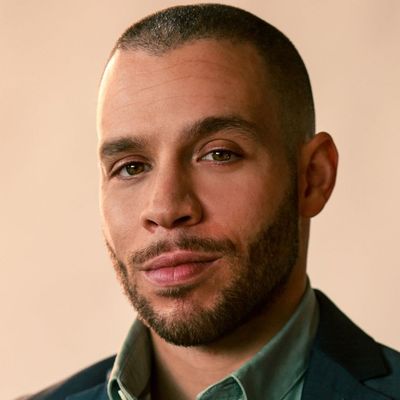
Robin de Jesús is an actor and singer who has received Tony Award nominations for his roles in In the Heights, La Cage aux Folles, and The Boys in the Band. He made his Broadway debut in Rent in 2005, and has also appeared as Boq in Wicked on Broadway... Read More
From the show: The Theatre Podcast with Alan Seales
Guests
Featured Shows

About
Robin de Jesús is an actor and singer who has received Tony Award nominations for his roles in In the Heights, La Cage aux Folles, and The Boys in the Band. He made his Broadway debut in Rent in 2005, and has also appeared as Boq in Wicked on Broadway. His film and TV credits include his breakout role in the independent film Camp, as well as appearances in Hair Brained, How to Make It in America, and Law & Order: SVU. Robin can now be seen starring alongside Andrew Garfield as Michael in the musical drama tick, tick… BOOM!, directed by Lin-Manuel Miranda, and available on Netflix.
Robin takes us behind the scenes of working with Andrew Garfield, from their first reading, to the table work where they realized the weight and importance of Michael and Jonathan’s relationship as a catalyst for the second half of the movie. He opens up about his Puerto Rican heritage, and talks about the full circle moment of starring in tick, tick… BOOM, having made his Broadway debut in Rent years ago. Robin also speaks about representation, taking care of his mental health, and why he would love his career to showcase range, in a predominantly gay career.
In this episode, we talk about:
- How simple, human, and in the moment Jonathan Larson’s work is
- Laying the foundation for Rent in tick, tick… BOOM!
- Why and how he’s trying to be a “disruptor”
- A fortuitous visit to his grandmother in Puerto Rico when he was 2
- The audition process for tick, tick… BOOM!
Connect with Robin:
Connect with The Theatre Podcast:
- Support us on Patreon: Patreon.com/TheTheatrePodcast
- Twitter & Instagram: @theatre_podcast
- Facebook.com/OfficialTheatrePodcast
- TheTheatrePodcast.com
- Alan's personal Instagram: @alanseales
- Email me at feedback@thetheatrepodcast.com. I want to know what you think.
Thank you to our friends Jukebox The Ghost for our intro and outro music. You can find them on Instagram, Twitter, and Facebook @jukeboxtheghost or via the web via jukeboxtheghost.com.
Transcript
This transcript was automatically generated and might contain errors.
[0:00] Alan Seales: Welcome to the Theatre Podcast, intimate personal conversations with the industry's biggest names. This episode is no exception to that. We have special guest Robin de Jesús, who made his Broadway debut in Rent, making this a full circle moment for him being one of the starring roles in Tick, Tick, Boom!, which is a show about the guy who ended up writing Rent. This dude, Robin, is so sweet, super real. I absolutely love this interview with him. And if you haven't already, go watch the movie. Watch Tick, Tick, Boom! on Netflix. It is one of the best movie musical adaptations I have ever seen. Seriously. And, you know, Lin directed it, so you can't really go wrong with that. His directorial debut as well.
But as always, find me online on Instagram and Twitter and let me know you're listening. Shoot me a screenshot in your stories. You know, just let me know you're out there. Leave a rating, leave a review, wherever you're listening now. And now, everybody, please enjoy this episode with Robin de Jesús. Here you go. One, two, three.
[1:12] Alan Seales: He can now be seen as Michael in the amazing movie adaptation of Tick, Tick, Boom! on Netflix. Robin de Jesús, welcome to the Theatre Podcast.
[1:27] Robin de Jesús: Hey, what up? How's it going?
[1:29] Alan Seales: Good. Good, man. Oh, my gosh. I cannot say enough positive, happy things about Tick, Tick, Boom!. The movie is so expertly done, like the cast and the creatives. And especially, I think so many people too can relate to Michael, your character of this person, this actor who is just like, you know what? I don't know if I'm good enough. I'm having imposter syndrome. I've got to try something else. And then all of a sudden, you take, you know, you can take the Broadway out of the actor, but you can't take the actor out of Broadway.
[2:05] Robin de Jesús: Yeah, yeah, yeah. I mean, one of the big things I've been telling everyone is that it's very easy to watch the movie and think, oh, Jonathan's the noble, righteous one who's the artist and he stayed in the art, you know, he stayed making art. And then you have Susan and my character, Michael, and they gave up. But in actuality, when you really look, when you really like zoom in on it, no, they just renegotiated their contract with creativity and like realize like, oh, shoot. So I thought it was going to present in this way. And now I don't like everything that that comes with. And it's not good for me and my personal growth and health. And so I'm going to go be creative in this other way. And it's funny because in real life, Susan is still dancing.
She did heal her body. In real life, Michael is alive, healthy. He swims every day. He's physical. He's creative in his work. He's still involved in the arts community, has friends in the arts community. So they never left the theater world. They just, it just changed.
[3:10] Robin de Jesús: I was trying to explain the whole metaverse of Jonathan Larson and Tick, Tick, Boom, the musical and the one man show and now the movie adaptation and how it relates to Rent, which wasn't, you know, that's not the story of Superbia, which never fully got produced in the first place. And we were watching this and she's like, wait, wait, where are the Rent songs? I said, there aren't any Rent songs. This is not about Rent. This is about Jonathan Larson who made Rent. Although if you pay attention, occasionally you'll hear, you'll see these beautiful moments that Andrew does so well, where he's like playing little motifs and you're like, wait, that's One Song Glory. Yes, yes. I literally said that.
I was like, oh, One Song Glory. Yeah, that's going to be, yeah, I'm going to throw that in there. It was beautiful. And my God, what was it like working with this? Of course, you know, Lynn from In the Heights and you've worked with Lynn for a long time, but Andrew Garfield, like the dude can sing. He learned to sing for this movie. The dude could sing it. And what always got me with Andrew was like, we showed up from day one. He like gave it all, just like, got, went for it. And like that high note at the end of, what can you do? Like it was just consistent. It was always there. And, you know, the first time we did a table read of the script, Lynn had like brought in a bunch of his friends just to read the bit parts that hadn't been cast yet.
And just to hear the piece from start to finish, you know, and you could feel that the room was like, okay, what's Andrew going to do? What's Andrew going to do? All the theater folks are like, but then when, when they got to that chorus and they heard him bellow, they were like, you just saw the heads nod like, okay, okay, okay. We cool now. We happy. We okay. It was really, really beautiful. He just like embraced it all. Working with him was so fun. And like to get to that point where we discovered that, that just like love story between he and I as a, as a straight guy and as a gay man, he, we were doing table work one day and it suddenly hit us, like how much of the movie was about that relationship as well, the weight of it.
And, and that like the things that happened between us ended up being a huge catalyst for his character in the second half of the, of the movie. And we just like took a breath, me, him, and Lynn after all, all the table work. And then Andrew sighs and he says, it's a love story. And there was something about him referring to my Michael and Jonathan's plot as a love story. It just elevated everything. It's not romantic love, but it has intimacy. It has, you know, devout friendship. It has loyalty. And for me, I've, I've never seen that relationship modeled for young boys and for grown men. It's really beautiful.
[6:08] Robin de Jesús: It's really beautiful. I don't know where I was going with all of that, but I know I started with your question and I don't know where I ended. No, it's the whole, the whole movie is, it's got these multiple layers of love. And, and I mean, I, I feel this sort of energy emulating off everything that Lynn touches anyway, and the family that Lynn builds. And I want to get back to what you're talking about. He brought friends in to do the table read. I want to come back to that. But what I was going to say was, was your relationship with, you know, with, with Jonathan Larson, Michael's relationship with Jonathan is a love story. Jonathan's got his love hate relationship with his career, with this show that he's building with Susan. There's all these multiple layers of just this complicated life. And you know what though, this is normal. That's, that's what people don't want to talk about.
[7:01] Robin de Jesús: Oh, I love that you hit on that because no one else has the thing. The thing to me, lyrically that Jonathan has is the simplicity. It's human. It's very human. And it's, it's deceiving because you think it's fluff, but it really isn't. It's Jerry Herman. It's like, that's what it makes me think of. And, and it's also celebratory about the here and the now that thing that Jerry Herman did with the best of times is now is the same thing Jonathan did with there's only us. There's only this forget regret life is yours to miss. It's like all these very human themes. And so it's never in his plots. It very rarely is like some evil person, you know, there's, there's not really antagonist is like institutions or society or like what you face every single day.
So his stories are actually like pretty simple, but they're just so well crafted that it opens you up. It allows you to just sort of receive the most human, the most simplified allegorical theme that he wanted to showcase.
[8:13] Alan Seales: You know what? Now that you've explained it that way, go, go with me on this one. I want to sort of make a parallel to Seinfeld.
[8:24] Robin de Jesús: I love Seinfeld. I've seen, I've seen episodes here and there, but I'm just telling you that in advance.
[8:29] Alan Seales: Because what Seinfeld has always felt really is funny is take something, take something everyday mundane and blow it way out of proportion. And so that's, that's where I was going with this. I think that Jonathan Larson lyrically, not in a comedic way, but lyrically and his stories are everyday. They're normal stories that he's expanding. And, and like you said, it's very direct. It's what everybody's going through. And he's just writing these brilliant lyrics surrounding every normal, normal, everyday situations.
[9:01] Robin de Jesús: One of the things that I love that Alexandra Shipp did so beautifully was how she navigated that, that, that last scene she has with Jonathan. And I don't want to give away too much, but she basically establishes a boundary. And in establishing that boundary, two people who really, really love each other end up hurt, but no one's bad. No, no, no one is a bad person. They just have different wants and they don't compliment one another. And now they're really raw and really sad and really hurt. And to me, that's, that's so, so, so human as opposed to like someone did something to them. It's just like, life is rough sometimes. Life is like, can be melancholy, you know? And that's the thing Jonathan does too, is I find this, especially in Tick Tick, there are these weird moments of like comedy and sadness, just like, you know, rolling around together. That's really fun to play with.
[10:01] Alan Seales: Well, that's the best comedy comes out of, out of sadness. Like you, you look at comedians, comedians are very depressed people for the most part, right? And they're using comedy to cover up a lot of their, of what they're going through. And so I feel at least the way that, that Andrew Garfield brought Jonathan to life was presenting this character that on the surface is like, I'm, I'm great. I'm doing everything I need. This is my dream. This is my dream. I can't give up because the moment you start to crack, he starts to crack, then it's all just going to fall apart. So you got to like, make sure that none of those cracks are showing, that none of that, that none of that insecurity, that, that imposter syndrome ever shines through.
And, and, and that's rough because you know, as when you're a creative being, it's like, a lot of your work is about your nervous system and your mental health and, and how you navigate that in order to produce the best work or in order to allow yourself to be the best conduit possible. But with Andrew, it's just like, Andrew always talked about the intuitive, intuitive nature of Jonathan. And that perhaps at that rush and that constant leaning and moving forward was the awareness somewhere down deep in his gut that yes, his time was limited. And so he had to act now. And that's why I think that in, in the timeframe that you're watching, all of us, me as Michael and Alex as Susan and Andrew as Jonathan, it's, it's very easy to like, to view it a certain way. But if you pull back further and you see the big picture and what happened the years afterwards, I feel like you'd see the story differ.
[11:45] Robin de Jesús: Oh, absolutely. I agree with that 100%. And it's funny too. And I don't, I'm sure this was intentional, but the rent, what turned into rent, like all of the big, the moments that you know about rent, bohemia, and literally worrying about rent and like these keywords and these key situations are all built and created in tick, tick, boom.
[12:09] Robin de Jesús: And that's set up for, you know, write what you know, write what you know, get something. And so it's never explicitly said at the end of tick, tick, right? It's like this, this life story was then turned into rent. But everything, if you look back after you watch it once, go back and watch it 10 more times and you will see every kind of turning point in rent is presented in his real life.
[12:31] Robin de Jesús: Yeah. And you hear things. I mean, I don't want to give away too much for the folks that haven't seen the movie yet, but there's little things like the answer machine that you can hear in rent, you know, names of who's in the life support group as well. And the friends, I feel like it's some of the similar names to the folks that you end up hearing in the smaller parts in rent as well. That's the fun stuff. But that's, that's also just Lin, like, that's also Lin in the same way that he has all those cameos in the same way that he hires people.
[13:00] Robin de Jesús: In the same way that he hired all these theater folks to play the parts that surround us all the time. Um, it's, it's, it's, um, it's very, the makeup of the film is very community oriented, which was what Jonathan did through his art, which is then the, what you're commenting on is like, we, in tick, tick, you get to see his community, which then becomes the community that he based rent off of. It's also weird. There's so, there's so much full circle-ness. It's like, it makes me dizzy sometimes.
[13:29] Alan Seales: Your full circle moment, you made your Broadway debut in rent, right? So now, so now your career, you're playing the best friend of the guy who wrote the show that got you your debut.
[13:46] Robin de Jesús: And also the guy who wrote the show that showcased people of color on the album cover. That was the first time I ever saw that. Like the first time I ever saw black and brown folks on an album cover for a Broadway cast recording was rent. And the impression that made on me and, and like that scene that allowed me to realize, oh, I can make it. I knew that there were black and brown folks on Broadway.
[14:11] Robin de Jesús: I was the kid that I look up the cast recording and look at the photos and try to find out who the one person in the ensemble was. I remember June that when I got to, when I got to New York as well, like always just like keeping tabs and knowing, you know, just cause I wanted, it meant so much to me to see people of color on stage. And, and with, with Jonathan, it's like, he, without knowing, just gave me permission to pursue this. And Jonathan then gave Lynn permission to write in the Heights.
[14:38] Robin de Jesús: Jonathan was given permission by Sondheim. And, and it's actually like, it's really beautiful because to see Sondheim be given permission by Oscar Hammerstein and then pass that down to John, it just, it keeps going. And, and, and it actually ties in really beautifully to what I was just saying about visibility.
[14:57] Robin de Jesús: And I know that everyone's tired of the conversation about representation mattering. I think it's like, we're all experiencing a little social justice fatigue. But I also think the social justice fatigue is related to laziness. It's related to, we want to give ourselves these uses because it's hard. And so I feel like it's important that we, we like, we stay in that fight to create equity and equality and visibility for all.
[15:27] Robin de Jesús: And, and, and it's like, when I think about Jonathan, I think, I think of him as a much better ally than some of the folks creating nowadays to think about all those beautiful characters of color in Rent who were multi-layered, who were messy, who they didn't, like, like Mimi Marquez in the wrong hands could have, could have been such like poverty porn in many ways, you know, and full of misogyny and, and, and full of, it could have made me as Latino, I feel like, oh God, I don't want people to see that because I don't want people to think of us as messy, but it's the opposite. It's like, he treats his characters with so much respect and dignity, regardless of what they're, where they're coming from or what they're going through. And, oh, I love you, Jonathan.
[16:12] Alan Seales: Well, that became, you see it in Tic-Tac, the, the, the norm for him, and this is how it should be in all stories. I, I hopefully, hopefully from this point on, right, is that your orientation, your gender identification, whatever you are, it's, it's irrelevant to, to, it's not a plot point, right?
[16:31] Robin de Jesús: No.
[17:02] Robin de Jesús: Present to me is like the double standards that queer actors face versus straight ones. And what I mean by that is I always know when I get, when I book a gay character, there's this part of me that goes, someone out there saying, oh, Robin, you know, he only plays gay. And it's fascinating because I've never, ever heard someone say, describe a straight actor that way. I've never heard. And every time I say it, I get a response, which, which to me says there's a level of questioning that we all, our collective consciousness needs to participate in.
[17:36] Robin de Jesús: And so we need a little disruption. And I think I know that I'm trying to be that, a disruptor in that, in that, in that way. And so I would love my career to be, to showcase range in a predominantly gay career. I'm not going to say I only want to play gay roles because I don't, if a role is good, I don't care about the sexuality.
[17:57] Robin de Jesús: But if the bulk of my career is queer stories, is full of queer stories, that doesn't mean that the work is going to be the same. Like there's still range, but the word gay is reduced. It's a reduction to us. And so when we hear the word gay, oh, that means, you know, first act Emory in Boy Scouts.
[18:21] Robin de Jesús: And everyone thinks that's what it is to be a gay, to play a gay role. So I'm really loving having this moment with Michael because it was very intentional on my part. I wanted a more subtle performance after Boys in the Band. I wanted to give a more subtle performance and I wanted something quieter, something that would allow me to showcase maturity and something that felt more tethered.
[18:44] Robin de Jesús: And I feel like, I feel like there's an act of disruption on my part and just playing Emory and playing Michael.
[18:52] Alan Seales: Oh, I, I can completely agree with that because Michael, Michael is, he, he identifies as gay, but again, it's not a plot point. It's not, it's not part of the story in other than, than it's just mentioned as in part of the age epidemic.
[19:11] Robin de Jesús: And because he's career driven, he's an actor, he's a great friend. He's all the things that a human, that a person needs to be.
[19:20] Alan Seales: Yes, it does. It does come into play in a, in a different way though, but which is different where you're saying, but it comes into play in that, that street scene that Andrew and I have in the argument where it comes into play in, in the conversation of privilege and the things that Jonathan's going through versus the things that Michael's going through because Michael's experiencing the AIDS epidemic as a person of color, as a Puerto Rican, which we know in the Bronx, the cracking AIDS epidemic was like, just, it was ravenous and people were just ignored and left and honestly not included much in, in any like narrative storytelling as well.
[20:00] Robin de Jesús: And that's one of the things I'm actually proudest of. There's two things I'm proudest of, not that you asked this question, but I'm, I'm proud of me and Andrew modeling queer and straight friendships and I'm really, really proud of inserting my people into a period piece about the AIDS epidemic because they were so ignored.
[20:21] Robin de Jesús: And when you, when you talk about stories that involve the AIDS epidemic, we forget that there were women that were also HIV positive, that they were black and brown folk, men as well. And, and like the lesbian death duelists, like lesbian community that held folks hands in their last breath and just allowed them to die with dignity and with company.
[20:44] Robin de Jesús: There's, there's so, there's so much more to the HIV storytelling than we realize. So I'm, I'm, I'm just really happy that I got to wrap my ancestors by just existing in the movie.
[20:58] Alan Seales: Oh gosh, there's so much that you touched on that I, I still, I have no, no idea about now I want to go research the lesbian death duelists.
[21:07] Robin de Jesús: A lot of, a lot of lesbians ended up being like, you know, there were, there were all these gay folks who, whose parents rejected them or they were in cities and, and, and, you know, death could come on you really fast and you were just left alone. And so there were a lot of lesbian women that would be caretakers or that would just like be with you for those last moments.
[21:28] Alan Seales: That's horrible.
[21:30] Alan Seales: We're going to take a short break. Stay tuned for more of the episode.
[21:36] Alan Seales: We'll be right back.
[22:07] Robin de Jesús: Yeah. I mean, listen, my family is so amazing. My, my father was not able to finish middle school. My mom was not able to finish high school. They were, they were both in factory workers. My dad's in his seventies and he was still working in the factory up until the pandemic, pandemic forced him into retirement and he would go back full time if he could.
[22:27] Robin de Jesús: But like, it is beautiful to clock like what can happen in one generation. And like, that's, that's a beautiful thing about this country is that so much, so much can happen in, in such a little amount of time if you are given opportunity.
[22:42] Robin de Jesús: And for me growing up, that was, that was the thing that was missing, but there was an insane amount of faith in my family. And that faith, that faith led me to believe that like, it gave me like a ratio of belief that I could make it in theater.
[23:03] Alan Seales: Like religious faith or just like,
[23:05] Robin de Jesús: Just faith in knowing. So, okay. When my grandmother, when I was really young, like two, three years old, I was visiting my grandmother in Puerto Rico and she had a friend over and this friend was known to be, she would get visions and she would have these moments where she would receive messages from divinity that would,
[23:29] Robin de Jesús: And I'm going to be talking about that sacrifice from her that also pushed me to be like, no people, people like gave up stuff. And, and I couldn't afford voice lessons. I couldn't afford acting lessons. But the beauty was my community had my back. And Cheryl Keveney at Crystal Theater, Susan Pettybon Rock High, Pat Chernow in Nathan Hill Middle School, Franklin Sylvester, my choir teacher, who was like him and Ms. Chernow were the first ones to ever let me go. And I got to say, having Mr. Sylvester, a black man, tell me that I had talent really did mean a lot to me because he was such a father figure. And there are so, so, so little men in, in, in like teaching and academic settings in middle school.
And so there was something really powerful about that as well. But by senior year, I had another voice teacher who didn't get to make it in theater. And she was a little traumatized by that. And so she would say to me, Robin, you're short and you're Puerto Rican. You'll never make it in musical theater. Why don't you sing? Why don't you become an opera singer? Because no one will care what you look like. And that was her trauma. That was what she went through. But as a child looking up to the adults, I thought she must be right. I got to listen to her. And what saved me was divine intervention because I was working at a musical theater summer camp. And the woman who ran the camp was one of my teachers.
And she said, Robin, I just got an audition for this independent film called Camp. It's an open call. You want to go? I think there's a part for you. And me and another student went. And after a week and a half of auditioning, like American Idol style, cattle calls, dancing, learning like 15 pages of sides in one day and then coming in with songs, like it was madness. And I ended up booking the lead, another Michael, in that movie. But also to like add to the full circle-ness, the musical director of that movie and the band in that movie were the original band and musical director of Rent on Broadway. What? Yes, yes, yes. And I didn't work for years after, for years after that. But I was relentless.
Like I would go to the Lincoln Center Library and I'd watch all the Broadway shows that I could watch on video. And I would, I would read as many scripts as possible because I knew I couldn't afford class and stuff like that. But I would just get in there and learn by doing. And what's funny is three years later, I had done a reading of In the Heights with Lynn. And that was just like this thing that came up through another tangent that I won't go into. But the producers of In the Heights were the producers of Rent. So when I auditioned for Rent, my only two credits were Camp and that reading of Heights. So it was the musical director from Rent, from Camp, sorry, Tim, Tim Weil, and then the producers of Rent.
So like those two credits helped me get my Broadway debut. Also, I had to come in and be fierce, obviously, in audition, you know. Right. But it made it a lot easier. And that's what got me to Broadway.
[27:36] Alan Seales: Wow. That is so cool. And we've heard this so many times on the podcast here is you have to be the person people want to work with the next time.
[27:44] Robin de Jesús: A hundred percent. And yes, yes, yes, yes. You have to treat people with kindness. You have to at least let people know you see them, even if it's not for a long time. You know what I mean? Like if you can't keep your eyes. I have this thing about eye contact. I want to make sure if I can't keep my eye contact on you, I want to make sure at least at one point I let you know I look at you for a millisecond. And just so you know that I know you exist. The story about let's go back to the audition story or I guess the reading where you're saying Lynn brought in a bunch of his friends to read and everything. How was the audition process for this for you? I mean, because being one of the leads, of course, and then knowing I guess I'm always curious about the casting in general because Andrew Garfield didn't know he could sing.
He didn't know he could sing. A lot of the production team didn't know he could sing. I was talking with Steven Levinson about this recently. And he was saying like, yeah, he opened his mouth and all of a sudden he surprised all of us like the casting. How much of the casting was in place ahead of time? And then how much was kind of like calling up friends and saying, you know, I got this role for you to show up?
[29:07] Robin de Jesús: Well, I didn't I shouldn't speak too much for Lynn. But I'll say the things that I've heard him say in public. I knew Andrew was cast. That's that. That was all I knew. Right. Right. Yeah. Yeah. That's all I knew. And then I heard afterwards Joshua Henry had done workshops of it because Lynn and Andrew had done two workshops prior to the movie. So he was involved. Maybe there's a world maybe where like Lynn already knew about Judith Light and Bradley Whitford. They're both like that. That last scene with Judith Light is like it's oh, it's so good. It's so good. But I auditioned for I got a random call from my agent saying, you know, you want to go in for this movie that Lynn's directing? I was like, oh, that that sounds really interesting.
And I've auditioned for Lynn over the years. I think people always assume that. That Lynn must have just like offered the role to me, but no, I had to earn it. And I auditioned for the role. It gave me like a song and a few scenes. And I remember just like looking at it and thinking, you know, every day, this is exactly what I asked for in universe. So thank you. I asked you for a role that was subtle, that was tethered, that was mature. And when I looked at the scene, I was like, no, this this is it. But at the same time, I'm not trying to go into this audition with a suit. Like I'm not selling the businessman and I don't and I feel like every production I've seen, that's always been like the costume.
But in the movie, that's not you don't see. You mostly see Michael outside of the office, not in the office. So I was more interested in like. The look of the friend, Michael, the look of like the person Jonathan and Michael sit on the couch and watch Sunday in the Park with George. OK, what are they wearing when they do that? Also, you know, I don't think Michael needs to be stuffy because he's an artist. He's still a creative. You know, he hangs out in the East Village. So, like, of course, he's down, you know. And so that affected my attire and that really did play a big part in it. And Lynn and Andrew both said that that was ultimately what got them was that I wasn't playing the ad executive.
I was being a person. And so that first audition, Lynn was not there. They taped it. I felt good, but I wasn't sure. Like, I just thought, oh, they're going to get a name. They're going to get some singer who wants to act for the first time. Turns out they didn't. And I give credit to my boy, Lynn, for that, because, of course, it takes my beautiful Puerto Rican Boricua brother to look at me and know that I'm out here doing the work and that I'm worthy of this role. And he uses his platform to uplift me, his Boricua brother. I mean, it's just it's beautiful to give and it's beautiful to receive. And I'm so grateful he exists and I'm so grateful he gave me this moment. I'm so grateful that I get to pay it forward.
And OK, back to the story. Sorry. One second. Lynn sees me at the opening of Freestyle Love Supreme off Broadway. And he had a drink in him and it's only been a week since he's seen my tape. And he grabs me and he gives me a big old kiss on the cheek and he just goes, your tape is so fudging good. He goes, you're going to you're going to be in this movie. And my eyes just got really big. Like, is he saying I'm going to get the part? And then he realized, oh, I shouldn't have said that. And so he says, I mean, I don't know if it's going to be as Michael. Like, I don't really know what you're going to play in it, but I know you're going to be in the movie somewhere. And I thought, OK, OK. And then I had a chemistry with Andrew and that was a little harder to read.
It felt good. But like, you know, there were folks from Netflix there. And so like the room changes, like it just it's a different energy when you get to when you get to that point in the filmmaking process. And so it's harder for me to be intuitive. But when I left, Andrew gave me that. Like the way we like we shook hands and like shouldered against each other. Like I thought, oh, wait a minute. Wait a minute. He just gave me a bro hug. I think there's something going on here. I think there's something going on. And then I would say another week or week and a half later, I was at a wedding in White Plains, the town that Jonathan and Mike were from. And we woke up and we woke up, we read a hotel room there for the wedding, woke up the next day, drive a half hour, go get breakfast.
And Lynn calls me. It's a FaceTime. And I'm at lunch with my friends and I go, you guys, I got to go real quick. I'm about to get an offer. I knew it. I was like, yo, we coming from White Plains. Lynn is FaceTiming me. Like I know there was some good vibes happening. Something's about to go down. And that's the long version of how I got the part.
[34:04] Alan Seales: Oh my goodness. Yeah. Like you Oprah the shit out of that. You put that out there and made it happen. My God. How have things changed for you? You've just been shot out of this cannon with this iconic role in this iconic show on a network. Netflix is a network that is, I mean, it's not going anywhere. They're making some great, great things. And you are part of now this legacy that is going to last forever. What's next? How are you feeling?
[34:32] Robin de Jesús: It's it, you know, and it actually feels that way, like the way you just said right now, like the reception that I've gotten from my friends and people in the Broadway community. I'm very aware that I'm a part of something really special. I'm also very aware that. In the conversation of a conversation of representation and of the stories you want to share and of just like what we put out in the world, I'm very aware that in the same way that Oscar Hammerstein's divinity has multiplied down the line to where we are now. It's like for me, the joy that I'm experiencing and the abundancy that I'm experiencing. Mike, my personal community is experiencing as well. Like the DMs that I'm getting from my cousins and my.
[35:15] Robin de Jesús: My family and my friends, they're so amped about what I'm experiencing. So my happiness has become their happiness and celebration as well. And that's just like, that's where I feel most lucky, is like, I feel lucky that I have consciousness, and I feel lucky that I actually have people who back me so that I can take in the blessings they're giving me with my consciousness. That's a lot. But also, the thing that's really cool to me was like how much this movie healed me. Because in the years leading up to it, my creative process had gotten more difficult. And like, even with Boys in the Band, like I'm really proud of my work, but it wasn't fun getting there. It was really hard to find that character because I was in a weird place.
And I didn't clock that with age, I had developed more and more insecurity. And that I was in certain rooms feeling like a culture divide too, because when I first came to the city, my rooms were so diverse. It just kind of happened. Like I didn't, in my youth, I was really fortunate that I was always working with black and brown queer folks. And then I didn't realize as I got successful that that changed. And I didn't realize that that was affecting me. And so all of these things were accumulating to me feeling less than me becoming obsessed with creativity. I mean, with perfectionism, sorry. And what I felt, I keep wording it this way, was that my creativity was in conflict with my ego. And my ego was louder.
And so every time we're working on something that the ego would just say, well, that was terrible, or they must be judging you. Or even at one point on set early on, I had a moment, this is during Tick-Tick now, where I thought the crew's not looking at me because I'm terrible. They won't look me in the eye. And I was having these like mini, mini panic attacks. And then I could do a really good take. And then the next one, there'd be like a quarter of it where I felt like my nerves were stopping me from being fully present, and then I'd get in. And so everything always worked out, and I always got to where I needed to get, but it wasn't fun. It wasn't joyous. And so for me, it was like, well, then I'm not honoring the spirits that I'm trying to conjure.
And for this movie specifically, it was very important that we feel the spirit of Jonathan be present, and the spirit of my answers that have been erased, and that I'm now representing. And just the theater goes, you know? And the pandemic shut us down, and that gave me time to really think about this, and marinate on it, and do some healing. And a lot of that was happening throughout the pandemic, a lot of mental health stuff, just addressing issues of habits that I had, or not so good habits, and establishing more rituals in my day, and getting myself more grounded. And I was healing, but there was still room for growth. And we were shooting a scene in front of a green screen that was originally supposed to be, you know, at an actual location.
And that made me really uncomfortable, because I felt like in front of a green screen, it was easier to be a bad actor, for someone to notice your insecurities. And so I was really shaky that day, but I could tell that my brother Lynn and my brother Andrew were looking at me like, there's no problem here. So I'm realizing that I'm pointing the finger at some non-existent problem, and there's three more pointing back at me. So obviously, I'm making something up, but in a way that I knew I wasn't being gaslighted. I knew it was me. So there was a turnaround in the cameras. I had to go back to my trailer. The TV was on, I had it on CNN. And it was the day that they announced Biden winning the election, and Van Jones was crying about the proximity of the election, and what that meant.
And I looked at the TV, and I looked at him crying, and I said, now that's real. Now that matters. You are creating drama that doesn't exist. Me, Robin, child of Puerto Rican migrants, who didn't have the luxury of finishing school, who had to work in factories. And now number two on a call sheet in a film produced by Netflix, directed by Lin-Manuel Miranda, written by Steven Levinson, starring Andrew Garfield, and I'm number two on the call sheet. Why? Why am I choosing drama? Why would you create this negative energy, and why would you disrespect the gifts and the abundancy that you've been given? And I had to forgive myself because, oh, I'm about to be real cheesy right now.
[40:03] Alan Seales: Oh, please do.
[40:04] Robin de Jesús: Because I was choosing fear and not love. And that's literally my theme with Jonathan. I teach him that lesson, but I hadn't received it myself. And there's a lot of mysticism in the work that we do. There's a lot of magic. There's divinity. And I will say now in post-op, the post-mortem that we're doing every day with this movie, I'm now realizing that all those problematic moments while they were rough and I needed to get through them, there's a part of them that also was perhaps the universe going, hey, this is the perfect safe space for you to learn these lessons that you need to learn. And so there's something about it that feels like, I don't know, I think it's Jonathan.
[41:02] Alan Seales: Oh, my goodness. Oh, my goodness. Robin, there is so much to unpack in that. It's beautiful. It's absolutely beautiful. And it's art saves. I've said this forever, art, creating art. I mean, it's why Jonathan Larson existed in his world was to create this art. And by presenting his art, it saved you. It's creating this whole new world for you. And I think it's like you said, it's just turned you and turned or I guess redirected a trajectory that probably you shouldn't have been heading towards. And now you're going in a whole new direction in a very positive way.
[41:41] Robin de Jesús: In a whole new direction. And also the work changed. The work not just like. The work was good, but it got better and it got easier. I wasn't operating from a place of trauma or scarcity, I was operating from a place of love, joy, abundancy and spirit and creativity. And then I could just do my job, which was to tell a story, you know. And so now that's what's so beautiful about putting it out into the world and like the platform that it's given me, because 23 year old Robin, when he got nominated for a Tony Award for Heights, was very depressed and I wasn't equipped for that success. But like 37 year old Robin that's been in the business 20 years and has been through the ups and downs and has been screwed over by and has had to face mental health issues and depression and anxiety specifically in relation to this career.
Like now. I'm good. I'm ready for the success that I want to make manifest, but I also am also really, really aware. I just said, can I say also one more time? I'm very aware that my work has elevated because of my mental health healing, because of the healing that I've done. And so I'm also just excited to do more work because I feel like I'm ready to do the, I feel like Tick-Tick is the best work I've ever done on camera and I'm not done growing and learning. So like, I'm hungry. I want to eat. What's next?
[43:20] Alan Seales: It's a whole new chapter that I think is going to propel you into a bunch of great things, but God, I want to keep talking to you. We can't because you got so many more interviews today, but I always ask everybody the same three questions to wrap up every episode. The first one just very simply is what motivates you?
[43:35] Robin de Jesús: Sorry, I'm trying to reduce it because it's presenting as one thing, but I know it's like you trickle down and be like, well, that means this, that means this, that means this. Love. Love is love is love. Yeah. Yeah. Myself, love her community, love of opportunity, love of love of my job.
[44:00] Alan Seales: So the next question is what advice would you give to your younger self and younger people starting out down a similar path?
[44:04] Robin de Jesús: Be you. Be authentically you. Don't let anyone change you. Don't doubt who you are because that was actually what led to my mental health spiral.
[44:19] Alan Seales: Yeah. I didn't compare myself to others, but I allowed people's criticisms to affect me, which was weird because that was a learned behavior.
[44:31] Robin de Jesús: Oh, interesting. I was later on in my twenties.
[44:34] Alan Seales: Yeah. Yeah. I can see that. Okay. So the last question then this is the hardest one. If you can only see one show for the rest of your life, but you can see it as many times as you want, what would you see?
[44:39] Robin de Jesús: Carolina change?
[44:45] Alan Seales: Oh, why?
[44:45] Robin de Jesús: It's my favorite show. I love that show so much. Have you seen the revival?
[44:50] Alan Seales: No, I haven't seen the revival yet. I'm like, I may go this week.
[44:53] Robin de Jesús: I mean, that show changed my life. That was the show that got me to quit working at, to quit being a waiter at the bubblegum shrimp company. I thought I was going to go to college and study theater after that, that year off led to me booking the reading of in the heights, which then led to rent. Caroline would present itself in, in my life as like a, as like a marker to say you're on the right path. And so much so that even the year afterwards, when I did my first reading of heights at the O'Neill, Anika Noni Rose was also doing a show. And one of the coolest things was to go to lunch every day, quite literally with my hot lunch tray and see, and he can go, I guess I'm in the right place at the right time because she's here.
And I'll just say one more thing, cause I know we got to go, but it was so cool. Anika Noni Rose, you are such, you are such love, joy, and light because a couple of days later, she kind of felt that I like was like fanny or like an admirer of her work, but also I was working in the same place she was. So we were like coworkers kind of, you know, or she recognized me from the stage door at Caroline, which I went to every week, but regardless, she found out what my name was. And so that next day at lunch, we're with our trays and she's two people ahead of me. And she goes, hi, Robin. And just the fact that she took the time to learn my name, Emmy Thibodeau did that.
[46:21] Alan Seales: Wow. Oh, I love her. She's, she is the best. And so are you Robin. Thank you so, so much. Where can we, where can we find you on social media?
[46:31] Robin de Jesús: You can find my Instagram and you can find me on Twitter at Robin of Jesus. That said I'm better on Instagram than I am Twitter. So don't judge me. And of course, catch Tick, Tick, Boom on Netflix. Robin, thank you so much. Take a deep breath, make the world a little colorful.
© Broadway Podcast Network, All Rights Reserved