

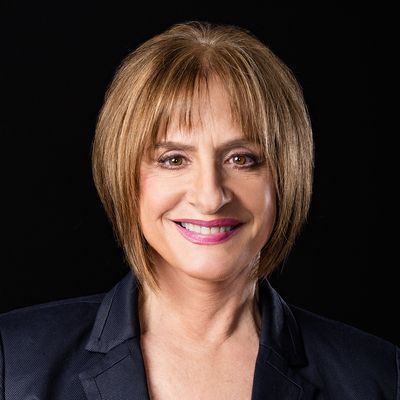
Combined across the Emmys, Grammys, Olivier and Tony Awards, Patt LuPone has 14 nominations and six wins... Read More
From the show: The Theatre Podcast with Alan Seales
Guests
Featured Shows

About
Combined across the Emmys, Grammys, Olivier and Tony Awards, Patt LuPone has 14 nominations and six wins. Her resume includes 27 Broadway credits, including Eva Perón in the original Broadway production of Evita (1st Tony Award), Anything Goes, Sweeney Todd, Noises Off, Rose in the 2008 Broadway revival of Gypsy (2nd Tony Award), Women on the Verge of a Nervous Breakdown, War Paint, Working, Oliver!, The Robber Bridegroom, and The Beggar’s Opera. In London she starred in the original casts of Les Misérables, The Cradle Will Rock, Sunset Boulevard, and the West End revival of Company. She also has a long and illustrious career across TV and film, with credits including Driving Miss Daisy, Frasier, Will and Grace, Ugly Betty, 30 Rock, Glee, American Horror Story, Girls, Penny Dreadful, and of course, Life Goes On. She's a voiceover artist, a cabaret performer, a mom, and performs regularly with the New York Philharmonic, all of which mean you can find her singing across 22 different albums. Patti LuPone was the first American to ever win an Olivier Award, has been inducted into the American Theater Hall of Fame, and can now be seen on Broadway in the revival of Company.
LuPone recalls her first introduction to the musical Gypsy (playing Louise) in high school, speaking candidly about not understanding the play at the time, and shares how she was initially banned from participating in any of Arthur Laurents work before going on to win a Tony Award for playing Rose. She reflects on going to the “dark side” a lot when COVID shut the industry down, noting it wasn’t that she couldn’t perform but rather that she had nothing to fill that void with, and shares how close-knit and supportive the cast and crew of Company is as a result of the collective trauma and uncertainty they faced together once they resumed rehearsals. LuPone also speaks about the importance of doing her work completely in the rehearsal room, allowing her and the audience to both play and relax once she is onstage, and shares why she looks at the audience every single night.
In this episode, we talk about:
- Being in one of the first-ever students in Juilliard’s school of drama in the 70’s
- Her Marilyn Monroe impression at 3 years old
- What it is about laughter from an audience that brings her joy
- What she calls the “Italian blast”, and not having a filter
- Her “Andrew Lloyd Webber memorial pool”
- Resenting producers or anybody that underestimates the audience's intelligence
Connect with Patti:
- Twitter: @pattilupone
- IG: @pattilupone
- Web: pattilupone.com
Connect with The Theatre Podcast:
- Support us on Patreon: Patreon.com/TheTheatrePodcast
- Twitter & Instagram: @theatre_podcast
- Facebook.com/OfficialTheatrePodcast
- TheTheatrePodcast.com
- Alan's personal Instagram: @alanseales
- Email me at feedback@thetheatrepodcast.com. I want to know what you think.
Transcript
This transcript was automatically generated and might contain errors.
[0:00] Alan Seales: Hey, everyone. Congratulations. We all made it to the 200th episode of the Theatre Podcast. Can you believe this? Whether this is your first episode or your 200th, truly thank you for listening. This podcast would still not be here 200 episodes later without your support. It started out and still is a massive labor of love. And on my side, real quick, I want to acknowledge that the podcast probably wouldn't have gotten started without the help of original producer Jillian Hockman, my wonderful friend and tech guru Matthew Hendershot, and my number one listener and also amazingly wonderful friend Byron Jennings, who never fails to text me his always honest thoughts about the latest episode. And this episode 200 is an episode, of course, for the history books.
To celebrate this milestone, we have none other than Broadway Royalty, Patti LuPone. I feel like I came out of the interview transformed. Not being able to have an extended chat with her before this interview, I knew very little about her on a personal level other than what was reported online. And what I learned very quickly is that she's just as sensitive and amazingly honest as the rest of us in this business. And she truly cares about performing as an art. And she gets so emotionally invested in the audience. That's why she cares so much about people texting and people being distracted. The way she talks about it is just heartwarming. And she is just truly a wonderful woman. I hope you can learn a thing or two about Patti after listening to this episode as well. I have monologued long enough. So here we go. Without further ado, everyone, please enjoy this episode with Patti LuPone. Here you go. One, two, three.
[1:53] Alan Seales: All right, everyone, strap yourselves in. Combined across the Emmys, Grammys, Olivier, and Tony Awards, she has 14 nominations resulting in six wins. You've, of course, seen her on stage in one of her 27 Broadway credits, but she also has a long and illustrious career across TV and film, with credits including some of my favorites, Driving Miss Daisy, Frasier, Will & Grace, Ugly Betty, 30 Rock, Glee, American Horror Story, Penny Dreadful, and, of course, Life Goes On. She's a voiceover artist, a cabaret performer, a mom, and performs regularly with the New York Philharmonic, all of which mean you can find her singing across 22 albums. She can now be seen on Broadway in the revival of Company. And side note, was the first American to ever win an Olivier Award. And she has been inducted into the American Theatre Hall of Fame. Patti LuPone, oh my god, welcome to the 200th episode of the Theatre Podcast.
[2:50] Patti LuPone: Well, congratulations to you. I can't believe I, can you send me that list?
[2:57] Alan Seales: Sure. You didn't know, like, I was going to ask about this, actually, to kick this off, because as somebody who is constantly, speaking for myself, as somebody who is constantly trying to move forward, look forward, become better, become better, I have to constantly remind myself to turn around and look at where I've come, what I've come from, what, kind of what's behind me. And, I mean, you've got, like, I assume a shelf of all these awards. And do you, do you count them? Do you, like, how do you keep track of what you've done?
[3:35] Patti LuPone: I was actually surprised to hear what I've done. I mean, I know that I've done a lot, because I've been in the business for such a long time, but that's impressive.
[3:51] Alan Seales: Right. That is, it's really impressive. And I, I wonder, you know, being, being in the business for as long as you have, and you were one of the, you were one of the 36 original young actors chosen for the very first class of Juilliard School of Drama, their drama division, right? So, like, you've been sort of at the forefront of this huge theater transformation from the very beginning. So, looking back, of course, where you are now, and we rattled off lots of awards, but I wonder, like, people say, you know, the joke, we do it for the awards, but people don't really do it for the awards, because ironically, with all these awards, it was, what, 28 years between your two Tony wins, right? So, like, if you judge it on Tony wins, okay, most people never get a Tony win. But when you look back at all of this, at this career that you've put forth, did you ever think, starting out, that you would be where you are now? And I guess, where do you think you are now?
[4:55] Patti LuPone: That's, that's a perception question. Yeah, that's the question. I think success in this business is longevity. It's not awards. It's longevity. If you can continue to be hired, I suppose, after all this time, I've been an Equity member for 50 years. And I'm shocked at that. And my, when I graduated from Juilliard, John Hausman handed my class an Equity card in a seat on a bus, and we went out on the road. And that was 1972. And I was figuring it out this year. And I went, holy God, 50 years in Equity.
[5:42] Alan Seales: Did they send you a pen or a watch?
[5:45] Patti LuPone: Oh, no, they just want more money. Yeah, that's my problem with Equity these days. You know, when we, when we trained at school, I went into Juilliard, thinking that I would end up on the Broadway musical stage. And as I studied at school, and believe me, I was not the best student. I was one of the worst students, because it was the 70s, baby. And there was partying to have, you know, partying to happen. No, really, it was, it was New York in the 70s, which was a dangerous and very creative and fun time. And there were better things to do than 13 hours a day at Juilliard. And I really wasn't a very good student at school. And I wish, that's one thing, one regret, I wish I was a better student in the technical department.
Because basically, that's all we had at Juilliard. We did not have acting teachers until maybe our third year. I mean, they called them acting teachers, but it was so varied and confusing. But the technique, the technical department was so strong in voice and movement, and speech. And that was where they lost me. It's like, you know, let me tell you one story about Edith Skinner, who was infamous, and very famous and infamous. And she was our speech teacher. And she had introduced us to the diphthongs, this was my first year at Juilliard. And we were at International House, because the original Juilliard School of Music was too small to house the drama division. So all of the 36 actors plus our teachers were housed in International House. And we would, you know, take classes in hallways in the, I don't know what you'd call it, it was a stage. But anyway, we were in some room that looked like a library.
[7:34] Patti LuPone: It's a collection of risers. No, but there was a stage, which is interesting. There was a stage, we would rehearse on the floor, but there was a stage. But so, Edith's class was in what looked like a library. There were no books, but it was just an open room that could have been a library. And she had introduced us to the diphthongs. And after we had met the last diphthong, she sailed over to the windows and drew back the curtain and said, well, we are out of the forest, we are sailing on the Hudson River, sis, boom, bah. I thought, I'm in school with a bunch of nuts. So the technical department was sort of, you know, I kind of tolerated it, and I should have actually listened more closely. But 50 years doing what I do is an achievement, whether there's awards or not. It's like, oh my God, I've been on stage, I've been doing what I knew I would do at four years old for 50 years, a professional for 50 years. That's an accomplishment.
[8:50] Alan Seales: Yeah, to still be doing it, to still be enjoying it. So at four years old, how did you know that this is what you wanted to do?
[8:54] Patti LuPone: I fell in love with the audience. It was just something, and I can see this moment as if it was yesterday. I was tap dancing downstage, right, and I thought everybody in the audience was looking at me. Meantime, there was a whole line of kids, but I thought they were all looking at me. And there was something magical about an audience, and of course, I knew they were our parents, but there was something magical about seeing the joy on their faces. And I thought, okay, this is a really safe place to be, and this is a fun place to be. If I can look out and see people smiling, why not?
[9:43] Alan Seales: I love that it was the audience that got you to fall in love with theater, because there's so much of that that other people, maybe they don't consciously realize that that's what it is, but people ask me, what did I miss when COVID was shut down? What am I looking forward to the most when theater comes back? And for me, as an audience member, it's going on this shared journey with a room full of strangers and feeling emotion that I don't normally get to feel. It's peeling back the layers and exploring more of myself. And I feel like on the flip side, right, when you're standing on stage, the chemically serotonin, dopamine, whatever's going on released in your brain that makes you feel so happy to be able to guide this room of strangers on this journey, for you to recognize that at four years old, I think, is absolutely incredible.
[10:42] Patti LuPone: I was a precocious kid, getting in trouble a lot, but I did realize that very early on. I did. My mother used to troop me out when we had guests to do my Marilyn Monroe imitation. Go figure how I even knew who Marilyn Monroe was at three years old. But I did, and they thought that was really cute. Actually, my mother and my father were not. My mother couldn't sing. My dad was a principal. He was an educator, and my mother was a housewife. There was no show business link in my immediate family, but there was showboating, I suppose. I guess you could call it showboating. And my mother would troop me out, and I would do this Marilyn Monroe imitation where I would drop a shirt off of my shoulder and expose my shoulder, and then I would do something with my lips. And that was my Marilyn Monroe imitation. Yeah, it was pretty crazy.
[11:43] Alan Seales: I love that, though. You are, if I'm remembering correctly, grew up on the north shore of Long Island and come from an Italian family. Is it a big family?
[11:54] Patti LuPone: Yes. It was a big family until my mother and father got divorced, and then it was a very acrimonious divorce. And then my mom forbade us to see the LuPone side of the family, which is, she was a woman scorned, and it was unnecessary. But I don't see any of my LuPone relatives. And there's very few Patty relatives, so it's... I'm without a family, actually, just my immediate family.
[12:32] Patti LuPone: No, it chose me. It chose me. And the family, when the LuPones and the Patti's got together, were loud. But nobody got lost, I don't think. I mean, the kids were relegated to the kids' table and the kids went off and did their own thing when the adults were drinking and doing their thing. But no, at four years old, it chose me. And I recognize that.
[13:14] Alan Seales: It's, you said your mother was a woman scorn. That reminds me just of Mama Rose, of course, Gypsy, one of, it's your second Tony win and one of the roles that you're known for the most. And I've heard bits and pieces of this story over the years, but you did not want to play Mama Rose at all, right? That was another thing where the role came to you over and over and over again.
[13:44] Patti LuPone: Yeah, I didn't understand it. I did it in high school. We had this, when I was going to school, I think it's kind of still true. Well, let me start from the beginning. We have a very, we had a very strong music department from elementary school through high school. I, in the third grade, we were marched into the Ocean Avenue Elementary School. And there were two posters on tripods on the stage. I mean, they were huge. And the third grade was told to choose an instrument because it was an integral part of our education. And so I wanted to play the harp, but we had no harp. And Kathy McCusker, who was across the aisle from me said cello. So I picked the cello. But we started to learn how to read music and play an instrument in the third grade, which was, yeah, it was incredible.
And that music influence continued through high school with really astonishing teachers. And that was my, pretty much my thrust, my focus and my desire from elementary school through high school was the music department. So there were a bunch of kids that just gravitated to the music department in junior high and high school. We were not the popular kids. We were not the sports crowd. The cheerleaders, I actually, I was a cheerleader and got thrown off the cheerleading squad, but I was a cheerleader. I mean, yeah, because I wouldn't do anything. Yeah, I was smoking in the bathroom at an away game and one of the cheerleaders caught me and told the English teacher and off the team I went. I was kind of a, I was very rebellious in school, but there were those kids that gravitated and were passionate about music.
When the school year was over, three of them continued this desire and formed the patio players and would put on great big Broadway musicals on Kathy Sheldon's patio. I joined them and one of the musicals we did was Gypsy and I played Louise and I remember Kathy Sheldon and the dressing room scene in the second act and she's yelling at me and I'm going, what the hell is she talking about? I mean, I really didn't understand it because I didn't, I didn't understand the play. It was complicated. It was something that was, my little pea brain couldn't compute. And I remember looking at Kathy going, oh, I hate this woman. So, Madame Rose was not, well, if you want to play 8 0 Annie and you don't think about Madame Rose, I wanted to play the second finality because they were the ones that got the laughs.
Yeah. And they were the better parts. So, you don't think about Madame Rose if 8 0 Annie is your desire. So, but a lot of people said to me, you should play Madame Rose. And there's a long story about Arthur and me. Arthur offered me a play, Jolson Sings Again. I had just come back from Sunset Boulevard and was so emotionally eviscerated and Robert Fox and I think Scott Rudin came up to my house to try to convince me to do this play. I read it and I thought, oh my God, everybody's just yelling at each other. And it was Arthur's take on, I believe, Jerome Robbins' singing to the House Un-American Activities Committee. And I thought, no, this is not, I just need to heal. So, I turned it down. Dan Sullivan was directing and it was going to Seattle Rep and I just went, I can't do this.
It showed up again and I turned it down and I was shooting a film. I was shooting David Mametist in Montreal and I got a telephone call from Arthur who just proceeded to do what he was famous for. I was speechless. I was destroyed, emotionally destroyed. I hung up, I was crying, hung up the phone and I went, what was that? Because I turned it down. He said, I sunk his play, blah, blah, blah. And then I found out that I was banned from his work. I thought, oh, why do these things happen to me? Just because I turned down a play. And then when Wells Coffin and the Ravinia Festival wanted to do Gypsy, I said, you're not going to be able to get the rights because I'm banned from Arthur's work. He said, you're banned from first-class productions, but not concerts.
And I went, oh, okay. And so I did it in Ravinia and there was enough buzz around it that there was talk about bringing it to Broadway. And I had to make the phone call to Arthur. He didn't believe when I was doing Sweeney. And something had shifted in him and we proceeded. And then when I played it, I understood why people thought I should. It is a monster part. I mean, I remember when Boyd and I would come on stage in the first 20 minutes after the grounds, they were saying, seemed exhausted and breathless. And I thought, I'm not going to make it. I'm not going to make it. I mean, it's the energy that is required. It's not even the singing. It's the physical energy that is required to play that role is intense, but I got it. It offers the act of playing it every possible emotional feeling, for lack of a better word. I mean, I would play it again. If somebody asks me, I would play that again.
[19:39] Alan Seales: We're going to take a short break. Stay tuned for more of the episode.
[19:54] Patti LuPone: So that was that was Tony number two. And Tony number one was Evita. And both of those not comedic roles, but it sounds like it sounds like you want, like in your career in your life, are you more drawn to the comedic? Like you said, you wanted to play second banana. But now looking back, it seems to me like everybody wants you for this powerhouse voice. And with a little bit of comedy on the side versus the other way around, or how do you how do you feel from your perspective?
[20:24] Patti LuPone: Yeah, I'd like to know. My friend when asked my friends, my friend, Jeff Richmond asked me, how come you always get well, how come you're always cast as first ladies? And I went, Yeah, I don't know. None of those roles were roles I desired. None of those roles I went after. Um, I don't, I don't. I don't know. I think they must see my capacity. I do tend to want to make people laugh. But I'm also a melancholy baby. I'm the glass half empty, as opposed to the glass half full always my entire life I've been a melancholic baby. And so and in school, I was cast in those roles and the tragic, the tragic roles, as well as the comedic roles. But so I was lucky that all of that was developed at school and but I will squeeze a laugh out of anything.
I remember being, you know, patting myself on the back when I was able to squeeze a laugh out of the first act of Evita. I thought, Oh my god, these people hate me. I gotta make them laugh. I gotta figure out how to make them laugh. And I did in that wheel, yule. And I would come on stage going, yes, yes. There's something about laughter, that is a release for an audience. And it just brings so much joy in a building. I remember leaving with the audience, they had no idea who I was, if I was commuting up to Connecticut and driving myself when I did Anything Goes. And I would leave with the audience. I never took off my makeup, just got out of the red wig, threw on clothes and went with the audience down into the Lincoln Center parking lot.
And I would listen to the audience. And I would listen to them retell that old chestnut and laugh all over again. And every time we heard laughter during Anything Goes, it just filled my heart. There's just something about that release. We can all cry these days at the drop of a hat about everything that's going on. But to hear laughter these days, oh my god, I could cry just hearing the laughter.
[22:49] Alan Seales: Yeah, there's always something wrong. And I wonder, you just said growing up, you're always the glass half empty person. I wonder if that's how or why you're more attracted to the comedy and why you love comedy more because it internalizes it. Internally for you, it's lifting you up. It's moving you forward, right?
[23:09] Patti LuPone: Yes, I think you're absolutely right. And I have black humor. There is nothing off limits.
[23:15] Alan Seales: Well, do you, I guess, you've sort of got this, I guess, for people who don't really know you. And even in the short time you and I have just been talking right now, you're a very sensitive person. You're a very real person. And I think you're incredibly wonderful. And people love to talk about, she grabbed a phone, she's talking about the audience, I understand why you get upset with the audience. Because I was at American Utopia last night and someone next to me had their phone out and I almost smacked it out of their hand. And something you said at the very beginning of why at four years old, you wanted to get in the theater was because of the audience. You fell in love with the audience.
And now when the audience starts to detach, I understand why that frustrates you so much. But my question through all of this is, I guess, do you just not, do you say what's on your mind? Do you care about having a filter? Or is it just sort of like, I have to say what's inside. I have to get inside out so that I feel good about myself. If it's good, if it's bad. And just like people like talking about comedy versus crying, the news will hold on to someone doing something controversial versus the everyday niceties that somebody is.
[24:51] Patti LuPone: Right. I wish I did have a filter sometimes, because I really do blather on. It's just, I don't know, I'm an emotional creature. And I don't have a, I wish I had developed a filter. I wish I had more. Let me see if I can.
[25:06] Patti LuPone: I wish my thoughts were more organized in my head so that when I did say something, the impact had a different effect. Sometimes it's just the, you know, the Italian blast. It's just an emotional reaction. It really is. It's an emotional reaction. And I do care what people think. And I do, like I said, I do wish that I was able to express myself in a way that had a better impact. Because I think sometimes I do myself damage by just allowing the Italianism to fly out of my mouth. But you know what? There's nothing I can do now. Who I am. Well, it's been out there. Everything's been out there. Everything about you has been out there for so long. People love talking about it. And I, well, I guess, okay, so before I get into what I want to get into.
With so many people now, you've been in this business for 50, or been part of Equity for 50 years, been doing this for so long, so many awards. Like everybody wants to, I guess the status you have achieved. Everybody wants to be your friend. Everybody wants to know you. So how do you choose the people, how do you know when people are being authentic? And how do you know, or how do you choose to spend your time with people that you know are real? How do you know that they are real and not just trying to, you know, be next to what they perceive as stardom?
[26:28] Patti LuPone: Well, first of all, everybody doesn't want to know me and doesn't want to be my friend. Really? No, that's so positive. Yeah, absolutely. No, no. As a matter of fact, someone came to the show the other night, and I know this person. And they didn't bother to get in touch with me that they were coming, or I haven't heard from them since. So, and I thought, okay, you know what? I went backstage to see you. I compliment you. I support you. I pay respect to you. What's the deal? You know, it's a difficult business. It is a competitive business. And the friends that I have, the majority of them are friends that I've had for my life. And most of my friends are outside of the business. And I have a few select friends that are in the business.
And it's not about the business as to why they are my friends. They're just good people. I think I have a Sicilian witch aspect to my life. I really do. And I can judge character. I'm not always right. But I can smell fraudulence. I feel it. I sense it. And I don't let people get close to me that I know are only in it for an ulterior motive. And actually, it's too late to make friends, even though I can and I will continue to make friends. But like I said, the friends I have are the kids I grew up with. And the kids that I knew are the people kids. People, 30 years. From my childhood in Northport through my school years to people that... There's just a like-mindedness. No bullshit. You feel it.
[27:36] Patti LuPone: Yeah, you totally feel it. And because theater and show business isn't the thrust of my life. It is what I do. It is not who I am. And my life is more important than show business. So, that helps balance who comes into my life. I love that perspective. That's really, really good. So, during COVID shutdown, no industry. You have no industry. Are you like, well, that's it. I'm retired. Or are you just itching to get back? Or do you take a vacation? That was the scary part. And I've thought about this for a long time. I don't have hobbies. My hobby is what I do. I tried to garden in the lockdown and I sprained my thumb. So, clearly, I'm not a gardener. Yeah, they're still in pain. You know, pulling out weeds.
I got addicted to pulling out weeds. And both of my thumbs are, you know, traumatized by it. But I went to the dark side a lot during the lockdown because I had no outlet. And it's not that I couldn't do what I was doing. I had nothing to replace it because all I've ever done is what I do. And so, I was at a loss. I didn't know how to fill the time. I didn't know how to be creative on my own. I had to have geographical escape. I went to visit a friend in Maine on election night. My son and I flew to L.A. It was going to be his 30th birthday and I wanted to spend it. My husband, his father, would not get on any form of transportation where other people were involved. And it took a long time to accept that I may never do this again. I may never be on stage again. I may never be in front of a camera again. And then I realized, well, the time is flying today. So, retirement didn't appear as scary the longer lockdown went on.
[30:52] Patti LuPone: And then I didn't know whether I wanted to return. I really didn't. Going back into rehearsal for Company was traumatizing. We were all traumatized from everything that happened. And then as this New York Company looked at each other on the first day of rehearsal, we were all individually deers caught in headlights and fearful that it all may fall apart again. There was no guarantee that we were going to continue rehearsing. There was no guarantee that we would get through technicals. There was no guarantee that we would get through previews. There was no guarantee that we would get to where we are today. And because of that, this company is one of the tightest, most supportive, loving, caring companies I've ever worked with.
Because we shared that experience together. It was tough. I've always said that casts become family, chosen family, because you're going through the long days of rehearsals and tech and put-ins and all these things. It is a form of trauma. I've said this before many times. It's a form of trauma to go through this intense emotional situation with this group of people. And you get to know them very well. And you get to know them very quickly. And there's very few industries where you walk into a room and you're like, well, that person, according to page six, I'm going to have to kiss them in three days. So it's a weird industry with a weird form of life.
[32:31] Patti LuPone: And Company specifically, it's a show about chosen family. And it's a show about – yeah, I think there's something very metaphysical about the show. And coming back, I guess, before the shutdown versus after the shutdown, did any of the feelings about the show change in terms of like, oh, wow, we are back, we are here, and we are in real life sort of living this chosen family scenario? I don't think we had enough time beforehand to – we were just getting to know each other. You go through a rehearsal period. You get to know your partner. You get to get to know the company to a certain degree. But then in a run of a play, personalities are revealed backstage. They just are. They're just revealed.
And that's when you form your family. You know, the repetitiveness of, you know, every night showing up, doing the play, hello, the wonderful just atmosphere backstage of a community of people that have chosen to be there. We developed that in this go-round with the show because we were shut down so quickly. We were in our ninth preview, I think, when we were shut down. We were just – we were still discovering our characters and discovering the life on stage and negotiating how we live backstage when we were shut down. And now, you know, we were tentative this go-round. We were tentative. But now what? We've been open four and a half months, and it's sort of like, okay, we're – okay. It feels almost as if we never left and, you know, individually never left the stage, not the production, but the stage, the backstage life.
It's settled into a beautiful, absolutely beautiful environment among the stage door people, the crew, the front of house, all of the actors, all of the understudies. There isn't any bitterness or attitude or – there's just – I don't want to say great, even though that's, I'm sure, an underlying feeling. There's just support. There's just respect and support and love, love, a lot of love. You know, if somebody messes up or, you know, there's just sort of like, oh, as opposed to you, fucking asshole. You know what I mean? It's just, you know, we – and acceptance. That's, I guess, the word that I really need to put out there, that these will be lifelong buddies, this cast.
[35:21] Patti LuPone: Yeah. We will all be lifelong buddies. We went through something together. Right, right. Well, that's what I guess I was getting at, is it is like on top of the normal emotional bonding that happens, you've got all of the COVID situation and almost opening and not coming back, right before opening, Sondheim passes away. And it's like, God, it's so much emotion wrapped up in all of this. And as somebody whose job it is, day in and day out, eight shows a week, to emote like this, to not have that outlet all of a sudden, it feels – I suspect it's like this dam just – your outlet just gets clogged up, right?
[36:00] Patti LuPone: Yeah. And you've got nothing to do. Yeah, yeah. It was – there were a lot of hard lessons or hard realizations. But the other thing is I became more famous on Zoom than I was in my own life. Because there were so many play readings and, you know, events to support the Actors Fund. But it wasn't enough, you know. It wasn't enough. It wasn't enough to – just to fulfill that void. You've got to feel it. It's different from watching something on Zoom or on the internet versus, like you said, looking out at the audience. Because we're – virtually, we're watching you as an audience. It could be hundreds of thousands or millions of people. And you can't see any of them because all you see is your cast. So, when you're doing things digitally, virtually.
[36:55] Patti LuPone: Yeah. Oh, gosh. I can't imagine that. And I guess going back to something we sort of touched on at the beginning was, you know, the status that you are at now, whatever that may be, whoever perceives it in whatever they want, maintaining that success, is it a lot of pressure for you emotionally? Because the name Patti LuPone conjures up greatness in people's minds. Right? When you're like – no, I'm just being real. It's like, oh, that show's got Patti? It's going to be great. So, is –
[37:38] Patti LuPone: Is that a level of pressure that you feel? Or did I just jinx things? How do you deal with the pressure? The pressure would be if I stunk on stage. There's the pressure. You know what I mean? I do my work because I don't want to stink on stage. And it's all about the work. For me, it's all about the rehearsal period. It's all about the discovery. It's all about figuring out how to communicate this to an audience. There's something about understanding as a stage actor that you need to command by that. I mean, you need to be confident in the story you're about to tell. And when you walk on that stage, you need to connect with the audience. However you do that and go, relax, sit back. I've got this.
I get nervous for actors on stage that are uncomfortable. I'm uncomfortable with them. And that's all I'm looking at. And what I want to do is come on stage with all of my confidence and not be afraid and be able to look at the audience. I look at the audience every single night because I want to know who I'm playing to. And I look at audience members in the eyes when I am thinking. When Joanne is thinking, I'll hook into somebody and I'll just look. They feel it. They know that I'm looking at them. But I'm also sort of going as the character Joanne is thinking, but I'm looking at you. I want to make that connection with the audience. There are actors that go on stage that forget they're doing it for the audience.
And so they don't include the audience. But I try to get my work done in the rehearsal room so that I can play on stage. And if I can play on stage, the audience can play. The audience can have fun. It's all about the audience for me. And so my goal is to do my work completely so that they can relax, the audience can relax. And I have to say, the audiences that have come to Company, I don't know about any other show, but they have been incredibly respectful of each other. That's why I get so angry. We're all in this individual mindset because of social media and the telephones, et cetera, that we forget we are in a community of people. And it has to be acknowledged that you are, to your right, to your left, to the front and to the back, you are next to someone alive.
So respect that. Respect them. So it angers me that there are, out of what, we're 1,040, there might be one person that's in their own world with their phone on. Why do you think you're exempt? Why do you think you're exempt? Why do you think, we can get into politics now too. Why do you think you're exempt from the rest of the community? It drives me crazy. Civility. Civility and respect. And you could look at the Ukrainians and go, do you think Americans would do that? No, I don't think so. I do not think Americans would unite. No, I don't think so. Nope. No, because we've had too much handed to us since we were kids. We haven't had to work hard. We were given, in the universe, the golden apple. This country, the golden apple. And we are, we're trashing it. Totally trashing it. It's embarrassing to be an American.
[41:26] Alan Seales: We're going to take a short break. Stay tuned for more of the episode.
[41:41] Patti LuPone: We'll wrap up here in a second, but I want to quickly touch on the Andrew Lloyd Webber memorial pool. The only thing that's missing is the police drawing at the bottom of it. After we filled up the pool, we went, damn, we should have put the police drawing in the bottom. So, let me see if I can recap the summary here. So, you were supposed to do an Evita revival in, on the West End, right?
[42:09] Alan Seales: Me?
[42:13] Patti LuPone: Yeah, the whole, like, okay, oh, maybe I'm telling the story wrong, that Glenn Close replaced you in a show on the West End, and then you and Andrew Lloyd Webber, there was, like, the internet talks about this feud forever.
[42:21] Alan Seales: Oh, Glenn Close?
[42:30] Patti LuPone: Yeah. Or Andrew Lloyd Webber.
[42:31] Alan Seales: Andrew Lloyd Webber. Oh, because he fired me from Sunset Boulevard.
[42:34] Patti LuPone: Sunset Boulevard, that's what it was. Yeah, yeah. For Glenn, yeah, right, so, so the story. Here's the deal, that's really, and I don't think I'm the only actor that feels this, but when you do a dual production, you're setting up a competition, and it's as if you're looking at the two actresses that are playing the role and deciding which one should go to Broadway. And that happened in another Andrew Lloyd Webber, somebody was in Toronto playing it, and somebody was playing it someplace else, and they chose to go from Toronto. I had a contract to come to New York, and I would not get on the plane without having the West End, New York contract, so, and Andrew has a tendency to blame everybody but himself when shows fail.
You know, shoot the messenger. And yeah, he fired me, unceremoniously fired me, I didn't get the reviews he wanted, so he fired me, and there was a dual production. Before I got on the plane, they had cast Glenn Close, I went, that is like nine months away, I'm not even in rehearsal for the West End production, and they've announced the LA company. It was so insulting, it was so disrespectful, and it was, so it started out, but it started out bad in negotiations, and we should have been aware of that, and we should have gone, okay, we're withdrawing. But for some reason, I thought, I gotta do this, I don't know why. It was a really horrible experience, and it wasn't a horrible experience on the West End when I was doing it there, it was the creation of trying to get me off the stage so they wouldn't have to pay my contract.
Right, and then the whole, as the tabloids have reported, that I think settled in court for around a million dollars, which then built the memorial pool that you have, or the pool in your, in one of your, at your house that you have now famously named the Andrew Lloyd Webber Memorial Pool.
[44:31] Alan Seales: Sure was. Oh, I love that, I love that. Are there any producers now on Broadway? I mean, we've gone through so much transformation just in the last, in the last couple years alone, because of this racial reckoning that's come about, and of course, like Scott Rudin has come, he's been forced out of the business, and all these sort of things.
[44:54] Patti LuPone: But has he? Or is he manipulating behind the scenes?
[45:01] Alan Seales: I have no proof either way, but I tend to agree with you, yeah.
[45:06] Patti LuPone: Yeah, I mean, I'm happy, I'm just happy Beetlejuice has found a new home. That's, we'll just put it that way.
[45:09] Alan Seales: Me too! I loved Beetlejuice.
[45:12] Patti LuPone: God, it was so good, right? It's so good. And Sophia Ann Caruso blew my mind. And Alex Brightman, I don't, just anything Alex touches is amazing too. He's, he's another one, Alex Brightman, Patti LuPone, those names right there. You guys need to do something together.
[45:30] Patti LuPone: I could play his grandmother.
[45:36] Alan Seales: Would you, so my question was, are there any producers now, is there any creative team that you, like, no matter what the offer is, you're just like, I got to work with this person, I got to work with them.
[45:46] Patti LuPone: Yeah, I think Lin-Manuel's team, I think Lin-Manuel's team, I would love to work with. I'd love to work with Chris Harper again, David Stone. It's interesting because I don't, I don't know who the producers are anymore, really. Everything's so changed. I keep looking at Broadway thinking, well, it's a combination of Las Vegas and Disneyland.
[46:15] Alan Seales: Yeah, yeah, yeah.
[46:19] Patti LuPone: But, but because of, because of the American social media, you want to bring that back. That's what people expect. Because look at, okay.
[46:26] Alan Seales: They need to be re-educated.
[46:27] Patti LuPone: They need to be re-educated. I, I resent producers or anybody that underestimates the audience's intelligence. Let them work for it. Don't give it to them. Let them work for it. I mean, I had to work for Power of the Dog and I'm so glad I did. Do you know what I mean? Watching it, I was trying to figure out Power of the Dog forever and my husband nailed it. Right at the end, my husband nailed what was happening. I'm going, oh my God, this is so much fun. I mean, it's so much fun to utilize your fucking brain. Don't hand it to me.
[46:59] Alan Seales: But that, that's the, that's the dichotomy we're living in right now because the, the, the audience demographic that's going to get it, that's going to think isn't on social media, which is where the marketing budget is going now. Because you've got, you've got the Disneys and you've got the Vegas type of shows, right? Like that, that are, that are marketing to this younger generation because you have to have, of course, people coming in to replace the people who are going out from an audience perspective and the younger generation, all they know is social media. All they know is, is what's fitting on their, on their digital screens.
[47:36] Patti LuPone: And I disagree with you. I think you're not giving the younger generation more credit, a credit that's due to them. I think they're really, I mean, we've got a lot of young kids at the show. I mean, I look out at them every single night and go, you're here. You're here. You're here at Company. You're here at this 50-year-old chestnut. You're here. And I really do think that we're underestimating the audience. I, I think, and I, and why are we looking at statistics, statistics, just be creative and let the audience decide. Don't, I mean, the fact that we are looking at statistics and marketing, as opposed to putting a piece of original theater out there, be it good or bad, let the audience decide, let the audience engage that brain. It just drives me nuts that we have to look at the statistics.
[48:24] Alan Seales: Well, you know what, who said, who said, who's statistics? I was a judge on a, on a Jonathan Larson, the musical theater grant. I was a judge and there is so much creative musical, so many creative ideas out there in the form of musicals, playwrights, lyricists, composers, they will never see a production because nobody will take a chance. And yet these blew my mind. They blew my mind. They were so creative.
[49:01] Patti LuPone: Look at what you said about, you know, you want to work with Lynn's team, right? Like, uh, I give credit to, you know, Jill Furman, Jenny Steingart, these, these producers, uh, that took a chance on, on In the Heights, which of course led to so many other things in Hamilton, which just blew up his career. And now he's paying it forward and bringing in all these other people who, and giving them chances and recognition.
[49:25] Alan Seales: Right, good for Lynn. And I, and I absolutely, I absolutely love when this stuff pays off because you can, there's a place, I guess, a time and a place for, for the, the, the surefire kind of thing. And, you know, one could argue, do we need a revival of Music Man right now? You know, that's another conversation, but there are, there are, uh, I guess, a lot of opportunities for us to, to reinvent, like you were saying, reinvent how we are investing in youth and how we are reinvesting in taking chances on, on unknown authors and unknown critics for that matter. Right? Like, let's get more people of color in. Yeah. These kids are the same age as the kids you're talking about that are on social media. These kids are young.
[50:41] Patti LuPone: When we were doing John Doyle's production of Sweeney, same thing. I'm trying to think of the other one that I did. And I looked out and I'm like, there's so many kids. There's so many kids. I think even on social media, people do want a connection, even on social media, even if you've grown up with that, you still want, even if it's just a subconscious thing, you want that. You want a human connection. They're buying the tickets. They're buying the tickets. They're buying the tickets. I, I, I, unfortunately, everything is so expensive on Broadway that it's hard to produce them. So I don't know. I think there should be a tax levied on Disney and anybody else that comes to Broadway. Yeah. And open up a black box, open it, you know, off, instead of the gift shop, you got to walk through outside of Lion King, make that a black box and produce a young playwright, a young composer and lyricist, put it out there. That's what I think. And I also think there should be term limits on federal Supreme Court judges and Broadway musicals.
[51:46] Alan Seales: That's not a bad idea. And more, more theaters too. I don't got the logistics of getting a theater, getting it built, paying the rent. God, there's a systemic issue. There's so many systemic issues going back to, you know, being an American again, like New York City. God, I agree with you that it is so hard. And you have people that, that especially when you're finding investors for our project, you can't just put something up. You have to find investors. And those are investors basically are like, I know I'm going to lose this money because what is it? What's the statistic that like only 20 or 30% of productions recoup on Broadway or something?
[52:27] Patti LuPone: I just met some guy who was investing in Paradise Square and I went, why? That has nothing to do with Paradise Square. I haven't seen it yet. I'm going to the opening night, but I said, why are you investing in Broadway? Do you need to lose money? Yeah. This guy wasn't even, you know, somebody from Broadway. He was just like a venture capitalist or something like that. He was a very rich guy. There was an, I mean, what, what draws you to, you know, to Broadway? Are you, do you go to Broadway all the time? Do you love the theater? It didn't, didn't look to me like, right. And it was like, I mean, I really blurred it. It came out of my mouth. I'm, you know, I'm an investor in Paradise. I just went, like I said, please make this clear. It has nothing to do with Paradise Square. It's what is this guy doing? It's a losing proposition.
[53:18] Alan Seales: Right. It's tough. But I mean, when it pays off, it pays off. And I think that's the gamble, right? It's high risk, high reward.
[53:25] Patti LuPone: So that's one play every decade. Yeah. I don't know. I've, I've invested, I've done some producing and it's, it's, it's for the love of it. It's for the love of, like you were saying, I want to give, I want to help to is in whatever way I can bring new voices, bring new stories, bring something to, to the stage, to the world, to, and it's part of why I do this podcast is because I want to bring these stories to the world for, for people who may not ever get a chance to see them who may not ever get a chance to talk to you in person. Like we're bringing this in you and the industry we're, we're increasing accessibility. That's what I'm all about. And that's why I lay down some money every now and then.
[54:09] Patti LuPone: Excellent. Excellent. I just, you know, I, it's time for us to, you know, I guess I suppose it's a time to listen and a time to lead. And I think it's probably the time to lead creative community. Yeah. We need to put those ideas out there and yeah. And reeducate or educate an audience about what is happening in our, uh, our world.
[54:37] Alan Seales: Well, we don't need probably as a musical about COVID, but I would have said we don't need a musical about 9/11 either, but Come From Away is amazing. So who knows, who knows what's being written right now? Um, is there a role that you, that you would, that you like you've done so much and been offered so much. And is there a role that you've, that you still want to, you still can do that you want to do that hasn't been offered yet?
[55:01] Patti LuPone: Um, yeah, well, 10 of them went by, you know, in my youth, I wanted to do Ruth in Wonderful Town. I really wanted to play Ruth in Wonderful Town. Um, yeah, there's, you know, I don't think that way. I found that if I desired a role and didn't get it, it was incredibly disappointing. And you know, there were tears and there was like, what's wrong with me? People hate me. And instead of going after a role now, what's more exciting and more surprising is what comes to me. Those are the roles I'm intended to play. I never thought I'd play Joanne. I never thought I'd play Nellie Lovett and all of it. I think I'm going to die in the world of Joanne. Just keep playing Joanne. Um, so it, it's just easier on my emotional health to not desire something and not go after something, but just wait.
I mean, for instance, I'm in an Ari Aster movie and I'm shocked that I got the part. I'm shocked that I got to work with him. And I'm, how did that happen? How did that happen? It happened. And actually when I was on the Zoom with Ari, I went, are you like a Broadway musical queen? How do you know me? And you know how he does me? He knows me from David Mamet's The Anarchist. And I went, you know what? This is why you do the things you do, because it leads you to the next and it leads you in the right direction, the direction you're supposed to go. And that to me is a fulfillment of a career.
[56:47] Alan Seales: That's beautiful. That is beautiful. I love that. And so I think that is a great place to wrap up. And I'm going to send you, I'm going to ask you my three standard closing questions that I ask everybody. The first one just very simply is what motivates you?
[57:05] Patti LuPone: I don't know. Geez, getting up in the morning. I don't know what motivates me in what respect, in what respect, motivation, what to go to the theater, to live, to, to do what you do, to, to want to keep coming back when you were saying, okay, so I'll quantify this.
[57:25] Patti LuPone: Yeah, go ahead. What motivates me is the gift I have been given. That's what motivates me. Um, yeah, I love that. The gift I've been given. And what advice would you give to your younger self and younger people listening now, starting out down a similar path?
[57:44] Patti LuPone: Well, John has been said it to my entire class. Discipline, discipline, discipline. Don't go to Juilliard in New York in the seventies. Right before he's threatened to cancel the entire class. Yeah. I would say study and discipline. I would say that, that, you know, I was not a good student. I'm surprised I got as far as I did. I really was not a good student. Um, I would say discipline and to study really study the craft if that's what you want to do.
[58:17] Alan Seales: I love that. All right. And then last question, this is super hard. If you could only see one show for the rest of your life, but you can see it as many times as you want, what would you see?
[58:28] Patti LuPone: Peter Brook's A Midsummer Night's Dream.
[58:30] Alan Seales: Hmm. That's the first response for that show. I like that.
[58:35] Patti LuPone: It was, it was incredible. It's stayed with me since I think it was 1976. Wow. Wow. It was an extraordinary production. Before the pandemic, the most answered the most, the show that I got the most with that answer was Sweeney actually. And, and who's Sweeney, John Doyle's Sweeney, Sweeney, any production, people, people love it. People love it. And then after COVID, I don't think anybody said it. I don't know what it is about, you know, post-pandemic people want comedy. People want comedy.
[59:15] Alan Seales: All right. Well, you are on Twitter at, at Patti LuPone. You have a website, pattilupone.net, which, Oh, we didn't even get into your memoir. You have a book, which I think is amazing. You wrote a book a few years ago. So there's links to the book on your website. We'll have the link to the book in my show notes as well. And I didn't even touch on the full depth of your bio. So I'll link at the show notes to your full bio as well. Is there any, anything else I missed? Are you online anywhere else you want to plug?
[59:46] Patti LuPone: I'm barely online. I can barely, you know, I didn't grow up with the computer. My son is so frustrated with my husband and me as he grew up with the computer. No, I didn't know what, I think it's not healthy to be on social media so much. I think, um, we do lose sight of, um, what it, how we actually connect with human beings.
[1:00:10] Alan Seales: Oh, absolutely. It's just a mean, cruel place. There's been studies published that, that people are losing, kids are losing the ability to, to maintain conversation. Because they, they just look at their phones and that's where they get their dopamine release from likes and clicks and checks and hearts. Right. I felt sound like an old person right now. Get off my lawn. So it, yeah, I totally, I totally, totally feel that and agree with you that like conversation is becoming a lost art form. Like you don't need to use an app to meet people, but people don't know any other way anymore. So anyway, get off your phones, go see some live theater because you know, go see Company. That's a great show to go see right now.
[1:00:53] Patti LuPone: Oh, it's a laugh a minute. I love it. Oh my God. I saw just a quick plug when you were out for, you were out, you got COVID. So you sound like you're better. I think I, I suck that you have COVID. Love that Jen Samard got so much attention. Like she, she is phenomenally amazing. And I guess this is just one last question is working with Chris Sieber and Jen Samard, two of my absolute favorite people in the people in the world. Like the three of you guys have to have so much fun.
[1:01:25] Patti LuPone: Oh, well, yeah, yeah. The whole company, the whole company, the whole company is extraordinary. The company of Company. Yeah. Cool. Well, thank you. Thank you. Thank you so much. I know that you're selective in your interviews and, and I could not think of a better guest for this 200th episode.
[1:01:41] Patti LuPone: Thank you so sweet. I'm honored. Thank you. Thank you. Thank you. Thank you. Thank you all again for listening to episode 200. I still can't believe it of The Theatre Podcast. Thank you to Patti LuPone. You were such a wonderful, wonderful guest as always find me online on Instagram and Twitter at theater underscore podcast. I'm on facebook.com slash official theater podcast, theater podcast, leave a rating and a review wherever you're listening. Actually, you know what? I just started posting on TikTok. So find me on TikTok. I am The Theatre Podcast on TikTok. How many times can I say TikTok? There you go. There's one more. Everybody, please have a wonderful, lovely day. There are so many openings on Broadway in April. Please try to see a show if you can support the art, support your podcast community. And now here's to another 200 episodes. Take a deep breath, make the world a little colorful.
© Broadway Podcast Network, All Rights Reserved