

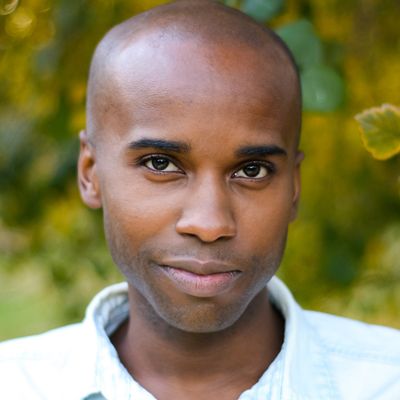
Jordan Barrow is currently making his Broadway debut as the principal role of Boq in "Wicked", making him the first black actor to play the role in North America. He talks about how he got into performing—from joining a theatre camp to doing voiceover work and getting his first professional job when he was 13... Read More
From the show: The Theatre Podcast with Alan Seales
Guests
Miniseries Inclusions
Featured Shows
About
Jordan Barrow is currently making his Broadway debut as the principal role of Boq in "Wicked", making him the first black actor to play the role in North America. He talks about how he got into performing—from joining a theatre camp to doing voiceover work and getting his first professional job when he was 13. He shares how didn't sing until he was 11 and even cried after getting the role of Danny Zuko and finding out he had to sing in front of people for a Grease musical in a summer camp. Jordan explains why he decided to go to school instead of pursuing acting right away (his agent ended up dropping him eventually). He shares his career journey from auditioning for Shakespeare in the Park in 2015 to booking a guest starring part on “POSE”. Jordan gets real about how the pandemic affected his work, wherein he lost 14 weeks of work removed, but despite that, it was also during the pandemic that he auditioned for "Wicked" and got the role of Boq. He shares that it was his fifth time auditioning and that he did not give up thanks to his mindset of how every audition is an audition for the next thing. He recalls his Broadway debut and what the experience was like, doing spot-check rehearsals, and what makes his work exciting and fresh.
Jordan Barrow is an actor based in New York City currently making his Broadway debut as the principal role of Boq in "Wicked". He graduated from the University of Michigan in the Musical Theatre program and holds a certificate from the Royal Academy of Dramatic Arts Shakespeare in Performance program. His other stage credits include "Sousatzka", "America V 2.1: The Sad Demise and Eventual Extinction of the American Negro", "Witness Uganda", "Hoagy Carmichael’s Stardust Road", "The Tempest", "Hairspray" and "Peter Pan". He has appeared in several movies and tv shows, including "POSE", "Broad City", and "Amy and Peter are Getting Divorced".
Connect with Jordan:
- Twitter: @jordant_b
- Instagram: @jordant_b
- Website: jordan-barrow.com
Connect with The Theatre Podcast:
- Support us on Patreon: Patreon.com/TheTheatrePodcast
- Twitter & Instagram: @theatre_podcast
- TikTok: @thetheatrepodcast
- Facebook.com/OfficialTheatrePodcast
- TheTheatrePodcast.com
- Alan's personal Instagram: @alanseales
- Email me at feedback@thetheatrepodcast.com. I want to know what you think.
Transcript
This transcript was automatically generated and might contain errors.
[0:00] Alan Seales: Hey, everyone. Welcome to The Theatre Podcast. I'm Alan Seales, your host for the show, and our guest today is Jordan Barrow. He is Boq in "Wicked," and this continues our takeover from Broadway's "Wicked." This guy was super fun to talk to. I love his story about how he just kept going back for "Wicked." He kept getting called in over and over and over again, multiple times, auditioning over and over again, never got the role, and then ultimately, when he stopped caring if he got it or not, that's when he got it. I love these stories. It happens a lot. When you go in and you just relax and you can be yourself, then you walk away with this part you didn't think you were going to get and it didn't matter if you didn't get it.
It's his Broadway debut. He's having the time of his life. I can't wait to share the story with you. Find me online, send me a message, shoot me an email. Let me know you're listening. I love to hear the stories. And now, everybody, please enjoy this episode with Jordan Barrow. Today's guest has a career spanning stage, television, film, and voiceover, who is currently making his Broadway debut as Boq in "Wicked" and is also the first Black actor to play the role in North America. On film, he guest starred in "Pose," directed by Ryan Murphy, and is featured on Comedy Central's "Broad City" and was in the feature film "Amy and Peter are Getting Divorced," which was released last summer, 2021. Jordan Barrow, welcome to The Theatre Podcast.
[1:30] Jordan Barrow: Hello. Thank you for having me.
[1:36] Alan Seales: Good morning.
[1:36] Jordan Barrow: Good morning to you too.
[1:41] Alan Seales: I want to get into the rest of your bio that I didn't read yet. But Jordan enjoys roller coasters, pop culture, and cooking in his free time. He's had exactly one legitimate viral TikTok. Just one.
[1:57] Jordan Barrow: What makes a video legitimately viral? I say legitimately because I think currently it's got, I think, 750,000 views.
[2:06] Alan Seales: Oh, wow.
[2:06] Jordan Barrow: So, yeah, that's, but I have some TikToks that are like in the 50,000 range, which, but only one has been, I would say, legitimately, you know, up there. Yeah. And it was a silly one, of course. Go figure.
[2:18] Alan Seales: What? OK, so me as an old fart. So you're not going to tell me what it is.
[2:24] Jordan Barrow: Yeah. Well, it was during the when Britney Spears was back in the news. Free Britney, free Britney. Britney should be, you know, get her out of her conservatorship, which did end up happening. I put up a TikTok that said, what is something that you thought would age terribly but has actually aged like fine wine? And then I put that video of Chris Crocker saying, "Leave Britney alone."
[2:46] Alan Seales: Yeah.
[2:46] Jordan Barrow: Yeah. When everyone was like, this person is crazy. And like, maybe we should have listened to him. Where he was right.
[3:00] Alan Seales: Where did that dude go? I feel around a clue.
[3:05] Jordan Barrow: I would imagine. Yes. I actually, I believe that they have transitioned. I believe that was part of what came from the comments was, oh, this they are now a they are a female.
[3:11] Alan Seales: So there you go.
[3:11] Jordan Barrow: So they're still here, but she is. I don't know where she is.
[3:16] Alan Seales: Not Chris Crocker anymore.
[3:16] Jordan Barrow: No, I don't think so.
[3:22] Alan Seales: Yeah. Yeah. Well, former Chris Crocker.
[3:22] Jordan Barrow: Yeah. Let us know.
[3:27] Alan Seales: OK. Let me see. Let me see. Oh, so yeah, roller coasters, pop culture, cooking in your free time. But obviously also you like theater and performing and what's not. So talk to me about what got you originally into performing in the first place. And you also do voiceover work, which I'm always so curious about, because it seems like this whole nebulous black box that nobody actually knows how to get into. But first things first, little Jordan, where did you actually grow up and what was there a touchstone moment when you got into theater?
[4:01] Jordan Barrow: Yes, I feel like there was. I grew up in Maryland. I lived in Maryland till I was about 14 and I was put into theater camp, I think just because I liked to talk. You know, I was definitely the kid who talks too much in class. You know, the teacher moved my seat and it didn't matter where you move me. I was going to talk. So I did a theater camp that my parents put me in a summer camp. And it was "Charlie Brown." And I got the lead of Charlie Brown. And I think from then on, I was like, okay, maybe this is something I could like, do do like, maybe I'm good at this. But I didn't know. And I didn't sing. I didn't sing till I was about 11. I was like, theater is theater, I'm going to act and that is that.
And then when I was 11, I auditioned for a musical in a summer camp. And it was "Grease." And I got the role of Danny Zuko. And I remember I came home and I sobbed. I sobbed to my mother because I was like, I do not want to be the lead. Like, I don't want to have to sing in front of people. And why did I even do this to myself? Like I have, I have a sad cry. It's a sad cry, not a happy.
[5:06] Alan Seales: Oh no, no, sad cry.
[5:06] Jordan Barrow: Oh no, not a happy cry. Sorry, that should be clear. No, this was a sad cry. I was very, very stressed. I was like, I do not want to have all these eyes on me. But I think once I did it, and people really took to it, it sort of took off from there. And I had my first professional job when I was 13. I did a show, I did "Seussical" at a dinner theater in Maryland. That was fun, because it was the first time you know, someone gives you a check and you're 13 years old. And all you did was have fun and miss like two days of school a week. And someone's paying you for it. So that was very cool. And then I moved to New Jersey. And that is I think where it really took off. My mom was an engineer. And she worked for Verizon and we moved to Jersey.
And I lived now an hour from New York City. And that first year I lived in New York City, I saw 15 Broadway shows, I think it was 15 to 16 Broadway shows I saw. And I got into the Paper Mill Playhouse, they have a summer conservatory. And from there, they got me my first, I was EMC, but it was my first technically like equity theater job. I did "The Miracle Worker." And that was, I think, where I really knew, okay, I have to think about the future. So I knew I wanted to go to school for this. And it's sort of the unfortunate, but I guess fortunate thing, if you are certain, is that I knew like, I'm gonna apply here, here, here, here. And I was 15 years old, and I was already like, planning where I wanted to go.
And Michigan was always where I was. I was gonna go, I was gonna go. And luckily, I got in. Because you know, that is it's extremely difficult to do that. So my year, they took 10 guys, 10 girls. And I think from then on, it was, it was that that was that it was, I was surrounded by the best of the best. And I always wanted to, it was sort of humbling to go to that school, because you do get, being in New Jersey, especially, you do sometimes feel like, oh, like, the only people who do theater are in New Jersey, because I had friends who were on Broadway at 12. And 16 people going in and out of New York City for auditions, I had an agent like just 'cause. And then you get to Michigan and homegirl from Utah, homegirl from Missouri.
And then all these people are like, oh, people are doing this at a really, really high level. And I did not know that. I was a little naive to think that. But it was, I think, really, really helpful. Because it let me know that the journey was going to be probably a little bit longer. But that was okay with me.
[7:43] Alan Seales: That's interesting you said that, that a lot of kids, I guess, live in New Jersey and are doing Broadway. But that sort of makes sense. Because if you're going to have a family, you can have a house. And if you have more, you know, if your parents have multiple children, it's nice, nicer than like shoving you in a tiny one or two bedroom in the middle of the city, right?
[8:02] Jordan Barrow: Yeah, for sure. No, yeah, there was, I mean, that was the Summer Conservatory, they do a three show showcase, basically at the Paper Mill, which is amazing. But it just became when I was there, in some ways, it was like, oh, who's gonna get an agent from this? Like the agents are here, like, who is the blah, blah, blah. And it's like, I just want to perform. I just want to have fun. But people were trying to work. And we were 15 years old.
[8:29] Alan Seales: Gotta be stressful. Because I remember, I mean, when I went to high school, it was, I didn't want to do theater professionally at that point. And in high school in general, like with, you know, hormones and figuring out yourself and figuring out dating and still going through school and all this other bullshit. I can't imagine what it's like to have the added pressure of already trying to be a grown-up before you even know how to be a grown-up.
[9:00] Jordan Barrow: Fully, yeah. And I think that's, I said I had an agent, and she ended up dropping me because when I got into Michigan, I had auditions for a couple of Broadway productions, and I was like, you know what, I want to go to school. I would maybe get these jobs, but I want to go to school. And she was like, well, then we're not aligned. And that's that. But I wasn't, I was trying to be a person, a young person. I wasn't trying to like grow up and it was going to come. I didn't, it didn't matter, but I wanted to make sure I got this school experience. And so, yes, it was very much so. I was of the mind of, I need to keep my youth for as long as I can.
[9:42] Alan Seales: I think that is so respectable, because I think it would be very easy if you already had the agent and you already had the experience just to say, no, I'm going to move and I'm going to make it. And there's a lot of people in that exact situation who have been successful in younger years, and then they come play in the big leagues, the Olympics of theater, which is Broadway, and all of a sudden can't get a job. And then they have no education and whatnot. And it works for some people, it works for a dozen. I'm not knocking people who don't go to school, but I am so, I'm so, I think that's so respectable that you had that, you know, wherewithal just to say, I need this experience. And I love the phrase, I don't remember where I heard it, but I'm like, there's a time and a place for everything. And that time and place is college. So you got to get your experiences out.
[10:32] Jordan Barrow: You really do. You really do, especially going to school like Michigan, where it is. I wanted to go to a school that had sports teams and had parties and had like social atmosphere. And that was important to me. I didn't want to go to school. I got into NYU and whatnot. I could have gone there, but I didn't want to go to school where I was going to end up living either. So I was like, well, I'm going to where I'm going. So I have no regrets about that whatsoever.
[11:02] Alan Seales: So then in NUM, you're partying like crazy, making all the social connections while still being the best performer you can be. And then coming out of UM, when did you immediately move to New York or, you know, when did the voiceover stuff happen? When did "Pose" happen? Where is the timeline in all this?
[11:18] Jordan Barrow: So I moved to New York because my parents still lived in Jersey. So I lived at home until for a couple of months because that was a nice perk of being from Jersey, of course. And I had a lot of auditions where I was like, this is it. This is happening. I mean, I auditioned for, you know, when you graduate, you go in for everything. You're like, I'm going to be famous because I have so many auditions. And then nothing happened. And you wait around. So I did a lot of waiting, but a lot of making connections and auditioning. I had so many auditions.
[12:23] Jordan Barrow: I went in, got the callback, and then they called me. They're like, hey, you got the job. It's going to be in January for two weeks in Canada. And I'm like, okay, this is super random, but cool. And I knew I was going to be the male lead, but I didn't know what the show really, really was. I knew it was about me and a woman who was my teacher in South Africa and London. And the two days before we left for the reading, they sent us the cast list. In the email, it was like, hey, these are all the people who are coming from America. And the leads of the show were me, Victoria Clark, Mary Beth Peel, and Tracey Toms. And I was like, oh, oh, hey, now. Okay, so maybe this is not, maybe this thing has legs.
It has legs. So then that was Suzaska. So I ended up doing that. That was a, we did a, I went back to Canada for, we did a workshop, and Montego Glover replaced Tracey Toms. Mary Beth Peel was still in at that time. And then we did an out of town tryout. I, we did a full out of town tryout in Toronto, produced by Gareth Jabinski. Yes, he was in the news right now. Yeah. He who shall not be named. Yes, we, he was the producer. This was going to be his big foray back into, like, this was it. And it was, the show was good. And I got a lot out of it, but it ended up sort of just not coming to fruition. But in the end of that same year, 2017, was when I booked a guest starring part on Pose. And it was at the time, like a very, very small, not very small, but it was the first two episodes.
I wasn't even sure if it was picked up. And went in for that. And really, honestly, I thought I bombed it because the reader didn't seem to care for me much. But you know, you don't read into anything, because that's how everything, anything works. And that was amazing, because Ryan Murphy was there, like he was on set. And he'd only directed the first two episodes, but he directed mine. So he was just very, very nice to work with and gave me notes. And it was one of MJ Rodriguez's, I think one of her first weeks, maybe on set, and we had known each other prior. So I texted her when I got it, like, I'm gonna be on set with you tomorrow. So that, and then from there, there was like a lull of about, I'd say probably two years where not a lot really happened.
And then things started to take off more and more and more. And then of course, the pandemic happens. And I was like, oh, of course, when things are about to pop off. I had 14 weeks of work that were just like removed. But lo and behold, oh yeah, I had, I was about to do Choir Boy at the Denver Center. And then it was a joint production. And then I was doing Witness Uganda. And then it was, I mean, sky was the limit after that. I thought, you know, it didn't, anything was possible. But then the pandemic happened.
[15:21] Alan Seales: So then when did you get attached to Wicked then, after, when coming out of the pandemic, or the audition happened during the pandemic?
[15:25] Jordan Barrow: It happened during the pandemic. It happened, I auditioned at the middle of October. It was my fifth time going in for Wicked. I auditioned for Wicked first time in 2015 for the tour. And it just, it never happened. They called me in, every year I'd go in for Wicked. Like once a year, just, and I'd be like, oh, this is like my yearly checkup, I guess you could call it. And they never asked me. I was, and I never went in, I went in for the Broadway company once to understudy. So when I got the audition to go in for the principal role, I was like, I'm counting myself out. Like, this isn't going to happen, but I'm happy they're calling me back now because this is the first time they've called me back.
And then I let it go. I auditioned on a Thursday. I heard nothing. The job started on a Tuesday. So you think Thursday, okay, nothing. Friday, my agent tells me, you're still in the mix, which is, you know, agent speak. You don't always, you have to take some of it at like, okay, sure. And then Monday morning, they called me, and they were like, hey, you start Wicked tomorrow. I was available, obviously.
[16:33] Alan Seales: Wow. Wow. Wow. Wow. Okay. So then the previous times you had been going in and auditioning, was it for anything specific or just like general ensemble calls or?
[16:48] Jordan Barrow: It was for, the first time was for Bach to replace my friend Lee Savakin. He was on the tour. And then after then it was to always be the understudy for Bach. I remember one time I went in and there was only like eight of us in the room. And I was, I thought, oh, this is happening because they seriously, obviously they want to start this person in six hours or something. And it didn't happen. So this was the first time I went in for, for Bach since my first time going in for it. So the first time I went in for it, and then I always went in for a cover.
[17:20] Alan Seales: So, you know, you do the, I'm not going, it's not going to happen because why would it happen at this point? But.
[17:24] Jordan Barrow: I think that, that just goes to show you, I hear these stories all the time when you go in without any nerves, without any like focus on it. Right. You're just like, I'm just going to do it. I'm going to have fun, do it for you, not for them. And you walk away with the role.
[17:41] Alan Seales: Yeah. We're going to take a short break. Stay tuned for more of the episode.
[17:57] Jordan Barrow: Did you approach it then the last time, the last time, the last audition you had that got you the role, did you, did you perform it? Did you approach the audition differently than you had the previous couple times? Like you were, it sounds like you were just like, eh, whatever. I'm just going to go and do my thing now.
[18:18] Jordan Barrow: Yeah, I, it was sort of that because that year in 2021, I guess it is, I had auditioned so much because auditions were from home. I feel like it sort of opened up the playing field for, especially for those people who are fortunate to have representation. I was being seen for things I never thought I'd be seen for. And I must have auditioned for over 40 things. So when this comes audition 43, 44, at the end of the year, I was burnt out. I was like, you know what, hopefully I'm just going to do it. This is, I want them to, to want me more than I need them. So I'm just going to go and have a good time. And I, I was just happy because I'm very, I'm very much of the mindset of every audition is an audition for the next thing.
It, you never know what or who or when it's going to come back around. So I thought, let me just go and do a good job because maybe they're thinking of me for something else or someone else will see me. And so I think that's probably why it ended up coming to fruition. And the audition was very quick. I did, I didn't do any of the sound, the scenes or songs a second time. I did them one time through, and then they were like, how tall are you? I was like, I'm five foot six. They're like, okay, thank you. I'm like, okay, I'm going to go because there is, they want you to be, I think, under five, seven.
[19:41] Alan Seales: I can never be. I'm six one.
[19:41] Jordan Barrow: Yeah. Well, you're very more Fiero. They like, Fieros are very tall these, these days. So, you know, you never know. I don't know. I don't know. Well, I, I, who knows what's happening with today's day and age, man. Like, Beetlejuice was canceled last night because they had like nine people out with, with, with COVID. And I don't, I don't know what's going on, man. And I mean, this kind of goes into the next, my next question about Wicked just being a machine and in a production sense, this is what October 30th will be the 20 year anniversary of the show. Do you know that?
[20:24] Jordan Barrow: Yes, I'm going to be there.
[20:30] Alan Seales: Yeah, I was going to say. So yeah, 20, 20 years. Do you remember seeing it when, did you see it previously? Like in all the times you've come to New York to see shows? Did you ever see Wicked previously?
[20:40] Jordan Barrow: So I saw Wicked for the first time at the Kennedy Center. I saw Stephanie J. Block, which at the time was exciting, but even now has aged really, really well, like fine wine. I begged my parents to take us. I was, I think in ninth grade, ninth, I think I said it was ninth grade and it was, it was the year before we moved to New Jersey and I was obsessed with Wicked. YouTube was new. I was on YouTube. I, there was honestly a time, and this is semi embarrassing, but maybe not. There was a time where if you played me like one, 20 seconds of someone, I could tell you, oh, this is Shoshana Bean, Chicago, October, like 22nd. I could like, you know, I could, I was, I was in it. I mean, I was in it.
So I was obsessed and I didn't see it for the first time on Broadway until after college. I saw Lindsey Mendez, I think was the first time I saw it on Broadway. So Wicked was, I mean, I was obsessed with it. So yeah, to join a machine when I booked it, I remember me and my boyfriend went to see it cause they gave us tickets. And, um, I cried so hard when the opening chords of Defying Gravity started because that's eighth grade Jordan thinking back, like, this is now my job. I work here. I work here.
[21:57] Alan Seales: Bill, that's what I was going to, that's what I was going to ask about. Like being able to stand on stage. And do you remember the bows of your opening night? The first time you went on stage and like that feeling, you know, think back.
[22:03] Jordan Barrow: I do. Yeah, I do. And I don't, I guess, I guess the bows is what I remember most. Cause I had a lot of people there. I was like, you know what, you only get a Broadway debut once. So I'm, I'm going to invite people and maybe this is more of a preview and that's fine, but these people love me and they will support it anyway. Uh, and yeah, it was, it's very cathartic and super just, it's affirming. Cause you know, you, you always dream of it and you think it's going to happen. And then when it does, you sort of just have to soak it up because it never happens again. You can never recreate that. So it was, it was, yeah, it was looking to the side of me. And I remember the, one of the first times I trailed the show, they make you trail the show, like in your last week before you go on.
And I went backstage and Alyssa Fox was on as Elphaba and I saw the Elphaba, um, lift from behind the stage, like from on stage finally. And that is like nothing else. I know the audience is a great spot to watch it, but there's nothing quite like watching from backstage. I'm sorry, not to be that guy, but it is, it's magical. I mean, it's, it's, it takes your breath away when you're off, when you're in the audience and backstage singer from that vantage point, even better, even better. Well, I work here just to say like, holy shit, this is my job.
[23:25] Alan Seales: I, I, yeah, to put it all together. Right. Because you, you've been, uh, you saw it in, in 2009 and, and then this show was 2005. Right. I'm sorry. Yeah. Early, early days, 2005 early days. So the show opened in 2003. So yeah, you saw early performances.
[23:46] Alan Seales: Yeah, First National. Wow, wow, wow, wow. Okay. And the show's been around forever. It has touched so many people's lives. And now you are part of this. I said machine earlier as a good thing, because it's a legacy. It's history. And it is the reason, because it's toured so much, because it's been around so long. It's the reason that so many people now have decided to get into theater or just the end of Defying Gravity. That is such an iconic riff that everybody knows it, everybody's heard of it, everybody imitates it. And you're now part of this amazing, amazing legacy and part of history. I think that's just such a beautiful thing. So I love thinking about the closing, the bows on your, you know, closing the curtain down and everything.
And then just like that moment when, when the curtain goes down, the audience can't see the cast anymore. Like, what is that moment? Like, you remember that after the bows, everything's going, the applause is still going, curtain comes down. And then all of a sudden, it's you again, you don't have to be presenting to the audience. What is that? What was going through your head?
[25:05] Jordan Barrow: So they, if it is your Broadway debut, especially, they will bring you a card, which I didn't know, but they brought me a card and a bottle of champagne and everyone's just giving you tons of hugs. And I just, I felt like this weight, like a release of, okay, this is now, it almost felt like this is where my life begins. Like everything before this was leading up to this. And now here, here we go. And I thought that, cause when you, I told you, I did a show, the show that I did in Canada with all these heavy hitters was supposed to come to Broadway. That was going to be my Broadway debut. And we, it was, when you're working alongside people, the likes of Victoria Clark and Montego Glover, you, you also feel like this is it, but when it doesn't come to fruition, you do have to take a step back.
And I, you know, I was pretty sad for probably a good six months. Like, cause when you think it's all happening and then it doesn't, it's, it's, it's heart wrenching. So when that happened on Broadway, being able to leave the stage and go to my dressing room and be like, this is, this is, this is now my life. Like I am, I am those people that I used to stand outside of stage doors for because I used to stage door.
[26:16] Alan Seales: Okay. Mm-hmm. Yeah. And there's also a level of, of, I suspect security in, in working for a company like Wicked because this, because this is, this is a show that's not going anywhere, you know? No. I mean, I mean, it's, it's going to be around for a long, long time because of, you know, what it is and the story and who's, everyone's lives is touching. Right. So like now 20 years later, you've got he adults bringing their kids back. Right. So the cycle starting to begin again. And I think it's such a beautiful, a beautiful thing. So, you know, speaking contrary to what you were just saying about, you thought it was your debut was going to happen. You've got big names and all of a sudden you're like, you're just devastated for six months.
And now you're in this show that it's almost like a regular, and it's not nine to five, but like a regular nine to five salary job where you're just like, I'm going to show up every day and I know what's going to be there for me. And yeah, not having that added pressure of wondering if your show is going to close tomorrow. That's, that's gotta be, it's gotta be so different.
[27:25] Jordan Barrow: Especially with the pandemic, all the auditions I had, I auditioned for things that never even happened. Like I had auditioned for them and I'm like, oh, I really will hope this comes. And then I've come to find out that it got canceled or it got postponed. So when you audition for Wicked, you do have that, you know, it's, it's security. It's like, okay, this is, I mean, we ran, we actually, right before I started, we closed, we canceled three shows the weekend before I started. So the guy who I replaced, Riley Costello, didn't get a closing show because COVID had us a big surge and they canceled three shows. So I was thinking, oh my gosh, Tuesday, I hope we have a show. Cause that's my first show.
I'm like, and we did, but it's that sort of security in that we never shut down again, because they have people who are gonna, they can get, they can come through. And it's, it's, I feel very, very, very fortunate to be at a show, especially now in such a volatile industry and world scape, you know, it's, it's, it can be scary. It's nice to know, like, you know, Wicked, this is, people want to be here. We sell out as far as I can tell, looking out, at least I'd say more than half, over half of the shows we have every week right now, at least. I look down, I don't see empty seats.
[28:43] Alan Seales: Yeah. It's huge. It's huge. Did, uh, did real quick, I'm trying to remember when I saw it years and years ago, and I actually saw you, I saw you a couple of weeks ago.
[28:57] Jordan Barrow: Oh, hey, hey, hey. And so I saw the show recently and I saw the show a couple of years ago. And then like 10 years ago, I've seen it a couple of times. Did it used to open with the, with, with feet under the house? Or did I dream that?
[29:10] Jordan Barrow: It opened with a hat. It was a hat on the stage that they, they cut that fairly early on. I don't know if feet under the house. I thought, I thought the Wicked Witch of the East.
[29:27] Alan Seales: East. I thought it started with, with the, the feet come getting pulled out into the cornfield or something. I'm, I'm remembering something with feet and the person I saw it with a few weeks ago said the same thing to me. I will need to research. I know there was definitely a hat that was at the, it was a big witch's hat that they would pull down into the stage and that got cut. I don't know how early on in the run or where, but it, it was for a minute, I think it was in it. And then they, they got rid of it, but the feet under the house, I don't know. I'll need to do my research around.
[30:03] Alan Seales: Why do they, why do they cut stuff? If something's running for 20 years, why, why do you go back and cut it or why modify it? Or, you know, there's a couple of things like, well, I was going to say that, that, you know, the Harry Potter music play, obviously they cut that down from 2X to 1X probably for financial reasons or, you know, two shows to one show, I would say for financial reasons, because it's easier to cancel one show than two. But anyway, so why, why go back and reevaluate this? Why cut stuff? Why add stuff? Does stuff change throughout this? Like does Stephen Schwartz come back and be like, oh man, I haven't seen this in two years. We got to polish this up.
[30:42] Jordan Barrow: I mean, yes and no, I guess with, I know for, for the, the, the hat, they cut that because it didn't always work. So things like that, I think when things are faulty, they need to change it. I know they updated projections and Stephen Ramis came back. This is, I guess, two or three months ago, maybe now, he came back and conducted for a week and we had rehearsals and polished up. I mean, we, that's why the show looks the way it does is because they do, they don't change things, but they do keep things intact. They want you to, they remind you of things that remind you of what was the intention. I mean, we have note sessions. We, I mean, like I said, Stephen Ramis had not been back for years and he actually, Idina Menzel came and saw it when he was back.
So that was, that was, I mean, great for me, especially as someone who is just happy to be there at all, to have this man who started it with the production, come back and reinvigorate it was like, you know, it's, it's like good timing. I'm like, okay, I'm here at the right time. I did it right.
[31:52] Alan Seales: We're going to take a short break. Stay tuned for more of the episode.
[32:06] Jordan Barrow: That's really cool. I knew that, that directors would come back every now and then and give notes and things. But it's, I guess a giant game of telephone because you've got even, you know, once the show opens, the show's locked and the direction and the control goes to the production stage manager. And so it's the, it's the PSM's job to make sure that you're not forgetting you're blocking and you know, you don't go up on your lines all the time, whatever the case is. And I'm sure that as PSM switch through, because even the crew, right, we don't give enough credit to the standbys and the understudies, as you would call it for the crew, because your PSM is out, you need a, you need a backup, whatever that case is.
Right. So there's always going to be little things that slide every night because this is live theater. It's, and so over time, it's going to slide a little more, maybe a little more, a little, a little more. And, and I guess, yeah, when you're, when you're thinking about, you know, 20 years ago, when, you know, I'm sure like, does Idina ever come back and be like, oh man, that blocking is totally changed. Or, you know, like, I just wonder at what point do you come back and say, oh, this has slipped too far. You know, does the creators, do they come back and say, this has slipped a little bit. We got to, we got to re-rehearse this. Or now that we've learned the world has changed, we're actually going to purposely change this away from the original.
[33:32] Jordan Barrow: Yeah. I mean, they, we do have, I guess the best way you cause like spot check rehearsals, like certain scenes will get rehearsed. Like let's, let's remind ourselves what's happening here because we are, we're losing the plot or we need to make this feel better. Or you're saying this line and I get what you're trying to do, but we do need you to say it sort of this way and whatever, how you want to say it, but it doesn't need to, this needs to be the impact of it. So there, there is a lot of that. But that's why the show is tight. It's why it feels sometimes like it's an opening night because we are often, like yesterday we had a, a dance cleanup rehearsal with Corinne. She's the associate choreographer and she came in and they had a four hour, a three hour rehearsal and they, they, I mean, we sort of re-learned some of the dances that was like, let's like remind ourselves what this is supposed to look like and what this was to feel. And I think that's why it does so well, but I would imagine, yeah, Idina Menzel coming back, I can't even imagine what her review was, like what she's thinking.
[38:09] Jordan Barrow: Like, for the whole time, she's green. You have to move past it, and then it's whatever. But it was jarring the first time, I'm not going to lie. It was a lot.
[38:21] Alan Seales: That's so cool. Okay, so we'll get into some quick, easy questions, and then we can wrap up with the standard three that I actually ask everybody. I don't know why I wanted to ask you this specifically, but I do. When no one's watching, when no one's around, what are you saying to yourself?
[38:40] Jordan Barrow: Like, in life or at Wicked? In life?
[38:42] Alan Seales: In life.
[38:44] Jordan Barrow: In life, it's usually a continuous loop of whatever I've been listening to during the day. For the past month, I would say it's Beyoncé, "Break My Soul." But also, often, it's the Wicked Witch of the East from Wicked, because I'm unwell. I don't know why. I'm always singing that, like, save him, please, just save him. Yeah, I don't know.
[39:08] Alan Seales: So the fandom for Wicked is obviously super, super huge and amazing. And of course, I mentioned at the top, and actually, we didn't get into this too much, but being the first black man to play Boq in North America, huge. You're pushing forward representation and, of course, setting an example for so many kids who possibly didn't think they could have roles like this. So what's like, I mean, me.
[39:34] Jordan Barrow: Yeah, there you go. You specifically, right? So along those lines, like, is there something like the greatest bit of feedback you've received from fans or like fan gifts that you didn't expect? Like, what's the fandom been like?
[39:47] Jordan Barrow: Yeah, the fandom has been very, very welcoming. And they are present, baby. There are so many people who come to the show like weekly. And someone reached out to me on Instagram. I've gotten lots of DMs on Instagram, but it was a, it was a, I believe she is an Asian girl. And she just wrote to me, she said, I'm so excited to see you in Wicked. I'm coming in three weeks. And I love to see that you are like opening doors. I'm an Asian woman. And I've never and I've always wanted to play Elphaba, but I've never seen it for me. I don't think it could be real. I don't know that it's possible. But now I know that it's, it's not possible. It is possible. Like it's, it's not that it's not, it's just that it hasn't happened or it has.
I'm actually Alyssa Fox is half Japanese. But it is. It's, that's what I think is so exciting is that when you don't see yourself, you don't think it's going to be you to become the person who allows other people to see themselves. So knowing that my picture is outside of the Gershwin and there are so many young black men who have had this as a dream role like me, who you do have to some at some point, you do get a little discouraged, like, you know what, maybe you need to change a dream role. Maybe it's not. And that's okay. You know, you have to have plenty of dreams and whatnot. But it's, I feel very, very fortunate and lucky and humble that I am the person who is now being able to ignite a dream in so many other people.
And in myself, like, I can't stress that enough that when you, you, you always sort of count yourself out of it. And you're like, well, it's not going to be me. But I hope if it's not me, I split someone else. But then when it is you, it's like, wow, okay, this is major. So the fans have been beyond, I mean, so many messages from just young black men who are like, you are thank you for changing the landscape. I'm so inspired by what you're doing. And this is amazing for everything. I'm like, yes, like, you're, you're welcome. I'm just happy to be here. Like, it's overwhelming. In the best way.
[42:06] Alan Seales: Well, yeah, I can, I can imagine the feedback is just incredible. So many people talk about the show. And in such a positive way as well.
[42:12] Alan Seales: All right. So the three standard closing questions. The first one, very simply just is what motivates you?
[42:17] Jordan Barrow: Oh, what motivates me? What motivates me? I always say what motivates me is making people happy. I perform because I like I myself am a big pop culture junkie. I love to watch I love I love to consume I have the Emmy Awards. The nomination just came out of the all there's like I think 24 nominated TV shows. I only don't watch four of them. So I want to make people happy. I want to be the vessel of a story for someone to see themselves or someone to have a something Oh, or even just have a good cry. So this is a good cry or a good laugh. I want to make people feel I guess not even happy feel. That's what motivates me is knowing that I can be responsible for making someone feel something.
[43:04] Alan Seales: That's beautiful. Okay, next question, then what would what advice would you give to your younger self and younger people listening now starting out down a similar path?
[43:15] Jordan Barrow: My advice is to never, never think that what you are doing is not is not going to come back around. Because it often does feel like it feels like no. And I mean, it's very cliché to be like, every no is a yes somewhere else. But it truly it is it is that like you have to our professor from Michigan always said, success is luck meeting preparation. So you do have to just be prepared for when it does happen. But never think that it's not going to happen. Because if you have to outlast another friend of mine, another friend of mine says that it's about outlasting. It's not about outbooking, you can't get 15 jobs a year, you can get three really good ones, you can get one really good one. But as long as you are in the running, you're going to get something. Yeah, keep keep at it. Keep going.
[44:10] Alan Seales: I love that. Alright, so this is the hardest question. The last one, if you could only see one show for the rest of your life, but you can see it as many times as you want, what would you see?
[44:20] Jordan Barrow: Honestly, that's easy because now I've seen it six. I would see Six weekly if I could. I love that show so much. And one of my friends just booked it. Yeah, a friend of mine just booked it. I'm like, I'm gonna go back. That's that.
[44:39] Alan Seales: Yeah. Oh, yeah. It sounds the new Queens yesterday.
[44:44] Jordan Barrow: Yeah, yeah, yeah. My friend Brie Jackson is in it. So she went to school with me.
[44:49] Alan Seales: Oh, that's beautiful.
[44:49] Jordan Barrow: Yeah, I love that show. It's such a fun show. And I've interviewed most of the Broadway cast, most of the original Sydney cast, and actually five of the six of the first national tour that's out now. And all of them have such a sweet, sweet love for the show, but mostly for each other. They support each other. And they literally, they all have the same story of auditioning with each other, right? So they're in the same room where they're all auditioning and pumping each other up. And I think part of how they're getting cast, or why they're getting cast is because of the love and support they're showing when the other people are auditioning for sometimes literally the same role that they're in for the same, right?
[45:27] Alan Seales: Yeah, yeah. It's just beautiful. I love I love that show. So great. And I'm gonna I'm gonna throw in one more. One more question just for you. Because we're talking about dream roles. You find out right now that all right, Wicked, you don't get to play Boq anymore. But you can play any role in any production, present or past. What's your dream role? What's your dream role that you can revive or step into tomorrow? Present or past?
[45:49] Jordan Barrow: I, I do want to play Pippin. I don't know where or when. But Pippin has been something I would love to play it in, in a production that allows it to be a little more modernized, maybe. I love that role. I think it's really exciting. I think there could be something exciting about a reimagining of it. So I just love to sing the songs. I mean, quite frankly, it's just so good.
[46:21] Alan Seales: Did you see Sierra Renee's revival? The production with Sierra Renee?
[46:26] Jordan Barrow: I did. I saw I saw Patina Miller's final show. Oh, which was just we just got tickets to get it. And it happened to be a concert. It was incredible.
[46:38] Alan Seales: Alright. I've been promising we'll wrap up now we'll wrap up. Where can we find you on social media?
[46:46] Jordan Barrow: I am on all platforms at Jordan T underscore B. That is me. Find me. I'm there. And I'm also on YouTube as well. But Jordan T underscore B. Of course, TikTok. Look for the viral video. The viral video is pinned. It's pinned on my profile, obviously.
[47:04] Alan Seales: Alright, you can get more me at thetheaterpodcast.com. I'm on Instagram and Twitter at theater underscore podcast. Listen, wherever you're listening now leave a rating review. This has been edited by Well Rounded Hoodlum Productions and the intro outro music was by Jukebox the Ghost and the amazing conversation was by Jordan Barrow. Thank you so much. I had such a great time.
[47:27] Jordan Barrow: Thank you. I appreciate it. Thank you for having me.
[47:30] Alan Seales: Take a deep breath, make the world a little colorful.
© Broadway Podcast Network, All Rights Reserved