

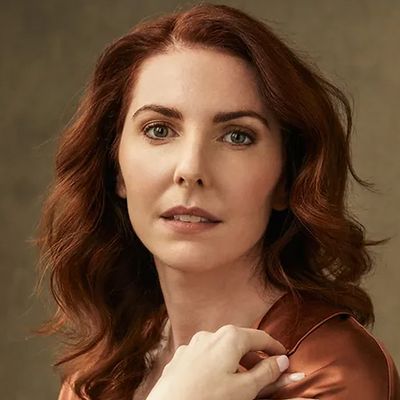
Marla Mindelle is currently making people laugh playing an over the top Celine Dion in the off-Broadway production of "Titanique". At an early age, she already knew that a career in musical theatre was all she ever wanted to do, thanks to her father (who was a musical theatre composer) and all the obscure musical theatre records she consumed... Read More
From the show: The Theatre Podcast with Alan Seales
Guests
Featured Shows
About
Marla Mindelle is currently making people laugh playing an over the top Celine Dion in the off-Broadway production of "Titanique". At an early age, she already knew that a career in musical theatre was all she ever wanted to do, thanks to her father (who was a musical theatre composer) and all the obscure musical theatre records she consumed. She chronicles her life from booking her first show and her experience as an actress to moving to Los Angeles to become a television and film writer. For Marla, writing as a career is harder than acting, proven by her humble beginnings in L.A. where she also worked at a "ratchet" dinner theatre venue doing movie and musical parodies. Ironically, this is also where the idea for "Titanique" was born. She shares the musical's (long) journey to success, including getting Celine Dion's team's blessing and keeping the script fresh and up-to-date, and how timing and the team's goal of making each other and the audience genuinely cackle are a huge part of its success.
Marla Mindelle is an actress, writer, and composer who made her Broadway debut in "South Pacific" and originated the role of Sister Mary Robert in "Sister Act" as well as the role of the evil stepsister Gabrielle in the 2013 revival of "Cinderella". She also played Kitty in the first national tour of “The Drowsy Chaperone” and the evil boss Olivia in the Emmy-nominated series "Special" on Netflix. Her other tv and film credits include “The Nomads”, “Life in Pieces”, and “The Devil’s B*tch”. As a writer and composer, she has had multiple writing projects sold and is in the works. Currently, she can be seen on stage playing Celine Dion in "Titanique" at the Daryl Roth Theatre, a musical she also co-wrote.
Connect with Marla:
- Website: www.marlamindelle.com
- Instagram: @marlamindelle, @titaniquemusical
- Get tickets to Titanique
Connect with The Theatre Podcast:
- Support us on Patreon: Patreon.com/TheTheatrePodcast
- Twitter & Instagram: @theatre_podcast
- TikTok: @thetheatrepodcast
- Facebook.com/OfficialTheatrePodcast
- TheTheatrePodcast.com
- Alan's personal Instagram: @alanseales
- Email me at feedback@thetheatrepodcast.com. I want to know what you think.
Transcript
This transcript was automatically generated and might contain errors.
[0:01] Alan Seales: Welcome back to The Theatre Podcast, intimate personal conversations with the industry's biggest names. Our guest today is Marla Mindelle, who of course is playing the amazing Celine Dion in Titanique off-Broadway. Marla is one of my absolutely oldest friends in New York City. Not that she's old, that's not what I meant. She's somebody I've known the longest since moving to New York City a long, long time ago. We see each other in spurts, but when we do, we reconnect like no time has passed. You ever have one of those friends that just no matter how long you go in between seeing each other, you always just have everything to catch up on and can talk like nothing ever, like you were never apart?
That's how we are. It's awesome. She's an amazingly genuine person who just says what's on her mind and has this uncanny ability to just write it down effortlessly. It's a talent that I really envy. Of course, we talk about Titanique, this smash hit off-Broadway. In the recording, we say that it was extended three times. Between actually doing the interview and me recording the intro right now, it was extended again. It's got a fourth extension that was just announced. Now they're playing through September 10th. It's going to be there for a while. Go down and check it out in Union Square because my God, it's so funny. Find me online on TikTok, Instagram, Twitter, Facebook, all the places. Leave a rating and a review.
Everybody now, please enjoy this episode with Marla Mindelle. Today's guest is someone I've had the pleasure of knowing for I'm pretty sure the entire time I've lived in New York City, which is now, wow, over 15 years. She made her Broadway debut in South Pacific, originated the role of Sister Mary Robert, the nun who hasn't completed her vows yet, in Sister Act, originated the role of the evil stepsister Gabrielle in the 2013 revival of Cinderella, and was Kitty in the first national tour of The Drowsy Chaperone. In addition to being the evil boss Olivia on the Emmy-nominated series Special on Netflix, she is also a writer, a composer, with multiple writing projects sold and in the works. She can currently be seen on stage right now playing the true-to-life Celine Dion in Titanique at the Daryl Roth Theater. Marla Mindelle, welcome to The Theatre Podcast.
[2:34] Marla Mindelle: Ooh, wow. You know my whole resume. I'm obsessed.
[2:40] Alan Seales: That's it. That's everything—
[2:41] Marla Mindelle: That's everything I've ever done.
[2:41] Alan Seales: Everything you've ever done in your entire life. We were just talking before I started recording, I've known you. You're literally, I think, now my longest—
[2:49] Marla Mindelle: New York friend?
[2:50] Alan Seales: My longest friend in New York. I was going to say living friend in New York, but that sounds like everybody else is dead.
[2:55] Marla Mindelle: It's dead. I am dead inside. I'm dead inside.
[3:00] Alan Seales: I mean, you're my remaining friend because circles change and grow and things move around and people obviously meet and lose touch. But yeah, we've known each other and still been in touch for the entire time I've been in New York, which is kind of insane.
[3:17] Marla Mindelle: I know. It's so crazy. And even when I went to Los Angeles for eight years, we still kept in touch. And now it's just full circle to be back and doing your Broadway podcast.
[3:27] Alan Seales: I can't believe you went to LA. Yeah, you went to LA for eight years. But I mean, we'll get to that. We'll get to that. So, little Marla, you grew up in Pennsylvania, right?
[3:36] Marla Mindelle: I grew up in Bucks County, Pennsylvania, home of the Bucks County Playhouse.
[3:40] Alan Seales: Right.
[3:40] Marla Mindelle: Yeah. So, I lived only about 90 minutes away from the city. My father is a musical theater composer. And so, I was growing up listening to every obscure musical theater record you could ever imagine. And I started seeing shows in the city as early as three years old. I think Big River was my first Broadway show. And I was dead silent, which is a twist because I was a raging bitch baby. And so, I just knew from a very, very young age, I was like, musical theater is it. It's all I ever want to do. And so, yeah. And so, I went to college for musical theater and then started my career, thankfully, very, very soon after graduating college.
[4:21] Alan Seales: And you're the oldest of three, two lovely sisters.
[4:22] Marla Mindelle: Yes, correct.
[4:22] Alan Seales: And you annoy the hell out of them in a very pleasant and happy way. I love how different you all are.
[4:28] Marla Mindelle: Yeah, they do treat me. They treat me like I'm the youngest and an idiot, which is wild because I'm significantly older than both of them. Lisa and I went to college for musical theater together and then she quickly realized that musical theater is wonderful if you want to be broke your entire life. And she was like, F this. I'm going to be a financial advisor. So now, she's making more money than any of us working at an independent financial firm in Los Angeles. And Olivia is the black sheep of the family. She wants absolutely nothing to do with musical theater. I don't blame her. And she works in magazines.
[5:04] Alan Seales: Olivia gives zero fucks about pretty much everything.
[5:06] Marla Mindelle: Oh, I know. I love it.
[5:08] Alan Seales: She's the absolute best.
[5:10] Marla Mindelle: The twist is she's the best singer out of all of us, but she refuses to sing out loud. So, we'll hear her in the shower. We call it, I hope I can say this on air, but whatever. We call it pussy riffing because it just sounds like it's little tiny pussy riffs because she's always like, Mariah Carey breathy riffs in the shower, but she's fierce.
[5:29] Alan Seales: I did not know she could sing.
[5:31] Marla Mindelle: Oh, she's the best.
[5:32] Alan Seales: I mean, I knew she was an amazing photographer, but because I've seen her work there, but I've never heard her sing. That's incredible because she's just like, whatever. I'm going to do what I want. It's that damn generation, man. Get off my lawn. Okay. So, I think we met when you were doing South Pacific. Yeah, that would be 2007-ish, right?
[5:53] Marla Mindelle: Yeah, maybe even, yes, yes. Yeah, 2006, 2007 is when our friendship truly blossomed. Yes.
[6:00] Alan Seales: And yeah, we met for a weird party out on Roosevelt Island, which was incredible. And, oh, rip Roosevelt Island. And I forgot that you had gone on tour with Drowsy Chaperone too. So, that was after South Pacific, right?
[6:17] Marla Mindelle: That was before South Pacific.
[6:18] Alan Seales: Oh, before?
[6:19] Marla Mindelle: Yeah, yeah, yeah. So, I came here at like 23 years old and at 24, I had booked Drowsy Chaperone. So, I did that for a year. And then I came back and I reconnected with all of you. And I worked at Ellen's Stardust Diner in the meantime, which we called Ellen's STD, because I'm sure working there, you probably caught something. And then yeah, and then six months later, I booked South Pacific.
[6:43] Alan Seales: Yeah. And I mean, you kind of grew up your whole life. You're saying you grew up your whole life. This is what you want to do, musical theater, musical theater. And then you get in there and you talked about going to LA. And you and I have had many a late night conversation about like, God, this is the worst business. This is just so, it's struggle, it's horrible. I'm going to move to LA and be a writer.
[7:04] Marla Mindelle: I mean, yes, that's exactly true. Look, for me, everyone has their own journey. But I think when you do, I was very, very blessed to be in three unbelievably long running Broadway shows, which never, ever happens. And I was on tour for a year. So literally, for nearly 10 years, I worked consistently on Broadway. And there are unbelievably wonderful things about it. You have a built-in community, you have a steady paycheck, you have so many fun things that you can do within like the Broadway Softball League, Broadway Bowling, like there's just so many Broadway Cares, Equity Fights AIDS, none of which I did, but you can do it.
[7:40] Alan Seales: I love it. Like all the amazing things you get when you're on Broadway, bowling and softball. Those are the top of your list.
[7:46] Marla Mindelle: Well, it just, there's a lot of communal things that you can do with a built-in family. And that's incredible. And it's such a wonderful experience. However, on the flip side, there are things like where you don't have any weekends, you don't have any holidays, you barely have a day off. And so after a decade of that, but also trying to be a writer in New York, I was like, I have to put this on the back burner. I've done it. I know exactly what it's like. And I want to do my next chapter, which is trying to become a television and film writer in Los Angeles. So I up and left after Cinderella. And I moved to Los Angeles. And I was like, I'll be here. I was like, I was like, this is gonna be so easy. I made it in New York, I'm gonna make it in LA in like a year. And God had very different plans for me, because I was starting all over again.
[8:29] Marla Mindelle: And no one knew or cared, frankly, about my Broadway resume, because I was now trying to be a TV writer. So I was starting from the bottom rung. And one year in Los Angeles turned into seven or eight years trying to make it in LA.
[8:42] Alan Seales: Well, so you went out there with Jonathan Parks Ramage, your writing partner, and the two of you guys have written so much, so much together. And eventually, you did sell, what did you sell to Margot Robbie's production company?
[8:56] Marla Mindelle: We sold a movie script called The Big Gay Jamboree, and she was slated to attach. And, you know, writing is a completely, I would, I actually think that it's harder to be a writer than it is to be an actor. Because the writer, you are gesticulating a baby for years on end. And it goes through developmental processes. It goes through multiple different studios, multiple rounds of notes, people move, executives move all the time, and like things are dropped like hot potatoes. So we were in development with that movie for over two years before basically, it fell through at Paramount. But Jonathan and I are now redeveloping it for the stage, which I think will be very fun and fantastic. And so I'm not I'm not letting this baby die yet.
But yeah, we sold that and we sold a couple of other television pilots. But I, you know, and I pitched I want to say 500 different TV shows and movies. I mean, I was working nonstop for free to try to get anything off the ground. And in the meantime, I was working dinner theater at this dinner theater venue in Los Angeles doing these, like very ratchet movie to musical parodies, because it was the only job that I could really get. And the only job that I could do ironically was musical theater, even though I moved to be a writer. And that is where Titanic was the idea of Titanic was born at this ratchet dinner theater in Los Angeles.
[10:14] Alan Seales: Really? So what was it a? Was it a COVID baby?
[10:19] Marla Mindelle: No, no, it was not a COVID baby at all. No, we were doing we were doing all these movie musical parodies like Scream, Devil Wears Prada, True Beverly Hills, and then one night at the bar of Rockwell, Constantine Rassouli, who plays Jack Dawson in Titanic. Now, he came up to me and he's like, Okay, the next musical that we should do is Titanic, all Celine Dion songs, you're gonna be Celine, I'll be Jack. And at the time, I was like, cool, cool, cool, tight, tight, tight, this will never ever happen or see the light of day. And we sat on the idea for two years. And then in 2016, Ty Blue, who was the director of these dinner theater shows, he texted us and he was like, I keep thinking about the Celine Dion idea, I think we should write it.
And I at the time, I was like, Oh my God, I'm a struggling writer. I know exactly how this goes. This is going to be so much free work. I don't want to do this. I don't want to play Celine Dion. I was just like, I literally was the Grinch re Titanic. But we started writing it for fun. And it is so ironic to me that after years and years of failure in Los Angeles as a writer, the one thing I got up and running was a musical, and came back to New York to perform in a musical, which I swore off.
[11:29] Alan Seales: And it's been extended three times now, right?
[11:32] Marla Mindelle: Yeah, third time's a charm.
[11:34] Alan Seales: Yeah, you were in you were in the asylum, which was in Chelsea, and then moved to the Daryl Roth and which is a slightly bigger house and you keep going and going and going. And every time it's, I love the show, I'm going to get to the show. But something you mentioned Connie as well, because Connie was on he was back and on Broadway here and wicked, right? And he's got his own Broadway credit. So when did he move out? Did he go out with you? Or did you all just kind of meet up there?
[12:00] Marla Mindelle: We met up there I knew, I knew Connie, like through, you know, through various show circles, we were like acquaintances, but I was I would not consider him to be like a good friend. In fact, he thought I was a raging bitch when we met in New York, and I
[13:14] Marla Mindelle: Even if Titanic does come to Off-Broadway, the world has been through such a reckoning, like people aren't even going to like this because it's literally just a parody. It's silly. People aren't going to think that this is fun or funny. No one's going to want to come to see theatre, and it has been the exact opposite. It's been like divine intervention that it happened when it happened because I think people are looking for joy more than ever, so I think that's been part of the success. I think that coming out of it what really seemed to succeed was things that just made people straight up laugh and disconnect from the reality, put them back in a room together, get them to laugh and find a common knowledge again because we just, God, I mean...
[13:56] Alan Seales: I know. We're coming up on the third year of the pandemic. It's crazy.
[14:02] Alan Seales: We're going to take a short break. Stay tuned for more of the episode.
[14:12] Marla Mindelle: And the show, wait, when did the show open? The show opened last... The show opened in May of 2022 and it's only...
[14:18] Alan Seales: Yeah, I was going to say it's...
[14:19] Marla Mindelle: Yeah, it's been a while. It's been a while. It was only supposed to run three months and it got extended at the asylum through November and then the Daryl Roth opened up and we moved in every single time. I must be the world's biggest pessimist because I'm like, okay, we're moving to a bigger space. How are we going to maintain the popularity? Are people going to want to come see it at a different venue? And it has exceeded my expectations beyond my wildest dreams. I cannot believe we're still running. We're sold out every single night and it's like a gay football game every single day. People are screaming as if they're at a rock, like a Celine Dion rock concert. It's been the most wild experience of my life and it has been so joyous for me, even more so as a performer, but as a writer, after struggling for so long, trying to get anything off the ground, I am so, so happy that finally this is the greatest representation of everything I can do, both as a writer and a performer.
[15:24] Marla Mindelle: It reminds me so much of, I mean, it's your humor. I can see your humor shining through because when, God, it was 10 years, over a decade ago, you and I would get together and make these ridiculous videos that were so much fun to shoot before everyone had iPhones that could do it all, right? We'd get the cameras and get the crew together and we would make these ridiculous sketch comedy videos. What is it? The Little Mermaid singing?
[15:54] Alan Seales: Oh my God.
[15:55] Marla Mindelle: Yeah. Anyway, I'll put some links to some of our old videos in the show notes for this because they're worth bringing up, but I can see the humor coming through and that's, I think, I guess, is that a product of your parents, the type of humor you have, or is it cynicism? Where does that come from? Because Lisa, the middle sister, she's just the happy-go-lucky, whereas Olivia is the epitome of just, like you said, she gives zero fucks.
[16:25] Marla Mindelle: Of snark. I don't know. I remember growing up, my family was always very funny and we always tried to make each other laugh and we were highly creative, but my father and mother are both very optimistic, not very snarky people, so I don't know where our sisters got the snark, to be honest with you, but I think my snark really came out in Los Angeles and I think the humor, yes, the humor is purely me and the humor is also very much Connie and Ty and I think what has made the show very successful is that we did it with no producers breathing down our necks of like, oh, we have to make this PG. Oh, we got to tame this. We were just like, fuck it. What is funny to us? Let's make each other laugh. The whole goal in mine was to try to break each other and make each other crack up on stage and so that's why I think the show is so outrageous and so wild because we just kept one-upping each other on stage all the time. Yeah.
[17:23] Alan Seales: Did you workshop it? And when you were writing it, were you on your feet doing the lines like workshopping in front of an audience or whatever? Because I've talked with so many people who are successful comedians and they are so serious about the science of comedy, right? And you talk to people who are really known for this, like Rob McClure or whatever, and you've got the timing of finding all of your beats to get a laugh on here and then if you wait a half a second over here, you're going to get an additional laugh. All of this, is that, how did you workshop all of this going from the different venues because a dinner theater is different from the asylum, is different from the Daryl Roth and every time you have to like find your feet again, right?
[18:04] Marla Mindelle: Oh, absolutely. Yes. It's been a very, very long process. We started the process out in Los Angeles. So we wrote the script and we all had different jobs, different lives. So like Connie, Ty took the first third, Connie took the second, I took the end and then I went over and glossed over everything. So that's how we originally did it. Then we did like a couple table reads with friends. Then we would get together in Connie's, Connie lived in a luxury building in Los Angeles and he had a movie theater in the building. We would rent out the movie theater and every Monday night we would go and we would learn music together and we would just kind of like bounce things off each other. Then we did a couple readings in Los Angeles, which then, then I was after doing some readings, we would sell out these readings, people were cackling, they were like, this is the funniest thing I've ever seen.
And I was like, really? Like, we've not really spent this much time on it. There's no money. We're doing everything for free. I'm getting my costume off of Rent the Runway. Like Connie's making the props in his home. Then I was like-
[19:07] Alan Seales: It still looks like he's making the props.
[19:07] Marla Mindelle: Yeah, yeah. I know. We kept that. We kept that part of it. Then I was like, you know what? Maybe this is, maybe this is, maybe this is actually funny. So I asked everyone to fly themselves on their own time, put themselves up in New York and we rented out a week at the Green Room 42, where we did a week's worth of performances. And that's the first time, ironically, that we really got to workshop everything, build on beats. And then we just kept, we did another run at the Green Room 42. We went back to Los Angeles. So it was like a four year process of just doing these readings and workshops and, and fine tuning and fine tuning. And then the first time we ever got a real rehearsal process, ironically, was when we went to the asylum. We had three weeks in a space altogether. We had never, ever had that before.
[19:52] Alan Seales: Really?
[19:52] Marla Mindelle: And really, because we were all doing this for free in Los Angeles. It was all just friends trying to make each other laugh. People were flying away, going to do jobs. So we never, ever spent more than like four hours on the show together. So it's truly crazy to me that it has wound up being so funny and successful because there was never any time. And then moving to the Daryl Roth, we didn't have any time either. And that was a completely new restaging. They were like, oh, we've done it at the asylum. We'll give you three days of tech. And it was, it was crazy because we had to completely redo it. So there has not been, quite frankly, a ton of time putting, putting the show up. But I think that speaks to the testament of how solid the script was in the, in the development and workshop process. We got it to such a good place that when we did take it to all these different venues, it didn't, the staging didn't really honestly matter because the book is so funny.
[20:48] Alan Seales: That's, that's really interesting that, I mean, you, you grew up with musical theater, your family is, is music, music, music. And, and then you go to school for musical theater, but then you end up wanting to write. And it like when, when you're, I guess, looking for, well, I guess what I'm saying, where did the talent for writing come from? Did you, did you have to craft that specifically? Or like when you went into LA, did you start doing classes or do you like look at the scripts behind movies that you like? Was there a teaching moment there where you had to start like uncovering, put, put the musical theater in a, in a little box for a while and start crafting the, the writings, the writing bit?
[21:28] Marla Mindelle: Yeah. You know, I started writing, we would have these classes in college where we'd have to write like little scenes. And so I'd start and, and I went to college with this guy named Jonathan Parks-Ramage, who's now a best-selling author. And at the time we were writing scenes for fun and we were like, huh, this is kind of, this is kind of funny. Like maybe we should like try our hand at this. And so when we started writing together, yeah, we would read a lot of scripts. Like we would read a lot of scripts that were out like on CBN, we would read multicams and single cams. And we started writing so much together and developing a shorthand that I, I think that it is absolutely a different skill, but because we were doing so much of it in New York and then we both moved together to Los Angeles at the same time, we were both writing so many scripts, pitching so many ideas.
We were writing packets for late night to see if we could get staffed on late night. We would have to write samples all the time. We were writing these scripts. So it became a real skill. And I think it really, really helped me when crafting Titanic, because, you know, I, Ty and Connie wrote incredibly funny things, but I think where I came in was I was able to very soundly and structurally write, okay, we need to introduce all the characters here. What would Celine Dion say here? And so I think that that's where I could bring my skillset as a writer is, is fine tuning and making the script really, really tight.
[22:52] Marla Mindelle: I think that's a natural ability. I mean, ultimately school. Well, I'm going to say, I think it's sort of nature versus nurture, right? Because you've got to have it in there. You've got to have the drive, got to have the passion to put, to put yourself up and decide essentially after you make it, you know, you're on Broadway, you've got multiple credits, and then you're going to start over essentially. Like you said, you went to LA and you're starting over and doing this all again. And ironically, you're back doing what you settled to walk away from in the first place.
[23:19] Marla Mindelle: I know, I know. It's so full circle. I know. But I guess in, in terms, I didn't know Jonathan was a bestselling author now either. What, what book is it?
[23:31] Marla Mindelle: Oh, he wrote, he published a book called Yes Daddy. And it's fabulous. It's, it's so, so great. It's so funny because him and I were writing together for I want to say 15 years. And the only thing is that, that him and I have ever gotten up, we're independent of each other. He sold a book. I think in 2020 or 2021, he sold Yes Daddy. And then I got Titanic up and running. But, but yeah, I think, I think the thing about musical theatre is that while it is the most incredible thing in the world, you are always in, you are always a cog in somebody else's wheel. Like you're always like a machine part in a way, like any job, you know, everyone has their roles. And I was, I was so, I remember watching like all these creative teams that would put the show up, and then they would go off on their own and they would like go on vacation. And I was like, huh, I want to have some of that.
[24:26] Marla Mindelle: I want to do that. I don't want to be stuck here for a year and a half doing it. And I was like, well, you know, maybe you get a little bit more of that independence and autonomy if you are on a creative team and if you start to write. So ultimately, that was what I was really striving for. But at the same time, I loved performing. I love performing and I'm desperate to do that as well. So, you know, now I just call myself the poor man's Lin-Manuel Miranda because I get to write and star in my own thing. I'm just not making nearly as much money as him. One day, you'll get like Warner Brothers animation, not Disney.
[25:03] Alan Seales: What was that CCM video that is still like a cult viral hit of you doing "Colors of the Wind" purposely off-key?
[25:10] Marla Mindelle: Yes, there's yes. That is when that I mean, that's really going to date me. That's before YouTube. That's before TikTok. It went viral right when like the internet came out. So like viral back then was like people emailing each other being like, hey, you should listen to this. Yeah. And it's so funny how the internet like don't believe anything you read on the internet because I remember I sent it to you because somebody forwarded it to me. Remember when email forwards were a thing? It was forwarded to 10 of your closest friends. And it was listen to this audio file of an actual Caribbean cruise line audition. And it was the audio from your video.
[25:52] Alan Seales: Stop it.
[25:53] Marla Mindelle: Do you not remember this? I sent this to you because it was sent to me by Evan Rachel Wood's father.
[26:00] Alan Seales: Wait, no, I did not know this at all. Wait, what?
[26:04] Marla Mindelle: So yes, I performed with Ira David Wood. So in Raleigh, North Carolina, where I'm from, right? So I've done some things with David Wood, and he maintains this email list of stuff. And he's like, check this out. This is a real audition from Carnival Cruise Lines or whatever it was. And I was like, you know, I play it and I'm like, okay, what is this? I'm like, holy shit, that's Marla. That's Marla's video. And I wrote it back. I'm like, this is David. Come on, man.
[26:31] Marla Mindelle: No, I know. I remember when I was working at Ellen Stardust Diner, they were like, have you heard this one like middle-aged woman sing "Colors of the Wind"? And I was like, hi, I'm Marla. And I'm certainly not middle-aged. They were like, wait, you did that? So then they're like, can you sing it for the customers? So there would be days where I would sing "Colors of the Wind" in that voice at Ellen Stardust Diner to a boatload of tourists who were probably like, who the hell is this 23-year-old woman with this terrible voice? Oh, my God. Okay. I'll find that because I'm sure it's on YouTube somewhere. We'll add it to the show notes or put it on Instagram. God, that's so freaking funny.
[27:07] Alan Seales: Did you ever get to write or contribute creatively to "Special" on Netflix?
[27:13] Marla Mindelle: No, I did not. That was all Ryan's baby. But he always gave me liberty to improv anything I wanted. And to be honest with you, I never really improvised all that much because his writing is so funny. And the writing for my character, Olivia especially, was the funniest. So I did not. That was really his baby. And he had like a mini writer's room. And I was very happy to come in and just say his lines because they were so freaking funny. And it was just so great getting to play a well-dressed bitch. It was like "Devil Wears Prada," but again, less money.
[27:47] Alan Seales: And then you've also tried "The Devil's Bitch." You had your own feature film that you-
[27:52] Marla Mindelle: Correct. Musical feature film.
[27:54] Alan Seales: Musical feature film that's out there as well. I mean, I am just in awe of how much you have tried to create and successfully created as well. It just goes to show you that there's so much that happens behind the scenes to get someone to where they are in terms of being on stage or even the creation or the amount of creative team members that go into putting something up, or our happenstance circumstances. Like "Titanique," would it have been as popular as it is had we not have the pandemic? I'm not saying that the pandemic is a good thing, but like we were just talking about coming out of it, people needed something to hold on to, to laugh and to really focus on. And this was like the perfect thing. And then Celine Dion knows about it and gave her blessing?
[28:46] Marla Mindelle: Well, I don't know if she's given her blessing.
[28:48] Alan Seales: Her team?
[28:49] Marla Mindelle: I think her team has given her blessing. So when we were doing these readings in New York, David Foster's manager, David Foster is a composer who wrote all of her iconic songs. So his manager came and then started bringing lawyers. We had music rights people coming. Then we got David Foster himself to come see it. Then Celine's publicist came. And while we've been at the asylum in Daryl Roth, Celine's backup dancers, her makeup artist, her physician, I mean, everyone within her world has come to see it. And one of her former music agents came to see it. And they have just said, she would love this. She would love this. And I think she would too.
[29:27] Marla Mindelle: She's got to know about it. She has got to know about it.
[29:31] Alan Seales: I mean, she has to because everyone tags her all the time. They tag her so much for "Titanique" musical that I feel bad. I've stopped tagging her because I don't want her to be like, who is this annoying girl who thinks she's me? So yeah, it's been just wild. But everyone has said this is so up her alley. And I'm glad because truthfully, she taught me how to sing. I listened to her growing up constantly. And Connie and Ty are both huge fans. And Nicholas Connell, who's the music orchestrator and arranger and musical director. We are all such huge fans of her that what I hope that this looks like, not only very funny, but as a love letter to her, because she truly is one of the greatest singers of all time. So I'm glad that everyone has come to see the show. And I'm glad that they love it. And they think that I remind them of her because that's the greatest dream for me.
[30:30] Alan Seales: Well, it kind of ties together a bunch of, there's a cultural aspect to this too, because what did you call it? It's a big gay Super Bowl or something?
[30:33] Marla Mindelle: Yeah, it's a gay football game.
[30:40] Alan Seales: A gay football game, right. And because I think there's a lot of queer culture that is referenced and is integrated and is obviously part of your life being a queer individual yourself, right? And Connie and everybody else who identifies along those lines. And the audience is so energetic and so happy. And the show gives them the permission to interact with you in a way that you don't normally get sitting at a "Leopoldstadt," nothing against "Leopoldstadt," night and day. You know what I mean, right?
[31:10] Marla Mindelle: But I think that that comes with working in dinner theater. When we were working in dinner theater, people were eating fries and downing glasses of wine. And we were just in the mix of that. And we would grab, I mean, this is pre-COVID, but you'd grab their drink and you'd drink their drink and then sing a song. And so we wanted to make sure that that kind of intimacy was retained because that's kind of what makes it so special. And it makes people feel like they're in on the joke with you. And also Celine Dion is very much like that, how she talks to people at her concert. She brings people up on stage. She's so kind to all of her fans. She looks at you directly in the eyes. So it was very, very important to us that we retain that and that level of intimacy.
[31:51] Marla Mindelle: But what I find so fascinating is that, yes, obviously, in a weird way, "Titanic" the movie has this kind of camp kind of aspect about it. It was very popular in all of our sexual awakenings as straight queer people because we were all in that era when it came out. So there are a lot of millennials that come to the show. And obviously, there are a lot of queer jokes. But what I find so fascinating in moving to the Daryl Roth is that the fan base has grown. And I see people in their 60s and 70s all the time. And there was like a woman that came up to me yesterday. She was in her 70s. She was like, I've had the worst two weeks of my life. This made me laugh so hard and put such a smile on my face.
And I get those kinds of messages from older people all the time. And in my head, I'm like, we didn't write this with you in mind. Like, what do you find so funny about this? But I think that that's the best part is that it's not just appealing to queer people. It's actually appealing to everyone. And that makes me feel like we've really struck something and hit commercial gold.
[32:53] Alan Seales: Yeah, it's Celine Dion, of course, who has a multi-generational appeal and a multi-sexual identification appeal. And "Titanic," which of course, everybody of our generation has to love "Titanic" or hate it depending on where you are. But yeah, so "Titanic" and Celine Dion and then now integrating the humor that I feel like it's social media humor. It's pop culture humor. And so it's taking all this nostalgic stuff that everybody loves and making it current again. And you and Connie and Ty, you guys just did a brilliant job. And I've seen the show multiple times, obviously. And every time, I never get tired. It is so funny. I feel like there's always a new joke in there that I've missed the previous times I've seen it.
[33:44] Marla Mindelle: There is. I mean, we try very, very hard to keep the script very updated and fresh. So if there's like a big cultural moment, we have to talk about it. I have a whole section where I improv something different every single night. And so yeah, I pull from whatever is like current in the headlines. I make Jack and Rose do things all the time. But it's very, very different. And it's based on current events. So I think what keeps people coming back, because people have been seeing the show 3, 4, 6, 7, 14 times. I mean, it's just crazy. You don't see the same show every single night. It is completely different. And that actually goes to me being in musical theatre and having to do the same thing over and over and over again.
I wanted to make sure that if I was going to do musical theatre again, like that it would change every night. So that you don't feel like a robot or like you're a cog in a wheel. You feel like you're actually organic and fresh and delivering something new to the audience. And so whenever you come back, you don't see the same show twice.
[34:56] Alan Seales: We're going to take a short break. Stay tuned for more of the episode.
[34:56] Marla Mindelle: Is there any feedback that sticks out as being particularly surprising in a good way of just like, aside from a 60-year-old lady who's like, why do you like this? Do you have anything else? It's like, Oh, yeah, okay.
[35:08] Marla Mindelle: I mean, the amount of I think one of the greatest moments thus far is RuPaul came to the show. And he is obviously such a big influence. I mean, yeah, that the celebrities that have been coming, first of all, every micro gay influencer on Instagram has seen the show. But also like we've had people from Calista Flockhart, aka Ally McBeal. Last week, Matt Bomer came. We had the host of Z100 last night RuPaul. I mean, it's just been Gus Kenworthy, all of these huge people in different facets and areas of the entertainment industry. But RuPaul was a really big one because he has obviously influenced our humor. He's influenced a major part of the show, which I will not give away. And it was so funny.
No one told me that he was going to be there because I have deep musical theater anxiety. So if I would faint if I know that, but I was doing my improv scene. And as I walked off, someone was clapping for me. And so as Selena was like, Oh, my God, thank you so much. And I looked at him. And he had a hood on and I was like, Oh, my fucking God, is that RuPaul? And so I didn't say anything to anyone because I was like, if that is him, I will die. But at the end of the show, he just, you know, relayed to the team how much he loved it. And you could see him smiling and cackling the entire time and he started to relax, especially, you know, and towards the second act. And that was a really big moment to see that we could get such huge cultural icons at our little rinky dink show.
[36:39] Marla Mindelle: It's not rinky dink, man. I think it is. I mean, it feels like that to me just because I've worked on it for so long.
[36:40] Alan Seales: I want to touch on the anxiety for a second there, because I know you're always wanting things to be so good, and you're always wanting it. And knowing you, you're always like, it's just not that great. It could be better. It could be better. And everybody else on the outside is like, what are you talking about? This is amazing, right? Do you still feel that?
[37:00] Marla Mindelle: I feel that every day, every day. It is imposter syndrome. Yes. Yeah, I feel it. I feel it. To be very, very frank with you, I deal with, you know, very bad stage fright. And I think that a part of the reason is, I feel like there's such a high expectation to live up to the vocals of Celine Dion. And I'm not her, I can't sing like her. And I'm trying my very, very best. But I just want people, I just want people to think that I'm doing like a good job as her, you know, and everyone's like, but it's you doing her. But I want I want people to think that like, it's a it's a really good impression. So I get I get crazy about that. And I get crazy about, I get crazy about sounding just like her. So I listened to her recordings a lot. And, you know, yeah. So I'm still I'm still the the mentally ill person that you knew from 15 years ago is what I'm trying to say.
[37:48] Alan Seales: Yeah, never change. Never change.
[37:51] Marla Mindelle: No, you shouldn't. No. And, and, well, it's it's just great, because I think all this level of success that multiple people have reached and whatnot. I mean, like, I reference this all the time in the podcast is talking with Patti Murin about having fall on panic attacks in the middle of her solos, like inside her head, she's breaking down while still singing, whatever, you know, do you want to build a snowman? Right? So really, it's the same, like, on stage.
[38:16] Marla Mindelle: The same. Oh, yeah. You get your head like that?
[38:18] Marla Mindelle: Oh, my God, all the time. I'm having an out of body experience. Yeah. I mean, I was I was very taken when she wrote that article, because there are a lot of us that suffer from that. It's so weird when your body is doing something, but your mind is somewhere else. And for me, if I screw up a note, or if I crack, like I just get so in my head. And I fail to realize I'm human. You're sometimes you're not feeling well, you have a headache. If you're a woman, you're on your period, your voice changes because of that there's all these factors that go into maintaining a show eight times a week, it is only natural that at one point, you're going to feel a little bit wonky. But when we first transferred to the Daryl Roth, I went through a huge period of deep, deep anxiety, because the asylum was so small and grungy and intimate.
And it did not feel like a theatrical experience. But when we went to the Daryl Roth, suddenly, there's a stage, there's a proscenium, I'm looking out at faces, there's black lights. And and yeah, it was very, very challenging. And so I definitely have a roller coaster, I have good performances. And I have bad performances when my anxiety is really, really high. But there are a lot of us that experience that. And I think that's kind of only natural. If you're a human being with a brain, who's kind of self-critical of yourself, there's only, it's only natural that you're gonna be like, Oh, my God, I friggin suck tonight, you know?
[39:39] Alan Seales: Right? Well, it's, it's taken me quite I'm 40. I just turned 42. Yeah, like back in October, right? And now I'm just like, you know what, I just don't think I want to care about the things I used to care about. Yeah, in a good way, right? And it because it's taking it's taken a little bit of of being a dad and having kids and looking through their world and saying, like, Oh, man, the stuff that that, that they're concerned about, like, they come home so upset, because somebody was just like, I'm not gonna be your friend anymore. Right? Right. And it was just like, huh? Oh, yeah, I guess that still matters when people say that, because they mean it in that moment. And then tomorrow, they're totally fine again.
You know, it's as fickle as the industry is in general. But yeah. Um, gosh, I maybe I should have a child and then I won't care as much as I was telling me. Because they're super easy. They don't take up any time. Right? So definitely have like, they're basically for free. Yeah, like you raise them to help you. That's the point of having children. Yeah. So like that, they can be your gopher, get you your coffee. There was one day when I think Jackson was how old is he now six, he's about three and a half, maybe four, and he made my coffee in the morning. Wow, I wake up and I wake up to, you know, our Google smart homes, we use as walkie talkies, so we can broadcast across them. And so I'm, I'm in another room, I hear bloop, you know, Daddy, I made you coffee.
I'm like, bolt out of bed, run to the kitchen, expecting to to see like coffee and water and everything all over the floor. And I'm looking around. I'm like, there's no it looks fine. It looks fine. And it's this perfectly brewed little cup of coffee.
[41:11] Marla Mindelle: Oh, my God. And wait, now you're like really selling me on having kids so that I can just get a cup of coffee every morning.
[41:20] Alan Seales: So the other day, I was like, Jackson, you want to help me with dinner? He's like, no, but I'll still make you coffee. Oh, love.
[41:25] Marla Mindelle: Oh, great. Okay. Okay. Do you I don't know if I've ever asked you, I don't know if you've ever talked about this. Do you have a fun coming out story?
[41:35] Marla Mindelle: No, I have a terrible coming out story. But it's funny in retrospect, and I'm happy to tell it to you. Okay. I, I was in a secret relationship with a girl in my high school. She wrote me a love letter. I dropped the love letter during Music Man rehearsal where I was playing Marion the librarian, my high school theater rival picked it up. She started telling the entire school, my girlfriend at the time, confronts her the next day at rehearsal and is like, Hey, Ariel, come here. And she decks Ariel across the face, and then gets suspended.
[42:11] Alan Seales: And then your girlfriend gets suspended.
[42:12] Marla Mindelle: My girlfriend at the time gets suspended. My secret girlfriend and I'm so scared that Mr. Mankowski, who is the theater leader, I'm so scared he's going to call my parents that I ended up telling my parents that I was in a relationship and then they didn't believe me. Because I was also dating men. I was dating men all the time as well. So my parents just didn't believe me. Yeah, it was a, yeah, it was a wild, wild story. That's my coming out story.
[42:39] Alan Seales: Well, did it? So they, okay. I don't even know where to go with this because they were like, you're like, okay, mom, dad, I like women. And they're like, no, you don't.
[42:47] Marla Mindelle: Yeah. And they were like, how is that possible? You had boyfriends all through high school. And I was like, yeah, but like, you can do both. I don't know. It was the nineties. So like, didn't compute even in the nineties that still didn't compute for them.
[42:59] Alan Seales: No, I don't. And your dad being in musical theater.
[43:01] Marla Mindelle: I know my dad is basically, no offense to Steve, cause I love him, but he's basically a gay man slash woman. So I was like, he of all people will understand the plate because he's like so theatrically inclined. And they just, I just don't think it was just a different generation, which is wild to say because it's, it's the nineties. But I think now if I were to say that, that would be like, okay. You know what I mean? Cause like, I feel like every Gen Z person is queer in some way.
[43:25] Marla Mindelle: Closeted, of course. Cause you can't talk about anything.
[43:30] Alan Seales: Yeah. Yes. So yeah, that was my coming out story. It was not, it was not a good one, but it's a great story.
[43:37] Marla Mindelle: Oh, that's funny. That's funny. So you, so she got suspended. So I guess the rest of the class at that point was like, what the hell? Or they were like, oh yeah, we knew, we knew.
[43:46] Marla Mindelle: No, like no one really knew, but she got suspended, but then she decided to take the entire like year she like got homeschooled. So then she was like out of the picture. So then I guess people knew about it, but no one, the good news is, is that I was not bullied. Like no one ever like came for me, which is great because it's also that it was also the nineties. Like you just, you know, you don't know. And everyone has a different high school experience, but it was, it ended up being fine. And then I went to college and everyone in college is gay. In fact, we had a term called gay by May. If you came to the college in September as a straight person by May, you would be gay. And that's, that was true for literally everyone in my class.
[44:29] Alan Seales: Fair. All right. Well, sexuality is a spectrum. Yeah, exactly.
[44:35] Marla Mindelle: The kids now get offended if you try to put somebody in a box. Right. And I've got listeners of that age. And so like, I want to understand this. And again, being the ripe young age of 42 that I am, it's just now, it's now coming around. Like I'm allowed to talk about it, but it's, I didn't get to experience the same thing that they get to experience when, when they, they are that age now. Right. So, because especially in North Carolina, where I grew up, that additionally was not cool. And I couldn't being that I wasn't involved religiously at all in town, I couldn't even date people's daughters who went to church and if I, cause I wasn't Baptist and there, oh my God. Yeah. It was, it was a time. It was an experience.
[45:13] Marla Mindelle: Wow. Yeah. I wish in a way that we like, I wish we were raised in this generation and I don't because of iPhones, but like in terms of like being queer and doing whatever you want and having open discourse about everything, I feel like Gen Z is so good at. And so, yeah, I feel like my coming out story would be a lot different had it been in 2023. Yeah. I mean, hopefully it would have been cyber bullied. That's the worst. Like, cause once it's out there, you can't take it back, you know?
[45:37] Alan Seales: Yes. Yeah. Yeah. Absolutely. Well, I want to wrap up with three closing questions that I ask everybody on the, on the podcast. The first question just very simply is what motivates you?
[45:50] Marla Mindelle: Making people laugh. That motivates me. Like seeing, seeing smiles on people's faces and, and cracking a joke and seeing someone cackle that motivates me every day.
[46:02] Alan Seales: Cackling. Cackling. Cackling. That is a special kind of laugh.
[46:05] Marla Mindelle: We call it a genuine, a genuine cackle. You know how you're like, are like lol on the phone, but like you don't know if someone's actually lolling. So a gen cack, when, when I say that to my friends, is a genuine cackle. That means I'm actually laughing while reading the text. That motivates me. A gen cack.
[46:22] Alan Seales: Which if you're Boston has a totally different meaning.
[46:27] Marla Mindelle: Gen cack. What advice would you give to your younger self and younger people listening now starting out down a similar path?
[46:31] Marla Mindelle: Be fearless. Be fearless and never, ever take no for an answer. If somebody doesn't believe in you, screw them. Do it yourself. You know, just, just always keep plugging along and believe in yourself because you'll make it happen. Even if no one else believes in you, you'll make it happen.
[46:55] Alan Seales: I love it. Okay. If you can only see one show for the rest of your life, but you can see it as many times as you want, what would you say?
[47:04] Marla Mindelle: Oh my God, you're going to laugh. Ghost the musical. I know we did see that together. People, people, I, they read me for it all the time. It was my favorite musical. I saw it four times. Granted, I was on pop brownies every single time, but it was, yes, we were. It was the greatest musical I've ever seen. It had everything. Ballads, great songs, magic, comedy, tears. It was, it was, it was amazing. I stand by that. I have fond memories of that show and I appreciate it.
[47:32] Alan Seales: Yeah. And also, yeah. And, and Then She Fell as well, way out in Bushwick. Was that where she was? Oh yeah. Then She Fell. Oh my God. Yeah. Unfortunately I was, I was also on a pop brownie. I don't do pop brownies anymore. I feel like Then She Fell was the last time I was like, okay, my time is up. That's a wrap on me with pop brownies. Yeah. That was a lot. Uh, great. Where can we find you online? Connect with you, connect with the show.
[47:56] Marla Mindelle: Oh, you can connect with the show at Titanic musical on Instagram. You can buy tickets, Titanic musical.com. You can find me on Instagram at Marla Mindell. Please follow me. I don't know why. Please follow me. I'm pushing 40. I have zero followers. Um, maybe it'll help me, I don't know, book a TV show in the future. So give a gal a follow. And please go see the show. Oh my God. It's so funny. You can get more of me and amazing episodes like the one you just heard at the theater podcast.com. Uh, I'm on Instagram, TikTok, Twitter, Facebook, find me on there. Leave a rating and review wherever you're listening now. Thank you to jukebox the ghost for the intro now to music. Thank you to Marla Mindell for writing Titanic musical. And thank you again to Marla Mindell for having this wonderful conversation.
[48:45] Marla Mindelle: Thank you for having me. Make the road a little colorful.
© Broadway Podcast Network, All Rights Reserved