

With the recent passing of Lucy Simon, playing the role of Lily Craven in "The Secret Garden" is both special and bittersweet for Sierra Boggess and the rest of the cast... Read More
From the show: The Theatre Podcast with Alan Seales
Guests
Featured Shows
About
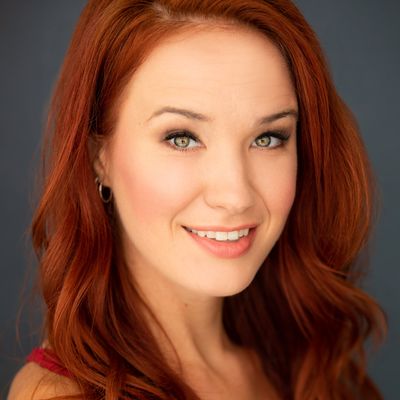
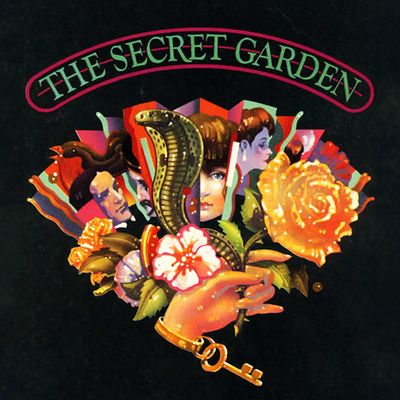
With the recent passing of Lucy Simon, playing the role of Lily Craven in "The Secret Garden" is both special and bittersweet for Sierra Boggess and the rest of the cast. Despite people telling her to switch to vocal performance, Sierra stayed as a musical theatre major so she can “graduate a triple threat.” She recalls how she got to do Phantom in Las Vegas which changed the trajectory of her career. She considers leaning into acting as the most important aspect no matter what you're doing and always considers her character's need at the moment to help her with how she's going to sing or dance. Being a part of "The Secret Garden" now playing at the Ahmanson Theatre in Los Angeles, Sierra talks about the different messages of the show, her relationship with Lucy and how they’re honoring her, and the contrast between working with adults and kids. She also gets real about her beliefs, her relationship with fans, knowing what your truth is and why you shouldn't let anyone take your love of performing away.
Sierra Boggess is an Olivier-nominated actress who made her Broadway debut in 2007, originating the role of Ariel in "The Little Mermaid" wherein she received Drama Desk and Drama League nominations. She's also best known for her re-inventing the coveted role of Christine Daae in Lord Andrew Lloyd Webber’s "The Phantom of the Opera". In fact, Lord Webber himself went on record to say that she’s the best Christine. Her other stage credits include "It Shoulda Been You", "School of Rock", "Master Class", "Love, Loss, and What I Wore", and "Music in the Air". She also starred in London West End's "Les Miserables", and "Love Never Dies". Currently, Sierra is playing Lily Craven in "The Secret Garden" at Los Angeles' Ahmanson Theatre.
Connect with Sierra:
- Website: www.sierraboggess.com
- Instagram: @officialsierraboggess
- Get tickets to The Secret Garden: http://ahmansontheatre.org
Connect with The Theatre Podcast:
- Support us on Patreon: Patreon.com/TheTheatrePodcast
- Twitter & Instagram: @theatre_podcast
- TikTok: @thetheatrepodcast
- Facebook.com/OfficialTheatrePodcast
- TheTheatrePodcast.com
- Alan's personal Instagram: @alanseales
- Email me at feedback@thetheatrepodcast.com. I want to know what you think.
Transcript
This transcript was automatically generated and might contain errors.
[0:00] Alan Seales: Welcome back to The Theatre Podcast. Intimate personal conversations with the industry's biggest names. Our guest is Sierra Boggess, and this is actually the first solo episode I've had with Sierra. The original duet I had with her and her co-writer Julian Ovenden is back in episode 176, so make sure you go check that out if you haven't listened already. You can kind of hear in my voice right now that it's a little husky. I'm getting over a cold, which I just started to get when I was recording this episode with Sierra, ironically. So my voice is even more husky in the recording itself, in the interview itself. Sierra is actually currently out in LA at the Amundsen Theatre performing an extra special production of The Secret Garden, and I say it's special because Lucy Simon, who wrote the music for the show, recently passed away a couple months ago, and now Sierra, the rest of the cast, they hold a special place in the show for her, for Lucy, especially because this is a production that has to deal with the afterlife and the spiritual realm.
So it's a really interesting conversation, and Sierra dives into it beautifully and much more eloquently than I am now. With all that said, please find me online, Instagram, Twitter, Facebook, TikTok, all the places. Leave a rating, leave a review, wherever you're listening now, it helps. Turn to your neighbor, say, Hey, neighbor, check out this podcast. It's my new fave. Now, everybody, please enjoy this episode with Sierra Boggess. Today's guest is an Olivier Award-nominated actress who made her Broadway debut in 2007, originating the role of Ariel in The Little Mermaid. Other Broadway credits include Phantom, It Should Have Been You, and School of Rock. Lord Andy Webbs went on record to say she's the best Christine Daae ever, a role she began playing in the Las Vegas production of Phantom in 2006.
She starred in London's West End, both in Phantom and Les Mis, starred in national tours, limited runs, labs, and New York City concerts alongside her Broadway star cohorts, and is now headlining a revival of The Secret Garden in Los Angeles at the Amundsen Theater. Sierra Boggess, welcome to your solo episode of The Theatre Podcast.
[2:26] Sierra Boggess: Thank you for having me.
[2:27] Alan Seales: So we have talked before. You and your writing partner, Julian Ovenden, were together for your album in episode 176. So that stuff, if anybody listening, go back to episode 176 and get even more Sierra. But I want to start back again with what got you to Vegas in the first place, because that kind of just like shot you out of a cannon.
[2:51] Sierra Boggess: Oh, to do Phantom in Vegas?
[2:55] Alan Seales: Yeah, yeah, yeah.
[2:58] Sierra Boggess: Yeah. I was on tour with Les Mis at the time with my friend Allie Ewalt, who's also doing Secret Garden with me right now. So we've been friends since we were both cosette understudies on the tour of Les Mis together. Yeah, so we were on tour of Les Mis together. But then an audition came up for Phantom in Las Vegas, and then the rest is history.
[3:27] Sierra Boggess: Yeah, but I auditioned and that was that.
[3:31] Alan Seales: But what is your actual training though? Because I remember you were saying that you were going to school and you always had this affinity for opera, but everyone kept trying to get you to change your major to musical theater or musical performance or something like that?
[3:50] Sierra Boggess: No, I was a musical theater major, and they wanted me to switch to vocal performance. Vocal performance is usually the degree that you get for opera. So that's to focus on that. So because of, I guess, the way that my voice sounds, then they wanted to train me in that way. But I was interested in doing musical theater, so that's the route that I stayed.
[4:17] Alan Seales: School of Rock specifically, right, is a very different style than a Phantom or Les Mis, right? So which style then? You wanted to perform, and they kept trying to get you to change your major to do more opera then, I guess. But you wanted to continue to perform in just musical theater straight up?
[4:33] Sierra Boggess: Well, that was just college, so it wasn't like a whole huge part of life. That was just when I went to college, maybe for one year, they wanted me to switch my major. So then I had three other years of not that. So yeah, what was important to me was to graduate a triple threat, to sing, dance, and act, and not just focus on singing or the sound of my voice. So I love singing in all different styles and performing in all different styles. And yeah, so that's what I've tried to make a career out of, just doing the shows that I love and that I respond to. Yeah, and keep it being as eclectic as I can.
[5:23] Alan Seales: What do you respond to more than others, I guess, style-wise?
[5:30] Sierra Boggess: I don't know. I respond to story. I love, I think if you don't have something to say about a part, then it's tricky to do. So each character, telling each character's story, that's what I think of the best, you know, my favorite performers and people who seem to be able to get the emotion across and the story across without just focusing on sound of voice.
[6:07] Alan Seales: Do you feel like lately, or is this... I won't say lately because we know what we know in the present and looking back at history, the good stuff stays in our memory while the not so good stuff just kind of fades away, right?
[6:14] Sierra Boggess: Yeah.
[6:14] Alan Seales: But is there, I guess now, do you notice a trend, a different trend of stuff being written, things being written that focuses more on relying on just a good vocal technique and throwing out the story, or is this sort of like...
[6:33] Sierra Boggess: I don't think so. I think there is definitely, what's cool about what we do is that the music moves with the times that we're in. So I think every decade, new musical theater is trying to sound like more of what we hear, more of what people who might not be versed in musical theater would hear, so what's on the radio. And so it's really cool to be a part of an industry that is constantly changing and growing in that way. So yeah, that's what I think is happening, is that the sound, you know, that's why they call it like the golden age, because then that was the sound. And now is more, is what we know to what we're hearing on the radio and what kids are hearing on the radio and stuff. So it's really cool that there's options for every different kind of voice to be able to express themselves and to sing.
And again, we're not in the pop world and we're not in the opera world, so what our job is as musical theater performers, I believe, is to tell stories. So through whatever, you know, voice you have, you get to tell the story through that, if that makes sense. You have to be a good storyteller first.
[7:50] Alan Seales: And out of being a triple threat, is there one particular corner of that triangle that you enjoy leaning into more, or does it all come as one complete package for you? Like, does acting, or does it depend on the show even? The acting side, the acting corner, is that the most important, or is the singing corner? Like, right now you're doing The Secret Garden at the Amundsen, right? So what do you lean into the most? Because that doesn't seem like a dance-heavy show.
[8:25] Sierra Boggess: No. So obviously, if there's no, if all those three things aren't there, then you're not going to lean into the one that isn't there, because then you'd look pretty stupid. I think leaning into the acting is the most important thing, no matter what you're doing. For example, a show like Secret Garden is really fascinating for me, because the character I'm playing is dead. So I'm literally haunting a show, and I don't have any words. So I have to lean into my intention. What is my need? Why am I needed here? So every time that I come on stage, it has to mean something. And sometimes I get to use my voice. And so I get to figure out, why does she get to be heard now? What need is that? So it's always, for me, I always come from a place of acting, and I come from a place of, what is my character's need in this moment? And it really helps me inform how I'm going to sing or dance.
[9:18] Alan Seales: Okay, so talking about this production specifically, this has been reworked of Secret Garden, right? This has been reworked a little bit. And there was a lab of this, right, back in 2018? And actually, you and Ramin Karimloo were involved in that, yeah?
[9:35] Sierra Boggess: No, Ramin and I did a concert together seven years ago, which was a concert at Lincoln Center, directed by Stafford Arima. And then five years ago, I did a lab with Warren Carlyle. And Clifton Duncan was playing Archie. And that five years ago was the first time that Warren became involved with this show, and what he created, and this new version that we have now. And, you know, obviously, the pandemic happened and everything. So this is the first time that we're getting to bring this version, this new reimagined version. My Archibald is an incredible man named Derek Davis. Who, ironically, was also a phantom on the road. He was a phantom on the road. And we have Julia Lester, who's playing Martha.
[10:29] Sierra Boggess: And John Michael Lyles, who's playing Dickon. It's an incredible group of people. Obviously, I mentioned Allie Ewalt, who's playing my sister Rose. It really is like, it's just, I love this story. I always have. And I think it's really timely right now for people to hear a story like this and hear a score like this. I don't know. There's so many different messages in the show. One of them is being that the earth is healing us. And one of them is that family can come out of seemingly nothing. And the feeling and the need to belong that Mary Lennox, Mary Lennox, Emily Hodor is just incredible. She had done Music Man on Broadway with Warren. So she's just like, she's a little firecracker. And she's just, she's so beyond her 11 years.
It's really, really something special. I didn't realize how many shows I've done with children. But I think it's one of my favorite things because you get to watch them and remember that joy is our birthright and having, I don't know, doubt is learned behavior. And so sometimes at eight or nine or 10, you don't have that fully yet. And so it's really healing to remember and to watch and just the fearlessness. And yeah, it's a really amazing experience. And this show is a work of art.
[12:09] Alan Seales: Oh, yeah, I guess you're right. So with School of Rock, Little Mermaid, now Secret Garden. Yeah, you have that a lot with kids. My kids to my older one is, he's eight and a half. And I have to keep reminding him that doubt, well, I'm not reminding him like literally, because he doesn't quite understand this, I don't think, but like he tries to get down himself and he does introduce his own doubt. And I'm trying to encourage him just to try and that it's okay to fail and whatnot. And I love what you said about joy being a birthright, which actually, it takes me to another question that I had because I was listening back to episode 176, where we talked before. And remember, at the end of the episodes, I asked three standard questions.
And one of which is, what advice would you give to your younger self? And in that previous episode, you'd said, don't let anyone take your love of performing away from you. Don't lose the desire. And I commented, I said, if we ever get to have a chance to talk again, we need to dive into this. So here's our chance to dive into this. And I would love to know, what was that? Did you have somebody when you were a kid that was trying to take that joy away?
[13:19] Sierra Boggess: No. No, I didn't. Actually, as an adult, you're a kid who wants to do this, say, for a living. And then as you know more, it's like ignorance is bliss. It really is. And as you get to know more, and of course, there's dark sides of every job that anybody does, no matter what field it is, because not everything is, you know, rainbows and butterflies. But as you start to realize that it's not a Disney world, then you can let a lot of self-doubt creep in. And you can hear the voices of people who compare you or are competitive or any of the things that bring us down just as humans. And so that's why I say that for kids, it's like, hold on as long as you can. And I think those things are really good too, because then you get to grow from that.
You get to, that's why I say, don't let anyone take your love of performing away, because it doesn't have to be just one person. I know there's a lot of kids who will say that's like a teacher, different things like that. It's really tricky or a parent or something. But it doesn't always have to be one person. It can be an amalgamation of a bunch of different circumstances or, you know, tricky things in life that can take our joy away from us. And then it's just, I guess, the best part about life is figuring out what you're made of. And only you get to decide how you want to grow from that experience.
[15:15] Alan Seales: In the shows that you've done with the children that you have worked with, I guess, looking at them compared to the adults in the same shows, right? If things are tough, if rehearsals are long, if scenes are hard to work through, is it typically the kids or the adults that get discouraged first?
[15:25] Sierra Boggess: Oh, the adults, without question. Yeah. Adults get discouraged because I think we understand, depending on what age the kids are, but we know what's at stake and the pressure. We've had, I mean, decades more of the pressure and what that means for the rest of the world. Whereas kids, what's so great about working with kids is they haven't necessarily come against that yet or what other people are thinking or whatever. So it's really, that's why it is like, I don't know, paying attention to how the kids are behaving because you don't have to give it any notice, really. You know, it's like most adults have to learn. I mean, you have to learn, like, not to read reviews. I'm a big advocate of don't read reviews while you're in a show.
If you have to read them when you're done, but don't read because what we've all created together in the room is so special and so magical. And then it goes out there into the world and everybody's going to have an opinion, which is fine. That's part of what art is. My parents-in-law came and saw the show and they both had completely different reactions about so many different parts of the show, which I just loved having that conversation after the show was done because they saw the same exact show and had different feelings. And it was so cool. And that's why we do what we do. You know, it's not a monolith. The audience is not a monolith. So, you know, but if you don't have a healthy relationship with what that is, then yes, you're going to get really bogged down by the pressure and the other people's opinions and all that kind of stuff.
[17:10] Alan Seales: Well, how do you let that kind of slide off? Because you're very active on social media and you like to post and you have a big following that's very active. So, where does that balance come from between, I guess, interacting with fans, right? Because it is a work to maintain a fan base.
[17:21] Sierra Boggess: Well, I don't interact with fans, so I don't have any personal relationships with people that I don't know. But I am very active on social media, but I don't have one on one interactions with fans because I don't think that's my responsibility to, you know, you don't want to say anything. People come to you with a lot of really tricky things that they might be going through in their life. And I'm not a social worker. And I think it's dangerous to do that, in fact. But I think what is important and what I do on social media is I put things out there for people and I don't read the comments. I don't read what people have to think or say about it. It's just here's what here's what this is. And hopefully this is helping people.
So it's not a one on one personal relationship with any person, but it's that this is something that I see or find helpful in my life. And perhaps this is going to bring joy to people. And it's for them to receive or not receive. And it shouldn't be my social media or my putting those things out there shouldn't be contingent on, well, everybody needs to believe this now or now everyone needs to, you know, think the same way or whatever. Can I get some praise for putting that? I think that's that would be weird. But I think what's so cool, Deepak Chopra talked about this, is that you can send out one tweet or Instagram or something, and it can reach literally millions of people in a way that you can't do, you know, obviously one on one or something that you want globally out there.
So Deepak and Oprah do these amazing meditation challenges, and they can send out one tweet and suddenly people from all around the world can be meditating together. That's what I think is so cool. So I think if you are somebody who wants to be on social media, try and get out of the me mentality. And what is it that you are putting out into the world and you have control over that. And so you get to decide what it is that you that you feel necessary that you want to say and that could that could be for good. And you can also decide to use it for bad and to tear people down or whatever. So it really is up to the person. And I think it's important to figure out what is the right thing for each individual person.
[20:02] Alan Seales: Well, just so you don't just like you don't read reviews while you're in the show or even afterwards, do you care about comments about on your own posts on articles written about you? Does any of that make a difference? Or are you just doing what makes you happy in the moment?
[20:23] Sierra Boggess: I don't read those things because what other people think of me is none of my business. And I have really learned that along the way because I can't. I can't then change my performance or who I am based on what somebody who could be like a robot saying some opinions. And, you know, you started this podcast by reading out some things on my resume and saying, Andrew, going on record and saying, I'm the best, Christine, and for other people, I'm the worst.
[20:59] Sierra Boggess: For other people, I'm not even on their top 10 because it isn't one thing. So that's why we do what we do. That's why there's so many of us who get to do what we do because there isn't one way, there isn't one answer. And if you're always seeking, and if you're posting or whatever to try and be always the, I'm the best one and proving that, you're not going to ever prove that because humans have their own opinions. And that's what makes it so cool. And that's what can make also social media a very scary place too, because people can get really loud behind a screen. So that's why again, I try not to focus on those people, I try to focus on what I can put out there. So I am in control of what I put out to the world.
And just as I'm also in control of what I as much as I can be of what I'm putting in what I'm receiving. There are so many people that have so many opinions, and that you won't be able to stay away from hearing. But seeking those things out, good or bad, I think is, for me personally, isn't helpful to me as an artist.
[22:25] Alan Seales: I want to shift over. Lucy Simon recently passed. I mean, you said you did some behind the scenes stuff that I helped record last year. Yeah, gosh. And said some amazingly kind and amazing words about Lucy Simon, who of course, composed Secret Garden, which you're doing now, right? So, this performance for you, has any of that that she just passed, has any of that reached its way into the performance now, the show now? Because even Warren was involved with some of that as well, Warren Carlyle.
[23:02] Sierra Boggess: Yeah, all of it has. Lucy is with me every step of the way. Lucy is Lily. She's from the other world, and she's trying to get her music out there. And one of her last texts that she wrote to me was, she literally said, I was going to ask you to carry my voice forward when she knew she was dying. So, that is my responsibility. And what's great about a company of people like we have is that it is now a shared thing, that it is our job to keep her music alive. And to, you know, I wonder, there must be a thing about being a composer that's like, what you've given to the world is your music, and it doesn't mean anything if nobody hears it. So, it's become more important now than ever, especially with someone like Lucy and with the type of score that I just believe in so much, and just who she was and her spirit.
She's with me, I mean, every step of the way. I have her on my shoulder. I have Rebecca Luker on my shoulder. And I have Jilly Lynn, who didn't have anything to do with our production of Secret Garden, but is also one of my angels, who I think about all the time. So, it's very, I feel the spirit world so much with us. And Lucy's daughter, Julie, has been a huge part of our production in terms of just being there. And Warren was amazing. He had an open door policy for her to be able to come and watch rehearsal at any time, because it's part of her healing process. You know, she lost her mom and her aunt and her father within just a few months of each other. And Lucy had adopted me as her goddaughter.
And she had said, so, Julie and I are going to be sisters. And so, Julie and I are sisters. That's just how it is. And Julie brings her daughter as well, because Julie has so many memories of getting to come and watch rehearsal with her mom. And so, her daughter now gets to. It's just this really amazing legacy. But yeah, I mean, Lucy's there every step of the way. I feel her ground me. I talk to her all the time, all the time. Rebecca, too. Rebecca knows. Rebecca knows the role and what the fears are. And it's really awesome getting to have presence like that with you, especially when you're doing a show that is about the spirit world.
[25:36] Sierra Boggess: I love to believe in the idea of connection and emotional. Yeah, just emotional connection as my version of spirituality, right? Like, I don't believe in the traditional heaven and hell and God and whatnot. But I love to talk with people who feel like there's more than the three dimensions, right? Yeah, I think it's individual. I don't think that one religion or anything should have the full say on what this is, because I think, ultimately, we don't know. But I can only speak on my experience and the knowing that I personally feel that I have angels with me or spirits with me. And you can feel them at different times and they feel different. I feel my grandmother a lot during this time. I usually feel my granddad with me.
But this time has been my grandmother. A lot of us in the cast have had really interesting during this process, personal things that happened with the other realm. While we've been here, it's been really cool. We have this amazing woman in our show named Yamina, who's playing the Aya. And she is an intuitive. So she has a whole business. And I think her on Instagram is like at hinduitive. And she's amazing. She gave me a reading for opening night as my present. She read my cards. I fully love that. And I love the care. I went to her on opening night for this. I had been feeling really solid. And then I felt Lucy with me so strongly that I couldn't separate my emotion from hers. And so I asked Yamina to come to my room before the show.
And can we just talk with her? And she was right there with me and held my hands and talked to Lucy and just asked her that we have a job to do. And this is for you. And we're carrying your spirit forward. And it helped calm the energy. And I believe in that stuff. I really do. And I, but again, nobody can say anything for sure. It's individual. And it's, I think we all have the ability to access other parts of this life that we can't necessarily see. We just have to be open to it, has been my experience. And there's been times that I've been closed off. And then there's times that I'm really open to it. And now is one of those times I'm really open to it.
[28:17] Alan Seales: I want to wrap again with the same three closing questions. And so I already told you your answer to the second one. And we can, when we get to it, I'll ask, you can throw something in different if you want to. But I want to see if you have the same answers now for the first and the third, see if anything changes.
[28:33] Sierra Boggess: I don't remember the question. So I have no idea what I said before or what the questions are.
[28:38] Alan Seales: I know. I wrote them down. So I'll tell you after you answer them again, I'll tell you what you said the first time. So the first question just is what motivates you?
[28:46] Sierra Boggess: I don't know how to answer that this time. I don't really have a specific answer.
[28:53] Alan Seales: The first time you said, how may I serve?
[28:57] Sierra Boggess: Yeah. How may I serve instead of what can I get? Yeah. Yeah. How may I serve the universe? So then the second question, what advice would you give to your younger self and younger people listening now starting out down a similar path? We already mentioned what you said the first time. So do you want to add to that?
[29:09] Sierra Boggess: I think what I would also want to say is just to try and stay aware of what your truth is and not to get too swayed because there is so much information coming at us. So try to, you know, we need your truth and your truth and your truth so to try and just stay aware to what you are here to offer.
[29:43] Alan Seales: All right. So then the last question, if you can only see one show for the rest of your life, but you can see it as many times as you want, what would you say?
[29:47] Sierra Boggess: I probably said Color Purple or Aida.
[29:54] Alan Seales: No.
[29:55] Sierra Boggess: Oh, what did I say?
[29:56] Alan Seales: You said anything with Barbra Streisand, probably Funny Girl or Hello Dolly.
[30:01] Sierra Boggess: Well, that's true. Yeah. Barbra Streisand and all.
[30:04] Alan Seales: So why Funny Girl or why Color Purple or Aida now?
[30:09] Sierra Boggess: Well, not now. Those are also two of just my favorite shows that are my go-to when I'm in a show mood that I would listen to. So, yeah, you know, I love musical theater. I love old school musical theater. I love the musicals I grew up with. So, yeah.
[30:31] Alan Seales: All right. Fair enough. So once again, where can we find you online?
[30:36] Sierra Boggess: Sierraboggess.com, my website.
[30:39] Alan Seales: And on the Instas, are you on TikTok now? Are you doing that at all?
[30:43] Sierra Boggess: Yeah, but I don't know what my name is. So I think just look Sierraboggess and it'll show up.
[30:50] Alan Seales: Fair enough. All right. I'm on Instagram, Twitter, Facebook, TikTok. Leave a rating and review. Are you listening now? Thank you to Jukebox the Ghost for the intro and outro music. Make sure to go check out Cigarra and Ali Ewald and the rest of the amazing cast at the Amundsen Theater performing this extra special production of The Secret Garden. Thank you so much, Cigarra. I've enjoyed seeing you again and break so many legs. I wish I was out there in LA to come see this because it sounds phenomenal.
[31:16] Sierra Boggess: Thank you.
[31:27] Alan Seales: Thank you.
© Broadway Podcast Network, All Rights Reserved