

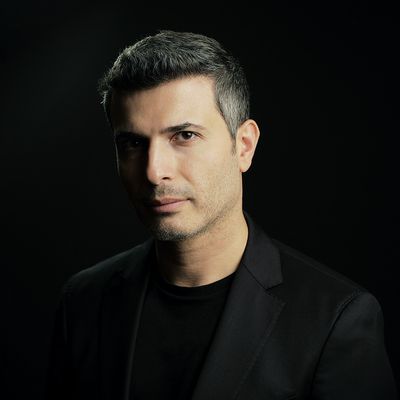
A globally renowned magician and performer, Asi Wind shares his journey in the world of magic and the art of performance, including his childhood encounter with a magician that shaped the rest of his life... Read More
From the show: The Theatre Podcast with Alan Seales
Guests
About
A globally renowned magician and performer, Asi Wind shares his journey in the world of magic and the art of performance, including his childhood encounter with a magician that shaped the rest of his life. He shares insights into his creative process, discussing how he designs and refines his tricks, always striving to balance perfection and enjoyment. Asi reflects on his views on failure, emphasizing the importance of learning from mistakes and finding beauty in imperfections. He speaks about the unique connection between a performer and their audience, highlighting the role of empathy and sensitivity in delivering a memorable experience. He also touches on various topics, including the significance of perspective, the inspiration drawn from everyday acts performed with care and attention to detail, and the idea of continuous improvement–providing a fascinating glimpse into the mind and philosophy of a dedicated magician and artist.
This episode is a special crossover with Heather Vickery, the co-host of my other podcast, Was It Chance.
Asi Wind is a highly acclaimed magician known for his innovative and captivating performances in the world of magic. He has performed all over the world and is currently sharing his talent on the off-broadway stage in "Asi Wind's Inner Circle" which is produced by David Blaine and is currently scheduled to until January 2024 at the time of this episode drop (it’s already been extended at least 4 times – we lost count!).
Connect with Asi:
- Instagram: @asiwind
- Youtube: @asiwind
- Twitter: @asiwind
- Facebook: @AsiWindsInnerCircle
- Magician REVEALS trick and still fools Penn & Teller!!! - Asi Wind on Penn & Teller: Fool Us
Connect with Heather and Was It Chance:
- Slip into our Instagram DMs at @wasitchance.
- More about Heather via @vickeryandco on Instagram, @Braveheather on TikTok, and listen to The Brave Files
- Follow Was It Chance
Connect with The Theatre Podcast:
- Support us on Patreon: Patreon.com/TheTheatrePodcast
- Threads, Twitter & Instagram: @theatre_podcast
- TikTok: @thetheatrepodcast
- Facebook.com/OfficialTheatrePodcast
- TheTheatrePodcast.com
- Alan's personal Instagram: @alanseales
Transcript
This transcript was automatically generated and might contain errors.
[0:00] Alan Seales: Hey, everyone. Welcome to a very special episode of the Theatre Podcast. I am joined by my other podcast, Was It Chance, my co-host, Heather Vickery, because she and I just finished interviewing Asi Wind. Oh, my God, Heather. That was incredible.
[0:12] Heather Vickery: Wow. Wow.
[0:13] Alan Seales: Like, blown away in person in the show and blown away from this conversation.
[0:17] Heather Vickery: Yes. Yes. So, almost ethereal, like how he looks at magic as art and how life is experienced as art and alive and moving and how it was fantastic.
[0:28] Alan Seales: Yeah. Well, something that got me that he said that he never set out to be like famous or rich. He just wanted to make a comfortable living and do what he loves. And magic is one of the things that he loves. He just happens to be getting recognized for it, but he's also a painter. He didn't even talk about this in the episode, but on camera, we can see in the background, he had a guitar and he's a photographer.
[0:53] Heather Vickery: And a photographer.
[0:54] Alan Seales: Yeah. Just this all-around incredible, like artistic dude that just has to express himself. And I cannot get over how great the show is. I really can't. It's just so good.
[1:06] Heather Vickery: It is so good. Well, no, I love that. And I love his dedication to the audience in particular when he said that the audience shapes the show and that it's not about protecting the secret from the audience. It's about protecting the audience from the secret so that they can keep that magic and that joy. I was like, yes. And I feel like in so many ways, we do that throughout the world, throughout art. I think we do it with podcasting. Like if y'all knew what the messy back end looked like, it might not be so much fun to listen. I don't know. It's so cool to have that sort of commitment to the experience that someone's having of your work.
[1:45] Alan Seales: Well, I don't know about your messy back end, but my messy back end is nice and clean.
[1:49] Heather Vickery: Okay. See?
[1:50] Alan Seales: All right.
[1:51] Heather Vickery: Oh my gosh. Now theater podcast people, now you know what I have to deal with all the time. But hopefully you're also listening to Was It Chance? So you probably already know.
[2:00] Alan Seales: That's right. So along those lines, find us on Threads, Instagram, and TikTok at both theatre_podcast and wasitchance on all three platforms. Leave a rating review wherever you're listening now. And now everybody, please enjoy this episode as much as we did with Asi Wind.
[2:30] Alan Seales: In the elite world of close-up magic, our guest today has long been considered a magician's magician. He's performed all over the world, leaving a trail of blown minds behind him, including ours, and has even successfully fooled Penn and Teller. Check the show notes for the link to that video. He undoubtedly has a huge talent, but very purposely keeps his audiences very small and very intimate, bringing his exquisite expertise to the off-Broadway stage in Asi Wind's Inner Circle, which is produced by David Blaine and has been extended like four or five times. We've literally lost count. Holy cow, Asi Wind, welcome to the Theatre Podcast. Welcome to a joint episode with the Theatre Podcast and Was It Chance?
[3:20] Asi Wind: Great. Thank you for having me. Hi.
[3:22] Alan Seales: And real quick, just so we can set the tone for the rest here in my questions, do you prefer the term magic or illusions?
[3:28] Asi Wind: Whatever pays the bills. The truth is, it's all euphemism to me. Magic is a beautiful word still. So here's the thing. Illusion also tells you that what I do is not real, right? Because it's an illusion. It's a pretense of something I'm trying to do. Magic is the outcome. It's the effect. The bottom line is to say, okay, it was magic, meaning it lacks any explanation. So I like both words. I mean, illusion supplies an explanation and also tells what it is, but magic also tells you that you don't need to seek explanation. It's magic. So I like both.
[4:26] Alan Seales: I love that. That is brilliant. I need some form of that tattooed on me somewhere. Like, it's not like magic is the unexplainable.
[4:36] Asi Wind: I will sleep on it. I'll give it a second thought.
[4:40] Alan Seales: So our standard sort of beginnings on the episode are just diving back into your heritage and where you grew up and what got... Normally, I'm interviewing Broadway performers of like, what got you into theater and what got you performing? But I love your story, which you tell a little bit of in your show as well. But if you don't mind, can we get into sort of your beginnings? And I think you were born just outside of Tel Aviv, Israel, right?
[5:06] Asi Wind: Yes. It's a city. You know, I'll be honest with you. Every time people ask me, where are you from? I always lie. I say Tel Aviv, because that will end the conversation. It's clean cut. If I just say the name of my city, it's Hulon. Just to say Hulon, they immediately see the face like, okay, good. They don't want to ask any more questions. So it depends what kind of conversation I want to have. I grew up in a city called Hulon. Amazingly, it's the fourth biggest city in Israel. Yet, it's not a tourist Mecca. Nobody goes there. It's very family-oriented. There's some cool museums in there, by the way, like a museum of art, just design, unbelievable. It's adjacent to Tel Aviv. So I could literally walk, it will take me an hour and a half, but I could walk to Tel Aviv, which I did as a kid. I walked a lot.
[6:09] Alan Seales: I've been to Tel Aviv. It's a great city.
[6:11] Asi Wind: Unbelievable.
[6:12] Alan Seales: Yeah.
[6:13] Heather Vickery: So Asi, Asi Wind is your stage name, right? And that is something that we learned from you in the show. Are you willing to share what your birth name was and maybe why you made that change?
[6:21] Asi Wind: Of course. So my real name is still Asi. People think that's a made-up name. It happens to be quite a common name in Israel. Asi Betesh, and I pronounce it the way we say it is Betesh. In Hebrew, we say Asi Betesh. In the truth, at the beginning of the show, I say, oh, I changed because it's too hard to pronounce. And then I confess that it's a lie, because I changed my name because of what it revealed about me, right? Asi Betesh reveals I'm a Sephardic Jew. And it is true. I talk about it very briefly in the show. I don't go into detail. But I say, you know, being a Sephardic Jew back then in Israel was considered low class. And the problem was, I believed it as a kid. It's really easy. We're not going to go into history lesson here.
But you know, Israel was there was a lot of alias, a lot of immigration that came from Europe. The first Jewish people to build and set the foundations for the country came from Europe, right? And then, you know, after the Holocaust, of course, lots of people fled and came to Israel. So Arab Jews, Sephardic Jews came later, when they realized we need to populate this country. And I think it was Moshe Sharet, one of the ministers of Israel says, oh, guys, we need quantity, but not at the price of quality. Something to that degree, like that's how we treat it. So Middle Eastern music was not played on the radio. Everything that was cultural to people like me was really suppressed. And they tried to convert us to, what's the word I'm looking for, to make us basically like them, to make us more European, right?
And in some of the people, maybe of my generation, thought that's a good idea. And I'll tell you a quick story, if you don't mind. So I, my parents listen to Arabic music, right? I was so ashamed of it. If friends came over and heard it, I would be like, really ashamed. I will be embarrassed. So for years, I pushed it away from me. And then I went to the acting class. And they said, you need to come and sing a song. But it's a song that activates an emotion. So I said, Oh, what will be better than bringing a song I really hate? And it was an Arabic song by a very famous singer, Um Kalthoum, one of the biggest singers of Egypt. She was the biggest diva, right, of the Middle East. Like, impossible to get a ticket.
She was more powerful than the president of Egypt, right? So I took this song, went to my grandma, who I love, dear, loved dearly, she passed, but I still love her. And I said, Grandma, teach me the words. I want to understand how to pronounce those words in Arabic. And in the process of learning the song, the song was Inta Omri, You Are My Life. That's a very, very beautiful song. So I learned the song. And I fell in love with it. And it was the first few steps of me embracing my culture and understanding that these are my ties to the people I love. Like the cooking of my grandma, I would pay a lot of money to eat her food again. And that food relates to where she came from, relates to her heritage, to the language, the music. And it's amazing that it took me so long to say I'm proud to be who I am. And my name is a residue of that.
[10:34] Alan Seales: Well, I guess leaning into being yourself and expressing yourself, finding a love for magic probably did not help your reputation so much. Like, what was that journey to, A, first say, Oh, I want to, I like that. I want to learn more. And then B, I want to do it, and I'm good at it. So I feel like it's two different paths.
[11:04] Asi Wind: So yeah, magic. I always say, so how did you become a magician? I always say I was young and stupid. And it's true. It's true. I really believe that my biggest luck was that I fell in love with it at the age of 13. Because if I was any older than that, if I was a teenager or closer to my 20s, I would give it more realistic thinking of, Oh, can this be a livelihood? Is this prestigious enough of a profession to do? If I was, if I was starting to think in those terms, I would not be a magician. But when you're a kid, you go, I love this. I'll do it. There's no, the cerebral mind is not active enough to shut down this pipe dream, you know, dream pipe, pipe dream. I'm dyslexic. Okay. But a dream pipe is actually a really cool concept. This is my pipe. My dreams keep pouring out of this pipe. I love it. Because I'm dyslexic. I switch things all in Hebrew too, by the way.
[12:27] Alan Seales: So you're actually dyslexic.
[12:28] Asi Wind: Oh, yeah. Oh, yeah. Oh, yeah. Did that, does that help or hinder the card tricks? Like, because you're dealing with numbers and stuff.
[12:31] Asi Wind: I guess it doesn't, it doesn't matter. No, because I think because magic is very muscle memory. It's easier, but data, you know, reading, I could not read until second grade.
[12:40] Asi Wind: It was really tough for me to read. Learning a new language. The fact that I'm talking to you in English right now is a miracle. My biggest fear of moving to the States was that I can't speak English. I can't express myself in a new language. How old were you when you moved to the U.S.?
[13:01] Alan Seales: 21. What was the catalyst, though, at that young age to make the move?
[13:08] Asi Wind: So, I always said, one day I'm going to move, right? From a young age. One day I'm a magician. And one day I'm going to move to America and I will perform in America. And that was the dream. I spoke really bad English. And my friend, Shimshi, who now lives in Florida, moved to America about maybe a year and a half before I did. His English, surprisingly, was really good. He nailed the accent and everything. He just immersed in America so quickly. But he said to me, you should move here. And I said, nah, I'm afraid. And he kept sending me tapes. And the funny thing is, one of the tapes he sent me was a video of a new magician who's now really big in America. He said, that's the most popular magician in America.
And he sends me the tape. And who's that magician? David Blaine. I'm like, really? And so, I'm watching David Blaine as a kid back in Israel. And that's one of the baits to get me here. Then when I move here, which is funny, I walk my dog one day and David Blaine walks towards me with one of my best friends, Doug McKenzie. And he says to David, oh, that's the guy I told you about. You should meet him. You'll get along. So, I love that circle, right? I mean, from a tape that was sent to me when I was a kid to meeting the guy. And that day, by the way, we ended up playing backgammon until 6 a.m. in the morning. So, we hit it off as friends first off, you know, more than colleagues, more than magic. And it's kind of an interesting circle. So, David, think about David became almost a superstar at the age of 19, right?
[15:13] Alan Seales: Yeah, he was really young.
[15:16] Asi Wind: So, how old was I? 12, 13. Exactly. Okay. So, the difference is, especially in those ages, you know, now we caught up. Now we're the same age. But back then, we were not. That's what happens after 40, right?
[15:31] Alan Seales: Yeah. After 40, nobody celebrates their birthdays. It's over.
[15:36] Asi Wind: But how does one magician walk up to another and they're like, hey, I think I'm as good as you. Can we hang out? Or you're like, hey, what's that behind your ear? Whoop! And like, no, we're friends, you know. So, how does that relationship start? Because I'm sure, and you probably have this yourself now, people aspiring, whatever you are in that profession, right? People who want to be like you or have been inspired by you, the metaphorical you and the literal you. Ozzy, come up and say like, I want to be part of your world. I want to be who you are. Like, let's be friends. Like, how does that, how did that work?
[16:09] Asi Wind: So, it's a very good question. Adam Gopnik wrote a piece on magic for The New Yorker. You know, he spent years, he came to our shows like night after night and socialized with us. Like, we used to do a show called Monday Night Magic. And after the show, we always went to dinner. And it's a bunch of magicians sitting after the show and jamming. And he noticed something as an outsider that was mind-blowing to him. He says, of all the professions, writers, actors, musicians, the strongest brotherhood I've ever seen between artists is magicians. I was in Bangkok. I went to do a show. I'm all alone. And I want to spend a few days in Thailand. And I'm alone. So, on Facebook, I write, hey, I'm here in this hotel.
If there are any magicians who want to hang out, let me know. Within one hour, 20 magicians showed up at the lobby of the hotel. I said to them, here's the deal. You take me to the best restaurant, like a real local restaurant. I want to eat real Thai food. And we'll talk magic all night. And I bet you, if you saw us from the side, you'd say, these are friends. They've been friends forever. Because this esoteric art is an immediate bond. We talk about something we're so passionate about. And if you think about it, it's a secret passion. Meaning, I can't discuss methods with you right now. I can't tell you, oh, how clever is this idea? How clever is this little ruse or ploy? I can't. But I can do it with my nerdy friends.
And we can geek over a move, like with cards, like for an hour. And that's something I can only do with magicians. So, there's something exclusive that I can experience or interaction that I can only have with my fellow magicians. So, it's a very strong brotherhood.
[18:24] Alan Seales: We're going to take a short break. Stay tuned for more of the episode.
[18:32] Asi Wind: That was something I was going to ask was, like, if there's anyone who knows, who is allowed to know the secrets, if they're assistants or whatever. Because, like, you think of, you know, the Siegfried and Roy kind of brought a lot to the forefront in the layman's minds, right? Because it was this big Vegas show. And they were this big couple that just did, you know, these partners in crime that did so many things. And then Criss Angel, of course, is this giant performance artist and whatnot, as much as he is an elusist. But then the stuff that you're doing, I think, like, it's all one-on-one. You don't have assistants. I mean, I'm assuming you don't have assistants. You don't have people setting up the tricks.
And I think I was reading something about you as well, that part of why you and David Blaine get along so well is because I think you said at one point that you realize he's one of the first people who's actually doing – it's not a trick. He's actually doing the magic. He's actually doing the illusion. And so, like, you being very similar, you guys bonded over that.
[19:34] Asi Wind: Yeah, so simplicity and kind of like – so here's the deal. Before Blaine, it was the big spectacles. It was the David Copperfield. It was the world's greatest illusions shows with the big boxes and all that. And by the way, I loved it as a kid. I watched Copperfield on a loop. You could play a song by, you know, because he's a lot of Phil Collins songs and Peter Gabriel. You play a song and tell me what trick he did to that song. No, but I really knew it. And Copperfield was funny, engaging. The first magician to dress cool, you know, he dropped the tuxedo. His choice of music was – he really did so much and I loved it, right? And I still have an amazing appreciation for Copperfield and what he did for magic.
I think he is a big, big, very important force in magic. And then when Blaine came to the arena, somebody wrote – it's a negative review, it's a negative review, and I keep telling Blaine it's not a negative review. He wrote that all the tricks that Blaine used in his special could be bought for $50. You can buy all the apparatus, all the props that he used for 50 bucks, probably in CVS or something, or maybe a magic shop, whatever. $50. And I think this is a testament to how brilliant Blaine is, right? He made an incredible show with nothing. Nothing. Yeah. Because he realized that the strength of magic is two things. It's the connection with the audience and it's about what magic does to them.
And people, as much as they love seeing the magic, they loved seeing how people are moved or reacting to the magic. Revolutionary. Back then, before Blaine, the camera was fixed on the performer and the boxes and the magic. Now the camera shows you a little bit of that, but mostly the people. That's revolutionary. That's the first thing that Blaine understood, and it made a huge shift in – by the way, how I thought about magic, to me, when I first saw Blaine, I was like, I'm not getting it. Because it's against the grain. It's against everything I've been taught. And Blaine understood – he kind of had this eureka moment of understanding, hold on. Poor, rich, educated, not educated. At the end of the day, you show them a trick, they're all going to go, what the fuck?
And they freak out. So, magic kind of levels them in such a beautiful way, and it pulls that sincere human reaction to something that is amazing to them. It strips all those masks, and it's beautiful. It's unbelievable to me. And so, yes, Blaine really, really influenced me in that regard of the simplicity, right? You don't need big productions. It's not about the confetti, and the fire, and the pyros. That's cool. Sure, do it. But if you take all of this out, what's left at the end of the show, I think, in my show at least, the stars of the shows are my audience. They are the stars.
[23:11] Alan Seales: Yeah, I wanted to get into that next, because the format of your show, you're sitting at the head of what I would equate to be like a round poker table. There's felt on the top, right? And the audience is literally-
[23:26] Asi Wind: It's a seance table, yeah.
[23:28] Alan Seales: It's a seance table. Yeah, it's a little bit bigger. I guess it's a seance table. I just watched Haunted Mansion twice last week. It's on my mind.
[23:36] Asi Wind: So, you're at the seance table with the audience members who are literally shoulder to shoulder with you. There is nowhere to hide. There's nowhere to do whatever. I don't even know what to call it. It's not misdirection. It's not tricks. It's illusion. It's magic. Let's call it magic. It's legit magic, all right? I don't know whose soul you sold your soul to, but we'll get to that later. But it's insane, because I love... It ties into the Penn & Teller bit a little bit too, because I think I equate a little bit to what they do. And they're like, Lear, we're going to explain how we're doing it. We're going to explain exactly how this trick works. And then you do the trick and you explain it, but within the trick, there's like three layers deep of more tricks that all of a sudden that nobody is expecting. And still, in the explanation of the trick...
[24:28] Asi Wind: Yeah. Anyway, I'm going to stop there, because I wonder too, Penn & Teller, they brought the comedy to it for me. And I think there's a lot of that when I watched your show, when we watched your show, Heather and I, that we were like, this is so funny. It's not only a great storytelling, but it's comedic and it's good magic, right?
[24:44] Asi Wind: And super intimate.
[24:46] Alan Seales: Yeah, very intimate, right? So, the Penn & Teller part of it.
[24:48] Asi Wind: So, you're tapping on three things that each of them...
[24:53] Alan Seales: I got so much to ask. I love this.
[24:54] Asi Wind: Slow down, Alan.
[24:56] Alan Seales: I want to respond to all three things. The first thing you said is that I'm shoulder to shoulder with people in my show. And you're right. I'll tell you a secret. A showbiz secret. If I do a show and I invite somebody on stage, and that person just... I don't have a chemistry with them. It's not working, right? You know what I do?
[25:19] Asi Wind: Thank you so much for coming. Go back to your seat. We need another person. And I swap them.
[25:24] Asi Wind: I do it in a very, you know, elegant and humane way. I just, I spend them.
[25:29] Asi Wind: Humane. We don't kill them.
[25:31] Asi Wind: I don't poison them. I don't slap them. No, no. But the truth is, I will not prolong this encounter if they're not good, right? If they're just not the type to participate, you know.
[25:44] Asi Wind: So, I say, you know what? We have fun for the minute and a half. Thank you so much for coming. How about you? Right? People do it all the time. By the way, it's true. If it just doesn't work, you go with somebody. And by the way, in my show, that's all I do. I'm trying to find the right people that I know will work with me, right? In my show, I don't have that privilege. I'm basically surrounded by 13 people, the inner, inner circle, which is the table. That's the thing on the table.
[26:10] Asi Wind: I need to get along with these people, no matter what. If the person is the guy who's just not, wants to touch everything, or thinks he needs to say something every minute, and be funny as well, I need... And this show has taught me so much about... Because at first, it freaked me out. I'm like, oh my God, I just have two of the worst volunteers I've ever had, right? I'm stuck with them for an hour and a half. And then I start to realize that's the beauty of it. It's like you walk into a train, you know, and it's a three-hour ride, who knows, and you're sitting next to a guy. That's the guy I need to deal with, right? You can ignore him, you can have a conversation, make the best out of it, right? And that's what this show taught me. I started to realize that they really shape the show, and I should be okay with that. I should really be okay with what they shape the show to be.
[27:19] Asi Wind: So that's one. The second thing you said was about secrets. It's about, you know, pen and teller, revealing, right? And in my fullest clip, I reveal a trick in the show. And here's a very, very important thing. I don't know who's the one who said that, but it's a beautiful quote that said, the magician's job is not to guard the secrets from the audience. The magician's job is to guard the audience from the secrets. It's a big difference, right? Because here's the deal, I'm dying to tell you how clever I am, and how clever my methods are, and how skillful I am with my hands. And I need to hide all of that. If you came to me after the show and said, oh, you're really quick with your fingers, I'm like, no, it's an insult.
I never touch the cards. Things happen on their own, right? I'm not even doing sleight of hand. I'm not touching anything. So for me, I want to share the secrets with you, but it's just going to spoil the fun. It's really similar to revealing the end of a movie. You know, at the end, this guy dies, and he marries her, and she betrays him, right? And then the whole movie is gone. And it's a very similar thing, only that in magic, you can never tell the end of the story. Because the end of the story will spoil your next encounter with magic. So that's why it's so hard.
[28:48] Asi Wind: At the show we were at, there was a kid, I think it was an early 20s or late teenager kid who would come like four times, three or four times.
[28:55] Alan Seales: He's trying to figure out your trick.
[28:58] Asi Wind: Yeah.
[29:03] Alan Seales: Do you have a lot of people who are coming over and over again like that, who are just like, yeah, they're just trying to figure it out to like spoil it for the lack of, I mean, to spoil it for everybody else, or they just really want to do it for themselves?
[29:11] Asi Wind: I guess there's two camps there.
[29:12] Asi Wind: Three types, I think. Three types. There's the guy who just comes over and over again, because he wants to figure it out. Sure. I'll take your money. Come again. You're not going to figure it out, right?
[29:21] Asi Wind: Yeah. Or if you do, I don't care. But you won't. But secondly, you have the magicians, right? When I was a kid, I went to Vegas, and there's a magician called Matt Cain. Amazing, comedy family magician. Unbelievable, really. The best comedy magician. So, I went to Vegas with my friend, Shimshi, again, and we go to see the show. Show is over. He does two shows a night, a day. Finishes the show. I go back to the box office. I buy another ticket to see the second show. And Shimshi goes, what? We just saw it. I said, yeah. First time is to enjoy it. Second time is to learn. So, I go again. And every day, I come every day, and I see both shows. I saw maybe 40 times. And I think some people are magicians who happen to maybe like the show, or they think there's a lesson here.
They might come and see it again, not to know how the tricks work, but to understand what makes this show work as a show. And I think that's what I did. I think that's what they do. And that's what I will do all the time. I go see shows all the time to learn. So, and the third kind, which I know, because people come to me, they say, you know, we come here again and again, because every time we see the show, it's a different show. And that's because of the audience experience. As I said, my audience is really a big factor, a big component of the show, and the humor, and the ad-libs, and what could happen in this, and that makes every show unique. And I think that's why they come again, I think.
[31:09] Alan Seales: Do you remember, I mean, do you have the type of memory that you remember almost every show? I don't know. Like, what really stands out for me, talking about the ad-libs, was you were asking one of the guys, you know, what would you have changed your name to? And he said, Bruce. And then all the way across the house, somebody was like, Bruce. That's so funny.
[31:29] Asi Wind: I do remember, of course. Yeah, that was the show we ran. That happened. Yes, so it was, yeah, I love authenticity. You know, a lot of performers are afraid of hecklers, right? Now, there's such thing as a heckler, somebody who ruins the show. But to me, the line of heckling is, the threshold is way, way, way wider, right? I love when people say funny things. I love when people do things that make it, makes it different, right? Like, he says, what name would you, and he goes, Bruce. And she starts laughing of the name. To me, it's an opportunity. It's an opportunity to create what I call the illusion of the first time, or the first and only time, right? Yeah, because your reaction's genuine.
[32:21] Asi Wind: It is because I'm also a spectator. I also watch the show with them.
[32:31] Alan Seales: We're going to take a short break. Stay tuned for more of the episode.
[32:38] Alan Seales: So, Asi, in your show, and I'm so curious what led you to making this choice. Instead of just a deck of cards, you use a deck of cards where each of us as audience members write our name on the cards, which, of course, adds a whole other layer of, well, we didn't do two of them. We only did one. So, he doesn't have to, you know, that whole-
[32:51] Asi Wind: It's all unique, unique cards.
[32:53] Alan Seales: It's all so unique. What led you to creating that? I mean, that, it must be hard. It has to be hard.
[33:02] Asi Wind: It's wild. It's so cool to watch. Yeah.
[33:04] Asi Wind: I don't know if this story is going to be glorified or diminished. So, we'll see. I went for a walk in Central Park with a friend of mine, Michael Blau, and he's asking me, so, what are you doing? I said to him, I'm going to do the Magic Castle in Hollywood. I have not performed there in 10 years. It's a club for magicians in Hollywood. Beautiful. It's like Hogwarts. And there's rooms, close-up room, parlor, stage, and people come. There's four bars, a piano that plays on its own, a restaurant. It's unbelievable. It's an unbelievable club.
[33:41] Asi Wind: So, you can go and see shows. And I performed there in my early 20s. And then, for 10 years, I couldn't do it because of shows and whatnot. And then, I said, that's it. I'm going to go do it. So, Michael Blau asks me, so, what are you going to do at the castle? And I said, I don't know, just some tricks. I'm going to improvise. And he goes, that's not good enough. So, he says, you have to do something special. So, I take my phone, and on my phone, I have lots of notes for shows. So, I go through them, and there's a note that I wrote many, many years ago. Do a show where the audience creates a deck of cards, and the whole show is done with that deck of cards, with their names. That's all I had.
And he goes, that's really cool. Now, the show needs to be 22 minutes at the castle. So, we go home two weeks before a show, by the way, two weeks. We put together, we make hybrids of tricks that I really know well, but I convert them to this language of a deck of cards that's made of people's names. And I think it's a cool idea, right? I go to the castle, and I'm performing. And slowly, there's a buzz. Everybody wants to see this show, and it's only 30 people in the room. There's a line of three and a half hours, people waiting to see this show. We hit a full capacity. It's a record at the castle. 7 p.m., no one can even get in. And I go, holy shit. I mean, this idea is better than I thought.
It was really almost by luck. I did this idea, and it took kind of a life of its own, right? And it taught me that there's more to it. So, I started expanding it. I did a 40-minute version, and then all the way to an hour and a half. So, it was a long journey. But the seed was at the castle, just before the pandemic, 2019.
[35:44] Alan Seales: Oh, right. Okay, so that is the timing then. And I guess during the pandemic...
[35:49] Asi Wind: You practiced.
[35:50] Alan Seales: You practiced, yes. But this is, I think, David's first producing endeavor, right? So, was it during the pandemic when you're like, well, what do we do now? I guess when we come out of the pandemic, let's do this off-Broadway. Where did that sort of chance come into play there, or I guess manifestation, for lack of anything better?
[36:12] Asi Wind: Sure. I'll tell you something. I'm not ambitious at all. I'm really not. I'm really not ambitious. The only thing I can say is that I have an appetite to do things all the time. I can't stay still. I'm closing the curtain, because this is better. Like, I paint. I take photos. I need to do something, right? I have many, many hobbies, and I hate the word hobbies, because I take them so seriously. Even coffee. You know, I'm a barista at home. I have a machine, and I grind, and I measure, and I time it. I like to do things thoroughly. I'm very detail-oriented. So, I never really had an ambition to become famous or rich. Sure, I want to make a living and live a comfortable life. Sure. I want to perform.
Sure. So, I tell this story. It's a very interesting story. Winston Simone is my agent. His father, oddly enough, also named Winston Simone. Talking about names, his father really took serious thinking about what to name his son. So, Winston Simone Sr. was Ricky Jay's manager for 30 years. Ricky Jay is one of the greatest magicians of all time. Winston Simone Sr. was representing him and managing him for 40 years, maybe. Anyway, Winston Simone
[37:59] Asi Wind: You know, I paint and I painted Ricky Jay and he wants to buy a print for me during the pandemic of Ricky Jay to give to his father. And I'm like, OK, good. Give me your address and I'll send it to you. And he says, oh, you don't mind if I come pick it up in person, do you? I said, OK, that's odd, but sure. So he comes over, him and another mutual friend of ours. I've never met Winston. Never. First time I meet him.
[38:28] Alan Seales: Wait, Winston Senior?
[38:29] Asi Wind: That's the son. The son. And he's tricking me. And I don't know. He has a ploy to, he comes over allegedly to buy a print. Yes, maybe that's the intention, but he has a secret agenda. So he says to me, so, wow, I've seen your Fumas clip and this and that, and I'm very impressed. So what's and I don't know that he's an agent, a talent agent. I don't know that. I just know that his father is a manager of Ricky Jay. That's all I know. And I give him the print and he says, so what's your plan? I said, I don't have a plan. I just I'm going to do this show and I'm doing this corporate gigs and I'm doing this and I want to do a little close up show for like 20, 30 people in a club, you know, maybe on the weekends.
And he says, well, why don't you let me help you? I never had an agent. I turned out every agent offer I've ever had. But for some reason, this guy clicks with me, right? Sure, let's talk. And meeting to meeting to meeting and all of a sudden, my dream becomes bigger, but not because of me, because of them. And then he tells me a secret. He tells me, look, I start working for this company. And I and they said, oh, you need to bring if you want to work here, you need to bring some talent. Who do you know? Because I can get you a seat when he's never met me. Never, never met me says I can get you a seat. I like this kind of food spot. It's it's amazing. He commits to something based on believing in his talent to persuade me to become his talent.
And that's how it's rolled. And all of a sudden, my my 20 people kind of very low key endeavor that I had in mind became inner circle, which is, you know, it's a theater that we built from scratch from. I know, I don't know if you know much about it. But just to create this curve, like to have people in a circle is way more expensive than if we just did straight lines, right? Of course. And it took a lot of engineering and thinking to create this intimate show. Um, so what Winston allowed me to do was really beyond anything I was aiming for. So that's why I'm saying I'm not ambitious. I needed someone with more ambition than me to push me there. And that was Winston.
[41:14] Alan Seales: Well, if he wants to represent a podcast, I've got a couple for him.
[41:18] Asi Wind: Oh, he'll he'll make your podcast. He's here for it.
[41:20] Asi Wind: He thinks big, I think very small. I'm like, I just take my camera, take photos, and I'm happy. What I think is so fascinating about that is you're just so passionate about it. And you're like, Oh, yeah, cool. You want to give me a venue to do this work or try this new thing or build this new thing? Yeah, like you're just going to go all the way in. But it's not about anything other than it, at least it appears to not be about anything other than your desire to pursue this passion. That is magic. Correct?
[41:56] Asi Wind: Absolutely. Whatever you're passionate about. You're right. Look, the thing is, I cannot half ass anything. When I do something, I like to do it right. I am very I, by the way, I drive my team nuts on everything on everything. Like, I started graphic design and art and, you know, the poster, so much back and forth, I'm sure they're gonna go, leave us alone. We just want to do it this way. And it's over. And I'm like, well, the spacing is wrong. And they said, you know, I'm really, you know, I'm never happy with anything. So to me, sure. We're doing it. Let's do it right. And to me, to me, that's, it's a curse, because it comes at the expense of many sleepless nights and in aggravation and frustration, because I want to be great.
And I tell you, it's something that's very, something I don't share much. But for example, some nights, you know, there's a couple of spectators in the show that really, like, are not good, like, they're, they're annoying, or they're, they're not good sports, they're not fun. And by the way, we didn't did a ratio, they're very small percentage of shows like that. It's like 1%. And what really annoys me about that, it's not them. It's the fact that they're ruining it for the other people. People that paid money, traveled, made an effort to come see the show, and I want to give him the best possible show. And those two people in the audience are compromising this experience. And that drives me nuts.
Now, I know I'm exaggerating, but if that's the level of detail, like, like yesterday, my brother's fiance, I said to her, there was one, somebody came to review my show. And he looked like he was miserable. Like his face was like, like he's tortured, he does not want to be here. And I did not know as a reporter, I did not know that. And I'm like, why did he even buy a ticket to see this show? And she asked me, my brother's fiance, she asked me, hold on, you're telling me that from 100 people, you spotted one face that looked like he's not having fun, and that bothered you? You even saw him? I said, Yes, I see every face. And I care about every one of them. And it's it. It's too much because it's like, relax.
[44:40] Alan Seales: Yeah.
[44:40] Asi Wind: And by the way, he wrote a great review.
[44:43] Alan Seales: There you go. He was just focused.
[44:45] Asi Wind: He was just playing the part of a critic. But he could not be grateful enough. He wrote an amazing piece, which I never read. I just know it's an amazing piece because everybody tells you, I have a rule, I never read anything about it, or watch.
[45:03] Alan Seales: So you won't listen back to this podcast after we release it?
[45:06] Asi Wind: No. But why should I? I hear every word right now. I experienced it. I think it's not going to get more. I'm not going to experience this more if I watch it again.
[45:16] Alan Seales: That's true. That's very fair.
[45:17] Asi Wind: I don't know. I've had a lot of people who say, gosh, listening to myself, I go, oh, I really do know what I'm doing. Or it's so nice to hear me from somebody else's perspective. But you know, I understand. Lots of people don't listen back to themselves. But you know what, Heather, that's interesting. Because he, I mean, what he was saying earlier about, you know, not ambitious, just wants to live comfortably, right? Doesn't want to be super famous or super rich, just wants to live comfortably. And I feel like, I wonder if that's the difference there. The people who do listen back to themselves are the ones who do want to be famous. They do want to be mega rich. And then like, Ossie's just over here like, I just love what I'm doing. And I want to keep doing it.
[46:05] Asi Wind: Yeah. So here's the thing. You know, when you work on a video, so I edit my own videos, and it's torturous, because I have to see myself.
[46:10] Alan Seales: I know that feeling.
[46:11] Asi Wind: I hate seeing myself on video. It's interesting, because on the one hand, you do need to hear it again, and you need to critique yourself. But there's some things that watching it again ruins that experience, right? You know, a lot of times I see people like on the street doing this, like everywhere they go, they're like shooting in this and this and I take photos too.
[46:41] Asi Wind: Watching through their camera, their phone. But I feel like they see the life through those, the amount of megapixels that they have on the screen. There's way more megapixels here. This is the highest definition you'll ever see. But you're compromising it for a lower definition. You're seeing less pixels of life on this device.
[47:04] Alan Seales: Yeah, and you don't experience it, I think, you're not truly present. And I do that too, like, especially with my videotaping my kids things or whatever. Yeah, exactly, is like, I'll frame up my video on my phone and try to hold it there while not looking at it. And I'll go back and check it every now and then. But I love to watch what I'm recording through my own eyes, not looking at the screen recording it for that exact reason.
[47:26] Asi Wind: Yeah, it's a constant struggle to want to capture the moment for later, but also to be in the moment.
[47:32] Asi Wind: And the second thing I'll say to that, and again, I'm guilty of it because I'm I do photography, and I love video, I do. But I feel like the moment you turn the camera on, you become a different person. Because, you know, the kind of conversation you're going to have with yourself, but when you're there's nobody around, it's probably the most sincere, the least, the least filtered, filtered in, you know, as close as you can get to reality, right by yourself. Second is with a dear friend, someone you really trust, right? But the moment you turn this on, you basically turn the entire world to listen on to this conversation. So think about the sincerity of the one on one, or you, one on one is you and you, and one on two is you and another person, and then the rest of the world. You're really far from being as authentic and as real as you can be. The moment the camera turns on. That's my fear.
[48:37] Alan Seales: It's not lost on me that we're getting a discussion about authenticity and realness from a magician.
[48:42] Asi Wind: On video, it's on video.
[48:45] Alan Seales: But that speaks to who you are as a performer and how you perform. And because, again, we go back to the fact that legitimately, and I stopped describing it, and I want to continue, but your set is like around a seance table with, I think, maximum three rows. And you said it's 100 people total, I think?
[49:05] Asi Wind: It's five rows, yeah.
[49:07] Alan Seales: Yeah. So it's legitimately very intimate, and there's no bad sight lines. Everyone can see around you, next to you, in front of you, and you're laying everything out. When you do things flat on the table, there's a camera above you that's-
[49:21] Asi Wind: Projects some of the stuff.
[49:22] Alan Seales: Yeah.
[49:22] Asi Wind: It projects some of the stuff. That's very cool. And you're going out of your way to make sure no one is missing a single detail, because you do want to be right there in their face, in front of them, showing them, exposing the trick, which is part of the trick, too.
[49:39] Asi Wind: Yeah. And what I love is that you say over and over, well, I'm lying to you.
[49:45] Alan Seales: Yeah, that was a lie.
[49:46] Asi Wind: Not telling you the truth, and yet-
[49:50] Alan Seales: It was.
[49:50] Asi Wind: It's amazing. So yeah, I mean, look, the show has a few goals in mind. And I understand, by the way, that sometimes I reach those goals, and sometimes the person who comes to see the show has an experience that I could have never predicted he's going to have. But to me, my biggest enemy is the theater, because the best magic you'll ever see is if you and I went to dinner, ate something, and I didn't say, let me show you something. It's in the restaurant, and you don't expect it, and the confinement in the contrived environment of a theater is immediately against me. I'm trying to erase that.
[50:39] Asi Wind: The fact that we're sitting in a formal theatre and you're now, I want, the biggest compliment I got, we did a testimonial video and one guy said, again I did not interview him, so it's nice that he said it, he says, within five minutes I felt like we're buddies. Yes. And to me that was really, right on the money, that's what I'm after. I want to create a connection that there is no inferior, superior, we're in this together and we're going to experience this together and that's why the humor that I have in the show is to remind you that it's a bunch of secrets that I know and I'm showing them to you. It's nothing more than that and that the real magic is really what we make of it here together. We're going to take a short break. Stay tuned for more of the episode.
[51:38] Asi Wind: I grew up on some, I don't name anybody, but some magicians are like very dignified and the posy and all the flourishy moves and, you know, and to me that's so pretentious and so all these moves, you know, it's like who are you fooling, who are you fooling with a wand, you know. To me that's so pretentious and so stupid. So, it's so like, I'm not real, but there's like, you know, the magicians who say, I'm going to ask you a couple of questions and because of those questions, I will know what you're thinking. And they do it in the show, but it's a parody because the questions they ask are so stupid, you know.
[52:20] Alan Seales: Oh, yeah, yeah.
[52:22] Asi Wind: We have told that story. Alan and I probably five times have told the story about that bit in your show. Yes. Thank you. You know what it is? It's a parody on magicians that I saw as a kid that did it for real. They go, you know, and say, I'm going to ask you a few questions and based on your answers, I will know anything I need to know. Yeah, right. Okay. So, what is your favorite book? Oh, great. So, I came up with, it really took me a long time to find the most ridiculous questions that everybody knows that's not helping him. There's no way that these questions are helping him figure out this thing. So, it's a bit of a parody on magicians who take themselves too seriously and have this pretentiousness about them. I'm so clever, you know.
[53:15] Alan Seales: That brings up an interesting point, Asi. At what point, or maybe you haven't reached it, but I hope that you have, did you go, damn, I'm really fucking good at this?
[53:26] Asi Wind: Never. Never. Even after Penn and Teller, like, you fooled two of the best?
[53:31] Asi Wind: Never. David Ling produces your show and you're like, meh. I refused to watch this clip for a long, long time until somebody made me watch it. Because I needed to upload it to my channel. And that requires watching it, you know. And I really hated the idea of seeing, I'm never happy with my, fully with what I do. I have joy during the thing. But after it, it's like, oh, I should have done this. Oh, it should have been this. I'm an erotic Jewish person. A friend of mine, Rune Klan, said to me, you're like the combination of all the characters of Seinfeld, melded into one person. You know, the clever, the erotic, the guilty, the this. And it's true. I'm fighting it. I should relax a little more. But I am scrutinizing things way, way more than I should. And I'm learning slowly what to let go of and what not. Right now, I don't have this filter of what's worthy of my answering and my attention and what's not. I'm working on it. So, we'll see.
[54:56] Alan Seales: That's cool. I hope you get there because you deserve it because you are very, very talented. And it's special. It's different watching you perform. How do you come up with new tricks? And then once you find something that you know you want to do, how long does it take to really perfect it to performance standards?
[55:16] Asi Wind: I will say the answer is forever. It's never perfect, first of all.
[55:23] Asi Wind: Yeah, but it's true. I mean, like, ready to bring it into a show or like, I'm gonna try it. Like, comedians will go in and be like, I'm gonna try a joke. Oh, that fell flat, scratch it off the list. But you can't really do that.
[55:32] Alan Seales: Oh, you can.
[55:33] Asi Wind: Oh, really? I think comedy and magic have a lot in common. You know, when you do a serious play, dramatic, and there's silence in the audience, you don't know if they're inside like sobbing and like really feeling it because it's very internal. But with comedy, you tell a joke, no laugh, flat, right? It failed. Same with magic. If there's no gasp, or whoa, what happened? You know, or an amazement, it could be more there's flavors of that there's more subdued amazement, but you can feel it and you know, it didn't hit magic, you know, it didn't hit. And if it didn't hit, you go back home and you go, what did I do wrong? And sometimes there's something beautiful, beautiful, beautiful. There's a theory called the two perfect theory.
We're not going to discuss it. There's a cousin theory that me and a few friends of ours contemplated. It's called the two impossible theory. And you say what, how can some something be too impossible? And if you have a second, I'll read to you a paragraph from my favorite book. It's a book that was written in the 1600s. If I can open it, we'll see. We'll see if I can. Oh, here. We'll see if it opens to that. Please remove the book. Okay, I can't. Well, I'm going to tell you about it. Cervantes wrote Don Quixote, right? He writes a paragraph about this two impossible theory, but that's calling it a two impossible theory. And he basically, he talks about chivalry books, he says by restraining impossibility, the thing becomes more plausible and therefore more enjoyable, right?
So and that's what blamed us too. It's if the magic is like, you know, I don't know, you disappear and reappear on the building over there. It's just nobody believes that, right? Even if you it's flawless illusion, and you really seem to vanish and go, I refuse to believe this. Yeah, sure. I don't know how you can suspend disbelief. Yeah, you say I'm not. Yeah, I'm not going with you on this, right? You know, but on the other hand, when something seems, oh, maybe it's possible. But you know, you have this back and forth. Yeah, I think he can do it. But no, he can't. And then you go, okay, I give up. It's magic, right? That's more, much more pleasing. And because it's, you know, there's a lot of magicians, you know, that they abuse that they do over over the top magic.
Yes, it's spectacular, and all that, but it doesn't hit. So yeah, there's, when I do when I work on magic, I fine tune this. And sometimes, believe it or not, we do a trick. And I go back and say, it's too impossible. It's too amazing. We need to tone it down a bit, make it less amazing. And by making it less impossible, less amazing, it becomes better. And it's weird, because it's so counterintuitive.
[58:50] Alan Seales: That so you have to, yeah, you have to make it in the realm of possibility, so that they can relate to it. Yeah, because especially stuff online, the big, the grandiose stuff. I'm like, oh, that's a camera angle, or they edited it or like, you can always claim that sort of thing when you're not there in person, which I think, you know, doing any sort of thing over. I guess digitally like that is hard, which I think, like, are you a fan of Justin Willman, Magic for Humans on Netflix?
[59:20] Asi Wind: Justin is a dear friend of mine. I have not seen the show. But I think Justin is a wonderful performer. Wonderful. I've seen him on stage. I've seen him do his show. Super funny, engaging in wonderful, wonderful performer.
[59:31] Alan Seales: Yeah, yeah. And he's got what I brought him up is because I think he does. He's one of the few thing few people I've seen that of course, no cutaways, one steady shot, where it's showing the audience. Yeah, yeah, it's showing the audience, what you're seeing in person, which I think is really important.
[59:50] Asi Wind: It's important. And I think the one thing that Justin gets, and you know, he came to the show, and we had this discussion, you know, he understands that the magic is supporting, is a vehicle, it's a tool to create. It's weird to verbalize it, to put into words, but the real magic really happens between this human interaction, where I'm sharing a story with you, right, of something that should not happen. And you and I, you know, make it work. I tell you, it's a quote I put in my in my program, is that my job is to lead you as close as possible to magic. But there's a point where I can't. Now you need to make that step towards me. So it happens, right? It's, you need to be the co author of my show.
To some degree, you need to complete my work. A dear friend, Jonathan Safran Foer on, you know, my dearest friends and favorite writer, authors. We did a podcast during the pandemic. And he says, you know, you write about a tree, right? There's a tree in front of the house. That's all the information. But what tree is it? How big is it? How much shadow is it casting over my apartment? That's up to you, right? You, and that's, it was Stephen King who said is that good writing starts with the author's imagination and ends with the reader's imagination. It's beautiful, right? You really need those two things to meet, you know. I feel the same thing about art. You know, when you go to a museum and you see a piece of art, you can say that the piece is all spelled out, meaning the composition, the colors, everything.
But I think that I've seen, you know, I'm a big Vincent van Gogh fan, or Lucien Freud. And every time I see the same painting, I experience something different. Why? It's a different day. The weather is different. My feelings as a human being, different. I'm angry. I'm happy. I'm this and that. What am I with? Am I with somebody who's as enthusiastic about the art as I am or not? Am I in the role of showing him the art? Or am I an equal? All of these things will change the experience of that. And the light, the natural light mixed with the light of the museum will change the effect on the painting, too. So even something that is static and is fixed as a painting is moving. It still moves. It still has a life. And I love that. To me, I think...
[1:02:42] Alan Seales: I feel like you see art. Do you watch Foundation on Apple Plus?
[1:02:45] Asi Wind: No, should I?
[1:02:46] Alan Seales: Apple TV Plus? Yeah, I think you should. I mean, it's just...
[1:02:48] Asi Wind: Alan consumes a lot of media.
[1:02:51] Alan Seales: It's based on the books that were written, I think, in the late 50s. Don't quote me on that, that influenced George Lucas to write Star Wars. But there's this mural wall that the pigments are, they're not alive, but they move. And so like when you paint with it, the pigments sort of move around as you're painting. And it's kind of this running through line of the whole thing. But that's how I feel like you see actual art.
[1:03:15] Asi Wind: I don't know if I see it.
[1:03:19] Asi Wind: I'm just, I'm influenced by art and I, because of my appetite of painting and taking photos and performing and all that, I always try to see the thread. What's in common to those things, right? And sometimes somebody just asked me, you know, he said to me, oh, you know, a show is unique because every show is different because of how it unfolds every night. But a painting, that's it, you finish it, it's fixed. And I'm like, no, it's not. That's perspective, right? It's your perspective in that moment because of all the things you said, the way your morning went before you showed up to look at it, the way you're feeling, who you're with, the light, all of that. And perspective is something, so I'm a transformational success coach, that's something I work with clients on all day, every day, is you want to shift your experience, shift your perspective, look at it from a different point of view. And that ties into a question that we ask always on Was It Chance?, which is, what's your relationship with failure? Because that's perspective also.
[1:04:29] Asi Wind: Absolutely. And when I look at those eyes every night, those hundred sets of eyes, I understand that every person in this room brought his day with him. He's sitting in the audience, but he's the product of his life, of course, and the day he lived that day. Maybe that day he got fired. Maybe that day he got dumped. Or maybe that day he got married. They're bringing that experience to my show. And they're seeing the show with those feelings and with those emotions. So, as I'm aging, I'm becoming more and more sensitive and empathetic to my audience, and how careful you need to be. Even though the humor is very buddy-buddy, and it's fun, and there's a bit of chutzpah in my show for sure, I strategically really respect my audience and their sensitivity to anything. My goal is that they walk away feeling great. Really, really great.
[1:05:52] Alan Seales: We certainly did.
[1:05:53] Asi Wind: Oh, yeah. I'm still feeling great. It's all coming back to me in this conversation, too.
[1:05:56] Alan Seales: I know. I want to do it again. I want to come back and do it again.
[1:05:58] Asi Wind: It's like, I want to talk about that part, and then this part, and then that part.
[1:06:01] Alan Seales: Oh, yeah.
[1:06:02] Alan Seales: So, Asi, what is your relationship with failure?
[1:06:07] Asi Wind: Daily basis.
[1:06:09] Alan Seales: Yeah.
[1:06:10] Asi Wind: Failure, wow. Failure is a big part of my life. I fail all the time. But again, as you spoke about perspectives of failure, failure used to mean something else to me in my 20s than it does to me in my 40s. So, failure sucks. You're human, and it's going to hurt. But the way I harvest the failure today is very different in what I learn from it. I'm not going to say I'm good at it. I'm just trying to really learn from it. A lot of things that would render as a failure in my 20s, now they render as life. It's the DNA of life. I'm probably not doing it as well as I want to do it, but I'm trying to not even call it a failure. It's very easy to label things success, failure, success, failure, but the binary nature of this is misleading, I think.
[1:07:25] Alan Seales: I agree.
[1:07:26] Asi Wind: Because what's a 10 show? There's a million shades between the perfect show and everything beneath it, right? So, does that mean it failed? I don't know. So, as I told you before, that I'm starting to learn because I'm fixed with the audience I have, it's the audience I have. I can't send them back to their seats because that's it. So, I'm starting to embrace the fact that every show is unique because of this arrangement. Of the people who came to that show, and they're going to create a show that's unique. I can like it. I cannot like it. It doesn't matter. That's the show. It's a special moment. I think when I make mistakes, I'm very quick to say, okay, how do I prevent the next time? What do I learn from this? And what is this failure has taught me? So, I think I'm good at that. I'm not so good at accepting imperfections. The pursuit of perfectionism is just impossible.
[1:08:40] Alan Seales: That's interesting to designate the difference.
[1:08:45] Asi Wind: There is a difference.
[1:08:46] Alan Seales: In imperfection and quote, unquote, failure.
[1:08:48] Asi Wind: Yes.
[1:08:49] Alan Seales: I agree. All right. So, three standard closing questions that I ask everyone to wrap up my theater podcast episodes. These are simple questions I put in air quotes. The very first one is simply, what motivates you?
[1:09:04] Asi Wind: I'm going to answer this the quickest I can. I thought about it for a long time. But the theme I see that every time I see a person who does a mundane thing, something very simple, but he does it with the most love and care and attention to detail, it's a turn on. It's like, wow, that's it, right? Doing something simple, mundane, but doing it as if that's the most important thing in the world keeps me going. I'm inspired by that. That's why when I see a great performance and I go home, I need to go work too. I need to go do my thing now. I don't care if it's somebody who makes art with, I don't know, matches, but he treats it like it's the most important thing on the planet. He's my hero.
[1:10:02] Alan Seales: Yeah. Oh, that's beautiful. Okay. What advice would you give to your younger self and younger people listening now starting out down a similar path?
[1:10:09] Asi Wind: Relax.
[1:10:13] Alan Seales: Relax. Great advice.
[1:10:14] Asi Wind: Take a breath. It's okay. It's okay. Enjoy the journey. I don't have something better than that cliché. It's literally find that balance, and it's the hardest thing of pursuit of perfection and enjoying the journey. If you make a hybrid of the two, you're the winner. If you can aim for perfection, which you'll never achieve, but at the same time, enjoy the journey, accept it as a journey, accept the steps, accept the fact that it's... By the way, I'll tell you a quote that sticks with me forever. I went to a school of visual arts, and my graphic design professor, I'm blanking on his name, said, don't strive to be a good artist. Strive to be a better artist, because good has an end. Now, I'm good.
Better, it means I'm only better than yesterday. It's ongoing, and it's forever. And it's the mantra that's kind of like, okay, I'm not a good magician. I'm better. I know I'm better than I was in my 20s and in my 30s. I know. I didn't reach good. I'm better. Again, to quote Andre De Shields, in his Tony acceptance speech, the top of one mountain is the bottom of the next. You got to just be better.
[1:11:43] Asi Wind: I can remember my oldest daughter, when she was running track in middle school, and she was terrible. She was always the last one. She kept running backwards on her hands.
[1:11:51] Alan Seales: No, but at one point, and she is a massive perfectionist, but at one point, she said to me, I know I'm not going to beat them. So, my goal each time I run is to beat myself.
[1:12:05] Asi Wind: Nice. Nice. It's amazing.
[1:12:08] Alan Seales: I like that.
[1:12:08] Asi Wind: It's wonderful.
[1:12:09] Alan Seales: Let's do that.
[1:12:09] Asi Wind: It's really wonderful. It's healthier. It's healthier. And sometimes, with life, I think, what I perceive as wrong and flawed and failure, I realize it's not. It's beautiful. The scratches on my film camera are beautiful. There's this imperfection that I'm starting to love in the show of age. The photos I like to take is the people that their face tells a story, not the completely smooth and photoshopped face. To me, the imperfections are becoming, or the flaws, they're not flaws anymore. Candid photos are my favorite, like capturing them in a moment.
[1:13:03] Alan Seales: All right. So, last question then, and you can interpret this to be for magic, for TV, for film, for theater, whatever you want. If you could only see one show for the rest of your life, you can see it as many times as you want, what would you see?
[1:13:16] Asi Wind: A live show?
[1:13:19] Alan Seales: Well, interpret it as you will. It could be David Copperfield's first show, if you could travel in time. I don't mean to lead the witness. I'm saying interpret it however you want.
[1:13:33] Asi Wind: So, the best, best, best magic experience I've ever had, and as I told you, that's what I'm trying to create in my show. There's a magician who's now 80-something years old, Juan Tamariz, who, in my opinion, is the greatest living magician. And when I was a kid, I spoke about him in the show, he influenced me a lot. The guy is magic. The guy is magic. And it was after dinner, 20 or so people around, and he took a little pad and a deck of cards and did a show for us. I would watch this again and again for the rest of my life, because it's the most magical thing I've ever seen.
[1:14:22] Alan Seales: It speaks to you. That's brilliant. That's what we wanted.
[1:14:25] Alan Seales: So, everybody, listeners, please go to asiwind.com, that's A-S-I-W-I-N-D. Tickets are now on sale through January 7th, 2024, and fingers crossed it will keep on getting extended. I don't know if you've got any plans after January 7th.
[1:14:40] Asi Wind: I don't think it will, but we'll see. I don't think it will.
[1:14:43] Alan Seales: We'll see.
[1:14:43] Asi Wind: Y'all want to go see this show. Go to New York just to see this show.
[1:14:47] Alan Seales: Yes. And it's also in a beautiful neighborhood. We didn't even cover it. It's just south of Washington Square Park in Asi.
[1:14:51] Asi Wind: We had a nice walk through the park.
[1:14:54] Alan Seales: We came out after the show, and we walked through the park, and it's like 11, 11.30, 9 or something, and it's just alive with New York experience. Come see Asi Wind and Washington Square Park. Great. Where else can we find you on social media? Do you do the social game?
[1:15:08] Asi Wind: I do. I am on Instagram, Asi Wind, A-S-I-W-I-N-D, on Instagram.
[1:15:15] Alan Seales: Yes.
[1:15:15] Asi Wind: Awesome.
[1:15:16] Alan Seales: And then Heather and I are on threads, Instagram, and TikTok at theatre_podcast, and Was It Chance? Leave a rating and review for the theatre podcast and Was It Chance?
[1:15:29] Asi Wind: Yes, please.
[1:15:30] Alan Seales: Theatrepodcast.com, WasItChance.com. Thanks to Jukebox the Ghost for the intro and outro music. Special thanks to my Was It Chance co-host, Heather Vickery and Asi Wind. Oh, my God. Thank you. Most of all, you've spilled all your secrets without spilling any secrets.
[1:15:45] Asi Wind: I know, right? How do you do that?
[1:15:47] Alan Seales: It's brilliant. It's so brilliant.
[1:15:48] Asi Wind: This was great.
[1:15:50] Alan Seales: Thank you for joining us.
[1:15:51] Asi Wind: Yes. Thank you so much. Bye-bye.
© Broadway Podcast Network, All Rights Reserved