

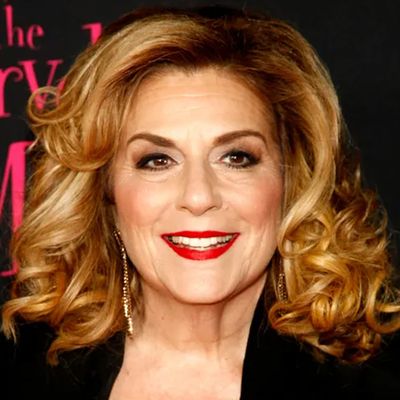
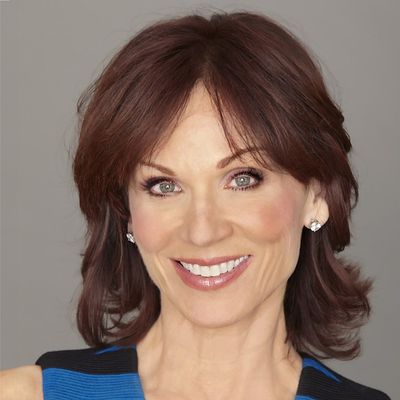
A dynamic duo with impressive acting credits, Marilu Henner and Caroline Aaron discuss their friendship, careers, and their play "Madwomen of the West." The two fondly share their strong and enduring friendship, how they met, and their mutual respect and support for each other despite their differences They also talk about their current play, "Madwomen of the West", the relationship they have with the other actresses, its success in Los Angeles, and bringing the show to New York... Read More
From the show: The Theatre Podcast with Alan Seales
Guests
About
A dynamic duo with impressive acting credits, Marilu Henner and Caroline Aaron discuss their friendship, careers, and their play "Madwomen of the West." The two fondly share their strong and enduring friendship, how they met, and their mutual respect and support for each other despite their differences They also talk about their current play, "Madwomen of the West", the relationship they have with the other actresses, its success in Los Angeles, and bringing the show to New York. The two look back on how they got into theatre and what made them fall in love with performing. Marilu discusses her early struggles in auditions and how she learned to embrace her uniqueness, encouraging aspiring artists to celebrate what makes them special instead of conforming to expectations. She also talks about her highly superior autobiographical memory and the book she wrote about it. Caroline, on the other hand, opens up about being driven by early experiences with death, emphasizing the value of cherishing life and leaving a positive impact.
Marilu Henner has been in seven Broadway shows, and two classic sitcoms, namely “Taxi” and “Evening Shade”. She has five Golden Globe nominations, is a New York Times bestselling author of 10 books, and is one of 12 people documented with highly superior autobiographical memory.
Caroline Aaron gained prominence in the 1980s with roles in films directed by Woody Allen, Mike Nichols, and Nora Ephron. Her television career includes recurring roles in “The Marvelous Mrs. Maisel”, “Transparent”, and “The Leftovers”. A seasoned theater actress, Caroline has performed on Broadway and in numerous off-Broadway and regional productions.
Marilu and Caroline are both currently starring in the new off-Broadway comedy, “Madwomen of the West”.
Connect with Marilu and Caroline:
- Instagram: @therealmarilu, @therealcarolineaaron
- Twitter: @TheRealMarilu, @therealcarolineaaron
Connect with The Theatre Podcast:
- Support us on Patreon: Patreon.com/TheTheatrePodcast
- YouTube: YouTube.com/TheTheatrePodcast
- Threads, Twitter & Instagram: @theatre_podcast
- TikTok: @thetheatrepodcast
- Facebook.com/OfficialTheatrePodcast
- TheTheatrePodcast.com
- Alan's personal Instagram: @alanseales
Transcript
This transcript was automatically generated and might contain errors.
[0:01] Alan Seales: Hey, everyone. Welcome to an all-new episode of The Theatre Podcast. Intimate, personal conversations with the industry's biggest names. I'm your host, Alan Seales, and our guests for this episode are Marilu Henner and Caroline Aaron. And Marilu, of course, you probably know as Frenchie in the original cast of Grease, as well as her iconic role on the hit TV show Taxi from the early 80s. And, of course, Caroline Aaron, known for her role in Mrs. Maisel, but also in her role in films from Mike Nichols, Nora Ephron, Woody Allen, and so much more. These two have such a lifelong, decades and decades-long friendship that obviously comes out. They're now in an off-Broadway show together that I am about to go see, as I am recording this right now.
So I am super excited to see it. Just a little heads up that we did record right before the SAG strike ended. So Marilu mentions that there's a couple things she's not allowed to talk about, because at the time we recorded, they were still not allowed to talk about it. So hopefully all of that is coming to an end now. And as promised, I'm going to follow up with Marilu, and we'll have her back at some point to talk about her secret stories that she can't mention in this episode. Find ManLine and all the places you normally find me on the social medias. And now, everybody, please enjoy this episode with lifelong friends, Caroline and Marilu.
[1:28] Alan Seales: I am so excited to introduce our two guests for this episode. Marilu Henner has been in seven Broadway shows, two classic sitcoms, which are Taxi and Evening Shade, has five Golden Globe nominations, is a New York Times bestselling author of 10 books, and is one of 12 people documented with highly superior autobiographical memory. Caroline Aaron gained prominence in the 1980s with roles in films directed by Woody Allen, Mike Nichols, and Nora Ephron. Her television career includes recurring roles in, of course, Marvelous Mrs. Maisel, Transparent, and The Leftovers. A seasoned theater actress, Aaron has performed on Broadway and in numerous off-Broadway and regional productions. These two have so much experience, I cannot wait to dive in. Marilu and Caroline, welcome to the theater podcast.
[2:12] Marilu Henner: Well, thank you so much.
[2:14] Caroline Aaron: Thank you.
[2:15] Marilu Henner: Thanks for inviting us. We've been on stage quite a few times together, and we've been best friends since December 26, 1986, which was a Friday, because we got to play sisters on Broadway. But I don't think we've ever done like, you know, it's never been this three of us.
[2:29] Alan Seales: No, wait, wait, see, the two of you have never talked about how you met. Let's start there. Then I want to know, I want to know all the details.
[2:38] Caroline Aaron: Yeah, you start, Marilu, because you were there already.
[2:42] Marilu Henner: At right. Social Security. I was doing a Broadway show called Social Security with Marlo Thomas. And she was exiting and Marilu was entering. I didn't know her. But I came down the stairs. She'd seen the show that afternoon. They were wooing her. And there she was. And I would say it was sort of a door at first sight. It was right away. We just like started talking. We felt and we were playing, we were supposed to play sisters. So right away, we bonded. And our husbands at the time were having the same birthday, years apart, but the same birthday, July 16. So we just, you know, we just like, and then I mean, you know, like when you meet somebody, and you just instantly become family, not only did we become family, but we had children who became family. And actually, her daughter, Sydney, and my son, Joey graduated high school together, too. So we did all the school stuff together as well.
[3:38] Marilu Henner: Yes, it's true. It's true. It went on and on. And then we, I think we did that show together for about eight weeks. And that really sealed the deal. Even though I was in New York, Mary Lou was in LA. And then I ended up relocating to LA. And I had a house rented for me by the theater that I that had brought me out to LA. And it was literally down the street from Mary Lou's house. I mean, what are the odds in Los Angeles, which is huge?
[4:04] Caroline Aaron: I know.
[4:04] Marilu Henner: It was crazy. It was like, I saw where they put you up. She's at Outpost. I was like, Outpost? Like, what's your job? That's like walking. That's like my neighborhood. That's like right there.
[4:14] Caroline Aaron: I started out in New York and was brought out to Los Angeles. I think it switched during my time in Los Angeles, which is now it's a much harder runway to begin your career in New York. I'll tell you, when I was doing this film, 21 Jump Street, there were lots of kids playing school students. And they had all been in New York and said they couldn't get any traction, that they had to go to Los Angeles in order to get on a television show in order to be in a play in New York. It used to be that being on television for New York theater actors was something that people shunned. And now we pray for it. So there you go.
[4:51] Marilu Henner: Yeah, it really does open doors now. It's incredible. I mean, you can tell we're about to do something off Broadway and everybody from LA is going to be in New York. All my buddies are there and everybody's doing something this season, it seems. So it's kind of cool. I guess if you want to find a silver lining in the SAG strike, right? We're seeing a lot of these people who are now have the free time to be able to give themselves to the commitment of live theater. And I was going to say this question for later. It's one of the cliché things like, well, you like better TV or film or theater, right? And everybody loves theater. And I'm putting words in your mouth that I assume the theater is the answer because you can't beat live theater. But you can't beat the money of TV and film either. So it's this choice to make.
[5:34] Caroline Aaron: That has a four camera sitcom is also kind of the best of both worlds in a lot of ways, because you work on it all week and you finally shape it and hone it and becomes this little playlet. And then all of a sudden you get to do it in front of people. So you get the audience reaction feels live. And then it's recorded for all time. So, you know, having done the show that I did, am I allowed to say I've been saying calling it Uber in interviews like crazy. So let's call it Uber. Uber through this whole interview, but you know which one I'm talking about. Yeah. And in response to what you said, I always said, if you got paid in the theater, what you get paid to be on TV, and you got paid on TV, what you get paid to be in the theater, they'd really have to look around for actors to be on TV.
Things on television now are so different than they were when we first started out. Crazy with all of the I don't even know what we're allowed to say with all the other, you know, opportunities to watch something.
[6:33] Marilu Henner: There's some great work being done on your phone.
[6:41] Caroline Aaron: Yeah. Well, yeah. So people are getting cast for Broadway shows. They're being discovered. Like look at the Dorothy in The Wiz right now, who's going to make her Broadway debut, right? She was discovered, I think on TikTok, right? It was either TikTok or Instagram. She was discovered on social media. And there's all these other people who are using social media. And you've got people like Alex Wise and Wesley Taylor, who are writing something as great as The Indoor Boys that is just blown up on YouTube or as a web series. And then they're winning legitimate awards and opening doors to what I want to put in air quotes as legitimate TV and film, right? But it's still shot just the same. You can just distribute it on your own.
It's amazing. Kids today, I did an event the other night here in Los Angeles, and these kids performed, and I could not believe the dancing. And they said, we got turned on to dancing. And I thought, oh, so you think you can dance or dance with the stars? And they went, no, TikTok. It was like, oh, I'm like even behind.
[7:34] Marilu Henner: Yeah. Yeah.
[7:34] Caroline Aaron: You know, when people ask me this question, you're right, Adam, it is a very familiar question. It's, you know, the expression, the place, the thing, it's all about the writing. Wherever there is good writing, there are good acting opportunities. And that can happen in the theater and on television, which wasn't true 20 years ago, and in film. But there are such great parts that are being distributed throughout all of these opportunities, and we want to go where the parts are.
[7:59] Marilu Henner: Yeah. And speaking of that, we should probably start talking about Mad Women of the West, because there's so much to say about that, and our relationship in it, and the relationship with all the other actresses in it, which is so cool that we all know each other for many, many, many, many years. And it's about friends, four friends who were college friends, and now some have stayed close, some haven't. And it's just incredible what happens when you get four actresses who have known each other for a very long time up on that stage. It's a blast.
[8:30] Caroline Aaron: Yeah. I wanted to read the byline of the show here. So, Mad Women of the West, which is going to begin performances, I think it will have started by the time this episode airs. So, it starts on November 11th at the Actors Temple Theater off Broadway. And okay, so the byline, welcome to Jules' stunning Brentwood Mansion where, hangry she's sugar cleansing, Marilyn is throwing a surprise birthday party for Claudia who hates birthdays. Champagne cork pops, tempers flare, their longest-streamed celebrity friend Zoe crashes the party fresh from her TED Talk. Expect hilarity, outrageous opinions, unexpected wisdom about what it means to be a woman, no matter what pronouns you use in the 21st century.
And I love the juxtaposition of the cast, women of a certain age with what I'm going to equate with what we were just talking about of the kids these days, you know, concepts that are just now coming fresh into the zeitgeist of theater and the show. So, like, I guess, yeah, let's start with that. Like, where did you even, what did you think when you first read the script for this?
[9:37] Marilu Henner: Well, the script evolved. Sandra Singh Lowe is a writer who I not only admire, but who I'd worked with before. And this is the very first play she's written that she is not in. She called me, you know, during the pandemic and said, I want to write a play, but I don't want to be in it. And she said, 67% of theater tickets in this country, from community theater through Broadway, are bought by women over 50, and they're not on stage. I'm going to put them on stage. So we started talking and she had these archetypes in mind. And I sort of lassoed Mary Lou and now Brooke Adams, and Melanie into being a part of this. So for two years during the pandemic, through New York stage and film, obviously, none of us could be together.
Every month or so we would get summoned over Zoom. Sandra has some new pages, Sandra has some new pages, we would read them out loud, we would discuss it. And so this has really been a process. And then we put it on its feet in Los Angeles last summer. And it was, and you know, you know, it's always a high wire act, you don't know, especially when something is in development, you have no idea how an audience is going to respond. As the great Mike Nichols used to say, you never know what you have until the folks come. Well, the folks in Los Angeles came, and they came and they came and they adored it. And we were a balls out hit. I lived in LA for 23 years, a lot of theater there was never going to hit this big. So she found some need, that people are really hungry for to see these relationships, and to see women on stage.
[11:18] Marilu Henner: It's so fun because we talk about everything that people talk about, that women talk about. Not just women, everybody talks about it, whether it's relationships or how you feel about your body or how you feel about sex or how you feel about your careers, everything. Nothing is off the table there. It's so fabulous to just see the four different types. I did the show Grease before it started. I can talk about the show way before it went to Broadway or anything else, the movie or whatever. Everybody goes, why is that such a hit? I said, because you have those types that were in high school. On this stage right now, you've got four different women who are very different, but everybody's going to know one of those characters or they are one of those characters or they love the relationship between two of the characters.
It just seems to be dealing with universal themes. Because God is in the details, the specificity of our characters really brings out the magic. It is a wild ride. It is so much fun to do. Caroline and I were dressing roommates when we were doing it here in Los Angeles. It was always like, what are we going to find out tonight? What is the audience going to be like tonight? The audience gets involved. Caroline comes out first and she gives them permission to talk to us. We break the fourth wall. We ask them questions. It's insane what happens. Every night's different. Every night is a blast. It's crazy. When are you going to see it? When am I going to see it? I want to see it as soon as I can.
I want to see it next week, hopefully, when it opens. She did write the parts on our backs. There's no question. There's a combination. I would say that Mary Lou's character is the most authentic to Mary Lou. Because I've known Sandra for so long, many of these parts are also ripped from the headlines of her life, because she's also our peer. We have that in common. But as she went along, we contributed an awful lot to the play as it evolved based on us narrating to her what our personal experiences were. Then she just incorporated that into the piece. This is the third time Caroline and I have worked together. No one is funnier than Caroline. Wait until everybody sees what she does on the stage. I am so happy that as my character, I'm allowed to laugh at some of the things she does. Otherwise, I'd be biting the inside of my cheeks all the time.
[13:52] Marilu Henner: I'll tell you that on the playwright, her goal for this piece was to start a conversation or to continue the conversation that she began with us. She wants the audience to have a conversation afterwards. We've just come out of a very woke time. We're making some corrections in our society that are long overdue. But in making those corrections, we've also muzzled people. She's taking the muzzles off of these characters, letting them say whatever they want. There are people that are going to be offended, and there are people who are going to be delighted. That's what she wants more than anything. When we first started doing this in LA, I had an interview for the New York Times with Maisel. The writer wanted to know what I was doing next.
I said this, and I was so excited. I said to her, I think the New York Times might want to do an article on the play. She said, no, we don't need that. I said, why? She said, I want to just start a conversation. I want this to be about the people who come see it and have encountered it and for them to keep this narrative going for themselves in their own lives. Yes, the New York Times hopefully will come and we will do all sorts of things. Her real goal, and it's what theater is there for, is to really bring us closer and have people. I always feel like when I go to the theater, I know I've seen something good when I go out afterwards and we continue to talk about what we just saw. Then you go, oh, and that's what this will be.
[15:23] Marilu Henner: We're going to be doing, please tell your listeners that we're going to be doing talkbacks with the audience. Things after the show, there are going to be certain performances where the audience will stick around and we'll be up on stage and answering questions and everything else because that's always good. I'm so eager to see what it's going to be like between an LA audience and a New York audience because even though I've done Broadway and stuff, it's always different. Especially with this piece where the audience gets so involved and there's a lot to say and think about for sure.
[16:00] Caroline Aaron: That's what I was going to say next was that the LA audiences and New York audiences are quite different, I think. Then even in New York, the Broadway and the off-Broadway because you get the Broadway for whatever it's worth is, I think, a lot more touristy because they come for the big names, the big shows, the big budget musicals, and you don't have a $30 million off-Broadway show. We certainly don't.
[16:20] Marilu Henner: Let's just hope we don't ever. No, but you're absolutely right. I forgot about that, that yes, the audiences can be quite different and their expectations are different. This is a show that really embraces the audience and welcomes them. It's not back and entertained, it's participate in the dialogue with us.
[16:39] Caroline Aaron: Also, we're doing it at the Actor's Temple, which is pretty like, it's very like, whoa, we don't have Friday night performances, of course, but it'll be interesting to see how that plays into it as well.
[16:55] Marilu Henner: Yeah, it's really interesting seeing things when they transition from one coast to the other and then even things that are popular enough to go from off-Broadway to Broadway because there has to be an evolution and there has to be some sort of adaptation, especially for something that's like this that you said has so much audience interaction.
[17:17] Alan Seales: Caroline, you're already here, right? You're about to come to the New York side of the world.
[17:22] Caroline Aaron: Right after this soon.
[17:25] Alan Seales: Right. So Caroline, have you been here rehearsing already and kind of adapting and changing at all or is it just like, let's see what happens?
[17:33] Caroline Aaron: We did everything. I went to LA for two months. Everybody was in LA and our playwright is based in LA. So we started in LA and now I get to be home, but I have no idea what to expect. I think the playwright is making adjustments for the fact that it is a New York audience and I'm exactly like Mary Lou. I mean, I'm very, very curious as to, I think maybe this is not fair, but I think of a New York theater audience as being more theater friendly than an LA audience. I did a lot of theater in LA with a lot of empty seats until this show. So, I mean, it will be very different. I think people love going to the theater in New York more than they do in LA.
[18:16] Marilu Henner: And so I'll be curious. I'm so excited, but they haven't been to anything. We've been rehearsing here in Los Angeles the last two weeks. Caroline just left yesterday. And so we've been rehearsing here in Los Angeles and we have a director, Tom Caruso, Thomas Caruso, who is fabulous. And he has brought a whole new energy and a whole new thing to the entire experience. And before we were carrying scripts, because we didn't even know how many performances we were going to end up doing and getting rid of the scripts and just dealing with each other and the relationships and the people and behavior and everything. It has given us a whole new level. So even if someone saw it in Los Angeles, it's going to be a totally different experience in New York.
My, you know, Judd Hirsch and Jim Brooks, they all came to the show and they can't wait. They can't wait to come because they loved it in LA, but they know they're really going to love it in New York. We've eliminated process in the development of theater. It's been, the more and more has become commodified, as you know. I mean, shows don't even go out of town anymore. Do you know what I mean? So we've had the luxury of, the pandemic was unfortunate, but it also gave time for development. Then we had our LA production. And this production will be one more step in the evolution of this piece. And I, you know, I wish we could bring that back in my salad days. Everything before it hit the boards had a long development process. And now you have three weeks rehearsal and you're up. And so I'm so glad we don't have that.
[19:47] Caroline Aaron: Right. We've had some time for this to marinate.
[19:50] Marilu Henner: It's budget. It's all budget. The industry has changed and you can't afford to have anything just sit without an audience anymore.
[19:56] Caroline Aaron: Right. I know. I know. And it's such a shame. You know, I keep going back and reading Act One and realizing that that play had like five incarnations before it became a hit and hit the stage because it, you know, the best art comes through process. And the more and more we telescope that down into tiny, tiny little amount of time, we're jipping ourselves and our theater artists of the best inside of them. But I get it. It's practical.
[20:22] Alan Seales: Wow. Well, I can't wait to see the show. I'm definitely going to see it. I will let you know when I'm there because it sounds like it's going to be a raucous good time. Hang on, everybody. We're just going to take a quick break. All right, now we're back. I want to rewind now and pick up the origin stories, which normally is how I start on these episodes. But what got you two into theater? What made you fall in love with performing? So, Caroline, let's start with you then.
[20:47] Caroline Aaron: Because I went to a summer camp when I was growing up, and you had a choice between climbing a mountain or being in a bunk show. And I picked a bunk show. And that was the beginning of my theater career. And my mother always said that was her big mistake was sending me to that camp. But anyway, I'll do the bunk show. And I played Senator Rockins in Finian's Rainbow was my debut. And once you get bit by the bug, it never goes away. So, that was when I was about 10. And that's what started me in the theater. And then, of course, when I graduated from college, I was in an experimental theater company in Washington, D.C. that was set up by Yersey Grotowski and Peter Brook and Lee Strausberg. And that was, you know, we weren't so much actors as we were talismans of the spirit.
But really, I wanted applause and makeup. So, I kept going to New York, you know, sneaking off on the weekends. And then finally, I left this theater company and I came to Manhattan. And I ended up in Los Angeles, because I was brought out there to do a play. So, that was my origin of beginning in the theater.
[22:02] Marilu Henner: And my origin was my family owned a dancing school in Chicago. It was actually in our backyard, because it was our garage. But we had 200 students between the ages of two and 80, including the nuns from the Catholic school next door, who came over for stretch classes. So, as soon as you were 14, you taught a class. And so, I just grew up singing and dancing. And my father would drive the nuns on Sunday. And I would like sing like Ethel Merman, or Barbra Streisand, or Julie Andrews, or whomever, you know. And so, I was very theatrical as a little kid. And because the dancing school, people would call and say, we need 12.
[23:34] Marilu Henner: It's so great to be here with you, Caroline.
[24:04] Caroline Aaron: I know! I love this.
[24:34] Marilu Henner: We have so much to talk about, especially our play "Madwomen of the West."
[25:04] Caroline Aaron: Yes, and our friendship, which has been such a big part of our journey.
[25:20] Marilu Henner: Absolutely! I remember when we first met and how our connection just clicked.
[25:34] Caroline Aaron: It really did! And despite our differences, we support each other so well.
[26:04] Marilu Henner: That's what makes it special. We both bring unique perspectives to the table.
[26:34] Caroline Aaron: And our experiences in the industry have shaped us in different ways.
[27:04] Marilu Henner: Speaking of experiences, I had my share of struggles in auditions early on.
[27:34] Caroline Aaron: I can relate to that. It's tough out there, but it teaches you resilience.
[28:04] Marilu Henner: Exactly! I learned to embrace my uniqueness, which is so important for aspiring artists.
[28:34] Caroline Aaron: Yes, celebrating what makes you special is key to success.
[29:04] Marilu Henner: And I think that's a message we both want to share with our audiences.
[29:34] Caroline Aaron: Definitely! It's about cherishing life and leaving a positive impact.
[30:05] Marilu Henner: And that's something we explore in our play as well.
[30:13] Caroline Aaron: It really is a reflection of our lives and experiences.
[30:22] Marilu Henner: I love how we can bring our stories to the stage together.
[30:35] Caroline Aaron: It makes the performance feel so authentic.
[30:45] Marilu Henner: And the audience connects with that authenticity.
[30:55] Caroline Aaron: That's what makes theatre so powerful.
[31:05] Marilu Henner: I couldn't agree more. It's all about the shared experience.
[31:15] Caroline Aaron: And the laughter we bring to the audience is priceless.
[31:25] Marilu Henner: Yes! Laughter is such a healing force.
[31:38] Caroline Aaron: It really is. And I think our play captures that beautifully.
[31:56] Marilu Henner: I'm so proud of what we've created together.
[32:09] Caroline Aaron: Me too! It's been an incredible journey.
[32:20] Marilu Henner: And I can't wait to see how it evolves as we bring it to New York.
[32:34] Caroline Aaron: It's going to be amazing!
[32:50] Marilu Henner: Absolutely! Here's to more adventures ahead.
[33:03] Caroline Aaron: Cheers to that!
[33:20] Marilu Henner: Let's keep inspiring each other and our audiences.
[33:34] Caroline Aaron: Yes, let's do it!
[33:51] Caroline Aaron: She's genuine. She's like a real character and I always want her at every party that I throw, every table that I serve because she's going to keep it, you know, she's like amazing. She's just an amazing human being and I'm not surprised that we fell madly in love with her. We went for coffee right after that first day and she came down the stairs in this coat and I remember the visual of her and she came downstairs and we went out for coffee and we just never stopped talking and it was such a good feeling to know that I was going to be coming to New York to do this play and that I would find family. So... All right. Caroline, what do you love the most about Marilu? I would say the thing I respect the most about her is her sense of family.
I used to joke all the time after we became friends that I became a Henner and Marilu opens her arms wide and embraces everyone and turns them into family. That includes loyalty, devotion and encouragement to everyone that she really cares about and that is so unusual, I have to say, in a friendship and I have to tell you that when we first became friends because we are so not anything alike that my friends would go, why are you friends with her, right? I'm sure people said that to her but we consider ourselves the Felix and Oscar. I mean, I helped Marilu with her books on health while I was smoking outside her kitchen window going, the chapter on tofu, it needs something a little more interesting.
So, we really don't have in common except that I have such enormous respect for her sense of discipline, her sense of family and for her commitment to working hard. It's unbelievable how many people don't work hard, whatever it is that they're passionate about. I find that inspiring and also I found a soulmate in that way. Working hard has its own rewards.
[36:01] Marilu Henner: It does and resilience. Our kids are resilient. We make jokes about it all the time. I wrote a book called I Refuse to Raise a Brat because my kids are not brats at all. They're millennials with a work ethic obviously. There were no idle threats. There's no idle threats. You don't say, if you don't do this, you're not going to come to our vacation. That's ridiculous. Parents are not going to say something. You know what I'm saying? They're never going to follow through. I'm very big on follow through. If you say, you're supposed to do this and you're not going to do it. Caroline always said that I was the house of no and she was the house of yes. I'd say, yeah, but your voice is so threatening sounding.
Your yes sounds like a no. Your voice is booming compared to mine. I said, okay, when we would fight about this because we were supposed to go somewhere, her boys were really little and she went, if you're not ready in five minutes, we're leaving. Then she left and I was astonished. Then we started arguing about parenting and I said, let's just see who gets the first call from the police station. Nobody got that phone call. Hang on, everybody. We're just going to take a quick break.
[37:22] Alan Seales: All right, now we're back. The three closing questions that I ask everyone, we'll start with flip coin. Mary Lou, you're first up. What motivates you?
[37:34] Marilu Henner: Oh my gosh, so much. What doesn't? I mean, everything. Adversity motivates me. Criticism motivates me. Feeling passionate about something motivates me. Somebody saying something nice motivates me. I mean, I'm a very, very motivated person. I mean, yeah, I feel motivated by everything. I don't know. The key to your life is how well you deal with plan B. If something doesn't happen the way I expected, it's like, okay, what was around that corner? All right, let's try this. Maybe there's a reason. Let's look for that. I don't feel victimized by things. I'm always looking for that. What's the opportunity? I think I'm always looking for the opportunity in everything.
[38:29] Caroline Aaron: What motivates me is unfortunately, I had death at an early age. My father died when I was a child. My mother died quite young. I think death is a great teacher. I think the thing that probably motivates me the most is that the lesson in all of that is to cherish life. I really do not feel comfortable wasting time. My mother was a great civil rights activist. I was taught to leave the world a better place. That takes a lot of time and motivation. There are things about which I am not motivated, which I wish I could take a pill for more motivation. I actually went to therapy one time and asked if my therapist could turn me into Mary Lou. She went, it doesn't work because she's so motivated. She's completely healthy.
All the things that I would like to upgrade within myself, but the things about which I am motivated, I am profoundly motivated. I think I know that life is short as well as very long. In the short column, I think we really just have to cherish what's in front of us and make the most of it. That is really my motivation.
[39:46] Marilu Henner: That is beautiful. Therapist out there, everyone be a Mary Lou. Let's see. Caroline, we'll start with you on the second question here. I know that we are coming short on time because Mary Lou, you got a flight to catch. Caroline, what advice would you give your younger self and younger people listening now starting out down a similar path?
[40:07] Caroline Aaron: Okay. I would say try to be the lone voice. It doesn't mean you're lonely, but try and be the lone voice and avoid the herd mentality, which may make you comfortable. If you can learn to live with uncomfortable feelings, you will get much further than if you were always trying to avoid discomfort. I would try and tell that to myself.
[40:34] Marilu Henner: I auditioned for 40 commercials before I got one because I kept thinking, oh, I know what they want. I know what they want. Finally, my 39th audition was for a friend, and I did it like me. I wasn't even writing for the commercial. He said, are you doing this in your auditions? I went, no, I just did it like that because you were there. He said, no, you've got to do that. You've got to find what is it that you get for free. Don't hide your light under a bushel, whatever the expression is. I just worked with these kids the other night and they were asking me and I said, nobody is going to be better than you. Nobody is going to be a better you than you, so just celebrate what makes you unique and what makes you special.
Don't try to just find that herd mentality. Don't just do what you think everybody else wants. I learned so early in my career that just going with that kind of, oh, I know what they want and I'm going to give them that is not going to get me the job, and it didn't. When I started celebrating who I was or maybe something was a little different, you're not going to get every job. Sometimes, you could be totally off, but at least make the choices that are yours. So many young kids today, look at the movie we were talking about, Ben and Beanie and all these kids that my son and I grew up together. They're very special and unique characters. Maybe years ago, they might not have had the careers that they've had, but you can't help but watch somebody become a star when they are so totally committed to who they are. I love that.
[42:17] Alan Seales: All right. So final question now. This is the hardest one. Mary Lou, we'll start with you again. If you can only see one show for the rest of your life, but you can see it as many times as you want, what would you see?
[42:21] Marilu Henner: Hamilton, because every time I've seen it seven times, I've listened to the album a million times, I always find something different in the lyrics. When I read that most musicals have 7,500 words, and Hamilton is like 22,000.
[42:44] Caroline Aaron: I didn't know.
[42:45] Marilu Henner: Yeah. It's three times. It's extremely dense. So it would be Hamilton. And I love Lin-Manuel.
[42:51] Alan Seales: And most of those words are in Guns and Ships.
[42:57] Caroline Aaron: Anything written by Tennessee Williams. So I just have, I mean, you know, a bad production. I've seen many of A Glass Menagerie Streetcar Named Desire, but he really floats my boat. So every time I have a chance to see anything written by Tennessee Williams, I'll be sitting in the dark watching it. Most people don't know that Caroline is from the South. Everybody thinks she's from New York, but she's from the South. That's one of the surprising things about her. And if you ever see how she sets a table or whatever, you get it.
[43:29] Caroline Aaron: Yes.
[43:30] Marilu Henner: With like the multiple sets of silverware and the napkin nicely folded.
[43:34] Caroline Aaron: Yes. Did you? Wait, are you from the South? Because that's exactly right.
[43:37] Marilu Henner: North Carolina. Yeah.
[43:38] Caroline Aaron: No.
[43:38] Marilu Henner: Yes. Dua Lise. Everything. Okay. So you get it.
[43:41] Alan Seales: Oh, I get it. I totally get it. Are you guys on social media anywhere? Do you play that game?
[43:46] Marilu Henner: I'm on Twitter. I love Twitter. I'm at The Real Mary Lou. M-A-R-I-L-U. The Real Mary Lou. And that's also my Instagram handle as well. Yeah.
[43:55] Caroline Aaron: I am. And I think those are my same handles, but I'm not really sure. But it is The Real Caroline Aaron at Twitter and Instagram. But I'm not quite up on it, but I'm trying. That's all I can say. I'm really more of an in-person person. That's all I can say. I would be happy to talk to anybody in person. But yes, I have all of those things.
[44:22] Alan Seales: I hear that. All right. Everybody follow them online and go see Mad Women of the West. Get your tickets now. And you can get them at Telecharge. Get them now because we are going to sell out just like we did in Los Angeles. And I want everybody to come and see it.
[44:37] Marilu Henner: Me too. Me too. It sounds so great. I can't wait to see it. Thank you so much, both of you, for having this conversation. You've been so much fun to talk to.
[44:44] Caroline Aaron: Thank you. We're coming back, remember? We're coming back after you've seen it and when we can really talk about the things that we've done. And after the strike.
[44:52] Alan Seales: All right. I'm holding you to it. After the strike, we're going to do it. We'll get in person in New York, and we're going to do this upright.
[44:58] Caroline Aaron: Excellent. All right.
[44:59] Alan Seales: All right. Thank you so much.
[45:00] Caroline Aaron: Thank you so much.
[45:01] All: Goodbye.
© Broadway Podcast Network, All Rights Reserved