

Thanks to her competitiveness in sports and being a “terrible loser”, Hannah Cruz found her way into performing and theatre. She shares insights into her journey, including going viral on YouTube and getting asked to audition for “Legally Blonde”, and eventually moving to New York... Read More
From the show: The Theatre Podcast with Alan Seales
Guests

Featured Shows
About
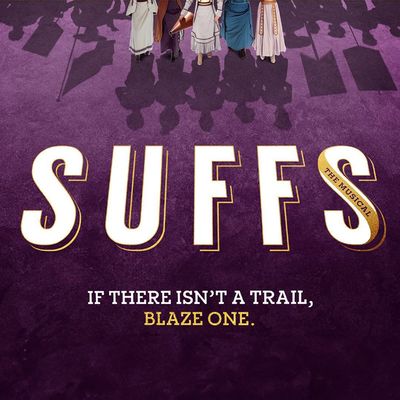
Thanks to her competitiveness in sports and being a “terrible loser”, Hannah Cruz found her way into performing and theatre. She shares insights into her journey, including going viral on YouTube and getting asked to audition for “Legally Blonde”, and eventually moving to New York. She opens up about the pressures of performing, including the constant self-doubt and anxiety she experiences, her struggles with perfectionism, and the internal battle to find validation in her work. Having played complex characters such as Eliza in “Hamilton”, and Robin in “The Connector”, she sheds light on the emotional depth required to portray them, the research process involved in preparing for these roles, and the personal connections she has forged with her characters. As someone who learned from her co-actors’ tough love, Hannah believes that for musical theatre, you don’t necessarily have to go to school to be the best. Currently making her Broadway debut as Inez Milholland in “SUFFS”, she shares how it differs from pre-Broadway, why silence is essential (and powerful) in a show, and the importance of providing the most truthful performance to the audience.
Hannah Cruz was most recently seen in the off-Broadway production of “The Connector”. Her additional off-Broadway credits include “Only Gold” and “SUFFS”. On tour and regionally, she was seen in “Hamilton”, “Bullets Over Broadway”, “The Da Vinci Code”, and “Young Frankenstein”. She is now making her Broadway debut in the Broadway transfer of “SUFFS”, playing the incomparable Inez Milholland.
Connect with Hannah:
- Instagram: @thisishannahcruz
- Twitter: @heyhannahcruz
Connect with The Theatre Podcast:
- Support the podcast on Patreon: Patreon.com/TheTheatrePodcast
- YouTube: YouTube.com/TheTheatrePodcast
- Threads, Twitter & Instagram: @theatre_podcast
- TikTok: @thetheatrepodcast
- Facebook.com/OfficialTheatrePodcast
- TheTheatrePodcast.com
- My personal Instagram: @alanseales
Transcript
This transcript was automatically generated and might contain errors.
[0:00] Hannah Cruz: Hi, I'm Hannah Cruz, and welcome to The Theatre Podcast with Alan Seales.
[0:10] Alan Seales: Hey, everyone, welcome back to an all new episode of The Theatre Podcast. Today's guest, Hannah Cruz, was ultra competitive in sports as a kid, often shedding many tears when she didn't win. This ultimately led her to a place on the stage, which, of course, has now brought her to her phenomenal Broadway debut as Inez Milholland in Suffs. Along the way to this role, however, she went through many ups and downs, as most everyone does in this profession, but she had to learn how to leave her intense emotions on the stage after every show and figure out how not to let it affect her personally, something Hamilton director Tommy Kail worked on with her after he saw her as Eliza in a touring production of the show.
It was actually really cool how he noticed what was going on personally and helped work on it with her. So before we get into Hannah telling these stories, make sure to find me on the social media platforms, tag me in your stories so I can reshare. And now, everyone, please enjoy this episode with Hannah Cruz.
[1:09] Alan Seales: Today's guest was most recently seen in the off-Broadway production of The Connector, with additional off-Broadway credits, including Only Gold and Suffs. On tour and regionally, she was seen in Hamilton, Bullets Over Broadway, The Da Vinci Code, and Young Frankenstein, and she is now making her Broadway debut in the Broadway transfer of Suffs, playing the incomparable Inez Milholland. Hannah Cruz, welcome to The Theatre Podcast.
[1:33] Hannah Cruz: Thank you. I'm very happy to be here.
[1:35] Alan Seales: I just want to start on The Connector because I still talk about that show.
[1:40] Hannah Cruz: Yay.
[1:41] Alan Seales: It was so good. It was so good. And then I saw, I think I saw like your second to last performance or something. It was in that final week. And I mean, I don't know if you were bringing that energy every show, but damn, it was like, it was intense.
[1:56] Hannah Cruz: Yeah, that show is to date one of my favorite things I've ever done. It was one of the most special experiences of my life. There's something about doing a one-act show where you can just like really let yourself fall into that world and kind of get lost in it. And it's just such an incredible experience as an actor that I love that show. I miss it every day.
[2:17] Alan Seales: Scott Bakula too, seeing Scott, like I'm a child of the 80s. So like, yeah, working with Scott, working with Jason Robert Brown, the entire team, MCC Theater too, it's just, they always do such good productions. And The Connector and Suffs and some other things that you've done, like they're fictional representations of true events. And so you're going through pulling out, creating these characters, characterized versions of sometimes real people, especially now in Suffs' Inez. I guess for you, Hannah, as a person, like The Connector specifically and Suffs now, in looking back through other things you've done, are you growing as a person by taking every one of these little, these real life situations, these real life stories and turning them into staged characters that we see?
[3:02] Hannah Cruz: Yeah, for sure. Robin from The Connector didn't really exist. Like she's, if anything, she's like a composite character. So I had a little more freedom there to kind of mold her as I saw fit. And honestly, she was mostly a lot of me. Whereas like Inez is someone who like, I have lots of reading material on. My tree for her is kind of like already sketched out and I just get to color it in as I see fit. Whereas Robin was kind of, I got to draw from scratch. I don't really have a preference. I sometimes think playing an existing character who is a person is a little easier and less vulnerable. I feel like Robin was kind of felt like an open wound to me. I would text Daisy, our director, after the show or see her after the show and be like, God, that was awful.
And she would come see me and be like, I don't know what you're talking about. And her husband, Sandy, who's also an actor, put it to me in a way that I'd never heard before. And he was like, what you're feeling, as Robin is so uncomfortable, and so upsetting, that you are feeling that. And that's, that's what we're experiencing, which is a good thing. Like we're seeing you be her. And so of course, you're feeling bad, but we're getting what we need from you. It was difficult because I always felt like I was having a bad show every single day. But it's just because I was experiencing what she was experiencing.
[4:36] Alan Seales: That's really interesting. So yeah, your character of Robin Martinez, obviously fictionalized made up character in a situation that is happening or happened, especially what's going on now with politics and with the news and everything. What The Connector reminded me to do was to walk away and still fact check what I'm reading, because even like literally, just for fun the other day, my brother sends me a nice picture he took of his son playing soccer in this cool soccer pose. And so I just went into Photoshop and literally within 30 seconds, I send it back a picture with a space helmet on and arrows with fire raining down and explosions in the background. And it looked totally real because that's what AI can do now. And I was like, here you go. Look at, look at your cool son. Look at my nephew. And the reason I bring this up is because you can't trust anything you see or read online anymore. Not that you ever could.
[5:30] Hannah Cruz: No, no, no.
[5:30] Alan Seales: Yeah. And The Connector reminded me of that. And Robin too, just reminds me of kind of like the character and the vulnerability and everything that she goes through. It reminded me so much of just how much you need to respect, respect each other, tell the truth and well, not tell the truth, but I guess determine what the truth is. What am I trying to say here? You know what I mean? Like, how much did you talk about this?
[5:59] Hannah Cruz: A lot. It's super convoluted because it's, is truth the same as facts and truth can be different for each person because memory is so untrustworthy. So it's, it's a hard question, truth and facts. And now like all the AI and deep fake stuff really scares the shit out of me. I don't know where we go from here, but it's quite frightening. And you know, I delve here and there into the news. I try and keep abreast of like the important things that I should know about. It's really hard to make sure that you're actually getting all the information because it takes a lot of work. You can't just like wake up, read the newspaper and think like, okay, I'm abreast of, of what's happening today. You have to do your research, which takes a lot of time.
[6:48] Alan Seales: Yeah. And people you are reading about that you trust, who knows if they're making up their sources, literally, you don't know. And that's what The Connector was about. But yeah. So going, going back to little Hannah, where, where did you grow up and what got you into theater?
[7:06] Hannah Cruz: I grew up in Newtown, Connecticut, a really beautiful place to grow up, super bucolic. And I grew up running around the woods and like playing a lot of sports. But I was in like every sport imaginable. And in almost every one, I would get so competitive that I would just weep, like could not stand losing, was a terrible loser. And like anytime it was like down to the wire, I would just weep. It was really not conducive to sports. So my parents then put me in theater. I think I was just like naturally attuned to singing. It came pretty easily for me. And so that was like my, my doorway in was the singing, but I soon realized that it wasn't the singing that was my passion. It was the acting. And that I think has carried me through this career because yes, singing is great.
And my voice has gotten me in a lot of doors, but I think what keeps me working is my love for acting because it's something that, which could be said the same of singing, but like with acting, especially you're just never done learning ever, ever, ever. And I find that so compelling and like, no, especially doing theater. If you're doing eight shows a week, I know some actors who can truly do carbon copy the same show every single night. I will never understand that. And I think it's a different way of keeping yourself going. But for me, what keeps me going eight shows a week is knowing that every show is going to be completely, not completely, but every show is going to be different in like the nuances and the colors that you get to see. That's so exciting to me.
[8:51] Alan Seales: That's interesting. Yeah. The carbon copies, I feel like having experienced myself in, I never did the eight show a week schedule. I did hit Busch Gardens, the 10 show a day schedule. That was not so fun. That was not fun at all, but they were 30 minute shows. So the, yeah, the ability to go over and over again and to hit the emotional depths that you've got to, I mean, in the two things I've seen you in now, The Connector and Suffs, I mean, you've got to be doing something outside to keep yourself sane in one part or another, because I guess, well, like you said, you are doing different shows eight times a week. You're saying the same lines, but I agree that if you're truly listening, if you're truly in the moment, having the exact same conversation with the same words is going to sound different every time if you're truly listening, because the real Hannah is going to come in and color the lines a little bit, and that's going to color the response, hit my coffee cup, and that's going to hit, color the responses from other people in the cast, and it compounds from there to make a better show.
[10:03] Hannah Cruz: Yeah. That's the exciting thing about theater is it's a living, breathing thing that's in front of us right now, and that audience is the only one who gets to experience that show that night. That's like very exciting.
[10:16] Alan Seales: That's why I like previews too, because with things being added, changed and cut, there's literally like some shows that will never exist in that form again.
[10:24] Hannah Cruz: Yes. One of my favorite stories, it was like our fifth preview for Suffs at The Public, and at The Public, I played a different part. I opened the show, and I opened the second act in like a vaudevillian number where I kind of played like a non-gendered person, because I was like kind of a man, but kind of a woman. It was like very emcee and cabaret, but I came out to open the show, and they had written me like a small monologue for that day that I learned that day. It was our fifth preview, and Leonardo DiCaprio was in the audience, and he was sitting in like the fourth row.
[10:59] Alan Seales: Like you do.
[11:00] Hannah Cruz: And that monologue was cut the next day, so he is the only person, well, the rest of the audience, but I always think that like Leonardo DiCaprio saw that one show, and that show was never seen again. I just think that's so fascinating.
[11:14] Alan Seales: Well, Leo, if you have a bootleg, send it in. Not that we condone bootlegs. We don't condone bootlegs. Leo's a big long-time listener of this podcast, of course. I guess, what age were you when you were crying so hard that your mom put you in theater?
[11:26] Hannah Cruz: I was 26.
[11:36] Alan Seales: I mean, that still happens, but just like a picture at the free throw for the basketball, just weeping. God, it was awful. But it must have been in middle school, because middle school is when I started getting like more into it. So it must have been like seventh, eighth grade, I think.
[11:53] Alan Seales: And then you could always sing, though? Were you singing like at home before then?
[11:56] Hannah Cruz: Yeah. My mom was a singer, and my uncle is also a musician in a band. So like music was a big part of our household. We listened to a lot of Patsy Cline, a lot of Gloria Estefan. Music was always in the house. There's home videos of me singing, but it was never honed until they put me in voice lessons, I think, in middle school. And then I think it was pretty obvious that I had an affinity for it. And they were like, oh, this is the thing. Okay, this is her thing.
[12:29] Alan Seales: And then looking forward then, I mean, if you're singing, you said you still love the acting part of it. Were you doing community theater, high school productions? And then there has to have been some point where you said, I'm going to try to school for this, instead of school for accounting.
[12:41] Hannah Cruz: Yeah, once that middle school, like theater bug started, I was like lost to theater. Like, I don't know how I graduated. I never went to, I feel like I never went to class. I still have nightmares, truly to this day of me having to go back to high school because I didn't finish because I think it's like a very deep fear in my brain because I just never went to class, I feel like. But I had decent grades. So I was doing theater in school, we did like a play and two musicals a year. And then I also did shows outside of there. I did like one professional production of Magic Treehouse, the musical, that was like the first thing I got paid for. And then we had like a community theater that we were all super into.
And I would spend all my time there taking voice lessons and rehearsing for the show that year. I think we did two shows a year there too. So all in all, I was like constantly rehearsing for a show. When I got to senior year, I auditioned at 10 musical theater schools. I was like, I needed to go to CCM. It was like my dream and I didn't get in. I only got into one, Ithaca, and I was like, okay. So I like sent my deposit in and was all set to go. But then that year, we had done Gypsy as like the big musical and I played Mama Rose and I put all the videos on YouTube because that's what you did back then. And the Rose's Turn went like viral for the time. Now viral is like millions and millions of views.
It was like 30,000 views, but that was like huge for me. Playbill did an article about it and I got asked to come audition for the Legally Blonde National Tour. They were putting a second national out, non-union. I ended up booking it and I convinced my parents to let me go. I've always been a very independent person and so they were like, well, if you think this is best, then this is probably best. And I was like, yeah, it's best. So I went on tour.
[14:43] Hannah Cruz: Then I moved to New York right after that, and I've been here ever since.
[14:46] Alan Seales: Wow. I feel like if the door opens for you like that, or opens for anyone like that, like it's in your best interest to walk through it to see what's on the other side.
[14:57] Hannah Cruz: I agree. Especially when you're that young.
[14:59] Alan Seales: Yeah.
[15:00] Hannah Cruz: Like, and college, I always thought, like, it'll always be there. And I deferred. So I could have gone back. But it's my opinion that, especially for musical theater, you don't have to go to school. I don't want to, like, ever encourage anyone not to go because I think it really helps some people. But I think that everybody's a different kind of artist. And like, I don't think it would have helped me. And I learned a lot in New York. I took a lot of classes here. And I also like I also think I'm so grateful that my first job was a non-union second national tour, because the pressure was like, very low. But I learned so much. Some of my castmates were really hard on me. And I think at the time, I was like, sad about it. But now I'm so grateful that they like, pushed me where I need to go. Because
[15:54] Alan Seales: Hard on you like being critical?
[15:56] Hannah Cruz: Yeah, a little bit, I think. And like, I think there was one time I forgot some lyrics and like, broke on stage. And like, it was funny. But also, I can remember one of my scene partners being like, don't do that again. And I was like, okay. And I like, don't mess up like that anymore. I mean, God forbid that happens again. But they were tough with me. It was tough love. And now I think I'm really grateful for that. I'm really grateful for that because I needed to be good. I was a kid. That experience and the subsequent tours that I went on, all taught me a lot. I'm great. I see a lot of people now getting hired. Huge, huge, huge jobs when they're like fresh out of college. And that would scare me. Just just like such a public facing job. When you're when you're so green, that's really frightening. So I'm grateful that I got the education I did.
[16:46] Alan Seales: Time for a quick commercial break. Hang on a second. Welcome back to the episode. And at the time in your life, in the time in one's life, you know, where most people are leaving home for the first time, and they're on their own for the first time and they want to go push their limits and and be that, you know, 1920, early 20 something and just do what they do. If you're thrust into a big role with lots of pressure, you don't get to live that part of your childhood, which I which I strongly feel is very important to to social development, to your own development of just learning how to regulate yourself.
[17:27] Hannah Cruz: Yeah, I completely agree.
[17:28] Alan Seales: Yeah. Well, who was I talking to? I was talking to somebody months and months and months ago, we were talking about child childhood stars like TV and film stars, and they seem to be frozen in that mentality of when they became famous.
[17:42] Hannah Cruz: Yeah.
[17:43] Alan Seales: Does that make sense? Like if somebody if somebody is seen like, Jaleel White will always be Urkel. And then are they, you know, is he always trying to break out of that or Macaulay Culkin is still that little kid from Home Alone. And that's how the public treats you. So that's how you start to feel.
[18:03] Hannah Cruz: Yeah, I think I always like struggle with the whole child star thing on television and film specifically, because like, do you know that video that went around of the kid who auditioned for ET?
[18:14] Alan Seales: Yeah, yeah, yeah.
[18:15] Hannah Cruz: He's crying. I mean, I'm barely smart enough to separate my brain and think like, this is real. And this is not real. Like how they don't know that it's not real. And how what does that do? Our brains aren't done forming till we're 25. What does that do to a child's psyche, if they cannot differentiate what is real and what is not? And like, what we praise is like, a really authentic and real performance is just watching them go through trauma.
[18:44] Alan Seales: Yeah, yeah, they're forcing themselves to go through trauma. And then over and over again, going back to the eight show schedule, your body responds to what your brain is tricking itself into experiencing. So people are holding stress in parts of their body, if it's a traumatic role, or, you know, whatever it is where they're, they, I mean, God, look at even like, what happened to Heath Ledger, as deep as he went, being that role, right? Like, that's some serious stuff. And you have to figure out what your exit practice is. That's a phrase that Al Silber taught me. Was like, when you're done with your traumatic character on stage, what is your exit practice? How do you get back to being yourself after every single show?
[19:26] Hannah Cruz: Yeah, that's super, super important. I remember when I was doing Hamilton on the road, I was still in Boston. So we opened in Boston over there for nine weeks. And I think toward the end of the nine weeks, Tommy Kail came out. And he seemed like concerned. Because in the scene where Eliza loses her son, it's, it's, it's tough. You're literally screaming over your child's body. And it's, it was really getting to me. And it continues to get to me for the year I was on that tour. But he was like, you got to learn how to close the book. Like, that chapter, even like, because when you exit, after that, a lot of time passes until we see Eliza again. And I was really having trouble making that time pass.
I think I failed a lot on the Hamilton tour. And it was tough. And it really affected my entire life. Like I wasn't sleeping. It was, I was making bad, it was tough. That tour was really hard. And since then, I've gotten a lot better at learning how to come back to myself again, after the show. But I feel like I haven't been tested as much as, as Hamilton tested me. Because, because nothing, nothing, no show I've done since then has had to deal with anything like as traumatic as that. Because that was, that was rough.
[20:57] Alan Seales: Wow. Well, I didn't realize well, until now that you've now stepped into two roles that Pippa has done too.
[21:02] Hannah Cruz: I know. I know. It's very funny.
[21:06] Alan Seales: Have you talked to her? I mean, have you talked to her about like, the emotional toll of Eliza?
[21:12] Hannah Cruz: We've talked a lot about Eliza. I actually don't know if we've, if we've delved into the emotional toll, because I feel like mostly, we talk about how tough of a thing that show is. And I fully blame her for how hard it is. Eliza's voice is crazy. It can do like, it's, it's, it sounds like a mix, but it's so powerful. And I don't know where she places stuff. And I really don't get it. And in my voice at all, it all just sounds so different. So it's so funny how I follow her like that in ways, because we're so different. But I guess maybe there's like something orally that's similar. I don't know. But I love her to death. She's one of my best friends. But it is very funny.
[21:54] Alan Seales: Yeah, well, I'm doing productions of Camelot and Into the Woods. So I'm gonna, I'm gonna give you a call for both of them.
[21:59] Hannah Cruz: Oh, okay, great.
[22:02] Alan Seales: No, not, not actually. Let's see. So yeah, so Suffs, moving into Suffs, right? So obviously, hugely popular at the public. And as so much that it came to Broadway. And I've been told, I never saw the public, unfortunately. And I was told that the difference is like, it was, it's almost a new show. Is that true? I mean, through line unchanged, but actually, the way it's presented is almost a new show. So can you talk to like, how it's changed from what it was before to Broadway, aside from you stepping into a different role?
[22:36] Hannah Cruz: Yeah, I think the sound is completely different. I think we have a new orchestra, orchestrator, Michael Starobin. I think it's like a different, and also Shane has written, almost half the music is new. Like the opening of the show is different. The closing of the show is different. A lot of things in between are different. There are some staples that have always been in the show, if I remember correctly, some people have been with it for far longer than I have. But like, the amount of material Shayna has written and cut is like actually astounding. And there are songs that I wasn't even a part of the public run that people still have in their minds in the cast who have been in it for a long time.
But obviously, like, the through line is the same. I think what she's done from the public to now is add a lot more humanity to the women. Like we get to see them at rest and at play in a way that we didn't before. And there's also a lot more book scenes. So the show gets to kind of settle and ground for a moment, which I think is super helpful. There's one scene in particular that her and I do in the first act that is probably my favorite part of the show, because it's like one of the very few moments of silence. And I think silence is so important in a show that like, seems like it almost never stops. I think it can be so powerful to have some moments of silence. So yeah, I think we just get to know these women a little better. And I think it's also, she added a lot of humor, which I think is super important, because it's like, it's a lot of struggle, the show, and there's got to be some moments of levity.
[24:11] Alan Seales: Yeah. Yeah. How much of the actual story did you know before you dove into it initially?
[24:16] Hannah Cruz: None. None. None. I knew, I didn't know, I think I knew Alice Paul. And I think I've, I had read the name Carrie Chapman Catt. But like, I didn't know any of this. And I read Jail for Freedom back when we did it at the public. And I'm reading a lot more. I read a lot more before Broadway, and I'm reading a lot more still, because there's, there's more about Inez than there was about Ruzsa. So there's a lot to get through. But I, the thing I always come back to, and the thing that I understand why it's not in our history books, because it's so shameful, is the fact that the American government jailed these women and force fed them just for standing silent outside of the White House. I think that is absolutely insane.
[24:59] Alan Seales: It's insane.
[25:00] Hannah Cruz: That was tough. That was tough to watch.
[25:02] Alan Seales: And like, White women, no less. They, they, oh God, it's insane to me. It's still, I think about it every night, because I hear it every night. And I just think it's absolutely insane. I mean, look at, look at, look at what we're doing right now. Look at what White men are holding on to right now, literally today in 2024.
[25:21] Hannah Cruz: Yeah.
[25:21] Alan Seales: About like, I want, I want everything for me and no one else can have it. And it's, yeah, you know, back in, in the suffragette times, it was that much worse. I mean, we're making progress, but it's so slow.
[25:35] Hannah Cruz: I know. I know. And it feels like one step forward, two steps back a lot of the time, which is why, you know, I'm glad the show is out now, because I think we need to see that people made progress before us. Like, we need to see that now. Because if, you know, if it's been done, then it can be done now. Even though it seems like absolutely insurmountable. And it seemed that way for them, and they still got shit done. So yeah, I'm glad it's out right now. Even though it's like, it's so sad that the show is so relevant. Like, isn't that sad?
[26:10] Alan Seales: Yeah.
[26:11] Hannah Cruz: It shouldn't be, but it is.
[26:13] Alan Seales: Well, history always repeats itself. I mean, again, look at the, look at the connector, go back to that. It's still happening. It really never stopped. It's just like, what people are paying attention to in this moment, because there's now, with the rise of connectivity and everything, internet in your pocket, you can just get whatever you want, wherever you want. And so how do you get people's attention and really show them what's important, or what you think is important? Because everybody has a different definition of that.
[26:40] Hannah Cruz: Yeah.
[26:40] Alan Seales: And so in Shaina's case, you write a musical.
[26:44] Hannah Cruz: Yeah. Because art always reflects the time we're in now, right? So it's like, what else can you do? And I actually like, and I don't think it's naive to believe this. I actually think the show can create change, which is really fucking cool.
[27:02] Alan Seales: It is. And I agree. And all live theater can. And that's why it's so important in general is there's so many people, I say this to people all the time, that human connection, practicing empathy, you get to watch people experience trauma without actually harming them, more or less, right? And you can know what it's like if someone's really giving an authentic performance to watch someone go through the highs of highs and the lows of lows and evaluate how you would handle those situations and talk to your friends and walk away. The conversations I have after shows are conversations I wouldn't have in any other scenario unless I literally actually just saw somebody go through something dramatic like that.
[27:48] Hannah Cruz: Yeah. And that's why to that point, I think that's why I like, I forget which actress I was listening to on a podcast talking about this, but I come back to it a lot. That's why I think it's so important. And it's your job as an actor to give the most truthful performance. Because I think if you're portraying something traumatic, or if you're portraying something, a human experience that inevitably someone else in the audience has gone through or has someone in their life that's going through it, it's important that it costs that actor something. Because it's a disservice to do it any other way. And it's not an easy task, but I think it's super important and I think it's the job description. So I just think it's important that it costs the actor something. But you got to know how to close the book and have your exit practice.
[28:36] Alan Seales: Sure, sure, sure, sure, sure.
[28:38] Hannah Cruz: Yeah, yeah, yeah. You can cost you something, but then you buy it back.
[28:41] Alan Seales: Yes. I get it.
[28:42] Hannah Cruz: You have to have the money in the bank to buy it back for sure.
[28:45] Alan Seales: All right. And that's called therapy and introspection and figuring out who you are on the inside.
[28:51] Hannah Cruz: Yeah. Oh, gosh. That's the subtitle of this plot. Subtitle of this podcast is go to therapy, people. Speaking of which, several times you, if I may, you have said like, oh, I felt like I wasn't having a good performance every night. Or you've said, you've mentioned a couple of things where you've been internally pretty hard on yourself and you kind of gloss off it, bounce off it and we move on. But I want to swing back because like, do you have that voice inside that's really like trying to drag you down? Because I know I do.
[29:25] Hannah Cruz: I mean, every actor is hard on themselves. I'm not going to like, it's not a new thing, but I know, I mean, any director who knows me well, who's worked with me, Daisy Prince, Lee Silverman, for certain, and my poor fiancé, I go through big old dips where I think that like, I am the worst actor. I cannot do this. Usually it's centered around my voice. If it doesn't sound perfect, I get really upset with myself. I've had lots of panic attacks backstage. I'm working on it. I really can't like, I can't deal with the imperfection and I'm trying to let it go. It's a constant thing I'm working on. But like, my fiancé will tell you, in every show I've ever done, usually in the preview process or like tech, I come home and I'm like, I can't, I'm quitting.
I can't do this anymore. And like, not facetiously, like I get really serious about it. And he tries to take me seriously, bless his heart. And he's like, okay, I'm going to tell you that you do this every time, but okay, whatever you say. And then like, two days later, I'll be like, God, I was good today. But then I'll go right back down. So it's just like, I would say it's not sustainable, but I've been sustaining it for 14 years. So maybe it is sustainable. It sounds like exactly what you were crying on the free throw line, playing basketball. Yeah. So I get that. I mean, have you ever looked at, you know, internally of like, why do I do this? Why do I need this? For me, it's about like getting the validation, getting the attention.
And I honestly don't know where that need came from. But I look back in my whole life, I've always just been like, if I can be the best at whatever it is I'm doing, then people will like me and I just need to be liked. I envy people so much who are just like, screw it. I don't need to be liked like that. I'm just gonna do my thing. Like, my brain is not wired like that. And I never understood why.
[31:25] Alan Seales: Yeah. I think sometimes it's about being liked for me. I certainly need validation. But I have written down in like, one of my journals, external validation is like, a cherry on top, but it's not the point. And I try and remind myself of that all the time. For me, like, if I have a show, like last night, I had a show that felt really good to me. So I'm less interested in if anybody in the audience is like, she wasn't that good. I'm less interested in that because it felt so good to me. And so because I know what that high can feel like when I'm really dropped in and something feels really honest. And like, I'm not as an actor doing shows eight times a week, you're inevitably going to be in your head, like talking as Hannah, and like judging yourself.
While you're saying lines and singing, it's really like, it's so heady to have all those voices in your head. And there are times where they're all silent. And it's just like, and the moment is the moment and you're not, oh God, and it's the best. It's like, it's like a drug. So it's like chasing a high. And so once you know that feeling, and you're not experiencing that feeling, then you hate yourself for not experiencing that feeling. And so it's more about like, I know how good it can feel. And I know. So when it doesn't feel that good, I'm mad at myself. So it's more about that, I think for me than being liked externally. Although I do enjoy being liked as well.
[33:02] Hannah Cruz: Well, it's got to feel good that basically you on the horse is the whole marketing campaign now.
[33:08] Alan Seales: It is. It is a very, it is a very cool moment.
[33:13] Hannah Cruz: Yeah. Oh man, that I just want to touch on that scene. It's so fun. Like the anthem comes in, and you're on this horse. And when you first, I guess was the horse was the anthem was all that in at the public too?
[33:25] Hannah Cruz: Yes. Yeah. Yes. They wanted to get a real horse at some point. And they what? Yes. But and they've like calculated the price. And it's like, incredibly expensive, because of course, it is to have a live horse on stage every night. It's just not it won't work. It will be so smelly, but it won't. Yeah, exactly. But at the public, it was like a, it was like a real model of like, it looked very real. And the audience would laugh sometimes. And I think that's not the response you want. So on Broadway, at first, for like the first three weeks, two and a half weeks of previews, it was more like a wire frame in the front with no face. People would ask me at the stage door all the time, like, where's the head of the horse?
And I was like, I I'm not a designer. I don't know. I'm I'm just on it. And then they got a lot of feedback, I think. And then they eventually put the gold plated head on the horse because they wanted it to be abstract. And I think it's super effective now. Yeah, you can see the form, but then it's kind of like, I'm almost like a centaur on top of it, because like, you can't really see the back of the cape. So it's cool. It's a really, I mean, I assume it's a cool image. I guess I've never really seen it. But it feels cool.
[34:43] Alan Seales: It is. It is very cool to watch. And I remember somebody asking me, after I saw it, oh, did they put the head on the horse for your performance? When I saw it, when I saw it, I think they forgot the head. No one forgot it. It just wasn't there.
[35:00] Hannah Cruz: Well, I'll make sure they know. Yeah, that's interesting. That's really interesting. And the character of Inez also is very, very emotionally tolling. I mean, so on one hand, like on the outside, I feel like it's one of those things where she wants everyone to feel like everything's perfect and everything's great. She's got everything in control. And on the inside, she's literally crumbling and falling apart. And I think, well, interesting. I just made this connection, you know, talking about like needing validation. Inez, the real person, was all about the male suitors and loved the attention and all of that. But then it took a turn when she found out she couldn't have children, which someone who likes to play the field a little bit, you wouldn't think of being all that concerned with that sort of thing. So, I mean, for you approaching this, I mean, how much research did you do on this? How much did you find about like the personal side of all of this that we see on stage?
[36:56] Hannah Cruz: Welcome back to the episode. I think she really did want a family with him. And I think when she couldn't conceive, it was like a failure on her body's part. And I think in conjunction with her anemia, which she knew she had, I think she was just frustrated and disappointed in herself that she couldn't soldier on. And she was very depressed behind closed doors, because she was selfish and self-involved. And she kind of hated herself for it, but also couldn't help herself. And there was a lot of women in the movement who really shunned her like a lot of the shirtwaist factory workers wouldn't like when she would show up because she would take the attention off of what they were saying and put it on her and they found it superficial and frustrating.
But she really believed in the cause. And so she felt badly. But it was she had a lot of like warring thoughts in her mind. And I think her soldiering on during the campaign tour is, I always imagine that it's something she was specifically told not to do by her doctor and by her husband. And Alice is the only person who could have convinced her to be like, no, I can do this. I can absolutely do this. And she couldn't actually. It's a really interesting character to play. Because the first part of Act One, I think all of her like flamboyantness and lightness and buoyancy is really real, because she doesn't know she's sick. So I think when she learned she's sick, which is about like maybe 20 minutes into Act One, it becomes a lot more of like a facade that she can upkeep until she can't. But it's really juicy and fun to play.
[36:59] Hannah Cruz: Yeah, well, her husband was, I think, the only man she ever really loved. Before Eugene, his name is actually Eugen. He's Dutch, but Eugen would probably get a laugh. So we say Eugene. But he was kind of kryptonite to her. And they still were kind of like open back then, which is insane. They would still like flirt with people. And they spent a lot of their marriage apart. So they would write all these letters to each other. And so there's a lot of actual like evidence of their correspondence. And it's all like, very steamy and exciting. But I think before Eugene, I don't think she was interested. Sorry to back that up. I'm like, I want to show you my ankle. Oh, yeah. Here's my wrist, baby. I mean, for back then, it's like, they were actually pretty raunchy.
[37:52] Alan Seales: Time for a quick commercial break. Hang on a second.
[38:46] Alan Seales: Yeah, I mean, and you lay into it, too. It's so good. It really is just so good. And again, going back to the anthem on the horse, it's just like commanding the stage with the whole cast there. And it just works. It works, man. It's so good. All right. So now the quick little game I want to play is you give me a number randomly between one and I have 13 shows listed here. And whatever number you give me is going to correspond to a show. And then you have to give me that plot of in 60 seconds. It's popular musical theater. So you should know most of these.
[39:26] Hannah Cruz: Okay. Let's see. Let me get 60 seconds. Let me get my 60 seconds up here.
[39:32] Alan Seales: What if I don't know it?
[39:34] Hannah Cruz: Then you better be good at improv.
[39:35] Alan Seales: Oh, God. Okay.
[39:38] Hannah Cruz: You should know them. You should know them. All right. So give me a number.
[39:41] Hannah Cruz: 13.
[39:41] Alan Seales: 13. All right. So give me the plot of Six. Go.
[39:45] Hannah Cruz: 60 seconds remaining. Okay. Six is about the six wives of Henry VIII.
[39:52] Alan Seales: Henry VIII.
[39:52] Hannah Cruz: Sorry. Henry VIII. Okay. And it's about all six of them. And one got beheaded, I think. And one-
[40:00] Alan Seales: 45 seconds remaining.
[40:02] Hannah Cruz: Was a whore, kind of. Sorry. And one was, she really loved him, I guess.
[40:11] Alan Seales: 30 seconds remaining.
[40:16] Alan Seales: 30 seconds remaining.
[40:17] Hannah Cruz: And they sing songs. Every one of them gets a song.
[40:17] Hannah Cruz: And then I think there's some confetti cannons that come out. And they all do crazy riffs and runs. And they have handheld mics and lots of bedazzle. I think that's the plot.
[40:27] Alan Seales: Yeah. That's the whole plot.
[40:29] Hannah Cruz: Okay.
[40:30] Alan Seales: Okay.
[40:30] Hannah Cruz: I think I got time to spare.
[40:33] Alan Seales: Yeah. You nailed it in 45 seconds. There we go.
[40:38] Hannah Cruz: Divorced, beheaded, died. Divorced, beheaded, survived.
[40:41] Alan Seales: Okay. Sure. Yes. Wait, two got beheaded?
[40:46] Hannah Cruz: Uh, yeah. Yeah. Number two and number four.
[40:48] Alan Seales: Oh, damn.
[40:49] Hannah Cruz: Divorced, beheaded, died. Divorced, beheaded, yeah.
[40:51] Alan Seales: Yeah. Yeah. Henry VIII was not a nice man.
[40:54] Hannah Cruz: I've never listened to sex all the way. But I've listened to a podcast that goes into the stories of each of the wives. And that was really cool.
[41:03] Alan Seales: Oh, really?
[41:04] Hannah Cruz: Yeah. I think it's called Noble Blood.
[41:07] Alan Seales: Noble Blood. I'm going to look that up. Yeah. There's a lot of history. I mean, the whole point is, is that they, Toby and Lucy, the writers, creators, they, they are presenting the whole story of the wives to give them, um, to show how awesome they were outside of just being wives of Henry VIII.
[41:25] Hannah Cruz: Yeah.
[41:25] Alan Seales: And, um, present it basically as like, a pop concert. So every number is a different homage to like, uh, uh, Beyonce or, you know, another, another big, yeah. That's why they have the handhelds and they're doing like the cheesy glam and all that. So it's, it's good.
[41:42] Hannah Cruz: I see.
[41:43] Alan Seales: Yeah. Yeah. You should see it. I thought you'd seen it. Everybody's seen sex. You haven't seen sex?
[41:46] Hannah Cruz: No.
[41:47] Alan Seales: Okay. Okay. All right. So we'll wrap up with three standard closing questions then that I ask everyone. The very first simply is just what motivates you?
[41:58] Hannah Cruz: Oh, I, uh, what motivates me is I think the hope and the dream of a really long career. Um, I want to do this for the rest of my life. I want to do this until I'm dead. So I like to take care of myself and, uh, to like do what needs to be done to do eight shows a week. I think the thing that is always in the back of my head is like, you want to do this forever. So you got to take care of yourself. I think about that a lot.
[42:29] Alan Seales: I like that. All right. What advice would you give to your younger self and younger people listening now starting out down a similar path?
[42:35] Hannah Cruz: Oh, um, I think it's a little insane. I would say like, take care of yourself better. I think I look back on who I was when I was 19 and 20 and 21 in the city and partying a lot. And I think I would say, um, slow down and don't drink as much.
[42:56] Alan Seales: That's the, uh, that's the early twenties that you got to get out of your system though.
[43:00] Hannah Cruz: Yeah, that's true. That's true. I learned a lot and I, and I got, and I got to a more like calm place. So maybe, maybe I needed it, but yeah, slow down a little bit.
[43:09] Alan Seales: Yeah. Okay. Last question. Hardest one. If you can only see one show for the rest of your life, but you can see it as many times as you want, what would you see?
[43:17] Hannah Cruz: Gypsy, but specifically the revival of Patti LuPone and Laura Benati and Boyd Gaines. That one. I would watch that forever.
[43:26] Alan Seales: I saw that. That was great. That was so good. All right. Where can we connect with you online on the social medias?
[43:30] Hannah Cruz: Um, I am, this is Hannah Cruz on Instagram and I'm HeyHannahCruz on Twitter. It's still Twitter. HeyHannahCruzX. All right. I'm on threads, Instagram, TikTok, and Facebook. Leave a rating and review wherever you're listening. Spread the word. Tell your friends, say, Hey, let's listen to this awesome podcast with Hannah Cruz. She's on a horse. And yeah, it wasn't supposed to have a head at first. Now it does. It's so awesome. Thanks to Jukebox the Ghost for the intro and outro music and Hannah, thank you so much. This has been really good to get to know you.
[43:57] Hannah Cruz: Thank you. I've had a great time.
© Broadway Podcast Network, All Rights Reserved