

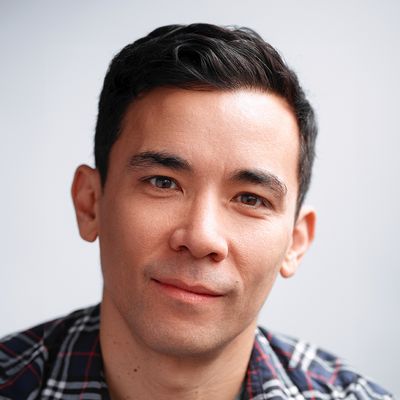
Originally aired as episode 276 on July 18, 2023. Conrad Ricamora is a talented actor known for his roles on Broadway and his portrayal of Oliver Hampton in the hit TV series "How to Get Away with Murder." He shares his insights as they delve into his background, including his family's journey from moving to the U.S... Read More
From the show: The Theatre Podcast with Alan Seales
Guests
Featured Shows
About
Originally aired as episode 276 on July 18, 2023.
Conrad Ricamora is a talented actor known for his roles on Broadway and his portrayal of Oliver Hampton in the hit TV series "How to Get Away with Murder." He shares his insights as they delve into his background, including his family's journey from moving to the U.S. to growing up in military bases, and how he got into acting and theater. Conrad discusses the significance of "Here Lies Love," a groundbreaking Broadway production featuring an all-Filipino cast, and shares his experiences with the show, including how it explores the intertwined history between the Philippines and America. He also looks back on how he auditioned and got involved with it 11 years ago. The discussion expands to the challenges of performing on Broadway, the staging of "Here Lies Love," and the unique experiences of interacting with the audience up close. Conrad reflects on the current state of democracy and political issues, drawing parallels between historical events and the fragility of democracy today. From sharing personal anecdotes to addressing important social issues, Conrad's passion for his craft shines through as he tells what motivates him as an actor: storytelling and connecting through stories.
Conrad Ricamora is an actor best known for his role as Oliver on the ABC network hit “How to Get Away with Murder”. His TV and film credits include “Fire Island”, “Over the Moon”, Talladega Nights: The Ballad of Ricky Bobby”, and “The Light of the Moon”. His stage credits include “The King and I”, which was his Broadway debut,” Little Shop of Horrors”, “Soft Power”, and numerous plays penned by Will Shakespeare. He is a 2016 Human Rights Campaign Visibility Award recipient and 2017 Equality California Award recipient. He can now be seen in the Broadway hit, “Here Lies Love”, reprising his role of Ninoy Aquino, which he developed 11 years ago in the original Off-Broadway Workshop.
Connect with Conrad:
- Instagram: @conradricamora
- TikTok: @conradwaynericamora
Connect with The Theatre Podcast:
- Support us on Patreon: Patreon.com/TheTheatrePodcast
- Threads, Twitter & Instagram: @theatre_podcast
- TikTok: @thetheatrepodcast
- Facebook.com/OfficialTheatrePodcast
- TheTheatrePodcast.com
- Alan's personal Instagram: @alanseales
Transcript
This transcript was automatically generated and might contain errors.
[0:00] Alan Seales: Hey, everyone. Happy hot, hot summer here in New York City. I decided to take a week off of recording a new episode and instead want to bring you back to Episode 267 of the podcast with Conrad Ricamora. I originally aired this episode a year ago on July 18th, 2023, when Here Lies Love had just opened, but you can catch Conrad on the Broadway stage again right now in Oh, Mary, a show I desperately want to see since I've heard nothing but amazing things. Fingers crossed I can see it soon and bring you some more episodes from the cast. But in the meantime, please enjoy this episode from the vault with Conrad Ricamora. Our guest for this episode may be best known for his six seasons as the role of, in the role of Oliver opposite Viola Davis on the ABC network hit How to Get Away with Murder or How to Travel All the Way to Mordor, as I say in this nerdy house.
He has TV and film credits including Fire Island, Over the Moon, Talladega Nights, and The Light of the Moon. Broadway, Off-Broadway, and regional credits include The King and I, which was his Broadway debut, Little Shop, Soft Power, and countless plays penned by none other than Will Shakespeare. He is a 2016 Human Rights Campaign Visibility Award recipient and 2017 Equality California Award recipient and can now be seen in the Broadway hit Here Lies Love reprising his role of Aquino, which he developed 11 years ago in the original Off-Broadway workshop. We'll get into that. Conrad Ricamora, holy crap, man. Welcome to the theater podcast.
[1:43] Conrad Ricamora: All right. Thanks. It's good to be here.
[1:46] Alan Seales: So I want to just kick into this real quick and talk about the awards because these awards are very cool. So the Human Rights Campaign Visibility Award, what is that?
[1:55] Conrad Ricamora: Oh, it's from the nonprofit organization, the Human Rights Campaign, which fights for rights for people in the LGBTQ plus community and which surprisingly, or I guess maybe not surprisingly, have lately been under assault. Not surprisingly. In our very own country. But yeah, it was for playing, mainly for playing Oliver, who was an out HIV positive character on TV.
[2:35] Alan Seales: Did you get any sort of, I mean, this was what, 26 seasons, so it was 20, what was How to Get Away with Murder? It was 2014 to 2020?
[2:41] Conrad Ricamora: Yeah, 2014 to 2020. We wrapped like two weeks before everything shut down.
[2:46] Alan Seales: Wow. Well, that was good timing. And I watched pretty much every episode with my wife. In 2014, I mean, unfortunately, still at that point, I think being an openly gay character living with HIV on TV in 2014 was still kind of a big deal, right? So was that, did you get like any sort of weird feedback or unexpected criticism or anything from that sort of thing?
[3:12] Conrad Ricamora: No, I felt like it was really welcomed. That was the response that I, I'm sure there were stuff that I didn't read or didn't see that that was pushed back on it. But oh, yeah, I don't know. I feel like in general, that there was there was pushback, because we showed some pretty, I was involved with some sex scenes on network, prime time network TV that was really pushing the boundary at the time. And I think that there were some comments about like, oh, this is, why do we why do we have to see this? And it's like, well, it's just about equality. It's just about showing, you know, if, if there are heterosexual, like, sex scenes on TV, why can't the equivalent be shown? In the same setting? Why is it?
Why is there a disparity? So that it's kind of, I was really proud of it, because it normalized a lot of for a lot of people, not just that, not just gay characters, but that, you know, gay characters have sex lives, gay people have sex lives. And I feel like the TV, the show, like normalized that and made it made people feel more okay with their own sexuality.
[4:45] Alan Seales: Absolutely. Yeah. And I mean, I like that we're that it is becoming normalized. And I and I enjoy when when people of any sexual orientation just have a relationship, and it's not a plot point.
[4:59] Conrad Ricamora: Yeah, I mean, like, it's not, they're the sidekick, because they're gay. It's just like, this is somebody that just happens to be a human and have preferences.
[5:10] Alan Seales: Yeah. Yeah.
[5:12] Conrad Ricamora: Right. So I get it. And was that, did that lead into the, the other award as well? The Equality California Award?
[5:21] Conrad Ricamora: Yeah. I mean, I think that because murder was such a big hit that it was, and it was, you know, all of these awards for visibility, I was very visible in every aspect of in every sense of the word. So the awards recognize that, which, you know, I was happy about, because I didn't have that kind of visibility as a little gay boy growing up in the south. It was much needed in when I was growing up in the 90s, and just wasn't anywhere to be found. So yeah, it was it was, I was happy to be providing that acceptance and visibility to people now.
[6:09] Alan Seales: So Here Lies Love is, is such an interesting show. And, and the fact that it was a really, I mean, there's many things. In 2004, the concept album came out with David Byrne and Fatboy Slim co-created it. And it went, it had two different runs off Broadway, and then it had a Seattle out of town. Oh, no, no, no, 2013, 2014 off Broadway, 2014 in London, 2017 in Seattle, and then now on Broadway.
[6:43] Conrad Ricamora: Yeah, yeah, we had to we had a run, the first run in public at the public was 2013. And then the London run, I think was after that. And then we went back to the public in 2014, because they couldn't find a space that would allow us to tear up the seats of a theater. And then 2017 at in Seattle. But yeah, it was it had a hard, hard time finding a home because it's so I mean, you have to literally renovate a theater.
[7:15] Alan Seales: Right. So that was gonna be one of my questions was if you knew whether or not the original concept was was to turn a massive stage into a nightclub.
[7:25] Conrad Ricamora: No, I never I never asked David or Alex if that was the goal. I think that in I'm guessing that it wasn't ever the goal because David just kind of creates without and I feel like he creates without a specific end goal. He it's my sense of the way his mind works in the way his creativity works is that he just follows his instincts and his impulses. It's not like he's like, you know, he doesn't have a very commercial brain. It's not like he's like, we're gonna sell out this Broadway theater. You know, it's it's very much just like this seems like a story that needs to be told. This seems like a concept. Oh, this person in history is really interesting. Oh, my gosh, they went to Studio 54. Why these things need to exist together like this? This is a crazy like coincidence. So I don't think that he ever had like the end goal of a theater in mind.
[8:36] Alan Seales: Well, so I guess how did you get involved in back in the original workshops to to originate this character? Right? Because that was like I said, 11 years ago.
[8:45] Conrad Ricamora: Oh, yeah. No, I was in my third year of my MFA program at the University of Tennessee. And I was reading the New York Times and I saw that they were doing developing this show about Imelda Marcos and the people power revolution in the Philippines. And I and that it was for people who had like pop rock voices. And that's kind of I'm not like a classically trained singer of like I mostly gravitate towards pop rock, R&B type music. And my voice kind of sits in that realm mostly as well. So I was like, Oh, my gosh, this this and my dad's from the Philippines. So I was like, I feel like I should be a part of this. And so I asked if I could fly up and go to an open call. And my professor said, Yes, I flew up and got into New York City at around 1am waited in line at 7am to for the open call and got passed through.
Got asked to come back the next day, called my professor and was like, so they asked me to stay another day. Can I stay another day? And he said, Yeah. And then I was in the room with Alex Timbers, and David Byrne and the rest of the creative team. And, um, and then they asked me to come back the next day. And I was at school. My University of Tennessee is connected to an equity theater called the Clarence Brown Theater. And I was doing Kiss Me Kate, and we had a show so and we didn't have understudies. So I had to go back. But they were like, Okay, that's fine. And then the next day, while I was in class in my acting class, my phone rang and it was a New York number. And I answered it. And they said, I got the part.
[10:43] Alan Seales: Wow. So did you get to finish the semester then?
[10:47] Conrad Ricamora: Oh, yeah. Yeah. It just all timed out. Like I graduated and then the workshop started two weeks later after our showcase in New York.
[10:55] Alan Seales: Wow. Well, that's Yeah, that's very fortunate.
[11:00] Conrad Ricamora: Let's let's say they did it all for you. Well, we'll go. Yeah, we'll go with that. And I want to back up again. We're going to talk about Here Lies Love so much because this is it intrigues me in so many ways, but born in Santa Maria, California. And so that's one side of the country. And then you grew up in Niceville, Florida.
[11:15] Conrad Ricamora: Niceville. You got pleasant you got Yeah, all sorts of fun thing. Florida has You are the first person to make that joke.
[11:27] Alan Seales: No, isn't there? Oh, there's sunshine. There's all sorts of weird things down there. I think there's a Pleasantville, New York. Isn't it? Yeah, something like that.
[11:35] Conrad Ricamora: There's one nearby. I don't know.
[11:39] Alan Seales: But I know and we'll talk about your dad's connection to the Philippines and actually the true history when we get back to Here Lies Love. But I want to like what brought you to California? What brought your family to California? And then how did you get to move over to Florida?
[11:54] Conrad Ricamora: Yeah, no, my dad came over from the Philippines when he was 10 or 11. And then they started out in British Columbia in Canada and then eventually settled down in Long Beach. And then he went into the military when he was 18. And then we just after that, trotted all over to military bases. We lived in Iceland for a little while.
[12:21] Alan Seales: No kidding.
[12:23] Conrad Ricamora: Yeah. And because there's an Air Force Base in Reykjavik.
[12:26] Alan Seales: Right. And then we lived in Denver.
[12:30] Conrad Ricamora: And then Florida with middle school through high school was in Florida.
[12:34] Alan Seales: Interesting. So, do you have a favorite place that you look back on in your childhood? Because like continuing to live in Reykjavik would have made you a much different person.
[12:47] Conrad Ricamora: Yeah, yeah. No, I still want to go back because I was pretty young, but I do have memories of it. But I really like Denver. We were there for like two years. And I remember really liking it there.
[13:01] Alan Seales: Yeah. Oh, the mountains. I mean, you can't beat that. I love the West Coast for the same reason. Like you just have beach and mountains right there. And then Denver is just like this clear air and then Florida. Florida, screw Florida for many reasons.
[13:13] Conrad Ricamora: I mean, yeah. Florida's going through a lot of stuff.
[13:17] Alan Seales: Yeah. Florida's going through a bunch of things. Don't go anywhere. We'll be right back after this break. Welcome back to the episode. Do you have a touch point in your life? Do you remember that moment where, I mean, you're traveling all the time? So, what was that moment where you're like, oh, this is what I want to do to start performing, to get into film, to theater?
[13:44] Conrad Ricamora: No, I had no exposure to the arts at all because I was growing up on military bases and it was very much machismo culture. Men and boys expressing themselves in any way was just not allowed. So, even though I was traveling around and living in different areas, I was
[14:12] Conrad Ricamora: Pretty much, you know, our home base was the Air Force bases. And it wasn't until I went away to college that I went to the theater for the first time and took an acting class there in my junior year of undergrad. And that's when it really kind of exploded for me. I mean, I really, when I was a little, little kid, I liked to sing and dance, like just in my bedroom and like making up little routines. But then I remember a certain point around fifth, sixth grade, when it was like, oh, this is very clear that this is no longer allowed, that I have to get beat up every single day. And that was just the reality of, you know, there was, there was no outlet for it. So I couldn't, there was nowhere for me to put it.
[15:07] Alan Seales: That's interesting. I sort of had the reverse. Because I, as a little kid, I was in chorus and like boys chorus and some theater stuff in Clearwater, Florida. Like I was in Gainesville and in Clearwater, Florida. And then I moved to North Carolina. And I know you were in Charlotte at one point. I moved to Wilkesboro, North Carolina when I was about 10, I think, 10 or 11. Can't remember now. And in North Carolina, that's where I wasn't allowed to express myself anymore.
[15:35] Conrad Ricamora: Oh, wow. Yeah. Well, I mean, Southern Florida is very different than North. I mean, I grew up, the part of Florida I grew up in was right below Alabama. You drive 30 minutes north, and you're in Alabama in 30 minutes. So that area is very, very different than like Clearwater, St. Pete, Tampa, Miami, Gainesville, Jacksonville, like Orlando, like all of those areas are very different.
[16:06] Alan Seales: Absolutely. Yeah, I feel that. So then what was your original major then, if you didn't get into theater until junior year?
[16:13] Conrad Ricamora: I was a psych major. And I played tennis really competitively. I went to school to undergrad on a tennis scholarship. And I really liked psychology. I like the idea of the psychology of performance on a tennis court to me was so fascinating and what makes people get into this zone sometimes where they block out all the noise and what gets in the way sometimes and these expectations of winning and losing. And yeah, I found I ended up focusing mainly on sports psychology. And that was what I studied in undergrad.
[16:56] Alan Seales: That's so interesting. Sports psychology.
[17:00] Conrad Ricamora: Yeah, it translates into I mean, it's it's it works. It not works, but it translates and is applicable to theater and to performing arts. It's the idea of if you're if you're focused on how you're being perceived, or if you're focused on anything other than what you're doing, then it's going to you're going to be distracted or be like taken out of what you're doing. This that whole the concepts are applicable and transferable.
[17:37] Alan Seales: That's literally what I was about to say. And I equate Broadway to being the Olympian of the Olympics of theater.
[17:45] Conrad Ricamora: Oh, yeah.
[17:46] Alan Seales: So you're an you have to be an athlete in mind and body and be so focused and so present to do your best. And and to maintain the physical and the emotional rigor that is required for eight shows a week is insane.
[17:59] Conrad Ricamora: Yeah, yeah. So you could be the best singer in the world, but you can't do eight shows a week and like you go horse every other day, right?
[18:07] Alan Seales: No. One of the things David told me when we were developing Here Lies Love 11 years ago, and he was like, Oh, yeah, like, he wrote an initial song. And I was like, David, you don't you realize that you have to do this eight times a week. And he was like, Oh, I didn't think about that. Like even pop stars, like they do a concert, but then they have like the next night off or the night nights off.
[18:37] Conrad Ricamora: Right. Yeah, I completely get that. And that's why when you see someone just like yourself in the whole cast, I mean, really, gosh, when I was, today's Friday as we're recording this, I saw this Wednesday night, two days ago. And the cast, like, just everyone's singing their ass off. And in a way that, I mean, when you objectively you're like, Oh, this is a good show. This is a really good show. And everyone's a great singer. But when you look at it and take a step back, you're like, you have to do this and touch these places in your soul and in your psyche eight times a week and make it because there's somebody who has a not only not seen the show before in every single show, but there's also somebody who's never seen a Broadway show before. And so you're giving them that possible moment to change the course of their life, because they can get inspired by this.
[19:26] Alan Seales: Well, I never thought about it that way.
[19:31] Conrad Ricamora: There you go.
[19:34] Alan Seales: That's a lot of pressure.
[19:35] Conrad Ricamora: No pressure. No pressure.
[19:36] Alan Seales: Yeah, no, no, I love, I mean, I just feel lucky that I get to do this for a living, honestly.
[19:43] Conrad Ricamora: Yeah, it's hard. But I mean, it's, it's I just, eternally grateful that I get to wake up and, and, and my day gets anchored around doing this. And I love that so much. So this, this show, Here Lies Love, it's retelling of the true story of the people's power movement and like the rise of the dictatorship in the 70s and the 80s in the Philippines. And it's, gosh, I love the way that it's presented in so much as that. It's like, hey, this happened. Here in America, everything was just fine. And we didn't, fine, I put in air quotes, and we didn't really pay attention to it. And then now, it's all happening again, in multiple different ways. Like, if we don't do something about it, life's gonna get really bad.
[20:37] Alan Seales: Yeah. Yeah, I don't know. I mean, it's, it's hard to, to know where to even begin with that.
[20:47] Conrad Ricamora: Begin with your dad, begin with your dad, because that's the connection I think you, you have to this.
[20:53] Alan Seales: Yeah. Oh, gosh. You know, it's funny, my dad doesn't talk. He's, he's opened up since actually, since I booked Here Lies Love 11 years ago, he slowly started to, to talk more about his time in the Philippines and, and about his life in general. But he's a pretty, like, quiet, reserved guy. Especially around, like, you know, me and my brother, he opens up more to my stepmom, but like, to my brother and I, he's kind of just like, stoic.
[21:32] Conrad Ricamora: Well, it's hard, I suspect. Because if you live through an exile and, or an exodus, and an immigration like that, where your literal life was at stake, which we take for granted in a country like America all the time.
[21:47] Alan Seales: Yeah. When there's somebody at the stage door last night was just like, and wasn't Filipino, but and they were like, I had no idea about this history. And I was like, me neither. My like, my dad came over here and very much wanted to assimilate and, and wanted to become as American as possible in order to survive and succeed. And so I think that's why he didn't teach my brother and I Tagalog or Basayan, the two dialects that he spoke in the Philippines, that he didn't teach us a word when we were growing up. Because I think that he came over and saw, you know, how hard it is to make it here as someone who has an accent, someone who's from a different culture. And I mean, even today, it's the way that we treat, especially a brown skin folks that come over to the country, to this country, who, who have darker skin or and speak with an accent or speak a different language. America has not been super kind. And still, to this day is, you know, yeah, we think it was okay. And it was just swept under the rug. It wasn't clean. It wasn't improved.
[23:10] Conrad Ricamora: Yeah. Well, and, and, you know, the Philippines was an American colony for, for many years. And yeah, so it's, it's, it's very much our histories with the Philippines and, and America are very much intertwined and interconnected and tangled up in a lot of knots in ways that this show is helping. I think all of us in the cast untangle and make sense of our own identities for the first time.
[23:47] Alan Seales: Right. That's, that's what I was going to ask about is it's an all Filipino cast, which I think this is the first time that's ever happened on Broadway, right?
[23:53] Conrad Ricamora: Yeah.
[23:54] Alan Seales: Yeah. So, so setting history there. And a lot of the cast is young on the younger side and, you know, like on the early, early to mid, late 20s, 20s is young.
[24:03] Conrad Ricamora: Oh, yeah. No, you said that the show happened 11 years ago. Christina, who plays my wife in the show and other ensemble roles in the show, like the first week of rehearsal, she was like, oh yeah, when you guys did this at the public, I was 11.
[24:26] Alan Seales: And I was like, get out.
[24:29] Conrad Ricamora: I know. I know. Gosh, I was talking with, it was like Victoria Clark or somebody the other day, who's like, I'm, I'm literally in, in like, I inspired people who were 10 at the stage door, you know?
[24:44] Alan Seales: Oh my gosh.
[24:45] Conrad Ricamora: Yeah. Now she's performing with them.
[24:47] Alan Seales: Yeah. Well, I mean, she, I've, Kimberly Akimbo was the first time I had seen her on stage and life-changing for me.
[24:55] Conrad Ricamora: Such a great show. And she's such a great actress and Bonnie Milligan for president. I mean, come on, that woman. Don't go anywhere. We'll be right back after this break.
[25:05] Alan Seales: Welcome back to the episode. So, but, but what I was getting at was now you've got your cast mates who are probably two, if not three generations removed from some, from, from this actual historical event and the events of that time period, who didn't, like you said, maybe didn't even know about it or who has, who have parents or heritage that didn't talk about it.
[25:33] Conrad Ricamora: Yeah.
[25:33] Alan Seales: Because it was so hard. And, and it's, I'm, and I'm seeing a lot of this trend, right? And, and like, even, like my, Ramin Karimloo is a buddy of mine and, and he won't talk about his family's exile from Iran. Like his dad, he's like, that's my dad's story. I know a little bit about it. My dad doesn't talk about it. He doesn't, you know, like there's so much, I guess, sadness and, and everything that goes along with it. But for you and your cast, have you been able to like sit down and talk about it and identify with it in any way?
[26:03] Conrad Ricamora: Well, I think the way that we identify it is exactly what we were talking about a little earlier is that it's so urgent in our own country right now to learn this history and learn how democracy in another country was, you know, so easily turned upside down and, and, and taken away. Things that we have taken for granted for so many decades in this country, just having the, the right to vote, the right to choose our leaders. And then through our show through Here Lies Love to see how quickly that can be manipulated and taken away is something that I think we all feel is very tenuous right now in our own lives. So that's the connection. That's, you know, our parents can still have their stories, but it's our job right now to learn from different pasts, different histories and different governments. And right now we're doing that with Here Lies Love with the Philippines to see how fragile our own democracy is.
[27:34] Alan Seales: Yeah. No, I, I, I get that because I was going to say, imagine, you know, in an alternate universe to January 6th, insurrection was successful.
[27:40] Conrad Ricamora: Yeah. Yeah. And so in some parallel universe, we now have a dictatorship or a martial law of sorts where the administration didn't accept the outcome and then they just took over and that's it.
[27:58] Alan Seales: Well, yeah. And, and I mean, it's still having effects on, you know, people who are members of the LGBTQ community with the Supreme Court that was put into place from the previous administration. It feels like our rights are still being taken away. People who are, who benefited from affirmative action, which was put into place because people of color were...
[28:25] Conrad Ricamora: Denied and certain rights and certain a lot weren't allowed into certain spaces. To see that being walked back now is sobering. On to a lighter note, I love how at the beginning of Here Lies Love, the DJ which is, he's not actually controlling the music, right? Or is he? Or is he? All right, we'll start that rumor. The DJ is actually DJing. Says like, karaoke, the culture brought karaoke over to the States and here we are setting the stage, pun intended, for this wonderful, wonderful nightclub that we are now watching the story unfold in. So the original workshops, I never had the fortune of seeing it off-Broadway either time. But when you figured out or when you were told or shown concept or of what Broadway was gonna be, was that something they were like, oh, yeah, this is cool?
Or like, holy crap, what are we gonna do with this? Because I imagine as a performer, it's so unusual to literally be in the midst of a crowd of people and walking among them and through them and above them and having them look down on you. Like, I was literally, I was seat A1 on the side of the stage behind what would be the proscenium looking down on people's heads, the performers' heads.
[29:55] Conrad Ricamora: Yeah. I mean, because I've done it so many times now, I got used to it early on. But I do remember like, the first, you know, at Williamstown and then the first run at the Public, just being like, well, I have no idea what this is going to feel like when we get out on stage. I have no idea how people are going to react when we're, you know, brushing up against them as we run through the audience. And but let's see. And luckily, it was received, you know, really, really positively.
[30:42] Conrad Ricamora: Yeah, I, in terms of the happening in a proscenium. It, I mean, it doesn't really happen in a proscenium anymore. We've completely transformed a Broadway theater into a nightclub. And I think that's the cool thing is that we've, we've transported people who are walking into a Broadway theater. And you can feel their people's excitement to see the space and be in the space for the first time. That it's just there, you're completely transported to a Studio 54 type club. Yeah, my jaw hit the floor. Like, as soon as I went through the doors past the box office, I was just like, this is insane. And there's coat check right there, just like a regular club, right? Because you're on the dance floor, you don't want big bags or coats hanging around.
But then you go through, and it was so cool for me to walk, you're walking through, basically through the wings to get onto the dance floor to go back out into the, what traditionally would be backstage. And what I said about the proscenium earlier is from my seat, if I look straight up into the fly, I'm looking at the backside of what the proscenium, of where the original proscenium was. Yeah, which is kind of cool because you can see like the bones of the theater, but then you can see what we've transformed it into.
[32:15] Conrad Ricamora: Oh, it's so cool. And do you have a contingency plan if the set pieces don't move? Have you, have you gone through plan B and plan C for that stuff?
[32:23] Conrad Ricamora: Oh yeah, we just hold.
[32:26] Alan Seales: Hold!
[32:26] Conrad Ricamora: It's happened, so far it's only happened once.
[32:29] Alan Seales: Oh really?
[32:30] Conrad Ricamora: Yeah. So Greg, our stage manager, gets on the god mic and it's just like, like, like any like show. Yeah, the stage manager just gets on the mic and says, actors hold.
[32:43] Alan Seales: Yeah. Oh, it's, it's so cool though. And I love, I love the, these projections and the lights and I mean, the whole thing is beautiful. It is such a beautiful set and the music, of course, David Byrne and Fatboy Slim, equally great. And the story itself, again, amazing. But coming out of, I guess you're, we're still in previews now as, as we're recording this. So the show is, is it still being tweaked or are you mostly set at this point?
[33:12] Conrad Ricamora: Mostly set. They're small. I mean, up until a week ago, we completely restaged one of my numbers where I start in the mez and that was wild. But yeah, I, I feel, it's starting to feel like, okay, we're, we've found what this version of the show is and it's, you can feel it crystallizing now. And I can, and I can see in the creative team when we come to rehearsals every day that it's like, I can feel their excitement about, we've taken this, this big leap. I would think that like this past Sunday and Monday's shows, you could feel like, okay, something has clicked.
[34:00] Alan Seales: Yeah.
[34:01] Conrad Ricamora: All of a sudden. And, and now it's just, you know, diction.
[34:10] Alan Seales: Yeah.
[34:10] Conrad Ricamora: Diction. Like you can really lean into your roles now because you're not thinking about where to go so much.
[34:17] Alan Seales: Yeah. Yeah. And you know, opening, you know, when you, that's the great, the thing that I always find interesting in this part of, part of the process, you know, when in previews and as previews start to wind down into, you know, opening and freezing the show. As a actor, you kind of have to really start taking the reins over from the creative team and being like, no, I have to own this now. I need, like, I really have got to, and, and, and in times like pushing back and being like, well, my, I see, I know what you're saying, but from my experience on stage, this is what the experience is. And this is what, this is how, if you change, if sometimes I feel like creative teams can, can start getting a little bit like bored.
And so they're looking for something. It's changed. And you're like, well, if you change this one little moment, you are not thinking about the way I've created this arc, like through all of these separate other beats, it changes the next beat and the next beat and the next beat. And you really, I think have to start sticking up for your character as previews start winding down and being like, okay, it's time to, time to solidify this and shut it down. Like you have to lock, you have to lock your own psyche.
[35:40] Alan Seales: Yeah. Yeah. Have you had any, any fun experiences with the audience being so close? Because I imagine that that would be a little nerve wracking for people who maybe introverts specifically who are like, don't touch me, don't touch me, but maybe those people aren't buying dance floor tickets anyway.
[36:01] Conrad Ricamora: Oh yeah. Well, I mean, now there's, there's nowhere, there's nowhere to hide from us because we're up in the mezz now. Yes, I know. So yeah, I've, I've learned to read people really quick. I mean, this is also where my military background, uh, my, uh, you know, growing up on air force bases and moving around so, so much, you learn to read people really quickly. Uh, and so, uh, now in, uh, the show, I can see in the audience with a quick scan who wants it to be approached and who definitely does not want to be approached. And I just don't approach those people. I think it's funny, funny where the, um, where the camera, so the first time the camera is going through the audience, like you have a live camera project, you know, taking footage and then there's like, um, pulling up actual people to be the girlfriends and whatnot, like to be on camera. And everyone's like, so awkward. Yeah. That was one of my favorite moments. Um, but I think it's just, I think it's just brilliant. I enjoy it. I enjoy it so much.
[37:15] Alan Seales: Don't go anywhere. We'll be right back after this break.
[37:20] Alan Seales: Welcome back to the episode. Before we get into the three closing questions, I ask everybody to wrap up the episodes. I'm going to quickly talk about Wilbur and Presley.
[37:28] Conrad Ricamora: Oh, Wilbur and Presley. Well, Presley's meowing in the background now.
[37:33] Alan Seales: So you're, you're a cat and you're a dog and there's a lot of, uh, wait, Wilbur, wait, Presley's the dog, right?
[37:37] Conrad Ricamora: Presley is the cat.
[37:41] Alan Seales: Presley's the cat. The latest Instagram picture you posted of the two of them together just gets me because I love cats who sit like people.
[37:51] Conrad Ricamora: It's the funniest, just like, it's a self-made shit. Like he creates his own chair. Yeah. And he just sits on himself. Big cat butt. I love that. I love that.
[38:00] Alan Seales: Yeah.
[38:02] Alan Seales: All right. So, um, first closing question for you, just what motivates you?
[38:08] Conrad Ricamora: Uh, storytelling and connecting through stories.
[38:14] Alan Seales: If you could, uh, give advice to your younger self and younger people listening now starting out down a similar path, what would you say?
[38:22] Conrad Ricamora: Oh, down a similar path. I would just say focus on the work. I feel like there's so much noise in life that if you, uh, like what you do, uh, then focus on what that is. And, uh, in terms of, I guess, in, in acting and in, in the entertainment industry, finding out what the actual work is and then letting go of all of the rest of it. And, uh, and also not partaking in too much of, because there's so much just hype around what we do and, uh, in enthusiasm, which is great, but it's also like, okay, what is the work? What is that we're doing?
[39:14] Alan Seales: And remind David Byrne that you have to perform eight times a week.
[39:18] Conrad Ricamora: Yeah.
[39:19] Alan Seales: All right. Last, last question then, if you could only see one show for the rest of your life, but you can see it as many times as you want, what would you see?
[39:28] Conrad Ricamora: Ooh, one show for the rest of my life, but I could see it as many times as I want. Oh boy. Um, you know, I recently, uh, went and saw with my husband, we went and saw Hadestown and I just, I mean, I, I love that show. I saw it at New York theater workshop and then brought the Broadway run and then, um, Eva Noblezada is still in it. And I, she is unreal. I mean, I love the show in general, but she is really, I hear the cat back there. Yeah. Uh, uh, but, uh, Eva Noblezada in Hadestown, I could watch over and over and over again. I just think that she is like unreal.
[40:18] Alan Seales: I agree with you. And, uh, speaking of, of songs that need to be reminded that they need to be performed eight times a week, uh, uh, and ask Mitchell wrote, um, the, uh, the, or Orpheus, right? He wrote over his role in her own range, like a female range, just because that's all she knew to do. And then all of a sudden it's like stupid high for men.
[40:43] Conrad Ricamora: Oh yeah. And she's like, I didn't even think about that. But then you can get people like Reeve who just knock it out. That's great. Yeah. It's great. That's, it's insane to watch him. Amazing. So, uh, where can we find you online on the, on the site?
[40:57] Conrad Ricamora: Amazing. So, uh, where can we find you online on the, on the socials?
[41:01] Conrad Ricamora: Uh, at Conrad Ricamora on Instagram and, uh, and now the new threads. And yeah, it's just at Conrad Ricamora. I think on, I'm not really on Tik TOK, but I think it feels strange to be talking about Tik TOK at 44 years old, uh, at Conrad Wayne Ricamora. But, uh, you know, I probably post a video every six months. I found, uh, I actually did this, uh, after here lies love. I took a bunch of little videos of, of, uh, different parts of walking in and then just said auto cut. And really, and it made the real I've got up there now. And I, I swapped out the music with the here lies love, uh, concept track. Um, you know, from 2004, but then, but then yeah, like the auto cut, I'm like, I'm going to do this more often because I'm a 42 year old man who doesn't want to learn Tik TOK either.
[42:04] Alan Seales: Well, now I have to revisit. I didn't even know about auto cut. I didn't even learn about auto cut.
[42:11] Conrad Ricamora: Yeah. Cool. All right. I got to go to rehearsal.
[42:11] Alan Seales: All right, man. Uh, you can get more of me on threads now too, on Instagram, Twitter, Facebook, leave a rating review, tell your friend, go see here lies love. Thanks to jukebox, the ghost for the intro and outro music you're hearing now. And Conrad, thank you. Most of all, this has been so much fun getting to know you.
[42:26] Conrad Ricamora: Yeah. Thanks so much.
[42:30] Alan Seales: All right. I'll talk to you soon.
[42:30] Conrad Ricamora: All right. Bye.
© Broadway Podcast Network, All Rights Reserved