

André Ward never played house when he was little, but he always played “New York City Apartment”, and with impressive Broadway credits, he can fully say he’s finally living in the midst of his dream... Read More
From the show: The Theatre Podcast with Alan Seales
Guests
Featured Shows
About
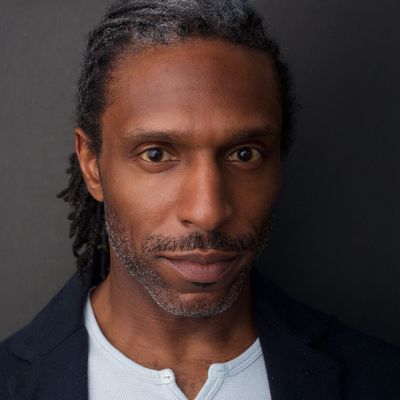
André Ward never played house when he was little, but he always played “New York City Apartment”, and with impressive Broadway credits, he can fully say he’s finally living in the midst of his dream. Growing up a “talkative” child, his teacher recommended he might need to find a way to work out some of his excess energy, and so they sent him to a children's theater company and hasn’t stopped performing since. He also delves into the challenges of transitioning between theater and film, highlighting the differences in performance styles required for each. Currently playing as Toulouse-Lautrec in "Moulin Rouge! The Musical," Andre takes glee in the opportunity to showcase both his comedic and emotional range. He opens up about his fears and aspirations regarding directing and writing, his dream of playing a sci-fi character, and why he continues to strive for balance between work and his personal life.
André Ward is a seasoned Broadway actor with an impressive Broadway resume dating back over 24 years or so, beginning with “Saturday Night Fever”, “Xanadu”, “Rock of Ages”, “Something Rotten”, and “Escape to Margaritaville”. He has five national tours under his belt, including performing as the leading player in “Pippin”, as well as numerous regional credits. His TV and film credits include “Masters of None”, “Broad City”, “Elementary,” and “High Maintenance”. He can be seen now as Toulouse-Lautrec in “Moulin Rouge! The Musical” on Broadway, which just celebrated its 5th Anniversary.
Connect with André:
- Instagram: @theandrelward
Connect with The Theatre Podcast:
- Support the podcast on Patreon: Patreon.com/TheTheatrePodcast
- YouTube: YouTube.com/TheTheatrePodcast
- Threads, Twitter & Instagram: @theatre_podcast
- TikTok: @thetheatrepodcast
- Facebook.com/OfficialTheatrePodcast
- TheTheatrePodcast.com
- My personal Instagram: @alanseales
Transcript
This transcript was automatically generated and might contain errors.
[0:00] André Ward: Hey, hey, I'm André Ward, and you're listening to The Theatre Podcast with Alan Seales.
[0:11] Alan Seales: Hi, everyone. Welcome to an all-new episode of The Theatre Podcast. I'm your host, Alan Seales, and our guest today, André Ward, is someone who, no matter what, is always making me smile when I'm watching him on stage. As we learn in this episode, his natural love for life and infectious smile is something he uses to connect with his audiences as he carries this intention of love and connection through his character as he plays. Something cool that we touched on a few times is the fact that, even though he's got a Broadway career about 25 years long, there's still new things he wants to try in order to grow, to learn, and even, you know, to move outside his comfort zone, because if you're not uncomfortable, you're not growing.
You hear it all the time, so it's never too late to insert whatever you want to do, and André is just further proof of that. Also, last weekend was BroadwayCon here in New York City, and I was fortunate enough to see many of the podcast listeners in person, so for those of you who said hi, it was very nice to see many of you again and also meet some new faces. So, as always, find me on social media, give a like, give a follow, a share, leave a rating for the podcast wherever you are listening now, and everyone, please enjoy this episode with André Ward.
[1:28] Alan Seales: Today's guest is a seasoned Broadway actor with an impressive Broadway resume dating back for over, you know, 24 years or so, beginning with Saturday Night Fever, followed by the producers Xanadu, Rock of Ages, Something Rotten, and Escape to Margaritaville. He's got five national tours under his belt, including performing as the leading player in Pippin and tons of regional credits that, if I listed, would keep us here all day. His TV and film credits include Masters of None, Broad City, Elementary, and High Maintenance. He can currently be seen now as Toulouse-Lautrec in Moulin Rouge on Broadway, which just celebrated its fifth anniversary. André Ward, welcome to The Theatre Podcast.
[2:07] André Ward: Oh, well, thank you so much for having me. I really appreciate it.
[2:10] Alan Seales: You have such a beautiful smile, I have to say.
[2:13] André Ward: Oh, thank you.
[2:14] Alan Seales: You're grinning from ear to ear. We were chatting about House of the Dragon before we started recording, which I want to come back to later. But I saw you perform recently in the show, and the reason I brought up the smile and the personality and everything is just because I feel... I was wondering if that was part of the character you were putting on, but I think it's a lot more of you, of André that you're bringing into Toulouse. He's such like this loving, caring guy who wants Christian to find love, who wants everybody to be happy, and I can tell that this is you. This is you bringing that on stage.
[2:50] André Ward: Yes, I think that it's the parts of me that I can bring to a character always help with the authenticity of a character, and that part of Toulouse is definitely a part of me. His effervescence, his joy, the wanting the best for all, even if it's not necessarily would be the best for him, which that's been fun to play with. But yeah, definitely infusing him with my joy has been really fun. How long have you been Toulouse so far?
[3:26] André Ward: About two and a half years now. I started on the road with the national tour for a year, about a year, 10 months, 11 months, and then I moved to the Broadway company in February.
[3:39] Alan Seales: So, you've seen a handful of Christians and a handful of Satines.
[3:44] André Ward: Yes, yes.
[3:45] Alan Seales: And do you, I mean, I know the answer obviously is yes, but how does your performance change? How do you adapt to the different leads coming through like that?
[3:51] André Ward: I mean, how? I mean, just reacting to what I am being given, like seeing what we are like together, like the Bohemians are like together with this new configuration, and it changes with even every cover, the brilliant understudies that we have that go on. All of that dynamic always changes if I'm really present. And that's one of the glorious things about doing live theater is that I get the opportunity to be present.
[4:29] Alan Seales: Is there someone that does something so differently than the rest that you're like, I love how this person says this or does that line or interacts with me in this scene? Like looking back over all of them.
[4:40] André Ward: Well, I will say, David Harris, who plays the Duke, we have done the show together since we started rehearsals in January 2022. And we were very quickly like bantering back and forth, the two of us, and the way in which he inhabits the Duke is quite brilliant. And at times, if I'm stepping outside of Toulouse, I'm just like, you know, he imbues the Duke with such humanity and a genuine pathos and like hurt sometimes and why he's being deceived. And so, it allows me to really to inhabit Toulouse and to be more present and the opposite of him.
[5:33] Alan Seales: Right.
[5:33] André Ward: I mean, that's been really, really fun. And the fact that we trust each other enough to really go there, because we're really, we are friends.
[5:43] Alan Seales: That's cool. I love when bad guys play or when actors play bad characters so authentically and so real because I mean, you can play and there's no right or wrong here. I'm not saying I like one way or the other. But when you take like an animated villain, and it's got to be over the top, it's animation or whatever it is. And then when you translate that to the stage, when there's a bad guy in real life, the bad guy wakes up in the morning, wanting to do what they feel is right. They still feel like they're doing the right thing. So, you have to play that authentically and let the writing speak for itself. So, what you just said about him being hurt, of course, he's going to be hurt. He's a controlling, misogynistic jerk, but he's genuinely hurt. And that's how you do it. Yeah. So, that's been really fun to play with.
[6:38] André Ward: And the different ways, you would think in two and a half years, and the fact that we've been doing it together for two and a half years consistently, that we would always have the same reactions to one another, but we don't. And it's really fun to see how we keep that alive, especially because we've been doing it together for the same amount of time. So, that's been really fun. But it's been really cool to experience it with so many different actors. But it's always coming from, I mean, I say Christian, I base my character, quite frankly. I try to look at the text and have the text give me the clues. And I mean, Christian says it right in the very beginning. There were two knockabout vaudevillians escaped from the nearest asylum. That's how he describes Santiago and Lautrec. So, it was like, oh, okay, well, I'm going to start there. That's where I start. Well, good thing I escaped from an asylum. Yes.
[7:38] Alan Seales: Oh, that's great. All right. So, well, speaking of your past, then, let's go to back when you were a little kid. Where did you grow up? What got you into theater?
[7:49] André Ward: Oh, well, I grew up in Las Vegas, Nevada.
[7:51] Alan Seales: Oh, there's a place.
[7:53] André Ward: Yes, my grandparents, my grandfather specifically got to Las Vegas in 1941. So, my family's been there a very long time from when Las Vegas was just like, basically, like a couple of streets.
[8:07] Alan Seales: I just quickly Googled Hoover Dam built. So, it's April 20th, 1931. So, he came a decade after the Hoover Dam. Okay.
[8:14] André Ward: Yeah, yeah. I was a very, well, I was talkative in class.
[8:21] Alan Seales: That's a good way to put it.
[8:25] André Ward: And when I was in fourth grade, I went to Catholic school and my fourth grade teacher, Sister Regina Wodzinski, God rest her soul, came to my grandfather, who was the playground director at my school, much to my chagrin, and said, Andre's a delight, but very talkative in class, and we should maybe find a way for him to work out some of that excess energy. So, they sent me, she suggested a children's theater company called Rainbow Company in Las Vegas. And I took my first acting class in fourth grade at Rainbow Company and did a show there when I was in high school. But I started there at Rainbow Company when I was in fourth grade.
[9:06] Alan Seales: Is that still around, Rainbow Company?
[9:08] André Ward: You know, I don't know. I haven't been back to Vegas since, I think it is. I think it still exists in some way. Oddly enough, my teacher at Rainbow Company went to college with Mary Testa, who I did Xanadu with. So, it's like, I always feel like whenever stuff like that happens, I'm always like, ooh, I'm in the flow of how I'm supposed to be going in life, which is really beautiful. But yeah, I think it might still exist.
[9:37] Alan Seales: So, fourth grade, you're getting all your talkative energy out. Is this one of those things where you were attracted to the limelight or just attracted to being other characters, like in exploring yourself with other people?
[9:51] André Ward: I was attracted to being other characters. I played pretend so much when I was little. And my mother was a teenager when I was born. And so, we both watched soap operas together. And I used to pretend to be soap opera characters. I used to write my own soap operas when I was in school. Yeah, I really was attracted to being different characters. But I never played house when I was little. I always played New York City apartment.
[10:28] Alan Seales: So, you got a cardboard box and ran into all the walls.
[10:31] André Ward: Well, the only thing I knew about New York was the Jeffersons.
[10:34] Alan Seales: Oh, right.
[10:35] André Ward: So, they had a deluxe apartment in the sky. So, I would play high rise.
[10:43] Alan Seales: I love that.
[10:47] André Ward: And pretend that I was coming home from different auditions, even though I had no clue. I had no clue what any of that really was, but that's what I wanted to do. And so, in so many ways, I'm living in the midst of my dream.
[11:01] Alan Seales: Did you get all the auditions? Or were you coming home dejected and sad?
[11:07] André Ward: Well, I was just coming home saying what I was usually like, oh, I just got this audition. And I think it went really well, but I don't know. I never really got anything.
[11:18] Alan Seales: Your job was just being a professional auditioner.
[11:20] André Ward: Yeah.
[11:21] Alan Seales: Yeah.
[11:22] André Ward: That's funny. Okay. So, do you remember, though, the moment? Was there a touchstone moment? Or was it always just there when you decided this is what I have to do with my life?
[11:33] André Ward: Oh, that's a really good question. There was always something that was like, ah, when my grandmother heard me singing in my room as a little boy and made me sing in church, there was always something that I wanted to perform. I knew I wanted to perform some way, somehow. But it wasn't until probably, I feel like I saw Dreamgirls on the Tonys when I was a kid. And I thought, oh, I can do this. There's a place where I can do this and people like me do it. Because before that, it was really only television. So, yeah, I felt like I could do this on stage and Broadway. I didn't really know what Broadway was. That was one of the times. Dreamgirls was 1982, 81.
[12:25] Alan Seales: So, I guess you're doing theater and you didn't know what Broadway was. I guess that's interesting. I'm trying to think back to when I was a kid because there has to be a point. My parents also did not say, this is Broadway. Here's the Tony Awards. They just put me in chorus because I like to sing. And I'm trying to remember the path that you turn one corner and then another corner and another corner in your social circles. And all of a sudden, you realize, oh, that's where the quote unquote pinnacle is. That's where you're supposed to go to, we'll put in air quotes, make it. And I can't remember when that happened or how it happened for me. Do you have any recollection on your side? Because you saw the Tonys, but what even got you watching the Tonys?
[13:18] André Ward: I always loved, I mean, I came from a family of gospel singers and church singers and preachers. So, entertainment in that way was always sort of in my spirit, in my soul. And so, I always, I mean, if there was ever there was a musical number on any TV show, it stopped me.
[13:35] André Ward: So, the Tony Awards with musicals, I would always try and watch if it was on, and I could watch it. But I'm thinking now, and I was like, my sophomore year in high school, Nevada started doing these all-city productions where every high school would audition for one production. And my sophomore year, it was A Chorus Line. And so, every high school from around the city would audition. And I got Richie. And I remember the director of that show talking about New York and talking about Broadway. And that's when I really thought, oh, maybe this is something I could do. And I started hearing more about Broadway and people on Broadway. And then I kept doing, and high school is really where I started doing musicals.
And I did my first real play. So, probably that all-city production of A Chorus Line, and I still have one of my very closest friends was Cassie in that production. And she lives here in New York. She went to NYU, and I'm in New York, and we're still friends all these years later. You make such good friends doing this kind of thing. And I mean, it's a form of, I used to say trauma, but I don't think that's the right word anymore. Because it's the shared experience. It's a very intense shared experience. And if the cast, something's going wrong, or you can't get past something, or even if the director is not so great, or something's not so great, it's like having a shared enemy or a shared goal brings people together.
And you form these bonds and these relationships that can't be broken over time. And you pop back in. I guess it is a really small world, like you're talking about, of having the one degree of separation from Mary Testa and then being in the show with her, right?
[15:27] Alan Seales: Yes.
[15:27] André Ward: Like everybody starts somewhere, and then everybody comes back together, and then they go apart, and then they come together. You could be going back to Vegas to do a regional production with all your friends out here from New York.
[15:36] Alan Seales: Yes, yes, most definitely. I mean, it was a lovely full circle moment to have my last city on the national tour of Moulin Rouge be Las Vegas. It was the final city before I came to Broadway, so my whole family got to see me in the show. And some of my family members had never even seen me on stage.
[15:54] André Ward: Really?
[15:56] Alan Seales: Yeah, so it was really a beautiful moment.
[15:58] André Ward: Was that kind of a full circle moment for you?
[16:02] Alan Seales: Most definitely.
[16:02] André Ward: Yeah?
[16:03] Alan Seales: Most definitely, because my family always knew pretty early on that I wanted to perform. But I think for some of my family members, they just didn't know, didn't know exactly what it is. I did, and because I didn't pursue a gospel, that was at the time the most celebrated thing that I could do. And they're like, oh, he's actually making a living doing this, and he does a pretty good job. So we're happy to see him do it.
[16:33] Alan Seales: Don't go anywhere. We'll be right back after this break.
[16:37] André Ward: Welcome back to the episode. We've had some TV credits, too. So people are like, oh, I saw you on the telly.
[16:43] Alan Seales: Yes, yes, yes. That has been a gift that I didn't know, because I didn't live in Los Angeles. And when I first came to New York, it was like, okay, if you're in New York, you want to do stage. If you're in LA, you want to do television and film. And when they started to pick up more television and film here in New York, and I started to audition, I was like, oh, this is something I can do as well. And it's not a discipline, because I've been doing theater so much longer that I have any mastery over at all. So it still is, as well as theater, a beautiful learning process for me.
[17:24] Alan Seales: That's interesting. So you've been professionally performing on Broadway for 24, 25 years, and then TV is still kind of like this uncharted territory, I guess? Is that the right way to go?
[17:39] André Ward: Yeah, I think so. I've been doing theater, you know, I did my first Broadway show in 1999. Haha, that's how old I am.
[17:48] Alan Seales: When you were two years old.
[17:50] André Ward: That's right. That's right. I started doing television in 2005, I believe, is my first New York when I got my SAG card and all those things. But I was making a living doing strictly television and film for about five years. And it was like, oh, this is something I could actually do. Oh, okay. And I got a chance to really learn because I did the reboot of Murphy Brown for that first season, and I did Pose for two seasons. And so I got to really watch people, watch how people work, watch how different people work, watch how different directors direct and really learn over the course of a season or two seasons, how to approach a little bit better for me, film and television acting.
[18:49] Alan Seales: It's all just so subtle. And that's something that I had always struggled with, too, when I was kind of bouncing between the two worlds was I had to remind myself that you don't have to be gigantic, because film is like, right there. You can just literally just have your inner monologue and talk to yourself out loud, right? You don't need to project to the back of the house.
[19:15] André Ward: Absolutely. That was a difficult thing for me, most definitely. Because I can be a larger-than-life person.
[19:27] Alan Seales: So, dream role, TV-wise, House of the Dragons, you want to be?
[19:31] André Ward: Oh, wouldn't that be? I mean, I've always said I want to be a fantasy, sci-fi character, villain. Yeah, that's always been something that has appealed to me. It's not something that people normally see me as. But yeah, I love intrigue. I love the palace intrigue. I love the fantasy elements of it. It just is...
[20:03] Alan Seales: Like the period piece kind of...
[20:04] André Ward: Yes. Yeah. What is the difference? Someone was trying to explain the difference to me between a Harry Potter genre and Game of Thrones genre. They're both sci-fi, but they're distinctly different types. One is like the fantasy... What is it? Harry Potter's not fantasy. Or maybe it is, and the other one wasn't. I can't remember.
[20:30] André Ward: I mean, Harry Potter's definitely... I feel, it's just my opinion. I mean, it's fantasy. But Game of Thrones and that Game of Thrones, House of the Dragon is definitely adult, very, very adult. And it's sort of... Well, I sort of think it's like Succession with Dragons, because they're vying for the throne. They're vying for the top spot, but it's also got dragons. So, yeah, it's for me, Succession with Dragons.
[21:01] Alan Seales: It's the corporate world with dragons.
[21:03] André Ward: Yes.
[21:03] Alan Seales: You are absolutely right. I have never put that together, but you are 100% right. That is just the same story told in a different universe.
[21:11] André Ward: Yes.
[21:13] Alan Seales: I love that. So, in a different universe for you, then, would you be a gospel singer? You like these transitions, by the way. Would you be a gospel singer? Would you be a director? What do you think you would be doing?
[21:25] André Ward: Oh, yeah. Directing.
[21:29] Alan Seales: Really?
[21:32] André Ward: It's something that still scares me, I will say. And it's something I actually, I honestly have never... I don't know if, you know, tell the truth, shame the devil. I'm like, I don't think I've ever talked about this before. Because when I was in college, I had several people and teachers come to me and say, you have an eye for directing. And I think it's something you should pursue. And I just was not ready or confident enough to do it. And I ended up co-directing a production and took a directing class. But it was something that was scary to me.
[22:12] Alan Seales: I think that's a sign that you should try it.
[22:15] André Ward: I know. As I'm speaking, and I'm like, I can't believe I'm saying this, because it's one of those things that's going to now come up.
[22:25] Alan Seales: All right. Well, let's turn off the recording. Okay, just you and me here. Why are you scared of directing? What is it about that?
[22:32] André Ward: The handling of people, personalities, the fact that the buck stops with the director.
[22:42] Alan Seales: Yeah, the control. And me being, I mean, I would say it's like, I'm the ultimate Libra, wanting everyone to get along and coexist.
[22:51] André Ward: Oh, really?
[22:52] Alan Seales: October, yeah. That's me.
[22:54] André Ward: So, I think that is the thing. I mean, as I grow older, I don't care about that as much. Everybody's opinion of me, because at this age, people have opinions of me, good and bad, and that's okay. I can't change that. Because I've seen Alex Timbers, our Associate Director, Maddy DeCarlo, handle people so well. And that is a huge part, especially of doing big productions, is handling – handling, I think, is a poor word – taking into consideration all people and navigating different personalities. That gives me anxiety.
[23:43] Alan Seales: Navigating personalities, yeah.
[23:46] André Ward: Because there is a – because when – and I was just talking to someone else about this not that long ago. But when something beautiful is birthed on stage, or I don't know as well about film, because it's not something I do all the time. But especially on stage, when something is birthed to be so beautiful on stage, that comes sometimes with a beautiful tension. Because sometimes when everything is perfect, and everybody gets along, and, oh, all is great, and, oh, yeah, we just had the best time, da-da-da, and then it's birthed. And everybody's like, okay, that's nothing special. It's kind of bland.
[24:27] Alan Seales: It's like, sort of beige.
[24:27] André Ward: But sometimes they're with a beautiful – it's a corny phrase – I mean, you know, it had to be pressured from this, what is it, coal, or what have you. But there is a beautiful tension that comes with birthing something beautiful, with birthing something spectacular, with birthing something special. Not everybody gets along all the time. Not everybody's getting their way all the time. But in that tension is beauty. I've definitely been in things where things have definitely been off the rails and not fun, and that's not birthed a great thing. But there's a middle ground, this beautiful tension.
[25:11] Alan Seales: Yeah, I can see that. Because when there's tensions, when everything's not going how it should be, everyone's forced to think outside the box and to find alternate solutions. And when everything's going the right way, even if it's great, there still might be something that's even that much better that you're not looking for because everything's just fine.
[25:32] André Ward: Yeah.
[25:34] Alan Seales: Right? Right? Yeah, I completely agree with you. Yeah, a little bit of tension goes a long way.
[25:40] André Ward: Yes. Yes, a little bit of tension goes a long way. Yes. Thank you. That's what I'm going to have in my head now.
[25:46] Alan Seales: There you go. Well, you need to direct. That's your new resolution. We're in the middle of the year, but you could have a new resolution today. Why not? Do you write, too? Or do you like to take existing material?
[26:01] André Ward: This is also something that I don't know if I've ever talked about.
[26:04] Alan Seales: Here we go.
[26:07] André Ward: Publicly. I mean, I am a storyteller. I love to tell stories. Anybody that has ever worked with me knows, like, oh, Andre stories. Oh, you have an Andre story or what have you. And my agents and managers have always encouraged me to write. And that's also something that scares me, because that's something that is literally like your baby that you're putting into the world. It's also, yeah, something that scares me, something that has scared me, continues to scare me a bit. And I have a friend, one of my besties, will be on the phone, or we'll be talking about something, and I'll say something. He goes, oh, and he has a notepad that we share on the phone. And he'll just write down, that's a line, that's an Andre line that's going to go in your pilot at some point. And it just has this, it's going to be going on for a couple of years, all of these bullet points and things that he wants us to collaborate on.
[27:01] Alan Seales: Well, you have this focus on fantasy, and this focus on alternate reality, and in writing and directing. I mean, I think...
[27:39] André Ward: Yeah, that's interesting. Do you prefer comedy or drama, or are you like, I guess, just genuine characters? Because taking it back to Moulin Rouge a little bit, like Toulouse-Lautrec is very, like you said, he's very just, he cares. He's got a big heart. This character has a big heart. And I think that after talking to you…
[28:01] Steve Adubato: Where's it on the outside of his body, basically.
[28:03] André Ward: Yeah, yeah. And so do you, I think, you know.
[28:06] Steve Adubato: Yeah, yeah, I definitely can do that. And the thing that was so fun and new for me about Toulouse-Lautrec is that I got a chance to be funny, which people know that I can do, because I've been doing it in a lot of ways around New York for a while. But not very many people knew that I could be grounded and emotional. And it's given me a chance to play the breadth of that with Lautrec, which has been great. And I'm so grateful to SAW for creating such a beautiful character for me to inhabit. And that's been the thing also about Moulin Rouge, the musical, is that it's given such a beautiful, beautiful frame with which all of us to work. We are not required to repeat anyone else's performance. And that has been such a gift for all of us to find our way.
I mean, I shouldn't speak for anybody else. I'm gonna speak for myself, for me to find my way in the show through the storyline and through all the different actors who come in and play the roles, because I am reacting to all the other beautiful energies that are on the stage. And that's a gift. Not every actor in a long-running show gets that gift.
[29:33] Steve Adubato: How do you feel getting to watch the opening number marathon eight times a week?
[29:41] André Ward: That's, I mean, it's pretty amazing. And what the dancers and Ziedler, quite frankly, have to do is climbing Mount Kilimanjaro every day. I continually marvel at it. The first time I saw it, before I even thought about ever being in it, I just thought, I cannot believe, because I had a lot of friends in the original company. And I just said, I cannot believe you do this every day. Kicking their faces off. Oh, my goodness. And on a passerelle that is a few feet wide.
[30:24] André Ward: Yeah, it is held up. The show is held up. And I mean, you just hit five years for a reason. At the core of this, talk about story, right? At the core of this, it is just a Romeo and Juliet love story, right? It's a star-crossed lovers kind of love story. And I just love that something like this existed in the first place, right? The original Baz Luhrmann movie, you're talking about, you said this a while ago, that in movies and musical numbers would always get you to stop and do this. Something about that, watching adults show other adults they can sing and dance and take it seriously and be okay with it, right? As a kid, I was watching the VHS versions of Singing in the Rain, Music Man, and West Side Story.
I wore those out. And then there were things like Moulin Rouge that came out. And I was like, oh, this is really cool. And Ewan McGregor, I think The Island had come out previously. I can't remember. Right? With ScarJo. And anyway, I was a fan of Ewan. And I was like, oh, this dude can sing. So wait, you can be a real TV, put in quotes, real successful TV film actor, but you can also be a singer too? This sort of just opened up this whole new realm for me. And so taking that and adapting it, it got me focused. Then adapting it into this musical number, this Broadway number, with integrating modern pop songs, it just kind of folds it all back together so that it hits young folks, it hits older folks, it hits people who like love stories, it hits people who like musicals. It's sort of like this little perfect combination of just chef's kiss.
[32:04] André Ward: Yes, yes. It really is for everyone. I mean, he says that in the show, everyone is welcome here. And it's so true. And I have felt that from the moment we started rehearsals. I mean, for me, this is the part of a lifetime and the show of a lifetime for me. It's been really beautiful. One of the things before this was cool, and I say this only half jokingly, is seeing representation on stage in terms of body types and body color. Because you have everybody in Moulin Rouge. And that's one of the things that I always enjoy about watching that show is you've got all different types of can-can dancers and all different sizes of can-can dancers and colors of actors and colors of everybody. And really, Zeelers does say, everyone is welcome here. Because at the core of it, what is it? It's a love story, and everybody freaking deserves the love. Full stop.
[33:04] Steve Adubato: Yes. And you're right. It's before it was popular, I think, at the forefront of making that statement. And without it being just is, it just is. Everybody just is welcome.
[33:26] André Ward: Yes. It's not a plot point to be like, that person's a different size than that person, or that person looks different. It literally just is, and that's it.
[33:34] Steve Adubato: It just is, and that's the beauty. Yeah.
[33:36] André Ward: And everyone cares for each other. No one wants a teen to be sick, and everyone wants everyone to be happy, except the Duke. Everyone hates the Duke. The Duke's a jerk.
[33:46] Steve Adubato: Let's, yeah, the Duke, what a jerk. Okay.
[33:52] André Ward: Don't go anywhere. We'll be right back after this break.
[33:54] Steve Adubato: Welcome back to the episode. As we start to wrap up, I want to play a little game.
[34:03] André Ward: Okay.
[34:03] Steve Adubato: We're going to do plot in 60 seconds. So plot in 60 seconds, you're going to give me a number, and that is going to correspond to a list of modern musicals I have. Moulin Rouge is one of them, so you may get to pick your own show. Then you have to give me the plot to that in 60 seconds.
[34:21] André Ward: Oh. Oh, gosh. Oh, I am not, okay. Yep.
[34:28] Steve Adubato: And if you don't know it, totally fine. Okay. Wait, what is, and I'm-
[34:34] Steve Adubato: So give me a number one through 13.
[34:38] André Ward: That corresponds to my list of shows. I'll say, I'll say 11.
[34:43] Steve Adubato: That is Beauty and the Beast. Go.
[34:48] André Ward: 60 seconds remaining. Oh, yes. This lovely woman, Belle, she likes to read. She wants more for her life in her little town, this quiet village. But this man just wants to push up on her. Yes, Don, he's like the Duke, actually. And then, and she meets this-
[35:21] Steve Adubato: 30 seconds remaining.
[35:21] André Ward: She goes looking for him. Child, I can't remember. She's, oh, my gosh. She goes to the castle, finds this beast, and she helps him find himself through, is it through books?
[35:35] Steve Adubato: 15 seconds remaining.
[35:35] André Ward: And she meets all these, she meets all the people, well, they're not people yet. They're in a closet, 9A. She falls in love with him, he falls in love with her, turns back into the prince, and everybody gets to be people again, no longer cups. Okay.
[35:49] Steve Adubato: Three, two, one.
[35:53] André Ward: Um, a couple major plot points forgotten, like the fact that they're all inanimate objects. You know, whatever, whatever. But I'd see that. I'd see that show. Good job, good job, good job.
[36:06] Steve Adubato: All right. So, the three standard closing questions, then.
[36:12] André Ward: Oh, my gosh.
[36:13] Steve Adubato: That was good. That was good. Take a moment. Take a moment.
[36:16] André Ward: Oh, my God. Oh, my God. I can't. All right. Okay.
[36:22] Steve Adubato: All right. Three standard closing questions, then. The first one just simply is what motivates you.
[36:27] André Ward: Oh, motivates me. That sounds so corny, but just joy and love and caring for people motivates me. Continuing to want to find that this is real, this is really real. Wanting to continue to look and find work-life balance, you know, because when I was young, all I thought about was my career. It's all I thought about. And as I grow older, I continue, well, first of all, because I do a profession that requires life. And the older I get, the more I realize that if I don't have a life, what can I give to my work? Because my work is about authenticating life. So, I want to continue to strive for work-life balance because I can't have the work if I don't have a life.
[37:20] Steve Adubato: Oh, that's beautiful.
[37:23] André Ward: So, continuing to want to live life. Beautiful. All right.
[37:27] Steve Adubato: And experiences. Next question, then, what advice would you give to your younger self and younger people listening now starting out down a similar path?
[37:33] André Ward: Oh, gosh. Don't take yourself, take your work seriously, but not yourself so seriously. And some of the best advice given to me, this woman said to me, Andre, have you done your work? I said, I have. This is about an audition. And she said, OK, that's great. So, if you've done your work, then if that is your job, there is nothing you can do wrong. But if that is not your job, there is nothing you can do right. So, go in, do your best and let it go.
[38:10] Steve Adubato: I love that. That's great.
[38:10] André Ward: All right. So, the last question, this is the hardest one. If you can only see one show for the rest of your life, but you can see it as many times as you want, what would you see?
[38:19] André Ward: Oh, my gosh. Oh, geez. This is that's this is OK. You're not incorrect. That's really hard. Oh, my God. Like, for whatever reason, Sunday in the Park with George came into my head just really quickly. It's because it's the thing that I came home from doing my first year of summer stock and everybody was talking about Sunday in the Park with George for some reason. And I had never seen it because I was all of 17 and didn't really know Stephen Sondheim. And it was on PBS. And I remember putting a chair so close to the TV that I was almost pressed up against the screen. And I sat there for three hours, basically, absolutely mesmerized. And that's when I was like, oh, this is something. And if ever I'm in a YouTube hole and that Dot's Lament comes up, Finishing the Hat comes up, Move On comes up, I always watch it. Always watch it.
[39:29] Steve Adubato: Yep, that's a good one. You're not alone. That has been given quite a bit on this podcast. All right. Where can we connect with you online? Do you do social media?
[39:36] André Ward: Oh, also somewhere where I'm not growing. You can find me on Instagram at the Andre L. Ward with my whole 30 posts. But I am there.
[39:50] Steve Adubato: And then soon you'll be making your writing directorial debut in fantasy.
[39:56] André Ward: Yes, yes.
[39:58] Steve Adubato: All of those things. Please, please give it a shot. You're not growing if you're not out of your comfort zone. You know that everyone should follow you.
[40:08] André Ward: Yes, I do. Thank you for that. And now I've given that to the world.
[40:13] Steve Adubato: You put it out there, Oprah style. It's out there in the universe.
[40:16] André Ward: I did.
[40:17] Steve Adubato: All right. You can get more of me at theater underscore podcast on Threads, Instagram, TikTok. Leave a rating and a review wherever you're listening. The music right now is by Jukebox the Ghost and the conversation is by Andre Ward. Thank you so much. I've had such a great time getting to know you.
[40:34] André Ward: Thank you. Oh, thank you so much. It's been wonderful.
© Broadway Podcast Network, All Rights Reserved